






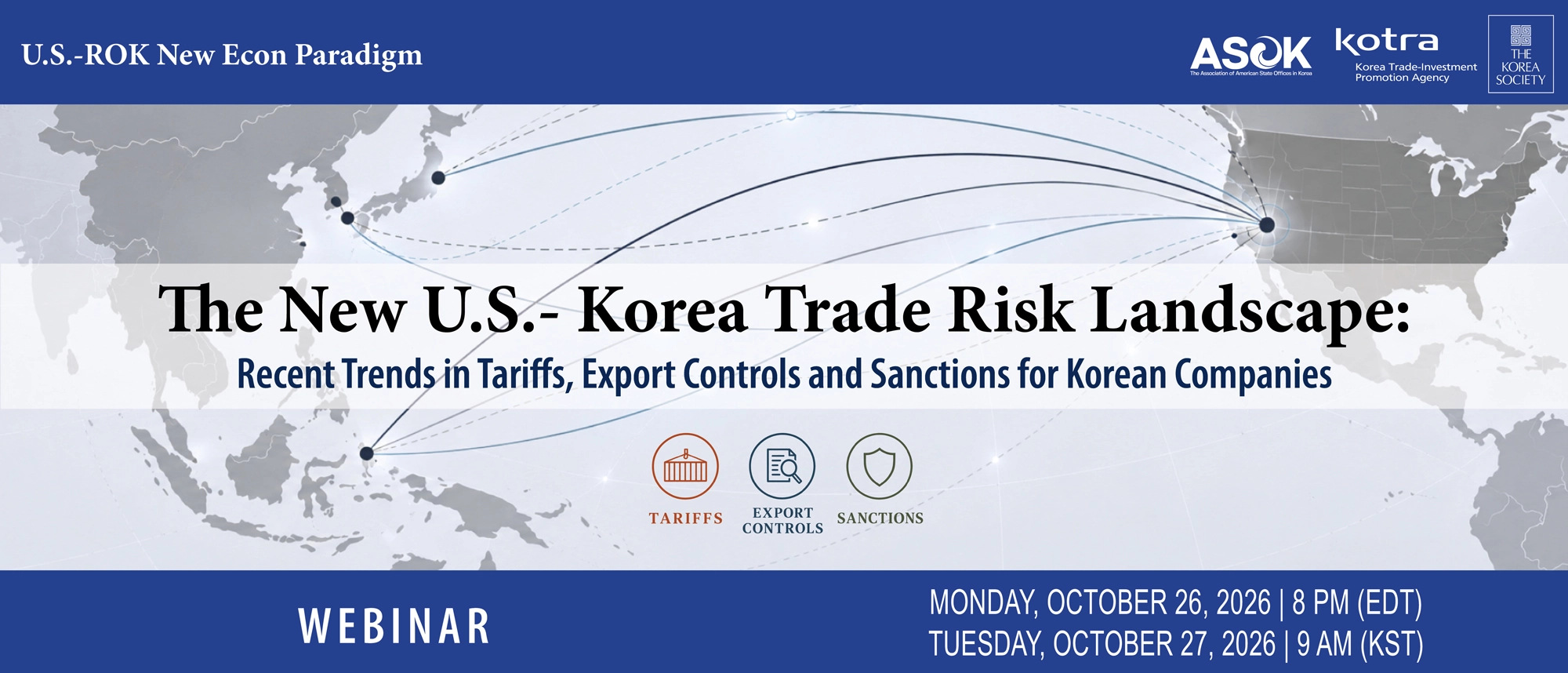
Historically, companies treated tariffs, export controls, and sanctions as separate risks managed by different departments. Today, a single business decision—whether shifting manufacturing, sourcing through China, or routing payments—can trigger overlapping consequences across all three regulatory frameworks. For companies operating across US-Asia supply chains, particularly those with China-linked manufacturing and sourcing networks, this convergence creates increasingly complex and fast-changing exposure.
This webinar examines how tariffs, export controls, and sanctions intersect in practice, moving beyond siloed compliance checklists to identify where risks compound. Drawing on real-world business scenarios, panelists with international trade and compliance expertise will offer practical frameworks for assessing cross-regime exposure and making informed strategic decisions before regulatory risks become operational liabilities.
Co-hosted with
About the Speakers

Speaker
Katelyn Hilferty
Partner & Practice Lead, Morgan Lewis
Katelyn advises clients on international trade, national security, and regulatory compliance matters, with extensive experience in import and customs issues before the U.S. Customs and Border Protection (CBP), export controls under the International Traffic in Arms Regulations (ITAR) and Export Administration Regulations (EAR), economic sanctions administered by the Office of Foreign Assets Control (OFAC), and foreign investment reviews before the Committee on Foreign Investment in the United States (CFIUS). She counsels clients across a range of industries, including nuclear energy, technology, life sciences, and financial services, helping them navigate evolving trade and national security requirements, assess regulatory risks, and address complex compliance and enforcement matters.

Speaker
Clinton Yu
Partner & Co-Chair, Arnall Golden Gregory LLP
Clinton advises U.S. and multinational companies and investors on complex international trade and national security matters, including customs and import laws, export controls, economic sanctions, and foreign investment reviews. His practice covers a broad range of issues related to U.S. tariffs and trade remedies, supply chain risk, export controls under ITAR and EAR, sanctions administered by OFAC, and national security reviews by CFIUS. He works with clients across industries including manufacturing, technology, aerospace and defense, logistics, and investment management, helping them navigate evolving regulatory requirements and assess their implications for cross-border transactions and global operations. He also represents clients in regulatory audits, investigations, enforcement matters, and trade-related disputes before federal courts. Clinton has been recognized as a Law360 “Rising Star” in International Trade and is frequently quoted in Bloomberg Law, Forbes, Law360, and Nikkei Asia.
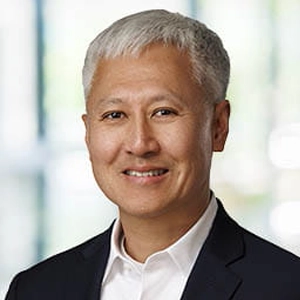
Moderator
Chris Kim
Managing Director, Stout
Chris oversees Stout’s Asia Pacific (APAC) services, specializing in cross-border investigations, regulatory compliance, and due diligence, with particular expertise in national security, sanctions, export controls, and international trade matters. He advises clients on regulatory and compliance issues involving the FBI, the U.S. Department of the Treasury’s Office of Foreign Assets Control (OFAC), the U.S. Department of Commerce’s Bureau of Industry and Security (BIS), and U.S. Homeland Security, and has served as an independent auditor and compliance consultant for clients subject to U.S. and multilateral development bank settlement agreements. Prior to joining Stout, Chris served as a special agent with the FBI, investigating public corruption, transnational crime, and national security matters, including export control violations, and as a senior investigator with the World Bank Group’s Integrity Vice Presidency, where he led investigations involving multinational corporations across Asia, including China, Korea, India, Indonesia, and Singapore. He has extensive experience across the technology, financial services, healthcare, government, and professional services sectors.
