




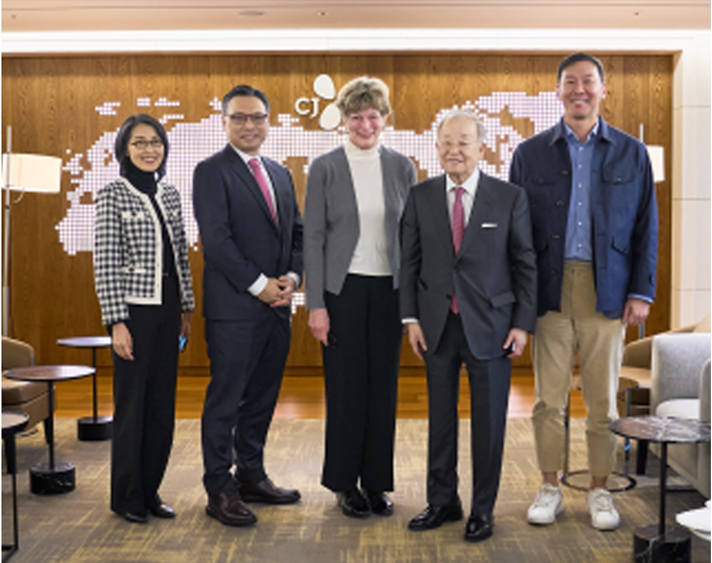

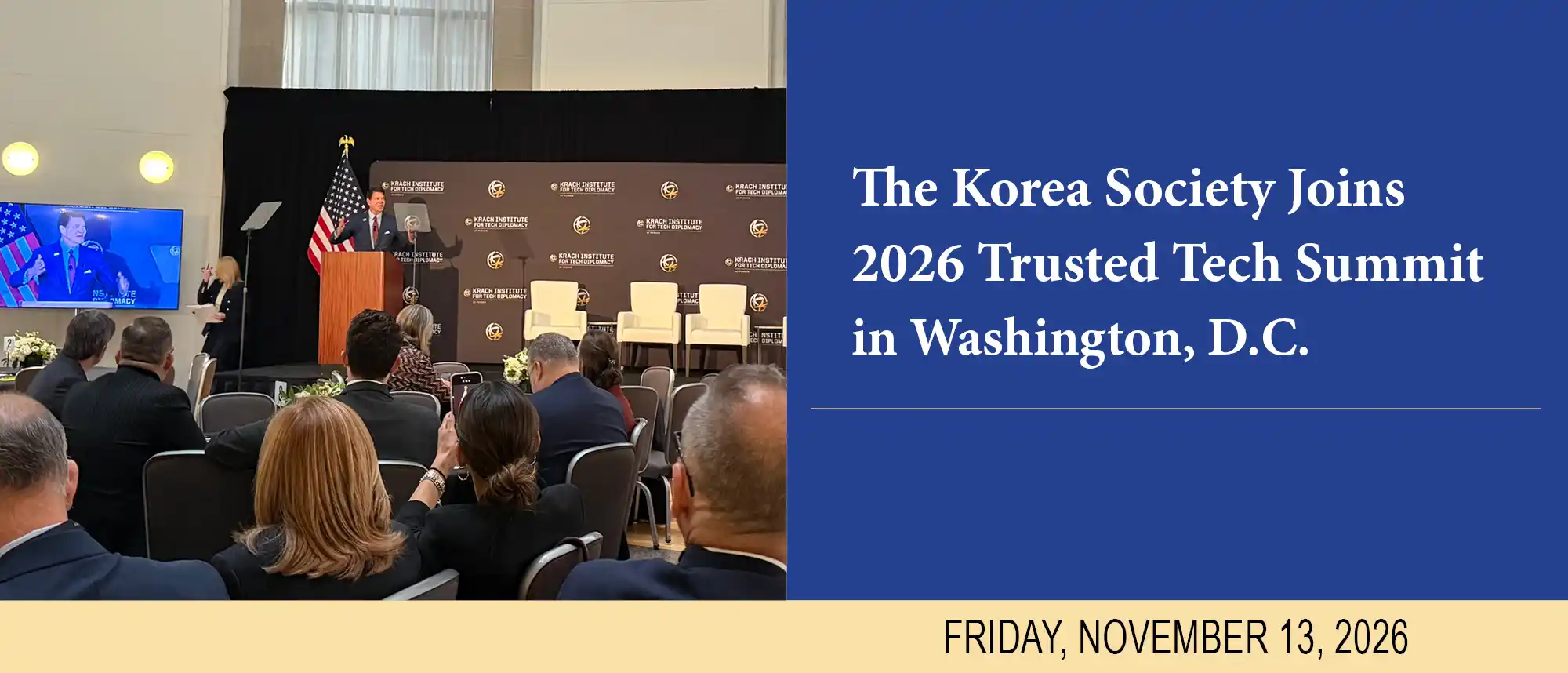
The Korea Society’s Senior Advisor for Outreach Hae Kyung Ahn and Director of Business and Economics Program Sojeong Kim participated in the 2026 Trusted Tech Summit, hosted by the Krach Institute for Tech Diplomacy at Purdue on November 13 at the Ronald Reagan Building and International Trade Center in Washington, D.C.
Held under the theme “The Freedom Advantage: Leading the Trusted Tech Era,” the summit brought together senior U.S. government officials, international diplomats, technology executives, and industry leaders to examine the role of trusted technology in advancing economic competitiveness, national security, and international cooperation.
Among the senior U.S. government participants were Michael Kratsios, Director of the White House Office of Science and Technology Policy (OSTP); William Kimmitt, Under Secretary for International Trade at the U.S. Department of Commerce; Dario Gil, Under Secretary for Science at the U.S. Department of Energy; and Michael DeSombre, Assistant Secretary of State for East Asian and Pacific Affairs. Their participation reflected the growing importance of technology, trade, and economic security in U.S. engagement with allies and international partners.
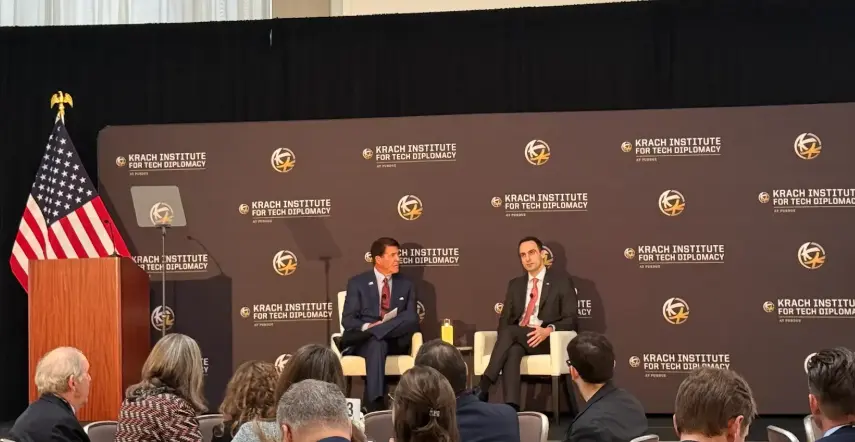
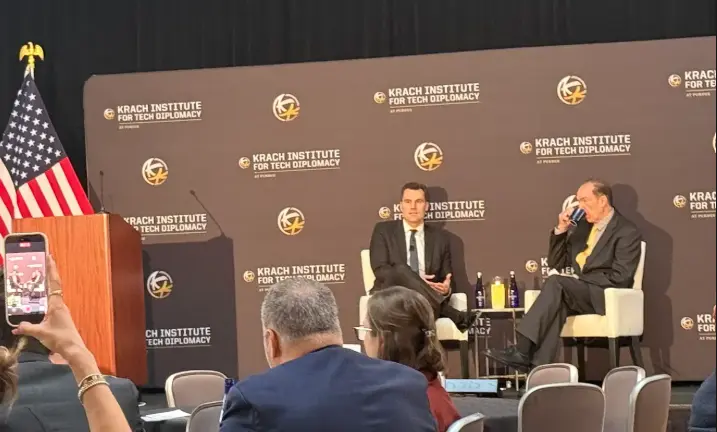
Korean Companies as Trusted Partners in the U.S. Technological Leadership
Korean companies are playing an increasingly important role in strengthening America’s technological capabilities through investment, innovation, and industrial partnerships. A notable example highlighted at the summit was SK hynix’s investment of more than $4 billion in an advanced packaging facility and research and development capabilities adjacent to Purdue University in West Lafayette, Indiana.
As a corporate member of The Korea Society, SK hynix exemplifies the contributions Korean companies are making to the U.S. technology ecosystem. Its partnership with Purdue brings together Korea’s semiconductor manufacturing expertise and American research capabilities, engineering talent, and academic resources. The collaboration is expected to support next-generation AI technologies, strengthen the semiconductor workforce, and generate broader economic opportunities for the surrounding community.
This investment illustrates how U.S.–ROK cooperation can extend beyond traditional trade and investment to encompass research and development, talent cultivation, advanced manufacturing, and supply-chain resilience.
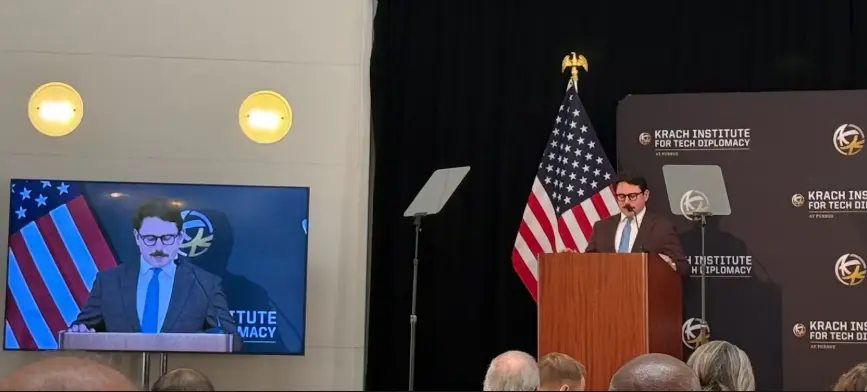
Michael Mansour, Senior Director of Government Relations for Semiconductors and AI at SK hynix America Inc.
The Korea Society’s Role in Connecting Partners and Advancing Cooperation
As technology becomes an increasingly important pillar of the U.S.–ROK alliance, The Korea Society will continue to strengthen connections among businesses, policymakers, and academic institutions to advance bilateral cooperation. Through its national outreach initiative, the Society seeks to engage communities across the United States where Korean investment is driving economic growth, connecting Korean companies with local stakeholders and fostering opportunities in technology, innovation, and workforce development.
By leveraging its networks in both countries, The Korea Society aims to serve as a bridge between trusted partners and allies, helping translate shared priorities into meaningful collaboration that advances innovation, economic prosperity, and the U.S.–ROK partnership.
FAQ
01 / 03
The summit focused on “trusted diplomacy.” How does U.S. - Korea technology cooperation put that idea into practice?
Technology strategies and capabilities have become an integral part of the broader U.S.-ROK alliance and its foreign policy agenda. The Technology Prosperity Deal, signed by the two allies in October 2025, provides the central framework for this cooperation. It aims to expand bilateral collaboration beyond traditional areas such as nuclear energy and space into emerging technologies, including AI, quantum computing, biotechnology, and 6G. A joint working group launched in 2026 is now working to translate the agreement into concrete initiatives, with Korea’s semiconductor manufacturing capabilities playing a central role.
.02 / 03
Why is SK hynix - Purdue collaboration significant for U.S.- Korea economic cooperation?
The facility at the Purdue Research Park will package high-bandwidth memory (HBM), the chips that power AI systems. SK hynix will make the memory wafers in Korea and finish them in Indiana. That is a supply chain shared by two allies across the Pacific, which is what “trusted technology” looks like in practice. The project has up to $458 million in U.S. CHIPS Act funding and is expected to employ about 1,000 workers once fully running. Through a research agreement with Purdue, SK hynix is also creating programs that bring local engineering graduates into its workforce. For Indiana, that means a new anchor industry. For the alliance, it shows Korean investment taking root in communities far from the coasts.
03 / 03
Why does The Korea Society see local engagement as essential to the alliance’s future?
As Korean companies expand their investments across the United States, the relationship between the two countries is increasingly taking shape in local communities, not just in Washington, D.C. and New York. Building a stronger U.S.–Korea relationship therefore requires more than high-level dialogue; it also calls for greater mutual understanding among the people, institutions, and communities on both sides. We are exploring ways to bring conversations like those at the Trusted Tech Summit to the local level, creating opportunities for American residents, local leaders, educators, and employers to better understand Korea, while helping Korean companies build deeper connections with the communities where they operate. Ultimately, a stronger alliance depends not only on shared strategic priorities but also on meaningful people-to-people connections and a sense of shared prosperity at the community level.