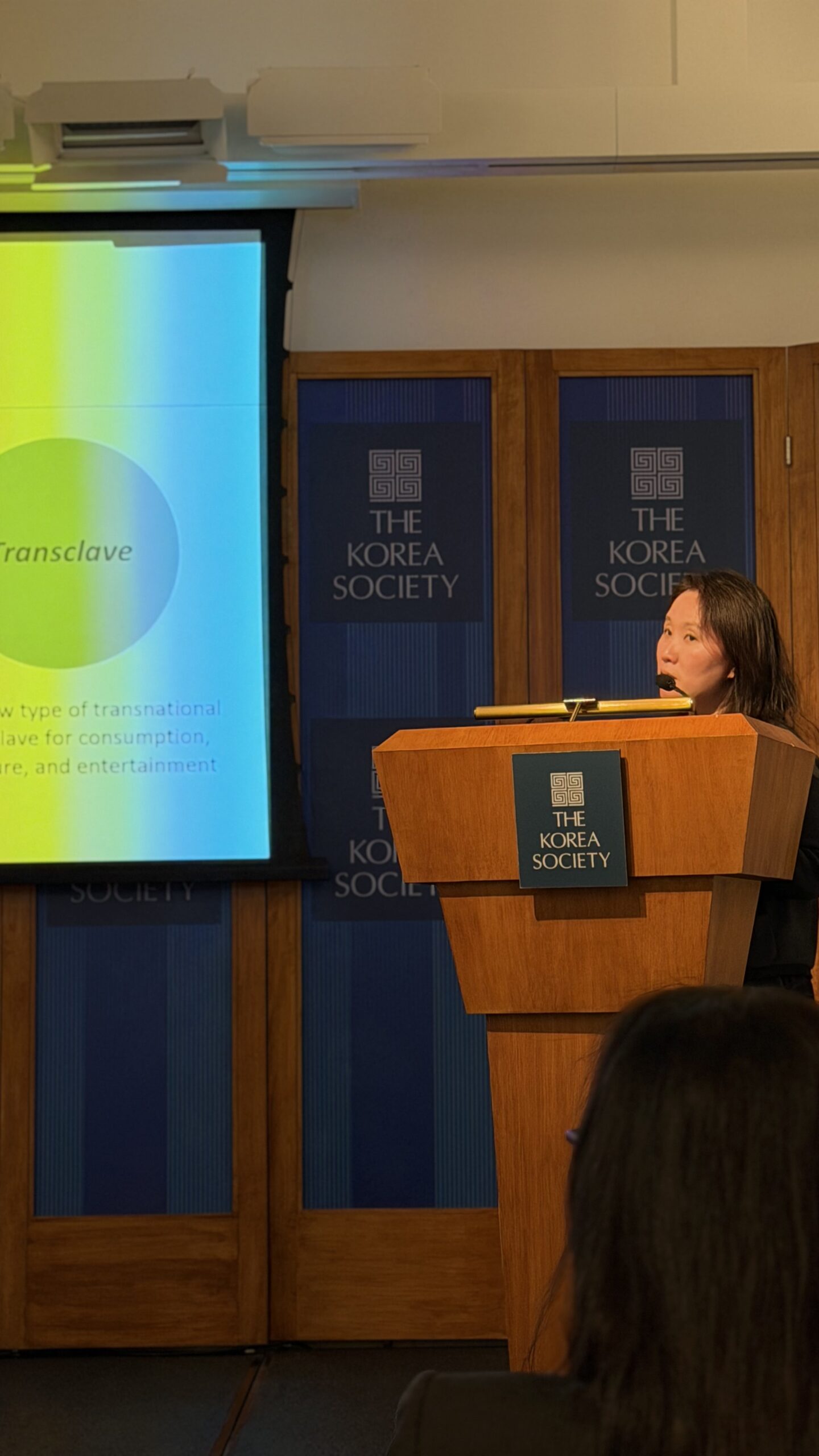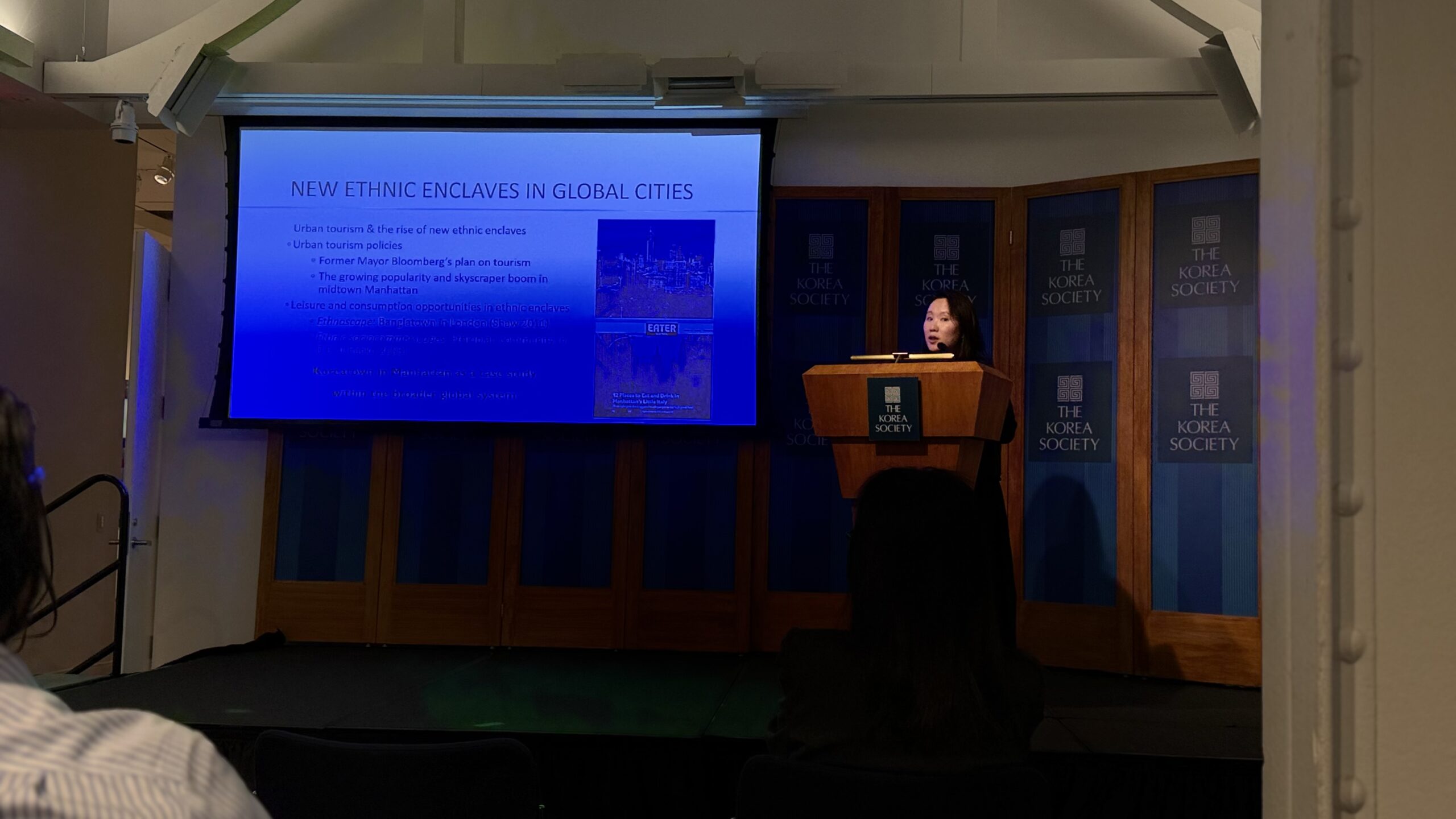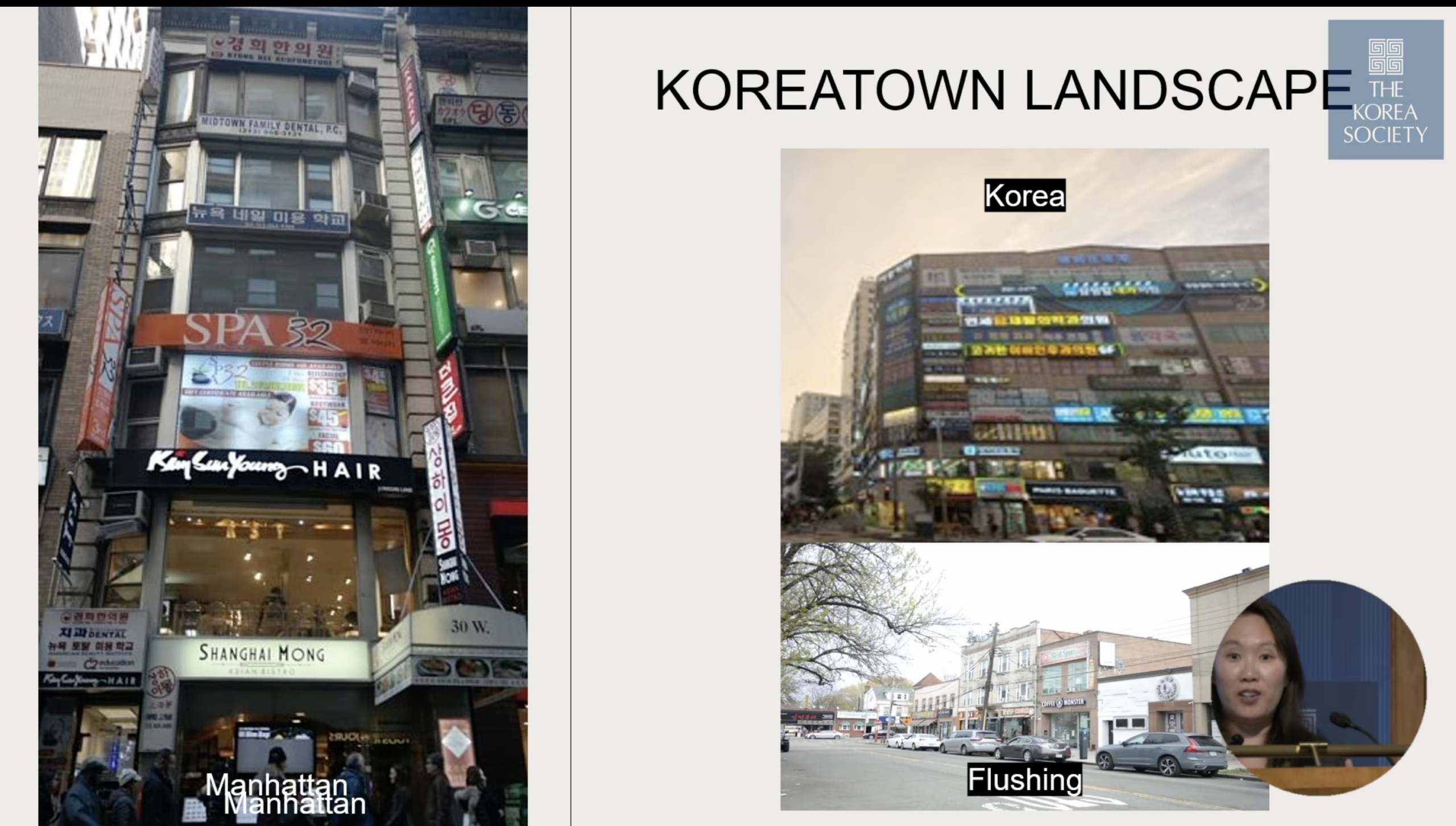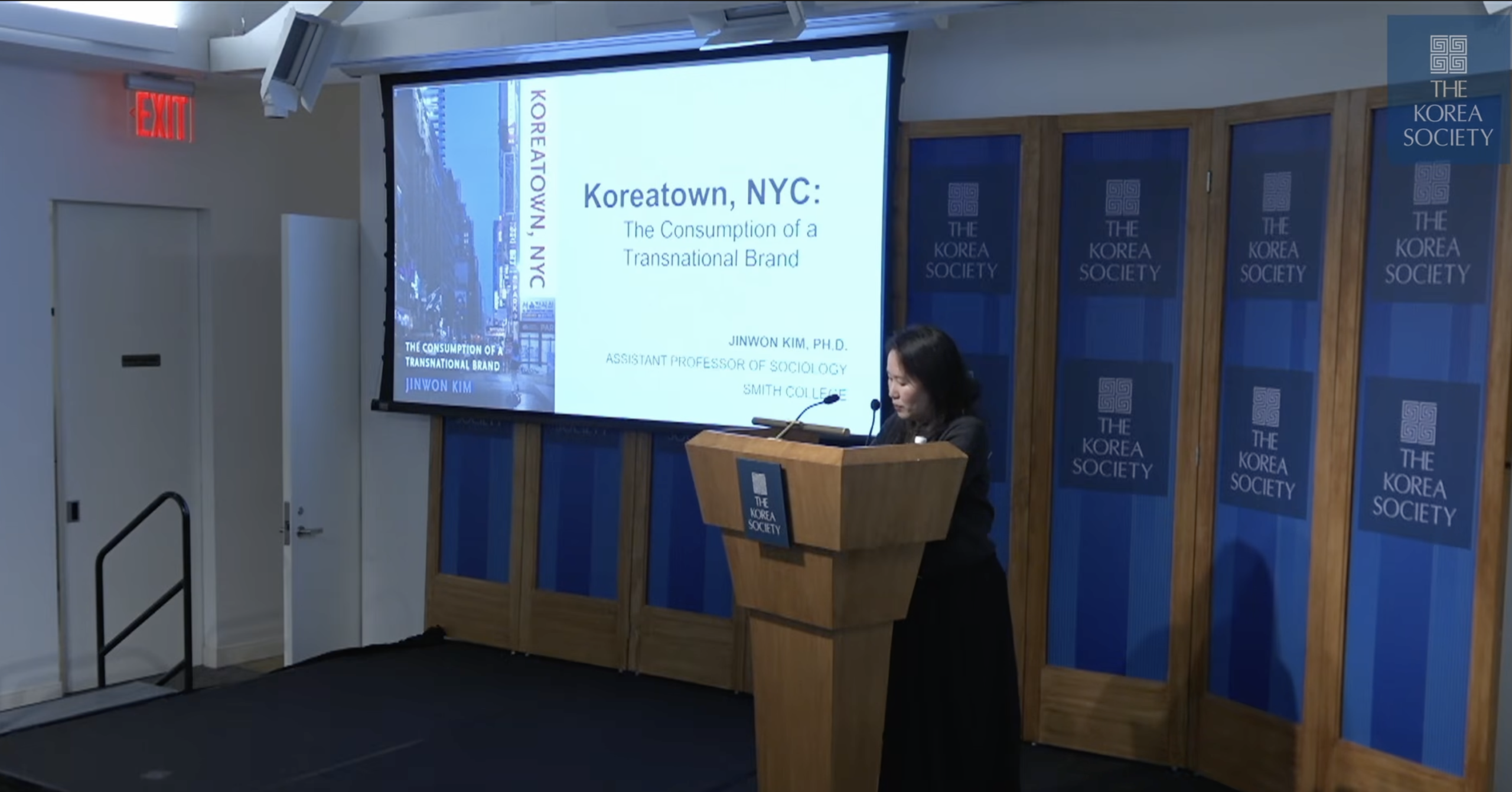

In the past decade, Korean entertainment has gained global recognition, with Korean movies and TV shows winning Oscars and Emmys, and K-Pop groups becoming wildly popular. In Manhattan, Koreatown has become a popular destination for both locals and tourists, drawing them in with its bars, restaurants, and day spas. Jinwon Kim argues that Manhattan’s Koreatown has become a new type of ethnic enclave, what she dubs a “transclave.” This commercialized ethnic space exists solely for consumption, leisure, and entertainment, and has been shaped by South Korea’s nation-branding strategy, new economic and cultural strategies, patterns in Korean migration, and shifts in tourism and urban policies in New York City. Kim posits that for many consumers in Koreatown, especially those who are not of Korean descent, the space has become a commercialized place where transnational culture meets the diverse racial and ethnic mosaic of New York City. Kim emphasizes how the space functions to “brand Korea” as a space to “consume ethnicity,” reflecting the landscape of South Korea’s consumer culture through the physical appearance of buildings and stores and the inclusion of franchise brands.
In this talk, Kim explores the recent popularity of Korean food in New York City by focusing on both transnational and domestic factors, leading to the new trend of commercialization of ethnic food, emphasis on authenticity, and rise of the omnivore society, by delivering the voices of ordinary people. While Koreatown’s authenticity has been largely defined by commercialized ethnic cuisine by local entrepreneurs, the Korean government, and franchises, Kim argues that Koreatown’s authenticity has represented the collective imaginations and narratives of various consumer groups–Korean nationals, Korean Americans, and non-Koreans.
This program was recorded on September 24th and will be released on October 1.
About the Speaker
Speaker
Jinwon Kim
Jinwon Kim is is an assistant professor of sociology at Smith College. She received her Ph.D. from The Graduate Center, City University of New York, and her research spans urban sociology, race and ethnicity, Asian and Asian American studies, transnational and global sociology, migration, and consumption, with a focus on how the global political economy and popular culture shape national and ethnic identities, urban change, and the creative economy. She is the author of Koreatown, NYC: The Consumption of a Transnational Brand (NYU Press), which argues that Manhattan’s Koreatown is a new type of ethnic enclave — a “transclave” — shaped by South Korean nation branding, migration, tourism, and urban policy. She also co-edited Koreatowns: Exploring the Economics, Politics, and Identities of Korean Spatial Formations (Lexington Books, 2020), and her articles have appeared in City & Community and The International Journal of Cultural Policy.
FAQ
01 / 01
What is a “transclave”?
Coined by sociologist Jinwon Kim, a transclave is a commercialized ethnic enclave designed primarily for consumption, leisure, and global nation-branding rather than traditional residential living.