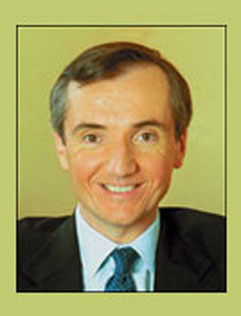
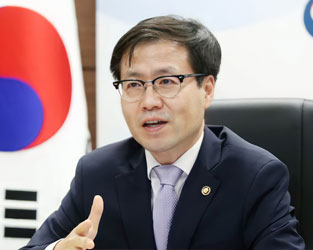
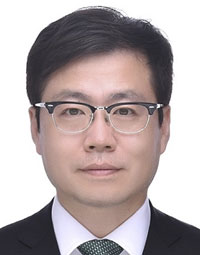
Join us for a breakfast roundtable discussion with Yi Jong-Goo, standing commissioner of Korea’s Financial Services Commission, as he discusses the current state of the Korean economy and South Korea’s game plan for navigating the global recession. This event is a unique opportunity to hear from a senior representative of South Korea’s top financial regulatory body. The Financial Services Commission is charged with protecting the integration of Korea’s financial markets by promoting a sound credit system and fair business practices.
Friday, March 13, 2009 Weathering the Storm: South Korea’s Game Plan for Navigating the Global Recession
with
Yi Jong-Goo Standing Commissioner Financial Services Commission, Republic of Korea
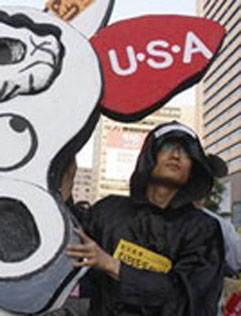
Headline grabbing rallies against American beef imports last year cast doubt for some observers over the image of South Korea as a dynamic, outward-looking member of the international economic community. The Korean government, eager to portray South Korea as friendly to foreign business, is now facing a multi-year decline in Foreign Direct Investment in the wake of domestic protests and a series of highly publicized investigations and court cases against American companies.
Korean stock market specialist Henry Seggerman contends that protectionist government policies and popular sentiment have inflicted harm on Korea’s economic development. Seggerman will discuss Korean protectionism in the context of the current worldwide financial crisis, free trade opponents in the United States, and lessons learned from the protectionist backlash to the 1929 Stock Market Crash.
Wednesday February 25, 2009 The Perils of Protectionism: Korea’s Foreign Investment Challenge with
Henry Seggerman Manager Korea International Investment Fund
Lee Jae Oh is a distinguished politician in South Korea and has devoted his life’s work to the democratization of Korean society. After a short stint as a high school teacher, from 1971 to 1996, Lee was involved with organizations opposing South Korea ’s authoritarian regimes and working to bring about democracy. In 1979, Lee served as the director of Amnesty International-South Korea.
Lee launched his political career in 1996, when he was elected to the 15th National Assembly of the Republic of Korea. Two years later, in 1998, he was selected as the vice floor leader of the Grand National Party (GNP). He was re-elected to the ROK National Assembly twice, first in 2000 and then in 2004. In 2002, Lee managed the election campaign of Lee Myung-bak—who currently is the president of the Republic of Korea—when he ran for the office of Mayor of Seoul, and following its successful outcome served on the mayor’s transition team. In that same year, Lee was appointed to a GNP task force charged with planning for the 2002 presidential elections. Lee served as a supreme council member of the GNP from 2006-2007, and in this capacity played a pivotal role in the election of President Lee Myung-Bak in 2007.
Thursday, December 4, 2008
Korea’s Future: The Role of President Lee Myung-Bak’s Administration
A Distinguished Visitor’s Luncheon
with
Lee Jae Oh Former GNP Supreme Council Member Senior Visiting Scholar at the U.S.-Korea Institute, Johns Hopkins University
The globalization model adopted by major Korean companies like Hyundai, LG and Samsung has made Korea one of the world’s most advanced economies. To stay competitive, however, those companies will need to adjust that model in many ways says Joe Fuller, co-founder and CEO of Monitor Group, a leading international consulting firm.
Speaking at a Business Roundtable Luncheon series program, Fuller said that if Korea is to meet President Lee’s ambitious “747” economic targets, the country’s growth will have to be led by its largest companies, which make up a disproportionately large share of GDP. To power the Korean economy forward, these companies will have to change their internal governance, human asset management, innovation strategies and product development assumptions.
Thursday, June 12, 2008
Beginning with internal governance, Fuller explained that Korean companies tend to be highly centralized, risk averse organizations. Those instincts need to change to allow Korean companies to promote a new culture of independence and risk taking among executives. Likewise, Korean companies presently have one of the world’s lowest ratios of non-nationals in senior management, thus missing out on new international expertise and fresh thinking. Korean multi-nationals are world-class and could do very well in competing for international talent, Fuller explained. They just haven’t made it a priority.
When it comes to product innovation, Korean companies focus their resources on developing new technologies, and new features for existing technologies. Unfortunately, this is one of the least profitable innovation strategies. Korean companies should diversify their innovation focus and attempt to develop new user experiences and new financing arrangements.
Finally, Korean firms need to change how they think about globalization. To date Korea, like Japan, has emphasized exporting uniform product lines. While this allows for the development of design and manufacturing excellence, it also makes Korean companies slow to react to changes in local markets. In the future, they need to emulate companies like Nestlé, where regional managers set the agenda for the company’s global operations.
Fuller acknowledged that these recommendations would be a tall order for Korea’s multinationals. “But I wouldn’t bet against them,” Fuller said, as he recalled how quickly they have grown so far.
The Future of Korean International Competitiveness
From 18th Century Britain to 20th Century South Korea
Over the last two and half decades, most developing countries have experienced slowing growth, rising inequality and greater economic instability. Ha-Joon Chang attributes these problems to a raft of policies—such as privatization, free trade and strong intellectual property protection—imposed on the developing world in bad faith by developed countries and the international organizations they control.
Chang believes the historical experience of developed countries, and those like South Korea that have gone from developing to developed status in recent decades, reveals the ineffectiveness of these macroeconomic policies. What the world economy really needs, he contends, is a new economic system that prioritizes long-term productivity.
Wednesday, January 30th, 2008
The Secret History of Capitalism
From 18th Century Britain to 20th Century South Korea
with
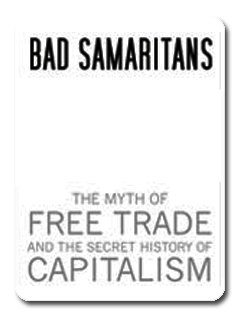
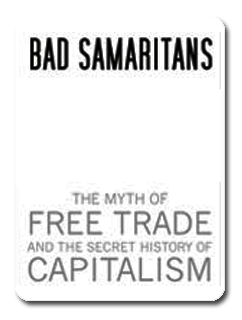
Ha-Joon Chang Professor of economics, University of Cambridge Author, Bad Samaritans: The Myth of Free Trade and the Secret History of Capitalism
Koreans take great pride in their country’s ethnic homogeneity and are deeply influenced by Confucian values that stress group identity and social harmony. Seem like a sociology lesson? Actually, these facts should be just as important to branding and marketing executives as they are to social scientists says Dae Ryun Chung, professor of marketing at Yonsei University in Seoul. And they’re the reason why Korean consumers make purchases based on their attitudes towards individual and group identities, Chung continued. To succeed in the Korean market, marketers need to understand Koreans’ distinctive “We/Me” consumer paradigm.
Business Roundtable
with Dae Ryun Chang Dean, Graduate School of International Studies Yonsei University
Thursday, June 7, 2007
Korean Consulate General in New York 335 E. 45th Street (between 1st & 2nd Avenues) 2nd Floor Conference Room
Which phrasing of McDonald’s classic slogan would Korean consumers respond to: “you deserve a break today” or “we deserve a break today”? Professor Dae Ryun Chang of Yonsei University says that Korean consumers weigh countervailing tendencies towards individualism and collectivism when they consider their purchases. He calls this phenomenon the “we/me” paradigm and thinks that anyone doing business in Korea should understand it.
At this talk, Chang will discuss the paradigm, its underlying causes and its strategic marketing implications.
In the United States, Chung said, mass-market consumer products tend to gain and decline in popularity along a broad, gentle curve. American consumers buy products they feel fit their individual identity. Thus, they’re more cautious about adopting a product or brand, but when they do, their loyalty is persistent.
In Korea, product lifecycles are much quicker. A new product or brand’s sales will explode but often decline just as precipitously. Individual Korean consumers pick their goods, at least partly, in order to conform to group patterns. When they buy Mercedes, they all buy Mercedes. When they switch to Lexus, they all switch. As a result, Korea has fewer niche markets than the United States, and it can be harder to forecast which products the group will adopt next.
To Americans, conformity feels suffocating. American consumers seek out products and brands that will differentiate them. But to Korean consumers, Chung explained, following dominant trends can be a satisfying affirmation of collective identity. That’s why the majority of luxury cars sold in Korea are black, why so many Korean apartment blocks are made from the same blueprints and why fewer than a half-dozen movies make up more than 90-percent of the Korean box-office take.
At the same time, Chung warned against treating Korean consumers as automatons. Some purchase decisions are more influenced by group dynamics than others. For example, Koreans tend to buy housing, cars, entertainment and liquor in order to confirm their identity as Koreans. Alternately, Koreans tend to buy goods like beer, coffee and hair coloring in order to express their individual identities. If foreign marketers can create a message that balances Koreans’ impulses towards “we” and “me” they may just reap huge rewards.
Koreans take great pride in their country’s ethnic homogeneity and are deeply influenced by Confucian values that stress group identity and social harmony. Seem like a sociology lesson? Actually, these facts should be just as important to branding and marketing executives as they are to social scientists says Dae Ryun Chung, professor of marketing at Yonsei University in Seoul. And they’re the reason why Korean consumers make purchases based on their attitudes towards individual and group identities, Chung continued. To succeed in the Korean market, marketers need to understand Koreans’ distinctive “We/Me” consumer paradigm.
Dae Ryun Chung Professor of Marketing, Yonsei University
Thursday, June 7, 2007
In the United States, Chung said, mass-market consumer products tend to gain and decline in popularity along a broad, gentle curve. American consumers buy products they feel fit their individual identity. Thus, they’re more cautious about adopting a product or brand, but when they do, their loyalty is persistent.
In Korea, product lifecycles are much quicker. A new product or brand’s sales will explode but often decline just as precipitously. Individual Korean consumers pick their goods, at least partly, in order to conform to group patterns. When they buy Mercedes, they all buy Mercedes. When they switch to Lexus, they all switch. As a result, Korea has fewer niche markets than the United States, and it can be harder to forecast which products the group will adopt next.
To Americans, conformity feels suffocating. American consumers seek out products and brands that will differentiate them. But to Korean consumers, Chung explained, following dominant trends can be a satisfying affirmation of collective identity. That’s why the majority of luxury cars sold in Korea are black, why so many Korean apartment blocks are made from the same blueprints and why fewer than a half-dozen movies make up more than 90-percent of the Korean box-office take.
At the same time, Chung warned against treating Korean consumers as automatons. Some purchase decisions are more influenced by group dynamics than others. For example, Koreans tend to buy housing, cars, entertainment and liquor in order to confirm their identity as Koreans. Alternately, Koreans tend to buy goods like beer, coffee and hair coloring in order to express their individual identities. If foreign marketers can create a message that balances Koreans’ impulses towards “we” and “me” they may just reap huge rewards.
About the Speaker
Dae Ryun Chang is a professor of marketing and dean of the Graduate School of International Studies at YonseiUniversity in Seoul, Korea. He received his Ph.D. in business from HarvardUniversity, and his MBA from ColumbiaUniversity. He has held visiting teaching positions at the Helsinki School of Economics and Business, AustralianNationalUniversity, Hong Kong University of Science and Technology and SingaporeManagementUniversity. Chang has published numerous journal articles in outlets such as the Journal of Marketing, Management Science and Decision Sciences. He currently sits on the board of directors at LG Fashion and Boryung Medience.
Business Roundtable
with Dae Ryun Chang Dean, Graduate School of International Studies Yonsei University
Thursday, June 7, 2007 11:30 AM – 12:00 PM ♦ Registration and Reception 12:00 PM – 2:00 PM ♦ Luncheon and Presentation
Korean Consulate General in New York 335 E. 45th Street (between 1st & 2nd Avenues) 2nd Floor Conference Room
Which phrasing of McDonald’s classic slogan would Korean consumers respond to: “you deserve a break today” or “we deserve a break today”? Professor Dae Ryun Chang of YonseiUniversity says that Korean consumers weigh countervailing tendencies towards individualism and collectivism when they consider their purchases. He calls this phenomenon the “we/me” paradigm and thinks that anyone doing business in Korea should understand it.
At this talk, Chang will discuss the paradigm, its underlying causes and its strategic marketing implications.
The Korea Society’s ‘Leadership Interview Series’ highlights the roles made by distinguished leaders from the U.S. and Korea in strengthening the multifaceted relationship between the people of Korea and the U.S. The speakers share their personal and professional experiences in the realms of business, economics, education and public policy. Leading the discussions are Ambassador Kathleen Stephens, Chair of the Board of Directors, or Tom Byrne, President and CEO.
Please join us as we seek to gain a better awareness and understanding of issues of common interest between the people of Korea and the U.S.
Catching the K-Investment Wave in the USA
Thursday, June 16, 2022 | 6 PM (EDT)|
The United States and South Korea have a well-established “gold standard” Free Trade Agreement. Now, as international economic relationships are shifting to strategic frameworks and concerns over supply-chain robustness and resiliency, Korean investment in the U.S is gaining attention and transforming the bilateral relationship into a new dynamic… Read More
Interview with CJ Group Chairman Kyung Shik Sohn
Premiere on Tuesday, April 19, 2022 | 6 PM (EDT)|
The Korea Society is pleased to invite Mr. Kyung Shik Sohn, Chairman of CJ Group, for a conversation with the Society’s President/CEO Tom Byrne. In this upcoming episode of our President’s Interview Series, Chairman Sohn… Read More
Women in Higher Education: A Discussion with Dr. Eun Mee Kim & Dr. Sian Leah Beilock
Tuesday, March 22, 2022 | 8 AM (EDT)|
Womens’ Universities have emerged as premier institutions in higher education, amplifying womens’ voices from diverse backgrounds and perspectives. In the fourth installation of our Womens’ Leadership Series, please join us at The Korea Society to hear from Dr. Eun Mee Kim, President of Ewha Womans University in Seoul, and Dr. Sian Leah Beilock, President of Barnard College in New York City…. Read More
Interview with ROK Trade Minister Yeo Han-Koo
Friday, March 18, 2022|
March 15, 2022 marks the 10-year anniversary of the US-Korea Free Trade Agreement (KORUS FTA). In celebration of this remarkable milestone, The Korea Society invites ROK Minister for Trade Yeo Han-koo for a conversation with Korea Society President Tom Byrne… Read More
Interview with LG Chem CEO Hak Cheol Shin
Premieres: Wednesday, December 8, 2021 | 6 PM ET|
Join us for a conversation between Mr. Hak Cheol Shin, Chief Executive Officer of LG Chem, and Tom Byrne, the President and CEO of The Korea Society. In this third episode of the ‘President’s Interview Series,’ Mr. Shin will discuss his remarkable career starting out from 3M Korea and serving as the Vice Chair at 3M headquarter… Read More
Talking COVID-19 Vaccine Cooperation with President John Rim
Wednesday, July 21, 2021 | 7 PM (EDT)|
Join us for a conversation between Mr. John Rim, President and CEO of Samsung Biologics, and Tom Byrne, the President and CEO of The Korea Society. In this second episode of the ‘President’s Interview Series,’ President Rim will discuss his extensive career and senior leadership roles in the biopharmaceutical industry, as well as his current role as the head of Samsung Biologics… Read More
A Conversation with Chairman Yongmaan Park
Wednesday, June 2, 2021 | 7 PM (EDT)|
In our inaugural episode of the ‘President’s Interview’ Series, we are pleased to invite Park Yongmaan, Chairman of Doosan Infracore for a conversation with The Korea Society’s President Tom Byrne. As one of the most successful and powerful business leaders in Korea and the world, Chairman Park will discuss his extensive career and leadership role as the Chairman of Doosan Infracore and former Chairman of the Korea Chamber of Commerce and Industry (KCCI)… Read More
Women in Congress: A Conversation with U.S. Representative Young Kim
Wednesday, April 21, 2021 | 6 PM (EDT)
U.S. Representative Young Kim (CA-39) joins The Korea Society to share her journey in becoming one of the first Korean American women elected to Congress in its 230-year history. As an immigrant, small business owner, and previous California State 65th district Assemblywoman, we will explore how Congresswoman Kim pursued the American dream to become a successful Korean American leader and politician… Read More
Women in Trade: A Talk with Trade Minister Yoo Myung-hee||
Friday, February 26, 2021 | 7 PM (EST)
In the second episode of our Women’s Leadership series, we are pleased to welcome South Korean Minister for Trade Yoo Myung-hee for a conversation on her 25-year career in shaping the international trade infrastructure. As Deputy Minister for FTA Negotiations, and later Director-General for Bureau of Trade Policy at the Ministry of Trade, Industry, and Energy, Yoo Myung-hee has been at the forefront of numerous high-profile trade agreements… Read More
A Conversation with Ambassador Kathleen Stephens||
Thursday, January 28, 2021 | 6 PM (EST)
In our inaugural episode of the Korea Society’s Women in Leadership series, we are pleased to welcome Ambassador Kathleen Stephens for a conversation on her distinguished career as a world-renowned female leader. Having an extensive career in international relations, Amb. Stephens, a decorated former U.S. diplomat, will share her special and deep connections to Korea. She will also highlight her experiences in promoting the U.S-Korea relationship as a former U.S. Ambassador to the Republic of Korea, Peace Corp volunteer, and current President of Korea Economic Institute and Chair of The Korea Society… Read More
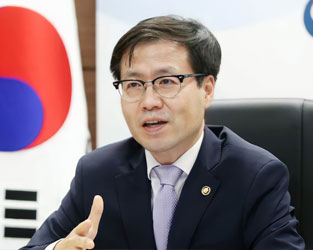
March 15, 2022 marks the 10-year anniversary of the US-Korea Free Trade Agreement (KORUS FTA). In celebration of this remarkable milestone, The Korea Society invites ROK Minister for Trade Yeo Han-koo for a conversation with Korea Society President Tom Byrne.
The discussion will assess the achievements of the first decade of the KORUS FTA and the broader effects it has had on the Korea-U.S. bilateral relationship. It will also examine future prospects of the two countries’ trade relationship and the deepening of the economic partnership between the two countries, while also examining the evolution of the trade architecture in the Indo-Pacific region.
Interview with ROK Trade Minister Yeo Han-Koo
Friday, March 18, 2022
The Korea Society 350 Madison Avenue, 24th Floor New York, NY 10017
H.E. Yeo Han-koo Minister for Trade Republic of Korea
EMPLOYMENT
MINISTRY OF TRADE, INDUSTRY & ENERGY Trade Minister (August 2021 – Present)
OFFICE OF THE PRESIDENT, REPUBLIC OF KOREA Secretary to the President for New Southern and Northern Policy (July 2020 – August 2021)
MINISTRY OF TRADE, INDUSTRY & ENERGY Deputy Minister for Trade Negotiations (March 2019 – July 2020) Minister Counselor, Embassy of The Republic of Korea in the USA (September 2017 – March 2019) Director General, Bureau of Trade Policy (February 2017 – September 2017) Director General, FTA Policy Bureau (April 2016 – February 2017) Chief, Office of Trans-Pacific Partnership (TPP) Deputy Chief/Deputy Director General, Office of TPP (August 2014 – April 2016) Director, Multilateral Trade Cooperation Division (March 2014 – August 2014) Climate Change Policy Division (February 2009 – February 2010) Free Trade Agreement Division (April 2007 – March 2008) Foreign Investment Policy Division (May 2005 – February 2006) Deputy Director, Foreign Investment Promotion Division (May 2004 – August 2005) Industrial Policy Division (July 1998 – July 2000) Small & Medium Enterprises Policy Division (December 1993 – March 1995)
WORLD BANK GROUP (March 2010 – February 2014) Sr. Investment Policy Officer, Investment Climate Department, CIC/FPD
NATIONAL ECONOMIC ADVISORY COUNCIL, PRESIDENTIAL OFFICE (February 2006 – April 2007) Director, International Economy & Industrial Policy Bureau, Secretariat
KDI SCHOOL OF PUBLIC POLICY & MANAGEMENT, KOREA (September 2005 – August 2008) Lecturer (part-time), Master of Foreign Direct Investment (MFDI) Program
KOREA & U.S. AIR FORCE COMPONENT COMMAND, KOREA (March 1995 – July 1998). Public Affairs & Personnel Officer (1stLieutenant), Mandatory Service
EDUCATION
Harvard Business School (2002-2004); Master of Business Administration Harvard Kennedy School of Government (2000-2002); Master of Public Administration Harvard Law School (2000-2001); Certificate in International Tax Program Seoul National University (1988-1992); Bachelor of Arts in Business Administration
PUBLICATION
Dante Roscini, Eric Werker, Han-koo Yeo, “Kaesong Industrial Complex (A), (B)”, Harvard Business School Case (N2- 710-022), April 2010 The World Bank, “Special Economic Zones”, 2011, pp.283-308 (CH.12 on Low-carbon Green Special Economic Zones) Han-koo Yeo, “MBA Education at Harvard Business School”, Deonan Publishing Co. February 2007 (in Korean) Han-koo Yeo, “Why did they choose mobile phones instead of shoes?”, Alma Publishing Co. October 2013 (in Korean)
HONORS AND AWARDS
International Finance Corporation Performance Award(2013), World Bank Financial and Private Sector Development Vice President Award(2012), An Achievement Award from the President of Republic of Korea(2006), An Achievement Award from the Commerce Minister(2006), Air Force Public Affairs Officer Leadership Award(1998), Decorated for the Defense Minister’s Award(1995), An Achievement Award from the Minister of Government Administration(1993)