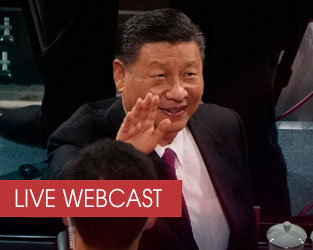
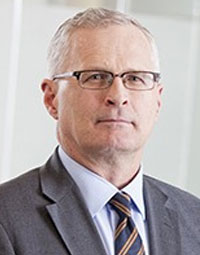
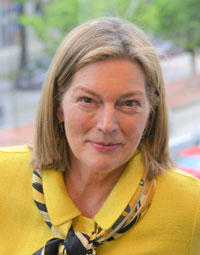
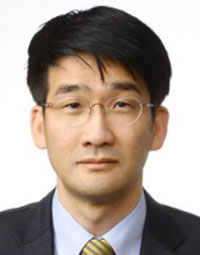
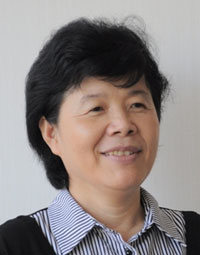
Stanford University Director of the Shorenstein Asia-Pacific Research Center, founding director of its Korean Studies program, and William J. Perry Professor of Contemporary Korea Gi-Wook Shin shares insights on rising anti-China sentiments in South Korea and their implications for the upcoming South Korean presidential election, as well as the US-ROK alliance. Professor Shin, in conversation with Senior Director Stephen Noerper, also explores these sentiments relative to Korean feelings toward Japan and the United States.
This event is co-sponsored by Columbia University’s APEC Study Center.
The Rise of Anti-Chinese Sentiments in South Korea: Political and Security Implications
Thursday, October 7, 2021 | 12 PM
The Korea Society 350 Madison Avenue, 24th Floor New York, NY 10017
In the first program of a new series chronicling the rise of global cooperation between the United States and Korea, Korea Society president and CEO Tom Byrne discusses supply chain resilience and semiconductors in conversation with Tami Overby, McLarty Associates Senior Director and former president of the US Korea Business Council, and John Neuffer, President and CEO of the Semiconductor Industry Association. The program opens with remarks on the importance of US-Korea cooperation on semiconductors by Won-kyong Kim, the Executive Vice President of Samsung Electronics Inc.
The US-Korea Global Partnership: Supply Chain and Semiconductors Hybrid Program
Thursday, September 23, 2021 | 12 PM
The Korea Society 350 Madison Avenue, 24th Floor New York, NY 10017
Tami Overby is Board Director for The Korea Society and Senior Director at McLarty Associates, where she advises clients on Asia and trade matters, with a particular focus on Korea. She has three decades of Asia work, including 21 years living and working in Seoul. Her most recent experience includes eight years leading the US Chamber of Commerce’s Asia team while also serving as President of the US Korea Business Council. Ms. Overby’s extensive experience helps American companies compete and prosper in Asia. She attended many of the TransPacific Partnership (TPP) negotiating rounds, often leading the American business delegation to help ensure US firms’ priorities were well understood by the negotiating partners. She oversaw the US Coalition for TPP, an alliance led by the US Chamber, the Business Roundtable, the National Association of Manufacturers, the Farm Bureau and the Emergency Committee for Trade.
John Neuffer is President and CEO of the Semiconductor Industry Association (SIA), which has been the voice of the chip industry for over four decades. He has been at the nexus of technology, public policy, and trade for most of his career. Since joining SIA in 2015, John has led the association’s policy advocacy in Washington and capitals around the world to foster growth and innovation in semiconductor design, manufacturing, and research. John also serves as a member of the Board of Directors of the Semiconductor Research Corporation, the world’s leading non-profit industry-government-academia microelectronics research consortium. Previously, John served for over seven years at the Office of United States Trade Representative (USTR) in Washington, DC: two years as Deputy Assistant U.S. Trade Representative for Asia-Pacific Economic Cooperation (APEC) Affairs, preceded by over five years as Deputy Assistant U.S. Trade Representative for Japan.
Won-kyong Kim serves as Executive Vice President at Samsung Electronics Co., overseeing both the Global Public Affairs Team (GPA) and Corporate Sustainability Center (CSC). In these roles he leads Samsung’s engagements across public policy and sustainability issues in collaboration with governments, international organizations, and NGOs around the world. Prior to assuming his current positions, Won-kyong was the head of Samsung’s North American public affairs operations from 2014-2017. In this role he spearheaded government relations, public policy, and strategic communication initiatives. Upon joining Samsung in 2012, he initially served as an executive leader across various marketing and sales departments. Before joining Samsung in 2012, Won-kyong served as a diplomat working for the Ministry of Foreign Affairs & Trade of Korea. His government career focused on advancing Korea’s international trade policy, and negotiating trade and investment agreements, including the Korea-Japan Bilateral Investment Treaty in 2001 and the landmark Korea-U.S. Free Trade Agreement (FTA) in 2007. As a public sector official he also served in the Office of the President of Korea and the Korean embassies in the United States, and Serbia & Montenegro respectively. Won-kyong holds a Bachelor of Laws (LLB) degree from Korea University, Master of Laws (LL.M.) degree from the Georgetown University Law Center, and Master of International Public Policy (MIPP) degree from the Johns Hopkins School of Advanced International Studies (SAIS).
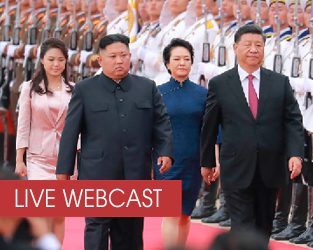
Harvard University Director of the Korea Project and Adjunct Lecturer John Park shares insights into recent North Korea developments and China’s interplay. Subsequent to the Moon-Biden summit and marking the anniversary of its mutual defense pact, the PRC and DPRK reaffirmed ties. Park, in conversation with Senior Director Stephen Noerper, sheds light on the implications for stability in Northeast Asia and implications for the US-ROK alliance.
North Korea, Inc. and China
Thursday, September 9, 2021 | 12 PM
The Korea Society 350 Madison Avenue, 24th Floor New York, NY 10017
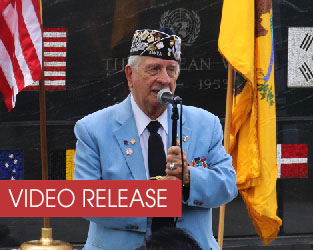
Since its founding by General James A. Van Fleet, the Korea Society has honored the service and sacrifice of Korean war veterans. This video salute features remarks on the anniversary of the signing of the 1953 Armistice by Society president and CEO Tom Byrne, Korean Consul General Ambassador Chang Won-sam, Korea Society board chair and former Ambassador to Korea Kathleen Stephens, Korea Society board member and former Commander Walter “Skip” Sharp, and Korean War Veterans area commander Salvatore Scarlato.
Annual Armistice Day Salute
Tuesday, July 27, 2021 | 12 PM
The Korea Society 350 Madison Avenue, 24th Floor New York, NY 10017
This program series aims to promote dialogue and awareness on Korean Peninsula peace and security issues, covering US-Korea relations, inter-Korean relations, and regional relations from a variety of functional perspectives. The series consists of online moderated dialogues where program speakers seek to identify opportunities for forward progress to help specialists and policymakers generate new thinking on core problem areas. The series is supported by a grant from the UniKorea Foundation.
The Unseen Resilience of North Korean Female Defectors||
Thursday, September 18, 2025 | 4 PM (EDT)|
Join us for a discussion on the unseen resilience of North Korean female defectors. Kim Seonghui and Na Min-Hee provide powerful personal testimony, describing their life and experiences in North Korea, their escape, and their new life in South Korea… Read More
Korean Unification: A Fading Prospect?||
Wednesday, March 6, 2024 | 8 AM (EST) |
Join us for this conversation about prospects for Korean Unification with Jeongmin Kim, Lead Correspondent at NK News / Editorial Director at Korea Pro, Dr. Lee Sang-shin, director of the Center for the Study of Liberal Democracy at Korea Institute of National Unification (KINU), and Dr. Nicholas Eberstadt… Read More
Prospects for Diplomacy with North Korea with Markus Garlauskas, Soo Kim and Ankit Panda ||
Wednessday, September 16, 2020 | 12 PM|
Join us for a discussion on challenges and opportunities for continued nuclear negotiations with North Korea, featuring Markus Garlauskas, former U.S. National Intelligence Officer for North Korea, Soo Kim, RAND, and Ankit Panda, Carnegie Endowment for International Peace… Read More
New Views on Korean Peace Regime and Unification || with Frank Aum, Hannah Song, Joseph Kim and Rachel Minyoung Lee | Thursday, October 15, 2020 | 11 AM
Join us for this discussion on prospects for a peace regime and inter-Korean social integration with Frank Aum, United States Institute of Peace, Hannah Song, President & CEO at Liberty in North Korea, Rachel Minyoung Lee, former intelligence analyst for the U.S. government, and Joseph Kim, Human Freedom Initiative, George W. Bush Institute… Read More
North Korean Sanctions and Adaptation || with Darya Dolzikova, William J. Newcomb and Cameron Trainer | Thursday, November 19, 2020 | 12 PM
Join us for a discussion on international economic sanctions on North Korea with William Newcomb, Fellow at the Center for Advanced Defense Studies and former Member of the Panel of Experts on DPRK Sanctions at the United Nations, Darya Dolzikova of the Royal United Services Institute, and Cameron Trainer of the James Martin Center for Nonproliferation Studies… Read More
Being in North Korea: A special podcast interview|| with Andray Abrahamian | Thursday, December 10, 2020
In this podcast interview, Andray Abrahamian offers insights from his new book, Being in North Korea, an exploration of North Korean society from the inside, citing personal experiences gained by the author over 30 trips to the DPRK… Read More
Pathways to a Brighter Future for North Korea’s Economy|| with Byung-Yeon Kim, Brad Babson and Peter Ward | Thursday, February 18, 2021 | 6 PM
Join us for a discussion about scenarios for North Korean development and inter-Korean economic integration. Seoul National University economics Professor Byung-Yeon Kim, former World Bank economist and a consultant on Asian affairs Brad Babson, and NK Pro analyst Peter Ward join Korea Society President Tom Byrne in conversation… Read More
The Historical Causes of Korea’s Division and Challenges to Reconciliation|| with Michael D. Shin | Thursday, March 18, 2021 | 12 PM
Michael D. Shin, a Fellow of Robinson College, Cambridge, looks at the late Joseon period and the Japanese colonial period to examine the historical causes of Korean division and investigate their impact on inter-Korean reconciliation in this program supported by the UniKorea Foundation… Read More
Role of Regional Players in Inter-Korean Peace and Unification|| with Katrin Fraser Katz, Kathryn Botto and Stephen Noerper | Friday, April 16, 2021 | 12 PM
Join us for a discussion on regional roles in building inter-Korean peace and unification with Columbia University adjunct professor Katrin Fraser Katz, Carnegie Endowment for International Peace senior research analyst Kathryn Botto, and Columbia University adjunct professor, Weatherhead East Asian Institute research scholar and Society senior director Stephen Noerper… Read More
Bridging the Divide: Social & Cultural Integration of North and South Korea|| with Hyun In-nae and Bada Nam | Thursday, May 20, 2021 | 12 PM
Join us for this discussion about obstacles and opportunities for inter-Korean social and cultural integration, featuring Dr. Hyun In-nae, Ewha University Professor and former director of the Korea Hana Foundation, and Bada Nam, Secretary General for the South Korean non-governmental organization People for Successful Corean Reunification (PSCORE)… Read More
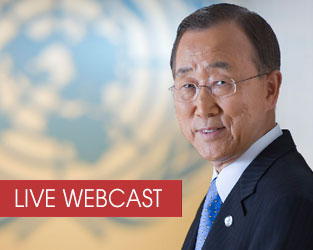
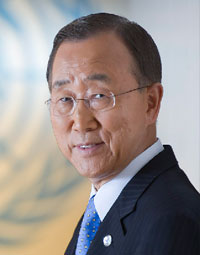
Former UN Secretary General Ban Ki-moon discusses his new book Resolved: Uniting Nations in a Divided World on its release, in conversation with Korea Society board chairwoman Ambassador Kathleen Stephens and with a welcome by Korea Society president and CEO Tom Byrne. This event is co-hosted with the Korea Economic Institute of America.
Resolved: Uniting Nations in a Divided World
Tuesday, June 15, 2021 I 9 AM
The Korea Society 350 Madison Avenue, 24th Floor New York, NY 10017
Ban Ki-moon is a South Korean diplomat and former foreign minister who served as the eighth Secretary-General of the United Nations from January 2007 to December 2016. Throughout his career, Ban worked to mobilize international efforts against a slate of global pressures including: climate change, extreme poverty, and armed conflict to make the world a safer and more equitable place. His motto: Mission Possible.
ABOUT THE MODERATOR:
Amb. Kathleen Stephens Chair, Board of Directors, The Korea Society President & CEO, Korea Economic Institute
Ambassador (ret.) Kathleen Stephens is a former American diplomat. She was U.S. Ambassador to the Republic of Korea 2008-2011. Korea has been a leit motif of Ambassador Stephens’ life and career since she served in rural Korea as a Peace Corps volunteer and trainer, 1975-1977. She was in Korea 1983-1989, first as a political officer at the U.S. Embassy in Seoul reporting on Korea’s domestic political and human rights scene, and later leading the U.S. Consulate in Busan.
Other overseas assignments included postings to China, former Yugoslavia, Portugal, Northern Ireland, where she was U.S. Consul General in Belfast during the negotiations culminating in the 1998 Good Friday Agreement, and India, where she was U.S. Charge ‘d Affaires (2014-2015).
Ambassador Stephens also served in a number of policy positions in Washington at the Department of State and the White House. These included acting Under Secretary of State for Public Diplomacy and Public Affairs (2012), Principal Deputy Assistant Secretary of State for East Asian and Pacific Affairs (2005-2007), Deputy Assistant Secretary of State for European and Eurasian Affairs (2003-2005), and National Security Council Director for European Affairs at the Clinton White House.
Stephens was William J. Perry Fellow for Korea at Stanford University 2015-2018. She is a Mansfield Foundation Distinguished Fellow, Pacific Century Institute board chairman, vice-chair of the board of trustees for The Asia Foundation, and board chair of The Korea Society.
She has been President and CEO of the Korea Economic Institute of America since September 2018, based in Washington, DC.
Join us for this discussion about the dynamics of U.S.-Japan-Korea trade relations and regional economic integration, featuring Asia Society Policy Institute Vice President Wendy Cutler, Waseda University Professor Emeritus and Economic Research Institute for East Asia and ASEAN Senior Research Advisor Shujiro Urata, and Korea Development Institute and Johns Hopkins University Professor Wonhyuk Lim. How can the three countries overcome obstacles to cooperate on shared challenges to achieve prosperity and shape the economic rules of the road? What will the Biden administration mean for U.S. trade policy? This program is co-hosted by the Korea Society, the Japan Society and Asia Society Policy Institute (ASPI), with moderation by Korea Society president Tom Byrne, and an introduction by Japan Society president Joshua W. Walker.
Challenges and Opportunities for U.S.-Japan-Korea Trade Relations with Wendy Cutler, Shujiro Urata and Wonhyuk Lim
Thursday, June 3, 2021 | 8 AM
The Korea Society 350 Madison Avenue, 24th Floor New York, NY 10017
Wonhyuk Lim is a professor at the Korea Development Institute School of Public Policy and Management and adjunct lecturer at the Johns Hopkins University School of Advanced International Studies. Since he joined KDI in 1996, his research has focused on state-owned enterprises and family-based business groups (chaebol). He has also written extensively on development issues, in conjunction with policy consultation projects under Korea’s Knowledge Sharing Program (KSP). After the 2002 Presidential Election in Korea, he worked for the Presidential Transition Committee and the Presidential Committee on Northeast Asia and helped to set policy directions for the restructuring of the electricity and gas sector and for Northeast Asian energy cooperation. Dr. Lim was at Brookings as a CNAPS Fellow in 2005-06. After returning to KDI in 2007, he became Director of the Office of Economic Development Cooperation, precursor to the Center for International Development (CID).
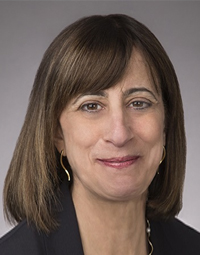
Wendy Cutler is Vice President at the Asia Society Policy Institute (ASPI) and the managing director of the Washington, D.C. office. In these roles, she focuses on building ASPI’s presence in the nation’s capital and on leading initiatives that address challenges related to trade, investment, and innovation, as well as women’s empowerment in Asia. She joined ASPI following an illustrious career of nearly three decades as a diplomat and negotiator in the Office of the U.S. Trade Representative (USTR), where she also served as Acting Deputy U.S. Trade Representative. During her USTR career, she worked on a range of bilateral, regional, and multilateral trade negotiations and initiatives, including the U.S.-Korea Free Trade Agreement, the Trans-Pacific Partnership, U.S.-China negotiations, and the WTO Financial Services negotiations. She has published a series of ASPI papers on the Asian trade landscape and serves as a regular media commentator on trade and investment developments in Asia and the world.
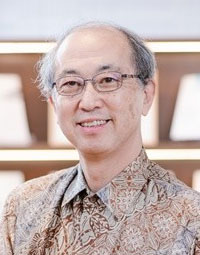
Shujiro Urata is Professor Emeritus, Waseda University. He received his Ph.D in Economics from Stanford University in 1978. Before joining Waseda University in 1986, he was research associate at the Brookings Institution and an economist at the World Bank. He is currently affiliated with Economic Research Institute for East Asia and ASEAN (ERIA), Asian Development Bank Institute (ADBI), and Japan Center for Economic Research (JCER). His focus of research is in international trade and development economics.
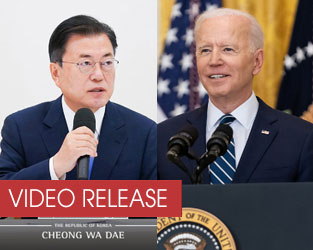
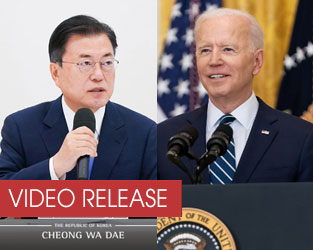
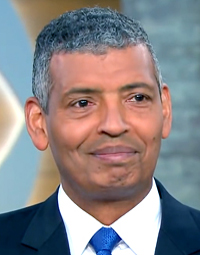
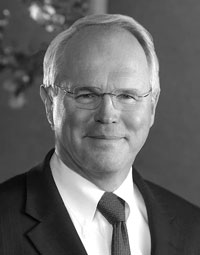
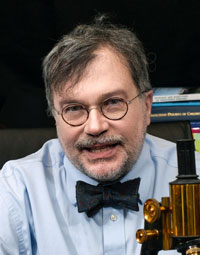
Join us for this rapid response analysis on the first summit meeting between South Korean President Moon Jae-in and U.S. President Joseph R. Biden Jr. In a discussion covering the latest trends regarding the U.S.-Korea Alliance, geostrategic coordination, North Korea issues, and COVID-19 vaccine diplomacy, Korea Society president and CEO Tom Byrne is joined by former UNC/CFC/USFK Commander General (ret.) Vincent Brooks, Columbia University School of International and Public Affairs George W. Ball Adjunct Professor Ambassador (ret.) Christopher R. Hill, and Dr. Peter J. Hotez, Dean of the National School of Tropical Medicine at Baylor College of Medicine.
U.S.-Korea Summit Analysis with General (ret.) Vincent Brooks, Ambassador (ret.) Christopher Hill, and Dr. Peter Hotez
Tuesday, May 25, 2021
The Korea Society 350 Madison Avenue, 24th Floor New York, NY 10017
Vincent K. Brooks is a career Army officer who recently retired from active duty as the four-star general in command of all U.S. Forces in Korea, where he concurrently commanded United Nations Command as well as the Republic of Korea – U.S. Combined Forces Command comprising over 650,000 Koreans and Americans under arms. General Brooks, who goes by “Vince,” is a 1980 graduate of the United States Military Academy at West Point. He is the eighth African American in history to attain the military’s top rank – four- star general in the United States Army. He has a Bachelor of Science in Engineering from the U.S. Military Academy at West Point; a Master of Military Art and Science from the prestigious U.S. Army School of Advanced Military Studies at Fort Leavenworth, Kansas; was a National Security Fellow at the Harvard University John F. Kennedy School of Government; and holds an honorary Doctor of Laws from the New England School of Law. Widely respected as a speaker and leader of cohesive, innovative organizations, within and beyond the military, his areas of expertise are: leadership in complex organizations, crisis leadership, and building cohesive trust-based teams, national security, policy, strategy, international relations, military operations, combating terrorism and countering the proliferation of weapons of mass destruction, diversity and inclusion.
Christopher Robert Hill is a former career diplomat, a four-time ambassador, nominated by three presidents, whose last post was as Ambassador to Iraq, April 2009 until August 2010. Prior to Iraq, Hill served as Assistant Secretary of State for East Asian and Pacific Affairs from 2005 until 2009 during which he was also the head of the US delegation to the Six Party Talks on the North Korean nuclear issue. Earlier, he was the U.S. Ambassador to the Republic of Korea. Previously he served as U.S. Ambassador to Poland (2000-2004), Ambassador to the Republic of Macedonia (1996-1999) and Special Envoy to Kosovo (1998-1999). He also served as a Special Assistant to the President and a Senior Director on the staff of the National Security Council, 1999-2000.
Peter J. Hotez , M.D., Ph.D. is Dean of the National School of Tropical Medicine and Professor of Pediatrics and Molecular Virology & Microbiology at Baylor College of Medicine where he is also the Co-director of the Texas Children’s Center for Vaccine Development (CVD) and Texas Children’s Hospital Endowed Chair of Tropical Pediatrics. He is also University Professor at Baylor University, Fellow in Disease and Poverty at the James A Baker III Institute for Public Policy, Senior Fellow at the Scowcroft Institute of International Affairs at Texas A&M University, Faculty Fellow with the Hagler Institute for Advanced Studies at Texas A&M University, and Health Policy Scholar in the Baylor Center for Medical Ethics and Health Policy.
Join us for this discussion about obstacles and opportunities for inter-Korean social and cultural integration, featuring Dr. Hyun In-nae, Ewha University Professor and former director of the Korea Hana Foundation, and Bada Nam, Secretary General for the South Korean non-governmental organization People for Successful Corean Reunification (PSCORE). In an interview with Korea Society policy director Jonathan Corrado, the two draw insights from the findings of new survey research to describe inter-Korean differences in culture, education, and perception, and encourage interaction and dialogue to help bridge the divide between North and South.
This program is supported by a grant from the UniKorea Foundation.
Bridging the Divide: Social & Cultural Integration of North and South Korea with Hyun In-nae and Bada Nam
Thursday, May 20, 2021 | 12 PM
The Korea Society 350 Madison Avenue, 24th Floor New York, NY 10017
Dr. Hyun In-nae is a visiting professor of North Korean Studies at Ewha Women’s University, where she researches North Korea and North Korean defectors. She previously served as a director at the Korea Hana Foundation, as a guest researcher at the Korea Institute for National Unification, and as vice representative for North Korea Intellectuals Solidarity, a Seoul-based NGO. Dr. Hyun is North Korean defector herself, having left North Korea in 2004 before arriving in South Korea. While in North Korea, Dr. Hyun lectured at Najin Coastal Shipping University and Cheongjin Medical University about Juche philosophy.
Dr. Hyun received a PhD from Ewha Womans University, and continues to produce research that highlights real stories from North Korean defectors and provides insights on integration from a sociological perspective. She is an author of Social Integration Between North and South Koreans as well as Guide to Communication for Social Integration Between North and South Koreans. In 2016, she published an article titled, “Political Consciousness and Political Participation of North Koreans: A Comparison of Men and Women,” in the journal of The Korean Association of North Korean Studies.
Nam Bada is Secretary General of People for Successful COrean Reunification (PSCORE). With a background in international affairs, Bada works as an activist in North Korean human rights and Korean reunification. Since 2012, he has contributed to various U.N. human rights mechanisms. Bada has worked on numerous publications, reports, and campaigns pertinent to the humanitarian crisis in North Korea. He has been interviewed by several media outlets, including Norddeutscher Rundfunk (NDR) in Germany and Voice of America (VOA).
University of Missouri Assistant Professor and Institute for Korean Studies Co-Director Aram Hur, the 2021 Sherman Scholar award recipient, speaks on May 6 at 3 PM to Korea’s Changing National Story and Democratic Future. Hur addresses Korean nationalism, a “rapidly fragmenting and changing” national story, and the danger of democratic rollback. Senior director Stephen Noerper describes Hur’s selection and address as “incredibly important given the costs of such fragmentation in Korea, but comparatively in the United States of late and by extension to a world seeing rollback in Myanmar, Thailand, Russia and elsewhere.”
During the program, Korea Society President and CEO Tom Byrne introduces Hur, and inaugural Sherman Scholar Award recipient and Columbia University professor Katrin Katz presents her academic resume. Following Hur’s presentation, USC Professor and Korean Studies Institute Director David Kang provides commentary, and Korea Society policy director Jonathan Corrado facilitates the audience discussion.
The annual award and lecture, now in its fifth year, aims to grow US thought leadership on Korea for a new generation. The award is presented across disciplines and to emerging thought leaders, from Ph.D. candidates to junior professors and respective research or non-profit professionals. The award is made possible through the generosity of Mr. and Mrs. Philip Sherman and family. You can view the presentations of former award winners here.
Sherman Family Korea Emerging Scholar Lecture 2021
Thursday, May 6, 2021 | 3 PM EDT
The Korea Society 350 Madison Avenue, 24th Floor New York, NY 10017
Aram Hur joined the Department of Political Science as an Assistant Professor in 2019 and holds a joint appointment with the Truman School of Public Affairs. She also serves as Co-Director for the MU Institute for Korean Studies. Previously, she was a Provost Postdoctoral Fellow at New York University and a 2018-19 U.S.-Korea NextGen Scholar selected by the Center for Strategic and International Studies (CSIS). She holds a Ph.D. from Princeton University, M.P.P. from the Harvard Kennedy School, and B.A. from Stanford University. Dr. Hur’s research focuses on national politics and democracy, with particular focus on issues of identity change, integration, and democratic support in East Asia. Her work is published in academic journals such as the British Journal of Political Science, Comparative Politics, and Journal of East Asian Studies, and cited in media outlets such as the New York Times, Washington Post, and Foreign Policy.
Katrin Fraser Katz is an Adjunct Assistant Professor in the Department of Political Science at Columbia University and an Adjunct Fellow (Non-resident) in the Office of the Korea Chair at the Center for Strategic and International Studies (CSIS) in Washington, DC. Dr. Katz’s research, which has been supported by grants from the Korea Foundation and the Horowitz Foundation for Social Policy, explores the interplay of cooperation and conflict in East Asia’s political, economic, and security dynamics. She has taught in the Asian Studies Program at Georgetown University and was a 2018-19 US-Korea NextGen Scholar. In 2017, she received the inaugural Sherman Family Korea Emerging Scholar Lecture Series award from the Korea Society. Dr. Katz served as director for Japan, Korea, and oceanic affairs on the staff of the White House National Security Council from 2007 to 2008. She was also a special assistant to the assistant secretary for international organization affairs at the U.S. Department of State and an analyst at the Central Intelligence Agency. She holds a Ph.D. in political science from Northwestern University; a master’s degree in East Asian and international security studies from the Fletcher School of Law and Diplomacy, where she was awarded the John C. Perry Scholarship for East Asian Studies; and a bachelor’s degree, magna cum laude, in international relations and Japanese from the University of Pennsylvania.
David C. Kang is Maria Crutcher Professor in International Relations, Business and East Asian Languages and Cultures at the University of Southern California, with appointments in both the School of International Relations and the Marshall School of Business. At USC he is also director of the Korean Studies Institute. Kang’s latest book is American Grand Strategy and East Asian Security in the 21st Century (Cambridge University Press, 2017). He is also author of East Asia Before the West: Five Centuries of Trade and Tribute (Columbia University Press, 2010); China Rising: Peace, Power, and Order in East Asia (Columbia University Press, 2007); Crony Capitalism: Corruption and Development in South Korea and the Philippines (Cambridge University Press, 2002); and Nuclear North Korea: A Debate on Engagement Strategies, co-authored with Victor Cha (Columbia University Press, 2003). He received an A.B. with honors from Stanford University and his Ph.D. from Berkeley.