State, Society, and Markets in North Korea

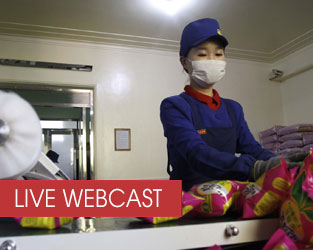
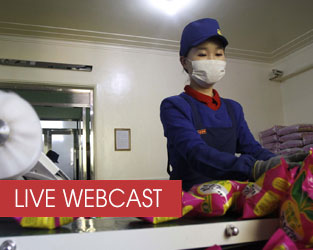
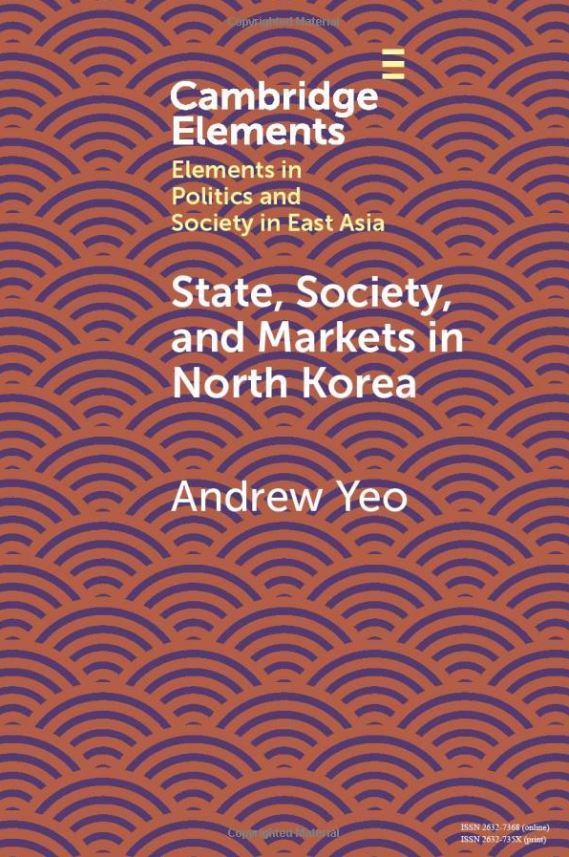
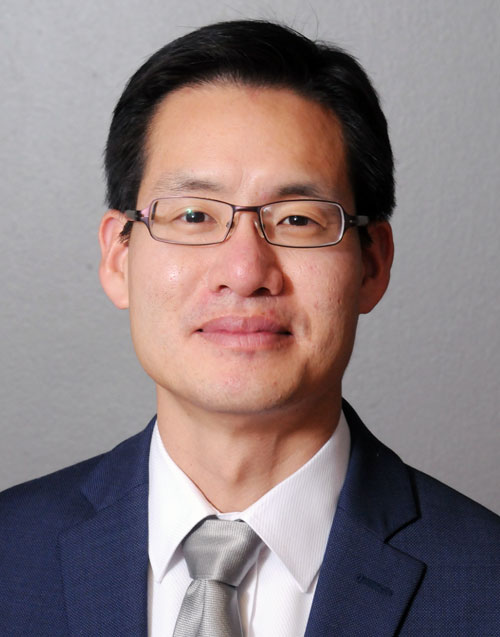
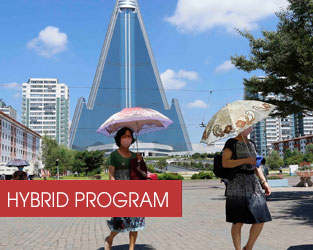
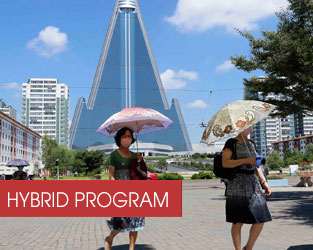
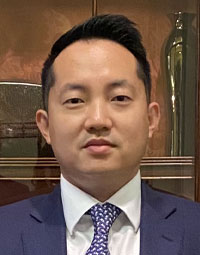
Join us for this discussion on North Korea’s evolving economy, state, and society with Dr. Andrew Yeo, the SK-Korea Foundation Chair in Korea Studies at The Brookings Institution and Professor of Politics, Catholic University of America. Yeo’s new book, State, Society, and Markets in North Korea, examines the extent and limitations of reform and development under leader Kim Jong Un, arguing that, “situational factors will continue to complicate the country’s future domestic prospects.” This live webcast discussion is in conversation with Korea Society policy director Jonathan Corrado.

This program was made possible by the generous support of the Korea Foundation and our corporate sponsors. For more information about our supporters, please refer to our webpage here.


You can purchase the book here


State, Society, and Markets in North Korea
with Professor Andrew Yeo

LIVE WEBCAST

FRIDAY, MAY 13, 2022 | 9 AM (EDT)


The Korea Society
350 Madison Avenue, 24th Floor
New York, NY 10017


ABOUT THE SPEAKERS:


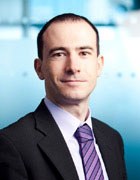
Dr. Andrew Yeo is a senior fellow and the SK-Korea Foundation Chair in Korea Studies at Brookings Institution’s Center for East Asia Policy Studies. He is also a professor of politics at The Catholic University of America in Washington, D.C.His latest book, “State, Society and Markets in North Korea” examines marketization in North Korea and its impact on state-society relations. Yeo’s scholarly publications can be found in International Studies Quarterly, European Journal of International Relations, Perspectives on Politics, Comparative Politics, Comparative Strategy, Journal of East Asian Studies, and International Relations of the Asia-Pacific among others. He is a two-time recipient of a U.S. Fulbright grant conducting research as a senior scholar in the Philippines in 2020, and as a graduate student in South Korea in 2005-06. Yeo received his doctorate in government from Cornell University, and bachelor’s in psychology and international studies magna cum laude from Northwestern University.


South Korea and a Regional Order in Flux

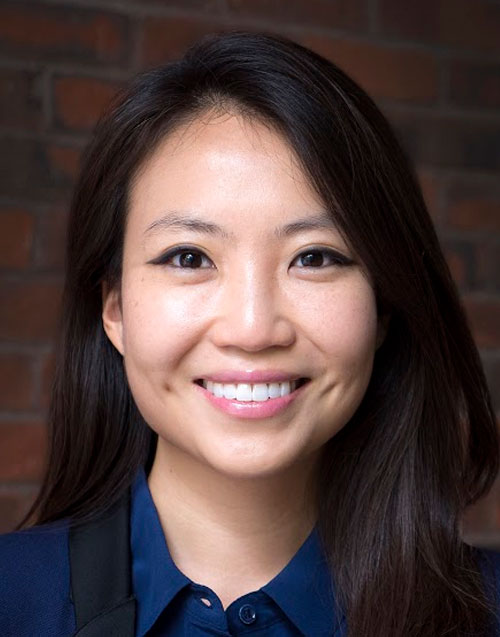
Amid intensifying U.S.-China strategic competition, a shifting Indo Pacific regional order, and an undaunted North Korea that continues to develop its nuclear weapons and missile programs, how can South Korea maximize its opportunities and defend against threats? Join us for this conversation about South Korea and a Regional Order in Flux with Dr. Andrew Yeo, SK-Korea Foundation Chair in Korea Studies at The Brookings Institution and Professor of Politics, Catholic University of America, and Dr. Patricia Kim, David M. Rubenstein Fellow at The Brookings Institution, moderated by Korea Society Van Fleet senior fellow Dr. Katrin Katz.

This program was made possible by the generous support of the Korea Foundation and our corporate sponsors. For more information about our supporters, please refer to our webpage here.


South Korea and a Regional Order in Flux
In-Person and Live Webcast

Thursday, May 12, 2022 | 12 PM (EDT)


The Korea Society
350 Madison Avenue, 24th Floor
New York, NY 10017


About the Speaker:


Dr. Andrew Yeo is a senior fellow and the SK-Korea Foundation Chair in Korea Studies at Brookings Institution’s Center for East Asia Policy Studies. He is also a professor of politics at The Catholic University of America in Washington, D.C.His latest book, “State, Society and Markets in North Korea” examines marketization in North Korea and its impact on state-society relations. Yeo’s scholarly publications can be found in International Studies Quarterly, European Journal of International Relations, Perspectives on Politics, Comparative Politics, Comparative Strategy, Journal of East Asian Studies, and International Relations of the Asia-Pacific among others. He is a two-time recipient of a U.S. Fulbright grant conducting research as a senior scholar in the Philippines in 2020, and as a graduate student in South Korea in 2005-06. Yeo received his doctorate in government from Cornell University, and bachelor’s in psychology and international studies magna cum laude from Northwestern University.


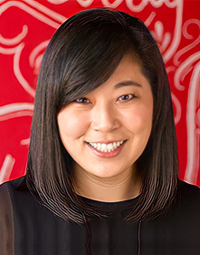
Dr. Patricia M. Kim is a David M. Rubenstein Fellow at Brookings and holds a joint appointment to the John L. Thornton China Center and the Center for East Asia Policy Studies. She is an expert on Chinese foreign policy, U.S.-China relations, and U.S. alliance management and regional security dynamics in East Asia. Previously, Kim served as a China specialist at the U.S. Institute of Peace and was also a Stanton Nuclear Security Fellow at the Council on Foreign Relations, International Security Program Research Fellow at the Harvard Kennedy School of Government’s Belfer Center for Science and International Affairs, and postdoctoral fellow at the Princeton-Harvard China and the World Program at Princeton University. Kim’s writing and research has been featured widely in outlets such as Foreign Affairs, Foreign Policy, The New York Times, The Washington Post and The South China Morning Post..Kim received her doctoral degree from the Department of Politics at Princeton University and her bachelor’s degree with highest distinction in political science and Asian studies from the University of California, Berkeley. Kim is also a Global Fellow at the Woodrow Wilson Center and a term member of the Council on Foreign Relations.


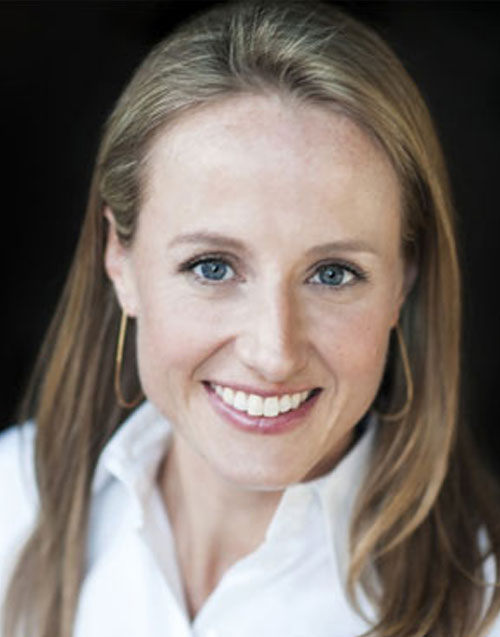
Dr. Katrin Fraser Katz, is The Korea Society’s inaugural Van Fleet Nonresident Senior Fellow. Dr. Katz is a former director for Japan, Korea, and oceanic affairs on the staff of the National Security Council, where she served from 2007 to 2008. Previously, she was a special assistant to the assistant secretary for international organization affairs at the U.S. Department of State and an analyst at the Central Intelligence Agency. She currently also serves as an Adjunct Fellow (Non-resident) in the Office of the Korea Chair at the Center for Strategic and International Studies (CSIS) in Washington, DC. She was previously an Adjunct Assistant Professor in the Department of Political Science at Columbia University and has also taught at Georgetown University. In 2017, Dr. Katz received the inaugural Sherman Family Korea Emerging Scholar Lecture Series award from The Korea Society. Dr. Katz’s research, which has been supported by grants from the Korea Foundation and the Horowitz Foundation for Social Policy, explores the interplay of cooperation and conflict in East Asia’s political, economic, and security dynamics. She holds a Ph.D. in political science from Northwestern University; a master’s degree in East Asian and international security studies from the Fletcher School of Law and Diplomacy, where she was awarded the John C. Perry Scholarship for East Asian Studies; and a bachelor’s degree, magna cum laude, in international relations and Japanese from the University of Pennsylvania.


US-Korea-China Relations

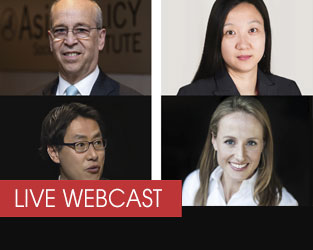
With strategic competition between the United States and China intensifying and a new South Korean President set to shift Seoul’s foreign policy preferences, join us for this discussion on US-Korea-China relations, featuring: Dr. Seong-Hyon Lee, Harvard University Fairbank Center visiting scholar and Former Director of Sejong Institute Center for Chinese Studies, Yun Sun, Senior Fellow and Co-Director of the East Asia Program and Director of the China Program at the Stimson Center, Daniel Russel, Vice President for International Security and Diplomacy at the Asia Society Policy Institute, and Dr. Katrin Katz, Korea Society Van Fleet Senior Fellow, moderated by policy director Jonathan Corrado. This program is produced in collaboration with Asia Society Policy Institute.

This program was made possible by the generous support of the Korea Foundation and our corporate sponsors. For more information about our supporters, please refer to our webpage here.


US-Korea-China Relations
Thursday, April 28, 2022 | 12 PM (EDT)

The Korea Society
350 Madison Avenue, 24th Floor
New York, NY 10017


ABOUT THE SPEAKERS:
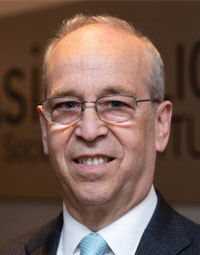
Daniel Russel is Vice President for International Security and Diplomacy at the Asia Society Policy Institute (ASPI). A career member of the Senior Foreign Service at the U.S. Department of State, he most recently served as the Assistant Secretary of State for East Asian and Pacific Affairs. Prior to his appointment as Assistant Secretary on July 12, 2013, Mr. Russel served at the White House as Special Assistant to the President and National Security Council (NSC) Senior Director for Asian Affairs. During his tenure there, he helped formulate President Obama’s strategic rebalance to the Asia Pacific region, including efforts to strengthen alliances, deepen U.S. engagement with multilateral organizations, and expand cooperation with emerging powers in the region. Mr. Russel was educated at Sarah Lawrence College and University College, University of London, UK.
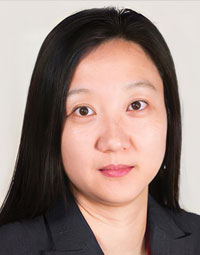
Yun Sun is a Senior Fellow and Co-Director of the East Asia Program and Director of the China Program at the Stimson Center. Her expertise is in Chinese foreign policy, U.S.-China relations and China’s relations with neighboring countries and authoritarian regimes. From 2011 to early 2014, she was a Visiting Fellow at the Brookings Institution, jointly appointed by the Foreign Policy Program and the Global Development Program, where she focused on Chinese national security decision-making processes and China-Africa relations. From 2008 to 2011, Yun was the China Analyst for the International Crisis Group based in Beijing, specializing on China’s foreign policy towards conflict countries and the developing world. Yun earned her master’s degree in international policy and practice from George Washington University, as well as an MA in Asia Pacific studies and a BA in international relations from Foreign Affairs College in Beijing.
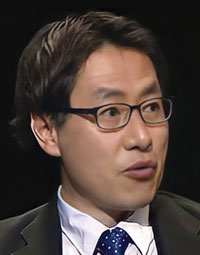
Dr. Seong-hyon Lee is a Visiting Scholar at Harvard University’s Fairbank Center for Chinese Studies and a Senior Fellow at the George H. W. Bush Foundation for U.S.-China Relations. He is the Director at the Center for Chinese Studies at the Sejong Institute in Seoul, South Korea. His research focuses on contemporary relations between China and South Korea. He received his Ph.D. from Tsinghua University.

Dr. Katrin Fraser Katz, is The Korea Society’s inaugural Van Fleet Nonresident Senior Fellow. Dr. Katz is a former director for Japan, Korea, and oceanic affairs on the staff of the National Security Council, where she served from 2007 to 2008. Previously, she was a special assistant to the assistant secretary for international organization affairs at the U.S. Department of State and an analyst at the Central Intelligence Agency. She currently also serves as an Adjunct Fellow (Non-resident) in the Office of the Korea Chair at the Center for Strategic and International Studies (CSIS) in Washington, DC. She was previously an Adjunct Assistant Professor in the Department of Political Science at Columbia University and has also taught at Georgetown University. In 2017, Dr. Katz received the inaugural Sherman Family Korea Emerging Scholar Lecture Series award from The Korea Society. Dr. Katz’s research, which has been supported by grants from the Korea Foundation and the Horowitz Foundation for Social Policy, explores the interplay of cooperation and conflict in East Asia’s political, economic, and security dynamics. She holds a Ph.D. in political science from Northwestern University; a master’s degree in East Asian and international security studies from the Fletcher School of Law and Diplomacy, where she was awarded the John C. Perry Scholarship for East Asian Studies; and a bachelor’s degree, magna cum laude, in international relations and Japanese from the University of Pennsylvania.


 

Busan’s Bid for World Expo 2030 with Ambassador Enna Park


Join us for this exciting presentation by Ambassador Enna Park about Busan’s bid to host the 2030 World Expo. Officially known as International Registered Exhibitions, World Expos are a global gathering of nations dedicated to finding solutions to pressing challenges by offering a journey inside a universal theme through engaging and immersive activities. Korea became one of five candidates to host the World Expo after submitting its bid in June 2021. The other candidates are Moscow, Odessa, Rome, and Ryadh. The host country will be determined by the 170 BIE (Bureau International des Expositions) Member States in 2023, with each country casting one vote. Busan’s bid is based on the theme “Transforming Our World, Navigating Toward a Better Future.” Busan is a global hub of both commerce and culture. This city is a transportation and logistics hub for Northeast Asia and its vibrant atmosphere is an incubator for artists such as musicians and filmmakers. In the future, Busan seeks to become an eco-friendly, smart city that harnesses Korea’s advanced digital technologies. Busan’s openness, diversity, and inclusivity make it the ideal host for the 2030 World Expo. If the bid succeedes, the Expo will take place in the city of Busan between May and October 2030.

This program was made possible by the generous support of the Korea Foundation and our corporate sponsors. For more information about our supporters, please refer to our webpage here.


Busan’s Bid for World Expo 2030
with Ambassador Enna Park

LIVE WEBCAST

Wednesday, April 27, 2022 | 10 AM (EDT)


The Korea Society
350 Madison Avenue, 24th Floor
New York, NY 10017


About the Speaker:


Ambassador Enna Park is a South Korean diplomat who served as Ambassador to the UK from 2018 to 2021. In August 2021, she was appointed as the International Relations Envoy of Busan Metropolitan City to host Busan’s bid for the 2030 World Expo. In the past, Ambassador Park served numerous roles in the Ministry of Foreign Affairs, including for missions and consulate offices in India, the United Nations, New York, and China. She was the first woman to assume the post as well as the second woman and the first female career diplomat to represent Korea in the P5 nations, the permanent members of the United Nations Security Council.


Pyonghattan: Escapees from North Korea’s Capital

Sibling defectors from Pyongyang Seohyun Lee and Hyun-Seung Lee discuss their life in North Korea, their journey to escape, and their transition to life in the United States, alongside Liberty in North Korea (LiNK) President & CEO Hannah Song, in conversation with Korea Society policy director Jonathan Corrado. Hyunseung and Seohyun Lee are prominent North Korean activists and siblings. They’re the children of Ri Jong-ho, a high ranking North Korean defector who worked for decades in “Office 39,” which generates revenue for the North Korean leadership. Hyun-Seung and Seohyun were raised in Pyongyang, educated in China, and escaped North Korea in 2014 with their family after witnessing a series of brutal purges by Kim Jong Un. They speak to their experience as millennials from Pyongyang and share the true nature of the Kim regime and the reality of life in North Korea. The event marks the anniversary of the February 2014 publication of the historic UN Commission of Inquiry report on human rights in the Democratic People’s Republic of Korea.

This program is made possible by the generous support from the Korea Foundation.


Pyonghattan: Escapees from North Korea’s Capital
In-Person and Livestream

Thursday, March 31, 2022 | 6 PM


The Korea Society
350 Madison Avenue, 24th Floor
New York, NY 10017


ABOUT THE SPEAKERS:


Seo-Hyun Lee was born and raised in central Pyongyang and grew up with the best educational opportunities available in North Korea. In 2008, she enrolled at Kim Il Sung University and continued her study in the Chinese language in the department of Foreign Languages & Literature. After moving to China with her family, she graduated from China Dongbei University of Economics and Finance in 2014 and earned a Bachelor of Science degree in finance. During a heightened period of brutal purges by the Kim Jong Un regime, her family defected to South Korea and finally resettled in the United States in 2016. Advocating for North Korean human rights, Seo-Hyun works with HRNK and LiNK to inform the international community about the uncensored truth of North Korea. Seo-Hyun also works with several other NGOs, such as Lumen, to disseminate information into North Korea, which she believes is the best way to liberate the North Korean people. On top of that, in order to bring greater awareness of North Korea to the outside world, she and her brother have launched a YouTube channel called “Pyonghattan” to share their diverse experiences of living in Pyongyang’s core society.


Hyun-Seung (Arthur) Lee escaped North Korea when he was 29 years old. He engaged in trade and economic relations between China and North Korea through his managerial role in a business entity under the DPRK regime. He graduated from China Dongbei University of Finance and Economics, where he was the chairman of the Kim Il Sung Socialist Youth League, Dalian China branch. After completing his military service in 2005 with the rank of Sergeant, he was granted membership in the Korean Workers Party. Despite his prestigious background and elite-level education, a series of brutal purges by Kim Jong Un forced him and his entire family to defect in late 2014, making their way first to South Korea. Subsequently, the entire family emigrated to the United States (2016) where Hyun-Seung has been engaged with several Washington DC think tanks and NGOs in consulting roles.


Hannah Song is President and CEO of Liberty in North Korea (LiNK). She joined in 2006 as Deputy Director, managing day-to-day operations and coordinating overseas programs, including underground shelters and refugee resettlement efforts in the United States and in South Korea. At the end of 2008, she became President/CEO, helping to re-found the organization with a new mission focused on building international support for the North Korean people, providing direct assistance to North Korean refugees, and developing long-term, people-focused strategies to accelerate positive change inside the country. Hannah regularly speaks at international fora and to the media on North Korea-related issues.


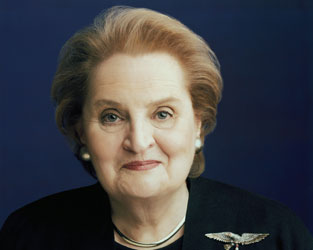
In remembrance of Secretary Madeleine Albright

Photo credit: Timothy Greenfield-Sanders

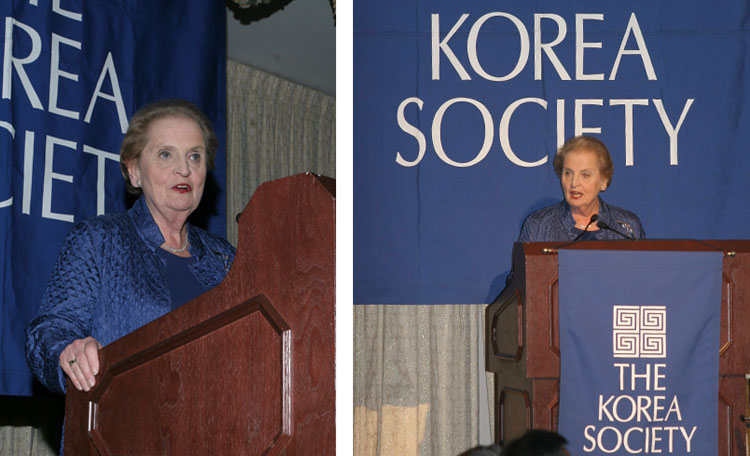
The Korea Society is deeply saddened by the passing of Madeleine Albright. The first female Secretary of State, Secretary Albright played a pivotal role in the Korean peninsula peace process. She was the first sitting US Secretary of State to visit Pyongyang and meet North Korean leader Kim Jong Il in October 2000.

Secretary Albright was also a great friend to The Korea Society. In 2006, she delivered the keynote address at the Society’s Annual Dinner, and spoke to the importance of the US-ROK alliance as well as the importance of cementing a comprehensive plan for denuclearization and development on the Korean peninsula.


And just last October, Secretary Albright delivered virtual remarks at the 2021 Annual Dinner on the successes of the U.S.-Korea relationship over the past seventy years and the need for Seoul and Washington to continue working together to confront future challenges.


Secretary Albright was a tireless advocate for the U.S.-Korea alliance whose work encapsulates the message and mission of The Korea Society. She will be dearly missed.


Rest In Peace, Rear Admiral J. Robert Lunney

 
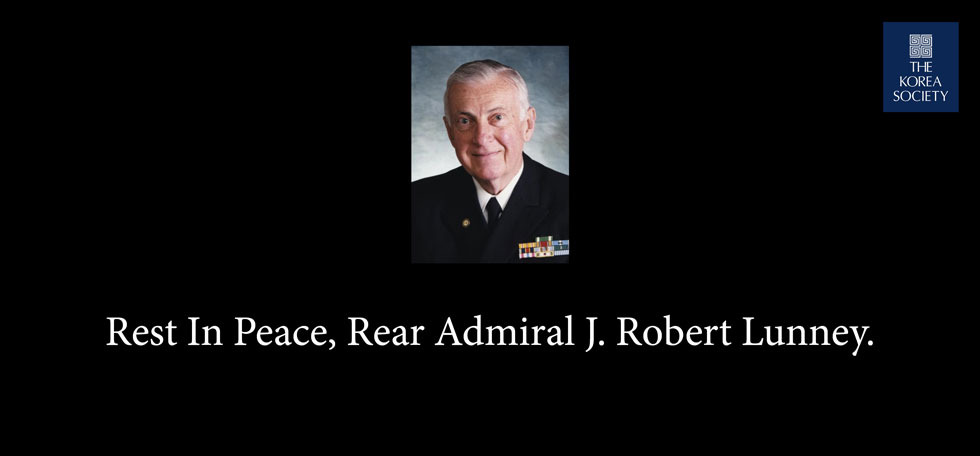
The Korea Society fondly remembers our friend, Rear Admiral J. Robert Lunney, who passed away last week at the age of 94. 
 
For his full obituary, please go here. An excerpt reads:
 
“J. Robert Lunney died peacefully surrounded by his wife and son on Thursday March 10th.  He was born on 15 December 1927 in New York City. Bob was admired by all that knew him for his commitment to family, his humor, passion for history, and dedication to the many organizations he was a member of. Enlisting in the Navy at 17, during World War ll, he served with the Naval Amphibious Forces, Pacific (Marshall Islands and Mariana Islands) 1945-46. During the Korean War he served in Korea, 1950-1951, with the Military Sea Transportation Service as a staff officer (Inchon Landing; Hungnam Evacuation). His Gallant Ship Citation commends Admiral Lunney for his courage and resourcefulness in participating in ‘one of the greatest marine rescues in the history of the world’ at Hungnam, North Korea during December 1950. The Guinness Book of World Records cites this wartime action as, ‘The greatest rescue operation ever by a single ship by evacuating 14,000 refugees’ threatened with annihilation. He will be missed greatly by his wife of 46 years, Joan, and their son Alex.” 
 

To watch a short film produced by The Korea Society detailing the heroic actions of Rear Admiral J. Robert Lunney, his Captain Leonard La Rue, and many others, please go here. This film was adapted from a program where Rear Admiral J. Robert Lunney spoke alongside author, educator, and US Marine Corps veteran Ned Forney, and former Korea Society Senior Director Dr. Stephen Noerper. To view the full conversation, please go here

In lieu of flowers, the family asks those inclined to give to donate to the Lavelle School of the Blind


Korea’s Presidential Election: Forecast and Impact Analysis

In advance of the Republic of Korea 2022 presidential election, the eighth since Korea’s democratization, The Korea Society invites experts in Seoul for a live webcast discussion with a forecast and impact analysis. Michelle Ye Hee Lee, Seoul/Tokyo bureau chief for The Washington PostKarl Friedhoff, Marshall M. Bouton Fellow for Asian Studies at The Chicago Council, Jeongmin Kim, Lead Correspondent at NK News and NK Pro, and Dr. Katrin Katz, Korea Society’s Van Fleet Nonresident Senior Fellow, join policy director Jonathan Corrado to discuss the implications of the vote for Korea, the U.S.-ROK Alliance and relationship, inter-Korean relations, and coordination on North Korea policy.

This program is made possible by the generous support from the Korea Foundation.


Korea’s Presidential Election: Forecast and Impact Analysis

Monday, March 7, 2022 | 8 AM (EST)


The Korea Society
350 Madison Avenue, 24th Floor
New York, NY 10017


About the Speakers:


Michelle Ye Hee Lee is The Washington Post’s Seoul/Tokyo bureau chief, covering Japan and the Koreas. She is based in Tokyo. Previously, she covered money and influence in politics and voting access on the national political enterprise and accountability team and was a reporter for The Post’s Fact Checker. Prior to joining The Post in 2014, she was a government accountability reporter at the Arizona Republic in Phoenix. She is serving her second term as the president of the Asian American Journalists Association, a non-profit founded in 1981 with more than 2,000 journalists across the U.S. and in Asia.


Karl Friedhoff is a fellow in public opinion and Asia policy at the Chicago Council on Global Affairs. Prior to his work at the Council, he was a Korea Foundation-Mansfield Foundation US-Korea Nexus Scholar and a member of the Mansfield Foundation’s Trilateral Working Group. Friedhoff was previously based in Seoul where he was a program officer in the Public Opinion Studies Program at the Asan Institute for Policy Studies. His writing has appeared in The New York Times and The Wall Street Journal, among others, and he has been a frequent guest on both TV and radio to discuss US foreign policy in Asia, South Korea’s politics, and international relations in East Asia. Friedhoff earned his BA in political science at Wittenberg University and an MA in international commerce at Seoul National University.


Jeongmin Kim is a Lead Correspondent at NK News and NK PRO, based in Seoul. She covers inter-Korean issues, as well as DPRK-related foreign affairs, defense and humanitarian developments. As a press corps member for the National Assembly, Democratic Party, and People Power Party, Kim has closely followed the 2022 ROK Presidential election news. Prior to joining NK News, she worked for Reuters Seoul bureau and CSIS Korea Chair in Washington D.C. Her writings on both Koreas appeared on Foreign Policy, Asia Society, and the National Interest, and has been a regular guest on TV and radio to discuss North Korea. Kim earned a BA in Asian Studies at Underwood International College (UIC), Yonsei University, and is currently pursuing MA in political science at Seoul National University.


Dr. Katrin Fraser Katz, is The Korea Society’s inaugural Van Fleet Nonresident Senior Fellow. Dr. Katz is a former director for Japan, Korea, and oceanic affairs on the staff of the National Security Council, where she served from 2007 to 2008. Previously, she was a special assistant to the assistant secretary for international organization affairs at the U.S. Department of State and an analyst at the Central Intelligence Agency. She currently also serves as an Adjunct Fellow (Non-resident) in the Office of the Korea Chair at the Center for Strategic and International Studies (CSIS) in Washington, DC. She was previously an Adjunct Assistant Professor in the Department of Political Science at Columbia University and has also taught at Georgetown University. In 2017, Dr. Katz received the inaugural Sherman Family Korea Emerging Scholar Lecture Series award from The Korea Society. Dr. Katz’s research, which has been supported by grants from the Korea Foundation and the Horowitz Foundation for Social Policy, explores the interplay of cooperation and conflict in East Asia’s political, economic, and security dynamics. She holds a Ph.D. in political science from Northwestern University; a master’s degree in East Asian and international security studies from the Fletcher School of Law and Diplomacy, where she was awarded the John C. Perry Scholarship for East Asian Studies; and a bachelor’s degree, magna cum laude, in international relations and Japanese from the University of Pennsylvania.

Empire and Righteous Nation: 600 Years of China-Korea Relations

Join us for the second edition in our Global View series, a discussion with Yale University Elihu Professor of History Odd Arne Westad on the subject of his book Empire and Righteous Nation: 600 Years of China-Korea Relations, hosted jointly with the National Committee on American Foreign Policy (NCAFP). The discussion is moderated by Korea Society Board Chair Ambassador (ret.) Kathleen Stephens, and introductions are provided by NCAFP president and CEO Ambassador (ret.) Susan Elliott and Korea Society president and CEO Tom Byrne. This program will be live webcast for a virtual audience. Please RSVP to receive the viewing link by clicking the button below. There will also be a limited in-person audience by invitation only. 


Empire and Righteous Nation: 600 Years of China-Korea Relations

Tuesday, February 15, 2022 | 4 PM


The Korea Society
350 Madison Avenue, 24th Floor
New York, NY 10017


ABOUT THE SPEAKERS:


Odd Arne Westad is a scholar of modern international and global history, with a specialization in the history of eastern Asia since the 18th century. He is Elihu Professor of History at Yale University. His latest work, Empire and Righteous Nation: 600 Years of China-Korea Relations, explores the cultural and political relationship between China and the Koreas over the past 600 years. Illuminating both the ties and the tensions that have characterized the China–Korea relationship, Empire and Righteous Nation provides a valuable foundation for understanding a critical geopolitical dynamic. Westad has published sixteen books, most of which deal with twentieth century Asian and global history. In the first part of his career, Westad was mainly preoccupied with the history of the Cold War, China-Russia relations, and the history of the Chinese civil war and the Chinese Communist Party. He published two monographs, Cold War and Revolution, which deals with US and Soviet intervention in the Chinese Civil War in 1944-1946, and Decisive Encounters, which is a general history of the Chinese civil war and the Communist victory in the period from 1946 to 1950. Today, Westad is mainly interested in researching histories of empire and imperialism, first and foremost in Asia, but also world-wide. He is also trying to figure out how China’s late twentieth century economic reforms came into being and how their results changed the global economy. Westad joined the faculty at Yale after teaching at the London School of Economics, where he was School Professor of International History, and at Harvard University, where he was the S.T. Lee Professor of US-Asia Relations. He is a fellow of the British Academy and of several other national academies.


Ambassador (ret.) Kathleen Stephens is a former American diplomat. She was U.S. Ambassador to the Republic of Korea 2008-2011. She is currently Board Chair of The Korea Society and President & CEO of the Korea Economic Institute. Korea has been a leitmotif of Ambassador Stephens’ life and career since she served in rural Korea as a Peace Corps volunteer and trainer, 1975-1977. She was in Korea 1983-1989, first as a political officer at the U.S. Embassy in Seoul reporting on Korea’s domestic political and human rights scene, and later leading the U.S. Consulate in Busan. Other overseas assignments included postings to China, former Yugoslavia, Portugal, Northern Ireland, where she was U.S. Consul General in Belfast during the negotiations culminating in the 1998 Good Friday Agreement, and India, where she was U.S. Charge ‘d Affaires (2014-2015). Ambassador Stephens also served in a number of policy positions in Washington at the Department of State and the White House. These included acting Under Secretary of State for Public Diplomacy and Public Affairs (2012), Principal Deputy Assistant Secretary of State for East Asian and Pacific Affairs (2005-2007), Deputy Assistant Secretary of State for European and Eurasian Affairs (2003-2005), and National Security Council Director for European Affairs at the Clinton White House. Stephens was William J. Perry Fellow for Korea at Stanford University 2015-2018. She is a Mansfield Foundation Distinguished Fellow, Pacific Century Institute board chairman, vice-chair of the board of trustees for The Asia Foundation, and board chair of The Korea Society. She has been President and CEO of the Korea Economic Institute of America since September 2018, based in Washington, DC.


Ambassador (ret.) Susan M. Elliott, is an accomplished diplomat with an earned doctorate from Indiana University. During her 27-year diplomatic career, Ambassador Elliott held a variety of leadership positions at the U.S. Department of State. She became President and CEO of the National Committee on American Foreign Policy in August 2018. From 2015 to 2017, Ambassador Elliott served as the Civilian Deputy and Foreign Policy Advisor to the Commander of the United States European Command. Ambassador Elliott was the U.S. Ambassador to Tajikistan from 2012 to 2015. Prior to her Ambassadorial appointment, she served as the Deputy Assistant Secretary of State, Bureau of South and Central Asian Affairs, U.S. Department of State. Ambassador Elliott worked on the staff of former Secretary of State Condoleezza Rice as a Deputy Executive Secretary and Director of the Executive Secretariat Staff. Earlier in her career she reported on conflicts in the countries of the former Soviet Union when she worked in the Office of the Coordinator for Regional Conflicts in the New Independent States.


Towards a US-Korea Tech Alliance

In the midst of supply chain shortages and increasing competition, how can the US and Korea partner on critical technologies and address national security imperatives? Join for a discussion on the challenges and opportunities for enhanced US-Korea tech and digital cooperation, featuring Dr. Miyeon Oh, director and senior fellow of the Asia Security Initiative in the Atlantic Council’s Scowcroft Center for Strategy and Security, and Troy Stangarone, Senior Director and Fellow at the Korea Economic Institute (KEI), in conversation with Korea Society policy director Jonathan Corrado. Please note that the date for this event has been rescheduled. Thank you for your understanding!

This event is co-hosted by Columbia University’s APEC Study Center.


Towards a US-Korea Tech Alliance

Wednesday, February 2, 2022 | 12 PM (EST)


The Korea Society
350 Madison Avenue, 24th Floor
New York, NY 10017


ABOUT THE SPEAKERS:


Dr. Miyeon Oh is director and senior fellow of the Asia Security Initiative in the Atlantic Council’s Scowcroft Center for Strategy and Security. She joined the Council in 2016 to craft A Strategy for the Trans-Pacific Century: Final Report of the Atlantic Council’s Asia-Pacific Strategy Task Force. In Fall 2021, she has also been appointed director and senior faculty lead of Korea Studies at John Hopkins University’s School of Advanced International Studies, where she received her PhD. She was selected as the 2017 Strategy and Policy Fellow by the Smith Richardson Foundation and was a foreign policy pre-doctoral fellow at the Brookings Institution in 2013-2014. Additionally, Dr. Oh has a significant background in public policy and international affairs with master’s degrees from both the Harvard Kennedy School of Government and Yonsei University in Korea, and public-sector experience with the United Nations and Korea’s Ministry of Foreign Affairs and Trade. Her areas of expertise include global supply chains of emerging technology that is critical to national security, energy security, infrastructure development and digital connectivity in the Indo-Pacific, changing political and economic architecture in the Asia-Pacific, Sino-Russian relations, US-China strategic competition/cooperation and the Belt Road Initiative, US-Japan-ROK trilateral cooperation, and the US-ROK alliance.


Troy Stangarone is Senior Director and Fellow at the Korea Economic Institute (KEI). He oversees KEI’s trade and economic related initiatives, as well as the Institute’s relations with Capitol Hill and the Washington, DC trade community. As part of his broader portfolio he serves as the editor for KEI’s flagship publication, Korea’s Economy, and oversees KEI’s blog, The Peninsula. Mr. Stangarone has written extensively and has been widely quoted on U.S.-Korea relations, South Korean trade and foreign policy, and North Korea. His work has appeared in publications such as Foreign Policy, CNBC, CNN, the South China Morning Post, East Asia Forum, China-US Focus, the JoongAng Ilbo, and the Korea Herald. His comments have appeared in The New York Times, The Wall Street Journal, The Washington Post, Bloomberg News, CNN, Politico, Chosun Ilbo, Donga Ilbo, JoongAng Daily, and Yonhap News Service. He has also appeared on TV and radio for outlets such as Bloomberg News, CNBC Asia, and BBC Radio. In addition to his work at KEI, Mr. Stangarone is a member of the North Korea Economic Forum’s Steering Committee, the International Council of Korean Studies Board, and the Korea-America Student Conference’s National Advisory Committee. He is a columnist for the Korea Times and a regular contributor to The Diplomat. Prior to joining KEI, Mr. Stangarone worked on Capitol Hill for Senator Robert Torricelli on issues relating to foreign affairs and trade. He also served as an aide to Governor James McGreevey of New Jersey. He holds a MSc. in International Relations from the London School of Economics and Political Science and a B.A. in Political Science and Economics from the University of Memphis.