The March First Movement: 100 Years On

The year 2019 marks the 100th anniversary of the March First Movement, the largest uprising against Japanese rule during the colonial period (1910-1945). The movement’s now mythic status in Korean nationalism has obscured much of its complexity. This talk aims to put the movement into a broader context by discussing some of its lesser-known or forgotten aspects. By doing so, it will be possible to have a better understanding of how the movement was a crucial movement in the development of Korean nationalism and how it is important to understanding Korea today.

This program is FREE as part of Korea Society’s expansion of Education programs of 2019. Join as supporting member here.

The March First Movement: 100 Years On
with
Professor Michael Shin

THURSDAY, FEBRUARY 28, 2019 | 6 PM

The Korea Society
350 Madison Avenue, 24th Floor
New York, NY 10017


About the Speaker

Michael D. Shin is a Fellow of Robinson College, Cambridge. He is the author of Korean National Identity under Japanese Colonial Rule (Routledge), the editor and co-author of Korean History in Maps (Cambridge University Press), and the editor and co-translator of Everyday Life in Joseon-Era Korea: Economy and Society (Global Oriental, Brill).


STRIVING FOR PEACE ON THE BEDROCK OF THE ROK-US ALLIANCE

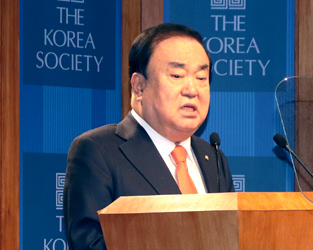
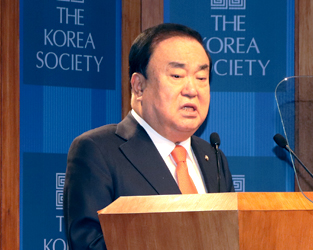
South Korea’s National Assembly Speaker, the Honorable Moon Hee-sang, delivers an address on Striving for Peace on the Bedrock of the ROK-US Alliance. The speech comes in advance of the second summit between the US President and North Korean leader.

 
STRIVING FOR PEACE ON THE BEDROCK OF THE ROK-US ALLIANCE

Transcript

Good morning. I am Moon Hee-sang, Speaker of the National Assembly of the Republic of Korea. Mr. Thomas Byrne, President of the Korea Society,

Distinguished guests from home and abroad,

It is a great privilege and pleasure to be here.

I am particularly delighted to meet members of the Korea Society, an institution which further reinforces the ROK-U.S. alliance and the friendship and cooperation between the Republic of Korea and the United States. This year commemorates the 62nd anniversary of the Korea Society, and it would be no exaggeration to say that it has a shared history with our alliance. I would like to take this chance to express my sincere respects to you for your dedication and hard work in serving as a bridge not only between South Korea and the United States but also between our two peoples. I sincerely appreciate this meaningful opportunity to address you this morning.

The ROK-U.S. Alliance – An alliance bonded in blood and sacrifice that transcends all alliances

Leading an unprecedented delegation comprised of the highest leaders of the Korean National Assembly, including leaders of each political party, I was in Washington since February 11 until yesterday. In Washington, we met leaders of Congress, primarily Madam Nancy Pelosi, Speaker of the U.S. House of Representatives, and high-level figures in the administration with whom we shared in-depth, fruitful dialogue on reinforcing the ROK-U.S. alliance and establishing peace on the Korean Peninsula. We also spent an inspiring session with experts on issues surrounding the Korean Peninsula.

I will never forget the sentiments that overwhelmed me as we walked around the Korean War Veterans Memorial. As we paid tribute and offered flowers, I was filled with thoughts of American soldiers that had fought and died to protect our country. As we solemnly acknowledged the great nameless heroes that had fallen on foreign soil, we were engulfed with an emotion so deep that it left us trembling.

The year 2020 marks the 70th anniversary of the Korean War. In August 1950, allied forces set up the last line of defense along the Nakdong River. General Walton H. Walker issued his order, “Stand or die”. In the end, the Nakdong River defense line managed to reverse the trend of the battle, and in September that same year, the Battle of Inchon resulted in a decisive victory for allied forces.

Rising from the destructive ruins of war of the 1950s, the Republic of Korea set an unprecedented record in its achievement of industrialization. From one of the most impoverished countries in the world, it rose to become a donor country. It has become a country which enjoys a democracy with unrivaled maturity. It achieved phenomenal economic success, becoming the seventh country to accede to the 30-50 club for economies with US$30,000 in gross national income (GNI) per capita and population of 50 million.

Korean society today enjoys democracy, economic growth, and continued prosperity. We could say that it all began with the sacrifice and dedication of U.S. soldiers and UN allied forces during the Korean War.

Ladies and gentlemen,

The ROK-U.S. alliance is one bonded in blood and sacrifice. It is destined to be an alliance that transcends all alliances. The Korean people and I have not forgotten the noble sacrifice of American war veterans. There is no inkling of doubt in the lasting endurance of the alliance and friendship between our two peoples.

President Trump’s engagement policy paves the way for the Korean Peninsula Peace Process

Honorable members of the Korea Society,

Ladies and gentlemen,

It would not be overstating to say that world history moves in tandem with the history of war. Humankind experienced the full extent of the barbarism of war through the two World Wars. As for the Korean people, we had to endure the terror and despair of a fratricidal tragedy – the Korean War.

There is a saying, “Any kind of peace is better than war”. But only a year ago, the Korean people had to withstand a period of uncertainty fraught with the risk of war. The crisis on the Korean Peninsula was at its peak around the time North Korea announced its success in test launching its ICBM in July 2017.

Then, a true miracle happened. As you are well aware, the 2018 PyeongChang Winter Olympics served as a decisive turning point, transforming dark clouds of war over the Korean Peninsula into a climate of peace. Five days ago, February 9, marked exactly one year since the Winter Olympics were held in Korea. On the day before my departure for the United States, I attended a ceremony in Pyeongchang, which provided an opportunity for me to appreciate once again the meaning of ‘peace’ on the Korean Peninsula.

The first inter-Korea summit held on April 27, 2018 resulted in the announcement of the Panmunjom Declaration for Peace, Prosperity and Unification of the Korean Peninsula. Panmunjom, the world’s last fragment of the Cold War and a symbol of war became an emblem of peace. Two more summits were held in the following five months, and on June 12, the U.S.-North Korea summit was held for the first time in history. Now, the whole world is filled with anticipation in the run up to the imminent second summit between the United States and North Korea.

The full support and cooperation of the United States, China, Japan, Russia, and the international society were vital in the ongoing Korean Peninsula Peace Process.

Above all, President Trump’s policy of maximum pressure and engagement played a pivotal role. I evaluate highly the United States’ bipartisan and consistent North Korean policy, and how it drew support from the international society in the form of UN Security Council sanctions. It would be no exaggeration to say it was President Trump’s decisiveness and leadership in hosting the first summit in the history of its relations with North Korea with Chairman Kim Jong-un that brought about this remarkable change.

The Korean Peninsula Peace Process is the world peace process.

Dear members,

Ladies and gentlemen,

In countless interviews home and abroad, I was asked a question on the future prospect of the Korean Peninsula Peace Process. Every time, I would reply by employing the proverb “Man-jeol-pil-dong (만절필동(萬折必東))”, which depicts the great streams of the Yellow River inevitably flowing to the east, despite many twists and turns. As such, the peace process, which may be interspersed with many ups and downs due to various political situations and dynamics in the complex world of international diplomacy, will ultimately flow toward denuclearization and peace on the Korean Peninsula due to North Korea’s desperate economic situation and international isolation caused by sanctions.

Together with this cautious optimism, we must adopt the attitude of “Ho-si-woo-haeng (호시우행(虎視牛行))”, an approach that requires the dispassionate and meticulous observation of a tiger and the steady and reliable stride of an advancing bull.

The Korean Peninsula Peace Process is literally the world peace process. It is a destination toward which South Korea, United States, and the international society should strive toward without hesitation. However, pursuing the denuclearization of North Korea and the Korean Peninsula Peace Process require the adherence of principles. First, we cannot recognize North Korea as a nuclear state, and its nuclear weapons program must be completely dismantled. Second, no country should remain hostile to North Korea, and the abolishment of its nuclear weapons program will ensure a bright future for the country. Third, our ultimate goal is the improvement of relations, peaceful co-existence, and joint prosperity among South and North Korea and the United States. Fourth, the ROK-U.S. alliance is the locomotive and password that will lead North Korea’s complete denuclearization and the Korean Peninsula Peace Process.

When Sir Edmund Hillary, the world’s first man to conquer Mount Everest, was asked how he managed to reach the summit, he answered, “One step at a time”. As such, the Korean Peninsula Peace Process will be long and tenuous. It will be a process which calls for courage and patience, and wisdom and devotion from the two Koreas and the international society.

The combination of three leaders, Trump, Moon, and Kim will double the chance of peace.

Dear members of the Korea Society,

It is my belief that the combination of three leaders, United States President Trump, North Korean leader Kim Jong-un, and South Korean President Moon Jae-in will double the possibility of achieving peace.

President Trump is renowned for his bold decision-making and negotiation skills. As for Chairman Kim, we must perceive his desperate situation. He is a leader desperately trying to take on the responsibility of feeding his people. It is not surprising that he is unable to revive the country’s economy under sanctions of the international society, and particularly, consistent, aggressive sanctions of the United States. North Korea’s only way out is to abandon its nuclear weapons and run along the tracks of peace on the Korean Peninsula. It has no other choice. Chairman Kim dedicated a considerable part of his new year’s address on the improvement of the people’s economy. This results from the recognition that economic development is a core part of maintaining his regime.

Of course, it will not be easy to achieve the immediate abolishment of North Korea’s nuclear weapons. Furthermore, I am aware of the skepticism prevalent in the United States government and society regarding North Korea’s sincerity in abandoning its nuclear weapons. However, if we recognize Chairman Kim’s sense of urgency, it may be necessary for us to see carefully the authencity of how the situation home and abroad propels North Korea in this direction. We look to the United States to play a pivotal role in guiding North Korea to become a normal state and to normalize relations with North Korea through dialogue and negotiation.

This involves President Trump and Chairman Kim, but also President Moon. If President Trump plays a determinant role in the Korean Peninsula Peace Process, President Moon undeniably serves as the essential, connecting link.

President Moon’s strengths, consistency and trust, enabled the construction of the tracks of peace during his first year in office

When the current administration in South Korea first took office, relations between the United States and North Korea, not to mention between the two Koreas, and the North Korean nuclear crisis were at their worst point. The situation was so grave that the South Korean president’s proposal to resolve relations with North Korea through dialogue actually seemed bizarre.

When President Moon first unveiled the Berlin Initiative in Germany on July 6, 2017, half of the international society was in doubt. Even North Korea criticized it as “ludicrous” and “nonsensical sophistry”. Nevertheless, his unrelenting and consistent message to North Korea managed to earn its confidence. In the process, with some exaggeration, South Korea shared information with the United States on a second-by-second basis, reinforcing our relationship of trust. South Korea and the United States stand in full agreement regarding the goals of complete denuclearization and establishment of lasting peace on the Korean Peninsula. President Moon’s strengths, consistency and trust, enabled him to construct the railway tracks for the Korean Peninsula Peace Process during the first year of his five-year term. He still has three more years ahead of him to ensure the operation of the locomotive of peace.

Diplomacy is often dubbed as an “art of possibilities”. The two Koreas and the United States are employing the highest level of diplomatic artistry to transform a possibility into reality. The three leaders are core drivers that heighten the possibility of the realization of the Korean Peninsula Peace Process.

Miracles do not happen miraculously but require joint efforts of the international society for peace

Honorable members of the Korea Society,

Given our past experiences, the achievement of the denuclearization of North Korea and lasting peace on the Korean Peninsula will truly be a miracle. South Korea’s 15th president and Nobel Peace Prize awardee Kim Dae-jung, for whom I have profound respect, once said, “Miracles do not happen miraculously”.

The Korean Peninsula Peace Process is being pursued upon the foothold of various agreements between the United States and North Korea, from the 1994 Agreed Framework to the February 29, 2012 agreement, which are based on the ROK-U.S. alliance. The peace process is feasible because it is an extension of the first inter-Korean summit of 2000 and the inter-Korean summit of 2007, which first opened the road linking the two Koreas. It is also attributable to the continued joint efforts of the international society, including the United States, Japan, China, and Russia, in establishing the Six-Party Talks. We continue to earnestly seek the joint efforts of the international society in creating the miracle of peace on the Korean Peninsula.

As Speaker of the Korean National Assembly, I am pursuing the first inter-Korean parliamentary summit for the improvement of our relations with North Korea. Having already exchanged personal letters with my counterpart, the summit meeting can be held as soon as we set the date. The second U.S.-North Korea summit is a critical factor in making this possible. I dare presume that a successful U.S.-North Korea summit will significantly raise the likelihood of Chairman Kim’s visit to Seoul, and the inter-Korean parliamentary summit may be held around that time. This is another reason why we have high expectations on the decisiveness and leadership of President Trump.

Efforts of the two Koreas to abolish North Korea’s nuclear weapons and the principle and negotiations strategy in the denuclearization process

Members of the Korea Society,

Ladies and gentlemen,

Our efforts to advance inter-Korea relations are driven by the goal of compelling North Korea to proactively improve its relations with the United States by dismantling its nuclear weapons program and building a trustworthy relationship. We continuously emphasize that, without North Korea’s abandonment of nuclear weapons, the improvement of inter-Korea relations can only be limited, and if it does abandon its nuclear arsenal, we have a strong determination to provide support and cooperate with North Korea. We persistently remind North Korea of this through various channels, including inter-Korea summits.

The essence of the Moon administration’s North Korea policy is to instill confidence in North Korea that a bright future is waiting for them. This is also the vision that President Trump put forward to North Korea time after time. If North Korea gives up its nuclear weapons, the international society will accept it as a normal state, and South Korea and the United States will completely set aside hostilities. Furthermore, security assurances for its regime will not be the only results of complete denuclearization. I believe it will lead to generous support and cooperation from South Korea, United States, and the international society so that North Korea can achieve economic growth and development.

For North Korea to completely abandon its weapons of mass destruction (WMD), however, trust is of paramount importance. Trust is the necessary and sufficient condition for nuclear dismantlement. Due to a lack of trust, however, a comprehensive agreement is not being reached on issues such as timing for the declaration of nuclear weapons programs and dismantlement of nuclear facilities. The second U.S.-North Korea summit must firmly set and renew the goal of final, fully verified denuclearization (FFVD). At the same time, both parties must build trust by agreeing on and implementing specific denuclearization measures and corresponding measures on a phase-by-phase basis. We sincerely hope that through this process, an agreement will be reached on a realistic plan which will conclusively lead to complete nuclear dismantlement.

Korea verifies the unwavering ROK-U.S. alliance through substantial contribution

Dear members,

The Republic of Korea’s commitment toward a strong ROK-U.S. alliance has been consistent and unwavering. We have worked in earnest to expand our relationship into a comprehensive alliance that encompasses fields of economy and security. Since the Korea-U.S. free trade agreement came into effect, bilateral trade increased considerably by 29.2% over the past six years. This process highlighted the fact that the United States accounts for a large part of Korea’s imports. South Korea remains the only country among the United States’ trade partners with which it has reduced its trade deficit. The drastically improved trade balance contributes to reinforcing bilateral relations.

South Korea is United States’ third largest importer of weapons based on procurement volume over the past decade. The total area of the U.S. Army Garrison Camp Humphreys in Pyeongtaek that opened last year is five times that of Central Park in New York. It is the largest overseas base in which U.S. forces are stationed and boasts world-leading facilities.

South Korea’s contribution was acknowledged by President Trump who has emphasized, several times, that the successful economic and security relationship with South Korea is part of his achievements over the past two years.

Advancing through the great ROK-U.S. alliance, cheering “You go, We go!”

Honorable members of the Korea Society,

Ladies and gentlemen,

Peace and prosperity on the Korean Peninsula will lead to peace in Northeast Asia, and this will essentially contribute to reinforcing world peace. To this end, a rock-solid ROK-U.S. alliance is a fundamental prerequisite and key factor that remains unchanged and will remain unchanged in the future.

As mentioned above, the ROK-U.S. alliance transcends all alliances. Ours is an alliance of value in which we share values of democracy and peace, freedom and equality, and justice and human rights. Ours is a global alliance which tackles all critical, global issues together. In this sense, I believe President Trump’s characterization of the ROK-U.S. alliance as a ‘great’ alliance overshadows all other modifiers.

On a personal note, my constituency is Uijeongbu City. Until recently, it was home to seven camps of US Forces in Korea. When the USFK and the Korean Army jointly participate in events, the American soldiers shout, “Kachi-Kapsida (같이 갑시다)!” while the Korean soldiers shout, “We go together!”. Today, I want to shout “You go, We go!” for the great ROK-U.S. alliance.

Let us strive for peace on the Korean Peninsula and the world through a rock-solid and unwavering ROK-U.S. alliance! Thank you for your attention.

(END)

Speaker
Hon. Moon Hee-sang
Speaker of the 20th National Assembly
Republic of Korea

Thursday, February 14, 2019 | 10 AM

The Korea Society
350 Madison Avenue, 24th Floor
New York, NY 10017


Human Rights and North Korea

Committee for Human Rights in North Korea Executive Director Greg Scarlatoiu, Bush Institute Director for Human Freedom Lindsay Lloyd, and CSIS Korea Chair Victor Cha speak to the landmark UN COI human rights report a half decade on from its release. This private round table discussion is by invitation.


Human Rights and North Korea:
Marking the Fifth Anniversary of the Release of the United Nations Commission of Inquiry Report

with
Victor Cha, Lindsay Lloyd and Greg Scalatoiu


FRIDAY, FEBRUARY 1, 2019 | 12 PM

The Korea Society
350 Madison Avenue, 24th Floor
New York, NY 10017


Of Interest:

Giving North Korea Abuses a Free Pass  


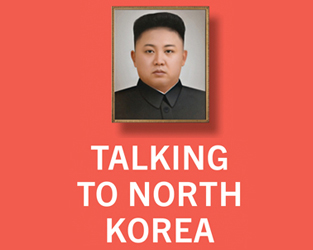
Talking to North Korea with Glyn Ford

Track2Asia Director Glyn Ford discusses his new book Talking to North Korea with Society senior director Stephen Noerper. Informed by extraordinary access to the country’s leadership, Ford investigates the regime from the inside, acknowledging that North Korea is a deeply repressive state that nonetheless has sections of its leadership determined to end its isolation.


Tickets

 
The Korea Society Fellow, Patron and
Corporate members: FREE with registration

Tickets
Full Name
Title or Position
Company
Email
Membership ID
(where applicable)
 
How did you hear about this program?


Talking to North Korea
with
Glyn Ford

FRIDAY, JANUARY 25, 2019 | 12 PM

The Korea Society
350 Madison Avenue, 24th Floor
New York, NY 10017


Reading North Korea, with Chad O’Caroll and Jan Janowski

Korea Risk Group CEO Chad O’Carroll and German diplomat Jan Janowski examine how to navigate information deficits when communicating within or reporting on North Korea. Lean into the new year with this informative session aimed at policy and corporate supporters, members, and media.

Reading North Korea
with Chad O’Carroll and Jan Janowski

Tuesday, January 15, 2019 | 12 PM

The Korea Society
350 Madison Avenue, 24th Floor
New York, NY 10017


About the Speakers

Chad O’Carroll is the founder of Korea Risk Group, a North Korea specialized news, information and data service that through its NK Pro and NK News websites serves researchers, academics and business people around the world. O’Carroll established the NK News website in 2010 while living in Washington, DC. He was a Fellow of the Tow-Knight Center for Entrepreneurial Journalism (CUNY) and was previously the Director of Communications at the Korea Economic Institute of America. He has an MA in Nuclear Non-proliferation & Intl’ Security from Kings College London and a BA in International Relations from Sussex University.

Jan Janowski graduated with an MA in Political Science and Diplomacy from Korea University in Seoul and after working as a consultant, author and freelance journalist, joined the Federal Foreign Office of Germany in 2012. He served as 2nd Secretary in the German Embassy in Pyongyang from 2012 to 2015 and upon his return to Berlin, assumed the post as Korean Peninsula Desk Officer in the FFO main office. While working on Korean issues in Berlin, he travels frequently for 5-6 week missions to the DPRK to support the German Embassy in Pyongyang as 1st Secretary. As a fluent Korean speaker, he is also the main interpreter and translator for Korean in the German Federal government. Janowski teaches summer intensive courses in North Korean Studies in Seoul and Germany.


Podcasts/Videos 2017

A collection of original audio and video products made in-house by The Korea Society in 2017. |                 


2026 | 2025 | 2024 | 2023 | 2022 | 2021 | 2020 | 2019 | 2018 | 2017 |


Heungnam Remembered
Thursday, December 14, 2017 | 4:00 PM

Author Ned Forney and retired Admiral J. Robert Lunney discuss the Heungnam Evacuation and Lunney’s “Ship of Miracles” in this special holiday event commemorating the United Nation’s first humanitarian evacuation. Forney speaks to his major Seoul daily release profiling six descendants of those saved, including South Korean President Moon Jae-in. Lunney, who welcomed President Moon to Virginia during his first US visit as President, shares reflections on those harrowing days,… Read More


PyeongChang 2018 Launch featuring Olympic Committee President Lee Hee-beom
Tuesday, November 14, 2017 | 11:00 AM

Have Olympic fever? You will. Curious about the first of the three successive Olympics Games in Northeast Asia beginning in 2018? Amazed by photos of PyeongChang ready to host the world? The Hon. Lee Hee-beom, President and CEO of the PyeongChang 2018 Olympic and Paralympic Organizing Committee, speaks to Korea Society members, media and other dignitaries in advance of the XXIII Winter Games. The day after a United Nations resolution… Read More


Trump in Asia
Thursday, November 9, 2017 | 6:00 PM

Pacific Forum CSIS President Ralph Cossa discusses President Trump’s visit to Korea and East Asia, as well as the political and security landscape of the Korean Peninsula and Northeast Asia. Cossa reflects on Trump’s message on North Korea, concerns over missile and nuclear capabilities, and challenges to and opportunities for Korea-US coordination and trilateral cooperation. Senior director and Columbia professor Stephen Noerper facilitates this special news maker dialogue, which also… Read More


Korea-Russia-China Relations: New Realities for the Korean Peninsula
Wednesday, November 8, 2017 | 12:00 PM

Will Russia play a constructive role in helping stem tensions around the Korean Peninsula? Or will it play the role of spoiler given a decline in US-Russia relations? How do the approaches of Moscow toward Pyongyang and Seoul square with those of Beijing? How is South Korea responding? Noted Russian professor Anna Kireeva speaks to dynamics in Korea’s relations with Russia and China, as well as Russia’s Asia pivot, as… Read More


Advancements in Higher Education for Women featuring Ewha Womans University President Heisook Kim
Thursday, October 26, 2017 | 4:00 PM

Members, professors, students and Ewha Woman University alumni gather to hear Ewha Womans University President Heisook Kim. Among the forefront of Korean educators, President Heisook Kim speaks to the challenges and opportunities in higher education and the growth of women leaders. An alumni reception follows.Arrivals: 3:30 PM – 3:45 PMAddress and Q&A: 4 PM – 5 PMReception: 5 PM -5:30 PM Advancements in Higher Education for Women featuring Ewha Womans… Read More


Po Kim: Making Impossible Demands on Art
Monday, October 23, 2017 | 6:00 PM

In the course of his career, painter Po Kim worked in three distinct modes, gestural abstraction, realist still-life and symbolist figuration. This talk will examine each of these periods and look at how Po Kim’s work related to the art of the period, especially that of other artists working in New York. I will also seek to understand the motives that sparked his stylistic restlessness, and ask whether his early… Read More


2026 | 2025 | 2024 | 2023 | 2022 | 2021 | 2020 | 2019 | 2018 | 2017 |


Podcasts/Videos 2018

A collection of original audio and video products made in-house by The Korea Society in 2018.                 


2026 | 2025 | 2024 | 2023 | 2022 | 2021 | 2020 | 2019 | 2018 | 2017 |


Negotiations, Denuclearization and Inter-Korean Progress |
Thursday, December 20, 2018 | 11:00 AM |

Join us for a discussion on opportunities and next-steps in negotiations on Korea. Eminent thought leaders David Kang and Thomas Hubbard keynote the discussion and appear in conversation with Thomas Byrne. A holiday reception is held after… Read More


Gender Politics of Kpop |
Thursday, December 6, 2018 | 6:30 PM |

Dr. S. Heijin Lee, Assistant Professor at NYU and freelance journalist Lai Frances delve into representations of gender roles in Kpop. They explore the traditional notions of masculinity and femininity reflected in artists’ concepts and LGBTQ+ issues in Kpop… Read More


Looking Back at 2018 |
Thursday, December 6, 2018 | 12:00 PM |

Brookings Institution Senior Fellow and SK-Korea Foundation Chair Jung H. Pak and Center for Strategic and International Studies (CSIS) Korea Chair Senior Fellow Sue Mi Terry address the progress and pitfalls in inter-Korean relations, Seoul-Washington ties, and US-DPRK dialogue. Dr. Pak joins us at the Society… Read More


K-pop & Social Media |
Thursday, November 29, 2018 | 6:30 PM |

Social media advances K-pop’s reach around the globe, with YouTube and Twitter buzzing with the latest content from Korean artists. Tumblr Content Insights Associate and K-pop specialist, Beatrice Vantapool, and BuzzFeed’s Sarah Han, explore how technology has connected and created fans worldwide… Read More


Women on Manhwa: The Future of Korean Comics |
Friday, November 16, 2018 | 6:30 PM |

While male-focused narratives have led Western and American comics, manhwa (Korean comics) are leading the charge for women and gaining popularity as a cultural export, reaching fans worldwide via mobile apps… Read More


Aggregation: Artist Talk & Closing Reception |
Thursday, November 15, 2018 | 12 PM |

The Korea Society invites you to the gallery talk and closing reception of the exhibition, Kwang Young Chun: Aggregation. Artist Kwang Young Chun discusses his craft and the techniques used to create his acclaimed artwork… Read More


Capitol Hill and Korea with Mark Manyin and Emma Chanlett-Avery |
Friday, November 9, 2018 | 1 PM |

Congressional Research Service Asia Affairs specialists Mark Manyin and Emma Chanlett-Avery speak about the US Congress and Korea issues. Authors of important CRS reports on US-South Korea relations and negotiating with North Korea, Manyin and Chanlett-Avery appear in conversation with Senior Director Stephen Noerper… Read More


[YPN] Future of Fintech: Technological Advancements and Disruption of Incumbents |
Thursday, October 25, 2018 | 12 PM | 

The Korea Society and the Korean Startups & Entrepreneurs Association (KSE) address the topics of fintech, financial services, and technology. Panelists explore how innovative technologies and influential tech entrepreneurs are disrupting and redefining the traditional finance industry… Read More


Korea at a Crossroads: Japan, South Korea, and the United States Nuclear Umbrella, with U.S. Naval War College Professor and Asia-Pacific Studies Group Director Terence Roehrig |
Thursday, October 25, 2018 | 12 PM | 

US Naval War College Professor and Asia-Pacific Studies Group Director Terence Roehrig discusses the nuclear umbrella in Northeast Asia in the context of deterrence theory and US strategy. In conversation with the Society’s Stephen Noerper, Roehrig examines the role of the nuclear umbrella in South Korean and Japanese defense planning… Read More


K-beauty with Renée of Gothamista |
Thursday, October 11, 2018 | 6:30 PM | 

Delve into K-beauty with Renee, known online as Gothamista, a prominent beauty guru on YouTube! Having a keen interest in core ingredients used in K-beauty products, she shares the latest K-beauty skin care tips and her favorite skincare regime for the fall… Read More


Remembering the 1988 Seoul Summer Games |
Tuesday, October 2, 2018 | 12:30 PM | 

The 1988 Seoul Olympics represents South Korea’s first foray as international host and hub. Senior Director and Columbia Adjunct Professor Stephen Noerper leads a special lunchtime discussion marking the thirtieth anniversary of the closing ceremony of the ‘88 Summer Games, which proved vital for Korea’s global “coming out,” Seoul’s development, and democracy’s hold. This program features a special call in from Georgetown University Professor, and fellow sports diplomacy enthusiast, Victor&… Read More


Kpop & Beauty |
Thursday, September 27, 2018 | 6:30 PM | 

Styling and beauty are quintessential elements of the Kpop lifestyle. Devon Abelman, Digital Beauty Reporter at Allure Magazine, uncovers Kpop hair, skincare, and beauty trends… Read More


Korea at a Crossroads: Inter-Korean Relations and Next Steps in US-DPRK Dialogue |
Thursday, September 27, 2018 | 12:00 PM | 

Asia business and policy veterans Philip Sherman and David Anderson convene an Old Asia Hands luncheon to discuss negotiations around the Korean Peninsula. This group of seasoned professionals weighs the prospects for success in current ROK-DPRK and US-DPRK negotiations, with remarks by Senior Director Stephen Noerper… Read More


Our Greater Alliance, Making Peace: A Conversation with President Moon Jae-in |
Monday, September 25, 2018 | 

Moon Jae-in, President of Republic of Korea, addresses the current situation on the Korean Peninsula, South Korea’s alliance with the United States and efforts to denuclearize North Korea. This event was produced in collaboration with Council on Foreign Relations and Asia Society.&… Read More


2018 Annual Dinner |
Friday, September 21, 2018 | 

Keynote Speaker H.E. Harry Harris U.S. Ambassador to the Republic of Korea Van Fleet Award Honoree Sohn Kyung-Shik ChairmanCJ Group Master of Ceremonies Juju Chang Co-AnchorABC Nightline The Plaza Fifth Avenue at Central Park South, New York CityReception 6:00 PM | Dinner 7:00 PM Black Tie, Traditional Attire Contact Angela I. Rhyee for any inquiries. KEYNOTE SPEAKER Keynote SpeakerH.E. Harry HarrisU.S. Ambassador to the Republic of Korea Ambassador Harry Harris &… Read More


Development of Kimchi in Modern Days |
Thursday, September 13, 2018 | 6:30 PM | 

Kimchi is a staple side dish, known as banchan, in Korean cuisine. Made from salted and fermented vegetables, there are various types of kimchi, unique from region to region, depending on ingredients and weather conditions. Through its fermentation process, kimchi becomes a superfood containing vitamins A and B and minerals such as calcium and iron. Susan Durso, Founder of Anomaly Season, discusses her contemporary take on traditional kimchi with&… Read More


Korea at a Crossroads: North Korean Military Proliferation in the Middle East and Africa |
Thursday, September 13, 2018 | 12:00 PM | 

Professor and author Bruce E. Bechtol, Jr. discusses his new release, North Korean Military Proliferation in the Middle East and Africa: Enabling Violence and Instability. In dialogue with Senior Director Stephen Noerper, Bechtol speaks to the DPRK’s ongoing sales of conventional weapons, ballistic missile and WMD systems and technology, as well as collaboration, in the world’s more volatile regions. Korea at a Crossroads: North Korean Military Proliferation in the Middle &… Read More


The Case for Diplomacy: A Closer Look at Denuclearization Talks

As discussions to denuclearize North Korea develop, a number of vexing problems, seen in previous negotiations, have resurfaced. How can the United States and South Korea avoid the trappings while still benefiting from the successful elements of the past? To find out, The Korea Society’s associate director for policy Jonathan Corrado sat down with two experts from Ploughshares Fund, Director of Policy Tom Z. Collina and Roger L. Hale Fellow Catherine Killough. They shared insights to challenge the conventional wisdom and inject some fresh air into the conversation… Read More


Kpop 101 Series: The Economy of Kpop |
Thursday, August 23, 2018 | 6:30 PM |

Communications Director of the Korea Economic Institute of America in Washington DC, Jenna Gibson, presents on the commodification of K-culture on a global scale. Ms. Gibson reflects on regional marketing strategies and the economic impact of Korea’s exportation of Kpop. Followed by Q&A and reception with Korean food and drinks. + – Admission Click to collapse The Korea Society Fellow, Patron and Corporate members: FREE with registration Tickets Members &… Read More


The History of Kpop |
Thursday, August 2, 2018 | 6:30 PM |

Billboard columnist and Forbes contributor, Tamar Herman, explores the origins of the hallyu wave. From Seo Taiji & Boys in the 1990s to international sensation BTS, how has Kpop evolved? Ms. Herman outlines the elements which distinguish Kpop, notes milestones, and discusses the potential of the global music phenomenon. Followed by Q&A and reception with Korean food and drinks. + – Admission Click to collapse The Korea Society Fellow, Patron… Read More


Taste of Korean Temple Food with Wookwan |
Thursday, July 19, 2018 | 6:30 PM

The Korea Society welcomes Wookwan, cookbook author of “Wookwan’s Korean Temple Food: The Road to the Taste of Enlightenment,” to introduce Korean temple food built on the philosophy of Buddhism along with the long tradition of Korean cuisine. Korean temple food “does not only provide nutrition for a healthy body, but preparing the food is a practice of mediation as well.” Wookwan, a respected monk and temple-food expert, will demonstrate…… Read More


Gallery Talk: Ungno Lee’s Art World |
Thursday, July 19, 2018 | 6:30 PM

In celebration of the 60th anniversary of artist Lee Ungno’s arrival in Paris, the Korea Society welcomes you to enjoy the art exhibition of the Korean-born French artist who combined the abstract tendencies of the Art Informel movement with traditional forms of Korean art. Artist and scholar Robert C. Morgan and former student of Lee Ungno, sculptor Alain Kirili, discuss Lee’s work… Read More


After Talks, What Next with North Korea?
Thursday, June 14, 2018 | 6:00 PM

How do we frame the Trump-Kim summit? What are critical next-steps? Get a Washington insider perspective with Mansfield Foundation President and CEO Frank Jannuzi and National Committee on North Korea Executive Director Keith Luse. Frank and Keith served as senior advisors to US Senate Relations Committee Chairs, and both bring unique contacts and sensibilities to this discussion on dialogue with North Korea and efforts to prevent conflict. Jannuzi and Lu… Read More


[YPN] Blockchain: The Revolution in Decentralization
Thursday, May 17, 2018 | 6:30 PM

The Korea Society and the Korean Startups & Entrepreneurs association (KSE) address blockchain as a transformational technology and developments in blockchain and crypto markets affecting the South Korean economy. Followed by a networking reception with drinks on the 25th terrace… Read More


Evolution of North Korea’s Cyberthreat
Thursday, May 10, 2018 | 6:00 PM 

Priscilla Moriuchi, Recorded Future’s Director for Strategic Threat Development, discusses the evolution of North Korea’s cyber strategy, including cryptocurrency theft, sabotage, espionage, and everyday internet usage by Pyongyang’s elites. Priscilla is the former head of the National Security Agency’s East Asia and Pacific cyberthreats office… Read More


The Summits – A Diplomacy Discussion with Young Policy Professionals
Wednesday, May 9, 2018 | 12:00 PM

In this roundtable podcast recording, young professionals in Asia policy explore the implications and consequences of the Moon-Kim and Trump-Kim meetings. The discussion revolves around alliance relations, regional dimensions, precedents, new opportunities, and cautionary elements. Featuring: the Asia Society’s Isaac Stone Fish, the National Committee on American Foreign Policy’s Rorry Daniels, the Diplomat’s Ankit Panda, and Columbia University’s Henri Feron. Audio


North Korea and Humanitarian Assistance 
Wednesday, April 25, 2018 | 12:00 PM 

Stanford University Center for International and Security Cooperation visiting scholar Katharina Zellweger addresses the current state of humanitarian efforts in North Korea. Having visited North Korea more than seventy times, Ms. Zellweger describes current challenges, transparency and government relations, and the impact of sanctions on humanitarian assistance to North Korea… Read More


Finding Comfort in Asian Cuisine with Jeju Noodle Bar & Mr. Bing
Thursday, April 19, 2018 | 6:30 PM

Chef Douglas Kim, owner of Jeju Noodle Bar in the West Village, presents ramyun, the Korean equivalent of Japanese ramen, demonstrating distinct Korean flavors and ingredients. Brian Goldberg, the owner of Mr. Bing, with locations in the East Village, Urbanspace, and Madison Square Park, serves Beijing-style jianbing, one of the most popular Chinese street foods… Read More


Director’s Talk with Jang Jin
Friday, April 13, 2018 | 6:30 PM

Accomplished film, television, and theater director Jang Jin speaks at The Korea Society. The creative talent behind films such as Good Morning President and Welcome to Dongmakgol, Director Jang shares his experience working in various sectors of the Korean entertainment industry… Read More


Russia, Korea and Prospects for Multilateral Dialogue
Wednesday, April 11, 2018 | 12 PM

Russian scholar Anna Kireeva returns to the Korea Society for a discussion on Russia’s position toward the Korean Peninsula and support for multilateral dialogue aimed at denuclearization. Moscow State University of International Relations Associate Professor Kireeva speaks to President Putin’s re-election and enhanced push in Asia, accusations of Russia’s role as a spoiler on the UN Security Council given differences with the US and others, and its potential contribution to… Read More


The Marshall Plan in Retrospect: Implications for the Modern World
Thursday, April 5, 2018 | 6:00 PM

Dr. Benn Steil, Senior Fellow and Director of International Economics at the Council on Foreign Relations, discusses his new book, The Marshall Plan: Dawn of the Cold War. Dr. Steil uses archival documents to portray how the initiative’s champions in the State Department were able to realize this grand plan despite immense complexity, uncertainty, and pushback at home and abroad… Read More


US-DPRK Summit: Too Big to Fail and Multiple Dimensions of Risk
Thursday, April 5, 2018 | 6:00 PM

Dr. Jung H. Pak, SK-Korea Foundation Chair in Korean Studies and Senior Fellow at the Brookings Institution, addresses the lead-up to the potential summit between President Donald Trump and North Korean leader Kim Jong Un. Dr. Pak speaks to areas of potential progress.… Read More


Ham Sup: Paper Dreams
Thursday, March 15, 2018 | 6:00 PM

Ham Sup (b. 1942) has worked with hanji, traditional Korean paper made from the bark of mulberry trees, as his primary medium for over 30 years. Hanji is well known in Korea as a prized material for cultural and religious purposes, and has been an integral part of Korean daily life for centuries… Read More


Last Ship in the Harbor

With the enemy hot on his heels, Admiral J. Robert Lunney helped board 14,000 North Korean refugees onto the SS Meredith Victory as part of one of the most audacious humanitarian evacuations in history. Ultimately, 98,100 civilians were saved. There are over one million descendants of the Heungnam evacuees living in South Korea today. Among them, South Korean President Moon Jae-in… Read More


Innovate and Attack: North Korea Doubles Down on Cyber
Friday, March 9, 2018 | 12:00 PM

North Korean cyber attacks are hitting the headlines on nearly a daily basis as the regime demonstrates an increased ability to innovate and expand the scope of cyber operations. Korea Society talks to AlienVault threat analyst Chris Doman, who teaches us about the North’s largest hacking group and Pyongyang’s latest foray – hacking cryptocurrency systems. Music courtesy of Elias Schutzman and Adam Bufano. Innovate and Attack: North Korea Doubles Down… Read More


Negotiating with North Korea, Inc.: A Breakthrough?
Wednesday, March 7, 2018 | 12:00 PM

Does the announcement of North Korea’s willingness to negotiate with the US represent a breakthrough? Did the maximum pressure campaign of sanctions and deterrence move Pyongyang to the announced inter-Korean summit and possibly the negotiation table with the Americans? Is there more at play or is this part of the strategy of North Korea Inc.? Are Seoul and Washington in alignment in dealing with North Korea Inc.? Harvard University Kennedy…  Read More


Dialogue with a North Korean Defector
Thursday, February 22, 2018 | 6:00 PM

Conversation with defector Seongmin Lee, who escaped North Korea in 2009. Hailing from the border town of Hyesan, Lee witnessed the tumultuous social and economic change in the wake of the 1990s famine. Lee converses with associate policy director Jonathan Corrado in this event marking the fourth anniversary of the release of the UN Commission of Inquiry Report on North Korea human rights. Dialogue with a North… Read More


Korea’s Transition to Democracy: Thirty Years On
Thursday-Friday, February 15-16, 2018

Marking thirty years since the shift from authoritarianism to democracy in South Korea, the Korea Society hosts analysts and experts for an intimate discussion of the transition then, the flowering of democracy since, to include the Candlelight Movement, and the state of Korea’s democracy today. This is a small-group, special recording session… Read More


The Rise of K-fashion, LIE
Monday, February 12, 2018 | 12:00 PM

Step into the global phenomenon known as Hallyu, or the Korean wave, with Chung Chung Lee, creator behind the fashion label LIE and son of legendary designer, LIE SANG BONG. Chung Chung is a pioneer in expanding awareness of Korean fashion at 2018 New York Fashion Week through “Concept Korea,” a biannual fashion show supported by South Korea’s Ministry of Culture, Sports, and Tourism. At the Korea Society’s event, Chung… Read More


Politics, Policy, and PyeongChang 2018
Wednesday, February 7, 2018 | 9:00 AM

These first-Wednesday monthly roundtables draw members and supporters from policy, corporate, media, academe, and the United Nations to discuss and debate Korea’s leadership, regional relations or the North Korea challenge. The 2018 kickoff addresses issues of politics and policy in the lead-up to the Winter Games and takes place two days prior to the Opening Ceremonies. Korea Society senior director and Columbia adjunct professor Stephen Noerper addresses the lead-up to… Read More


South Korea at the Crossroads
Thursday, February 1, 2018 | 6:00 PM

Against the backdrop of China’s mounting influence and North Korea’s growing nuclear capability and expanding missile arsenal, South Korea faces a set of strategic choices that will shape its economic prospects and national security. In South Korea at the Crossroads, Scott A. Snyder examines the trajectory of fifty years of South Korean foreign policy and offers predictions—and a prescription—for the future. Pairing a historical perspective with a shrewd understanding of… Read More


Forecasting Korean Politics and Security
Friday, January 26, 2018 | 12:00 PM

This noon session serving policy and corporate leaders examines politics, stability and security on and around the Korean Peninsula. This session features Dr. Sue Mi Terry, who has assumed leadership of Korea programs at the Center for Strategic and International Studies. Dr. Terry, who appears widely in media and was featured at a recent New Yorker event, speaks with Dr. Stephen Noerper, Korea Society senior director, and lends thoughts to… Read More


2026 | 2025 | 2024 | 2023 | 2022 | 2021 | 2020 | 2019 | 2018 | 2017 |


Negotiations, Denuclearization and Inter-Korean Progress

Join us for a discussion on opportunities and next-steps in negotiations on Korea. Eminent thought leaders David Kang and Thomas Hubbard keynote the discussion and appear in conversation with Thomas Byrne. A holiday reception is held after. This program follows-on the Fall 2018 address by ROK President Moon Jae-in to the Council on Foreign Relations/Korea Society/Asia Society. As a thank you to our policy and corporate supporters, as well as an incentive for joining as members, this event is free for attendees.

Transcript

Stephen Noerper:
Good afternoon and welcome. It’s wonderful to see so many familiar faces among our policy and corporate supporters as well as a number of new visitors today. We have a packed house for an extraordinary discussion that will cap off the year and will lean forward with some positive outlook on kickstarting negotiations.

We will examine as well some of the complexities with eminent scholar David Kang and with Ambassador Thomas Hubbard. We look forward to ending the year and picking up on the note that was left by President Moon Jae-in when he addressed the Korea Society, Council on Foreign Relations and Asia Society earlier in the fall.

Those of you who were with us on December 6 heard a rather sobering assessment from some friends of ours with the Brookings Institution and the Center for Strategic and International Studies (CSIS). This session is designed to extend that discussion, provide some positive bent and look at opportunities for forward movement.

Again, we would like to welcome all of you. We would especially like to welcome Nick Bratt and Phil Sherman, our board members, and the Deputy Consul General and his entire team of 15 from the Republic of Korea Consulate. They have had the very hard job, in 2018, of convincing a lot of people. It’s been an extraordinary effort and we here at the Korea Society are very admiring of all that they do to put out the good word on Korea. As an American independent, non-profit organization, the Korea Society certainly benefits from partnerships, and the diplomats here help us to better understand where the Republic of Korea is going.

Today we have David Kang who is an eminent professor. He is the author of several books, including most recently this year the re-release of Nuclear North Korea, a book that he wrote with Victor Cha, who’s often on our stage. That is as important now in 2018 as it was in its initial release in 2003. That’s out through Columbia University Press, and we highly recommend it. David is also the director of the Korean Studies Institute at the University of Southern California (USC). It does a tremendous amount and is one of the highlights of Korean studies on the West Coast of the United States.

We have Ambassador Thomas Hubbard, familiar to many of you as the chairman of The Korea Society and Senior Director for Asia at McLarty Associates. Ambassador Hubbard is a longtime and distinguished career diplomat who served as our ambassador in both the Philippines and the Republic of Korea.

And moderating our discussion today is our president, Thomas Byrne. Tom served with Moody’s and has been president, here since August of 2015. We’ve introduced a number of new programs, and those of you who follow our policy, economics and finance discussions know that we’ve had a heady steam, largely the result of Tom’s guidance and leadership. He will facilitate the discussion today.

We thank you, again. A very Merry Christmas, Happy Hanukkah, and Happy New Year. Tom, over to you.

Thomas Byrne:
Thanks, Stephen. We’re all here to take another assessment of where we stand with the extraordinary developments of this past year: South Korea’s engagement with North Korea and also the US’s engagement with North Korea. This is really a follow-up to the speech that President Moon Jae-in made when he was here for the UN General Assembly in September. He made that, as Stephen Noerper said, at the Council on Foreign Relations. This was an event at the Korea Society as well as the Asia Society — I see Danny Russel is here — co-hosted along with the Council on Foreign Relations.

I’d like to repeat some of the points that President Moon made. Maybe this could prompt some reaction and discussion from you, David, and also from Tom Hubbard.

President Moon started off by noting, as we all recognize, that it was really a remarkable turn of events when Kim Jong Un gave his New Year’s speech a year ago. Stepping back, if this were 2017, I think none of us could have imagined what would unfold this year.

But President Moon went even further than calling it remarkable. He called it a miraculous development that’s happening on the Korean Peninsula. And what he was referring to was the establishment of a permanent peace regime on the Korean Peninsula through the complete denuclearization of North Korea.

He also said he hoped that once a complete and verified denuclearization has taken place, then North Korea could focus on economic development and that would mean some sort of North-South economic program set-up — maybe a funding set-up — but all of this is preconditioned on denuclearization, and verifiable denuclearization from North Korea.

He also said that for this denuclearization to take place — for North Korea to actually go ahead with this — that the hostile state of the relationship between North and South Korea has to end. He talked about security guarantees. President Moon also talked about the necessity for some sort of end-of-war declaration. A political declaration.

At the same time he stressed that all these remarkable changes that had taken place through September were achieved based on what he called the “rock-solid” ROK-US alliance. He went on to say that, furthermore, even after a peace treaty is signed and even after reunification, the ROK-US alliance should remain in place in order to continue to uphold peace and stability in the Northeast Asian region. With that as a primer, David why don’t you try to work that in or just go ahead with your prepared statements?

David Kang:
I’ll take a minute or two and provide an overview. I think that’s fine. I also think it’s funny that there was a reference to the Brookings-CSIS thing. It was a little more skeptical.

I was just in DC for a week of meetings with various officials and a think tank, and as you probably know, the mood in the Beltway is extremely skeptical. They think that Moon is eager and perhaps too eager to change things.

One of the reasons I’m on the West Coast and not in the Beltway is because I have a totally different perspective. The real question is this: ‘Is this, by chance, a totally unprecedented opportunity where we can do something? Or is this just same old, same old? We know they’re lying and they’re trying to get something from us, etc.’ The conventional wisdom is very much that there’s nothing really new, here. It’s just another ploy. It’s another way in which they’re trying to set up the United States or get away with something.

I tend to think that this is actually, in many ways, a historic opportunity that we’ll get once in a generation. I think there was one in the mid-nineties that we managed to fumble away. Everybody did. We have a new leader in South Korea, we have a leader in North Korea, and we have a president in the United States; all three of whom are willing to do things that none of their previous leaders have been able to even conceive of or consider.

Does that mean we’ll get there? I’m not sure whether we will or not. But this is an opportunity to take a step back from where we were, and I think all of us would prefer to be where we are this year, in December, as opposed to where we were last year, in December.

So in many ways, the question is whether we have a strategy for going forward?

I’m happy to expand on this if you want. I think Kim Jong Un has a very clear strategy and he knows what he’s doing. I’m happy to explain that. This is not something where he woke up last January and said, “OK, let’s go to the Olympics. Who wants to go? I need a skier. Two skiers. Who skis?” They clearly knew what they were going to do. It was clearly long-planned. Moon Jae-in has clearly spent 10 years thinking about what he would have done differently or what he would do differently if he were president.

I think the real question is does the United States have a strategy?

I think some in our administration do. As we all know, it’s not clear whether President Trump shares the way that many of the policy-making establishment wants to go. We found out just yesterday with Syria. I think the real question is, ‘Does the United States have a strategy for actually moving forward and taking this ball wherever it is today and moving it down the path a little bit farther?’

I think we’ll find out, but I think that’s really the question. How are we going to move forward, because I think both sides of the Korean Peninsula are ready to try and move and I think the question is, ‘Can the US meet them in some manner?’

Byrne:
Tom, is this an historic opportunity? An opportunity for a breakthrough, perhaps, or the same old game?

Thomas Hubbard:
First let me say that David, we’re very glad to have you here right now.

Kang:
I should have said thank you for having me.

Hubbard:
We’re glad to have you, here, on the East Coast because I think we do here, on the East Coast, need some bucking up. The mood certainly has been very skeptical. I’m glad to hear you because I’m inclined to agree that we have an opportunity now that we have not had in the past with three unusual leaders.

In Kim Jong Un, I think we have a continuation of the North Korean dictatorship, but we do seem to have, in Kim Jong Un, a leader who cares about the people. He does seem to be trying to do something that will uplift the Korean people, but I do think he still wants to have his nuclear weapons, too. The question is, ‘Can he be persuaded to give up those weapons in the interest of the betterment of his people?’

I think in Moon Jae-in we have a very different person, too; someone who, as you say, has been thinking about this for a long time. He has a strategy. He had the courage to pick up on the initial moves that Kim Jong Un made to try to turn it into something.

And finally we have President Trump. In the midst of all the skepticism; willing and kind of eager to take a chance and wanting to keep this going.

So I think we probably have a better chance now than we have had in the past, but I think the chances of moving forward to the denuclearization of North Korea are still very slim and is certainly a long-term prospect.

I think we were reminded today that Kim Jong Un isn’t really lying. He’s willing to have denuclearization of the Korean Peninsula and the entire area. And part of that in his mind, as we saw in a statement put out by the government press this morning, is when he says denuclearization he means full denuclearization and elimination of any US nuclear threat to him on the Korean Peninsula or in the region. That obviously is a step that is going to be very hard to do.

I’m a little less optimistic this morning after reading that, now that he’s been very explicit in what he means by this, until now, undefined denuclearization. I’m really not sure where we pick up and go from here, but I do have the sense, despite all the skepticism in Washington, that at least until this morning people were planning on another Trump-Kim Jong Un meeting in the early months of next year.

It was also disappointing that Kim Jong Un hasn’t managed to get to Seoul as he had promised to do this year, but I think we’ll have another round of feeling each other out and I do think we have a better chance now than we have in the past. As you said, we certainly have to feel a lot better this December than we did last December, whereas we’re now talking about talks – and how we get back to talks – instead of talking about the threat of war.

The good news is that in more than a year there has been no North Korean testing of nuclear weapons or ballistic missiles. My question is, ‘How long this can last if we don’t get back into some kind of process?’ One of the disappointing things is, up until now the North Koreans have really been willing only to talk at the very top level and it’s going to be hard to get to productive discussions with that attitude.

Byrne:
When I woke up I read the same news in which the Korean Central News Agency defined what they meant by denuclearization, meaning elimination of the threat from the US and probably the nuclear umbrella in the alliance that the US made with Japan. I wonder whether this is really news. Shouldn’t this have been discussed at Pompeo’s visit or Moon’s visit? Is this really news? It’s news to us, but is it news to the US government and the South Korean government? Didn’t they know when they entered into this process of engaging North Korea summit talks that this is North Korea’s starting position? Is that a surprise, David?

Kang:
No, it’s not a surprise. I don’t think there’s anything new in this. We wrote our book – which makes a great Christmas gift, by the way, and Mom will love it – 15 years ago and the same issues were on the table then as they are today, so I don’t think it’s really a surprise.

North Korea has always said this would not be a unilateral disarmament. What that means is maybe more specific today than it was yesterday, but it was unrealistic to think that North Korea would simply let a boat back up into Wonsan Harbor and they would just load up all the nukes and then say, “OK, we’re done with it.” This was always going to be a mutual process.

The question from the American side was always, ‘What will we do in response? What is going to be on the table from our side?’ This administration has not made this clear yet. What is on the table and what’s not? They might have done it again, privately or something else, but certainly publicly it’s not clear. And the North Koreans have consistently said, “This will not be a one-way process,” so what they said today isn’t that surprising.

The other small thing I’ll say is it points out how unrealistic either of these goals is. We all know there is no possible way – whatever it’s called now (FFVD) – the final, fully verified denuclearization of North Korea. They could let inspectors into every bedroom and look under every bed and in every closet, and we’ll still think he’s got some hidden. And they could always start over. It will never be completely irreversible. They can always start over.

And the same thing for the United States. There’s no way that we can promise not to ever threaten North Korea, because of course we can. We’re the United States with a massive military. Of course, we can always change our mind. So the question is how we get beyond the unrealistic to something that moves us from here and moves us in the right direction. I think that’s a much more realistic goal, which is to move back a little bit as opposed to saying, “Here’s the end goal and if we don’t get there right away, I’m walking away.”

Byrne:
Then what would be those steps?

Kang:
I think we’re seeing some of those steps right now. Again, one of the interesting things is a year without missile and nuclear tests. That’s huge. Why did we care? Because it was a year without missile and nuclear tests. I’ll make a prediction. If North Korea doesn’t test anymore, I think the air for any kind of real pressure goes out of the balloon. I really think those are the provocations that we care about, and if they just stop right now and stand still, it will be very hard to get a lot of enthusiasm or momentum for any more coercive steps on the American side.

There’s things they could do. They could do a little bit. They’re already doing stuff in terms of conventional weapons. And if you think about it, when was most of the killing that went on in the last 50 years? It was conventional. It was Northern Limit Line. I mean, that’s huge. That stuff is boats out there shooting each other up and 20 people die. That’s massive; to actually make some progress on the Northern Limit Line and the maritime or the DMZ, which are steps back.

Byrne:
President Moon in his speech mentioned that it’s significant that there has been no testing of either missiles or nuclear weapons and that shows that some progress has been made. But couldn’t you look at it from the other side? It’s making a virtue out of necessity because whenever North Korea did test, it faced ever-tightening sanctions. And there’s one thing I think we do know; that North Korea doesn’t like the sanctions. Visible trade with China collapsed in 2018. There must be some economic pressure being felt in North Korea.

So I don’t know. Virtue out of necessity or is this really a significant step? Tom, what do you think about that?

Hubbard:
I think it’s significant. That is the biggest problem and the biggest concern. Sure, the North Koreans said in stopping their testing that they didn’t need to test anymore. They already had their deterrent. I don’t think that’s quite true. They do need to test to improve their capability, but I think it’s symbolically very important that they stop.

Indeed, I think you pointed to a dilemma; that, in fact, I think the North Koreans will soon realize that so long as they’re not testing, they’re not getting our attention. And going back, in fact, to one of their statements, I think even that statement this morning talked about the US seemingly falling back into the Obama policy of strategic patience. At some point they’re going to knock on our door, again.

I do think, also, that while we all thought we knew what the North Koreans meant by denuclearization, I’m not sure President Trump did and certainly his public posture didn’t suggest that in any way. Now that the emperor has publicly declared that he has no clothes, we have to see where we go. I think it does complicate the circumstance.

Byrne:
President Moon aspired to have a declaration to the end of the Korean War by the end of this year. Do you think we’ll get it and if we do what are the implications or are there any unintended bad consequences from something like this that would affect the alliance? Tom, why don’t you start?

Hubbard:
Obviously it’s not going to happen this year.

Byrne:
We still have 10 days.

Hubbard:
Exactly. Frankly, it’s something I think we ought to seriously think about. The North Koreans, over the course of the year, have rearranged their priorities. Originally when President Moon was here, everybody thought, “Well, the first thing to do is declare the end of the war,” and the North Koreans at some point said, “No, that’s not really important. What we really want is to get rid of the sanctions.” And that came out in today’s statement, as well.

I think that particular issue has become a lesser priority as the year’s gone on. We needed something that President Moon would like to have. I think this has been a blow to him – not getting the meeting in Seoul and not getting a declaration of the end of the war.

Byrne:
How important is a declaration to the end of the war?

Kang:
We view this stuff in two ways that tend to be a little contradictory or just in different ways. One is it’s all symbolic so it’s meaningless. On the other hand, “You can’t do that! If all of it is meaningless, then who cares?”

You’re giving them a victory. I tend to think the symbolism really matters. I don’t think it’s the end-all. First of all, the thing to remember about almost all of this is this is negotiating. This is what countries do. This is what people do, is setting out some lines. Maybe you mean it. Maybe you don’t. That’s why you engage in diplomacy in the first place, is to find out what they really care about and what they don’t.

I think the symbolism of trying to end the hostility between the two sides on the Korean Peninsula is enormous. You can always build the guard posts. The image shown earlier of the two military men shaking hands is incredible. That’s very powerful and I think that can really matter in terms of setting a tone by which you can try and have both sides try and take other steps. I think that symbolism can really matter.

But at the same time, you can always rebuild and add more mines, etc. I think these are part of a larger package. Because here’s the other thing. The nuclear weapons won’t matter if we’re not worried about the other country. If we’re not worried about North Korea. We tend to put nukes first, but it’s an entire relationship. We tend to think, “If we get rid of the nukes, then we’ll worry about the rest of the relationship.”

In some ways, if you fix the rest of the relationship, then the nuclear weapons don’t matter. There’s a lot of countries that have nuclear weapons that we’re not particularly worried about. Frankly, even China. For all of the headbutting that we’re doing with China, we’re not worried about a nuclear exchange with China because we know it’s not going to happen. So there’s ways in which you can work on all of these different things without necessarily having to prioritize them.

Byrne:
But I understood there’s one thing different with North Korea and that’s the risk of proliferation of the nuclear weapons. I think we’re more concerned with North Korea than we are with, say, China.

Kang:
Sure.

Byrne:
That would add urgency to getting denuclearization, right?

Hubbard:
I do think the proliferation issue is an important one and it’s particularly important in Northeast Asia because it is such a center of nuclear activity and potential hostility. Certainly the implications for Japan and for South Korea are very strong if North Korea continues and permanently becomes a nuclear power.

But then you get to the question of how do you stop that? How do you get there? My own view on it is that with North Korea, we absolutely have to retain denuclearization as our goal. We have to keep trying to get there even though it will take a very long time and a lot of negotiations to achieve it.

Byrne:
David, you said that Kim Jong Un has a strategy. That he actually is a rational leader and maybe one of the most rational leaders that we have looking at what’s going on in the world. President Moon’s strategy, I understand, for engagement is: First, establish a peace regime and then develop a prosperous Korean Peninsula – or at least raise the standard of living of North Korea. Then, at some remote stage, you get reunification, not through absorption by South Korea, but by a merger of sorts, a confederation or whatnot. Does Kim Jong Un share the same vision or is his strategy more political than economic? What’s his long-term vision for the Korean Peninsula?

Kang:
My take on Kim Jong Un is that he’s clearly concerned about his regime’s survival, so it’s fundamentally a political strategy. And one of the reasons that I think it’s different is that he’s a different leader in a different place than either his father or his grandfather. It’s just the way the world works.

He has a 40-year regime, assuming he lives that long. He’ll rule until he’s 70. He needs a strategy for 40 years. It’s a different type of calculus that he has to make than if it’s very short term. And this is why I say I think he’s got a strategy. This is not something where he’s just worried about tomorrow.

And if you think about it, what is the strategy that’s going to allow him to survive? And this is why I think it’s actually a very clear strategy. If you go to January 1, 2017 and his New Year’s Day speech; “This is the year that we are going to achieve our long-desired goal.”

And you know what? All year they did. Sixty tests — bam, bam, bam, bam, bam. Nuclear tests, long and short-range, all the way into November. Into December. Things we never thought they would do. They don’t test in the winter. Oh, they did. We went berserk. Tests, sanctions, threats. Indirect offers to talk, etc.

January 1, 2018 was, “We’ve achieved our desired goal. Let’s talk.” Again, I don’t think it was like December 29 that he woke up and said, “Let’s do this.” Clearly, they decided somewhere back in 2016, and I think there’s a lot of other evidence that it’s longer than that.

And they probably said this as they’re sitting around in their Council of Deliberations or whatever else. “We’ve done a slow-motion nuclearization for 20 years. Stop us before it happens.” And they take a little step here and a little step there and they haven’t done it. And we’ve gotten nowhere. We’re still in the same place from their perspective. “The Americans aren’t meeting us.”

Instead of saying, “Stop us before we do it. Let’s march up the hill and see what they do. We can always march back down the hill, but if not we can stop here,” which is exactly what they did. Now they’ve got it. Again, it’s not as good as they’d like, but they have a deliverable nuclear weapon and they’re at the top of the hill.

And they said, “OK, we’ll be willing to walk back down the hill if you want,” but it’s a different strategy and I can see why you would end up with that strategy. And the question they clearly asked themselves was, “Americans are going to go berserk. Can we deal with the sanctions?” They clearly said, “Yes, and here’s our offering. This is what we’re going to do.”

This is not at all clear when you’re back in 2015 whether that was a better strategy than what they are currently doing. I can see a very clear strategy that has an economic component and a military component, but it’s about long-term regime survival.

Byrne:
Do you think Kim Jong Un was surprised by the ratcheting up of sanctions in 2016 by the UN and also by the US?

Kang:
I don’t. A lot of people think he was surprised. I don’t see how you could be surprised by that. They’d already been sanctioned an extraordinary number of times. The idea that this time they won’t get worse – if we do stuff much worse – and then they would say the Americans aren’t going to ratchet up and make it worse; to me that’s not realistic.

If it was a conscious strategy: “We are going to test, and we are going to do all this stuff, and it’s going to be paced out this way, and we’re going to nuclear test, ICBM test, etc.” Of course the Americans are going to go berserk. You have to say that probably they’re going to respond.

Byrne:
Were they surprised that China signed on to all the sanctions in the UN?

Kang:
I don’t think so. And there’s a lot of indication right now that China superficially went along and now the shelves are full of stuff again on the border regions. We’ll find out. I think they have a strategy. “Can we deal with it?” The answer was probably yes. Not that it will be great, but they could deal with it.

Hubbard:
Could I ask David a question as a follow-up? Everything you outline is a strategy vis-à-vis the United States and that could have been planned although, of course, they had no idea they were going to get the gift of Trump, which I think was a good thing.

Kang:
I don’t think anybody expected that.

Hubbard:
But they also could not expect the gift of movement – that Park Geun-hye would have fallen the way she did and he came on – and so they’ve had to deal with some variables along the way.

Kang:
And that’s why I think it was even more of a deliberate strategy, because they couldn’t have said, “Well, we’re going to get a progressive president in.” That you couldn’t have predicted. So they decided on this strategy even knowing that there was probably a more hard-line government in the South and a typical American president.

The thing that probably surprised everyone was how three leaders came together in this way. Nobody could have predicted a Singapore summit.

Byrne:
Getting back to the strategy. It seems to me you’re saying that the long-term objective of this strategy is just regime survival.

Kang:
Fundamentally.

Byrne:
Isn’t it more than that?

Kang:
Oh, yes, there’s more than that, but that’s the basic goal. The thing that we’ve always said is there’s two sides to this coin, that North Korea can never reform because once they open up their economy, everyone will leave. But there’s a lot of evidence that a lot of authoritarian dictatorships reform their economies and become fabulously wealthy, like China, without the regime falling. It’s not at all clear. Cuba hasn’t fallen, yet. There’s Vietnam. There are a lot of authoritarian governments.

Part of it is, ‘Well, they can never reform.’ On the other hand, if they don’t change, they really are in trouble as they get poorer and poorer, and I think, again, there was a decision looking forward. It’s never clear if that’s the right decision; but, you could make an argument for, “We can reform our economy, make people better off, and we can still retain power.”

Byrne:
I think authoritarian governments can reform, but is North Korea authoritarian or totalitarian? I mean, China didn’t reform when it had a cult of personality under Mao. It had to make that big transition into the Deng Xiaoping-led government and not a cult of personality.

Tom, how do you see North Korea’s long-term strategy? Can they achieve their regime survival without denuclearization and without economic development?

Hubbard:
I think Kim Jong Un’s strategy is to try to do that. I think he continues to want to have his cake and eat it. To be able to have his deterrent, and within that, to develop. I think that is the trick for all of us. I see Danny Russel. Bob Carlin’s back there. We’ve been at this for 25 years.

And for that entire 25 years, the premise has been that at some point the North Koreans can be persuaded that their own security, their survival, etc. depends on abandoning nuclear weapons, opening up, etc. and it hasn’t happened in those 25 years. I don’t think they’ve accepted that point, yet, and that’s the real challenge ahead.

Byrne:
Will there be a second summit with President Trump and Kim Jong Un? And if there is, what can we expect from it? Perhaps more than the June summit?

Hubbard:
My sense from everything I hear in Washington is that we are counting on a second summit. That the president wants it and that we’re likely to find some way to have it. And I do hope and expect that that summit in South Korea, somewhere, will happen early in the year, too. I think we’ll have another round but we’ve got a lot to work through.

Byrne:
If it was a year ago and we were sitting here on December 20 and I asked you where you thought we’d be a year from now, can you imagine what your response would have been? Where do you think we’ll be a year from now starting from today, December 20, 2018?

Kang:
No one could have predicted a year ago that we’d be where we are today. So given that caveat…

Byrne:
Is there a risk we’ll be back to where we were a year ago?

Kang:
I don’t think it can get as bad. Here are some of the things that I think have changed no matter what. I think one of the first things that has changed – and this, again, I think is Kim Jong Un’s strategy – is I think what he tried to do early on in his rule, like 2012 or 2013, is show the world that he was a normal guy.

He did things that no North Korean leader ever did. We saw his pretty wife and he’d show us various pictures. We never saw them before. Or his sister, etc. We saw his wife. We saw him going to basketball games. And I understand that he didn’t want Rodman. He wanted someone else first, but Rodman was the only one. He was trying to show, “I’m a normal guy.”

Byrne:
He wanted Michael Jordan.

Kang:
Is that [true]?

Byrne:
Rodman said so.

Kang:
The point is I think he tried a lot of things and everything he did we all laughed at and said, “How strange!” But I think that was part of, “I’m a normal guy.”

I think during the summits and the meetings – particularly for South Koreans having him talk, seeing him on TV, and hearing him speak – he was relentlessly polite to Moon who’s like 20 or 30 years older. He’s incredibly polite the way he speaks to him. The one thing that’s changed is it’s harder to sustain the crazy man thesis. I think that’s gone. Too many people have seen it. They may not like what he’s doing, but the idea that this is just some crazy man I think is gone. So we’re in a different place today than we were.

Could it go back to being as bad as it was? It obviously could, but, again, I think that as long as North Korea doesn’t test, I think it will be very hard to go back to where we were, no longer how long they drag their heels or drag it out.

Byrne:
So you would predict the status quo for another year or would you predict a breakthrough be achieved?

Kang:
Here’s the other thing. I think Moon has a strategy and I think Moon has a bunch of other smaller things that they want to do. The one thing that I’ve heard from people in the Moon administration was they thought what Roh Moo-hyun did wrong 10 years ago was too many big things and not enough small, incremental things. And that’s why they have the de-mining and the guard posts and the Northern Limit Line.

So there’s some real progress that can be made even while you go for the home run, and I think there’s still some more things, there, that they’re trying to do. The rail line – they want a third survey. So I think South Korea has a strategy, and you can hear this from the talking points.

Moon had one audience in this speech, here. He’s talking to Americans. US-ROK! He clearly wants the Americans on his side. He wants to let Americans know he’s not going to sell out the Americans. So he’s got a strategy in place.

I think there’ll be some small progress forward. I think Trump wants the meeting. Whether he gets it is up for prediction.

Byrne:
Tom, what’s the risk of us falling back to where we were a year ago?

Hubbard:
I think this next year will be one of ups and downs and probably more dramatic ups and downs then we had this year. It was all kind of up from the low base last year and I do think we’re going to have to get back into more regular discussions. I think there’s bound to be a lot of acrimony. I think we’ll probably see, still in this coming year, more progress in North-South relations than in US-DPRK relations, and that will bring with it challenges in maintaining our solidarity.

We haven’t said much. I do think it’s significant that Biegun, our envoy, made such a big deal of talking about alleviating some of the restrictions on travel and humanitarian assistance. It’s a natural thing to do. It’s something our humanitarian organizations want. It makes a lot of sense.

But he did kind of offer it up in a special statement as he was going to the ROK and, of course, we were met by this brick in the face by the North Koreans. I don’t know how that goes, but I think our side is looking for ways to keep this going. Biegun has made a big deal of this new working group we have. He’s in Seoul right now as part of that.

I think this is going to be a year of hard work and a lot of ups and downs. We have a lot going on in the United States that can affect our president’s attitudes and our approach to the whole thing.

Byrne:
Thank you, all, for the interesting discussion and I thank the two experts, here, for sharing your knowledge and insights.

Audience:
[Applause] [End]


Negotiations, Denuclearization and Inter-Korean Progress

Thursday, December 20, 2018 | 11 AM – 1 PM

AGENDA

11 AM
Call to order and introduction
Dr. Stephen Noerper, Senior Director for Policy

11:05 AM
Welcome
Korea Society President Thomas Byrne

11:10-11:30 AM
Keynote Remarks
Professor David Kang, University of Southern California

11:30-11:45 AM
Keynote Remarks
Ambassador Thomas Hubbard, Senior Director, McLarty Associates, and Korea Society Chairman

11:45 AM – 12:30 PM
Facilitated Discussion with Professor Kang and Ambassador Hubbard
Korea Society President Thomas Byrne

12:30 PM
Holiday Luncheon

The Korea Society
350 Madison Avenue, 24th Floor
New York, NY 10017


Biographies

David C. Kang is Maria Crutcher Professor in International Relations, Business and East Asian Languages and Cultures at the University of Southern California, with appointments in both the School of International Relations and the Marshall School of Business. At USC he is also director of the Korean Studies Institute. Kang’s latest book is American Grand Strategy and East Asian Security in the 21st Century (Cambridge University Press, 2017).

Thomas C. Hubbard is Senior Director at McLarty Associates and served as US Ambassador to the Republic of Korea from 2001 to 2004 and as Ambassador to the Philippines from 1996 to 2000. He was Principal Deputy Assistant Secretary for East Asian and Pacific affairs and a principal negotiator of the 1994 Agreed Framework. He is the Chairman of the Korea Society.

Thomas J. Byrne joined the Korea Society as its President in August of 2015. He came to the Society from Moody’s Investor Services, where he was Senior Vice President, Regional Manager, spokesperson, and director of analysis for the Sovereign Risk Group in the Asia-Pacific and Middle East regions. He served in South Korea for three years as a U.S. Peace Corps volunteer.


Of Interest:

North, South Korea check work to ease tension in ‘milestone’ step

“Let us take this historic first step [across the MDL] together”

Five moments that defined 2018


Looking Back at 2018

Brookings Institution Senior Fellow and SK-Korea Foundation Chair Jung H. Pak and Center for Strategic and International Studies (CSIS) Korea Chair Senior Fellow Sue Mi Terry address the progress and pitfalls in inter-Korean relations, Seoul-Washington ties, and US-DPRK dialogue. Dr. Pak joins us at the Society, while Dr. Terry joins via video uplink. Dr. Stephen Noerper, Senior Director for Policy, moderates this lively and engaging discussion with Drs. Pak and Terry, two of America’s preeminent thought leaders on Korea. This event is co-hosted by the Columbia Business School’s APEC Study Center.

Looking Back at 2018
with
Jung Pak and Sue Mi Terry

Thursday, December 6, 2018 | 12 PM

The Korea Society
350 Madison Avenue, 24th Floor
New York, NY 10017


Of Interest:

If Pyongyang builds it, they will come and pay  

South Korean Youths Favor Unification with North


Kim Koo Professional Series: Fall 2018


Senior professionals from the United Nations, business and media meet for three sessions with senior thoughts leaders on Korea and Northeast Asia. The course aims to advance knowledge of Korea and the region. Past graduates include the current White House Senior Adviser on Asia, Associated Press UN Bureau Chief, an Emmy award-winning ABC Executive Producer, members of the UN Panel of Experts, and senior corporate analysts.

By Invitation.


Kim Koo Professional Series

Thursdays, October 25, November 8, and November 15 | 4 PM