
North Korea: Market Opportunity, Poverty and the Provinces

2008 02 12 north korea market icon

When assessing the impact of the mid-1990s famine on the North Korean population, experts have been working on an assumption: that North Koreans living in the country’s breadbasket provinces were relatively better nourished than those in other provinces. Though a reasonable premise, Hazel Smith, professor of international relations at Warwick University and author of Hungry for Peace: International Security, Humanitarian Assistance and Social Change in North Korea, has researched reams of data and found that the variable impact of the famine on North Koreans had less to do with the agricultural production of their province than with its economic fluidity.

Outlining the results of her research at The Korea Society, Smith explained that as food shortages became critical, the government’s public food distribution system collapsed and the population turned to informal, and previously illegal, market mechanisms to feed itself. Local markets sprang up across the country, developing more fully in some provinces than others. North Koreans who lived in provinces with well developed market structures ate better than those who didn’t.

The provinces that harvested the most food weren’t automatically the ones with the most developed markets. Smith cited the example of South Hwanghae. Though one of the country’s most agriculturally productive provinces, its marketization process faced obstacles. Close to Pyongyang, it was easy for central government authorities who opposed market systems to impose their authority in South Hwanghae. Geography was another important factor. Whereas the populations of provinces close to the border had opportunities to mix with Chinese merchants and jump start provincial commerce, South Hwanghae was far from the border and thus isolated. As a result, South Hwanghae residents suffered the most severe malnutrition in the country.
This pattern, of provinces with greater access to foreigners (and their hard currency) as well as greater openness to market mechanisms surviving the famine better, was consistent throughout the nationwide data.

Tuesday, February 12, 2008

North Korea: Market Opportunity, Poverty and the Provinces

with

Hazel Smith
Professor of International Relations, University of Warwick


Original Announcement:

During and after the famine of the mid-1990s, in the absence of state capacity, local administrative units and workplaces in the DPRK improvised, using their own resources, political, and historical relationships as well as a principle of self-reliance inherited from the long-gone socialist period. Hazel Smith will explain how physical, social and political capitals intersected with market opportunities, thus providing a framework for understanding the various survival opportunities and reconstruction paths that became available for different social groups. This explanatory framework functions to explain inequality for all social groups in the post-famine DPRK, whether defined by age, gender, occupation or regional provenance. In this presentation, she will focus on geographical location and use the province as the main unit of analysis.
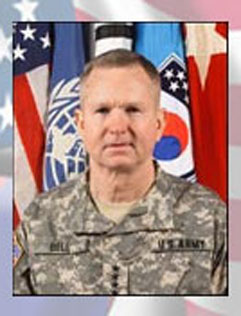
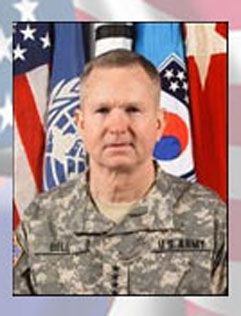
Evolution of the U.S.-ROK Military Alliance

2008 01 28 us-rok alliance icon

The U.S.-ROK military alliance is strong, according to General B.B. Bell, commander of United States Forces Korea, and the time has come to make it stronger by implementing the agreed upon transfer of wartime operational control from American to Korean commanders.

Speaking with Evans J.R. Revere, president of The Korea Society, General Bell praised the simplicity of the two countries’ alliance agreement. Signed in 1953, the agreement embodies the allies’ mutual defense pledge that remains unchanged today. What has changed, Bell explained, is the joint command structure delineating responsibility for command of the allied forces on the Korean peninsula in any given situation.

This is covered in a separate agreement that exists independently of the alliance and is subject to change as circumstances warrant. In 1994, for example, responsibility for peacetime operations was shifted from an American to a Korean commander. More recently, the two allies have agreed to a parallel shift in wartime operational control that is scheduled to be implemented in 2012.

Noting that the ROK’s armed forces have improved tremendously over the last 20 years, Bell said that he had no qualms about placing American soldiers under a Korean commander. “We trust Korean general officers to lead senior theater command,” he said. “I proclaim proudly and loudly all the time that the competencies of the Korean flag officers are second to none.”

As the transfer date draws closer, however, concern has been voiced in both countries that the impending change in command structure represents a diminished American commitment to Korea.

While sensitive to these concerns, Bell does not share them. Korean control over the country’s defense is an important symbol of sovereignty and the alliance remained strong through the 1994 operational command transfer, despite similar worries expressed at the time.

Expressing confidence that a shared commitment to peace and stability in Northeast Asia will keep the alliance vital, Bell concluded: “This alliance has a reason for being that far exceeds the specific command and control structures.

Monday, January 28, 2008

Evolution of the U.S.-ROK Military Alliance
with

General B.B. Bell
Commander of United States Forces Korea


Original Announcement:

East Asia is a region of extraordinary opportunities and challenges. The U.S.–ROK alliance, one of seven U.S. mutual defense treaties, has been and should continue to be a cornerstone of America’s security posture in the region. However, many in both the U.S. and Korea still view the alliance as a legacy wartime arrangement useful only until a permanent peace treaty can be put in place on the peninsula. At that point, the argument goes, American troops should be brought home.

This argument is flawed. Both nations have an opportunity to look beyond the one-dimensional, albeit evolving, situation with North Korea, and explore the establishment of a long-term bilateral partnership based on a shared interest in working together to deal with East Asia’s opportunities, complexities and challenges. If we do this, our two vibrant democracies can contribute significantly to East Asian regional, and global, stability and security for decades to come.

How and Why We Remember the Korean War

2008 01 16 how why korean war icon

A Discussion of David Halberstam’s The Coldest Winter

David Halberstam’s final book, The Coldest Winter, a new history of the Korean War, has been on America’s bestseller lists for months. The widespread attention being garnered by the book seemingly is at odds with the popular perception in the U.S., which often labels the conflict in Korea as the “forgotten war.” In this respect, the publication of The Coldest Winter provides an invaluable opportunity to reexamine how and why the tragic events of more than half a century ago remain relevant to the search for peace and stability on the Korean Peninsula today. Join us for a presentation and panel discussion revisiting this devastating period of Korea’s recent past and its continuing connections to contemporary American history.

The program will include a presentation by prominent Korean War scholar Bruce Cumings on how Halberstam’s work relates to our evolving understanding of the Korean War. This presentation will be followed by a discussion with Thomas McGrath, who was deployed as a soldier with the U.S. Army in Korea during the war, Yung Duk Kim, who was caught up in the war as a young civilian, and George Drake, Director of Research of the Korean War National Museum. They will share their first-hand experiences of this turbulent era in a conversation moderated by Evans J.R. Revere, the president of The Korea Society. The program will conclude with a Q&A session involving all of the participants.

Bringing the period to life, a series of vivid photographs from The Korea Society’s traveling exhibition, Living Through the Forgotten War: Portrait of Korea, will be on display during the program.

Wednesday, January 16th, 2008

How and Why We Remember the Korean War

A Discussion of David Halberstam’s The Coldest Winter

with

Bruce Cumings
Professor of History, University of Chicago.
Author, The Origins of the Korean War.

Thomas McGrath
Partner, Simpson Thacher & Bartlett.

Yung Duk Kim
Former President and CEO, Hyundai Corporation (USA).
Independent management, technology and finance consultant.

George Drake
Former Professor, Sociology at Western Washington University.
Creator of the Korean War Children’s Memorial in Bellingham, Washington.

Evans J.R. Revere
President, Korea Society.

The late David Halberstam was the author of fifteen books, including The Best and the Brightest, his reportage on the Vietnam War that won the Pulitzer Prize.

24 Hours After South Korea’s Presidential Election: An Assessment

2007 12 20  24hours after icon

The upcoming presidential election in South Korea on December 19 could mark a critical turning point in U.S.-ROK relations and the ongoing negotiations over North Korea’s nuclear programs. At stake are potential realignments in economic, political and military relationships that will have a significant impact on all the countries of the Northeast Asian region, including China and Japan.

The outcome of this pivotal election will be analyzed in an informal discussion led by leading experts on Korea and the region, including Donald P. Gregg and Evans J.R. Revere, the chairman and president of The Korea Society; Don Zagoria, project director, Northeast Asia Projects, National Committee on American Foreign Policy; and Leon Sigal, director, Northeast Asia Cooperative Security Project, the Social Science Research Council.

Come join us for this timely event on Thursday, December 20 at 12:00 PM, just 24 hours after the election.

Thursday, December 20, 2007

24 Hours After South Korea’s Presidential Election: An Assessment

with

Donald P. Gregg
Chairman, The Korea Society

Evans J.R. Revere
President, The Korea Society

Don Zagoria
Project Director, Northeast Asia Projects, National Committee on American Foreign Policy

Leon Sigal
Director, Northeast Asia Cooperative Security Project, the Social Science Research Council

Brother One Cell: An American Coming of Age in South Korea

2007 11 29  brother one cell icon

In 1993, Cullen Thomas was a young man who wanted to see the world and South Korea was one of his first stops. Convicted of smuggling hashish and sentenced to 3 ½ years in Korean prison, the world he ended up seeing—one in which the Confucian customs of Korean society take on a harsh character—wasn’t the one he expected.

Reading from his new memoir Brother One Cell: An American Coming of Age in South Korea’s Prisons (published by Viking in March 2007) and taking questions, Thomas will share the gritty reality of an American’s life in a foreign prison: its unforgettable pains and its unexpected and beautiful lessons.

Thursday, November 29, 2007

with

Cullen Thomas
Author, Brother One Cell: An American Coming of Age in South Korea’s Prisons

Sherman Scholar Award Recipients

The Application for the Eleventh Annual Sherman Family Korea Emerging Scholar Lecture Competition is now open.
Deadline to application is June 22, 2026.

About the Sherman Family Korea Emerging Lecture Award Program 
The  primary goal of this award  is to encourage U.S. thought leadership on Korea among a new generation. The award is presented across disciplines to emerging thought leaders from a wide range of disciplines and backgrounds working in the U.S. Prior awardees have explored topics in the arts, architecture, industrial policy, political science and technology and have included Ph.D. candidates, junior professors (tenure and non-tenure track), researchers and professionals. Click here to view presentations of former award winners.

About the Sherman Family
The Korea Society’s Sherman Family Korea Emerging Scholar Lecture Award was established in 2017 through the generous support of Philip and Birgitta Sherman. During the 1970s, Phil served as a senior officer for Korean operations at Citi Bank in Seoul. This time in Korea left an indelible mark on the entire Sherman family. Phil served as a director on the Society’s Board from 2017 to 2024, and Birgitta remains an active member of The Korea Society.

Benefits include:
*the opportunity to provide a public, in-person lecture at The Korea Society before a broad audience—the lecture is live-streamed and also recorded to allow ongoing access on the Society’s website and YouTube channel; 
*roundtrip travel to New York City and hotel accommodations for two-nights and incidentals
*a $2,500 honorarium and plaque
*a plaque
*the opportunity to gain wider visibility for their work while becoming part of a group of distinguished alumni.

APPLY NOW

For further information contact policy@koreasociety.org.


The Korea Society

350 Madison Avenue, 24th Floor 
New York, NY 10017


Leadership Interview Series 2022

The Korea Society’s ‘Leadership Interview Series’ highlights the roles made by distinguished leaders from the U.S. and Korea in strengthening the multifaceted relationship between the people of Korea and the U.S. The speakers share their personal and professional experiences in the realms of business, economics, education and public policy. Leading the discussions are Ambassador Kathleen Stephens, Chair of the Board of Directors, or Tom Byrne, President and CEO.

Please join us as we seek to gain a better awareness and understanding of issues of common interest between the people of Korea and the U.S.


Catching the K-Investment Wave in the USA

Thursday, June 16, 2022 | 6 PM (EDT)|

The United States and South Korea have a well-established “gold standard” Free Trade Agreement. Now, as international economic relationships are shifting to strategic frameworks and concerns over supply-chain robustness and resiliency, Korean investment in the U.S is gaining attention and transforming the bilateral relationship into a new dynamic… Read More


Interview with CJ Group Chairman Kyung Shik Sohn

Premiere on Tuesday, April 19, 2022 | 6 PM (EDT)|

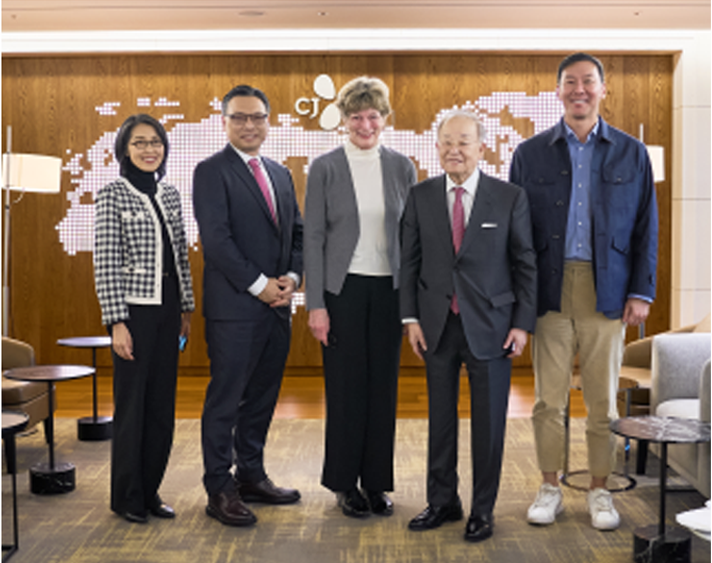
The Korea Society is pleased to invite Mr. Kyung Shik Sohn, Chairman of CJ Group, for a conversation with the Society’s President/CEO Tom Byrne. In this upcoming episode of our President’s Interview Series, Chairman Sohn… Read More


Women in Higher Education: A Discussion with Dr. Eun Mee Kim & Dr. Sian Leah Beilock

Tuesday, March 22, 2022 | 8 AM (EDT)|

Womens’ Universities have emerged as premier institutions in higher education, amplifying womens’ voices from diverse backgrounds and perspectives. In the fourth installation of our Womens’ Leadership Series, please join us at The Korea Society to hear from Dr. Eun Mee Kim, President of Ewha Womans University in Seoul, and Dr. Sian Leah Beilock, President of Barnard College in New York City…. Read More


Interview with ROK Trade Minister Yeo Han-Koo

Friday, March 18, 2022|

March 15, 2022 marks the 10-year anniversary of the US-Korea Free Trade Agreement (KORUS FTA). In celebration of this remarkable milestone, The Korea Society invites ROK Minister for Trade Yeo Han-koo for a conversation with Korea Society President Tom Byrne Read More


Interview with LG Chem CEO Hak Cheol Shin

Premieres: Wednesday, December 8, 2021 | 6 PM ET|

Join us for a conversation between Mr. Hak Cheol Shin, Chief Executive Officer of LG Chem, and Tom Byrne, the President and CEO of The Korea Society. In this third episode of the ‘President’s Interview Series,’ Mr. Shin will discuss his remarkable career starting out from 3M Korea and serving as the Vice Chair at 3M headquarter… Read More


Talking COVID-19 Vaccine Cooperation with President John Rim

Wednesday, July 21, 2021 | 7 PM (EDT)|

Join us for a conversation between Mr. John Rim, President and CEO of Samsung Biologics, and Tom Byrne, the President and CEO of The Korea Society. In this second episode of the ‘President’s Interview Series,’ President Rim will discuss his extensive career and senior leadership roles in the biopharmaceutical industry, as well as his current role as the head of Samsung Biologics… Read More


A Conversation with Chairman Yongmaan Park

Wednesday, June 2, 2021 | 7 PM (EDT)|

In our inaugural episode of the ‘President’s Interview’ Series, we are pleased to invite Park Yongmaan, Chairman of Doosan Infracore for a conversation with The Korea Society’s President Tom Byrne. As one of the most successful and powerful business leaders in Korea and the world, Chairman Park will discuss his extensive career and leadership role as the Chairman of Doosan Infracore and former Chairman of the Korea Chamber of Commerce and Industry (KCCI)… Read More


Women in Congress: A Conversation with U.S. Representative Young Kim

Wednesday, April 21, 2021 | 6 PM (EDT)

U.S. Representative Young Kim (CA-39) joins The Korea Society to share her journey in becoming one of the first Korean American women elected to Congress in its 230-year history. As an immigrant, small business owner, and previous California State 65th district Assemblywoman, we will explore how Congresswoman Kim pursued the American dream to become a successful Korean American leader and politician… Read More


Women in Trade: A Talk with Trade Minister Yoo Myung-hee||

Friday, February 26, 2021 | 7 PM (EST)

In the second episode of our Women’s Leadership series, we are pleased to welcome South Korean Minister for Trade Yoo Myung-hee for a conversation on her 25-year career in shaping the international trade infrastructure. As Deputy Minister for FTA Negotiations, and later Director-General for Bureau of Trade Policy at the Ministry of Trade, Industry, and Energy, Yoo Myung-hee has been at the forefront of numerous high-profile trade agreements… Read More


A Conversation with Ambassador Kathleen Stephens||

Thursday, January 28, 2021 | 6 PM (EST)

In our inaugural episode of the Korea Society’s Women in Leadership series, we are pleased to welcome Ambassador Kathleen Stephens for a conversation on her distinguished career as a world-renowned female leader. Having an extensive career in international relations, Amb. Stephens, a decorated former U.S. diplomat, will share her special and deep connections to Korea. She will also highlight her experiences in promoting the U.S-Korea relationship as a former U.S. Ambassador to the Republic of Korea, Peace Corp volunteer, and current President of Korea Economic Institute and Chair of The Korea Society… Read More


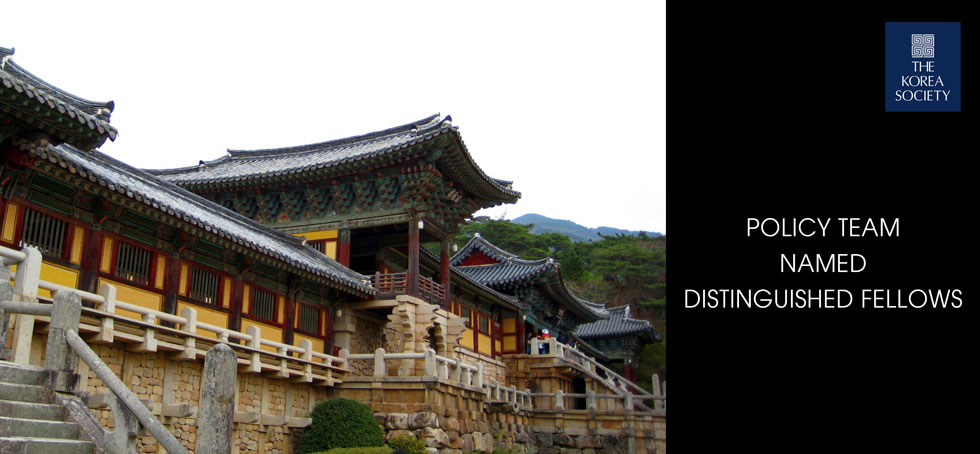
Policy Team named Distinguished Fellows

By Samuel Orchard from Australia – BulguksaUploaded by Caspian blue, CC BY-SA 2.0, https://commons.wikimedia.org/w/index.php?curid=7304917

Stephen Noerper, Senior Director for Policy, has been invited to Korea as a 2021 visiting scholar by the National Institute for Unification Education, under the banner of the Ministry of Unification. Dr. Noerper visited Seoul in October 2019 as a guest of the Ministry of Foreign Affairs, and as an NIU visiting scholar in 2021, he provides six lectures to diplomats, officials, graduate students and professionals on Korea’s regional relations and unification, with a focus on the Biden Administration’s foreign policy and Korea’s management of relations with China. Former visiting scholars include Robert Einhorn and Evans Revere.

Jonathan Corrado, Director for Policy, has been selected to undertake a 12-month Non-resident Kelly Fellowship at Pacific Forum. Under the guidance of the Pacific Forum team, Jonathan will write a paper about the challenges and opportunities for South Korea to enhance engagement with the Free and Open Indo Pacific initiative or “Quad,” examining the national security and economic statecraft elements that weigh into Seoul’s calculation as it determines its level of engagement. Jonathan was also selected to participate in the National Committee on American Foreign Policy (NCAFP) Emerging Leaders Program: Next Generation Korea Peninsula Specialists. Under this program, Jonathan will write a paper assessing whether U.S.-South Korea cooperation can help to build supply chain resilience, especially semiconductors, in the Indo Pacific to reduce opportunities for Chinese economic coercion.


Policy Team named Distinguished Fellows

The Korea Society
350 Madison Avenue, 24th Floor
New York, NY 10017


Human Rights and North Korea: Honoring the Anniversary of the UN Commission of Inquiry Report

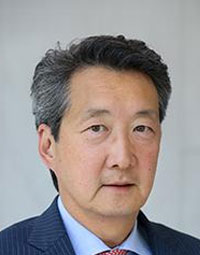
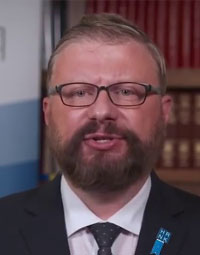
The Committee for Human Rights in North Korea (HRNK) executive director Greg Scarlatoiu and Bush Institute senior fellow Victor Cha joined senior director Stephen Noerper for a discussion of human rights in North Korea and its placement on the Biden administration’s new policy agenda. The event marks the anniversary of the historic UN Commission of Inquiry report release. This program is made possible thanks to support from the Korea Foundation.


Human Rights and North Korea:
Honoring the Anniversary of the UN Commission of Inquiry Report

with
Victor Cha and Greg Scarlatoiu

Thursday, February 4, 2021 | 1 PM

The Korea Society
350 Madison Avenue, 24th Floor
New York, NY 10017


ABOUT THE SPEAKERS:

Victor Cha joined the Center for Strategic and International Studies in Washington, D.C. in May 2009 as a senior adviser and the inaugural holder of the Korea Chair. He is professor of government and holds the D.S. Song-KF Chair in the Department of Government and the School of Foreign Service (SFS) at Georgetown University. In July 2019, he was appointed vice dean for faculty and graduate affairs in SFS. He left the White House in 2007 after serving since 2004 as director for Asian affairs at the National Security Council (NSC). At the White House, he was responsible primarily for Japan, the Korean peninsula, Australia/New Zealand, and Pacific Island nation affairs.

Greg Scarlatoiu is the Executive Director of the Committee for Human Rights in North Korea (HRNK) in Washington, D.C. He has coordinated 28 HRNK publications addressing North Korea’s human rights situation and the operation of its regime. He is a visiting professor at the Hankuk University of Foreign Studies in Seoul as well as instructor and coordinator of the Korean Peninsula and Japan class at the U.S. State Department’s Foreign Service Institute (FSI). Scarlatoiu is vice president of the executive board of the International Council on Korean Studies (ICKS). He is also a member of the advisory board for The Korea and World Politics Institute. Prior to HRNK, Scarlatoiu was with the Korea Economic Institute (KEI) in Washington, D.C.