On July 19th, 2011, United States Ambassador to the Republic of Korea Kathleen Stephens delivered the keynote address at The Korea Society’s 2011 Annual Dinner in New York City. She spoke about the “better than ever” relationship between Korea and the United States, the importance of the free trade agreement, and her own 700-kilometer bicycle trip from Seoul to Jindo.
Category: Annual Dinner
2011 Annual Dinner Keynote Address by Ambassador Kathleen Stephens
2010 Annual Dinner
Keynote Speaker
and
2010 Van Fleet Award Honoree
General Colin L. Powell
65th Secretary of State
United States of America
and
2010 Van Fleet Award Honoree
General Paik Sun Yup
Wednesday, June 2, 2010
The Plaza
Fifth Avenue at Central Park South
New York City
Reception • 6:00 PM
Dinner • 7:00 PM
black tie/traditional attire
For further information,please contact
Jiyoung Suh at (212) 759-7525, ext. 311.
A portion of the proceeds will be donated to the
Colin Powell Center for Policy Studies at the City College of New York
Keynote Speaker/ Van Fleet Award Honoree
Colin L. Powell
65th Secretary of State
United States of America
General Colin L. Powell, USA (Ret) became the 65th Secretary of State on January 20, 2001. As he stated at his confirmation hearing, the guiding principle of U.S. foreign policy during his tenure was that “America stands ready to help any country that wishes to join the democratic world.”
General Powell brought extensive experience with him to his office. Before becoming Secretary of State, Colin Powell served as a key aide to the Secretary of Defense and as National Security Advisor to President Reagan. He also served 35 years in the United States Army, rising to the rank of Four-Star General and serving as Chairman of the Joint Chiefs of Staff (1989 – 1993). During this time he oversaw 28 crises to include the Panama intervention of 1989 and Operation Desert Storm in the victorious 1991 Persian Gulf War.
Born in New York City on April 5, 1937, General Powell was raised in the South Bronx. His parents, Luther and Maud Powell, immigrated to the United States from Jamaica. General Powell was educated in the New York City public schools, graduating from Morris High School and the City College of New York (CCNY), where he earned a bachelor’s degree in geology. He also participated in ROTC at CCNY and received a commission as an Army second lieutenant upon graduation in June 1958. His further academic achievements include a Master of Business Administration degree from George Washington University.
General Powell is the recipient of numerous U.S. military awards and decorations including the Defense Distinguished Service Medal (with 3 Oak Leaf Clusters), the Army Distinguished Service Medal (with Oak Leaf Cluster), Defense Superior Service Medal, Legion of Merit (with Oak Leaf Cluster), Soldier’s Medal, Bronze Star Medal, and the Purple Heart.
General Powell’s civilian awards include two Presidential Medals of Freedom, the President’s Citizens Medal, the Congressional Gold Medal and the Secretary of Energy Distinguished Service Medal. He has received awards from over two dozen countries to include a French Legion of Honor and an honorary knighthood bestowed by H.M. Queen Elizabeth II of Great Britain.
General Powell is the Founder of the Colin Powell Center for Policy Studies at his alma mater, the City College of New York. The Center is student-focused with a mission to develop a new generation of publicly engaged leaders. He is also the Founder and Chairman Emeritus of the America’s Promise Alliance, dedicated to forging a strong and effective partnership alliance committed to seeing that children have the fundamental resources they need to succeed.
He has also been a member of the Board of Trustees of Howard University and the Board of Directors of the United Negro College Fund. The General also served on the Board of Governors of The Boys & Girls Clubs of America and was a member of the Advisory Board of the Children’s Health Fund.
Since returning to private life, General Powell has become a strategic limited partner at Kleiner Perkins Caufield & Byers, the renowned Silicon Valley venture capital firm., and he is helping to raise funds for the Martin Luther King, Jr. Memorial in Washington, DC and for the construction of an education center for the Vietnam Veterans Memorial. He is the author of his best-selling autobiography, My American Journey.
General Powell is married to the former Alma Vivian Johnson of Birmingham, Alabama. The Powell family includes son Michael; daughters, Linda and Annemarie; daughter-in-law Jane, and grandchildren Jeffrey, Bryan, Abigail and Patrick.
Van Fleet Award Honoree
General (Ret.) Paik Sun Yup
Paik Sun Yup, the Republic of Korea’s foremost army general during the Korean War, was born in 1920 near Pyongyang. After service in the Manchurian Army during World War II, he escaped the onrushing Soviet Army for Pyongyang, where he became actively involved in Korea’s fledging national liberation movement. Realizing in 1946 that a communist takeover in the north was inevitable, Paik made his way to the south and joined the South Korean Constabulary (later to become the ROK Army). When North Korea launched its general offensive against the ROK on June 25, 1950, then Colonel Paik was commander of the ROK 1st Infantry Division. During the course of the war, he became the first South Korean to achieve the rank of four-star general. Paik participated in all ten of the major campaigns of the Korean War, commanded an independent corps that conducted the largest anti-guerilla operation of the war, and was the ROK’s initial representative to the armistice negotiations.
Following the signing of the armistice, Paik served twice as ROK Army chief of staff and was also chairman of the ROK Joint Chiefs of Staff. He retired from active duty in 1960 as the most highly decorated soldier in the ROK Army. His military decorations include two Taeguk Medals (Korea’s highest award), as well as seven U.S. medals, including one Silver Star, four Legions of Merit and a Defense Medal for Distinguished Public Service. After his retirement from the ROK Army, General Paik served as ambassador to Taiwan in 1960, France (and concurrently 16 other European and African nations) in 1961, and Canada in 1965. From 1969 to 1971, he served as the ROK Minister of Transportation and played a significant role in establishing the country’s current public transportation system. From 1971 to 1980, he was president of South Korea’s largest chemical company. From 1999 to 2003, he was chairman of the ROK 50th Anniversary of the Korean War Commemoration Committee.
Residing in Seoul, Paik and his wife of 65 years, In Sook, have four children, eight grandchildren, and two great-grandchildren. Paik is the author of several books, including From Pusan to Panmunjom (1992) as well as chairman of the Military History Compilation Institute Advisory Committee to the Ministry of National Defense, the first president of the Association of the ROK Army, and elder adviser to the National Diplomacy and Security Council.
| CO-CHAIRS | |
| W. James McNerney, Jr. Chairman, President and CEO The Boeing Company |
Lee Yoon-Woo Vice Chairman Chairman of the Board of Directors Samsung Electronics Co., Ltd. |
| CO-VICE CHAIRS |
| Jin Roy Ryu Chairman & CEO Poongsan Corporation |
| BENEFACTOR | |
| Spencer H. Kim
Chairman
CBOL/Celltron
|
Michael Wirth Executive Vice President Global Downstream
Chevron
|
| William R. Rhodes Senior Advisor Citi |
Min Keh-Sik Chairman and CEO Hyundai Heavy Industries Co., Ltd. |
|
Chung Mong-Koo |
Wayne Park President and CEO LG Electronics North America |
|
Bill Hwang |
|
| PATRON | |
Nicholas C. Walsh President and CEO Chartis International
|
Robert E. Fallon Adjunct Professor Columbia University Business School
|
| Hur Dong-Soo Chairman & CEO GS Caltex Corporation
|
Robert A. Cohen Managing Partner Joranel LLC
|
| Larry A. Klane President and CEO Korea Exchange Bank
|
William Toppeta President, International MetLife
|
| Lee Jeong Hwa President and CEO SK USA, Inc.
|
|
Co-Chair
The Boeing Company
Samsung Electronics Co., Ltd.
Vice Chair
Poongsan Corporation
Benefactor
CBOL/Celltron
Chevron
Citi
Hyundai Heavy Industries
Hyundai-Kia Automotive Group
LG Electronics USA, Inc.
Tiger Asia Management LLC
Patron
Chartis International
GS Caltex Corporation
Korea Exchange Bank
MetLife
Robert A. Cohen & Robert E. Fallon
SK
Donor
Corning Incorporated
Korea International Trade Association
Korean American Friendship Association
Korean Consulate General
KPMG LLP
Mizuho Securities USA Inc.
Morgan Stanley & One Equity Partners
PricewaterhouseCoopers LLP
Contributor
Ernst & Young
Lazard Asset Management
McLarty Associates
POSCO
Special Acknowledgment
Additional support was provided by Mark Gaston,Gaston Capital Management Inc.; Richard T. McCormack, Bank of America Merrill Lynch; Julia Quincy; Ministry for Food, Agriculture, Forestry and Fisheries; Samsung Electronics America, Inc.; Sulwhasoo.
Videotaped Remarks of President Obama for the Korea Society 2010 Annual Dinner
Good evening everyone. I appreciate the opportunity to send my wishes as you celebrate the unbreakable bonds between the United States and the Republic of Korea. This year, of course, holds special meaning for us all.
We recall that it was exactly sixty years ago, on another June day, when the Communist armies poured across the 38th parallel and threatened the very survival of the Republic of Korea.
We honor all those who rallied to her defense — the fallen whose names are etched in sacred memorials, and veterans like General Paik who join you tonight.
We salute the resolve of the people of the Republic of Korea – who, from the ruins of war, built an economic miracle, a vibrant democracy, a society where a child could grow up to be Secretary General of the United Nations, and a nation that is now a regional and global leader.
We thank all those who have stood with the Republic of Korea to keep her safe and strong — especially our Korean American friends, the Korea Society, and generations of Americans in uniform, including my friend, General Colin Powell.
Most of all, we reaffirm the enduring alliance between our countries — an alliance rooted in shared sacrifice, common values, mutual interest and mutual respect; an alliance that is stronger than ever. And, as we have seen in recent weeks, our alliance is needed more than ever.
The attack on the navy vessel Cheonan was an unprovoked act of aggression by North Korea. As I have told President Lee, I and the American people offer our deepest condolences, especially to the families of the 46 sailors who were lost.
To our friends from the Republic of Korea who join you tonight, I say this: you and President Lee have shown extraordinary patience and self-restraint. You have shown the world what true strength and confidence looks like. And you have the full support of your friend and ally, the United States of America.
In the days ahead, our governments will continue to consult closely, and I look forward to meeting with President Lee this month in Toronto. Together, we will ensure our readiness and deter aggression. We will work with allies and partners to hold North Korea accountable, including at the United Nations Security Council, making it clear that security and respect for North Korea will never come through aggression, but only by upholding its obligations. And as I said during my visit to Seoul and Osan last fall, the commitment of the United States to the security and defense of the Republic of Korea will never waver.
Going forward, we will pursue our shared vision of our alliance for the 21st century. As the host of the G-20 Summit in November and the Nuclear Security Summit in two years, the Republic of Korea will continue to assume its rightful place as a leader on the world stage.
And every step of the way, our two nations will be guided by the same sense of solidarity and shared sacrifice that has defined us for 60 years — Katchi Kapshida. We go together. We go together in these difficult days. And we will continue to go together in the months and years to come.
Thank you, and have a wonderful evening.
Remarks of President Lee Myung-bak for the Korea Society 2010 Annual Dinner
Chairman Hubbard, President Minton, Secretary General Ban Ki-moon, Veterans of the Korean War, Distinguished Guests,
Let me extend my congratulations as the Korea Society holds its Annual Dinner. This year’s event is especially meaningful since we are commemorating the 60th anniversary of the outbreak of the Korean War together with veterans of the War. I would also like to express my sincere congratulations to the recipients of the 2010 Van Fleet Award, General Paik Sun Yup (백선엽) and Secretary Colin Powell.
The history of the Korea Society is emblematic of how the deep-rooted and splendid friendship between Korea and the United States has evolved over the decades. Our two countries have shed blood together as brothers-in-arms in the defense of freedom and democracy, and are now longstanding partners in the common pursuit of global peace.
Korea emerged from the ruins of the Korean War to become the world’s 13th largest economic powerhouse. It went from the receiving end of foreign aid to become a donor country helping others in need around the world. More recently, Korea was able to more successfully weather the global financial crisis. It will be hosting the G20 Summit this coming November and the Second Nuclear Security Summit in 2012.
The Korean War veterans gracing us with their presence today have every reason to take immense pride as they see Korea playing a responsible role in the service of global peace and prosperity of all humanity. Know that the Republic of Korea will always remember you.
Distinguished guests,
The recipients of the 2010 Van Fleet Award, General Paik Sun Yup (백선엽) and Secretary Powell, are remarkable historic testaments to the Korea-US alliance.
General Paik is Korea’s greatest war hero, having fought on the frontlines with dauntless valor alongside US troops during the Korean War. Secretary Powell, himself having once served in uniform in Korea to help safeguard peace, would later become a Secretary of State firmly committed to strengthening the Korea-US alliance.
On behalf of the Korean people, I wish to once again congratulate them both for receiving the distinction on this 60th year since the beginning of our “blood-forged” alliance.
Today, the Korea-US alliance is expanding and deepening across a whole range of areas including economy and culture, not to mention security. Our alliance will advance into a partnership of far-reaching global scope committed to contributing to peace and stability in the world.
In the realm of security, Korea and the US will stand side by side in responding firmly to forces threatening the peace, based on a robust combined defense posture and “extended deterrence.”
I still vividly remember attending the Annual Dinner a little more than two years ago. I believe, just as you welcomed me warmly as a friend from afar, you will provide your continued assistance and support for the development of the Korea-US alliance.
I convey my best wishes for the everlasting prosperity of the Korea Society, and the good health and happiness of everyone here.
Thank you.

Insooni
Insooni began her career in 1978 as a member of the Hee Sisters pop trio. In the 1980s, she embarked on a solo career and soon became South Korea’s top R&B, pop, and jazz diva, a position she has held for 32 years by embracing new music without losing sight of her artistic roots. Insooni’s hits include “Night After Night,” “Prelude to Goodbye,” “Dear Friend,” “Passion,” and “Higher.” She is the first and only Korean pop singer to perform twice at Carnegie Hall, first in 1999 and again in 2010. Her awards include the 1997 Mokryun-Sang, 2004 Top Korea Artist of the Year, and the 2010 President’s Award.
2009 Annual Dinner
Keynote Speaker
The Honorable Stephen W. Bosworth
Special Representative for North Korea Policy
United States of America
|
Mr. Chung Mong-Koo
Chairman Hyundai-Kia Automotive Group |
The Honorable Henry A. Kissinger
56th Secretary of State United States of America |
Tuesday, June 9, 2009
The Waldorf=Astoria
301 Park Avenue
New York City
Reception • 6:30 PM • Jade Room
Dinner • 7:30 PM • Grand Ballroom
For further information, please contact Jiyoung Suh at (212) 759-7525, ext. 311.
Keynote Speaker

Stephen W. Bosworth
Special Representative for North Korea Policy
Stephen W. Bosworth became the special representative for North Korea policy in February 2009, reporting to the secretary of state and the president. Ambassador Bosworth continues to serve as dean of The Fletcher School of Law and Diplomacy at Tufts University. Prior to his appointment at The Fletcher School in February 2001, he served as the United States ambassador to the Republic of Korea from November 1997 to February 2001. From 1995 through 1997, Ambassador Bosworth was the executive director of the Korean Peninsula Energy Development Organization (KEDO). Before joining KEDO, he served seven years as president of the United States–Japan Foundation, a private American grant-making institution. He also taught international relations as an adjunct professor at Columbia University’s School of International and Public Affairs from 1990 to 1994. In 1993, he was the Sol Linowitz Visiting Professor at Hamilton College. He has co-authored several studies on public policy issues for the Carnegie Endowment and the Century Fund, and in 2006 he co-authored Chasing the Sun, Rethinking East Asian Policy.
Ambassador Bosworth has had an extensive career in the United States Foreign Service, including service as ambassador to Tunisia from 1979 to 1981 and ambassador to the Philippines from 1984 to 1987. He also served in a number of senior positions in the Department of State, including director of policy planning, principal deputy assistant secretary of state for inter-American affairs, and deputy assistant secretary for economic affairs. Ambassador Bosworth is the recipient of several awards, including the American Academy of Diplomacy’s Diplomat of the Year Award in 1987, the Department of State’s Distinguished Service Award in 1976 and 1986, and the Department of Energy’s Distinguished Service Award in 1979. In 2005, the government of Japan presented him with the Order of the Rising Sun, Gold and Silver Star.
Ambassador Bosworth is a graduate of Dartmouth College.
Van Fleet Award Honoree
Chung Mong-Koo
Chairman
Hyundai–Kia Automotive Group
As the Chairman and Chief Executive Officer of the Hyundai-Kia Automotive Group, the world’s fifth-largest automaker, Chung Mong-Koo has demonstrated extraordinary leadership and vision which have put the Group firmly on track for growth in the 21st century. Since taking the helm of Hyundai-Kia Automotive Group in 1999, Mr. Chung has propelled the automaker to the top ranks of the industry by instituting on-site management, quality management, and global management, the three core principles of his management philosophy. From the margins of the industry, Hyundai has emerged among the Top 100 Global Brands for the past four years, according to InterBrand, the UK brand consultancy and Business Week.
His major strategic decisions include the 1998 rescue from bankruptcy of Kia Motors, instituting the Six Sigma quality revolution, and the aggressive push to globalize R&D and manufacturing operations starting with the 2002 decision to invest in a Beijing China manufacturing subsidiary. To get a closer feel of the pulse of the American car buyer, nearly US$2.5 billion has been invested to construct new assembly plants in Montgomery, Alabama, in West Point, Georgia, as well research and development centers in Irvine, California, and Superior Township, Michigan, leading to the direct creation of some 8,000 new jobs for Americans and thereby strengthening the Korean-American partnership.
Mr. Chung is continuously striving to achieve his vision for the 21st century. By building two new manufacturing plants in Europe, expanding production capacities in both China and India and integrating a newly established steel company into the company’s production system, he is leading the Hyundai-Kia Automotive Group in becoming a more competitive player in the auto industry.
Outside the company, Mr. Chung has maintained a high profile in the business community, most recently securing Korea’s right to host the 2012 Expo in his role as Honorary Chairman of the Bidding Committee for the Expo 2012 Yeosu. Mr. Chung is also contributing to the economic cooperation and peace policies in North-East Asia as Chairman of the Board for the East Asia Forum, which established and implemented the Jeju Peace Forum.
His philanthropic activities are led by the Haevichi Foundation which supports the performing arts and environmental protection causes. In the U.S., Hyundai Motor’s subsidiaries contribute to the local communities through various corporate social responsibility activities. A key initiative in the North American region is the `Hope on Wheels’ program, which supports the fight against pediatric cancer. More than $10 million have been donated to the cause since the program’s inception in 1998. Other activities include building and preserving homes for the less fortunate by working with `Habitat for Humanity and Rebuilding Together,’ as well as supporting the American Cancer Society and the American Red Cross. In addition to blood donations and fund-raising activities worth of 1$ million during the 2005 Hurricane Katrina relief effort, every year the employees at Hyundai’s Alabama plant volunteer over 1,000 hours to help make the community a better place.
Mr. Chung holds a bachelor’s degree in Industry Business Administration from Hanyang University. On February 4, 2001, he was awarded the Distinguished Service Citation from the Automotive Hall of Fame, making him the first Korean and second Asian to receive this award. In 2004, he was named by Business Week magazine as one of the year’s “Best Managers.” In 1986, Central Connecticut State University bestowed upon him an Honorary Professorship, and in 1989, an Honorary Ph.D. in Human Science. China’s Tsinghua University awarded Chairman Chung an Honorary Professorship of Business Administration in 1996.
Van Fleet Award Honoree
Henry A. Kissinger
56th Secretary of State
United States of America
Henry Alfred Kissinger was sworn in on September 22, 1973, as the 56th Secretary of State, a position he held until January 20, 1977. He also served as Assistant to the President for National Security Affairs from January 20, 1969, until November 3, 1975. In July 1983 he was appointed by President Reagan to chair the National Bipartisan Commission on Central America until it ceased operation in January 1985, and from 1984-1990 he served as a member of the President’s Foreign Intelligence Advisory Board. From 1986-1988 he was a member of the Commission on Integrated Long-Term Strategy of the National Security Council and Defense Department. He served as a member of the Defense Policy Board from 2001 to 2008.
At present, Dr. Kissinger is Chairman of Kissinger Associates, Inc., an international consulting firm. He is also a member of the International Council of J.P. Morgan Chase & Co.; chairman of the International Advisory Board of American International Group, Inc.; a counselor to and trustee of the Center for Strategic and International Studies; an honorary governor of the Foreign Policy Association; and an honor member of the International Olympic Committee. Among his other activities, Dr. Kissinger is a member of the board of directors of ContiGroup Companies, Inc. and an advisor to the Board of Directors of American Express Company. He is also a member of the Advisory Board of Forstmann Little and Co.; a trustee emeritus of the Metropolitan Museum of Art; a director emeritus of Freeport-McMoRan Copper and Gold Inc.; and a director of the International Rescue Committee.
Among the awards Dr. Kissinger has received have been the Nobel Peace Prize in 1973; the Presidential Medal of Freedom (the nation’s highest civilian award) in 1977; and the Medal of Liberty (given one time to ten foreign-born American leaders) in 1986.
Dr. Kissinger was born in Fuerth, Germany, came to the United States in 1938, and was naturalized a United States citizen in 1943. He served in the Army from 1943 to 1946. He graduated summa cum laude from Harvard College in 1950 and received M.A. and Ph.D. degrees from Harvard University in 1952 and 1954.
From 1954 until 1969 he was a member of the faculty of Harvard University, in both the Department of Government and the Center for International Affairs. He was Director of the Harvard International Seminar from 1952 to 1969.
Dr. Kissinger is the author of:
A World Restored: Castlereagh, Metternich and the Restoration of Peace, 1812-1822 (1957)
Nuclear Weapons and Foreign Policy (1957)
The Necessity for Choice: Prospects of American Foreign Policy (1961)
The Troubled Partnership: A Reappraisal of the Atlantic Alliance (1965)
Problems of National Strategy: A Book of Readings (ed.) (1965)
American Foreign Policy, Three Essays (1969)
White House Years (1979)
For the Record: Selected Statements, 1977-1980 (1981)
Years of Upheaval (1982)
Observations: Selected Speeches and Essays, 1982-1984 (1985)
Diplomacy (1994)
Years of Renewal (1999)
Does America Need a Foreign Policy?: Toward a Diplomacy for the 21st Century (2001)
Ending the Vietnam War: A History of America’s Involvement in and Extrication from the Vietnam War (2003)
Crisis: The Anatomy of Two Major Foreign Policy Crises (2003)
He has also published numerous articles on United States foreign policy, international affairs and diplomatic history. His column, syndicated by Tribune Media Services International, appears in leading U.S. newspapers and in over 40 foreign countries.
DINNER CHAIR
AHN Byung Mo
Group President and CEO
KIA Motors America and KIA Motors Manufacturing Georgia
BENEFACTOR
Spencer H. KIM
Chairman
CBOL/Celltron
Michael AHN
President and CEO
LG Electronics North America
CHOI Changsoo
President and CEO
Samsung Electronics America, INC.
North America Region
Bill HWANG
Founder and CEO
Tiger Asia Management LLC
PATRON
HUR Dong-Soo
Chairman and CEO
GS Caltex Corporation
MIN Keh-Sik
Vice Chairman and
Co-Chief Executive Officer
Hyundai Heavy Industries
SPONSOR
Nicholas C. WALSH
Vice Chairman
AIU Holding, INC.
Larry A. KLANE
President and CEO
Korea Exchange Bank
Benefactor
CBOL/Celltron
Hyundai-Kia Automotive Group
LG Electronics USA, Inc.
Samsung Electronics America, Inc.
Tiger Asia Management L.L.C.
Patron
GS Caltex Corporation
Hyundai Heavy Industries
Hyundai-Kia Automotive Group
Sponsor
AIU Holdings
Hyundai-Kia Automotive Group
Korea Exchange Bank
Donor
KPMG LLP
Lazard Asset Management LLC
MetLife
Morgan Stanley & One Equity Partners
PricewaterhouseCoopers LLP
Robert E. Fallon
Contributor
Asiana Airlines, Inc.
Belstar Group
Korean Consulate General
McLarty Associates
PGP Capital Advisors, LLC
POSCO
SK USA
Special Acknowledgement
Additional support was provided by Mark Gaston, Gaston Capital Management Inc.; Alexandra Munroe, Guggenheim Museum; Mark A. Smith, Mark Smith Law Office; Richard T. McCormack, Merrill Lynch.
2008 Annual Dinner
DINNER PROGRAM
Grand Ballroom
The Plaza
New York City
April 15, 2008
WELCOME
Mr. Evans J.R. Revere
President
The Korea Society
REMARKS
The Honorable Carlos M. Gutierrez
Secretary
U.S. Department of Commerce
Introduction by
Mr. Evans J.R. Revere
His Excellency Ban Ki-Moon
Secretary-General
United Nations
Introduction by
Mr. Dong-Jin Oh
President & CEO
Samsung Electronics America, Inc.
The Honorable Christopher R. Hill
Assistant Secretary
Bureau of East Asian and Pacific Affairs
U.S. Department of State
Introduction by
Mr. Spencer H. Kim
Chairman
CBOL/Celltron
DINNER REMARKS
The Honorable Donald P. Gregg
Chairman
The Korea Society
KEYNOTE ADDRESS
His Excellency Lee Myung-Bak
17th President of the Republic of Korea
Introduction by
Mr. Stanley C. Gale
Chairman
Gale International
MUSICAL INTERLUDE
Musicians from the New York Philharmonic
JAMES A. VAN FLEET AWARD CEREMONY
Honorees
Peace Corps Korea Volunteers
Accepted by
The Honorable Kevin O\’Donnell
First Country Director for Peace Corps Korea
Former Peace Corps Director
Introduction by
Dr. Hur Dong-Soo
Chairman and CEO
GS Caltex Corporation
Mr. Don Oberdorfer
Chairman, U.S.-Korea Institute
School of Advanced International Studies
John Hopkins University
Introduction by
Mr. Byung Mo Ahn
Group President and CEO
KMA and Kia Motors Manufacturing Georgia
Awards presented by
His Excellency Lee Myung-Bak
CLOSING REMARKS
Mr. Evans J.R. Revere
Guest of Honor
Lee Myung-Bak
President of the Republic of Korea
Before becoming the 17th president of the Republic of Korea, Lee Myung-Bak was a prominent Hyundai businessman, imaginative politician in the National Assembly and successful mayor of Seoul. His illustrious career, along with the story of his rise from his humble beginnings, has been a source of inspiration for many young Koreans.
Born on December 19, 1941 to a poor family from Pohang, a port city in southeastern Korea, President Lee paid his way through high school and college by rising early every morning, collecting trash and sweeping the streets. He has maintained the habit of waking up early ever since, rising before 5 AM every day.
After joining Hyundai Construction in 1965, his achievements included the construction of the Pattani- Narathiwat Highway in Thailand and the Seoul-Busan (Gyeongbu) Highway in Korea, both of which later became the backbone of economic development in the respective countries. President Lee also led the construction of Iraq’s Arabian Repair Shipyard and Jubail Industrial Port as well as Malaysia’s Penang Bridge, the second longest in the world at the time. He also spearheaded Hyundai’s drive to modernize Korea’s Presidential housing stock by planning and building modern apartment complexes. On the strength of these accomplishments, President Lee rose to become CEO of Hyundai Construction in just 12 years.
As CEO of Hyundai Construction, President Lee oversaw Hyundai’s automobile, heavy industry and shipbuilding units, which eventually became Hyundai Motors, Hyundai Heavy Industry and Hyundai Shipbuilding, respectively. He held CEO positions at ten different Hyundai affiliates, including Hyundai Engineering and Incheon Steel, before leaving the company in 1992.
After leaving Hyundai, President Lee served two terms in the National Assembly before being elected mayor of Seoul in 2002. The most notable achievement of his service as mayor was the restoration of Cheonggyecheon, a 6.5 kilometer stream that had been buried by concrete for 40 years. The project was an audacious one. To uncover the stream, he had to remove an eight-lane highway and 5.8 kilometer overpass that carried 270,000 vehicles daily. Moreover, the restoration faced harsh opposition from many local interest groups. President Lee set out to forge a consensus among the 220,000 business owners, residents and street vendors of the area by conducting more than 4,000 dialog sessions. Eventually, the project succeeded, reviving Seoul’s ecosystem and enlivening the city center. Now, more than 30 million people visit Cheonggyecheon annually. The project earned the Best Public Administration award at the Venice Biennale’s 9th International Architecture Exhibition in 2005. For his support of the project, President Lee was named one of the “Heroes of the Environment” by TIME magazine in 2007.
Under President Lee’s watch, the city of Seoul excelled in e-government practices and was ranked first in the world in 2003 and 2005 in the biennial global e-government report. He also helped to transfer Seoul’s e-government innovations to Moscow, Hanoi and Ulaanbaatar.
In 2007, President Lee won the Grand National Party’s nomination for president. He promised to usher in a new era of pragmatism during his campaign for the presidency. As outlined in his inaugural speech, President Lee’s vision for Korea is “a nation where the government serves its people with devotion, a nation where the economy is robust and the weak and the marginalized are taken care of…a nation where the best and the brightest are fostered, and welcomed by the rest of the world, and which attracts the world’s best and brightest to come and work.” He also promised that Korea would pursue global diplomacy in a manner commensurate with its stature so as to contribute to peace and stability around the world. The Korean people have responded positively to this vision.
President Lee was elected president on December 19, 2007 and sworn in on February 25, 2008. He won the election by a wide margin in all categories-region, age group and income level-and placed ahead of the nearest runner-up by 5.28 million votes, representing 22.5 percent of the total ballots cast. Coincidentally, December 19 happens to be his birthday as well as his wedding anniversary.
This is President Lee’s first trip to the United States as president of the Republic of Korea.
2008 Van Fleet Award Honorees
(on behalf of Peace Corps Korea Volunteers)
Kevin O’Donnell
First Country Director for Peace Corps Korea
Former Peace Corps Director
Kevin O’Donnell is recognized throughout the Peace Corps community as a great champion of the agency, having established Peace Corps Korea in the 1960’s and fought successfully for the survival of the Peace Corps worldwide as the agency’s fourth director in 1971.
O’Donnell began his service to the Peace Corps in 1966, only six years after John F. Kennedy’s challenge to Americans to give two years of their life to service abroad. The program was only five years old at the time, and its long-term viability was far from certain.
As the first country director for Korea, O’Donnell faced the formidable challenge of establishing a new program in an unfamiliar country, including negotiating with government ministries and building curricula that addressed Korean needs in math, science, English and physical education. He also had to make provisions for meeting the physical requirements of the 300- plus American Peace Corps volunteers who came to Korea on their missions of peace and friendship during his tenure as country director.
For his exemplary work, O’Donnell received the Republic of Korea’s Order of Civil Merit from President Park Chung-hee in 1970.
After his return to the U.S., O’Donnell was appointed director of the Peace Corps in 1971 when the agency’s budget was under fire by opponents in Congress. O’Donnell’s robust advocacy and strong sense of purpose and mission is credited with convincing the Nixon administration to save the Peace Corps’s budget. Not one volunteer was recalled for budgetary reasons under O’Donnell’s stewardship.
As a strong believer in the Peace Corps ethic of non-careerist service, O’Donnell left the Corps in 1972 to become the executive vice president of SIFCO Industries, Inc., and eventually the company’s CEO in 1980.
O’Donnell holds an undergraduate degree from Kenyon College in Gambier, Ohio, and an MBA from Harvard Business School. He has served on the boards of various companies and organizations, and currently works as managing director of O’Donnell & Associates, a consulting firm.
The legacy of the example O’Donnell set in his devotion to public service is best exemplified by his daughter Megan and granddaughter Allison, both of whom have followed in his footsteps to become Peace Corps volunteers.
Don Oberdorfer
Don Oberdorfer is chairman of the U.S.-Korea Institute at the Paul H. Nitze School of Advanced International Studies (SAIS) of Johns Hopkins University. He joined SAIS in 1993 upon retiring from a 38-year career as a journalist covering national and international affairs.
Oberdorfer is a native of Atlanta, Georgia. He graduated from Princeton University in 1952 and served as a U.S. Army lieutenant in Korea immediately following the signing of the Korean War armistice in 1953.
He began his journalistic career in 1955 on the Charlotte Observer and also worked for the Saturday Evening Post and as a national correspondent of the Knight Newspaper chain. In 1968 he joined the Washington Post, where he served as White House correspondent, Northeast Asia correspondent based in Tokyo, and for 17 years, as a diplomatic correspondent covering U.S. relations with the rest of the world.
He has received many awards for journalistic excellence, including the National Press Club’s Edwin M. Hood Award for diplomatic correspondence in 1981 and again in 1988, and Georgetown University’s Edward Weintal prize for diplomatic reporting in 1982 and 1993. In 1996 Princeton bestowed on him its annual Woodrow Wilson Award that is given to a graduate who has performed exemplary service to the nation.
Oberdorfer is the author of five books: Tet!, a political-military history of the turning point of the Vietnam War (1971); The Turn: From the Cold War to a New Era (1991) Princeton University: The First 250 Years (1995); The Two Koreas: A Contemporary History (1997) and Senator Mansfield (2003).
From 1986 to 1989, Oberdorfer was chairman of the Advisory Committee of the Washington Center of the Asia Society. He was president of Overseas Writers, a professional association of U.S. and foreign journalists who focus on diplomacy in Washington, from 1994 to 1996.
He is married to the former Laura Klein. Their son, Dan, is an attorney in Minneapolis. Their daughter, Karen, is a small business proprietor in the San Francisco Bay area.
Speakers
Carlos M. Gutierrez
Secretary
U.S. Department of Commerce
Carlos M. Gutierrez is the 35th Secretary of the U.S. Department of Commerce, the voice of business in government. The former chairman of the board and chief executive officer of Kellogg Company, Secretary Gutierrez is a core member of President Bush’s economic team. In nominating Mr. Gutierrez, President Bush said, “He understands the world of business, from the first rung on the ladder to the very top. He knows exactly what it takes to help American businesses grow and to create jobs.”
A top priority for Secretary Gutierrez is prying open global markets for U.S. companies so they can continue innovating and competing to build a stronger American economy. The Secretary regularly travels internationally to visit with foreign government and business leaders to discuss ways to enhance trade and promote U.S. exports. He played a key role in the passage of CAFTA-DR, a landmark agreement that strips away trade barriers, expands export opportunities and boosts hope and opportunity throughout Latin America. He believes passionately in President Bush’s vision of a 21st century where America is the best country in the world to do business and where everyone has the opportunity to experience the joy and pride of living the American Dream. “We have the best people, we have the training, we have the culture,” Gutierrez says. “I believe the 21st century is really and truly the American century.”
Secretary Gutierrez oversees a diverse Cabinet agency with some 38,000 workers and a $6.5 billion budget focused on promoting American business at home and abroad. His Department gathers vast quantities of economic and demographic data to measure the health and vitality of the economy, promotes U.S. exports, enforces international trade agreements and regulates the export of sensitive goods and technologies. Commerce also issues patents and trademarks, protects intellectual property, forecasts the weather, conducts oceanic and atmospheric research, provides stewardship over living marine resources, develops and applies technology, measurements and standards, formulates telecommunications and technology policy, fosters minority business development and promotes economic growth in distressed communities.
Ban Ki-moon
Secretary-General
United Nations
Ban Ki-moon of the Republic of Korea, the eighth secretary-general of the United Nations, brings to his post 37 years of service both in government and on the global stage.
At the time of his election as secretary-general, Ban was his country’s minister of Foreign Affairs and Trade. His long tenure with the ministry included postings in New Delhi, Washington D.C. and Vienna, and responsibility for a variety of portfolios, including foreign policy advisor to the president, chief national security advisor to the president, deputy minister for policy planning and director-general of American affairs. Throughout this service, his guiding vision was that of a peaceful Korean peninsula, playing an expanding role for peace and prosperity in the region and the wider world.
Ban has longstanding ties with the United Nations, dating back to 1975, when he worked for the Foreign Ministry’s United Nations division. That work expanded over the years, with assignments as first secretary at the ROK’s Permanent Mission to the UN in New York, director of the UN Division at the ministry’s headquarters in Seoul, and ambassador to Vienna, during which time, in 1999, he served as chairman of the Preparatory Commission for the Comprehensive Nuclear Test Ban Treaty Organization. In 2001-2002, as chef-de-cabinet during the ROK’s presidency of the General Assembly, he facilitated the prompt adoption of the first resolution of the session, condemning the terrorist attacks of September 11, and a number of other initiatives aimed at strengthening the Assembly’s functioning.
Ban has also been actively involved in issues relating to inter-Korean relations. In 1992, as special advisor to the foreign minister, he served as vice chair of the South-North Joint Nuclear Control Commission following the adoption of the historic Joint Declaration on the Denuclearization of the Korean Peninsula. In September 2005, as foreign minister, he played a leading role in bringing about the adoption at the Six-Party Talks of the joint statement on resolving the North Korean nuclear issue.
Ban received a bachelor’s degree in international relations by Seoul National University in 1970. In 1985, he earned a master’s degree in public administration from Harvard University.
| Co-Chairs | |
|
CHUNG Mong-Koo |
Stanley C. GALE |
|
Spencer H. KIM |
NAM Yong |
|
YUN Jong-Yong |
|
| Benefactor | |
|
William R. RHODES |
CHO Suck-Rai Chairman The Federation of Korean Industries |
| HUR Dong-Soo Chairman & CEO GS Caltex Corporation |
KIM Seung-Youn Chairman Hanwha Group |
| MIN Keh-Sik Vice Chairman & Co-Chief Executive Officer Hyundai Heavy Industries |
PARK Sam-Koo Chairman Kumho Asiana Group |
| Richard M. CASHIN Chairman One Equity Partners |
CHEY Tae-Won Chairman SK |
| Bill HWANG Managing Partner Tiger Asia Management L.L.C. |
|
| Patron | |
| Florence A. DAVIS President The Starr Foundation |
Edward T. CLOONAN |
| Sponsor | |
| CHANG Young-Shin Chairwoman Aekyung Group |
HYUN Hong-Choo Senior Partner Kim & Chang |
| KANG Chung Won President & CEO Kookmin Bank |
Richard F. WACKER President & CEO Korea Exchange Bank |
| LEE Hee-Beom Chairman & CEO Korea International Trade Association |
Chong-Yun PARK Partner KPMG LLP |
|
Duncan L. NIEDERAUER |
Young H.T. CHO Partner PricewaterhouseCoopers LLP |
| Stephen PELLETIER Chairman and CEO Prudential International Investments |
Ra Eung Chan Chairman Shinhan Financial Group |
| Park Hae Choon President and CEO Woori Bank |
|
Benefactor CBOL/Celltron Patron American International Group, Inc. Contributor Corning |
Sponsor Aekyung Group Donor Deloitte & Touche USA LLP |
2007 Annual Dinner
Welcome
Mr. Bill. Rhodes
Dinner Chair
Greetings
The Hon. Donald P. Gregg
Chairman, The Korea Society
Mr. Evans J.R. Revere
President, The Korea Society
H.E. Lee Hee-Beom
50th Anniversary Commemoration Chair
Video Presentation
Remarks
The Hon. Christopher R. Hill
Assistant Secretary of State for East Asian and Pacific Affairs
Dinner
Keynote Address
H.E. Ban Ki-Moon
Secretary-General of the United Nations
Introduction by Mr. Bill. Rhodes
Musical Interlude
Ms. Rose Jang, Soprano
With accompaniment by an ensemble from the
New Jersey Philharmonic Orchestra
Introduction by Mr. Frederick F. Carriere
Van Fleet Award Ceremony
Honorees:
H.E. Kim Dae-jung
Video presentation with remarks by The Hon. Donald P. Gregg
Mr. & Mrs. Houghton Freeman
Introduction by Mr. Evans J.R. Revere
Korea Foundation
Introduction by The Hon. Donald P. Gregg
Closing Remarks
Mr. Evans J.R. Revere
BAN KI-MOON
Ban Ki-moon of the Republic of Korea, the eighth Secretary-General of the United Nations, brings to his post 37 years of service both in government and on the global stage.
Career highlights
At the time of his election as Secretary-General, Mr. Ban was his country’s Minister of Foreign Affairs and Trade. His long tenure with the ministry included postings in New Delhi, Washington D.C. and Vienna, and responsibility for a variety of portfolios, including Foreign Policy Advisor to the President, Chief National Security Advisor to the President, Deputy Minister for Policy Planning and Director-General of American Affairs. Throughout this service, his guiding vision was that of a peaceful Korean peninsula, playing an expanding role for peace and prosperity in the region and the wider world.
Mr. Ban has longstanding ties with the United Nations, dating back to 1975, when he worked for the Foreign Ministry’s United Nations division. That work expanded over the years, with assignments as First Secretary at the ROK’s Permanent Mission to the UN in New York, Director of the UN Division at the ministry’s headquarters in Seoul, and Ambassador to Vienna, during which time, in 1999, he served as Chairman of the Preparatory Commission for the Comprehensive Nuclear Test Ban Treaty Organization. In 2001-2002, as Chef-de-Cabinet during the ROK’s Presidency of the General Assembly, he facilitated the prompt adoption of the first resolution of the session, condemning the terrorist attacks of 11 September, and undertook a number of initiatives aimed at strengthening the Assembly’s functioning, thereby helping to turn a session that started out in crisis and confusion into one in which a number of important reforms were adopted.
Mr. Ban has also been actively involved in issues relating to inter-Korean relations. In 1992, as Special Advisor to the Foreign Minister, he served as Vice Chair of the South-North Joint Nuclear Control Commission following the adoption of the historic Joint Declaration on the Denuclearization of the Korean Peninsula. In September 2005, as Foreign Minister, he played a leading role in bringing about another landmark agreement aimed at promoting peace and stability on the Korean peninsula with the adoption at the Six Party Talks of the Joint Statement on resolving the North Korean nuclear issue.
Education
Mr. Ban received a bachelor’s degree in international relations from Seoul National University in 1970. In1985, he earned a master’s degree in public administration from the Kennedy School of Government at Harvard University.
Prizes and awards
Mr. Ban has received numerous national and international prizes, medals and honours. In 1975, 1986 and again in 2006, he was awarded the ROK’s Highest Order of Service Merit for service to his country.
Lee Hee-Beom
is chairman and CEO of the Korea International Trade Association (KITA), Korea’s largest and most influential trade organization. KITA’s activities include supporting overseas marketing for Korean corporations, facilitating international trade cooperation, educating international trade specialists and advising the Korean government and international bodies on a wide range of trade-related matters.
Prior to taking the helm at KITA, Lee served as minister of Commerce, Energy and Industry in the cabinet of President Roh Moo-hyun. This appointment marked the apex of a 30-year career in Korea’s international trade diplomacy establishment. Beginning in 1973 as a deputy director in the Ministry of Trade, Lee moved on to become the commercial attaché to the Korean Embassy in Washington, D.C. from 1988 to 1991, filling the same position at Korea’s mission to the European Union in Brussels from 1994 to 1998. In these roles Lee took part in the Super 301 Negotiations, talks on renewing steel and textile arrangements with the U.S. and the Korea-EU Shipbuilding Negotiations. In 1998, Lee became standing commissioner of the Korean Trade Commission and special counsel to Kim Dae Jung’s Presidential Transition Committee. After serving as chairman and CEO of Korea Productivity in 2002, Lee became the president of Seoul National University of Technology in early 2003.
Lee holds a bachelor’s degree in electronics engineering and a master’s in public administration from Seoul National University. He also holds an MBA (summa cum laude) from George Washington University and a Ph.D. in business management from Kyunghee University in Seoul. Lee received a Presidential Commendation in May 1984.
Bill Rhodes
Chairman, President and CEO
Citibank N.A.
Chairman, President and CEO
Citicorp Holdings Inc.
Senior Vice Chairman
Citigroup Inc.
Bill Rhodes is the senior international officer for Citigroup. He has specific responsibilities for client relationships worldwide, as well as for relationships with governments and other official institutions. He is a member of Citigroup’s Operating and Management Committees.
Rhodes gained a reputation for international financial diplomacy in the 1980s because of his leadership in managing the developing world’s external-debt crises. During that period, and into the 1990s, Rhodes headed the advisory committees of international banks that negotiated debt-restructuring agreements for Argentina, Brazil, Jamaica, Mexico, Peru and Uruguay. In 1998, when the Republic of Korea experienced liquidity problems, he chaired the international bank group that negotiated the extension of short-term debt of the Korean banking system. In early 1999, at the request of the government of Brazil, he acted as worldwide coordinator to help implement the maintenance of trade and inter-bank lines by foreign commercial banks to Brazil.
In addition to sitting on many corporate boards, Rhodes is a governor and trustee of The New York-Presbyterian Hospital, a member of the Lincoln Center Consolidated Corporate Fund Leadership Committee and a vice chairman of the Metropolitan Museum of Art Business Committee and Chairman’s Committee. He is a member of the board of overseers of the Watson Institute for International Studies and chairman emeritus of the board of trustees of the Northfield Mount Hermon School.
He has received decorations and honors from various governments and institutions, including an honorary doctorate in humane letters from his alma mater, Brown University. He is a chevalier and officer of France’s Legion of Honor and has received decorations from Korea, Brazil, Mexico, Argentina, Venezuela and Jamaica, as well as multiple awards from not-for-profit organizations in recognition of his contributions to international banking and finance.
Rhodes joined Citibank in 1957 after graduating from Brown University.
Dinner Chair
William R. Rhodes
Chairman, President & CEO, Citibank, N.A.
Senior Vice Chairman, Citigroup, Inc.
50th Anniversary Commemoration Chair
Lee Hee-beom
Chairman & CEO
Korea International Trade Association
Korea-U.S. Economic Council
| Benefactor | ||
| Dong-Jin Oh President & CEO Samsung Electronics America, Inc. |
Bill Hwang Managing Partner Tiger Asia Management L.L.C. |
|
| Ray Ferguson CEO, Americas Standard Chartered Bank |
Maurice R. Greenberg |
|
| Patron | ||
| Edward T. Cloonan Vice President American International Group, Inc. |
Stanley C. Gale Chairman Gale International |
|
| Dong-Soo Hur Chairman & CEO GS Caltex Corporation |
Nicholas Bratt Managing Director Lazard Asset Management LLC |
|
| Michael Ahn President & CEO LG Electronics, North American HQ |
||
| Sponsor | ||
| Richard F. Wacker President & CEO Korea Exchange Bank |
Chong-Yun Park Partner KPMG LLP |
|
| Young H. T. Cho Partner PricewaterhouseCoopers LLP |
Mark B. Grier Vice Chairman Prudential International Investments, LLC |
|
| John H. Koo Senior Managing Director SK USA, Inc. |
Richard F. Albaugh Executive Vice President The Boeing Company |
|
| Jarett Wait Managing Director Lehman Brothers |
Douglas D.M. Joo President The Washington Times Foundation |
|
Benefactor
Citigroup, Inc.
Korea International Trade Association
Samsung Electronics America, Inc.
Standard Chartered Bank
The Starr Foundation
Tiger Asia Management L.L.C.
Patron
American International Group, Inc.
Citigroup, Inc.
Gale International
GS Caltex Corporation
Korea International Trade Association
Lazard Asset Management LLC
LG Electronics, North American HQ
Sponsor
The Boeing Company
Korea Exchange Bank
KPMG LLP
Lehman Brothers
PricewaterhouseCoopers LLP
Prudential Financial, Inc.
SK USA, Inc.
The Washington Times Foundation
Donor
Citibank, N.A.
Deloitte & Touche
Hyosung (America) Inc.
Korean Bankers Association in New York
NYSE Euronext
The Coca-Cola Company
Cravath, Swaine & Moore LLP
Korean Consulate General
POSCO America Corporation
Special Acknowledgement
Additional support was provided by Alexandra Munroe; Mark Gaston, Gaston Capital Management Inc.; On Sohn, SEI Global.
We gratefully acknowledge in-kind donations from Johnnie Walker.
2006 Annual Dinner
The Korea Society 2006 Annual Dinner
honoring
The Honorable Madeleine Albright
Former United States Secretary of State
and
2006 Van Fleet Awardee
Lee Kun-Hee
Samsung Chairman
Tuesday, September 19, 2006
The Pierre
Fifth Avenue at 61st Street
New York City
Reception – 6:30 PM – Cotillion Room
Dinner – 7:30 PM – Grand Ballroom
Hundreds of friends of The Korea Society-including many of the most prominent members of the business and diplomatic establishments in the U.S. and the ROK-gathered in the main ballroom of The Pierre hotel in New York City to celebrate the organization and those who have done outstanding work in carrying out its mission of forging ever closer, deeper U.S.-Korea ties. At this year’s annual dinner, Lee Kun-Hee, chairman and CEO of Samsung Electronics, was honored with The Korea Society’s 2006 James A. Van Fleet Award. Madeleine Albright, former U.S. secretary of state, delivered the keynote address.
Introduced by Donald P. Gregg, president and chairman of The Korea Society, Albright spoke in rousing defense of the U.S.-Korea alliance. Recounting her experiences in dealing with the North Korean nuclear issue in the 1990s, Albright decried the current administration’s hard-line posture towards Pyongyang, urging that the U.S. conduct direct and unconditional talks with the North and cement a comprehensive plan for denuclearization and development on the Korean peninsula. “It is important that all concerned focus less on process and debating points than on progress and results,” she said.

Albright was followed by a last-minute addition to the program, South Korea’s foreign minister and the leading candidate for U.N. secretary general, Ban Ki-Moon. Minister Ban praised all the work of The Korea Society over the last year, as well as the many contributions made by Chairman Lee to U.S.-Korea relations. Donald P. Gregg then took the podium to present the award.
Entertainment for the evening was provided by the sounds of the International Sejong Soloists, one of the most prestigious string ensembles in New York, and the stylings of renowned Korean jazz vocalist Youn Sun Nah.
The 2006 annual dinner was one of the most successful in The Korea Society’s history. The caliber of the program attracted a full house of guests and sponsors, as well as numerous members of the Korean, American and Japanese press.
Madeleine Korbel Albright served as the 64th secretary of state of the United States. In 1997, she was named the first woman secretary of state and became, to that time, the highest ranking woman in the history of the US government. (portrait by Timothy Greenfield Sanders)
Dr. Albright is the founder of The Albright Group LLC, a global strategy firm.
She is the first Michael and Virginia Mortara Endowed Distinguished Professor in the Practice of Diplomacy at the Georgetown School of Foreign Service. She is the chairman of The National Democratic Institute for International Affairs, chair of The Pew Global Attitudes Project and president of the Truman Scholarship Foundation. Dr. Albright is the co-chair of the High Level Commission on Legal Empowerment of the Poor (HLCLEP) and also serves on the Board of Directors of the Council on Foreign Relations and the Board of Trustees for the Aspen Institute.
As Secretary, Dr. Albright reinforced America’s alliances, advocated democracy and human rights, and promoted American trade and business, labor, and environmental standards abroad.
Accomplishments during former Secretary Albright ’s tenure included the expansion and modernization of NATO and NATO’s successful campaign to reverse ethnic cleansing in Kosovo; the promotion of peace in the Balkans; the reduction of nuclear dangers from Russia; the strengthening of democracy in Europe, Africa, Asia, and Latin America; the skillful management of our multifaceted relationship with China including trade as well as human rights; and the growth of trade in the Americas, in Africa through the African Growth Opportunity Act, and through the conclusion of hundreds of other agreements that facilitated American business overseas.
From 1993 – 1997, Dr. Albright served as the United States Permanent Representative to the United Nations and as a member of the President’s Cabinet. In 1995, she led the U.S. delegation to the UN’s Fourth World Conference on Women in Beijing, China.
Dr. Albright was the Director of Women in Foreign Service Programs and a Research Professor of International Affairs at Georgetown University during the decade prior to her return to public service. From 1989 -1992, she was President of the Center for National Policy, a non-profit public policy organization based in Washington D.C. As a professor, Dr. Albright wrote extensively on change in communist systems particularly on the role of the media.
From 1978-81, Dr. Albright was a member of President Carter’s National Security Council and White House staff. From 1976-78, she served as Chief Legislative Assistant to U.S. Senator Edmund S. Muskie.
Dr. Albright received her B.A. with Honors, from Wellesley College, Masters and Doctorate from Columbia University’s Department of Public Law and Government, as well as a Certificate from the Russian Institute.
She was born in Prague, Czechoslovakia, and immigrated to America with her family after Communists took control of that country in 1948. She is the mother of three daughters and has six grandchildren.
Dr. Albright’s autobiography, Madam Secretary: A Memoir, was published in September, 2003. She has a new book entitled The Mighty and The Almighty – Reflections on America, God and World Affairs, published in May, 2006. (as of 5-06)
Lee Kun-Hee is chairman and CEO of Samsung Electronics, a leading manufacturer of industrial and consumer electronics. Prior to serving in this role, Lee served as chairman of the Samsung Group from 1987 to 1998 and vice chairman of the group from 1978 to 1987. He began his career with the Samsung Group in 1968, serving as executive director of Joong-Ang Daily News and Tong-Yang Broadcasting Corporation until 1978. Lee has made many noteworthy contributions to the global business community. For his dedication to improving economic and social ties between France and Korea, the French government honored him in 2004 with the Commandeur de la Légion D’Honneur (Commander of the Legion of Honor), a prestigious decoration established by Napoleon Bonaparte in 1802.
Lee has worked tirelessly in a variety of roles to advance the well-being of Korea and the Korean people. He has been of vice chairman of the Federation of Korean Industries since 1987, and vice chairman of the Korea-Japan Economic Committee since 1981. He is the current director of the Korean Youth Association.
Lee has also worked to extend opportunities to Korean athletes. Lee served as president of the Korean Amateur Wresting Federation from 1982 to 1996 and as honorary president since 1997. He has been a standing member of the Korean Olympic Committee since 1982, becoming vice president of that committee in 1993 and honorary president in 1996. In 1996, Lee was elected as a member of the International Olympic Committee and, later that year, as a member of the Korean Organizing Committee for the 2002 FIFA World Cup Korea-Japan.
Born on January 9, 1942 in the town of Uiryung, Kyongnam Province, South Korea, Lee is married with one son and two daughters. He majored in economics at Waseda University in Tokyo, studied business administration at George Washington University in Washington, D.C. and has received two honorary doctorates-one, in business administration, from Seoul National University in January 2000, and the other, in philosophy, from Korea University in May 2005.

BENEFACTORS
|
William R. Rhodes |
Yun Jong-Yong |
|
Ray Ferguson |
PATRONS
| Edward T. Cloonan Vice President American International Group, Inc. |
Wendell Weeks |
|
Kang Chung Won |
|
SPONSORS |
||
| Michael L. Ducker President FedEx Express International |
Wang Sang Eun President Korean-American Friendship Association |
Arthur F. Ryan Chairman & CEO Prudential Financial |
| John B. Hynes, III President & CEO Gale International |
Nicholas Bratt Managing Director Lazard Asset Management LLC |
Rodger A. Lawson Vice Chairman Prudential Financial |
| Hur Dong-Soo Chairman & CEO GS Caltex Corporation |
Michael Ahn President & CEO LG Electronics, North American HQ |
John H. Koo President & CEO SK USA, Inc. |
| Robert E. Fallon Chairman Korea Exchange Bank |
Jin Roy Ryu Chairman and CEO Poongsan Corporation |
Young H. T. Cho Partner PricewaterhouseCoopers LLP |
|
Bill Hwang
Managing Partner Tiger Asia Management L.L.C. |
Jarett F. Wait
Managing Director Lehman Brothers |
BENEFACTORS
Citigroup Inc.
Samsung Electronics Co., Ltd.
Standard Chartered Bank
PATRONS
American International Group, Inc.
Corning Incorporated
Kookmin Bank
Samsung Electronics Co., Ltd
SPONSORS
FedEx Express
Gale International
GS Caltex Corporation
Korea Exchange Bank
Korean-American Friendship Association
Lazard Asset Management LLC
Lehman Brothers
LG Electronics, North America Headquarters
Poongsan Corporation
PricewaterhouseCoopers LLP
Prudential Financial
SK USA, Inc.
Tiger Asia Management L.L.C.
DONORS
Deloitte & Touche USA LLP
Gale International
Hyosung America Incorporated
Kim & Chang
Korea Bankers Association of New York
KPMG LLP
Merrill Lynch
NYSE Group
CONTRIBUTORS
Asian American Bar Association of NY
The Boeing Company
Cravath, Swaine & Moore LLP
DMZ Forum
Korea International Trade Association
Korea Consulate General
POSCO America Corporation
State Street Financial
SPECIAL ACKNOWLEDGEMENTS
Additional support was provided by Robert A. Terry, Westinghouse.
We gratefully acknowledge in-kind donations from Johnnie Walker.


2005 Annual Dinner
The 2005 annual dinner was one of, if not, the largest Korea-related event ever held in New York City. The dinner was held in the Grand Ballroom of the Waldorf-Astoria. It drew nearly 1,000 guests. No doubt, the turnout was a reflection of the high profiles of the guests for the event: Roh Moo-hyun, president of the Republic of Korea and the dinner’s keynote speaker, as well as George H.W. Bush, former president of the U.S. who was the recipient of the 2005 Van Fleet Award. Both delivered very personal and uplifting messages that were well-received by the dinner guests.
Befitting the high profile of the event, there was an unprecedented number of dinner chairs. They were: William R. Rhodes, chairman, Citibank N.A. and senior vice chairman, Citigroup Inc.; Shin-Ho Kang, chairman, The Federation of Korean Industries; Jae-Chul Kim, chairman & CEO, Korea International Trade Association; Michael Ahn, president & CEO, LG Electronics, North American Headquarters; John B. Hynes, president & CEO, Gale International, New Songdo City; Dong-Jin Oh, president & CEO, Samsung Electronics America, Inc.; and James F. McCabe, CEO, Americas, Standard Chartered Bank.
The entertainment for the evening was provided by the renowned soprano Youngok Shin who offered an exquisite program of Italian operatic arias and Korean art songs.
Lastly, the evening ended on an extraordinarily uplifting high note when FKI Chairman Kang Shin-ho came to the podium and presented former President George H.W. Bush with a check for $10 million as a contribution toward Bush-Clinton Katrina Relief Fund.
2020 Annual Dinner
![]()
At the 2020 Annual Dinner, the Korea Society will honor two distinguished groups as recipients of the Van Fleet Awards. To commemorate the 70th anniversary of the Korean War, the Korea Society will present a Van Fleet Award to the U.S. Korean War veterans, honoring their contribution and sacrifice to strengthen the defense alliance between the U.S. and Korea. The Korea Society will also recognize the Korea Chamber of Commerce and Industry as a Van Fleet Award recipient, to acknowledge its pivotal role in the U.S.-Korea trade and investment relationships and its commitment to enhance cooperation between the American and Korean business communities.
VAN FLEET AWARD HONOREES
U.S. Korean War Veterans
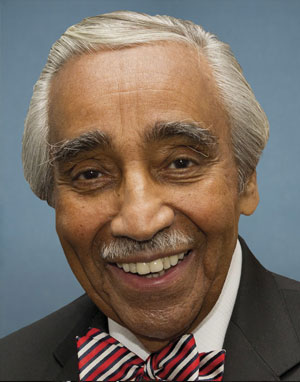
| Accepted by Honorable Charles B. Rangel Congressman 1970-2016 Statesman-in-residence The City College of New York |
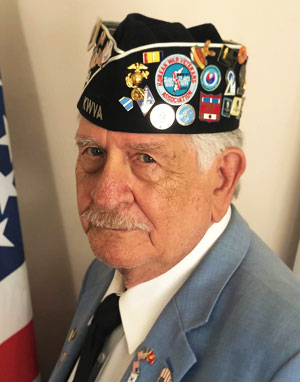
Accepted by Salvatore Scarlato President Korean War Veterans Association Department of New York President |
||
| Accepted by Yongmaan Park Chairman Korea Chamber of Commerce and Industry |
|||
Fifth Avenue at Central Park South, New York City
Reception 6:00 PM | Dinner 7:00 PM
Black Tie, Traditional Attire
Contact Jiyoung Suh for any inquires.
We will continue to monitor the safety precautions from New York City and State governments, as well as CDC guidelines on COVID-19. Accordingly, if we need to make any changes to our Annual Dinner — whether in format or date — we will notify all registered guests and sponsors as soon as possible.

Accepted by
Honorable Charles B. Rangel
Congressman 1970-2016
Statesman-in-residence
The City College of New York
Charles B. Rangel, war hero, history-making congressman, master lawmaker. A founding member of the Congressional Black Caucus, he made history as the first African American member of Congress to lead the powerful Ways and Means Committee. He served for 23 terms in the House of Representatives and was cited as the most effective lawmaker in the House, leading all of his colleagues in passing legislation. He was a prime contributor to President Obama’s historic health care reform law.
Growing up on the other side of the tracks on Lenox Avenue in Harlem, he was transformed from high school dropout to war hero after volunteering for service in the Army during the Korean War. Wounded in an attack by waves of Communist Chinese troops, he was awarded a Purple Heart and the Bronze Star for Valor after leading his surviving comrades from behind enemy lines.
With the aid of the G.I. Bill, he earned degrees from New York University and St. John’s University Law School. He began his public service as an assistant U.S. Attorney for the Southern District of New York and was later elected to the New York State Assembly. He went to Washington in 1971 to serve in the House after defeating the legendary Congressman Adam Clayton Powell, Jr.
Congressman Rangel is currently Statesman in Residence at The City College of New York for the City University of New York. Demonstrating his commitment to education, he created financial mechanisms to construct and rehabilitate public schools across the country. In Congress, following Saint Matthew’s teaching, he has been a stalwart champion for the “least among us,” advocating powerfully and persistently to improve the lives of working people. He is a defender of veterans and treated education as a national security issue.
A leading advocate for equal rights and equal opportunity, Congressman Rangel boosted the incomes of millions of working families with the Earned Income Tax Credit, and pumped billions of dollars into revitalization of communities across the nation, including Harlem. His unparalleled foreign policy record focused on Africa and the Caribbean. In 1986, Congressman Rangel sounded the death knell for apartheid in South Africa with the “Rangel Amendment,” which forced the largest U.S. investors to abandon the country. He created trading and investment opportunities for struggling nations in the Caribbean and Africa. In 2010, he successfully promoted vital investment incentives for earthquake ravaged Haiti.
Among his proudest achievements is founding the Charles B. Rangel International Affairs Program in the State Department, in cooperation with Howard University. As of 2015, most of the 200 Rangel Fellows who completed the program were serving as U.S. State Department Foreign Service Officers in U.S. Embassies around the world. Congressman Rangel retired from the United States Congress in 2016. Mr. Rangel still resides with his wife, Alma, in Harlem where he was born. They have two adult children and three grandchildren.

Accepted by
Salvatore Scarlato
President
Korean War Veterans Association Department of New York
President
Korean War Veterans Central Long Island Chapter 64
Salvatore Scarlato joined the Korean War Veterans Central Long Island Chapter in September 1989. He began by being a Member then was voted in as a Director, Event Chairman, 1st Vice President and, today is the President. He has been the President of this Chapter and the Korean War Veterans Association Department of New York from 2009 to present time (11 years.)
Born in Brookyn, New York on January 14, 1933, Salvatore Scarlato was raised in Bedford Stuyvesant, Williamsburg in Brookyn. His parents, Damiano and Carmela Scarlato, were born in the United States in 1905. He attended public school 157 first, then Boys High School in Brookyn, NY.
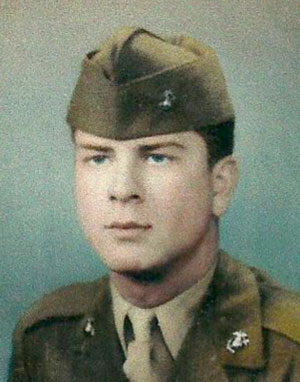
On October 15, 1951, at the age of 18 ½ years old, Salvatore Scarlato joined the United States Marine Corps. He trained 12 weeks in Boot Camp at Parris Island, SC. After Boot Camp, he was sent to Camp Pendleton, CA for 12 weeks of combat infantry training; part of the 19 replacement draft to Korea. He arrived in Inchon Harbor (Korea west coast) on April 1952 and proceeded to Ascom City where he was assigned as a Browning Automatic Rifle (B.A.R.) man to Baker Company 1st Shore Party Battalion, 1st Marine Division attached to Kimpo Provisional Regiment (K.P.R.) with the 7 Marine Regiment above the Kimpo Penninsula on the main line of Resistence (M.L.R.) This is called the Jamestown Line. He was combat wounded and spent five months in Camp Lejuene Naval Hospital in SC and received an Honorable Medical Discharge from his military service.
Salvatore Scarlato is the recipient of the Purple Heart Medal, Combat Action Ribbon, Marine Corps President Unit Citation, Navy Unit Commendation with one Bronze Star, Navy Reserve Medal, National Defense Service Medal, Korean Service Medal with three Bronze Stars, Republic of Korea Presidential Unit Citation with one Bronze Star, United Nations Medal, the Korean War Service Medal and the New York State Conspicuous Service Cross, New York State Conspicuous Service Star.
Salvatore added to his education by using the G.I. Bill by attending the Mondell Institute in Jamaica, NY for electro-mechanical design drafting; he graduated in 1955. Then, he attended Community Brooklyn College at night for two years and took a home study course from the International Technology of Electronics School in Chicago, IL, which he received a Certificate of Completion.
In 1990, he met his first American South Korean, John SJ Ha, who is his 1st Vice President and best friend. Because of John and his important contacts, Salvatore is well known all over the East Coast Metropolitan area of New York and many Korean Communities, as well as, the Blue House in Seoul Korea. He has received many medals and awards from numerous Korean Presidents, Korean Government Officials, Korean Organizations and Korean Retired Generals. Salvatore has been back to Korea eight different times, as an Honored Guest of the Korean Government.
In civilian life, Salvatore was an electro-mechanical designer and worked for various electronic and aircraft companies doing military and commercial designing of electronic equipment, black boxes for aircrafts and ground support equipment.
Salvatore Scarlato married his beautiful, lovely wife, Teresa on June 1, 1957 (married 63 years.) They have two beautiful children, Karen and Thomas and three wonderful grandsons, Nicholas, Steven and Matthew and son-in-law, Wayne. He and his wife reside in Hauppauge, NY.

Accepted by
Yongmaan Park
Chairman
Korea Chamber of Commerce and Industry
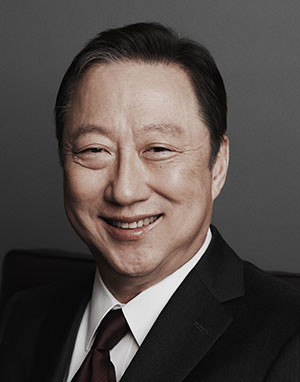
Mr. Park is Chairman of the Korea Chamber of Commerce and Industry and is also Chairman of Doosan Infracore, one of the key subsidiaries of Doosan Group (Doosan). Doosan is a global conglomerate with around $20 billion revenue generated from power and desalination plant construction, energy solution, power equipment, construction equipment, and engine businesses. With 124 years of history, Doosan is well-known as the oldest company in Korea, yet it is also considered one of the most dynamic enterprises in Korea.
Mr. Park has been in the front-and-center of the renowned transformation of Doosan. He has led over 42 deals including acquisitions and divestitures of businesses as part of the strategic drive to overhaul Doosan’s business portfolio, turning Doosan from a consumer goods company to an Infrastructure Support Business (ISB) focused enterprise. Under his leadership, Doosan has acquired Bobcat, the global leader in compact construction equipment. He has also spearheaded Doosan’s broader globalization efforts, transforming the Korean company into a multi-national conglomerate with operations in 38 countries and with over 50 percent of its 38,000 employees working overseas. Mr. Park’s leadership has led Doosan to achieve a seven-fold revenue growth in just over a decade. Doosan’s success along with Mr. Park’s leadership has received tremendous publicity abroad and is frequently benchmarked in the industry.
In acknowledgement of his leadership and expertise, Mr. Park was elected as Chairman of the Korea Chamber of Commerce and Industry (KCCI) in August 2013. The KCCI is the nation’s largest business organization encompassing 73 regional chambers and approximately 180,000 firms and industry associations in Korea. On the international scene, Mr. Park serves as an executive board member of the International Chamber of Commerce (ICC), the world’s largest business organization. Mr. Park is also a member of APEC Business Advisory Council (ABAC) since 2018. Mr. Park plays a central role in representing diverse voices of businesses and building close partnerships between private and public sectors both domestically and internationally.
Mr. Park has been acclaimed for his devoted service to enhance the commercial ties between Korea and other countries. In recognition of his dedication and contribution, he has been awarded the Order of Civil Merit of Spain in 2003, the Order of Leopold Ⅱ of Belgium in 2009, and a Commander of the Order of the Star from the Italian government in 2016. In 2014, Mr. Park received the Van Fleet Award from the Korea Society for his significant contributions to the promotion of the U.S.-Korea relations and received the Gold Tower Industry Award from the Korean government in 2012. Mr. Park has been Chairman of the Korea-Spain Economic Cooperation Committee since 2000 and a member of the Board of Directors for the Special Olympics Korea since 2011.
Mr. Park is an open and caring leader who places people at the core of his values and is currently devoted to building a strong common corporate culture within Doosan to achieve unparalleled success for another 100 years.
An avid photographer and dedicated athlete, Mr. Park spends his leisure time in pursuing documentary photography and cross-country trekking. Mr. Park has traversed the Korean Peninsula on foot, travelling 550km along a north-south trail and 330km along a west-east trail. Most recently he has walked across 405km around the southern coast of Korea, setting a record of walking a total of 1,285km.
Mr. Park received his Bachelor’s Degree in Business Administration from Seoul National University in 1978 and his MBA from Boston University in 1982. He is fluent in English and Japanese.
DINNER COMMITTEES
LEADER – $100,000
• 14 guests for VIP reception; 6 guests for general reception
• 10 guests in premium seating; 10 guests for in priority seating
BENEFACTOR – $50,000
• 10 guests for VIP reception; 10 guests for general reception
• 10 guests in priority seating; 10 guests in preferred seating
PATRON – $30,000
• 4 guests for VIP reception; 6 guests for general reception
• 10 guests in preferred seating
In addition to above benefits, Dinner Committees will receive recognition from the podium; full-page ad, corporate profile, and photo and bio of corporate representative in the dinner program book; listing on our website.
TABLE SPONSORSHIP
SPONSOR – $20,000
• 10 guests for dinner
• 2 guests for VIP reception; 8 guests for general reception
• Half-page ad; corporate profile with photo of corporate representative in the dinner program book
DONOR – $15,000
• 10 guests for general reception and dinner
• Half-page ad; corporate profile in the dinner program book
Contributor – $7,500
• 5 guests (half table) for general reception and dinner
• Corporate profile in the dinner program book
All table sponsors will be acknowledged on our website and in the dinner program book.
INDIVIDUAL TICKETS
PATRON COUPLE – $5,000
• 2 tickets for VIP reception and preferred seating
• Acknowledgement on our website and in the dinner program book
PATRON – $3,000
• 1 ticket for VIP reception and preferred seating
• Acknowledgement on our website and in the dinner program book
CONTRIBUTOR – $750
• 1 ticket for general reception and dinner
ASSOCIATE – $500
• 1 ticket for general reception and dinner
* This rate is available only for attendees from nonprofit and academic institutions, and young professionals without corporate sponsorship. Please confirm your eligibility with Jiyoung Suh.
ADVERTISEMENT
Full-page in the dinner program book – $10,000
Half-page in the dinner program book – $5,000
Table Sponsorship and Individual Patron ticket registrations must be confirmed by August 28, 2020 to be acknowledged in the dinner program.
Cancellations after August 28 will not be accepted.
The Korea Society is a nonprofit, 501(c)(3) organization. Contributions are tax-deductible to the extent permitted by law.
For further information on sponsorship opportunities or to purchase tickets, please contact Jiyoung Suh or by phone at (212) 759-5360.