

Internships/Jobs

Internships/Jobs

Photography Internship (Unpaid)

About the job:

The Korea Society seeks a motivated and detail‑oriented Photography Intern to support the documentation of its public programs, special events, and cultural initiatives. This internship offers hands‑on experience capturing high‑profile events that advance understanding and dialogue between the United States and Korea.

Role Overview
The Photography Intern will assist with photographing live programs—many of which take place during weekday evenings at The Korea Society’s headquarters near Grand Central in New York City. The intern will work closely with the Communications and Programs teams to visually document lectures, panel discussions and cultural performances.

Key Responsibilities

  • * Photograph day/evening programs, including guest speakers, audience engagement, and event atmosphere
  • * Capture high‑quality images suitable for web, social media, publications, and archival use
  • * Organize, edit, and deliver photo sets in a timely manner
  • * Support visual documentation needs for special projects, exhibitions, and institutional initiatives
  • * Maintain consistent visual style aligned with The Korea Society’s branding and communications standards

Qualifications:

  • * Strong interest in event photography, documentary photography, or visual storytelling
  • * Experience with DSLR or mirrorless cameras is a plus.
  • * Reliable, punctual, and comfortable working during evening hours
  • * Professionalism when interacting with speakers, guests, and staff
  • * Basic photo editing skills (Lightroom, Photoshop, or equivalent) is a plus

What the Intern Gains:

  • * Real‑world experience photographing high‑level cultural and policy programs
  • * A portfolio of professionally produced event photography
  • * Exposure to nonprofit communications and arts/culture programming
  • * Mentorship from experienced creative and communications staff
  • * Opportunities to contribute to The Korea Society’s digital presence and archival history

Compensation:

  • * This is an unpaid internship. Academic credit may be arranged in accordance with school requirements.

Application Instructions: Please submit a cover letter and resume to jobs@koreasociety.org with “Photography Internship: Your Name” in the subject line. Only applications emailed jobs@koreasociety.org will be accepted. No phone calls, please. Thank you for your interest!

Part-Time Korean Language Instructors

About the job:

The Korea Society invites applications for part-time instructors for our Korean Language Program (KLP) for 2026. In addition to our regular ten-week, non-credited, non-intensive comprehensive and conversation courses, the KLP is offering a series of short, two-hour stand-alone workshops. Topics range from K-Drama, K-Literature and folk tales, K-Pop, Cuisine, Etiquette, Survival Korean, Korean for Business Purposes, Business Korean, Advanced-Level Discussion Workshop, Sijo Writing, and more. We also welcome new topic ideas from our instructors.

We are seeking instructors for these sessions. The sessions are conducted either online via Zoom or in-person at The Korea Society in Midtown, New York. Our students are generally working professionals or college-level students.

These Korean Language & Culture workshops are typically held on weekday evenings or Saturdays and scheduled at varied times to attract students from across a range of time zones. The exact topic and schedule will be coordinated with the instructor. We aim to offer two or more workshops per month.

We are looking for enthusiastic Korean language instructors to join our growing program.

Qualifications:

  • * Bachelor’s degree required; master’s degree in relevant fields preferred.
  • * Eligible to work in the US
  • * Native or near-native fluency in Korean and English
  • * A minimum of 2~3 years language teaching experience , preferably Korean, at any level
  • * Experience teaching online language classes
  • * Experience using online learning management systems

Compensation:

$100 per hour 

Application Instructions: Please submit a cover letter and resume to language@koreasociety.org with “Korean Language Instructors: Your Name” in the subject line. Only applications emailed language@koreasociety.org will be accepted. No phone calls, please. Applications will be accepted on a rolling basis until the position is filled. Thank you for your interest!

Education Internship | 2026

Description:

The Korea Society’s Education Department is seeking talented and dedicated interns with a demonstrated interest in Korea. The department not only provides lecture and workshop programming and curates a wide-range of resources but also offers a robust Korean Language Program. As an intern in the Education Department you will have networking opportunities, receive professional skills training and gain exposure to how nonprofit organizations work. Further, you will learn database management as well as event planning and public/press outreach. We are currently offering three different internship opportunities.

Duties may include but are not limited to the following for each internship opportunity:

Korean Language Program:
As a Korean Language Program intern you will have opportunities to learn about the management of a language program as well as assist in developing and running extracurricular activities with our students, aid with curriculum development, gain exposure to non-profit organizations as well as event planning and public/press outreach.

  • * Assist in creating and implementing supplemental materials and activities 
  • * Assist with creating promotional materials
  • * Assist with registration processes for a four-term language program
  • * Update and maintain database records, including class rosters for our Korean Language Program

General Education Programming: As an education intern, you will have the opportunity to assist with the planning and implementation of our speaker series, Current and Future Directions in Korean Studies, as well as develop and help to deliver programs for visiting area middle and high school groups and assist with our Project Bridge Youth Ambassadors and Korean Study Abroad Travel Grant programs. 

  • * Research potential program topics, speakers, external organizations, and funding sources
  • * Assist in organizing speaker events
  • * Serve as an application reviewer for our competitive Project Bridge and Study Abroad Travel Grant programs
  • * Assist in the creation of promotional materials and new resources for Education events 
  • * Research educator resources provided on external sites

Qualifications:

  • * Academic background in Education and/or Language
  • * Strong attention to detail
  • * Motivated to undertake new initiatives
  • * Team player
  • * Adobe CS skills (Photoshop, Illustrator, InDesign) preferred
  • * For the Korean Language internship, intermediate Korean language skills required, advanced preferred

Schedule:
Internships are unpaid positions. Candidates are required to commit to a minimum of 10 weeks and a minimum of 18-22 hours per week. Interns may work remotely, but we recommend one day per week in person. Do note that we cannot provide visa support.

Benefits:

  • * Flexible work schedule
  • * In-person or virtual attendance or hybrid (in-person & virtual)
  • * Free admission to all Korea Society events during your internship period
  • * Ability to enroll in the Society’s Korean Language program with a full tuition waiver
  • * Class credit is applicable if approved by your school

How to apply: Please email to language@koreasociety.org the following information. In the subject line indicate the specific internship to which you are applying: e.g. “Education internship or Korean Language internship.” Qualified candidates will be contacted for an in-person or zoom interview.

1) A cover letter in PDF format indicating your interest in the position and days and hours you are available to work. Please indicate your preferred start and end dates.
2) A resume in PDF format.  

THE KOREA SOCIETY is a nonprofit, nonpartisan, 501(c)(3) organization with individual and corporate members that is dedicated solely to the promotion of greater awareness, understanding, and cooperation between the people of the United States and Korea.

Business and Economics Internship 2026

THE KOREA SOCIETY is a nonprofit, nonpartisan 501(c)(3) organization with individual and corporate members that is dedicated solely to the promotion of greater awareness, understanding, and cooperation between the people of the United States and Korea.

The Korea Society’s Business and Economics Programs department is seeking a talented and dedicated intern with a demonstrated interest and background in US-Korea Business/Economic affairs. We are seeking an intern with strong administrative and technological skills, as well as an interest in nonprofit programming.

As a Business and Economics Intern, you will have the opportunity to build networking relationships with entrepreneurs, business leaders, and experts in relevant industries. You will conduct research on organizations and individuals, as well as track and monitor current events related to US-Korean Business/Economic affairs. You will gain exposure to non-profit organizations and learn database management as well as event planning and public/press outreach.

Duties may include but are not limited to:

  • * Assist with the planning and executing of on-site business and economic programs such as the Leadership Series, Startup Scene, etc.
  • * Assist with researching potential speakers, partner organizations, and audiences for outreach
  • * Collect promotional and marketing materials for Business and Economics programs and events

Qualifications:

  • * Current or recently graduated undergraduate and graduate students may apply
  • * Academic background in Business, Economics, International Relations, or related fields
  • * Interest in and knowledge of U.S.-Korea relations, particularly in business/economic affairs
  • * Strong research, writing, and editing skills with excellent attention to detail
  • * Self-driven with a professional demeanor and a desire to excel
  • * Strong organizational, communication, and multi-tasking skills
  • * Korean language skills a plus
  • * Photo/videography skills a plus
  • * Proficiency in office productivity software (GSuite, Word, Excel, PowerPoint)
  • * Experience with Salesforce or similar CRM applications preferred

Schedule:

Internships are unpaid positions. Please note that we do not provide visa support. Candidates are required to commit to a minimum of 12 weeks and 8-10 hours per week. Must be available to come to the NYC office at least one day a week. May be required to be present for evening programs.

How to apply:

Please submit your application to: jobs@koreasociety.org with the subject line “Business/Economics Internship: Your Name.”
 

Your application must include ALL of the following:

  • 1) A resume in PDF format
  • 2) A cover letter indicating your interest in the position and including the specific months and days you are available to work. The application will not be considered complete without this information.

No phone calls, please. Applications will be accepted on a rolling basis until the position is filled.
Thank you for your interest!

Art & Culture Internship | 2026

The Korea Society’s Arts & Culture department is seeking a talented and dedicated intern with demonstrated interest and background in Korean Studies and/or Arts. We are seeking an intern with strong administrative and research/writing skills, as well as interest in art exhibitions and programming.

As an Art & Culture Intern, you will build networking relationships with artists, performers, and experts in Korean culture. You will conduct research on organizations and individuals, as well as track and monitor current events related to traditional and contemporary Korean culture. You will gain exposure to non-profit organizations and learn database management as well as event planning and public/press outreach.

Duties may include but are not limited to:

  • * Assist in planning and executing exhibitions and programs
  • * Research potential speakers, artists, funding sources, and partner organizations
  • * Assist with on-site program management including reception and registration, event A/V tasks, setup and breakdown, and attending and reporting on Korea-related events
  • * Assist with live webcast & video release programs during or pre-production

Qualifications:

  • * Academic background in Asian Studies, Art History, and/or Art Management
  • * Strong research, writing, and editing skills with excellent attention to detail
  • * Self-driven with a professional demeanor with a desire to excel
  • * Proficient in using social media tools such as Facebook and Instagram
  • * Previous experience in communications, outreach and media relations a plus
  • * Korean language skills a plus

Schedule:

Internships are unpaid positions. Please note that we do not provide visa support. Candidates are required to commit to a minimum of 12 week and 8-10 hours per week. Must be available to come to the NYC office one day a week. May be required to be present for evening programs.

How to apply:

  • 1) a cover letter, indicating your interest in the position and the days and hours you are available to work
  • 2) a resume in PDF format
  • 3) Email with the subject line “ART & CULTURE INTERNSHIP 2026” to: jobs@koreasociety.org

No phone calls, please. Applications will be accepted on a rolling basis until the position is filled.
Thank you for your interest!

Development Internship

The Korea Society seeks multiple bright, enthusiastic, and dedicated interns for its Development Department. The Development intern will provide support for all aspects of the department, assisting with tasks and projects in the following key functional areas:

Individual Giving and Membership:

  • * Update and maintain membership database records
  • * Assist with membership renewals, including printing and mailing acknowledgments
  • * Assist with creating marketing collateral and brochures
  • * Assist with creating members’ newsletters

Special Events Planning and Fundraising:

  • * Assist in the preparation and implementation of special events
  • * Research potential in-kind donations for events
  • * Assist with special event invitations and fundraising mailings

Corporate Sponsorship and Foundation Grant Proposals and Report Writing:

  • * Research new funding sources and contact information
  • * Collect press articles relating to The Korea Society and its programs
  • * Compile statistics for grant reporting
  • * Assist in the preparation of proposals and reports

Young Professional and Contemporary Culture Programming:

  • * Research current cultural trends, identifying potential program topics and speakers
  • * Write Web site postings for programs
  • * Prepare promotional materials for upcoming programs
  • * Assist in program promotional outreach efforts, using social media and email campaigns
  • * Provide staffing support at programs

Applicants for this position must be well organized, competent in using Microsoft Office applications, and capable of conducting detail-oriented Internet searches. Knowledge of Photoshop and InDesign is a plus. This is an unpaid position but is an outstanding opportunity for someone interested in learning about nonprofit development, fundraising, and programming. Class credit available. The work schedule is flexible and will be discussed during the interview.

Application Instructions:

  • Please submit a cover letter and resume to jobs@koreasociety.org with “Development Internship: Your Name” in the subject line. Only applications emailed jobs@koreasociety.org will be accepted.

No phone calls, please. Applications will be accepted on a rolling basis until the position is filled.
Thank you for your interest!

Thank you for your interest!

Communications Internship

The Communications department is seeking a talented, motivated, and hard-working intern who shares our organization’s mission to promote greater awareness, understanding, and cooperation between the people of the United States and Korea. As a Communications intern, you will help expand The Korea Society’s general audience and reach online and in media and gain experience in a fast-paced non-profit working environment.

Duties may include but are not limited to:

  • * Designing social media and web content to promote Korea Society programs
  • * Transcription and editing video content
  • * Coordinating and assisting with targeted outreach campaigns to press, local organizations, and student groups
  • * Conducting research on media organizations, press contacts, and partner organizations
  • * Tracking and monitoring current events related to Korean policy and culture
  • * Assisting in planning and promoting Korea Society programs and events online and in-person

Qualifications:

  • * Strong background in content development, video editing, and social media design
  • * Strong research, writing, and editing skills with excellent attention to detail
  • * Self-driven with a professional demeanor with a desire to excel
  • * Proficient in using social media such as Facebook, Instagram, Twitter, and Instagram
  • * Previous experience in communications, outreach and media relations a plus
  • * Korean language skills a plus
  • * Availability to staff in-person events on occasional weekdays a plus

Schedule:

Internships are unpaid positions. Candidates are required to commit to a minimum of 12 weeks and 8-10 hours per week. Priority will be given to applicants who are available to staff in-person events in our NYC office on some weekdays.

Application Instructions:

  • Please submit a cover letter and resume to jobs@koreasociety.org with “Communications Internship: Your Name” in the subject line. Only applications emailed jobs@koreasociety.org will be accepted

No phone calls, please. Applications will be accepted on a rolling basis until the position is filled.
Thank you for your interest!

Policy Internships

The Korea Society’s Policy department is now accepting applications for internships. Qualified candidates should have demonstrated interests in international relations or East Asian politics. We are seeking an intern with strong research and writing skills, as well as an interest in programming.

As a Policy Intern, you will build working relationships with leading international relations experts, thinkers, and practitioners. You will monitor current events surrounding Northeast Asia and its effects on U.S. foreign policy. You will also assist with conducting research and briefing our President & CEO. Additionally, there will be opportunities to join private roundtable discussions with senior government officials.

Duties may include but are not limited to:

  • * Assist in planning and executing policy programs and private roundtables
  • * Monitor current events and brief policy team
  • * Conduct policy research on visiting delegations and foreign government officials
  • * Research potential speakers and partner organizations

Qualifications:

  • * Academic background in Political Science, International Relations, East Asian Studies
  • * Strong research, writing, and editing skills with attention to detail
  • * Korean language ability preferred, but not required

Schedule:

Internships are unpaid positions. Please note that we do not provide visa support. Candidates are expected to commit 15-20 hours a week and come to the NYC office at least one day a week. Candidates are also expected to assist at in-person policy programs. It is preferred that most internships last for a period of six months. Please consider this before applying; short periods of two-three months are not optimal for the intern nor for the Society.

Application Instructions:

1) A cover letter, indicating your interest in the position, which days of the week you will be available to work, and which six month timespan you will be available
2) a resume in PDF format
3) Email with the subject line: “2026 POLICY INTERNSHIP APPLICATION- Last Name, First Name” to policy@koreasociety.org

Please do not follow-up on applications by phone.
Thank you for your interest!

General Internships

These internships afford unique opportunities to understand the inner-workings of a non-profit organization, and learn and contribute to the social, cultural, economic, political, and security dimensions of the U.S.-Korea relationship. The work schedule is flexible and will be discussed during the interview. This is an unpaid internship and that class credit is provided is applicable.

Responsibilities:

  • * Research, update and maintain database records
  • * Help identify potential program topics and speakers
  • * Research partnership opportunities with other institutions and groups
  • * Prepare promotional materials for upcoming programs
  • * Assist in pre-program promotional outreach efforts
  • * Research new funding sources in the form of donor campaigns, corporate sponsors and foundation grants
  • * Assist in the preparation and implementation of special fundraising events
  • * Research press articles relating to The Korea Society
  • * Monitor the reception desk and direct incoming calls
  • * Perform various administrative tasks to support departments
  • * Willingness to staff gallery during opening hours and support project planning, design, implementation and execution
  • * Class credit available

Applicants for these positions must:

  • * Be proficient in Microsoft Office applications
  • * Be capable of conducting detail-oriented Internet searches
  • * Possess exceptional communications skills, polite phone etiquette, and strong writing abilities
  • * Korean language aptitude is welcomed but not required

Application Instructions:

Please submit a cover letter and resume to jobs@koreasociety.org with “General Internship: Your Name” in the subject line. Only applications emailed jobs@koreasociety.org will be accepted.

Please do not follow-up on applications by phone.
Thank you for your interest!

Finance Internships

Description:

The Korea Society’s Finance department is seeking an enthusiastic intern with an interest in learning about finance/accounting. The potential intern should be detail-oriented and possess some degree of administrative and bookkeeping skills. This is an unpaid internship and that class credit is applicable.

Responsibilities:

  • * Research, update and maintain database records
  • * Assist the Associate Finance Officer & Controller
  • * Perform various administrative tasks to support departments
  • * Occasional assistance with on-site events; such as setting up, reception, and registration

Qualifications:

  • * Undergraduate or graduate student with previous internship or work experience preferred
  • * Proficient with Microsoft Office Applications: Especially experienced with or desire to learn Excel
  • * Strong attention to detail
  • * Team player
  • * Self-driven with a professional demeanor
  • * Korean-language skills a plus

Benefits:

  • * Flexible schedule – 2 to 3 days per week
  • * Free admission to all Korea Society events during your internship period
  • * Exposure to non-profit organizations
  • * Numerous networking opportunities
  • * Class credit is applicable if approved by your school

Application Instructions:

Please submit a cover letter and resume to jobs@koreasociety.org with “Finance Internship: Your Name” in the subject line. Only applications emailed jobs@koreasociety.org will be accepted.

Design Internships

The Korea Society, an organization dedicated to the promotion of greater awareness, understanding, and cooperation between the peoples of the United States and Korea, seeks an intern to assist its media team with content creation. Applicants should have an interest in Korean or Asian issues and be able to create high-quality work for the Society’s communications with its business, government, and academic constituencies.

Preferred skills/responsibilities:

  • * Excellent layout and typographical instincts
  • * Experience with Photoshop, InDesign and knowledge of web-based platforms, browsers, HTML and CSS
  • * Knowledge of content management systems (CMS) a plus
  • * Strong interest in Social Network sites and ability to post updates with little notice
  • * Attention to detail with an ability to meet tight deadlines
  • * Korean-language skills a plus
  • * Good knowledge of Korean contemporary culture a pluse

Application Instructions:

Please submit a cover letter and resume to jobs@koreasociety.org with “Design Internship: Your Name” in the subject line. Only applications emailed jobs@koreasociety.org will be accepted.

The Korea Society is a nonprofit, nonpartisan, 501(c)(3) organization with individual and corporate members that is dedicated solely to the promotion of greater awareness, understanding and cooperation between the people of the United States and Korea. In pursuit of its mission, the Society arranges programs that facilitate discussion, exchanges and research on topics of vital interest to both countries in the areas of public policy, business, education, intercultural relations and the arts. Funding for these programs is derived from contributions, endowments, grants, membership dues and program fees. From its base in New York City, the Society serves audiences across the country through its own outreach efforts and by forging strategic alliances with counterpart organizations in other cities throughout the United States as well as in Korea.

Video Production Internships

The Korea Society, an organization dedicated to the promotion of greater awareness, understanding, and cooperation between the people of the United States and Korea, seeks a video production intern to assist its media team with content creation. Applicants should display an interest in Korean or Asian issues and be able to create high-quality work for the Society’s communications with its business, government, and academic constituencies.

Preferred skills/responsibilities:

  • * Remote videotaping for oral histories, documentaries, etc.
  • * In-house videotaping of speakers and programs (often late evenings – weekly times subject to change depending on programming schedule)
  • * Preparation of audio and video files for Web distribution
  • * Coordination of teleconferences
  • * Editing (video and/or audio)
  • * Korean language skills a plus

Application Instructions:

Please submit a cover letter and resume to jobs@koreasociety.org with “Video Internship: Your Name” in the subject line. Only applications emailed jobs@koreasociety.org will be accepted.

The Korea Society is a nonprofit, nonpartisan, 501(c)(3) organization with individual and corporate members that is dedicated solely to the promotion of greater awareness, understanding and cooperation between the people of the United States and Korea. In pursuit of its mission, the Society arranges programs that facilitate discussion, exchanges and research on topics of vital interest to both countries in the areas of public policy, business, education, intercultural relations and the arts. Funding for these programs is derived from contributions, endowments, grants, membership dues and program fees. From its base in New York City, the Society serves audiences across the country through its own outreach efforts and by forging strategic alliances with counterpart organizations in other cities throughout the United States as well as in Korea.

Football – The Game of Life

We at The Korea Society would like to bring to the attention of our friends and supporters that General James A Van Fleet, founder of The Korea Society, was himself a football champion. He received the Distinguished American Award in 1976, one the National Football Foundation’s and College Hall of Fame’s most prestigious honors; his acceptance speech is copied below. General Van Fleet played fullback at the U.S. Military Academy–in his senior year the Black Knights were undefeated, was the assistant coach at Kansas State University and head coach at the University of Florida. Needless to say, General Van Fleet had a distinguished military career, too, in Greece and in Korea.

image01

Thomas Byrne
President


Football - The Game of Life: Page 1Page 2Page 3Page 4Page 5

Football-The Game of Life


Football-The Game of Life


Football-The Game of Life


Football-The Game of Life


Football-The Game of Life


Ambassador Mark Lippert


2017 01 20  viewpoint--mark-lippert  icon


image00

January 20, 2017

The Korea Society would like to congratulate Ambassador Mark Lippert on his remarkable achievements in strengthening ties between the people of South Korea and the United States. His service as ambassador to the Republic of Korea, from October 2014 to January 2017, took the Korea Society’s mission of improving awareness, understanding and cooperation a step further to forging strong friendship bonds between the people of the two countries.

During his watch, security cooperation with the R.O.K. was strengthened and trilateral cooperation with Japan was improved. It is encouraging to see that during the transition period from the outgoing U.S. administration of President Barack Obama and the incoming one of President Donald Trump support for the R.O.K.-U.S. security alliance remains steady and strong against military threats from North Korea.

It is noteworthy to quote Ambassador Lippert’s words in his Voice of America farewell interview regarding the future of the Korean peninsula, “the key message to all Koreans is that we want to see a unified Korean Peninsula one day, under a democratic government, free market economy, and in a government that respects the basic universal human rights of its people…that’s the dream we share.”

Thank you, Ambassador Lippert,

image02                  image01

Ambassador Thomas Hubbard                                                   Thomas Byrne
Chairman of the Board of Directors                                            President


Of Interest: 

Departing US Ambassador to S. Korea Optimistic


US-Korea Relations: Tests, Distress, Defection, Election


2016 09  US-Korea-Relations  icon


September 2016

US-Korea Relations: Tests, Distress, Defection, Election
Stephen E. Noerper


The United States and South Korea entered the summer months with growing concern over North Korean missile capabilities. North Korea conducted a hobbled submarine-launched ballistic missile (SLBM) test in May, yet closed out August with a more successful launch reaching some 300nm, raising alarm for US and ROK strategists. May’s rare DPRK Workers’ Party Congress – North Korea’s first since 1980 – signaled solididarity in Kim Jong Un’s reign, replacing the National Defense Commission with a new State Affairs Commission, and appointing Ri Yong Ho as foreign minister – both developments worth watching. Mid-summer, the US sanctioned Kim Jong Un and 10 other individuals and entities for human rights violations, and the US and ROK agreed to deploy the Terminal High Altitude Area Defense (THAAD) system against North Korea. Angered, the DPRK severed the New York channel, its only official line of communication with Washington. Closure of the channel, coupled with the earlier severing of inter-Korean links, raises concerns about communication in the event of further provocations or crisis. The US and South Korea joined together in military exercise Ulchi Freedom Guardian, involving more than 25,000 US and 50,000 ROK troops. In response, Pyongyang threatened to turn Seoul and Washington into a “heap of ashes through a Koreanstyle preemptive nuclear strike.” Finally, South Korean officials and analysts privately expressed growing concern over the course of the US presidential campaign and suggestions by Republican candidate Donald Trump that allies should bear a greater cost or see US troop withdrawal, and that South Korea and Japan consider nuclear weapons development as a counter to North Korea.

DPRK Workers’ Party Congress

May saw the convening of the DPRK’s Seventh Workers’ Party Congress, signaling Kim Jong Un’s firm grip on power. In addressing the assembly, he characterized the DPRK as a responsible nuclear weapons state, a classification rejected by Washington and Seoul. In what some analysts considered a mark of potential restraint, Kim Jong Un vowed that the DPRK would opt for using nuclear weapons only when its sovereignty is violated. The North Korea leader announced a new five-year economic program, but refrained from suggesting real reforms. Foreign media covering the congress met heavy controls, and only a select few witnessed a small portion of the final proceedings. There were no meetings with the senior-most leadership, one journalist was expelled, and most of the press corps saw only local sites and projects.

A new State Affairs Commission (SAC) was named the “highest guiding organ” of the state (with Kim Jong Un as chair), replacing the National Defense Commission favored by Kim’s father. In foreign affairs, Foreign Minister Ri Su Yong was named Workers’ Party of Korea vice chairman for international relations, and Ri Yong Ho, a sophisticate and skilled negotiator on nuclear issues, was named foreign minister. Both Ri Su Yong and Ri Yong Ho serve on the new State Affairs Commission. A participant in a Washington DC review of the party congress suggested that the ties of both to the senior-most leadership could imply that DPRK agreements going forward might bear new weight. Ri Yong Ho emerged at the ASEAN Regional Forum Foreign Ministers Meeting in Laos to intense media attention and received a boost from Chinese Foreign Minister Wang Yi, signaling a possible warming of Sino-DPRK ties (Ri Su Yong also visited Beijing).

DPRK missile tests and THAAD

However, internal DPRK recalibrations failed to signal positive developments for South Korea or the United States. North Korea spent the summer months testing its missile technology, both short- and intermediate-range, and stoking concerns over enhancement of its submarine-launched ballistic missile (SLBM) capabilities. Earlier tests had seen mishap and spin, but the DPRK marked real improvement over the short period reviewed. Whereas an early May SLBM traveled less than a couple hundred meters, on Aug. 24, a KN-11 missile traveled a remarkable 500km into Japan’s Air Defense Identification Zone (ADIZ) waters. That followed an Aug. 3 Rodong test, with a missile landing only 155nm off Japan’s coast in its exclusive economic zone (EEZ) – the closest a missile has come to Japan since 1998, raising alarm and strong condemnation from Prime Minister Abe Shinzo.

In sum, the DPRK has launched more than 20 missiles to date in 2016, a serious acceleration that raises tensions in the region. The provocations have led to greater US-ROK cooperation, especially through an agreement to deploy the Terminal High Altitude Area Defense (THAAD) system to South Korea and closer trilateral consultation with Japan. After earlier to and fro, the ROK moved with newfound determination to work with the US on the THAAD deployment, announcing on July 8 its intention to deploy the system. Seoul followed the general announcement by naming Seoungju on July 13 as the site for deployment, which met condemnation and protest by some local residents concerned about rumored health threats posed by the THAAD radar system and the environmental impact. In ensuing weeks, opposition lawmakers also raised concerns about the decision to deploy the system.

China, Russia, and North Korea voiced opposition to the THAAD deployment as well. The US sought to offer assurances to China, with the head of the US Army determined to convey to his PLA counterpart in Beijing the defensive aspects of the new system. China rebutted assurances from Washington and Seoul and warned that the perceived imbalance caused by THAAD would raise regional tensions. In early August, President Park Geun-hye rebuked critics at home and abroad and underscored South Korean determination to see through the THAAD deployment. In early September, she offered assurances in an interview with Russian news service Sputnik News that THAAD was not aimed at Russia, or any other third party

Despite firm commitment on the part of ROK and US defense authorities, opposition to THAAD remains a political reality. The controversy will spill into the 2017 ROK presidential elections and poses immediate challenges for ROK diplomacy, particularly with China. For the United States, installation of the system in Korea is a stated strategic priority, but brings other challenges. Chinese consternation has increased, especially when coupled with tensions over the South and East China Seas.

Naming Kim Jong Un

In early July, the US State and Treasury Departments made an unprecedented announcement in naming North Korean leader Kim Jong Un and 10 other DPRK State Security Department individuals and affiliates “ultimately responsible” for the DPRK’s “notorious” human rights abuses. The immediate impact was to freeze assets and deny business with the named designees, consistent with steps taken earlier this year by Congress and the president to tighten sanctions on North Korea. The announcement met stark pushback from Pyongyang; it condemned the move as an act of war, launched a missile (which exploded on firing), and closed its only official means of communicating with Washington, DC – the New York channel, which involves personnel at the DPRK Mission to the United Nations. In its July 11 response, North Korea cautioned that relations with the US will be under the “wartime law” of the DPRK, noting its applicability to detained US citizens, two of whom remain imprisoned in North Korea.

The DPRK reaction to the naming of its leader was similar to that exhibited following the 2014 release of the United Nations Commission of Inquiry (COI) Report, which urged referral of DPRK senior leaders to the International Criminal Court (ICC), and before that the 2005 cut-off of North Korean funds through Banco Delta Asia (BDA). US and South Korean officials and human rights organizations hailed the US move, which stemmed from the North Korea Sanctions and Policy Enhancement Act of 2016.

The DPRK now engages with the US only at the unofficial level. However, the communications cutoff comes at a time when North Korea is advancing its nuclear and missile technology. In mid-August, the DPRK informed Kyodo News that it is harvesting plutonium from spent fuel rods, while continuing production of highly enriched uranium “on schedule.”

Ulchi Freedom Guardian

The second scheduled major exercise of the year between ROK and US forces, Ulchi Freedom Guardian, began the third week of August. Primarily a computer simulation aimed at the defense of the South in the event of an invasion from the North, the exercise engaged more than 75,000 troops, two-thirds from the ROK and one-third from the US. The US advised the DPRK through Panmunjom of the defensive nature of the exercises, but the DPRK condemned the exercises as offensive and threatened to reduce Seoul and Washington to ash heaps.

More seriously, the DPRK fired its latest SLBM on Aug. 24, a successful launch it hailed as its “greatest success and victory.” Some US and ROK strategists were quick to caution against the significance without a greater DPRK submarine capability, but at least one group in Seoul suggested in late August that the North Koreans are intent and fast-tracking development of a US-Korea Relations 42 September 2016 larger class of submarines. Ju-min Park and James Pearson of Reuters acknowledge the consensus that the DPRK “remains years away from developing a missile system or submarine which could threaten its sworn enemy, the United States,” but that does not account for security assurances afforded South Korea and Japan that could draw in the US to regional conflict. Jeffrey Lewis of the Middlebury Institute notes the tremendous challenge of finding even a small number of subs armed with missiles and the “enormous investment in North Korea’s missile production infrastructure consistent with the propaganda offensive and spike in missile testing.”

Defection

Seoul announced in mid-August the high-profile defection of Thae Yong Ho, the second-highest diplomat at the DPRK Mission to the UK. The defection followed that of 13 North Korean restaurant workers to South Korea in early April. Less reported though have been the recent defection of other officials, including at least one senior military and one DPRK fund manager, as well as a number of diplomats, including the number three in Moscow and a diplomat posted in Bulgaria. Thae’s defection is notable, as he could provide useful information about the DPRK Mission to the UK, which handles it European affairs, as well as his primary tasks of (ironically) tracking defectors from North Korea and responding to human rights criticisms. There were reports that he had been called home after significant time in European assignments. Pyongyang quickly condemned Thae as a traitor and in typical fashion accused him of embezzlement and other improprieties.

In the aftermath, President Park Geun-hye suggested rifts among senior elites are a sign of fragmentation in Pyongyang. US and ROK analysts are divided in seeing the defection along these lines or as a more isolated incident facilitated by Thae’s having his immediate family with him. South Korean media reported on fears that the DPRK could attempt to assassinate defectors, as well as a possible acceleration of a “reign of terror” on the part of Pyongyang in response.

Election

One certainty in US-Korea relations was the growing concern expressed by observers in Seoul over the US presidential campaign and the candidates’ positions toward Korea and Asia. Officials privately sought advice from colleagues, scholars, and analysts as to the seriousness of Republican candidate Donald Trump’s calls for allies to pay more for US security guarantees or face the US going home. Trump’s statements have created a degree of consternation among South Korean officials and policy observers not seen since Jimmy Carter’s call for a US troop withdrawal from the Korean Peninsula in the late 1970s. Trump also had suggested South Korea and Japan develop nuclear weapons to counter those of North Korea, raising concerns in the nonproliferation community and leading to repeated private assurances to Americans that those were options that neither the Korean nor Japanese polities would accept.

South Koreans see more dependability in Democratic candidate Hillary Clinton’s stands on Korea and Asia as she is generally viewed as one of the architects of the Obama rebalance toward Asia. Clinton advisor Wendy Sherman’s May 3 address to CSIS was seen though by many Koreans as a harder line by stepping up sanctions on the DPRK until it accepts an Iranstyle negotiation. US-Korea Relations 43 September 2016 In sum, Koreans were as confused as their US counterparts over the 2016 US presidential campaigns and the implications of a Trump victory. All ears will be on discussions of foreign policy in the three US presidential candidate debates. The 2017 South Korean presidential campaign will see a step up in its foreign policy and security focus, depending on the result of the US elections, as well as North Korean provocations. A possible DPRK fifth or sixth nuclear test or further missile tests – as well as potential mishap or political intrigue – could present the outgoing or incoming United States and South Korean administrations with serious challenges.

Chronology of US-Korea Relations
May – August 2016

May 2016: US Congressional Research Service releases a comprehensive report on US-South Korea Relations.

May 6-9, 2016:DPRK holds its Seventh Workers’ Party Congress, the first since 1980, further solidifying Kim Jong Un’s leadership.

May 7, 2016: North Korea test-fires a submarine-launched ballistic missile. Though traveling only 150 meters, the missile signals advances in DPRK technology.

May 9-10, 2016:: Ninth round of the South Korea-US Integrated Defense Dialogue (KIDD) is held in Washington, led by South Korea’s Deputy Defense Minister for Policy Yoo Jeh-seung and US Assistant Secretary of Defense for Policy David Shear

May 25, 2016: Sen. Cory Gardner (R-CO) introduces an amendment to the FY 2017 National Defense Authorization Act, calling for Terminal High Altitude Area Defense (THAAD) system deployment to the ROK.

May 31, 2016: DPRK fails in its fourth test in 2016 of the Hwasong-10 intermediate-range ballistic missile.

June 1, 2016: US Ambassador to the Republic of Korea Mark Lippert addresses the Institute for Global Economics on Allies in Business: The Future of the US-ROK Economic Relationship.

June 1, 2016: US Treasury Department classifies North Korea as a primary money laundering concern under Section 311 of the Patriot Act.

June 4-6, 2016: US Defense Secretary Ash Carter delivers a keynote at the Shangri-La Dialogue (15th Asia Security Summit) in Singapore, attended by ROK Defense Minister Han Min-koo. The two meet Japan Defense Minister Nakatani Gen on the sidelines.

June 10, 2016: US-Korea Institute at SAIS issues a report, No Man’s Land: The Future of US Policy toward North Korea.

June 13, 2016: USS Mississippi, a fast-attack submarine, visits the ROK Fleet base in Busan to signal strength in the alliance and expand naval cooperation.

June 16, 2016: US House Foreign Affairs Committee approves HR 5484, the State Sponsors of Terrorism Review Enhancement Act, which increases the period a designated country must refrain from sponsoring terrorism from six to 24 months. HR 5208, the North Korea State Sponsor of Terrorism Designation Act of 2016, mandates that the State Department report to Capitol Hill on the DPRK’s designation.

June 21-23, 2016: Northeast Asia Cooperation Dialogue (NEACD) meets in Beijing.

June 22, 2016: DPRK fails in its fifth Musudan intermediate range ballistic missile test of 2016, but succeeds the same day in a sixth test of the Hwasong-10, which flies 400km.

June 22, 2016::President Barack Obama extends Executive Order 13466, Continuing Certain Restrictions with Respect to North Korea and North Korean Nationals, which was initiated under President George W. Bush.

June 28, 2016: US, South Korea, and Japan conduct missile warning exercise off the coast of Hawaii.

July 8, 2016: South Korea and the US announce the decision to deploy the Terminal High Area Altitude Defense (THAAD) system to South Korea to protect against the DPRK missile threat.

July 8, 2016: UN Office of the High Commissioner for Human Rights names Tomas Ojea Quintana as special rapporteur on human rights in the DPRK beginning Aug. 1.

July 9, 2016: DPRK fails in its test of the Bukguekseong-1, a KN-11 submarine-launched ballistic missile (SLBM), which explodes at an altitude of only 10km.

July 11, 2016: North Korea closes the New York communication channel, its only direct diplomatic link to Washington.

July 13, 2016: ROK Deputy Defense Minister Yoo Jeh-seung announces THAAD deployment to Seoungju. The announcement meets considerable local opposition.

July 13, 2016: ROK First Vice Foreign Minister Lim Sung-nam and Japan Vice Foreign Minister Sugiyama Shinsuke meet in Hawaii to discuss enhanced cooperation in response to DPRK provocations.

July 14-15, 2016: Vice President Joseph Biden and Deputy Secretary of State Antony Blinken meet ROK VFM Lim and Japan VFM Sugiyama for trilateral discussions. ROK Special US-Korea Relations 45 September 2016 Representative for Korea Peninsula Peace and Security Affairs Kim Hong-kyun meets US Special Representative for North Korea Policy Sung Kim.

July 19, 2016: DPRK launches three missiles from Hwanghae Province, including the shortrange Scud and mid-range Rodong, which travel 310-370 miles.

July 25, 2016: President Obama issues a presidential proclamation commemorating the National Korean War Veterans Armistice Day.

July 27, 2016: ASEAN Foreign Ministers Meeting adopts a joint communiqué underscoring ASEAN support for denuclearization of the Korean Peninsula.

Aug. 2, 2016: President Park Geun-hye underscored ROK resolve to deploy THAAD despite domestic and Chinese opposition.

Aug. 3, 2016: DPRK fires a mid-range Rodong missile from the DPRK’s southwest.

Aug. 17, 2016: Seoul announces the defection of the DPRK’s number two diplomat in the UK, Thae Yong Ho, the eighth or ninth diplomatic defections in 2016.

Aug. 17, 2016: Japan’s Kyodo News reports that North Korea’s Atomic Energy Institute says the DPRK has resumed plutonium production by reprocessing spent fuel rods and is producing highly enriched uranium on schedule.

Aug. 20, 2016: DPRK condemns defector Thae Yong Ho as “human scum who betrayed the fatherland.”

Aug. 22, 2016: President Park Geun-hye suggests that DPRK elite defections signal “serious cracks” in the DPRK regime.

Aug. 22-Sept. 2, 2016: ROK and US Combined Forces Command (CFC) conduct annual Ulchi Freedom Guardian military exercise.

Aug. 24, 2016: ROK Foreign Minister Yun Byung-se, Japanese FM Kishida Fumio and China FM Wang Yi meet in Tokyo.

Aug. 24, 2016: DPRK launches a KN-11 SLBM from waters off Sinpo. It travels 500km, falling within Japan’s Air Defense Identification Zone (ADIZ).

Aug. 25, 2016: Pyongyang reportedly orders the return of DPRK Ambassador to the UK Hyon Hak Bong following the defection of Thae Yong Ho.

Aug. 31, 2016: South Korea’s JoongAng Ilbo reports executions of DPRK Vice Premier and Education Minister Kim Yong Jin and former Agriculture Ministry official Hwang Min.

Aug. 31, 2016: US State Department spokesperson John Kirby urges the DPRK to pardon and release US university student Otto Frederick Warmbier “on humanitarian grounds.”

Aug. 31, 2016: Seoul-based research organization suggests that North Korea is building a 3,000- ton-class submarine designed to hold four SLBMs, with a goal of completion by October 2017. DPRK Sinpo-class subs carry a single SLBM with a displacement of 2000 tons.

Aug. 31, 2016: South Korea and the US-led UNC launch a second joint policing operation of 2016 at the Han River estuary to curb and repel illegal boat activity violating the Korean Armistice Agreement.


Time for Intensified Dialogue on the Korean Peninsula


2016 06 03  Viewpoint-DONG-A-ILBO  icon

June 3, 2016


Time for Intensified Dialogue on the Korean Peninsula
Ambassador Thomas Hubbard


On May 6, the Democratic People’s Republic of Korea kicked off the historic Seventh Congress of the Workers’ Party of Korea, marking the first such official gathering of the regime’s senior leadership since Supreme Leader Kim Il-sung convened the Sixth Congress in 1980.

EnglishKorean

image00

June 3, 2016


Time for Intensified Dialogue on the Korean Peninsula
Ambassador Thomas Hubbard


On May 6, the Democratic People’s Republic of Korea kicked off the historic Seventh Congress of the Workers’ Party of Korea, marking the first such official gathering of the regime’s senior leadership since Supreme Leader Kim Il-sung convened the Sixth Congress in 1980.

Though the Congress’ announcement in October 2015 provoked considerable media speculation (the late Kim Jong-il never once held one during his years in power, and current leader Kim Jong-un’s reasons for calling the Seventh Congress this year were unclear), the Congress turned out to be little more than an opportunity for pomp and circumstance that allowed Kim to consolidate his leadership in a highly visible manner. The event concluded on May 9 with Kim being named Chairman of the Workers’ Party, a symbolic gesture that reaffirms his total authority above the 38th parallel. While a new economic five-year plan was announced, perhaps the most notable outcome was North Korea’s steadfast assertion that it is and will remain a nuclear state, and that Kim’s preferred byungjin policy will see Pyongyang simultaneously develop its moribund economy and continue building its nuclear arsenal.

With four nuclear tests under its belt and a fifth possible at any time, it is now abundantly clear that Kim Jong-un has tied regime survival and legitimacy to the development of deliverable nuclear weapons. Though North Korea continues to insist that its weapons program is purely a defensive “deterrent,” its unwillingness to denuclearize has left it at loggerheads with South Korea, the U.S., and Japan, all of whom refuse to engage in dialogue with Pyongyang until it takes “concrete steps” to demonstrate a commitment to that end. While China has shown greater eagerness to talk, Beijing, too, has expressed deep frustration with its rogue ally and took initial steps to enforce strengthened U.N. sanctions. A nuclear North Korea threatens the stability of Northeast Asia and creates a Pandora’s Box capable of undermining the global non-proliferation regime. In the absence of talks, Pyongyang’s relations with all four countries have deteriorated, and progress on any front has stagnated.

Though a resumption of the long-dormant six party talks still seems some distance away, the absence of government-to-government dialogue has not stopped prominent regional voices from coming together to discuss the North Korea question. On May 26, The Korea Society and the National Council for American Foreign Policy jointly held a U.S.-Japan-China-South Korea Quadrilateral, inviting several dozen academics, former government officials, and policy advisors from all four countries to share viewpoints, exchange ideas, and brainstorm policy directives for security and cooperation in East Asia. Panelists covered a variety of topics, sparking debate on North Korea’s nuclear development, prospects for regime collapse, reunification scenarios, and options for engaging Pyongyang in the near future.

The discussion of broader regional security issues revealed that the key regional players remain divided by historical and territorial disputes as well as uncertainties over the impact of China’s rise and America’s future role. On North Korea, however, they showed a remarkable unity of purpose. All agreed that North Korea’s nuclear program is a growing threat that requires urgent attention. Opinions differed, however, on the relative roles of pressure and dialogue in pursuing denuclearization and on how best to get back to the negotiating table. All four countries agree that North Korea cannot be accepted as a nuclear power. That said, they all recognize that the North Korean regime is not now prepared to give up its nuclear ambitions. Several participants pointed to the contradiction between recognizing the fact that North Korea is determined to pursue its nuclear program while demanding a commitment to denuclearization as a precondition for talks aimed at pursuing that goal. Pressure alone is unlikely to work unless all concerned, including China, are willing to risk regime collapse. If talks are also important, as all seem to agree, how can we get back to the table without resolving this dilemma?

Non-governmental discussions of this kind will not solve the North Korean problem. Only governments can do that. But this lively discussion demonstrated that official channels are not the only means by which South Korea and its neighbors can make progress on these critical issues. Broadening the scope of cooperation to include the academic community, journalists, and former officials provides an opportunity for uncensored and frank multilateral discussion free from the constraints of diplomacy. Engagement at this level can tackle the most divisive questions, influencing national and international dialogue and paving the way for senior-level talks that can effect real policy change. Quadrilateral, trilateral, and bilateral meetings provide a model for the sort of cooperation on North Korea that the international community desperately needs. In my view, it is time for these four governments to intensify their official dialogue on the critical issues affecting the future of the Korean Peninsula.


[TB1]Pls cite the who in the UN, the GS’s office?

2016 06 03  Viewpoint-DONG-A-ILBO  korean3

US-Korea Relations: Fire, Ire, and Exercises


2016 05 13  Viewpoint-comparative-connections  icon2

 Pacific Forum CSIS Comparative Connections
(Link to Full Report)


May 2016

US-Korea Relations: Fire, Ire, and Exercises
Stephen E. Noerper


US and South Korean concerns spiked in early 2016 as North Korea demonstrated worrying advances in nuclear weapon and missile technology. Despite a rather placid New Year address, Kim Jong Un raised international alarm with the DPRK’s fourth nuclear test on Jan. 6. A month and a day later, North Korea launched a three-stage rocket, a direct violation of a UN missile ban. In the US, Congress passed more rigorous sanctions legislation, seeking to stem financial flows and punish second-party facilitators. On March 3, UN Security Council Resolution 2270 calling for tougher sanctions passed unanimously. Seoul added its own unilateral sanctions on March 8. Meanwhile, Kim Jong Un’s display of a nuclear device and reentry technology, failed intermediate-range missile tests, and a successful submarine-launched ballistic missile test added to growing concerns. ROK President Park Geun-hye called for additional multilateral efforts, such as enhanced five-nation coordination. While North Korea is pushing back hard, some observers suggest its provocations and rhetoric may be as much for domestic as foreign consumption in the lead-up to the highly anticipated Party Congress in May, a first in 36 years.

Test, launches, and threats

Seismic activity signaled the DPRK’s fourth nuclear test early on Jan. 6, a test the North’s media deemed a “complete success” and labeled a “hydrogen bomb.” International experts downplayed the likelihood of a true thermonuclear device based on the relatively low yield of the explosion. However the likelihood of elements of such a device, the stream of invectives, and ensuing displays signaled improvements in, or at the very least aspirations toward, miniaturization and delivery of a thermonuclear device. Analysts in the US and South Korea remain divided on the extent of North Korea’s advances, with Monterey’s Jeffrey Lewis asserting that its technological advances have been consistently underestimated. Detractors doubt the efficacy of reentry technology without an actual long-range missile test.

Tensions heightened as North Korea railed against the upcoming US and ROK military exercises. Key Resolve and Foal Eagle engaged more than 300,000 ROK troops and 17,000 US forces, the largest exercise between the two allies to date. The allies tested Operations Concept 5015 (OPCON 5015), which was signed in June 2015 and included preemptive strikes on the DPRK. North Korea condemned the exercises as provocative and explicitly aimed at “decapitating” Pyongyang’s leadership. Some US observers applauded the increased intensity given the expanding DPRK threat, while others expressed concern that the advance signaling about the expansion inflamed DPRK concern. The DPRK responded with a barrage of shortrange missile tests alongside its heated rhetoric.

South Korea offered an assessment that North Korea had the ability to deliver up to a 1,000- pound nuclear warhead atop its Rodong missile, putting South Korea and most of Japan within range. Despite the public announcement, many US analysts felt that it signaled no real technological advance, although they expressed concern about the understandable fear registered among its allies. (At the Security Council and in private, Chinese and Russian analysts also expressed growing concerns about the DPRK Rodong delivery threat, as well as the proximity of the January nuclear test to the Chinese and Russian borders.)

On April 15, a road-mobile intermediate-range missile test dramatically failed – a setback for North Korea’s Kim Jong Un on the anniversary of his grandfather’s birth, the DPRK’s most important holiday. Seoul and Washington were quick to point out that the failed tests pose a threat by showing DPRK intentions and providing valuable lessons learned. They also warned that following this failure, Kim might be more determined to seek success by conducting a fifth nuclear test. A late April submarine-launched ballistic missile test by the DPRK was hailed as an “eye opening” success by Kim, raising international ire at the UN, despite the missile going a mere 30km. The display was reportedly one of “cold launch,” technology, signaling a vertical launch capability from a submarine. Amid the continued tests and launches, North Korean Foreign Minister Ri Su Yong, in New York for the Paris climate accords signing in late April, offered a halt to DPRK nuclear testing in exchange for cessation of US-ROK military exercises. Though dismissed by President Obama and most US and ROK analysts, some suggested it represented a potential opening that might be considered.

Park’s about face

South Korean President Park Geun-hye was quick to denounce the January test with several statements. On Jan. 13, she addressed the nation, noting the serious nature of the fourth nuclear test and calling for a strengthening of ROK-US combined defense capabilities to include enhanced missile deterrence against the DPRK. At a Jan. 19 Cabinet meeting and a meeting of her national security team on Jan. 22, Park demanded a tightening of sanctions and five-party talks. The ROK military resumed loudspeaker broadcasts (silent since the August 2015 flare-up at the DMZ) and leaflet drops across the zone. Deeply angered, President Park delivered a stern address on the floor of the ROK National Assembly on Feb. 16. She explained her break from the prior policy of engaging North Korea and the decision to shut-down the Kaesong Industrial Complex. By late spring, most US and South Korean analysts saw trustpolitik as dead, with little likelihood of a reboot without serious gestures by the North.

Another result of the February satellite launch, which saw first-stage debris fall off South Korea and second-stage debris off the Philippines, was a shift forward by Park on South Korea’s acceptance of the deployment of the US Terminal High Altitude Area Defense (THAAD) system on the peninsula. With Park first broaching the subject in her national address, ROK Defense Minister Han Min-koo described THAAD as militarily necessary in late January. At the recommendation of UNC/CFC/USFK Commander Gen. Curtis Scaparrotti, the US and ROK issued an announcement calling for a joint evaluation of a THAAD deployment and stating that the focus would be the DPRK, not China.

Despite China’s ambassador to the ROK warning of dire consequences and a delay for UN sanctions negotiations, a senior military working group met in early March to outline system deployment considerations. In addition to Chinese opposition, US and ROK officials would face an array of challenges in deploying the system, including cost and domestic opposition. Defense News reports a single THAAD unit of six mobile launchers, 49 interceptors, fire control and communications, and the AN/TPY-2 radar runs $1.6 billion, making the division of costs between the allies a question. Yonhap notes that several Korean cities oppose being deployment sites.

Park’s move on THAAD is significant. She had courted Beijing, meeting frequently with Chinese President Xi Jinping, and attending the early September Beijing commemoration of the end of World War II. The South Korean establishment hedged accordingly on THAAD, claiming a squeeze between the US and China. Rising anxiety about the North changed that equation fundamentally, leading Park to disregard Xi’s concerns. Adding fuel to the fire, Xi reportedly waited a month after the DPRK nuclear test to take Park’s call, unusual given the perception of a warm relationship between the two, who had met numerous times since assuming their respective presidencies in 2012.

All options on the table

Washington also condemned the latest DPRK action. Congress underscored its displeasure with the Senate voting 96-0 in support of House Resolution 757 , the North Korea Sanctions Policy and Enhancement Act of 2016. The measures provided for a tightening of the financial noose and secondary sanctions, with an eye to nuclear, missile, human rights, and cyber security threats. President Obama signed the bill into law mid-February, and on March 18 issued Executive Order 13722 , Blocking Property of the Government of North Korea and the Workers Party of Korea, and Prohibiting Certain Transactions with Respect to North Korea.

US military leaders underscored their resolve. US Pacific Command’s Adm. Harry Harris, alongside UNC/CFC/USFK Commander Gen. Scaparrotti, testified in late February before the Senate and House Armed Services Committees that all options were on the table, including, in direct response to a Senate query, striking DPRK nuclear facilities. They noted support for THAAD deployment and other increases in capabilities. Their testimony, alongside US-ROK exercises, reflected an uptick in threat assessment, driven home in April by the Hill testimony of the incoming US commander in Korea, Gen. Vincent Brooks. He condemned the DPRK threat as real, immediate and advancing, with a focus on DPRK technological enhancements.

Electoral sway

Domestic politics in both South Korea and the US took their own turns, raising some questions about national security positions. In South Korea, President Park and the ruling Saenuri party were dealt a serious blow in the April National Assembly elections, which left the conservative party without a parliamentary majority for the first time since 2000. Saenuri secured only 122 seats in contrast to the opposition Minjoo Party’s 123 seats and the opposition breakaway People’s Party, led by tech titan Ahn Cheol-soo, a surprising 38 seats. Though voter concerns appeared to be primarily economic, focusing on jobs, household debt, and an economic morass associated with China’s slowdown, observers suggested that some voters were signaling concern that the shift away from engagement with the North, especially with the shuttering of Kaesong, was too much.

New York Times  Seoul bureau chief Choe Sang-hun suggested in the election aftermath that President Park might turn now toward primarily foreign and security policy areas, given likely gridlock on economic reform with a split Parliament. He pointed to her interest in President Obama’s legacy strides with Myanmar and Cuba. However, most US analysts feel the personal, degrading diatribe against Park by the DPRK during her tenure and the National Assembly floor speech effectively closes off any political space for a meeting with Kim Jong Un. Talk of an inter-Korean leaders meeting has been a flirtation popular with South Korea’s presidents concerned with a late-term legacy. Deputy Secretary of State Antony Blinken, in Seoul in April, invoked Iran, Myanmar, and Cuba when addressing the benefits of negotiation over conflict in dealing with North Korea. The battle over the 2017 ROK presidential elections meanwhile is accelerating. UN Secretary General Ban Ki-moon and People’s Party head Ahn Cheol-soo appear to be possible candidates in the wake of the April National Assembly elections.

By way of US electoral politics and national security concerns, South Korean and US media reacted with puzzlement and alarm over leading Republican contender Donald Trump’s comments on April 2 that Seoul (alongside Tokyo and Berlin) would need to increase burdensharing for US forces. Implying a free ride for South Korea – quickly disputed publicly by US Ambassador to Korea Mark Lippert – Trump also suggested that South Korea and Japan should pursue their own nuclear weapons development as a counter to the threat from North Korea, raising the dangerous specter of an arms race in East Asia. The topsy-turvy nature of the US presidential primary campaign season is unsettling to many South Korean observers of the US political process, fueling quiet thoughts of developing more autonomous capabilities and questions about US long-term commitment.

Chronology of US-Korea Relations
January – April 2016

Jan. 1, 2016: DPRK leader Kim Jong Un offers a New Year address promising war against “invasive” outsiders, but withholding mention of DPRK nuclear development.

Jan. 6, 2016: North Korea conducts a fourth nuclear test of what is claims is a hydrogen bomb. Analysts dismiss the likelihood of a thermonuclear device.

Jan 13, 2016: ROK President Park Geun-hye addresses the public on the North Korean threat after the nuclear test and calls for enhancements in ROK-US defense readiness, to include consideration of the US Terminal High Altitude Area Defense (THAAD) system.

Jan. 15, 2016: The US Congressional Research Service releases its report, North Korea-US Relations, Nuclear Diplomacy and the Internal Situation.

Jan. 16, 2016: US Deputy Secretary of State Antony Blinken meets ROK Foreign Affairs Vice Minister Lim Sung-nam and Japanese Foreign Affairs Vice Minister Saiki Akitaka in Tokyo to discuss trilateral cooperation in response to the DPRK nuclear test and other issues.

Jan. 18-19, 2016: ROK Foreign Affairs Deputy Minister Shin Dong-ik meets UN ambassadors from the US, China, Japan, UK, and other permanent and nonpermanent UNSC member nations.

Jan. 19-20, 2016: Deputy Secretary of State Blinken meets ROK Foreign Affairs Minister Yun Byung-se and ROK Defense Minister Han Min-koo in Seoul, calling on China to play an “active leadership” role on DPRK nuclear concerns.

Jan. 25, 2016: Defense Minister Han Min-koo describes THAAD deployment as a military necessity, a shift forward from the ROK’s prior wavering.

Jan. 26-27, 2016: US Secretary of State John Kerry meets Chinese President Xi Jinping and Foreign Minister Wang Yi to discuss the North Korean nuclear test and a UN Security Council sanctions resolution.

Jan. 27-28, 2016: US Undersecretary for Political Affairs-designate Thomas Shannon visits the DMZ and holds bilateral discussions on the ROK-US alliance, global cooperation, and North Korea policy.

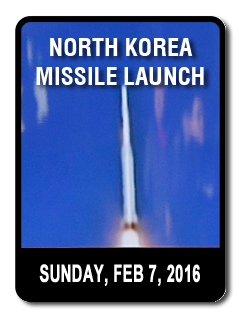
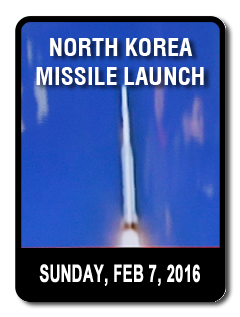
Feb. 7, 2016: North Korea launches a satellite, the Kwangmyongsong-4, in violation of UN missile bans.

Feb. 8, 2016: UN Security Council meets and strongly condemns DPRK launch.

Feb. 9, 2016: Presidents Park Geun-hye and Barack Obama and then Prime Minister Abe Shinzo discuss the DPRK’s satellite launch by phone.

Feb. 9, 2016: US Director of National Intelligence James Clapper confirms the DPRK has facilities capable of uranium enrichment and a plutonium production facility at Yongbyon, which was shuttered in 2007. He cautions that plutonium could be reprocessed in weeks to months.

Feb. 9, 2016: Foreign Minister Yun Byung-se meets in New York with UN Secretary General Ban Ki-moon and Secretary of State Kerry on a stricter UN resolution against the DPRK.

Feb. 10, 2016: US Senate passes HR 757 (North Korea Sanctions and Policy Enhancement Act of 2016) with a 96-0 vote, aimed at the DPRK’s nuclear development, human rights violations, and cyber threat.

Feb. 10, 2016: President Park announces the closure of the Kaesong Industrial Complex.

Feb. 11, 2016: Gen. Joseph Dunford, Gen. Lee Sun-jin (remote) and Adm. Kawano Katsutohsi address measures to counter the DPRK threat, such as trilateral intelligence sharing.

Feb. 12, 2016: US State Department Bureau of East Asian and Pacific Affairs releases a Fact Sheet  on US Relations with North Korea.

Feb. 16, 2016: President Park addresses the National Assembly on the shift to a hardline policy against North Korea, including the Kaesong shutdown.

Feb. 18, 2016: President Obama signs HR 757, the North Korea Sanctions and Policy Enhancement Act, into law.

Feb. 18, 2016: Deputy Secretary of State Blinken and ROK Deputy National Security Advisor Cho Tae-yong meet in Washington to discuss North Korea provocations.

Feb 19, 2016: US Naval Forces Korea opens new headquarters in Busan, following relocation from Yongsan.

Feb. 23-24, 2016: Commander, US Pacific Command Adm. Harry Harris and UNC/CFC/USFK Commander Gen. Scaparrotti provide Congressional testimony on DPRK provocations.

Feb. 26, 2016: Assistant Secretary of State for Asian and Pacific Affairs Daniel Russel meets Foreign Minister Yun Byung-se and Deputy Minister Kim Hong-kyun in Seoul to discuss DPRK provocations and bilateral and regional issues.

March 2, 2016: Foreign Minister Yun Byung-se delivers a keynote address to the UN Human Rights Council, underscoring cooperation against DPRK human rights abuses.

March 2, 2016: UNSC unanimously adopts Resolution 2270, the strongest sanctions yet imposed on the DPRK.

March 3, 2016: US and ROK launch a High-Level Bilateral Commission on Nuclear Energy in Washington to better coordinate nuclear cooperation as part of the new 123 Agreement.

March 4, 2016: US and ROK agree to create a joint working group on THAAD deployment.

March 7-April 7, 2016: US and ROK Marine Corps share in the enlarged Ssang Yong 2016 military exercises, a biennial amphibious landing drill.

March 7-April 30, 2016: US and ROK conduct the Key Resolve and Foal Eagle combined exercises. Command post exercise Key Resolve runs March 7-18.

March 11, 2016: US Special Representative for North Korea Policy Sung Kim and ROK Special Representative for Korean Peninsula Peace and Security Affairs Kim Hong-kyun meet in Washington to discuss DPRK nuclear issues.

March 16, 2016: The White House issues Presidential Executive Order 13722, leveling new sanctions against the DPRK.

March 21, 2016: Defense Secretary Carter announces the nomination of US Army Pacific Commander Gen. Vincent Brooks to replace Gen. Scaparrotti as UNC/CFC/USFK commander.

March 21, 2016: Special Representative Sung Kim and Sanctions Policy Coordinator Daniel Fried meet Special Representative Kim Hong-kyun in Seoul to address UNSCR 2270, unilateral sanctions, and international coordination on DPRK provocations.

March 23, 2016: UN Human Rights Council (UNHRC) adopts a resolution on DPRK human rights, renewing the mandate of the special rapporteur and calling for a panel of independent experts to recommend mechanisms of accountability for the victims and ICC.

March 24, 2016: The Blue House holds an ad-hoc emergency National Security Council session to address inter-Korean tensions resulting from photos in the DPRK’s Rodong Sinmun of bombing drills targeting key Seoul facilities.

March 25, 2016: State Department releases a fact sheet offering US support and co-sponsorship of the UNHRC resolution on DPRK human rights.

March 31-April 1, 2016: President Obama and President Park attend the fourth and final Nuclear Security Summit (NSS) in Washington. They meet Prime Minister Abe on the sidelines.

April 2-6, 2016: US Ambassador for North Korean Human Rights Robert King visits Korea, urging consideration of all human rights violators in the DPRK regime.

April 13, 2016: President Park and ruling Saenuri party lose seats in the National Assembly elections. The opposition parties gain seats and mandates.

April 14, 2016: US and ROK hold a first meeting of the High-Level Bilateral Commission on Nuclear Energy, chaired by ROK Foreign Affairs Vice Minister Cho Tae-yul and Deputy Secretary of Energy Elizabeth Sherwood-Randall.

April 15, 2016: DPRK intermediate-range missile launch fails on the anniversary of Kim Il Sung’s birth.

April 19, 2016: Incoming UNC/CFC/USFK Commander Gen. Brooks defends the cost effectiveness of stationing troops in Korea in Congressional testimony.

April 23, 2016: DPRK conducts a submarine-launched ballistic missile launch off its east coast.

April 23, 2016: DPRK Foreign Minister Ri Su Yong proposes in an interview a halt to DPRK testing in exchange for a curtailment of US-ROK military exercises.


North Korea: The End of “Patience”?


2016 02 23  end-of-patience  icon


image00

February 23, 2016


North Korea: The End of “Patience”?
Ambassador Thomas Hubbard

North Korea’s detonation of a nuclear device on January 6 followed by a satellite launch on February 7, while widely predicted, have led to a sharp rise in tensions on the Korean Peninsula and called into question the “strategic patience” that has characterized the US approach to North Korea under the Obama administration. Both steps violate existing UN Security Council resolutions and underscore North Korea’s avowed intention to develop a credible nuclear deterrent. Experts doubt North Korea’s proclamation that it exploded a “hydrogen” device, but this fourth nuclear test nonetheless confirms the fact that the reckless regime in Pyongyang is steadily converting its nuclear capability into a nuclear arsenal. And while the three stage rocket that propelled a second North Korean satellite into orbit may not be immediately convertible into an ICBM, it demonstrates some of the same technologies that will be needed for a weapon. As Secretary of State Kerry pointed out following meetings with Chinese leaders, the situation on the Korean peninsula no longer allows “business as usual.”

A few days I spent in Seoul last week left me convinced that the South Korean Administration of President Park Geun-hye has made a clear break from its efforts to build bridges to the North through a policy of “trustpolitik.” Immediately after the nuclear test, she for the first time announced her government’s willingness to consult with the US on the placement of THAAD anti-ballistic missile batteries in Korea. This step provoked strong protest from China, which has sought to portray a Korea-based THAAD as a US threat to its own security interests.

Following the satellite launch, the ROK went on to impose its strongest unilateral sanctions to date, abruptly announcing the complete shutdown of the Kaesong Industrial Zone in North Korea, where South Korean firms have maintained factories producing goods for export for the past ten years. This will deprive the North Koreans of more than $100 million per year in hard currency earnings. Beyond that, it is a step fraught with symbolic implications. One of the last vestiges of South-North engagement, the ROK had kept Kaesong insulated from the ups and downs of political developments in hopes it would build people-to-people ties and spur economic reform in the North. Not surprisingly, the North responded by freezing South Korean assets at Kaesong, deporting all South Koreans from the Zone, and closing the only highway linking North and South across the demilitarized zone. In a dramatic speech before the National Assembly, the President made clear that she now sees pressure rather than engagement as the only means to deal with the North Korean regime.

Also condemning the North Korean acts in the strongest possible terms, the US, strongly supported by the ROK and Japan, took the lead in pushing for stronger multilateral sanctions in the UN Security Council. China also acknowledged the need for stronger sanctions, but has thus far resisted sanctions that would significantly limit its economic support for the North Korean regime. Following meetings with Secretary Kerry, China agreed that North Korea had violated Security Council resolutions, but argued that the North Korean regime should not be pushed to the point of instability on the Peninsula. Sanctions, in the Chinese view, should be accompanied by renewed negotiations. Chinese Foreign Minister Wang Yi is in Washington this week for further discussion of UN sanctions.

Meanwhile, the US and Japan have moved ahead with enhanced unilateral sanctions. On February 18, President Obama signed into law a set of stringent sanctions intended to limit Pyongyang’s ability to develop and proliferate nuclear weapon and ballistic missiles. The bill imposes restrictions on individuals and entities that engage in “significant activities or transactions” with North Korea that could finance or contribute to the expansion of those programs. This could entail “secondary sanctions” against Chinese or other firms doing business with targeted North Korean entities.

Where will it go from here?

Aside from firmly sealing the Kaesong facility, the North Korean response to international pressure has thus far been primarily rhetorical, though military provocations of the kind we have seen in the past few years can be expected. Shoring up our deterrent posture, the US has reaffirmed our commitments to the ROK and Japan, and underscored our presence through a B-52 overflight of the Peninsula. The US has also taken the unusual step of introducing F-22s to upcoming joint exercises. No one considers the North Korean regime to be suicidal; while an all- out North Korean attack is unlikely, small-scale incidents will occur in the coming months. Restraint will be required by a South Korean Administration that has clearly lost faith in engagement and wants to look tough in the run-up to National Assembly elections in April. The Peninsula will be tense in the next few months.

The medium-term question is how to restrain the inexorable progress in North Korea’s nuclear and missile capability. In the US, everyone agrees that the time for “strategic patience” is over, but strengthened deterrence and stronger sanctions appear to be the only approaches that the American body politic can come up with during this political season. Both the Obama administration and Presidential candidates from both parties insist on squeezing North Korea to the point where it has no choice but to give up its nuclear programs, something which most experts consider unlikely short of regime collapse. Past experience to the contrary, many continue to believe that China, whose principal objective is to avoid collapse in the North, can be persuaded (or forced) to put meaningful pressure on the Pyongyang.

Divisions over how to deal with North Korea are straining regional relationships. In a few short months, North Korea has gone from being a potential source of cooperation between the US and China to becoming a serious bone of contention. South Korea’s budding relationship with China, which it hoped would lead to cooperation on North Korea, has been severely strained. THAAD will be an ongoing source of tension with China, and talk of South Korea going nuclear, though unlikely to become policy, will cause alarm in the US and Japan as well as China. In my view, it is urgent to return to a unified approach to restraining North Korea’s threat to all of us. We do need to apply sanctions, but we should use that pressure to get back to the negotiating table, the only place where we have any hope of solving the various challenges North Korea poses. At this stage, I have come to the view that the best way to engage the Chinese in a constructive effort to constrain the North Korean regime is to return to the long-dormant six-party talks where we can join together in a renewed effort to persuade the North to join the international community. I doubt the North Koreans will be willing to pick up where we left off at the end of the Bush Administration, and we can’t expect an instant commitment to denuclearization. But we may be able to impose a freeze or limits on future development, a key first step toward full denuclearization.


A month and a day after conducting its fourth nuclear test, North Korea launched a multi-stage rocket carrying a 440-pound satellite. The launch of the Taepodong missile from the Tongchang-ri site, near the North’s border with China, on a clear winter Sunday morning on 7 February was another defiant and provocative action, closely following the North’s four nuclear weapons test.


The United Nations Secretary General, Ban Ki-moon[TB1] , decried the launch as “deeply deplorable.” President Park Geun-hye castigated the North stating, “North Korea’s launch of a long-range missile not only constitutes an indisputable violation of UN Security Council resolutions, but yet another extreme provocation that ignores the ardent wish of the international community for peace.” China and Russia also formally expressed concerns, especially as China, the North’s main ally, had sent an emissary to dissuade Pyongyang’s leadership just days prior to the launch.  Japan’s Prime Minister Abe called it “absolutely unacceptable.’  The United States Ambassador to the UN Samantha Power called the ballistic missile launch and last month’s nuclear test “hostile and illegal,” and South Korea’s Ambassador to the UN, Oh Joon deemed the launch an “outrage.”


The launch was not a surprise, as North Korea had notified three UN agencies earlier that it would occur in the imminent future. The due-south launch trajectory, nonetheless, raised concern among nations in the region as the rocket passed over Okinawa and discarded a stage near the Philippines. Moreover, alarm in the international community was heightened by the evident technological advances so soon after the nuclear test.  The rocket’s payload, twice the weight of its 2012 predecessor, was put into orbit with “complete success” according to North Korea.  Although the 7 February launch signifies a technological advance, North Korea has not yet demonstrated the capacity to perfect reentry technology, part of what defines a successful intercontinental ballistic missile, guidance systems or warhead miniaturization. 


China officially expressed “regret” and “concern,” but called for a restrained response and negotiation. In contrast, The New York Times noted that a Weibo social media poll showed that two-thirds of Chinese users were supportive of a US strike on the North’s nuclear sites.  In the near-term, China will not likely support stricter sanctions called for by others on the UN Security Council and in Washington, Seoul, Tokyo and even Moscow. Chinese President Xi Jinping seems more focused on domestic issues—his sweeping anti-corruption campaign and on the country’s economic and financial challenges.  China’s leadership seems to have calculated that accommodating North Korea and seeking to maintain stability on the Peninsula is better than instability; a potential humanitarian crisis on its borders in the event of tumult in North Korea, and the loss of a strategic buffer. China is in no mood to listen further to the United States given the South China Sea discord–a fact made clear in the Sino-US diplomatic posturing that followed the January 6 missile test.


The 7 February launch could have longer term strategic consequences for the peninsula and East Asia region.  South Korea might have greater willingness to adopt the US Terminal High Altitude Area Defense system. If THAAD gains popularity with South Korea (and other Asian allies), China-US relations will be sorely tested, as China fears the system’s check against its own capabilities. Tensions are already high given Beijing’s territorial claims in the South China Sea.  North Korea’s launch raises those tensions only higher. 


All this leaves the international community decrying the test and February 7 launch, yet constrained in its ability to reign in a Pyongyang. Upcoming US-South Korea Key Resolve military maneuvers will see a spike in rhetoric that may rival or surpass that between North Korea and the US and its allies in the spring of 2013. And North Korean leader Kim Jong Un will continue to display toughness in advance of his May party congress, the first since 1980. 


One might hope that later this year North Korea will initiate another diplomatic charm offensive, as it has regularly done so after spiking tensions over the years. What the young leader may have failed to calculate, however, is the deepening doubt in Beijing of his capabilities relative to his disruptions, his diplomatic insults to China’s leadership, and his driving of Seoul to upgrade its military capabilities. Meanwhile the global non-proliferation regime stands tattered and in need of reinforcement.


 [TB1]Pls cite the who in the UN, the GS’s office?

Intl Reaction to North Korea’s Missile Launch


2016 02 07  north-korea-missile  icon


image00

February 7, 2016


Intl Reaction to North Korea’s Missile Launch
Stephen E. Noerper

A month and a day after conducting its fourth nuclear test, North Korea launched a multi-stage rocket carrying a 440-pound satellite. The launch of the Taepodong missile from the Tongchang-ri site, near the North’s border with China, on a clear winter Sunday morning on 7 February was another defiant and provocative action, closely following the North’s four nuclear weapons test.

The United Nations Secretary General, Ban Ki-moon, decried the launch as “deeply deplorable.” President Park Geun-hye castigated the North stating, “North Korea’s launch of a long-range missile not only constitutes an indisputable violation of UN Security Council resolutions, but yet another extreme provocation that ignores the ardent wish of the international community for peace.” China and Russia also formally expressed concerns, especially as China, the North’s main ally, had sent an emissary to dissuade Pyongyang’s leadership just days prior to the launch.  Japan’s Prime Minister Abe called it “absolutely unacceptable.’  The United States Ambassador to the UN Samantha Power called the ballistic missile launch and last month’s nuclear test “hostile and illegal,” and South Korea’s Ambassador to the UN, Oh Joon deemed the launch an “outrage.”

The launch was not a surprise, as North Korea had notified three UN agencies earlier that it would occur in the imminent future. The due-south launch trajectory, nonetheless, raised concern among nations in the region as the rocket passed over Okinawa and discarded a stage near the Philippines. Moreover, alarm in the international community was heightened by the evident technological advances so soon after the nuclear test.  The rocket’s payload, twice the weight of its 2012 predecessor, was put into orbit with “complete success” according to North Korea.  Although the 7 February launch signifies a technological advance, North Korea has not yet demonstrated the capacity to perfect reentry technology, part of what defines a successful intercontinental ballistic missile, guidance systems or warhead miniaturization.  

China officially expressed “regret” and “concern,” but called for a restrained response and negotiation. In contrast, The New York Times noted that a Weibo social media poll showed that two-thirds of Chinese users were supportive of a US strike on the North’s nuclear sites.  In the near-term, China will not likely support stricter sanctions called for by others on the UN Security Council and in Washington, Seoul, Tokyo and even Moscow. Chinese President Xi Jinping seems more focused on domestic issues—his sweeping anti-corruption campaign and on the country’s economic and financial challenges.  China’s leadership seems to have calculated that accommodating North Korea and seeking to maintain stability on the Peninsula is better than instability; a potential humanitarian crisis on its borders in the event of tumult in North Korea, and the loss of a strategic buffer. China is in no mood to listen further to the United States given the South China Sea discord–a fact made clear in the Sino-US diplomatic posturing that followed the January 6 missile test.

The 7 February launch could have longer term strategic consequences for the peninsula and East Asia region.  South Korea might have greater willingness to adopt the US Terminal High Altitude Area Defense system. If THAAD gains popularity with South Korea (and other Asian allies), China-US relations will be sorely tested, as China fears the system’s check against its own capabilities. Tensions are already high given Beijing’s territorial claims in the South China Sea.  North Korea’s launch raises those tensions only higher. 

All this leaves the international community decrying the test and February 7 launch, yet constrained in its ability to reign in a Pyongyang. Upcoming US-South Korea Key Resolve military maneuvers will see a spike in rhetoric that may rival or surpass that between North Korea and the US and its allies in the spring of 2013. And North Korean leader Kim Jong Un will continue to display toughness in advance of his May party congress, the first since 1980. 

One might hope that later this year North Korea will initiate another diplomatic charm offensive, as it has regularly done so after spiking tensions over the years. What the young leader may have failed to calculate, however, is the deepening doubt in Beijing of his capabilities relative to his disruptions, his diplomatic insults to China’s leadership, and his driving of Seoul to upgrade its military capabilities. Meanwhile the global non-proliferation regime stands tattered and in need of reinforcement.


A month and a day after conducting its fourth nuclear test, North Korea launched a multi-stage rocket carrying a 440-pound satellite. The launch of the Taepodong missile from the Tongchang-ri site, near the North’s border with China, on a clear winter Sunday morning on 7 February was another defiant and provocative action, closely following the North’s four nuclear weapons test.


The United Nations Secretary General, Ban Ki-moon[TB1] , decried the launch as “deeply deplorable.” President Park Geun-hye castigated the North stating, “North Korea’s launch of a long-range missile not only constitutes an indisputable violation of UN Security Council resolutions, but yet another extreme provocation that ignores the ardent wish of the international community for peace.” China and Russia also formally expressed concerns, especially as China, the North’s main ally, had sent an emissary to dissuade Pyongyang’s leadership just days prior to the launch.  Japan’s Prime Minister Abe called it “absolutely unacceptable.’  The United States Ambassador to the UN Samantha Power called the ballistic missile launch and last month’s nuclear test “hostile and illegal,” and South Korea’s Ambassador to the UN, Oh Joon deemed the launch an “outrage.”


The launch was not a surprise, as North Korea had notified three UN agencies earlier that it would occur in the imminent future. The due-south launch trajectory, nonetheless, raised concern among nations in the region as the rocket passed over Okinawa and discarded a stage near the Philippines. Moreover, alarm in the international community was heightened by the evident technological advances so soon after the nuclear test.  The rocket’s payload, twice the weight of its 2012 predecessor, was put into orbit with “complete success” according to North Korea.  Although the 7 February launch signifies a technological advance, North Korea has not yet demonstrated the capacity to perfect reentry technology, part of what defines a successful intercontinental ballistic missile, guidance systems or warhead miniaturization. 


China officially expressed “regret” and “concern,” but called for a restrained response and negotiation. In contrast, The New York Times noted that a Weibo social media poll showed that two-thirds of Chinese users were supportive of a US strike on the North’s nuclear sites.  In the near-term, China will not likely support stricter sanctions called for by others on the UN Security Council and in Washington, Seoul, Tokyo and even Moscow. Chinese President Xi Jinping seems more focused on domestic issues—his sweeping anti-corruption campaign and on the country’s economic and financial challenges.  China’s leadership seems to have calculated that accommodating North Korea and seeking to maintain stability on the Peninsula is better than instability; a potential humanitarian crisis on its borders in the event of tumult in North Korea, and the loss of a strategic buffer. China is in no mood to listen further to the United States given the South China Sea discord–a fact made clear in the Sino-US diplomatic posturing that followed the January 6 missile test.


The 7 February launch could have longer term strategic consequences for the peninsula and East Asia region.  South Korea might have greater willingness to adopt the US Terminal High Altitude Area Defense system. If THAAD gains popularity with South Korea (and other Asian allies), China-US relations will be sorely tested, as China fears the system’s check against its own capabilities. Tensions are already high given Beijing’s territorial claims in the South China Sea.  North Korea’s launch raises those tensions only higher. 


All this leaves the international community decrying the test and February 7 launch, yet constrained in its ability to reign in a Pyongyang. Upcoming US-South Korea Key Resolve military maneuvers will see a spike in rhetoric that may rival or surpass that between North Korea and the US and its allies in the spring of 2013. And North Korean leader Kim Jong Un will continue to display toughness in advance of his May party congress, the first since 1980. 


One might hope that later this year North Korea will initiate another diplomatic charm offensive, as it has regularly done so after spiking tensions over the years. What the young leader may have failed to calculate, however, is the deepening doubt in Beijing of his capabilities relative to his disruptions, his diplomatic insults to China’s leadership, and his driving of Seoul to upgrade its military capabilities. Meanwhile the global non-proliferation regime stands tattered and in need of reinforcement.


 [TB1]Pls cite the who in the UN, the GS’s office?

North Korea Nuclear Test


2016 01 06  north-korea-nuclear-testing  icon2


image00

January 6, 2016

North Korea Nuclear Test
Stephen E. Noerper


On January 6, the DPRK tested what it claimed was a hydrogen bomb and a 5.1 seismic event was detected along the northeast coast, some thirty miles from the site of previous nuclear tests. Earlier, on December 10, Kim Jong Un bragged of North Korea having “a self-reliant A-bomb and H-bomb,” and in his New Year address railed against “invasive outsiders and provocateurs” and promised a “holy war of justice” and new “diversified attack means.”

The Republic of Korea was quick to condemn the test. Seoul noted in its official statement that North Korea’s fourth nuclear test was carried out in flagrant violation of United Nations Security Council resolutions and despite repeated warnings by the Republic of Korea and the international community.

The United Nations roundly condemned the test as well. Secretary General Ban Ki-moon said the underground test is “deeply troubling” and “profoundly destabilizing.” Moreover, the United Nations Security Council—whose members include the United States, China, and Russia—issued a statement strongly condemning the test as a clear violation of four Security Council resolutions and of the non-proliferation regime, and a clear threat to international peace and security. Accordingly, the Security Council stated that it will begin to work immediately on “further significant measures” in a new resolution.

Pyongyang boasted of the test’s “complete” success in advance of Kim Jong Un’s birthday on January 8 and the May party congress, the first in thirty-six years. South Korea cautioned that the yield appeared to be more in-line with the 2013 test, suggesting a possible fission bomb boosted with a small amount of tritium, a radioactive form of hydrogen. The ROK’s National Intelligence Service’s estimate, delivered in a message by a National Assembly member, was a yield of six kilotons of TNT—not the hundreds that would be produced by a successful fusion device, or even the tens expected from an unsuccessful one.

The White House was guarded in its comments, and US and ROK analysts remained cautious, not wanting to underestimate the event and waiting for data that might take several weeks to collect and analyze. DPRK relations with the PRC, which had apparently warmed slightly in recent months, may have been the greatest casualty of the test. China stated that it “strongly opposes this act” and will “firmly push” for Peninsula denuclearization; the test took place only fifty miles from the Chinese border, and Chinese residents expressed concern over fallout. In the end, Kim Jong Un effectively may have pushed Xi Jinping closer to Park Geun-hye and Barack Obama.


The Honorable Ahn Ho-young, Ambassador to the United States


2015 12 31  amb-ahn  icon


image00

December 29, 2015


The Honorable Ahn Ho-young
Ambassador to the United States
Embassy of the Republic of Korea in the United States of America
2450 Massachusetts Avenue N.W.
Washington, D.C. 20008

Dear Ambassador Ahn,

On behalf of The Korea Society, we would like to congratulate President Park Geun-hye and Prime Minister Shinzo Abe for reaching a landmark agreement resolving the comfort women issue in this 50th anniversary of the normalization of diplomatic ties between the Republic of Korea and Japan.

We note that this powerful agreement achieved through the strong leadership of President Park Geun-hye and Prime Minister Shinzo Abe, supported by their respective foreign ministers, will help remove one of the most difficult historical issues between Korea and Japan.

The Korea Society believes that the historic agreement holds many future benefits for the United States’ two most important allies in Asia. We note that Minister of Foreign Affairs Yun Byung-se has stated that the agreement will enable the Republic of Korea and Japan to open a new chapter in their bilateral relations. In doing so, we also see that greater cooperation between the two major democracies in Northeast Asia will help ensure stability and prosperity in the region.

Sincerely yours,

image02                  image01

Ambassador Thomas Hubbard                                                   Thomas Byrne
Chairman of the Board of Directors                                            President


cc: Consul General Kim Gheewhan