







Catching the K-Investment Wave in the USA

The United States and South Korea have a well-established “gold standard” Free Trade Agreement.  Now, as international economic relationships are shifting to strategic frameworks and concerns over supply-chain robustness and resiliency, Korean investment in the U.S is gaining attention and transforming the bilateral relationship into a new dynamic. The upcoming President’s Interview Series led by Tom Byrne, the President and CEO of The Korea Society will feature the representatives from three states for an in-depth conversation: Andrew Deye, Vice President, Head of Strategy at JobsOhio, Harry M. Lightsey III, Secretary of Commerce of South Carolina Department of Commerce, and Pat Wilson, Commissioner of Georgia Department of Economic Development. The panelists will discuss the significance of the new wave of Korean direct investment in the United States. They will also cover the business, economic and political angles of the investment in each state, and how this is contributing to the “comprehensive and strategic” partnership between the U.S. and Korea.

This program is made possible by the support from JobsOhio
  

Catching the K-Investment Wave in the USA

Thursday, June 16, 2022 | 6 PM (EDT)


The Korea Society
350 Madison Avenue, 24th Floor
New York, NY 10017


ABOUT THE SPEAKERS:

Andrew Deye
Vice President, Head of Strategy
JobsOhio

Andrew Deye is Vice President and Head of Strategy at JobsOhio, the state’s private economic development corporation. In this role, Andrew leads strategy, global business development, data and research functions. Since its creation in 2011, JobsOhio and its partners have supported over 3,000 investment projects – including over 500 foreign direct investment opportunities. Having been to South Korea on several occasions, he is optimistic about the future of U.S.-Korea economic opportunities.

Prior to joining JobsOhio in 2015, Andrew was an investment banker in New York and Chicago, where he worked on public-private partnerships, privatizations, financings and acquisitions. Andrew graduated from Georgetown University with a bachelor’s degree in business administration and obtained a master’s degree from the Harvard Kennedy School of Government.

Harry M. Lightsey III
Secretary of Commerce
South Carolina Department of Commerce

Harry M. Lightsey III was appointed by Governor Henry McMaster to serve as Secretary of Commerce in June 2021. A fixture in South Carolina’s business community for decades, Lightsey served in top executive leadership roles for major corporations in South Carolina and across the nation. Notably, he served as the president of BellSouth Telecommunications for South Carolina prior to the company’s merger with AT&T, afterward becoming president for AT&T’s Southeast region.

Following his 26 years in the telecommunications industry, Lightsey joined the General Motors Corporation where he directed the legacy automaker’s federal government affairs operation, as well as the emerging technologies, OnStar and infotainment divisions. Lightsey most recently served as a principal with Hawksbill Advisors – a subsidiary of Hawksbill Group. He has also served as a member of the board of directors of the Federal Reserve Bank in Richmond, Virginia.

Mr. Lightsey is a 1978 graduate of Princeton University, and a 1981 graduate of the University of South Carolina School of Law.

Lightsey, a native of Columbia, S.C., is married with two adult children.
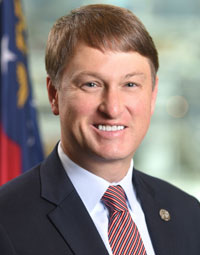
Pat Wilson
Commissioner
Georgia Department of Economic Development

Pat Wilson was appointed Commissioner of the Georgia Department of Economic Development (GDEcD) in November 2016. As Commissioner, he leads the state agency responsible for creating jobs and investment opportunities in Georgia through business recruitment and expansion, small business growth, international trade and tourism, as well as the arts, film and music industries. Pat is responsible for leading the GDEcD team in planning and mobilizing state resources for economic development. Under Governor Brian P. Kemp and Commissioner Wilson’s leadership, Georgia has been named the No. 1 state in the nation in which to do business for the eighth consecutive year in a row by both Site Selection and Area Development. Under Wilson’s tenure, GDEcD was also rated as the nation’s best state-level economic development organization by the International Economic Development Council (IEDC).

Mr. Wilson previously served as Chief Operating Officer of GDEcD from January 2011 until his appointment as Commissioner by former Governor Nathan Deal. As COO, he managed the daily operations of the agency, directed long-term strategy, managed the agency’s legislative priorities and served as the department’s liaison with the Georgia Congressional delegation and federal government partners. In addition, Pat served as Executive Director of the Georgia Allies.

Mr. Wilson joined GDEcD as Deputy Commissioner for Global Commerce in 2010. Prior to that, he served on the staff of Governor Sonny Perdue as the director of government affairs, promoting the Governor’s legislative agenda at the State Capitol and managing federal affairs for the state of Georgia. He previously served as director of federal affairs for the state, opening the Washington, D.C., office in 2005. There, he promoted the state’s agenda with the U.S. Congress and federal agencies as the Governor’s representative to the Georgia congressional delegation.

Before joining state government, Mr. Wilson was director of governmental affairs for Greenberg Traurig, LLP, in Washington. He served under the late Senator Paul Coverdell and under then-Representative Nathan Deal.

He is a Franklin Springs, Georgia, native, and holds an undergraduate degree in political science with a focus on international relations from the University of Georgia. He and his wife Melissa and their two children, Padgett and Carter, reside in Sandy Springs.




KA YA! Korean-American YA Novels & Authors

 Illustration by Subin Yoo

Meet the new generation of Korean American young adult novelists. Drawing inspiration from the Korean pop culture they grew up consuming and their personal journey as immigrant kids, these authors offer refreshing and compelling representations on myriads of subject matters, from intergenerational struggles and family bonds to identity issues. And they are conquering the bestseller lists while offering a mirror to the generations of young readers that they themselves did not have.

Join our conversation with Claire Ahn, Kat Cho and Mary H. K. Choi, as they discuss the popularity of YA novels featuring Korean and Korean-American characters, the changing perception in the publishing industry regarding Asian American YA novels, and their remarkable stories.

All books written by the three authors will be available for sale during the event.


KA YA! Korean-American YA Novels & Authors
with Claire Ahn, Kat Cho & Mary H. K. Choi

Wednesday, June 15, 2022 | 6:30 PM (EDT)


The Korea Society
350 Madison Avenue, 24th Floor
New York, NY 10017


About the Authors:

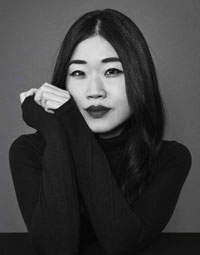
Author Photo Credit: Aaron Richter (Choi)

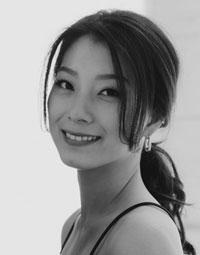
Claire Ahn grew up in Seoul, Korea and still considers it her home. She moved to New York to attend university and now lives in Long Island City with her husband, newborn daughter, and their dog, Dante. She writes about transcultural experiences and the traditions, values, and legacies that shape who we are. I Guess I Live Here Now is her debut novel. Follow her on Instagram @cuhlaireahn. 


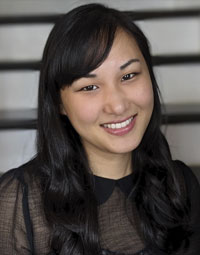
Kat Cho is an internationally bestselling author of Young Adult fiction. She received her BA in Biology from Wesleyan University and MPH in Community Education from CUNY Hunter in her past life as a clinical researcher before she rekindled her love of storytelling. Her books include the Penguin One World One Book 2019 Selection, Wicked Fox, its internationally bestselling sequel, Vicious Spirits, and Once Upon a K-Prom(Disney). When Kat isn’t writing or reading, she is the co-host of the Write or Die Podcast, a podcast that interviews authors about the struggles of getting published and maintaining an author career with a focus on spotlighting as many diverse creators as possible. Follow her on Twitter @KatCho; Instagram @KatChoWrites; TikTok @KatChoWrites; katchowrites.com


Mary H. K. Choi is the New York Times bestselling author of Emergency Contact, Permanent Record, and Yolk. She is the host of Hey, Cool Job!, a podcast about jobs and Hey, Cool Life!, a micro-pod about mental health and creativity. Her writing has been featured in The Atlantic, The New York Times, and GQ. She lives in Brooklyn, New York. Follow her on Twitter @ChoitotheWorld; Instagram @Choitotheworld; www.choitotheworld.com


Interview with CJ Group Chairman Kyung Shik Sohn

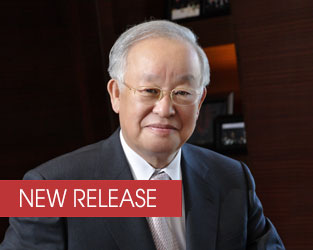
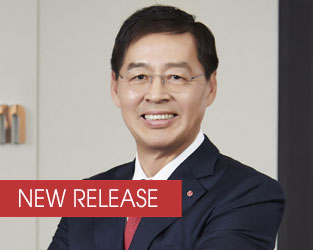
The Korea Society is pleased to invite Mr. Kyung Shik Sohn, Chairman of CJ Group, for a conversation with the Society’s President/CEO Tom Byrne. In this upcoming episode of our President’s Interview Series, Chairman Sohn will discuss his remarkable success in growing CJ’s diversified businesses domestically and globally, and how CJ is managing an increasingly challenging global business climate. He will also inform us on his contributions to forging stronger U.S.-Korea ties. Chairman Sohn will also talk about his remarkable career and his vision as one of the most respected and influential leaders in the Korean business community.


Interview with CJ Group Chairman Kyung Shik Sohn

Premiere on Tuesday, April 19, 2022 | 6 PM (EDT)


The Korea Society
350 Madison Avenue, 24th Floor
New York, NY 10017


ABOUT THE SPEAKER:

Kyung Shik Sohn
Chairman, Korea Enterprises Federation
Chairman, CJ Group
Honorary Chairman, Korea Chamber of Commerce & Industry


 EDUCATION

 
1987   Completed Advanced Management Program,
Business School, Seoul National University, Korea
1968   Master of Business Administration
Oklahoma State University, USA
1961   Bachelor of Law
Seoul National University, Korea
 
 EXPERIENCE

 
2018-present   Chairman, Korea Enterprises Federation
2013-present   Honorary Chairman, Korea Chamber of Commerce & Industry
Honorary Chairman, Seoul Chamber of Commerce & Industry
2010-present   Chairman, the Korea-Russia Friendship Association
2008-present   Chairman of the Board, Korea America Friendship Society
2007-present   Chairman & CEO, CJ CheilJedang Corporation
1995-present   Chairman, CJ Group
1994-present   Chairman & CEO, CJ Corporation
———————————————————–
 
2011   Chairman, Presidential Council on National Competitiveness
2010   Chairman, Seoul G20 Business Summit organizing committee
2010   Member, Presidential Committee for the G20 Summit
2006   Chairman, Korea Foreign Schools Foundation
2006   Chairman, Korea Environmental Preservation Association (KEPA)
2005   Chairman, Tax Development Deliberation Committee
2005   Chairman, Korea Chamber of Commerce & Industry
Chairman, Seoul Chamber of Commerce & Industry
1993   Vice Chairman & CEO, CJ Corporation
1991   Vice Chairman & CEO, Samsung Fire & Marine Insurance Co., Ltd.
1977   President & CEO, Samsung Fire & Marine Insurance Co., Ltd.
1974   Executive Director, Samsung Fire & Marine Insurance Co., Ltd.
1968   Marketing Manager, Samsung Electronics Co., Ltd.
1961   Employed by Hanil Bank, Seoul
 
 HONORS

 
2018   Van Fleet Award
The Korea Society
2017   Grand Cordon of the Order of the Rising Sun
Government of Japan
2013   The Order of Civil Merit – Mugunghwa Medal
Government of Republic of Korea
2011   The Order of Dostlik
Government of Republic of Uzbekistan
2009   Distinguished Alumni Award
Seoul National University
2005   AMP (Advanced Management Program) Award
Business School, Seoul National University
2003   Honorary Citizenship
City of Guymon, Oklahoma, USA
2002   Distinguished Alumni Award
College of Law, Seoul National University
2002   The Order of Industrial Service Merit – Gold Tower
Government of Republic of Korea
2002   Gwanak Award
Alumni Association, Seoul National University
1997   Distinguished Alumni Award
Alumni Association, Oklahoma State University
1996   The Order of Industrial Service Merit – Tin Tower
Government of Republic of Korea
 

THE KOREA SOCIETY | STRATEGIC PLAN | 2022 – 2026


THE KOREA SOCIETY

STRATEGIC PLAN

2022 – 2026

(March 5, 2025)

DOWNLOAD PDF

VISION:
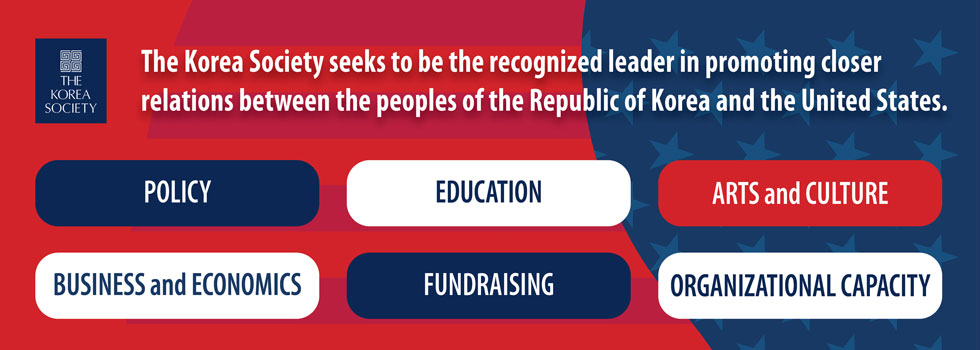
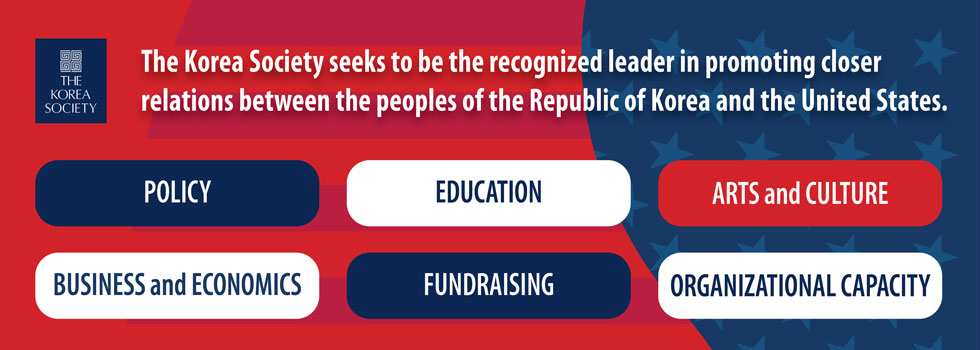
The Korea Society seeks to be the recognized leader in promoting closer relations between the peoples of the Republic of Korea and the United States.
 
MISSION:
The Korea Society is a nonprofit, nonpartisan, 501(c)(3) organization with individual and corporate members that is dedicated to the promotion of greater awareness and understanding in order to strengthen cooperation between the peoples of the United States and Republic of Korea.


STRATEGIC GOALS:


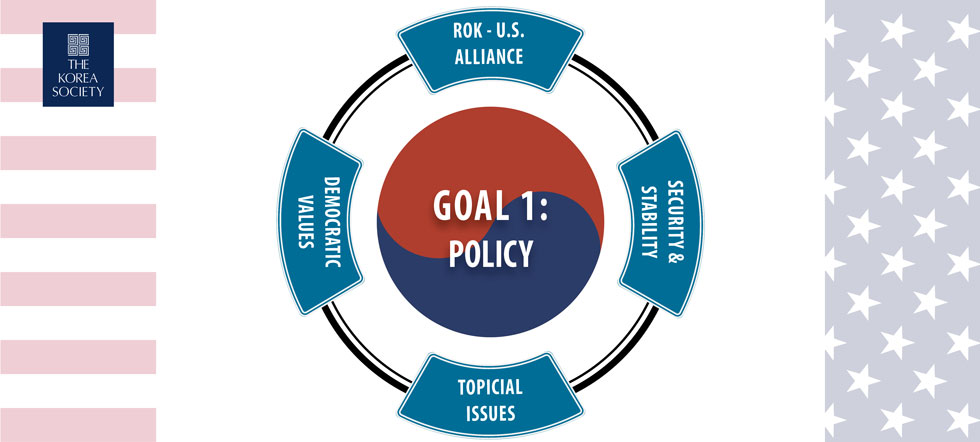
Goal 1: Policy Programs

In the area of Policy, promote and increase interest, knowledge, and discussion of the importance of Korea and the ROK – U.S. Alliance in order to maintain and strengthen the diplomatic and security relationships, all aspects of which are critical for the future of both countries. .

Priorities:

  1) Increase understanding of the importance of the ROK – U.S. Alliance.

2) While prioritizing the security and stability of Northeast Asia, the United States, and beyond, support efforts to promote reconciliation and peaceful reunification, denuclearization, human rights, and economic development in North Korea.

3) Increase understanding of the importance of Korea in its region and beyond.

4) Strengthen and articulate our common democratic values of freedom, human rights, rule of law, and democracy.

Strategies:

  1) Develop a better understanding of our key audiences. Prioritize and focus on audiences that are critical to the Society’s mission, vision, and goals.

2) Conduct Public Policy Programs and Roundtables.

3) Conduct an annual Van Fleet Signature Policy program.

4) Engage with the media to highlight key activities.

5) Conduct programs and events to honor and remember Korean War veterans and those who have served and are serving in Korea.

6) Feature current U.S. and Korean policy makers to discuss matters key to the U.S. – ROK Alliance.

7) Collaborate with like-minded partners to expand impact and outreach.

Key Performance Indicators:

  1) Influence the influencers” indicator:

  – Sustained engagement from government policymakers, think tank experts, researchers and academics, media, and corporate, with key demographics actively engaging, attending in-person programs and consuming digital products.

  2) Public Awareness indicator:

  – Annual survey shows engagement with policy content enhances audience understanding of the priorities (Alliance, NK, Korea in its region, and Common Values).

– Maintaining annual attendance in-person programs and digital product consumption (i.e., over 5,000 registrations for in-person and livestream view, and over 30,000 cumulative YouTube views and podcast downloads)


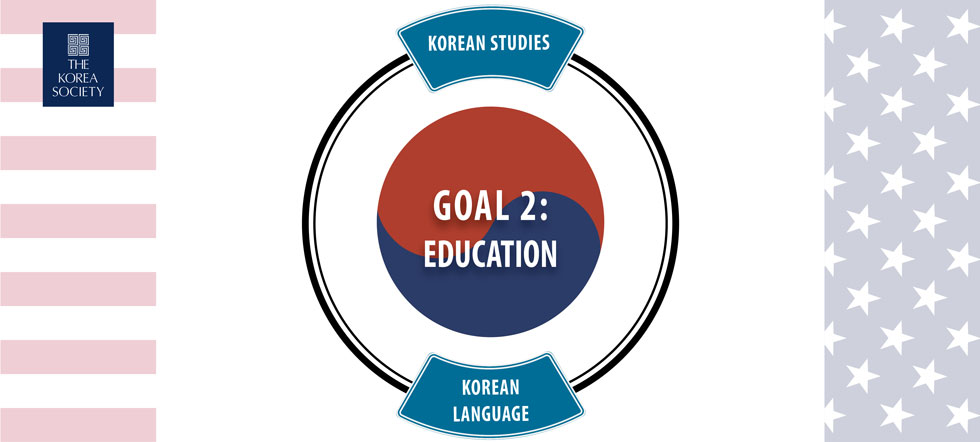
Goal 2: Education Programs

In the area of Education, advance educational opportunities and programs for students and educators in order to promote mutual understanding and appreciation as well as develop and sustain the long-lasting ties between our two nations for generations to come.

Priorities:

  1) Advance Korean Studies in U.S. schools, colleges, universities, and other entities to promote and cultivate an understanding of Korean culture, history, and the importance of the close relationships between the U.S. and the Republic of Korea.

2) Promote the advancement of Korean language learning, meeting the needs of individuals who wish to develop Korean language skills for both professional and personal interests.

Strategies:

  1) Develop a better understanding of our key audiences. Prioritize and focus on audiences that are critical to the Society’s mission, vision, and goals.

2) Conduct post-program surveys of current audiences and execute environmental scans to identify future audiences.

3) Create, maintain, and promote robust and easily accessible educational resources for students, educators and researchers.

4) Offer a range of programming for educators, including the following:

  a) Exploring new and future trends in Korean Studies.
b) Learning about “best practices” in delivering Korean Studies programming.
c) Convening Korean studies experts who explore trends in and ways to promote advancement of Korean language in the U.S.

5) Promote the Sherman Family Korea Emerging Scholar Lecture Award Program to advance thought leadership for a new generation of scholars and professionals.

6) Promote the Project Bridge Youth Ambassador program among educators and students in New York and Montana, as well as sponsors in Korea.

7) Promote study abroad to Korea by offering competitive travel grants for underfinanced, undergraduate students.

8) Increase the diversity and number of the Society’s Korean Language Program offerings.

  a) Capitalize on the popularity of Korean music and entertainment by offering related courses.
b) Attract geographically diverse audiences.
c) Strengthen current language offerings based on knowledge gained through satisfaction surveys and environmental scans.

9) Develop trainings for a broad spectrum of audiences utilizing varied platforms.

10) Attract sponsor/underwriter funding to support grants, awards, and education-related projects.

Key Performance Indicators:

  1) Advance Korean Studies indicator:

a. For Students:
– Increase applications submitted to competitive programs (Project Bridge & Study Abroad) & increase TKS visibility at schools.
– Secure adequate funding to double number of Study Abroad Grants & funding awarded annually.
– Attract interest from and engagement with student clubs.

b. For Teachers, Educators, Researchers and Others:
– Increase number of middle and high school workshops offered locally and attract new virtual audiences.
– Increase Lecture attendance.
– Significantly increase website ‘hits’ on our digital resources.
– Attract at least 5 organizations willing to partner on our resources initiative.

c. For Professionals:
– Increase enrollment in our new Business series among companies.
– Generate income that covers costs.

2) Korean Language Learning indicator:
– Increase overall enrollment.
– Increase participant geographic diversity.
– Generate sufficient revenue to cover, at a minimum, all direct expenses, and ideally all indirect.

3) Audience, Partner and Donor Development:
– Develop post-program surveys for all programs and strive to achieve a minimum 30% online response rate -Attract new sponsors for our PB Study Tour.


Goal 3: Arts & Culture Programs

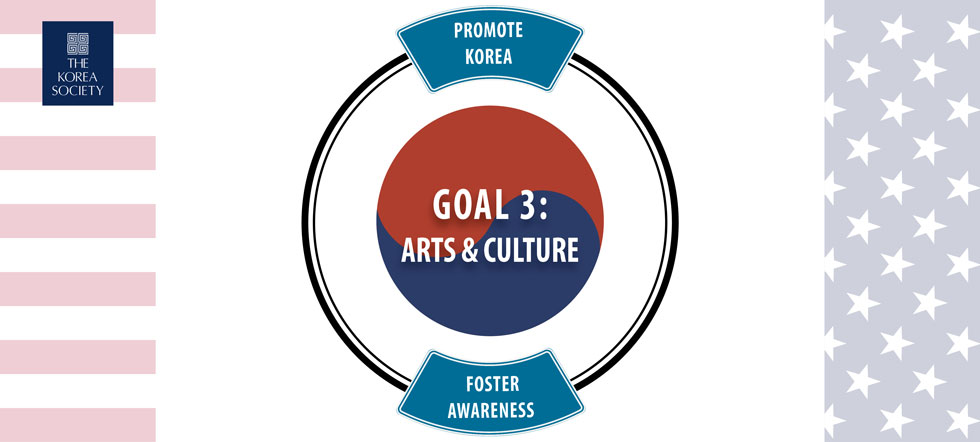
In the area of Arts & Culture, promote the diversity and excellence of Korean and Korean-American artists, performers, authors, and other professionals in the broadly defined area of culture.

Priorities:

  1) Promote Korea as a global force in art, literature, culinary art, performing arts, entertainment industry, and sports.

2) Foster awareness of Korean and Korean American artists and professionals; promote their contribution to the cultural scenes in New York City and beyond.

Strategies:

  1) Develop a better understanding of our key audiences. Prioritize and focus on audiences that are critical to the Society’s mission, vision, and goals.

2) Promote contemporary artists with exhibitions and special online programs, including artist-talk programs and art history lecture series.

3) Design literature programs to be conducted both in the event space and online, featuring Korean-American writers and Korean authors, whose books are translated and published in the U.S.

4) Support touring performers and Korean film releases in the U.S. by promoting the events and conducting interviews both in-person and online.

5) Design lecture series to present traditional Korean culture, including cuisine, fashion, and design, to be delivered by scholars and experts.

6) Develop interview series with Korean-American creatives who are working in the U.S. to promote their career and business.

7) Identify possible partners both in Korea and the U.S. to present more diverse programs with greater impact and increase audience numbers.

8) Increase the network of possible presenters and guests for the program from both Korea, the U.S., and around the world.

9) Identify and cultivate a better understanding of potential program funders who can become critical to the Society’s Mission, Vision, and Goals.

10) Identify possible funders for specific arts and culture programs.

Key Performance Indicators:

  1) Program participation indicator:

– Participation and interest to be evaluated through the number of RSVPs and attendance in person and YouTube views (demographic breakdown of general audience and English-Speaking, Younger Generation).

2) Social media indicator:
– Social media outreach expansion to be evaluated via the number of followers and engagement metric from Instagram (demographic breakdown of general audience and English-Speaking, Younger Generation).

3) Korean/Korean-Born/of Korean Descent Artists indicator:
– Survey with past artists and guest speakers regarding the impact TKS program/exhibition had on their career.

4) Donor indicator:
– Potential donors show greater awareness/ support of TKS A&C by engaging with the staff and exploring possible funding opportunities.


Goal 4: Business & Economics Programs

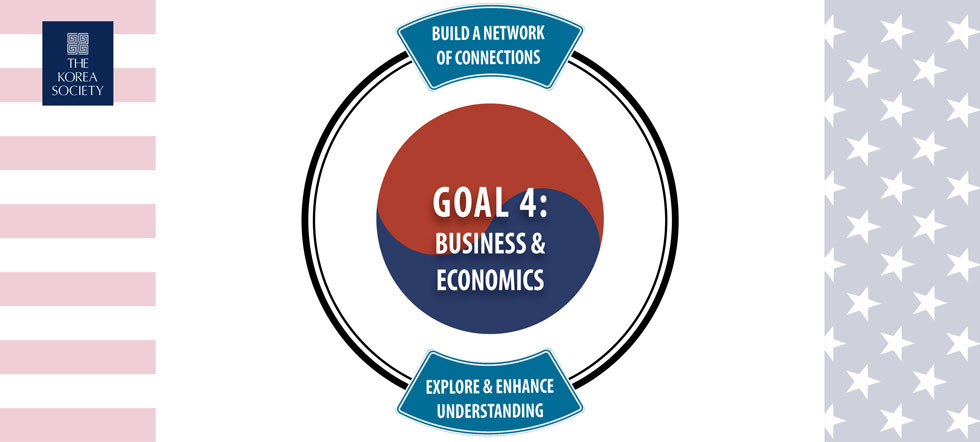
In the area of Business & Economics, bring greater awareness of and focus on business relationships between the U.S. and the Republic of Korea in order to strengthen economic relations.

Priorities:

  1) Build a network of connections between the Society and leaders in government, business, finance and other fields having a prominence in the U.S. and ROK economic and financial relationship.

2) Explore and enhance understanding of major issues in the evolving landscape of economic, trade, and technology policies affecting the business partnerships between the U.S. and Korea.

Strategies:

  1) Develop a better understanding of our key audiences. Prioritize and focus on audiences that are critical to the Society’s mission, vision, and goals.

2) Liaise and leverage activities with the Policy and Arts & Culture program areas to attract greater interest in and support from the U.S and Korean business communities.

3) Seek new opportunities and relationships with business leaders in U.S. and Korean firms.

4) Conduct high profile programmatic series and explore new areas in the future. Develop specialized program series, namely:

  a) Leadership Interview Series
b) Local Leadership in the Global Context
c) Startup Scene Series
d) U.S.-ROK New Economic Paradigm

5) Global Financial Leaders Forum (GFLF): Feature leaders in the Korean and U.S financial community and cooperating with Maekyung Media Group, Korea Finance Society, and Korea Investment Corporation, to provide insight on market trends and analyze investment strategies.

6) Young Professionals’ Network (YPN): Build upon collaborative partnerships with adjacent organizations to provide a platform for learning and growth, professional development opportunities, mentorship, and networking in all business industries for young professionals in The Korea Society’s local, national, and international audience.

7) Conduct and expand outreach programs and the visibility of TKS to prioritized cities and states with an emphasis of attracting an audience from regional business communities.

8) Prioritize attracting speakers who are critical to the Society’s Mission, Vision, and Goals.

Key Performance Indicators:

  1) Programming influence indicator:
– Increased number of high-level speakers for business and economic programs across programs.
– Participation in programs increases among targeted business audiences (i.e., newly emerging financial industries).
– Increased visibility in print and broadcast media (particularly NYC, D.C., and Seoul) to demonstrate TKS’s influence on topical issues in the broad economic relationship (e.g., Special Measures Agreement).

2) National Network Expansion indicator
– Increase activity with regional business communities in the southeast U.S. in D.C., Georgia, and eventually Texas).
– Increase YPN network programming in NYC.


Goal 5: Fundraising

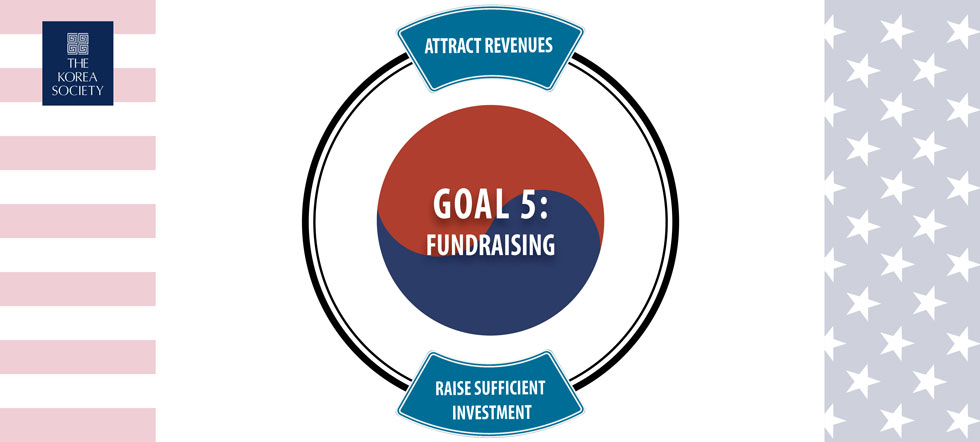
Expand and increase consistent and predictable contributions of foundations, corporations, individuals to The Korea Society’s activities and its finances.

Priorities:

  1) Attract revenues from U.S. and ROK companies, foundations and individuals to support current and planned activities of the Korea Society.

2) Raise sufficient investment income (fundraising, investments, program, event revenue and membership dues) to fund and expand programs and staff.

Strategies:

  1) Ensure that the endowment investment and operational budget policies serve best The Korea Society’s needs.

2) Fundraise in general, but with a focus on special events and Business & Economics programming.

3) Develop a plan to grow endowment through new contributors.

4) Seek earmarked sponsorship for particular Policy, Arts & Culture and Business & Economics programs.

5) Conduct a highly profitable Annual Gala Dinner.

6) Conduct other highly profitable special events, namely the Van Fleet Memorial Golf Tournament and the Annual Membership Party.

7) Maintain a high bar on the selection of the Van Fleet Award recipients.

8) Reach out to U.S. companies more actively.

9) Revise the current membership benefits and levels to attract greater membership.

Key Performance Indicators:

  1) Revenue Growth and Diversification indicator
– Maintain a diverse funding base and increase annual fundraising – total and across categories (program, events, corporate, etc.) – over average of the previous 2 years.

2) Long-term sustainability of operating budget indicator
– Present annual evaluation of income and expenses.

3) Maintain optimal performance of endowment
– Monitor annual endowment portfolio.


Goal 6: Organizational Capacity

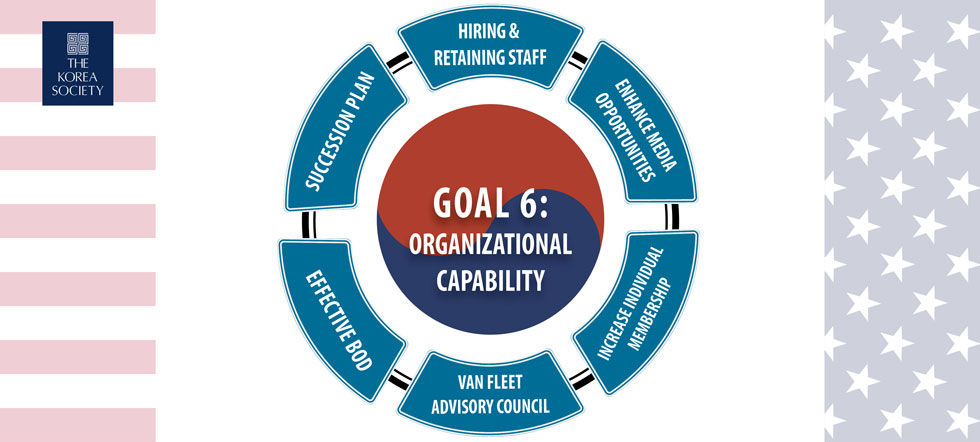
Strengthen and grow TKS to enable it to accomplish the Society’s mission and organizational vision.

Priorities:

  1) Grow organizational capacity through hiring and retaining high performing leadership and staff and use of collaborative planning tools and technology.

2) Develop a process and the organizational structure to further enhance the Society’s ability to utilize digital media opportunities. Across all Korea Society departments enhance the understanding and use of social and digital media presence in order to help better promote all of TKS goals and priorities, to reach key audiences and as appropriate, to generate revenue.

3) Increase individual membership.

4) Establish the Van Fleet Advisory council to guide accomplishment of the above goals in fulfillment of the Society’s mission.

5) Maintain an effective Board of Directors

6) Develop a succession plan for key positions.

Strategies:

  1) Align salary compensation with other similar budget non profit organizations, expand benefit awareness and education among staff.

2) Work to better understand the opportunities in digital media to enhance the Society’s ability to reach a broader, more influential audience.

3) Maintain robust engagement with traditional print and broadcast media in the U.S. and Korea.

4) Enhance the benefit of membership and explore membership levels and strengthen mechanisms to track and renew membership

5) Establish Advisory Councils to support the BOD and TKS.

6) Develop a list of skills needed on each committee and the BOD. Develop a BOD self evaluation methodology.

7) Develop a succession plan for executive officers of The Korea Society (see Article VII of the Bylaws).

Key Performance Indicators:

  1) High performing staff retention indicator :
– Maintain retention of high performing staff.
– Increased staff understanding of fairness and constraints in salary and benefits (staff survey).
– Increase utilization of professional development opportunities.

2) Media coverage effectiveness indicator:
– Steady increase in traditional media coverage and social media audiences, including subscribers (e.g., YouTube) and followers (e.g., Instagram, Facebook).

3) Individual membership growth indicator
– Increased individual membership.

4) President/CEO/Board effectiveness indicator
– President/CEO evaluation by the board shows high functionality as well as expected areas of better performance.
– Board self-evaluation developed shows high functionality as well as skills needed to function more effectively.

5) Advisory Board creation indicator:
– Board advisory council established to advise on strategy, programs, and membership development (meet 2x/year).
– Van Fleet leadership advisory council established as higher level group of advisors that meet 1x/year to expand our networks and donors.


Women in Higher Education: A Discussion with Dr. Eun Mee Kim & Dr. Sian Leah Beilock

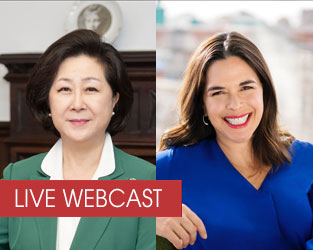
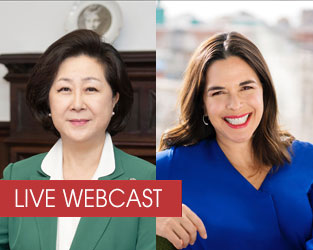
Womens’ Universities have emerged as premier institutions in higher education, amplifying womens’ voices from diverse backgrounds and perspectives. In the fourth installation of our Womens’ Leadership Series, please join us at The Korea Society to hear from Dr. Eun Mee Kim, President of Ewha Womans University in Seoul, and Dr. Sian Leah Beilock, President of Barnard College in New York City. They will share their experiences as presidents of two eminent women’s colleges with long traditions in providing the highest-quality of liberal arts education, and they will also share their visions as thought leaders in new fields, new ideas and new technologies emerging in higher education in Korea and the U.S.

The conversation will be moderated by Ambassador Kathleen Stephens, former U.S. Ambassador to Korea and Korea Society Board Chair. Thomas Byrne, President and CEO of The Korea Society will deliver special welcoming remarks.


Women in Higher Education: A Discussion with Dr. Eun Mee Kim & Dr. Sian Leah Beilock

Tuesday, March 22, 2022 | 8 AM (EDT)


The Korea Society
350 Madison Avenue, 24th Floor
New York, NY 10017


ABOUT THE SPEAKERS:

Eun Mee Kim, Ph.D.
President
Professor, Graduate School of International Studies
Ewha Womans University

Professor Eun Mee Kim is the 17th President of Ewha Womans University. She is Professor in the Graduate School of International Studies, Director of the Ewha Global Health Institute for Girls and Women, former Dean of the Graduate School, former Dean of the Graduate School of International Studies, and former Director of the Institute for Development and Human Security at Ewha Womans University. She was appointed by the UN Secretary General in December 2016 to serve as one of the fifteen Independent Group of Scientists to work on the Global Sustainable Development Report 2019, which was presented to the UN Secretary General and heads of member states at the UN General Assembly in September 2019. She served as President of the Korea Association of International Development and Cooperation (2011, 2012). She has served on the Committee for International Development Cooperation under the Prime Minister’s Office, the Policy Advisory Committee for the Ministry of Foreign Affairs, and the Ministry of Gender Equality and Family. In 2012, she received the Service Merit Medal from the Republic of Korea for her contributions to the Fourth High-Level Forum on Aid Effectiveness in Busan. In 2013, she received the first research grant to a university in South Korea from the Bill & Melinda Gates Foundation on her research, “Advocacy for Korean Engagement in Global Health and Development.” In 2016, and again in 2019, she received a research grant from the Bill & Melinda Gates Foundation for “Korea Global Health Strategy.” She received the Chang-Lin Tien Distinguished Leadership Award from the Asia Foundation in 2021. She was appointed as the Vice-Chairperson of the Korean National Commission for UNESCO in May 2021, and the Chairperson of the 5th Science and Technology Basic Plan (2023~2027) Committee of the Republic of Korea in December 2021.

Sian Leah Beilock, Ph.D.
President
Barnard College

Sian Leah Beilock began her tenure as Barnard College president in July 2017 after spending 12 years at the University of Chicago, where she served on the faculty as the Stella M. Rowley Professor of Psychology, executive vice provost, and an officer of the university. Her work as a cognitive scientist revolves around performance anxiety and reveals simple psychological strategies that can be used to ensure success in everything from test-taking and public speaking to athletics and job interviews. In 2010, she wrote the critically acclaimed book Choke, and in 2015, How the Body Knows Its Mind. In 2017, she won the Troland Award from the National Academy of Sciences, and her recent TED talk has been viewed more than 2.5 million times.

ABOUT THE MODERATOR:

Amb. Kathleen Stephens
Chair, Board of Directors, The Korea Society
President & CEO, Korea Economic Institute

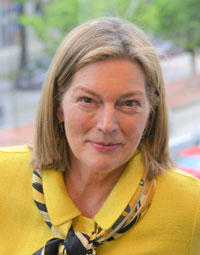
Ambassador (ret.) Kathleen Stephens is a former American diplomat. She was U.S. Ambassador to the Republic of Korea 2008-2011. She is currently Board Chair of The Korea Society and President & CEO of the Korea Economic Institute. Korea has been a leitmotif of Ambassador Stephens’ life and career since she served in rural Korea as a Peace Corps volunteer and trainer, 1975-1977. She was in Korea 1983-1989, first as a political officer at the U.S. Embassy in Seoul reporting on Korea’s domestic political and human rights scene, and later leading the U.S. Consulate in Busan. Other overseas assignments included postings to China, former Yugoslavia, Portugal, Northern Ireland, where she was U.S. Consul General in Belfast during the negotiations culminating in the 1998 Good Friday Agreement, and India, where she was U.S. Charge ‘d Affaires (2014-2015). Ambassador Stephens also served in a number of policy positions in Washington at the Department of State and the White House. These included acting Under Secretary of State for Public Diplomacy and Public Affairs (2012), Principal Deputy Assistant Secretary of State for East Asian and Pacific Affairs (2005-2007), Deputy Assistant Secretary of State for European and Eurasian Affairs (2003-2005), and National Security Council Director for European Affairs at the Clinton White House. Stephens was William J. Perry Fellow for Korea at Stanford University 2015-2018. She is a Mansfield Foundation Distinguished Fellow, Pacific Century Institute board chairman, vice-chair of the board of trustees for The Asia Foundation, and board chair of The Korea Society. She has been President and CEO of the Korea Economic Institute of America since September 2018, based in Washington, DC.


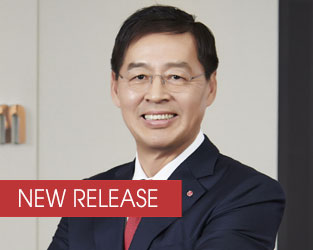
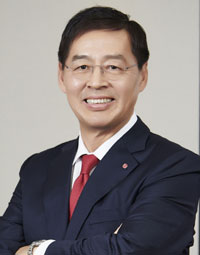
Interview with LG Chem CEO Hak Cheol Shin

Join us for a conversation between Mr. Hak Cheol Shin, Chief Executive Officer of LG Chem, and Tom Byrne, the President and CEO of The Korea Society. In this third episode of the ‘President’s Interview Series,’ Mr. Shin will discuss his remarkable career starting out from 3M Korea and serving as the Vice Chair at 3M headquarter in the U.S. to his current role as the CEO of LG Chem. Since Mr. Shin took office in 2019, LG Chem’s market capitalization in the Korean stock market has more than doubled to 55 trillion won (US$46.6 billion) from 24 trillion won (US$20.3 billion).

This interview will provide an opportunity to learn more about Mr. Shin’s role and leadership in LG Chem’s growth during the past two years as well as the company’s ESG based expanding business portfolio and the next growth engine moving forward. This program was recorded at LG Chem headquarters in Seoul when President Byrne recently visited South Korea.


Interview with LG Chem CEO Hak Cheol Shin

Premieres: Wednesday, December 8, 2021 | 6 PM ET


The Korea Society
350 Madison Avenue, 24th Floor
New York, NY 10017


ABOUT THE SPEAKER:

Hak Cheol (H.C.) Shin
Chief Executive Officer
LG Chem


 Education

 
1979.2   Bachelor of Science in Mechanical Engineering from Seoul National University
 
 Career

 
2019.1   LG Chem Chief Executive Officer (CEO)
2017.7   3M Vice Chair and Executive Vice President ,R&D, Supply Chain, Business Transformation/IT, Business Development.
2011.5   3M EVP, International Operations
2006.1   3M EVP, Industrial & Transportation Business
2003   3M Division VP, Industrial Adhesives and Tapes Division
2002   3M Division VP, Electronics Markets Materials Division
1999   3M Division VP, Superabrasives and Microfinishing Systems
1997   3M Business Director, Office Supplies Division
1995   3M Philippines CEO
1991   3M Korea Business Group Manager, Consumer and Office
1984   3M Korea Technical Service Supervisor, Building Service and Cleaning Products
1978   Poongsan Corporation

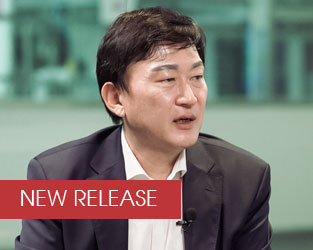
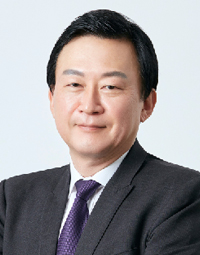
Talking COVID-19 Vaccine Cooperation with President John Rim

Join us for a conversation between Mr. John Rim, President and CEO of Samsung Biologics, and Tom Byrne, the President and CEO of The Korea Society. In this second episode of the ‘President’s Interview Series,’ President Rim will discuss his extensive career and senior leadership roles in the biopharmaceutical industry, as well as his current role as the head of Samsung Biologics. With over 30 years of experience, President Rim played a key leadership role in facilitating the growth of Samsung Biologics into one of the world’s largest contract development and manufacturing organization (CDMO).

This interview will also provide an opportunity to learn more about the role of Samsung Biologics in the global biopharmaceutical industry including the recent agreement with the US biotech firm, Moderna, for fill-finish manufacturing of its path breaking mRNA COVID-19 Vaccine. This program was recorded at Samsung Biologics headquarters in Songdo, Incheon when President Byrne recently visited South Korea.


Talking COVID-19 Vaccine Cooperation

with
John Rim
Samsung Biologics
President & CEO

Premieres: Wednesday, July 21, 2021 | 7 PM (EDT)


The Korea Society
350 Madison Avenue, 24th Floor
New York, NY 10017


ABOUT THE SPEAKER:

John Rim
President & CEO
Samsung Biologics

John Rim is the President and Chief Executive Officer of Samsung Biologics, a global leading contract development and manufacturing organization (CDMO). Prior to being appointed CEO in December 2020, John served as Executive Vice President at Samsung Biologics and was a key senior leader in driving the company’s success with his global business acumen and a strong focus on client satisfaction.

Rim was also instrumental in rapidly expanding business growth across Samsung Biologics and for the continuous operational excellence in Plant 3, which holds the world’s largest biomanufacturing capacity at a single site. With over 30 years of experience in the biopharmaceutical industry, John has built a diverse and successful career, holding a number of senior global leadership roles across a range of markets and disciplines.

Prior to joining Samsung Biologics in 2018, Rim worked for Roche/Genentech in Technical Operations, Product Development, and Research & Development in the US and Europe. He has also held senior leadership roles with Astellas Pharmaceuticals in General Management, Sales & Marketing, Technical Operations, Customer Service, Business Development, and Strategic Planning. Rim began his career as a management consultant with Booz, Allen & Hamilton consulting to pharmaceutical companies in the US and Europe.

John received his bachelor’s degree from Columbia University, a master’s degree from Stanford University, and an MBA from the Kellogg School of Management at Northwestern University.


I’m glad that Trump’s tone was ‘realistic’: Former US ambassador

I'm glad that Trump's tone was 'realistic': Former US ambassador

Thomas Hubbard of the Korea Society says it is good that both leaders had positive attitudes ahead of talks at the Trump-Kim summit in Hanoi. Hubbard, a former U.S. ambassador to South Korea, also says that U.S. President Donald Trump is right to not expect an “immediate success” out of this meeting.

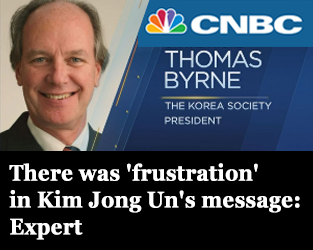
There was ‘frustration’ in Kim Jong Un’s message: Expert

Thomas Byrne of The Korea Society says North Korean leader Kim Jong Un’s New Year address had an “underlying element of frustration” over a lack of progress in negotiations with the U.S.

National Korean War Veterans Armistice Day Memorial Ceremony

2016 07 27  Armistice-Day  icon2

JULY 25, 2016  — NEW YORK — The Korea Society, a 59-year-old organization that promotes awareness, understanding and cooperation between the United States and Korea, hosted a memorial ceremony for veterans of the Korean War on Wednesday, July 27, 2016, at noon at the New York Korean War Veterans Memorial in Battery Park in lower Manhattan. The event, which marked the 63rd anniversary of the signing of the Korean War Armistice Agreement, was organized in collaboration with the Global Society of Korea and America, a nonprofit organization that promotes good relations between Korea, the Korean-American community, and the United States.

The 40-minute ceremony commenced with the presentation of the colors by the New York State Veteran Corps of Artillery, followed by the singing of the national anthems of the Republic of Korea and the United States by a Juilliard student. Thomas J. Byrne, President of The Korea Society, welcomed the guests and Ambassador Gheehwan Kim, Consul General of the Republic of Korea in New York, provided the memorial address to veterans who are members of the Korean Veterans Association, Northeast Region; the Corporal Kivilehan Chapter #66 of Staten Island; and the Korean War Veterans Association Central Long Island Chapter #6.

Remarks were also given by Korean War veteran Salvatore Scarlato, President of the New York Department of the Korean War Veterans Association, and a memorial prayer was said by Father Samuel Kim, Prior of St. Paul’s Abbey, Newton, N.J. This Benedictine monastery was home to Brother Marinus Leonard LaRue, the late merchant marine captain who in the Korean War evacuated 14,000 refugees from Hungnam, North Korea, in what has been called one of the greatest rescues by a single ship in maritime history. The ceremony concluded with the playing of taps by a West Point bugler and the retiring of the colors.

“It is important to honor the sacrifices our veterans make for the protection of the free world,” said Thomas Byrne, Korea Society President. “As we commemorate the anniversary of the armistice ending the Korean War, it is imperative to remember the importance of our special relationship with South Korea. U.S.-South Korean military, economic, and people-to-people relations today are broader, deeper, and stronger than ever.”

“Many in the vibrant Korean-American community would not be here today without the sacrifice of the South Korean and American veterans, as well as those from 20 other member nations of the United Nations who had committed themselves to support South Korea,” said Henry Kang, President of the Global Society of Korea and America.

“The United States entered the Korean War to preserve liberty and democracy in the world, and our commitment to the Korea still stands today,” said Korean War veteran Salvatore Scarlato.


REMARKS

Thomas J. ByrneAmb. Gheewhan KimHenry KangFr. KimProclamation

Thomas J. Byrne
President
The Korea Society


The Korea Society a 59-year-old organization that promotes awareness, understanding and cooperation between the United States and Korea, is honored to host, along with the Global Society of Korea and America, this memorial ceremony for veterans of the Korean War. Today marks the 63rd anniversary of the signing of the Korean War Armistice, which ended hostilities in 1953.

We are grateful for the participation of the consulate of the Republic of Korea in New York City; the New York State Veteran Corps of Artillery; the New York Department of the Korean Veterans Association, Northeast Region; the Corporal Kivilehan Chapter of Staten Island and the Korean War Veterans Association Central Long Island Chapter. We also thank the Juilliard School, the West Point Hellcats band, and Father Samuel Kim, Prior of St. Paul’s Benedictine Abbey in Newton, N.J.

This Benedictine monastery was home to Brother Marinus Leonard LaRue, the late merchant marine captain who in the Korean War evacuated 14,000 refugees from Hungnam, North Korea, in what has been called one of the greatest rescues by a single ship in maritime history.

It is important to honor the sacrifices our veterans make for the protection of the free world. We should never forget the commitment made by veterans of 21 countries from the United Nations and those veterans from South Korea, who held three-quarters of the front line in the year before the armistice.

President Obama in his National Korean War Veterans Armistice Day Proclamation noted that “nearly 1.8 million Americans joined in the fight and faced down communism.” They helped to provide the Republic of Korea with a new birth of freedom, democracy and prosperity.

As we commemorate National Korean War Veterans Armistice Day, it is important to note that while the armistice ceased hostilities, it did not achieve, as the language of the document recommended to the governments concerned, a “final peaceful settlement.” Peaceful relations on the Korean peninsula not only remain elusive, but are under the cloud of a heightened threat from North Korea. It is, therefore, imperative to remember the importance of our special relationship with South Korea.

For more than six decades, the U.S.-ROK alliance has served as an anchor of stability and prosperity on the Korean Peninsula and in the Asia-Pacific region. This is possible because U.S.-South Korean military, economic and people-to-people relations today are broader, deeper, and stronger than ever.


Amb. Gheewhan Kim
Republic of Korea Consul General to New York


I am pleased and honored to commemorate the 63rd Korean War Armistice Day with you here at Battery Park. I thank the Korea Society and New York Korean War Veterans Association for preparing the event today.

Today 63 years ago was the day the Korean War ended. The Korean War was one of the most fierce wars that claimed 178,566 lives and wounded 555,022 soldiers from Korea, the United States and 15 other participating countries. Civilian causalities near 4 million in the course of 3-year warfare.

Taking this opportunity, I thank 900,000 Korean soldiers and 1.95 million multinational soldiers under the United Nations flag for their services and sacrifices. Without them, Korea today would not exist. Also, my thanks go to 10 million Korean and American veterans, who served to defend Korea, and 3.5 million US soldiers who were stationed in Korea after the Korean War Armistice in 1953.

Thanks to you all, Korea has been transformed in 63 years into a mature democracy and 11th largest economy in the world. Korea and the United States has been and remain the strongest allies, defending together shared values of freedom, human rights, rule of law, and market economy.

Again, North Korea is currently posing nuclear and missile threats. This is a provocation not only to Korea, but also to the whole region of Asia-Pacific. North Korea is misguided by young leader, Kim Jongun, to pursue nuclear weapons for the regime’s security, leaving North Korean people starving and suffering in miserable conditions.

North Korea cannot continue taking this horrible and isolated path. It needs to turn back, give up nuclear weapons and open up to new opportunities of peace and prosperity together.

Korea, the United States, and International Community are pressing North Korea hard with sanctions, which are strong and unprecedented. China and Russia have also joined implementing these strong sanctions.

Denuclearization of North Korea would not be an easy task, but I am sure this process will be all the more worthwhile, because this will help to avoid the scourge of nuclear war and to bring meaningful dialogue on peace and unification eventually. Along this path, the services and sacrifices of Korean War veterans will be remembered as evidence of strong alliance and partnership between Korea and the United States.

Once again, thank you, Korean War veterans. I wish you all good health and happiness. Thank you.


Henry Kang
President
Global Society of Korea and America


Thanks to Ambassador Kim Gheewhan, Mr. Thomas Byrne, Father Samuel Kim, Honor Guards, Soloist Seiyoung Kim, Bugler Sergeant Jeremy Wissner and all of our distinguished guests!

And special kudos to my dear friend, Korean War Veteran Sal Scarlato and all his fellow Korean War Veterans!

On behalf of the Global Society of Korea and America, it is our great honor to be a part of the 63rd National Korean War Veterans Armistice Day commemoration ceremony.

When the Korean War broke out, I was a 10-year-old boy, so I clearly remember you. I was among the tens of millions of Korean people who owe you their lives. How can I find the words to express the enormous gratitude I and my fellow Koreans have for your sacrifice?

As young men, you came to rescue the people whom you had never met and brought them a victory and freedom.

On the foundation of your sacrifice and the continued Alliance, Korea has become one of the world’s largest economies and a vibrant democracy. And, the Korean-American community in the U. S. is thriving and keeping pace with mainstream.

Today, at this time of increasing threats from North Korea, we all stand in front of the Korean War Veterans Memorial. Don’t we all see the brilliant sun rays shining through on the soldier’s head and illuminating the plaque of the monument?

Isn’t it a light of hope for Korea’s peaceful unification and prosperity that transcends hatred and conflict?

Let us remember the last words of a dying soldier:- “You all the living! Your today is the life that I so eagerly wanted to live. Never let my death be fruitless nor a vain sacrifice.”

Let us all together consolidate and dedicate our awakening efforts to his and all other sacrificed soldiers’ unfinished works!

Now is the time.

God bless America and Korea!

God bless you all!

Thank you!


Comments and memorial prayer by Fr. Samuel Kim, prior of St. Paul’s Abbey


Good afternoon. My name is Fr. Samuel Kim. I am a Benedictine monk at St. Paul’s Abbey. Thank you for your invitation to attend this memorial event and to the veterans of the Korean War.

I would like to tell you about our brother, Marinus LaRueu. During the Korean War, he was Captain Leonard LaRue of the merchant ship, SS Meredith Victory. In December of 1950, in the Heungnam evacuation, he took 14,000 Korean civilian refugees aboard his ship and transported them to South Korea. During the three-day journey, five babies were delivered by the first mate. Despite the hazardous conditions, frigid weather, and overcrowding, no one suffered injury or death.

After the war, in 1954, Leonard LaRue joined the missionary Benedictines at St. Paul’s Abbey, where he died peacefully in 2001. I truly appreciate the humanitarian act performed by Brother Marinus and his crew. During the Korean war, I know many other acts of courage and kindness were done to help the people of Korea. So today I want to express my gratitude to all of you, the veterans, for your hard work and the sacrifices you made for Korea. As a Benedictine monk, I will pray for you and your loved ones. Thank you.

Let us pray.

O Lord, we thank You for the sacrifices our Korean War Veterans made for us and for peace. We gather here to commemorate and honor those who unselfishly served in order to give South Koreans liberty and assure greater freedom in our world. We humbly ask You to bless the men and women of our military today and all people who seek Your perfect kingdom, where no sword is drawn but the sword of righteousness, and no strength is known but the strength of love. Guide us on the path to unity and harmony. Protect the United States of America and Korea at this time when there is so much discord and unrest in our world. In Your mercy, grant that all the nations of the world may be united in fellowship for the promotion of Your glory and the good of all mankind.

Amen.


NATIONAL KOREAN WAR VETERANS ARMISTICE DAY, 2016
BY THE PRESIDENT OF THE UNITED STATES OF AMERICA

A PROCLAMATION

In 1950, when Communist armies from the North stormed across the 38th parallel, brave American men and women though weary of combat in the wake of World War II stepped forward to defend their brothers and sisters on the Korean Peninsula. Over the course of 3 years, through unforgiving weather and severe danger, nearly 1.8 million Americans joined in the fight and faced down Communism pushing the invading armies back and protecting a people on the other side of the world. As we mark the 63rd anniversary of the Military Armistice Agreement that brought an end to this war, we pause to honor the strength and resilience of our Korean War veterans, whose spirits and stories serve as an inspiration to continue advancing freedom’s cause.

Rising from occupation and ruin, the Republic of Korea today shines as a thriving, modern country, whose people can take comfort in knowing that the commitment of the United States to their stability and security will never waver. Fifty million South Koreans now live in freedom, reaching for their dreams and pursuing opportunities in a vibrant democracy and dynamic economy always realizing they have a partner who will stand shoulder-to-shoulder with them in defense of peace and prosperity. Our lasting friendship and unbreakable alliance are sustained by the beliefs we hold in common and the values we cherish.

As we pay tribute to the Americans who gallantly helped forge this bond, we know our solemn responsibilities to our fallen and their loved ones persist long after the battle ends. More than 7,800 Americans are still missing from the Korean War, and we will not stop working to live up to our obligations to their families. We owe all our service members an enormous debt of gratitude. To honor the full weight of the sacrifices made by those who serve, we must uphold our Nation’s promise to our veterans when they return home, and fulfill our commitment to all who wear the uniform in our name.

On National Korean War Veterans Armistice Day, we pay tribute to the American patriots who fought for freedom and democracy throughout the Korean War, leaving behind everyone they loved to secure the blessings of liberty for a country they never knew and a people they had never met. For the heavy price they paid, we will forever honor the legacy of their service and uphold the ideals they secured through this hard-won victory. NOW, THEREFORE, I, BARACK OBAMA, President of the United States of America, by virtue of the authority vested in me by the Constitution and the laws of the United States, do hereby proclaim July 27, 2016, as National Korean War Veterans Armistice Day. I call upon all Americans to observe this day with appropriate ceremonies and activities that honor our distinguished Korean War veterans.

IN WITNESS WHEREOF, I have hereunto set my hand this twenty-fifth day of July, in the year of our Lord two thousand sixteen, and of the Independence of the United States of America the two hundred and forty-first.

BARACK OBAMA