The Korea Society brings to various cities public policy and business discussion, art, and film to broaden American knowledge of and grow appreciation for the Korean brand. The dramatic growth of Korean populations and corporations in various U.S. locales, as well as the growth in American corporations doing business in Korea, increase the need for dialogue and exchange of information. The evolution of political security issues, and growth of Korea as a regional leader, also warrant the attention of the U.S. public. The Korea Society’s outreach to new locales conveys an awareness of changing demographics and business presence. The Korea Society’s December-December cycle of national programming brings to bear the very best in public policy and business discussions and Korean cultural offerings, growing significant national interest in and appreciation for Korea. The Korea Society’s National Outreach Programs are possible with the generous support of Pantech and the Korea Foundation.
Korea Days: Chicago
Ambassadors Luncheon: The Korea-U.S. Partnership, Free Trade and Security
Site: The Ritz Carlton Chicago, 160 East Pearson Street@Water Tower Place, Chicago
 With the support of Pantech and the Korea Foundation, The Korea Society travels to the Windy City to share Korea policy and arts programs. On June 10, The Korea Society and partner Chicago Council on Global Affairs co-host an invitation-only luncheon on The Korea-U.S. Partnership, Free Trade and Security, featuring Ambassador Han Duk-Soo, Korea’s Ambassador to the United States, and Ambassador Thomas Hubbard, Chairman of The Korea Society.
Saturday, June 11, 2011 | 2PM
Opening of the Korean Cultural Center of Chicago
Ambassador Tom Hubbard, chairman, Ambassador Mark Minton, president, and Dr. Stephen Noerper, senior vice president of The Korea Society, join the ribbon-cutting ceremony and share welcoming remarks at the opening of the KCCoC.
Korea Society Fellow, Patron, and Corporate members,
please register HERE for complimentary tickets.
Images
{gallery}How I Became a North Korean{/gallery}
Wednesday, June 15, 2011
Korea Days Film Screening 6:30PMShort Film: Broken Night 6:30PMFeature Film: Dooman River 7:15PM
Site: Museum of Contemporary Art, 220 East Chicago Avenue@Water Tower Place
On June 15, The Korea Society presents award-winning films at the Museum of Contemporary Art, highlighting the Busan International Film Festival and Chicago-Busan sister-city relationship.
Tickets courtesy of The Korea Society, but advance registration required.

(25 min)
Director Yang Hyo-joo’s depiction of an anti-hero caught in an intense moment-to-moment dilemma engages through its serpentine plot and led the 2011 Belinale Jury to unanimously award the Silver Bear to Pu-Seo-Jin Bam (Broken Night). The 25-year-old Ms. Yang’s Broken Night also took the 2010 Busan International Film Festival’s Sonje Award for Short Film. It is her third film and was a graduation project for her final year at Korea National University of Arts. Protagonist Kyoung-pyo fakes automobile accidents and claims the insurance payments, but the scam unravels when a real accident occurs.

(89 min)
Winner of the 2010 Pusan International Film Festival NETPAC Award, Director Zhang Lu’s film explores the friendship between two boys, one a DPRK defector who has crossed the Dooman River and the other an ethnic Korean living in China. When more refugees arrive, their tranquil existence is shattered. Zhang Lu’s careful minimalism infuses emotion and touches the hearts of film-goers. Zhang Lu’s first short film, Eleven, appeared at several international films festivals, including the Venice International Film Festival, Busan Asian Short Film Festival, and the Toronto International Film Festival. His first feature film, Tang Poetry, ‘won the Locarno International Film Festival in 2004. His next film, Grain in Ear,’ won the Grand Prix-New Currents Award at the Pusan International Film Festival in 2005. He also directed Hyazgar (2007), Chongging (2008), and Iri (2008). This screening is supported by Global Film Initiative.




 This business and foreign policy series explores commercial, political, and strategic relationships of interest to both the United States and Korea, with a focus this fall on “MIR:” Mongolia, India, and Russia. Mongolia enjoys deep ties with the United States, which has provided it with significant development assistance, investment, and political support, as well as Korea, the number one destination for Mongolian labor, a principal investor in Mongolia, and an early model for Mongolian democracy. This session, includes Christopher Atwood, Associate Professor from the Central Eurasian Studies Department of Indiana University, The Korea Society’s Ambassador Mark Minton (U.S. Ambassador to Mongolia, 2006-2009), and Dr. Stephen Noerper (Visiting Professor, National University of Mongolia, The Asia Foundation Resident Representative, 2000-2003), explores opportunities for business and foreign relations among the three players.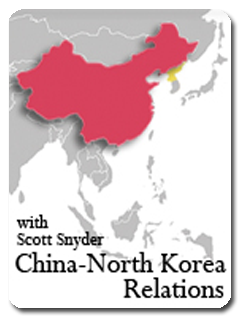
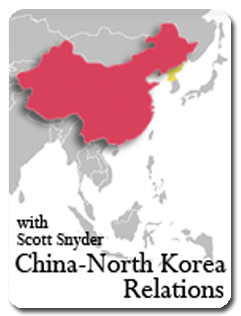

 Marcus Noland, deputy director and senior fellow at the Peterson Institute, addresses The Korea Society on his and Professor Stephan Haggard’s study of surveys conducted in China and South Korea of North Korean refugees. Their work both illuminates the plight of the refugees and explores the implications for North Korea’s ongoing internal transformation. Noland, deputy director and senior fellow at the Peterson Institute, discusses the survey findings and his new release. Former ROK Foreign Minister Yoon Young-kwan writes of the book: “Human rights and the protection of refugees is not a concern of left or right, or of the U.S. only; it is an issue of importance to all Koreans, and indeed all countries. Haggard and Noland provide compelling evidence of the ongoing transformation of North Korean society and offer thoughtful proposals as to how the outside world might facilitate peaceful evolution.”





 On March 26, 2010, The Korea Society presented a panel discussion at the Association for Asian Studies annual meeting in Philadelphia on the security challenges that North Korea poses to Northeast Asia. Moderated by The Korea Society president Evans J.R. Revere, the conversation included Scott Snyder, director of the Center for U.S.-Korea Policy at the Asia Foundation; Gordon Flake, executive director of the Mansfield Foundation; and Sydney Seiler, deputy North Korea mission manager in the office of the Director of National Intelligence. The group discussed the internal political and economic drivers influencing North Korea’s foreign policy, the successes and failures of South Korea’s “sunshine policy,” China’s role on the Korean Peninsula, and possible strategies for the future.