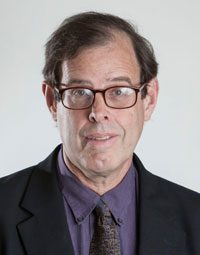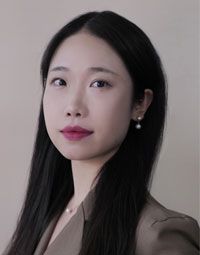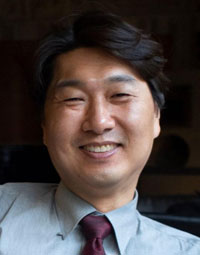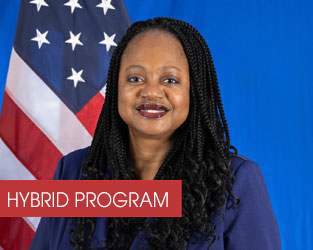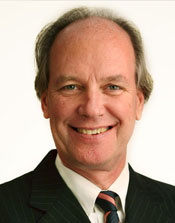
Quick Take – South Korea’s New Foreign Policy and Public Opinion, with Dr. Kuyoun Chung

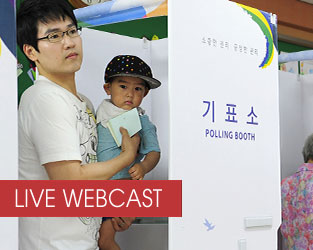
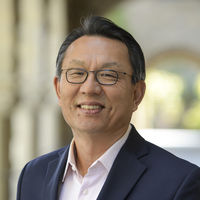
This program examines shifts in South Korea’s foreign policy posture, featuring insights and analysis from Dr. Kuyoun Chung, Assistant professor of the Department of Political Science at the Kangwon National University. The Yoon Suk Yeol administration aims to transform Korea into a “Global Pivotal State.” How has Seoul pursued this objective despite complex geopolitical and economic challenges? How does Korea navigate diplomatic relations in a tense region that is increasingly impacted by strategic competition between autocracies and democracies? Using survey data, Dr. Chung reveals how the South Korean public understands their country’s place in the world, including its allies, threats, and opportunities, in conversation with policy program officer Chelsie Alexandre.


Quick Take
South Korea’s New Foreign Policy and Public Opinion
with Dr. Kuyoun Chung

Friday, April 19, 2024


The Korea Society
350 Madison Avenue, 24th Floor
New York, NY 10017


About the Speakers:


Dr. Kuyoun Chung is an Associate Professor of Political Science at the Kangwon National University. Her research focuses on US foreign policy, public opinion and strategic narratives, as well as security issues in the Indo-Pacific, including alliance politics, regional security architecture, and maritime security. She received her Ph.D. in Political Science from the University of California, Los Angeles. Previously, she was a lecturer in the Department of Political Science at UCLA, a visiting professor at the Korea National Diplomatic Academy, and a research fellow at the Korea Institute for National Unification. Additionally, she has served as a member of the policy advisory committee of the Ministry of Unification, Ministry of Foreign Affairs, Ministry of Defense, and the Republic of Korea Navy.

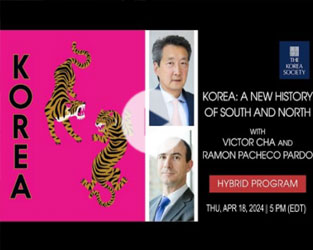
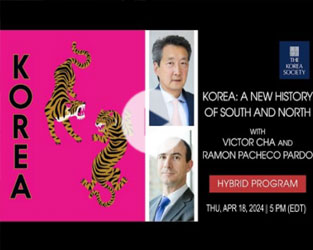
Korea: A New History of South and North with Victor Cha and Ramon Pacheco Pardo

Join us for a book talk with authors Professor Victor Cha and Professor Ramon Pacheco Pardo, who discuss their new book, Korea: A New History of South and North with policy director Jonathan Corrado. The Korea Society is proud to be a stop on the famous pink book tour! This important new work of history draws on “decades of research to explore the history of modern Korea, from the late nineteenth century, Japanese occupation, and Cold War division to the present day. This comprehensive history sheds light on the evolving identities of the two Koreas, explaining the sharp differences between North and South, and prospects for unification.” You can purchase the book here. 


Korea: A New History of South and North with Victor Cha and Ramon Pacheco Pardo

Thursday April 18, 2024 | 5 PM (EDT)


The Korea Society
350 Madison Avenue, 24th Floor
New York, NY 10017


About the Speakers:


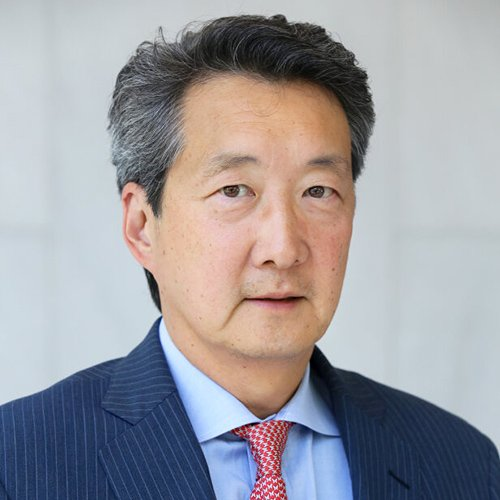
Professor Victor D. Cha is Distinguished University Professor, D.S. Song-KF Chairholder, and Professor of  Government in the Department of Government and School of Foreign Service at Georgetown University.  He is also Senior Vice President for Asia and Korea Chair at the Center for Strategic and International  Studies in Washington, D.C. He is the author of seven books, including the award-winning Alignment  Despite Antagonism: The United States-Korea-Japan Security Triangle (Stanford University Press, 1999)  (winner of the 2000 Ohira Book Prize), and The Impossible State: North Korea, Past and Future (Harper  Collins Ecco, 2012 selected by Foreign Affairs as a “Best Book on the Asia-Pacific for 2012.” His most  recent book is Korea: A New History of South and North (Yale University Press, 2023) with Ramon  Pacheco Pardo. His other books are Beyond the Final Score: The Politics of Sport in Asia (Columbia  University Press, 2009); Nuclear North Korea: A Debate on Engagement Strategies (Columbia University  Press, 2003) with David Kang; and Powerplay: The Origins of the American Alliance System in Asia (Princeton University Press, 2016). His forthcoming book is The Black Box: Methods and Data in the Study  of Korean Unification and North Korea (Columbia University Press, 2024). His articles on international  relations and Asian affairs have appeared in numerous journals including International Security, Political  Science Quarterly, International Studies Quarterly, Armed Forces and Society, Foreign Affairs, Asian  Survey, Journal of Asian Studies, International Journal of the History of Sport, and Journal of Strategic  Studies. 

He was appointed in 2021 by Joseph R. Biden administration to serve on the Defense Policy Board in an  advisory role to the Secretary of Defense. He formerly served on the White House National Security  Council where he was responsible primarily for Japan, the Korean peninsula, Australia/New Zealand and  Pacific Island nation affairs. Dr. Cha was also the Deputy Head of Delegation for the United States at the  Six Party Talks in Beijing, and received two Outstanding Service commendations during his tenure at the  NSC.  

Dr. Cha is a two-time Fulbright Scholar, former Olin Fellow at Harvard University, and former Hoover,  CISAC, and Koret Fellow at Stanford University. He currently serves on ten editorial boards of academic  journals and is co-editor of the Contemporary Asia Book Series at Columbia University Press. In 2022, he  was elected to serve on the Board for the National Endowment for Democracy, and he remains a Senior  Fellow in Human Freedom (non-resident) at the George W. Bush Institute in Dallas, Texas. He is a  Foreign Affairs Contributor for MSNBC and NBC News. Dr. Cha has appeared in a variety of media  including ESPN, The Colbert Report, and a cameo role (as himself) in the 2012 film Red Dawn. He co hosts The Impossible State podcast and The Capital Cable YouTube show. 

In 2023, he was named Distinguished University Professor, the highest honor bestowed upon a tenured  faculty member at Georgetown. He is the recipient of the 2023 Hubert H. Humphrey award from the  American Political Science Association for notable public service by a political scientist and the 2023  Joseph Kurzel Memorial Prize for excellence in scholarship and public service (also from APSA). 

Dr. Cha received his Ph.D. in political science at Columbia University, MIA from Columbia, B.A. Honors  in Philosophy, Politics, and Economics from Oxford University, and A.B. in Economics from Columbia. He was born and raised on the Upper West Side of Manhattan.


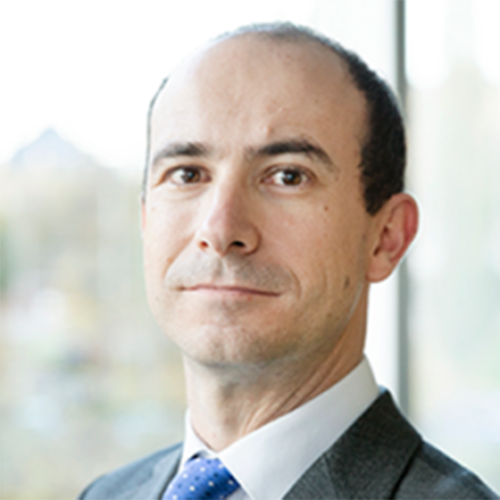
Ramon Pacheco Pardo is Professor of International Relations at King’s College London and the KF-VUB Korea Chair at the Brussels School of Governance of Vrije Universiteit Brussel. He is also King’s Regional Envoy for East and South East Asia, helping to shape and implement the university’s strategy for the region.

Prof Pacheco Pardo is also Adjunct Fellow (Non-Resident) with the Korea Chair at CSIS, Scientific Council Member at Elcano Royal Institute and Committee Member at CSCAP EU. He has held visiting positions at Korea University, the Lee Kuan Yew School of Public Policy and Melbourne University.

His publications include the books Korea: A New History of South & North (Yale University Press, 2023; with Victor Cha), South Korea’s Grand Strategy: Making Its Own Destiny (Columbia University Press, 2023), Shrimp to Whale: South Korea from the Forgotten War to K-Pop (Hurst and Oxford University Press, 2022) and North Korea-US Relations from Kim Jong Il to Kim Jong Un (Routledge, 2019). Prof Pacheco Pardo has been editor of Millennium: Journal of International Studies and currently sits in the editorial boards of East Asia: An International Quarterly and Korea-Europe Review.

He has participated in track 1.5 and 2 dialogues with South Korea, North Korea, China, Japan and the United States. Prof Pacheco Pardo has testified before the European Parliament and consulted and advised NATO, the OECD and the governments of Canada, the EU, South Korea, Spain, the UK and the United States, among others. He is a frequent media commentator on North East Asian affairs and EU-East Asia relations.


Rapid Reaction: Unpacking the Korean Election

Join us for a rapid reaction analysis of the Republic of Korea’s high stakes 2024 legislative election, held in South Korea one day prior on April 10. This election could shift the control of power in the National Assembly, resulting in an emboldened electoral mandate for President Yoon Suk Yeol, or else creating a new challenge for his administration’s agenda. In this conversation with Korea Society policy program officer Chelsie Alexandre, Stanford University’s Professor Dr. Gi-Wook Shin explores the implications of the election for: Korea’s political, economic, and social policy; its relations with its Alliance partner the United States, and regional states, such as North Korea, China, and Japan. 


Rapid Reaction: Unpacking the Korean Election

Thursday, April 11, 2024 | 1 PM (EDT)


The Korea Society
350 Madison Avenue, 24th Floor
New York, NY 10017


About the Speakers:


Gi-Wook Shin is the William J. Perry Professor of Contemporary Korea in Sociology and the Freeman Spogli Institute for International Studies; the director of the Walter H. Shorenstein Asia-Pacific Research Center; the founding director of the Korea Program, all at Stanford University. As a historical-comparative and political sociologist, his research has concentrated on social movements, nationalism, development, democracy, and international relations.

Shin is the author/editor of twenty-five books and numerous articles. His recent books include Korean Democracy in Crisis: The Threat of Illiberalism, Populism, and Polarization (2022); The North Korean Conundrum: Balancing Human Rights and Nuclear Security (2021); Demographics and Innovation in the Asia-Pacific (2021); Shifting Gears in Innovation Policy from Asia (2020); Strategic, Policy and Social Innovation for a Post-Industrial Korea: Beyond the Miracle (2018); Superficial Korea (2017); Divergent Memories: Opinion Leaders and the Asia-Pacific War (2016); Global Talent: Skilled Labor as Social Capital in Korea (2015); Criminality, Collaboration, and Reconciliation: Europe and Asia Confronts the Memory of World War II (2014); New Challenges for Maturing Democracies in Korea and Taiwan (2014); Asia’s Middle Powers? (2013); Troubled Transition: North Korea’s Politics, Economy, and External Relations (2013); History Textbooks and the Wars in Asia: Divided Memories (2011); South Korean Social Movements: From Democracy to Civil Society (2011); One Alliance, Two Lenses: U.S.-Korea Relations in a New Era (2010); Cross Currents: Regionalism and Nationalism in Northeast Asia (2007); Rethinking Historical Injustice and Reconciliation in Northeast Asia (2006); and Ethnic Nationalism in Korea: Genealogy, Politics, and Legacy (2006). Due to the wide popularity of his publications, many of them have been translated and distributed to Korean audiences. His articles have appeared in academic journals including American Journal of Sociology, Comparative Studies in Society and History, Political Science Quarterly, International Sociology, Nations and Nationalism, Pacific Affairs, Asian Survey, and Journal of Democracy. 

Shin is currently writing two books – Next Korea (in Korean and English) and Talent Giants in the Asia-Pacific Century. The former is based on his monthly columns published in Shindonga (New East Asia), Korea’s oldest monthly magazine, that have addressed main challenges and solutions for Korea’s future. The latter is a comparative study of talent strategies of Japan, Australia, China, and India that were instrumental to their rise. In Summer 2023, Shin launched the Stanford Next Asia Policy Lab (SNAPL) which is a new initiative committed to addressing emergent social, cultural, economic, and political challenges in Asia. Across four research themes– “Talent Flows and Development,” “Nationalism and Racism,” “U.S.-Asia Relations,” and “Democratic Crisis and Reform”–the lab will bring scholars focused on Asia to produce interdisciplinary, problem-oriented, policy-relevant, and comparative studies and publications. 

Shin is not only the recipient of numerous grants and fellowships, but also continues to actively raise funds for Korean/Asian studies at Stanford. He gives frequent lectures and seminars on topics ranging from Korean nationalism and politics to Korea’s foreign relations and historical reconciliation in Northeast Asia and to talent strategies. He serves on councils and advisory boards in the United States and South Korea and promotes policy dialogue between the two allies. He regularly writes op-eds and gives interviews to the media in both Korean and English.

Before coming to Stanford in 2001, Shin taught at the University of Iowa (1991-94) and the University of California, Los Angeles (1994-2001). After receiving his BA from Yonsei University in Korea, he was awarded his MA and PhD from the University of Washington in 1991.

Recapturing Lost Ground on North Korean Human Rights, with Ambassador Julie Turner

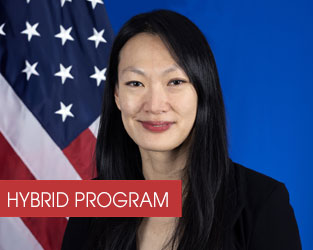
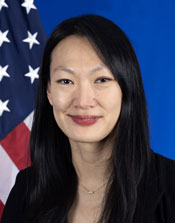
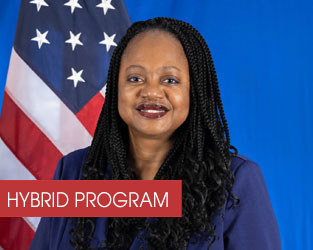
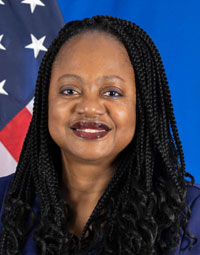
Join us for a conversation about recovering lost ground in the international effort to address North Korea’s human rights violations, featuring: Ambassador Julie Turner, U.S. Special Envoy for North Korean Human Rights Issues, James Heenan, UN Human Rights Office representative in Seoul, Dr. Katrin Katz, Korea Society Van Fleet Senior Fellow, and Sean Chung, CEO of HanVoice, in conversation with policy director Jonathan Corrado. The United Nations Human Rights Council published its landmark report of the commission of inquiry on human rights in the Democratic People’s Republic of Korea ten years ago. That report documented “systematic, widespread and grave violations of human rights” in North Korea. But the international effort to ensure accountability, involving U.S. coordination with allies such as the Republic of Korea and through the United Nations, is only just beginning. The U.S. State Department describes credible reports of unlawful or arbitrary killings by the government, harsh and life-threatening prison conditions, arbitrary arrests and detentions, total state control of expression and media through censorship, severe restrictions on political participation, gender-based violence, and the worst forms of child labor. A Korean American adoptee with twenty years of diplomatic experience, Ambassador Julie Turner said, “The human rights situation in the DPRK is one of the most protracted human rights crises in the world,” in her testimony to the Senate Committee on Foreign Relations. This discussion explores issues impacting refugees, information distribution, separated family reunions, pathways to practical progress, North Korean human rights success stories, the connection between the regime’s human rights abuses and its weapons programs, and the nexus of humanitarian assistance and human rights.


Recapturing Lost Ground on North Korean Human Rights, with Ambassador Julie Turner

Tuesday, April 9, 2024 | 12 PM (EDT)


The Korea Society
350 Madison Avenue, 24th Floor
New York, NY 10017


About the Speakers:


Ambassador Julie Turner was sworn in as the U.S. Special Envoy for North Korean Human Rights Issues on October 13, 2023. Ambassador Turner is globally recognized an expert in the area of human rights and democracy and has worked over the past 20 years to strengthen democratic institutions and promote human rights throughout the East Asia and Pacific Region. Most recently, she served as the Office Director in the Bureau of Democracy, Human Rights, and Labor (DRL) Office of East Asia and the Pacific at the U.S. Department of State and previously was the Director for Southeast Asia at the National Security Council. During her time at the State Department, she served as the special assistant to the first U.S. Special Envoy for North Korean Human Rights and worked as a program analyst in the Bureau of Information Resource Management Office of eDiplomacy. As a career civil service employee and former Presidential Management Fellow, Ambassador Turner has dedicated her career to advancing human rights around the world. Ambassador Turner is a graduate of Pepperdine University and the University of Maryland.


Dr. Katrin Fraser Katz, is The Korea Society’s inaugural Van Fleet Nonresident Senior Fellow. Dr. Katz is a former director for Japan, Korea, and oceanic affairs on the staff of the National Security Council, where she served from 2007 to 2008. She is also a Professor of Practice in the Department of Political Science and the Master of Arts in International Administration (MAIA) program at the University of Miami and an Adjunct Fellow (Non-resident) in the Office of the Korea Chair at the Center for Strategic and International Studies (CSIS) in Washington, DC. Previously, she was a special assistant to the assistant secretary for international organization affairs at the U.S. Department of State and an analyst at the Central Intelligence Agency. She was previously an Adjunct Assistant Professor in the Department of Political Science at Columbia University and has also taught at Georgetown University. In 2017, Dr. Katz received the inaugural Sherman Family Korea Emerging Scholar Lecture Series award from The Korea Society. Dr. Katz’s research, which has been supported by grants from the Korea Foundation and the Horowitz Foundation for Social Policy, explores the interplay of cooperation and conflict in East Asia’s political, economic, and security dynamics. She holds a Ph.D. in political science from Northwestern University; a master’s degree in East Asian and international security studies from the Fletcher School of Law and Diplomacy, where she was awarded the John C. Perry Scholarship for East Asian Studies; and a bachelor’s degree, magna cum laude, in international relations and Japanese from the University of Pennsylvania.


Sean Chung serves as the CEO of HanVoice, an international charity based in Canada dedicated to improving human rights in North Korea. He successfully led advocacy efforts in Canada to create a historic public policy that allows North Korean refugees to access Canada’s Private Sponsorship of Refugees pathway in 2021. Sean has organized a number of global and regional summits with human rights, humanitarian aid, development, and security communities and governments working across the Korean Peninsula. Before his work at HanVoice, he was a consultant at the International Organization for Migration and an officer at the United Nations Major Group for Children and Youth in New York. He earned his BA in Political Science from the University of Toronto.


James Heenan is the Representative at the UN Human Rights Office in Seoul, which is focused on the human rights situation in the DPRK. He has worked in human rights for almost 30 years. He was previously Head of the UN Human Rights Office in Palestine, Chief of the Treaty Body Section (CEDAW, CRC, CRPD) at headquarters, OHCHR Country Representative in Cambodia, Legal Advisor on the Desmond Tutu-led Gaza Commission of Inquiry, and he led headquarters work on amicus curiae briefs by High Commissioner Louise Arbour (notably Boumediene v. Bush in the US Supreme Court). He was a member of the three person UNHCR Panel of Inquiry into the Xenophobic Violence in South Africa in 2008. Prior to joining the UN, he was a research fellow at the Law Department at the European University Institute where with Philip Alston he led the EU academic project that proposed the European Union Agency for Fundamental Rights. James practiced as a criminal lawyer in London and civil lawyer in Sydney. He has published on international human rights. James holds an LLM (EUI), and an LLB (Hons) and BA from the University of Queensland.


Paper Soldiers: How the Weaponization of the Dollar Changed the World Order

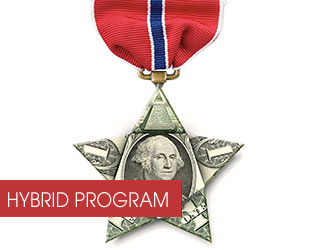
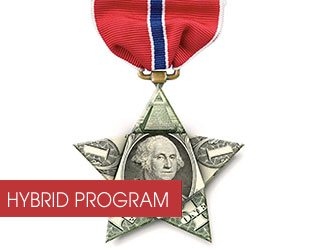
Join us for a discussion with the Senior Washington Correspondent for Bloomberg News Saleha Mohsin on her newly released book Paper Soldiers: How the Weaponization of the Dollar Changed the World Order, in cooperation with the National Committee on American Foreign Policy (NCAFP). As the global order continues to evolve, it seems that the dollar’s dominance may find itself waning for the first time in 70 years. In a world dividing into two camps, one led by China and the other by the U.S, Mohsin investigates America’s strong dollar policy and how it has shaped the world order, the effects of America’s heavy-handed sanctions on its adversaries, and how American allies like South Korea view the dollar in today’s global financial system. The conversation will be moderated by former CBS White House Correspondent and NCAFP Board Member, Jacqueline Adams.

Purchase the book here

Paper Soldiers: How the Weaponization of the Dollar Changed the World Order

Tuesday, April 2, 2024 | 12:00 PM (EDT)


The Korea Society
350 Madison Avenue, 24th Floor
New York, NY 10017


About the Speakers:


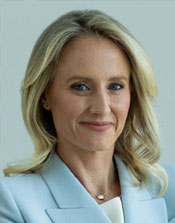
Saleha Mohsin is the senior Washington correspondent for Bloomberg News. In her role, she covered the final months of the Obama Treasury Department, then the transition into the Trump presidency. Her work as a Treasury reporter encompassed Trump’s trade war, economic sanctions, parts of the Federal Reserve and Capitol Hill, and the government’s response to the worst public health crisis in nearly a century. Saleha also covered the transition into the Biden White House, including the stronger focus on economic statecraft and the ‘Buy America’ agenda that carried over from the previous administration. She also reported on the U.S. response to Russia’s invasion of Ukraine.


Jacqueline Adams has had a long career as a journalist, author and convener.  She launched a second career as a communications strategist after more than two decades as an Emmy Award-winning CBS News correspondent. Through her boutique consulting firm, J Adams: Strategic Communications, LLC, she counsels corporate and non-profit clients. An alumna of Harvard Business School, Ms. Adams serves on the Board of Directors of the HBS Club of New York,  the National Committee on American Foreign Policy and the senior community, Brookhaven at Lexington. She is a member of the Council on Foreign Relations, the International Advisory Committee of the United States Institute of Peace, and the Advisory Council of the Milken Center for Advancing the American Dream.


The Dynamic U.S.-ROK Trade and Investment Relationship: Current Issues and Prospects

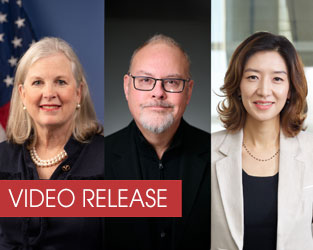
Explore insights into the dynamics of the U.S.-ROK economic relations and the critical issues impacting trade and investment between the two nations in our inaugural program, “The Dynamic U.S.-ROK Trade and Investment Relationship: Current Issues and Prospects” kicking off the new series, U.S.-ROK New Economic Paradigm. Join a distinguished panel of experts consisting of the Hon. Diane Farrell, Deputy Under Secretary for International Trade at the United States Department of Commerce, Mr. Frank Ahrens, Principal of BGR Group, and Dr. Hyun-jung Je, President & Chief Representative of the Korea International Trade Association (KITA) Washington DC Office, in conversation with The Korea Society’s President & CEO Tom Byrne. Each speaker brings a wealth of experience and expertise to the discussion, offering insightful perspectives on foreign investment in the U.S., investment-friendly U.S. states, and how U.S.-Korea economic relations might be shaped by the upcoming US Presidential election.

This program will be recorded at The Korea Economic Institute of America (KEI), Washington, D.C.


The Dynamic U.S.-ROK Trade and Investment Relationship: Current Issues and Prospects

Wednesday, March 20, 2024 | 6 PM (EDT)


The Korea Society
350 Madison Avenue, 24th Floor
New York, NY 10017


ABOUT THE SPEAKERS:
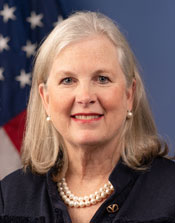
Diane Farrell is the Deputy Under Secretary for International Trade. In this role, she plans, determines, and coordinates policy; directs the International Trade Administration (ITA); and oversees the daily operations of ITA, which has an annual budget of $613 million with approximately 2,100 trade and investment professionals—based in more than 100 U.S. cities and 70 markets around the world. Within the Department of Commerce, Diane Farrell also serves currently as Co-Chair of the Equity Council, alongside Deputy Secretary of Commerce Don Graves.

Prior to becoming the Deputy Under Secretary for International Trade, she served as the Deputy Assistant Secretary for Asia, where she was the principal advisor to the Assistant Secretary for Global Markets on all matters concerning international economics, trade, investment, and commercial policy programs and agreements with respect to Asia. In this role, she also oversaw planning and execution of Department of Commerce commercial diplomacy and export promotion strategies at United States Missions in Region Asia.

Previously, Farrell worked at the U.S.-India Business Council (USIBC). As Executive Vice President, she oversaw business advocacy policy and government relations.

Farrell served on the Board of Directors at the Export Import Bank of the United States (U.S. EXIM Bank) before joining USIBC. A Presidential appointee, confirmed by the U.S. Senate, she was responsible for voting on transactions in excess of $10 million as well as significant policy matters. Her portfolio responsibilities included small business, India, Southeast Asia, and portions of Latin America. In addition, she was named a member of the White House Business Council. During her tenure at U.S. EXIM Bank, Indian transactions expanded and diversified as aircraft sales and conventional and green energy projects, among others, led to India becoming the second largest country by U.S. dollar allocation in the bank’s overall portfolio.

Before serving at U.S. EXIM Bank, Farrell was elected as the First Selectwoman (mayor), in Westport, Connecticut. In this role she managed multimillion-dollar budgets within the Consumer Price Index and maintained the town’s AAA bond rating at a time when significant infrastructure investment was taking place. She oversaw the construction of schools, a municipal wastewater treatment plant, affordable housing, and other necessary facilities.

Farrell also served as Chairwoman of the Southwestern Connecticut Regional Planning Agency Metropolitan Planning Organization that was responsible for federally funded transportation infrastructure in a vital commercial corridor. As a select member of the National League of Cities Transportation and Infrastructure Steering and Policy Committee, she helped set policy goals for transportation and infrastructure initiatives in support of cities and towns across the United States.
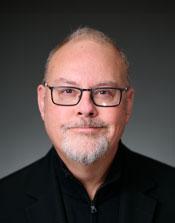
Frank Ahrens, a Principal and Head of BGR Analytics, joined the firm in 2014. He uses data analytics to help individuals, corporations and governments identify winning strategies and employs the full range of earned- and paid-media tactics to improve clients’ profiles and protect their reputations. Working with terrific BGR colleagues, Frank builds relationships with top-tier U.S. media, creates print, digital and video content and deploys the latest SEO tactics. He helps clients land high-profile op-ed placements, score coveted TV news show bookings and produce positive, fact-based content designed to win Page 1 of Google search – an indispensable skill when crisis hits. Working with BGR’s Data Science Team, Frank established BGR Analytics in 2023, which creates data-based rankings of countries and states that give clients the intelligence they need for the most important decisions they make.

Frank has arranged client interviews with Fox News, CNN, The Washington Post and major wire services. Client op-eds have appeared in the New York Times, the Washington Post and the Wall Street Journal. Frank’s clients have included the governments of South Korea, Panama and India, top-tier brands such as CJ Group, Bose and LSG Sky Chefs; and high-net-worth individuals in Hollywood, Europe and the Middle East.

Before coming to BGR, Frank was Vice President of Global Corporate Communications for Hyundai Motor at the automaker’s Seoul, South Korea, headquarters. He worked closely with Hyundai Motor government affairs offices in Washington and Brussels on breaking and long-range issues including labor, energy and trade. During Frank’s tenure, Hyundai was named “Fastest Growing Brand” by Interbrand in 2011 and 2012.

Frank is the author of “Seoul Man: A Memoir of Cars, Culture, Crisis, and Unexpected Hilarity Inside a Korean Corporate Titan,” the story of his three years as the only American at Hyundai Motor headquarters. It was named a Best Book of 2016 by the New York Post.

Prior to Hyundai, Frank worked for 18 years as an editor and reporter at the Washington Post. He covered the global financial crisis of 2008-2010 as well as the media and entertainment industries. Frank appeared frequently as a media industry expert on CNBC, MSNBC, PBS and other networks. He continues to write on international and industry matters, with articles appearing in Foreign Policy, Forbes, Automotive News, PR News and The Diplomat.
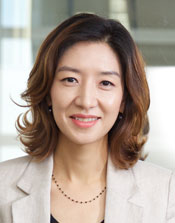
Hyun-jung Je is Chief Representative of KITA Washington Center in Korea International Trade Association. She is now in charge of advising and supporting Korean trade companies which are involved in trade and investment issues in the U.S. and also connects and plays a bridging role between Korean businesses and the US governments, congress and think tanks. Since she joined the KITA in 2001, she has worked as a researcher for most of her career years at the Institute for International Trade (IIT), a branch of the KITA. She published many research and policy papers focusing on Korea’s trade policies, free trade agreements and diverse trade issues involving Korean companies. From 2016 to 2018, she served as a private advisor for trade negotiations in the Ministry of Foreign Affairs and Trade and participated in the negotiations on market access during the Korea-US, Korea-Canada and the Korea-India FTAs. From 2020 to 2021, she also served as a member of the Presidential Commission on Policy Planning. Based on her own experiences and academic research, she published a book titled as “Public-Private Relationships in Trade Policy-making” in 2018. Hyun-jung Je holds Ph.D. in International Studies (major in international commerce) and B.A. and M.A. in International Relations from Seoul National University.


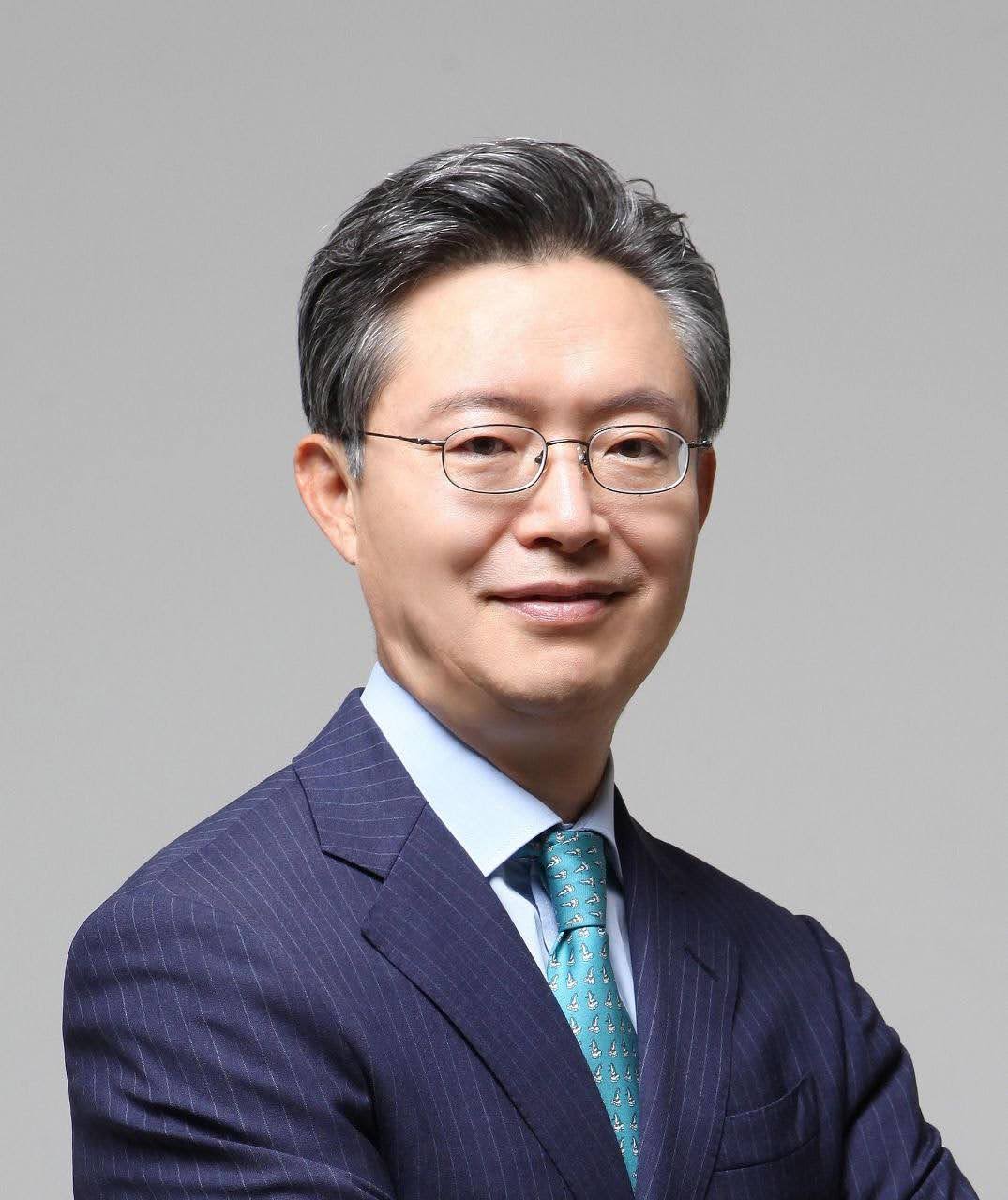
The Republic of Korea and the UN Security Council with ROK Permanent Representative to the United Nations Ambassador Joonkook HWANG

Please join us for a timely discussion on the Republic of Korea’s membership in the United Nations Security Council for the 2024-2025 term, featuring the ROK Permanent Representative to the United Nations Ambassador Joonkook HWANG, in conversation with Korea Society President and CEO Thomas Byrne. The Republic of Korea, which has a special history and bond with the United Nations, aims to actively contribute to world peace and security and fulfill the expectations of the international community during its tenure as a non-permanent member of the Security Council. This event will offer a valuable opportunity for the audience to gain insights into Ambassador Hwang’s perspective on the ROK’s vision for its Security Council activities, highlighting its interests and priorities among more than 60 regional and thematic agenda items on the Council. Moreover, Ambassador Hwang is anticipated to address the current status and future prospects of the Korean Peninsula, including recent changes and implications of North Korea’s nuclear and inter-Korean policies. This event will also serve as a platform for shedding light on new Security Council dynamics in recent years amidst ongoing global geopolitical changes, in particular the enhanced roles of non-permanent Council members, referred to as the Elected 10.

This event is co-hosted by the National Committee on American Foreign Policy (NCAFP) and features introductory remarks by Chairman of the Board of Trustees Jeffrey R. Shafer. 

*Please note that the opening remarks from Ambassador Hwang will be livestreamed and On the Record. The following Q&A will not be livestreamed and will be Off the Record. 

**Please note that in-person attendance at this program is By Invitation Only. Online registration for the livestream is open to all.

***Please note that the date and time of this program is subject to change if there is an urgent UNSC meeting


The Republic of Korea and the UN Security Council

with ROK Permanent Representative to the United Nations

Ambassador Joonkook HWANG

Friday, March 15, 2024 | 4:30 PM (EDT)


The Korea Society
350 Madison Avenue, 24th Floor
New York, NY 10017


About the Speakers:


Ambassador Joonkook Hwang was born in Seoul in December 1960. He assumed his current position of Permanent Representative of the Republic of Korea to the United Nations in July 2022. Ambassador Hwang joined the Ministry of Foreign Affairs (MOFA) of the Republic of Korea in 1982. Throughout the majority of his distinguished diplomatic career, he has assumed key responsibilities on political and security matters both at the bilateral and multilateral levels. He has held various senior positions in the Government of the Republic of Korea, including, among others, Ambassador Extraordinary and Plenipotentiary to the United Kingdom of Great Britain and Northern Ireland (2016-18), Special Representative (Vice Foreign Minister) for Korean Peninsula Peace and Security Affairs and Head of Delegation to the Six-Party Talks (2014-16), Chief Negotiator for the ROK-US Defense Burden-sharing arrangement (2013), Deputy Chief of Mission and Minister for Political Affairs at the ROK Embassy in Washington DC (2010-13), and Ambassador and Director-General for North Korean Nuclear Issues (2008-10). Ambassador Hwang returns to New York after previously serving as Counsellor (2003- 06) and First Secretary (1995-97) at the Permanent Mission of the Republic of Korea to the United Nations. He retired from the government in 2018, and taught courses on the North Korean nuclear crisis and Politics in Northeast Asia as a visiting professor at Yonsei University and Hallym University in Korea. Ambassador Hwang graduated from Seoul National University in 1982, majoring in Economics. He obtained his Master’s degree in Public Affairs at Princeton University in 1986. Ambassador Hwang is married to Shil Rhee and they have two daughters.


Korean Unification: A Fading Prospect?

Join us for this conversation about prospects for Korean Unification with Jeongmin Kim, Lead Correspondent at NK News / Editorial Director at Korea Pro, Dr. Lee Sang-shin, director of the Center for the Study of Liberal Democracy at Korea Institute of National Unification (KINU), and Dr. Nicholas Eberstadt, the Henry Wendt Chair in Political Economy at the American Enterprise Institute (AEI), in conversation with Korea Society policy director Jonathan Corrado. This panel will explore recent policy shifts towards unification in South Korea under the Yoon Suk Yeol administration and in North Korea announced by Chairman Kim Jong Un at the ninth plenary meeting of the eighth central committee of the ruling Workers’ Party. What are the consequences of Kim’s announcement that North Korea’s long standing policy goal of unification (one nation, two systems) will be dropped? The expert panel will also discuss changing public opinion in South Korea, including demographic and ideological splits in policy preferences for the future of the Korean Peninsula. Plus, in addition to discussing the well-understood challenges and obstacles to practically embarking on a process of unification, the panel will cover some of the potential benefits of Unification, including demographic, sociocultural, geopolitical, and economic factors.

The promotional partner for this program is Columbia University’s APEC Study Center.


Korean Unification: A Fading Prospect?

Wednesday, March 6, 2024 | 8 AM (EST)


The Korea Society
350 Madison Avenue, 24th Floor
New York, NY 10017


About the Speakers:


Dr. Nicholas Eberstadt is the Henry Wendt Chair in Political Economy at the American Enterprise Institute (AEI), where he researches and writes on demographics and economic development, as well as on security in the Korean peninsula and Asia. Mr. Eberstadt is also a senior adviser to the National Bureau of Asian Research (NBR). He has also served as consultant or adviser for a variety of units within the US government.


Jeongmin Kim is the Lead Correspondent at NK News and Editorial Director at Korea Pro, based in Seoul. Kim covers inter-Korean and DPRK-related foreign, defense and humanitarian affairs, and has covered the 2022 ROK Presidential election on the ground. Prior to joining NK News, she worked for the CSIS Korea Chair in Washington D.C. and Reuters news agency’s Seoul bureau. Follow her on Twitter @jeongminnkim.


Dr. Sang Sin LEE is a research fellow and the director of the Center for the Study of Liberal Democracy at the Korea Institute for National Unification (KINU). Dr. Lee’s research areas include political behavior and elections, and public opinion in South Korea. After receiving a Ph. D. in Political Science at the University of Iowa in 2008, he worked for the Institute for Peace and Unification Studies at the Seoul National University and then joined the KINU in January 2016. Dr. Lee is currently in charge of the KINU Unification Survey. The KINU Unification Survey is recognized as one of the most important polls in Korea and is cited by major media outlets around the world, including the New York Times, Newsweek, and the BBC.


Deterring North Korea: A Conversation with Ambassador Bonnie Jenkins

Join us for a discussion on deterrence and North Korea with Ambassador Bonnie Jenkins, United States Under Secretary of State for Arms Control and International Security. Together in conversation with US Air Force Reserve Major Jessica Taylor and Korea Society Policy Director Jonathan Corrado, Ambassador Jenkins will discuss the US-ROK Alliance and the growing threats posed by Pyongyang’s evolving nuclear, missile, and space capabilities as well as its proliferation and procurement activities, including its growing ties and trade with Russia.  
 

Deterring North Korea: A Conversation with Ambassador Bonnie Jenkins
United States Under Secretary of State for Arms Control and International Security

Thursday, February 22, 2024 | 12 PM (EST)


The Korea Society
350 Madison Avenue, 24th Floor
New York, NY 10017


About the Speakers:


Ambassador Bonnie Denise Jenkins, PhD, has served as the Under Secretary for Arms Control and International Security since July 22, 2021. As Under Secretary, she leads three bureaus: the Arms Control, Compliance and Verification Bureau; the International Security and Nonproliferation Bureau; and the Political-Military Affairs Bureau. In addition, as of May 2023, Secretary of State Antony Blinken named Under Secretary Jenkins as the senior official to lead the Department’s efforts on AUKUS implementation.

U/S Jenkins previously served in the Obama Administration as Special Envoy and Coordinator for Threat Reduction Programs in the Bureau of International Security and Nonproliferation (ISN) from July 2009 until January 2017. Ambassador Jenkins coordinated U.S. efforts on threat reduction globally and U.S. government programs in chemical, biological, nuclear, and radiological (CBRN) security. She was the State Department lead for all four of the Nuclear Security Summits held from 2010 to 2016, as well as the U.S. Representative to the G7 Global Partnership Against the Spread of Weapons and Materials of Mass Destruction.
Before serving as Coordinator, she was a Legal Adviser to the U.S. Arms Control and Disarmament Agency where she provided advice to U.S. ambassadors and delegations negotiating arms control and nonproliferation treaties. Ambassador Jenkins also provided legal advice to treaty implementation bodies including the Chemical Weapons Convention, the Comprehensive Nuclear Test Ban Treaty, the Open Skies Treaty, the Conventional Forces in Europe Treaty, and the Biological Weapons Convention (BWC). She has worked with international institutions such as the International Atomic Energy Agency, the World Health Organization, the Organization for the Prohibition of Chemical Weapons, the Office of Security and Cooperation in Europe, the Comprehensive Nuclear-Test-Ban Treaty Organization, Interpol, and the BWC Implementation Support Unit.

From its inception in 2017 until April 2021, Ambassador Jenkins was the Founder, Executive Director, and Board Chair of Women of Color Advancing Peace and Security (WCAPS), a leading advocacy organization supporting women of color in the security and peace-building sector that believes global issues are best approached from a variety of perspectives.

Ambassador Jenkins has been an adjunct professor at Georgetown University Law School, Georgetown University School of Foreign Service and George Washington Elliott School of International Affairs. Ambassador Jenkins has a Ph.D. in International Relations from the University of Virginia; an LL.M. in International and Comparative Law from the Georgetown University Law Center; an M.P.A. from the State University of New York at Albany; a J.D. from Albany Law School; and a B.A. from Amherst College. She also attended The Hague Academy for International Law. Jenkins is a retired U.S. Naval Reserve Officer and received numerous awards for her military service. She is a member of the New York State Bar.


Major Jessica Taylor, US Air Force Reserve, is a nonresident fellow in the Indo-Pacific Security Initiative at the Atlantic Council’s Scowcroft Center for Strategy and Security. She is currently pursuing her PhD in international relations with a focus on the Indo-Pacific as a part of the Security Studies program at Princeton University’s School of Public and International Affairs. In addition, Taylor is a logistics readiness officer in the US Air Force Reserve. Taylor has served in the US Department of Defense in both military and civil service capacities for nearly twenty years. She most recently served in South Korea from 2019 to 2021 as an international relations strategist where she provided geopolitical analysis and advice to the headquarters command staffs of United Nations Command, ROK/US Combined Forces Command, and US Forces Korea. In addition to experience in East Asia, Taylor has had assignments in South Asia, Europe, and the Middle East. Taylor holds a BA in biology from Baylor University and an MS in foreign service from Georgetown’s School of Foreign Service.

Rumbles of Thunder and Endangered Peace on the Korean Peninsula

Photo credit: Joshua Dave

Recent events have heightened military tensions on the Korean Peninsula—North Korea’s successful launch of a military satellite resulting in Seoul’s decision to partially suspend the inter-Korean Comprehensive Military Agreement (CMA), and followed by Pyongyang’s deployment of additional forces near its border with South Korea—increasing the chances of conflict on the Korean Peninsula. North Korea’s advancements in its nuclear weapons and missile programs, coupled with the diminishing enforcement of sanctions and renewed support from Russia, have sparked debates among the South Korean public and security experts about the possibility of Seoul pursuing an indigenous nuclear deterrent. Join us for a program co-hosted by The Korea Society and the National Committee on American Foreign Policy (NCAFP) on the future of Korean Peninsula security and suggestions for de-escalation and preventive diplomacy, featuring Professor Moon Chung-In, James Laney Professor at Yonsei University and Vice Chair for the Asia-Pacific Leadership Network for Nuclear Nonproliferation and Disarmament. Following Professor Moon’s initial remarks, he will be joined by NCAFP director for Asia Susan A. Thornton and Director of the new Indo-Pacific Security Initiative of the Atlantic Council’s Scowcroft Center for Strategy and Security Markus Garlauskas for a conversation moderated by Korea Society president & CEO Tom Byrne.

We kindly ask that you please only RSVP for the event using the following/below links for in-person and livestream registration and not via email. Thank you for your cooperation!


Rumbles of Thunder and Endangered Peace on the Korean Peninsula

Wednesday, January 31, 2024 | 12 PM (EST)


The Korea Society
350 Madison Avenue, 24th Floor
New York, NY 10017


About the Speakers:


Professor Moon Chung-in is Vice Chair of the APLN. He is the former Special Adviser of National Security and Foreign Affairs to the ROK President (2017-2021). He is currently James Laney Distinguished Professor of Yonsei University and the Editor-in-Chief of Global Asia, a quarterly magazine in English. He has published over sixty books and 300 scholarly articles. His most recent book is Understanding Kim Jong Un’s North Korea (Lexington Book, 2022, co-edited with Robert Carlin). He attended all four inter-Korean summits (three in Pyongyang and one in Panmunjom) as a special delegate.


Markus Garlauskas is the director of the new Indo-Pacific Security Initiative of the Atlantic Council’s Scowcroft Center for Strategy and Security, which replaces the former Asia Security Initiative. He leads this new initiative’s efforts focused on security, prosperity, and freedom in the Indo-Pacific region. He led projects focused on deterrence and defense issues in East Asia as a nonresident senior fellow from August 2020 until assuming his duties as director in January 2023. Garlauskas served in the US government for nearly twenty years. He was appointed to the Senior National Intelligence Service as the National Intelligence Officer (NIO) for North Korea on the National Intelligence Council from July 2014 to June 2020. As NIO, he led the US intelligence community’s strategic analysis on North Korea issues and expanded analytic outreach to non-government experts. He also provided direct analytic support to top-level policy deliberations, including the presidential transition, as well as the Singapore and Hanoi summits with North Korea.


Susan A. Thornton is Project Director of the Forum on Asia-Pacific Security at the NCAFP, Visiting Lecturer in Law at Yale Law School and Senior Fellow at the Paul Tsai China Center. In 2018, she retired from the State Department after a 28-year diplomatic career focused primarily on East and Central Asia. In leadership roles in Washington, Thornton worked on China and Korea policy, including stabilizing relations with Taiwan, the U.S.-China Cyber Agreement, the Paris Climate Accord and led a successful negotiation in Pyongyang for monitoring of the Agreed Framework on denuclearization. In her 18 years of overseas postings in Central Asia, Russia, the Caucasus and China, Thornton’s leadership furthered U.S. interests and influence and maintained programs and mission morale in a host of difficult operating environments. Prior to joining the Foreign Service, she was among the first State Department Fascell Fellows and served from 1989–90 at the U.S. Consulate in Leningrad. She was also a researcher at the Foreign Policy Institute from 1987–91. Thornton holds degrees from the National Defense University’s Eisenhower School, the Johns Hopkins School of Advanced International Studies, and Bowdoin College. She speaks Russian, Mandarin Chinese and French, is a member of numerous professional associations and is on the Board of Trustees for the Eurasia Foundation.


Thomas J. Byrne joined The Korea Society as President in August 2015. Since June 2023, he had also taken the role of “Honorary Ambassador,” appointed by the minister of MOTIE under the auspices of KOTRA/Invest Korea, to help promote trade and investment ties between Korea and the U.S. Byrne comes to the Society from Moody’s Investor Services, where he was Senior Vice President, Regional Manager, spokesperson, and Director of Analysis for the Sovereign Risk Group in the Asia-Pacific and Middle East regions, based in Singapore. Prior to that, he was the Senior Economist of the Asia Department at the Institute of International Finance in Washington D.C. from 1984 to 1996. Byrne has an MA in International Relations with a concentration in international economics from the Johns Hopkins School of Advanced international Studies and a BS in Biology from State University of New York at Stony Brook. Before his graduate work, he served in South Korea for three years as a U.S. Peace Corps volunteer. Byrne teaches as an adjunct professor at Columbia University’s School of International and Public Affairs in New York City and at Georgetown University’s Graduate School of Foreign Service in Washington, D.C. As president, he has written opinion articles published in the Wall Street Journal, Bloomberg View, The New York Times, The Washington Post, The Financial Times, The National Interest, and Reuters Breakingviews.