
The Unseen Resilience of North Korean Female Defectors

North Korea’s Evolving Cyber Strategy

Join us for a discussion on the unseen resilience of North Korean female defectors. Kim Seonghui and Na Min-Hee provide powerful personal testimony, describing their life and experiences in North Korea, their escape, and their new life in South Korea. Human rights advocate and expert Kwon EunKyoung joins the discussion, which is moderated by policy director Jonathan Corrado.

This program is made possible by the generous support of our individual and corporate members and the Korea Foundation.


The Unseen Resilience of North Korean Female Defectors

Thursday, September 18, 2025 | 4 PM (EDT)


The Korea Society
350 Madison Avenue, 24th Floor
New York, NY 10017


About the Speakers:


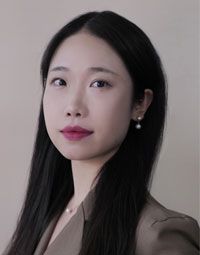
Kim Seonghui fled North Korea in 2008 to give her daughter a life free from the violence and indignity she faced as a woman. In North Korea, Kim worked as a nurse, witnessing harrowing conditions caused by the absence of medicine, equipment, electricity, and basic supplies. Now in South Korea, she runs Hanadoga (“House of Unity”), a North Korean-style distillery brewing alcohol — as her mother once did — and leads volunteer efforts to support vulnerable people in her community.


Na Min-Hee is originally from Pyongyang. She was working in Malta as a state-dispatched overseas laborer when she first encountered the world outside of North Korea—and was struck by the freedom and dignity with which women lived abroad. Despite strict surveillance, she fled to Germany in 2015 and, eventually found refuge in South Korea. Now living in South Korea, Na is happily married and committed to reclaiming her voice and agency as a woman. She shares her story and perspectives openly through her YouTube channel with 162K subscribers, determined to speak not from fear or silence, but with strength and autonomy.


Kwon EunKyoung is the Director of the Network for North Korean Democracy and Human Rights (NK Net) and Secretary General of the International Coalition to Stop Crimes Against Humanity in North Korea (ICNK). She focuses on creating effective strategies to improve the quality of life for North Korean people and to raise their awareness of the values shared by the global community. She works to broaden channels that connect the world with the hearts and lives of the North Korean people.

Korean Unification: A Fading Prospect?

Join us for this conversation about prospects for Korean Unification with Jeongmin Kim, Lead Correspondent at NK News / Editorial Director at Korea Pro, Dr. Lee Sang-shin, director of the Center for the Study of Liberal Democracy at Korea Institute of National Unification (KINU), and Dr. Nicholas Eberstadt, the Henry Wendt Chair in Political Economy at the American Enterprise Institute (AEI), in conversation with Korea Society policy director Jonathan Corrado. This panel will explore recent policy shifts towards unification in South Korea under the Yoon Suk Yeol administration and in North Korea announced by Chairman Kim Jong Un at the ninth plenary meeting of the eighth central committee of the ruling Workers’ Party. What are the consequences of Kim’s announcement that North Korea’s long standing policy goal of unification (one nation, two systems) will be dropped? The expert panel will also discuss changing public opinion in South Korea, including demographic and ideological splits in policy preferences for the future of the Korean Peninsula. Plus, in addition to discussing the well-understood challenges and obstacles to practically embarking on a process of unification, the panel will cover some of the potential benefits of Unification, including demographic, sociocultural, geopolitical, and economic factors.

The promotional partner for this program is Columbia University’s APEC Study Center.


Korean Unification: A Fading Prospect?

Wednesday, March 6, 2024 | 8 AM (EST)


The Korea Society
350 Madison Avenue, 24th Floor
New York, NY 10017


About the Speakers:
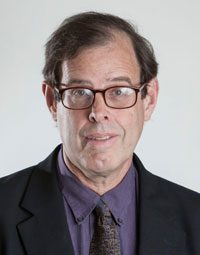
 

Dr. Nicholas Eberstadt is the Henry Wendt Chair in Political Economy at the American Enterprise Institute (AEI), where he researches and writes on demographics and economic development, as well as on security in the Korean peninsula and Asia. Mr. Eberstadt is also a senior adviser to the National Bureau of Asian Research (NBR). He has also served as consultant or adviser for a variety of units within the US government.


Jeongmin Kim is the Lead Correspondent at NK News and Editorial Director at Korea Pro, based in Seoul. Kim covers inter-Korean and DPRK-related foreign, defense and humanitarian affairs, and has covered the 2022 ROK Presidential election on the ground. Prior to joining NK News, she worked for the CSIS Korea Chair in Washington D.C. and Reuters news agency’s Seoul bureau. Follow her on Twitter @jeongminnkim.


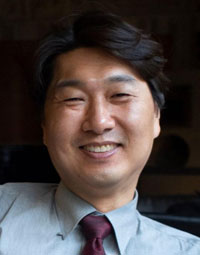
Dr. Sang Sin LEE is a research fellow and the director of the Center for the Study of Liberal Democracy at the Korea Institute for National Unification (KINU). Dr. Lee’s research areas include political behavior and elections, and public opinion in South Korea. After receiving a Ph. D. in Political Science at the University of Iowa in 2008, he worked for the Institute for Peace and Unification Studies at the Seoul National University and then joined the KINU in January 2016. Dr. Lee is currently in charge of the KINU Unification Survey. The KINU Unification Survey is recognized as one of the most important polls in Korea and is cited by major media outlets around the world, including the New York Times, Newsweek, and the BBC.


New Views on Korean Peace Regime and Unification

Join us for this discussion on prospects for a peace regime and inter-Korean social integration with Frank Aum, United States Institute of Peace, Hannah Song, President & CEO at Liberty in North Korea, Rachel Minyoung Lee, former intelligence analyst for the U.S. government, and Joseph Kim, Human Freedom Initiative, George W. Bush Institute. How might the U.S. and South Korea cooperate with regional partners to pursue a long term peace process? How do generational dynamics and social changes in North and South Korea affect inter-Korean cooperation? 

This program is supported by a grant from the UniKorea Foundation.


New Views on Korean Peace Regime and Unification 
with
Frank Aum, Hannah Song, Joseph Kim and Rachel Minyoung Lee   

Thursday, October 15, 2020 | 11 AM

The Korea Society
350 Madison Avenue, 24th Floor
New York, NY 10017


ABOUT THE SPEAKERS:

Frank Aum is the senior expert on North Korea at the U.S. Institute of Peace. He oversees the Institute’s work on North Korea and focuses on ways to strengthen diplomacy to reduce tensions and enhance peace and stability on the Korean Peninsula. From 2010 to 2017, he worked at the Department of Defense, including as special counsel to the Army General Counsel, special assistant to the assistant secretary of defense for Asian and Pacific Security Affairs, and senior advisor on North Korea in the Office of the Secretary of Defense. During this time, he advised four secretaries of defense on issues related to Northeast Asia and the Korean Peninsula. Aum also served as head of delegation for working level negotiations with the Republic of Korea on U.S.-ROK Alliance matters, and received the Secretary of Defense Medal for Outstanding Public Service.

Hannah Song is President and CEO of Liberty in North Korea (LiNK). She joined in 2006 as Deputy Director, managing day-to-day operations and coordinating overseas programs, including underground shelters and refugee resettlement efforts in the United States and in South Korea. At the end of 2008, she became President/CEO, helping to re-found the organization with a new mission focused on building international support for the North Korean people, providing direct assistance to North Korean refugees, and developing long-term, people-focused strategies to accelerate positive change inside the country. Hannah regularly speaks at international fora and to the media on North Korea-related issues.

Joseph Kim is an assistant and Expert in Residence on the Human Freedom Initiative at the George W. Bush Institute. He was born and raised in North Korea. In 2006, Joseph escaped North Korea and went to China. In China, he connected with an international NGO called Liberty in North Korea (LiNK). A year later, he left China for the United States and claimed refugee status under the North Korean Human Rights Act, signed by President George W. Bush in 2004. In 2013, Joseph delivered a TED Talk on the importance of hope and published a memoir, “Under the Same Sky”. Joseph interned as a research assistant at the Center for Strategic and International Studies (CSIS) Korea Chair.

Rachel Minyoung Lee is a former North Korea analyst and collection specialist at the CIA’s Open Source Enterprise (formerly OSC). For two decades, she collected and analyzed open source information and wrote time-on-target reports on the gamut of North Korean domestic and foreign policy issues for US policymakers. She strategized and led collection and analysis from OSE’s Seoul office in some of the most momentous years in recent North Korean history, including the years leading up to and following Kim Jong Un’s succession, the series of missile and nuclear tests, and the two Kim-Trump summits. She is currently an independent researcher of North Korea.  


Prospects for Diplomacy with North Korea

Join us for a discussion on challenges and opportunities for continued nuclear negotiations with North Korea, featuring Markus Garlauskas, former U.S. National Intelligence Officer for North Korea, Soo Kim, RAND, and Ankit Panda, Carnegie Endowment for International Peace. What are the chances that North Korea denuclearizes and what can the U.S. and South Korea do to increase those chances? Should an interim deal with snapback measures be considered good progress, or should a comprehensive deal be pursued?

This program is supported by a grant from the UniKorea Foundation.


Prospects for Diplomacy with North Korea
with
Markus Garlauskas, Soo Kim and Ankit Panda  

Wednessday, September 16, 2020 | 12 PM

The Korea Society
350 Madison Avenue, 24th Floor
New York, NY 10017


ABOUT THE SPEAKERS:

Markus Garlauskas is a nonresident senior fellow with the Scowcroft Center for Strategy and Security’s Asia Security Initiative. He is an independent author and consultant, specializing in Northeast Asian security issues and strategic analysis.Garlauskas served in the US government for nearly twenty years. He was appointed to the Senior National Intelligence Service as the National Intelligence Officer (NIO) for North Korea on the National Intelligence Council from July 2014 to June 2020. As NIO, he led the US intelligence community’s strategic analysis on North Korea issues and expanded analytic outreach to non-government experts.

Soo Kim is a policy analyst at the RAND Corporation and adjunct instructor at American University. At RAND, her research covers a broad range of defense and foreign policy issues for the Department of Defense, including North Korea’s nuclear strategy and conventional military threat, Russia’s foreign policy, US-China competition, and security cooperation. She began her career as a North Korea analyst in the Central Intelligence Agency (CIA), where she specialized in decision-making and regime propaganda.

Ankit Panda is the Stanton Senior Fellow in the Nuclear Policy Program at the Carnegie Endowment for International Peace. An expert on the Asia-Pacific region, his research interests range from nuclear strategy, arms control, missile defense, nonproliferation, emerging technologies, and U.S. extended deterrence. He is the author of Kim Jong Un and the Bomb: Survival and Deterrence in North Korea (Hurst Publishers/Oxford University Press, 2020).