
Rapid Reaction:
An Olive Branch for North Korea?

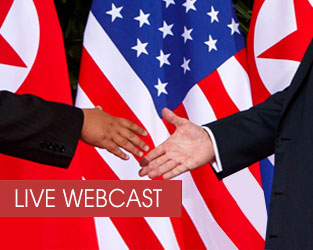
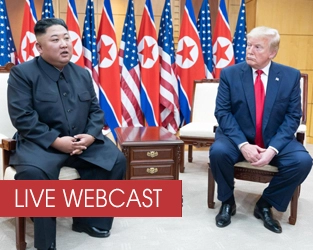
Join The Korea Society for a rapid reaction discussion exploring recent shifts in Korean Peninsula security and diplomacy. Featuring Ambassador (ret.) Joseph Yun, this program will examine President Donald Trump’s decision to modify joint military exercises with South Korea and his revelation of ongoing communication with North Korean leader Kim Jong Un. The program is moderated by policy director Jonathan Corrado.

The session will draw lessons from past negotiation cycles, assess how the geopolitical climate has evolved since Trump and Kim last met, dissect the implications of North Korea’s new “hostile states” policy, examine South Korea’s shifting role as a diplomatic pacemaker, and explore how the surrounding geopolitical situation—such as the expanding Russia-North Korea alliance and The Iran War—is reshaping dynamics in Northeast Asia. Ambassador Yun will also share insights from his multi-decade career managing Korean Peninsula relations.

This program is made possible by the generous support of our individual and corporate members and the Korea Foundation.


Speaker

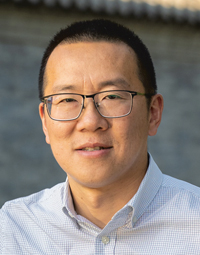
Joseph “Joe” Yun

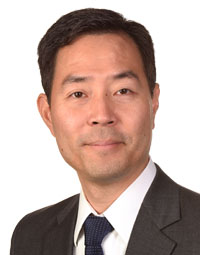
Ambassador (ret.) Joseph “Joe” Yun most recently served as Chargé d’Affaires ad interim at the United States Mission in the Republic of Korea. His previous diplomatic assignments include serving as U.S. Special Presidential Envoy to negotiate amendments to the Compact of Free Association (COFA), which governs the relationship between the United States and the Federated States of Micronesia, the Marshall Islands, and Palau. The negotiations concluded in October 2023 and were approved by Congress and enacted in March 2024.

Amb. Yun’s other senior diplomatic assignments include serving as U.S. Special Representative for North Korea Policy (2016-18), U.S. Ambassador to Malaysia (2013-16), and Principal Deputy Assistant Secretary of State for East Asian and Pacific Affairs (2011-2013). His earlier Foreign Service overseas assignments were in Hong Kong, Medan, Paris, Bangkok, and Seoul.

Outside the U.S. government, Amb. Yun has been Senior Advisor with The Asia Group, a DC-based strategic consulting firm, and served at the U.S. Institute of Peace, an independent and non-partisan federal institute working on peace and reconciliation issues throughout the globe. He holds a M. Phil. degree from the London School of Economics and a B.S. from the University of Wales.

Commemorating the 150th Anniversary of Kim Koo’s Birth: Exhibition Opening & Presentation

Program Brief

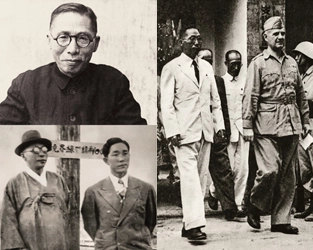
Commemorating the 150th Anniversary of Kim Koo’s Birth

UNESCO officially commemorated 2026 as the 150th anniversary of the birth of Kim Koo, honoring his foundational conviction that culture is the ultimate engine of national development, human happiness, and international peace. To mark this significant milestone, The Korea Society, in partnership with the Association of Commemorative Service for Patriot Kim Koo and the Kim Koo Foundation, hosted a landmark presentation and exhibition opening titled “Kim Koo: Dreaming of Peace through the Power of Culture.” This momentous occasion brought together senior policy and civic leaders to celebrate Kim Koo’s enduring legacy and reflect on the growing maturity of the U.S.–Republic of Korea (ROK) alliance.

The event also celebrated the 11th anniversary of the Kim Koo Professional Series at The Korea Society. Over the past decade, this impactful initiative has empowered a network of over 200 fellows spanning policy, corporate industry, media, nonprofits, and academia to strengthen U.S.-Korea relations and promote peace and prosperity in Northeast Asia.

This program was produced in partnership between The Korea Society and The Association of Commemorative Service for Patriot Kim Koo and made possible by the support of the Kim Koo Foundation.

Key Takeaways

1. The Boundless Power of Culture as a Global Engine

Kim Koo wrote in his seminal essay My Wish: “The one thing I desire without limit is the power of a great culture. For the power of culture makes us happy and goes on to bring happiness to others.” Speakers highlighted how this profound vision has dynamically materialized in the modern era. From the global dominance of K-Pop and multi-Tony Award-winning Broadway adaptations like Maybe Happy Ending to Netflix chart-toppers, Korea’s soft power has emerged as a universal bridge for cultural exchange and lasting international peace.

2. Historical Precursors to the Modern ROK-U.S. Alliance

Beyond his revolutionary leadership within the Provisional Government of Korea, Kim Koo’s legacy resonates deeply as a visionary diplomat. His historical foresight led to early, critical collaborations with the U.S. Office of Strategic Services (OSS) on the “Eagle Project.” This initiative served as a vital foundational precursor to the formal institutionalization of the modern ROK-U.S. alliance, which has now matured into a comprehensive strategic partnership encompassing defense, trade, cutting-edge technology, and shared values of freedom and the rule of law.

3. Diplomatic Equality, Dignity, and National Unity

Kim Koo long advocated for bilateral relations rooted strictly in mutual dignity, a sentiment captured in a handwritten calligraphy scroll gifted to the late diplomat and scholar Gregory Henderson that reads: “Let Korea and the United States help one another in friendship and as equals.” His sacrifice and courage established a roadmap proving that a nation’s true strength is not merely measured by military or raw economic might, but by the character, resilience, and unified purpose of its people. This vision underpins the modern democratic advancements that allow contemporary leaders to address global challenges from a position of equal partnership and mutual respect.


Congratulatory Remarks:

Her Excellency Kang, Kyung-wha, Ambassador Extraordinary and Plenipotentiary of the Republic of Korea to the United States of America

Kang, Kyung-wha was appointed Ambassador Extraordinary and Plenipotentiary of the Republic of Korea to the United States of America by President Lee, Jae Myung in October, 2025. Prior to her appointment, Ambassador Kang served as Minister of Foreign Affairs from 2017-2021 under President Moon, Jae-in. Between April, 2024 and September, 2025 she served as President and Chief Executive Officer of Asia Society in New York. During her varied and distinguished career in public service, Ambassador Kang served as Secretary for International Relations in the Office of the Speaker of the Korean National Assembly and as Senior Advisor and Principal Speechwriter to the Foreign Minister and Principal Interpreter to the President of Korea. She was also Director-General for International Organizations at the Ministry of Foreign Affairs and Trade of the Republic of Korea. At the United Nations, she was Deputy High Commissioner at the Office of the High Commissioner for Human Rights, Deputy Emergency Relief Coordinator and Assistant Secretary-General at the United Nations Office for the Coordination of Humanitarian Affairs, Chief of the Transition Team for the 9th United Nations Secretary-General-elect and later his Senior Advisor on Policy. Earlier in her career, Ambassador Kang worked for the English Section of Radio Korea International of the Korean Broadcasting System (KBS), served as Assistant Professor at Cleveland State University in Cleveland, Ohio and was active in several women’s organizations in Korea. She was affiliated with Ewha Women’s University as Distinguished Professor Emeritus (Sept. 2022 – Feb. 2023) and is Honorary Professor at the Institute for Global Engagement and Empowerment at Yonsei University since September, 2023. Ambassador Kang has a Bachelor’s Degree in Political Science and International Studies from Yonsei University, and both a Master’s Degree and Doctorate in International/Intercultural Communication from the University of Massachusetts at Amherst. She is married with three children.

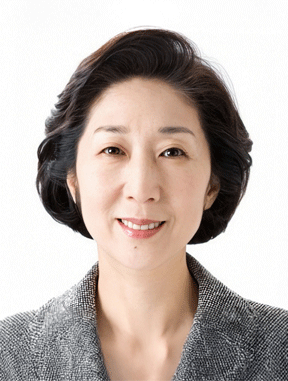
Dr. Kim Mee is a distinguished Korean philanthropist and civic leader. She currently serves as Chairperson of the Kim Koo Foundation, established to honor the legacy of her grandfather, Kim Koo—one of Korea’s most revered independence leaders. The Foundation advances educational and cultural initiatives both in Korea and internationally, continuing Kim Koo’s lifelong commitment to public service and national identity. Dr. Kim has dedicated her career to advocating for social equity and civic engagement. Her work spans a range of critical issues, including women’s rights, child welfare, healthcare access, education, the arts, and civil diplomacy. Dr. Kim is a board director for The Korea Society. She previously served as Chairperson of Women’s News, a leading Korean newspaper focused on women’s issues and social justice. She also holds board positions at the Fletcher School at Tufts University, Midwest Young Artists, and Lake Forest Academy, where she is a Life Trustee. Dr. Kim is the granddaughter of Kim Koo, Premier of the Korean Provisional Government (KPG) and a central figure in Korea’s independence movement. She is also the daughter of General Kim Shin, a pioneering military leader and a senior government official. Dr. Kim is married to Kim Ho Youn, Chairman of Binggrae Co., Ltd., a leading Korean food and beverage company.

Presenter:

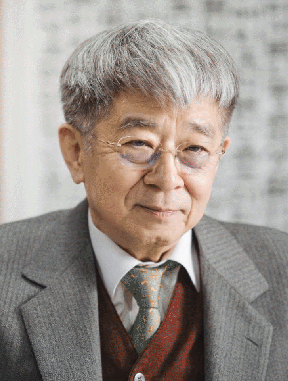
Dr. Han Kyung-Koo was the Secretary-General of the Korean National Commission for UNESCO from December 2020 to December 2024. As a cultural anthropologist trained at Seoul National University (M.A.) and Harvard University (Ph.D.), Dr. Han taught anthropology at Kangwon National University and helped develop the Division of International Studies at Kookmin University as its dean. In 2009, he joined the newly founded College of Liberal Studies of Seoul National University and served as its dean. Dr. Han also served as a member of the Korean National Commission for UNESCO, the Policy Planning Committee of the Korean Federation for the Environmental Movement, and the Presidential Commission on Sustainable Development. He has also served on the editorial boards of the Korea Journal, Sahoewa Yeoksa (Society and History), and Cross-Currents: East Asian History and Culture Review. He was also the Editor of Hanguk Munhwa Inryuhak (Korean Cultural Anthropology) and the Korean Social Science Journal. Dr. Han was President of the Korean International Migration Studies Association, the Korean Society of Education for International Understanding, and the Association for the Studies of Korean abroad, as well as Vice President of the Korean Society for Cultural Anthropology, and the Korean Association for Environmental Sociology.

Assessing North Korea’s
Developing Nuclear Program

Program Brief

Assessing North Korea’s Developing Nuclear Program

In our discussion assessing the latest developments of North Korea’s nuclear program, Open Nuclear Network (ONN) Senior Analyst Sarah Laderman challenged conventional wisdoms regarding the DPRK’s nuclear capabilities and described how the Kim Regime balances its fissile material supply against strategic weaponization demands.

This program was made possible by the generous support of the Korea Foundation and The Korea Society’s individual and corporate members.

Key Takeaways

1. North Korea Is Shifting Toward Routinized Force Development with a Projected Arsenal Expansion by 2034

Laderman noted that by the end of 2034, North Korea could produce between 23–47 strategic warheads using plutonium and 173–228 tactical warheads using highly enriched uranium. North Korea’s ambitious goals point to a posture that could exceed defensive needs. A number of factors, both technical and strategic, will affect the overall production. While uranium supplies remain plentiful for tactical weapons, plutonium remains highly prized for strategic miniaturization and sophisticated designs like multiple independently targetable reentry vehicles (MIRVs).

2. Remote Monitoring Has Advanced Through New Technology, but Weaponization Remains a Distinct “Black Box”

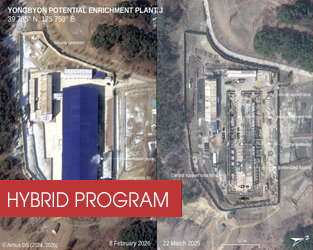
Advances in open-source intelligence (OSINT) have fundamentally transformed how we monitor North Korea’s nuclear capabilities, yet a critical verification gap remains. While commercial satellite technologies can now easily bypass weather and camouflage—using advanced radar to pierce cloud cover, thermal imagery to detect active reactor operations, and AI to map vehicle traffic patterns—this transparency stops short of the final weaponization phase. The resulting intelligence picture is highly uneven: the international community can track large, fixed infrastructures, but the actual assembly of nuclear warheads remains entirely opaque. Because the regime effectively utilizes nondescript buildings and extensive underground mountain tunnels, advanced satellite sweeps have failed to locate a single definitive site for plutonium or uranium pit production. Despite better visibility through open source tools overall, Pyongyang’s most valuable strategic assets remain successfully hidden from foreign observation.

3. To Take Advantage of Open Source Monitoring Tools, a Future Arms Control Policy Could Prioritize Plutonium Over Uranium

Laderman highlighted a core policy dilemma: some of the most strategically valuable assets to eliminate are the hardest to remotely verify. Because on-the-ground international inspections have not occurred in nearly two decades, any realistic opening salvo for an arms control agreement or selective freeze must rely on remote observation. According to Laderman, policymakers could therefore focus initial negotiation priorities on freezing plutonium production rather than highly enriched uranium (HEU). While HEU enrichment efficiency and locations are easily hidden, plutonium relies on distinct, fixed reactor profiles and reprocessing infrastructure, making it the most practical, monitorable, and strategically impactful target for containment.


About the Speaker:

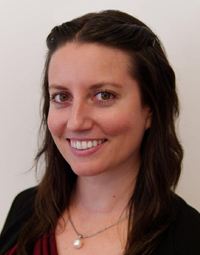
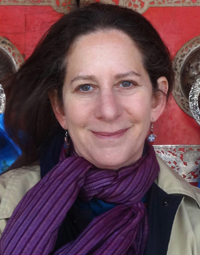
Sarah Laderman is a Senior Analyst for Open Nuclear Network, a PAX sapiens programme, in Vienna, Austria, where she focuses on open-source and technical analyses of nuclear programmes. She is currently focused on the DPRK’s nuclear weaponisation capabilities. She has previously worked at the International Atomic Energy Agency, Lawrence Livermore National Laboratory and the US Department of Defense. Sarah received her MSc in Nuclear Engineering and Masters in Public Policy from the University of California, Berkeley, and her BSc in Nuclear Science and Engineering and Political Science from the Massachusetts Institute of Technology. She is currently a doctoral candidate in Political Science at the University of Vienna.
Privileged but Powerless:

Program Brief

Privileged but Powerless

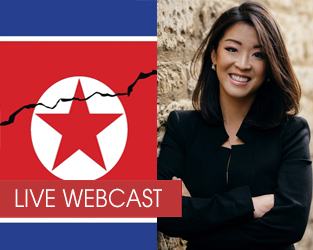
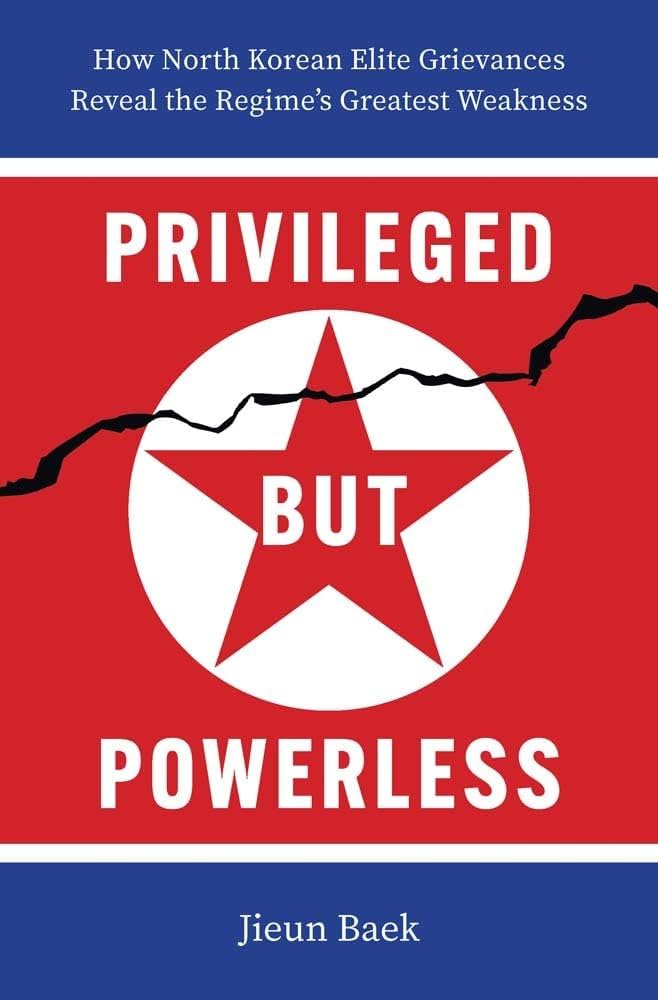
Dr. Jieun Baek described the complex psychological drivers impacting North Korea’s 100,000 political elites in a discussion of her new book, Privileged but Powerless: How North Korean Elite Grievances Reveal the Regime’s Greatest Weakness. Mobilizing hundreds of hours of interviews with high-level escapees, Dr. Baek argued that the elites’ performative loyalty is born out of fear, obscuring a critical vulnerability within the regime’s core support base. Ultimately, the very officials who seem most invested in preserving North Korea’s status quo may become its most dangerous disruptors—driven not by ideology, but by simmering resentment and vanishing alternatives.

This program was hosted by the Korea Society as part of the Kim Koo Professional Series.

Key Takeaways

1. Performative Loyalty as a Mask for Survival

Dr. Baek explained that North Korea’s elite face severe cognitive dissonance, masking deep internal doubts with outward performative loyalty. This hyper-vigilant behavior represents an extreme case of preference falsification, where the most outwardly compliant individuals are actually masking a volatile vulnerability born of fear and self-preservation. To handle the immense mental burden of maintaining this cognitive dissonance, some embrace escapist vices. Additionally, because expressing anger toward Kim Jong-un is fatal, elites psychologically cope with systemic failures by shifting the blame downward, venting their frustrations onto mid-ranking managers instead.

2. The Continuum of Action

According to Dr. Baek, when confronted with their grievances, North Korean political elites operate along a strict behavioral continuum ranging from passive compliance to radical change. The most common and rational choice for individual self-preservation is to simply do nothing and maintain the status quo, which can be accompanied by small acts of adjustment that introduce micro-variations into their daily lives while they maintain their required performative loyalty. For those who decide the pressure is completely intolerable, exit via defection provides a definitive escape, a phenomenon that has increased under Kim Jong-un’s regime. The most distant and difficult choice on the spectrum is to push for reform by attempting to lobby for incremental policy or economic changes from within, though this option remains the furthest from practical reality.

3. Structural Barriers to Collective Action and Individual Survival Tactics

Dr. Baek addressed why covert coups or mass uprisings fail to materialize, pointing to the regime’s engineering of total social atomization, which creates a pervasive culture of mutual distrust where elites never know who is incentivized to report on them. Because collective action is functionally impossible, she noted that the most rational choice for an elite member is to maintain the status quo or intentionally aim for a middle-ground professional tier. This “sweet spot” position is successful enough to provide foreign currency and market luxuries for their families, but quiet enough to avoid shining too brightly and attracting unwanted attention from ambitious rivals.


About the Speaker:

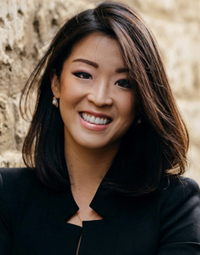
Jieun Baek is an adjunct faculty member at the University of Oxford’s Blavatnik School of Government and a nonresident senior fellow at the Atlantic Council. She is the author of North Korea’s Hidden Revolution and Privileged but Powerless, and researches elite discontent and regime instability in authoritarian states, particularly North Korea and Burma.

Korean Messiah

Program Brief

Korean Messiah

In the launch event for Korean Messiah, Wall Street Journal China Bureau Chief Jonathan Cheng challenged conventional thinking around North Korea and described the surprising, enduring influence of American Presbyterian Christianity on Kim Il Sung’s cult of personality.

This program was hosted in collaboration with The Center for Korean Research at the Weatherhead East Asian Institute at Columbia University.

Key Takeaways

1. Pyongyang’s Religious History as the “Jerusalem of the East”

Cheng revealed that before Pyongyang became the capital of the Democratic People’s Republic of Korea (DPRK), it was the epicenter of Christian missionary activity in Asia. Kim Il Sung was born and raised in a deeply religious environment, even serving as a Sunday school teacher and an organist in the church.

2. Kim Il Sung Utilized Elements of His Religious Upbringing to Build His Personality Cult

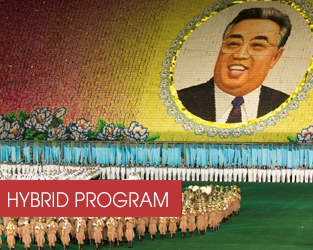
Cheng argued that although Kim Il Sung eventually became hostile toward organized religion, he was fundamentally shaped by his childhood in the church. The regime effectively repurposed Christian mythology, supernatural narratives, and organizational structures—such as mass study halls—to establish a personality cult that portrays the Kim family as messianic, divine figures to whom the population must show absolute devotion.

3. Historical Insights into the North Korean Regime’s “Otherness”

Both Cheng and author Barbara Demick, who joined for the conversation, emphasized that North Korea is often viewed as a hermetically sealed, incomprehensible “other.” However, by examining the historical roots—including the influence of American missionaries and the movement of people in Manchuria—the book demonstrates that the North Korean state is not a vacuum. It is a product of its history and global influences, highlighting the importance of understanding these origins to grasp the reality of life for the 25 million people living there today.

This program is co-hosted by The Center for Korean Research at the Weatherhead East Asian Institute at Columbia University.


About the Speakers:

Photo credit: Gilles Sabrie
Jonathan Cheng is the China bureau chief for The Wall Street Journal, and was previously the Korea bureau chief, running coverage of the Korean peninsula, including politics and society in both North and South Korea. A native of Toronto, he lives in Beijing. He has traveled to North Korea twice.
Barbara Demick is author of Nothing to Envy: Ordinary Lives in North Korea and Logavina Street: Life and Death in a Sarajevo Neighborhood and the recently released Eat the Buddha: Life and Death in a Tibetan Town, published by Random House in July 2020. She was bureau chief for the Los Angeles Times in Beijing and Seoul, and previously reported from the Middle East and Balkans for the Philadelphia Inquirer.

The Unseen Resilience of North Korean Female Defectors

North Korea’s Evolving Cyber Strategy

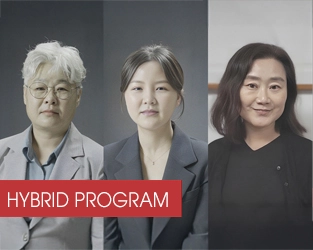
Join us for a discussion on the unseen resilience of North Korean female defectors. Kim Seonghui and Na Min-Hee provide powerful personal testimony, describing their life and experiences in North Korea, their escape, and their new life in South Korea. Human rights advocate and expert Kwon EunKyoung joins the discussion, which is moderated by policy director Jonathan Corrado.

This program is made possible by the generous support of our individual and corporate members and the Korea Foundation.


The Unseen Resilience of North Korean Female Defectors

Thursday, September 18, 2025 | 4 PM (EDT)


The Korea Society
350 Madison Avenue, 24th Floor
New York, NY 10017


About the Speakers:


Kim Seonghui fled North Korea in 2008 to give her daughter a life free from the violence and indignity she faced as a woman. In North Korea, Kim worked as a nurse, witnessing harrowing conditions caused by the absence of medicine, equipment, electricity, and basic supplies. Now in South Korea, she runs Hanadoga (“House of Unity”), a North Korean-style distillery brewing alcohol — as her mother once did — and leads volunteer efforts to support vulnerable people in her community.


Na Min-Hee is originally from Pyongyang. She was working in Malta as a state-dispatched overseas laborer when she first encountered the world outside of North Korea—and was struck by the freedom and dignity with which women lived abroad. Despite strict surveillance, she fled to Germany in 2015 and, eventually found refuge in South Korea. Now living in South Korea, Na is happily married and committed to reclaiming her voice and agency as a woman. She shares her story and perspectives openly through her YouTube channel with 162K subscribers, determined to speak not from fear or silence, but with strength and autonomy.


Kwon EunKyoung is the Director of the Network for North Korean Democracy and Human Rights (NK Net) and Secretary General of the International Coalition to Stop Crimes Against Humanity in North Korea (ICNK). She focuses on creating effective strategies to improve the quality of life for North Korean people and to raise their awareness of the values shared by the global community. She works to broaden channels that connect the world with the hearts and lives of the North Korean people.

Expert Take: U.S.-North Korea Relations with former Deputy Secretary of State Stephen Biegun

Join us for a conversation with Stephen Biegun, former U.S. Deputy Secretary of State and Special Representative for North Korea. This discussion will examine past diplomatic efforts to achieve the denuclearization of North Korea, lessons learned, and future prospects. What are Mr. Biegun’s takeaways from his summitry engagement with North Korea? Is it still possible today to pursue mutually acceptable waypoints within the confines of a grand bargain or should more modest goals be pursued? How do geopolitical shifts and hardening regional rivalries undermine the U.S. and North Korean interest in improving bilateral relations? How does the public discourse create reductive dichotomies between deterrence vs. diplomacy and human rights vs. humanitarian efforts? The moderator for this program is Korea Society policy director Jonathan Corrado


In-person attendance is restricted to Kim Koo Fellows and Korea Society members ONLY. Please click below to see membership options. Korea Society members will receive a separate in-person invitation. 


The Korea Society thanks the Kim Koo Foundation, our corporate sponsors, and individual members for their generous support, which has made this program possible.


Expert Take: U.S.-North Korea Relations

with former Deputy Secretary of State Stephen Biegun

Tuesday, November 12, 2024 | 10 AM (EST)


The Korea Society
350 Madison Avenue, 24th Floor
New York, NY 10017


About the Speakers:


Stephen E. Biegun is senior vice president of Global Public Policy at The Boeing Company. In this role, he is responsible for advising and executing on Boeing’s global public policy matters in support of the company’s priorities and optimizing relationships with key stakeholders in the U.S. and around the world. He is also a member of the company’s Executive Council. Prior to Boeing, Stephen served as senior advisor at Macro Advisory Partners since 2021 assisting corporate leaders in minimizing geopolitical risk and business disruption in global markets. He has more than three decades of international affairs experience in government and the private sector, including high-level government service with the Department of State, the White House and the United States Congress. 

In 2021, Stephen concluded his most recent government service as the U.S. Deputy Secretary of State, to which he was confirmed by the Senate with a strong bipartisan vote of 90-3. On August 23, 2018, Secretary Pompeo appointed Stephen E. Biegun as the U.S. Special Representative for North Korea, responsible for leading U.S. efforts to achieve President Trump’s goal of the final, fully verified denuclearization of North Korea, as agreed to by Chairman Kim Jong Un at the Singapore summit. As Special Representative, on behalf of the Secretary of State he directed all U.S. policy on North Korea, led negotiations, and spearheaded U.S. diplomatic efforts with allies and partners.

New Views on Korean Peace Regime and Unification

Join us for this discussion on prospects for a peace regime and inter-Korean social integration with Frank Aum, United States Institute of Peace, Hannah Song, President & CEO at Liberty in North Korea, Rachel Minyoung Lee, former intelligence analyst for the U.S. government, and Joseph Kim, Human Freedom Initiative, George W. Bush Institute. How might the U.S. and South Korea cooperate with regional partners to pursue a long term peace process? How do generational dynamics and social changes in North and South Korea affect inter-Korean cooperation? 

This program is supported by a grant from the UniKorea Foundation.


New Views on Korean Peace Regime and Unification 
with
Frank Aum, Hannah Song, Joseph Kim and Rachel Minyoung Lee   

Thursday, October 15, 2020 | 11 AM

The Korea Society
350 Madison Avenue, 24th Floor
New York, NY 10017


ABOUT THE SPEAKERS:

Frank Aum is the senior expert on North Korea at the U.S. Institute of Peace. He oversees the Institute’s work on North Korea and focuses on ways to strengthen diplomacy to reduce tensions and enhance peace and stability on the Korean Peninsula. From 2010 to 2017, he worked at the Department of Defense, including as special counsel to the Army General Counsel, special assistant to the assistant secretary of defense for Asian and Pacific Security Affairs, and senior advisor on North Korea in the Office of the Secretary of Defense. During this time, he advised four secretaries of defense on issues related to Northeast Asia and the Korean Peninsula. Aum also served as head of delegation for working level negotiations with the Republic of Korea on U.S.-ROK Alliance matters, and received the Secretary of Defense Medal for Outstanding Public Service.

Hannah Song is President and CEO of Liberty in North Korea (LiNK). She joined in 2006 as Deputy Director, managing day-to-day operations and coordinating overseas programs, including underground shelters and refugee resettlement efforts in the United States and in South Korea. At the end of 2008, she became President/CEO, helping to re-found the organization with a new mission focused on building international support for the North Korean people, providing direct assistance to North Korean refugees, and developing long-term, people-focused strategies to accelerate positive change inside the country. Hannah regularly speaks at international fora and to the media on North Korea-related issues.

Joseph Kim is an assistant and Expert in Residence on the Human Freedom Initiative at the George W. Bush Institute. He was born and raised in North Korea. In 2006, Joseph escaped North Korea and went to China. In China, he connected with an international NGO called Liberty in North Korea (LiNK). A year later, he left China for the United States and claimed refugee status under the North Korean Human Rights Act, signed by President George W. Bush in 2004. In 2013, Joseph delivered a TED Talk on the importance of hope and published a memoir, “Under the Same Sky”. Joseph interned as a research assistant at the Center for Strategic and International Studies (CSIS) Korea Chair.

Rachel Minyoung Lee is a former North Korea analyst and collection specialist at the CIA’s Open Source Enterprise (formerly OSC). For two decades, she collected and analyzed open source information and wrote time-on-target reports on the gamut of North Korean domestic and foreign policy issues for US policymakers. She strategized and led collection and analysis from OSE’s Seoul office in some of the most momentous years in recent North Korean history, including the years leading up to and following Kim Jong Un’s succession, the series of missile and nuclear tests, and the two Kim-Trump summits. She is currently an independent researcher of North Korea.  


Prospects for Diplomacy with North Korea

Join us for a discussion on challenges and opportunities for continued nuclear negotiations with North Korea, featuring Markus Garlauskas, former U.S. National Intelligence Officer for North Korea, Soo Kim, RAND, and Ankit Panda, Carnegie Endowment for International Peace. What are the chances that North Korea denuclearizes and what can the U.S. and South Korea do to increase those chances? Should an interim deal with snapback measures be considered good progress, or should a comprehensive deal be pursued?

This program is supported by a grant from the UniKorea Foundation.


Prospects for Diplomacy with North Korea
with
Markus Garlauskas, Soo Kim and Ankit Panda  

Wednessday, September 16, 2020 | 12 PM

The Korea Society
350 Madison Avenue, 24th Floor
New York, NY 10017


ABOUT THE SPEAKERS:

Markus Garlauskas is a nonresident senior fellow with the Scowcroft Center for Strategy and Security’s Asia Security Initiative. He is an independent author and consultant, specializing in Northeast Asian security issues and strategic analysis.Garlauskas served in the US government for nearly twenty years. He was appointed to the Senior National Intelligence Service as the National Intelligence Officer (NIO) for North Korea on the National Intelligence Council from July 2014 to June 2020. As NIO, he led the US intelligence community’s strategic analysis on North Korea issues and expanded analytic outreach to non-government experts.

Soo Kim is a policy analyst at the RAND Corporation and adjunct instructor at American University. At RAND, her research covers a broad range of defense and foreign policy issues for the Department of Defense, including North Korea’s nuclear strategy and conventional military threat, Russia’s foreign policy, US-China competition, and security cooperation. She began her career as a North Korea analyst in the Central Intelligence Agency (CIA), where she specialized in decision-making and regime propaganda.

Ankit Panda is the Stanton Senior Fellow in the Nuclear Policy Program at the Carnegie Endowment for International Peace. An expert on the Asia-Pacific region, his research interests range from nuclear strategy, arms control, missile defense, nonproliferation, emerging technologies, and U.S. extended deterrence. He is the author of Kim Jong Un and the Bomb: Survival and Deterrence in North Korea (Hurst Publishers/Oxford University Press, 2020).