
Rapid Reaction:
An Olive Branch for North Korea?

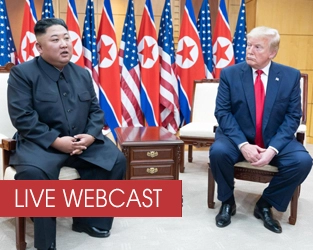
Join The Korea Society for a rapid reaction discussion exploring recent shifts in Korean Peninsula security and diplomacy. Featuring Ambassador (ret.) Joseph Yun, this program will examine President Donald Trump’s decision to modify joint military exercises with South Korea and his revelation of ongoing communication with North Korean leader Kim Jong Un. The program is moderated by policy director Jonathan Corrado.

The session will draw lessons from past negotiation cycles, assess how the geopolitical climate has evolved since Trump and Kim last met, dissect the implications of North Korea’s new “hostile states” policy, examine South Korea’s shifting role as a diplomatic pacemaker, and explore how the surrounding geopolitical situation—such as the expanding Russia-North Korea alliance and The Iran War—is reshaping dynamics in Northeast Asia. Ambassador Yun will also share insights from his multi-decade career managing Korean Peninsula relations.

This program is made possible by the generous support of our individual and corporate members and the Korea Foundation.


Speaker

Joseph “Joe” Yun

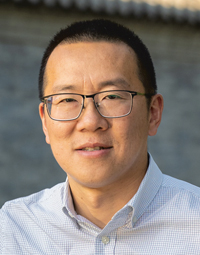
Ambassador (ret.) Joseph “Joe” Yun most recently served as Chargé d’Affaires ad interim at the United States Mission in the Republic of Korea. His previous diplomatic assignments include serving as U.S. Special Presidential Envoy to negotiate amendments to the Compact of Free Association (COFA), which governs the relationship between the United States and the Federated States of Micronesia, the Marshall Islands, and Palau. The negotiations concluded in October 2023 and were approved by Congress and enacted in March 2024.

Amb. Yun’s other senior diplomatic assignments include serving as U.S. Special Representative for North Korea Policy (2016-18), U.S. Ambassador to Malaysia (2013-16), and Principal Deputy Assistant Secretary of State for East Asian and Pacific Affairs (2011-2013). His earlier Foreign Service overseas assignments were in Hong Kong, Medan, Paris, Bangkok, and Seoul.

Outside the U.S. government, Amb. Yun has been Senior Advisor with The Asia Group, a DC-based strategic consulting firm, and served at the U.S. Institute of Peace, an independent and non-partisan federal institute working on peace and reconciliation issues throughout the globe. He holds a M. Phil. degree from the London School of Economics and a B.S. from the University of Wales.
Assessing North Korea’s
Developing Nuclear Program

Program Brief

Assessing North Korea’s Developing Nuclear Program

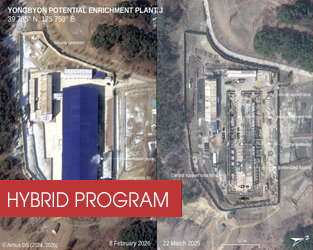
In our discussion assessing the latest developments of North Korea’s nuclear program, Open Nuclear Network (ONN) Senior Analyst Sarah Laderman challenged conventional wisdoms regarding the DPRK’s nuclear capabilities and described how the Kim Regime balances its fissile material supply against strategic weaponization demands.

This program was made possible by the generous support of the Korea Foundation and The Korea Society’s individual and corporate members.

Key Takeaways

1. North Korea Is Shifting Toward Routinized Force Development with a Projected Arsenal Expansion by 2034

Laderman noted that by the end of 2034, North Korea could produce between 23–47 strategic warheads using plutonium and 173–228 tactical warheads using highly enriched uranium. North Korea’s ambitious goals point to a posture that could exceed defensive needs. A number of factors, both technical and strategic, will affect the overall production. While uranium supplies remain plentiful for tactical weapons, plutonium remains highly prized for strategic miniaturization and sophisticated designs like multiple independently targetable reentry vehicles (MIRVs).

2. Remote Monitoring Has Advanced Through New Technology, but Weaponization Remains a Distinct “Black Box”

Advances in open-source intelligence (OSINT) have fundamentally transformed how we monitor North Korea’s nuclear capabilities, yet a critical verification gap remains. While commercial satellite technologies can now easily bypass weather and camouflage—using advanced radar to pierce cloud cover, thermal imagery to detect active reactor operations, and AI to map vehicle traffic patterns—this transparency stops short of the final weaponization phase. The resulting intelligence picture is highly uneven: the international community can track large, fixed infrastructures, but the actual assembly of nuclear warheads remains entirely opaque. Because the regime effectively utilizes nondescript buildings and extensive underground mountain tunnels, advanced satellite sweeps have failed to locate a single definitive site for plutonium or uranium pit production. Despite better visibility through open source tools overall, Pyongyang’s most valuable strategic assets remain successfully hidden from foreign observation.

3. To Take Advantage of Open Source Monitoring Tools, a Future Arms Control Policy Could Prioritize Plutonium Over Uranium

Laderman highlighted a core policy dilemma: some of the most strategically valuable assets to eliminate are the hardest to remotely verify. Because on-the-ground international inspections have not occurred in nearly two decades, any realistic opening salvo for an arms control agreement or selective freeze must rely on remote observation. According to Laderman, policymakers could therefore focus initial negotiation priorities on freezing plutonium production rather than highly enriched uranium (HEU). While HEU enrichment efficiency and locations are easily hidden, plutonium relies on distinct, fixed reactor profiles and reprocessing infrastructure, making it the most practical, monitorable, and strategically impactful target for containment.


About the Speaker:

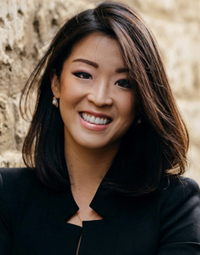
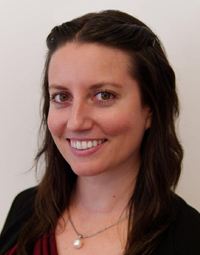
Sarah Laderman is a Senior Analyst for Open Nuclear Network, a PAX sapiens programme, in Vienna, Austria, where she focuses on open-source and technical analyses of nuclear programmes. She is currently focused on the DPRK’s nuclear weaponisation capabilities. She has previously worked at the International Atomic Energy Agency, Lawrence Livermore National Laboratory and the US Department of Defense. Sarah received her MSc in Nuclear Engineering and Masters in Public Policy from the University of California, Berkeley, and her BSc in Nuclear Science and Engineering and Political Science from the Massachusetts Institute of Technology. She is currently a doctoral candidate in Political Science at the University of Vienna.

Privileged but Powerless:

Program Brief

Privileged but Powerless

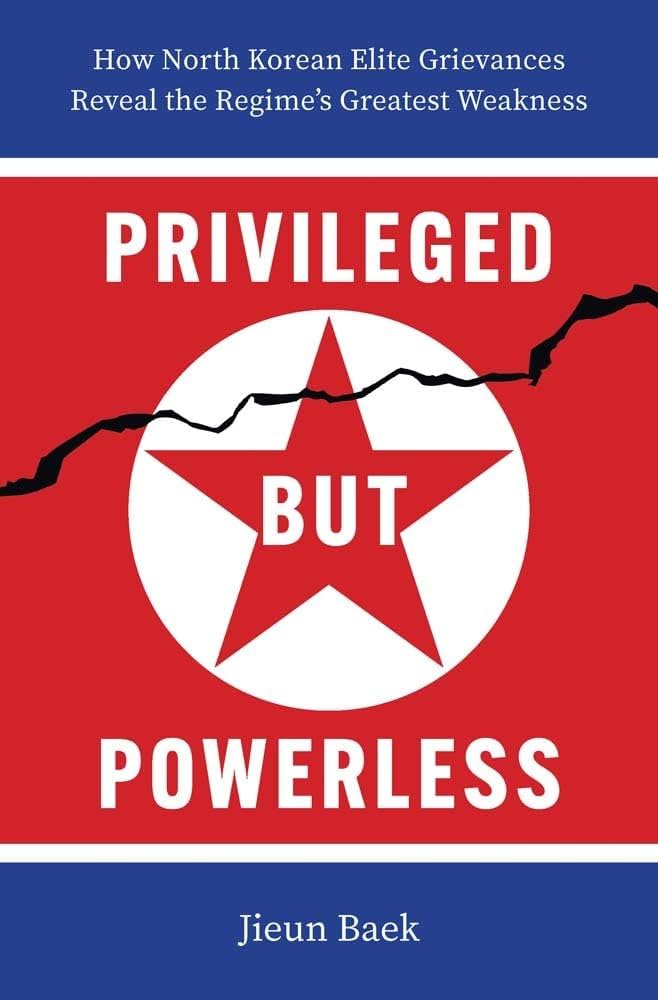
Dr. Jieun Baek described the complex psychological drivers impacting North Korea’s 100,000 political elites in a discussion of her new book, Privileged but Powerless: How North Korean Elite Grievances Reveal the Regime’s Greatest Weakness. Mobilizing hundreds of hours of interviews with high-level escapees, Dr. Baek argued that the elites’ performative loyalty is born out of fear, obscuring a critical vulnerability within the regime’s core support base. Ultimately, the very officials who seem most invested in preserving North Korea’s status quo may become its most dangerous disruptors—driven not by ideology, but by simmering resentment and vanishing alternatives.

This program was hosted by the Korea Society as part of the Kim Koo Professional Series.

Key Takeaways

1. Performative Loyalty as a Mask for Survival

Dr. Baek explained that North Korea’s elite face severe cognitive dissonance, masking deep internal doubts with outward performative loyalty. This hyper-vigilant behavior represents an extreme case of preference falsification, where the most outwardly compliant individuals are actually masking a volatile vulnerability born of fear and self-preservation. To handle the immense mental burden of maintaining this cognitive dissonance, some embrace escapist vices. Additionally, because expressing anger toward Kim Jong-un is fatal, elites psychologically cope with systemic failures by shifting the blame downward, venting their frustrations onto mid-ranking managers instead.

2. The Continuum of Action

According to Dr. Baek, when confronted with their grievances, North Korean political elites operate along a strict behavioral continuum ranging from passive compliance to radical change. The most common and rational choice for individual self-preservation is to simply do nothing and maintain the status quo, which can be accompanied by small acts of adjustment that introduce micro-variations into their daily lives while they maintain their required performative loyalty. For those who decide the pressure is completely intolerable, exit via defection provides a definitive escape, a phenomenon that has increased under Kim Jong-un’s regime. The most distant and difficult choice on the spectrum is to push for reform by attempting to lobby for incremental policy or economic changes from within, though this option remains the furthest from practical reality.

3. Structural Barriers to Collective Action and Individual Survival Tactics

Dr. Baek addressed why covert coups or mass uprisings fail to materialize, pointing to the regime’s engineering of total social atomization, which creates a pervasive culture of mutual distrust where elites never know who is incentivized to report on them. Because collective action is functionally impossible, she noted that the most rational choice for an elite member is to maintain the status quo or intentionally aim for a middle-ground professional tier. This “sweet spot” position is successful enough to provide foreign currency and market luxuries for their families, but quiet enough to avoid shining too brightly and attracting unwanted attention from ambitious rivals.


About the Speaker:

Jieun Baek is an adjunct faculty member at the University of Oxford’s Blavatnik School of Government and a nonresident senior fellow at the Atlantic Council. She is the author of North Korea’s Hidden Revolution and Privileged but Powerless, and researches elite discontent and regime instability in authoritarian states, particularly North Korea and Burma.

America’s Taiwan Dilemma:

Program Brief

America’s Taiwan Dilemma

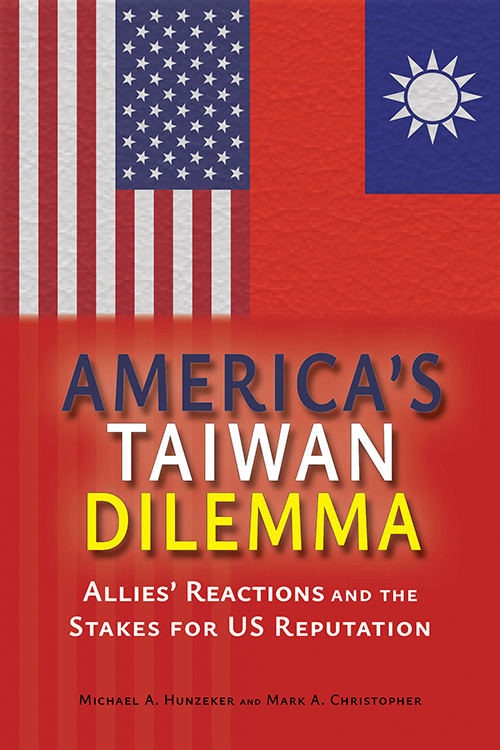
During a discussion regarding his newest book, America’s Taiwan Dilemma: Allies’ Reactions and the Stakes for US Reputation, Mark Christopher argued that Washington policymakers often project their own assumptions onto allies. For instance, U.S. officials believe that allies demand a military defense of Taiwan to preserve America’s reputation. However, through interviews with over 100 regional experts, Christopher challenged this narrative by detailing how South Korea, Japan, and Australia actually perceive Taiwan conflict risks and the reliability of US security commitments.

This program was hosted by the Korea Society as part of the Kim Koo Professional Series.

Key Takeaways

1. Reliability Matters More Than Reputation

Christopher observed that while U.S. policymakers prioritize defending Taiwan to preserve a “reputation” for resolve, regional allies focus primarily on “reliability.” He defines reputation as a backward-looking assessment of past actions, whereas reliability is a forward-looking measure based on current military capability. Allies fear that if a U.S. intervention in Taiwan exhausts American military resources or political will, Washington may become unable to fulfill specific treaty obligations to Japan or South Korea. U.S. involvement in Taiwan may actually weaken alliance reliability if it leaves the U.S. military less capable of providing protection elsewhere.

2. Regional “Realpolitik” and the Lack of Alternatives

Christopher’s research suggests that if China initiates a conflict, America’s allies will likely be pushed closer to the United States regardless of the immediate outcome. Interviewees described a stark power reality: allied nations like Japan and Korea do not wish to acquiesce to Chinese regional hegemony, but lack the individual capability to hold off China. Without a viable alternative, allies are left with no realistic choice but to maintain and strengthen the U.S. alliance, even if a Taiwan contingency results in anger or mistrust toward Washington.

3. South Korea’s Unique “Shrimp among Whales” Dilemma

Unlike Japan or Australia, South Korea does not view Taiwan as a core national security imperative because it faces the existential threat of North Korea. Experts in Seoul expressed concern that a Taiwan conflict would invite North Korean aggression or trigger Chinese economic and military retaliation on the Peninsula. Consequently, Seoul will likely “thread the needle,” seeking to maintain its alliance with the U.S. while avoiding direct combat operations in Taiwan to ensure its long-term coexistence with its permanent neighbor in close geographical proximity, China.

The book is available for sale here

Use the coupon code SAVE20 for a 20% discount on print editions.


About the Speaker:

Mark A. Christopher is an independent risk consultant and a nonresident fellow at the Taiwan Security Monitor. He holds a bachelor’s degree from the Georgetown School of Foreign Service and an MPA from the Princeton School of Public and International Affairs. He previously studied at Peking University, Nanjing University, and Taiwan National Chengchi University. His writing has appeared in Foreign Affairs, Foreign Policy, the Jamestown Foundation’s China Brief, Defense One, and the Wall Street Journal.

Korean Messiah

Program Brief

Korean Messiah

In the launch event for Korean Messiah, Wall Street Journal China Bureau Chief Jonathan Cheng challenged conventional thinking around North Korea and described the surprising, enduring influence of American Presbyterian Christianity on Kim Il Sung’s cult of personality.

This program was hosted in collaboration with The Center for Korean Research at the Weatherhead East Asian Institute at Columbia University.

Key Takeaways

1. Pyongyang’s Religious History as the “Jerusalem of the East”

Cheng revealed that before Pyongyang became the capital of the Democratic People’s Republic of Korea (DPRK), it was the epicenter of Christian missionary activity in Asia. Kim Il Sung was born and raised in a deeply religious environment, even serving as a Sunday school teacher and an organist in the church.

2. Kim Il Sung Utilized Elements of His Religious Upbringing to Build His Personality Cult

Cheng argued that although Kim Il Sung eventually became hostile toward organized religion, he was fundamentally shaped by his childhood in the church. The regime effectively repurposed Christian mythology, supernatural narratives, and organizational structures—such as mass study halls—to establish a personality cult that portrays the Kim family as messianic, divine figures to whom the population must show absolute devotion.

3. Historical Insights into the North Korean Regime’s “Otherness”

Both Cheng and author Barbara Demick, who joined for the conversation, emphasized that North Korea is often viewed as a hermetically sealed, incomprehensible “other.” However, by examining the historical roots—including the influence of American missionaries and the movement of people in Manchuria—the book demonstrates that the North Korean state is not a vacuum. It is a product of its history and global influences, highlighting the importance of understanding these origins to grasp the reality of life for the 25 million people living there today.

This program is co-hosted by The Center for Korean Research at the Weatherhead East Asian Institute at Columbia University.


About the Speakers:

Photo credit: Gilles Sabrie
Jonathan Cheng is the China bureau chief for The Wall Street Journal, and was previously the Korea bureau chief, running coverage of the Korean peninsula, including politics and society in both North and South Korea. A native of Toronto, he lives in Beijing. He has traveled to North Korea twice.
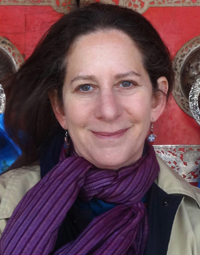
Barbara Demick is author of Nothing to Envy: Ordinary Lives in North Korea and Logavina Street: Life and Death in a Sarajevo Neighborhood and the recently released Eat the Buddha: Life and Death in a Tibetan Town, published by Random House in July 2020. She was bureau chief for the Los Angeles Times in Beijing and Seoul, and previously reported from the Middle East and Balkans for the Philadelphia Inquirer.

Spotlight: Resources on Korea and U.S.-Korea Relations

Join us for a virtual tour of archival resources about Korea and U.S.-Korea relations available for virtual and U.S.-based researchers. This discussion highlights a diverse array of both longstanding and emerging collections, providing a wide survey of available historical resources. How can educators, researchers, historians, writers, and students best take advantage of this treasure trove of materials? What stories await and what impact can they have? What are some tips and tricks from librarians, center directors, and archivists?

Participating resource centers include: the new Van Fleet Digital Archive, The University of Wisconsin-Madison Center for East Asian Studies U.S.-Korean Relations Collection, The Library of Congress Korean Collection, and The Harry S. Truman Library and Museum. This program is jointly produced by the Policy and the Education teams. Featuring: Dr. David Fields, Associate Director of the Center for East Asian Studies at University of Wisconsin-Madison, Joe McChristian, Jr. President of The Van Fleet Foundation, Dr. Sam Rushay, Supervisory Archivist at the Harry S. Truman Library and Museum, and Dr. Elli Kim, Korea Reference Librarian Asian Division at The Library of Congress.

This program is made possible by the generous support of the Korea Foundation and our individual and corporate members.


Spotlight: Resources on Korea and US-Korea Relations

Wednesday, April 8, 2026 | 8 AM (EDT)


CollectionsSpeakers


The University of Wisconsin-Madison Center for East Asian Studies: U.S.-Korean Relations Collection

This collection contains a digital facsimile of records held by the United States National Archives and Records Administration (NARA) related to relations between the United States and the Korean peninsula, 1882-1963. Most of the records in this collection come from Record Group 59, the Central Files of the United States Department of State, but Record Groups 43 and 333 are also represented. The records in this collection were selected on the basis that they had already been microfilmed by NARA and so could be digitized efficiently. While some of these records have been available at major universities on microfilm for decades, the goal of this collection was to make all of NARA’s Korea-related microfilm publications available in one place, and to all interested researchers, regardless of whether they had access to a major research library.


The Van Fleet Digital Archive

General James Alward Van Fleet was the Commander of all Allied Ground Forces in the Korean War, 14 April 1951 – 12 February 1953. Korea honors him as the Father of the Korea Military Academy and the Father of the Republic of Korea Army. He was a Founder & first President of the Korea Society. He loved Korea as his second home until his death at the age of 100 in 1992.

Throughout his life, General Van Fleet kept extensive personal records of correspondence, documents, photos and memorabilia, all of which he donated to the George C. Marshall Foundation. The collection of some 150,000 documents and several thousand photos occupies more than 80 feet of shelf space in their vaults. 

The Van Fleet Foundation has just completed a project to digitize this entire archive. It is now freely accessible over the Internet to anyone in the World for research at https://vanfleetfoundation.org/archive/#search.

We have developed proprietary artificial intelligence systems for both the storage of digital files and for the free form search and retrieval of information.

Queries can be submitted in English or in Korean. Answers to queries will be provided as a summary of available information with an attached bibliography of the original source files for the answer, ranked in order of relevance to the query. Queries in English will receive a summary answer in English. Those in Korean will get a summary answer in Korean. Source documents will be in their original languages. They can be downloaded and then translated.


The Library of Congress Korean Collection

The systematic collection of Korean materials at the Library of Congress began in earnest with the outbreak of the Korean War in 1950. Despite this relatively late start, the Library’s Korean collection is now the largest and most comprehensive outside of East Asia. The collection primarily comprises publications from the 20th century to the present but also holds a number of valuable pre–20th century publications in traditional formats. It covers all subject areas, from the arts and humanities to the social and natural sciences, and also includes Korean diaspora publications from around the world. The Library’s commitment to acquiring materials from North Korea has resulted in an internationally recognized collection that has served as a vital resource for researchers from various disciplines.


The Harry S. Truman Library and Museum

Harry Truman donated his Presidential papers to the American people to be preserved at the Truman Library. He envisioned this Library as a place where people of all ages could study the American Presidency and government. The Library’s collections continue to grow, with new acquisitions regularly added to the holdings. Researchers, curators, educators and others use materials including original documents, artifacts, films, and audio recordings to educate the public about the life and times of Harry Truman and the issues that shaped his presidency. Digital collections include: “Prelude to Conflict: United States Policy Toward Korea, 1945-1950.” This collection contains documents related to the relationship between the United States and Korea, and what became known as South Korea, before the outbreak of the Korean War. Supporting materials include photographs and oral history transcripts. It also includes: The Korean War and Its Origins, The Korean War: The Reaction of the United States to Chinese Intervention, December 1950, and The Korean War: President Truman’s Dismissal of General Douglas MacArthur.


Dr. David Fields is Associate Director of the Center for East Asian Studies at University of Wisconsin-Madison. He earned his PhD in history at the University of Wisconsin–Madison, specializing in US-Korean relations. He is the author of Foreign Friends: Syngman Rhee, American Exceptionalism, and the Division of Korea and the editor of The Diary of Syngman Rhee, 1904–34, 1944,  published by the National Museum of Korean Contemporary History. Since 2015, he has been the book review editor of the Journal of American-East Asian Relations. He has been published in the Washington Post, North Korea Review, Journal of American-East Asian Relations, SinoNK.com, Transactions of the Royal Asiatic Society-Korea Branch, and in the Working Papers Series of the Cold War International History Project. His research and analysis has been featured on National Public Radio, Wisconsin Public Radio, C-SPAN, and CNN.


Joe McChristian, Jr. serves as Founder and President The Van Fleet Foundation, with a mission to share the knowledge, wisdom and inspiration of General James Alward Van Fleet through the preservation of his archives, promotion of historical research, publication of relevant articles and books, and participation in compelling programs and events that celebrate and perpetuate his legacy. He is experienced in corporate start ups, turn-arounds of private manufacturing companies, and senior management of public corporations. He is also a decorated combat veteran, with Three Bronze Star Medals, the Air Medal, the Joint Service Commendation Medal, and the Army Commendation Medal.


Sam Rushay has worked at the National Archives and Records Administration for 32 years. He is the supervisory archivist at the Harry S. Truman Library and Museum in Independence, MO, where he worked as an archivist from 1993-1997. From 1997-2007, he was an archivist and subject matter expert at the Nixon Presidential Materials Staff at the National Archives in College Park, Maryland. Rushay has published articles about Richard Nixon and Harry Truman. A Columbus, Ohio, native, he earned a B.A. in U.S. History from Ohio State University and obtained a M.A. and Ph.D. in U.S. history from Ohio University. Rushay lives in Liberty, Missouri. 


Elli Kim is a historian of North Korea and a Korean studies specialist in the Asian Division at the Library of Congress. She received her Ph.D. in modern Korean history from the University of California, Los Angeles. She is currently completing her manuscript, Rituals of Decolonization: The Role of Inner-Migrant Intellectuals in North Korea, 1948–1967.