New Thinking on Korea’s
Aging, Shrinking Society

Program Brief

New Thinking on Korea’s Aging, Shrinking Society

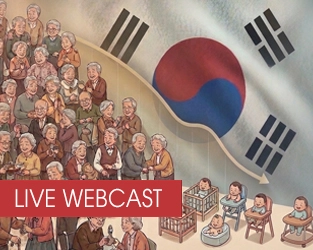
In a discussion on South Korea’s low birth rate and aging society, Professor Youngtae Cho, Director of the Population Policy Research Center (PPRC) at Seoul National University, challenged conventional narratives surrounding South Korea’s demographic decline. Rather than viewing a shrinking population as a critical crisis, Professor Cho reframed it as a unique window of opportunity to strategically build a more sustainable and resilient future.

This program was made possible by the generous support of the Korea Foundation and our individual and corporate members.

Key Takeaways

1. Hypercentralization in Seoul as a Fundamental Driver of Low Fertility

From an evolutionary perspective, Dr. Cho explained that when competition for resources becomes unsustainably intense, an organism’s instinct for individual survival overrides its instinct for reproduction. In South Korea, this survival trigger is directly tied to hypercentralization. More than 50 percent of the national population is concentrated in the Seoul metropolitan area, where economic opportunities are clustered. Coupled with the fact that 77 percent of 30-year-olds hold a college degree—the highest in the world—metropolitan areas have become dense, high-pressure environments where young people face a brutal daily battle for survival, leaving them with no financial or psychological capacity to marry or have children.

2. Quality Over Quantity

Dr. Cho refuted Elon Musk’s claim that South Korea’s low fertility rate would allow North Korea to easily invade by simply “walking across” the DMZ within three generations. He revealed through recent demographic simulations that North Korea’s population is facing its own severe, unmanaged decline; its annual births sit around 220,000 to 230,000, roughly equal to South Korea’s 250,000 births last year. Furthermore, Dr. Cho argued that assessing a nation’s future strictly by headcount is reductionist. South Korea’s historic post-war transformation into a global economic powerhouse was driven by massive leaps in individual human capability and resilience, qualities that numbers alone cannot capture. Dr. Cho encouraged a perspective that looks beyond the population number to additionally consider “APC,” which means age, period, and cohort.

3. The Extreme Reality of Social Aging and Shifting Median Age

Dr. Cho emphasized that a shifting age structure fundamentally transforms a nation into an entirely different world, an evolution best captured by the relentless rise of South Korea’s median age. Historically, this metric dictated the baseline for cultural maturity; in 1994, the median age was a youthful 29, meaning that turning 30 marked a sudden, high-pressure threshold into full adult responsibility. Today, that midpoint has skyrocketed to 46 and by 2054, the median age in Korea will be around 60 years old. This unprecedented shift means institutions, legal frameworks, and economic systems must be completely reinvented to function in a society where the statistical average age shifts substantially.

4. Demographic Solutions for Corporate Talent Pipelines

Dr. Cho asserted that treating population decline as an automatic economic death sentence is a mistake. By looking at demographics through the multi-dimensional “APC” lens (Age, Period, Cohort), businesses can uncover massive expanding global markets and pivot their strategies. In a notable case study, one company faced high resignation rates among its newly recruited elite workforce despite offering top-tier salaries and welfare benefits. Dr. Cho’s research identified a distinct demographic mismatch: 49% of Koreans born in 1990 and 51% born after 2003 are Seoul natives, thus structurally addicted to the capital’s infrastructure. Forcing them to work consecutive years at regional plants hours away created an exhausting, unsustainable weekend travel loop. Acting on Dr. Cho’s advice, the company introduced a bi-weekly 4-day work week in 2024, reversing attrition rates among their young talent.


Speaker

Dr. Youngtae Cho

Dr. Youngtae Cho is a professor of demography at the Graduate School of Public Health, Seoul National University, and director of the SNU Population Policy Research Center. He received his Ph.D. in sociology (specialized in demography) from the University of Texas at Austin in 2002. His research focuses on fertility transitions, demographic change, and their impacts on social and economic structures in East and Southeast Asia. He is the author of several books for general public and has played a leading role in enhancing population literacy in Korea. Through media, public speaking, and policy consultation, Cho reframes demographic shifts not as crises, but tools for building a more sustainable and proactive future.

Assessing North Korea’s
Developing Nuclear Program

Program Brief

Assessing North Korea’s Developing Nuclear Program

In our discussion assessing the latest developments of North Korea’s nuclear program, Open Nuclear Network (ONN) Senior Analyst Sarah Laderman challenged conventional wisdoms regarding the DPRK’s nuclear capabilities and described how the Kim Regime balances its fissile material supply against strategic weaponization demands.

This program was made possible by the generous support of the Korea Foundation and The Korea Society’s individual and corporate members.

Key Takeaways

1. North Korea Is Shifting Toward Routinized Force Development with a Projected Arsenal Expansion by 2034

Laderman noted that by the end of 2034, North Korea could produce between 23–47 strategic warheads using plutonium and 173–228 tactical warheads using highly enriched uranium. North Korea’s ambitious goals point to a posture that could exceed defensive needs. A number of factors, both technical and strategic, will affect the overall production. While uranium supplies remain plentiful for tactical weapons, plutonium remains highly prized for strategic miniaturization and sophisticated designs like multiple independently targetable reentry vehicles (MIRVs).

2. Remote Monitoring Has Advanced Through New Technology, but Weaponization Remains a Distinct “Black Box”

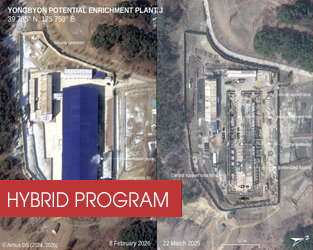
Advances in open-source intelligence (OSINT) have fundamentally transformed how we monitor North Korea’s nuclear capabilities, yet a critical verification gap remains. While commercial satellite technologies can now easily bypass weather and camouflage—using advanced radar to pierce cloud cover, thermal imagery to detect active reactor operations, and AI to map vehicle traffic patterns—this transparency stops short of the final weaponization phase. The resulting intelligence picture is highly uneven: the international community can track large, fixed infrastructures, but the actual assembly of nuclear warheads remains entirely opaque. Because the regime effectively utilizes nondescript buildings and extensive underground mountain tunnels, advanced satellite sweeps have failed to locate a single definitive site for plutonium or uranium pit production. Despite better visibility through open source tools overall, Pyongyang’s most valuable strategic assets remain successfully hidden from foreign observation.

3. To Take Advantage of Open Source Monitoring Tools, a Future Arms Control Policy Could Prioritize Plutonium Over Uranium

Laderman highlighted a core policy dilemma: some of the most strategically valuable assets to eliminate are the hardest to remotely verify. Because on-the-ground international inspections have not occurred in nearly two decades, any realistic opening salvo for an arms control agreement or selective freeze must rely on remote observation. According to Laderman, policymakers could therefore focus initial negotiation priorities on freezing plutonium production rather than highly enriched uranium (HEU). While HEU enrichment efficiency and locations are easily hidden, plutonium relies on distinct, fixed reactor profiles and reprocessing infrastructure, making it the most practical, monitorable, and strategically impactful target for containment.


About the Speaker:

Sarah Laderman is a Senior Analyst for Open Nuclear Network, a PAX sapiens programme, in Vienna, Austria, where she focuses on open-source and technical analyses of nuclear programmes. She is currently focused on the DPRK’s nuclear weaponisation capabilities. She has previously worked at the International Atomic Energy Agency, Lawrence Livermore National Laboratory and the US Department of Defense. Sarah received her MSc in Nuclear Engineering and Masters in Public Policy from the University of California, Berkeley, and her BSc in Nuclear Science and Engineering and Political Science from the Massachusetts Institute of Technology. She is currently a doctoral candidate in Political Science at the University of Vienna.

America’s Taiwan Dilemma:

Program Brief

America’s Taiwan Dilemma

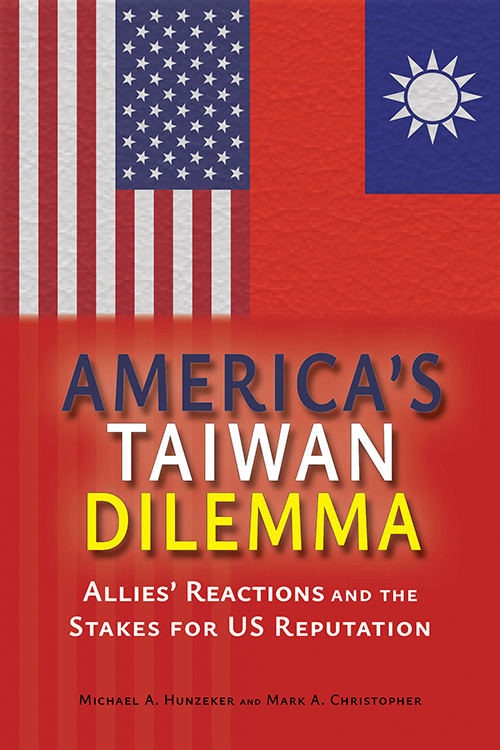
During a discussion regarding his newest book, America’s Taiwan Dilemma: Allies’ Reactions and the Stakes for US Reputation, Mark Christopher argued that Washington policymakers often project their own assumptions onto allies. For instance, U.S. officials believe that allies demand a military defense of Taiwan to preserve America’s reputation. However, through interviews with over 100 regional experts, Christopher challenged this narrative by detailing how South Korea, Japan, and Australia actually perceive Taiwan conflict risks and the reliability of US security commitments.

This program was hosted by the Korea Society as part of the Kim Koo Professional Series.

Key Takeaways

1. Reliability Matters More Than Reputation

Christopher observed that while U.S. policymakers prioritize defending Taiwan to preserve a “reputation” for resolve, regional allies focus primarily on “reliability.” He defines reputation as a backward-looking assessment of past actions, whereas reliability is a forward-looking measure based on current military capability. Allies fear that if a U.S. intervention in Taiwan exhausts American military resources or political will, Washington may become unable to fulfill specific treaty obligations to Japan or South Korea. U.S. involvement in Taiwan may actually weaken alliance reliability if it leaves the U.S. military less capable of providing protection elsewhere.

2. Regional “Realpolitik” and the Lack of Alternatives

Christopher’s research suggests that if China initiates a conflict, America’s allies will likely be pushed closer to the United States regardless of the immediate outcome. Interviewees described a stark power reality: allied nations like Japan and Korea do not wish to acquiesce to Chinese regional hegemony, but lack the individual capability to hold off China. Without a viable alternative, allies are left with no realistic choice but to maintain and strengthen the U.S. alliance, even if a Taiwan contingency results in anger or mistrust toward Washington.

3. South Korea’s Unique “Shrimp among Whales” Dilemma

Unlike Japan or Australia, South Korea does not view Taiwan as a core national security imperative because it faces the existential threat of North Korea. Experts in Seoul expressed concern that a Taiwan conflict would invite North Korean aggression or trigger Chinese economic and military retaliation on the Peninsula. Consequently, Seoul will likely “thread the needle,” seeking to maintain its alliance with the U.S. while avoiding direct combat operations in Taiwan to ensure its long-term coexistence with its permanent neighbor in close geographical proximity, China.

The book is available for sale here

Use the coupon code SAVE20 for a 20% discount on print editions.


About the Speaker:

Mark A. Christopher is an independent risk consultant and a nonresident fellow at the Taiwan Security Monitor. He holds a bachelor’s degree from the Georgetown School of Foreign Service and an MPA from the Princeton School of Public and International Affairs. He previously studied at Peking University, Nanjing University, and Taiwan National Chengchi University. His writing has appeared in Foreign Affairs, Foreign Policy, the Jamestown Foundation’s China Brief, Defense One, and the Wall Street Journal.

Prospects for Relations with North Korea


Program Brief

Prospects for Relations with North Korea

This program examined prospects for relations with North Korea, including US-Republic of Korea (ROK) alliance coordination, inter-Korean relations, the impact of North Korea’s close relations with China and Russia, security concerns, and diplomatic opportunities.

North Korea’s Workers’ Party of Korea held its Ninth Party Congress in February. The Congress occurs approximately once every five years and results in the announcement of important policy priorities and goals for the future.

To unpack these developments, we assembled an expert panel with decades of experience working on and dealing directly with North Korea at the Korea Society in New York City. This timely discussion was moderated by Jonathan Corrado, Director of Policy Programs, The Korea Society.

This program was organized in collaboration with the National Committee on American Foreign Policy and The APEC Study Center at Columbia University.

Part I: The Diagnosis

1. North Korea’s Foreign Policy Priorities ▶ [10:40]

Rachel Minyoung Lee outlined how Pyongyang’s priorities shifted dramatically following the Hanoi summit breakdown, the revitalized Moscow relationship, and reorientation toward the Eurasian orbit. The Ninth Party Congress, typically signaling major policy directions, will clarify Kim Jong Un’s strategic vision for the next five years.

2. U.S.-ROK Policy Coordination ▶ [14:16]

Susan Thornton evaluated alliance coordination, noting both Seoul and Washington have softened rhetoric by de-emphasizing “denuclearization” in recent policy documents. Despite improved atmospherics and South Korea’s “pacemaker” approach, North Korea has remained unwilling to engage diplomatically.

3. Deterrence Risks ▶ [35:24]

Ankit Panda identified major deterrence failure risks, emphasizing North Korea’s “extremely low threshold” for nuclear use. While North Korean forces gained battlefield experience in Ukraine—particularly in drone and electronic warfare—any Korean Peninsula conflict would likely escalate to nuclear within days rather than months.

4. Track 2 Diplomacy and Humanitarian Openings ▶ [39:21]

Keith Luse addressed limited prospects for Track 2 engagement. The divided families issue affecting 100,000 separated families remains urgent but faces obstacles, including U.S. passport restrictions and Pyongyang’s unwillingness to cooperate.

Part II: The Treatment Plan

5. Russia-North Korea Partnership ▶ [36:10]

Lee warned the expanding Russia-North Korea relationship opens doors to Belarus and Iran partnerships. Debris from Ukraine revealed export control gaps, with North Korean missiles containing Western components. Pyongyang remains determined to acquire cutting-edge technologies including advanced semiconductors.

6. Black Swan Scenarios ▶ [1:20:48]

Thornton suggested humanitarian crises could unexpectedly catalyze diplomatic engagement, citing the Otto Warmbier case’s impact during Trump’s first term. The panel acknowledged that while near-term breakthroughs seem unlikely, unexpected events could create openings.

7. Engaging North Korea’s Nuclear Reality ▶ [29:53]

Panda emphasized the need to accept North Korea as a nuclear-armed state and establish direct deterrence communication channels. The U.S. must decide whether to maintain a nuclear deterrence relationship “without any communication or direct engagement with our third nuclear adversary” or pursue stabilization through dialogue, as achieved with the Soviet Union and ongoing with China and Russia. This reframing moves beyond 1990s-era denuclearization goals toward practical risk reduction and crisis communication mechanisms.

8. People-to-People Engagement and Risk Reduction ▶ [28:24]

Luse advocated for maintaining people-to-people engagement opportunities between Americans and North Koreans, noting there is “no reason why we need to yield to Russia on impacting and interacting with the lives of the North Korean people.” Panelists emphasized that risk reduction requires addressing concerns on both sides—while the U.S. prioritizes crisis communications, North Korea seeks assurances on regime security and military exercises. Effective engagement demands willingness to discuss adversary priorities, not just American concerns.

This brief was generated using artificial intelligence technology and has been reviewed and edited by The Korea Society Policy Department for accuracy, context, and editorial standards. All content has been verified against the program transcript and source materials to ensure factual precision.


This program was made possible by the generous support of the Korea Foundation and our individual and corporate members.


Prospects for Relations with North Korea

Tuesday, February 3, 2026 | 6:30 PM (EST)


The Korea Society
350 Madison Avenue, 24th Floor
New York, NY 10017


About the Speakers:


Keith Luse is the Executive Director of the National Committee on North Korea. Previously, Luse was the Senior East Asia Policy Advisor for Chairman and later Ranking Member Senator Richard G. Lugar at the U.S. Senate Foreign Relations Committee from 2003 until 2013. Luse also served as Staff Director for Mr. Lugar at the Senate Agriculture Committee from 1999 through 2002, where the Senator also served as Chairman and later Ranking Member. While at the Senate Agriculture Committee, Luse made the first of eventually five trips to North Korea. In addition to assisting Senator Lugar at the Foreign Relations Committee on legislative initiatives, Luse directed or participated in several oversight projects and investigations. They included the integrity of the U.S. – funded humanitarian assistance distribution process inside North Korea; the murder of Americans in Papua, Indonesia; corruption and transparency challenges at The Asia Development Bank and The World Bank, and an evaluation of the effectiveness of U.S. foreign assistance to countries in East Asia with an emphasis on Cambodia and Indonesia. Luse has traveled extensively in East Asia including five visits to North Korea, and has participated in numerous Track 1.5 and Track 2 sessions about North Korea or with North Korean officials outside of their country. Luse’s Bachelor of Arts degree in political science is from Indiana University. His graduate certificate in public management and additional graduate studies were obtained at Indiana University – Purdue University, Indianapolis.


Rachel Minyoung Lee is a Senior Fellow for the Stimson Center’s Korea Program and 38 North. She is also co-chair of the North Korea Economic Forum, which is part of the policy program at the George Washington University’s Institute for Korean Studies (GWIKS). Lee was a North Korea collection expert and analyst with Open Source Enterprise (OSE; formerly known as Open Source Center) in the US government from 2000 to 2019. During that time, she wrote on the gamut of North Korean issues, from leadership, domestic politics and economy, and foreign policy, to social and cultural developments. As Analysis Team Lead, Lee led a team of collection officers and analysts to track and analyze North and South Korean issues with implications for Pyongyang’s regime stability and regional security. Most recently, from 2022 to early 2024, Lee headed engagement and network-building efforts at the Vienna-based Open Nuclear Network (ONN). In July 2025, she was a POSCO Visiting Fellow at the East-West Center in Hawaii. Lee earned her B.A. in English literature and her M.A. in international law, both at Korea University in Seoul.


Ankit Panda is the Stanton Senior Fellow in the Nuclear Policy Program at the Carnegie Endowment for International Peace. His research interests include nuclear strategy, escalation, missiles and missile defense, space security, and U.S. alliances. He is the author of The New Nuclear Age: At the Precipice of Armageddon (Polity, 2025), Indo-Pacific Missile Arsenals: Avoiding Spirals and Mitigating Risks (Carnegie, 2023), and Kim Jong Un and the Bomb: Survival and Deterrence in North Korea (Hurst/Oxford, 2020). Panda is co-editor of New Approaches to Verifying and Monitoring North Korea’s Nuclear Arsenal (Carnegie, 2021). Panda has consulted for the United Nations in New York and Geneva, and his analysis has been sought by U.S. Strategic Command, Space Command, and Indo-Pacific Command. Panda is among the most highly cited experts worldwide on North Korean nuclear capabilities. He has testified on matters related to South Korea and Japan before the congressionally chartered U.S.-China Economic and Security Review Commission. Panda has also testified before the U.S. Senate Subcommittee on Strategic Forces. Before joining Carnegie, Panda was an adjunct senior fellow at the Federation of American Scientists and a journalist covering international security. Panda is a frequent expert commentator in print and broadcast media around the world on nuclear policy and defense matters. His work has appeared in or been featured by the New York Times, the New Yorker, the Economist, the Washington Post, Foreign Affairs, Foreign Policy, the Bulletin of the Atomic Scientists, the Atlantic, the New Republic, the South China Morning Post, Politico, and the National Interest. Panda has also published in scholarly journals, including Survival, the Washington Quarterly, and India Review, and has contributed to the IISS Asia-Pacific Regional Security Assessment and Strategic Survey. He is editor-at-large at the Diplomat, where he hosts the Asia Geopolitics podcast, and a contributing editor at War on the Rocks, where he hosts Thinking the Unthinkable With Ankit Panda, a podcast on nuclear matters.


Susan A. Thornton is the Director of the Forum on Asia-Pacific Security at the NCAFP, Visiting Lecturer in Law at Yale Law School and Senior Fellow at the Paul Tsai China Center. In 2018, she retired from the State Department after a 28-year diplomatic career focused primarily on East and Central Asia. In leadership roles in Washington, Thornton worked on China and Korea policy, including stabilizing relations with Taiwan, the U.S.-China Cyber Agreement, the Paris Climate Accord and led a successful negotiation in Pyongyang for monitoring of the Agreed Framework on denuclearization. In her 18 years of overseas postings in Central Asia, Russia, the Caucasus and China, Thornton’s leadership furthered U.S. interests and influence and maintained programs and mission morale in a host of difficult operating environments. Prior to joining the Foreign Service, she was among the first State Department Fascell Fellows and served from 1989–90 at the U.S. Consulate in Leningrad. She was also a researcher at the Foreign Policy Institute from 1987–91. Thornton holds degrees from the National Defense University’s Eisenhower School, the Johns Hopkins School of Advanced International Studies, and Bowdoin College. She speaks Russian, Mandarin Chinese and French, is a member of numerous professional associations and is on the Board of Trustees for the Eurasia Foundation.

Korea’s Compressed Modernity and Its Risks

Join us for our second conversation with Seoul National University sociology Professor Chang Kyung-Sup who will discuss various challenges posed by South Korea’s “compressed modernity.” He writes that the same strategies and conditions that enabled explosive development and modernization in South Korea and other Asian societies also produced “existentially hazardous consequences in virtually all areas of public and private life, and seemingly insurmountable obstacles to sustained advances in the future.” And he argues that South Korea’s dynamism flows from the methods that it utilizes to overcome such challenges. This program is a collaboration with the Society’s Policy Department and the Education Department. 

Professor Chang is joined in conversation with education senior advisor Linda Tobash, policy director Jonathan Corrado, and policy program officer Chelsie Alexandre

Paperback copies of Professor Chang’s newest book, The Risk of Compressed Modernity, are available for purchase online at a 20% discount using the code 20KSC. You can view our first discussion with Professor Chang in 2023 here

This program is made possible by the generous support of our individual and corporate members and the Korea Foundation. Promotional support for this program is provided by The Institute of Social Sciences at Seoul National University (SNU ISS). 


Korea’s Compressed Modernity and Its Risks

Wednesday, October 8, 2025 | 8 AM (EDT)


The Korea Society
350 Madison Avenue, 24th Floor
New York, NY 10017


About the Speaker:

Chang Kyung-Sup is a SNU Distinguished Professor at Seoul National University, where he has taught sociology since 1991. His work has dealt with comparative development and modernity, Korean liberalism, Asian citizenship regimes, and Asian transnationalism. His authored books include: The Risk of Compressed Modernity (Polity, 2025); The Logic of Compressed Modernity (Polity, 2022); Transformative Citizenship in South Korea: Politics of Transformative Contributory Rights (Palgrave Macmillan, 2022); Developmental Liberalism in South Korea: Formation, Degeneration, and Transnationalization (Palgrave Macmillan, 2019); South Korea under Compressed Modernity: Familial Political Economy in Transition (Routledge, 2010); Asia In Itself: The Rise of a Continental Society (Polity, in progress). He is also a co editor of The Wiley Blackwell Encyclopedia of Social Theory, 5 Volumes (Wiley, 2017).


You May Also Enjoy:

Consequences of Korea’s Compressed Modernity How National Stories Shape Democracy in Asia Seeds of Mobilization: The Authoritarian Roots of South Korea’s Democracy Korea: The Politics of the Vortex

Force Multiplier: The U.S.-Korea Alliance Amid Strategic Competition

How can the U.S.-Korea Alliance rise to the challenge of an increasingly complex and fraught geopolitical environment? As competing strategic triangles solidify in Northeast Asia, what new challenges and opportunities will arise for the U.S.-Korea relationship and peace and security in the region? This conversation seeks to see through the cycle to identify underlying trends, plot trajectories, and propose policy recommendations. Join us for a conversation with three thought leaders on the security and diplomacy of Northeast Asia: Seth Bailey, Director for the Office of Korean and Mongolian Affairs at the U.S. Department of State, Markus Garlauskas, Director of the Indo-Pacific Security Initiative of the Atlantic Council’s Scowcroft Center for Strategy and Security, and Rachel Minyoung Lee, Senior Fellow for the Stimson Center’s Korea Program and 38 North. The discussion is moderated by Korea Society policy director Jonathan Corrado. This program is produced in cooperation with the Indo-Pacific Security Initiative of the Atlantic Council’s Scowcroft Center for Strategy and Security.


Force Multiplier:
The U.S.-Korea Alliance Amid Strategic Competition

Tuesday, October 1, 2024 | 12 PM (EDT)


The Korea Society
350 Madison Avenue, 24th Floor
New York, NY 10017


About the Speakers:


Seth Bailey became Director for the Office of Korean and Mongolian Affairs at the U.S. Department of State in July 2023. His last assignment was in Honolulu as a visiting professor and Senior Diplomatic Fellow at the DoD-affiliated Asia-Pacific Center for Security Studies. From 2019-2022, Seth served as the Minister Counselor for Political Affairs at U.S. Embassy Beijing, where he led negotiations with the PRC. Seth has also served overseas assignments in South Korea, Sri Lanka, China, and Afghanistan. In Washington, Seth has served on the China Desk, in the Economic Bureau, the Bureau of Legislative Affairs, and in the Bureau of Counterterrorism. Seth was an attorney before joining the State Department.


Markus Garlauskas is the director of the new Indo-Pacific Security Initiative of the Atlantic Council’s Scowcroft Center for Strategy and Security, which replaces the former Asia Security Initiative. He leads this new initiative’s efforts focused on security, prosperity, and freedom in the Indo-Pacific region. He led projects focused on deterrence and defense issues in East Asia as a nonresident senior fellow from August 2020 until assuming his duties as director in January 2023. Garlauskas served in the US government for nearly twenty years. He was appointed to the Senior National Intelligence Service as the National Intelligence Officer (NIO) for North Korea on the National Intelligence Council from July 2014 to June 2020. As NIO, he led the US intelligence community’s strategic analysis on North Korea issues and expanded analytic outreach to non-government experts. He also provided direct analytic support to top-level policy deliberations, including the presidential transition, as well as the Singapore and Hanoi summits with North Korea.


Rachel Minyoung Lee is a Senior Fellow for the Stimson Center’s Korea Program and 38 North. Lee was a North Korea collection expert and analyst with Open Source Enterprise (OSE; formerly known as Open Source Center) in the US government from 2000 to 2019. During that time, she wrote on the gamut of North Korean issues, from leadership, domestic politics and economy, and foreign policy, to social and cultural developments. As Analysis Team Lead, Lee led a team of collection officers and analysts to track and analyze North and South Korean issues with implications for Pyongyang’s regime stability and regional security. Most recently, from 2022 to early 2024, Lee headed engagement and network-building efforts at the Vienna-based Open Nuclear Network (ONN). Lee earned her B.A. in English literature and her M.A. in international law, both at Korea University in Seoul.