
Privileged but Powerless:

Program Brief

Privileged but Powerless

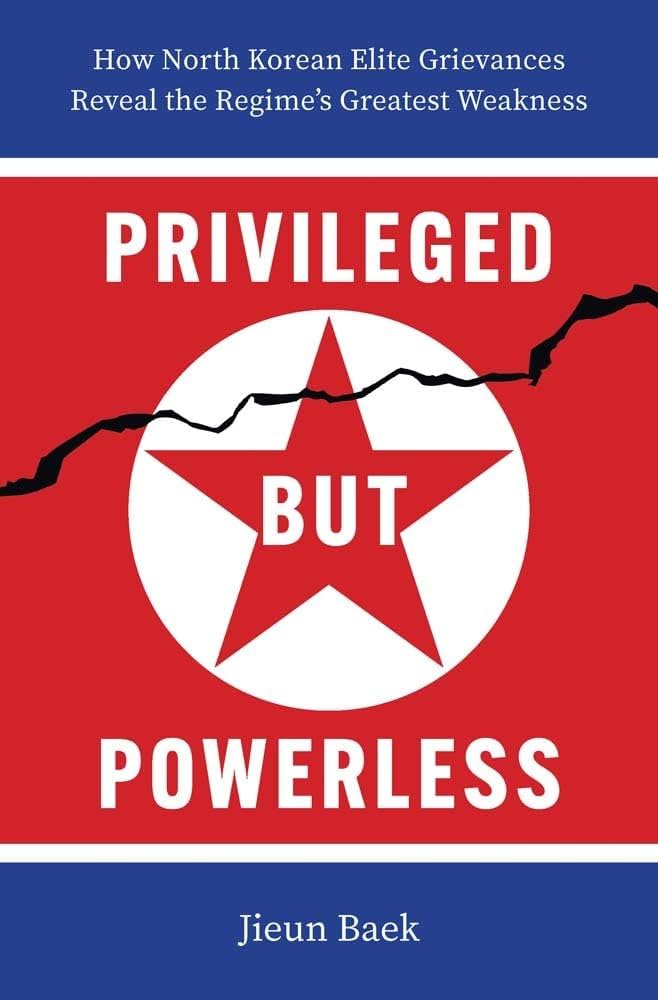
Dr. Jieun Baek described the complex psychological drivers impacting North Korea’s 100,000 political elites in a discussion of her new book, Privileged but Powerless: How North Korean Elite Grievances Reveal the Regime’s Greatest Weakness. Mobilizing hundreds of hours of interviews with high-level escapees, Dr. Baek argued that the elites’ performative loyalty is born out of fear, obscuring a critical vulnerability within the regime’s core support base. Ultimately, the very officials who seem most invested in preserving North Korea’s status quo may become its most dangerous disruptors—driven not by ideology, but by simmering resentment and vanishing alternatives.

This program was hosted by the Korea Society as part of the Kim Koo Professional Series.

Key Takeaways

1. Performative Loyalty as a Mask for Survival

Dr. Baek explained that North Korea’s elite face severe cognitive dissonance, masking deep internal doubts with outward performative loyalty. This hyper-vigilant behavior represents an extreme case of preference falsification, where the most outwardly compliant individuals are actually masking a volatile vulnerability born of fear and self-preservation. To handle the immense mental burden of maintaining this cognitive dissonance, some embrace escapist vices. Additionally, because expressing anger toward Kim Jong-un is fatal, elites psychologically cope with systemic failures by shifting the blame downward, venting their frustrations onto mid-ranking managers instead.

2. The Continuum of Action

According to Dr. Baek, when confronted with their grievances, North Korean political elites operate along a strict behavioral continuum ranging from passive compliance to radical change. The most common and rational choice for individual self-preservation is to simply do nothing and maintain the status quo, which can be accompanied by small acts of adjustment that introduce micro-variations into their daily lives while they maintain their required performative loyalty. For those who decide the pressure is completely intolerable, exit via defection provides a definitive escape, a phenomenon that has increased under Kim Jong-un’s regime. The most distant and difficult choice on the spectrum is to push for reform by attempting to lobby for incremental policy or economic changes from within, though this option remains the furthest from practical reality.

3. Structural Barriers to Collective Action and Individual Survival Tactics

Dr. Baek addressed why covert coups or mass uprisings fail to materialize, pointing to the regime’s engineering of total social atomization, which creates a pervasive culture of mutual distrust where elites never know who is incentivized to report on them. Because collective action is functionally impossible, she noted that the most rational choice for an elite member is to maintain the status quo or intentionally aim for a middle-ground professional tier. This “sweet spot” position is successful enough to provide foreign currency and market luxuries for their families, but quiet enough to avoid shining too brightly and attracting unwanted attention from ambitious rivals.

About the Speaker:
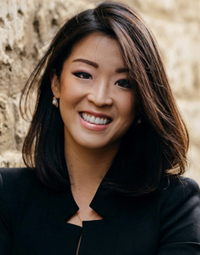
Jieun Baek is an adjunct faculty member at the University of Oxford’s Blavatnik School of Government and a nonresident senior fellow at the Atlantic Council. She is the author of North Korea’s Hidden Revolution and Privileged but Powerless, and researches elite discontent and regime instability in authoritarian states, particularly North Korea and Burma.

Korea’s Compressed Modernity and Its Risks

Join us for our second conversation with Seoul National University sociology Professor Chang Kyung-Sup who will discuss various challenges posed by South Korea’s “compressed modernity.” He writes that the same strategies and conditions that enabled explosive development and modernization in South Korea and other Asian societies also produced “existentially hazardous consequences in virtually all areas of public and private life, and seemingly insurmountable obstacles to sustained advances in the future.” And he argues that South Korea’s dynamism flows from the methods that it utilizes to overcome such challenges. This program is a collaboration with the Society’s Policy Department and the Education Department. 

Professor Chang is joined in conversation with education senior advisor Linda Tobash, policy director Jonathan Corrado, and policy program officer Chelsie Alexandre

Paperback copies of Professor Chang’s newest book, The Risk of Compressed Modernity, are available for purchase online at a 20% discount using the code 20KSC. You can view our first discussion with Professor Chang in 2023 here

This program is made possible by the generous support of our individual and corporate members and the Korea Foundation. Promotional support for this program is provided by The Institute of Social Sciences at Seoul National University (SNU ISS). 


Korea’s Compressed Modernity and Its Risks

Wednesday, October 8, 2025 | 8 AM (EDT)


The Korea Society
350 Madison Avenue, 24th Floor
New York, NY 10017


About the Speaker:

Chang Kyung-Sup is a SNU Distinguished Professor at Seoul National University, where he has taught sociology since 1991. His work has dealt with comparative development and modernity, Korean liberalism, Asian citizenship regimes, and Asian transnationalism. His authored books include: The Risk of Compressed Modernity (Polity, 2025); The Logic of Compressed Modernity (Polity, 2022); Transformative Citizenship in South Korea: Politics of Transformative Contributory Rights (Palgrave Macmillan, 2022); Developmental Liberalism in South Korea: Formation, Degeneration, and Transnationalization (Palgrave Macmillan, 2019); South Korea under Compressed Modernity: Familial Political Economy in Transition (Routledge, 2010); Asia In Itself: The Rise of a Continental Society (Polity, in progress). He is also a co editor of The Wiley Blackwell Encyclopedia of Social Theory, 5 Volumes (Wiley, 2017).


You May Also Enjoy:

Consequences of Korea’s Compressed Modernity How National Stories Shape Democracy in Asia Seeds of Mobilization: The Authoritarian Roots of South Korea’s Democracy Korea: The Politics of the Vortex

Unpacking South Korea’s Snap Presidential Election

Join us for a rapid reaction analysis of South Korea’s 2025 Presidential election. This snap election was triggered by the impeachment of South Korea’s 13th democratically elected president, Yoon Suk-yeol, after he declared martial law last December. This conversation unpacks the issues, the candidates, the voters, and the results, seeking to understand the domestic political undercurrents and consequences of a 60 day race occurring at a pivotal moment for Korea and U.S.-Korea relations. It features Dr. Aram Hur, the Kim Koo Chair in Korean Studies and Assistant Professor of Political Science at the Fletcher School, Tufts University, and Timothy W. Martin, the Korea bureau chief for The Wall Street Journal in Seoul, in conversation with Korea Society policy director Jonathan Corrado and policy program officer Chelsie Alexandre.

The Korea Society thanks our corporate sponsors and individual members and the Korea Foundation for their generous support, which has made this program possible.


Unpacking South Korea’s Snap Presidential Election

Wednesday, June 4, 2025 | 8 AM (EDT)


The Korea Society
350 Madison Avenue, 24th Floor
New York, NY 10017


About the Speakers:


Aram Hur is the Kim Koo Chair in Korean Studies and Assistant Professor of Political Science at the Fletcher School, Tufts University. Her research focuses on nationalism and democracy, with special attention to issues of identity, integration, and democratic support in East Asia. Professor Hur is the author of Narratives of Civic Duty: How National Stories Shape Democracy in Asia (Cornell University Press, 2022), which won the 2023 Robert A. Dahl Award for best book on democracy by an untenured scholar from the American Political Science Association. Her research appears in leading disciplinary journals such as the British Journal of Political Science, Comparative Politics, and Comparative Political Studies and is widely cited in domestic and international media. She was selected as the 2021 Sherman Emerging Scholar by The Korea Society, a 2018-19 CSIS US-Korea NextGen Scholar, and is the recipient of the 2023 Gold Chalk Award for Teaching from the University of Missouri. She holds a Ph.D. in Politics from Princeton University, an M.P.P. from the Harvard Kennedy School, and a B.A. with honors from Stanford University.


Timothy W. Martin is the Korea bureau chief for The Wall Street Journal in Seoul, overseeing the Journal’s coverage of North and South Korea.He previously wrote about Samsung from Seoul, but in prior stints at the Journal’s New York, Atlanta and Chicago offices, he covered Wall Street’s biggest buyers, painkiller addiction, airlines and food.

Martial Law Implications for South Korea and the U.S.-Korea Relationship

Join us for a program that explores recent political events in South Korea, including a brief history of martial law in Korea, the events leading up to the Yoon Suk Yeol administration’s decision to invoke Martial Law, the National Assembly’s counter-action, and the long term consequences of the episode. How will this affect Korea’s domestic politics, the U.S.-ROK Alliance relationship, and inter-Korean relations? The expert panel includes Michelle Ye Hee Lee, Tokyo bureau chief for The Washington Post, covering Japan and the Koreas, and Aram Hur, the Kim Koo Chair in Korean Studies and Assistant Professor of Political Science at the Fletcher School, Tufts University, in conversation with policy director Jonathan Corrado and policy program officer Chelsie Alexandre.

The Korea Society thanks our corporate sponsors and individual members for their generous support, which has made this program possible.


Martial Law Implications for South Korea and the U.S.-Korea Relationship

Wednesday, December 11, 2024 | 8 AM (EST)


The Korea Society
350 Madison Avenue, 24th Floor
New York, NY 10017


About the Speakers:


Aram Hur is the Kim Koo Chair in Korean Studies and Assistant Professor of Political Science at the Fletcher School, Tufts University. Her research focuses on nationalism and democracy, with special attention to issues of identity, integration, and democratic support in East Asia. Professor Hur is the author of Narratives of Civic Duty: How National Stories Shape Democracy in Asia (Cornell University Press, 2022), which won the 2023 Robert A. Dahl Award for best book on democracy by an untenured scholar from the American Political Science Association. Her research appears in leading disciplinary journals such as the British Journal of Political Science, Comparative Politics, and Comparative Political Studies and is widely cited in domestic and international media. She was selected as the 2021 Sherman Emerging Scholar by The Korea Society, a 2018-19 CSIS US-Korea NextGen Scholar, and is the recipient of the 2023 Gold Chalk Award for Teaching from the University of Missouri. She holds a Ph.D. in Politics from Princeton University, an M.P.P. from the Harvard Kennedy School, and a B.A. with honors from Stanford University.


Michelle Ye Hee Lee is The Washington Post‘s Tokyo bureau chief, reporting on Japan and the Korean Peninsula. Previously, she covered money and influence in politics and voting access on the national political enterprise and accountability team and was a reporter for The Post’s Fact Checker. Prior to joining The Post in 2014, she was a government accountability reporter at the Arizona Republic in Phoenix.

The Hungnam Rescue

Join us for an inspiring and heartwarming story timed for the holiday season about the largest wartime humanitarian evacuation in history. During The Korean War, naval and merchant ships from America and its allies rescued almost 100,000 North Korean refugees. Among these ships was a humble freighter, the SS Meredith Victory. Although it was built to accommodate only a few passengers and crew, a staggering 14,000 refugees were crammed on board, filling five cargo holds and the entire main deck. The ship carried them all to safety despite lacking food, mine detection equipment, doctors, interpreters, sanitation facilities, and heat or lights in the cargo holds. The 75th Anniversary of this incredible event in 2025 will be marked by a major long-term exhibition at the American Merchant Marine Museum (AMMM), U.S. Merchant Marine Academy, alongside exhibitions in Korea. Speakers include Burley Smith, who was just 21 when he took part in the rescue as Junior Third Mate fresh out of Kings Point. Today, aged 95, he is the last surviving crew member. Joining Burley is Dr. Joshua Smith, Director of the American Merchant Marine Museum, in conversation with Korea Society policy director Jonathan Corrado.


Sign Up Here to Attend the Event in Person


Sign Up Here to Receive the Viewing Link


The Korea Society thanks the Korea Foundation, our corporate sponsors, and individual members for their generous support, which has made this program possible. 


The Hungnam Rescue

Thursday, December 5, 2024 | 6 PM (EST)


The Korea Society
350 Madison Avenue, 24th Floor
New York, NY 10017


About the Speakers:


Dr. Joshua M. Smith grew up in the United States on Cape Cod and coastal Maine. He holds degrees from the University of St. Andrews in Scotland, Maine Maritime Academy, East Carolina University, and the University of Maine. He is author of Borderland Smuggling: Patriots, Loyalists, and Illicit Trade in the Northeast, 1783-1820, which explores smuggling on the Maine-New Brunswick border and won the John Lyman Award in American Maritime History in 2007. In 2009 he published Blockhouse and Battery: A History of Fort Edgecomb as part of that historic site’s bicentennial, and Battle for the Bay: The Naval War of 1812, which explores dimension of maritime warfare off New England’s coast. He has also edited a two volume collection of documents in American maritime history in conjunction with the National Maritime Historical Society entitled Voyages. He currently is an associate professor of humanities and Interim Coordinator of the American Merchant Marine Museum at the United States Merchant Marine Academy, in Kings Point, New York as well as serving as Department Head of the Humanities Department until September, 2015. Professor Smith lives in Port Washington, NY with his wife and daughter.


Burley Smith was born in Islip, New York, on January 9, 1929. As a child during the Great Depression, his family moved around but he spent most of his elementary and high school years in Atlantic City, New Jersey. He does not remember learning about Korea in school, but his strong interest in learning about what was happening in the world fueled his love for reading newspapers and learning about Korea. Shortly after graduating from the United States Merchant Marine Academy in Kings Point, New York, he was assigned as a Junior Third Mate to the SS Meredith Victory in Norfolk, Virginia. During his six month assignment in Korea, his vessel was part of the convoy for General MacArthur’s infamous Inchon Landing and the revered Heungnam Evacuation.

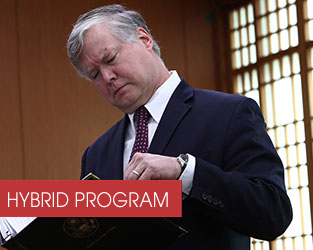
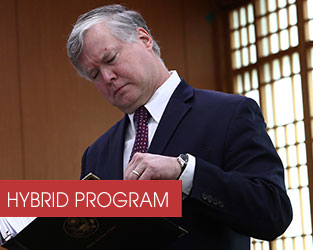
Expert Take: U.S.-North Korea Relations with former Deputy Secretary of State Stephen Biegun

Join us for a conversation with Stephen Biegun, former U.S. Deputy Secretary of State and Special Representative for North Korea. This discussion will examine past diplomatic efforts to achieve the denuclearization of North Korea, lessons learned, and future prospects. What are Mr. Biegun’s takeaways from his summitry engagement with North Korea? Is it still possible today to pursue mutually acceptable waypoints within the confines of a grand bargain or should more modest goals be pursued? How do geopolitical shifts and hardening regional rivalries undermine the U.S. and North Korean interest in improving bilateral relations? How does the public discourse create reductive dichotomies between deterrence vs. diplomacy and human rights vs. humanitarian efforts? The moderator for this program is Korea Society policy director Jonathan Corrado


In-person attendance is restricted to Kim Koo Fellows and Korea Society members ONLY. Please click below to see membership options. Korea Society members will receive a separate in-person invitation. 


The Korea Society thanks the Kim Koo Foundation, our corporate sponsors, and individual members for their generous support, which has made this program possible.


Expert Take: U.S.-North Korea Relations

with former Deputy Secretary of State Stephen Biegun

Tuesday, November 12, 2024 | 10 AM (EST)


The Korea Society
350 Madison Avenue, 24th Floor
New York, NY 10017


About the Speakers:


Stephen E. Biegun is senior vice president of Global Public Policy at The Boeing Company. In this role, he is responsible for advising and executing on Boeing’s global public policy matters in support of the company’s priorities and optimizing relationships with key stakeholders in the U.S. and around the world. He is also a member of the company’s Executive Council. Prior to Boeing, Stephen served as senior advisor at Macro Advisory Partners since 2021 assisting corporate leaders in minimizing geopolitical risk and business disruption in global markets. He has more than three decades of international affairs experience in government and the private sector, including high-level government service with the Department of State, the White House and the United States Congress. 

In 2021, Stephen concluded his most recent government service as the U.S. Deputy Secretary of State, to which he was confirmed by the Senate with a strong bipartisan vote of 90-3. On August 23, 2018, Secretary Pompeo appointed Stephen E. Biegun as the U.S. Special Representative for North Korea, responsible for leading U.S. efforts to achieve President Trump’s goal of the final, fully verified denuclearization of North Korea, as agreed to by Chairman Kim Jong Un at the Singapore summit. As Special Representative, on behalf of the Secretary of State he directed all U.S. policy on North Korea, led negotiations, and spearheaded U.S. diplomatic efforts with allies and partners.