One of Korea’s foremost educational leaders, Ewha Womans University President Kim Sun Uk shares insights into the role of higher education in fostering female leadership and transforming Korean society. Ewha, founded by an American Methodist missionary with a single student in 1886, has grown into the world’s largest, most comprehensive and prestigious women’s university, and continues to be a driving force in creating opportunities for women, not only in Korea, but around the world. President Kim sheds light onto the power of women’s leadership to transform Korean society and Ewha’s critical role in addressing 21st Century challenges.
Washington, DC-based Thomson Reuters Asia correspondent Paul Eckert joins in conversation with The Korea Society’s Stephen Noerper for discussion of U.S. media perceptions and the Korean Peninsula. With rich exposure around Asia to the White House, and with Korean, Chinese and Japanese languages to boot, Eckert weighs good stories and good reporting, examines the how’s and why’s of Asia coverage, and explores the Asia dialogue among journalists and those in government.
$10 Members, $20 Guests, $5 Students
Explorers and Young Professionals’ Network Member tickets are free but registration required here.
Korea’s Ambassador for International Security, the Honorable Chung Min Lee, addresses changes on the Korean Peninsula, recent challenges from North Korea, attendant market impacts, and the evolving investment climate for U.S. and international business. This special Studio Korea session lends insight into immediate security concerns, as well as mid and long-term opportunities and challenges. Lee served as a senior campaign advisor to now-President Park Geun-hye and was a Dean and professor at Yonsei University. He appears widely in international media, with numerous publications, and as an authoritative voice on Korea’s evolving political, security and economic perspectives.
{youtubegalleryid=12,4}
$10 Members, $20 Guests, $5 Students
Explorers and Young Professionals’ Network Member tickets are free but registration required here.
9:30 AM | Registration
10:00 AM | Discussion
11:00 AM | Corporate Cafe*
*Corporate Cafes afford business leaders and analysts a brief, focused, post-program networking opportunity with our featured speaker. Make valuable contacts and lean forward on your read of opportunities and challenges on the Korean Peninsula. Care to join this distinguished discussion? Inquire at corporate@koreasociety.org.
Assistant Secretary, Bureau of East Asian and Pacific Affairs
Incheon, South Korea
September 5, 2013
Thank you very much for coming. I’m so delighted to be back in South Korea. This is a second home for me. I lived with my family in Korea for three years as a Foreign Service Officer, and I’ve been back many times. I have accompanied President Obama each time he visited Korea. I came with former Secretary Clinton. More recently I came both with Secretary Kerry, but also attended the inauguration of President Park in February with Mr. Donilon, representing the President.
But what’s special to me about this visit to Korea is that it’s my first visit here as the Assistant Secretary of State for East Asia and the Pacific. Seoul is the very first stop on my very first trip to Asia as the Assistant Secretary, and that’s not an accident. I’m looking forward to holding consultations with a number of counterparts in the ROK government, and I appreciate the time that they are taking to sit down with me.
We will be able to talk about a range of bilateral issues, talk about North Korea of course, talk about some of the regional issues. But we’ll also discuss some of the global issues that are right now so important, which of course includes the issue of Syria. I’m very appreciative of the strong and clear statements by the Government of Korea condemning the use of chemical weapons and calling for accountability by the Government of Syria.
The visit here also coincides with the 60th anniversary of the U.S.-ROK alliance, something that we have been celebrating. It is a central pillar of the President’s rebalancing strategy. The U.S.-ROK alliance is in great shape and getting better, and I look forward to the meetings that I will have over the next day or so. I also look forward to having a chance to talk to the press after I’ve been able to speak to my counterparts in the government. So, with your permission, I’ll just leave it at this statement and say thank you very much.
(Source: whitehouse.gov)
National Korean War Veterans Memorial Washington, D.C.
July 27, 2013
Thank you so much. (Applause.) Thank you. Please be seated. Good morning. Annyong haseyo.
Secretaries Hagel, Jewell and Shinseki; Admiral Winnefeld; General Jung; all our friends from the Republic of Korea, including the legendary General Paik Sun Yup; distinguished guests; and most of all, veterans of the Korean War and your families. (Applause.)
To our veterans — many in your 80s, a few in your old uniforms — which still fit — (laughter) — let me just say you look outstanding. And I would ask that all United States, Republic of Korea, and other veterans who fought — I would ask those who can stand to please stand so that we can properly honor you here today. (Applause.)
July 27th, 1953 — 60 years ago today. In the village of Panmunjom, in a barren room, the generals picked up their pens and signed their names to the agreement spread before them. That night, as the armistice took hold, the guns of war thundered no more. Along the jagged front, men emerged from their muddy trenches. A Marine raised his bugle and played taps. And a soldier spoke for millions when he said, “Thank God it is over.”
In the days that followed, both sides pulled back, leaving a demilitarized zone between them. Soldiers emptied their sandbags and tore down their bunkers. Our POWs emerged from the camps. Our troops boarded ships and steamed back across the ocean. And describing the moment he passed under the Golden Gate Bridge, one of those soldiers wrote, “We suddenly knew we had survived the war, and we were home.”
Yet ask these veterans here today and many will tell you, compared to other wars, theirs was a different kind of homecoming. Unlike the Second World War, Korea did not galvanize our country. These veterans did not return to parades. Unlike Vietnam, Korea did not tear at our country. These veterans did not return to protests. Among many Americans, tired of war, there was, it seemed, a desire to forget, to move on. As one of these veterans recalls, “We just came home and took off our uniforms and went to work. That was about it.”
You, our veterans of Korea, deserved better. And down the decades, our nation has worked to right that wrong, including here, with this eternal memorial, where the measure of your sacrifice is enshrined for all time. Because here in America, no war should ever be forgotten, and no veteran should ever be overlooked. And after the armistice, a reporter wrote, “When men talk in some distant time with faint remembrance of the Korean War, the shining deeds will live.” The shining deeds will live.
On this 60th anniversary, perhaps the highest tribute we can offer our veterans of Korea is to do what should have been done the day you come home. In our hurried lives, let us pause. Let us listen. Let these veterans carry us back to the days of their youth, and let us be awed by their shining deeds.
Listen closely and hear the story of a generation — veterans of World War II recalled to duty. Husbands kissing their wives goodbye yet again. Young men — some just boys, 18, 19, 20 years old — leaving behind everyone they loved “to defend a country they never knew and a people they never met.” Let’s never forget all the daughters who left home, especially our heroic nurses who saved so many. Our women in Korea also served with honor. They also gave their lives. (Applause.)
Listen, and hear how these Americans faced down their fears and did their duty. Clutching their rifles; hearing the bugles in the distance; knowing that waves of enemy fighters would soon be upon them. In ships offshore, climbing down the ropes into the landing craft, knowing some of them would not leave that beach. On the tarmacs and flight decks, taking off in their Corsairs and Sabres, knowing that they might not return to this earth.
Listen, and hear of their gallantry — often outnumbered and outgunned — in some of the most brutal combat in modern history. How they held the line at the Pusan Perimeter. How they landed at Inchon and turned the tide of the war. How, surrounded and freezing, they battled their way out of Chosin Reservoir. And how they fought — foxhole by foxhole, mountain after mountain, day and night — at the Punchbowl and Heartbreak Ridge, Old Baldy and Pork Chop Hill.
Listen, and hear how perhaps the only thing worse than the enemy was the weather. The searing heat, the choking dust of summer. The deep snow and bitter cold of winter — so cold their weapons could jam; so cold their food would turn to ice. And surely no one endured more than our POWs in those hellish camps, where the torment was unimaginable. Our POWs from Korea are some of the strongest men our nation has ever produced, and today we honor them all — those who never came home and those who are here today. (Applause.)
Listen to these veterans and you’ll also hear of the resilience of the human spirit. There was compassion — starving prisoners who shared their food. There was love — men who charged machine guns, and reached for grenades, so their brothers might live. There was the dark humor of war — as when someone misunderstood the code name for mortar rounds — “Tootsie Rolls” — and then shipped our troops thousands of Tootsie Rolls — candies.
And there was hope — as told in a letter home written by a soldier in the 7th Cavalry. Marching through the snow and ice, something caught his eye — a young lieutenant up ahead, and from the muzzle of his rifle hung a pair of tiny baby booties, “swinging silently in the wind…like tiny bells.” They were sent by the lieutenant’s wife, pregnant with their first child, and she promised to send ribbons — blue if a boy, pink if a girl. But as the war ground on, those soldiers were scattered. Until one day, on a Korean road, he spotted the lieutenant again. “Swinging gaily in the first rays of the morning sun,” the soldier wrote, were those booties, “and fluttering below them was the brightest, bluest piece of ribbon I have ever seen.”
Six decades on, these moments may seem like faint remembrances of a distant time. But for you — our Korea veterans and your families — I know it must feel sometimes just like just yesterday. And on days such as this, you’re back there once more. For Korea was the fire that helped to forge you.
As we listen to the story of your service, I say let us also learn, because your lives hold lessons for us today. Korea taught us the perils when we fail to prepare. After the Second World War, a rapid drawdown left our troops underequipped, so that in the early days of Korea, their rockets literally bounced off enemy tanks. Today, as we end a decade of war and reorient our forces for the future, as we make hard choices at home, our allies and adversaries must know the United States of America will maintain the strongest military the world has ever known, bar none, always. That is what we do. (Applause.)
Korea taught us that, as a people, we are stronger when we stand as one. On President Truman’s orders, our troops served together in integrated units. And the heroism of African Americans in Korea — and Latinos and Asian Americans and Native Americans — advanced the idea: If these Americans could live and work together over there, surely we could do the same thing here at home. (Applause.)
Change came slowly. And we continue our long journey toward a more perfect union. But for the great strides we have made toward the ideals of equality and opportunity, we must give thanks to our Korean War veterans who helped point the way.
Korea reminds us that when we send our troops into battle, they deserve the support and gratitude of the American people — especially when they come home. Today, let us remember that — right now — our sons and daughters continue to risk their lives, give their lives, in Afghanistan. And as this war ends and we welcome them home, we will make it our mission to give them the respect and the care and the opportunities that they have earned. (Applause.)
And Korea reminds us that our obligations to our fallen and their families endure long after the battle ends. To this day, 7,910 Americans are still missing from the Korean War. And we will not stop working until we give these families a full accounting of their loved ones. (Applause.) Like Sergeant First Class William Robinson — 26 years old — missing for 63 years. This week, in Indiantown Gap, Pennsylvania, the Robinsons will welcome their uncle home and finally lay him to rest — with full military honors. (Applause.)
Freedom is not free. And in Korea, no one paid a heavier price than those who gave all — 36,574 American patriots, and, among our allies, more than one million of our South Korean friends — soldiers and civilians. That July day, when the fighting finally ended, not far from where it began, some suggested this sacrifice had been for naught, and they summed it up with a phrase — “die for a tie.”
It took many decades for this memorial to gain its rightful place on this great Mall where we tell our American story. It has, perhaps, taken even longer to see clearly, and understand fully, the true legacy of your service. But here, today, we can say with confidence that war was no tie. Korea was a victory. When 50 million South Koreans live in freedom — a vibrant democracy, one of the world’s most dynamic economies, in stark contrast to the repression and poverty of the North — that’s a victory; that’s your legacy. (Applause.)
When our soldiers stand firm along the DMZ; when our South Korean friends can go about their lives, knowing that the commitment of the United States to the security of the Republic of Korea will never waver — that is a victory, and that is your legacy.
When our allies across the Asia Pacific know — as we have proven in Korea for 60 straight years — that the United States will remain a force for peace and security and prosperity –that’s a victory; that’s your legacy.
And for generations to come, when history recalls how free nations banded together in a long Cold War, and how we won that war, let it be said that Korea was the first battle — where freedom held its ground and free peoples refused to yield, that, too, is your victory, your legacy.
Most of all, your legacy burns brightest right here, in a grateful nation that reveres you; in the loving families that cherish you — like that young soldier with those baby booties swinging from his rifle. Ever since the war, the story of that soldier has been passed among our Korean War vets. Some of you may have heard it before. And many may have wondered what became of that soldier. Today, six decades later, we now know — because we found him. His was Richard Shank, from St. Louis, Missouri. For his valor in Korea he earned the Silver Star. Yes, Dick survived the war. He returned home. He held his baby boy in his arms. He was able to be a father to his son.
But this story doesn’t end there — because like so many of you, Dick continued to serve in uniform. His son grew into a man, got married, had children of his own. Those children are now adults themselves, scattered across the country. And like so many American families, they still speak with pride of their grandfather’s service in Korea.
Today, Dick Shank lives in Gainesville, Florida, and I believe he’s watching us this morning. He’s 84 years old, recovering from a recent fall while roller skating. (Laughter.) “Life is short,” he says, “and I just keep on living it.” And one of the ways he keeps living it is by meeting up every year with his buddies from Korea, and recalling the time they shared together in that fight which ended 60 years ago today.
Veterans of the Korean War — in the spring of your youth you learned how short and precious life can be. And because of you, millions of people can keep on living it, in freedom and in peace. Your lives are an inspiration. Your service will never be forgotten. You have the thanks of a grateful nation. And your shining deeds will live — now and forever.
May God bless those who gave all in Korea. May God bless you and your families. May God bless the alliances that helped secure our prosperity and our security. And may God continue to bless these United States of America. Thank you very much. (Applause.)
(Source: whitehouse.gov)
Remarks by President Park Geun-hye, Republic of Korea to Joint Session of Congress
May 8, 2013
Speaker Boehner, Vice President Biden, distinguished members of the House and the Senate, ladies and gentlemen, I am privileged to stand in this chamber — this hallowed ground of freedom and democracy — to speak about our friendship and our future together. After I arrived in Washington the day before yesterday, I went to the Korean War Memorial near the banks of the Potomac. I read the words etched in granite: “Our nation honors her sons and daughters, who answered the call to defend a country they never knew and a people they never met.” Time and again, I am moved when I read those familiar words.
Let me express — on behalf of the people of the Republic of Korea — our profound gratitude to America’s veterans. Their blood, sweat and tears helped safeguard freedom and democracy. I also offer my heartfelt appreciation to four men in particular. They served in that war and now serve in this chamber. Their names are Congressmen John Conyers, Charles Rangel, Sam Johnson and Howard Coble.
Gentlemen, my country thanks you.
When the guns fell silent in the summer of 1953, Koreans were surviving on 67 dollars a year. Six decades later, Korea is one of the top five car producers and the eighth-largest trading nation. Some call this the “Miracle on the Han River.”
But for those of us in Korea, it was anything but a miracle. And it wasn’t just built from within. Koreans worked tirelessly in the mines of Germany, in the jungles of Vietnam, and in the deserts of the Middle East.
These are the people — the proud Korean people — I am so honored to serve as President. They are the ones that made Korea what it is today. Together, we will write a sequel to that story: “A Second Miracle on the Han River.”
This time, it will be written with a revived economy, with a people that are happy, with a flourishing culture, and on a pathway to a reunified Peninsula.
These are the four tenets that guide my government. We also know that we didn’t come this far on our own. Along our journey we have been aided by great friends and among them, the United States is second to none. America, I thank you for your friendship.
If the past is anything to go by, our new journey will also be filled with excitement. This year, we honor the 60th anniversary of our alliance. And today, I would like to acknowledge one iconic family that captures those 60 years. It is the family of Lieutenant Colonel David Morgan.
Colonel Morgan’s grandfather, the late Warren Morgan, fought in the Korean War. The senior Morgan was a commander in the U.S. Naval Reserve. His father, John Morgan, also served in the Korean War. He was a battery commander of the 213th Field Artillery. Colonel Morgan himself has served two tours in Korea in 1992 and 2005. The Morgan family is a living testimony to our 60 years together — three generations of Americans helping to safeguard Korea.
As President of a grateful nation, I salute the Morgan family and the commitment and friendship of the American people. Looking forward, our precious alliance is setting its sights on a better world — a brighter future. Bound by trust, guided by shared values, we are cooperating across and beyond our own boundaries. Korea has stood by the United States in Iraq and Afghanistan.
Together, we supported peace-building and reconstruction in those nations. Following the Washington conference in 2010, Seoul hosted the 2nd Nuclear Security Summit last year. There we reaffirmed our commitment to the vision of “a world without nuclear weapons.”
“A world without nuclear weapons” — President Obama’s vision — must start on the Korean Peninsula. For the Peninsula is home to the only divided nation-state and directly faces the threat of nuclear weapons. It is an ideal test-bed for a future free of nuclear arms. If we can pull it off on the Korean Peninsula, then we can pull it off anywhere else.
Korea has been pursuing the peaceful use of nuclear energy.It is also firmly committed to the principle of non-proliferation. Korea and the United States are partnering to build reactors in third countries. In this regard, we need a modernized, mutually beneficial successor to our existing civil nuclear agreement. Such an accord will bring huge benefits to related industries in both our countries. Our partnership also extends to development assistance.
The United States and Korea send the largest numbers of aid volunteers abroad. We will work side by side to help lower-income countries. In 2011, our aid agencies signed a document that facilitates these efforts. And Korea’s aid agency will soon be signing another with the US Peace Corps.
In March of last year, the Korea-US Free Trade Agreement went into effect. The agreement adds an economic pillar to our alliance. It has moved us closer to a comprehensive strategic alliance.
We can do even more.If the bill on visa quotas for Korean professionals is passed in this Congress, both our economies will benefit, for it would help create many more jobs. It would show our people what the FTA can do for them.
I ask Congress for its understanding — for its support. Our FTA also connects East Asia and North America and provides a key platform for building a common Asia-Pacific market. The agreement also helps underpin Washington’s rebalancing toward the region. Collectively, these developments paint a forward-leaning alliance. They point to a 21st century partnership that is both comprehensive and strategic.
Ladies and gentlemen,
That is our present, the foundation on which we stand. I now wish to share my vision of “our future together”-a future that we will build together as partners.
Following our meeting yesterday, President Obama and I adopted a Joint Declaration. Building on the extraordinary accomplishments of the last sixty years, we determined to embark on another shared journey toward peace on the Korean Peninsula, toward cooperation in Northeast Asia, and finally toward prosperity around the world.
It is my hope that as we make this journey, our partnership will be guided by a three-part vision. The first is to lay the groundwork for enduring peace on the Korean Peninsula and over time for reunification. That future, I know, feels distant today.
North Korea continues to issue threats and provocations firing long-range missiles, staging nuclear tests that undermine peace on the Peninsula and far beyond it. The Korean government is reacting resolutely, but calmly. We are maintaining the highest level of readiness. We are strengthening our cooperation with the US and other international partners.
Korea’s economy and financial markets remain stable. Companies-both domestic and foreign-see this, and are expanding their investments. Korea’s economic fundamentals are strong. Its government is equal to the task. And it is backed by the might of our alliance. So long as this continues you may rest assured: no North Korean provocation can succeed.
I will remain steadfast in pushing forward a process of trust-building on the Korean Peninsula. I am confident that trust is the path to peace-the path to a Korea that is whole again. The Republic of Korea will never accept a nuclear-armed North Korea. Pyongyang’s provocations will be met decisively.
At the same time, I will not link humanitarian aid provided to the North Korean people, such as infants and young children, to the political situation. And with the trust that gradually builds up, through exchange, through cooperation, we will cement the grounds for durable peace and -eventually- peaceful reunification. But as we say in Korea, it takes two hands to clap. Trust is not something that can be imposed on another.
The pattern is all too familiar — and badly misguided. North Korea provokes a crisis. The international community imposes a certain period of sanctions. Later, it tries to patch things up by offering concessions and rewards. Meanwhile, Pyongyang uses that time to advance its nuclear capabilities. And uncertainty prevails.
It is time to put an end to this vicious cycle. Pyongyang is pursuing two goals at once, a nuclear arsenal and economic development. We know these are incompatible. You cannot have your cake and eat it, too. The leadership in Pyongyang must make no mistake. Security does not come from nuclear weapons. Security comes when the lives of its people are improved. It comes when people are free to pursue their happiness.
North Korea must make the right choice. It must walk the path to becoming a responsible member in the community of nations. In order to induce North Korea to make that choice, the international community must speak with one voice. Its message must be clear and consistent. Only then will we see real progress in inter-Korean relations. Only then will lasting peace be brought to the Korean Peninsula and Northeast Asia.
60 years ago, a stretch of earth bisecting the Korean Peninsula was cleared of arms. Today, that demilitarized zone drawn to prevent armed collision is the most militarized place on the planet. And the standoff around the DMZ has the potential to endanger global peace.
We must defuse that danger. Not just South and North Korea. The world must also get involved. The demilitarized zone must live up to its name, a zone that strengthens the peace not undermines it.
It is with this vision in mind that I hope to work toward an international park inside the DMZ. It will be a park that sends a message of peace to all of humanity. This could be pursued in parallel with my Trust-building Process. There, I believe we can start to grow peace — to grow trust. It would be a zone of peace bringing together not just Koreans separated by a military line, but also the citizens of the world. I call on America and the global community to join us in seeking the promise of a new day.
Honorable members of Congress,
The second leg of our journey extends beyond the Korean Peninsula to all of Northeast Asia where we must build a mechanism of peace and cooperation.
Sadly, today the nations of this region fail to fulfill all that we can achieve collectively. That potential is tremendous. The region’s economies are gaining ever greater clout and becoming more and more interlinked. Yet, differences stemming from history are widening.
It has been said that those who are blind to the past cannot see the future. This is obviously a problem for the here and now. But the larger issue is about tomorrow. For where there is failure to acknowledge honestly what happened yesterday, there can be no tomorrow.
Asia suffers from what I call “Asia’s paradox,” the disconnect between growing economic interdependence on the one hand, and backward political, security cooperation on the other. How we manage this paradox — this will determine the shape of a new order in Asia.
Together, we must meet these challenges. And so I propose an initiative for peace and cooperation in Northeast Asia.
We cannot afford to put off a multilateral dialogue process in Northeast Asia. Together, the United States and other Northeast Asian partners could start with softer issues. These include environmental issues and disaster relief. They include nuclear safety and counter-terrorism. Trust will be built through this process. And that trust will propel us to expand the horizons of our cooperation.
The initiative will serve the cause of peace and development in the region. But it will be firmly rooted in the Korea-US alliance. In this sense, it could reinforce President Obama’s strategy of rebalancing towards the Asia-Pacific.
Of course, North Korea could also be invited to join. If we start where our interests overlap, then later on it will be easier to find common ground on the larger challenges — easier to find solutions to our mutual benefit.
I firmly believe that Korea and the United States will work hand in hand as we shape an emerging process for cooperation in the region.
The third and final leg of our journey extends even farther beyond the Peninsula-beyond Northeast Asia to the rest of the world.
It is to contribute to happiness — the happiness of Koreans on both halves of the Peninsula-the happiness of all humanity. This is a vision I also advanced at my inauguration.
The “Pursuit of Happiness” is enshrined in the American Declaration of Independence. It also occupies a special place in the Korean Constitution. I have long believed that our alliance should aim far — that it should ultimately seek a happier world.
Guided by this spirit, we stood side by side in the frontiers of peace and freedom. Infused by this spirit, we are expanding cooperation on global issues like counter-terrorism, nuclear non-proliferation and the global financial crisis.
Our efforts will not stop there. Together, we will help spread the universal values of freedom, human rights and the rule of law. We will march together to take on global challenges — from fighting poverty to tackling climate change and other environmental issues.
Members of the House and the Senate,
Our journey since the Korean War has been led by a specific mission to respond to threats and provocations from the North and to defend freedom and peace on the Korean Peninsula.
Today, our alliance is called upon to go beyond that — beyond just the defense of freedom and peace. We are called upon to step forward on a new journey-a journey toward a Korea that is at peace, that is happy, and that is made whole.
Our economic partnership must also aim higher and reach further into the future.
President Obama has outlined the Startup America Initiative. Together with my strategy for a creative economy, we can advance toward a common goal-to help channel the innovative ideas, the passion, and the drive of our youths towards a brighter future.
Koreans and Americans are partnering in new ways whether at world-tours of Korean pop-stars for Hollywood films or at reconstruction sites in the Middle East.
Together, we can envision a future that is richer, that is safer, and that is happier.
Our chorus of freedom and peace, of future and hope, has not ceased to resonate over the last 60 years and will not cease to go on.
Columbia University Professor Charles Armstrong unveils his latest work, Tyranny of the Weak: North Korea and the World, 1950-1992, for members and media. Armstrong exposes the motivations, processes and effects of DPRK Cold War foreign relations. Drawing from Soviet, Chinese and East German archives, he reveals how North Korea managed fellow communist states, maintained independence during the Sino-Soviet split, reached out to the West, presented itself as a Third World model, and confronted and engaged the U.S. and ROK. From the Korean War through Soviet decline, his coverage reveals how–despite weakness–North Korea has dealt with the outside world to its advantage and resisted pressure to change–of which an understanding today is as urgent as sixty years ago.
$10 Members, $20 Guests, $5 Students
Explorers and Young Professionals’ Network Member tickets are free but registration required here.
5:00 PM | Registration
5:30 PM | Discussion
Co-sponsored with The Center for Korean Research at Columbia University.
Join Korean War veterans for a Radio Days-style salute, featuring a program of recorded end-of-war stories on our vintage-1953 stage set. Serving those who served, The Korea Society offers a special Korean dinner, with end-of war tunes to round out this special commemoration. Many participants attending will venture to Washington, DC for a Saturday gathering of 10,000 Korean War veterans at the national memorial. The July 23 salute is co-sponsored with the Consulate General of the Republic of Korea.
Tuesday, July 23, 2013
5:30 PM | Arrivals 6:00 PM | Dinner and Program
The Korea Society concludes three years of observances surrounding the sixtieth anniversary of the Korean War with a July 23 salute to veterans. In marking the sixtieth anniversary of the end-of-war, The Korea Society shares remembrances from General (Ret.) Walter “Skip” Sharp, Pacific Forum CSIS President Ralph Cossa, Former Vice Foreign Minister and Korea University Professor of International Relations Sung-Han Kim, and Former Director of Policy Planning and The Sejong Institute Director of Security Studies Lee Sang-Hyun. Four voices–two Korean, two American–one Alliance at 60.
Sharp on 60th Anniversary of the Korean War’s End
General (Ret.) Sharp, former Commander USFK/UNC/CFC and Honorary Chair of the Department of Defense 60th Anniversary of the Korean War Commemoration Committee, describes remembrance activities and shares insight into the U.S.-ROK alliance.
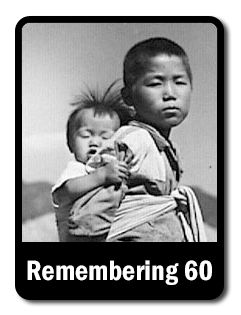
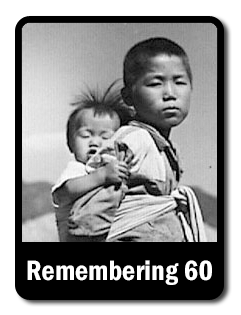
Ralph Cossa: Remembering 60
Ralph Cossa, President of Pacific Forum CSIS, recalls his service on the Peninsula and engagement over many years on Korean affairs, saluting the Alliance and sharing hopes for peace and unification.
Sung-Han Kim: Remembering 60
Sung-han Kim, Professor of International Relations at Korea University and former Vice Foreign Minister, reflects on shared sacrifice and the “blood alliance.” He explores Korea’s growth from a developing country to development model and calls for enhanced international cooperation around the challenges of North Korea.
Sang-Hyun Lee: Remembering 60
Sang-Hyun Lee, Senior Fellow and Director of Security Studies Programs at The Sejong Institute, explores the importance of “turning 60” in Asia and calls for enhanced international resolve around the security challenges of North Korea. He hopes for a change among DPRK leaders and calls for a mechanism to make peace more enduring.
The Korea Society Senior Vice President, Dr. Stephen Noerper, speaks to a Brookings Institution gathering on the evolution and scope of South Korea’s public diplomacy efforts. He charts the beneficial impacts of the follow-on to Korea’s political, economic and business success, Korea’s cultural flowering of the last decade, and Korea’s branding efforts across public and private sectors. Noerper, author of the 1990s ground-breaking The Tiger’s Leap, an examination of Korea’s diplomatic rise and shifts in external image, points to the opportunities of and challenges to Korea’s enhanced public diplomacy efforts. The address was part of a session charting the growth of several East Asian nations’ public diplomacy efforts, a program that may be heard in its entirety here.
Remarks by President Obama at 60th Anniversary of the Korean War Armistice
THE PRESIDENT: Thank you so much. (Applause.) Thank you. Please be seated. Good morning. Annyong haseyo.
Secretaries Hagel, Jewell and Shinseki; Admiral Winnefeld; General Jung; all our friends from the Republic of Korea, including the legendary General Paik Sun Yup; distinguished guests; and most of all, veterans of the Korean War and your families. (Applause.) To our veterans — many in your 80s, a few in your old uniforms — which still fit — (laughter) — let me just say you look outstanding. And I would ask that all United States, Republic of Korea, and other veterans who fought — I would ask those who can stand to please stand so that we can properly honor you here today. (Applause.)
July 27th, 1953 — 60 years ago today. In the village of Panmunjom, in a barren room, the generals picked up their pens and signed their names to the agreement spread before them. That night, as the armistice took hold, the guns of war thundered no more. Along the jagged front, men emerged from their muddy trenches. A Marine raised his bugle and played taps. And a soldier spoke for millions when he said, “Thank God it is over.”
In the days that followed, both sides pulled back, leaving a demilitarized zone between them. Soldiers emptied their sandbags and tore down their bunkers. Our POWs emerged from the camps. Our troops boarded ships and steamed back across the ocean. And describing the moment he passed under the Golden Gate Bridge, one of those soldiers wrote, “We suddenly knew we had survived the war, and we were home.”
Yet ask these veterans here today and many will tell you, compared to other wars, theirs was a different kind of homecoming. Unlike the Second World War, Korea did not galvanize our country. These veterans did not return to parades. Unlike Vietnam, Korea did not tear at our country. These veterans did not return to protests. Among many Americans, tired of war, there was, it seemed, a desire to forget, to move on. As one of these veterans recalls, “We just came home and took off our uniforms and went to work. That was about it.”
You, our veterans of Korea, deserved better. And down the decades, our nation has worked to right that wrong, including here, with this eternal memorial, where the measure of your sacrifice is enshrined for all time. Because here in America, no war should ever be forgotten, and no veteran should ever be overlooked. And after the armistice, a reporter wrote, “When men talk in some distant time with faint remembrance of the Korean War, the shining deeds will live.” The shining deeds will live.
On this 60th anniversary, perhaps the highest tribute we can offer our veterans of Korea is to do what should have been done the day you come home. In our hurried lives, let us pause. Let us listen. Let these veterans carry us back to the days of their youth, and let us be awed by their shining deeds.
Listen closely and hear the story of a generation — veterans of World War II recalled to duty. Husbands kissing their wives goodbye yet again. Young men — some just boys, 18, 19, 20 years old — leaving behind everyone they loved “to defend a country they never knew and a people they never met.” Let’s never forget all the daughters who left home, especially our heroic nurses who saved so many. Our women in Korea also served with honor. They also gave their lives. (Applause.)
Listen, and hear how these Americans faced down their fears and did their duty. Clutching their rifles; hearing the bugles in the distance; knowing that waves of enemy fighters would soon be upon them. In ships offshore, climbing down the ropes into the landing craft, knowing some of them would not leave that beach. On the tarmacs and flight decks, taking off in their Corsairs and Sabres, knowing that they might not return to this earth.
Listen, and hear of their gallantry — often outnumbered and outgunned — in some of the most brutal combat in modern history. How they held the line at the Pusan Perimeter. How they landed at Inchon and turned the tide of the war. How, surrounded and freezing, they battled their way out of Chosin Reservoir. And how they fought — foxhole by foxhole, mountain after mountain, day and night — at the Punchbowl and Heartbreak Ridge, Old Baldy and Pork Chop Hill.
Listen, and hear how perhaps the only thing worse than the enemy was the weather. The searing heat, the choking dust of summer. The deep snow and bitter cold of winter — so cold their weapons could jam; so cold their food would turn to ice. And surely no one endured more than our POWs in those hellish camps, where the torment was unimaginable. Our POWs from Korea are some of the strongest men our nation has ever produced, and today we honor them all — those who never came home and those who are here today. (Applause.)
Listen to these veterans and you’ll also hear of the resilience of the human spirit. There was compassion — starving prisoners who shared their food. There was love — men who charged machine guns, and reached for grenades, so their brothers might live. There was the dark humor of war — as when someone misunderstood the code name for mortar rounds — “Tootsie Rolls” — and then shipped our troops thousands of Tootsie Rolls — candies.
And there was hope — as told in a letter home written by a soldier in the 7th Cavalry. Marching through the snow and ice, something caught his eye — a young lieutenant up ahead, and from the muzzle of his rifle hung a pair of tiny baby booties, “swinging silently in the wind…like tiny bells.” They were sent by the lieutenant’s wife, pregnant with their first child, and she promised to send ribbons — blue if a boy, pink if a girl. But as the war ground on, those soldiers were scattered. Until one day, on a Korean road, he spotted the lieutenant again. “Swinging gaily in the first rays of the morning sun,” the soldier wrote, were those booties, “and fluttering below them was the brightest, bluest piece of ribbon I have ever seen.”
Six decades on, these moments may seem like faint remembrances of a distant time. But for you — our Korea veterans and your families — I know it must feel sometimes just like just yesterday. And on days such as this, you’re back there once more. For Korea was the fire that helped to forge you.
As we listen to the story of your service, I say let us also learn, because your lives hold lessons for us today. Korea taught us the perils when we fail to prepare. After the Second World War, a rapid drawdown left our troops underequipped, so that in the early days of Korea, their rockets literally bounced off enemy tanks. Today, as we end a decade of war and reorient our forces for the future, as we make hard choices at home, our allies and adversaries must know the United States of America will maintain the strongest military the world has ever known, bar none, always. That is what we do. (Applause.)
Korea taught us that, as a people, we are stronger when we stand as one. On President Truman’s orders, our troops served together in integrated units. And the heroism of African Americans in Korea — and Latinos and Asian Americans and Native Americans — advanced the idea: If these Americans could live and work together over there, surely we could do the same thing here at home. (Applause.)
Change came slowly. And we continue our long journey toward a more perfect union. But for the great strides we have made toward the ideals of equality and opportunity, we must give thanks to our Korean War veterans who helped point the way.
Korea reminds us that when we send our troops into battle, they deserve the support and gratitude of the American people — especially when they come home. Today, let us remember that — right now — our sons and daughters continue to risk their lives, give their lives, in Afghanistan. And as this war ends and we welcome them home, we will make it our mission to give them the respect and the care and the opportunities that they have earned. (Applause.)
And Korea reminds us that our obligations to our fallen and their families endure long after the battle ends. To this day, 7,910 Americans are still missing from the Korean War. And we will not stop working until we give these families a full accounting of their loved ones. (Applause.) Like Sergeant First Class William Robinson — 26 years old — missing for 63 years. This week, in Indiantown Gap, Pennsylvania, the Robinsons will welcome their uncle home and finally lay him to rest — with full military honors. (Applause.)
Freedom is not free. And in Korea, no one paid a heavier price than those who gave all — 36,574 American patriots, and, among our allies, more than one million of our South Korean friends — soldiers and civilians. That July day, when the fighting finally ended, not far from where it began, some suggested this sacrifice had been for naught, and they summed it up with a phrase — “die for a tie.”
It took many decades for this memorial to gain its rightful place on this great Mall where we tell our American story. It has, perhaps, taken even longer to see clearly, and understand fully, the true legacy of your service. But here, today, we can say with confidence that war was no tie. Korea was a victory. When 50 million South Koreans live in freedom — a vibrant democracy, one of the world’s most dynamic economies, in stark contrast to the repression and poverty of the North — that’s a victory; that’s your legacy. (Applause.)
When our soldiers stand firm along the DMZ; when our South Korean friends can go about their lives, knowing that the commitment of the United States to the security of the Republic of Korea will never waver — that is a victory, and that is your legacy.
When our allies across the Asia Pacific know — as we have proven in Korea for 60 straight years — that the United States will remain a force for peace and security and prosperity –that’s a victory; that’s your legacy.
And for generations to come, when history recalls how free nations banded together in a long Cold War, and how we won that war, let it be said that Korea was the first battle — where freedom held its ground and free peoples refused to yield, that, too, is your victory, your legacy.
Most of all, your legacy burns brightest right here, in a grateful nation that reveres you; in the loving families that cherish you — like that young soldier with those baby booties swinging from his rifle. Ever since the war, the story of that soldier has been passed among our Korean War vets. Some of you may have heard it before. And many may have wondered what became of that soldier. Today, six decades later, we now know — because we found him. His was Richard Shank, from St. Louis, Missouri. For his valor in Korea he earned the Silver Star. Yes, Dick survived the war. He returned home. He held his baby boy in his arms. He was able to be a father to his son.
But this story doesn’t end there — because like so many of you, Dick continued to serve in uniform. His son grew into a man, got married, had children of his own. Those children are now adults themselves, scattered across the country. And like so many American families, they still speak with pride of their grandfather’s service in Korea.
Today, Dick Shank lives in Gainesville, Florida, and I believe he’s watching us this morning. He’s 84 years old, recovering from a recent fall while roller skating. (Laughter.) “Life is short,” he says, “and I just keep on living it.” And one of the ways he keeps living it is by meeting up every year with his buddies from Korea, and recalling the time they shared together in that fight which ended 60 years ago today.
Veterans of the Korean War — in the spring of your youth you learned how short and precious life can be. And because of you, millions of people can keep on living it, in freedom and in peace. Your lives are an inspiration. Your service will never be forgotten. You have the thanks of a grateful nation. And your shining deeds will live — now and forever.
May God bless those who gave all in Korea. May God bless you and your families. May God bless the alliances that helped secure our prosperity and our security. And may God continue to bless these United States of America. Thank you very much. (Applause.)
The Korea Society concludes three years of observances surrounding the sixtieth anniversary of the Korean War with a July 23 salute to veterans. In marking the sixtieth anniversary of the end-of-war, The Korea Society shares remembrances from General (Ret.) Walter “Skip” Sharp, Pacific Forum CSIS President Ralph Cossa, Former Vice Foreign Minister and Korea University Professor of International Relations Sung-Han Kim, and Former Director of Policy Planning and The Sejong Institute Director of Security Studies Lee Sang-Hyun. Four voices–two Korean, two American–one Alliance at 60.
Sharp on 60th Anniversary of the Korean War’s End
General (Ret.) Sharp, former Commander USFK/UNC/CFC and Honorary Chair of the Department of Defense 60th Anniversary of the Korean War Commemoration Committee, describes remembrance activities and shares insight into the U.S.-ROK alliance.
Ralph Cossa: Remembering 60
Ralph Cossa, President of Pacific Forum CSIS, recalls his service on the Peninsula and engagement over many years on Korean affairs, saluting the Alliance and sharing hopes for peace and unification.
Sung-Han Kim: Remembering 60
Sung-han Kim, Professor of International Relations at Korea University and former Vice Foreign Minister, reflects on shared sacrifice and the “blood alliance.” He explores Korea’s growth from a developing country to development model and calls for enhanced international cooperation around the challenges of North Korea.
Sang-Hyun Lee: Remembering 60
Sang-Hyun Lee, Senior Fellow and Director of Security Studies Programs at The Sejong Institute, explores the importance of “turning 60” in Asia and calls for enhanced international resolve around the security challenges of North Korea. He hopes for a change among DPRK leaders and calls for a mechanism to make peace more enduring.
Korean President Park Geun-hye and Chinese President Xi Jinping meet in Beijing from June 27-30 to discuss relations between the ROK and PRC, as well as cooperation on challenges associated with North Korea. The Korea Society President, Ambassador Mark Minton, Brookings Institution Senior Fellow Evans Revere, National Committee on American Foreign Policy Trustee, Ambassador Winston Lord, and the National Committee on American Foreign Policy Senior Vice President, Professor Donald Zagoria share perspectives on this historic summit.
Ambassador Mark Minton: Park-Xi Summit
Ambassador Mark Minton, President of The Korea Society, previews the June 27-30 Beijing summit between Korean President Park Geun-hye and Chinese President Xi Jinping, noting distinctive aspects of President Park’s first official visit and issues to be addressed.
Evans Revere: Park-Xi Summit
Brookings Institution Senior Fellow Evans Revere, provides an American perspective on Korean interests in and anticipation toward the June 27-30 ROK-China Presidential Summit. He describes the complexity of issues, including the challenge of North Korean threats and increased international cooperation toward North Korean denuclearization.
Ambassador Winston Lord: Park-Xi Summit
Ambassador Winston Lord, famed China expert and a Trustee of the National Committee on American Foreign Policy, offers insights into China’s expectations surrounding the visit of South Korean President Park Geun-hye to Beijing from June 27-30.
Professor Donald Zagoria: Park-Xi Summit
Professor Donald Zagoria, Senior Vice President of the National Committee on American Foreign Policy, explores regional dynamics around the upcoming summit between South Korean President Park Geun-hye and Chinese President Xi Jinping.
The Korea Society has hosted a range of activities surrounding the sixtieth anniversary of the Korean War, from a dinner featuring Generals Colin Powell and Paik Sun-yup, as well as UN Secretary General Ban Ki-moon, to a conference with Columbia University on The Korean War Today to literary (Redroom, The Martyred) and other salutes.
Join The Korea Society for a special radio-days end-of-war commemoration on July 23 saluting veterans.
In May and June, The Korea Society hosted the Chairman of the 60th Anniversary CommemorationCommittee General (Ret.) Walter “Skip” Sharp for a discussion.
The Korea Society also hosted an education workshop on the Korean War for teachers.







 Korean President Park Geun-hye and Chinese President Xi Jinping meet in Beijing from June 27-30 to discuss relations between the ROK and PRC, as well as cooperation on challenges associated with North Korea. The Korea Society President, Ambassador Mark Minton, Brookings Institution Senior Fellow Evans Revere, National Committee on American Foreign Policy Trustee, Ambassador Winston Lord, and the National Committee on American Foreign Policy Senior Vice President, Professor Donald Zagoria share perspectives on this historic summit.