





The Unseen Resilience of North Korean Female Defectors

North Korea’s Evolving Cyber Strategy

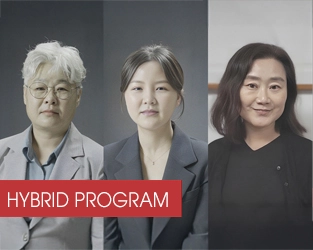
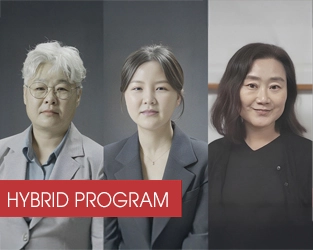
Join us for a discussion on the unseen resilience of North Korean female defectors. Kim Seonghui and Na Min-Hee provide powerful personal testimony, describing their life and experiences in North Korea, their escape, and their new life in South Korea. Human rights advocate and expert Kwon EunKyoung joins the discussion, which is moderated by policy director Jonathan Corrado.

This program is made possible by the generous support of our individual and corporate members and the Korea Foundation.


The Unseen Resilience of North Korean Female Defectors

Thursday, September 18, 2025 | 4 PM (EDT)


The Korea Society
350 Madison Avenue, 24th Floor
New York, NY 10017


About the Speakers:


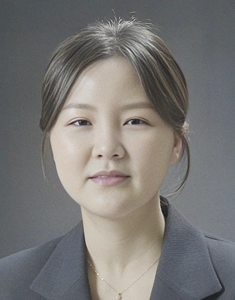
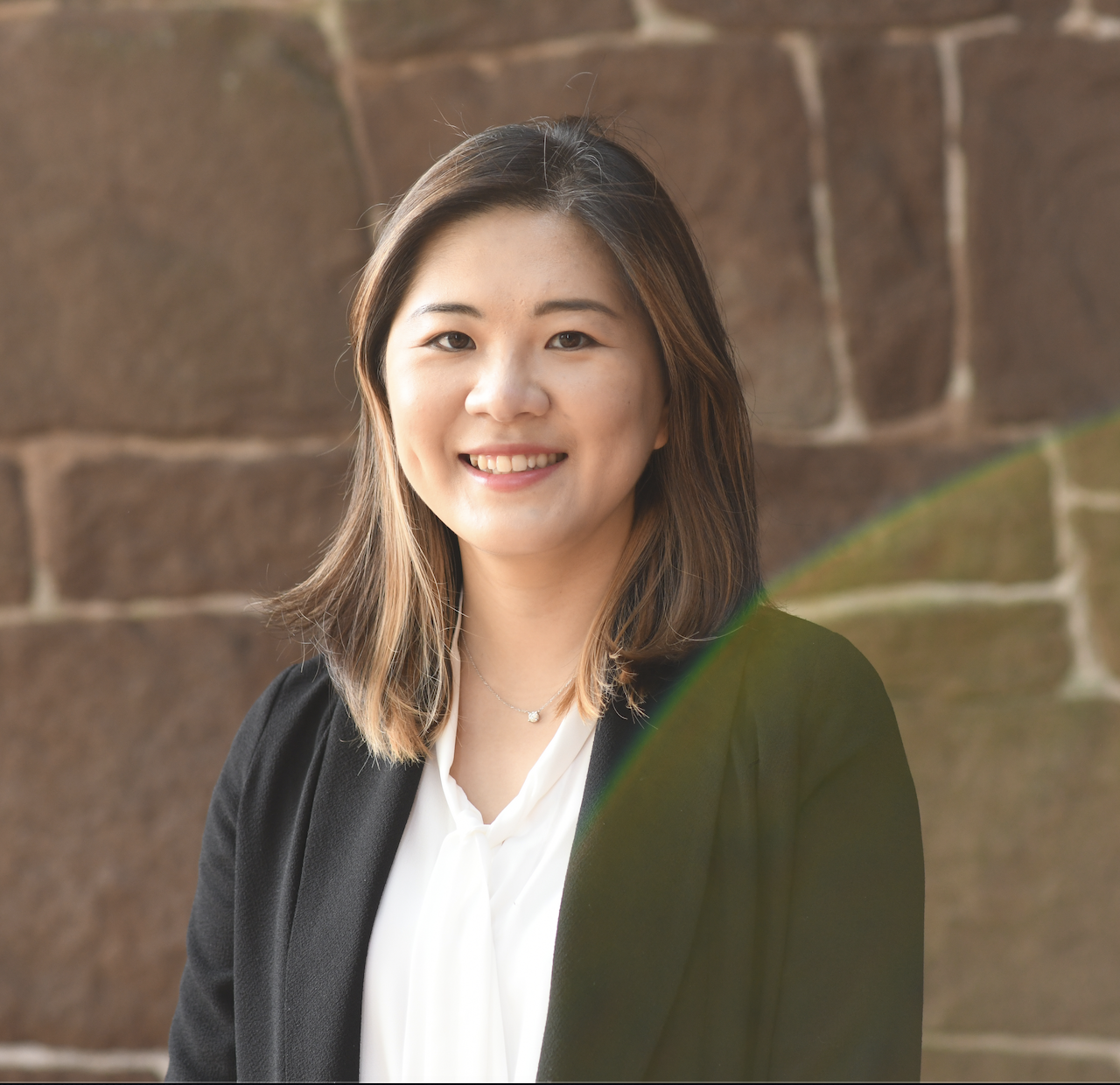
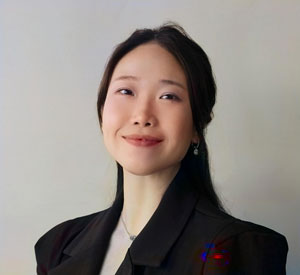
Kim Seonghui fled North Korea in 2008 to give her daughter a life free from the violence and indignity she faced as a woman. In North Korea, Kim worked as a nurse, witnessing harrowing conditions caused by the absence of medicine, equipment, electricity, and basic supplies. Now in South Korea, she runs Hanadoga (“House of Unity”), a North Korean-style distillery brewing alcohol — as her mother once did — and leads volunteer efforts to support vulnerable people in her community.


Na Min-Hee is originally from Pyongyang. She was working in Malta as a state-dispatched overseas laborer when she first encountered the world outside of North Korea—and was struck by the freedom and dignity with which women lived abroad. Despite strict surveillance, she fled to Germany in 2015 and, eventually found refuge in South Korea. Now living in South Korea, Na is happily married and committed to reclaiming her voice and agency as a woman. She shares her story and perspectives openly through her YouTube channel with 162K subscribers, determined to speak not from fear or silence, but with strength and autonomy.


Kwon EunKyoung is the Director of the Network for North Korean Democracy and Human Rights (NK Net) and Secretary General of the International Coalition to Stop Crimes Against Humanity in North Korea (ICNK). She focuses on creating effective strategies to improve the quality of life for North Korean people and to raise their awareness of the values shared by the global community. She works to broaden channels that connect the world with the hearts and lives of the North Korean people.

Rapid Reaction: The First Trump-Lee Summit

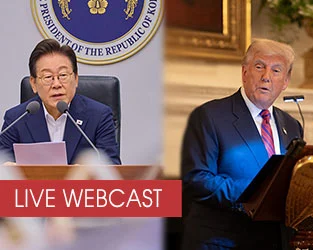
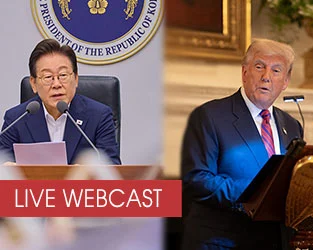
Join us for a timely discussion on the highly anticipated first meeting between US President Donald Trump and South Korean President Lee Jae Myung. Taking place after the agreement of a new trade framework on July 30, this meeting may address such diverse topics as: Korean investments into the US, Alliance cost sharing and modernization efforts, trilateral US-Korea-Japan collaboration, and coordination on North Korea. Expert panelists unpack summit expectations, outcomes, and implications. This discussion features Dr. Katrin Katz, The Korea Society’s inaugural Van Fleet Nonresident Senior Fellow, and Josh Smith, Korea Bureau Chief for Reuters News Agency, in conversation with Korea Society policy director Jonathan Corrado and program officer Chelsie Alexandre.

This program is made possible by the generous support of our individual and corporate members and the Korea Foundation.

 
Sign Up Here to Receive the Viewing Link


Rapid Reaction: The First Trump-Lee Summit

Tuesday, August 26, 2025 | 8 AM (EDT)



About the Speaker:


Dr. Katrin Fraser Katz is The Korea Society’s inaugural Van Fleet Nonresident Senior Fellow. Dr. Katz is a former director for Japan, Korea, and oceanic affairs on the staff of the National Security Council, where she served from 2007 to 2008. She is also a Professor of Practice in the Department of Political Science and the Master of Arts in International Administration (MAIA) program at the University of Miami and an Adjunct Fellow (Non-resident) in the Office of the Korea Chair at the Center for Strategic and International Studies (CSIS) in Washington, DC. Previously, she was a special assistant to the assistant secretary for international organization affairs at the U.S. Department of State and an analyst at the Central Intelligence Agency. She was previously an Adjunct Assistant Professor in the Department of Political Science at Columbia University and has also taught at Georgetown University. In 2017, Dr. Katz received the inaugural Sherman Family Korea Emerging Scholar Lecture Series award from The Korea Society. Dr. Katz’s research, which has been supported by grants from the Korea Foundation and the Horowitz Foundation for Social Policy, explores the interplay of cooperation and conflict in East Asia’s political, economic, and security dynamics. She holds a Ph.D. in political science from Northwestern University; a master’s degree in East Asian and international security studies from the Fletcher School of Law and Diplomacy, where she was awarded the John C. Perry Scholarship for East Asian Studies; and a bachelor’s degree, magna cum laude, in international relations and Japanese from the University of Pennsylvania.


Josh Smith is the bureau chief for Reuters in Seoul. He has covered North and South Korea since 2017, including the tensions during the 2017 period, the Trump-Kim summits in 2018 and 2019, a reporting trip to Pyongyang, and South Korea’s recent martial law crisis. He previously covered politics and policy in Washington DC and lived for five years in Kabul where he covered the wars in Afghanistan and Iraq.
 

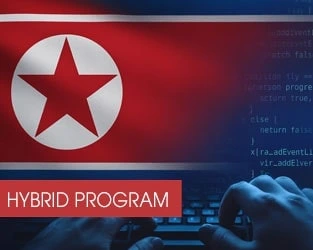
North Korea’s Evolving Cyber Strategy

North Korea’s Evolving Cyber Strategy

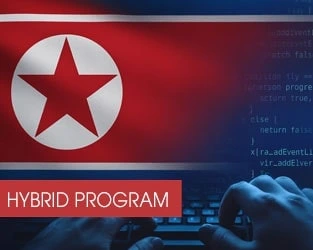
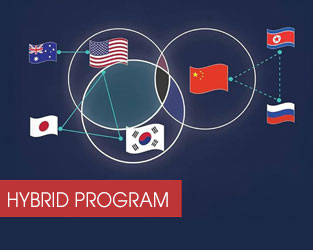
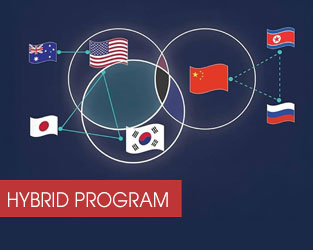
Join us for a discussion on the rising scale and sophistication of North Korea’s cyber operations with Mitch Haszard, senior threat intelligence analyst at Recorded Future, and Scott Kardas, geopolitical threat intelligence analyst at Recorded Future. How does North Korea’s cyber activities fit into the Kim regime’s larger goals? How can the U.S., South Korea, and the broader international community respond to this threat? This program will follow the evolution and growing magnitude of the regime’s cyber operations and its attacks. The conversation will be moderated by policy program officer Chelsie Alexandre.
 
https://www.recordedfuture.com/research/north-koreas-cyber-strategy
https://www.recordedfuture.com/research/north-koreans-continue-to-use-foreign-technology
https://www.recordedfuture.com/research/inside-the-scam-north-koreas-it-worker-threat

The Korea Society thanks our corporate sponsors and individual members and the Korea Foundation for their generous support, which has made this program possible.


Click Here to Attend in Person


Sign Up Here to Receive the Viewing Link


North Korea’s Evolving Cyber Strategy

Wednesday, August 13, 2025 | 12 PM (EDT)


The Korea Society
350 Madison Avenue, 24th Floor
New York, NY 10017


About the Speakers:


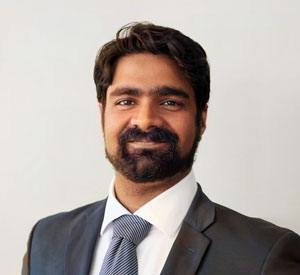
Mitch Haszard is a Principal Threat Intelligence Analyst on the Strategic and Persistent Threats team at Recorded Future. The Strategic and Persistent Threats team focuses on tracking and researching state-sponsored cyber activity. Mitch holds an MS in Cybersecurity from New York University, an MA in International Studies from Yonsei University, and a BS in International Business from the University of Maryland, Global Campus.


Scott Kardas is a geopolitical threat intelligence analyst at Recorded Future. He first went to Korea to teach English in 2012. He got his Masters degree from Yonsei University Graduate School of International Studies in 2017. From 2018-2020, Scott worked as a civilian instructor at the Korea Military Academy (육군사관학교). Since 2021, Scott has worked as an analyst focusing on the geopolitics of Northeast Asia.


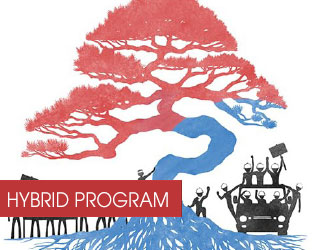
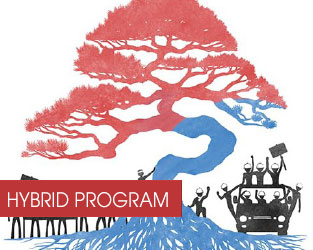
Seeds of Mobilization: The Authoritarian Roots of South Korea’s Democracy

Join us for a discussion with Dr. Joan E. Cho, Associate Professor of East Asian Studies at Wesleyan University on her 2024 book Seeds of Mobilization: The Authoritarian Roots of South Korea’s Democracy, which explores the nonlinear nature of South Korea’s democratization. Using oral interviews, original protest datasets, and publications by student and labor activists, Cho illustrates how modernization structures such as industrial complexes and tertiary education initially bolstered authoritarian regimes before facilitating protests by various social movement groups, which ultimately succeeded in ushering in the country’s democratization. During the discussion, Cho also describes how this historical legacy continues to impact Korean politics, including the generational divide and the recent Martial Law and impeachment episodes. This program is moderated by Korea Society policy director Jonathan Corrado. 

This program is made possible by the generous support of our individual and corporate members and the Korea Foundation.


This program is co-hosted by The Center for Korean Research at the Weatherhead East Asian Institute at Columbia University.


Seeds of Mobilization: The Authoritarian Roots of South Korea’s Democracy

Friday, May 16, 2025 | 12 PM (EDT)


The Korea Society
350 Madison Avenue, 24th Floor
New York, NY 10017


About the Speaker:


Dr. Joan Cho’s primary research and teaching focuses are authoritarianism, democracy, and social movements in Korea and East Asia. She is the author of Seeds of Mobilization: The Authoritarian Roots of South Korea’s Democracy (University of Michigan Press, 2024). Her research has been published in Electoral Studies, Journal of Democracy, Journal of East Asian Studies, Studies in Comparative International Development, and Routledge Handbook of Korean Culture and Society. Dr. Cho is an Adjunct Fellow (Non-resident) in the Office of the Korea Chair at the Center for Strategic and International Studies (CSIS) and Associate-in-Research of the Council of East Asian Studies at Yale University. She serves on the APSA Committee on the Status of Asian Pacific Americans in the Profession (2024-2027). Previously, Cho was Vice President of the Association of Korean Political Studies (2022-2024), faculty co-convener of the Korean Political Studies Colloquium (2022-2024), and a 2018-2019 U.S.-Korea NextGen Scholar. She holds Ph.D. and A.M. degrees in Political Science from the Department of Government at Harvard University and B.A. (cum laude with honors) in Political Science from the University of Rochester.


Acting and Activism with Minnie Mills

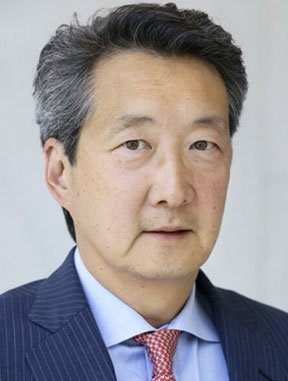
Join us for a conversation on acting and activism with actress and North Korean human rights activist Minnie Mills and Korea Society policy program officer Chelsie Alexandre. Exploring the origin and development of her professional acting career, Minnie discusses roles on “The Summer I Turned Pretty,” “Obliterated,” and future projects. She then describes her passion for supporting North Korean refugees through volunteering for the nongovernmental organization Liberty in North Korea (LiNK). How does she balance work with school and volunteering? What has she learned from North Korean refugees? An introduction is provided by Dr. Victor Cha, Distinguished University Professor, Georgetown University, and President, Geopolitics and Foreign Policy Department, CSIS.

This program is made possible by the generous support of the Kim Koo Foundation.


Acting and Activism with Minnie Mills

Wednesday, April 16, 2025 | 4 PM (EDT)


The Korea Society
350 Madison Avenue, 24th Floor
New York, NY 10017


About the Speakers:


Actress Celine “Minnie” Mills is best known for her role as ‘Shayla’ in the hit Amazon Prime Video series THE SUMMER I TURNED PRETTY. She now stars as ‘Jen’ in Sony Pictures Television Studios and Netflix’s action-comedy series OBLITERATED, and voices the lead role ‘Ruby / Venus’ in the rom-com podcast series DUMP HIM!

In addition to acting, Minnie has been a lifelong advocate for North Korean Human Rights, working closely with the organization Liberty in North Korea. She currently works under Ambassador Julie Turner at the State Department and was recently appointed Goodwill Messenger. Minnie also studies Behavioral Neuroscience at Columbia University.


Victor Cha is president of the Geopolitics and Foreign Policy Department and Korea Chair at the Center for Strategic and International Studies (CSIS). He is also a distinguished university professor and professor of government at Georgetown University. In 2021, he was appointed by the Biden administration to serve on the Defense Policy Board in an advisory role to the secretary of defense. From 2004 to 2007, he served on the National Security Council (NSC), where he was responsible for Japan, Korea, Australia, New Zealand, and Pacific Island nations. Dr. Cha was the U.S. deputy head of delegation at the Six Party Talks and received two Outstanding Service Commendations during his tenure at the NSC. He is the author of eight books, including the award-winning Alignment Despite Antagonism: The United States–Korea–Japan Security Triangle (Stanford University Press, 1999), which won the 2000 Ohira Book Prize; The Impossible State: North Korea, Past and Future (Ecco, 2012), selected by Foreign Affairs as a “Best Book on the Asia-Pacific for 2012”; Powerplay: Origins of the American Alliance System in Asia (Princeton University Press, 2018); Korea: A New History of South and North (Yale University Press, 2023); and The Black Box: Demystifying the Study of Korean Unification and North Korea (Columbia University Press, 2024). Dr. Cha is a two-time Fulbright scholar and a former Olin Fellow at Harvard University, as well as a former Hoover, Stanford Center for International Security and Cooperation (CISAC), and Koret fellow at Stanford University. He currently serves on the editorial boards of ten academic journals and is coeditor of the Contemporary Asia book series at Columbia University Press. He serves on the board of the National Endowment for Democracy and is a senior fellow at the George W. Bush Institute. Dr. Cha received his PhD, MIA, and BA from Columbia University and a BA with honors from Oxford University.

Korean Peninsula Update with the NK News Team

Join us for a discussion on the latest developments in Korea, including domestic politics north and south of the 38th parallel, inter-Korean relations, US-North Korea developments, Russia’s role, and more, featuring team members from NK News, including Chad O’Carroll, Chief Executive Officer of Korea Risk Group, Jeongmin Kim, Lead Correspondent at NK News and Editorial Director at Korea Pro, Colin Zwirko, Senior Analytic Correspondent for NK News, and Shreyas Reddy, Lead Correspondent at NK News. This program is moderated by The Korea Society policy director Jonathan Corrado.

This program is made possible by the generous support of our individual and corporate members and the Korea Foundation.


Korean Peninsula Update with the NK News Team

Monday, March 17, 2025 | 12 PM (EDT)


The Korea Society
350 Madison Avenue, 24th Floor
New York, NY 10017


About the Speakers:


Chad O’Carroll is the founder of NK News/NK Pro and related holding company Korea Risk Group. In addition to being the group’s CEO, O’Carroll is a frequent writer and commentator about the Koreas, having written about the two nations since 2010. He has visited the DPRK multiple times, worked and lived in Washington, D.C. with a focus on peninsula issues, and lived in the ROK since 2016.


Jeongmin Kim is a Correspondent at NK News and Editorial Director at KOREA PRO, based in Seoul. Kim covers inter-Korean relations and North and South Korean foreign and military affairs. Kim has covered the 2022 ROK presidential election on the ground, and prior to joining NK News, she worked for the CSIS Korea Chair in Washington D.C. and Reuters news agency’s Seoul bureau.


Shreyas Reddy is the Lead Correspondent at NK News, based in Seoul. He previously worked as a researcher at BBC Monitoring, where his work focused on news and key people and organizations from the Korean Peninsula, Japan, Southeast Asia and the Pacific.


Colin Zwirko is a Senior Analytic Correspondent for NK News based in Seoul. He joined the company in 2018 after receiving a master’s degree in international security and foreign policy from South Korea’s Yonsei University.

Challenges for Korea’s Democracy

Join us for a discussion about fallout from the Yoon Suk Yeol administration’s Martial Law declaration, his subsequent impeachment and the presidential transition in Seoul, challenges to South Korea’s democracy, and implications for the U.S.-Korea relationship and Korea’s foreign relations, with Kelly Kasulis Cho, Washington Post Breaking News Reporter, Andrew Yeo, senior fellow and the SK-Korea Foundation Chair at the Brookings Institution’s Center for Asia Policy Studies, and Daniel Sneider, lecturer in East Asian Studies at Stanford. This program is moderated by policy director Jonathan Corrado and program officer Chelsie Alexandre.

This program is made possible by the generous support of our individual and corporate members and the Korea Foundation.


Challenges for Korea’s Democracy

Thursday, February 13, 2025 | 8 AM (EST)


The Korea Society
350 Madison Avenue, 24th Floor
New York, NY 10017


About the Speaker:


Kelly Kasulis Cho is a breaking news reporter and editor at The Washington Post’s Seoul hub. She has been reporting on North and South Korea for eight years, since the days of former President Park Geun-hye’s impeachment and the whirlwind of tension and diplomacy between President-elect Donald Trump and North Korean leader Kim Jong Un. She has covered the 2018 Pyeongchang Winter Olympics, the coronavirus pandemic, South Korean elections, the tragic 2022 Itaewon Halloween crowd crush, the stabbing of Democratic Party leader Lee Jae-myung, the 2025 Jeju Air plane crash and more. She also recently covered the final moments of WikiLeaks Founder Julian Assange’s years-long legal battle and his path to freedom from a U.S. courthouse in Saipan. Previously, Kelly was a staff editor at The New York Times, the managing editor of NK News and NK Pro and a freelance foreign correspondent covering the Koreas.


Daniel C. Sneider is a lecturer in international policy at Stanford’s Ford Dorsey Master’s in International Policy and a lecturer in East Asian Studies at Stanford. His own research is focused on current U.S. foreign and national security policy in Asia and on the foreign policy of Japan and Korea. Since 2017, he has been based partly in Tokyo where he is working on a diplomatic history of the creation and management of the U.S. security alliances with Japan and South Korea during the Cold War. Sneider contributes regularly to the leading Japanese publication Toyo Keizai and is a Non-resident Distinguished Fellow at the Korea Economic Institute where he writes regularly for the Peninsula blog. Sneider is the former Associate Director for Research at the Walter H. Shorenstein Asia-Pacific Research Center at Stanford and directed the Divided Memories and Reconciliation project on wartime historical memory in East Asia. Prior to coming to Stanford, Sneider was a long-time foreign correspondent. Sneider served as national/foreign editor of the Mercury News. From 1990 to 1994, he was the Moscow bureau chief of the Christian Science Monitor, covering the end of Soviet Communism and the collapse of the Soviet Union. From 1985 to 1990, he was Tokyo correspondent for the Monitor, covering Japan and Korea. Prior to that he was a correspondent in India, covering South and Southeast Asia. Sneider has a BA in East Asian history from Columbia University and an MPA from the John F. Kennedy School of Government at Harvard University.


Andrew Yeo is a senior fellow and the SK-Korea Foundation Chair at the Brookings Institution’s Center for Asia Policy Studies. He is also a professor of politics at The Catholic University of America in Washington, D.C. Yeo is co-editor of the forthcoming book “Great Power Competition and Overseas Bases: Chinese, Russian, and American Force Posture in the 21st Century” (Brookings Institution Press, forthcoming). He is also the author or co-editor of five other books including  “Asia’s Regional Architecture: Alliances and Institutions in the Pacific Century” (Stanford University Press, 2019), “State, Society, and Markets in North Korea” (Cambridge University Press 2021), “North Korean Human Rights: Activists and Networks” (Cambridge University Press 2018); “Activists, Alliances, and Anti-U.S. Base Protests” (Cambridge University Press 2011); and “Living in an Age of Mistrust: An Interdisciplinary Study of Declining Trust in Contemporary Society and Politics and How to Get it Back” (Routledge Press 2017). Yeo received his doctorate in government from Cornell University, and bachelor’s in psychology and international studies from Northwestern University.

Korea-US-China Trilateral Relations: Looking Back and Looking Forward

Join us for a discussion on the newly launched book: Korea-US-China Trilateral Relations in the Xi Jinping Era. The authors, CHUNG Duck Koo, Korea’s former Minister of Commerce, Industry, and Energy, and YUN Byung-se, Korea’s former Minister of Foreign Affairs, examine Korea-US-China trilateral relations through a strategic triangular lens. The book moves beyond conventional discussions of bilateral ties to provide an in-depth analysis of the complexity, conflict, and economic interdependence characterizing the relationships among these three nations. In the discussion, Minister Chung and Minister Yun also address the new US administration and shifts in Korean politics, offering timely insights to shed light on unfolding events. The moderator for the program is Korea Society president and CEO Thomas Byrne. The book is available for purchase here.


Korea-US-China Trilateral Relations: Looking Back and Looking Forward

Tuesday, February 4, 2025 | 2 PM (EST)


The Korea Society
350 Madison Avenue, 24th Floor
New York, NY 10017


About the Speaker:


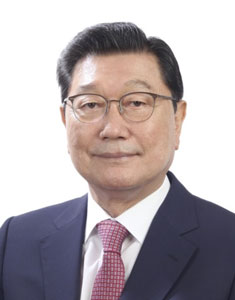
Chung Duck Koo is a former Minister of Commerce, Industry, and Energy of the Republic of Korea during President Kim Dae-Jung’s administration (1999-2000). He is also the founder of the North East Asia Research Foundation (NEAR Foundation), South Korea’s premier privately-funded independent think-tank, and currently serves as its chairman. Chung embarked on his career as a government official in 1971, dedicating nearly three decades of service. During the onset of the Korean financial crisis, Chung, a Vice Minister of Finance at the time, played a pivotal role in the early resolution of Korea’s liquidity crisis as a chief negotiator with the IMF. After retirement from the cabinet, Chung became a professor at the Graduate School of International Studies (GSIS) at Seoul National University and served as the director of the Seoul National University Center for International Finance. In 2003, Peking University in China invited him as a Distinguished Chair Professor, where he taught Korean Economic Development and Open-Door Policy. In 2005, he served as a visiting professor at Renmin University of China in Beijing, where he taught the International Monetary Regime and the future prospects of the yuan. In 2013, he was appointed as a policy advisor at CASS (Chinese Academy of Social Sciences). During the early years of Xi Jinping’s first term, the Chinese government recommended that Mr. Chung lead special lectures and academic seminars involving distinguished policymakers, bureaucrats, and high-ranking officials from 18 government departments. Presently, he is based at the Center for Strategies and International Studies (CSIS) as a Distinguished Visiting Fellow.


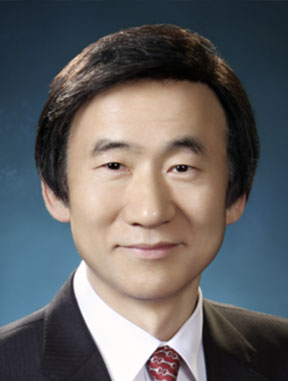
Yun Byung-se served as the Minister of Foreign Affairs of the Republic of Korea from March 2013 until June 2017 (longest serving Foreign Minister after 1981). Prior to that, he served as Deputy National Security Adviser (Senior Secretary) to the President responsible for Korea’s foreign, defense and unification policy and as Senior Coordinator at the National Security Council of the Presidential Office. As a career diplomat with 37 year-long experience, his foreign postings include the United States, the United Nations in New York and Geneva, Singapore and Australia. At the headquarters, he was Deputy Minister for Foreign Affairs and Trade when Ban Ki-moon, former UN Secretary-General, was the Foreign Minister. He graduated from Seoul National University’s College of Law and received a master’s degree from Johns Hopkins University’s Paul Nitze School of Advanced International Studies (SAIS). He was a Visiting Professor at the Graduate School of International Studies (GSIS) of Sogang University in Seoul from 2009 until early 2013. He is currently Chairman of Seoul International Law Academy (SILA), Co-Chair of REAIM Global Commission(AI), and Chairman of NEAR Global Survey Project. He is also on the board of Korea Peace Foundation and the NEAR Foundation and is affiliated with several global ex-leaders’ forums and projects on international peace and security, non-proliferation and geopolitical risks. His global survey report 2023 on the world order was published in English and in Korean by the NEAR Foundation under the title of “Quo Vadit Mundus: Competing for Order in a Fragmenting World.” He regularly contributes his writings to the Korea JoongAng Daily and the Korea Times and moderates the annual CSIS-JoongAng Conference and other forums frequently.

What to Expect: The Trump Administration’s Economic Security Policy on Asia

Join us for a discussion on the Trump Administration’s economic security policy towards Asia with Navin Girishankar, president of the Economic Security and Technology Department at the Center for Strategic and International Studies (CSIS) and former Counselor to the U.S. Deputy Secretary of Commerce and Yeo Han-koo, former trade minister of the Republic of Korea and senior fellow at the Peterson Institute for International Economics. The moderator for the program is Korea Society president and CEO Tom Byrne. The discussion will cover US-China economic competition and its impact on Northeast Asian countries like Korea and Japan, plus: tariffs, international trade, and the impact on critical next generation technologies including semiconductors, EVs, and batteries.

The Korea Society thanks our corporate sponsors and individual members and the Korea Foundation for their generous support, which has made this program possible.


This program is co-hosted by The APEC Study Center at Columbia University.


What to Expect: The Trump Administration’s Economic Security Policy on Asia

Friday, January 24, 2025 | 12 PM (EST)


The Korea Society
350 Madison Avenue, 24th Floor
New York, NY 10017


About the Speaker:


Navin Girishankar is president of the Economic Security and Technology Department at the Center for Strategic and International Studies (CSIS). He leads a bipartisan team of over 40 resident staff and an extensive network of non-resident affiliates dedicated to providing independent research and strategic insights on economic and technology policies and their critical role in competitiveness as well as national security. Prior to joining CSIS, Navin served as Counselor to the U.S. Deputy Secretary of Commerce on a wide range of domestic and international issues. In that role, he crafted the Department of Commerce’s place-based framework for industrial investments in chips, broadband, and other strategic technologies; its approach to U.S.-China economic relations; and U.S. economic diplomacy efforts with allies in the Indo-Pacific, Europe, and the Global South, including the U.S. commercial engagement strategy for the G7 Partnership for Global Infrastructure and the first-ever Department-wide Africa strategy. Navin also helped architect the Department’s national security approach to critical and emerging technologies and threats covering investment screening, export controls, and strategic capital deployment. Prior to his service in U.S. government, Navin held senior commercial roles at Bridgewater Associates, where he worked with founder Ray Dalio advising the largest institutional investors in the Middle East and Asia. Prior to his work in asset management, Navin spent over 20 years at the World Bank, where he held senior policy, country, finance, and evaluation roles. Over his career at the World Bank, Navin led a number of major initiatives including the Bank’s 2015 trade and competitiveness strategy, Expanding Market Opportunity and Enabling Private Initiative for Dynamic Economies; its 2011 flagship evaluation, World Bank Country-Level Engagement on Governance and Anticorruption; and the first-of-its-kind 2009 study, Innovating Development Finance: From Financing Sources to Financing Solutions. He also authored numerous articles and papers on economic, fiscal, and innovation policy; sustainable finance; governance and state-building; and evaluation. He holds a master in public policy from the Harvard Kennedy School and a bachelor of arts in economics with a minor in African and Middle East studies from Williams College. He is a percussionist in the Indian classical tradition and a student of various meditation traditions.


Yeo Han-koo, former trade minister of the Republic of Korea, has been senior fellow at the Peterson Institute for International Economics since June 2023. His research focuses on international trade policy, industrial policy, supply chain resilience, and economic security and international trade negotiations including the Indo-Pacific Economic Framework (IPEF) and the Comprehensive and Progressive Agreement for Trans-Pacific Partnership (CPTPP). Yeo completed almost three decades of public service as trade minister of the Republic of Korea in 2022, in the final year of the Moon Jae-in presidency. A veteran international trade negotiator, Yeo has been involved in a number of bilateral and multilateral trade negotiations, including as the chief negotiator for the Regional Comprehensive Economic Partnership (RCEP), Korea-UK Free Trade Agreement, Korea–Central America Free Trade Agreement, Korea-Indonesia Comprehensive Economic Partnership Agreement, and Korea-Philippines Free Trade Agreement. He was also an original participant in developing the Indo-Pacific Economic Framework for Prosperity. While serving as commercial attaché at the Korean Embassy in Washington, he was involved in amendment negotiations of the Korea-US Free Trade Agreement and Section 232 steel negotiations. As Korean minister of trade, he oversaw conventional trade negotiations, export controls, and investment screening. Yeo also led negotiations for Korea’s export control measures against Russia in response to Russia’s invasion of Ukraine. A graduate of Seoul National University, Yeo has served as visiting professor at the Seoul National University Business School, teaching international trade, negotiation, and economic security issues. Yeo holds an MBA from Harvard Business School and an MPA from Harvard Kennedy School.


Martial Law Implications for South Korea and the U.S.-Korea Relationship

Join us for a program that explores recent political events in South Korea, including a brief history of martial law in Korea, the events leading up to the Yoon Suk Yeol administration’s decision to invoke Martial Law, the National Assembly’s counter-action, and the long term consequences of the episode. How will this affect Korea’s domestic politics, the U.S.-ROK Alliance relationship, and inter-Korean relations? The expert panel includes Michelle Ye Hee Lee, Tokyo bureau chief for The Washington Post, covering Japan and the Koreas, and Aram Hur, the Kim Koo Chair in Korean Studies and Assistant Professor of Political Science at the Fletcher School, Tufts University, in conversation with policy director Jonathan Corrado and policy program officer Chelsie Alexandre.

The Korea Society thanks our corporate sponsors and individual members for their generous support, which has made this program possible.


Martial Law Implications for South Korea and the U.S.-Korea Relationship

Wednesday, December 11, 2024 | 8 AM (EST)


The Korea Society
350 Madison Avenue, 24th Floor
New York, NY 10017


About the Speakers:


Aram Hur is the Kim Koo Chair in Korean Studies and Assistant Professor of Political Science at the Fletcher School, Tufts University. Her research focuses on nationalism and democracy, with special attention to issues of identity, integration, and democratic support in East Asia. Professor Hur is the author of Narratives of Civic Duty: How National Stories Shape Democracy in Asia (Cornell University Press, 2022), which won the 2023 Robert A. Dahl Award for best book on democracy by an untenured scholar from the American Political Science Association. Her research appears in leading disciplinary journals such as the British Journal of Political Science, Comparative Politics, and Comparative Political Studies and is widely cited in domestic and international media. She was selected as the 2021 Sherman Emerging Scholar by The Korea Society, a 2018-19 CSIS US-Korea NextGen Scholar, and is the recipient of the 2023 Gold Chalk Award for Teaching from the University of Missouri. She holds a Ph.D. in Politics from Princeton University, an M.P.P. from the Harvard Kennedy School, and a B.A. with honors from Stanford University.


Michelle Ye Hee Lee is The Washington Post‘s Tokyo bureau chief, reporting on Japan and the Korean Peninsula. Previously, she covered money and influence in politics and voting access on the national political enterprise and accountability team and was a reporter for The Post’s Fact Checker. Prior to joining The Post in 2014, she was a government accountability reporter at the Arizona Republic in Phoenix.