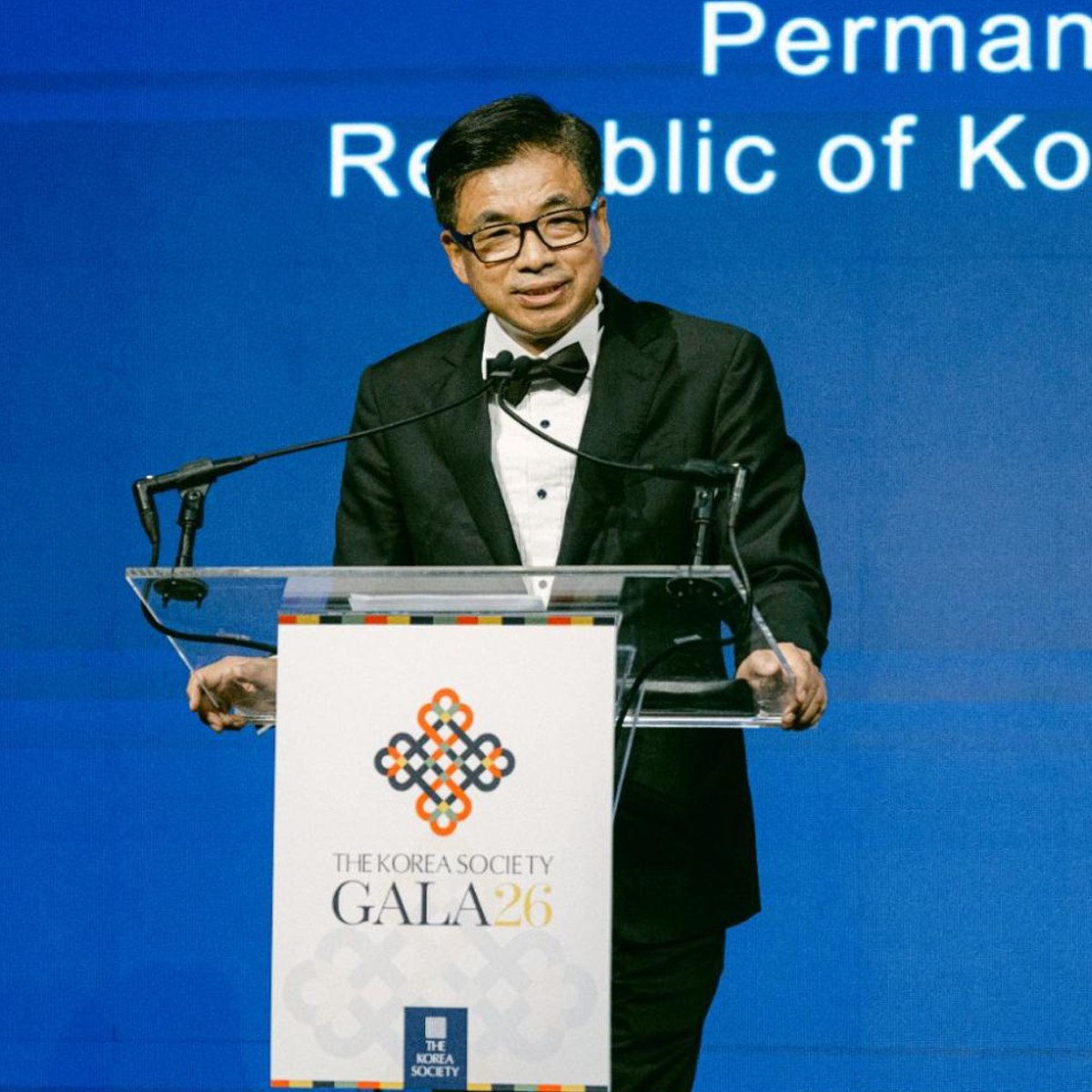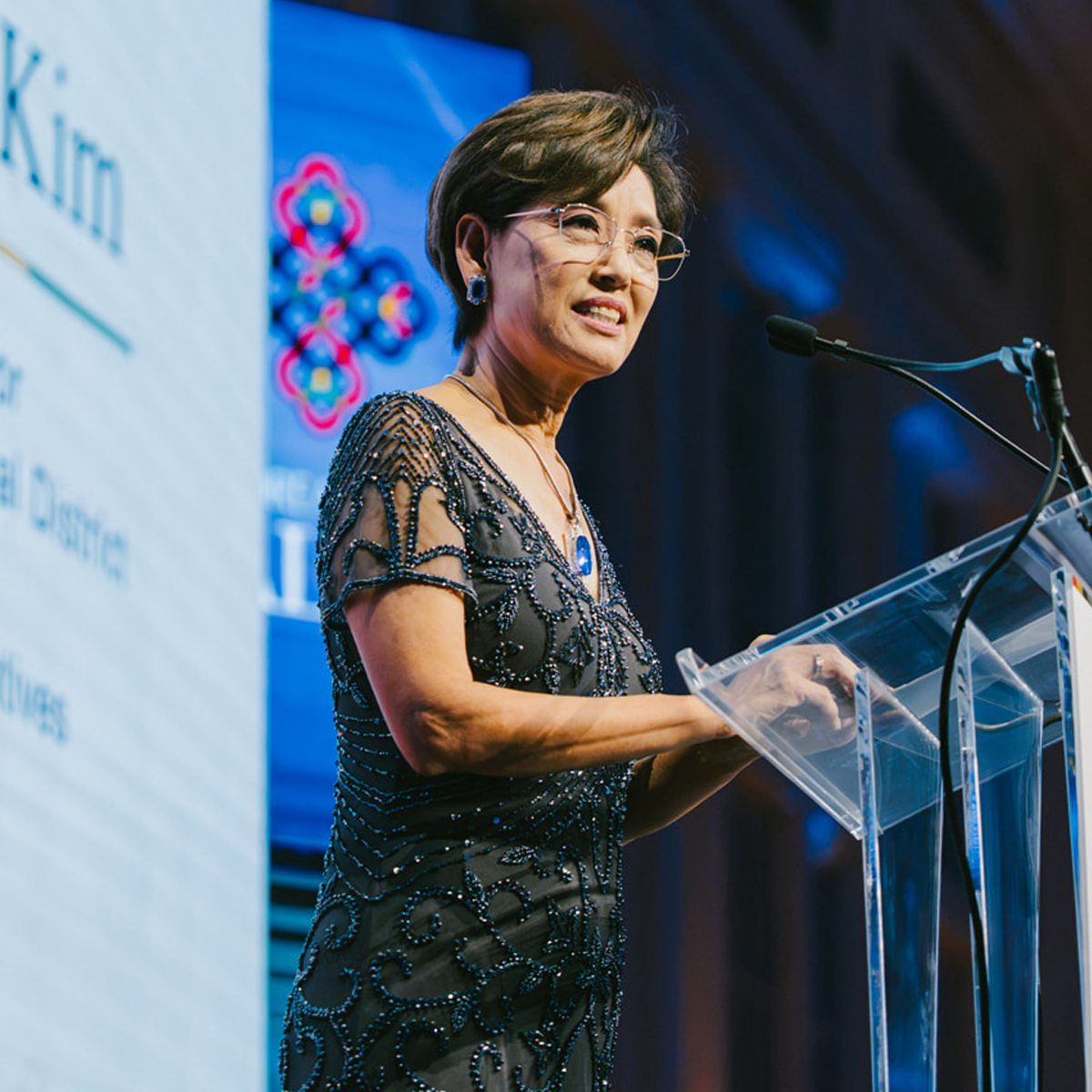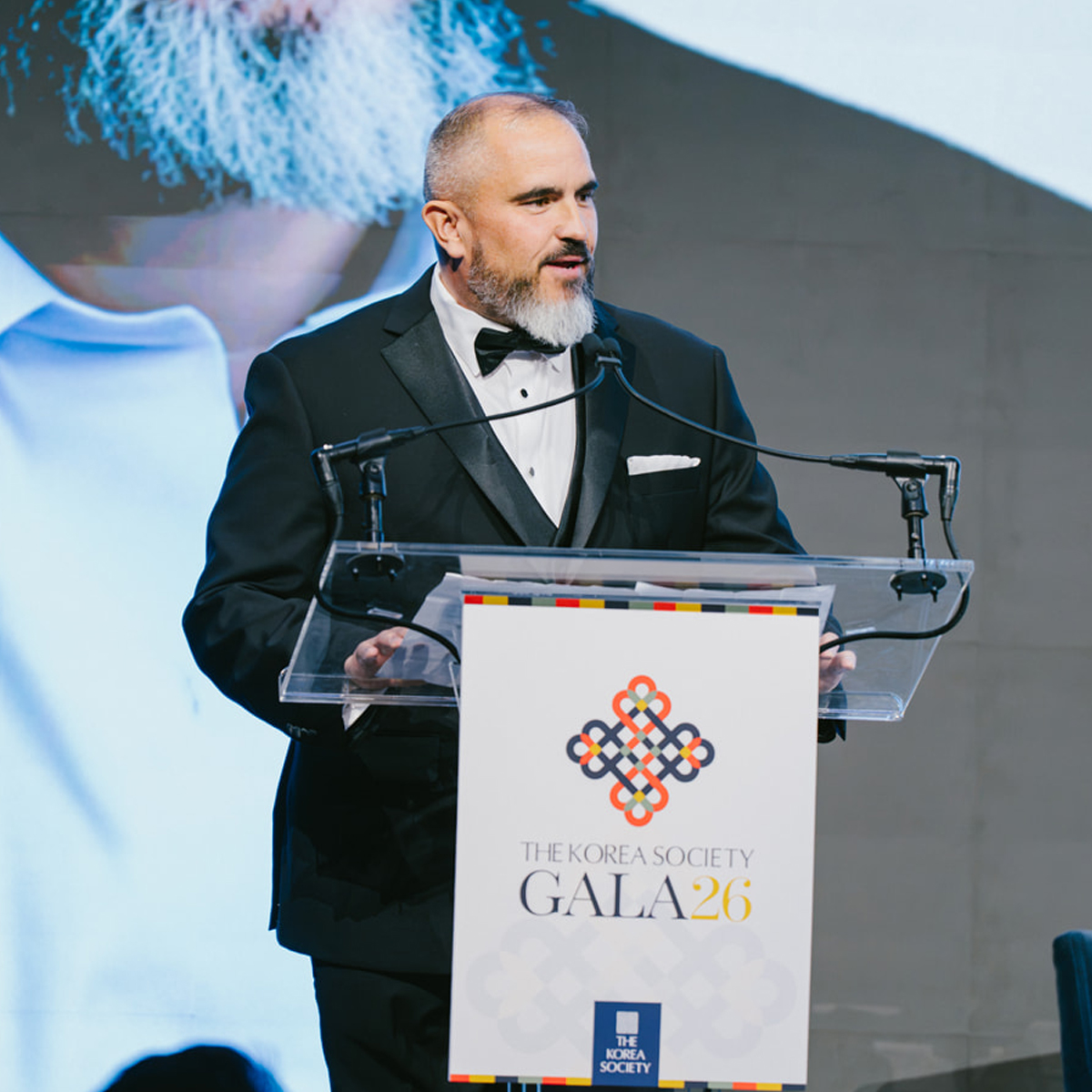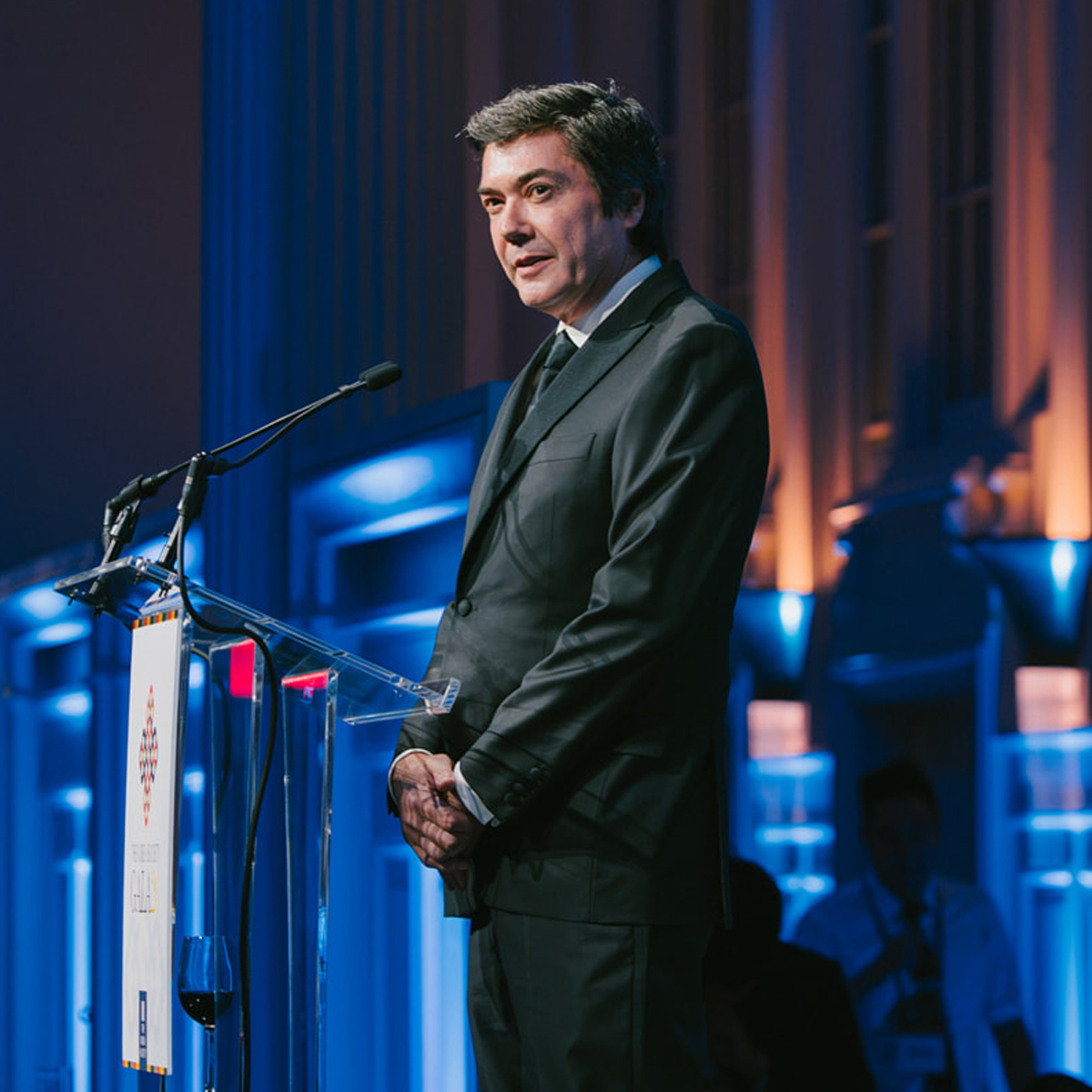



2007 Annual Dinner


Welcome
Mr. Bill. Rhodes
Dinner Chair

Greetings
The Hon. Donald P. Gregg
Chairman, The Korea Society

Mr. Evans J.R. Revere
President, The Korea Society

H.E. Lee Hee-Beom
50th Anniversary Commemoration Chair

Video Presentation

Remarks

The Hon. Christopher R. Hill
Assistant Secretary of State for East Asian and Pacific Affairs

Dinner

Keynote Address
H.E. Ban Ki-Moon
Secretary-General of the United Nations
Introduction by Mr. Bill. Rhodes

Musical Interlude
Ms. Rose Jang, Soprano
With accompaniment by an ensemble from the
New Jersey Philharmonic Orchestra
Introduction by Mr. Frederick F. Carriere

Van Fleet Award Ceremony

Honorees:

H.E. Kim Dae-jung
Video presentation with remarks by The Hon. Donald P. Gregg

Mr. & Mrs. Houghton Freeman
Introduction by Mr. Evans J.R. Revere

Korea Foundation
Introduction by The Hon. Donald P. Gregg

Closing Remarks
Mr. Evans J.R. Revere


Program

ban_ki-moon_portraitBAN KI-MOON

Ban Ki-moon of the Republic of Korea, the eighth Secretary-General of the United Nations, brings to his post 37 years of service both in government and on the global stage.

Career highlights

At the time of his election as Secretary-General, Mr. Ban was his country’s Minister of Foreign Affairs and Trade. His long tenure with the ministry included postings in New Delhi, Washington D.C. and Vienna, and responsibility for a variety of portfolios, including Foreign Policy Advisor to the President, Chief National Security Advisor to the President, Deputy Minister for Policy Planning and Director-General of American Affairs. Throughout this service, his guiding vision was that of a peaceful Korean peninsula, playing an expanding role for peace and prosperity in the region and the wider world.

Mr. Ban has longstanding ties with the United Nations, dating back to 1975, when he worked for the Foreign Ministry’s United Nations division. That work expanded over the years, with assignments as First Secretary at the ROK’s Permanent Mission to the UN in New York, Director of the UN Division at the ministry’s headquarters in Seoul, and Ambassador to Vienna, during which time, in 1999, he served as Chairman of the Preparatory Commission for the Comprehensive Nuclear Test Ban Treaty Organization. In 2001-2002, as Chef-de-Cabinet during the ROK’s Presidency of the General Assembly, he facilitated the prompt adoption of the first resolution of the session, condemning the terrorist attacks of 11 September, and undertook a number of initiatives aimed at strengthening the Assembly’s functioning, thereby helping to turn a session that started out in crisis and confusion into one in which a number of important reforms were adopted.

Mr. Ban has also been actively involved in issues relating to inter-Korean relations. In 1992, as Special Advisor to the Foreign Minister, he served as Vice Chair of the South-North Joint Nuclear Control Commission following the adoption of the historic Joint Declaration on the Denuclearization of the Korean Peninsula. In September 2005, as Foreign Minister, he played a leading role in bringing about another landmark agreement aimed at promoting peace and stability on the Korean peninsula with the adoption at the Six Party Talks of the Joint Statement on resolving the North Korean nuclear issue.

Education

Mr. Ban received a bachelor’s degree in international relations from Seoul National University in 1970. In1985, he earned a master’s degree in public administration from the Kennedy School of Government at Harvard University.

Prizes and awards

Mr. Ban has received numerous national and international prizes, medals and honours. In 1975, 1986 and again in 2006, he was awarded the ROK’s Highest Order of Service Merit for service to his country.

lee_hee_beomLee Hee-Beom

is chairman and CEO of the Korea International Trade Association (KITA), Korea’s largest and most influential trade organization. KITA’s activities include supporting overseas marketing for Korean corporations, facilitating international trade cooperation, educating international trade specialists and advising the Korean government and international bodies on a wide range of trade-related matters.

Prior to taking the helm at KITA, Lee served as minister of Commerce, Energy and Industry in the cabinet of President Roh Moo-hyun. This appointment marked the apex of a 30-year career in Korea’s international trade diplomacy establishment. Beginning in 1973 as a deputy director in the Ministry of Trade, Lee moved on to become the commercial attaché to the Korean Embassy in Washington, D.C. from 1988 to 1991, filling the same position at Korea’s mission to the European Union in Brussels from 1994 to 1998. In these roles Lee took part in the Super 301 Negotiations, talks on renewing steel and textile arrangements with the U.S. and the Korea-EU Shipbuilding Negotiations. In 1998, Lee became standing commissioner of the Korean Trade Commission and special counsel to Kim Dae Jung’s Presidential Transition Committee. After serving as chairman and CEO of Korea Productivity in 2002, Lee became the president of Seoul National University of Technology in early 2003.

Lee holds a bachelor’s degree in electronics engineering and a master’s in public administration from Seoul National University. He also holds an MBA (summa cum laude) from George Washington University and a Ph.D. in business management from Kyunghee University in Seoul. Lee received a Presidential Commendation in May 1984.

rhodes_billBill Rhodes
Chairman, President and CEO
Citibank N.A.

Chairman, President and CEO
Citicorp Holdings Inc.

Senior Vice Chairman
Citigroup Inc.

Bill Rhodes is the senior international officer for Citigroup. He has specific responsibilities for client relationships worldwide, as well as for relationships with governments and other official institutions. He is a member of Citigroup’s Operating and Management Committees.

Rhodes gained a reputation for international financial diplomacy in the 1980s because of his leadership in managing the developing world’s external-debt crises. During that period, and into the 1990s, Rhodes headed the advisory committees of international banks that negotiated debt-restructuring agreements for Argentina, Brazil, Jamaica, Mexico, Peru and Uruguay. In 1998, when the Republic of Korea experienced liquidity problems, he chaired the international bank group that negotiated the extension of short-term debt of the Korean banking system. In early 1999, at the request of the government of Brazil, he acted as worldwide coordinator to help implement the maintenance of trade and inter-bank lines by foreign commercial banks to Brazil.

In addition to sitting on many corporate boards, Rhodes is a governor and trustee of The New York-Presbyterian Hospital, a member of the Lincoln Center Consolidated Corporate Fund Leadership Committee and a vice chairman of the Metropolitan Museum of Art Business Committee and Chairman’s Committee. He is a member of the board of overseers of the Watson Institute for International Studies and chairman emeritus of the board of trustees of the Northfield Mount Hermon School.

He has received decorations and honors from various governments and institutions, including an honorary doctorate in humane letters from his alma mater, Brown University. He is a chevalier and officer of France’s Legion of Honor and has received decorations from Korea, Brazil, Mexico, Argentina, Venezuela and Jamaica, as well as multiple awards from not-for-profit organizations in recognition of his contributions to international banking and finance.

Rhodes joined Citibank in 1957 after graduating from Brown University.

Speakers

Dinner Chair 

William R. Rhodes
Chairman, President & CEO, Citibank, N.A.
Senior Vice Chairman, Citigroup, Inc.

50th Anniversary Commemoration Chair

Lee Hee-beom
Chairman & CEO
Korea International Trade Association
Korea-U.S. Economic Council


Benefactor
Dong-Jin Oh
President & CEO
Samsung Electronics America, Inc.
  Bill Hwang
Managing Partner
Tiger Asia Management L.L.C. 
     
Ray Ferguson
CEO, Americas
Standard Chartered Bank
 

Maurice R. Greenberg
Chairman
The Starr Foundation

     
Patron
Edward T. Cloonan
Vice President
American International Group, Inc.
  Stanley C. Gale
Chairman
Gale International
     
Dong-Soo Hur
Chairman & CEO
GS Caltex Corporation
  Nicholas Bratt
Managing Director
Lazard Asset Management LLC
     
Michael Ahn
President & CEO
LG Electronics, North American HQ
     
Sponsor
Richard F. Wacker
President & CEO
Korea Exchange Bank
  Chong-Yun Park
Partner
KPMG LLP
     
Young H. T. Cho
Partner
PricewaterhouseCoopers LLP
  Mark B. Grier
Vice Chairman
Prudential International Investments, LLC
     
John H. Koo
Senior Managing Director
SK USA, Inc.
  Richard F. Albaugh
Executive Vice President
The Boeing Company
 
Jarett Wait
Managing Director
Lehman Brothers
  Douglas D.M. Joo
President
The Washington Times Foundation
 
Dinner Committee

Benefactor

Citigroup, Inc.

Korea International Trade Association

Samsung Electronics America, Inc.

Standard Chartered Bank

The Starr Foundation

Tiger Asia Management L.L.C.


Patron

American International Group, Inc.

Citigroup, Inc.

Gale International

GS Caltex Corporation

Korea International Trade Association

Lazard Asset Management LLC

LG Electronics, North American HQ


Sponsor

The Boeing Company

Korea Exchange Bank

KPMG LLP

Lehman Brothers

PricewaterhouseCoopers LLP

Prudential Financial, Inc.

SK USA, Inc.

The Washington Times Foundation

Donor

Citibank, N.A.

Deloitte & Touche

Hyosung (America) Inc.

Korean Bankers Association in New York

NYSE Euronext

Contributor

The Coca-Cola Company

Cravath, Swaine & Moore LLP

Korean Consulate General

POSCO America Corporation


Special Acknowledgement

Additional support was provided by Alexandra Munroe; Mark Gaston, Gaston Capital Management Inc.; On Sohn, SEI Global.

We gratefully acknowledge in-kind donations from Johnnie Walker.

2007 Van Fleet Award Honorees

2007 vanfleet icon


2007 vanfleet kim-dae-jung

2007 Van Fleet Award Honoree

KIM DAE-JUNG
15TH PRESIDENT OF THE REPUBLIC OF KOREA


Looking back over the more than 60 years that have passed since the end of World War II, two diplomatic achievements in East Asia stand out clearly as towering events of lasting importance. The first of these is the U.S. opening to China in 1972, and the second is the Pyongyang Summit in 2000 between President Kim Dae-jung and Chairman Kim Jong-il.

The Pyongyang Summit came as the culmination of President Kim’s lifelong efforts to establish democracy in South Korea, and his determination to initiate the arduous process of forging reconciliation between North and South Korea through his Sunshine Policy.

As is often the case with truly epochal events, it has been difficult for both Koreans and Americans to place the Pyongyang Summit in its proper historical perspective. With the passage of time, however, it is becoming increasingly clear that this epochal event was the “tipping point” for all the Korean people, starting a process of North-South reconciliation that is now seen as inevitable.

The Van Fleet Award has been awarded to two former American presidents, and it is only fitting that today a former Korean president is being added to the list of its recipients. It is particularly noteworthy that this award is being made in conjunction with a commemoration of President Kim’s acceptance of the 2000 Nobel Peace prize “for his work for democracy and human rights in South Korea and in East Asia in general, and for peace and reconciliation with North Korea in particular.” 

Therefore, in recognition of his unparalleled and innumerable lifelong contributions toward building a lasting peace on the Korean Peninsula, on behalf of The Korea Society, it is my great honor and distinct pleasure to present the Van Fleet Award to President Kim Dae-jung.

This award was presented on December 7, 2006 at A Night of Peace on the Korean Peninsula, a dinner commemorating Kim Dae-jung’s receipt of the 2000 Nobel Peace Prize held at the Grand Hilton Hotel in Seoul.


2007 vanfleet freeman

2007 Van Fleet Award Honorees


HOUGHTON AND DOREEN FREEMAN
THE FREEMAN FOUNDATION


To properly convey the scope, magnitude and impact of the Freeman Foundation’s charitable contributions, The Korea Society can only seek to act as a voice for the countless scholars, students, scientists, colleges, universities and research institutions scattered all over the United States and Asia that have been beneficiaries of the great generosity of the Freeman family.

Through their deep knowledge of Asia, their energy and strong sense of discernment, Houghton and Doreen Freeman have built an extraordinary network of beneficent exchanges that have a truly global impact. Their efforts have been focused consistently on the Foundation’s basic goals for improved relations between the U.S. and Asia, which were initially articulated by Houghton’s father Mansfield Freeman: “to strengthen the bonds of friendship, to develop greater appreciation and to stimulate an exchange of ideas.”

The Korea Society has been generously supported by the Freeman Foundation since 1993. This sustained support has played an integral role in the development of our most significant programs. As we celebrate our 50th anniversary, it is entirely appropriate to thank the Freeman family for what they have done for us, as well as for what they have done for countless others seeking to strengthen international understanding between Asia and the United States.

General James A. Van Fleet, for whom this award is named, saw Korea in its darkest hour. Yet he sensed the latent potential of Korea and its people, and he envisioned what the relations between the United States and Korea could become with greater support and understanding. The Freeman family, in countless ways, has contributed magnificently to the development of U.S.–Korea relations as well as to Americans’ understanding of Asia as a whole. In doing so, they have provided all of us with an important and inspiring legacy.

For all of these contributions, I am delighted to present the James A. Van Fleet Award to Houghton and Doreen Freeman.

Photograph © 2006, Paul Rogers, Stowe, VT


2007 vanfleet freeman

2007 Van Fleet Award Honorees


THE KOREA FOUNDATION


Founded in 1991, just as Korea’s strong economy and outward-looking diplomatic presence were being noticed on the world stage, the mission of the Korea Foundation is to “promote a better understanding of Korea in the international community and to foster global friendship.” Over the last 16 years its success has been phenomenal. Through its generous and far-sighted grant-making activities, the Foundation has raised Korea’s profile in dozens of countries. In the United States, the Korea Foundation has been almost single-handedly responsible for a renaissance in Korean Studies.

The Korea Foundation is laying the groundwork for a broad, lasting awareness and appreciation of Korea by building relationships with and disbursing support to overseas universities, scholars, students, conferences and publications. In the United States alone, most of the external financial support for Korean Studies programs comes from the Korea Foundation.

Foundation grants have endowed 53 professorships in Korean Studies at 30 colleges and universities, funded the Korea-related studies of 153 graduate students and sponsored countless international conferences. It also has established nine galleries for Korean art at some of the leading museums in America as well as supported many cultural performances.

When General James A. Van Fleet, for whom this award is named, established The Korea Society 50 years ago, Korea was still a place most Americans knew little about. Today, Korea is a familiar presence in the United States and throughout the world, and growing numbers are discovering its rich culture and history. The Korea Foundation has played an integral role in bringing Korea to the world.

For all of these contributions, I invite President Yim Sung-joon to accept the James A. Van Fleet Award on behalf of the Korea Foundation. Evans J.R. Revere President The Korea Society May 15, 2007 New York City James A. Van Fleet Award Van Fleet Award 24


50th Anniversary Seoul Gala

Members, friends, and supporters of The Korea Society marked the 50th anniversary of the organization at a gala dinner at the Grand Hyatt Hotel in Seoul on February 3, 2007.


His Excellency Lee Hee-Beom
Chair
50th Anniversary Commemoration of The Korea Society

The Honorable Donald P. Gregg
Chairman
The Korea Society

The Honorable Evans J. R. Revere
President
The Korea Society

Welcoming Speech
The Honorable Alexander Vershbow
Ambassador
Embassy of The United States of America

Introduction by
Stanley C. Gale
Dinner Chair

Congratulatory Address
Her Excellency Han Myeong Sook
Prime Minister
Republic of Korea


Saturday, February 3, 2007

Grand Hyatt Hotel 
Grand Ballroom
Seoul, Korea

***

Reception • 6:00 PM
Dinner • 7:00 PM


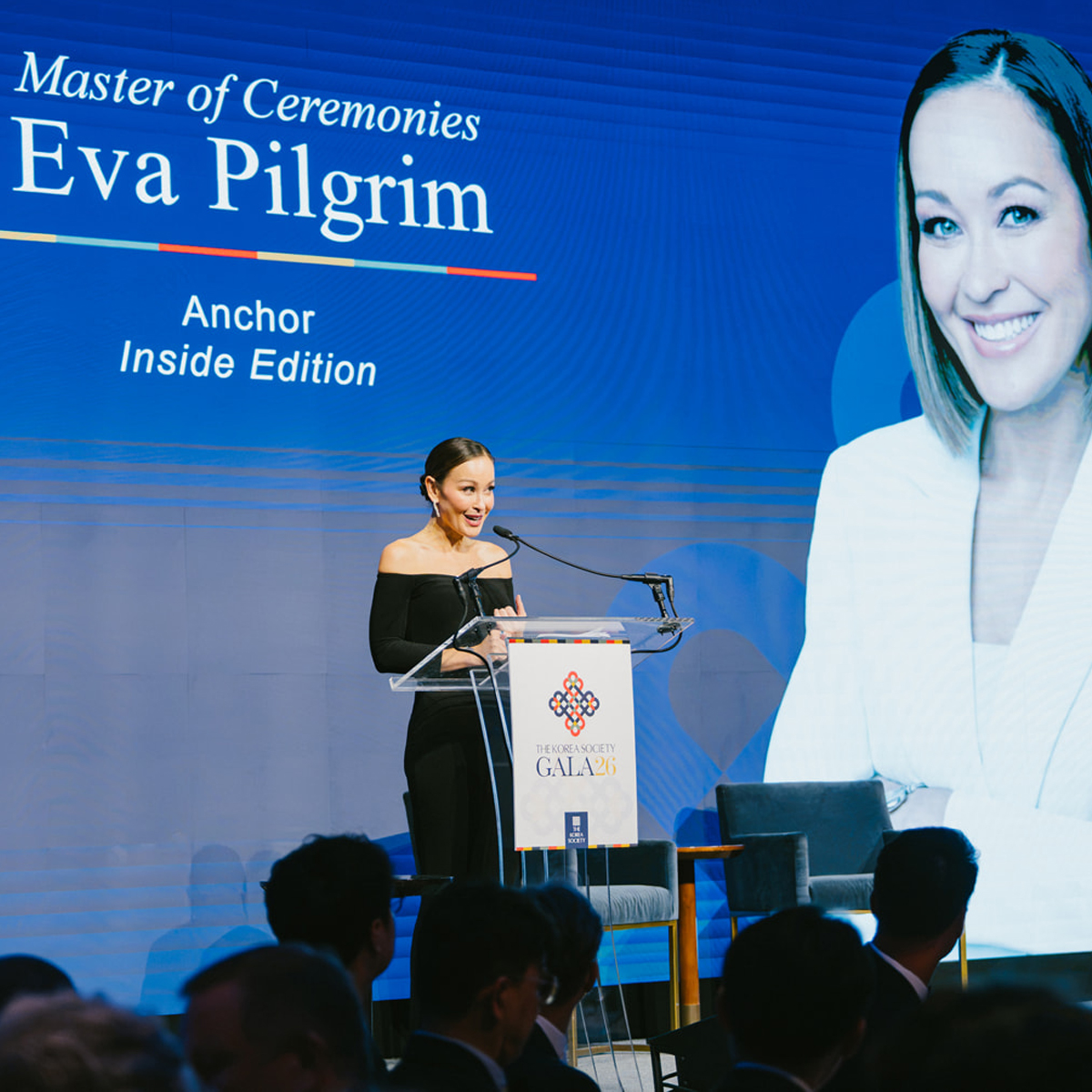
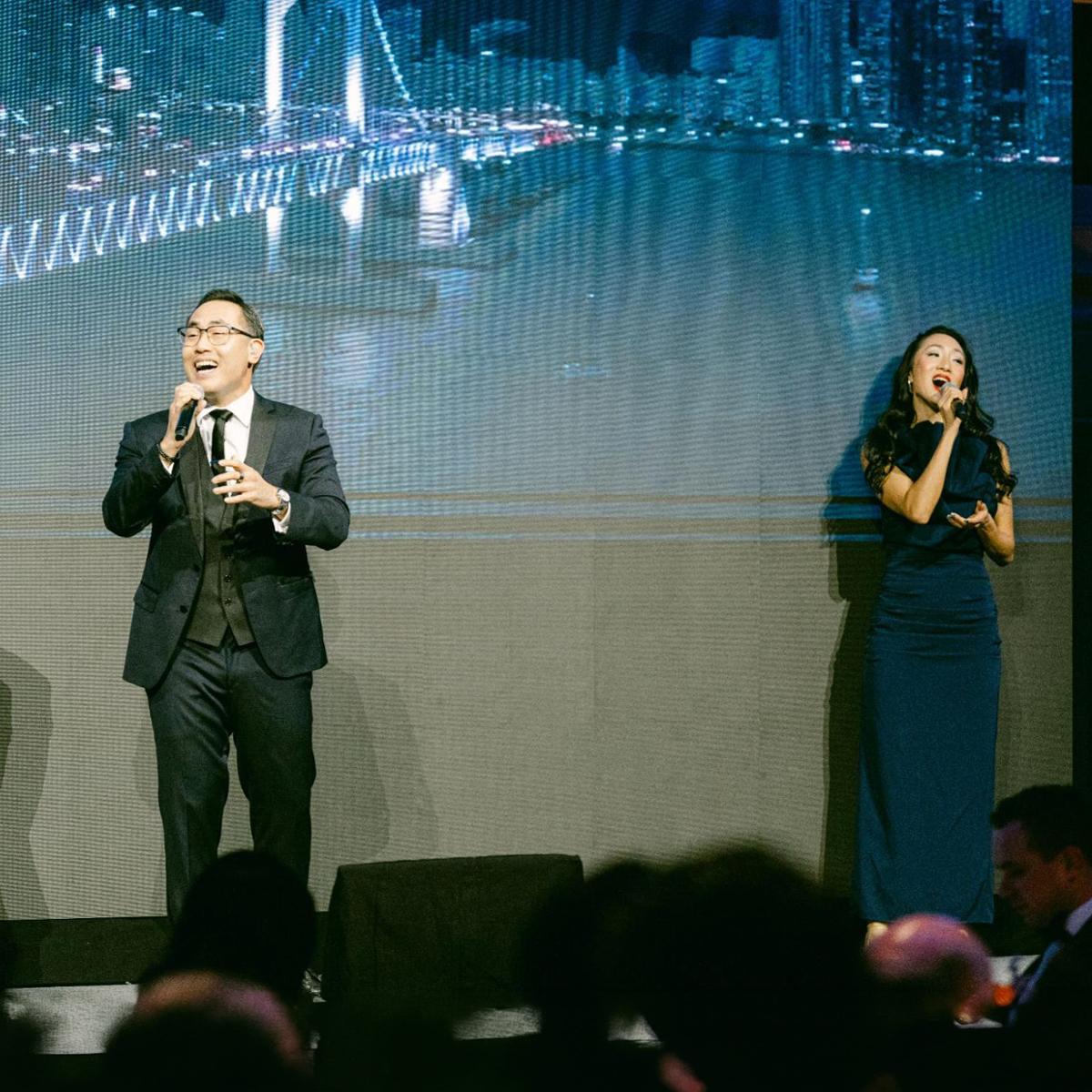
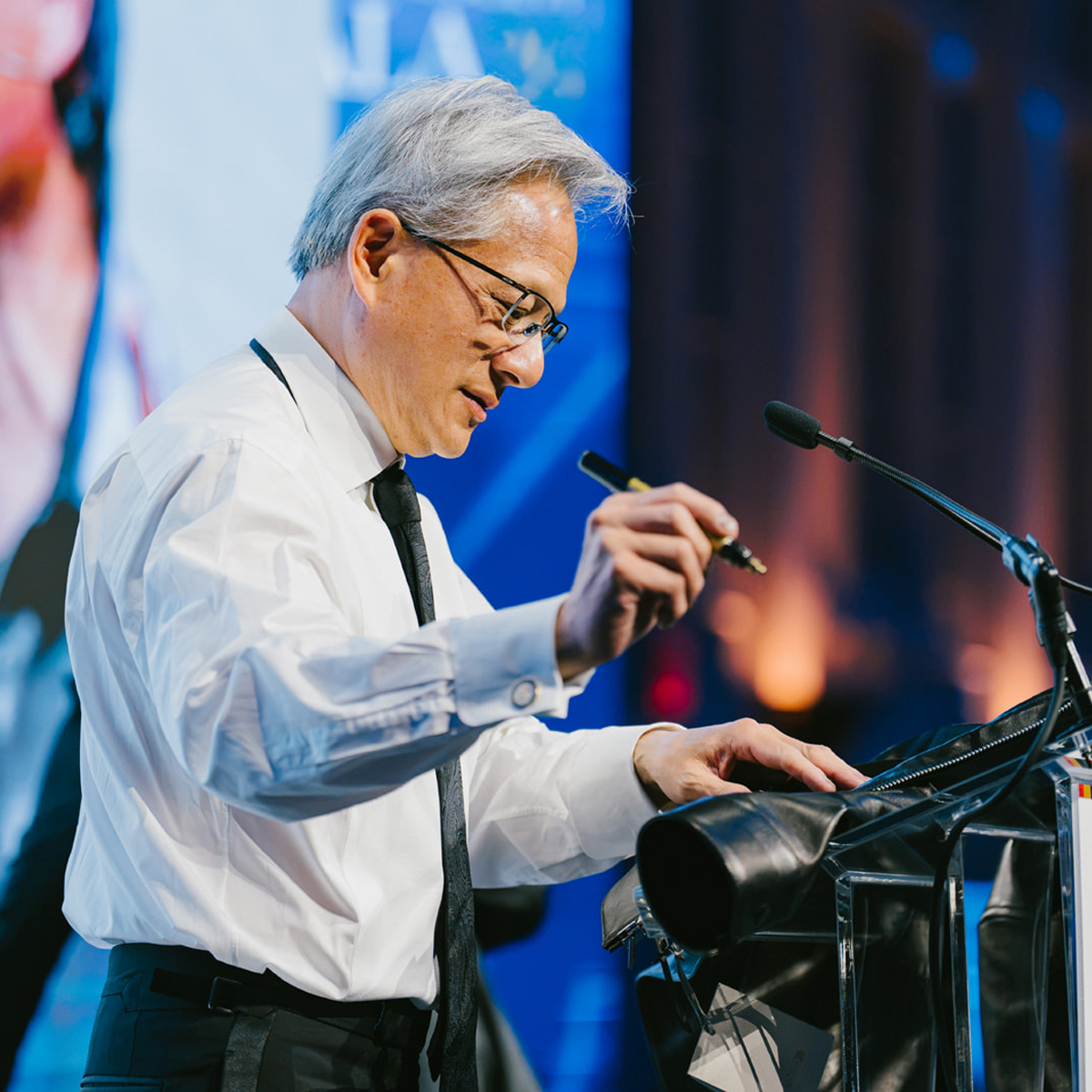
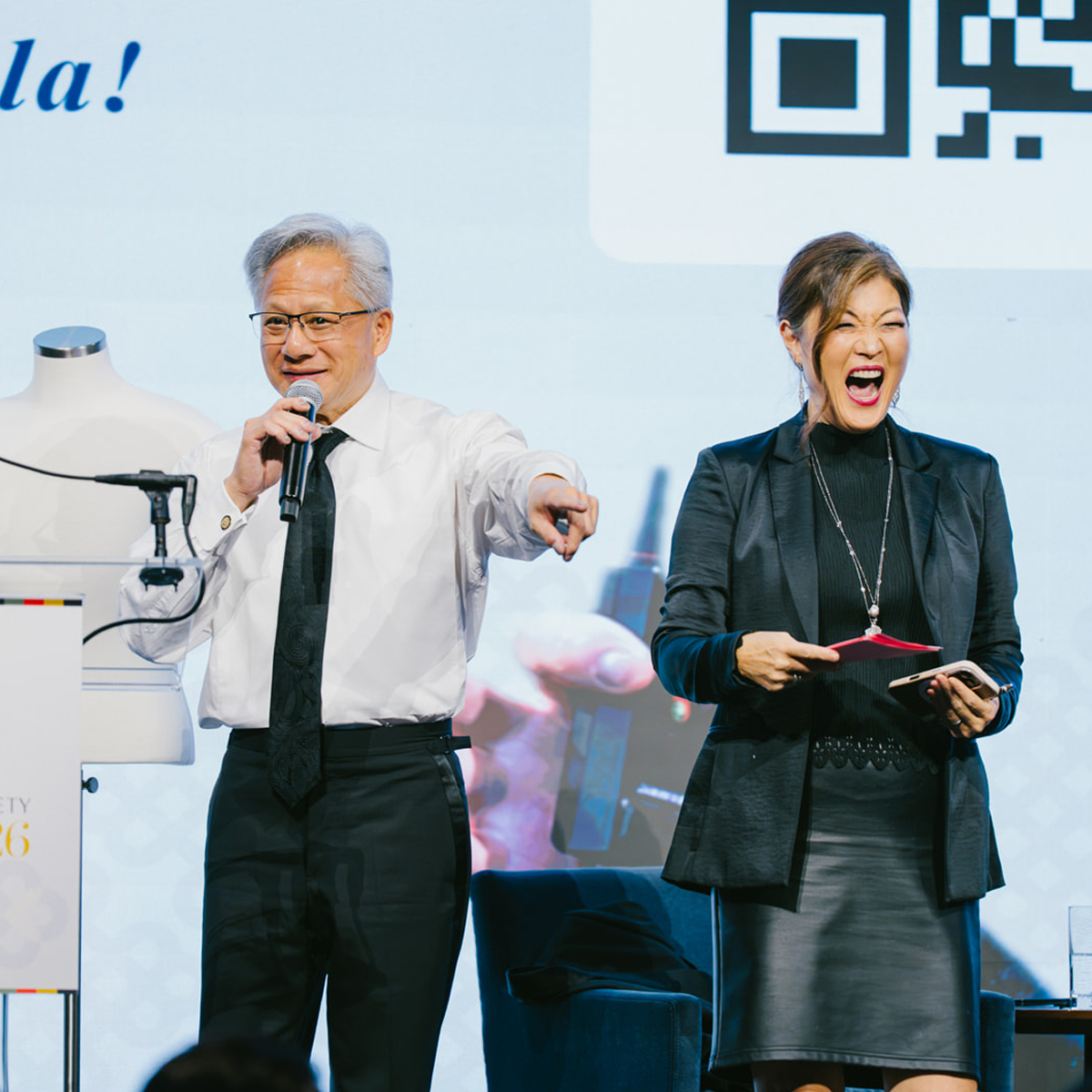
2026 Annual Gala Recap

Thank you for making the 2026 Annual Gala a record-breaking night for the U.S.–Korea partnership. ͏ ͏ ͏ ͏ ͏ ͏ ͏ ͏

2006 Annual Dinner


Dinner Supporters

The Korea Society 2006 Annual Dinner

honoring
The Honorable Madeleine Albright
Former United States Secretary of State

and
2006 Van Fleet Awardee
Lee Kun-Hee
Samsung Chairman

Tuesday, September 19, 2006

The Pierre
Fifth Avenue at 61st Street
New York City

Reception – 6:30 PM – Cotillion Room
Dinner – 7:30 PM – Grand Ballroom


Hundreds of friends of The Korea Society-including many of the most prominent members of the business and diplomatic establishments in the U.S. and the ROK-gathered in the main ballroom of The Pierre hotel in New York City to celebrate the organization and those who have done outstanding work in carrying out its mission of forging ever closer, deeper U.S.-Korea ties. At this year’s annual dinner, Lee Kun-Hee, chairman and CEO of Samsung Electronics, was honored with The Korea Society’s 2006 James A. Van Fleet Award. Madeleine Albright, former U.S. secretary of state, delivered the keynote address.

Introduced by Donald P. Gregg, president and chairman of The Korea Society, Albright spoke in rousing defense of the U.S.-Korea alliance. Recounting her experiences in dealing with the North Korean nuclear issue in the 1990s, Albright decried the current administration’s hard-line posture towards Pyongyang, urging that the U.S. conduct direct and unconditional talks with the North and cement a comprehensive plan for denuclearization and development on the Korean peninsula. “It is important that all concerned focus less on process and debating points than on progress and results,” she said.

Image

ImageAlbright was followed by a last-minute addition to the program, South Korea’s foreign minister and the leading candidate for U.N. secretary general, Ban Ki-Moon. Minister Ban praised all the work of The Korea Society over the last year, as well as the many contributions made by Chairman Lee to U.S.-Korea relations. Donald P. Gregg then took the podium to present the award.

Entertainment for the evening was provided by the sounds of the International Sejong Soloists, one of the most prestigious string ensembles in New York, and the stylings of renowned Korean jazz vocalist Youn Sun Nah.

The 2006 annual dinner was one of the most successful in The Korea Society’s history. The caliber of the program attracted a full house of guests and sponsors, as well as numerous members of the Korean, American and Japanese press.  

Program

ImageMadeleine Korbel Albright served as the 64th secretary of state of the United States.  In 1997, she was named the first woman secretary of state and became, to that time, the highest ranking woman in the history of the US government. (portrait by Timothy Greenfield Sanders)

Dr. Albright is the founder of The Albright Group LLC, a global strategy firm.

She is the first Michael and Virginia Mortara Endowed Distinguished Professor in the Practice of Diplomacy at the Georgetown School of Foreign Service.  She is the chairman of The National Democratic Institute for International Affairs, chair of The Pew Global Attitudes Project and president of the Truman Scholarship Foundation.  Dr. Albright is the co-chair of the High Level Commission on Legal Empowerment of the Poor (HLCLEP) and also serves on the Board of Directors of the Council on Foreign Relations and the Board of Trustees for the Aspen Institute.  
   
As Secretary, Dr. Albright reinforced America’s alliances, advocated democracy and human rights, and promoted American trade and business, labor, and environmental standards abroad.

Accomplishments during former Secretary Albright ’s tenure included the expansion and modernization of NATO and NATO’s successful campaign to reverse ethnic cleansing in Kosovo; the promotion of peace in the Balkans; the reduction of nuclear dangers from Russia; the strengthening of democracy in Europe, Africa, Asia, and Latin America; the skillful management of our multifaceted relationship with China including trade as well as human rights; and the growth of trade in the Americas, in Africa through the African Growth Opportunity Act, and through the conclusion of hundreds of other agreements that facilitated American business overseas. 

From 1993 – 1997, Dr. Albright served as the United States Permanent Representative to the United Nations and as a member of the President’s Cabinet.  In 1995, she led the U.S. delegation to the UN’s Fourth World Conference on Women in Beijing, China.

Dr. Albright was the Director of Women in Foreign Service Programs and a Research Professor of International Affairs at Georgetown University during the decade prior to her return to public service.  From 1989 -1992, she was President of the Center for National Policy, a non-profit public policy organization based in Washington D.C.  As a professor, Dr. Albright wrote extensively on change in communist systems particularly on the role of the media. 

From 1978-81, Dr. Albright was a member of President Carter’s National Security Council and White House staff.  From 1976-78, she served as Chief Legislative Assistant to U.S. Senator Edmund S. Muskie. 

Dr. Albright received her B.A. with Honors, from Wellesley College, Masters and Doctorate from Columbia University’s Department of Public Law and Government, as well as a Certificate from the Russian Institute.

She was born in Prague, Czechoslovakia, and immigrated to America with her family after Communists took control of that country in 1948.  She is the mother of three daughters and has six grandchildren.

Dr. Albright’s autobiography, Madam Secretary: A Memoir, was published in September, 2003. She has a new book entitled The Mighty and The Almighty – Reflections on America, God and World Affairs, published in May, 2006. (as of 5-06)


ImageLee Kun-Hee is chairman and CEO of Samsung Electronics, a leading manufacturer of industrial and consumer electronics. Prior to serving in this role, Lee served as chairman of the Samsung Group from 1987 to 1998 and vice chairman of the group from 1978 to 1987. He began his career with the Samsung Group in 1968, serving as executive director of Joong-Ang Daily News and Tong-Yang Broadcasting Corporation until 1978. Lee has made many noteworthy contributions to the global business community. For his dedication to improving economic and social ties between France and Korea, the French government honored him in 2004 with the Commandeur de la Légion D’Honneur (Commander of the Legion of Honor), a prestigious decoration established by Napoleon Bonaparte in 1802.

Lee has worked tirelessly in a variety of roles to advance the well-being of Korea and the Korean people. He has been of vice chairman of the Federation of Korean Industries since 1987, and vice chairman of the Korea-Japan Economic Committee since 1981. He is the current director of the Korean Youth Association.

Lee has also worked to extend opportunities to Korean athletes. Lee served as president of the Korean Amateur Wresting Federation from 1982 to 1996 and as honorary president since 1997. He has been a standing member of the Korean Olympic Committee since 1982, becoming vice president of that committee in 1993 and honorary president in 1996. In 1996, Lee was elected as a member of the International Olympic Committee and, later that year, as a member of the Korean Organizing Committee for the 2002 FIFA World Cup Korea-Japan.

Born on January 9, 1942 in the town of Uiryung, Kyongnam Province, South Korea, Lee is married with one son and two daughters. He majored in economics at Waseda University in Tokyo, studied business administration at George Washington University in Washington, D.C. and has received two honorary doctorates-one, in business administration, from Seoul National University in January 2000, and the other, in philosophy, from Korea University in May 2005.


Speakers & Honorees

BENEFACTORS

William R. Rhodes
Chairman & CEO, Citibank N.A.
Senior Vice Chairman, Citigroup Inc.

Yun Jong-Yong
Vice Chairman & CEO
Samsung Electronics Co., Ltd.

Ray Ferguson
Chief Executive Officer
Standard Chartered Bank, Americas


PATRONS

Edward T. Cloonan
Vice President
American International Group, Inc.

Wendell Weeks
President and CEO
Corning Incorporated 

Kang Chung Won
President & CEO
Kookmin Bank


 SPONSORS

 
 Michael L. Ducker
President
FedEx Express International
Wang Sang Eun
President
Korean-American Friendship Association
Arthur F. Ryan
Chairman & CEO
Prudential Financial
John B. Hynes, III
President & CEO
Gale International
Nicholas Bratt
Managing Director
Lazard Asset Management LLC
Rodger A. Lawson
Vice Chairman
Prudential Financial
Hur Dong-Soo
Chairman & CEO
GS Caltex Corporation
Michael Ahn
President & CEO
LG Electronics, North American HQ
John H. Koo
President & CEO
SK USA, Inc.
Robert E. Fallon
Chairman
Korea Exchange Bank
Jin Roy Ryu
Chairman and CEO
Poongsan Corporation
Young H. T. Cho
Partner
PricewaterhouseCoopers LLP
Bill Hwang
Managing Partner 
Tiger Asia Management L.L.C.
Jarett F. Wait 
Managing Director
Lehman Brothers
 

Dinner Committee

BENEFACTORS

Citigroup Inc.
Samsung Electronics Co., Ltd.
Standard Chartered Bank

PATRONS

American International Group, Inc. 
Corning Incorporated
Kookmin Bank
Samsung Electronics Co., Ltd 

SPONSORS

FedEx Express 
Gale International
GS Caltex Corporation
Korea Exchange Bank
Korean-American Friendship Association
Lazard Asset Management LLC
Lehman Brothers
LG Electronics, North America Headquarters 
Poongsan Corporation 
PricewaterhouseCoopers LLP 
Prudential Financial
SK USA, Inc.
Tiger Asia Management L.L.C.
 

DONORS

Deloitte & Touche USA LLP
Gale International
Hyosung America Incorporated
Kim & Chang
Korea Bankers Association of New York
KPMG LLP
Merrill Lynch
NYSE Group 

CONTRIBUTORS

Asian American Bar Association of NY
The Boeing Company
Cravath, Swaine & Moore LLP 
DMZ Forum 
Korea International Trade Association 
Korea Consulate General 
POSCO America Corporation
State Street Financial

SPECIAL ACKNOWLEDGEMENTS

Additional support was provided by Robert A. Terry, Westinghouse.

We gratefully acknowledge in-kind donations from Johnnie Walker.


2006 Van Fleet Award Honoree

2006 vanfleet icon


2006 vanfleet lee-kun-hee

2006 Van Fleet Award Honoree

LEE KUN-HEE
SAMSUNG CHAIRMAN


As the guiding light of Samsung, Chairman Lee Kun-Hee is responsible for an extraordinary economic conglomerate that has contributed enormously to the economic rise of South Korea. Samsung is the strongest economic symbol of today’s Korea, as is demonstrated by its ranking number 20 in the latest Business Week / Interbrand survey of the 100 “top brands” worldwide. This extraordinary ranking is supported by the stunning surge in the value of the Samsung product line over the past five years. Over this period, Samsung posted the biggest gain in value of any of the top 100 brands, with an explosive rise of 186-percent in value. Today its total assets amount to more than $230 billion, with close to a quarter of a million employees working in over 65 countries. Samsung currently has more than 25 offices in the United States alone.

Chairman Lee has played a direct, hands-on role in shaping Samsung’s approach to its people and its products. He has long supported innovation in management, creating a more dynamic corporate culture under the slogan “Change Myself First,” based on his conviction that all progress begins with the individual. Today, Samsung’s corporate philosophy reflects Chairman Lee’s belief that economic success comes from a stress on quality, not quantity.

Educated in Korea, Japan and the United States, Chairman Lee remains active in many areas, as a vice chairman of the Federation of Korean Industries, a vice chairman of the Korea-Japan Economic Committee, a member of the International Olympic Committee, a director of the Korean Youth Association and a philanthropist of high standing. Under his guidance, Samsung made a $3.2 million contribution to the Hurricane Katrina Relief Fund last year and has contributed more than $30 million to American charities over the years. Truly, Samsung is an outstanding global citizen.

When General James Van Fleet, for whom this award is named, came up with the idea of establishing The Korea Society, Korea itself still lay largely prostrate in the wreckage of war. Samsung has played an enduring and significant role in Korea’s recovery and rise to global prominence. It is for his key role in that magnificent recovery that we honor Chairman Lee.


16th Annual Golf Tournament

2006 05 09  Golf iconMay 9, 2006

The only thing clouding the sky on the day of the 16th Annual Van Fleet Memorial Golf Tournament was the occasional wayward drive, sailing across the green. Seventy-one golfers, in 18 teams, played 18 holes at the Bedford Golf and Tennis Club in Bedford New York. The tournament, preceded by breakfast and followed by dinner and a silent auction, was fun for all. The Van Fleet Memorial Trophy went to C.Y. Park. The team competition was dominated by a foursome of Dong Hyun Ahn, Dukki Jin, Daehyun Kim and Moon Gie Kim. As per tradition, Hyundai’s hole-in-one prize—a 2006 Azera—went unclaimed.


Annual Membership Party 2026 | Checkout

 
Ticket purchase will include one free raffle ticket and complimentary dinner.


 
TICKETS: Members or Non-Members
 

Fees
 
Name
 
Email
 
Membership ID
 
 
How did you hear about this event?
 
Would you like to subscribe to The Korea Society’s email list?
 

2005 Van Fleet Award Honoree

2005 vanfleet icon


2005 vanfleet george-bush


2005 Van Fleet Award Honoree


GEORGE H.W. BUSH
41ST PRESIDENT OF THE UNITED STATES OF AMERICA


The presidency of George H.W. Bush, from 1989 to 1993, remains the high point of the U.S.-Korea alliance that dates from the Korean War.
From the early months of his term in office, President Bush worked creatively to support South Korea’s policy of “Nordpolitic,” which was designed to pave the way toward better relations between North and South Korea by establishing diplomatic relations with the Soviet Union, China, and the countries of Eastern Europe.

In 1990, after the collapse of the Soviet Union the previous year, President Bush arranged a meeting between South Korean President Roh Tae Woo and Mikhail Gorbachev in San Francisco that paved the way for the establishment of diplomatic relations between Moscow and Seoul the following year.

Using his vast Chinese experience, President Bush encouraged China to recognize South Korea, which it did in 1992. President Bush also urged the Chinese to drop their long-standing opposition to membership in the United Nations for South Korea. Today, both North and South Korea are United Nations members of long standing.

In military matters, President Bush was equally adroit in supporting “Nordpolitic.” Strategic weapons deployments, and annual, large-scale training exercises were modified in close coordination with Seoul’s outreach to Pyongyang. The result was the signing of two North-South agreements at the end of 1991 that remain as a blueprint for a stable Korean Peninsula in the post-nuclear age.

Today, as the U.S.-Korea alliance continues to grow and prosper in a new century, President Bush is still remembered with great respect and affection by the Korean people for all that he contributed to this key relationship during his presidency.


2005 Annual Dinner

The 2005 annual dinner was one of, if not, the largest Korea-related event ever held in New York City. The dinner was held in the Grand Ballroom of the Waldorf-Astoria. It drew nearly 1,000 guests. No doubt, the turnout was a reflection of the high profiles of the guests for the event: Roh Moo-hyun, president of the Republic of Korea and the dinner’s keynote speaker, as well as George H.W. Bush, former president of the U.S. who was the recipient of the 2005 Van Fleet Award. Both delivered very personal and uplifting messages that were well-received by the dinner guests.

Befitting the high profile of the event, there was an unprecedented number of dinner chairs. They were: William R. Rhodes, chairman, Citibank N.A. and senior vice chairman, Citigroup Inc.; Shin-Ho Kang, chairman, The Federation of Korean Industries; Jae-Chul Kim, chairman & CEO, Korea International Trade Association; Michael Ahn, president & CEO, LG Electronics, North American Headquarters; John B. Hynes, president & CEO, Gale International, New Songdo City; Dong-Jin Oh, president & CEO, Samsung Electronics America, Inc.; and James F. McCabe, CEO, Americas, Standard Chartered Bank.

The entertainment for the evening was provided by the renowned soprano Youngok Shin who offered an exquisite program of Italian operatic arias and Korean art songs.

Lastly, the evening ended on an extraordinarily uplifting high note when FKI Chairman Kang Shin-ho came to the podium and presented former President George H.W. Bush with a check for $10 million as a contribution toward Bush-Clinton Katrina Relief Fund.