

2026 Fall Korean Language Class

📅 Registration: Through September 13
📅 10-Week Course: September 14 ~ November 20
🏫 Once a week • 2 or 2.5 hour per session

What Our Students Say:

“My professor is fantastic with review, answering questions when you don’t understand something, helping with correct pronunciation and in-class participation.”

10% Discount for TKS Members and KLP continuing students

📍10% Discount : If you have previously taken an 8-week or 10-week KLP course or if you are a member of The Korea Society at the Individual level and above, please contact language@koreasociety.org to receive your 10% discount code.

A Guide To Choosing a Right Level

New to Korean? ➡️ Beginning Korean 1
Know Hangul already? ➡️
 Beginning Korean 2 or Fast-track Beginning Korean 1&2 
Already beyond the complete beginner level? ➡️
 Beginning Korean 3 or 4 or Fast-track Beginning Korean 3&4 
Want to practice speaking and listening mainly? ➡️
 Beginning Conversation Korean 1 or 2 or 3
Already intermediate level? ➡️ Intermediate Korean 1 or 2 

Limited spots available — Hurry up!
10-Week : September 14 ~ November 20

For complete beginners. Click to view details and syllabus.

Beginning Korean 1: Syllabus here.

Jump into learning Korean with this stimulating course designed for complete beginners! First, you master the Korean alphabet (Hangeul) and then quickly move to learning and practice with introducing yourself (name, nationality, gender and occupation), asking simple questions, counting, and ordering food. You practice using the present tense as well as using 12 additional elementary grammar points and 80+ vocabulary necessary for basic conversation, reading, and writing. Covering the first half of the textbook I Love Korean I, this class is the perfect start to your meaningful and successful journey toward mastering the Korean language.

Recommended Previous Study: None

Fee: New student: $395
Continuing student: $355  

Textbook: I Love Korean 1 (Seoul National University Language Institute, Published by Seoul National Press)
Note: Textbook not included in course fee.
Class Mode: Online On Zoom

Beginning Korean 1: Wednesday
7:00 – 9:00 PM (EDT)
Instructor: Sunhee Song

Beginning Korean 1: Saturday
10:00 – 12:00 PM (EDT)
Instructor: Sabina Rowe

For learners who can read Korean alphabets. Click to view details and syllabus.

Beginning Korean 2: Syllabus here.

Ready to take your Korean skills to the next level? Beginning Korean 2 is a great way to build on the basics you already know! This course covers everyday essentials like ordering at a restaurant, talking about your schedule and making plans (months, days, times, dates), shopping for groceries, asking for and giving directions to locations, and chatting about the weather. You master 16 different grammar points—including prepositions, negatives, counters, irregular verbs and adjectives and some past tense usage—and 190+ vocabulary necessary for everyday conversation, reading and writing. It covers the second half of the textbook I Love Korean 1. 

Recommended Previous Study: Beginning Korean 1 or equivalent skills shown on our placement exam.

Fee: New student: $395
Continuing student: $355  

Textbook: I Love Korean 1 (Seoul National University Language Institute, Published by Seoul National Press)
Note: Textbook not included in course fee.
Class Mode: Online On Zoom

Beginning Korean 2: Tuesday
6:00 – 8:00 PM (EDT)
Instructor: Sunhee Song

Beginning Korean 2: Saturday
10:00 – 12:00 PM (EDT)
Instructor: Sabina Rowe

For learners who want to learn at a faster track. Click to view details and syllabus.

Fast-track Beginning Korean 1 & 2: Syllabus here.

For beginners who can already read basic Korean consonants and vowels and want to quickly complete Beginning 1 & Beginning 2 while building a strong Korean foundation.

Already know some Korean and able to move at a faster pace? Our Fast-Track Beginning Korean I & II course is just what you need! Designed for beginners with some knowledge and ability to write and speak Korean, this fast-paced course, which meets for 2.5 hours per session, covers all content provided in Beginning Korean I and Beginning Korean II classes. You gain proficiency in practical skills such as  introducing yourself and others, asking simple questions, using numbers, ordering at a restaurant, chatting about daily life and making plans with times, dates and days of the week, shopping for groceries, handling  phone calls, describing your location and inquire about directions,, and even talking about the weather. It covers 28 elementary grammar points with an emphasis on the present tense and the past tense in some situations and includes practice with prepositions, irregular verbs and adjectives, as well as introduces 230+ essential vocabulary for basic conversation, reading and writing. It has all the basics you need to build a strong foundation in Korean! It covers the entire textbook I Love Korean 1.

Recommended Previous Study: A preliminary basic understanding of Korean and the Hangeul alphabet. For example, you should be able to understand, read, and write the following:
            1. Simple Korean letters (ㄱ, ㄴ, ㄷ, ㄹ, … ㅏ, ㅑ, ㅓ, ㅕ, …).
            2. Basic consonant and vowel combinations (가, 나, 다, 라, …).
            3. Final consonant concepts (한, 국, 글, 선, 생, 님, 학, 생, …).
Not sure if this class is right for you? Take this short quiz here.

Fee: New student: $475
Continuing student: $425

Textbook: I Love Korean 1 (Seoul National University Language Institute, Published by Seoul National Press)
Note: Textbook not included in course fee.
Class Mode: Online On Zoom

Fast Track Beginning Korean 1&2: Tuesday
7:00 – 9:30 PM (EDT)
Instructor: Jieun Lee

Essential for anyone who wants to build a stronger foundation. Click to view details and syllabus.

Beginning Korean 3: Syllabus here.

Ideal for students who can handle basic Korean conversations and want to improve their grammar, vocabulary, and real-life communication skills.

Ready to take your Korean skills up a notch? Our Beginning Korean 3 course is designed to do just that! You learn past and future tenses, Korean honorifics and how to introduce your family using honorifics, vocabulary for clothes shopping and making exchanges, sharing travel stories, talking about your weekend plans, and handling tasks at the bank and post office as well as making reservations for travel. It covers 21 new grammar points and introduces 230+ new vocabulary items. In addition to mastering your ability to participate in everyday conversations, you also advance your ability to comprehend basic texts and write simple compositions. The first half of the textbook I Love Korean 2 is covered.

Tip: Consider pairing this course with Beginning Conversation Korean I for additional listening and speaking practice.

Recommended Previous Study: Beginning Korean 2, Fast-track Beginning 1 & 2, or equivalent skills shown on our placement exam

Fee: New student: $395
Continuing student: $355

Textbook: I Love Korean 2 (Seoul National University Language Institute, Published by Seoul National Press)
Note: Textbook not included in course fee.
Class Mode: Online On Zoom

Beginning Korean 3: Thursdays
7:00 – 9:30 PM (EDT)
Instructor: Euna Cho

For learners looking to advance at a faster pace before reaching the intermediate level. Click to view details and syllabus.

Fast-Track Beginning Korean 3 & 4: Syllabus here.

Ideal for learners with a strong beginner-level foundation who want to quickly advance their Korean skills and complete Beginning Korean 3 & 4 in an accelerated format.

Are you ready to quickly accelerate to more advanced beginner-level Korean language study? Then, this fast-track course is the perfect next step!  It covers all the material offered in our Beginning Korean 3 and Beginning Korean 4 courses and meets for 2.5 hours per session. You sharpen your conversation, reading and writing skills in a variety of contexts with essential vocabulary and grammar, including past and future tenses, honorifics, reasoning, and asking for permission, to name a few areas. You learn over 40 new grammar points and 400+ vocabulary items.  By the end or the course, you are able to confidently introduce family members using honorifics, use public transportation, handle bank and post office requests, navigate doctor and hospital visits, understand and give directions as well as shop for clothes and travel with ease. Covering all the chapters in I Love Korean 2, after completing this course you are set for intermediate Korean study. 

Tip: Consider pairing this course with either Beginning Conversation Korean I or Beginning Conversation Korean II for additional listening and speaking practice.

Recommended Previous Study: Fast-track Beginning Korean 1 & 2, Beginning Korean 2, or equivalent ability as demonstrated on our placement exam.

Fee: New student: $475
Continuing student: $425

Textbook: I Love Korean 2 (Seoul National University Language Institute, Published by Seoul National Press)
Note: Textbook not included in course fee.
Class Mode: Online On Zoom

Fast-Track Beginning Korean 3&4: Wednesdays
7:00 – 9:30 PM (EDT)
Instructor: Jieun Lee

For learners want to practice speaking and listening mainly, with grammar. Click to view details and syllabus.

Beginning Conversation Korean 1: Syllabus here.

Ideal for advanced beginner-level learners who have a strong foundation in Korean grammar and vocabulary and want to build confidence through practical conversation practice.

Are you one of the millions learning Korean through apps or self-study and looking for a setting to practice speaking skills with actual people? If so, this advanced beginner-level conversation course is perfect for enhancing your conversation abilities in everyday situations like introductions, shopping, making plans, exchanging phone numbers, finding locations, traveling and so much more! This course focuses on speaking from the beginning, helping students build confidence, while also covering a wide range of around 20 grammar points and vocabulary. With a focus on interactive speaking and listening exercises, plus engaging handouts and supplementary materials, this course is ideal for students at an advanced beginning level, coveringthe first half of the textbook Sejong Institute Practical Korean 1.

Recording Policy: The recording will focus primarily on instructional content rather than the full class session and breakout room sessions will not be recorded, as these sessions are designed for students to practice speaking and interacting in small groups. In order to deliver the instructional content more effectively, we may provide recordings that capture only the shared screen and audio, without showing the students’ or instructor’s faces.

Recommended Previous Study: Beginning Korean 3 or 4, Fast-Track Beginning Korean 3&4. Beginning Conversation Korean 1 is intended for students who can read basic Hangul and would like to start practicing Korean conversation.

Fee: New student: $395
Continuing student: $355

Textbook: Sejong Institute Practical Korean 1 (Published by King Sejong Institute Foundation)
Note: Textbook not included in course fee.  
Class Mode: Online On Zoom

Beginning Conversation Korean 1: Tuesday
7:30 – 9:30 PM (EDT)
Instructor: Gieun Lee

Similar level with Beginning Conversation Korean 1, but cover different topics. Click to view details and syllabus.

Beginning Conversation Korean 2: Syllabus here.

Similar level with Beginning Conversation Korean 1, but cover different topics. Ideal for advanced beginner-level learners who have a strong foundation in Korean grammar and vocabulary and want to build confidence through practical conversation practice.

Our Beginning Conversation Korean 2 course is designed to develop your conversational skills for daily life situations and to equip you with the skills needed to communicate on basic topics and with phrases that are essential for everyday life. While reviewing basic grammar, vocabulary, and expressions covered in advanced beginning classes, you expand your conversational skills in real-world situations such as sharing past experiences, making dates and travel plans, clothes shopping for yourself and others, talking about your health and the weather, navigating hospitals, banks, and post offices and much more. This course focuses on speaking from the beginning, helping students build confidence, while also covering a wide range of around 20 grammar points and vocabulary! With interactive exercises, plus engaging handouts and supplementary materials, this course is ideal for students at a very advanced beginning level or initial intermediate level of proficiency, covering the last half of the textbook Sejong Institute Practical Korean 1.

Recording Policy: The recording will focus primarily on instructional content rather than the full class session and breakout room sessions will not be recorded, as these sessions are designed for students to practice speaking and interacting in small groups. In order to deliver the instructional content more effectively, we may provide recordings that capture only the shared screen and audio, without showing the students’ or instructor’s faces.

Note: It would be perfectly fine to take Beginning Conversation Korean 2 this term first, followed by Beginning Conversation Korean 1 in the next term. This is because Beginning Conversation Korean 2 is at the same level as Beginning Conversation Korean 1 and uses the same textbook, covering the latter half of the material.

Recommended Previous Study: Beginning Korean 3 or 4, Fast-Track Beginning Korean 3&4 or equivalent ability as demonstrated on our placement exam.

Fee: New student: $395
Continuing student: $355

Textbook: Sejong Institute Practical Korean 1 (Published by King Sejong Institute Foundation)
Note: Textbook not included in course fee.  
Class Mode: Online On Zoom

Beginning Conversation Korean 2: Wednesday
7:00 – 9:00 PM (EDT)
Instructor: Sabina Rowe

For learners who are comfortable with reading but still find speaking challenging. Click to view details and syllabus.

Beginning Conversation Korean 3: Syllabus here.

For students with a low to mid-intermediate Korean foundation who want to expand their speaking skills, review key grammar, and gain confidence through real-life conversations.

Excited to make your conversation skills shine? In this course, through practical topics such as giving congratulations and gifts, exchanging greetings and personal updates, transportation, food, daily routines, you will be able to build confidence using Korean in real-life contextsWith a focus on fun and interactive speaking and listening exercises with plenty of handouts and extra materials to keep things lively, this course is perfect for students with low to mid-intermediate Korean language skills. This course focuses on speaking from the beginning, helping students build confidence, while also covering a wide range of around 20 grammar points and vocabulary! While reviewing basic grammar, vocabulary, and expressions covered in beginning classes, you expand your conversational skills to many real-world situations, covering the first half of the textbook Sejong Institute Practical Korean 2.

Recording Policy: The recording will focus primarily on instructional content rather than the full class session and breakout room sessions will not be recorded, as these sessions are designed for students to practice speaking and interacting in small groups. In order to deliver the instructional content more effectively, we may provide recordings that capture only the shared screen and audio, without showing the students’ or instructor’s faces.

Recommended Prior Study: Intermediate Korean 1 or 2, Beginning Conversation Korean 2 or equivalent ability as demonstrated on the placement exam.

Fee: New student: $395
Continuing student: $355

Supplemental Textbook: Sejong Institute Practical Korean 2 (Published by King Sejong Institute Foundation)
Note: Textbook not included in course fee. 
Class Mode: Online On Zoom 

Beginning Conversation Korean 3: Tuesday
7:30 – 9:30 PM (EDT)
Instructor: Shin Young Park

For learners who want to learn essential vocabulary and grammar for the intermediate level. Click to view details and syllabus.

Intermediate Korean 1: For students with a strong beginner-level foundation who are ready to transition to intermediate study by developing more complex conversational, reading, and writing skills.

Excited to elevate your Korean language skills to an intermediate level? In this course, you will gain the confidence to dive into more complex conversations about your life and so much more. A follow-on to our beginning courses, you learn an additional 36 grammar rules such as conditionals and 250 new situational expressions related to your schedule, making plans and inquiries for vacations and holidays, describing past experiences, describing details about your employment and living expenses, asking for help, sharing in-depth descriptions of health, and much more. Upon completion you are able to engage in more complex conversations, comprehend longer texts and write compositions and notes in Korean. This course covers the first half of I Love Korean 3.

Tip: Consider pairing this course with Beginning Korean Conversation 2 for even more practice and fun! 

Recommended Previous Study: Beginning Korean 4, Fast-track Beginning Korean 3 & 4 or equivalent ability as demonstrated on a placement exam.

Fee: New student: $395
Continuing student: $355

Textbook: I Love Korean 3 (Seoul National University Language Institute, Published by Seoul National Press)
Note: Textbook not included in course fee.
Class Mode: Online On Zoom

Intermediate Korean 1: Thursday
7:30 – 9:30 PM (EDT)
Instructor: Gieun Lee

For learners who want to master essential grammar and expressions before moving up to advance level. Click to view class details and syllabus.

Intermediate Korean 2: For learners with an intermediate Korean foundation who want to deepen their communication skills and confidently navigate more complex everyday conversations and cultural situations.

Ready to level up from Intermediate Korean 1? In this course you tackle advanced grammar and vocabulary. Intended to help you navigate trickier cultural situations with ease, you master new expressions for casual hangouts and discussions, holidays and even troubleshooting every day mishaps and accidents. You learn 16 grammar rules, and 175+ new situational/colloquial expressions. Upon completion you are able to talk confidently about everyday life, fix a broken gadget. describe your favorite hobbies and holidays. Note: This course covers the second half of I Love Korean 3. 

Tip: Consider pairing this course with Intermediate Korean Conversation 1 for even more practice and fun! 

Recommended Previous Study: Intermediate Korean 1 or equivalent ability demonstrated on a placement exam.

Fee: New student: $395
Continuing student: $355

Textbook: I Love Korean 3 (Seoul National University Language Institute, Published by Seoul National Press)
Note: Textbook not included in course fee.
Class Mode: Online On Zoom

Intermediate Korean 2: Wednesday
8:00 – 10:00 PM (EDT)
Instructor: Euna Cho

Question & Answer about Comprehensive VS Conversation

The Comprehensive Course offers a structured and balanced approach to Korean learning, focusing on developing all four language skills: speaking, listening, reading, and writing. You can build a strong foundation through systematic grammar instruction, vocabulary development, and practical language practice.

Compared to the Conversation Course, which places greater emphasis on speaking and listening practice, the Comprehensive Course provides a more complete approach to overall Korean proficiency and is designed to help students steadily progress through each level.

We highly recommend taking both courses together!

Recording Policy

The recording will focus primarily on instructional content rather than the full class session. For the regular courses, the recordings will generally capture the full class session. However, for some classes, in order to deliver the instructional content more effectively, we may provide recordings that capture only the shared screen and audio, without showing the students’ or instructor’s faces. 

The recording will be available only to registered participants throughout the semester and until one month after the semester ends for all classes.

For Fast Track courses, to support asynchronous learning and review, the instructor will provide a separate recording covering the key expressions and instructional content from each class. Since Fast Track courses cover more material than regular courses, these recordings are designed to include additional content to support faster-paced learning and review.

For some Conversation courses, breakout room sessions will not be recorded, as these sessions are designed for students to practice speaking and interacting in small groups. (Breakout room sessions typically make up about 20% of each class and provide students with time to practice speaking and dialogues in small groups, under teacher’s guidance.)

Why Choose The Korea Society’s Korean Language Program?

The Korea Society has offered Korean language education for more than 30 years. Our online Korean courses provide structured instruction from beginner to intermediate levels, with live Zoom classes, class recordings and materials, small-group learning opportunities, free placement exams, conversation-focused courses, fast-track options, and certificates of completion. Our experienced instructors include university professors and educators with extensive college-level teaching experience, offering high-quality instruction at an affordable tuition rate. 20 hours of live instruction for $395 — just $19.75 per hour, plus access to class recordings, learning materials, and Google Classroom.

What our students are saying..

“I liked the teacher’s teaching style. I appreciated that it was an environment I felt comfortable asking questions and making mistakes in.”

“I really appreciate how my professor runs her class with a focus on speaking idiomatic Korean and connecting the grammar lessons to Korean culture.”

“Our teacher was very helpful and maintained a swift pace in the class, we had plenty of breakout room time to practice in the conversation class.”

This Korean Language Program is open to ages 18+. 
For any inquiries, please email us at language@koreasociety.org.

FREQUENTLY ASKED QUESTIONS: HERE 
 

Fall 2026 Korean Language Resource

Are you learning Korean? This page offers free Korean language resources open to the public to support your Korean learning journey. If you’d like to take your Korean learning to the next level, join our 2026 Fall Korean Language Class below.

Creation of Hangeul

Hangeul (한글) is the Korean writing system created under the leadership of King Sejong the Great during the Joseon Dynasty. It was designed to make reading and writing Korean more accessible to ordinary people.

Before Hangeul

Before Hangeul was created, Koreans primarily usedClassical Chinese characters (Hanja) for writing. However, Chinese characters were difficult to learn and did not easily represent the sounds and grammatical structure of the Korean language.

As a result, many ordinary people had difficulty learning to read and write.

King Sejong and the Creation of Hangeul

King Sejong wanted to create a writing system that ordinary people could learn and use more easily.

A new writing system was completed around 1443, and King Sejong introduced it as Hunminjeongeum (훈민정음), meaning approximately “the proper sounds for the education of the people.(백성을 가르치는 바른 소리)”

The Proclamation of Hangeul

In 1446, the Hunminjeongeum Haerye was published. This important document explained the principles behind the new writing system and how the letters should be used.

For this reason, 1443 is generally associated with the creation of Hangeul, while 1446 marks its official promulgation and publication.

What Makes Hangeul Unique?

One of the most remarkable features of Hangeul is its systematic design. The shapes of several consonants were based on the shape or position of the speech organs used to pronounce them.

For example:

  • ㄱ (g/k) reflects the shape of the tongue when making the sound.
  • ㄴ (n) reflects the shape of the tongue touching the upper gum.
  • ㅁ (m) represents the shape of the mouth.
  • ㅅ (s) represents the shape of the teeth.
  • ㅇ (ng/silent) represents the shape of the throat.

Korean vowels were also developed from a set of basic elements representing heaven, earth, and humanity.

Another distinctive feature is that letters are combined into syllable blocks rather than written simply in a linear sequence.

For example: ㅎ + ㅏ + ㄴ → 한

Why Is Hangeul Important?

The creation of Hangeul was more than the creation of a new writing system. It was an important cultural and social development that made it easier for Koreans, including ordinary people who had previously had limited access to literacy, to read and write in their own language.

Today, Hangeul is the official writing system of the Korean language, and October 9 is celebrated as Hangeul Day (한글날) in South Korea to commemorate its creation and promulgation.

Before learning Korean Vowels and Consonants, please read theRomanization Guide.

About Romanization: Korean words may be written differently in English because several Romanization systems are used. Although the spellings may differ, the Korean pronunciation remains the same.

Examples:
김밥 → Kimbap / Gimbap
불고기 → Pulgogi / Bulgogi
태권도 → Taekwondo / Taegwondo

Korean Vowels 

VowelRomanizationApproximate Pronunciation
a“a” as in father
ya“ya” as in yard
eoSimilar to “uh” in sun
yeo“yuh” as in young
o“o” as in go
yo“yo” as in yoga
u“oo” as in food
yu“you” as in you
euSimilar to “oo” but with unrounded lips
i“ee” as in see
aeSimilar to “e” in bed
yaeSimilar to “ye” in yes
e“e” as in bed
ye“ye” as in yes
wa“wa” as in water
waeSimilar to “we” in ウェ / “way”
oeSimilar to “we” in wet
wo“wo” as in wonder
we“we” as in well
wi“wee” as in week
uiA combination of ㅡ (eu) + ㅣ (i); similar to “ui”

Korean Consonants 

ConsonantRomanizationApproximate Pronunciation
g/kSimilar to g in go / k in ski
n“n” as in no
d/tSimilar to d in do / t in stop
r/lBetween r and l
m“m” as in me
b/pSimilar to b in boy / p in spy
s“s” as in see
ng / silentng as in sing; silent at the beginning of a syllable
j“j” as in jam
ch“ch” as in chair
kStrong k sound as in key
tStrong t sound as in tea
pStrong p sound as in pie
h“h” as in hello

Double Consonants (Tense Consonants)

ConsonantRomanizationApproximate Pronunciation
kkTense k sound, similar to a stronger “k”
ttTense t sound, similar to a stronger “t”
ppTense p sound, similar to a stronger “p”
ssTense s sound, similar to a stronger “s”
jjTense j sound, similar to a stronger “j”

Note: These are called tense consonants because they are pronounced with greater tension in the speech muscles. They are not simply “double” versions of the basic consonants.

Basic Korean Greetings

Korean (한글)RomanizationMeaning
안녕하세요AnnyeonghaseyoHello
안녕AnnyeongHi / Bye (casual)
감사합니다GamsahamnidaThank you
고맙습니다GomapseumnidaThank you
죄송합니다JoesonghamnidaI’m sorry
미안합니다MianhamnidaI’m sorry
괜찮아요GwaenchanayoIt’s okay / I’m fine
NeYes
아니요AniyoNo
안녕히 가세요Annyeonghi gaseyoGoodbye (to someone leaving)
안녕히 계세요Annyeonghi gyeseyoGoodbye (when you are leaving)
잘 지내세요Jal jinaeseyoTake care / Hope you’re doing well
만나서 반가워요Mannaseo bangawoyoNice to meet you
잘 부탁드립니다Jal butakdeurimnidaI look forward to working with you / Please take good care of me
좋은 아침이에요Joeun achimieyoGood morning
좋은 하루 보내세요Joeun haru bonaeseyoHave a nice day
좋은 저녁 보내세요Joeun jeonyeok bonaeseyoHave a nice evening
오랜만이에요OraenmanieyoLong time no see
어떻게 지내세요?Eotteoke jinaeseyo?How are you?
잘 지내요Jal jinaeyoI’m doing well
이름이 뭐예요?Ireumi mwoyeyo?What is your name?
제 이름은 ___예요Je ireumeun ___yeyoMy name is ___
어디에서 왔어요?Eodieseo wasseoyo?Where are you from?
저는 ___에서 왔어요Jeoneun ___eseo wasseoyoI’m from ___
네, 맞아요Ne, majayoYes, that’s right
아니요, 괜찮아요Aniyo, gwaenchanayoNo, it’s okay
실례합니다SillyehamnidaExcuse me
잠시만요JamsimanyoJust a moment / Excuse me
다시 말씀해 주세요Dasi malsseumhae juseyoPlease say that again
천천히 말씀해 주세요Cheoncheonhi malsseumhae juseyoPlease speak slowly

Korean Romanization Charts: HERE 

Korean Language & Culture Quiz Answer 

These quizzes were originally shared on The Korea Society’s social media accounts. Try answering the questions yourself first, then check the answers and read the explanations to learn more. It’s a fun way to practice your Korean and build your knowledge of Korean language and culture!

When you are at a restaurant, how do you order food?

a. Wait for them to come to you
b. Ring the table bell
c. Raise your hand

Answer

Answer: B and C In Korea, at many restaurants, servers usually do not check on tables frequently like in some Western countries. Instead, customers actively call the staff when they are ready to order.

B. Ring the table bell — Many Korean restaurants have a call bell on the table that you press to get the server’s attention.

C. Raise your hand — If there is no bell, it is common to raise your hand or call out politely to the staff.

If you need something, what do you say to get the waiter’s attention?

a. 안녕하세요 (annyeonghaseyo)
b. 어서 오세요 (eoseo oseyo)
c. 저기요 (jeogiyo)

Answer

Answer: C 저기요 (jeogiyo)

In Korea, 저기요 is a common and polite way to call a waiter or get someone’s attention at a restaurant. It is similar to saying “Excuse me” in English.

a.안녕하세요 (annyeonghaseyo) = “Hello”
b.어서 오세요 (eoseo oseyo) = “Welcome” (what staff say to customers)
c.저기요 (jeogiyo) = “Excuse me” / “Over here”

So if you need service at a restaurant, you would say:

저기요!

Do people talk on the phone while riding transit in Korea?

A. Yes! Talking on the phone is common and no one cares.
B. No. Most people avoid phone calls on transit.

Answer

Answer: B. No. Most people avoid phone calls on transit.

Explanation:
In Korea, people generally try to avoid talking on the phone while riding public transportation, especially on buses and subways. Speaking loudly on the phone can be considered disruptive or impolite because passengers usually value a quiet environment.

If someone needs to take a call, they often speak quietly, keep the conversation brief, or move to a less crowded area. Many people prefer texting or messaging apps instead of making phone calls while on transit. This reflects a broader Korean social etiquette of being considerate of others in shared spaces.

What can you say when you need to get past someone in a crowd?

A. 저기요 (jeogiyo)
B. 실례합니다 (sillyehamnida)
C. 안녕 (annyeong)

Answer

Answer: B. 실례합니다 (sillyehamnida)

Explanation:
실례합니다 means “Excuse me” and is used when you need to politely get someone’s attention, pass by someone, or apologize for a small interruption. For example, when walking through a crowded subway or a busy street, you can say “실례합니다” to politely ask people to make space.

  • 저기요 (jeogiyo) = “Excuse me / Hey” — used to get someone’s attention, such as calling a server at a restaurant or starting a conversation.
  • 안녕 (annyeong) = “Hi / Bye” — a casual greeting used with friends or people close to you.

So, when you need to move through a crowd, “실례합니다” is the most appropriate and polite expression.

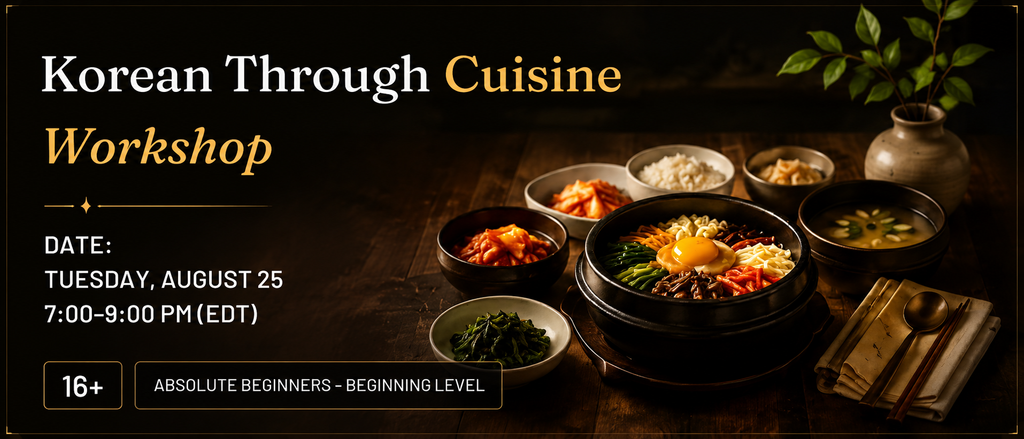
Korean Through Cuisine Workshop

Korean Through Korean Cuisine Workshop: ‘Culinary Class Wars’ 
For learners who can read Korean alphabet.

Date: Tuesday, August 25, 7:00-9:00 PM (EDT)
Mode: Online (Zoom) 
Instructor: Sunhee Song 
Material and recording will be provided. 

Instruction will be provided in both English and Korean.


Inspired by Netflix’s Culinary Class Wars (흑백요리사), this workshop explores Korean cuisine while introducing essential Korean expressions and vocabulary related to food, ingredients, and cooking. Participants will learn useful Korean expressions and vocabulary related to food and cooking while discovering the stories and culture behind hansik! 


Please note that the recording will mainly include key expressions and grammar points covered during each session, rather than a full recording of the entire class, for each workshop.
📢 For any inquiries, please email us at language@koreasociety.org.

Korean Language Quiz Answer 

How many did you get right? Level up your Korean language, etiquette, and K-drama knowledge—register for our 2026 Fall Korean Language Class!


Previous Workshops

PREVIOUS WORKSHOPS

1. Korean Through K-Drama Workshop — October 2025

2. Korean Through K-Pop Workshop — November 2025

On November 6, We explored several K-pop songs and their related grammar, expressions, and cultural contexts, such as SEVENTEEN’s “울고 싶지 않아”, ILLIT’s “IYKYK”, BTS’s “Fake Love”, AKMU’s “어떻게 이별까지 사랑하겠어”, TWS’s 첫 만남은 계획대로 되지 않아, and other K-pop songs to learn fun expressions. On November 13, We explored parts of various K-pop songs such as, Blank Pink’s DDU-DU DDU-DU, IU’s 가을 아침, Girls’ Generation’s “Gee”, EXO’s “으르렁”, ALLDAY PROJECT’s “Famous”, NCT Dream’s “Graduation” and others, focusing on additional grammar points and expressions.

Korean Through K-Pop Workshop — December 2025

Dive into the K-pop songs as authentic materials to learn Korean grammar, expressions, and culture. We’ll explore music from 1st- to 5th-generation idol groups, solo artists, drama sound tracks and classics. Lyrics will guide us in uncovering everyday language, cultural references, and advanced grammar patterns. Featured artists include 이종용’s “겨울아이(Child of the Winter)”, EXO’s “첫 눈(The First Snow)”, and Pinkle’s “White”.

3. Korean Travel: Survival Language & Tips Workshop — December 2025

Planning to travel to Korea soon? In this fun and engaging workshop, you learn how to navigate around Korea. You will learn how to introduce yourself, ask for directions, order in a restaurant, and ask the price of things as well as how to say hello, thank you, excuse me in Korean and much, much more! And, you explore key etiquette practices including: greetings and bowing, dining protocols, passing items and gift giving. Suggestions on what to do and see, where and how to get a taxi, and maneuvering public transportation are also provided. Language instruction is in English and Korean. Etiquette and tip instructions are in English. This workshop is open to ages 16+.

4. Korean Through Korean Folktale Workshop — January 2026

This interactive workshop introduces learners to two classic Korean folktales of “청개구리 (The Green Frog) ” and “호랑이와 곶감 (The Tiger and the Dried Persimmon).” The grammatical focus is on the basic past tense forms, taught within meaningful story contexts. Learners will also practice connective expressions as well as simple emotion-related expressions. Through these activities, participants will develop the ability to follow the flow of a story and understand its meaning. Ultimately, the goal of the workshop is to support learners in expressing their own thoughts in Korean using short, meaningful sentences.

5. Korean Through K-Pop Workshop — February 2026

Dive into the K-pop songs as authentic materials to learn Korean grammar, expressions, and culture. In celebration of Valentine’s Day, we will explore love-themed songs and talk about dating culture in Korea. Lyrics will guide us in uncovering everyday language, cultural references, and advanced grammar patterns. This workshop features songs different from those covered in the previous 2025 K-pop workshops. Featured artists include: Straykid’s “좋아해서 미안해”(Sorry, I love you), Nmixx’s “블루 발렌타인” (Blue Valentine), Soyou and Junggigo’s “썸”(Some), Melo Mance’s “사랑인가봐” (It Must Be Love), Jannabi’s “사랑의 이름으로” (For the name of love)

6. Korean Travel: Survival Language & Tips Workshop — March 2026

Planning to travel to Korea soon? In this fun and engaging workshop, you learn how to navigate around Korea. You will learn how to introduce yourself, ask for directions, order in a restaurant, and ask the price of things as well as how to say hello, thank you, excuse me in Korean and much, much more! And, you explore key etiquette practices including: greetings and bowing, dining protocols, passing items and gift giving. Suggestions on what to do and see, where and how to get a taxi, and maneuvering public transportation are also provided. Language instruction is in English and Korean. Etiquette and tip instructions are in English. This workshop is open to ages 16+.

7. Hanguel Help: Korean Alphabet Workshop — March 2026

In this workshop, you will learn about the history of Hangeul, the creation principles behind its vowels and consonants, the basic letter forms, and how vowels and consonants come together to form syllable blocks. You’ll also practice combining them to create various words and read Hangeul together. We’ll explore a variety of words built from consonants and vowels—including the names of real Korean foods and popular snacks—so you can practice reading authentic and familiar examples as well. We can’t wait to see you there! Materials will be provided in class. This workshop is open to ages 16+.

8. K-Dialogue: New Technology and AI Development In Korea Workshop — April 2026

Do you want to improve your Korean speaking skills? In this workshop, we will read articles from Korean newspapers about AI and new technology development in Korea, and discuss various questions related to the topic. The workshop will be conducted using both English and Korean, but discussions will mainly take place in Korean. It is designed to be engaging and will provide plenty of opportunities to practice speaking in Korean. Intermediate-level Korean proficiency or above is recommended. This workshop is open to ages 16+.

9. Korean Through Cuisine Workshop — May 14, 2026

This workshop explores Korean cuisine beyond the idea of a single, unified tradition, highlighting the diversity of hansik and introducing Key Korean culinary expressions! Participants will learn how history, rice cultivation, and social structures have shaped food culture, from royal court cuisine to everyday meals, while also being introduced to key Korean language vocabularies and phrases throughout each topic. The session examines the influence of trade and cultural exchange, along with practices such as fermentation and kimjang. Finally, it considers Korean cuisine in a global context, reflecting on tradition, adaptation, and authenticity.

10. Korean Through K-Pop Workshop — July 16, 2026

This workshop explored selected songs from K-pop artists like BTS and K-drama soundtracks, using lyrics as a guide to uncover everyday language! We will learn practical expressions and vocabulary through lyrics from the following songs:

“Sudden Shower (소나기)” – Eclipse (from Lovely Runner soundtrack)

“Even If I Die, It’s You (죽어도 너야)” – V (BTS) & Jin (BTS)

“It Must Be Love (사랑인가봐)” – MeloMance (K-pop Demon Hunters/Business Proposal soundtrack)

“I Give You My Heart (마음을 드려요)” – IU (Crash Landing on You soundtrack.

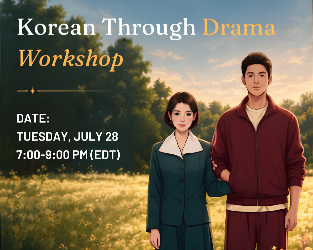
11. Korean Through Drama Workshop — July 28, 2026

This workshop is designed for Korean learners who want to improve their Korean through authentic clips from When Life Gives You Tangerines (폭싹 속았수다). We will build listening and speaking skills while learning practical everyday expressions and exploring Korean culture and society. This workshop is ideal for learners who can read Hangul and understand basic Korean expressions. Take a look at the expressions below to gauge the language level of this workshop. This workshop is open to ages 16+.

The sample expressions below provide an overview of the language used in this workshop

1.첫사랑 [cheot-sarang] first love

2.내가 다 책임 질거야 [naega da chaegimjilgeoya] I’ll take full responsibility

3.안 보는 척하다 [an boneun cheokhada] to pretend not to see / act like you didn’t see it

4.있으면 귀찮고, 없으면 궁금하고 [isseumyeon gwichango, eopseumyeon gunggeumhago] when it’s there, it’s annoying; when it’s not there, you get curious


Note: Korea Society membership discounts apply only to 8-week or 10-week courses, and not to this workshop


📢 Are you looking for a free trial session? (In-person & Zoom) Click Here! 

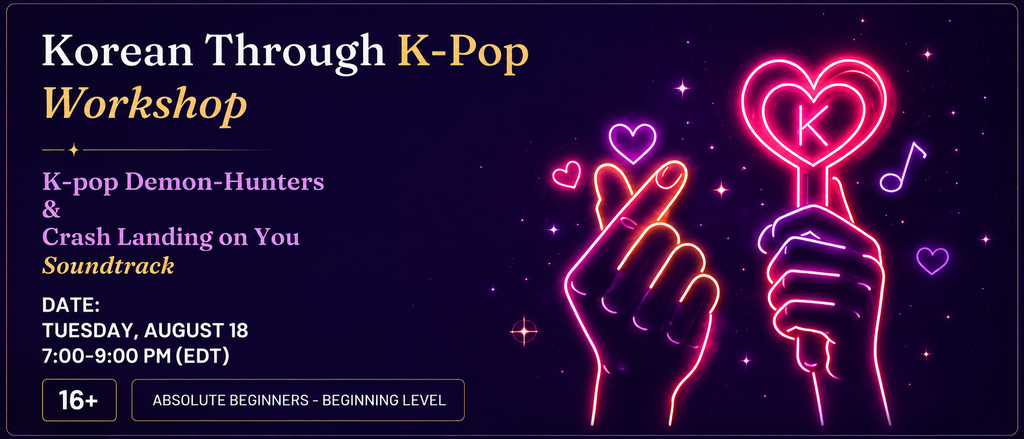
Korean Through K-Pop Workshop

Korean Through K-pop Workshop: K-Drama & K-Movie OST 
No prior knowledge of Korean is required.

Date: Tuesday, August 18, 7:00-9:00 PM (EDT)
Mode: Online (Zoom) 
Instructor: Sunhee Song 
Material and recording will be provided. 

Instruction will be provided in both English and Korean.

This workshop will explore authentic Korea expressions using lyrics of selected K-pop songs as a guide to uncover everyday language! We will learn practical expressions and vocabulary through lyrics from the following songs:

  • “It Must Be Love (사랑인가봐)” – MeloMance (K-pop Demon Hunters soundtrack)
  • “I Give You My Heart (마음을 드려요)” – IU (Crash Landing on You soundtrack)

If you have any questions, please contact to language@koreasociety.org.

If you’d like to level up your Korean language skills—register for our Korean Language Fall Term class!

2026 KLP Fall Term

Note: Korea Society membership discounts apply only to 8-week or 10-week courses, and not to this workshop


2026 Fall Beginning Korean Trial Workshop   

  • Date: Tuesday, September 1, 7:30-8:30 PM (EDT)
  • Mode: Online Via Zoom
  • No prior knowledge of Korean is required to participate in these trial workshops.
  • Class materials and recordings will be provided.

Are you curious about our Fall Korean Language Program? Join us for a Beginning Korean Trial Workshop and get a taste of what our classes are like before the new term begins!

This workshop covers a brief history of Hangeul, the principles behind the creation of Korean consonants and vowels, and basic consonant-vowel combinations, along with practical greetings and expressions you can use in everyday situations such as dining and shopping. You’ll also learn Korean food names and expressions featured in K-Pop Demon Hunters! Class recordings will be provided after each session to help students review the course material. Recordings will primarily include the instructor’s voice, students’ voices when applicable, and screen sharing. Video feeds will not be included. Each recording will focus on key instructional content rather than the full class session.

Following each session, we will provide a brief overview of our Korean Language Program and Fall term courses.

Please find the 2026 Fall term class schedule and registration information below. 

The Korea Society
350 Madison Avenue, 24th Floor
New York, NY 10017

2026 Fall Korean Language Placement Test

Not sure which level is right for you? Take a placement exam!
TAKE A FREE PLACEMENT EXAM 

  • Know some Hangeul? Take the Beginning Writing Placement Exam.
  • Able to write basic Korean sentences and have intermediate-level knowledge? Take the Intermediate Writing Placement Exam.
  • Want to assess your speaking level? Schedule a Speaking Placement Exam via Zoom below.

Once you complete the exam, your placement results and recommended course level will be sent to you within 2–3 business days.

Beginning Writing Placement Test

Intermediate Writing Placement Test

Speaking Placement Test (Zoom)

2026 FAll Korean Language Class

For any inquiries, please email us at language@koreasociety.org.


2026 Fall Korean Language Class Instructors

2026 Fall Korean Language Program 

Most students continue learning with us, citing excellent instructors, small class size, convenient time offerings and reasonable price.

What our students say:

What I like about the KLP is that it has given me a community, a place where I can learn with other people. 
And, the program has really great teachers!😀
Our teacher was really nice and I appreciated that she got everyone talking at the start of each class. 
I liked that the professor also teaches us about the culture as we learn about the language. 
It was valuable practice in terms of both speaking and listening; and we get immediate feedback!

Our Instructors

Euna Cho
Euna Cho holds a Ph.D. in Linguistics from the CUNY Graduate Center and an M.A. in Applied Linguistics from Teachers College, Columbia University. She has taught linguistics and Korean language and culture at various institutions. Her research interests include second language acquisition, syntax, and language pedagogy. She seeks to apply language learning theories to classroom practice and to develop engaging, research-informed teaching materials.
Sunhee Song
Received her Ed.D. in Teaching English to Speakers of Other Languages (TESOL) from Teachers College at Columbia University along with her Ed. M. Since 2009 she has been teaching Korean language at various universities, such as Columbia University, The New School, Rutgers University, and Montclair State University. Her research and teaching interests include second and foreign language acquisition, language pedagogy, and interactional approaches to language teaching.
Sabina K Rowe
She is a lifelong educator with a deep passion for guiding each student’s unique learning journey. Teaching continues to bring her joy, just as it did when she first began decades ago. With a strong focus on personalized support, she is committed to helping learners of all ages grow and thrive. Since 2019, she has been teaching Korean, Business Korean, and Hanja at The Korea Society. In recent years, she has also enjoyed teaching Korean language and culture at Brooklyn College (CUNY) and St. John’s University. She holds an M.A. in English Education from Teachers College, Columbia University, and an M.S. in Early Childhood and Elementary Education from Bank Street College of Education.
Jieun Lee
Jieun Lee received her B.A of Arts in TESOL (Teaching English to Speakers of Other Languages) from CUNY, Queens College, and M.S. in Instructional Technology for Educators from NYIT. She has been teaching in public schools and is currently teaching English to ESL (English as a Second Language) students and Korean to non-natives with her two NYS certifications: TESOL and Korean as a Foreign Language.
Gieun Lee
Gieun “Gianna” Lee is a New York State–certified Korean and Special Education teacher with over a decade of experience teaching Korean language and culture to both heritage and non-heritage learners. She holds an M.A.T. in Korean from Queens College, an M.Div. from Presbyterian University and Theological Seminary, and a B.A. in Religion and Economics from Emory University. She also completed postgraduate study in Teaching Korean as a Foreign Language at Yonsei University in Seoul, Korea. Since 2013, she has developed and taught Korean language curricula with a focus on communicative proficiency, cultural understanding, and learner-centered instruction.
Alice McCoy-Bae

Alice McCoy-Bae is a Korean language teacher with a passion for helping students discover the beauty of the Korean language and culture. With years of experience teaching both college students and language learners of all levels, she focuses on making each lesson clear, interactive, and encouraging. Whether you are just beginning or looking to strengthen your existing skills, she’s here to support you every step of the way on your journey toward confident Korean communication. She has a master’s degree from The University of Texas at Austin and currently teaches Korean full-time at her alma mater.
Shinyoung Park 
I’ve been teaching Korean since 2003 and have enjoyed working with students from diverse backgrounds and at all levels. I’ve taught at institutions such as Sogang University in Korea, Stanford University, UC Berkeley, and most recently, the University of North Carolina at Chapel Hill. I hold a Master’s degree in Teaching Korean as a Foreign Language from Yonsei University and am certified by ACTFL as an OPI tester, WPT rater, and AAPPL rater in Korean. I’m passionate about helping learners connect with the language in fun and engaging ways.

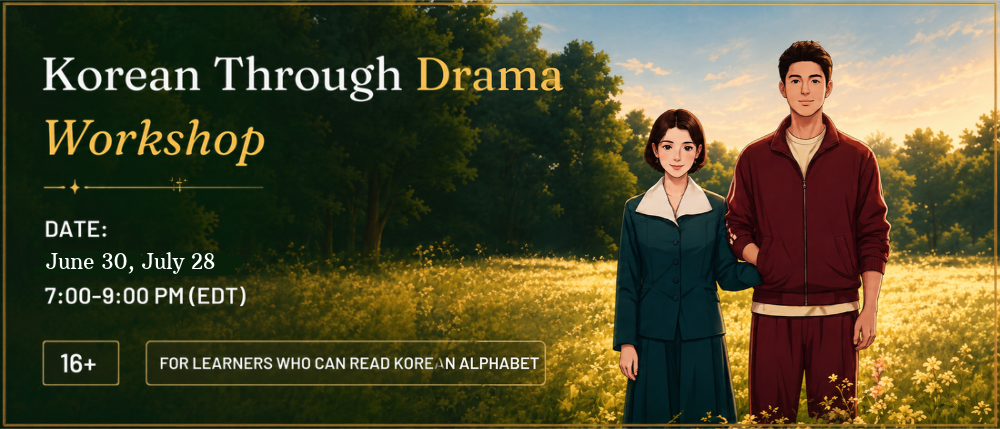
Korean Through Drama Workshop

Korean Through Korean Drama Workshop
For learners who can read Korean alphabet.

Workshop #1 Date: Tuesday, June 30, 7:00-9:00 PM (EDT)

Workshop #2 Date: Tuesday, July 28, 7:00-9:00 PM (EDT)


Mode: Online (Zoom) 
Instructor: Sunhee Song 
Material and recording will be provided. 

Instruction will be provided in both English and Korean.

This workshop is designed for Korean learners who want to improve their Korean through authentic clips from When Life Gives You Tangerines (폭싹 속았수다). We will build listening and speaking skills while learning practical everyday expressions and exploring Korean culture and society. This workshop is ideal for learners who can read Hangul and understand basic Korean expressions. Take a look at the expressions below to gauge the language level of this workshop. This workshop is open to ages 16+.

The sample expressions below provide an overview of the language used in this workshop

1.첫사랑 [cheot-sarang] first love

2.내가 다 책임 질거야 [naega da chaegimjilgeoya] I’ll take full responsibility

3.안 보는 척하다 [an boneun cheokhada] to pretend not to see / act like you didn’t see it

4.있으면 귀찮고, 없으면 궁금하고 [isseumyeon gwichango, eopseumyeon gunggeumhago] when it’s there, it’s annoying; when it’s not there, you get curious


Please note that the recording will mainly include key expressions and grammar points covered during each session, rather than a full recording of the entire class, for each workshop.

 For any inquiries, please email us at language@koreasociety.org.


How many did you get right? Level up your Korean language, etiquette, and K-drama knowledge—register for our 2026 Fall Korean Language Class!


Previous Workshops

PREVIOUS WORKSHOPS

1. Korean Through K-Drama Workshop — October 2025

2. Korean Through K-Pop Workshop — November 2025

On November 6, We explored several K-pop songs and their related grammar, expressions, and cultural contexts, such as SEVENTEEN’s “울고 싶지 않아”, ILLIT’s “IYKYK”, BTS’s “Fake Love”, AKMU’s “어떻게 이별까지 사랑하겠어”, TWS’s 첫 만남은 계획대로 되지 않아, and other K-pop songs to learn fun expressions. On November 13, We explored parts of various K-pop songs such as, Blank Pink’s DDU-DU DDU-DU, IU’s 가을 아침, Girls’ Generation’s “Gee”, EXO’s “으르렁”, ALLDAY PROJECT’s “Famous”, NCT Dream’s “Graduation” and others, focusing on additional grammar points and expressions.

Korean Through K-Pop Workshop — December 2025

Dive into the K-pop songs as authentic materials to learn Korean grammar, expressions, and culture. We’ll explore music from 1st- to 5th-generation idol groups, solo artists, drama sound tracks and classics. Lyrics will guide us in uncovering everyday language, cultural references, and advanced grammar patterns. Featured artists include 이종용’s “겨울아이(Child of the Winter)”, EXO’s “첫 눈(The First Snow)”, and Pinkle’s “White”.

3. Korean Travel: Survival Language & Tips Workshop — December 2025

Planning to travel to Korea soon? In this fun and engaging workshop, you learn how to navigate around Korea. You will learn how to introduce yourself, ask for directions, order in a restaurant, and ask the price of things as well as how to say hello, thank you, excuse me in Korean and much, much more! And, you explore key etiquette practices including: greetings and bowing, dining protocols, passing items and gift giving. Suggestions on what to do and see, where and how to get a taxi, and maneuvering public transportation are also provided. Language instruction is in English and Korean. Etiquette and tip instructions are in English. This workshop is open to ages 16+.

4. Korean Through Korean Folktale Workshop — January 2026

This interactive workshop introduces learners to two classic Korean folktales of “청개구리 (The Green Frog) ” and “호랑이와 곶감 (The Tiger and the Dried Persimmon).” The grammatical focus is on the basic past tense forms, taught within meaningful story contexts. Learners will also practice connective expressions as well as simple emotion-related expressions. Through these activities, participants will develop the ability to follow the flow of a story and understand its meaning. Ultimately, the goal of the workshop is to support learners in expressing their own thoughts in Korean using short, meaningful sentences.

5. Korean Through K-Pop Workshop — February 2026

Dive into the K-pop songs as authentic materials to learn Korean grammar, expressions, and culture. In celebration of Valentine’s Day, we will explore love-themed songs and talk about dating culture in Korea. Lyrics will guide us in uncovering everyday language, cultural references, and advanced grammar patterns. This workshop features songs different from those covered in the previous 2025 K-pop workshops. Featured artists include: Straykid’s “좋아해서 미안해”(Sorry, I love you), Nmixx’s “블루 발렌타인” (Blue Valentine), Soyou and Junggigo’s “썸”(Some), Melo Mance’s “사랑인가봐” (It Must Be Love), Jannabi’s “사랑의 이름으로” (For the name of love)

6. Korean Travel: Survival Language & Tips Workshop — March 2026

Planning to travel to Korea soon? In this fun and engaging workshop, you learn how to navigate around Korea. You will learn how to introduce yourself, ask for directions, order in a restaurant, and ask the price of things as well as how to say hello, thank you, excuse me in Korean and much, much more! And, you explore key etiquette practices including: greetings and bowing, dining protocols, passing items and gift giving. Suggestions on what to do and see, where and how to get a taxi, and maneuvering public transportation are also provided. Language instruction is in English and Korean. Etiquette and tip instructions are in English. This workshop is open to ages 16+.

7. Hanguel Help: Korean Alphabet Workshop — March 2026

In this workshop, you will learn about the history of Hangeul, the creation principles behind its vowels and consonants, the basic letter forms, and how vowels and consonants come together to form syllable blocks. You’ll also practice combining them to create various words and read Hangeul together. We’ll explore a variety of words built from consonants and vowels—including the names of real Korean foods and popular snacks—so you can practice reading authentic and familiar examples as well. We can’t wait to see you there! Materials will be provided in class. This workshop is open to ages 16+.

8. K-Dialogue: New Technology and AI Development In Korea Workshop — April 2026

Do you want to improve your Korean speaking skills? In this workshop, we will read articles from Korean newspapers about AI and new technology development in Korea, and discuss various questions related to the topic. The workshop will be conducted using both English and Korean, but discussions will mainly take place in Korean. It is designed to be engaging and will provide plenty of opportunities to practice speaking in Korean. Intermediate-level Korean proficiency or above is recommended. This workshop is open to ages 16+.

9. Korean Through Cuisine Workshop — May 14, 2026

This workshop explores Korean cuisine beyond the idea of a single, unified tradition, highlighting the diversity of hansik and introducing Key Korean culinary expressions! Participants will learn how history, rice cultivation, and social structures have shaped food culture, from royal court cuisine to everyday meals, while also being introduced to key Korean language vocabularies and phrases throughout each topic. The session examines the influence of trade and cultural exchange, along with practices such as fermentation and kimjang. Finally, it considers Korean cuisine in a global context, reflecting on tradition, adaptation, and authenticity.

10. Korean Through K-Pop Workshop — July 16, 2026

This workshop explored selected songs from K-pop artists like BTS and K-drama soundtracks, using lyrics as a guide to uncover everyday language! We will learn practical expressions and vocabulary through lyrics from the following songs:

“Sudden Shower (소나기)” – Eclipse (from Lovely Runner soundtrack)

“Even If I Die, It’s You (죽어도 너야)” – V (BTS) & Jin (BTS)

“It Must Be Love (사랑인가봐)” – MeloMance (K-pop Demon Hunters/Business Proposal soundtrack)

“I Give You My Heart (마음을 드려요)” – IU (Crash Landing on You soundtrack.

11. Korean Through Drama Workshop — July 28, 2026

This workshop is designed for Korean learners who want to improve their Korean through authentic clips from When Life Gives You Tangerines (폭싹 속았수다). We will build listening and speaking skills while learning practical everyday expressions and exploring Korean culture and society. This workshop is ideal for learners who can read Hangul and understand basic Korean expressions. Take a look at the expressions below to gauge the language level of this workshop. This workshop is open to ages 16+.

The sample expressions below provide an overview of the language used in this workshop

1.첫사랑 [cheot-sarang] first love

2.내가 다 책임 질거야 [naega da chaegimjilgeoya] I’ll take full responsibility

3.안 보는 척하다 [an boneun cheokhada] to pretend not to see / act like you didn’t see it

4.있으면 귀찮고, 없으면 궁금하고 [isseumyeon gwichango, eopseumyeon gunggeumhago] when it’s there, it’s annoying; when it’s not there, you get curious


Note: Korea Society membership discounts apply only to 8-week or 10-week courses, and not to this workshop

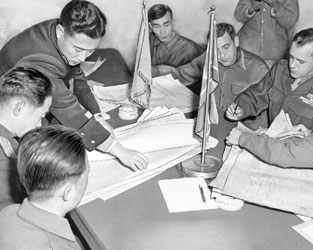
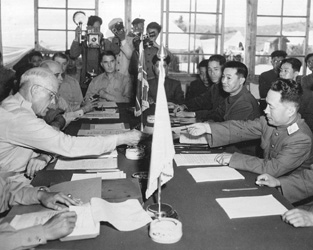
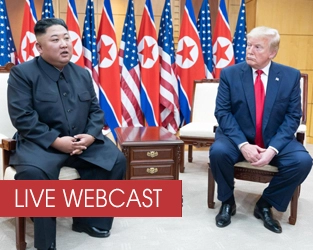
The Korean War at 70

A curated collection of programs that mark the 70th anniversary of the start of the Korean War by exploring its legacy and impact, featuring videos, podcasts, publications, and events.


2020 Annual Gala
Video Presentation on Korean War Veterans||
|


Daily News: OPINION |

70 years later, remember the ‘The Forgotten War’ and appreciate the South Korean-American relationship
 
In a new article for New York Daily News, Korea Society president Thomas Byrne writes, “As the 70th anniversary of the start of the Korean War is marked, the two allies remain in a strong position to overcome difficulties. North Korea’s recent provocations have once again highlighted that the U.S.-South Korean alliance is the ballast supporting peace and prosperity in the region. It must not give way.”

To read the full article click here


The Korean War at 70
Commemorating the Start of the Korean War||

Thursday, June 25, 2020 |

The Society marks seventy years since the start of the Korean War with a video tribute to those who served and sacrificed. Join for a special video release featuring remarks by the Korea Society Board Chairwoman Ambassador Kathleen Stephens; General (ret.) Vincent Brooks, former Commander of the United Nations Command /Combined Forces Command/United States Forces Korea; Columbia University Law School Professor Jeong-Ho Roh; Korea Society President Tom Byrne; and Korea Society Senior Director Stephen Noerper… Read More


|

The Korean War Veterans Items Display

These photographs of Korean War veterans items honor those who served and sacrificed in Korea during the Korean War (1950-1953). Captured in crisp photographs by Lukas Dravecky for the 70th anniversary of the start of the War, these images reflect Dr. Stephen Noerper’s focus on items field worn or used, with rich patina and a sense of soul, all non-lethal in nature. Signature U.S. M1 helmets–pocked by sun, cold and terrain–name-and-serial-number-inscribed boots worn across tank treads and tundra, woolen blankets and uniforms join homefront gifts, photos and slides from the field, and UN force accoutrement in this colorful and passion-filled assemblage. Among highlights of his collection are Korean and U.S. flags owned by Korean War commander General James A. Van Fleet; these flags stood astride his desk until his passing in 1992… More


|

The Korean War at 70: Regional Relations and Legal Issues

Columbia Center for Korean Legal Studies director and professor Jeong-ho Roh and senior director and professor Stephen Noerper present on legal issues and regional relations for Columbia Law School and SIPA graduate students. Policy director Jonathan Corrado and co-producer Peter Stuehmke conclude with an online screening of Last Ship in the Harbor More


The Korean War at 70: Honoring Korean War Veterans from around the World|||

Korean War veterans advocate Hannah Y. Kim joins policy director Jonathan Corrado for a conversation on her global journey to meet Korean War veterans. Kim, founder of Remember 727 and former chief of staff to Congressman Charles Rangel, highlights the discussion with photos from her travels… Read More


The Korean War at 70: Veteran Tales with Sal Scarlato|||

Korean War Veterans area commander and Long Island chapter head Sal Scarlato shares reflections on the Korean War years in conversation with senior director Stephen Noerper. Scarlato, a Marine veteran, offers insights on the sacrifice of those who served and efforts to raise awareness of the service and valor of Korean War veterans.… Read More


Monday, July 27, 2020 | 12 PM|

The Korean War at 70: Annual Armistice Day Salute

The Korea Society honors veterans on the anniversary of the Korean War armistice… More


Friday, July 26, 2019

Daily News: OPINION |

An armistice and an alliance worth honoring: Why the strategic partnership between United States and South Korea must remain strong

Marking the 66th anniversary of the Armistice that ended the Korean War in an oped for Daily News, Korea Society President Tom Byrne writes, “The U.S.-South Korea alliance remains vibrant today and crucial to peace and prosperity in the region thanks to those who fought and died for both countries in the Korean War.”  

To read the full article click here


Last Ship in the Harbor||

Description: With the enemy hot on his heels, Admiral J. Robert Lunney helped board 14,000 North Korean refugees onto the SS Meredith Victory as part of one of the most audacious humanitarian evacuations in history. Ultimately, 98,100 civilians were saved. There are over one million descendants of the Heungnam evacuees living in South Korea today. Among them, South Korean President Moon Jae-in, whose parents and sister were aboard the SS Meredith Victoria in 1950…  More


This U.S. Air Force ROTC Cadet Is Ready for Duty|  
COLUMBIA NEWS|

ROTC Cadet and Columbia University Regional Studies–East Asia MA graduate Samuel Hyunjin Kim says that Korea Society senior director Dr. Stephen Noerper served as a role model, helping him to “explore his research interest in East Asia and achieve the balance between rigorous policy studies in academia and discipline that’s inherent in the military.”

To read the whole article, click here


The National Interest|

Time for a Korean Solution to Ending the Korean War|

In an article for The National Interest, Korea Society senior director Stephen Noerper writes, “The two Koreas have been in a unification tunnel for two decades, but to realize light at the end of it requires openness to Seoul’s overtures on the part of Pyongyang… Ultimately, there need be a Korean solution to the Korean divide, but the international community can cooperate and coordinate to the Peninsula’s benefit.”

For full article, click here


The National Interest|

Want to End the Korean War? Talk to a Veteran Who Fought In It|

In an article for The National Interest about the legacy of the Korean War, Korea Society policy director Jonathan Corrado writes, “Listening to veterans is the best way to learn the lessons of the Korean War and to honor those who served. They remind us both what we lost and what we have gained through the conflict.”

For full article, click here


2026 Spring Beginning Korean Trial Workshop   

  • No prior knowledge of Korean is required to participate in these trial workshops.
  • Class materials and recordings will be provided.

Are you curious about our Fall Korean Language Program? Join us for a Beginning Korean Trial Workshop and get a taste of what our classes are like before the new term begins!

This workshop covers a brief history of Hangeul, the principles behind the creation of Korean consonants and vowels, and basic consonant-vowel combinations, along with practical greetings and expressions you can use in everyday situations such as dining and shopping. You’ll also learn Korean food names and expressions featured in K-Pop Demon Hunters! Class recordings will be provided after each session to help students review the course material. Recordings will primarily include the instructor’s voice, students’ voices when applicable, and screen sharing. Video feeds will not be included. Each recording will focus on key instructional content rather than the full class session.

Following each session, we will provide a brief overview of our Korean Language Program and Fall term courses.

Workshop #1: June 23, 7:00-8:00 PM (EDT)
Workshop #2: July 21, 7:00-8:00 PM (EDT)

Mode: Online Via Zoom
Class materials and recordings will be provided.

Please find the 2026 Fall term class schedule and registration information below. 

The Korea Society
350 Madison Avenue, 24th Floor
New York, NY 10017