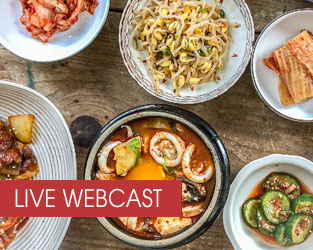
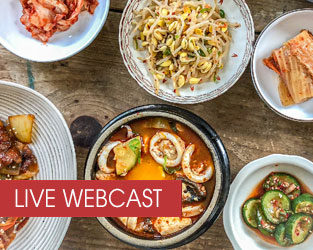
“Banchan” is often translated as “side dishes” and understood as “appetizers” at Korean BBQ restaurants. But that is not the whole story! Learn the real story of banchan, a category unto themselves and the ubiquitous feature of Korean home cooking.
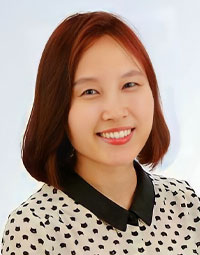
Shin Kim, a chef and culinary entrepreneur, will lead the viewers to explore the delectable world of banchan in its many forms and share some of her recipes that can be easily prepared at any home.
Due to the novel coronavirus (COVID-19), this program will be conducted virtually. This live session will be provided free of charge at the specified date and time. A limited number of viewing links will be provided to the people who sign up through the form below. Those unable to view the live session will have the opportunity to watch the recorded video or listen to the podcast soon after.
Banchan Story: Korean Home Cooking with Shin Kim
Thursday, June 4, 2020 | 6 PM
The Korea Society 350 Madison Avenue, 24th Floor New York, NY 10017
Shin Kim, owner of Banchan Story LLC in New York, has produced Korean culinary events filled with learning from hands-on cooking and stories behind Korean cuisine since 2015.
Kim completed her business education at the University of Chicago MBA Program and her culinary training at the Institute of Culinary Education, and subsequently refined her craft at some of New York’s finest Michelin-starred restaurants, including Jean Georges, Gilt, and Adour by Alain Ducasse, and premier catering establishments such as Abigail Kirsch. Kim also studied Korean temple cuisine under the Buddhist nun Jeong Kwan at Chunjinam hermitage in Jeolla Province, and also at Balwoo Gongyang, a Michelin-starred Korean temple cuisine restaurant in Seoul, Korea.
Kim’s first cookbook Vegetarian Dishes from My Korean Home with the sponsorship of Korean Food Foundation was published in 2016. Visit her YouTube channel Banchan Story.
Korean War Veterans area commander and Long Island chapter head Sal Scarlato shares reflections on the Korean War years in conversation with senior director Stephen Noerper. Scarlato, a Marine veteran, offers insights on the sacrifice of those who served and efforts to raise awareness of the service and valor of Korean War veterans.
Due to the novel coronavirus (COVID-19), this program will now be conducted virtually. This live session will be provided free of charge at the specified date and time. A limited number of viewing links will be provided to the first people to sign up through the form below. Those unable to view the live session will have the opportunity to watch the recorded video or listen to the podcast soon after.
The Korean War at 70 Veteran Tales with Sal Scarlato
Wednesday, June 3, 2020 | 12 PM
The Korea Society 350 Madison Avenue, 24th Floor New York, NY 10017
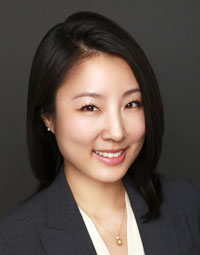
Korean War veterans advocate Hannah Y. Kim joins policy director Jonathan Corrado for a conversation on her global journey to meet Korean War veterans. Kim, founder of Remember 727 and former chief of staff to Congressman Charles Rangel, highlights the discussion with photos from her travels.
The Korean War at 70 Honoring Korean War Veterans from around the World with Hannah Y. Kim
Thursday, May 21, 2020 | 12PM
The Korea Society 350 Madison Avenue, 24th Floor New York, NY 10017
What impact is the COVID-19 pandemic and global economic crisis having now and going forward on the relationships between the U.S., South Korea, and India? How does it impact their respective visions for the future of regional institutions and relationships in the Indo-Pacific? What is the prognosis for U.S. and Chinese leadership — and rivalry — and how does this impact the region? Is a regional economic or security architecture more or less possible, or desirable, post-pandemic? Join us for a conversation with Representative Ami Bera (D-CA), Co-Chair of the Congressional Study Group on Korea, Deputy Chief of Mission for the South Korean Embassy in Washington Moon Seoung-hyun, and President of the U.S.-India Strategic Partnership Forum Mukesh Aghi, moderated by Korea Society Board Chair Ambassador Kathleen Stephens. With vibrant economic ties and a common commitment to democracy, how can Washington, Seoul, and New Delhi work together to respond to transnational threats and a rising China?
This program is produced in proud collaboration between the Korea Society and the Association of Former Members of Congress (FMC). FMC’s Congressional Study Group on Korea is a non-partisan, non-advocacy legislative exchange program that provides educational opportunities for Members of Congress and congressional staff on critical issues related to U.S.-ROK bilateral partnership.
Indo-Pacific relations in the time of COVID19 with Kathleen Stephens, Mukesh Aghi, Seoung-hyun Moon and Ami Bera
Wednesday, May 20, 2020 | 2:30 PM
The Korea Society 350 Madison Avenue, 24th Floor New York, NY 10017
Ambassador Kathleen Stephens is Board Chair of the Korea Society and President & CEO of the Korean Economic Institute. Ambassador (ret.) Kathleen Stephens is a former American diplomat. She was U.S. Ambassador to the Republic of Korea 2008-2011. Other overseas assignments included postings to China, former Yugoslavia, Portugal, Northern Ireland, where she was U.S. Consul General in Belfast during the negotiations culminating in the 1998 Good Friday Agreement, and India, where she was U.S. Charge ‘d Affaires (2014-2015).
Mukesh Aghi is the President and Chief Executive Officer of The US-India Strategic Partnership Forum (USISPF). Dr. Aghi has extensive experience working with business and government leaders in the U.S. and India to promote trade and strengthen ties between the two countries. He also currently serves as a trustee at Claremont Graduate University. Previously, Dr. Aghi served as Chief Executive and Member of the Board at L&T Infotech where he expanded the business on a global level. During his time at Steria, Inc. (India), Dr. Aghi served as Chairman and CEO of the Asia-Pacific region.
Seoung-hyun Moon has served as Deputy Chief of Mission at the Embassy of the Republic of Korea in Washington, D.C. since October 2019. Prior to assuming this position, Amb. Moon served as Ambassador Extraordinary and Plenipotentiary to the Czech Republic from 2016 to 2019. Amb. Moon served as Secretary to the President for Foreign Affairs at the Office of the President from February 2015 to August 2016. Throughout his career, he has taken on duties related to North America and has served as Director-General and Director for North American Affairs at the Ministry of Foreign Affairs. Since he joined the Ministry of Foreign Affairs in 1988, Amb. Moon has been assigned to the United States four times including his current position.
Congressman Ami Bera (D-CA) is Co-Chair of the Congressional Study Group on Korea. Rep. Ami Bera has represented California’s 7th Congressional District since 2013. He currently serves on the Foreign Affairs Committee, where he is the chair of the Subcommittee on Asia and the Pacific, as well as a member of the Subcommittee on Africa, Global Health, Global Human Rights and International Organizations. He was elected as Vice-Ranking member of the Foreign Affairs Committee in January 2017. He also serves as the Vice Chair of the House Science, Space and Technology Committee. Before his time in Congress, Rep. Bera was the Chief Medical Officer for Sacramento County.
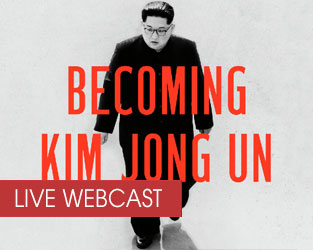
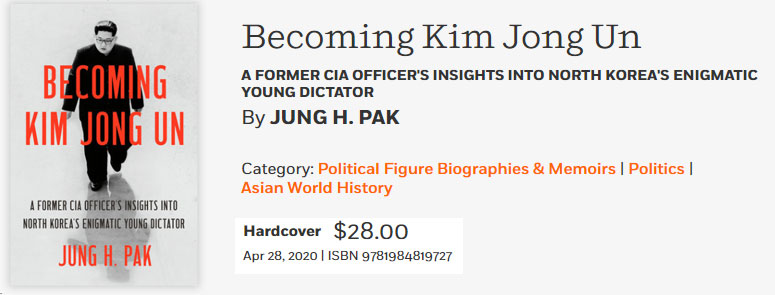
Dr. Jung H. Pak discusses her new book on the rise of North Korea’s Kim Jong Un, in conversation with Society President Tom Byrne. Pak, a Brookings Institution Senior Fellow and former CIA analyst, provides a behind-the-scenes look at Kim’s character and motivations and chronicles his nuclear ambitions and summitry with President Trump.
The book is available for purchase at Penguin Random House.
Jung H. Pak is a senior fellow and the SK-Korea Foundation Chair in Korea Studies at Brookings Institution’s Center for East Asia Policy Studies. She is the author of “Becoming Kim Jong Un: A Former CIA Analyst’s Insights into North Korea’s Enigmatic Young Dictator” (Ballantine, April 2020). Positioned as an authoritative book on North Korea under Kim Jong Un, this comprehensive account examines Kim’s personality, preferences, and policy choices, and the implications for North Korea’s internal stability, denuclearization, and global security. Pak has held senior positions at the Central Intelligence Agency (CIA) and the Office of the Director of National Intelligence. As a senior analyst, Pak published hundreds of intelligence assessments, including the President’s Daily Brief.
What are the challenges a chef faces when she decides to open a restaurant? How do you break the stereotype that “women make good cooks, but men make better chefs”? And how do you not only survive but thrive in the hyper-competitive restaurant kitchens and food scene in New York and London? And what do you cook when you have to stay home, due to the unprecedented world-wide pandemic?
Meet two inspirational chefs – who happen to be female Korean Americans – who are doing all that and more: Chef Esther Choi and Judy Joo, chef, television personality, and the author of Korean Soul Food.
Due to the novel coronavirus (COVID-19), this program will be conducted virtually. This live session will be provided free of charge at the specified date and time. A limited number of viewing links will be provided to the people who sign up through the form below. Those unable to view the live session will have the opportunity to watch the recorded video or listen to the podcast soon after.
A Conversation Between Chefs with Esther Choi & Judy Joo
Friday, May 8, 2020 | 12 PM
The Korea Society 350 Madison Avenue, 24th Floor New York, NY 10017
Esther Choi The owner and founder of New York City’s mŏkbar (with locations in Chelsea Market and in Brooklyn) and partner of Ms. Yoo, Esther Choi is an influential female chef driven by her Korean roots. With a personal passion for introducing New Yorker’s to the flavors of Korean culture, Chef Esther’s cooking combines traditional and modern influences with fresh, seasonal ingredients. Inspired by the old-aged techniques of her Korean grandmother’s cooking, Chef Esther believes that food is the ultimate expression of a country’s culture. From its history and social customs, to its language, geography and arts, Chef Esther seeks to offer guests and understanding and appreciation of Korean foods.
Chef Esther received formal training at New York’s institute of culinary education and has worked across the kitchens of ilili, La Esquina, and the Food Network. Esther has received numerous awards for her culinary pursuits and was named “New York City’s Culinary Rock star” in Zagat’s 30 under 30.
Judy Joo Judy’s cooking is focused on the flavors of her childhood in a Korean-American family in New Jersey. Following an engineering degree at Columbia University and a career on Wall Street, Judy decided it was time for a change and enrolled at the French Culinary Institute. Her expertise in Korean cooking led to her own shows: Judy Joo’s Return to Korea and two seasons of Korean Food Made Simple. Judy also starred in Iron Chef UK and secured herself the title “Iron Chef UK”. In 2014, she opened the doors to her award winning modern Korean restaurant with 3 locations globally. In 2019, Judy left after five years in order to start a new chapter, which includes the recent launch of her new cookbook, Korean Soul Food, and Seoul Bird, a new venture in Westfield that will specialize in the Korean fried chicken that Judy is known for.
The Korea Society celebrates the launch of its tenth class joining senior professionals from corporate, media and United Nations circles with nationally renowned thought leaders on Korea and Northeast Asia. The spring 2020 “best-of” series features Fletcher School Professor and Kim Koo Foundation board member Sung-Yoon Lee, Heritage Foundation Senior Research Fellow for Northeast Asia Bruce Klingner, and Center for Strategic and International Studies Fellow and MSNBC commentator Sue Mi Terry. Enrollment is limited and by invitation.
The Korea Society is closely monitoring and following the safety precautions from the New York City and New York State Health Department and the Centers for Disease Control (CDC) regarding the novel coronavirus (COVID-19). Please understand that the time and format of this discussion is subject to change. We will notify all attendees who have RSVPed of any such changes and make refunds available. For any questions, you can reach out to policy@koreasociety.org. Thank you for understanding.
Kim Koo Professional Series
Thursdays, April 23, April 30 and May 7, 2020 | 4 PM
The Korea Society 350 Madison Avenue, 24th Floor New York, NY 10017
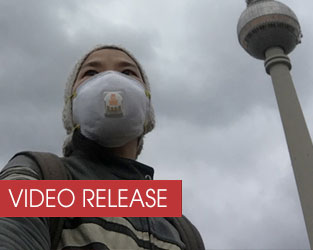
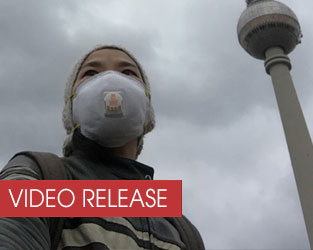
Three young artists – in New York, Berlin, and Seoul – record their situation and response to the pandemic, shelter-in-residence, and the changing landscape of the city each one lives in. Featuring Woo Ram Jung, Grace Noh, and kate-hers RHEE, the artists compare and contrast their experiences and ask themselves a question: what is the role of the creative community during a world-wide pandemic?
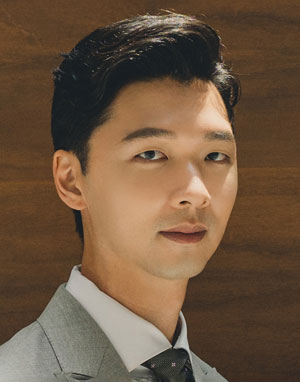
Woo Ram Jung is a photography-based artist whose background lies in architecture. Jung received his Master of Architecture from Virginia Polytechnic Institute and State University in 2010 and MFA in Photography and Related Media from Parsons School of Design in 2014. His street photography explores his interaction with anonymous strangers. His work has been exhibited at MiA: Beijing Station: First Chapter in Beijing, #IRL In Real Life, Aronson Gallery at Sheila C. Johnson Design Center in New York, Street Shots/NYC, South Seaport Museum in New York, ALIGN, Atrium Gallery at Temple University in Philadelphia, and You Are Not Paranoid, Observe Yourself Being Watched, Jimei x Arles International Photography Festival in Xiamen.
Grace Noh received her M.A. in Art History from New York University Institute of Fine Arts. Her curatorial practice revolves around translating the past and forming them into new ideas in the present and the future. She challenges and pushes the boundaries of viewing and understanding exhibition format to encourage greater discussion. She has curated and organized exhibitions, produced digital contents and published journals for a number of institutions, galleries and magazines, including Jimei x Arles International Photography Festival in Xiamen, China and Fotografiska New York. In addition, she co-founded MiA Collective Art, an art collective platform based in Beijing and New York.
kate-hers RHEE is an interdisciplinary artist, arts educator, and cultural worker. Orphaned in Seoul, Korea and transnationally adopted into a white working class Detroit suburb, she became painfully aware of racial and socio-economic differences at a young age. She employs performance, installation, drawing, and participatory events to explore the concepts of home, kinship, cultural acquisition/appropriation, and gendered violence. She is currently working between Newark and New York, at Rutgers University and researching at the Metropolitan Museum of Art; Berlin, Germany at the Atelierhaus Mengerzeile; and South Korea, where she has been conducting independent research since 2014.
The Korea Society’s Sherman Family Korea Emerging Scholar Lecture Award was established in 2017 through the generous support of Mr. and Mrs. Philp Sherman and family. Its primary goal is to encourage U.S. thought leadership on Korea among a new generation. The award is presented across disciplines to emerging thought leaders, from Ph.D. candidates to junior professors, researchers and professionals. Immediately below you can view the presentations of former award winners.
The annual competition opens in early spring each year.
Presentations by Sherman Scholar Lecture Award Recipients
2025 LECTURE
Reframing Suicide as a Shared Social Responsibility in Korea Dr. Peter Jongho Na
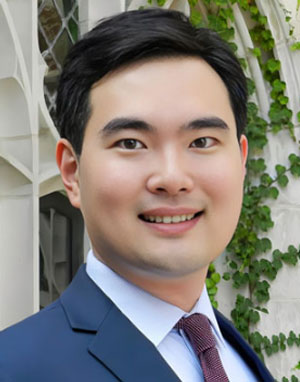
Assistant professor of psychiatry at Yale School of Medicine, Dr. Peter Jongho Na, was awarded the nineth annual Sherman Family Korea Emerging Scholar Lecture. In his lecture, Reframing Suicide as a Shared Social Responsibility in Korea, he casts suicide not as an individual failure or “extreme choice (극단적 선택),” but as a systemic and cultural crisis requiring a coordinated national response. Drawing on his experience as a psychiatrist, public health researcher, and mental health advocate, he examines the scale and societal costs of suicide in Korea and analyzes key structural drivers such as academic and workplace pressures, poverty and isolation among older adults, and the pervasive stigma surrounding mental illness and treatment. A central theme is how stigma has sustained silence, denial, and policy inertia. Dr. Peter Jongho Na shares his efforts to challenge euphemistic language and foster open public dialogue, while proposing an interdisciplinary roadmap inspired by global models that integrate public health, education, and social welfare reforms. Further, he highlights the Korean diaspora’s potential role in breaking taboos and advancing cultural and policy change, underscoring that suicide prevention must be embraced as a collective, societal responsibility.
2024 LECTURE
The Politics of The Silence of Love in Colonial Korea || with David Krolikoski
University of Hawai’I assistant professor, Dr. David Krolikoski, was awarded the eighth annual Sherman Family Korea Emerging Scholar Lecture. He examined The Silence of Love (Nim ŭi ch’immuk, 1926), the acclaimed collection of eighty-eight poems by Han Yong-un (1879-1944), a Buddhist monk and public intellectual. Although the book is commonly celebrated as a metaphor for colonial subjugation, Dr. Krolikoski complicated this established reading to argue that its artistic significance lies in Han’s paradigm-shifting use of colonial poetry as a medium of communal expression during a time of national crisis. He explored how Han used fiction and symbols to collapse the boundary between private and public address, transmuting the individual voice of his poetic speaker into a platform for a community. Further, he contextualized The Silence of Love within the history of the translation of foreign poetic forms into Korea during the 1920s, with a focus on how Han incorporated elements from the lyric and prose poem into his verse.
2023 LECTURE
The Return of Industrial Policy: Lessons from Korea || with Munseob Lee
The Korea Society is pleased to announce that the winner of the 7th Annual Sherman Family Korea Emerging Scholar Lecture Competition is Dr. Munseob Lee, Assistant Professor at the University of California San Diego. Dr. Lee will address The Return of Industrial Policy: Lessons from Korea.
Industrial policy is making a comeback. Signs of government intervention in support of industry are visible not only in China, but in the U.S., Europe, and Asia. Drawing lessons learned from Korea’s experience, Lee provides important insights for today’s policy-makers. A notable case to be discussed is the Korean government’s implementation of the heavy and chemical industry drive in 1973. While that policy yielded positive outcomes for the targeted industries, it also resulted in a higher concentration within those sectors.
Lee emphasizes the intricate nature of industrial policy and stresses the need for a thorough evaluation of its costs and benefits before implementation, especially now given the current bipartisan support for substantial bills in the U.S. aimed at revitalizing industrial policy. As one reviewer stated, “At this critical time Lee revisits the effectiveness of Korean industrial policy during a high development phase to glean useful insights for Korea, U.S., and beyond.” The Lecture is moderated by Thomas Byrne, President and CEO of The Korea Society.
2022 LECTURE
National Identity Affirmation and Trust in Korea, Japan and China || with Eunbin Chung
University of Utah Assistant Professor of Political Science, Dr. Eunbin Chung, addressed National Identity and Trust in Korea, Japan and China from a unique perspective. Legacies of conflict and distrust have made it difficult for East Asian countries to form regional institutions and overcome security dilemmas. Chung’s research questions two conventional wisdoms related to these regional dynamics: 1) that distrust among states can be overcome through cultural convergence and appealing to a shared identity and 2) that strong, inward-focused national identities exacerbate inter-state distrust and conflict. Chung’s research advances the concept that trust not only can be built among nations when each affirms its own distinctive identity, but that this approach may be more effective than embracing common identities across different countries. Dr. Katrin Katz, the inaugural Sherman Family Lecture Award recipient, described Chung’s argument as “breaking new ground in tackling some prevailing beliefs regarding the relationship between national identity and levels of inter-state trust and conflict. Dr. Chung’s work entails a hopeful message for East Asia and beyond: that emphasizing the favorable and distinctive traits of one’s own country need not lead to antagonistic relations with neighbors.”
2021 LECTURE
Korea’s Changing National Story and Democratic Future|| with Aram Hur
University of Missouri Assistant Professor and Institute for Korean Studies Co-Director Aram Hur, the fifth annual Sherman Family Scholar Lecture Award recipient, spoke to Korea’s Changing National Story and Democratic Future. Hur addressed Korean nationalism, a “rapidly fragmenting and changing” national story, and the danger of democratic rollback. Senior director Stephen Noerper described Hur’s selection and address as “incredibly important given the costs of such fragmentation in Korea, but comparatively in the United States of late and by extension to a world seeing rollback in Myanmar, Thailand, Russia and elsewhere.”
2020 LECTURE
Architecture as Kisul in Postwar Korea: Building the Industrial Nation-State: 2020 Sherman Family Korea Emerging Scholar Lecture|| with Melany Sun-Min Park
Ms. Sun-Min Park, a doctoral candidate at Harvard University and the fourth annual Sherman Family Scholar Lecture Award recipient, discussed Architecture as Kisul (Science-Technology) in Postwar Korea: Building the Industrial Nation-State. Ms. Park addressed architecture’s relationship to state-led, large-scale industrial development in post-war Korea. Carter Eckert, Yoon Se Young Professor of Korean History at Harvard University, described Park’s effort as a “brilliantly conceived project combining…histories and cultural issues with an exploration of science/industrialism and aesthetics…in South Korea.” Harvard Professor Yukio Lippit hailed Park for her original “use of archives never tapped for use in any language.”
2019 LECTURE
P’ansori Mountain Pilgrimages: Land as Interlocutor in Contemporary Korean Oral Performance and Literature|| with Ivanna Sang Een Yi
Dr. Ivanna Sang Een Yi, University of Colorado Boulder Visiting Assistant Professor and the third annual Sherman Family Scholar Lecture Award recipient, addressed P’ansori Mountain Pilgrimages: Land as Interlocutor in Contemporary Korean Oral Performance and Literature. In a presentation both spoken and sung, Professor Yi conceptualized the contemporary practice of p’ansori san kongbu, mountain study, as a form of pilgrimage.
2018 LECTURE AWARD
Imagining the Impossible: The DMZ as a Productive Territory|| with Dongsei Kim
Architect and educator Dongsei Kim, Assistant Professor at the New York Institute of Technology and recipient of the second annual Sherman Family Scholar Lecture Award, explored how the discipline of architecture and landscape architecture investigates the Demilitarized Zone. Through the prism of spatial design and with three concrete examples, Professor Kim argued for a reformulation of exclusionary border conditions into inclusive spaces that become synergistic and productive for both Koreas.
2017 LECTURE AWARD
Maritime Conflict in Northeast Asia and Nationalism in Korea|| with Katrin Katz
The Korea Society celebrated sixty years since its founding with a public and press presentation on September 27 by Katrin Katz of Northwestern University. Dr. Katz served on the National Security Council in the George W. Bush administration. The Korea Society selected Dr. Katz, whose dissertation addresses maritime conflict in Northeast Asia and the dynamics of nationalism in Korea, as the recipient of the initial Sherman Family Korea Emerging Scholar Lecture Series asward, which encourages new American thought leadership on Korea. The award enjoys the kind support of Mr. and Mrs. Philip Sherman and family. Mr. Sherman served as Citi representative in Korea in the early 1970s.
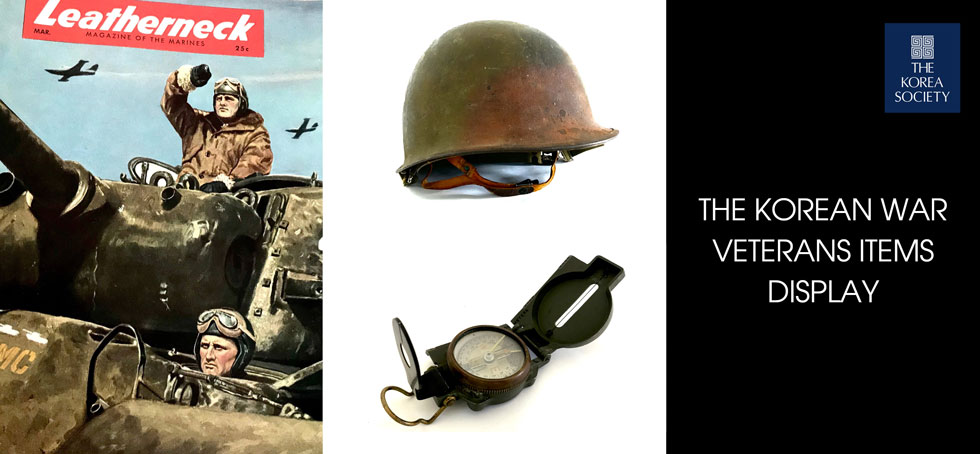
These photographs of Korean War veterans items honor those who served and sacrificed in Korea during the Korean War (1950-1953). Captured in crisp photographs by Lukas Dravecky for the 70th anniversary of the start of the War, these images reflect Dr. Stephen Noerper’s focus on items field worn or used, with rich patina and a sense of soul, all non-lethal in nature. Signature U.S. M1 helmets–pocked by sun, cold and terrain–name-and-serial-number-inscribed boots worn across tank treads and tundra, woolen blankets and uniforms join homefront gifts, photos and slides from the field, and UN force accoutrement in this colorful and passion-filled assemblage. Among highlights of his collection are Korean and U.S. flags owned by Korean War commander General James A. Van Fleet; these flags stood astride his desk until his passing in 1992.