New Narratives in Korea: Illustrator Wooh Na Young


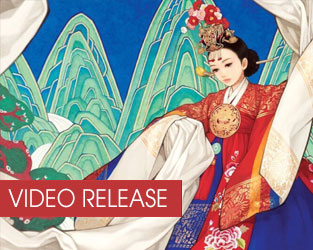
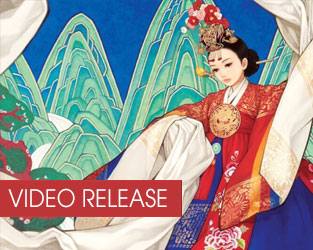
Illustrator Wooh Na Young, also known by her pen name “Obsidian,” has caught the eyes of people around the world with her distinctive style of reinterpreting Western characters in hanbok, Korean traditional clothing. Combining her training in both traditional style of Asian painting and game design, her illustrations have become a viral sensation and a unique way of promoting the beauty of hanbok.

Meet the illustrator who has captivated the fans of Disney princesses and Marvel heroes by mixing the traditional elegance of hanbok with a modern twist.


New Narratives in Korea: Illustrator Wooh Na Young

Tuesday, June 29, 2021

The Korea Society
350 Madison Avenue, 24th Floor
New York, NY 10017


ABOUT THE SPEAKER:

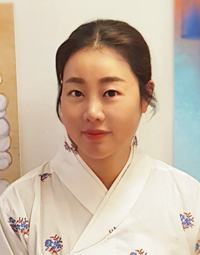
Wooh Na Young a.k.a. Obsidian [Heuk Yo Suk] is an illustrator who works on digital drawing of characters wearing hanbok (Korean traditional clothing). Drawings from her series Western Fairy Tales in Korea were included in various exhibitions in Europe, the U.S., and Korea. She has also collaborated with several global companies, including Disney, Marvel, Johnnie Walker, and Blizzard Entertainment, for their marketing campaigns. In 2019, Wooh received an award from the Ministry of Culture, Sports and Tourism for her effort to popularize and familiarize hanbok, and her book The Story of Hanbok was published in Korea. She received her B.A. in Asian Art from Ehwa Womans University.


Author Talks: Bae Myung-Hoon

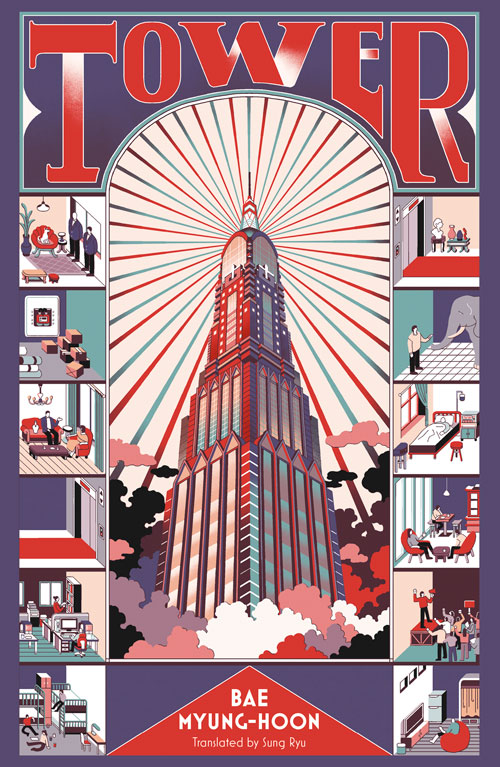
cover illustration: Jisu Choi

One of the most popular science fiction writers in Korea, Bae Myung-Hoon explores the forces that shape modern life with wit and a sly wink at the reader. His writings are known for their inventive premises and clarity of language, and much of his work is also considered political satire.

Tower is a series of interconnected stories set in a 674-story skyscraper and sovereign nation. Each story deals with how citizens living in the hypermodern high-rise deal with various influences of power in their lives: a group of researchers have to tell their boss that a major powerbroker is a dog; a woman uses the power of the internet to rescue a downed fighter pilot abandoned by the government; and an out-of-towner finds himself in charge of training a gentle elephant to break up protesters. First published in Korea in 2009, Tower is also the first novel of Bae to be translated into English.

“Writing science fiction requires the capability to write elaboratively about big concepts as much as it requires logic and imagination. I’m very glad Bae Myung-Hoon has this ability, and I’m thankful someone with his intellect has written novels in Korean.”—Park Chan-Wook, Director of The Handmaiden and Oldboy

“Tower shatters our preconceptions about science fiction. There are no complicated technologies, galactic adventures, or aliens in the book. Instead it captivates readers with irreverent and razor-sharp social satire.”—Kyunghyang Daily News


To order Tower, please visit:
 https://www.honfordstar.com/tower


Author Talks: Bae Myung-Hoon

Tuesday, June 15, 2021

The Korea Society
350 Madison Avenue, 24th Floor
New York, NY 10017


ABOUT THE AUTHOR:

Bae Myung-hoon (b. 1978) is one of the most popular science fiction writers in South Korea. Since his literary debut in 2005, he has written ten novels and over fifty short stories and novellas. His short story collections include Hello, Artificial Being (2010) and Art and the Acceleration of Gravity (2016); his novels include Tower (2009), Divine Orbit (2011), Decoy (2012), First Breath (2015), Spiritual Archaeologist (2017), and ROK Space Force (2020). He earned his bachelor’s and master’s degrees in international relations at Seoul National University.


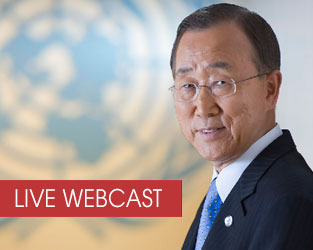
Resolved: Uniting Nations in a Divided World

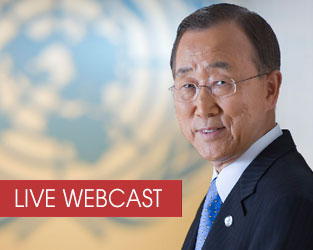
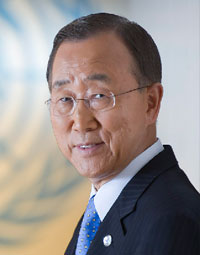
Former UN Secretary General Ban Ki-moon discusses his new book Resolved: Uniting Nations in a Divided World on its release, in conversation with Korea Society board chairwoman Ambassador Kathleen Stephens and with a welcome by Korea Society president and CEO Tom Byrne. This event is co-hosted with the Korea Economic Institute of America.


Resolved: Uniting Nations in a Divided World

Tuesday, June 15, 2021 I 9 AM

The Korea Society
350 Madison Avenue, 24th Floor
New York, NY 10017


ABOUT THE SPEAKER:

Ban Ki-moon is a South Korean diplomat and former foreign minister who served as the eighth Secretary-General of the United Nations from January 2007 to December 2016. Throughout his career, Ban worked to mobilize international efforts against a slate of global pressures including: climate change, extreme poverty, and armed conflict to make the world a safer and more equitable place. His motto: Mission Possible.

ABOUT THE MODERATOR:

Amb. Kathleen Stephens
Chair, Board of Directors, The Korea Society
President & CEO, Korea Economic Institute

Ambassador (ret.) Kathleen Stephens is a former American diplomat. She was U.S. Ambassador to the Republic of Korea 2008-2011. Korea has been a leit motif of Ambassador Stephens’ life and career since she served in rural Korea as a Peace Corps volunteer and trainer, 1975-1977. She was in Korea 1983-1989, first as a political officer at the U.S. Embassy in Seoul reporting on Korea’s domestic political and human rights scene, and later leading the U.S. Consulate in Busan.

Other overseas assignments included postings to China, former Yugoslavia, Portugal, Northern Ireland, where she was U.S. Consul General in Belfast during the negotiations culminating in the 1998 Good Friday Agreement, and India, where she was U.S. Charge ‘d Affaires (2014-2015).

Ambassador Stephens also served in a number of policy positions in Washington at the Department of State and the White House. These included acting Under Secretary of State for Public Diplomacy and Public Affairs (2012), Principal Deputy Assistant Secretary of State for East Asian and Pacific Affairs (2005-2007), Deputy Assistant Secretary of State for European and Eurasian Affairs (2003-2005), and National Security Council Director for European Affairs at the Clinton White House.

Stephens was William J. Perry Fellow for Korea at Stanford University 2015-2018. She is a Mansfield Foundation Distinguished Fellow, Pacific Century Institute board chairman, vice-chair of the board of trustees for The Asia Foundation, and board chair of The Korea Society.

She has been President and CEO of the Korea Economic Institute of America since September 2018, based in Washington, DC.


Cycling in Korea


In April 2018, the United Nations General Assembly declared June 3rd as International World Bicycle Day to recognize “the uniqueness, longevity and versatility of the bicycle, which has been in use for two centuries, and that it is a simple, affordable, reliable, clean and environmentally fit sustainable means of transport.”

Koreans have enjoyed cycling and life with bicycles for many years. Hear from the cycling experts and enthusiasts from different backgrounds and cultures about cycling in Korea as they share their personal stories and experiences from the seat of their bicycles.

Join in the conversation among life-long cyclists: Chang Wan Kim, the legendary rock singer and actor; Christopher Koo, Chairman of LS Group, KITA and Korea Cycling Federation; Ambassador Kathleen Stephens; and Tom Underwood, former U.S. Foreign Service officer.

With a special video presentation by Ho Pil Yoon, director of Sangju Bicycle Museum.


Cycling in Korea
Thursday, June 3, 2021

The Korea Society
350 Madison Avenue, 24th Floor
New York, NY 10017


ABOUT THE SPEAKERS:
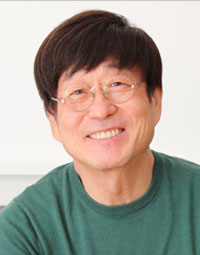
Chang Wan Kim is the legendary rock singer, composer, musician, actor, TV host, radio DJ, and writer. Along with his two brothers, he formed the band Sanullim, one of the most beloved and influential music groups in Korea. Today, Mr. Kim performs as a solo artist and as a lead singer of an eponymous Kim Chang Wan band, and he continues to collaborate and inspire the next generation of musicians.

Mr. Kim has also acted in numerous television dramas and films, hosted television shows and radio programs, and written several books, including a collection of essays, poetry, and short stories.
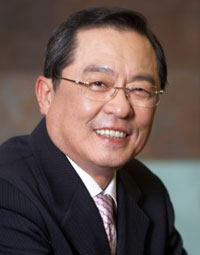
Christopher Koo began his business career at Bando Trading (currently LG International), where he worked for the company’s New York Office and later served as Regional Director of the Southeast Asian Regional Office based in Singapore. In 1995, he moved to LG Investment and Securities (presently NH Investment & Securities) to head the International Business Division. This career path has made him a seasoned expert in international trade and finance. In 2002, he joined LG Cable (presently LS Cable & System) as Chief Financial Officer and later became the company’s CEO and Chairman. During his tenure, he grew the firm into the third-largest wire and cable manufacturer in the world, through the successful acquisition of Superior Essex (SPSX), the leading cable manufacturer in North America. Since 2013, he has served as the second chairman of LS Group, driving the company’s second leap toward the future through diverse efforts, including the expansion of the Group’s global presence and the development of new growth engines.

In addition, Mr. Koo is the chairman of Korea International Trade Association (KITA) which is the prominent economic organization at the forefront of trade promotion. He is also the board member of UN Global Compact (UNGC), the chairman of Korea Cycling Federation, and the chairman of Korea University Alumni Association (KUAA). Furthermore, he performed as the chairman of the Presidential Council on Intellectual Property, and the chairman of Korea Invention Promotion Association.
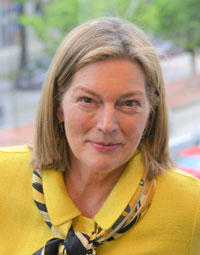
Amb. Kathleen Stephens is a former American diplomat. She was U.S. Ambassador to the Republic of Korea from 2008 to 2011. Korea has been a leitmotif of Ambassador Stephens’ life and career since she served in rural Korea as a Peace Corps volunteer and trainer in 1975-1977. She was also in Korea 1983-1989, first as a political officer at the U.S. Embassy in Seoul reporting on Korea’s domestic political and human rights scene, and later leading the U.S. Consulate in Busan. Other overseas assignments included postings to China, former Yugoslavia, Portugal, Northern Ireland, where she was U.S. Consul General in Belfast during the negotiations culminating in the 1998 Good Friday Agreement, and India, where she was U.S. Charge ‘d Affaires (2014-2015). Ambassador Stephens also served in a number of policy positions in Washington at the Department of State and the White House. These included acting Under Secretary of State for Public Diplomacy and Public Affairs (2012), Principal Deputy Assistant Secretary of State for East Asian and Pacific Affairs (2005-2007), Deputy Assistant Secretary of State for European and Eurasian Affairs (2003-2005), and National Security Council Director for European Affairs at the Clinton White House.

Ambassador Stephens is the board chair of The Korea Society, and she has been President and CEO of the Korea Economic Institute of America since September 2018, based in Washington, DC.
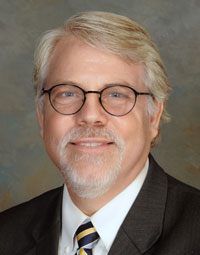
Tom Underwood was born in Korea to a family of American missionaries and returned to Seoul as a Political Officer in the U.S. Embassy (1999-2003). Mr. Underwood also served with the State Department at NATO in Brussels, OPCW at The Hague, and U.S. Embassies in Bucharest (1997-1999), Kampala (1991-1993), and London (1989-1991). He worked in Korea as Regional Program Officer from 2008 to 2011, and then as Deputy Commissioner of the USA Pavilion at Expo 2012 in Yeosu. He also served in Afghanistan as Senior Civilian Representative to three provinces, and his last overseas assignment was as Senior Advisor to the U.S. Delegation to the Conference on Disarmament in Geneva.

After retiring from the U.S. Foreign Service in 2015, Mr. Underwood settled in Arlington, VA, as a base for traveling, writing, continuing education, and exploring by bicycle.


Challenges and Opportunities for U.S.-Japan-Korea Trade Relations

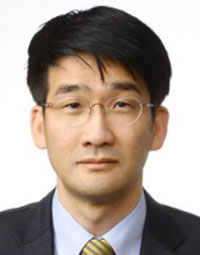
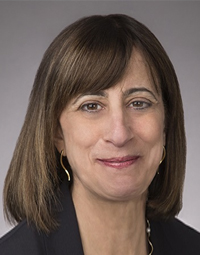
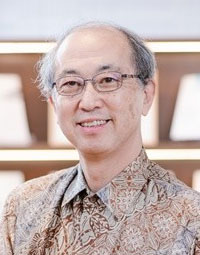
Join us for this discussion about the dynamics of U.S.-Japan-Korea trade relations and regional economic integration, featuring Asia Society Policy Institute Vice President Wendy Cutler, Waseda University Professor Emeritus and Economic Research Institute for East Asia and ASEAN Senior Research Advisor Shujiro Urata, and Korea Development Institute and Johns Hopkins University Professor Wonhyuk Lim. How can the three countries overcome obstacles to cooperate on shared challenges to achieve prosperity and shape the economic rules of the road? What will the Biden administration mean for U.S. trade policy? This program is co-hosted by the Korea Society, the Japan Society and Asia Society Policy Institute (ASPI), with moderation by Korea Society president Tom Byrne, and an introduction by Japan Society president Joshua W. Walker.

Challenges and Opportunities for U.S.-Japan-Korea Trade Relations
with
Wendy Cutler, Shujiro Urata and Wonhyuk Lim

Thursday, June 3, 2021 | 8 AM

The Korea Society
350 Madison Avenue, 24th Floor
New York, NY 10017


ABOUT THE SPEAKERS:

Wonhyuk Lim is a professor at the Korea Development Institute School of Public Policy and Management and adjunct lecturer at the Johns Hopkins University School of Advanced International Studies. Since he joined KDI in 1996, his research has focused on state-owned enterprises and family-based business groups (chaebol). He has also written extensively on development issues, in conjunction with policy consultation projects under Korea’s Knowledge Sharing Program (KSP). After the 2002 Presidential Election in Korea, he worked for the Presidential Transition Committee and the Presidential Committee on Northeast Asia and helped to set policy directions for the restructuring of the electricity and gas sector and for Northeast Asian energy cooperation. Dr. Lim was at Brookings as a CNAPS Fellow in 2005-06. After returning to KDI in 2007, he became Director of the Office of Economic Development Cooperation, precursor to the Center for International Development (CID).

Wendy Cutler is Vice President at the Asia Society Policy Institute (ASPI) and the managing director of the Washington, D.C. office. In these roles, she focuses on building ASPI’s presence in the nation’s capital and on leading initiatives that address challenges related to trade, investment, and innovation, as well as women’s empowerment in Asia. She joined ASPI following an illustrious career of nearly three decades as a diplomat and negotiator in the Office of the U.S. Trade Representative (USTR), where she also served as Acting Deputy U.S. Trade Representative. During her USTR career, she worked on a range of bilateral, regional, and multilateral trade negotiations and initiatives, including the U.S.-Korea Free Trade Agreement, the Trans-Pacific Partnership, U.S.-China negotiations, and the WTO Financial Services negotiations. She has published a series of ASPI papers on the Asian trade landscape and serves as a regular media commentator on trade and investment developments in Asia and the world.

Shujiro Urata is Professor Emeritus, Waseda University. He received his Ph.D in Economics from Stanford University in 1978. Before joining Waseda University in 1986, he was research associate at the Brookings Institution and an economist at the World Bank. He is currently affiliated with Economic Research Institute for East Asia and ASEAN (ERIA), Asian Development Bank Institute (ADBI), and Japan Center for Economic Research (JCER). His focus of research is in international trade and development economics.


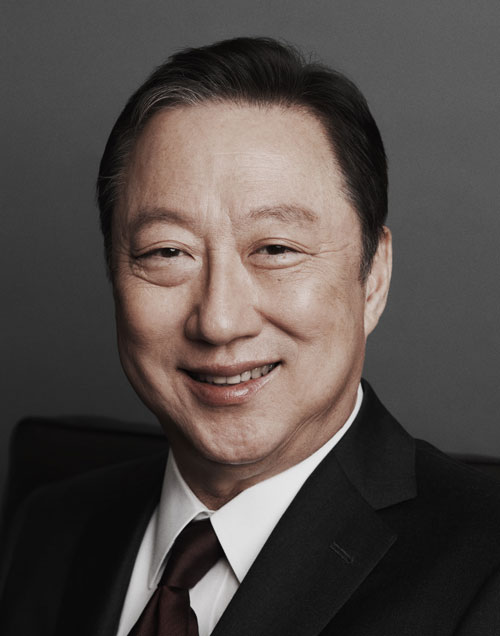
A Conversation with Chairman Yongmaan Park

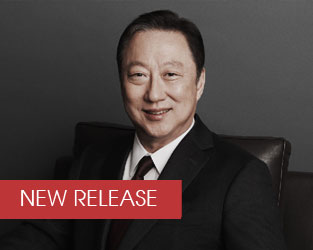
In our inaugural episode of the ‘President’s Interview Series’, we are pleased to invite Yongmaan Park, Chairman of Doosan Infracore for a conversation with The Korea Society’s President Tom Byrne. As one of the most successful and powerful business leaders in Korea and the world, Chairman Park will discuss his extensive career and leadership role as the Chairman of Doosan Infracore and former Chairman of the Korea Chamber of Commerce and Industry (KCCI). Chairman Park will also share his views and insights on key issues and challenges in the U.S.-Korea economic cooperation post pandemic. This interview will also provide a rare opportunity to hear Chairman Park’s personal story and vision of his life.


A Conversation with Chairman Yongmaan Park

PREMIERES: Wednesday, June 2, 2021 | 7 PM (EDT)


The Korea Society
350 Madison Avenue, 24th Floor
New York, NY 10017


ABOUT THE SPEAKER:

Yongmaan Park
Chairman
Doosan Infracore I Doosan Business Research Institute

Mr. Park is Chairman of Doosan Infracore, one of the key subsidiaries of Doosan Group (Doosan) and is also honorary Chairman of the Korea Chamber of Commerce and Industry.

Mr. Park has been in the front-and-center of the renowned transformation of Doosan. He has led over 42 deals including acquisitions and divestitures of businesses as part of the strategic drive to overhaul Doosan’s business portfolio, turning Doosan from a consumer goods company to an Infrastructure Support Business (ISB) focused enterprise. Under his leadership, Doosan has acquired Bobcat, the global leader in compact construction equipment. He has also spearheaded Doosan’s broader globalization efforts, transforming the Korean company into a multinational conglomerate with operations in 38 countries. Mr. Park’s leadership has led Doosan to achieve a seven-fold revenue growth in just over a decade. Doosan’s success along with Mr. Park’s leadership has received tremendous publicity abroad and is frequently benchmarked in the industry.

In acknowledgement of his leadership and expertise, Mr. Park served as Chairman of the Korea Chamber of Commerce and Industry (KCCI) from 2013 to 2021 and has become Honorary Chairman of the KCCI since 2021. While serving as the Chairman of the KCCI for seven years and eight months, Mr. Park established the KCCI as the representative business organization of Korea. Now, the KCCI is the nation’s largest business organization encompassing 73 regional chambers and approximately 180,000 firms and industry associations in Korea. Especially, he has been recognized for his extensive domestic & foreign interactions; promoting new industries, reforming regulations to foster a startup ecosystem and to nurture Korea’s future talents, and accompanying the South Korean President in 38 of his overseas trips as well as carrying out other government affairs.

In recognition of his dedication and contribution to enhance the commercial ties between Korea and other countries, he has been awarded the Order of Civil Merit of Spain in 2003, the Order of Leopold II of Belgium in 2009, and a Commander of the Order of the Star from the Italian government in 2016. In 2014 & 2020, Mr. Park received the Van Fleet Award from the Korea Society for his significant contributions to the promotion of the U.S.-Korea relations and received the Gold Tower Industry Award from the Korean government in 2012.

Mr. Park received his Bachelor’s Degree in Business Administration from Seoul National University in 1978 and his MBA from Boston University in 1982.


From “Ga-yo” to K-pop

Believe it or not, BTS and Blackpink are not the entirety of Korean popular music. At the birthplace of K-pop, “idol” groups share the stage with the new generation of “trot” singers, power balladeers, hip-hop artists and indie bands. Music critic Youngdae Kim surveys the recent history of popular music in Korea and how it has evolved as K-pop exploded all around the world.


From “Ga-yo” to K-pop
Tuesday, May 25, 2021 | 7 PM (EDT)

The Korea Society
350 Madison Avenue, 24th Floor
New York, NY 10017


ABOUT THE SPEAKER:

Youngdae Kim is a music critic and ethnomusicologist, who serves as a member of the Selection Committee for the Korean Music Awards. Kim holds a Ph.D. in Ethnomusicology from the University of Washington, Seattle. Born and raised in Seoul, South Korea, he moved to Seattle in 2007 where he studied music while closely observing American pop music trends and the development of global K-pop sensation for over a decade. Kim has contributed his critical articles to both Korean and American media outlets, including Vulture, MTV, and the Hankyoreh, and appeared on numerous TV shows, podcasts, and public/academic lectures. He is the author of multiple publications in Korea, including BTS The Review: The Comprehensive Look at the Music of BTS and Korean Hip-hop: The Footprints of its Passion.


U.S.-Korea Summit Analysis

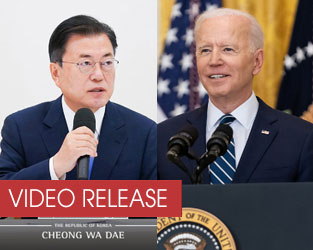
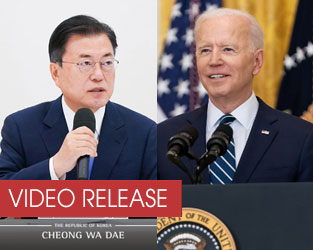
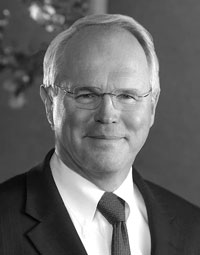
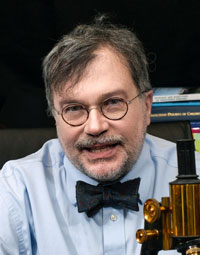
Join us for this rapid response analysis on the first summit meeting between South Korean President Moon Jae-in and U.S. President Joseph R. Biden Jr. In a discussion covering the latest trends regarding the U.S.-Korea Alliance, geostrategic coordination, North Korea issues, and COVID-19 vaccine diplomacy, Korea Society president and CEO Tom Byrne is joined by former UNC/CFC/USFK Commander General (ret.) Vincent Brooks, Columbia University School of International and Public Affairs George W. Ball Adjunct Professor Ambassador (ret.) Christopher R. Hill, and Dr. Peter J. Hotez, Dean of the National School of Tropical Medicine at Baylor College of Medicine.

U.S.-Korea Summit Analysis
with
General (ret.) Vincent Brooks, Ambassador (ret.) Christopher Hill, and Dr. Peter Hotez

Tuesday, May 25, 2021 

The Korea Society
350 Madison Avenue, 24th Floor
New York, NY 10017


ABOUT THE SPEAKERS:

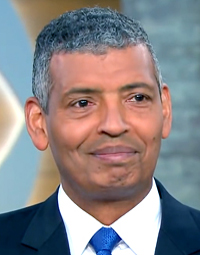
Vincent K. Brooks is a career Army officer who recently retired from active duty as the four-star general in command of all U.S. Forces in Korea, where he concurrently commanded United Nations Command as well as the Republic of Korea – U.S. Combined Forces Command comprising over 650,000 Koreans and Americans under arms. General Brooks, who goes by “Vince,” is a 1980 graduate of the United States Military Academy at West Point. He is the eighth African American in history to attain the military’s top rank – four- star general in the United States Army. He has a Bachelor of Science in Engineering from the U.S. Military Academy at West Point; a Master of Military Art and Science from the prestigious U.S. Army School of Advanced Military Studies at Fort Leavenworth, Kansas; was a National Security Fellow at the Harvard University John F. Kennedy School of Government; and holds an honorary Doctor of Laws from the New England School of Law. Widely respected as a speaker and leader of cohesive, innovative organizations, within and beyond the military, his areas of expertise are: leadership in complex organizations, crisis leadership, and building cohesive trust-based teams, national security, policy, strategy, international relations, military operations, combating terrorism and countering the proliferation of weapons of mass destruction, diversity and inclusion.

Christopher Robert Hill is a former career diplomat, a four-time ambassador, nominated by three presidents, whose last post was as Ambassador to Iraq, April 2009 until August 2010. Prior to Iraq, Hill served as Assistant Secretary of State for East Asian and Pacific Affairs from 2005 until 2009 during which he was also the head of the US delegation to the Six Party Talks on the North Korean nuclear issue. Earlier, he was the U.S. Ambassador to the Republic of Korea. Previously he served as U.S. Ambassador to Poland (2000-2004), Ambassador to the Republic of Macedonia (1996-1999) and Special Envoy to Kosovo (1998-1999). He also served as a Special Assistant to the President and a Senior Director on the staff of the National Security Council, 1999-2000.

Peter J. Hotez , M.D., Ph.D. is Dean of the National School of Tropical Medicine and Professor of Pediatrics and Molecular Virology & Microbiology at Baylor College of Medicine where he is also the Co-director of the Texas Children’s Center for Vaccine Development (CVD) and Texas Children’s Hospital Endowed Chair of Tropical Pediatrics. He is also University Professor at Baylor University, Fellow in Disease and Poverty at the James A Baker III Institute for Public Policy, Senior Fellow at the Scowcroft Institute of International Affairs at Texas A&M University, Faculty Fellow with the Hagler Institute for Advanced Studies at Texas A&M University, and Health Policy Scholar in the Baylor Center for Medical Ethics and Health Policy.


Bridging the Divide: Social & Cultural Integration of North and South Korea

Join us for this discussion about obstacles and opportunities for inter-Korean social and cultural integration, featuring Dr. Hyun In-nae, Ewha University Professor and former director of the Korea Hana Foundation, and Bada Nam, Secretary General for the South Korean non-governmental organization People for Successful Corean Reunification (PSCORE). In an interview with Korea Society policy director Jonathan Corrado, the two draw insights from the findings of new survey research to describe inter-Korean differences in culture, education, and perception, and encourage interaction and dialogue to help bridge the divide between North and South.

This program is supported by a grant from the UniKorea Foundation.


Bridging the Divide: Social & Cultural Integration of North and South Korea
with
Hyun In-nae and Bada Nam

Thursday, May 20, 2021 | 12 PM

The Korea Society
350 Madison Avenue, 24th Floor
New York, NY 10017


ABOUT THE SPEAKERS:

Dr. Hyun In-nae is a visiting professor of North Korean Studies at Ewha Women’s University, where she researches North Korea and North Korean defectors. She previously served as a director at the Korea Hana Foundation, as a guest researcher at the Korea Institute for National Unification, and as vice representative for North Korea Intellectuals Solidarity, a Seoul-based NGO. Dr. Hyun is North Korean defector herself, having left North Korea in 2004 before arriving in South Korea. While in North Korea, Dr. Hyun lectured at Najin Coastal Shipping University and Cheongjin Medical University about Juche philosophy.

Dr. Hyun received a PhD from Ewha Womans University, and continues to produce research that highlights real stories from North Korean defectors and provides insights on integration from a sociological perspective. She is an author of Social Integration Between North and South Koreans as well as Guide to Communication for Social Integration Between North and South Koreans. In 2016, she published an article titled, “Political Consciousness and Political Participation of North Koreans: A Comparison of Men and Women,” in the journal of The Korean Association of North Korean Studies.

Nam Bada is Secretary General of People for Successful COrean Reunification (PSCORE). With a background in international affairs, Bada works as an activist in North Korean human rights and Korean reunification. Since 2012, he has contributed to various U.N. human rights mechanisms. Bada has worked on numerous publications, reports, and campaigns pertinent to the humanitarian crisis in North Korea. He has been interviewed by several media outlets, including Norddeutscher Rundfunk (NDR) in Germany and Voice of America (VOA).


Sherman Family Korea Emerging Scholar Lecture 2021

University of Missouri Assistant Professor and Institute for Korean Studies Co-Director Aram Hur, the 2021 Sherman Scholar award recipient, speaks on May 6 at 3 PM to Korea’s Changing National Story and Democratic Future. Hur addresses Korean nationalism, a “rapidly fragmenting and changing” national story, and the danger of democratic rollback. Senior director Stephen Noerper describes Hur’s selection and address as “incredibly important given the costs of such fragmentation in Korea, but comparatively in the United States of late and by extension to a world seeing rollback in Myanmar, Thailand, Russia and elsewhere.”

During the program, Korea Society President and CEO Tom Byrne introduces Hur, and inaugural Sherman Scholar Award recipient and Columbia University professor Katrin Katz presents her academic resume. Following Hur’s presentation, USC Professor and Korean Studies Institute Director David Kang provides commentary, and Korea Society policy director Jonathan Corrado facilitates the audience discussion. 

The annual award and lecture, now in its fifth year, aims to grow US thought leadership on Korea for a new generation. The award is presented across disciplines and to emerging thought leaders, from Ph.D. candidates to junior professors and respective research or non-profit professionals. The award is made possible through the generosity of Mr. and Mrs. Philip Sherman and family. You can view the presentations of former award winners here. 


Sherman Family Korea Emerging Scholar Lecture 2021

Thursday, May 6, 2021 | 3 PM EDT

The Korea Society
350 Madison Avenue, 24th Floor
New York, NY 10017


ABOUT THE SPEAKERS:

Aram Hur joined the Department of Political Science as an Assistant Professor in 2019 and holds a joint appointment with the Truman School of Public Affairs. She also serves as Co-Director for the MU Institute for Korean Studies. Previously, she was a Provost Postdoctoral Fellow at New York University and a 2018-19 U.S.-Korea NextGen Scholar selected by the Center for Strategic and International Studies (CSIS). She holds a Ph.D. from Princeton University, M.P.P. from the Harvard Kennedy School, and B.A. from Stanford University. Dr. Hur’s research focuses on national politics and democracy, with particular focus on issues of identity change, integration, and democratic support in East Asia. Her work is published in academic journals such as the British Journal of Political Science, Comparative Politics, and Journal of East Asian Studies, and cited in media outlets such as the New York Times, Washington Post, and Foreign Policy.


Katrin Fraser Katz is an Adjunct Assistant Professor in the Department of Political Science at Columbia University and an Adjunct Fellow (Non-resident) in the Office of the Korea Chair at the Center for Strategic and International Studies (CSIS) in Washington, DC. Dr. Katz’s research, which has been supported by grants from the Korea Foundation and the Horowitz Foundation for Social Policy, explores the interplay of cooperation and conflict in East Asia’s political, economic, and security dynamics. She has taught in the Asian Studies Program at Georgetown University and was a 2018-19 US-Korea NextGen Scholar. In 2017, she received the inaugural Sherman Family Korea Emerging Scholar Lecture Series award from the Korea Society. Dr. Katz served as director for Japan, Korea, and oceanic affairs on the staff of the White House National Security Council from 2007 to 2008. She was also a special assistant to the assistant secretary for international organization affairs at the U.S. Department of State and an analyst at the Central Intelligence Agency. She holds a Ph.D. in political science from Northwestern University; a master’s degree in East Asian and international security studies from the Fletcher School of Law and Diplomacy, where she was awarded the John C. Perry Scholarship for East Asian Studies; and a bachelor’s degree, magna cum laude, in international relations and Japanese from the University of Pennsylvania.


David C. Kang is Maria Crutcher Professor in International Relations, Business and East Asian Languages and Cultures at the University of Southern California, with appointments in both the School of International Relations and the Marshall School of Business. At USC he is also director of the Korean Studies Institute. Kang’s latest book is American Grand Strategy and East Asian Security in the 21st Century (Cambridge University Press, 2017). He is also author of East Asia Before the West: Five Centuries of Trade and Tribute (Columbia University Press, 2010); China Rising: Peace, Power, and Order in East Asia (Columbia University Press, 2007); Crony Capitalism: Corruption and Development in South Korea and the Philippines (Cambridge University Press, 2002); and Nuclear North Korea: A Debate on Engagement Strategies, co-authored with Victor Cha (Columbia University Press, 2003). He received an A.B. with honors from Stanford University and his Ph.D. from Berkeley.


You May Also Enjoy:

National Identity Affirmation and Trust in Korea, Japan and China with Eunbin Chung The Return of Industrial Policy: Lessons from Korea with Munseob Lee Architecture as Kisul in Postwar Korea: Building the Industrial Nation-State: 2020 Sherman Family Korea Emerging Scholar Lecture with Melany Sun-Min Park P’ansori Mountain Pilgrimages: Land as Interlocutor in Contemporary Korean Oral Performance and Literature with Ivanna Sang Een Yi