

Afterlayers : Tai Hwa Goh & Julia Kwon

Image courtesy of the Artists

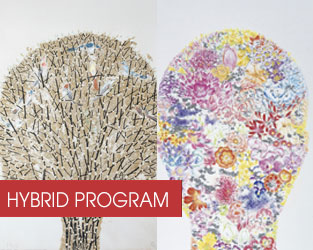
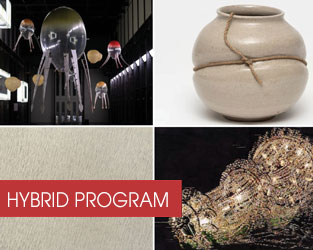
Two artists transform traditional materials–textile and paper–to explore themes of identity and memory.

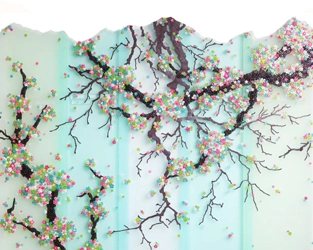
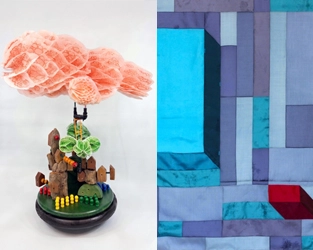
Tai Hwa Goh creates intricate, layered installations from printed and cut paper, inspired by organic forms, landscapes, and the relationship between the interior and exterior. Goh’s process pushes the limits of traditional printmaking, as she modifies the characteristics of paper and thin fabric by covering with batik or ironing thin sheets of beeswax onto her prints, deliberately obscuring the underlying images. She then uses techniques like sewing, gluing, and manipulating printed materials to construct intricate, honeycomb-like structures. Found objects seamlessly integrate into the work, reflecting the blending of the personal and the universal, as well as natural and artificial elements.Through this process, the imagery gradually moves away from recognizable forms, and the dense layers serve as a space where nature, memory, and personal experience intertwine. Her installations invite viewers to contemplate the balance between the natural world and human existence, and how everyday moments can reveal deeper insights into our lives.

Julia Kwon sews interpretive Korean textiles, specifically in the form of patchwork bojagi (Korean object-wrapping cloth), to critique received notions of Asiatic femininity and challenge reductive, easily legible identities. Although her bojagi textiles may initially be perceived as traditionally Korean, the patchwork designs are actually derived from urgent contemporary sociopolitical issues and events. Her work moves beyond simply representing minority identities as she aims to comment on the interconnected systems of oppression. Kwon’s practice contests the notion of authenticity and explores the complexities involved in constructing identities within the current framework of cultural hybridity, intersectionality, and the collective pursuit of social justice.


The Korea Society Gallery is open only by appointment.
The appointment must be made at least 24 hours prior to the scheduled visit.

Gallery Hours: Monday-Friday 10 AM-4:30 PM
By Appointment Only


Book your appointment here


ABOUT THE ARTISTS:

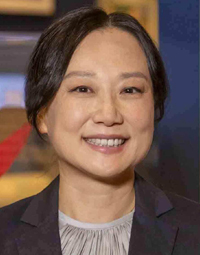
Tai Hwa Goh is a Korean-born artist who primarily works with printmaking and paper installation. From 2000 to 2007, she established a significant career as both a professional artist and a lecturer in the Washington D.C. area. Since relocating to the New York Metropolitan area in 2007, Goh has continued to exhibit her artwork widely.

Her exhibitions including Sunroom at Wavehill (Bronx, NY), Torpedo Factory Art Center (Alexandria, VA), NARS Foundation (Brooklyn, NY), Wave Hill (Bronx, NY), William Paterson University (Wayne, NJ), Frances M. Maguire Art Museum, Saint Joseph’s University (Philadelphia, PA), Seton Hall University (South Orange, NJ), Children’s Museum of Manhattan, Art (New York, NY), International Print Center (New York, NY), DUMBO Art Festival, Islip Museum (East Islip, NY), Gallery Aferro (Newark, NJ), AIR Gallery (Brooklyn, NY), Snug Harbor Center for The Art (Staten Island, NY) and more. She has been awarded grants and residencies from Museum of Art and Design, Lower East Side Print Shop, Elizabeth Foundation for the Arts, Aljira A Center for Contemporary Art, and Vermont Studio Center. Goh is a recipient of National Endowments for the Arts, New Jersey Individual Artist Fellowship Awards, the Gold Award winner of the AHL Visual Art Competition and The Artist of The Year from Korean Cultural Center (Washington, D.C.). Her work is in the collection of Booker- Lowe Gallery (Houston, TX), Art Bank (Washington, D.C.), DC Commission on the Arts and Humanities (Washington, D.C.), and Sadat Collection, University of Maryland (College Park, MD).

Goh received a MFA degree at the University of Maryland specializing in printmaking and sculpture. She also received a MFA in printmaking at Seoul National University in Korea.


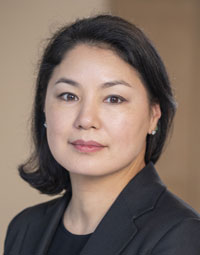
Julia Kwon has exhibited at venues including the Smithsonian American Art Museum and Renwick Gallery (Washington, DC), Museum of Fine Arts (Boston, MA), Cooper Hewitt, Smithsonian Design Museum (New York, NY), Virginia Museum of Contemporary Art (Virginia Beach, VA), Museum of International Folk Art (Santa Fe, NM), Museum of Contemporary Art (Arlington, VA), Peale Center at Carroll Museums (Baltimore, MD), Hartnett Gallery at the University of Rochester (Rochester, NY), Taubman Center at the University of Michigan (Ann Arbor, MI), Biggin Gallery at Auburn University (Auburn, AL), and Torpedo Factory Art Center (Alexandria, VA), among others. Her work is in the permanent collections of the Smithsonian American Art Museum and Renwick Gallery (Washington, DC), Museum of Fine Arts (Boston, MA), Cooper Hewitt, Smithsonian Design Museum (New York, NY), Museum of International Folk Art (Santa Fe, NM), The New York Public Library (New York, NY), Metropolitan Museum of Art’s Thomas J. Watson Library (New York, NY), and Yale University’s Haas Arts Library Special Collections (New Haven, CT), among others.

She has presented artist lectures and workshops at the Hirshhorn Museum and Sculpture Garden (Washington, DC), The Phillips Collection (Washington, DC), Virginia Museum of Contemporary Art (Virginia Beach, VA), Museum of Contemporary Art (Arlington, VA), Parsons School of Design (New York, NY), Georgetown University (Washington, DC), Lehigh University (Bethlehem, PA), Oberlin College (Oberlin, OH), American University (Washington, DC), Emerson College (Boston, MA), and University of Rochester (Rochester, NY), among others.

Her work has been highlighted in Smithsonian Magazine, CNN, The Washington Post, Korea.net, Hyperallergic, BmoreArt, PBS’s WETA Arts, Arirang News, SBS News, and The Wedding Banquet (2025, directed by Andrew Ahn). She was awarded artist residencies at Banff Centre for Arts and Creativity, Chautauqua School of Art, Headlands Center for the Arts, Santa Fe Art Institute, Textile Arts Center, Vermont Studio Center, Virginia Center for the Creative Arts, among others.

​Kwon holds a BA in Studio Art from Georgetown University and an MFA from the School of the Museum of Fine Arts at Tufts University.
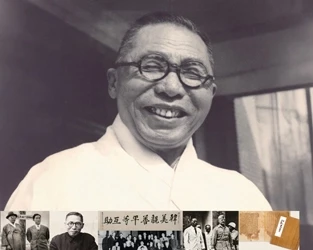
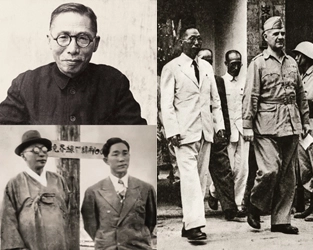
Kim Koo: Dreaming of Peace Through the Power of Culture

May 28-August 31, 2026 | The Korea Society is honored to host a special exhibition honoring the life, enduring vision, and profound legacy of Kim Koo—one of the most revered leaders of the Korean independence movement. As a central figure in the Korean independence movement and the President of the Provisional Government of the Republic of Korea, Kim Koo presented a visionary outlook that emphasized national strength based on culture rather than military or economic power. |

The Korea Society is honored to host a special exhibition honoring the life, enduring vision, and profound legacy of Kim Koo—one of the most revered leaders of the Korean independence movement. As a central figure in the Korean independence movement and the President of the Provisional Government of the Republic of Korea, Kim Koo presented a visionary outlook that emphasized national strength based on culture rather than military or economic power. To commemorate UNESCO’s designation of 2026 as the 150th anniversary of Kim Koo’s birth, The Korea Society offers a unique opportunity to reflect on his legacy through a visual exhibition.

This exhibition is produced in partnership between The Korea Society and The Association of Commemorative Service for Patriot Kim Koo and made possible by the support of the Kim Koo Foundation.


Kim Koo: Dreaming of Peace Through the Power of Culture

May 28-August 31, 2026

The Korea Society Gallery is open only by appointment. The appointment must be made at least 24 hours prior to the scheduled visit. To make an appointment, please contact info@koreasociety.org.

Gallery Hours: Monday-Friday 10 AM-4:30 PM
By Appointment Only


Commemorating the 150th Anniversary of Kim Koo’s Birth:
Exhibition Opening & Presentation

Invitation-only

 Live Webcast: Thursday, May 28, 2026 | 6 PM (EDT)


Kim Koo and UNESCO’s Shared Vision of Culture — The Story Behind the 150th Birth Anniversary Designation :

UNESCO has designated 2026 as a year to commemorate the 150th anniversary of Kim Koo’s birth. This decision goes beyond a simple historical tribute; it is the international community’s official recognition that Kim Koo’s vision—achieving world peace through the “power of culture” rather than economic or military might—aligns deeply with the universal values pursued by UNESCO.

As the President of the Provisional Government of the Republic of Korea, Kim Koo led the independence movement and understood the importance of international solidarity better than anyone. In 1932, following the patriotic deeds of Yi Bong-chang and Yun Bong-gil, he managed to evade the pursuit of the Japanese Imperialists and continue his activities through the vital assistance of American missionary Dr. George Fitch. Furthermore, he solidified the foundation for independence through practical cooperation with democratic nations, such as collaborating with the U.S. Office of Strategic Services (OSS) to prepare for “The Eagle Project,” a domestic infiltration operation. He also successfully persuaded Chiang Kai-shek to ensure the guarantee of Korean independence at the Cairo Conference. These actions demonstrate that Kim Koo’s independence movement was more than mere resistance; it was part of an international solidarity effort sharing the universal values of freedom and human rights.

Kim Koo’s true pioneering spirit became even more evident after liberation. In his essay “My Wish,” included in his 1947 autobiography Paikbum Ilji (백범일지), he emphasized moving past hatred to build a nation where everyone enjoys happiness through cultural development, thereby contributing to world peace. His vision—that humanity can only prosper together when each nation develops its unique culture and engages in mutual exchange—is strikingly consistent with UNESCO’s cultural philosophy today.

The designation of this UNESCO anniversary year is the culmination of extensive preparations that began in June 2024. The process required meticulous attention due to various international and political circumstances. The final hurdle, consent from North Korea, was cleared through the method of “tacit consent”; leading to the final confirmation. This serves as a significant opportunity for Korea to expand its global contribution to cultural policy and discourse. At the same time, it is a meaningful declaration to the world that the spirit of Kim Koo—who fought against imperialist violence while ultimately aiming for human happiness and world peace—remains a vital universal value in our modern era.


Author Talks: Kim Eui-Kyung

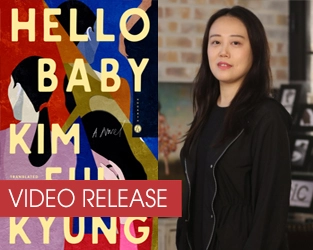
In her absorbing and candid novel Hello Baby, Kim Eui Kyung explores what women endure to become mothers. The novel features six women in their thirties and forties who strike up a friendship at a fertility clinic in Seoul and share their personal paths to motherhood via a group chat they name “Hello Baby.” Switching between the six characters—a journalist, a police officer, a vet, a lawyer, and two housewives—this thought-provoking novel explores the social pressure and emotional strain on women struggling to conceive. Written with insight, humor, and great empathy, Hello Baby is a moving portrait of what it means to be a woman today and the lengths some will go to seek motherhood.

In this episode of Author Talks, Kim Eui-Kyung discusses her novel, translated into English by Sora Kim-Russell.


Author

Kim Eui-kyung

Kim Eui-kyung is a novelist and essayist. Her debut novel, Youth Bankruptcy (2014) won the Korea Economic Daily Youth Literary Contest, and her second novel Call Center was awarded the 6th Soorim Literary Prize. She also published the story collection Showroom, set against the backdrop of IKEA, and the essay collection The Season Called Life. Her latest novel Hello Baby is a groundbreaking work of Korean feminist fiction about a group of women undergoing IVF at a fertility clinic in Seoul.

Ran Hwang | Noble Blossoms

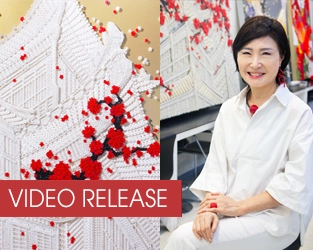
In her solo exhibition, Ran Hwang presents large-scale installations that are both intricate and poetic, delicate yet dramatic, as they explore the cyclical patterns of life and the fleeting nature of beauty.

Hwang creates her art through a meticulous and repetitive process, utilizing everyday materials such as paper buttons and pins. This requires intense concentration and discipline, reflecting the meditative state of Zen masters and the spiritual values traditionally sought by scholars of the past. While painstaking and labor intensive, the process also embodies an aesthetic of transcending difficulty, ultimately visualizing a serene beauty and noble spirit that defines the artist’s unique perspective. Through her work, Hwang evokes a sense of tranquility, inviting the viewer into an experience that seeks fulfillment and peace.


ABOUT THE ARTIST:

Ran Hwang‘s work permanently resides in the collections of internationally acclaimed venues, including the Brooklyn Museum in New York, Museum of Fine Arts in Houston, Deji Art Museum in Nanjing, Dubai Opera House, Des Moines Art Center in Iowa, New York University and National Museum of Contemporary Art in Seoul. Her work has been exhibited internationally at venues including AAW(Asian Art Works), Leila Heller Gallery in New York and Dubai , Asian Civilizations Museum in Singapore, UNESCO Headquarters in Paris, Mass MoCA in Boston, Fondation d’entreprise Hermès in Singapore, the Facebook New York Headquarter, Baker Museum in Florida, and Venice Biennale 2024. She has won Gold Prize by AHL Foundation NY in 2004 and Pollock-Krasner Foundation Grant in 2015. Hwang has studied at the School of Visual Arts in New York.

Artist Talk: Ran Hwang

In her solo exhibition, Ran Hwang presents large-scale installations that are both intricate and poetic, delicate yet dramatic, as they explore the cyclical patterns of life and the fleeting nature of beauty. |
Credit: Images Courtesy of the Artist; Artist photo by Lee Eun Joo

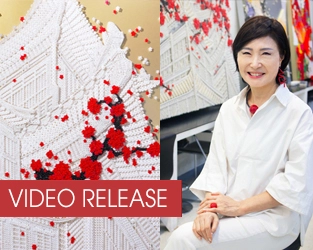
In her solo exhibition, Ran Hwang presents large-scale installations that are both intricate and poetic, delicate yet dramatic, as they explore the cyclical patterns of life and the fleeting nature of beauty.

Hwang creates her art through a meticulous and repetitive process, utilizing everyday materials such as paper buttons and pins. This requires intense concentration and discipline, reflecting the meditative state of Zen masters and the spiritual values traditionally sought by scholars of the past. While painstaking and labor intensive, the process also embodies an aesthetic of transcending difficulty, ultimately visualizing a serene beauty and noble spirit that defines the artist’s unique perspective. Through her work, Hwang evokes a sense of tranquility, inviting the viewer into an experience that seeks fulfillment and peace.

Hwang discusses her art and career in conversation with Bradley Bailey, the Ting Tsung and Wei Fong Chao Curator of Asian Art at the Museum of Fine Arts, Houston.


Artist Talk: Ran Hwang

In-person: Friday, March 20, 2026 | 6 PM

 Video Release: Friday, March 27, 2026


The Korea Society
350 Madison Avenue, 24th Floor
New York, NY 10017


About the Artist:

Ran Hwang‘s work permanently resides in the collections of internationally acclaimed venues, including the Brooklyn Museum in New York, Museum of Fine Arts in Houston, Deji Art Museum in Nanjing, Dubai Opera House, Des Moines Art Center in Iowa, New York University and National Museum of Contemporary Art in Seoul. Her work has been exhibited internationally at venues including AAW(Asian Art Works), Leila Heller Gallery in New York and Dubai , Asian Civilizations Museum in Singapore, UNESCO Headquarters in Paris, Mass MoCA in Boston, Fondation d’entreprise Hermès in Singapore, the Facebook New York Headquarter, Baker Museum in Florida, and Venice Biennale 2024. She has won Gold Prize by AHL Foundation NY in 2004 and Pollock-Krasner Foundation Grant in 2015. Hwang has studied at the School of Visual Arts in New York.

About the Moderator:

The inaugural Ting Tsung and Wei Fong Chao Curator and Chair of Asian Art at the Museum of Fine Arts, Houston (MFAH), Dr. Bradley Bailey has written and lectured widely. He has enriched the MFAH’s Asian collections with hundreds of artworks and also led the groundbreaking reorganization and reinstallation of the Korea Gallery at the MFAH. Dr. Bailey earned his bachelor, master, Ph.M., and Ph.D. in art history, as well as his M.B.A., with emphasis on nonprofit management and museums, from Yale University. 

You May Also Enjoy:

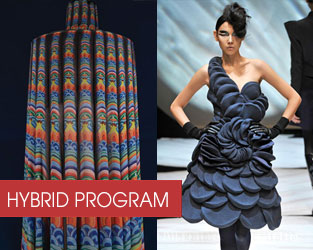
Korea in Transition: Late 19th-Century Art in the Peabody Essex Museum Collection Korean Treasures: Collected, Cherished, Shared | The Curatorial Roundtable Modern Architecture in Korea: Travels through Terra Incognita Future Present: Contemporary Korean Art with Andy St. Louis

Korea in Transition

Courtesy of Peabody Essex Museum

Peabody Essex Museum’s Korean art collection, comprising nearly 2,000 works, offers a distinctive lens on late nineteenth- and early twentieth-century Korea—a period marked by reform, global encounter, and artistic transition. Anchored by objects from the first Korean diplomatic delegation to the United States in 1883 and Korea’s participation in the 1893 Chicago World’s Columbian Exposition, the collection reveals how late Joseon art responded to shifting political realities, foreign contact, and emerging modern sensibilities. Initiated under Director Edward Sylvester Morse and enriched through donations by early travelers between Korea and the United States, including the new PEM Korean gallery’s namesake Yu Kil-Chun, the collection tells intertwined stories of continuity and transition.

Jiyeon Kim, Curator of Korean Art and Culture at PEM, will explore how the late 19th-century Joseon adapted courtly traditions and responded to new popular demands, while also considering the global interactions and human connections forged across the ocean at a pivotal moment in Korean history.


Korea in Transition: Late 19th-Century Art in the Peabody Essex Museum Collection

Tuesday, March 24, 2026 | 6:30 PM (EDT)


The Korea Society
350 Madison Avenue, 24th Floor
New York, NY 10017


About the Speaker:


Jiyeon Kim is the Curator of Korean Art and Culture at the Peabody Essex Museum. She led the development of PEM’s new Korean Art Gallery, which opened in May 2025, and co-curated Jung Yeondoo: Building Dreams. She earned her Ph.D. in Korean Art History from the University of California, Los Angeles, and completed postdoctoral research at Columbia University.

You May Also Enjoy:

Korean Treasures: Collected, Cherished, Shared | The Curatorial Roundtable Modern Architecture in Korea: Travels through Terra Incognita Future Present: Contemporary Korean Art with Andy St. Louis The Flow of Ink and Color: A Journey of Korean Ink Painting by Sunglim Kim

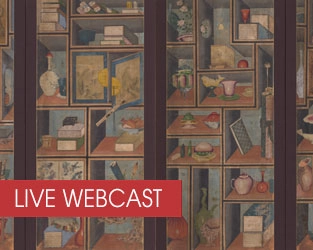
Korean Treasures: Collected, Cherished, Shared | The Curatorial Roundtable

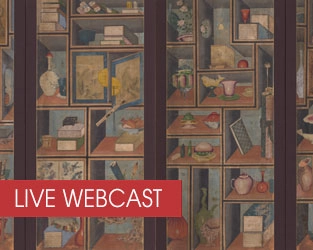
Chaekgado: Scholar’s Accoutrements in a Bookcase
Joseon dynasty, 19th century
© National Museum of Korea

The Smithsonian’s National Museum of Asian Art presents Korean Treasures: Collected, Cherished, Shared, the first U.S. exhibition of significant works from the renowned Lee Kun-Hee Collection. On view through February 1, 2026,  Korean Treasures features over 200 works, including a dozen National Treasures designated by the Korean government. The largest and most comprehensive presentation of Korean art ever mounted at the National Museum of Asian Art, the exhibition spans 1,500 years—from ancient Buddhist sculptures and ceramics to paintings, furnishings and modern masterpieces of the 20th century.

Donated to the Republic of Korea in 2021 by the family of the late Samsung Chairman Lee Kun-Hee, the collection reflects more than 70 years of generational collecting and comprises more than 23,000 works, a testament to a decades-long commitment to preserving and sharing Korea’s artistic legacy and cultural heritage. Korean Treasures presents a remarkable selection from the collection to American audiences for the first time, alongside additional loans from the Leeum Museum of Art in Seoul, Korea, shown exclusively in Washington, D.C.

In a conversation with The Korea Society, three curators from the National Museum of Asian Art–Carol Huh, J. Keith Wilson, and Sunwoo Hwang–explore the depth and diversity of Korean art and reflect on the practice of collecting in Korea.


Korean Treasures: Collected, Cherished, Shared | The Curatorial Roundtable

Tuesday, December 2, 2025 | 6 PM (EST)


The Korea Society
350 Madison Avenue, 24th Floor
New York, NY 10017


About the Speakers:


Carol Huh, the Associate Curator of Contemporary Asian Art, became the Smithsonian’s National Museum of Asian Art’s first curator of contemporary art in 2007. As the curator of contemporary art at the National Museum of Asian Art, Carol Huh focuses on current artistic production related to Asia and the Asian diaspora through exhibitions, acquisitions, and public programs. She spearheaded projects such as the groundbreaking series of contemporary art installations in the Sackler Gallery, and organized Moving Perspectives, the museum’s first series of exhibitions focusing on video art from Asia. Huh is a founding member of the Smithsonian Artist Research Fellowship Committee and a member of the Smithsonian Networks Review Committee. She completed her undergraduate and graduate studies at Georgetown University, Washington, D.C.


A specialist in Chinese antiquities, J. Keith Wilson received his BA in Chinese Studies from Williams College and completed his PhD coursework at Princeton University after receiving MAs in Chinese art and archaeology from both the University of Michigan and Princeton. He was also a research fellow at the Institute for Advanced Studies on Asia at the University of Tokyo. He was appointed curator at the Cleveland Museum of Art and chief curator of Asian art at the Los Angeles County Museum of Art before joining the staff of the Smithsonian’s National Museum of Asian Art.


Sunwoo Hwang, Korea Foundation Assistant Curator of Korean Art and Culture, became the first curator of Korean art at the Smithsonian’s National Museum of Asian Art in 2024. Her research interests focus on Korean and Chinese Buddhist art, with a particular emphasis on medieval Buddhist wall paintings and their iconographic significance. Hwang holds an MA in Humanities from the University of Chicago and a PhD in Art History from Dongguk University in South Korea.


You May Also Enjoy:

Modern Architecture in Korea: Travels through Terra Incognita Future Present: Contemporary Korean Art with Andy St. Louis The Flow of Ink and Color: A Journey of Korean Ink Painting by Sunglim Kim The Rise of Korean Contemporary Art with Peter Kahng

Modern Architecture in Korea: Travels through Terra Incognita

Photo by JongOh Kim

Modern architecture in Korea is characterized by open and dynamic attitudes formed through a unique set of historical circumstances. Through colonial rule, war, and poverty, it was cut off from its older building traditions, emerging only in the latter half of the twentieth century as part of a condensed process of modernization. It is enigmatic in that its build first, think later (if at all) condition has rebuffed holistic narratives of its disjunctive evolution. Long dominated by the construction sector and state bureaucracies, it is now an amalgam of large corporate firms, creative studios, and diverse communities in the culture industry. It is now in crisis for its uncertain response to the challenges of climate change and Korea’s turn to structural low-growth. Neither affirming nor negating traditions and theories, Korean architecture is most interesting when it raises questions and belies unfulfilled ambitions.

This lecture, presented by 2025 Korea Foundation LAB Series, features Pai Hyungmin, a distinguished architect and scholar.


Modern Architecture in Korea: Travels through Terra Incognita

 Monday, November 17, 2025 | 6:30 PM (EST)


The Korea Society
350 Madison Avenue, 24th Floor
New York, NY 10017


About the Speaker:


Pai Hyungmin, Professor at the University of Seoul, is an architectural historian, critic, and curator. Twice a Fulbright scholar, he received his Ph.D from the History, Theory, and Criticism program at MIT. His numerous publications include The Portfolio and the Diagram, Key Concepts of Korean Architecture, and Sensuous Plan: Architecture of Seung H-Sang. He was artistic director of the inaugural Seoul Biennale of Architecture and Urbanism and the 5th Gwangju Folly. He was twice curator of the Korean Pavilion at the Venice Biennale, which in 2014, was awarded the Golden Lion for Best National Pavilion. His recent work has focused on climate change, particularly the material networks of production, consumption, and waste. His Climate Museum: Life and Death of our Home received the Red Dot Award for its innovative and sustainable exhibition design.


You May Also Enjoy:

Future Present: Contemporary Korean Art with Andy St. Louis The Flow of Ink and Color: A Journey of Korean Ink Painting by Sunglim Kim The Rise of Korean Contemporary Art with Peter Kahng Korean Couture: Generations of Revolution | A Curator’s Perspective

Artist Talk: Hong Seon Jang

Photo by Brad Ogbonna

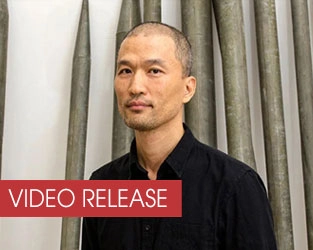
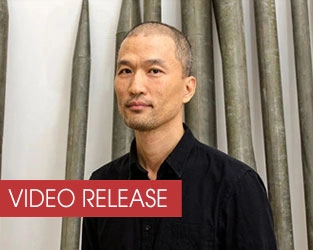
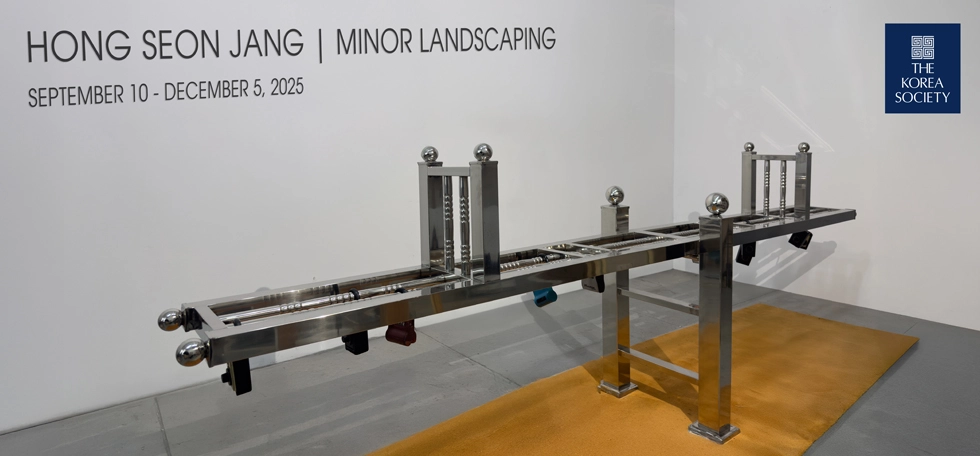
With his installations, Hong Seon Jang transforms industrial products and found objects in order to explore the usually recognizable surroundings. As their conventional function and values are reinterpreted, distorted, and subverted, Jang investigates opposing concepts and contrasting ideas, such as authority and subordination, internal and external dynamics, and the interplay between security and threat. Through his art, Jang invites viewers to re-examine how symbols acquire cultural and ideological significance, and how their meanings transform in displacement.


Artist Talk: Hong Seon Jang

 Video Release: Tuesday, October 14, 2025


The Korea Society
350 Madison Avenue, 24th Floor
New York, NY 10017


About the Artist:

Hong Seon Jang has widely exhibited in solo and group exhibitions including Wellin Museum of Art, NY; SHCM Museum of Art, NY; Socrates Sculpture Park, NY; Meet Factory, Czech Republic; Fine Arts Gallery, San Francisco State University, CA; Jamaica Center for Arts & Learning, NY; the Cohen Gallery at Brown University, RI; Smack Mellon, NY; McColl Center for Visual Art, NC; The Soap Factory, MN; The Islip Art Museum, NY; Artspace, CT; Rush Arts Gallery, NYC, and Hangaram Art Museum, South Korea. His awards and residencies include: ISCP Ground Floor Program, AHL-AAW Solo Exhibition Grant, The Sharpe-Walentas Studio Program, NY; Art Council Korea Grant, Korea; MSA, LA; Skowhegan School of Painting and Sculpture, ME; Tokyo Wonder Site, Artist-In-Residence, Japan; Percent for Art, Public School Art commission, NY; Djerassi, CA; Atlantic Center for the Arts, FL; Newark Museum, NJ; Lower East Side Printshop Special Editions Residency, NY; Emerging Artist Fellowship, Socrates Sculpture Park, NY; Sculpture Space, NY; Bemis Art, NE; Abron Arts Center, NY; The Triangle Artists’ Workshop Program, NY; and Urban Artist Initiative Fellowship. He received his BFA from Dankook University, South Korea and earned his MFA in Imaging Art at Rochester Institute of Technology, Rochester, NY.


You May Also Enjoy:

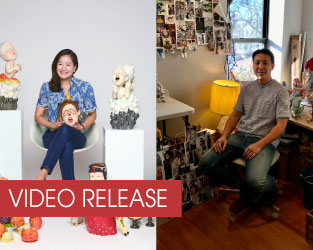
Artist Talk: Kyungmin Park & Jinsik Yoo Future Present: Contemporary Korean Art with Andy St. Louis The Flow of Ink and Color: A Journey of Korean Ink Painting by Sunglim Kim The Rise of Korean Contemporary Art with Peter Kahng

Hong Seon Jang | Minor Landscaping

Sculpted Voices | Kyungmin Park & Jinsik Yoo

Sculpted Voices | Kyungmin Park & Jinsik Yoo
September 10-December 5, 2025 | Opening Exhibition: Wednesday, September 10, 2025 | 5-7 PM |
Image courtesy of the Artist |

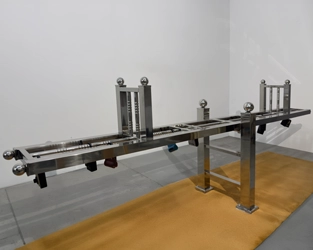
With his installations, Hong Seon Jang transforms industrial products and found objects in order to explore the usually recognizable surroundings. As their conventional function and values are reinterpreted, distorted, and subverted, Jang investigates opposing concepts and contrasting ideas, such as authority and subordination, internal and external dynamics, and the interplay between security and threat. Through his art, Jang invites viewers to re-examine how symbols acquire cultural and ideological significance, and how their meanings transform in displacement.


Opening Reception

Wednesday, September 10, 2025 | 5-7 PM


The Korea Society Gallery is open only by appointment. The appointment must be made at least 24 hours prior to the scheduled visit. To make an appointment, please contact info@koreasociety.org.

Gallery Hours: Monday-Friday 10 AM-4:30 PM
By Appointment Only

Click here to make an appointment


The Korea Society 
350 Madison Avenue, 24th Floor, NYC


ABOUT THE ARTIST:

Hong Seon Jang has widely exhibited in solo and group exhibitions including Wellin Museum of Art, NY; SHCM Museum of Art, NY; Socrates Sculpture Park, NY; Meet Factory, Czech Republic; Fine Arts Gallery, San Francisco State University, CA; Jamaica Center for Arts & Learning, NY; the Cohen Gallery at Brown University, RI; Smack Mellon, NY; McColl Center for Visual Art, NC; The Soap Factory, MN; The Islip Art Museum, NY; Artspace, CT; Rush Arts Gallery, NYC, and Hangaram Art Museum, South Korea. His awards and residencies include:  ISCP Ground Floor Program, AHL-AAW Solo Exhibition Grant, The Sharpe-Walentas Studio Program, NY; Art Council Korea Grant, Korea; MSA, LA; Skowhegan School of Painting and Sculpture, ME; Tokyo Wonder Site, Artist-In-Residence, Japan; Percent for Art, Public School Art commission, NY; Djerassi, CA; Atlantic Center for the Arts, FL; Newark Museum, NJ; Lower East Side Printshop Special Editions Residency, NY; Emerging Artist Fellowship, Socrates Sculpture Park, NY; Sculpture Space, NY; Bemis Art, NE; Abron Arts Center, NY; The Triangle Artists’ Workshop Program, NY; and Urban Artist Initiative Fellowship. He received his BFA from Dankook University, South Korea and earned his MFA in Imaging Art at Rochester Institute of Technology, Rochester, NY.