Minhwa commonly refers to a genre of Korean folk art from the late Chosŏn era (17th–19th C.). Based on Shamanic, Buddhist, or Confucian themes, Minhwa, as a popular form, conveys freshness and vitality in a relaxed ambiance, in contrast with the more scholarly and stern Muninhwa-style favored by the yangban, or aristocratic, class. The use of vibrant primary colors and exaggerated painting styles were indicative of the taste of the middle-class, who wanted to imitate the yangban love of art, but with a touch of flamboyance. This workshop will offer instruction in crafting Minhwa motifs in ink and applying colored powders to create layered tones on mulberry paper.
Social Graphics: The Art of Jeski salutes the award-winning efforts of artist and social activist Jeseok Yi, who has wowed the design and non-profit communities with his thoughtful and often satirical works. Featuring fourteen of Korean-born Jeski’s works for organizations like the Red Cross, Salvation Army, World Vision, City Harvest New York, the American Disability Association and the Global Coalition for Peace, the exhibition provides sharp and insightful commentary on war, global warming, pollution, and other social concerns. Jeski stresses simplicity in messaging and encourages interaction between the design and the real world. His social graphics illustrate the power of creativity to inform, educate, and change society for the better. His efforts are a reminder of the vibrancy of Korean civil society, the strength of its NGOs, and Korea’s contribution to international efforts aimed at peace and social justice.
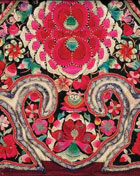
Traditional Korean quilt technique requires keen attention to detail, patience, and dedication. With the arrival of the modern sewing machine, traditional quilting largely disappeared, yet master Kim Haeja remains steadfastly committed to the traditional ways of her craft. Designated Important Intangible Cultural Property No. 107 by the Korean government, Haeja Kim shares life’s lessons learned in the crafting of her quilts and textiles.
Thursday, March 24, 2011 6:30PM Gallery Talk and Q&A
Asia Week 2011 Gallery Talk
THREADING LIFE: A Lecture by Quilt Master Haeja Kim
with
Haeja Kim Korean Traditional Quilt Artist, Important Intangible Cultural Property No. 107
The Korea Society 950 Third Avenue @ 57th Street, 8th Floor
Richard Pegg, Asian art curator of Chicago’s MacLean Collection, examines Korean maps in a variety of formats, the challenges faced by cartographers, and the formation of multiple identities in Korea during the eighteenth and nineteenth centuries. The MacLean Collection, housed in a private museum outside Chicago, focuses on the cultures of Korea, China, and Southeast Asia.
Tuesday, March 22, 2011
Asia Week 2011 Gallery Talk Mapping Identity: Antiquarian Korean Maps of the MacLean Collection
In conjunction with the gallery exhibition 10,000 Threads, acclaimed author Spike Gillespie explores the diversity and common threads of quilting in Korea, its neighbors, and lands beyond. Gillespie takes the listener on a global journey of the art, approaches, and techniques of quilt making.
Tuesday, March 8, 2011
Asia Week 2011 Gallery Talk 10,000 Threads Around the World
with
Spike Gillespie Author, Quilts Around the World: The Story of Quilting from Alabama to Zimbabwe
On December 10, 2010, The Korea Society hosted a panel discussion at the First Presbyterian Church of Atlanta on the missionary experience in Korea. James T. Laney, former US ambassador to South Korea, led the panel, which included Donald Clark, professor of history at Trinity University, who gave an overview of the history of Christianity in Korea; William Brown, a son and grandson of Christan missionaries to Korea and China, who shared accounts written by missionaries in his family; and the Reverend George Wirth, senior pastor of the First Presbyterian Church of Atlanta, who suggested that American Christians have much to learn from Korean Presbyterians about church growth, management, and missionary work. The program was part of The Korea Society’s Korea Days regional outreach program in Atlanta, Georgia.
All events FREE and courtesy of lead corporate sponsor
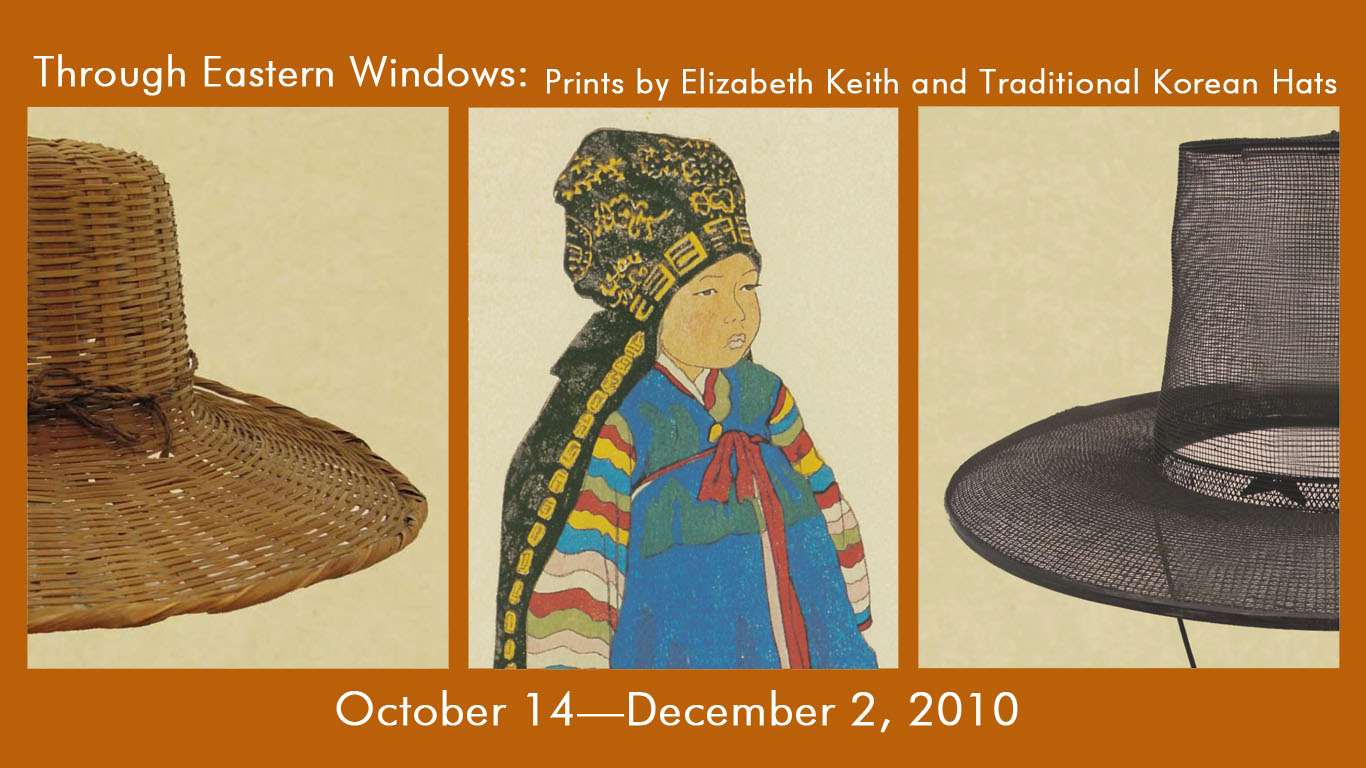
Elizabeth Keith, an intrepid traveler and visionary artist, first ventured to Asia almost a century ago, where she filled travel journals with lively, realistic sketches of Korea and other destinations. At the encouragement of a Japanese publisher, she translated her sketches and watercolors into etchings and woodblock prints. As author of Eastern Windows (1928) and Old Korea (1946), Keith sought to capture a “vanishing Korea,” and her work remains especially relevant today as a view into the Korea of her age.
Accompanying the woodblock prints, etchings, and watercolors on display is an array of traditional hats from the period. From horsehair to bamboo, the materials employed by the contemporaneous Korean artisans add context and texture to Keith’s work. The hats served to connote the wearer’s status, a theme also examined in Keith’s work.
The headpieces are on loan from the Chung Young Yang Embroidery Museum, Korean Art and Antiques, and the collection of Lea Sneider.
The Elizabeth Keith woodblock prints, etchings and watercolor are on loan from the collection of Young-Dahl Song. The attendant photos and postcards are from the collection of Norman Thorpe.
The Korea Society marks the 60th anniversary of the start of the Korean War with two exhibitions running June 25 through September 10: Steel Helmets: U.S. Korean War Graphics and Korean War in Color. Both open six decades to the day of the outbreak of conflict.
Steel Helmets: U.S. Korean War Graphics features twenty-eight framed graphics—eighteen Korean War film posters and ten comics—from the era. With images ranging from the stark to the romantic, the film posters project images of bravery, climatic extremes, love and loss. The comic-book images, sometimes brutally visceral, portray war in all its hell and heroics. Korean War in Color features thirty images by famed correspondent and veteran John Rich, now in his 90s. Though most Americans recall the War through black-and-white press photos, the Kodachrome images here show the war in vivid, color detail—images of masses on the move, soldiers in the field, individuals in repose.
Accompanying the gallery exhibitions are a selection of films featured on the exhibition posters, a book signing by legendary photographer John Rich, and a lecture by author Brian Locke.
17 June
1PM
All the Young Men (1960)
3PM
The Bridges at Toko-Ri (1954)
5PM
Pork Chop Hill
6PM
Press and Member Preview and Reception
25 June
1PM
The Steel Helmet (1951)
3PM
Battle Hymn (1957)
6PM
Special Signing of the book, Korean War in Color, with author John Rich
22 July
6PM
Hollywood, Race and The Korean War with Professor Brian Locke
Steel Helmets: U.S. Korean War Graphics and Korean War in Color June 25-September 10
Join us as Theresa Ki-ja Kim, professor emeritus of theater arts at SUNY Stony Brook, discusses how Korea’s unique tradition of masked dance-dramas masterfully blended fertility rite, social satire, and popular entertainment. Held in conjunction with the exhibition, Masks of Night: Faces from Traditional Korean Dance-Dramas, Kim’s gallery talk will introduce the masked dance-drama, a form of performance that included songs, dances, and dialogues that aimed to satirize the local nobility (yangban) and promote fertility. Her talk will also examine how masked dance-dramas performed at the Korean royal court and throughout the countryside evolved from ancient shamanic rituals into a form of popular theater that helped release the pent-up social frustration generated by the rigid Confucian norms of the Chosŏn kingdom (1392-1910).
Gallery Talk with Theresa Ki-ja Kim Professor Emeritus, Department of Theatre Arts, SUNY Stony Brook, New York
ABOUT THE AUTHOR
Theresa Ki-ja Kim is a professor emeritus of theatre arts at SUNY Stony Brook and a Fulbright Scholar of the shamanic origins of theater. Kim’s collection of Korean theatrical masks, on display at Masks of Night: Faces from Traditional Korean Dance-Dramas, is a result of her personal associations with the masked dancers and shamans during years of researching, teaching, producing, and publishing in the fields of traditional Asian theater and shamanism. She holds a Ph.D. in performance studies from New York University.
The arrival of the first Western missionaries in Korea in the late 19th century was a pivotal moment in the history of Christianity in Korea and the history of Korea as a whole. The missionaries established new religious identities and stoked early culture clashes. They also documented their mission and the society around them with early cameras. Missionary Photography in Korea: Encountering the West Through Christianity—the largest ever show of Korean missionary photographs in the U.S.—features rare images taken by missionaries in Korea between 1890 and 1940.
Taken by both Protestant and Catholic missionaries, the photographs—on display along with unique supplementary objects such as an original photo album and New Year’s calendars—offer a singular perspective on life in Korea during times of profound change. They illustrate the forging of contemporary institutions and values in the crucible of encounters with American Christian missionaries by Koreans.
The impact of early Western contact on Koreans is evident in the telltale signs of new cultural norms and new religious identities, and clues that these new ways were conflicting with long-held traditions. Less directly evident, but equally important, the images also allow the viewer to surmise how Koreans in turn had a formative impact on the missionaries, which led to intertwined personal histories that became a foundation for subsequent relations between Korea and the United States.
Drawn from four private collections and six academic archives, the images have been digitally restored and printed in a manner that retains, as far as possible, the archival quality of the images.
On May 5, 2009, Don Baker, Associate Professor in the Department of Asian Studies at the University of British Columbia, spoke about the history of Christianity and religion in Korea with Fred Carriere, The Korea Society’s Executive Vice President. The interview is in support of ‘Missionary Photography in Korea: Encountering the West through Christianity,’ an exhibition previously on display at The Korea Society Gallery.
Purchase the 184-page hardcover exhibition catalog.
Anti-TB campaign Christmas Seals (Seoul / 1930s, Norman Thorpe Collection)
Western Style Clothing Shop in Korea (Chemulp’o Port/ca. 1910, Mission Photograph Collection, General Commission on Archives and History, The United Methodist Church, Madison, New Jersey)
A Christian Wedding (Seoul/ca. 1920, Mission Photograph Collection, General Commission on Archives and History, The United Methodist Church, Madison, New Jersey)
Catholic Foreign Mission Society of America (P’yŏngyang / 1924, Maryknoll Mission Archives)
Soongsil Christian Academy’s Soccer Team Champions (P’yŏngyang / 1925, The Moffett Korea Collection, Special Collections of the Princeton Theological Seminary)
Missionary Children: The Roberts Daughters (Sonch’ŏn, North Pyŏngan Province / ca. 1910, Donald Clark Collection)







 On December 10, 2010, The Korea Society hosted a panel discussion at the First Presbyterian Church of Atlanta on the missionary experience in Korea. James T. Laney, former US ambassador to South Korea, led the panel, which included Donald Clark, professor of history at Trinity University, who gave an overview of the history of Christianity in Korea; William Brown, a son and grandson of Christan missionaries to Korea and China, who shared accounts written by missionaries in his family; and the Reverend George Wirth, senior pastor of the First Presbyterian Church of Atlanta, who suggested that American Christians have much to learn from Korean Presbyterians about church growth, management, and missionary work. The program was part of The Korea Society’s Korea Days regional outreach program in Atlanta, Georgia.









 Join us as Theresa Ki-ja Kim, professor emeritus of theater arts at SUNY Stony Brook, discusses how Korea’s unique tradition of masked dance-dramas masterfully blended fertility rite, social satire, and popular entertainment. Held in conjunction with the exhibition, Masks of Night: Faces from Traditional Korean Dance-Dramas, Kim’s gallery talk will introduce the masked dance-drama, a form of performance that included songs, dances, and dialogues that aimed to satirize the local nobility (yangban) and promote fertility. Her talk will also examine how masked dance-dramas performed at the Korean royal court and throughout the countryside evolved from ancient shamanic rituals into a form of popular theater that helped release the pent-up social frustration generated by the rigid Confucian norms of the Chosŏn kingdom (1392-1910).