






Cycling in Korea


In April 2018, the United Nations General Assembly declared June 3rd as International World Bicycle Day to recognize “the uniqueness, longevity and versatility of the bicycle, which has been in use for two centuries, and that it is a simple, affordable, reliable, clean and environmentally fit sustainable means of transport.”

Koreans have enjoyed cycling and life with bicycles for many years. Hear from the cycling experts and enthusiasts from different backgrounds and cultures about cycling in Korea as they share their personal stories and experiences from the seat of their bicycles.

Join in the conversation among life-long cyclists: Chang Wan Kim, the legendary rock singer and actor; Christopher Koo, Chairman of LS Group, KITA and Korea Cycling Federation; Ambassador Kathleen Stephens; and Tom Underwood, former U.S. Foreign Service officer.

With a special video presentation by Ho Pil Yoon, director of Sangju Bicycle Museum.


Cycling in Korea
Thursday, June 3, 2021

The Korea Society
350 Madison Avenue, 24th Floor
New York, NY 10017


ABOUT THE SPEAKERS:
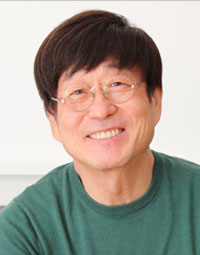
Chang Wan Kim is the legendary rock singer, composer, musician, actor, TV host, radio DJ, and writer. Along with his two brothers, he formed the band Sanullim, one of the most beloved and influential music groups in Korea. Today, Mr. Kim performs as a solo artist and as a lead singer of an eponymous Kim Chang Wan band, and he continues to collaborate and inspire the next generation of musicians.

Mr. Kim has also acted in numerous television dramas and films, hosted television shows and radio programs, and written several books, including a collection of essays, poetry, and short stories.
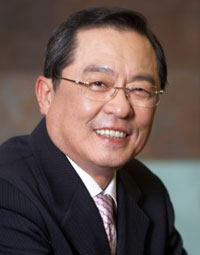
Christopher Koo began his business career at Bando Trading (currently LG International), where he worked for the company’s New York Office and later served as Regional Director of the Southeast Asian Regional Office based in Singapore. In 1995, he moved to LG Investment and Securities (presently NH Investment & Securities) to head the International Business Division. This career path has made him a seasoned expert in international trade and finance. In 2002, he joined LG Cable (presently LS Cable & System) as Chief Financial Officer and later became the company’s CEO and Chairman. During his tenure, he grew the firm into the third-largest wire and cable manufacturer in the world, through the successful acquisition of Superior Essex (SPSX), the leading cable manufacturer in North America. Since 2013, he has served as the second chairman of LS Group, driving the company’s second leap toward the future through diverse efforts, including the expansion of the Group’s global presence and the development of new growth engines.

In addition, Mr. Koo is the chairman of Korea International Trade Association (KITA) which is the prominent economic organization at the forefront of trade promotion. He is also the board member of UN Global Compact (UNGC), the chairman of Korea Cycling Federation, and the chairman of Korea University Alumni Association (KUAA). Furthermore, he performed as the chairman of the Presidential Council on Intellectual Property, and the chairman of Korea Invention Promotion Association.
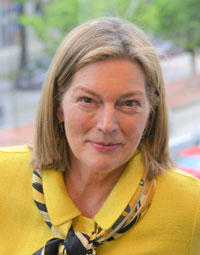
Amb. Kathleen Stephens is a former American diplomat. She was U.S. Ambassador to the Republic of Korea from 2008 to 2011. Korea has been a leitmotif of Ambassador Stephens’ life and career since she served in rural Korea as a Peace Corps volunteer and trainer in 1975-1977. She was also in Korea 1983-1989, first as a political officer at the U.S. Embassy in Seoul reporting on Korea’s domestic political and human rights scene, and later leading the U.S. Consulate in Busan. Other overseas assignments included postings to China, former Yugoslavia, Portugal, Northern Ireland, where she was U.S. Consul General in Belfast during the negotiations culminating in the 1998 Good Friday Agreement, and India, where she was U.S. Charge ‘d Affaires (2014-2015). Ambassador Stephens also served in a number of policy positions in Washington at the Department of State and the White House. These included acting Under Secretary of State for Public Diplomacy and Public Affairs (2012), Principal Deputy Assistant Secretary of State for East Asian and Pacific Affairs (2005-2007), Deputy Assistant Secretary of State for European and Eurasian Affairs (2003-2005), and National Security Council Director for European Affairs at the Clinton White House.

Ambassador Stephens is the board chair of The Korea Society, and she has been President and CEO of the Korea Economic Institute of America since September 2018, based in Washington, DC.
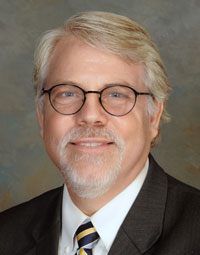
Tom Underwood was born in Korea to a family of American missionaries and returned to Seoul as a Political Officer in the U.S. Embassy (1999-2003). Mr. Underwood also served with the State Department at NATO in Brussels, OPCW at The Hague, and U.S. Embassies in Bucharest (1997-1999), Kampala (1991-1993), and London (1989-1991). He worked in Korea as Regional Program Officer from 2008 to 2011, and then as Deputy Commissioner of the USA Pavilion at Expo 2012 in Yeosu. He also served in Afghanistan as Senior Civilian Representative to three provinces, and his last overseas assignment was as Senior Advisor to the U.S. Delegation to the Conference on Disarmament in Geneva.

After retiring from the U.S. Foreign Service in 2015, Mr. Underwood settled in Arlington, VA, as a base for traveling, writing, continuing education, and exploring by bicycle.




From “Ga-yo” to K-pop

Believe it or not, BTS and Blackpink are not the entirety of Korean popular music. At the birthplace of K-pop, “idol” groups share the stage with the new generation of “trot” singers, power balladeers, hip-hop artists and indie bands. Music critic Youngdae Kim surveys the recent history of popular music in Korea and how it has evolved as K-pop exploded all around the world.


From “Ga-yo” to K-pop
Tuesday, May 25, 2021 | 7 PM (EDT)

The Korea Society
350 Madison Avenue, 24th Floor
New York, NY 10017


ABOUT THE SPEAKER:

Youngdae Kim is a music critic and ethnomusicologist, who serves as a member of the Selection Committee for the Korean Music Awards. Kim holds a Ph.D. in Ethnomusicology from the University of Washington, Seattle. Born and raised in Seoul, South Korea, he moved to Seattle in 2007 where he studied music while closely observing American pop music trends and the development of global K-pop sensation for over a decade. Kim has contributed his critical articles to both Korean and American media outlets, including Vulture, MTV, and the Hankyoreh, and appeared on numerous TV shows, podcasts, and public/academic lectures. He is the author of multiple publications in Korea, including BTS The Review: The Comprehensive Look at the Music of BTS and Korean Hip-hop: The Footprints of its Passion.


Sacred Images and Magical Things

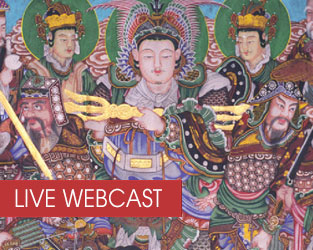
Statues, paintings, and masks—like the bodies of shamans and spirit mediums—give material form and presence to otherwise invisible entities, and sometimes these objects are understood to be enlivened. Dr. Laurel Kendall explores how magical images are expected to work with the shamans and spirit mediums in contemporary South Korea and compares the use of these shamanic images with similar practices in Vietnam, Myanmar, and Bali. The question of empowered images concerns not only what they are expected to do but how they are fabricated, marketed, cared for, disposed of, and sometimes transformed into art-market commodities and museum artifacts.


Sacred Images and Magical Things

Thursday, May 6, 2021 | 6 PM EDT

The Korea Society
350 Madison Avenue, 24th Floor
New York, NY 10017


ABOUT THE SPEAKER:

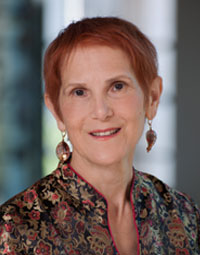
Laurel Kendall is Curator of Asian Ethnographic Collections at the American Museum of Natural History and Senior Research Scholar at the Weatherhead East Asian Institute at Columbia University. A scholar of popular religion and its material manifestations in East and Southeast Asia, Dr. Kendall began her long acquaintance with South Korean life in 1970 as a U.S. Peace Corps Volunteer, when a chance encounter with female shamans led her to subsequent anthropological field work. Her latest book is Mediums and Magical Things: Statues, Paintings, and Masks in Asia Places (University of California Press, 2021).


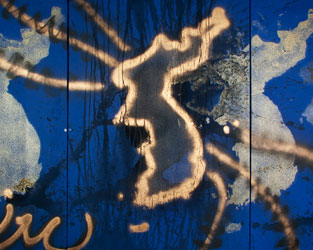
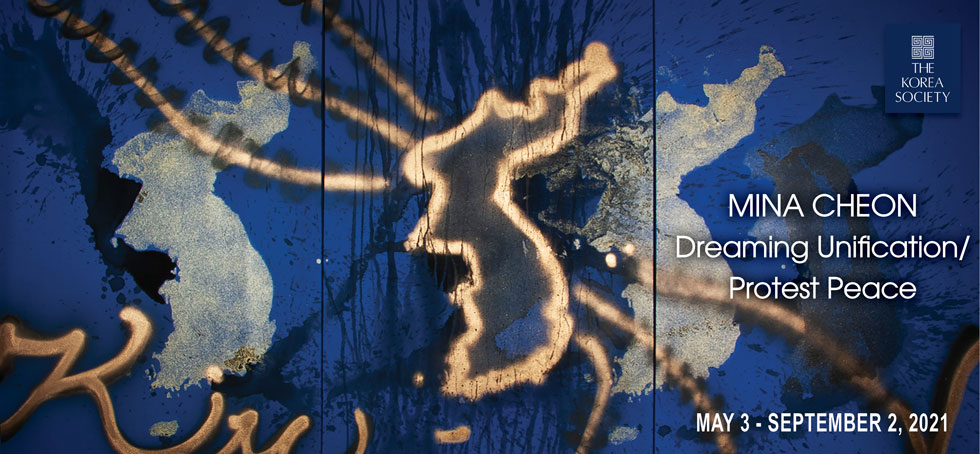
Mina Cheon Dreaming Unification/Protest Peace

Image courtesy of Mina Cheon Studio (Photo by Cyrus Feldman)

May 3 – September 2, 2021|

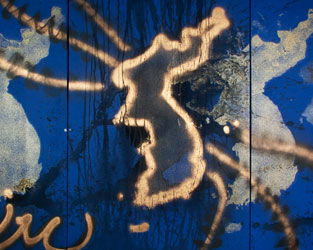
The global art activist Mina Cheon draws inspiration from the partition of the Korean peninsula, exemplified by her parallel body of work created under her North Korean alter ego, Kim Il Soon, in which she enlists a range of mediums including painting, sculpture, video, installation, and performance to deconstruct and reconcile the fraught history and ongoing coexistence between North and South Korea. Her solo exhibition at The Korea Society, presented during the height of #stopasianhate movement and continuing tensions on Korean peninsula, showcases her most recent painting series of Unification Flags.

Tapping into her stream of unconsciousness to promote a future of unity and peace, Mina Cheon’s paintings of the Korean peninsula recalls past interKorean efforts including the Olympics, athletic teamwork, Arirang Mass Games, and other public events that celebrated “One Korea.” Submerged in the custom-made IKB (Yves Klein blue) paint and incorporating the cosmopolitan expression of protest art style using stencil and spray, each Unification Flag painting is a symbolic new figuration, a body that parades in a procession for peace.

Mina Cheon is a new media artist, scholar, educator, and activist best known for her “Polipop” paintings inspired by Pop art and Social Realism. She has exhibited internationally, including at the Asia Society Triennial (2021); Busan Biennale (2018); Baltimore Museum of Art (2018); American University Museum at the Katzen Arts Center, Washington, DC (2014); Sungkok Art Museum, Seoul (2012); and Insa Art Space, Seoul (2005). Her work is in the collections of the Baltimore Museum of Art; Smith College Museum of Art, Northampton; and Seoul Museum of Art, Seoul. Cheon received a BFA in painting from Ewha Womans University; an MFA in painting from the Maryland Institute College of Art (MICA) and an MFA in imaging and digital art from UMBC: An Honors University in Maryland; and a PhD in philosophy of media and communications at the European Graduate School, Saas-Fee, Switzerland. She is currently a Full-time Professor at MICA.

Due to the novel coronavirus (COVID-19), our gallery is open only by appointment. The appointment must be made at least 24 hours prior to the scheduled visit. To make an appointment, please contact info@koreasociety.org. All visitors will be required to wear a mask as well as complete the safety questionnaire upon arrival.


Mina Cheon
Dreaming Unification/Protest Peace

May 3 – September 2, 2021


@ The Korea Society 
350 Madison Avenue, 24th Floor, NYC

Gallery hours: (M-F) 10 AM – 4:30 PM by appointment
*From August 2-September 2, Monday-Thursday 10 AM – 4:30 PM*

**Pre-registration is now required for all Korea Society events, and an ID is required for security.**

For more information, please contact info@koreasociety.org or call (212) 759-7525.


Samul Nori: Dynamic Rhythms from Korea


Samul nori, the South Korean percussion genre with powerful rhythmic forms, has reached international popularity. First created in Seoul in 1978 by a quartet of musicians, samul nori (which translates simply into “four things play”) is a neo-traditional musical repertory that has been performed on many international stages by professional ensembles and amateur musical enthusiasts around the world.

Professor Katherine In-Young Lee explores the history and development of samul nori and its importance as a sonic and cultural symbol of South Korea.


Samul Nori: Dynamic Rhythms from Korea
Thursday, April 22, 2021 | 6 PM (EDT)

The Korea Society
350 Madison Avenue, 24th Floor
New York, NY 10017


ABOUT THE SPEAKER:

Katherine In-Young Lee is Associate Professor of Ethnomusicology at the UCLA Herb Alpert School of Music. Her book Dynamic Korea and Rhythmic Form (Wesleyan University Press 2018), explores how a percussion genre from South Korea became a global music genre. It was recognized with the 2019 Béla Bartók Award for Outstanding Ethnomusicology from the ASCAP Foundation Deems Taylor/Virgil Thomson Awards. Her articles have appeared in Ethnomusicology, the Journal of Korean Studies, and The Journal of Korean Traditional Performing Arts. Professor Lee received her Ph.D. in Ethnomusicology from Harvard University; M.A. in Ethnomusicology from University of Washington; and dual B.M. degrees in Piano Performance and Musicology from the University of Michigan.


Hot! Hot! Hot! Korean Food in the Age of Kpop


Once considered a dubious cuisine relegated to the “ethnic food” category, Korean food is now hotter than ever in the United States and beyond. Ingredients like gochugaru and gochujang show up on menus of American fast food chains and local grocery aisles, while Korean cooking shows and meokbang videos have become a genre of their own on streaming platforms and social media, such as Netflix and YouTube. Today, KFC also stands for Korean Fried Chicken and the noodle dish jjapaguri from the Oscar-winning movie Parasite has its own Wikipedia entry.

Professor Robert Ji-Song Ku explores the rising popularity, appreciation, and appropriation of Korean food around the world and particularly in the United States, and its relationship to the global proliferation of Korean popular culture, a phenomenon commonly known as hallyu, the Korean Wave.


Hot! Hot! Hot! Korean Food in the Age of Kpop

Thursday, April 8, 2021 | 6 PM (EDT)

The Korea Society
350 Madison Avenue, 24th Floor
New York, NY 10017


ABOUT THE SPEAKER:

Robert Ji-Song Ku is Associate Professor of Asian and Asian American Studies at Binghamton University of the State University of New York. His research and teaching interests include Asian American studies, food studies, and transnational and diasporic Korean popular culture. He is the author of Dubious Gastronomy: Eating Asian in the USA (University of Hawaii Press, 2014) and co-editor of Future Yet to Come: Sociotechnical Imaginaries in Modern Korea (University of Hawaii Press, forthcoming 2021), Pop Empires: Transnational and Diasporic Flows of India and Korea (University of Hawaii Press, 2019), and Eating Asian America: A Food Studies Reader (New York University Press, 2013).


The Korean Art of Fermentation

Speaker’s Photo by Nick Surett nicksurette.com

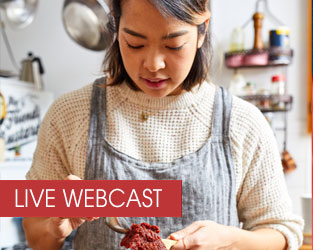
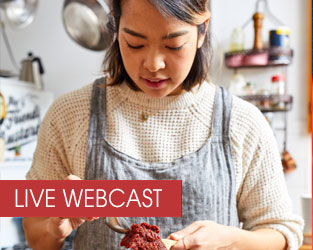
There is a long and illustrious history of fermentation in Korean cuisine. Different types of fermented food – doenjang, ganjang, gochujang, and kimchi to name just a few – are integral and essential to the Korean way of eating and cooking.

Join Irene Yoo as she provides an overview of Korean art of fermentation and tips on how to incorporate Korean fermented food in your everyday cooking.


The Korean Art of Fermentation

Thursday, March 25, 2021 | 6 PM (EDT)

The Korea Society
350 Madison Avenue, 24th Floor
New York, NY 10017


ABOUT THE SPEAKER:

Irene Yoo is the founder/chef of Yooeating, a Korean American comfort food popup that highlights Korean home-cooking, street food, and drinking culture. She has written and developed recipes for Food52, Food Network, and Gothamist among many others.


The King, the Virtuous Queen, and His Wicked Consort


The saga of King Sukjong, Queen Inhyeon, and Concubine Jang Hui-bin is one of the most famous episodes in the 500-year-long history of Joseon dynasty. Filled with palace intrigues and passionate love affairs, the story of the 19th king of Joseon, his virtuous queen, and one of the most infamous women in the history of Joseon dominates the popular culture and imagination even today. But what was the real story behind the legend?

Professor Minsoo Kang, who recently published a translation of Record of the Virtue of Queen Inhyeon, Lady Min, speaks about the importance of this story, the historical myth that has built around the characters, and its place in modern Korean society.


The King, the Virtuous Queen, and His Wicked Consort

Thursday, March 11, 2021 | 6 PM (EST)

The Korea Society
350 Madison Avenue, 24th Floor
New York, NY 10017


ABOUT THE SPEAKER:

Minsoo Kang is an associate professor in European history, with specialities in the cultural and intellectual history of France, England, and Germany in the eighteenth and nineteenth centuries at the University of Missouri–St. Louis. In addition to articles in numerous journals, he is the author of Sublime Dreams of Living Machines: The Automaton in the European Imagination (Harvard University Press), The Story of Hong Gildong (Penguin Classics), and Invincible and Righteous Outlaw: The Korean Hero Hong Gildong in Literature, History, and Culture (University of Hawaii Press). His translation of Record of the Virtue of Queen Inhyeon, Lady Min appeared in Azalea: Journal of Korean Literature and Culture.


Restaurants in the Covid-19 Era: A Roundtable

Photo by Amina Ford www.aminaford.com

Since the pandemic started, restaurant and food service businesses had to combine flexibility and ingenuity in order to survive. Constantly dealing with ever-changing regulations and restrictions, restaurateurs had to quickly pivot and develop new business models, including outdoor dining and shipping nationwide.

Join us for a roundtable conversation with three Korean American restaurateurs in New York – Christina Jang of New Wonjo; Simon Kim of Cote; and Ray Park of Red Poke – as they discuss the challenges they face during the pandemic and the future of restaurants.


Restaurants in the Covid-19 Era: A Roundtable

Thursday, March 4, 2021 | 6 PM (EST)

The Korea Society
350 Madison Avenue, 24th Floor
New York, NY 10017


ABOUT THE SPEAKERS:

Christina Jang is the owner and operator of New Wonjo, a Korean barbeque restaurant in the heart of Koreatown in New York City. newwonjo.com

Simon Kim is the Proprietor of COTE Korean Steakhouse, New York City’s first KOREAN STEAKHOUSE™, and COTE Miami – now open in Miami’s Design District. www.cotenyc.com & cotemiami.com

Ray Park is the founder of Red Poke, a Korean fast casual restaurant in New York, and Pado, which will be relocated to Williamsburg. His new Korean fried chicken restaurant Seoul Fried Chicken Co. is opening in Edison, NJ. www.redpoke.com; www.padonyc.com; www.sfc-co.com


ADG7: A Virtual Concert [Video Release]

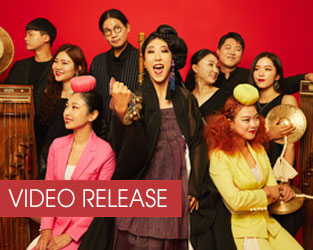
Celebrate the Year of Ox with a virtual concert by Ak Dan Gwang Chil a.k.a. ADG7! This award-winning Korean traditional music group’s powerful and engaging performance will immerse audiences into a spiritual experience and bring blessings of positive energy to kick off a new year.

The nine-member ensemble presents itself not as earnest traditionalists, but as a giddy show band with all the trappings of K-pop — choreographed singers, candy-colored costumes and bouncy, upbeat, often swinging songs that link the concision of folk tunes to the catchy repetition of pop, with brash cymbals for drive and flute and zither lines for instrumental hooks. – The New York Times

There’s a flowering folk-roots revival in South Korea, but no band combines virtuosity, charisma, and pure energy like Ak Dan Gwang Chil. – WFMU

Ak Dan Gwang Chil (ADG7) is a multi-award winning Korean traditional music group, featuring six Korean traditional musicians and three powerhouse female folk singers. ADG7 performs repertoire from the sacred, shamanic and secular gut (ritual music) and minyo (folk song) traditions of the Hwanghae-do region, nowadays a western province of North Korea.

ADG7 was organized in 2015, to the 70th anniversary of Korea’s liberation from Japanese colonial rule. Their music expresses the true meaning of liberation and South Korea’s desire for reunification. They recently won multiple awards including Best Group at the 2018 KBS Korean Traditional Music Award and Sori Frontier Award at the 2017 Jeongju International Sori festival. ADG7 has recently performed at WOMEX (World Music Expo) 2019 and globalFEST 2020 as one of their official artists, and became one of 2020-2021 Mid Atlantic Tour Roster Artists.

Band Members: Hyun Soo Kim (Daeguem); Hyang Hee Lee (Piri & Saenghwang); Hyerim Park (Ajaeng); Meondongmaru Weon (Gayaguem); Hyunjun Chun (Percussion); Jinyoung Sunwoo (Percussion); Chorong Bang (Singer); Hee Rim Wang (Singer); and Minyoung An (Singer)


ADG7: A Virtual Concert

Friday, February 12, 2021

The Korea Society
350 Madison Avenue, 24th Floor
New York, NY 10017