Book Café: The Women Divers of Jeju Island


2011 06 02 Women Divers of Jeju Island icon

Award-winning author, editor and photojournalist Brenda Paik Sunoo presents images from Moon Tides: Jeju Island Grannies and the Sea. Jeju Island’s sea women, or haenyeo, scour the sea floor as their maternal ancestors did, harvesting seaweed, octopus, sea urchins, turban shells, and abalone. Driven by economics, these women divers plunge more than 20 meters underwater, hold their breath for over two minutes, and labor well into their 80s. Their numbers have dwindled from fifteen thousand in the 1970s to just over five thousand today. Photo excerpts from the book received the International Museum of Women’s Community Choice Award.


Ms. Sunoo’s presentation will be preceded by a screening of Liz Chae’s short documentary film, The Last Mermaids, the story of the women of Jeju Province in Korea who have used the ocean to give them life, shield them from war, and educate their daughters for more than 2,000 years.


Thursday, June 2
Book Café: The Women Divers of Jeju Island

Contemplative Traditional Music Series: P’ungnyu Percussion (Changgo)

2011 05 19 Changgo iconEnjoy a meditative performance of changgo, a traditional hour-glass drum, adapted for p’ungnyu, the classical ensemble music of Korean nobility and central theme of The Korea Society’s 2011 traditional music series. P’ungnyu also refers to an elevated state of leisure in which one can better appreciate poetry, music, and companionship.

Percussionist Lee Chun-seung performs a solo Suljanggu, followed by a Samulnori and Binari featuring three additional percussion instruments, the kkwaengguari, buk, and jing, and finishes with Modeumbuk. Lee appeared at the 2002 World Cup Opening Ceremony and on the KBS Open Concert series. He has performed in Russia, Japan, China, and the United States, and is director and conductor of the acclaimed New York-based, non-profit Korean Traditional Marching Band. This series is made possible with public funds from the New York State Council on the Arts.


Thursday, May 19, 2011

Contemplative Traditional Music Series:
P’ungnyu Percussion (Changgo)

with

Lee Chun-seung


NYSCA

LIVE HOUSE KOREA is made possible with the support of the New York State Council on the Arts.

Contemplative Traditional Music Series: P’ungnyu Percussion (Changgo)

2011 05 19 Changgo icon

Enjoy a meditative performance of changgo, a traditional hour-glass drum, adapted for p’ungnyu, the classical ensemble music of Korean nobility and central theme of The Korea Society’s 2011 traditional music series. P’ungnyu also refers to an elevated state of leisure in which one can better appreciate poetry, music, and companionship.

Percussionist Lee Chun-seung performs a solo Suljanggu, followed by a Samulnori and Binari featuring three additional percussion instruments, the kkwaengguari, buk, and jing, and finishes with Modeumbuk. Lee appeared at the 2002 World Cup Opening Ceremony and on the KBS Open Concert series. He has performed in Russia, Japan, China, and the United States, and is director and conductor of the acclaimed New York-based, non-profit Korean Traditional Marching Band. This series is made possible with public funds from the New York State Council on the Arts.


Thursday, May 19, 2011

6:30PM LIVE Performance

Contemplative Traditional Music Series:

P’ungnyu Percussion (Changgo)

with

Lee Chun-seung

The Korea Society
950 Third Avenue @ 57th Street, 8th Floor


nysca 200px white

LIVE HOUSE KOREA is made possible with the support of the New York State Council on the Arts.


My Korean Deli


2011 05 12 My Korean Deli icon

Ben Ryder Howe, formerly of The Paris Review and a contributor to The New Yorker, Atlantic Monthly, and Outside, discusses his recently published memoir, My Korean Deli. Howe describes the trials and triumphs of his Korean-born wife’s decision to repay her parents’ self-sacrifice by buying them a store. My Korean Deli follows the store’s tumultuous life, and paints the portrait of an extremely unlikely partnership among characters from Brooklyn, Seoul, and Puritan New England. Owning the deli becomes a transformative experience as the family struggles to salvage the original gift—and family harmony—while sorting out issues of values, work, and identity.


Thursday, May 12

Book Cafe: My Korean Deli

with

Ben Ryder Howe
Author, My Korean Deli

and discussant

Laura Vanderkam
Journalist
USA Today’s Board of Contributors

Making the Kimchi Chronicles

2011 05 03 Kimchi Chronicles IconJoin Eric Rhee, producer, and Marja Vongerichten, host and wife of world famous chef Jean-Georges Vongerichten, for an evening of conversation and a behind the scenes look at The Kimchi Chronicles. Through visits to markets and homes around the Peninsula, the 13-episode show—to air on PBS—explores traditional Korean cuisine, markets, and popular tourist destinations. Green tea will be served courtesy of AMOREPACIFIC.


Tuesday, May 3

Making the Kimchi Chronicles

with

Eric Rhee
Producer of The Kimchi Chronicles

and

Marja Vongerichten
Host of The Kimchi Chronicles

moderated by

David Kim
film director, co-founder and director, KAFFNY


Sponsorship provided by AMOREPACIFIC


The Journals of Musan

Winner of “Best New Narrative Director” at 2011 Tribeca Film Festival!


The Tribeca Film Festival presents the New York premiere of the much-anticipated The Journals of Musan, co-hosted with The Korea Society. Director Park Jung-bum’s debut tells the story of a North Korean defector forging a new life in South Korea. The film took the New Currents Award at the Pusan International Film Festival. Park, who assisted Lee Chang-dong on the stirring Poetry, presents a disarmingly beautiful vision of loneliness, disconnect, and ethical ambiguity in this story of a lost soul’s struggle to connect. Park Jung-bum appears for Q&A with audiences after each screening.


Tickets available at TribecaFilm.com


Sunday, April 24 @ 7 PM Tuesday, April 26 @ 5:30 PM Wednesday, April 27 @ 9:30 PM
Clearview Cinemas Chelsea 5 Clearview Cinemas Chelsea 4 Clearview Cinemas Chelsea 1

The Journals of Musan (127 min) 2010
무산일기

Park Jungbum’s stunning and much-lauded debut is the story of Jeon Seung-chul, a North Korean defector forging a life in capitalist South Korea. Emerging from eight months in a resettlement camp, the unassuming Seung-chul is placed in a home on the rundown outskirts of Seoul, and finds a modest job papering the city with advertisement posters. Yearning for a human bond, he joins a church and meets Sook-young, a choir singer who works nights at a seedy karaoke bar. As he attempts to forge some kind of relationship with Sook-young and some kind of life in Seoul, Seung-chul finds his deepest kinship and comfort in a fellow outcast—a stray dog he adopts in the street. 

Marginalized in every way, from his liminal home on the city’s fringes to his frustrated attempts to integrate in either church or work, Seung-chul’s unwavering moral compass is testament to his integrity in the face of baseless prejudice. As both director and actor, Park (assistant director of Lee Chang-dong’s stirring Poetry) fully realizes a disarmingly beautiful vision of loneliness, disconnect, and ethical ambiguity in this story of a lost soul’s struggle to connect.


 Co-hosted by


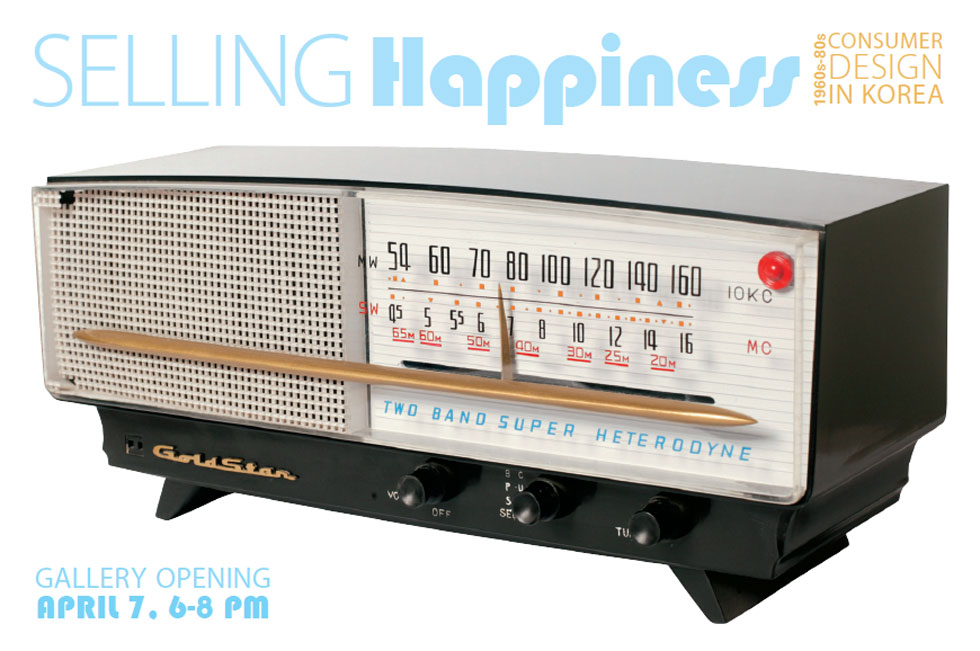
Selling Happiness: 1960s-80s Consumer Design in Korea

During Korea’s drive for economic modernization, commercial artists created goods and advertisements that were visually appealing and richly detailed. After the war, Korea transformed itself economically, yet rapid growth was accompanied by dramatic social changes and political concerns surrounding authoritarianism. By the late 1980s, Korea had embraced democracy and a newly prosperous society clamored for fresh goods manufactured for domestic consumption. With the 1988 Olympic games, Korean products and adverts grew more global in orientation.

Koreans look upon these items with some nostalgia, as they stand in sharp and, at times, amusing contrast with today’s products, which range from remarkable paper-thin flatscreens to Motortrend’s Car of the Year. Presented with the support of the Korea Craft and Design Foundation, this exhibition features early consumer products, advertisements, and social commentary from a transitional and controversial era when the seeds of Korean design saw fertile ground.


ABOUT

This exhibition is the first in the United States to focus on items associated with Korea’s export-led growth era. It features products and designs from the 1960s, 70s, and 80s, including Korea’s first domestically manufactured radio (the Goldstar A-501), Korea’s first black-and-white television (the VD-19), rice dispensers, cookers, and other kitchen items—even the popular “Italy towel,” employed in homes and bathhouses for a rigorous scrub.


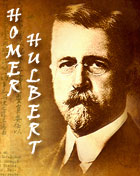
Homer Hulbert: Crusader for Korea


2011 04 06 hulbert icon

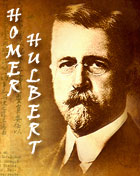
The Korea Society presents Dong Jin Kim, author of Crusader for Korea, a biography of Dr. Homer B. Hulbert (1863-1949), a “hidden hero” of Korean independence. The publication is the culmination of years of effort by the author to secure a proper place in Korean history for the accomplishments of foreigners, such as Dr. Hulbert, who lived their lives in the service of Korea.


Wednesday, April 6

Homer Hulbert: Crusader for Korea

with

Dong Jin Kim
author of Crusader for Korea


American-born Hulbert came to Korea in 1886 as a missionary, and is remembered as an active supporter of Korea’s sovereignty and a tireless campaigner for the modernization of Korea’s education system. Believing that a well-educated Korea could more successfully fend off Japanese territorial aspirations, Hulbert helped raise the status and usage of Hangul in place of Chinese characters, introduced new academic courses, and even authored textbooks in Korean. Hulbert also wrote frequently as a journalist and historian, and his writing played an important role in presenting Korea and her political situation to the world.

As special aide to Emperor Kojong, Hulbert fought to preserve Korea’s rights of sovereignty. As a Royal envoy, he visited Washington D.C. in 1905 and The Hague in 1907—though both delegations were turned away. Dr. Hulbert also spent many years attempting to document and reclaim funds deposited by Emperor Kojong in a Shanghai bank. The funds were never returned to the Emperor and appear to have been expropriated during colonization.

Dong Jin Kim does not intend to let the story of Dr. Hulbert, an unsung hero for both Americans and Koreans, slip into obscurity. In addition to writing Crusader for Korea—which received very positive reviews in the Korean press—Kim has established the Hulbert Memorial Society and has successfully lobbied to include Dr. Hulbert in middle-school textbooks. According to a recent poll, Dr. Hulbert is considered one of the most respected foreigners to have contributed to Korea’s success—a testament to the legacy of a figure known as the “man who loved Korea more than Koreans.”

Threading Life: A Lecture by Korean Quilt Master Haeja Kim


2011 03 24 threading life icon

Traditional Korean quilt technique requires keen attention to detail, patience, and dedication. With the arrival of the modern sewing machine, traditional quilting largely disappeared, yet master Kim Haeja remains steadfastly committed to the traditional ways of her craft. Designated Important Intangible Cultural Property No. 107 by the Korean government, Haeja Kim shares life’s lessons learned in the crafting of her quilts and textiles.qq

Thursday, March 24, 2011


Asia Week 2011 Gallery Talk

THREADING LIFE: A Lecture by Quilt master Haeja Kim

with

Haeja Kim
Korean Traditional Quilt Artist, Important Intangible Cultural Property No. 107

Threading Life: A Lecture by Korean Quilt Master Haeja Kim


2011 03 24 threading life icon

Traditional Korean quilt technique requires keen attention to detail, patience, and dedication. With the arrival of the modern sewing machine, traditional quilting largely disappeared, yet master Kim Haeja remains steadfastly committed to the traditional ways of her craft. Designated Important Intangible Cultural Property No. 107 by the Korean government, Haeja Kim shares life’s lessons learned in the crafting of her quilts and textiles.

Thursday, March 24, 2011
6:30PM Gallery Talk and Q&A

Asia Week 2011 Gallery Talk

THREADING LIFE: A Lecture by Quilt Master Haeja Kim

with

Haeja Kim
Korean Traditional Quilt Artist, Important Intangible Cultural Property No. 107

The Korea Society
950 Third Avenue @ 57th Street, 8th Floor