Koreatown, NYC:
The Consumption of a Transnational Brand

In the past decade, Korean entertainment has gained global recognition, with Korean movies and TV shows winning Oscars and Emmys, and K-Pop groups becoming wildly popular. In Manhattan, Koreatown has become a popular destination for both locals and tourists, drawing them in with its bars, restaurants, and day spas. Jinwon Kim argues that Manhattan’s Koreatown has become a new type of ethnic enclave, what she dubs a “transclave.” This commercialized ethnic space exists solely for consumption, leisure, and entertainment, and has been shaped by South Korea’s nation-branding strategy, new economic and cultural strategies, patterns in Korean migration, and shifts in tourism and urban policies in New York City. Kim posits that for many consumers in Koreatown, especially those who are not of Korean descent, the space has become a commercialized place where transnational culture meets the diverse racial and ethnic mosaic of New York City. Kim emphasizes how the space functions to “brand Korea” as a space to “consume ethnicity,” reflecting the landscape of South Korea’s consumer culture through the physical appearance of buildings and stores and the inclusion of franchise brands.

In this talk, Kim explores the recent popularity of Korean food in New York City by focusing on both transnational and domestic factors, leading to the new trend of commercialization of ethnic food, emphasis on authenticity, and rise of the omnivore society, by delivering the voices of ordinary people. While Koreatown’s authenticity has been largely defined by commercialized ethnic cuisine by local entrepreneurs, the Korean government, and franchises, Kim argues that Koreatown’s authenticity has represented the collective imaginations and narratives of various consumer groups–Korean nationals, Korean Americans, and non-Koreans.

This program was recorded on September 24th and will be released on October 1.


Speaker

Jinwon Kim

Jinwon Kim is Assistant Professor of Sociology at Smith College. She is the author of Koreatown, NYC: The Consumption of a Transnational Brand and a co-editor of Koreatowns: Exploring the Economics, Politics, and Identities of Korean Spatial Formations.

Contact Us

The Korea Society

Contact Us

Address

350 Madison Avenue, 24th Floor
New York, NY 10017

Phone

+1 (212) 759-7525
Fax: +1 (212) 759-7530

Email

General Inquiries: info@koreasociety.org
Membership: membership@koreasociety.org

Send Us a Message

Fill out the form and our team will get back to you

Join Our Membership


Individual & Corporate Membership — The Korea Society

Individual & Corporate Membership

Become a member of
The Korea Society

Our programs, events, and offerings are made possible by the continuous support of our individual members, corporate contributors, and donors. Together, we foster meaningful connections between the peoples of the United States and Korea.

Why join

What your membership includes

Join us as a member of The Korea Society to enjoy:

  • Invitations to member-only events, programs, and art gallery openings
  • Networking opportunities with fellow members and leading professionals from various fields in the U.S. and Korea
  • Special access to our Korean Language Program for corporate and individual members
  • Subscription to our monthly members-only newsletter, keeping you up to date with organization activities and exclusive offers

*Benefits vary by membership level.

Membership types

Choose the membership that fits you

Whether you’re joining as an individual or bringing your company on board, there’s a level for you.

For you

Individual Membership

Connect with a deeply involved community that shares a common interest in cultivating greater awareness, understanding, and cooperation between the peoples of the United States and Korea.

Levels from $25 (Student) to $1,000 (Benefactor)

Explore individual membership

For your company

Corporate Membership

Join a prestigious network of leading Korean and multinational companies with unparalleled access to business leaders and policy makers through thought-provoking, timely programming.

Levels from $1,000 (Affiliate) to $50,000 (Benefactor)

Explore corporate membership

We look forward to having you as a valued member of The Korea Society.

We hope to see you soon!

Corporate Membership

Corporate Membership — The Korea Society
Corporate Membership

Become a Corporate Member of
The Korea Society

Join a prestigious network of leading Korean and multinational companies committed to advancing relations between Americans and Koreans.

Members gain unparalleled access to Korean and American business leaders and policy makers through thought-provoking, timely programming — and stay at the forefront of business and political events in the U.S. and Korea.

Why partner with us

Corporate membership that opens doors

We invite your company to become a Corporate Member of The Korea Society. Through participation in our programs, corporate members connect with the leaders and ideas shaping one of the world’s most important partnerships.

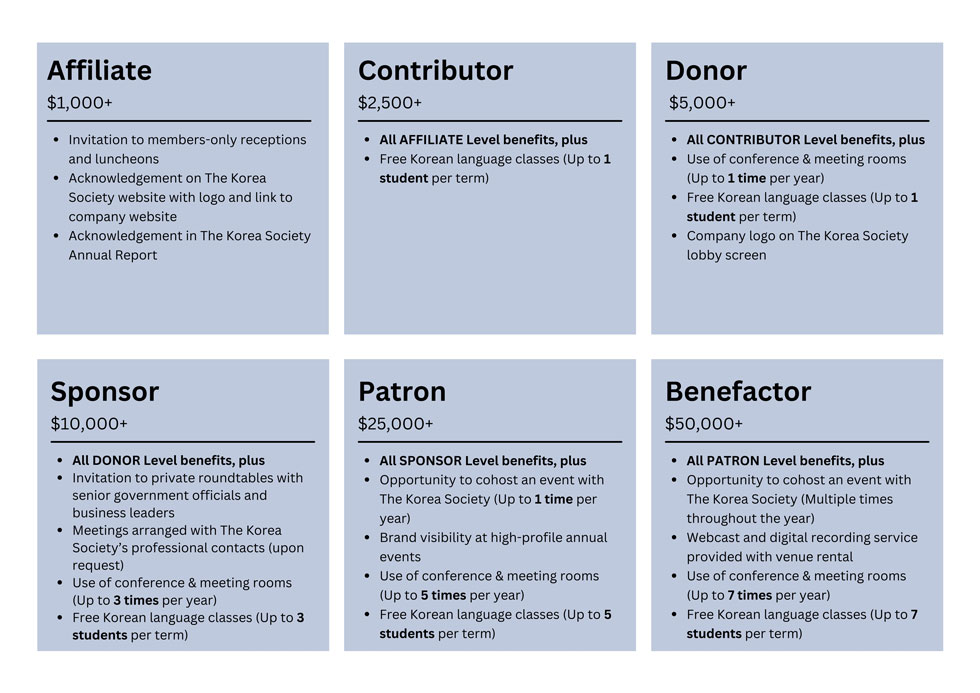
Affiliate
$1,000+
  • Invitation to members-only receptions and luncheons
  • Acknowledgement on The Korea Society website with logo and link to company website
  • Acknowledgement in The Korea Society Annual Report
Contributor
$2,500+
  • All AFFILIATE Level benefits, plus
  • Free Korean language classes (Up to 1 student per term)
Donor
$5,000+
  • All CONTRIBUTOR Level benefits, plus
  • Use of conference & meeting rooms (Up to 1 time per year)
  • Free Korean language classes (Up to 1 student per term)
  • Company logo on The Korea Society lobby screen
Sponsor
$10,000+
  • All DONOR Level benefits, plus
  • Invitation to private roundtables with senior government officials and business leaders
  • Meetings arranged with The Korea Society’s professional contacts (upon request)
  • Use of conference & meeting rooms (Up to 3 times per year)
  • Free Korean language classes (Up to 3 students per term)
Patron
$25,000+
  • All SPONSOR Level benefits, plus
  • Opportunity to cohost an event with The Korea Society (Up to 1 time per year)
  • Brand visibility at high-profile annual events
  • Use of conference & meeting rooms (Up to 5 times per year)
  • Free Korean language classes (Up to 5 students per term)
Benefactor
$50,000+
  • All PATRON Level benefits, plus
  • Opportunity to cohost an event with The Korea Society (Multiple times throughout the year)
  • Webcast and digital recording service provided with venue rental
  • Use of conference & meeting rooms (Up to 7 times per year)
  • Free Korean language classes (Up to 7 students per term)

The Korea Society is a nonprofit, nonpartisan, 501(c)(3) organization. Corporate membership is tax-deductible to the fullest extent allowed by law.

Join us

Put your company at the center of U.S.–Korea engagement

Corporate membership connects your organization to the people, ideas, and institutions strengthening one of the world’s most important partnerships.

We’d be glad to walk you through membership levels and benefits.

Questions about corporate membership?

For more information, please contact Jamie Joo, Associate Director of Development.

Jamie Joo jamie.joo@koreasociety.org

Individual Membership

Individual Membership — The Korea Society
Individual Membership

Become a member of
The Korea Society

Connect with a deeply involved community that shares a common interest in cultivating greater awareness, understanding, and cooperation between the peoples of the United States and Korea.

Your membership keeps you close to the Society’s programs, opens access to exclusive benefits, and welcomes you into a network of like-minded individuals.

Why join

Support that sustains the work

At whichever level you choose, your membership provides vital support for our work and continued growth as the premier organization dedicated to strengthening the U.S.–Korea relationship. The Korea Society is a 501(c)(3) nonprofit; contributions are tax-deductible to the extent noted at each level.

Membership levels

Choose the level that fits you

Every level includes the Individual benefits below. Higher levels add guests, giveaways, recognition, and access to invitation-only gatherings.

Student
$25
$25 tax-deductible
  • Invitations to young-professional networking events, members-only events, and art gallery openings
  • Members-only newsletter with organization insights, exclusive offers, and program previews
Join at Student
Individual
$50
$50 tax-deductible · 1 member
  • 10% discount on Korean Language Program classes (per term)
  • Invitations to members-only events and art gallery openings
  • Members-only newsletter with insights, offers, and program previews
Join at Individual
Dual
$100
$100 tax-deductible · 1 member + 1 guest
Everything in Individual, plus:
  • Eligible for members-only giveaways
Join at Dual
Fellow
$250
$250 tax-deductible · 1 member + 2 guests
Everything in Individual, plus:
Join at Fellow
Patron
$500
$450 tax-deductible · 1 member + 2 guests
Everything in Fellow, plus:
Join at Patron
Benefactor
$1,000
$900 tax-deductible · 1 member + 2 guests
Everything in Patron, plus:
  • Eligible for members-only giveaways
  • Acknowledgement as a supporter on the TKS website
  • 2 complimentary memberships at the Individual level
  • Invitations to private, invitation-only roundtable discussions
Join at Benefactor
Join or renew

Ready when you are

Whether you’re joining for the first time or renewing, your support helps The Korea Society deepen understanding and strengthen the ties between the United States and Korea.

Prefer to give beyond membership? Explore the many ways to support the Society’s mission.

Questions about membership?

For more information about individual membership, our team is glad to help.

AI Rewiring
the VC Lifecycle

On October 7, 2026, The Korea Society convened leading voices from across the venture capital ecosystem for “AI Rewiring the VC Lifecycle.” The panel brought together perspectives spanning venture creation, product- and data-driven venture investing, and independent investment research to examine how AI is fundamentally changing the way investors discover, evaluate, and invest in the next generation of companies.

The discussion featured Patrick Chun, Founder & Managing Partner of Juxtapose, whose firm takes a venture-creation approach by identifying promising business opportunities and building companies around them, including recruiting entrepreneurial leadership to launch and scale those businesses; Melody Koh, Partner and Chief Product Officer at NextView Ventures, who brings a product- and technology-oriented perspective to venture investing and the development of tools and processes that enhance how investors evaluate opportunities; and Jason Seu, Founding Chief Research Officer at Altis, representing a research-driven approach to venture investing and the use of technology and data to generate differentiated investment insights.

Moderated by David Kim, Vice President at Blackstone Innovations Investments, the conversation explored AI’s growing role across the venture lifecycle—from deal sourcing and market research to due diligence, founder evaluation, and investment analysis. While AI is transforming the scale and speed of the investment process, panelists emphasized that human judgment, relationships, and investment conviction remain essential to successful venture investing.

Held in partnership with Korea Finance Society (KFS), the program brought together members of the venture capital and broader investment community to explore emerging technologies and evolving investment practices. The event is part of Startup Scene: Entrepreneurs of Tomorrow, The Korea Society’s initiative to strengthen the knowledge, networks, and connections that help entrepreneurs access capital and contribute to a stronger and more connected startup ecosystem. The series is proudly and exclusively supported by Hanwha Life.

01 / 03

How is AI expanding the scale and speed of venture investing?

AI agents are enabling VC teams to dramatically broaden deal sourcing and accelerate sector research and due diligence. Investors can analyze emerging markets, evaluate companies, test investment theses, and assess product-market fit in a fraction of the time traditionally required, allowing smaller teams to achieve significantly greater coverage.

02 / 03

How is AI changing the competitive edge in venture capital?

As increasingly powerful AI models become widely available, competitive advantage is shifting from simply having access to information to knowing how to interpret and apply it. Investors are using AI to codify and sharpen their investment frameworks, incorporate proprietary data, and evaluate companies and founders through signals such as learning velocity and career trajectory. At the same time, distinguishing verified evidence from AI-generated inference makes proprietary judgment and investment expertise more important than ever.

03 / 03

Will AI replace human judgment in venture capital?

AI can take on information-intensive and repeatable tasks, but human judgment remains central to venture investing. Investors continue to provide strategic direction, build relationships, assess market timing, and ultimately determine where to place their conviction and capital. The most effective VC organizations will be those that combine the scale and speed of AI with the experience, judgment, and relationships of their investment teams.


Speaker

Patrick Chun
Founder & Managing Partner, Juxtapose

Patrick Chun is a Founding and Managing Partner of Juxtapose, one of the country's largest venture funds focused exclusively on de novo company creation. As a Managing Partner, Patrick is active across the firm's key pillars, working closely with the fund's leaders in concept development, user research, and talent identification. Patrick also participates meaningfully with the portfolio and its CEOs, including involvement on the boards of early-stage and growth-stage companies. Prior to Juxtapose, Patrick spent a significant portion of his career investing and building businesses at the early stage, including as a Partner at Thrive Capital and Accretive. Earlier in his career, Patrick was a venture and growth equity investor at Bain Capital Ventures and Francisco Partners, and started at McKinsey & Company in New York City. Patrick has a BA from Harvard College, an MA from the Harvard Graduate School of Arts and Sciences, and an MBA from Harvard Business School. Patrick is proud to be Korean-American and enjoys giving back to the Korean-American and Asian-American innovation community. He and his wife live in New York City with their two children.


Speaker

Melody Koh
Partner and Chief Product Officer, NextView Ventures

Melody Koh is a Partner at NextView Ventures, based in its New York office. She has spent her entire career working with technology startups as an entrepreneur, operator, and investor.

Prior to joining NextView, Melody was Head of Product at Blue Apron. Melody joined Blue Apron as the first product hire post Series A and helped scale the business through hyper-growth (25x in 3.5 years) and to its IPO, building and leading teams across Product Management, Product Design, and Data Science. Previously, Melody was a Product Manager at Fab.com and the founder/CEO of a seed-funded wine subscription e-commerce service.

Melody holds an MBA with Distinction from the Harvard Business School and a BS in Commerce with Distinction from the McIntire School of Commerce at the University of Virginia. After living in NYC for 13 years (across various fun neighborhoods in Manhattan & Brooklyn), she now lives in NJ suburbs with her husband and two young kids.


Speaker

Jason Seu
Founding Chief Research Officer, Altis

At Altis, Jason is building the research engine: the methodology, the team, and the quality bar. He knows which questions truly matter in a deal and what research actually changes investment decisions, drawing on his background in technology, due diligence, and investing.

Jason was previously a tech investor at Mubadala / MGX, leading private equity deals in AI, Enterprise Software, Tech-enabled Services, and Crypto. Prior to that, Jason was a multi-strategy investor at Q Investments and an Associate Partner at McKinsey & Company where he led commercial due-diligence and value creation for leading private equity clients.

He started as a Software Developer at Samsung Electronics and holds degrees in Computer Science from Stanford and Korea University alongside an MBA from MIT Sloan.


Moderator

David Kim
Vice President, Blackstone Innovations Investments

David Kim is a Vice President in Blackstone Innovations Investments (BXII). He is focused on executing the firm's principal strategic investments in early-stage cybersecurity, enterprise software, financial technology and property technology companies. Since joining Blackstone, Mr. Kim has been involved in the firm's investments in 7AI, Method Security, Norm Ai, Veza (acquired by ServiceNow), and Adaptive Shield (acquired by CrowdStrike), among others.

Prior to joining Blackstone in 2022, Mr. Kim worked at Vector Capital, where he was a member of the private equity investment team focused on making control-oriented investments in enterprise software companies. Earlier in his career, Mr. Kim was an analyst at Evercore in the technology M&A and private capital advisory teams.

Mr. Kim received a BS in Operations Research: Engineering Management Systems, summa cum laude, from Columbia University. He serves on the board of Korea Finance Society, the largest professional network of global Korean finance professionals.


Yejin Choi

With the ever-growing need to understand ourselves and humanity as a whole, it is necessary to examine the concepts of morality, ethics and universal values as guiding principles of the human condition. With generous support from Y.T. Hwang Family Foundation, The Korea Society presents a Series on Ethics and Common Values.

This series promotes the understanding of central themes of our human existence through a series of lectures by distinguished speakers and conversation with extraordinary individuals who exemplify the universal values in line with the mission of Y. T. Hwang Family Foundation and The Korea Society.

The Korea Society and Y. T. Hwang Family Foundation is proud to present Professor Yejin Choi who will deliver a lecture titled Beyond Scale: the Art of (Artificial) Reasoning and Discovery.

Scaling laws suggest that “more is more”: brute-force scaling of data leads to stronger AI capabilities. However, despite rapid progress on benchmarks, state-of-the-art models still exhibit “jagged intelligence,” indicating that current scaling approaches may have limitations in terms of sustainability and robustness. These limitations are sharpest at the frontier of discovery, where the goal is to produce knowledge that does not yet exist anywhere in the training distribution. In this talk, Professor Choi will discuss key insights into the strengths and limitations of LLMs, examine when reinforcement learning succeeds or struggles in reasoning tasks, and turn to what it takes to move from reasoning to discovery: test-time training that adapts models to problems they have never seen, learning to use LLMs as tools (both as cost-efficient alternatives to frontier-scale inference and as instruments for scientific discovery), and synthetic data strategies that get the best out of small language models, helping them close the gap against their larger counterparts in specific domains.


This program is made possible by the support from Y. T. Hwang Family Foundation


Speaker

Yejin Choi

Yejin Choi is the Dieter Schwarz Foundation Professor and Senior Fellow at Stanford’s Computer Science and Institute for Human-Centered AI (HAI). She is a MacArthur Fellow, AI2050 Senior Fellow, and was named to Time100 Most Influential People in AI (2023, 2025). Choi has received 2 Test-of-Time Awards and 10 Best/Outstanding Paper Awards at top AI conferences. She was a main stage speaker at TED 2023 and has delivered keynotes at several AI conferences including NeurIPS, ICLR, CVPR, ACL, and AAAI. Her research focuses on democratizing generative AI through smaller yet powerful language models, scaling intelligence via smarter algorithms, pluralistic alignment, and AI for science and social good. She received her Ph.D. in Computer Science at Cornell University and BS in Computer Engineering at Seoul National University in Korea.

The New U.S.- Korea
Trade Risk Landscape:

On October 26, The Korea Society’s Business & Economics team, together with co-hosts Association of State Offices of Korea (ASOK) and Korean Trade-Investment Promotion Agency (KOTRA), hosted a special webinar, “The New U.S.-Korea Trade Risk Landscape: Recent Trends in Tariffs, Export Controls and Sanctions for Korean Companies,” discussing how changing U.S. trade rules affect Korean companies operating in or investing in the United States.

The panelists examined how tariffs, export controls, and sanctions, once separate areas of compliance, increasingly overlap. They covered what is changing, where the risks are, and what companies can do to prepare. The program is presented in part of the Korea Society’s U.S.-ROK New Economic Paradigm series.

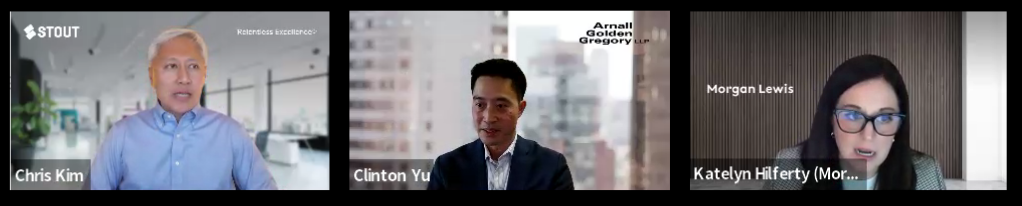
Webinar panelists Chris Kim, Clinton Yu, and Katelyn Hilferty

Some highlights of the webinar include:

  • Clinton Yu (Partner & Co-Chair, Arnall Golden Gregory LLP) covered tariff and customs developments. He highlighted the shift from the 15% IEEPA tariff under the late-2025 U.S.–Korea agreement to a 12.5% net Section 301 tariff, and the Section 301 “structural excess capacity” investigation that names Korea among 16 economies. He also flagged the USMCA review and the June 3 executive order on customs enforcement, which could raise the bar for who qualifies as an importer of record.
  • Katie Hilferty (Partner & Practice Lead, Morgan Lewis) walked through changes to semiconductor export controls and U.S. sanctions programs. She noted the gap between rules on the books and rules being enforced, and how foreign companies can still fall under U.S. controls. She also discussed the expanded outbound investment program, which now covers biotechnology, supercomputing, and hypersonic systems.
  • Moderated by Chris Kim (Managing Director, Stout) the panel reviewed recent enforcement actions as lessons for companies of every size. Drawing from previous day-to-day compliance cases, Korean companies were advised to structure a regular monitoring process that tracks developments from the Office of Foreign Asset Control (OFAC), the Bureau of Industry and Security (BIS), and other relevant agencies.
  • Speakers described how U.S. agencies are using AI for enforcement, and advised small and mid-sized companies to rely on official sources, verify AI-generated advice, and build a trusted support network.

The webinar drew a transatlantic audience of U.S.-based professionals and Korean company officials, reflecting the cross-border nature of developing trade and compliance regulations to both U.S. and Korean companies.

01 / 03

What was the focus of this webinar?

The webinar examined how U.S. tariffs, export controls, and sanctions increasingly overlap, and what that means for Korean companies doing business in the U.S. or considering investment here. Speakers combined a policy overview with practical guidance for compliance teams.

02 / 03

What are the key export control and sanctions risks?

Enforcement by the Commerce Department’s Bureau of Industry and Security (BIS) is rising, with a continued focus on semiconductors. Many penalties trace back to weak compliance processes, such as inadequate screening, ignored red flags, and poor oversight of distributors. Foreign companies and subsidiaries may also be subject to U.S. controls through rules such as the foreign direct product rule and the de minimis rule.

03 / 03

What can small and mid-sized companies do to prepare?

Recommendations include acting on official publications such as the Federal Register and CBP’s CSMS messages rather than social media posts, and verifying any AI-generated guidance. Other suggestions are screening counterparties beyond names, extending compliance requirements to distributors, resellers, and freight forwarders, and keeping strong records. Working with experienced outside counsel or consultants was advised for teams without in-house expertise.


Co-hosted with
Co-sponsor and partner logos


Katelyn Hilferty

Speaker

Katelyn Hilferty
Partner & Practice Lead, Morgan Lewis

Katelyn advises clients on international trade, national security, and regulatory compliance matters, with extensive experience in import and customs issues before the U.S. Customs and Border Protection (CBP), export controls under the International Traffic in Arms Regulations (ITAR) and Export Administration Regulations (EAR), economic sanctions administered by the Office of Foreign Assets Control (OFAC), and foreign investment reviews before the Committee on Foreign Investment in the United States (CFIUS). She counsels clients across a range of industries, including nuclear energy, technology, life sciences, and financial services, helping them navigate evolving trade and national security requirements, assess regulatory risks, and address complex compliance and enforcement matters.


Clinton Yu

Speaker

Clinton Yu
Partner & Co-Chair, Arnall Golden Gregory LLP

Clinton advises U.S. and multinational companies and investors on complex international trade and national security matters, including customs and import laws, export controls, economic sanctions, and foreign investment reviews. His practice covers a broad range of issues related to U.S. tariffs and trade remedies, supply chain risk, export controls under ITAR and EAR, sanctions administered by OFAC, and national security reviews by CFIUS. He works with clients across industries including manufacturing, technology, aerospace and defense, logistics, and investment management, helping them navigate evolving regulatory requirements and assess their implications for cross-border transactions and global operations. He also represents clients in regulatory audits, investigations, enforcement matters, and trade-related disputes before federal courts. Clinton has been recognized as a Law360 “Rising Star” in International Trade and is frequently quoted in Bloomberg Law, Forbes, Law360, and Nikkei Asia.


Chris Kim

Moderator

Chris Kim
Managing Director, Stout

Chris oversees Stout’s Asia Pacific (APAC) services, specializing in cross-border investigations, regulatory compliance, and due diligence, with particular expertise in national security, sanctions, export controls, and international trade matters. He advises clients on regulatory and compliance issues involving the FBI, the U.S. Department of the Treasury’s Office of Foreign Assets Control (OFAC), the U.S. Department of Commerce’s Bureau of Industry and Security (BIS), and U.S. Homeland Security, and has served as an independent auditor and compliance consultant for clients subject to U.S. and multilateral development bank settlement agreements. Prior to joining Stout, Chris served as a special agent with the FBI, investigating public corruption, transnational crime, and national security matters, including export control violations, and as a senior investigator with the World Bank Group’s Integrity Vice Presidency, where he led investigations involving multinational corporations across Asia, including China, Korea, India, Indonesia, and Singapore. He has extensive experience across the technology, financial services, healthcare, government, and professional services sectors.


Author Talks:
Lee Seong-bok & Anton Hur

Mountains, rivers, trees, flowers, the dark, a cat, a train. In the elemental forms and figures of our world, Lee Seong-bok finds repositories for thought, sounding boards against which he can test his reflections. Again and again, in sequences, he probes his subjects—five “Mountain Path” poems, three “River” poems, three commentaries on the I Ching— not to solicit answers, like Moses impatiently striking the rock for water, but to savor the muted tones that echo in response.

That Summer’s End is a collection of one hundred and six poems of self-reflection and exquisite beauty—an intoxicating blend of Seon Buddhism and French Symbolism from one of South Korea’s most celebrated and influential poets. The poems of That Summer’s End, though acutely conscious of the self, are free of an inhibiting self-consciousness, speaking directly of youth, love, fear, family, grief, old age, impermanence, and all that’s central to life. As enticing as they are profound, Lee Seong-bok’s poems have made him not only a poet’s poet but a favorite of RM, leader of K-pop superstars BTS, whose support of his work on social media has brought him international attention.

In a conversation with Stine An, Lee Seong-bok and his translator Anton Hur will discuss his poetry and career.


Pre-order your copy of That Summer’s End here.


Speaker

Lee Seong-bok

Born in Sangju, South Korea, in 1952, Lee Seong-bok is the author of eight poetry collections, as well as works of literary criticism and essays on photography. In 2023, Sublunary Editions published Indeterminate Inflorescence, a volume of 470 aphorisms collected by his students at Keimyung University, in Daegu, where he has taught creative writing and French literature for more than four decades.


Speaker

Anton Hur

Anton Hur is the translator of Lee Seong-bok’s Indeterminate Inflorescence. His debut novel, Toward Eternity, was published by HarperVia in 2024. In 2022 he was double-longlisted and shortlisted for the International Booker Prize, and in 2023 his translation of Bora Chung’s Cursed Bunny was a finalist for a National Book Award. He lives in Seoul, South Korea.


MODERATOR

Stine An

Stine An is a poet, literary translator, and performer in New York City. She holds a BA in Literature from Harvard College and an MFA in Literary Arts from Brown University and is the recipient of fellowships and grants from The Poetry Project, the PEN/Heim Translation Fund Grant, Yaddo, ALTA, and the National Endowment for the Arts. Her publications include Today’s Morning Vocabulary (Zephyr Press, 2025) and Winter Night Rabbit Worries (Ugly Duckling Presse, 2026) by Yoo Heekyung, and S_MMER CR_SH (Sarabande Books, 2025). Their debut poetry collection, B-Dragon Suite, is a winner of the 2023 Nightboat Poetry Prize.

Global Financial Leaders Forum 2026

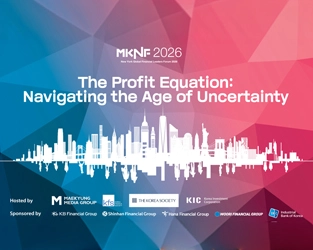
The Korea Society, Maekyung Media Group, Korea Finance Society, and Korea Investment Corporation are co-hosting the Global Financial Leaders Forum 2026 on October 13 in New York.

Rapid AI growth and prolonged geopolitical conflict continue to drive uncertainty across global markets, pushing investors to seek strategies that turn volatility into opportunity and sustainable returns. Under the theme “The Profit Equation: Navigating the Age of Uncertainty,” the forum will examine the global economic outlook and explore effective investment strategies for today’s complex environment.

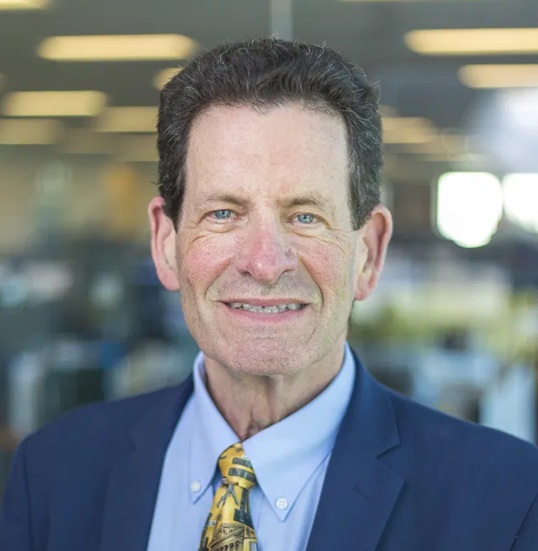
Ken Fisher, Chairman of Fisher Investments and one of Wall Street’s most renowned investment experts, will share his market analysis and investment philosophy. A panel of leading executives — Jean Boivin, Head of the BlackRock Investment Institute; Lauren Basmadjian, Global Head of Liquid Credit, Carlyle; and Jeremy Schwartz, Global CIO of WisdomTree — will offer diverse perspectives on navigating today’s investment landscape.

The Global Financial Leadership Forum is a premier networking platform, bringing together senior executives and financial experts from Korea and around the world to exchange insights and real-world investment experience.

Program
Time Program
5:00 PM Registration and Reception
6:00 PM Opening Session
  • Seungjoon Chang — Vice Chairman, Maekyung Media Group
  • Sang Ho Kim — Consul General of the Republic of Korea in New York
  • Abraham Kim — President & CEO, The Korea Society
  Session I — Capitalizing on Chaos: The Investment Playbook of Ken Fisher
  • Speaker: Ken Fisher — Chairman, Fisher Investments
  • Moderator: David Mussafer — Managing Partner, Advent International
  Session II — Beyond Bulls and Bears: Optimal Strategies for a Complex Market
  • Speakers: Jean Boivin — Head of the BlackRock Investment Institute, BlackRock
  • Lauren Basmadjian — Global Head of Liquid Credit, Carlyle
  • Jeremy Schwartz — Global Chief Investment Officer, WisdomTree
  • Moderator: Andrew Kim — Partner, Paulson & Co
  Dinner
  Closing Remarks
Featured Speakers
Ken Fisher
Ken Fisher

Chairman, Fisher Investments

Ken Fisher founded Fisher Investments in 1979 and currently serves as Executive Chairman and Co-Chief Investment Officer. His Portfolio Strategy column in Forbes ran from 1984 to 2016, making him the longest continuously running columnist in the magazine’s history.

Today, he writes regular investment columns for leading business publications across more than 30 countries, including the United States, the United Kingdom, Japan, South Korea, France, Germany, and Australia, reaching a global audience in multiple languages. He is also a frequent commentator on major international media outlets, including Fox News, Fox Business, CNN International, BBC, and BNN Bloomberg.

Ken is the author of 11 books, including four New York Times bestsellers, and is widely recognized as one of the world’s leading investment experts.
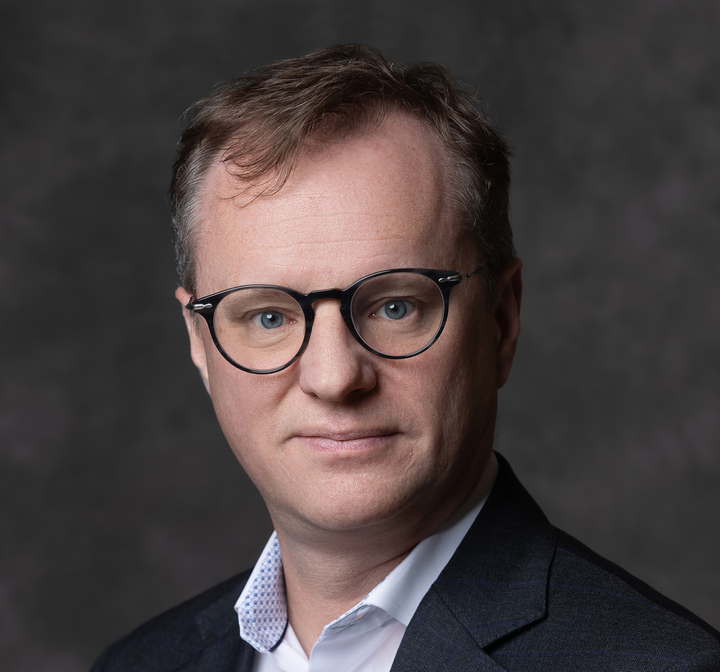
Jean Boivin
Jean Boivin

Head of the BlackRock Investment Institute, BlackRock

The institute leverages BlackRock’s expertise and produces proprietary research to provide insights on the global economy, markets, geopolitics and long-term asset allocation — all to help clients and portfolio managers navigate financial markets. Dr. Boivin oversees all of BII’s activities and is responsible for ensuring that BII integrates research insights on portfolio construction, economics and markets with the long-term, whole-portfolio perspective that BlackRock’s clients need today. Dr. Boivin, who is a member of BlackRock’s Global OpCo and the GEC Investment Committee, also is BII’s Global Head of Research. He is responsible for economic and markets research, and for developing the core principles and intellectual property that underpin BlackRock’s approach to portfolio design, such as capital market assumptions and optimization tools.

Prior to joining BlackRock in 2014, Dr. Boivin served as Deputy Governor of the Bank of Canada and Associate Deputy Finance Minister, serving as Canada’s representative at the G7, G20 and Financial Stability Board. Dr. Boivin has also taught at Columbia Business School and HEC Montreal, and has written widely on macroeconomics, monetary policy and finance. Dr. Boivin earned a B.Sc. degree in economics from the Université de Montréal in 1995, an MA in economics from Princeton University in 1997 and a PhD in economics from Princeton University in 2000.
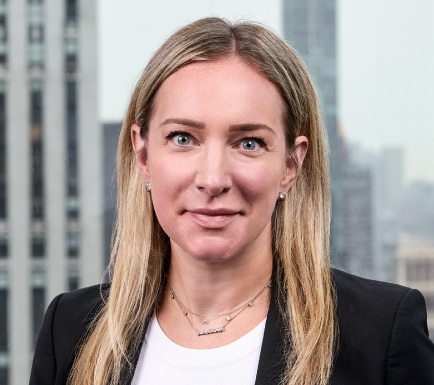
Lauren Basmadjian
Lauren Basmadjian

Global Head of Liquid Credit, Carlyle

Lauren Basmadjian is a Partner, Global Head of Liquid Credit within Carlyle’s Global Credit platform. She is based in New York and sits on the firm’s Liquid and Private Investment Committees.

Ms. Basmadjian joined Carlyle in 2020 after 19 years at Octagon Credit Investors, where she was a Senior Portfolio Manager and member of the Investment Committee. Prior to becoming a Portfolio Manager, Ms. Basmadjian managed Octagon’s workout efforts and oversaw the leisure & entertainment, retail, consumer products, business services, food & beverage, and technology industries.

She graduated cum laude from the Stern School of Business at New York University with a BS in Finance and Economics.
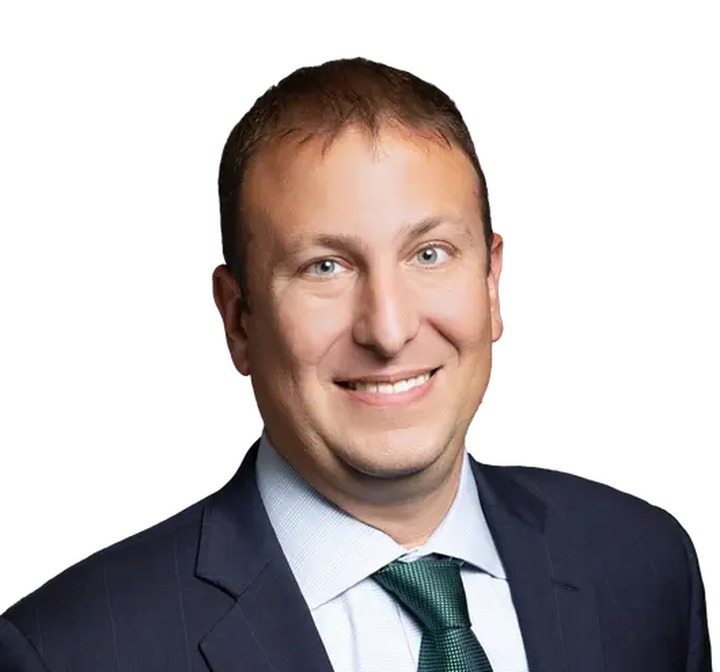
Jeremy Schwartz
Jeremy Schwartz

Global Chief Investment Officer, WisdomTree

Jeremy Schwartz has served as Global Chief Investment Officer since November 2021 and leads WisdomTree’s investment strategy team in the construction of WisdomTree’s equity Indexes, quantitative active strategies and multi-asset Model Portfolios. Jeremy joined WisdomTree in May 2005 as a Senior Analyst, adding Deputy Director of Research to his responsibilities in February 2007. He served as Director of Research from October 2008 to October 2018 and as Global Head of Research from November 2018 to November 2021.

Before joining WisdomTree, he was a head research assistant for Professor Jeremy Siegel and, in 2022, became his co-author on the sixth edition of the book Stocks for the Long Run. Jeremy is also co-author of the Financial Analysts Journal paper “What Happened to the Original Stocks in the S&P 500?” He received his B.S. in economics from The Wharton School of the University of Pennsylvania and hosts the Behind the Markets podcast. Jeremy is a member of the CFA Society of Philadelphia.

Moderators
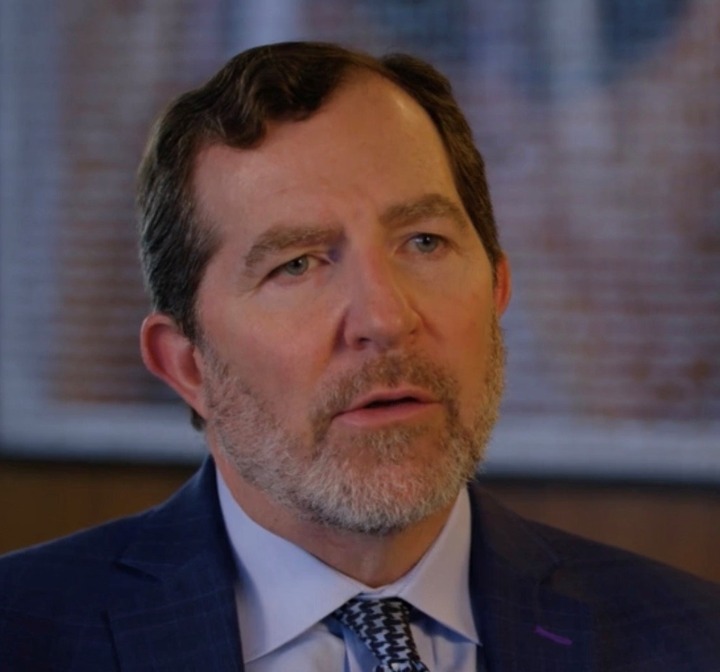
David M. Mussafer
David M. Mussafer

Managing Partner, Advent International

David Mussafer is Chairman Emeritus and Managing Partner of Advent International, one of the world’s leading global private equity firms, and has over 35 years of investment experience. David joined Advent in 1990 and served as a member of Advent’s global executive committee for 25 years and succeeded Peter Brooke as Chairman of Advent in 2015.

With more than $100 billion in assets under management, Advent invests in companies across a variety of industries in North America, Europe, Latin America and Asia via 17 offices around the world. David continues to serve as a member on Advent’s global investment committee and has led more than 35 investments across a range of industries. David has served on numerous public and private boards and currently serves as director of Fisher Investments and Shield AI.

David received his BS in Management from Tulane University and earned his MBA from the Wharton School at the University of Pennsylvania. David and his family are active with numerous civic and charitable organizations, and he currently serves as Chairman of the Board of Trustees at Tulane University and previously served as a Member of The Business Roundtable in Washington DC. David lives in Boston and he and his wife, Marion, have four grown children and two grandchildren.
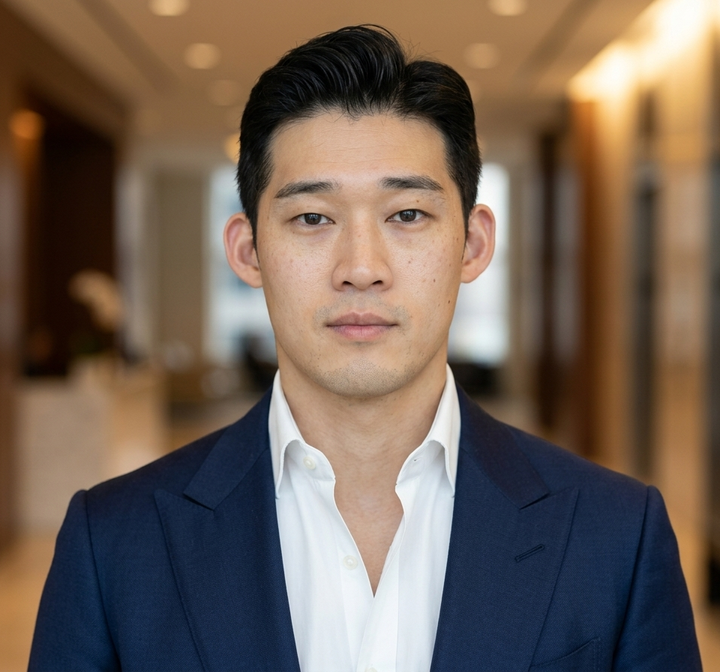
Andrew Kim
Andrew Kim

Partner, Paulson & Co

Andrew Kim is a partner at Paulson & Co, a leading event-driven hedge fund in NYC. Andrew is responsible for global risk arbitrage and event-driven investments across all sectors. Previously, he was an Investment Analyst at Perry Capital and an Investment Banking Analyst at Goldman Sachs. He graduated with an MBA from Harvard Business School and a BBA from the University of Michigan.

This program is by invitation only. For more information, please contact The Korea Society’s Business & Economics program.