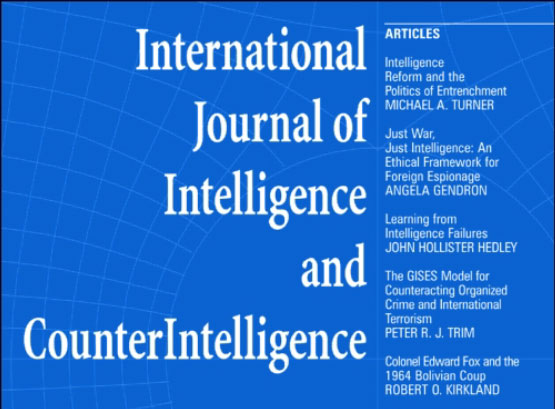
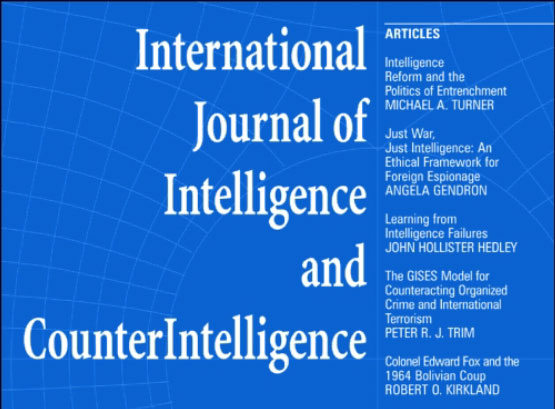
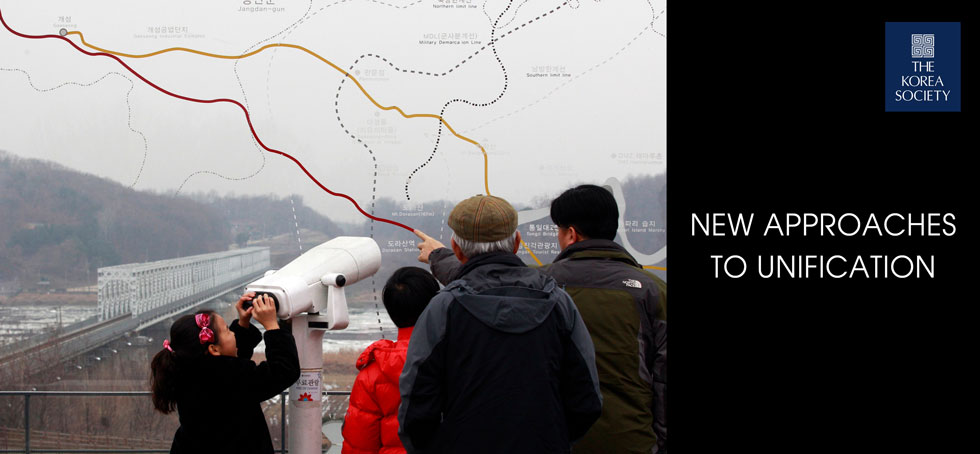
Policy Director Jonathan Corrado published an article titled “Rethinking Intelligence Failure: China’s Intervention in the Korean War” in The International Journal of Intelligence and CounterIntelligence. The article evaluates how the U.S. Intelligence Community and policymakers failed to predict and prepare for China’s entrance into the Korean War and North Korea’s invasion. Diplomatic cables, personal accounts, and declassified national security documents reveal that warnings about possible intervention were undercut by contradicting analysis. Cognitive bias led to faulty assumptions and ambiguous conclusions. The negative effects of bias and politicization were mutually reinforcing, imperiling the efforts of actors who tried in vain to address them. Lessons gleaned from this history shed light on insights for persistent security challenges, such as the relationship between miscalculation and escalation and the difficulty of knowing one’s adversary, as well as America’s present strategic competition with China.
Issues & Insights Vol. 21, WP 10 — South Korea’s Demographic Advantage is Over: The Regional Context and the Economic and Security Implications
In a paper for Pacific Forum’s Issues & Insights, president Tom Byrne and policy director Jonathan Corrado write on the economic and security risks South Korea’s low birth rate poses to its future, writing that “South Korea will have to make tough policy and fiscal choices, unless it can achieve another ‘Miracle on the Han’ —this time overcoming its demographic challenge.”
This program series aims to promote dialogue and awareness on Korean Peninsula peace and security issues, covering US-Korea relations, inter-Korean relations, and regional relations from a variety of functional perspectives. The series consists of online moderated dialogues where program speakers seek to identify opportunities for forward progress to help specialists and policymakers generate new thinking on core problem areas. The series is supported by a grant from the UniKorea Foundation.
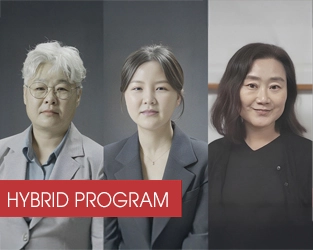
The Unseen Resilience of North Korean Female Defectors||
Thursday, September 18, 2025 | 4 PM (EDT)|
Join us for a discussion on the unseen resilience of North Korean female defectors. Kim Seonghui and Na Min-Hee provide powerful personal testimony, describing their life and experiences in North Korea, their escape, and their new life in South Korea… Read More
Korean Unification: A Fading Prospect?||
Wednesday, March 6, 2024 | 8 AM (EST) |
Join us for this conversation about prospects for Korean Unification with Jeongmin Kim, Lead Correspondent at NK News / Editorial Director at Korea Pro, Dr. Lee Sang-shin, director of the Center for the Study of Liberal Democracy at Korea Institute of National Unification (KINU), and Dr. Nicholas Eberstadt… Read More
Prospects for Diplomacy with North Korea with Markus Garlauskas, Soo Kim and Ankit Panda ||
Wednessday, September 16, 2020 | 12 PM|
Join us for a discussion on challenges and opportunities for continued nuclear negotiations with North Korea, featuring Markus Garlauskas, former U.S. National Intelligence Officer for North Korea, Soo Kim, RAND, and Ankit Panda, Carnegie Endowment for International Peace… Read More
New Views on Korean Peace Regime and Unification || with Frank Aum, Hannah Song, Joseph Kim and Rachel Minyoung Lee | Thursday, October 15, 2020 | 11 AM
Join us for this discussion on prospects for a peace regime and inter-Korean social integration with Frank Aum, United States Institute of Peace, Hannah Song, President & CEO at Liberty in North Korea, Rachel Minyoung Lee, former intelligence analyst for the U.S. government, and Joseph Kim, Human Freedom Initiative, George W. Bush Institute… Read More
North Korean Sanctions and Adaptation || with Darya Dolzikova, William J. Newcomb and Cameron Trainer | Thursday, November 19, 2020 | 12 PM
Join us for a discussion on international economic sanctions on North Korea with William Newcomb, Fellow at the Center for Advanced Defense Studies and former Member of the Panel of Experts on DPRK Sanctions at the United Nations, Darya Dolzikova of the Royal United Services Institute, and Cameron Trainer of the James Martin Center for Nonproliferation Studies… Read More
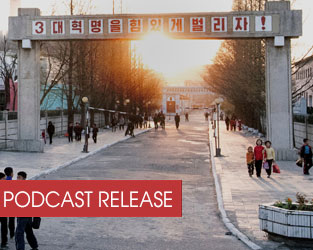
Being in North Korea: A special podcast interview|| with Andray Abrahamian | Thursday, December 10, 2020
In this podcast interview, Andray Abrahamian offers insights from his new book, Being in North Korea, an exploration of North Korean society from the inside, citing personal experiences gained by the author over 30 trips to the DPRK… Read More
Pathways to a Brighter Future for North Korea’s Economy|| with Byung-Yeon Kim, Brad Babson and Peter Ward | Thursday, February 18, 2021 | 6 PM
Join us for a discussion about scenarios for North Korean development and inter-Korean economic integration. Seoul National University economics Professor Byung-Yeon Kim, former World Bank economist and a consultant on Asian affairs Brad Babson, and NK Pro analyst Peter Ward join Korea Society President Tom Byrne in conversation… Read More
The Historical Causes of Korea’s Division and Challenges to Reconciliation|| with Michael D. Shin | Thursday, March 18, 2021 | 12 PM
Michael D. Shin, a Fellow of Robinson College, Cambridge, looks at the late Joseon period and the Japanese colonial period to examine the historical causes of Korean division and investigate their impact on inter-Korean reconciliation in this program supported by the UniKorea Foundation… Read More
Role of Regional Players in Inter-Korean Peace and Unification|| with Katrin Fraser Katz, Kathryn Botto and Stephen Noerper | Friday, April 16, 2021 | 12 PM
Join us for a discussion on regional roles in building inter-Korean peace and unification with Columbia University adjunct professor Katrin Fraser Katz, Carnegie Endowment for International Peace senior research analyst Kathryn Botto, and Columbia University adjunct professor, Weatherhead East Asian Institute research scholar and Society senior director Stephen Noerper… Read More
Bridging the Divide: Social & Cultural Integration of North and South Korea|| with Hyun In-nae and Bada Nam | Thursday, May 20, 2021 | 12 PM
Join us for this discussion about obstacles and opportunities for inter-Korean social and cultural integration, featuring Dr. Hyun In-nae, Ewha University Professor and former director of the Korea Hana Foundation, and Bada Nam, Secretary General for the South Korean non-governmental organization People for Successful Corean Reunification (PSCORE)… Read More
The Korea Society and The Association of Former Members of Congress (FMC) are proud to release a new publication Partners in Democracy: Perspectives on the U.S.-Korea Alliance.
This series of essays sheds light on the dynamic partnership between the United States and the Republic of Korea, featuring insights from: Republic of Korea Ambassador to the United States Lee Soo-Hyuck; U.S. Senator Brian Schatz (D-Hawaii); Senator Dan Sullivan (R-Alaska); Representative Ami Bera (D-Calif.); Korea Foundation President Geun Lee; former U.S. Ambassador to the Republic of Korea Kathleen Stephens; General Walter “Skip” Sharp, former Commander, United Nations Command / Combined Forces Command / United States Forces Korea; and Professor Victor Cha, CSIS Korea Chair.
On the significance of the publication, Korea Society president and CEO Tom Byrne said: “By showcasing influential voices from the United States and Korea, this timely series of essays demonstrates the many mutually beneficial aspects of the U.S.-ROK relationship, and outlines the key challenges and opportunities for our partnership going forward. We are confident that it will serve as a helpful tool for policymakers and stakeholders. The Korea Society is proud of its collaboration with FMC on the Congressional Study Group on Korea and looks forward to participating in an even more ambitious agenda in the future.”
PacNet #5 – North Korea Doubles Down on a Dead End
In an article for Pacific Forum PacNet on North Korea’s economic plan announced at the recent party congress, president Tom Byrne and policy director Jonathan Corrado write that, “The plan leaves unanswered the question of the sources of financing. North Korea has scant domestic savings, no access to international credit and has squeezed the foreign currency savings of the donju entrepreneurs and financiers.”
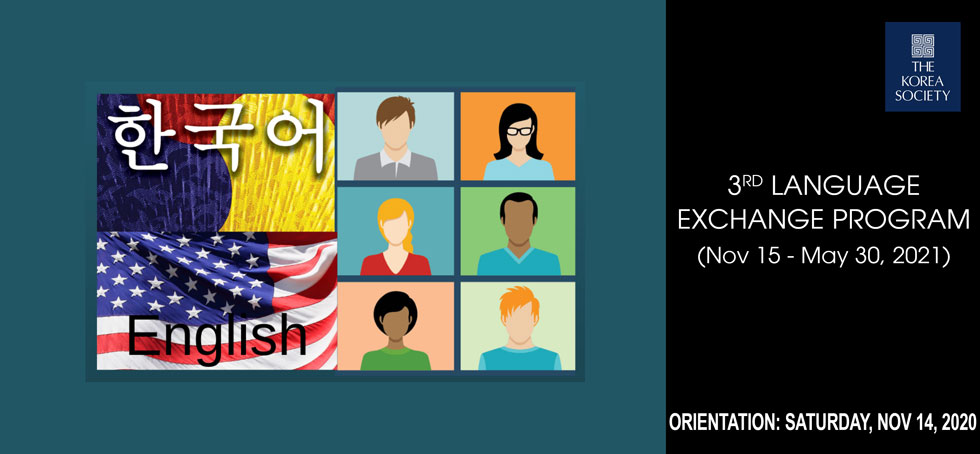
In November 2020 the Society not only launched its 3rd Language Exchange Program, which matches native Korean and English speakers for conversation practice but added a new global element. This year, 33 students from Korea University and Ewha University were paired as conversation partners with the Society’s Korean Language Program (KLP) students. This is the first time that we attempted to match students in Korea with KLP students in the US. Additionally, it is the first time the Exchange has been offered virtually. Partners meet virtually through May 2021 using a KLP hosted chat app; staff regularly consults with partners to ensure valuable experience and language skills are being gained.
3rd Language Exchange program
November 15, 2020 – May 30, 2021 ORIENTATION: Saturday, November 14, 2020
The Korea Society 350 Madison Avenue, 24th Floor New York, NY 10017
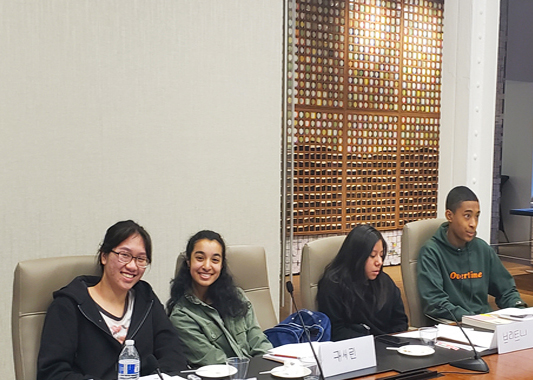
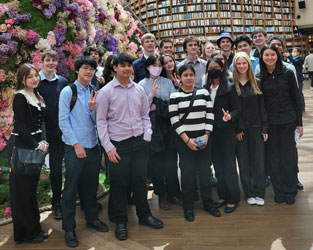
2023-2024 Los Angeles, Montana, and New York Youth Ambassadors at Gyeongbuk Palace in Seoul
PROJECT BRIDGE OVERVIEW
Project Bridge, whose name captures the goal of reaching across ethnic and cultural divides, aims to help young people develop insights and skills needed to “bridge” the gaps between people of divergent cultural heritages. By fostering greater intercultural awareness and understanding, it empowers the youth ambassadors to view social and cultural differences as a pathway – not a barrier – to exercise their responsibilities as emerging young leaders in an increasingly interconnected and richly diverse world while educating them on the long-standing and close relationship between the peoples of Korea and the U.S.
U.S. Partners: The Korea Society in New York developed the program in response to the 1992 Los Angeles Uprising that erupted on April 29 (Sa-I-Gu in Korean). The first delegation of urban “Youth Ambassadors” was sent to the Republic of Korea in 1993 on a program named Kids to Korea. Early in its inception the Society partnered with Pacific Century Institute in Los Angeles to further hone and advance the program. And, 27 years later in 2019 Project Bridge welcomed a new demographic and partner, The Maureen and Mike Mansfield Center at the University of Montana in Missoula, bringing a diverse rural and Indigenous perspective to the program.
Students: Open to junior and senior public high school students in New York and Los Angeles, and a range of students in Montana, the program attracts applications from students of different socioeconomic and ethnic backgrounds. Through a highly selective application process eight students from Los Angeles, eight students from New York and eight students from Montana are selected each year to become Youth Ambassadors.
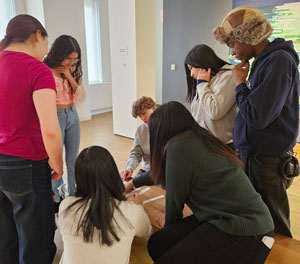
Curriculum: The Program has evolved into an academic year-long program in which students, using Korea as a case study, cultivate their understanding of race and crosscultural relations and hone their leadership and intercultural competence skills. Students participate in bi-monthly workshops offered both in-person and virtually. They undertake a 10-day study tour to the Republic of Korea. Finally, the Program culminates in community presentations and a graduation ceremony.
Workshops: In the bi-monthly workshop students are introduced to a wide range of topics spanning Korean pre-modern and modern history, the Korean war, education in Korea, the arts and cuisine as well as cultural values. They explore current events, U.S. and regional relationships, and the economic factors that led to the ‘Miracle on the Han’. Additionally, they investigate race relations in the U.S., specifically the 1992 Sa-I-Gu incident, otherwise known as the Los Angeles Uprising, the impetus for creating the Program. Outside experts frequently lead lively and informative discussions both in-person with the smaller regional groups and via Zoom with the entire cohort. Students also receive Hanguel language training and etiquette coaching along with preparation for the study tour.
Study Tour: The ten-day spring Study Tour to Korea, a highlight of the program, provides youth ambassadors with a powerful experience to see Korea first-hand and meet Koreans in their own environment. It involves a geographic breadth of exposure to many people, activities, and places in Korea of historical and social significance. During this all expenses paid tour students have abundant opportunities to engage with Korean high school and university students, instructors and professors, corporate leaders, government officials, Buddhist monks and many others as they travel around the country experiencing both city and rural life. Throughout the tour they gain a deeper understanding of the Korean people as well as the unique and close relationship between the U.S. and Korea.
Community Presentation: The Program culminates in early summer when the youth ambassadors share their newly acquired knowledge and insights about Korea with their families, friends, teachers, and the greater community. These community presentations are open to the public and precede a graduation ceremony. These Project Bridge “graduates” join an alumni group that now numbers over 400.
Sponsors: It is only with the expert guidance and generous hospitality of our Korean hosts and sponsors that we have been able to sustain the Project Bridge Program over these many years. Through this support the Korea Society, The Pacific Century Institute, and The Mansfield Center can work with young people to continue to “build bridges” between our two nations. The time students spend with sponsors enhances the invaluable lessons of their Korean experiences and the fond memories of Korea that will endure for a lifetime. Fore Information about Sponsors, please click HERE.
2025 Supporting Sponsors and Sites Visited by Youth Ambassadors
Corporations, Businesses, Government * Center for a Unified Korea Future * Chong Kun Dang (CKD) Kochon Education Foundation * HD Hyundai * Hyundai Motor Company * Jeonbuk International Cooperation Agency (JBICA) * Korean Air * Korea Foundation * Korea International Trade Association (KITA) * National Institute for Unification Education * POSCO * Korea IPTV Broadcasting Association * United Nations Command Military Armistice Commission
Educational Institutions * Ewha Womans University (Seoul) * Jeonbuk Foreign Language High School (Gunsan) * Poongsan High School (Andong) * POSTECH University (Pohang)
Historical and Cultural Sites * COEX (Seoul) * Dosan Sewon Confucian Academy (Andong) *DMZ * Gyeongbokgung Palace (Seoul) * Gyeonggijeon Shrine (Jeonju) *Hahoe Mask Museum (Andong) *Hahoe Village (Andong) * Jeonju Handicrafts Experience Center * Korean Traditional Cultural Center (Jeonju) * Markets: Insadong, Mangwon, Mapo and Myengdong (Seoul) * Metropolitan Museum of Art (NY group) * Pohang Space Walk * Seonunsa Temple Stay (Gochang-gun) * Tumuli Park & Daereungwon Tombs (Gyeongju)
The Korea Society joins the nation in mourning the senseless killing of George Floyd and stands in solidarity with those who peacefully exercise their constitutional rights in demanding justice.
The Korea Society has been, and remains, committed to bridging cultural and racial divides. After the 1992 Los Angeles riots that exposed deep divides between black, Korean, and other communities in Los Angeles, the Society established a long-term educational project for high school students. The program focuses on deepening awareness of cultural, racial and ethnic diversity, and on understanding the stereotypes that foster intolerance and racism. Serving a diverse group of New York City high school students each year, the Project Bridge Program is as relevant today as it was nearly 30 years ago. We stand with those actively working to build trust and understanding between diverse communities and to addressing racism.
As we approach the 70th anniversary of the Korean War on June 25, we honor all veterans who fought bravely in South Korea, including the African American soldiers who fought and sacrificed in Korea even while encountering racism in the ranks. It is notable that it was during the Korean War that U.S. military units were integrated under President Truman’s 1948 Executive Order, an important milestone in American civil rights history. In 2016, General Vincent Brooks became the first African American military officer to take command of U.S. Forces Korea, the Combined Forces Command, and United Nations Command. The Korea Society calls attention to General (ret) Brooks’ thoughts on the challenges still before us in his June 4 statement.
PacNet #11 – Two tasks for making US-ROK troop burden sharing sustainable
In a new article about the U.S.- Korea military cost sharing deal for Pacific Forum PacNet, Korea Society chairperson Ambassador Kathleen Stephens and president Tom Byrne write, “The time is now for the United States and South Korea to come to terms on a deal that works for both sides. The smooth functioning of the alliance should not be impaired by an accounting impasse that loses sight of the incalculable benefits from 70 years of partnership.”
Korean Film in Focus: A Conversation with Director Bong Joon-ho |
Long before he swept the Oscars with Parasite, Director Bong Joon Ho visited The Korea Society to talk about his career and films in February 2010. Listen to the highlights from his conversation with Michael Atkinson.