

YouTube & K-pop with Robert Kyncl

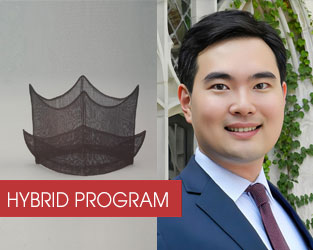
When experts analyze the worldwide success of K-pop, all point to one watershed moment in 2012: Psy’s music video Gangnam Style was uploaded to YouTube. As YouTube became the main platform for music video release, K-pop broke through the language and cultural barriers and reached out to the world. Through YouTube, K-pop songs are watched and shared around the globe, and Korean artists communicate with their ever-increasing and dedicated fans everywhere.

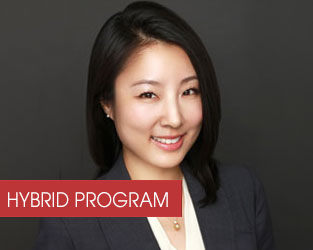
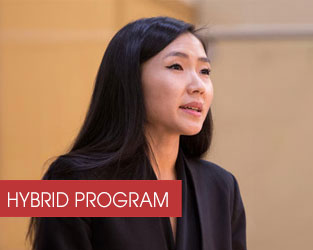
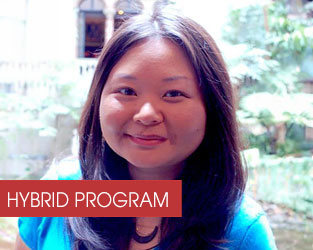
Robert Kyncl, Chief Business Officer of YouTube, discusses how YouTube grew its global viewership and impact while promoting the cutting edge of K-culture, especially K-pop, to the world. Joon Park, the leader of the first generation idol group g.o.d., and producer Robert Ock will join the conversation to be moderated by Eva Pilgrim of ABC News.

This program is made possible by the generous support from YouTube.


YouTube & K-pop with Robert Kyncl 

Thursday, July 22, 2021 | 8 PM (EDT)


The Korea Society
350 Madison Avenue, 24th Floor
New York, NY 10017


ABOUT THE SPEAKERS:

Robert Kyncl is the Chief Business Officer at YouTube where he oversees global content and product partnerships as well as operations for the platform. This includes management of the YouTube Partner Program, which is the largest partner ecosystem to grow and support creators, artists and media companies in the world. Previously, Robert was Vice President of Content at Netflix. Robert and his wife, Luz, run the Kyncl Family Foundation focused on supporting underserved communities. Robert has been listed in Variety’s Dealmakers Impact Report as one of their “disruptors”, Vanity Fair’s New Establishment List, Billboard’s Power 100 List and AdWeek’s 50 List of Vital Leaders in Tech, Media and Marketing. Robert holds a Masters of Business Administration from Pepperdine University and a B.S. in International Relations from SUNY New Paltz. He resides in Los Angeles with his wife and two daughters.

Joon Park is a Korean-American singer, actor, and entertainer based in South Korea. He was the leader and rapper of g.o.d., the first generation idol group. Currently, he is the host of YouTube ‘WASSUP MAN’ with 2.35 million subscribers and YouTube ‘CARTUREMAN’ with 120,000 subscribers.
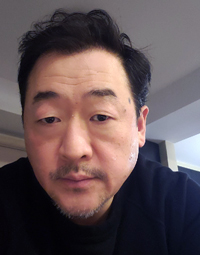
Robert Ock is a musician, writer and producer living in Toronto, Canada. Most recently he had the privilege of working with Banger Films to produce the YouTube Originals series “K-Pop Evolution”. Robert’s work as a studio and live musician has taken him across Canada, the US, the UK, France and Switzerland as well as featured performances at the NXNE and Canadian Music Week festivals. Parallel to his creative endeavors Robert spent over 17 years as a senior official within the provincial government, drafting and implementing policy and legislation.

ABOUT THE MODERATOR:

Eva Pilgrim is the co-anchor of weekend GMA and a correspondent for ABC News. In her time with the network she’s won multiple Emmys as she’s traveled the world covering stories. She was sent to the UK after terrorists launched back to back attacks in Manchester and in London. She was in Charlottesville, VA when white nationalists marched on the University of Virginia campus. Eva was part of the team covering the 2020 election following the candidates on the campaign trail until the pandemic shut the country down. For the last year, she’s been covering the coronavirus pandemic — the shutdowns, the reopening, and the science. Eva was born in Seoul, South Korea. She grew up in South Carolina.
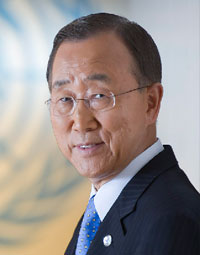
Resolved: Uniting Nations in a Divided World

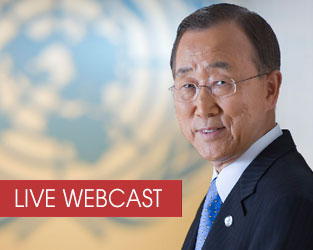
Former UN Secretary General Ban Ki-moon discusses his new book Resolved: Uniting Nations in a Divided World on its release, in conversation with Korea Society board chairwoman Ambassador Kathleen Stephens and with a welcome by Korea Society president and CEO Tom Byrne. This event is co-hosted with the Korea Economic Institute of America.
 

Resolved: Uniting Nations in a Divided World

Tuesday, June 15, 2021 I 9 AM

The Korea Society
350 Madison Avenue, 24th Floor
New York, NY 10017


ABOUT THE SPEAKER:

Ban Ki-moon is a South Korean diplomat and former foreign minister who served as the eighth Secretary-General of the United Nations from January 2007 to December 2016. Throughout his career, Ban worked to mobilize international efforts against a slate of global pressures including: climate change, extreme poverty, and armed conflict to make the world a safer and more equitable place. His motto: Mission Possible.
ABOUT THE MODERATOR:

Amb. Kathleen Stephens
Chair, Board of Directors, The Korea Society
President & CEO, Korea Economic Institute

Ambassador (ret.) Kathleen Stephens is a former American diplomat. She was U.S. Ambassador to the Republic of Korea 2008-2011. Korea has been a leit motif of Ambassador Stephens’ life and career since she served in rural Korea as a Peace Corps volunteer and trainer, 1975-1977. She was in Korea 1983-1989, first as a political officer at the U.S. Embassy in Seoul reporting on Korea’s domestic political and human rights scene, and later leading the U.S. Consulate in Busan.

Other overseas assignments included postings to China, former Yugoslavia, Portugal, Northern Ireland, where she was U.S. Consul General in Belfast during the negotiations culminating in the 1998 Good Friday Agreement, and India, where she was U.S. Charge ‘d Affaires (2014-2015).

Ambassador Stephens also served in a number of policy positions in Washington at the Department of State and the White House. These included acting Under Secretary of State for Public Diplomacy and Public Affairs (2012), Principal Deputy Assistant Secretary of State for East Asian and Pacific Affairs (2005-2007), Deputy Assistant Secretary of State for European and Eurasian Affairs (2003-2005), and National Security Council Director for European Affairs at the Clinton White House.

Stephens was William J. Perry Fellow for Korea at Stanford University 2015-2018. She is a Mansfield Foundation Distinguished Fellow, Pacific Century Institute board chairman, vice-chair of the board of trustees for The Asia Foundation, and board chair of The Korea Society.

She has been President and CEO of the Korea Economic Institute of America since September 2018, based in Washington, DC.


Challenges and Opportunities for U.S.-Japan-Korea Trade Relations

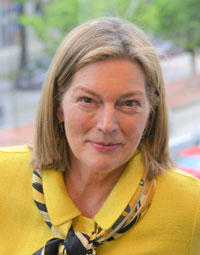
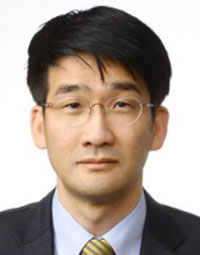
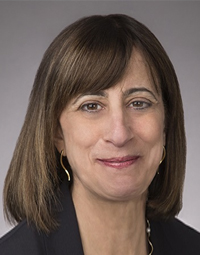
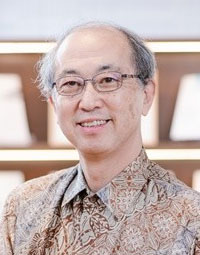
Join us for this discussion about the dynamics of U.S.-Japan-Korea trade relations and regional economic integration, featuring Asia Society Policy Institute Vice President Wendy Cutler, Waseda University Professor Emeritus and Economic Research Institute for East Asia and ASEAN Senior Research Advisor Shujiro Urata, and Korea Development Institute and Johns Hopkins University Professor Wonhyuk Lim. How can the three countries overcome obstacles to cooperate on shared challenges to achieve prosperity and shape the economic rules of the road? What will the Biden administration mean for U.S. trade policy? This program is co-hosted by the Korea Society, the Japan Society and Asia Society Policy Institute (ASPI), with moderation by Korea Society president Tom Byrne, and an introduction by Japan Society president Joshua W. Walker.

Challenges and Opportunities for U.S.-Japan-Korea Trade Relations
with
Wendy Cutler, Shujiro Urata and Wonhyuk Lim

Thursday, June 3, 2021 | 8 AM

The Korea Society
350 Madison Avenue, 24th Floor
New York, NY 10017


ABOUT THE SPEAKERS:

Wonhyuk Lim is a professor at the Korea Development Institute School of Public Policy and Management and adjunct lecturer at the Johns Hopkins University School of Advanced International Studies. Since he joined KDI in 1996, his research has focused on state-owned enterprises and family-based business groups (chaebol). He has also written extensively on development issues, in conjunction with policy consultation projects under Korea’s Knowledge Sharing Program (KSP). After the 2002 Presidential Election in Korea, he worked for the Presidential Transition Committee and the Presidential Committee on Northeast Asia and helped to set policy directions for the restructuring of the electricity and gas sector and for Northeast Asian energy cooperation. Dr. Lim was at Brookings as a CNAPS Fellow in 2005-06. After returning to KDI in 2007, he became Director of the Office of Economic Development Cooperation, precursor to the Center for International Development (CID).

Wendy Cutler is Vice President at the Asia Society Policy Institute (ASPI) and the managing director of the Washington, D.C. office. In these roles, she focuses on building ASPI’s presence in the nation’s capital and on leading initiatives that address challenges related to trade, investment, and innovation, as well as women’s empowerment in Asia. She joined ASPI following an illustrious career of nearly three decades as a diplomat and negotiator in the Office of the U.S. Trade Representative (USTR), where she also served as Acting Deputy U.S. Trade Representative. During her USTR career, she worked on a range of bilateral, regional, and multilateral trade negotiations and initiatives, including the U.S.-Korea Free Trade Agreement, the Trans-Pacific Partnership, U.S.-China negotiations, and the WTO Financial Services negotiations. She has published a series of ASPI papers on the Asian trade landscape and serves as a regular media commentator on trade and investment developments in Asia and the world.

Shujiro Urata is Professor Emeritus, Waseda University. He received his Ph.D in Economics from Stanford University in 1978. Before joining Waseda University in 1986, he was research associate at the Brookings Institution and an economist at the World Bank. He is currently affiliated with Economic Research Institute for East Asia and ASEAN (ERIA), Asian Development Bank Institute (ADBI), and Japan Center for Economic Research (JCER). His focus of research is in international trade and development economics.


From “Ga-yo” to K-pop

Believe it or not, BTS and Blackpink are not the entirety of Korean popular music. At the birthplace of K-pop, “idol” groups share the stage with the new generation of “trot” singers, power balladeers, hip-hop artists and indie bands. Music critic Youngdae Kim surveys the recent history of popular music in Korea and how it has evolved as K-pop exploded all around the world.


From “Ga-yo” to K-pop
Tuesday, May 25, 2021 | 7 PM (EDT)

The Korea Society
350 Madison Avenue, 24th Floor
New York, NY 10017


ABOUT THE SPEAKER:

Youngdae Kim is a music critic and ethnomusicologist, who serves as a member of the Selection Committee for the Korean Music Awards. Kim holds a Ph.D. in Ethnomusicology from the University of Washington, Seattle. Born and raised in Seoul, South Korea, he moved to Seattle in 2007 where he studied music while closely observing American pop music trends and the development of global K-pop sensation for over a decade. Kim has contributed his critical articles to both Korean and American media outlets, including Vulture, MTV, and the Hankyoreh, and appeared on numerous TV shows, podcasts, and public/academic lectures. He is the author of multiple publications in Korea, including BTS The Review: The Comprehensive Look at the Music of BTS and Korean Hip-hop: The Footprints of its Passion.


U.S.-Korea Summit Analysis

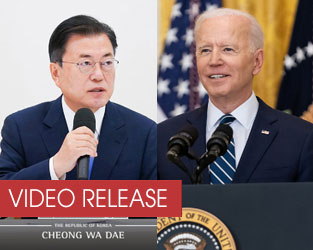
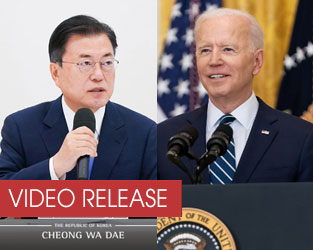
Join us for this rapid response analysis on the first summit meeting between South Korean President Moon Jae-in and U.S. President Joseph R. Biden Jr. In a discussion covering the latest trends regarding the U.S.-Korea Alliance, geostrategic coordination, North Korea issues, and COVID-19 vaccine diplomacy, Korea Society president and CEO Tom Byrne is joined by former UNC/CFC/USFK Commander General (ret.) Vincent Brooks, Columbia University School of International and Public Affairs George W. Ball Adjunct Professor Ambassador (ret.) Christopher R. Hill, and Dr. Peter J. Hotez, Dean of the National School of Tropical Medicine at Baylor College of Medicine.

U.S.-Korea Summit Analysis
with
General (ret.) Vincent Brooks, Ambassador (ret.) Christopher Hill, and Dr. Peter Hotez

Tuesday, May 25, 2021 

The Korea Society
350 Madison Avenue, 24th Floor
New York, NY 10017


ABOUT THE SPEAKERS:

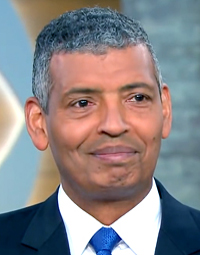
Vincent K. Brooks is a career Army officer who recently retired from active duty as the four-star general in command of all U.S. Forces in Korea, where he concurrently commanded United Nations Command as well as the Republic of Korea – U.S. Combined Forces Command comprising over 650,000 Koreans and Americans under arms. General Brooks, who goes by “Vince,” is a 1980 graduate of the United States Military Academy at West Point. He is the eighth African American in history to attain the military’s top rank – four- star general in the United States Army. He has a Bachelor of Science in Engineering from the U.S. Military Academy at West Point; a Master of Military Art and Science from the prestigious U.S. Army School of Advanced Military Studies at Fort Leavenworth, Kansas; was a National Security Fellow at the Harvard University John F. Kennedy School of Government; and holds an honorary Doctor of Laws from the New England School of Law. Widely respected as a speaker and leader of cohesive, innovative organizations, within and beyond the military, his areas of expertise are: leadership in complex organizations, crisis leadership, and building cohesive trust-based teams, national security, policy, strategy, international relations, military operations, combating terrorism and countering the proliferation of weapons of mass destruction, diversity and inclusion.

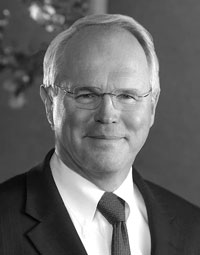
Christopher Robert Hill is a former career diplomat, a four-time ambassador, nominated by three presidents, whose last post was as Ambassador to Iraq, April 2009 until August 2010. Prior to Iraq, Hill served as Assistant Secretary of State for East Asian and Pacific Affairs from 2005 until 2009 during which he was also the head of the US delegation to the Six Party Talks on the North Korean nuclear issue. Earlier, he was the U.S. Ambassador to the Republic of Korea. Previously he served as U.S. Ambassador to Poland (2000-2004), Ambassador to the Republic of Macedonia (1996-1999) and Special Envoy to Kosovo (1998-1999). He also served as a Special Assistant to the President and a Senior Director on the staff of the National Security Council, 1999-2000.

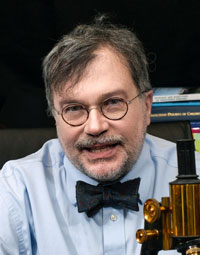
Peter J. Hotez , M.D., Ph.D. is Dean of the National School of Tropical Medicine and Professor of Pediatrics and Molecular Virology & Microbiology at Baylor College of Medicine where he is also the Co-director of the Texas Children’s Center for Vaccine Development (CVD) and Texas Children’s Hospital Endowed Chair of Tropical Pediatrics. He is also University Professor at Baylor University, Fellow in Disease and Poverty at the James A Baker III Institute for Public Policy, Senior Fellow at the Scowcroft Institute of International Affairs at Texas A&M University, Faculty Fellow with the Hagler Institute for Advanced Studies at Texas A&M University, and Health Policy Scholar in the Baylor Center for Medical Ethics and Health Policy.


Bridging the Divide: Social & Cultural Integration of North and South Korea

Join us for this discussion about obstacles and opportunities for inter-Korean social and cultural integration, featuring Dr. Hyun In-nae, Ewha University Professor and former director of the Korea Hana Foundation, and Bada Nam, Secretary General for the South Korean non-governmental organization People for Successful Corean Reunification (PSCORE). In an interview with Korea Society policy director Jonathan Corrado, the two draw insights from the findings of new survey research to describe inter-Korean differences in culture, education, and perception, and encourage interaction and dialogue to help bridge the divide between North and South.

This program is supported by a grant from the UniKorea Foundation.


Bridging the Divide: Social & Cultural Integration of North and South Korea
with
Hyun In-nae and Bada Nam

Thursday, May 20, 2021 | 12 PM

The Korea Society
350 Madison Avenue, 24th Floor
New York, NY 10017


ABOUT THE SPEAKERS:

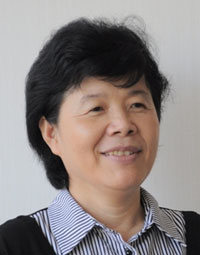
Dr. Hyun In-nae is a visiting professor of North Korean Studies at Ewha Women’s University, where she researches North Korea and North Korean defectors. She previously served as a director at the Korea Hana Foundation, as a guest researcher at the Korea Institute for National Unification, and as vice representative for North Korea Intellectuals Solidarity, a Seoul-based NGO. Dr. Hyun is North Korean defector herself, having left North Korea in 2004 before arriving in South Korea. While in North Korea, Dr. Hyun lectured at Najin Coastal Shipping University and Cheongjin Medical University about Juche philosophy.

Dr. Hyun received a PhD from Ewha Womans University, and continues to produce research that highlights real stories from North Korean defectors and provides insights on integration from a sociological perspective. She is an author of Social Integration Between North and South Koreans as well as Guide to Communication for Social Integration Between North and South Koreans. In 2016, she published an article titled, “Political Consciousness and Political Participation of North Koreans: A Comparison of Men and Women,” in the journal of The Korean Association of North Korean Studies.

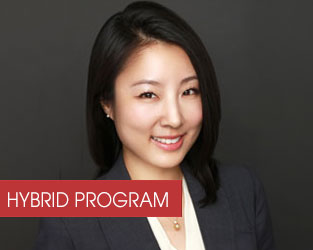
Nam Bada is Secretary General of People for Successful COrean Reunification (PSCORE). With a background in international affairs, Bada works as an activist in North Korean human rights and Korean reunification. Since 2012, he has contributed to various U.N. human rights mechanisms. Bada has worked on numerous publications, reports, and campaigns pertinent to the humanitarian crisis in North Korea. He has been interviewed by several media outlets, including Norddeutscher Rundfunk (NDR) in Germany and Voice of America (VOA).


Sherman Family Korea Emerging Scholar Lecture 2021

University of Missouri Assistant Professor and Institute for Korean Studies Co-Director Aram Hur, the 2021 Sherman Scholar award recipient, speaks on May 6 at 3 PM to Korea’s Changing National Story and Democratic Future. Hur addresses Korean nationalism, a “rapidly fragmenting and changing” national story, and the danger of democratic rollback. Senior director Stephen Noerper describes Hur’s selection and address as “incredibly important given the costs of such fragmentation in Korea, but comparatively in the United States of late and by extension to a world seeing rollback in Myanmar, Thailand, Russia and elsewhere.”

During the program, Korea Society President and CEO Tom Byrne introduces Hur, and inaugural Sherman Scholar Award recipient and Columbia University professor Katrin Katz presents her academic resume. Following Hur’s presentation, USC Professor and Korean Studies Institute Director David Kang provides commentary, and Korea Society policy director Jonathan Corrado facilitates the audience discussion. 

The annual award and lecture, now in its fifth year, aims to grow US thought leadership on Korea for a new generation. The award is presented across disciplines and to emerging thought leaders, from Ph.D. candidates to junior professors and respective research or non-profit professionals. The award is made possible through the generosity of Mr. and Mrs. Philip Sherman and family. You can view the presentations of former award winners here


Sherman Family Korea Emerging Scholar Lecture 2021

Thursday, May 6, 2021 | 3 PM EDT

The Korea Society
350 Madison Avenue, 24th Floor
New York, NY 10017


ABOUT THE SPEAKERS:

Aram Hur joined the Department of Political Science as an Assistant Professor in 2019 and holds a joint appointment with the Truman School of Public Affairs. She also serves as Co-Director for the MU Institute for Korean Studies. Previously, she was a Provost Postdoctoral Fellow at New York University and a 2018-19 U.S.-Korea NextGen Scholar selected by the Center for Strategic and International Studies (CSIS). She holds a Ph.D. from Princeton University, M.P.P. from the Harvard Kennedy School, and B.A. from Stanford University. Dr. Hur’s research focuses on national politics and democracy, with particular focus on issues of identity change, integration, and democratic support in East Asia. Her work is published in academic journals such as the British Journal of Political Science, Comparative Politics, and Journal of East Asian Studies, and cited in media outlets such as the New York Times, Washington Post, and Foreign Policy.


Katrin Fraser Katz is an Adjunct Assistant Professor in the Department of Political Science at Columbia University and an Adjunct Fellow (Non-resident) in the Office of the Korea Chair at the Center for Strategic and International Studies (CSIS) in Washington, DC. Dr. Katz’s research, which has been supported by grants from the Korea Foundation and the Horowitz Foundation for Social Policy, explores the interplay of cooperation and conflict in East Asia’s political, economic, and security dynamics. She has taught in the Asian Studies Program at Georgetown University and was a 2018-19 US-Korea NextGen Scholar. In 2017, she received the inaugural Sherman Family Korea Emerging Scholar Lecture Series award from the Korea Society. Dr. Katz served as director for Japan, Korea, and oceanic affairs on the staff of the White House National Security Council from 2007 to 2008. She was also a special assistant to the assistant secretary for international organization affairs at the U.S. Department of State and an analyst at the Central Intelligence Agency. She holds a Ph.D. in political science from Northwestern University; a master’s degree in East Asian and international security studies from the Fletcher School of Law and Diplomacy, where she was awarded the John C. Perry Scholarship for East Asian Studies; and a bachelor’s degree, magna cum laude, in international relations and Japanese from the University of Pennsylvania.


David C. Kang is Maria Crutcher Professor in International Relations, Business and East Asian Languages and Cultures at the University of Southern California, with appointments in both the School of International Relations and the Marshall School of Business. At USC he is also director of the Korean Studies Institute. Kang’s latest book is American Grand Strategy and East Asian Security in the 21st Century (Cambridge University Press, 2017). He is also author of East Asia Before the West: Five Centuries of Trade and Tribute (Columbia University Press, 2010); China Rising: Peace, Power, and Order in East Asia (Columbia University Press, 2007); Crony Capitalism: Corruption and Development in South Korea and the Philippines (Cambridge University Press, 2002); and Nuclear North Korea: A Debate on Engagement Strategies, co-authored with Victor Cha (Columbia University Press, 2003). He received an A.B. with honors from Stanford University and his Ph.D. from Berkeley.


You May Also Enjoy:

National Identity Affirmation and Trust in Korea, Japan and China with Eunbin Chung The Return of Industrial Policy: Lessons from Korea with Munseob Lee Architecture as Kisul in Postwar Korea: Building the Industrial Nation-State: 2020 Sherman Family Korea Emerging Scholar Lecture with Melany Sun-Min Park P’ansori Mountain Pilgrimages: Land as Interlocutor in Contemporary Korean Oral Performance and Literature with Ivanna Sang Een Yi

Mina Cheon Dreaming Unification/Protest Peace

Image courtesy of Mina Cheon Studio (Photo by Cyrus Feldman)

May 3 – September 2, 2021|

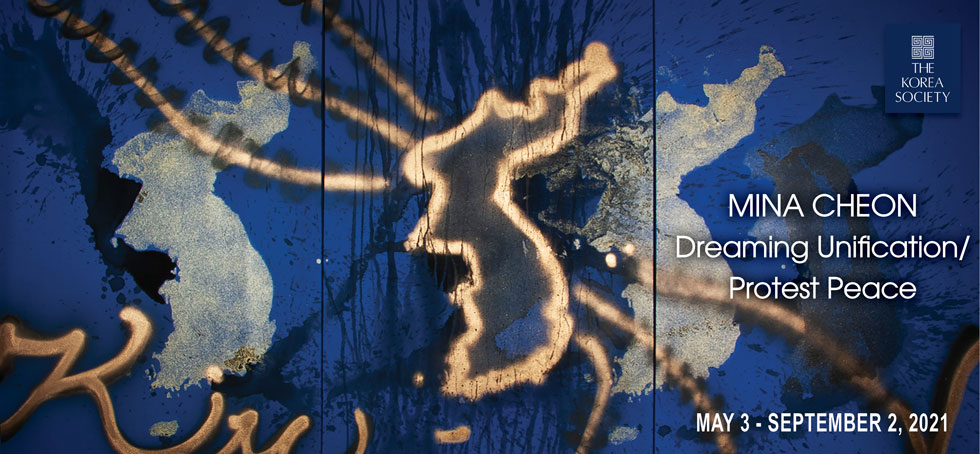
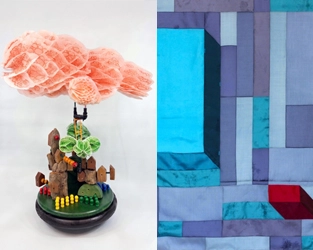
The global art activist Mina Cheon draws inspiration from the partition of the Korean peninsula, exemplified by her parallel body of work created under her North Korean alter ego, Kim Il Soon, in which she enlists a range of mediums including painting, sculpture, video, installation, and performance to deconstruct and reconcile the fraught history and ongoing coexistence between North and South Korea. Her solo exhibition at The Korea Society, presented during the height of #stopasianhate movement and continuing tensions on Korean peninsula, showcases her most recent painting series of Unification Flags.

Tapping into her stream of unconsciousness to promote a future of unity and peace, Mina Cheon’s paintings of the Korean peninsula recalls past interKorean efforts including the Olympics, athletic teamwork, Arirang Mass Games, and other public events that celebrated “One Korea.” Submerged in the custom-made IKB (Yves Klein blue) paint and incorporating the cosmopolitan expression of protest art style using stencil and spray, each Unification Flag painting is a symbolic new figuration, a body that parades in a procession for peace.

Mina Cheon is a new media artist, scholar, educator, and activist best known for her “Polipop” paintings inspired by Pop art and Social Realism. She has exhibited internationally, including at the Asia Society Triennial (2021); Busan Biennale (2018); Baltimore Museum of Art (2018); American University Museum at the Katzen Arts Center, Washington, DC (2014); Sungkok Art Museum, Seoul (2012); and Insa Art Space, Seoul (2005). Her work is in the collections of the Baltimore Museum of Art; Smith College Museum of Art, Northampton; and Seoul Museum of Art, Seoul. Cheon received a BFA in painting from Ewha Womans University; an MFA in painting from the Maryland Institute College of Art (MICA) and an MFA in imaging and digital art from UMBC: An Honors University in Maryland; and a PhD in philosophy of media and communications at the European Graduate School, Saas-Fee, Switzerland. She is currently a Full-time Professor at MICA.

Due to the novel coronavirus (COVID-19), our gallery is open only by appointment. The appointment must be made at least 24 hours prior to the scheduled visit. To make an appointment, please contact info@koreasociety.org. All visitors will be required to wear a mask as well as complete the safety questionnaire upon arrival.


Mina Cheon
Dreaming Unification/Protest Peace

May 3 – September 2, 2021


@ The Korea Society 
350 Madison Avenue, 24th Floor, NYC

Gallery hours: (M-F) 10 AM – 4:30 PM by appointment
*From August 2-September 2, Monday-Thursday 10 AM – 4:30 PM*

**Pre-registration is now required for all Korea Society events, and an ID is required for security.**

For more information, please contact info@koreasociety.org or call (212) 759-7525.


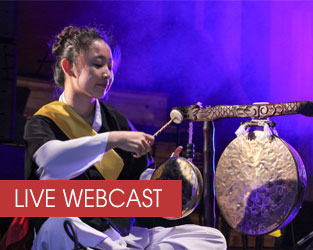
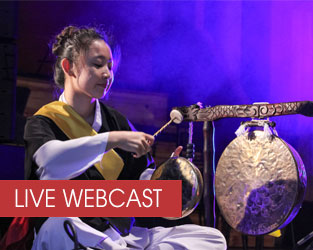
Samul Nori: Dynamic Rhythms from Korea


Samul nori, the South Korean percussion genre with powerful rhythmic forms, has reached international popularity. First created in Seoul in 1978 by a quartet of musicians, samul nori (which translates simply into “four things play”) is a neo-traditional musical repertory that has been performed on many international stages by professional ensembles and amateur musical enthusiasts around the world.

Professor Katherine In-Young Lee explores the history and development of samul nori and its importance as a sonic and cultural symbol of South Korea.


Samul Nori: Dynamic Rhythms from Korea
Thursday, April 22, 2021 | 6 PM (EDT)

The Korea Society
350 Madison Avenue, 24th Floor
New York, NY 10017


ABOUT THE SPEAKER:

Katherine In-Young Lee is Associate Professor of Ethnomusicology at the UCLA Herb Alpert School of Music. Her book Dynamic Korea and Rhythmic Form (Wesleyan University Press 2018), explores how a percussion genre from South Korea became a global music genre. It was recognized with the 2019 Béla Bartók Award for Outstanding Ethnomusicology from the ASCAP Foundation Deems Taylor/Virgil Thomson Awards. Her articles have appeared in Ethnomusicology, the Journal of Korean Studies, and The Journal of Korean Traditional Performing Arts. Professor Lee received her Ph.D. in Ethnomusicology from Harvard University; M.A. in Ethnomusicology from University of Washington; and dual B.M. degrees in Piano Performance and Musicology from the University of Michigan.


Kim Koo Professional Series: Spring 2021


The Kim Koo Professional Series, now in its twelfth iteration, brings together 8-10 senior director level professionals three times over three weeks for special one hour sessions featuring thought leaders on Asia. The spring 2021 session is April 8, 15 and 22 from 4-5 PM EST, by Zoom.

Joining us with comments and for discussion are Dr. Sue Mi Terry of the Center for Strategic and International Studies (April 5), Professor Alexis Dudden of the University of Connecticut (April 15), and Dr. Sonja Bachmann of the United Nations (April 22). All speakers will address Thinking Asia, with focus on their approach.

Dr. Terry will delve into North Korean analysis, Professor Dudden on the impasse in Korea-Japan relations, and Dr. Bachmann on international organization approaches to Northeast Asia problem solving. Each session affords active dialogue, and a rich networking opportunity.

View former speakers and participants here.


Kim Koo Professional Series

By Invitation

Thursdays, April 8, 15 and 22, 2021 | 4 PM


The Korea Society
350 Madison Avenue, 24th Floor 
New York, NY 10017