Special Virtual Screening: Minari

— REGISTRATION CLOSED —

A tender and sweeping story about what roots us, Minari follows a Korean-American family that moves to an Arkansas farm in search of their own American Dream. The family home changes completely with the arrival of their sly, foul-mouthed, but incredibly loving grandmother. Amidst the instability and challenges of this new life in the rugged Ozarks, Minari shows the undeniable resilience of family and what really makes a home.

Please join us for a special advance virtual screening of Minari, followed by a taped conversation with writer/director Lee Isaac Chung, producer Christina Oh, and Steven Yeun, moderated by Ramy Youssef.

The film and taped conversation will be available Thursday, Feb 4 at 8 PM EST – Sunday, Feb 7 at 11 PM EST. Once you begin, you will have 4 hours to complete the film before the link expires.


Special Virtual Screening: Minari

Thurs, Feb 4 at 8 PM EST – Sunday, Feb 7 at 11 PM EST

The Korea Society
350 Madison Avenue, 24th Floor
New York, NY 10017


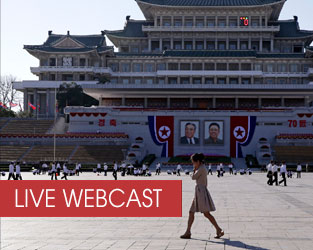
North Korea’s Eighth Party Congress

North Korea senior analysts Robert Carlin and Glyn Ford speak about the political and economic implications of the party congress with senior director Stephen Noerper. Stanford University’s Carlin and Track2Asia’s Ford provide critical insight on possibilities for change, impasse and next steps in this timely, newsmaker event. This program is made possible thanks to support from the Korea Foundation.

The Columbia University’s Center for Korean Research (CKR) is a promotional partner for this program.

North Korea’s Eighth Party Congress
with
Robert Carlin and Glyn Ford

Tuesday, January 26, 2021 | 12 PM

The Korea Society
350 Madison Avenue, 24th Floor
New York, NY 10017


ABOUT THE SPEAKERS:

Bob Carlin is a Visiting Scholar at Stanford University’s Center for International Security and Cooperation (CISAC). From both in and out of government, he has been following North Korea since 1974 and has made 25 trips there. He recently co-authored a lengthy paper to be published by the London International Institute of Strategic Studies, entitled “Politics, Economics and Security: Implications of North Korean Reform.” Carlin served as senior policy advisor at the Korean Peninsula Energy Development Organization (KEDO) from 2002-2006, leading numerous delegations to the North for talks and observing developments in-country during the long trips that entailed. From 1989-2002, he was chief of the Northeast Asia Division in the Bureau of Intelligence and Research, U.S. Department of State. During much of that period, he also served as Senior Policy Advisor to the Special Ambassador for talks with North Korea, and took part in all phases of US-DPRK negotiations from 1992-2000. From 1971-1989, Carlin was an analyst at the Central Intelligence Agency, where he received the Exceptional Analyst Award from the Director of Central Intelligence.

In over 25 years in the EP Glyn Ford developed an unrivaled expertise on East Asia as a Member of the Foreign Affairs and International Trade Committees. When he left the European Parliament in 2009, Glyn Ford founded the consulting company Polint, which he still leads today. However, in parallel, he continued his political and academic engagement with the DPRK and the East Asian region. These activities, which have always been conducted on a ‘non-profit’ basis, are now carried out in the framework of Track2Asia. Thanks to his engagement with the DPRK, he is now considered one of the most pre-eminent European experts on the Korean peninsula in particular, and East Asia in general. A sample of this expertise can be seen in his books “North Korea on the Brink” (Pluto Press,2008 and later translated into Japanese and Korean) and “Talking to North Korea” (Pluto Press,2018).


House of Hummingbird: Streaming and A Director’s Talk

Grand Prix for the Best Film – Berlin International Film Festival, Generation 14+ Competition

Best International Feature Film Award; Best Cinematography in an International Feature Award; Best Actress in an International Feature Award – Tribeca International Film Festival

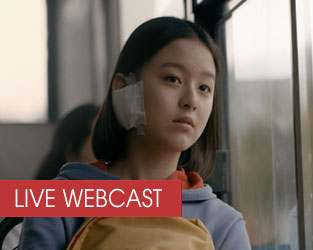
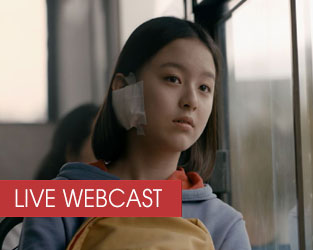
14-year-old Eun-hee moves through life like a hummingbird searching for a taste of sweetness wherever she may find it. Ignored by her parents and abused by her brother, she finds her escape by roaming the neighborhood with her best friend, going on adventures, exploring young love and experiencing everything that comes with growing up in a country on the brink of enormous change.

Written and directed by Bora Kim and starring the extraordinary young actress Ji-Hu Park, House of Hummingbird delicately captures a turning point in a young woman’s life.

House of Hummingbird will be available for free streaming for three days, January 22-24.

Bora Kim, writer-director of House of Hummingbird, will join the Korea Society for a director’s talk on January 24.


Sign up here to receive the viewing link


House of Hummingbird: Streaming and A Director’s Talk

FREE STREAMING: JANUARY 22-24, 2021
TALK: SUNDAY, JANUARY 24, 2021 | 6 PM

The Korea Society
350 Madison Avenue, 24th Floor
New York, NY 10017


About the Speaker:

Bora Kim graduated from Dongguk University with a degree in film and holds an MFA in film directing from Columbia University. Her short film the Recorder Exam won numerous awards including the Best Student Filmmaker Award from The Directors Guild of America. The film was also a National Finalist for the 2012 Student Academy Awards. Kim’s debut feature House of Hummingbird premiered at the Busan International Film Festival, where it won the NETPAC award and the KNN Audience award. The film went on to collect 59 awards from prestigious festivals, including Berlinale, Tribeca, BFI London, Istanbul, Jerusalem, and a Blue Dragon award—Korea’s equivalent of an Oscar.


Evolving Roles of the UN in the Korean Peace Process

With a new US administration incoming and North Korea’s January Party Congress, there exists room for new and creative approaches toward the DPRK, to include the role of the United Nations. Join the former UN Undersecretary General Jeff Feltman, Carnegie Endowment’s Suzanne Dimaggio, and former UNC/CFC/USFK Commander General (ret.) Vincent Brooks, in conversation with NCNK Executive Director Keith Luse and Korea Society Senior Director Stephen Noerper, as they look at evolving roles and missions and UN facilitation of peace on the Korean Peninsula.

This program is produced in collaboration with The National Committee on North Korea (NCNK).


Evolving Roles of the UN in the Korean Peace Process

Thursday, December 17, 2020 | 10 – 11:30 AM


The Korea Society
350 Madison Avenue, 24th Floor
New York, NY 10017


ABOUT THE SPEAKERS

  Vincent K. Brooks

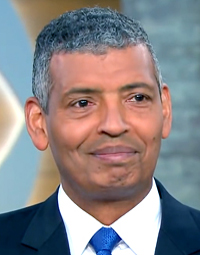
Vincent K. Brooks is a career Army officer who recently retired from active duty as the four-star general in command of all U.S. Forces in Korea, where he concurrently commanded United Nations Command as well as the Republic of Korea – U.S. Combined Forces Command comprising over 650,000 Koreans and Americans under arms. General Brooks, who goes by “Vince,” is a 1980 graduate of the United States Military Academy at West Point. He is the eighth African American in history to attain the military’s top rank – four- star general in the United States Army. He has a Bachelor of Science in Engineering from the U.S. Military Academy at West Point; a Master of Military Art and Science from the prestigious U.S. Army School of Advanced Military Studies at Fort Leavenworth, Kansas; was a National Security Fellow at the Harvard University John F. Kennedy School of Government; and holds an honorary Doctor of Laws from the New England School of Law. Widely respected as a speaker and leader of cohesive, innovative organizations, within and beyond the military, his areas of expertise are: leadership in complex organizations, crisis leadership, and building cohesive trust-based teams, national security, policy, strategy, international relations, military operations, combating terrorism and countering the proliferation of weapons of mass destruction, diversity and inclusion.

  Suzanne DiMaggio

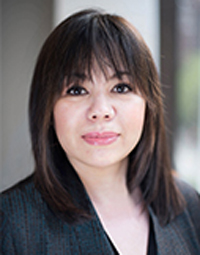
Suzanne DiMaggio is a senior fellow at the Carnegie Endowment for International Peace, where she focuses on U.S. foreign policy toward the Middle East and Asia. She is one of the foremost experts and practitioners of diplomatic dialogues with countries that have limited or no official relations with the United States, especially Iran and North Korea. For nearly two decades, she has led these track 1.5 and track 2 conversations to help policymakers identify pathways for diplomatic progress on a range of issues, including regional security, nonproliferation, terrorism, and governance. She is currently directing a U.S.-DPRK dialogue that has included several visits to North Korea. As part of that process, she facilitated the first official discussions between the Trump administration and North Korean government representatives in Oslo in May 2017. Ms. DiMaggio is a co-founder and the chairman of the Quincy Institute and an associate senior fellow in the Disarmament, Arms Control and Nonproliferation Program at the Stockholm International Peace Research Institute (SIPRI). She holds a B.A. from New York University and an M.A. from City College of New York (CUNY).

  Jeffrey Feltman

Jeffrey Feltman is an American diplomat and former under-secretary-general for political affairs at the United Nations. He is currently a Visiting Fellow in International Diplomacy in the Foreign Policy program at the Brookings Institution and senior fellow at the United Nations Foundation. During the six years he served as the under-secretary-general at the UN, he traveled extensively and was the chief foreign policy advisor to both Secretary-General Ban Ki-moon and Secretary-General Antonio Guterres. Feltman frequently briefed the Security Council in both public and closed-door sessions on a wide variety of peace and security issues, including on thematic issues such as terrorism and nuclear proliferation, as well as on country-specific conflicts. He oversaw U.N. mediation and conflict prevention work and also served as the U.N.’s focal point on election assistance to approximately 50 countries annually. Prior to joining the UN, Feltman was a U.S. foreign service officer for over 26 years, focusing largely on the Middle East and North Africa. Feltman was the assistant secretary of state for Near Eastern affairs from 2009 until his retirement from the State Department, with the rank of career minister, in May 2012. Before his 2004-08 tenure as U.S. ambassador to Lebanon, Feltman also served in Erbil, Baghdad, Jerusalem, Tel Aviv, Tunis, Amman, Budapest, and Port-au-Prince. A native of Greenville, Ohio, Feltman has a master’s in law and diplomacy from the Fletcher School of Law and Diplomacy at Tufts University and a bachelor’s degree in history and art from Ball State University. In May 2013, Ball State University awarded Feltman an honorary doctorate. He is a member of the boards of both the Middle East Institute and the American Academy of Diplomacy and serves on the advisory boards of the European Institute of Peace and the Dialogue Advisory Group.


Of Interest:

Feeling Spurned by Trump, U.N. Sees Redemption in Biden and Team – The New York Times


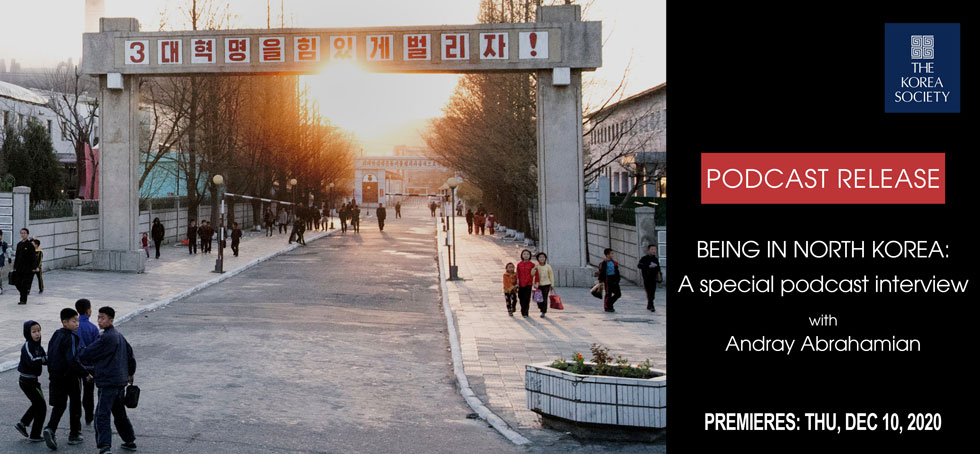
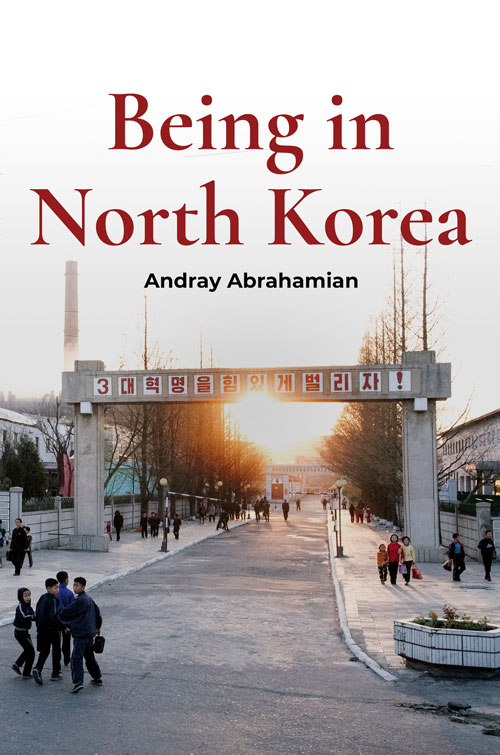
Being in North Korea A special podcast interview with Andray Abrahamian

In this podcast interview, Andray Abrahamian offers insights from his new book, Being in North Korea, an exploration of North Korean society from the inside, citing personal experiences gained by the author over 30 trips to the DPRK. In conversation with policy director Jonathan Corrado, Abrahamian discusses interactions from his time working at a nonprofit that teaches North Koreans about entrepreneurship and economic policy. Abrahamian is a senior adjunct fellow at Pacific Forum. Sign up below to ensure that you receive a link to the podcast interview when it’s released on December 10.


Being in North Korea: A special podcast interview
with
Andray Abrahamian

THURSDAY, DECEMBER 10, 2020


Published by Stanford University APARC and distributed by Brookings University, the book is available for sale here.


The Korea Society
350 Madison Avenue, 24th Floor
New York, NY 10017


Cold War Cosmopolitan: Han Hyung-Mo & Korean Cinema of the 1950s

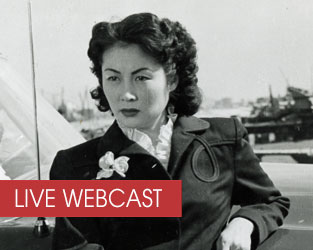
South Korea in the 1950s was home to a burgeoning film culture, one of the many “Golden Age cinemas” that flourished in Asia during the postwar years. One of the most important filmmakers of the time was Han Hyung-Mo, director of the era’s most glamorous and popular women’s pictures including the blockbuster Madame Freedom (1956).

Christina Klein provides an illuminating analysis of Han’s career and films with careful attention to key issues of modernity—such as feminism, cosmopolitanism, and consumerism.


Due to the novel coronavirus (COVID-19), this program will be conducted virtually. This live session will be provided free of charge at the specified date and time. A limited number of viewing links will be provided to the people who sign up through the form below. Those unable to view the live session will have the opportunity to watch the recorded video or listen to the podcast soon after.

Cold War Cosmopolitan: Han Hyung-Mo & Korean Cinema of the 1950s
with
Christina Klein

Thursday, December 3, 2020 | 6 PM EST

The Korea Society
350 Madison Avenue, 24th Floor
New York, NY 10017


ABOUT THE SPEAKER:

Christina Klein is Associate Professor of English and Director of American Studies at Boston College. She is the author of Cold War Cosmopolitanism: Period Style in 1950s Korean Cinema and Cold War Orientalism: Asia in the Middlebrow Imagination, 1945-1961.


Kim Koo Professional Series: Fall 2020


This by-invitation series brings together senior professionals from the corporate sector, media and United Nations for intimate and in-depth discussions with thought leaders on Korea and Northeast Asia. The Fall 2020 online class addresses diplomacy in the wake of the US Presidential elections, challenges of North Korea, and South Korea’s management of relations with China and the United States. For information or nominations, contact policy@koreasociety.org


Kim Koo Professional Series

By Invitation

Thursdays, November 5, 12 and 19, 2020 | 4 PM


The Korea Society
350 Madison Avenue, 24th Floor 
New York, NY 10017


North Korean Sanctions and Adaptation

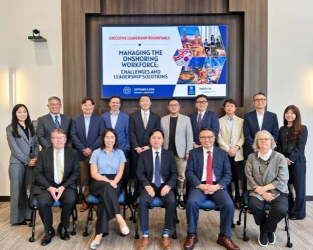
Join us for a discussion on international economic sanctions on North Korea with William Newcomb, Fellow at the Center for Advanced Defense Studies and former Member of the Panel of Experts on DPRK Sanctions at the United Nations, Darya Dolzikova of the Royal United Services Institute, and Cameron Trainer of the James Martin Center for Nonproliferation Studies. In a conversation moderated by policy director Jonathan Corrado, the three experts discuss the role of sanctions in the negotiation process, proliferation finance, maritime evasion, implementation challenges, humanitarian exemptions, and multilateral coordination.

This program is supported by a grant from the UniKorea Foundation.
 

North Korean Sanctions and Adaptation
with
Darya Dolzikova, William J. Newcomb  and Cameron Trainer

Thursday, November 19, 2020 I 12 PM

The Korea Society
350 Madison Avenue, 24th Floor
New York, NY 10017


ABOUT THE SPEAKERS:

William J. Newcomb is a Fellow at the Center for Advanced Defense Studies (C4ADS) and a member of the National Committee on North Korea (NCNK). He is the former chair of the North Korea Economic Forum at George Washington University, Institute for Korean Studies, and was a Visiting Scholar at the US-Korea Institute, Johns Hopkins School of Advanced International Studies. In 2011 Mr. Newcomb was appointed by UN Secretary General Ban Ki-moon to serve on the Panel of Experts established pursuant to resolution 1874 (2009). He subsequently was reappointed to the DPRK sanctions panel for successive mandates as the expert on finance through June 2014, when he resigned. A former US government economist, Mr. Newcomb in 2008 retired from the Treasury Department where he was Senior Economic Advisor to the Assistant Secretary for Intelligence and Analysis. During 2003-2005, Mr. Newcomb was Deputy Coordinator of the State Department’s North Korea Working Group and alternate co- chair of the Inter-Agency North Korean Policy Coordinating Committee and helped devise, implement and coordinate the Illicit Activities Initiative.

Darya Dolzikova is a Research Analyst in the Proliferation and Nuclear Policy Programme at RUSI. Her research focuses on understanding the proliferation financing patterns of countries like North Korea and Iran, as well as best practices on countering proliferation finance (CPF) and sanctions evasion. As part of her contributions to RUSI’s work on CPF, she provides guidance to representatives of governments and financial institutions on strengthening their CPF and sanctions-compliance regimes. Darya holds a Masters degree in Security Studies from Georgetown University. 

Cameron Trainer is a Research Associate with the Washington, D.C., office of the James Martin Center for Nonproliferation Studies a certified anti-money laundering specialist (CAMS). His work at CNS focuses primarily on monitoring North Korean sanctions evasion. He has particular expertise tracking vessels linked to North Korea and using publicly available information to trace North Korean financial flows. Cameron is a graduate of the University of St Andrews, where he studied International Relations and Russian.


 

K-Drama Fever: Global TV in the US

Television as we know it has transformed in the last two decades, away from network television mainly produced in the form of sitcoms, police procedurals, and medical or courtroom dramas, towards serial narratives, with clear storylines developed across episodes. At the same time, the notion of “quality television” has changed the way we evaluate TV content, from intentionally mindless entertainment to innovative cultural works. These shifts have been fortuitous for the rise in popularity of Korean television shows in the US, since Korean narrative television has long been formatted as stand-alone, complete series, with clearly defined beginnings and endings.
Dr. Michelle Cho will introduce you to the characteristics of Korean television serials (K-dramas) that account for their intense binge-ability, and contextualize the place of Korean television content in our increasingly global media landscape.


Sign up here to receive the viewing link


Due to the novel coronavirus (COVID-19), this program will be conducted virtually. This live session will be provided free of charge at the specified date and time. A limited number of viewing links will be provided to the people who sign up through the form below. Those unable to view the live session will have the opportunity to watch the recorded video or listen to the podcast soon after.

K-Drama Fever: Global TV in the US
with
Michelle Cho

Thursday, November 12, 2020 | 6 PM

The Korea Society
350 Madison Avenue, 24th Floor
New York, NY 10017


ABOUT THE SPEAKER:

Michelle Cho is Assistant Professor of East Asian Popular Culture at the University of Toronto. She’s published on Asian cinemas and Korean wave television, video, and pop music in such venues as Cinema Journal, the International Journal of Communication, The Korean Popular Culture Reader, and Asian Video Cultures. She’s currently at work on a book about gender, media, and fandom in Korean-wave popular cultures


After the US Presidential Election: Gauging the Results for Korea and Northeast Asia

Washington insiders Keith Luse, Executive Director of the National Committee on North Korea, and Frank Jannuzi, President and CEO of the Maureen and Mike Mansfield Foundation, reflect on the results of the US Presidential election for Korea and Northeast Asia in conversation with Senior Director Stephen Noerper. Luse and Jannuzi, both longtime, former Senate Foreign Relations Committee senior staff members, opine on the impact by way of policy and personalities, as well as potential new initiatives.

This event is co-hosted by the Columbia Business School’s APEC Study Center.


After the US Presidential Election: Gauging the Results for Korea and Northeast Asia
with
Keith Luse and Frank Jannuzi

THURSDAY, NOVEMBER 5, 2020 | 12 PM

The Korea Society
350 Madison Avenue, 24th Floor
New York, NY 10017


ABOUT THE SPEAKERS:

Frank Jannuzi joined the Mansfield Foundation as President and Chief Executive Officer in April 2014. He previously served as Deputy Executive Director (Advocacy, Policy and Research) at Amnesty International, USA. There he shaped and promoted legislation and policies to advance universal human rights, protect individuals and communities at risk, and free prisoners of conscience. From 1997-2012 Mr. Jannuzi was Policy Director, East Asian and Pacific Affairs, for the U.S. Senate Foreign Relations Committee, where he advised Committee Chairmen Joseph Biden and John Kerry on a range of security, political, economic, and human rights issues pertinent to U.S. relations with East Asia.

Keith Luse is the Executive Director of the National Committee on North Korea. Previously, Luse was the Senior East Asia Policy Advisor for Chairman and later Ranking Member Senator Richard G. Lugar at the U.S. Senate Foreign Relations Committee from 2003 until 2013. Luse also served as Staff Director for Mr. Lugar at the Senate Agriculture Committee from 1999 through 2002, where the Senator also served as Chairman and later Ranking Member. While at the Senate Agriculture Committee, Luse made the first of eventually five trips to North Korea.