

Special Screening of The Yellow Sea @ The Museum of the Moving Image

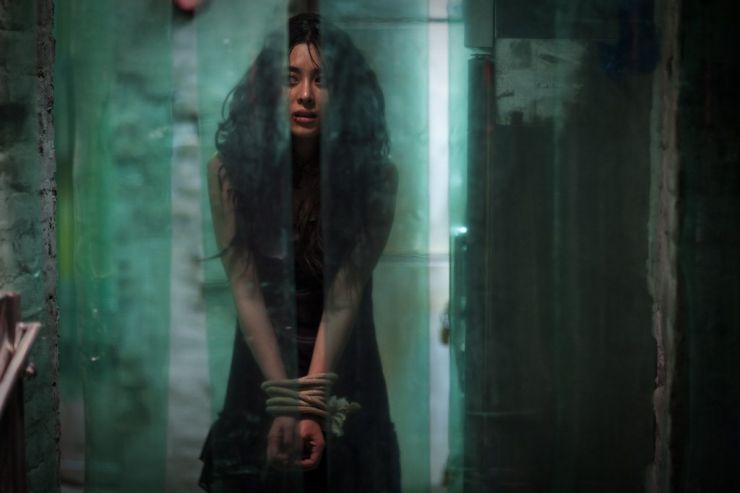
The Korea Society and the Museum of the Moving Image present The Yellow Sea as part of Korean Cinema Now at MoMI. The Museum of the Moving Image and The Korea Society have impressed growing audiences in 2011 with an exciting run of new work. In The Yellow Sea, director Na Hong-jin tells a tale where, to bring his wife to Yanbian (on the border of North Korea and China) and pay off his gambling debts, protagonist Kim Gu-nam takes on an assassination job. After a disastrous mistake, he becomes the target. A part of the 64th Cannes Un Certain Regard line-up, The Yellow Sea follows in the steps of Na’s first action-filled crime thriller, The Chaser, which received high praises in Korea as an upgraded Korean action thriller and was screened in the non-competition category of the 61th Cannes festival. 


Sunday, November 20, 2011 | 4 PM


Museum of the Moving Image
35th Avenue at 37th Street, Astoria 
From midtown, taxi or N/Q Train outbound to 36th Avenue 

 Film free with museum admission at The Museum of the Moving Image.


The Yellow Sea (156 min) 2010
황해
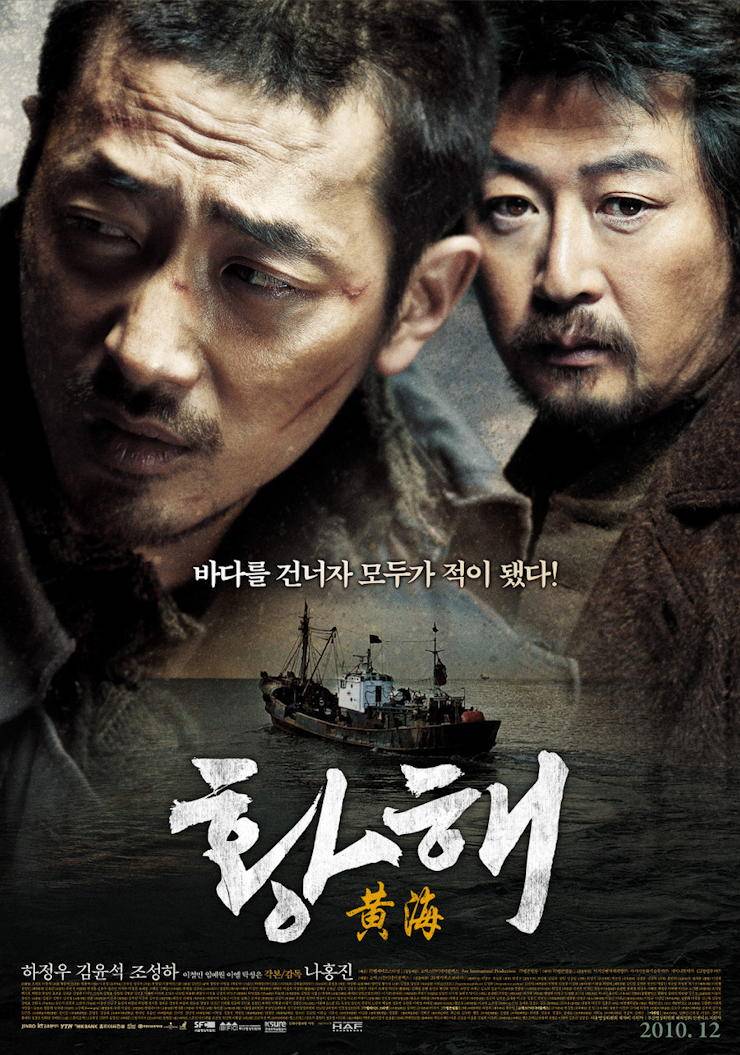
Dir. Na Hong-jin. With Kim Yun-seok. In this box office hit in Korea, Gu-nam is a cabdriver who leads a pitiful life in Yanbian Prefecture, a region between North Korea, China, and Russia. His wife went to Korea to earn money six months ago, and he hasn’t heard from her since. He plays mah jongg to scrape together some cash. And then one day he meets a hit man who proposes to turn his life around, for the small price of one hit.  


Contemplative Traditions Music Series: P’ungnyu Strings (Komungo)

2011 11 17 komungo icon

Accompanying the opening of Highlights, this meditative short performance of six-stringed komungo celebrates p’ungnyu, the classical ensemble music of Korean nobility. As a philosophy, p’ungnyu refers to a state of leisure where one celebrates arts and companionship. The evening’s performer, Park Min-ji, graces the audience with her komungo skills. Park graduated from Hanyang University in Korea, was honored at the Dong-A Korean Traditional Music Concours in 2009, and took first in the National Traditional Performing Arts Competition in 2006. She also took first at the 2010 World Korean Traditional Performing Arts Competition in New York and was a member and soloist with the Seoul Metropolitan Youth Traditional Music Orchestra. She toured Atlanta, San Francisco, and Hawaii with the Korean Traditional Music Orchestra of Hanyang University in 2010. This series is made possible with public funds from the New York State Council on the Arts.


Thursday, November 17, 2011

6 PM  

Contemplative Traditions Music Series: P’ungnyu Strings (Komungo)

The Korea Society
950 Third Avenue @ 57th Street, 8th Floor


nysca 200px white

LIVE HOUSE KOREA is made possible with the support of the New York State Council on the Arts.


You many also enjoy:

From Autumn to Winter’s Eve: A Musical Journey


Special Screening of The Unjust @The Museum of the Moving Image

The Korea Society and the newly renovated Museum of the Moving Image present The Unjust, part of Korean Cinema Now, on New York City’s hottest state-of-the-art screen. Earlier this year, the Museum of the Moving Image and The Korea Society embarked on an exciting run of new work, with highlights from the Busan International Film Festival, that has been warmly received by audiences and the film media. The Unjust is director Ryoo Seung-wan’s dramatic take on police corruption and features an investigator on the hot seat and a vindictive prosecutor. It is his most successful project yet, earning its place in the top-ten box office list. Director Ryoo is considered one of the best action-film directors in Korea. He debuted in 1996 with the short film Transmutated Head, and went on to make features including Die Bad in 1998, No Blood No Tears in 2002, Arahan in 2004, and City of Violence in 2006.


Sunday, October 9, 2011 | 4 PM


The Museum of the Moving Image 
35th Avenue at 37th Street, Astoria 
From midtown, taxi or N/Q Train outbound to 36th Avenue 

Film free with museum admission at The Museum of the Moving Image.


The Unjust (119 min) 2010
부당거래

Dir. Ryoo Seung-wan. With Hwang Jeong-min. A series of murders terrifies South Korea.When the prime suspect dies in a police chase, the case seems to reach a dead end. Choi, a successful investigator whose methods have held him back from promotion, senses that this case may be his last chance to make something of his career.


Korean Film in Focus: Director’s Talk with Jeon Kyu-hwan

2011 10 03 korean film in focus iconDirector Jeon Kyu-hwan has garnered international attention since the 2008 debut of Mozart Town, the first in his Town Trilogy. His second film, Animal Town, was lauded by critics and festival attendees. The third installment, Dance Town, earned awards at Berlin and the Pusan International Film Festival.Variety Magazine’s Russell Edwards hailed Dance Town as a “confrontational slice of urban life that plays like a blend of John Cassavetes and Ken Loach with a sharp kimchi taste.” Jeon’s next feature film is Varanasi, currently in pre-production. He addresses The Korea Society on the trilogy, shown as part of the MoMA series, as well as his upcoming feature. The event is moderated by Dr. Choi Jung-bong, Assistant Professor of Cinema Studies, New York University.


Monday, October 3


Korean Film in Focus
Director’s Talk with Jeon Kyu-hwan

Minhwa: Korean Folk Painting Workshop


Minhwa commonly refers to a genre of Korean folk art from the late Chosŏn era (17th–19th C.). Based on Shamanic, Buddhist, or Confucian themes, Minhwa, as a popular form, conveys freshness and vitality in a relaxed ambiance, in contrast with the more scholarly and stern Muninhwa-style favored by the yangban, or aristocratic, class. The use of vibrant primary colors and exaggerated painting styles were indicative of the taste of the middle-class, who wanted to imitate the yangban love of art, but with a touch of flamboyance. This workshop will offer instruction in crafting Minhwa motifs in ink and applying colored powders to create layered tones on mulberry paper.


Every Monday, September 12-October 3, 2011

6 PM-8 PM

Social Graphics: The Art of Jeski

Social Graphics: The Art of Jeski salutes the award-winning efforts of artist and social activist Jeseok Yi, who has wowed the design and non-profit communities with his thoughtful and often satirical works. Featuring fourteen of Korean-born Jeski’s works for organizations like the Red Cross, Salvation Army, World Vision, City Harvest New York, the American Disability Association and the Global Coalition for Peace, the exhibition provides sharp and insightful commentary on war, global warming, pollution, and other social concerns. Jeski stresses simplicity in messaging and encourages interaction between the design and the real world. His social graphics illustrate the power of creativity to inform, educate, and change society for the better. His efforts are a reminder of the vibrancy of Korean civil society, the strength of its NGOs, and Korea’s contribution to international efforts aimed at peace and social justice. 


September 8-November 4, 2011

with Jeski
Artist and Social Activist


The Good, The Bad, The Weird


Join The Korea Society and the Museum of The Moving Image for a cinematic wild ride from director Kim Jee-woon’s. Set in the 1930s Manchurian desert, where lawlessness rules and ethnic groups clash, three Korean men fatefully meet on a train: a bounty hunter, the leader of a gang of bandits, and a train robber with nine lives. The three strangers chase across Manchuria to take possession of a valuable map. In Korean with subtitles.

Special Screening @ The Museum of the Moving Image
(Part of Outdoor Cinema 2011 at Socrates Sculpture Park)


Wednesday, July 27th | 7 PM

Free Admission through the Museum of the Moving Image


Socrates Sculpture Park
Vernon Boulevard, Long Island City
N or Q train to Broadway, eight blocks west at Vernon Boulevard and the East River
8-10 minutes by taxi from The Korea Society 


The Good, the Bad, the Weird (139 min) 2008
좋은 놈, 나쁜 놈, 이상한 놈

 Dir. Kim Jee-woon. In the 1930s Manchurian desert, where lawlessness rules and ethnic groups clash, three Korean men fatefully meet on a train: a bounty hunter, the leader of a gang of bandits, and a train robber with nine lives. The three strangers engage in a wild chase across Manchuria to take possession of a valuable map. In Korean with subtitles.


Special Screening of I Saw the Devil @ The Museum of the Moving Image

Director Kim Ji-woon’s latest film follows a bloody cycle of catch-and-release as the protagonist inflicts “equal sorrow” on his fiancée’s killer. Kim casts a distinctive mark in each of his films, and is known for the best “genre films” in Korean cinema. Kim Ji-woon made his directorial debut with The Quiet Family, a film hailed by critics and audiences for its unique styling. Kim went on to direct The Foul King (2000), A Tale of Two Sisters (2003), A Bittersweet Life (2005), and The Good, the Bad, and the Weird (2008). This screening of his latest release is part of the Korean Cinema Now showcase presented by the Museum of the Moving Image and The Korea Society. The museum recently reopened after a $67 million expansion, with dynamic new architecture by Thomas Leeser, capturing, according to Nicolai Ouroussoff of The New York Times, “in a building, the essence of a world in which images proliferate all around us.”

Due to depictions of violence and adult content, parental guidance is strongly advised.


Sunday, July 17, 2011 | 7 PM


Museum of the Moving Image
35th Avenue at 37th Street, Astoria 
From midtown, taxi or N/Q Train outbound to 36th Avenue 


Tickets $10 at The Museum of the Moving Image and include museum admission for exhibition viewing before 5 PM that day.


I Saw the Devil (141 min) 2010
악마를 보았다 

Dir. Kim Jee-woon. It’s hard to imagine the revenge thriller being pushed to greater extremes than this: Lee Byung-hun stars as a cop who ensnares the maniac that murdered his pregnant girlfriend in a brutal game of cat and mouse, and director Kim Jee-woon spares not a drop of blood in conceiving this extended bath in humanity at its most debased. Courtesy of Museum of the Moving Image.


Contemplative Traditions Music Series: P’ungnyu Strings (Kayagum)

2011 06 30 Kayagum icon

Enjoy a meditative hour of stringed kayagum set to p’ungnyu, the classical ensemble music of Korean nobility and central theme of our spring/summer performance series. The Korea Society here presents p’ungnyuin its chul-p’ungnyu(stringed-instrument) form. P’ungnyu also refers to a state of leisure when one is elevated from the mundane to better appreciate poetry, music, and companionship.

Park Yoon-suk, founder and president of the twenty-year-old Korean Traditional Music and Dance Institute of New York, opens with a Kayagum sanjo. Before her arrival in the United States, Park spent more than two and a half decades studying kayagum, p’ansori, and dance with many of Korea’s leading artists. Ms. Park won numerous awards and performed over 1,800 concerts across Asia and the United States, including a solo recital at Carnegie Hall. This performance is presented with the generous support of the New York State Council on the Arts.

$5 Members/Members Guest; $10 Guests
Explore Korea card holders attend this program for free with REGISTRATION


Thursday, June 30, 2011

6:30PM LIVE Performance


Contemplative Traditions Music Series:
P’ungnyu Strings (Kayagum)

with

Park Yoon-suk

The Korea Society
950 Third Avenue @ 57th Street, 8th Floor


nysca 200px white
LIVE HOUSE KOREA is made possible with the support of the New York State Council on the Arts.


The Writings of Lee UFan

The Korea Society presents the writings of celebrated artist, poet, and philosopher Lee UFan, in conjunction with the Guggenheim Museum’s retrospective exhibition, Lee UFan: Marking Infinity (June 24-September 28, 2011). Born in Korea in 1936, Lee has been an artistic and intellectual force in Korea, Japan, and Europe for more than four decades, articulating a unique aesthetic and philosophical stance grounded in modernity critique and Post-Minimalist practice. Lee, the author of seventeen books, has written seminal essays on contemporary art, Asian culture, and democracy that offer a powerful voice to our current cultural discourse. The Korea Society’s summer exhibition will present photographs and work with Lee’s poetry, criticism, and essays.