
Taste of Korean Temple Food with Wookwan

The Korea Society welcomes Wookwan, cookbook author of “Wookwan’s Korean Temple Food: The Road to the Taste of Enlightenment,” to introduce Korean temple food built on the philosophy of Buddhism along with the long tradition of Korean cuisine. Korean temple food “does not only provide nutrition for a healthy body, but preparing the food is a practice of mediation as well.” Wookwan, a respected monk and temple-food expert, will demonstrate the preparation of several dishes while sharing knowledge on each ingredient on how to retain natural flavors.

The event, co-organized by Korean Cultural Center New York and International Contents Platform, ICP, is not to be missed with inspiring talks followed by a tasting reception. Tickets are available to purchase but are limited so be quick! 


Taste of Korean Temple Food with Wookwan

Thursday, July 19, 2018 | 6:30 PM


If you have any questions, please contact Kloe Byun or call (212) 759-5360.


The Korea Society | 350 Madison Ave., 24th floor, New York, NY 10017

Pre–registration is now required for all Korea Society events, and an ID is required for security. 


About the SpeakerAbout the Moderator

Wookwan
Born in Korea, Wookwan entered Yaksusa temple in the Gwanak Mountains under the teaching of the Venerable Jeong Hwa in 1988 to become a Buddhist nun. As a certified master of Korean temple food and the Director of the Mahayeon Temple Food Cultural Center in Korea, she not only shared the techniques of temple food in her home country, but has also been invited to share the beauty of temple cuisine at workshops and festivals all over the world including New York, London, Madrid and Hong Kong. With her mindful approach to food as a spiritual practice, Wookwan believes that all of the varied flavors of nature come together to become the taste of enlightenment. To share this with the world, Wookwan continually studies and creates recipes that emphasize the nourishment of mind, body, and soul.

Chef Youngsun Lee
Chef Lee was born in Korea and grew up in NYC. He graduated from School of Visual Arts studying Graphic Design and Fine Arts and studied classical Western Cuisine at Institute of Culinary Education. He worked at many renowned restaurants in NYC for 20 years and now teaches Culinary Arts at Culinary Tech Center. Focusing on local food and right diet, chef Lee practices many different recipes. 


A Midsummer Night’s Soirée

w/ Gallery Talk: Ungno Lee’s Art World | 

In celebration of the 60th anniversary of artist Lee Ungno’s arrival in Paris, the Korea Society welcomes you to enjoy the art exhibition of the Korean-born French artist who combined the abstract tendencies of the Art Informel movement with traditional forms of Korean art. Artist and scholar Robert C. Morgan and former student of Lee Ungno, sculptor Alain Kirili, discuss Lee’s work and the artist’s influence on Asian contemporary art.

Join us for a summer gathering with fellow art enthusiasts, followed by a reception with drinks on the 25th floor rooftop terrace!

Complimentary admission includes light snacks and cash bar with $5 beer and wine.


 RSVP

A Midsummer Night’s Soirée
includes Gallery Talk: Ungno Lee’s Art World

Wednesday, July 18, 2018 | 6:30 PM

The Korea Society
350 Madison Avenue, 24th Floor
New York, NY 10017


ABOUT THE SPEAKERS

Robert C. Morgan is an artist, scholar, teacher, and art historian. Knowledgeable in the history and aesthetics of both Western and Eastern art, Dr. Morgan has lectured widely, published many essays and books, and curated numerous exhibitions. In 1999, he was awarded the first ARCALE prize in International Art Criticism in Salamanca (Spain) and served on the UNESCO jury at the 48th Biennale di Venezia the same year. In 2003, he was appointed Professor Emeritus in Art History at the Rochester Institute of Technology and in 2005, became a Senior Fulbright Scholar in the Republic of Korea. Dr. Morgan also continues his work as an artist and abstract painter, displaying his work in various exhibitions and collections.

Alain Kirili is a sculptor of verticality and modeling. His work emphasizes an “aesthetics of spontaneity” and seeks its formal unity through the variety of materials he employs in a quest for “organic simplicity.” He has worked on the monumental aspects of sculpture in public spaces (at the campus of the University of Bourgogne in Dijon, in Paris and Grenoble). Alain Kirili was commissioned by the Ministère de la Culture to install the sculpture of the 20th century in the Tuileries in Paris.


This program is supported, in part, by public funds from the New York City Department of Cultural Affairs in Partnership with the City Council.

Creating Artwork for a Unified Korea

Dr. Chung Young Yang, a director on the Korea Society’s board, is Chair of the Society’s Arts & Culture Committee.

Link to the original article


Dr. Young Yang Chung, created “Unification” for Korean President JungHee Park in 1967.


Korea has existed as two separate states since the 1950-53 Korean War. Talks of unification—and ultimately peace between the two states—have been intensifying since the Olympic Games that were recently held in PyeongChang.

The topic is a familiar one to NYFA Leadership Council Member Young Yang Chung, a textile artist and historian who is the Founder/Director of The Chung Young Yang Embroidery Museum Korea/Seol Won Foundation USA. In the late 1960s, she was commissioned to create an embroidered artwork representing a united Korea for Korean President JungHee Park.

The ten-paneled folding screen features the Rose of Sharon, the national flower of South Korea. Flowers are among the most widely-evoked motifs in traditional Korean embroidery, and over the centuries the Korean people have imbued various types of flowers with special meanings and cultural references. Configured in the shape of the Korean peninsula, the white flowers on the left symbolize South Korea and the red flowers on the right represent the North. The blossoming of the flowers expresses the hope for reunification as well as the strength and fortitude of Korea’s national spirit.

Each flower is embroidered with hand-twisted threads in three to four different thicknesses in order to create realistic visual effects. The flower petals are delicately shaded using long and short stitches, each rendered three-dimensionally with thread and cotton underpadding, a hallmark of traditional Korean embroidery. To create naturalistic textured bark, Chung roughly twisted and knotted threads more than twice as thick as those used for the petals and applied them in straight, irregular satin stitches.

Chung employed an innovative two-handed technique—the right one on the top of the stretched fabric and the left underneath the embroidery frame—to stitch the design onto a silk ground fabric using one-inch long needle and hand-twisted silk threads. The stitching technique was repeated 90 to 100 times per petal. Applying just one square inch of embroidery entails several hours of labor, and a screen this large required more than three years to complete.

It is assumed that the work is still in the collections room in the Blue House, which is the executive office and official residence of the South Korean head of state in Seoul.

“In making this, I thought of my experience going through the Korean War, when I was evacuated from Seoul to the remote countryside. I saw and experienced many hardships as the North Koreans invaded the countryside, harming intellectuals and landowners. I was in elementary school at the time, but this experience remained in my memory when the work was created in the 1960s,” said Chung. “Like all Koreans, I wish for a stable peace between the two sides. While allowing the reunion of families painfully separated by the long-term political division, peace also would allow young artists and creators to travel freely across the peninsula, sharing their experiences and perspectives, inspiring them to improve their own works, and perhaps open up new directions in Korean art,” she added.

– Interview conducted by Amy Aronoff
Images: Young Yang Chung, “Unification,” 1960s, wood, silk, and polyester, Photo Courtesy: The Chung Young Yang Embroidery Museum Korea and Young Yang Chung stitching with her own two hands, Photo Credit: John B. Taylor


Kpop Summer Social

SOLD OUT |


Celebrate the start of summer and all things Kpop with The Korea Society!

Join us for an evening of dynamic performances, art making, and an exclusive Kpop dance workshop with the talented team of I LOVE DANCE. Enjoy Korean food, drinks, and the latest Kpop hits at our rooftop reception. Raffle prizes are not to be missed!

6:30 PM | Doors Open
7:15 PM | Performances
7:30 PM | Dance Workshop with I LOVE DANCE
8:00 PM | Rooftop Reception


Limited spaces available, get your tickets before they sell out!

Location:

The Korea Society | 350 Madison Avenue 24th Fl | New York, NY 10017
Entrance between 44th & 45th Streets

Check out I LOVE DANCE’s newest dance cover of BTS’ Fake Love!


 Sponsors


After Talks, What Next with North Korea?


How do we frame the Trump-Kim summit? What are critical next-steps? Get a Washington insider perspective with Mansfield Foundation President and CEO Frank Jannuzi and National Committee on North Korea Executive Director Keith Luse. Frank and Keith served as senior advisors to US Senate Relations Committee Chairs, and both bring unique contacts and sensibilities to this discussion on dialogue with North Korea and efforts to prevent conflict. Jannuzi and Luse join Korea Society Senior Director Stephen Noerper. This event is conducted in proud partnership with the National Committee on American Foreign Policy (NCAFP).


Admission

The Korea Society Fellow, Patron and
Corporate members: FREE with registration

Tickets
 
Full Name
Title or Position
Company
Email
Membership ID
(where applicable)
 
How did you hear about this program?


After Talks, What Next with North Korea?

Thursday, June 14, 2018 | 6 PM


Of Interest:

http://mansfieldfdn.org/about/mansfield-foundation-board/frank-jannuzi/

https://www.ncnk.org/staff/w.-keith-luse


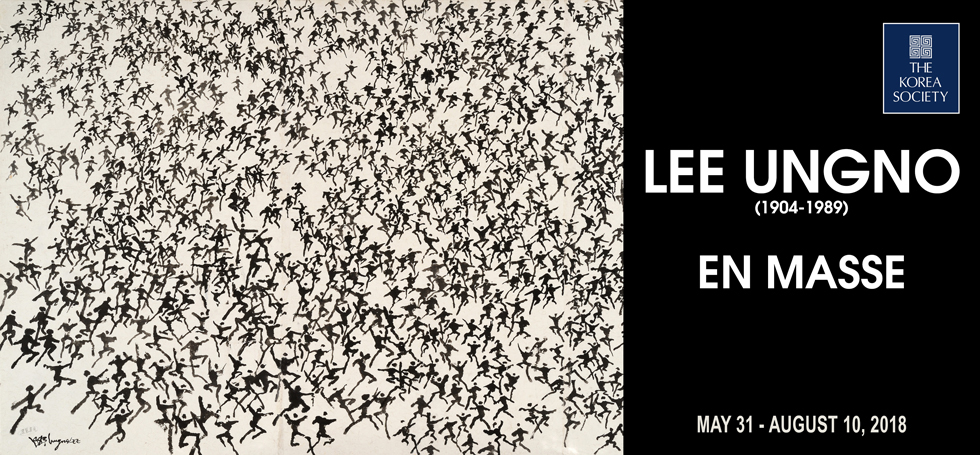
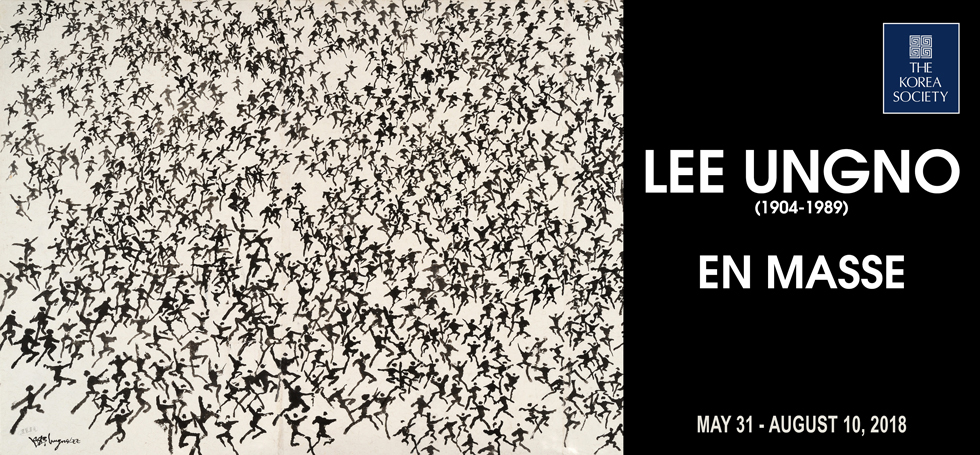
LEE UNGNO: EN MASSE

May 31 – August 10, 2018 | 

Lee Ungno (1904-1989) was among the most influential Asian contemporary painters of the twentieth century. Driven by a yearning for peace and unity amidst times of tumultuous violence, Lee conceived a contemporary form of art unique to Korean culture and history. As a member of the Parisian avant-garde, Lee introduced modern abstract art practices to the traditional forms of Korean art, creating a new style of contemporary painting tempered with Eastern ideologies. Deeply impassioned by the social movements of democratization in 1980s Korea, Lee’s “People” series aspired to illustrate the movement of the masses and their united march towards peace. His works from 1980 to his death in 1989 emphasize this recurring theme, with the image of crowds becoming a symbol of the rise of Korean people and democracy.

Master Series: Lee Ungno will be displayed in The Korea Society Gallery from May 31 to August 10, 2018.

This exhibition is presented in collaboration with Donghwa Cultural Foundation and Gana Art.


LEE UNGNO: EN MASSE


@ The Korea Society 
350 Madison Avenue, 24th Floor, NYC

Gallery hours: M-Th: 10 AM – 4:30 PM | F: 10 AM – 2:30 PM | by appointment

For more information, please contact Yoonjin (YJ) Choi or call (212) 759-7525 / Ext#307.


This program is supported, in part, by public funds from the New York City Department of Cultural Affairs in Partnership with the City Council.


Korea-US-China Relations

This by-invitation trilateral dialogue, organized by the National Committee on American Foreign Policy, examines relations among the United States, South Korea, and China. The National Committee brings together scholars and former officials from the three nations to address areas of common concern and challenges, to include that posed by North Korea’s nuclear and missile development. The meeting takes place subsequent to the planned third Inter-Korean summit and around the potential historic meeting between President Donald Trump and North Korean leader Kim Jong Un.


Korea-US-China Relations

Monday, May 21, 2018 | 9 AM


Evolution of North Korea’s Cyberthreat

Priscilla Moriuchi, Recorded Future’s Director for Strategic Threat Development, discusses the evolution of North Korea’s cyber strategy, including cryptocurrency theft, sabotage, espionage, and everyday internet usage by Pyongyang’s elites. Priscilla is the former head of the National Security Agency’s East Asia and Pacific cyberthreats office. Today, Priscilla uses a variety of tools to generate unparalleled depictions of North Korea’s state-level online behavior.


Evolution of North Korea’s Cyberthreat

featuring Priscilla Moriuchi

Thursday, May 10, 2018 | 6 PM


Of Interest:

How North Korea’s Hackers Became Dangerously Good

Operation GhostSecret’: North Korea Is Suspected in Intensifying Global Cyberattack

North Korea’s Ruling Elite Adapt Internet Behavior to Foreign Scrutiny 


Private Tour: A Comparative Study on Korean and Chinese Landscape Paintings at the Metropolitan Museum of Art

Join Dr. Soyoung Lee, Curator for Korean Art and Joseph Schiere-Dolberg Associate Curator of Chinese Paintings, in the Asian Art Department at The Metropolitan Museum of Art, on a private tour of two exquisite exhibitions featuring landscapes of Korea and China. It’s time to celebrate spring and indulge in beautiful depictions of nature from two different national perspectives on this exclusive art tour.

The tour is led by Dr. Young Yang Chung, Chair of the Program Committee for Arts & Culture at The Korea Society.

A Comparative Study on Korean and Chinese Landscape Paintings at the Metropolitan Museum of Art

Tuesday, May 8, 2018 | 4 – 6 PM

The Metropolitan Museum of Art
1000 Fifth Avenue
New York, NY 10028


Exhibition Descriptions

Diamond Mountains: Travel and Nostalgia in Korean Art
The Diamond Mountains—perhaps the most famous and emotionally resonant site on the Korean peninsula—is the theme of this international loan exhibition. Though the region has inspired cultural pride since ancient times, its location in what is today North Korea has kept it largely inaccessible in modern times. Featuring nearly 30 works—from delicately painted scrolls and screens to monumental modern and contemporary art—the exhibition presents the visual imagery of this iconic site from the 18th century to the present. Among the highlights is a designated Treasure from the National Museum of Korea: an album by Jeong Seon (1676–1759), who revolutionized Korean painting. Most of the objects on view have never before been displayed in the United States.

Streams and Mountains without End: Landscape Traditions of China
This exhibition, which showcases more than 120 Chinese landscape paintings in four rotations, offers insights into the tradition, revealing distinctions between types of landscape that might not be obvious at first glance. What appears to be a simple mountain dwelling, for example, turns out to be the villa of the painter’s friend, encoding a wish for his happy retirement. Similarly, what seems at first to be a simple study in dry brushwork turns out to be an homage to an old master, an expression of reverence for what has come before. Drawn primarily from The Met’s holdings and supplemented by a dozen private loans, the presentation is augmented by decorative art objects with landscape themes.


Streams of Wind: Piri

This unique concert presents Korean traditional music by artist gamin, performed alongside active New York-based American wind and percussion instrument players Ned Rothenberg, Jeff Fairbanks, and Satoshi Takeishi. Artists play Korean traditional instruments such as piri, the Korean bamboo-oboe as well as saxophone, clarinet, trombone, and shakuhachi, the Japanese flute. This performance encourages the audience to learn about the Korean wind instrument piri and pungnyu, an artistic form of recreation, intrinsic to a tasteful lifestyle and relevant to Koreans’ collective and individual entertainment culture.

Streams of Wind: Piri

Thursday, April 26, 2018 | 6:30 PM

Tickets
Members $15
Non-Members $25

Piri (피리)
The piri is a cylindrical double-reed bamboo oboe with eight finger holes, one in the back for the thumb and seven in the front. Its large reed and cylindrical bore gives it a mellower sound than that of many other types of oboe. The piri is an essential instrument and popularly used in both folk and classical court music.  


ABOUT THE ARTISTS

gamin
gamin is a New York-based distinguished soloist performing traditional Korean music as well as cross-disciplinary collaborations worldwide. Born in Seoul, she began studying piano at the age of six, violin at the age of nine, Korean music (piri major) at age fifteen. In 1998, she received her B.A. in Korean Music from Seoul National University. Her main instrument is the piri, a double reed instrument similar to the oboe. She also plays the taepyeonso (a double-reed horn) and saenghwang (a type of mouth organ). She is a yisuja, official holder of the Important Intangible Cultural Asset No. 46 for Classical Court Music, Classical Piri Music, and Daechita (royal military music). She has also dedicated herself to academic studies, receiving a D.M.A. (Doctor of Musical Arts) in Korean traditional music from Seoul National University. She was a member of the National Gugak Orchestra from 2004 to 2010 as assistant principal piri player. She was the recipient of a residency program grant from the Ministry of Culture, Sports and Tourism of the Republic of Korea in 2011 & 2012 and has toured with lecture concerts at Harvard University, University of Pennsylvania, Dartmouth College, Northeastern University, University of Hartford, among other places. Currently, gamin is a visiting scholar at the James Joo-Jin Kim Program in Korean Studies in University of Pennsylvania.


Jeff Fairbanks
Deemed a “rising multi-faceted star if not musical voice on the New York scene” by CriticalJazz, 2016 New York Foundation for the Arts Fellow Jeff Fairbanks has won a number of highly competitive awards for composing, including the USAF Sammy Nestico Award, the Jerome Fund, ASCAP Young Jazz Composer Award, and the BMI Charlie Parker Award. He has won eight grants from the following institutions: the Aaron Copland Fund, the Queens Council on the Arts, and New Music USA (formerly American Music Center). Fairbanks is a native of South Florida. After earning a Master’s degree in Jazz Composition from USF in 2005, he moved to New York to join the BMI Jazz Composer Workshop under Jim McNeely. Now, in addition to leading and writing for Project Hansori and other projects, Jeff freelances as a composer and performer and teaches with the New York Jazz Academy. He lives in Queens, NY with his wife, Heun Choi, and their two children.


Photo by Caroline Forbes
Edward Rothenberg
Composer/Performer Ned Rothenberg has been internationally acclaimed for both his solo and ensemble music, presented for the past 33 years on 5 continents. He performs primarily on alto saxophone, clarinet, bass clarinet, and the shakuhachi – an endblown Japanese bamboo flute. His solo work utilizes an expanded palette of sonic language, creating a kind of personal idiom all its own. In an ensemble setting, he leads the trio Sync, with Jerome Harris, guitars and Samir Chatterjee, tabla, works with the Mivos string quartet playing his Quintet for Clarinet and Strings and collaborates around the world with fellow improvisors. Recent recordings include this Quintet, The World of Odd Harmonics, Ryu Nashi (new music for shakuhachi), and Inner Diaspora, all on John Zorn’s Tzadik label, as well as Live at Roulette with Evan Parker, and The Fell Clutch, on Rothenberg’s Animul label.


Satoshi Takeishi
Satoshi Takeishi, drummer, percussionist, and arranger is a native of Mito Japan. He studied music at Berklee College of Music in Boston, Massachusetts. While at Berklee he developed an interest in the music of South America and went to live in Colombia following the invitation of a friend. He spent four years there and forged many musical and personal relationships. One of the projects he worked on while in Colombia was “Macumbia” with composer/arranger Francisco Zumaque in which traditional, jazz, and classical music were combined. With this group he performed with the Bogota Symphony Orchestra to do a series of concerts honoring the music of the most popular composer in Colombia, Lucho Bermudes. In 1986, he returned to the U.S. where he began work as an arranger in Miami. In 1987, he produced “Morning Ride” for jazz flutist Nestor Torres on Polygram Records. His interest expanded to the rhythms and melodies of the Middle East where he studied and performed with Armenian-American oud master Joe Zeytoonian. Since moving to New York in 1991, he has performed and recorded with many musicians such as Ray Barretto, Carlos “Patato” Valdes, Eliane Elias, Marc Johnson, Eddie Gomez, Randy Brecker, Dave Liebman, Anthony Braxton, Mark Murphy, Herbie Mann, Paul Winter Consort, Rabih Abu Khalil, Toshiko Akiyoshi Big Band, Erik Friedlander, and Pablo Ziegler to name a few. He continues to explore multi-cultural, electronic, and improvisational music with local musicians and composers in New York.


This program is supported, in part, by public funds from the New York City Department of Cultural Affairs in Partnership with the City Council.