Martial Law Implications for South Korea and the U.S.-Korea Relationship

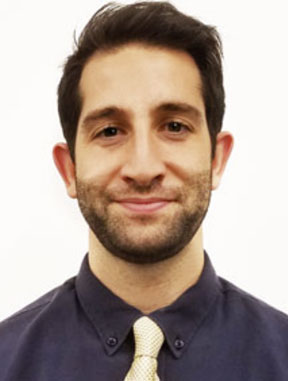
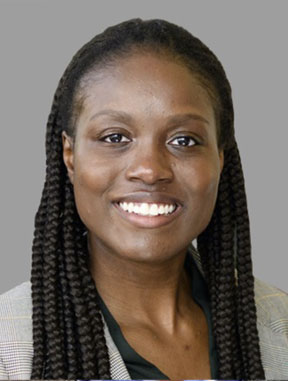
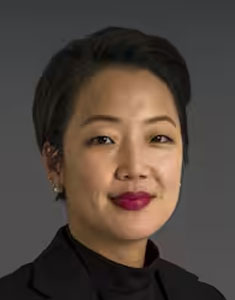
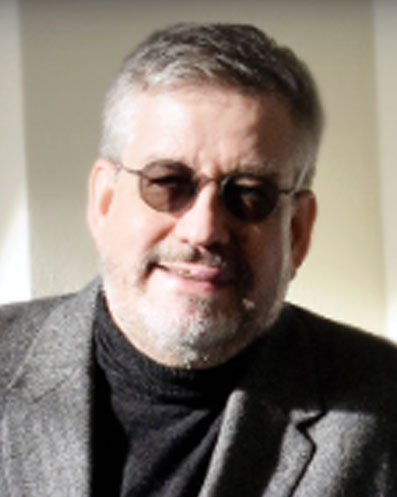
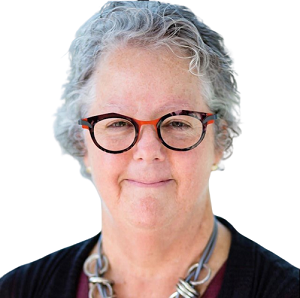
Join us for a program that explores recent political events in South Korea, including a brief history of martial law in Korea, the events leading up to the Yoon Suk Yeol administration’s decision to invoke Martial Law, the National Assembly’s counter-action, and the long term consequences of the episode. How will this affect Korea’s domestic politics, the U.S.-ROK Alliance relationship, and inter-Korean relations? The expert panel includes Michelle Ye Hee Lee, Tokyo bureau chief for The Washington Post, covering Japan and the Koreas, and Aram Hur, the Kim Koo Chair in Korean Studies and Assistant Professor of Political Science at the Fletcher School, Tufts University, in conversation with policy director Jonathan Corrado and policy program officer Chelsie Alexandre.

The Korea Society thanks our corporate sponsors and individual members for their generous support, which has made this program possible.


Martial Law Implications for South Korea and the U.S.-Korea Relationship

Wednesday, December 11, 2024 | 8 AM (EST)

The Korea Society
350 Madison Avenue, 24th Floor
New York, NY 10017


About the Speakers:


Aram Hur is the Kim Koo Chair in Korean Studies and Assistant Professor of Political Science at the Fletcher School, Tufts University. Her research focuses on nationalism and democracy, with special attention to issues of identity, integration, and democratic support in East Asia. Professor Hur is the author of Narratives of Civic Duty: How National Stories Shape Democracy in Asia (Cornell University Press, 2022), which won the 2023 Robert A. Dahl Award for best book on democracy by an untenured scholar from the American Political Science Association. Her research appears in leading disciplinary journals such as the British Journal of Political Science, Comparative Politics, and Comparative Political Studies and is widely cited in domestic and international media. She was selected as the 2021 Sherman Emerging Scholar by The Korea Society, a 2018-19 CSIS US-Korea NextGen Scholar, and is the recipient of the 2023 Gold Chalk Award for Teaching from the University of Missouri. She holds a Ph.D. in Politics from Princeton University, an M.P.P. from the Harvard Kennedy School, and a B.A. with honors from Stanford University.


Michelle Ye Hee Lee is The Washington Post‘s Tokyo bureau chief, reporting on Japan and the Korean Peninsula. Previously, she covered money and influence in politics and voting access on the national political enterprise and accountability team and was a reporter for The Post’s Fact Checker. Prior to joining The Post in 2014, she was a government accountability reporter at the Arizona Republic in Phoenix.

The Hungnam Rescue

Join us for an inspiring and heartwarming story timed for the holiday season about the largest wartime humanitarian evacuation in history. During The Korean War, naval and merchant ships from America and its allies rescued almost 100,000 North Korean refugees. Among these ships was a humble freighter, the SS Meredith Victory. Although it was built to accommodate only a few passengers and crew, a staggering 14,000 refugees were crammed on board, filling five cargo holds and the entire main deck. The ship carried them all to safety despite lacking food, mine detection equipment, doctors, interpreters, sanitation facilities, and heat or lights in the cargo holds. The 75th Anniversary of this incredible event in 2025 will be marked by a major long-term exhibition at the American Merchant Marine Museum (AMMM), U.S. Merchant Marine Academy, alongside exhibitions in Korea. Speakers include Burley Smith, who was just 21 when he took part in the rescue as Junior Third Mate fresh out of Kings Point. Today, aged 95, he is the last surviving crew member. Joining Burley is Dr. Joshua Smith, Director of the American Merchant Marine Museum, in conversation with Korea Society policy director Jonathan Corrado.


Sign Up Here to Attend the Event in Person


Sign Up Here to Receive the Viewing Link


The Korea Society thanks the Korea Foundation, our corporate sponsors, and individual members for their generous support, which has made this program possible. 


The Hungnam Rescue

Thursday, December 5, 2024 | 6 PM (EST)

The Korea Society
350 Madison Avenue, 24th Floor
New York, NY 10017


About the Speakers:


Dr. Joshua M. Smith grew up in the United States on Cape Cod and coastal Maine. He holds degrees from the University of St. Andrews in Scotland, Maine Maritime Academy, East Carolina University, and the University of Maine. He is author of Borderland Smuggling: Patriots, Loyalists, and Illicit Trade in the Northeast, 1783-1820, which explores smuggling on the Maine-New Brunswick border and won the John Lyman Award in American Maritime History in 2007. In 2009 he published Blockhouse and Battery: A History of Fort Edgecomb as part of that historic site’s bicentennial, and Battle for the Bay: The Naval War of 1812, which explores dimension of maritime warfare off New England’s coast. He has also edited a two volume collection of documents in American maritime history in conjunction with the National Maritime Historical Society entitled Voyages. He currently is an associate professor of humanities and Interim Coordinator of the American Merchant Marine Museum at the United States Merchant Marine Academy, in Kings Point, New York as well as serving as Department Head of the Humanities Department until September, 2015. Professor Smith lives in Port Washington, NY with his wife and daughter.


Burley Smith was born in Islip, New York, on January 9, 1929. As a child during the Great Depression, his family moved around but he spent most of his elementary and high school years in Atlantic City, New Jersey. He does not remember learning about Korea in school, but his strong interest in learning about what was happening in the world fueled his love for reading newspapers and learning about Korea. Shortly after graduating from the United States Merchant Marine Academy in Kings Point, New York, he was assigned as a Junior Third Mate to the SS Meredith Victory in Norfolk, Virginia. During his six month assignment in Korea, his vessel was part of the convoy for General MacArthur’s infamous Inchon Landing and the revered Heungnam Evacuation.

U.S.-ROK: INDISPENSABLE PARTNERSHIP AMID INCREASING GEOPOLITICAL COMPETITION

The Van Fleet Signature Policy Conference is The Korea Society’s landmark policy event. Held in the District Ballroom of The Mayflower Hotel in Washington D.C., the conference provides insights on the fast evolving threats and opportunities impacting the dynamic U.S.-Republic of Korea (ROK) relationship, including a panel on security, a panel on diplomacy, and a keynote address.

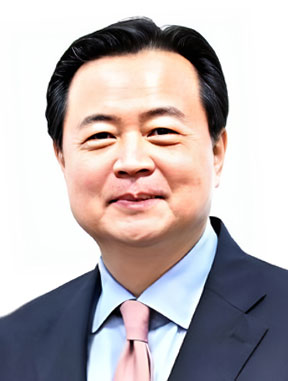
Korea Society president and CEO Thomas Byrne provides an introduction and a congratulatory message is provided by H.E. Cho Hyundong, Ambassador of the Republic of Korea to the U.S.

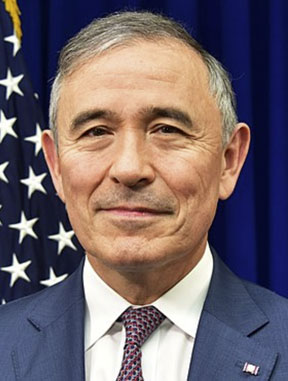
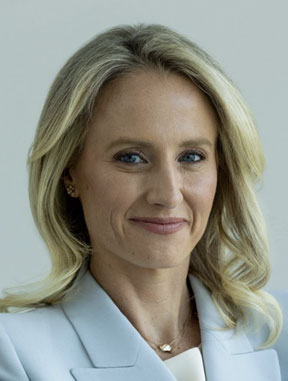
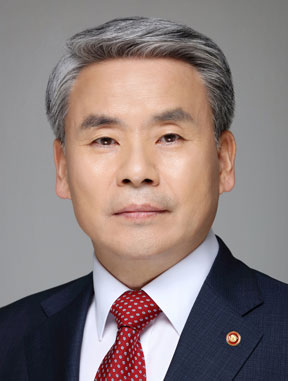
The security panel, “U.S.-ROK Alliance Evolving to Meet Future Challenges,” is moderated by Gen (Ret.) Walter Sharp and features former ROK Minister of National Defense Lee Jong-sup, Admiral (Ret.) Harry Harris, and Deputy Assistant Secretary for Nuclear Affairs Alexandra Bell.

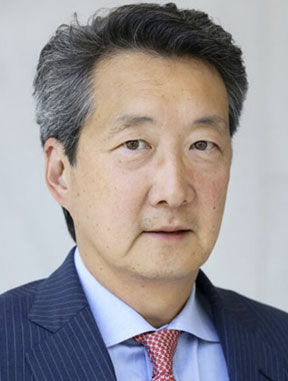
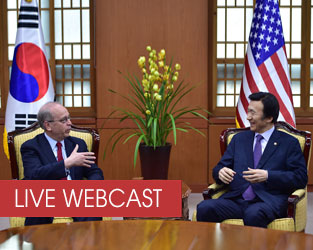
The diplomacy panel, “A Broadening U.S.-ROK Relationship in a Changing Regional and Global Landscape,” is moderated by Amb (Ret.) Kathleen Stephens and features former ROK Foreign Minister Yun Byung-se, Dr. Victor Cha, and Dr. Katrin Katz. Policy director Jonathan Corrado and Policy program officer Chelsie Alexandre are emcees.

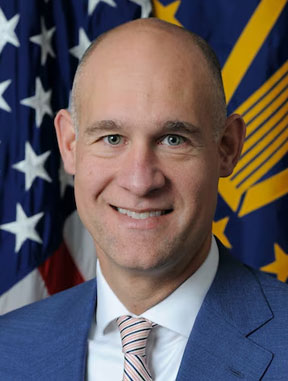
The keynote speaker is Principal Deputy Assistant Secretary of Defense for Indo-Pacific Security Affairs Jedidiah P. Royal.

A full program agenda and speaker bios can be seen below.

The panels and keynote speech will be livestreamed on The Korea Society’s YouTube channel, as well as released via podcast and covered on social media, including Twitter, Instagram, and Facebook. In-person attendance is invitation only, but all are welcome to watch the proceedings live on YouTube.

The Korea Society thanks our corporate sponsors and individual members for their generous support, which has made this program possible.


U.S.-ROK: INDISPENSABLE PARTNERSHIP
AMID INCREASING GEOPOLITICAL COMPETITION

2024 KOREA SOCIETY VAN FLEET SIGNATURE POLICY CONFERENCE

Friday, November 22, 2024 | 9:15 AM – 2 PM (EST)


The District Ballroom of The Mayflower Hotel
Washington, DC


Program Agenda 

  9:00 AM   Arrival, Registration, and Coffee.
  9:20 AM   Introduction and Overview of Themes
The Korea Society president and CEO Tom Byrne .
  9:30 AM   Congratulatory Message H.E. Cho Hyundong, Ambassador of the Republic of Korea to the US.
  9:40 AM   Security Panel
U.S.-ROK Alliance Evolving to Meet Future Challenges

Moderated by Gen (Ret.) Walter Sharp with Admiral (Ret.) Harry Harris, and former ROK Minister of National Defense Lee Jong-sup , and Deputy Assistant Secretary for Nuclear Affairs Alexandra Bell.
  10:50 AM   Diplomacy Panel
A Broadening U.S.-ROK Relationship in a Changing Regional and Global Landscape

Moderated by Amb (Ret.) Kathleen Stephens with former ROK Foreign Minister
Yun Byung-se, Dr. Victor Cha, and Dr. Katrin Katz.
  12:00 PM   Lunch and Keynote Address
Principal Deputy Assistant Secretary of Defense for Indo-Pacific Security Affairs Jedidiah P. Royal.
  2:00 PM   Adjourn.


About the Speakers:


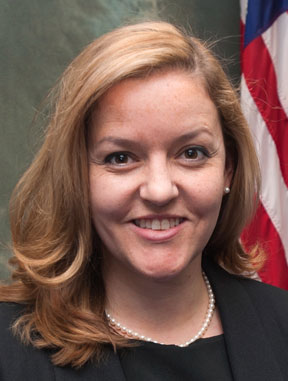
Alexandra Bell serves as the Deputy Assistant Secretary for Nuclear Affairs in the Bureau of Arms Control, Deterrence, and Stability (ADS). From 2017 to 2021, Bell was the Senior Policy Director at the Center for Arms Control and Non-Proliferation and the Council for a Livable World. Previously, Bell served as a Senior Advisor in the Office of the Under Secretary of State for Arms Control and International Security and as an Advisor in ADS, then named the Bureau of Arms Control, Verification and Compliance. Before joining the Department of State in 2010, she worked on nuclear policy issues at the Ploughshares Fund and the Center for American Progress. Bell received a Master’s degree in International Affairs from the New School and a Bachelor’s degree in Peace, War and Defense from the University of North Carolina at Chapel Hill. From 2001-2003, she was a Peace Corps Volunteer in Saint Elizabeth, Jamaica. Bell is a Member of the Council on Foreign Relations.


Thomas J. Byrne joined The Korea Society as President in August 2015. Since June 2023, he had also taken the role of “Honorary Ambassador,” appointed by the minister of MOTIE under the auspices of KOTRA/Invest Korea, to help promote trade and investment ties between Korea and the U.S. Byrne comes to the Society from Moody’s Investor Services, where he was Senior Vice President, Regional Manager, spokesperson, and Director of Analysis for the Sovereign Risk Group in the Asia-Pacific and Middle East regions, based in Singapore. Prior to that, he was the Senior Economist of the Asia Department at the Institute of International Finance in Washington D.C. from 1984 to 1996. Byrne has an MA in International Relations with a concentration in international economics from the Johns Hopkins School of Advanced international Studies and a BS in Biology from State University of New York at Stony Brook. Before his graduate work, he served in South Korea for three years as a U.S. Peace Corps volunteer. Byrne teaches as an adjunct professor at Columbia University’s School of International and Public Affairs in New York City and at Georgetown University’s Graduate School of Foreign Service in Washington, D.C. As president, he has written opinion articles published in the Wall Street Journal, Bloomberg View, The New York Times, The Washington Post, The Financial Times, The National Interest, and Reuters Breakingviews.


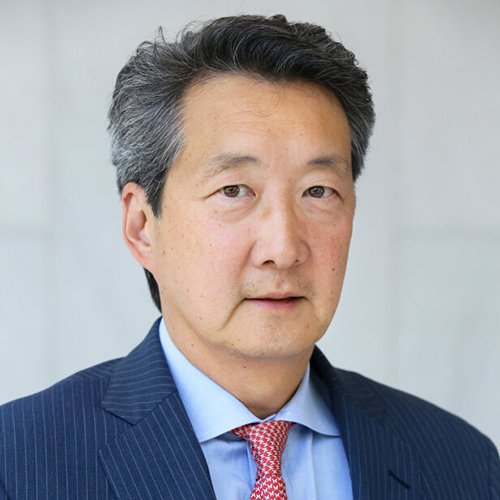
Victor Cha is president of the Geopolitics and Foreign Policy Department and Korea Chair at the Center for Strategic and International Studies (CSIS). He is also the distinguished university professor and professor of government at Georgetown University. He was appointed in 2021 by the Biden administration to serve on the Defense Policy Board in an advisory role to the secretary of defense. From 2004 to 2007, he served on the National Security Council (NSC) and was responsible for Japan, Korea, Australia/New Zealand, and Pacific Island nations. Dr. Cha was U.S. deputy head of delegation at the Six Party Talks and received two outstanding service commendations during his tenure at the NSC. He is the author of seven books, including the award-winning Alignment Despite Antagonism: The United States-Korea-Japan Security Triangle (Stanford, 1999) (winner of the 2000 Ohira Book Prize), The Impossible State: North Korea, Past and Future (Ecco, 2012) selected by Foreign Affairs as a “Best Book on the Asia-Pacific for 2012″, Powerplay: Origins of the American Alliance System in Asia (Princeton, 2018), and Korea: A New History of South and North (Yale, 2023). Dr. Cha is a two-time Fulbright scholar, former Olin fellow at Harvard, and former Hoover, CISAC, and Koret fellow at Stanford. He currently serves on 10 editorial boards of academic journals and is co-editor of the Contemporary Asia book series at Columbia University Press. He serves on the board of the National Endowment for Democracy and is a senior fellow at the George W. Bush Institute. He is also a foreign affairs contributor for MSNBC and NBC News. Dr. Cha received his PhD, MIA and BA degree from Columbia University and a BA Honors from Oxford University.


Ambassador Hyundong Cho, the 28th Ambassador of the Republic of Korea to the United States, has had a distinguished career in the Korean Foreign Service, most recently serving as First Vice Minister of the Ministry of Foreign Affairs (MOFA) from May 2022 to April 2023. Since joining the Foreign Service in 1985, Ambassador Cho has held numerous key roles focused on Korea-U.S. relations and North Korean affairs. His positions have included Deputy Minister for Planning and Coordination, Ambassador for Public Diplomacy, Director-General for North Korean Nuclear Affairs, Deputy Secretary for National Security Strategy in the President’s Office, and Director of North America Division III. He has served multiple assignments in the United States, including as First Secretary in 2000, Deputy Chief of Mission in 2013, and now as Ambassador. He has also served in Geneva, Mongolia, and India.


Admiral Harry B. Harris Jr. commanded the U.S. Pacific Command (USPACOM), now known as the Indo-Pacific Command (INDOPACOM), from May, 2015 to May, 2018. He is the first Asian-American to hold four-star rank in the U.S. Navy and the first to head USPACOM. Prior to USPACOM, he commanded the U.S. Pacific Fleet. Other operational commands include the U.S. 6th Fleet, Striking and Support Forces NATO, Joint Task Force Guantanamo, Patrol and Reconnaissance Wing 1, and Patrol Squadron 46. He was the 23rd United States Ambassador to the Republic of Korea. Harris’ personal decorations include the State Department’s Distinguished Honor Award, the Defense Distinguished Service Medal, three Navy Distinguished Service Medals, three Defense Superior Service Medals, three Legions of Merit, two Bronze Stars, and the Air Medal. He received the Republic of Korea’s Tong-il medal in 2014. He has also been decorated by the governments of Australia, France, Japan, Mongolia, the Philippines, and Singapore. He graduated from the U.S. Naval Academy in 1978 and holds master’s degrees from Harvard’s Kennedy School of Government and Georgetown’s School of Foreign Service.


Dr. Katrin Fraser Katz, is The Korea Society’s inaugural Van Fleet Nonresident Senior Fellow. Dr. Katz is a former director for Japan, Korea, and oceanic affairs on the staff of the National Security Council, where she served from 2007 to 2008. She is also a Professor of Practice in the Department of Political Science and the Master of Arts in International Administration (MAIA) program at the University of Miami and an Adjunct Fellow (Non-resident) in the Office of the Korea Chair at the Center for Strategic and International Studies (CSIS) in Washington, DC. Previously, she was a special assistant to the assistant secretary for international organization affairs at the U.S. Department of State and an analyst at the Central Intelligence Agency. She was previously an Adjunct Assistant Professor in the Department of Political Science at Columbia University and has also taught at Georgetown University. In 2017, Dr. Katz received the inaugural Sherman Family Korea Emerging Scholar Lecture Series award from The Korea Society. Dr. Katz’s research, which has been supported by grants from the Korea Foundation and the Horowitz Foundation for Social Policy, explores the interplay of cooperation and conflict in East Asia’s political, economic, and security dynamics. She holds a Ph.D. in political science from Northwestern University; a master’s degree in East Asian and international security studies from the Fletcher School of Law and Diplomacy, where she was awarded the John C. Perry Scholarship for East Asian Studies; and a bachelor’s degree, magna cum laude, in international relations and Japanese from the University of Pennsylvania.


Lee Jong-Sup served as the Minister of National Defense of the Republic of Korea from May 2022 until October 2023. He is a retired Lieutenant General from the Republic of Korea Army, who last served as the Vice Chairman of ROK Joint Chiefs of Staff. He graduated from the Korea Military Academy and was commissioned as a Second Lieutenant in 1984, and completed the Infantry Officer’s Advanced Course at Fort Benning, Georgia in 1988. He received a Ph.D. degree in International Relations from the University of Tennessee (Knoxville) in 1999. LTG (R) Lee previously served as the Deputy Director General for Policy Planning Bureau at the Ministry of National Defense, the Assistant Secretary at the Presidential Office for Foreign Affairs and National Security, the Special Assistant for Defense Policy to the Chief of National Intelligence Service, the Chief Director of Combined Defense Transformation Group (JCS), and Commander of 2nd Infantry Division and 7th Mechanized Corps. He received decorations including the Order of National Security Merit, Cheonsu Medal (2014) and the Order of National Security Merit, Gugseon Medal(2019). He also received U.S. Legion of Merit (2019) and Turkish Armed Forces Legion of Merit (2018).


Jedidiah P. Royal, a career member of the Senior Executive Service, is the Principal Deputy Assistant Secretary of Defense for Indo-Pacific Security Affairs. He oversees IPSA’s extensive portfolio — spanning China, Taiwan, and Mongolia; East Asia; and South and Southeast Asia – and works across the national security enterprise to synchronize IPSA activities with foreign policy objectives. Before joining IPSA, Mr. Royal served as Deputy Director of the Defense Security Cooperation Agency, where he coordinated implementation of a diverse array of Security Cooperation programs. Prior to joining DSCA, Mr. Royal served as the Director of Defense Policy and Plans at the U.S. Mission to the North Atlantic Treaty Organization. In this capacity, Mr. Royal represented the United States to the NATO alliance on defense policy, capability, planning, deterrence, burden sharing and partnership matters. Prior to his position at NATO, Mr. Royal served in a variety of positions in the Office of the Secretary of Defense, most recently as Acting Deputy Assistant Secretary of Defense for Afghanistan, Pakistan and Central Asia affairs. He was also detailed to the National Security Council at the White House as Director for Afghanistan and Pakistan from 2013-2015; served as the Director for Cooperative Threat Reduction Policy in the office of Countering Weapons of Mass Destruction from 2010-2013; and served on exchange in Canberra, Australia as the Director of Strategic Advice in the Australian Department of Defense from 2007-2010. Mr. Royal was also assigned to the Counter Proliferation Policy office and the Office of Negotiations Policy. Mr. Royal started his career in the United States Senate as Legislative Assistant for Near East and South Asia Policy at the Foreign Relations Committee. Mr. Royal holds the degree of M. PHIL from the University of New South Wales where his research and writing focused on the economic-security nexus, in particular the consequences of economic volatility on security relationships. He completed his undergraduate studies in International Affairs at The George Washington University.


General Walter “Skip” Sharp was born in Morgantown, West Virginia while his father was fighting in the Korean War. General Sharp graduated from West Point in 1974 and was commissioned as an armor officer. He earned an M.S. in operations research and system analysis from Rensselaer Polytechnic Institute and is a graduate of the Army War College. General Sharp commanded the United Nations Command, Republic of Korea-United States Combined Forces Command and United States Forces Korea from 2008 to 2011. He also commanded troops in Operations Desert Shield and Desert Storm, Operation Uphold Democracy in Haiti and the Multinational Division (North) of the NATO-led Stabilization Force in Bosnia. General and Mrs. Sharp live in Alexandria, VA. He is a Director on The Korea Society BOD and former Chairman of BOD for the Military Officers Association of America. He is also on the BOD for ARTIS, LLC and consults for several U.S. companies focused on supporting our military and veterans. General Sharp is also involved in Northeast Asia and Korea strategy and policy discussions at several Washington, D.C. area Think Tanks.


Ambassador (ret) Kathleen Stephens was a career diplomat in the United States Foreign Service, 1978-2015. She was U.S. Ambassador to the Republic of Korea 2008-2011, the first woman and first Korean-speaker in that position. Other overseas assignments included postings to Trinidad and Tobago, China, Korea, former Yugoslavia, Portugal, Northern Ireland, where she was U.S. Consul General in Belfast during the negotiations culminating in the 1998 Good Friday Agreement, and India, where she was U.S. Chargé d’affaires (2014-2015).  Ambassador Stephens served in a number of policy positions in Washington at the Department of State and the White House. These included acting Under Secretary of State for Public Diplomacy and Public Affairs (2012), Principal Deputy Assistant Secretary of State for East Asian and Pacific Affairs (2005-2007), Deputy Assistant Secretary of State for European and Eurasian Affairs (2003-2005), and National Security Council Director for European Affairs at the Clinton White House. Ambassador Stephens was William J. Perry Fellow for Korea at Stanford University’s Shorenstein Asia Pacific Research Center, 2015-2018. She has served as President and CEO of the Korea Economic Institute of American (KEIA) from 2018 to 2023. She is board chair of The Korea Society and board vice-chair of The Asia Foundation.  Ambassador Stephens studied at Prescott College, University of Hong Kong and Oxford University, and holds a BA Honors from Prescott. She holds a Master’s degree from Harvard University’s Kennedy School. In the 1970s, she was a Peace Corps volunteer in Korea.


Yun Byung-se served as the Minister of Foreign Affairs of the Republic of Korea from March 2013 until June 2017 (longest serving Foreign Minister after 1981). Prior to that, he served as Deputy National Security Adviser (Senior Secretary) to the President responsible for Korea’s foreign, defense and unification policy and as Senior Coordinator at the National Security Council of the Presidential Office.

As a career diplomat with 37 year-long experience, his foreign postings include the United States, the United Nations in New York and Geneva, Singapore and Australia. At the headquarters, he was Deputy Minister for Foreign Affairs and Trade when Ban Ki-moon, former UN Secretary-General, was the Foreign Minister. He graduated from Seoul National University’s College of Law and received a master’s degree from Johns Hopkins University’s Paul Nitze School of Advanced International Studies (SAIS). He was a Visiting Professor at the Graduate School of International Studies (GSIS) of Sogang University in Seoul from 2009 until early 2013.

He is currently Chairman of Seoul International Law Academy (SILA), Co-Chair of REAIM Global Commission(AI), and Chairman of NEAR Global Survey Project. He is also on the board of Korea Peace Foundation and the NEAR Foundation and is affiliated with several global ex-leaders’ forums and projects on international peace and security, non-proliferation and geopolitical risks. His global survey report 2023 on the world order was published in English and in Korean by the NEAR Foundation under the title of “Quo Vadit Mundus: Competing for Order in a Fragmenting World”.

He regularly contributes his writings to the Korea JoongAng Daily and the Korea Times and moderates the annual CSIS-JoongAng Conference and other forums frequently.


Jonathan Corrado is Director of Policy for The Korea Society. He produces programming and conducts research on a range of security, diplomacy, and socioeconomic issues impacting the U.S.-Korea Alliance, the Korean Peninsula, and Northeast Asia. He teaches a class titled, “North Korea: State, Society, Diplomacy, and Security” at The School of International and Public Affairs (SIPA) at Columbia University and SUNY Stony Brook University. Jonathan is a member of The National Committee on North Korea (NCNK). He was previously a non-resident James A. Kelly Fellow at Pacific Forum, an Emerging Leader at the National Committee on American Foreign Policy (NCAFP), and a contributor to NK Pro. He has published peer-reviewed articles in the International Journal of Intelligence and CounterIntelligence, the Journal of Indo Pacific Affairs, the Journal of the Royal Society for Asian Affairs, and Asian Politics & Policy. He has also published analysis in diverse outlets such as Foreign Affairs, Foreign Policy, War on the Rocks, 38 North, The Diplomat, The Japan Times, The National Interest, Yahoo News, Pacific Forum PacNet and Issues & Insights, NK News, and NK Pro. He has been quoted in The Washington Post, Bloomberg, Reuters, The South China Morning Post, The Korea Times, Radio Free Asia, and Voice of America. Jonathan was previously a translator for Daily NK (Korean to English), an FCPA due diligence investigator for Steele Compliance Solutions, a graduate fellow for McLarty Associates, and a volunteer analyst for the Congressional Research Service. Jonathan received an MA from Georgetown University’s Asian Studies Program in the Walsh School of Foreign Service and a BA in anthropology and philosophy from the University of Maryland College Park.


Chelsie Alexandre is the Policy Program Officer at The Korea Society. She works with the Director of Policy to develop and implement events that address issues shaping the dynamics of U.S.-ROK relations, the Korean peninsula, and Northeast Asia. Before joining The Korea Society, Chelsie received a Fulbright Research award to conduct research in South Korea on the role of middle power countries in the Korean peace process with Korea University’s Peace and Democracy Institute. During her time in Seoul, she also briefly reported on domestic Korean affairs for The Diplomat. Prior to her current role, Chelsie was a Partnerships Coordinator at the New York City-based nonprofit, The Concordia Summit, and she worked as a Legal Analyst at the global law firm Kobre & Kim. Chelsie also had previous experience as a research Intern at The Korea Society. She graduated with a B.A. in Politics from Princeton University, with minors in East Asian Studies and Diplomacy.


Sherman Family Korea Emerging Scholar Lecture 2024


The Korea Society is pleased to announce that the eighth annual Sherman Family Korea Emerging Scholar Lecture Awardee is Dr. David Krolikoski, assistant professor at the University of Hawai’i. In his lecture Dr. Krolikoski examines The Silence of Love (Nim ŭi ch’immuk, 1926), the acclaimed collection of eighty-eight poems by Han Yong-un (1879-1944), a Buddhist monk and public intellectual. Although the book is commonly celebrated as a metaphor for colonial subjugation, Dr. Krolikoski complicates this established reading to argue that its artistic significance lies in Han’s paradigm-shifting use of colonial poetry as a medium of communal expression during a time of national crisis.

The lecture explores how Han uses fiction and symbols to collapse the boundary between private and public address, transmuting the individual voice of his poetic speaker into a platform for a community. Dr. Krolikoski also contextualizes The Silence of Love within the history of the translation of foreign poetic forms into Korea during the 1920s, with a focus on how Han incorporated elements from the lyric and prose poem into his verse. Dr. Emily Jungmin Yoon, author of Find Me as the Creature I Am (Alfred A. Knopf, 2024) and assistant professor of Korean literature at the University of Hawaiʻi at Mānoa, will serve as moderator.


2024 Sherman Family Korea Emerging Scholar Lecture
The Politics of The Silence of Love in Colonial Korea
David Krolikoski

Tuesday, November 19, 2024 | 6 PM (EST)


The Korea Society
350 Madison Avenue, 24th Floor
New York, NY 10017


About the Speaker:


David Krolikoski is assistant professor of Korean literature at the University of Hawai’i at Mānoa. He specializes in modern Korean poetry, colonial literature, and translation. Krolikoski’s scholarship has appeared in Azalea: Journal of Korean Literature & Culture, Japanese Language and Literature, The Routledge Companion of Korean Literature, Hyŏndae sihak, and Sima, and his translations of Korean literature have been published by The Margins and Chicago Review, among other outlets. His first book manuscript, titled Lyrical Translation: The Creation of Modern Poetry in Colonial Korea, is forthcoming from the University of Hawaiʻi Press. Dr. Krolikoski holds a PhD and MA from the University of Chicago in East Asian Languages and Civilizations and a BA from the University of California, Berkeley.


About the Moderator:


Emily Jungmin Yoon is the author of Find Me as the Creature I Am (Alfred A. Knopf, 2024). Her first poetry collection A Cruelty Special to Our Species (Ecco, 2018) was a finalist for the 2020 Kate Tufts Discovery Award and winner of the 2019 Devil’s Kitchen Reading Award. Yoon works as the poetry editor for The Margins, the literary magazine of the Asian American Writers’ Workshop, and as an assistant professor of Korean literature at the University of Hawaiʻi at Mānoa. Dr. Yoon holds a PhD in East Asian Language and Civilizations from the University of Chicago.


About the Award:

The Sherman Family Korea Emerging Scholar Lecture Award was established in 2017 through the generous support of Mr. and Mrs. Philp Sherman and family. Its primary goal is to encourage U.S. thought leadership on Korea among a new generation. The annual award competition opens in early spring and the lecture is hosted in-person at the Society and streamed virtually in the fall of each year. The award is presented across disciplines to emerging thought leaders from a wide range of disciplines and backgrounds working in the U.S.

Prior awardees have explored topics in the arts, architecture, industrial policy, political science and technology and have included Ph.D. candidates, junior professors (tenure and non-tenure track), researchers and professionals. Questions can be directed to linda.tobash@koreasociety.org.

Click here for further information on the application process.
Click here to view presentations of former award winners.


You May Also Enjoy:

The Return of Industrial Policy: Lessons from Korea with Munseob Lee Korea’s Changing National Story and Democratic Future with Aram Hur P’ansori Mountain Pilgrimages: Land as Interlocutor in Contemporary Korean Oral Performance and Literature with Ivanna Sang Een Yi Imagining the Impossible: The DMZ as a Productive Territory with Dongsei Kim

Expert Take: U.S.-North Korea Relations with former Deputy Secretary of State Stephen Biegun

Join us for a conversation with Stephen Biegun, former U.S. Deputy Secretary of State and Special Representative for North Korea. This discussion will examine past diplomatic efforts to achieve the denuclearization of North Korea, lessons learned, and future prospects. What are Mr. Biegun’s takeaways from his summitry engagement with North Korea? Is it still possible today to pursue mutually acceptable waypoints within the confines of a grand bargain or should more modest goals be pursued? How do geopolitical shifts and hardening regional rivalries undermine the U.S. and North Korean interest in improving bilateral relations? How does the public discourse create reductive dichotomies between deterrence vs. diplomacy and human rights vs. humanitarian efforts? The moderator for this program is Korea Society policy director Jonathan Corrado. 


In-person attendance is restricted to Kim Koo Fellows and Korea Society members ONLY. Please click below to see membership options. Korea Society members will receive a separate in-person invitation. 


The Korea Society thanks the Kim Koo Foundation, our corporate sponsors, and individual members for their generous support, which has made this program possible.


Expert Take: U.S.-North Korea Relations

with former Deputy Secretary of State Stephen Biegun

Tuesday, November 12, 2024 | 10 AM (EST)


The Korea Society
350 Madison Avenue, 24th Floor
New York, NY 10017


About the Speakers:


Stephen E. Biegun is senior vice president of Global Public Policy at The Boeing Company. In this role, he is responsible for advising and executing on Boeing’s global public policy matters in support of the company’s priorities and optimizing relationships with key stakeholders in the U.S. and around the world. He is also a member of the company’s Executive Council. Prior to Boeing, Stephen served as senior advisor at Macro Advisory Partners since 2021 assisting corporate leaders in minimizing geopolitical risk and business disruption in global markets. He has more than three decades of international affairs experience in government and the private sector, including high-level government service with the Department of State, the White House and the United States Congress. 

In 2021, Stephen concluded his most recent government service as the U.S. Deputy Secretary of State, to which he was confirmed by the Senate with a strong bipartisan vote of 90-3. On August 23, 2018, Secretary Pompeo appointed Stephen E. Biegun as the U.S. Special Representative for North Korea, responsible for leading U.S. efforts to achieve President Trump’s goal of the final, fully verified denuclearization of North Korea, as agreed to by Chairman Kim Jong Un at the Singapore summit. As Special Representative, on behalf of the Secretary of State he directed all U.S. policy on North Korea, led negotiations, and spearheaded U.S. diplomatic efforts with allies and partners.

Breaking Bad: South Korea’s Nuclear Option

Is South Korea on the verge of a nuclear breakout? Join us for a discussion about South Korea’s nuclear option with Victor Cha, the president of the Geopolitics and Foreign Policy Department and Korea Chair at the Center for Strategic and International Studies (CSIS) and the distinguished university professor at Georgetown University. Much of the speculation in Washington and Seoul about South Korea’s nuclear ambitions has been informed by a handful of recent public opinion polls. This has created an echo chamber effect in Washington and Seoul where some experts have accepted South Korean nuclear ambitions as a reality. Using evidence derived from multi-question polling of South Korean strategic elites available to read here, Dr. Cha finds that concerns about a nuclear South Korea are exaggerated: 66 percent of South Korean strategic elites oppose nuclearization and confidence in the United States as a security provider remains strong. However, if the U.S. withdraws ground troops from South Korea or otherwise triggers abandonment fears, half of the strategic elites who presently oppose nuclearization would change their minds. This program is moderated by Korea Society policy director Jonathan Corrado.  

This program is co-sponsored by the Weatherhead East Asian Institute at Columbia University and the Columbia SIPA Korea Focus student club.  


The Korea Society thanks the Korea Foundation, our corporate sponsors, and individual members for their generous support, which has made this program possible. 

Breaking Bad: South Korea’s Nuclear Option

Friday, November 8, 2024 | 12 PM (EST)


The Korea Society
350 Madison Avenue, 24th Floor
New York, NY 10017


About the Speakers:


Victor Cha is president of the Geopolitics and Foreign Policy Department and Korea Chair at the Center for Strategic and International Studies (CSIS). He is also the distinguished university professor and professor of government at Georgetown University. He was appointed in 2021 by the Biden administration to serve on the Defense Policy Board in an advisory role to the secretary of defense. From 2004 to 2007, he served on the National Security Council (NSC) and was responsible for Japan, Korea, Australia/New Zealand, and Pacific Island nations. Dr. Cha was U.S. deputy head of delegation at the Six Party Talks and received two outstanding service commendations during his tenure at the NSC. He is the author of eight books, including the award-winning Alignment Despite Antagonism: The United States-Korea-Japan Security Triangle (Stanford, 1999) (winner of the 2000 Ohira Book Prize), The Impossible State: North Korea, Past and Future (Ecco, 2012) selected by Foreign Affairs as a “Best Book on the Asia-Pacific for 2012″, Powerplay: Origins of the American Alliance System in Asia (Princeton, 2018), Korea: A New History of South and North (Yale, 2023), and The Black Box: Methods and Data in the Study of Korean Unification and North Korea (Columbia University Press, 2024). Dr. Cha is a two-time Fulbright scholar, former Olin fellow at Harvard, and former Hoover, CISAC, and Koret fellow at Stanford. He currently serves on 10 editorial boards of academic journals and is coeditor of the Contemporary Asia book series at Columbia University Press. He serves on the board of the National Endowment for Democracy and is a senior fellow at the George W. Bush Institute. He is also a foreign affairs contributor for MSNBC and NBC News. Dr. Cha received his PhD, MIA and BA degree from Columbia University and a BA Honors from Oxford University.

Expert Take: U.S.-Korea Relations Amid Geopolitical Competition with Daniel Russel

Join us for an expert discussion on the impact of intensifying competition on the U.S.-Korea relationship. How can the allies evolve together to face shared threats as geopolitical rivalries intensify in Northeast Asia? What is the role of trilateral U.S.-Korea-Japan collaboration? How should North Korea’s increasing provocations and alignment with Russia and China be addressed? Featuring insights from Daniel Russel, Vice President for International Security and Diplomacy at the Asia Society Policy Institute (ASPI). It is moderated by policy program officer Chelsie Alexandre.


In-person attendance is restricted to Kim Koo Fellows and Korea Society members ONLY. Please click below to see membership options. Korea Society members will receive a separate in-person invitation. 


 The Korea Society thanks the Kim Koo Foundation, our corporate sponsors, and individual members for their generous support, which has made this program possible.


Expert Take: U.S.-Korea Relations Amid Geopolitical Competition with Daniel Russel

Thursday, November 7, 2024 | 4 PM (EST)


The Korea Society
350 Madison Avenue, 24th Floor
New York, NY 10017


About the Speakers:


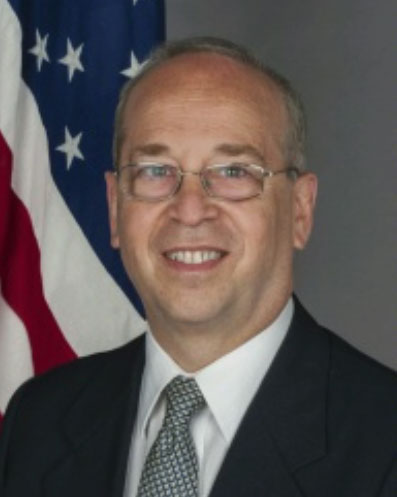
Daniel Russel is Vice President for International Security and Diplomacy at the Asia Society Policy Institute (ASPI). Previously he served as a Diplomat in Residence and Senior Fellow with ASPI for a one year term. A career member of the Senior Foreign Service at the U.S. Department of State, he most recently served as the Assistant Secretary of State for East Asian and Pacific Affairs. Prior to his appointment as Assistant Secretary on July 12, 2013, Mr. Russel served at the White House as Special Assistant to the President and National Security Council (NSC) Senior Director for Asian Affairs. During his tenure there, he helped formulate President Obama’s strategic rebalance to the Asia Pacific region, including efforts to strengthen alliances, deepen U.S. engagement with multilateral organizations, and expand cooperation with emerging powers in the region.

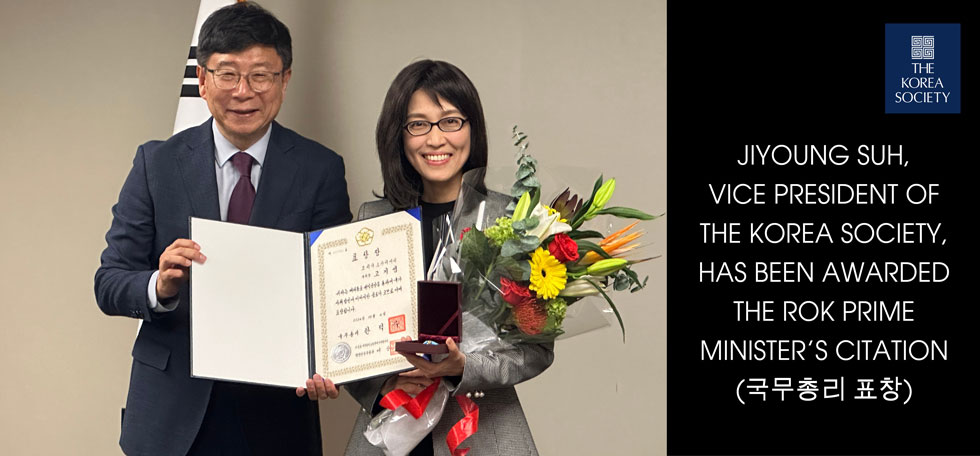
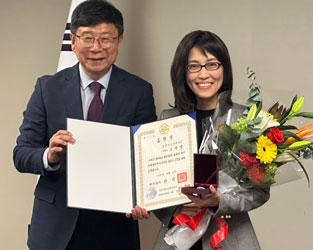
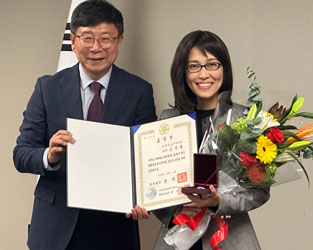
Jiyoung Suh, Vice President of The Korea Society, has been awarded the ROK Prime Minister’s Citation

Jiyoung Suh, Vice President of The Korea Society

Jiyoung Suh, Vice President of The Korea Society

We are pleased to announce that Jiyoung Suh, Vice President of The Korea Society, has been awarded the ROK Prime Minister’s Citation (국무총리 표창) in recognition of her exceptional contributions to advancing the Korean American community and the enhancement of national Korean prestige in the United States.

With over 11 years of dedicated service at The Korea Society, she has played a vital role in building these networks and has supported efforts to enhance the rights, status, and development of human resources within the Korean diaspora.

Expert Take: The Moscow-Pyongyang Connection, Then and Now, with Dr. Kathryn Weathersby

This program explores the historical and contemporary relationship between North Korea and Russia. How did the Kim Regime’s relationship with the Soviet Union evolve during The Korean War, early Cold War period, and the Sino-Soviet split? How did triangular diplomacy with the People’s Republic of China play a shaping role in the relationship? How should we characterize relations from the end of the Cold War period, including South Korea’s Nordpolitik, the dissolution of the Soviet Union, and the emergence of the Russian Federation? Finally, how should we view recent developments, including weapons transfers, military cooperation, and policy coordination, in the context of the historical relationship? This discussion features historian Dr. Kathryn Weathersby and is moderated by policy director Jonathan Corrado.


The Korea Society thanks the Kim Koo Foundation, our corporate sponsors, and individual members for their generous support, which has made this program possible. 


The Moscow-Pyongyang Connection, Then and Now, with Dr. Kathryn Weathersby

Tuesday, October 29, 2024 | 4 PM (EDT)


The Korea Society
350 Madison Avenue, 24th Floor
New York, NY 10017


About the Speaker:


Dr. Kathryn Weathersby is Adjunct Professor of Asian Studies in the Edmund A. Walsh School of Foreign Service at Georgetown University. A specialist on the Korean War and the history of North Korea, she previously taught in the Department of History of Korea University, Seoul, and at the US-Korea Institute of the School of Advanced International Studies, The Johns Hopkins University, in Washington, DC. In the 1990s she conducted pioneering research in Russian archives on the establishment of the DPRK and the Korean War and has written and lectured widely on these subjects. In 2014 the Ministry of Patriots and Veterans Affairs of the Republic of Korea honored her work by awarding her the Medal of Civilian Merit.


Next Steps for U.S.-Korea Relations: Key Diplomatic and Economic Developments


Join us for a special conference on U.S.-Korea relations produced in partnership with the East Asia Foundation (EAF) and the National Committee on American Foreign Policy (NCAFP). This forum provides a venue for expert discussion on the security, diplomatic and economic dimensions of the U.S.-Republic of Korea relationship, and includes a bipartisan coalition from Korea’s National Assembly. 

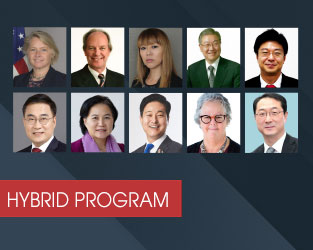
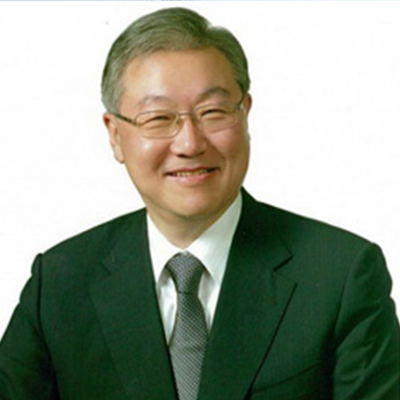
The program commences with welcoming remarks from former South Korean Foreign Minister Kim Sung-hwan, Korea Society president and CEO Tom Byrne, and NCAFP president and CEO Ambassador (Ret.) Susan M. Elliott. 

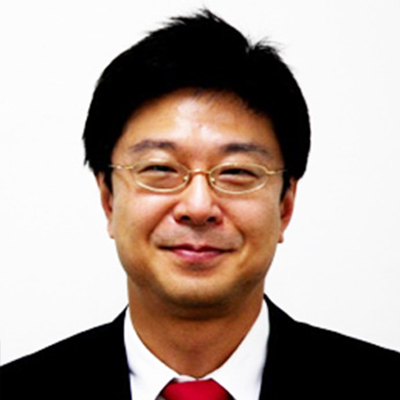
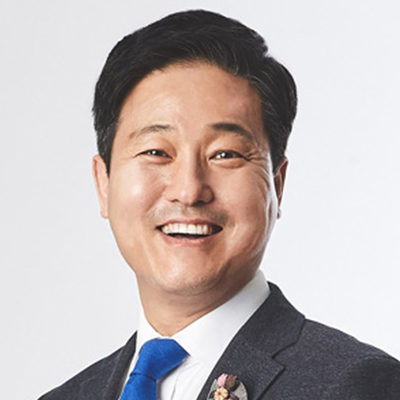
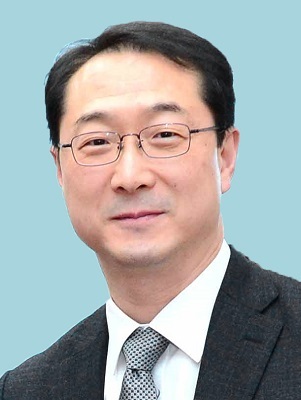
The security and diplomacy panel features critical insights from the National Assembly Member Kim Young-bae, Vice Chairman of the Foreign Affairs Committee of the PPP Ambassador Kim Gunn, Vice Chair of the Foreign Affairs and Unification Committee, Dean of Sogang University’s Graduate School of International Studies Kim Jae-chun, and Director of the Korea Program at The Stimson Center Jenny Town. This session is moderated by Director of the Forum on Asia-Pacific Security at NCAFP Susan Thornton, who retired from the State Department after a 28-year diplomatic career focused primarily on East and Central Asia. 

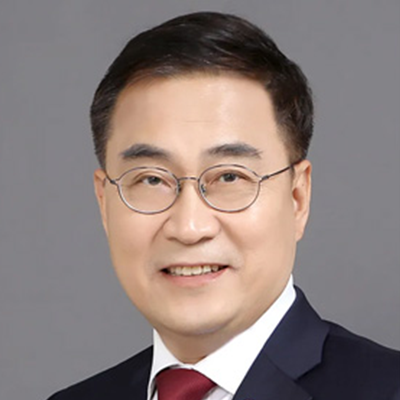
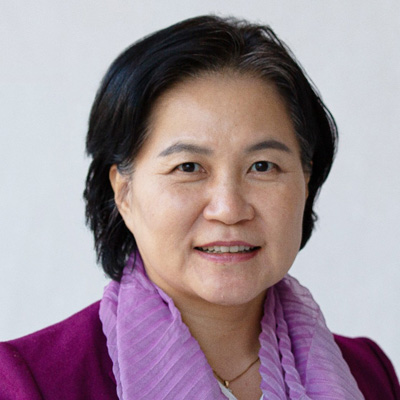
The economics and trade panel features National Assembly Member Choi Hyung-du, Vice Chair of the Science, ICT, Broadcasting, and Communications Committee, former ROK Trade Minister Yoo Myung-hee, and Albright Stonebridge Group Senior Counselor in the East Asia & Pacific practice Tami Overby. This session will be led by Korea Society President and CEO Tom Byrne.


Next Steps for U.S.-Korea Relations:

Key Diplomatic and Economic Developments

Friday, October 4, 2024 | 10 AM (EDT)


The Korea Society
350 Madison Avenue, 24th Floor
New York, NY 10017


About the Speakers:


Susan A. Thornton is Project Director of the Forum on Asia-Pacific Security at the NCAFP, Visiting Lecturer in Law at Yale Law School and Senior Fellow at the Paul Tsai China Center. In 2018, she retired from the State Department after a 28-year diplomatic career focused primarily on East and Central Asia. In leadership roles in Washington, Thornton worked on China and Korea policy, including stabilizing relations with Taiwan, the U.S.-China Cyber Agreement, the Paris Climate Accord and led a successful negotiation in Pyongyang for monitoring of the Agreed Framework on denuclearization. In her 18 years of overseas postings in Central Asia, Russia, the Caucasus and China, Thornton’s leadership furthered U.S. interests and influence and maintained programs and mission morale in a host of difficult operating environments. Prior to joining the Foreign Service, she was among the first State Department Fascell Fellows and served from 1989–90 at the U.S. Consulate in Leningrad. She was also a researcher at the Foreign Policy Institute from 1987–91. Thornton holds degrees from the National Defense University’s Eisenhower School, the Johns Hopkins School of Advanced International Studies, and Bowdoin College. She speaks Russian, Mandarin Chinese and French, is a member of numerous professional associations and is on the Board of Trustees for the Eurasia Foundation.


Thomas J. Byrne joined The Korea Society as President in August 2015. Since June 2023, he had also taken the role of “Honorary Ambassador,” appointed by the minister of MOTIE under the auspices of KOTRA/Invest Korea, to help promote trade and investment ties between Korea and the U.S. Byrne comes to the Society from Moody’s Investor Services, where he was Senior Vice President, Regional Manager, spokesperson, and Director of Analysis for the Sovereign Risk Group in the Asia-Pacific and Middle East regions, based in Singapore. Prior to that, he was the Senior Economist of the Asia Department at the Institute of International Finance in Washington D.C. from 1984 to 1996. Byrne has an MA in International Relations with a concentration in international economics from the Johns Hopkins School of Advanced international Studies and a BS in Biology from State University of New York at Stony Brook. Before his graduate work, he served in South Korea for three years as a U.S. Peace Corps volunteer. Byrne teaches as an adjunct professor at Columbia University’s School of International and Public Affairs in New York City and at Georgetown University’s Graduate School of Foreign Service in Washington, D.C. As president, he has written opinion articles published in the Wall Street Journal, Bloomberg View, The New York Times, The Washington Post, The Financial Times, The National Interest, and Reuters Breakingviews.


Jenny Town is a Senior Fellow at the Stimson Center and the Director of Stimson’s Korea Program and 38 North. Her areas of expertise include North Korea, US-DPRK relations, US-ROK alliance relations and extended deterrence, and Northeast Asia regional security. She was named one of Worth Magazine’s “Groundbreakers 2020: 50 Women Changing the World” and one of Fast Company’s Most Creative People in Business in 2019 for her role in co-founding and managing 38 North, which provides policy and technical analysis on North Korea. Ms. Town is also an Associate Fellow at the Foreign Policy Institute at Johns Hopkins School of Advanced International Studies (SAIS), a Member of the National Committee on North Korea, and an Associate Member of the Council of Korean Americans. She serves on the Editorial Board for Inkstick, an online foreign policy journal for emerging scholars. She previously served as the Assistant Director of the US-Korea Institute at SAIS (2008-2018) and an expert reviewer for North and South Korea for Freedom House’s Freedom in the World Index (2010-2023), where she previously worked on the Human Rights in North Korea Project.

Ms. Town holds a BA in East Asian Studies and International Relations from Westmar University and a Master of International Affairs from Columbia University School of International and Public Affairs. She is a frequent commentator for a range of print, radio and television news, including Reuters, BBC, CNN, Financial Times, Deutche Welle, Voice of America, Japan Times, NHK, CGTN, BBC World Radio, and more. And has been featured on a number of podcasts including Asia Matters, The President’s Inbox, the Impossible State, Today Explained, The DSR Daily Brief, and more.


Sung-Hwan Kim was a career diplomat and served as the Minister of Foreign Affairs and Trade of the Republic of Korea from October 2010 to March 2013. With a career spanning over 36 years, he held a number of senior diplomatic posts including the Senior Secretary to the President for Foreign Affairs and National Security and Vice Minister of MOFAT. He was ROK’s ambassador to Austria and Permanent Representative to the International Organizations in Vienna and the ROK’s Ambassador to Uzbekistan. He was appointed as a Member of the UN Secretary-General’s High-Level Panel of Eminent Persons on the Post-2015 Development Agenda in July, 2012. After retiring from the Foreign Service, he served as the Chair of Institute for Global Social Responsibility and Distinguished Visiting Professor at the Seoul National University until March 2015. He also taught at Hanyang University as a Distinguished Professor and served as the Chairman of the Gangwon Art and Culture Foundation. He is now working as the President of Taejae Future Consensus Institute and the Chairman of the East Asia Foundation and Beautiful Mind Charity Foundation.


Jaechun Kim is a professor of International Relations at the Graduate School of International Studies (GSIS) at Sogang University and currently Dean for Sogang GSIS. He is political scientist trained at Yale University (MA in International Relations; Ph.D. in Political Science). Before joining Sogang, he worked at Yale University as lecturer for the Department of Political Science and Yale Center for the International and Area Studies (YCIAS). He is currently a member of the advisory board for the National Security Council, the Ministry of National Defense, and the Ministry of Unification in South Korea. He is the chairperson of the Subcommittee for International Cooperation of Unified Future Planning Committee. He was on the advisory board for South Korea’s Ministry of Foreign Affairs for about 10 years. He also was a member of the Government Performance Evaluation Committee and a member of Presidential Committee for Unification Preparation in ROK. He was a Fulbright visiting fellow to the Sigur Center for Asian Studies at George Washington University and a visiting scholar to Denver University. Earlier in his career, he worked for the National Assembly of ROK as a legislative assistant. His research interests include International Security, US Foreign Policy, Northeast Asia Regional Affairs, and Inter-Korean Relations. His recent work includes a chapter for Contested Multilateralism 2.0 and Asian Security Dynamics, (Routlege, 2020) and many other journals.


Hyung Du Choi is a sitting member of the 22nd National Assembly of the Republic of Korea. He represents the Masanhappo District. Before his current role, he served as the Secretary of the President for Public Relations Planning at the Presidential Office in Seoul from March 2013 to April 2014. Prior to that, he was the Deputy Minister and Director General of the Public Relations Office at the Office of the Prime Minister from February 2012 to February 2013.

Before his career in public service, Choi was a journalist for over two decades, during which he was the Chief Political Correspondent and Washington Bureau Chief for The Munhwa Ilbo. He earned a Master’s degree in Public Administration from Harvard University’s Kennedy School of Government in June 2002, where he was a Mason Fellow.


Yoo Myung-hee was the first female Trade Minister of the Republic of Korea (2019-2021). Prior to that, she served as Deputy Minister for Trade Negotiations (2018-2019) and Director General of Trade Policy (2015-2018) at the Ministry of Trade, Industry and Energy, and Spokesperson for Foreign Media in the Office of the President (2014-2015). She dedicated most of her 30-year public service to trade initiatives, designing Korea’s trade policy and negotiating trade agreements. As Korea’s chief negotiator, she led numerous bilateral and multilateral trade negotiations, including the Korea-US FTA amendment negotiations and the Regional Comprehensive Economic Partnership Agreement (RCEP). During her term as trade minister, she played a pivotal role in shaping Korea’s policy on emerging trade issues such as global supply chains, and green and digital trade, and contributed to international initiatives in these areas. Currently, she teaches international trade and economic security issues at the Graduate School of International Studies of Seoul National University as a visiting professor. She is also a non-resident senior advisor at the Center for Strategic and International Studies (CSIS). She received her BA and MPA from Seoul National University and JD from Vanderbilt University Law School.


Young-bae Kim is a current member of the 22nd National Assembly, representing the 1st District of Seongbuk-gu. Since May 2024, he has served as a member of the Foreign Affairs and Unification Committee. He received his PhD in Political Science and International Relations from Korea University.


Tami Overby is a Senior Counselor in the East Asia & Pacific practice at Albright Stonebridge Group, where she draws on more than three decades of experience working in Asia to advise clients on investment and trade issues in Korea and across the region. Ms. Overby most recently served as Senior Director at McLarty Associates. Previously, she was Senior Vice President for Asia and President of the U.S.-Korea Business Council at the U.S. Chamber of Commerce, where she represented U.S. businesses during negotiation of the Trans-Pacific Partnership (TPP), directed the Chamber’s work with the Asia-Pacific Economic Cooperation (APEC), and helped companies navigate market access and investment issues throughout the region. Earlier in her career, Ms. Overby spent 14 years as President of the American Chamber of Commerce in Korea, where she helped grow the bilateral trade relationship and supported the completion and ratification of the U.S.-Korea Free Trade Agreement.  Ms. Overby sits on the boards of the Korea Society and the U.S.-Asia Institute and is on the Advisory Council of the Korea Economic Institute. She received her B.S. in Business Administration and Management from the University of Arkansas at Fayetteville.


Ambassador Kim Gunn is a veteran diplomat who is well versed in North Korean nuclear affairs and the Korean Peninsula peace issue. Since joining the Ministry of Foreign Affairs in 1989, he served as the Director for North Korean Nuclear Negotiation Division (2007-2008) and the Director-General for North Korean Nuclear Affairs (2015-2016), which is the deputy representative for North Korean nuclear affairs. He was also posted as a Secretary at both the US and Chinese embassies, and served as a Deputy Director-General for North American Affairs Bureau (2013-2015), gaining experience in working with the US and China, which are key partners in North Korean nuclear affairs. Furthermore, he was appointed as Consul-General at the Korean Consulate General in Vancouver, Canada (2016-2018), Ambassador for International Security Affairs and Special Advisor to the Minister (2018-2019), Deputy Minister for Political Affairs (2019-2021), and Ambassador Extraordinary and Plenipotentiary to the United Kingdom of Great Britain and Northern Ireland and Permanent Mission to the International Maritime Organization (2021-2022). During his service, he was awarded a Presidential Citation (2012).