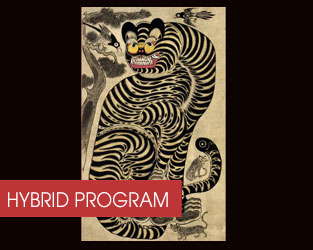
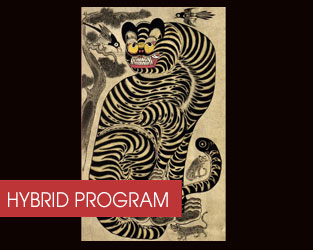
Tiger with Two Cubs and Two Magpies, Late Joseon Dynasty (18th or 19th Century), Mattielli Collection. Image courtesy of jstor.org |
In this lecture, Professor Sunglim Kim explores Korean folk painting, minhwa, and examines its origin and development, the different genres within it, and their meanings and functions. She will also illustrate how minhwa paintings were consumed by Koreans in the past and the present.
Minhwa Korean Paintings of the People, by the People, and for the People by Sunglim Kim
Wednesday, April 5, 2023 | 6:30 PM (EDT)
The Korea Society 350 Madison Avenue, 24th Floor New York, NY 10017
Sunglim Kim is an associate professor of Korean art and culture at Dartmouth College. She specializes in the material and consumer culture of the late Joseon period and women artists in modern and contemporary Korea.
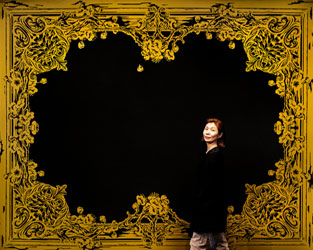
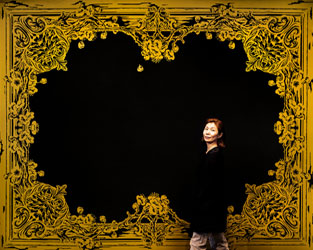
Traditional Korean Painting for Modern Times: In Seongmin Ahn’s paintings, it is not our past we are looking at but our possible future. – John Yau, Hyperallergic
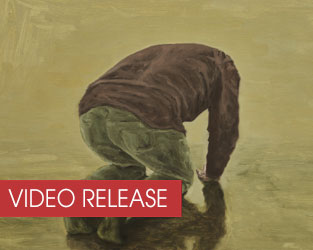
In her solo exhibition at The Korea Society, Seongmin Ahn presents a series of paintings and wall installations that fuses her insight in the relativity of perception with a deep regard for traditional Korean art, especially minhwa–folk painting. In her work, Ahn begins with traditional forms and themes, which she then extends into multi-disciplinary and multi-media practices by adopting science, technology, and multiple cognitive models.
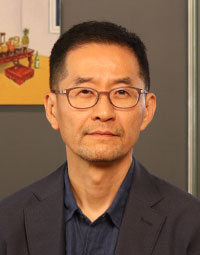
In conversation with Eleanor Hyun, Associate Curator for Korean Art at the Metropolitan Museum of Art, Seongmin Ahn discusses her work, her career, and her solo exhibition at The Korea Society.
Artist Talk: Seongmin Ahn with Eleanor Hyun
Tuesday, March 21, 2023 | 6 PM (EDT) | In Person
Friday, March 24, 2023 | Video Release
@ The Korea Society 350 Madison Avenue, 24th Floor, NYC
Gallery hours: (M-F) 10 AM – 4:30 PM by appointment
**Pre-registration is now required for all Korea Society events, and an ID is required for security.**
For more information, please contact info@koreasociety.org or call (212) 759-7525.
Seongmin Ahn holds an MFA in Asian traditional painting from Seoul National University and another MFA in mixed media from the Maryland Institute College of Art. As an active participant in the contemporary art scene in New York and East Asia, she has exhibited work at such major venues as the National Museum of Modern and Contemporary Art in Seoul, the Jordan Schnitzer Museum of Art at the University of Oregon, and the Charles Wang Center at Stony Brook University. She has received a number of funding awards, including two Pollock Krasner Foundation grants, AHL foundation artist grant and Café Royal Cultural Foundation grant. Her work has been reviewed in The Washington Post, the Philadelphia Inquirer, The Baltimore Sun, The Plain Dealer and others. Her work has been acquired by the National Museum of Modern and Contemporary Art in Korea, Princeton University Art Museum, and Hudson River Museum.
ABOUT THE MODERATOR:
Eleanor Soo-ah Hyun is the Associate Curator for Korean Art at The Metropolitan Museum of Art. She joined The Met in September 2019. From 2015 to 2019, she worked at the British Museum as the first Curator for the Korean Collections. She is a PhD candidate at the University of Chicago completing a dissertation on late imperial Joseon Korean and Qing Chinese art.
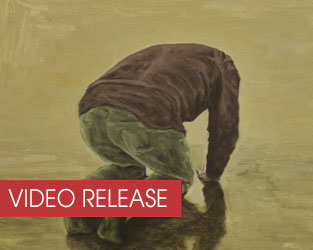
In his paintings Young Min Moon depicts Jesa, a Confucian ritual for commemoration of the deceased, which was one of the earliest memories he holds while growing up in the military regime of South Korea in the 1970s and 80s. Despite the gender politics now associated with the ritual today due to its patriarchal nature, Moon insists on exploring the legacy. For him, the ritual holds multiple layers of meanings: an occasion of silence utterly severed from the violent era of his childhood, a means of remembering the deceased, and a tradition that may be discontinued in the age of globalization.
Moon’s paintings are also a way of honoring women’s labor for the patriarchal tradition, and an invitation to the celebration of familial ties that are largely inaccessible for diasporic Koreans. In his solo exhibition at The Korea Society, Moon also complicates his relation to the legacy of Jesa by situating it in relation to Catholicism that impacted the Confucian tradition in Korea.
Moon, whose solo exhibition The Share for Those Who Remain is on view at The Korea Society Gallery September 15-December 9, 2022, talks about his career and work.
Artist Talk: Young Min Moon
Tuesday, October 25, 2022 | 5 PM (EDT) Video release
@ The Korea Society 350 Madison Avenue, 24th Floor, NYC
Gallery hours: (M-F) 10 AM – 4:30 PM by appointment
**Pre-registration is now required for all Korea Society events, and an ID is required for security.**
For more information, please contact info@koreasociety.org or call (212) 759-7525.
Young Min Moon is an artist and critic whose work reflects his migration across cultures and his awareness of the hybrid nature of identities forged amid the complex historical and political relationships between Asia and North America. Moon has shown his art in many exhibitions in South Korea and North America, including Sansumunhwa, Art Space Pool, Kumho Museum of Art, Gyeonggi Museum of Art, Kukje Gallery, Smith College Museum of Art, and the Carpenter Center at Harvard University, among others. Moon published his essays on contemporary Korean art in a wide range of publications, including Contemporary Art in Asia: A Critical Reader (MIT), and a chapter in A Companion to Korean Art (Wiley). He serves on the editorial board for the online journal Trans Asia Photography. Moon is a professor at University of Massachusetts Amherst and a recipient of Guggenheim Fellowship and Joan Mitchell Foundation Grant.
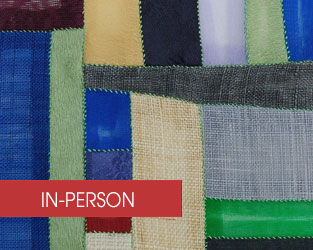
Learn how to make your own bojagi—traditional Korean wrapping cloths—in this hands-on workshop. Participants will learn how to create a mini double layer bojagi called gub-bo using various colorful Korean ramie and hemp fabric and hand sewing techniques. Your own unique mini bojagi with geometric patterns can either be displayed as art in a frame or used as a decorative household item.
Most materials—Korean ramie fabric, colored thread, needle, pins, marker, pencil, eraser, rulers—will be provided. Bring your own pin cushion if you would like.
About the Artist:
Wonju Seo was born and raised in Seoul Korea, where she received her B.F.A in Fine Arts Painting from Hong-Ik University in 1988. After graduating college, she has worked as a package designer and silk painting artist for a long time. In 1998, she came to the United State to continue her career as an artist.
Seo has taught at The Korea Society, the Lee Young Hee Museum of Korean Culture in New York City, the Charles B. Wang Center in Stony Brook, New York and Newark Museum in New Jersey. Her art works have been selected by juries for many arts competitions, and she has been nationally and internationally exhibited in galleries and museumss.
Seo’s works are in the permanent collections of the Newark Museum, NJ; Charles B. Wang Center, Stony Brook University, NY; and Grand Hyatt Hotel, Jeju Dream Tower, Jeju Island, South Korea.
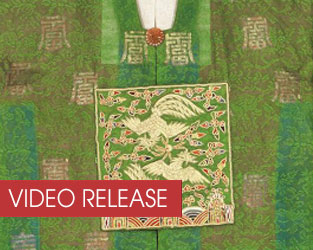
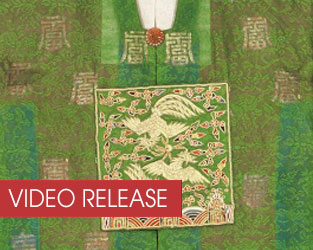
Image courtesy of Cultural Heritage Administration, Republic of Korea
Riding the Korean Wave sweeping the world, the traditional Korean costumes have become increasingly visible in global media. In 2021, hanbok – the generic term referring to traditional style Korean clothing – was registered in the Oxford English Dictionary. In this comprehensive series of lectures, Dr. Minjee Kim, the preeminent scholar of Korean textile and fashion in the U.S., illustrates and elucidates hanbok in sartorial, socio-cultural, and historical contexts.
In the fourth presentation of the series, Dr. Kim will demonstrate in person how to dress the bride and the groom in their splendid wedding attires. The children’s one-year birthday celebration ensembles will also be displayed and their symbolism will be discussed.
Hanbok: The Celebration
Thursday, September 8, 2022 | 6:30 PM (EDT)
This program was recorded and video released on September 14.
The Korea Society 350 Madison Avenue, 24th Floor New York, NY 10017
Minjee Kim is a historian and lecturer specializing in dress, fashion, and textile history of Korea. She received her PhD from Seoul National University, and formerly taught at Jeonju Kijeon College, Seoul National University, and Academy of Art University in San Francisco. She has also extensively lectured for cultural institutions, museums, and colleges in California and the East Coast. Since 2018, she has served for the Costume Society of America Western Region as a Board of Director. In 2022, she joined the Tracing Patterns Foundation as a Research Associate. She is a co-editor of a forthcoming book Dress History in Korea: Critical Perspectives on Primary Sources (London: Bloomsbury).
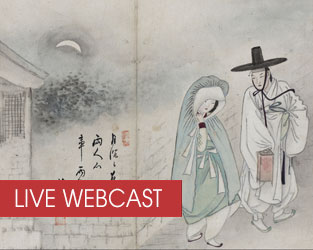
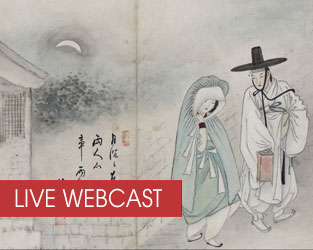
Walhwajungin (Lovers Under the Moon) by Shin Yun-Bok (1758-?) Image courtesy of Kansong Art & Culture Foundation
Riding the Korean Wave sweeping the world, the traditional Korean costumes have become increasingly visible in global media. In 2021, hanbok – the generic term referring to traditional style Korean clothing – was registered in the Oxford English Dictionary. In this comprehensive series of lectures, Dr. Minjee Kim, the preeminent scholar of Korean textile and fashion in the U.S., illustrates and elucidates hanbok in sartorial, socio-cultural, and historical contexts.
In this third lecture which will wrap up the exploration of hanbok as a new lexicon of world fashion, Dr. Kim will discuss how the notions of gender and class shaped dress practice in Joseon and their modern transitions up to the twenty-first century.
Hanbok: Gender, Class and Modernity
Thursday, July 21, 2022 | 6 PM (EDT)
IN CASE YOU MISSED IT
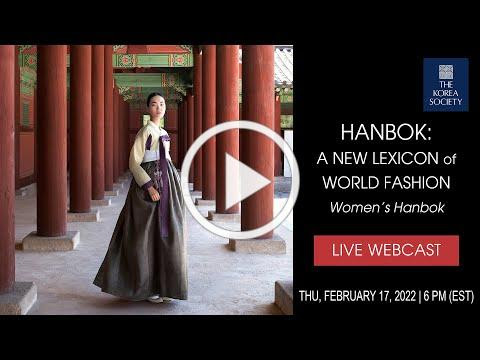
Hanbok: A New Lexicon of World Fashion Women’s Hanbok Streamed Thursday, February 17, 2022
Hanbok: A New Lexicon of World Fashion Men’s Hanbok Streamed Thursday, April 7, 2022
The Korea Society 350 Madison Avenue, 24th Floor New York, NY 10017
Minjee Kim is a historian and lecturer specializing in Korean dress and textiles, based in the San Francisco Bay Area since 2001. She received her PhD from Seoul National University, and formerly taught at Jeonju Kijeon College and Seoul National University in Korea, and Academy of Art University in San Francisco. She is a co-editor of Dress History in Korea: Critical Perspectives on Primary Sources (London: Bloomsbury, forthcoming).
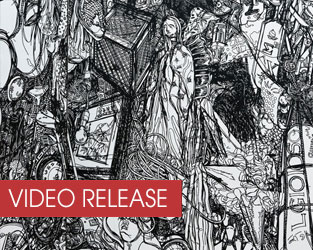
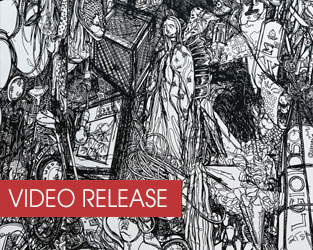
Although her intricate installations are often so large that they spread over walls onto ceilings and floors, Heeseop Yoon thinks of her work as freehand drawings. All of Yoon’s works are based on real spaces with vast messes, such as basements, workshops, storage spaces, or “places where everything is jumbled and time becomes ambiguous without the presence of people.” Based on photographs, Yoon draws freehand without erasing; based on her own drawings, she creates her enlarged wall drawings using black tapes. In the final installation, her miscalculations and corrections are visible, as Yoon is interested in how memory and perception constantly adjust both for herself and for her viewer, and the paradox that the more she corrects her work, the less legible the drawing becomes.
“The more I see, the less I believe in the accuracy or reality of the images I draw.”
Yoon, whose solo exhibition Agglomeration is on view at The Korea Society Gallery June 9 – August 25, 2022, talks about her career and work.
Artist Talk: Heeseop Yoon
Tuesday, July 12, 2022 5 PM (EDT) Video release
@ The Korea Society 350 Madison Avenue, 24th Floor, NYC
Gallery hours: (M-F) 10 AM – 4:30 PM by appointment
**Pre-registration is now required for all Korea Society events, and an ID is required for security.**
For more information, please contact info@koreasociety.org or call (212) 759-7525.
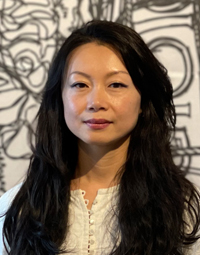
Heeseop Yoon has had solo and two-person shows at Cityway Gallery, Indianapolis Museum of Contemporary Art; Triple Candie, March Gallery, and Bose Pacia, all New York; Arario Gallery, Seoul; University of North Carolina at Chapel Hill; Monmouth University, West Long Branch, NJ; OZ Arts, Nashville, TN; and at Sapar Contemporary, New York. She has also shown with Dedee Shattuck Gallery, Westport, MA; William Holman Gallery, New York, NY; Crossing Borders, Periphery Space Gallery, RI; and Drawing in Space, Des Moines Art Center, IA.
Yoon has exhibited in museums and art centers internationally, including MASS MoCA, North Adams, MA; John Michael Kohler Arts Center, Sheboygan, WI; The Bronx Museum, New York; Seoul Arts Center, Korea; China Association for Science and Technology (CAST) and Media Art Center, Beijing; and has participated in several residencies such as the Lower East Side Printshop, Marie Walsh Sharpe Art Foundation; Skowhegan School of Painting, and Artist Alliance Inc., all New York, and Stiftung Künstlerdorf Schöppingen, Germany. Her first public mural installation is located at the Italian Market in Philadelphia.
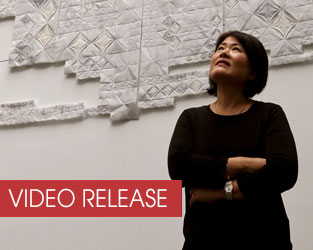
In Wonju Seo’s hands, the aesthetics, forms, and techniques of bojagi— traditional Korean wrapping cloths—are reconfigured as abstract textile art for a global audience. Seo combines needlework, painting, photography, and other techniques to create contemplative artworks that explore her transcultural identity and life experience.
Ms. Seo, whose solo exhibition Travelogue is on view at The Korea Society Gallery March 3 – May 27, 2022, talks about her career and work.
Artist Talk: Wonju Seo
Wednesday, April 20, 2022 | 5 PM (ET) Video release
@ The Korea Society 350 Madison Avenue, 24th Floor, NYC
Gallery hours: (M-F) 10 AM – 4:30 PM by appointment
**Pre-registration is now required for all Korea Society events, and an ID is required for security.**
For more information, please contact info@koreasociety.org or call (212) 759-7525.
Wonju Seo was born and raised in Seoul Korea, where she received her B.F.A in Fine Arts Painting from Hong-Ik University in 1988. After graduating college, she has worked as a package designer and silk painting artist for a long time. In 1998, she came to the United State to continue her career as an artist.
She is the recipient of the 2018 & 2012 Individual Artist Fellowship New Jersey State Council on the Arts and received QBL Fiber Artist Fellowship from Schweinfurth Art Center, Thomas Contemporary Quilt Recognition Award (Collector’s Choice) from Visions Art Museum, CA. Also, she received Honorable Mention from Smithtown Township Arts Council in 2011.
Seo has taught at The Korea Society, the Lee Young Hee Museum of Korean Culture in New York City, the Charles B. Wang Center in Stony Brook, New York and Newark Museum in New Jersey. Her art works have been selected by juries for many arts competitions, and she has been nationally and internationally exhibited in galleries and museums.
Seo’s works are in the permanent collections of the Newark Museum, NJ; Charles B. Wang Center, Stony Brook University, NY; and Grand Hyatt Hotel, Jeju Dream Tower, Jeju Island, South Korea.
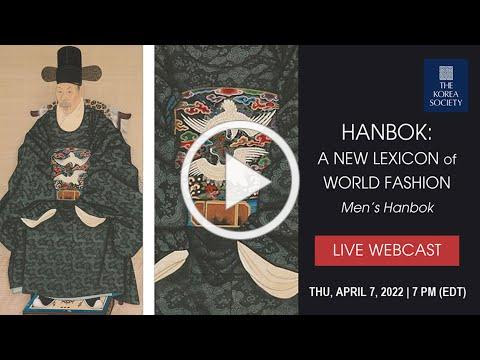
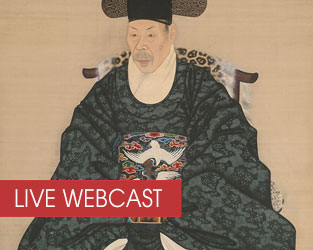
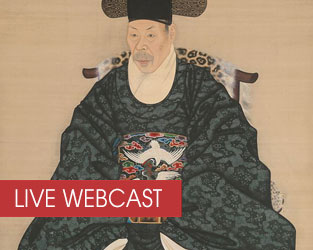
Portrait of Yun Dongseom (1710–1795) by Unidentified Artist. ca. 1790–1805 Image courtesy of The Metropolitan Museum of Art
Riding the Korean Wave sweeping the world, the traditional Korean costumes have become increasingly visible in global media. In 2021, hanbok – the generic term referring to traditional style Korean clothing – was registered in the Oxford English Dictionary. In this comprehensive series of lectures, Dr. Minjee Kim, the preeminent scholar of Korean textile and fashion in the U.S., illustrates and elucidates hanbok in sartorial, socio-cultural, and historical contexts.
In the second lecture of the series, Dr. Kim discusses some distinctive qualities of men’s hanbok in comparison with other dress traditions; terminologies of the components and their structural parts; colors, materials, and embellishments; and symbols and ideas behind design principles and ways of dress.
Hanbok: A New Lexicon of World Fashion Men’s Hanbok
Thursday, April 7, 2022 | 7 PM (EDT)
The Korea Society 350 Madison Avenue, 24th Floor New York, NY 10017
Minjee Kim is a historian and lecturer specializing in Korean dress and textiles, based in the San Francisco Bay Area since 2001. She received her PhD from Seoul National University, and formerly taught at Jeonju Kijeon College and Seoul National University in Korea, and Academy of Art University in San Francisco. She is a co-editor of Dress History in Korea: Critical Perspectives on Primary Sources (London: Bloomsbury, forthcoming).
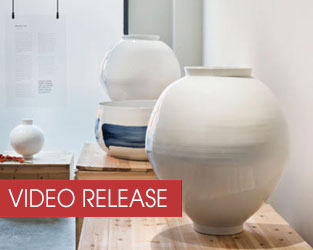
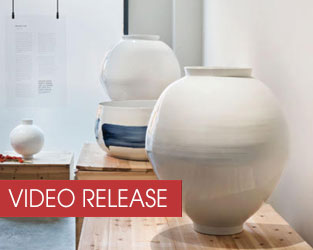
YSP Gallery in Chelsea neighborhood of New York showcases the incredible legacy of Young Sook Park, who has dedicated her life to recapturing lost ceramic methods and techniques of the Joseon Dynasty.
Pamela Tinnen, the director of YSP Gallery, will cover the storied histories of Korean ceramics; the need for time-honored classical techniques in contemporary art practices; and how Ms. Park, though years of dedicated study and practice, was able to revive the long-lost Korean art form of white-porcelain moon jars.