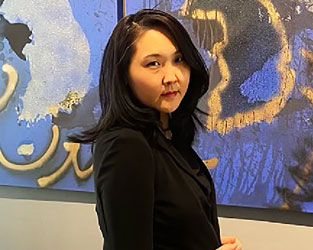
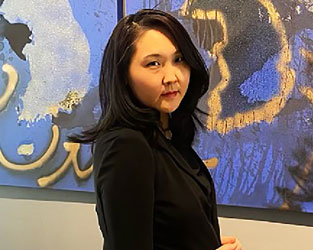
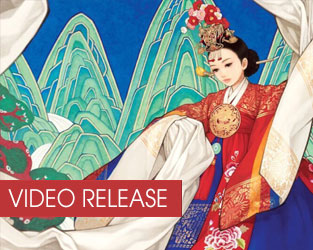
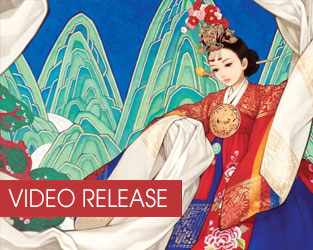
Director: Eunjoo Choi; Photo: Chang-rai Song; Model: Sarang Lee Previously published in Hanbok no.4 (Seoul: Hanbok Advancement Center, 2016)
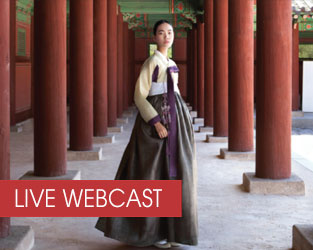
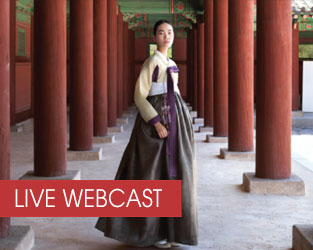
Riding the Korean Wave sweeping the world, the traditional Korean costumes have become increasingly visible in global media. In 2021, hanbok – the generic term referring to traditional style Korean clothing – was registered in the Oxford English Dictionary. In this comprehensive series of lectures, Dr. Minjee Kim, the preeminent scholar of Korean textile and fashion in the U.S., illustrates and elucidates hanbok in sartorial, socio-cultural, and historical contexts.
In the first lecture of the series, Dr. Kim discusses some distinctive qualities of women’s hanbok in comparison with other dress traditions; terminologies of the components and their structural parts; colors, materials, and embellishments; and symbols and ideas behind design principles and ways of dress.
Hanbok: A New Lexicon of World Fashion Women’s Hanbok
Thursday, February 17, 2022 | 6 PM (EST)
The Korea Society 350 Madison Avenue, 24th Floor New York, NY 10017
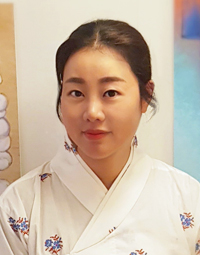
Minjee Kim is a historian and lecturer specializing in Korean dress and textiles, based in the San Francisco Bay Area since 2001. She received her PhD from Seoul National University, and formerly taught at Jeonju Kijeon College and Seoul National University in Korea, and Academy of Art University in San Francisco. She is a co-editor of Dress History in Korea: Critical Perspectives on Primary Sources (London: Bloomsbury, forthcoming).
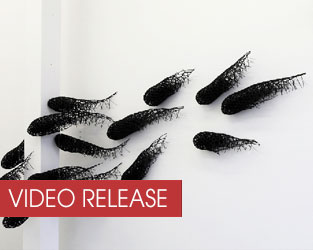
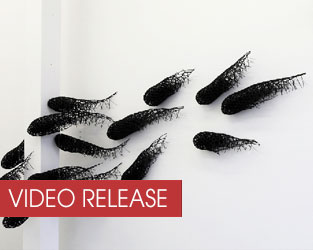
“Hair has the potential to embody both mind and matter. In my sculptures I tie hair together piece by piece into nearly invisible forms that represent ineffable thoughts and the conscious and subconscious mind.” – Jayoung Yoon
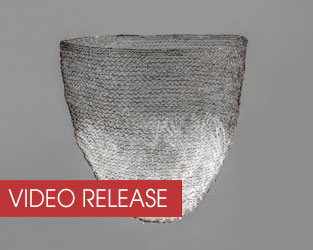
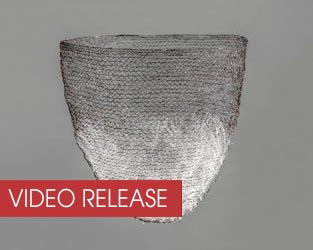
Jayoung Yoon’s work is composed of strands of her own hair that are hand knotted or woven into forms to create intricate sculptures. The woven hair resembles fine nets or webs, allowing the viewer to see through the strands, giving the work a delicate transparency, while the material lends the work a feeling of intimacy and envelopment.
Jayoung Yoon has exhibited extensively, including the Bronx Museum of the Arts, NY; San Jose Museum of Quilts & Textiles, CA; Hudson Valley Museum of Contemporary Art, NY; New Bedford Art Museum, MA; Ohio Craft Museum, OH; Delaware Center for Contemporary Art, DE; Here Arts Center, NY; Coreana Museum of Art, Korea and Seoul Olympic Museum of Art, Korea. She was awarded the AHL Foundation Artist Fellowship, Manhattan Graphics Center Scholarship, the BRIC Media Arts fellowship, and the Franklin Furnace Fund. She has attended residencies at MacDowell, Skowhegan School of Painting and Sculpture, Lower Manhattan Cultural Council’s Swing space, Anderson Ranch Arts Center, Sculpture Space, Millay Arts, I-Park, and Saltonstall Foundation, among others. Yoon’s work has appeared in various publications, including The New Yorker, The Paris Review, Hyperallergic, Gothamist, Artnet News, Surface Design Journal, and Fiber Art Now. Yoon received her MFA from Cranbrook Academy of Art in Michigan and her BFA from Hongik University in Seoul, Korea. https://www.jayoungart.com/
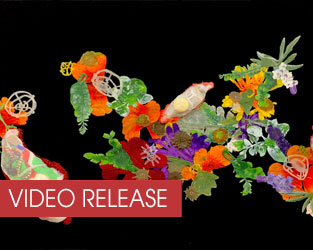
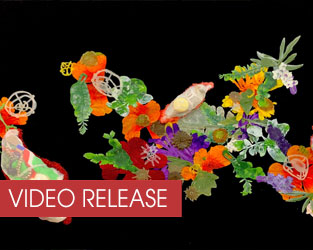
“I weave and connect traces and tracks of subtle changes into organic forms. The organic forms are made with mass-produced industrial materials, in particular, Monofilament and cable ties. They are non–durable, disposable, trivial, inexpensive and easily consumed materials. But, when I weave and connect them, they are transformed into organic visualizations. I want them to be creating lasting moments, evoking and encapsulating our precious thoughts.” – Sui Park
Sui Park creates 3-dimensional organic forms using industrial materials. The abstract forms of dynamic characteristics resemble transitions and transformations in nature, yet they also capture subtle but continuous changes in our emotions, sentiments, memories, and expectations.
Sui Park is a New York based artist born in Seoul, Korea. She had several solo exhibitions and public art projects including a solo exhibition, Floating Imagery at the Cahoon Museum of American Art, Cotuit, MA in 2021 and Pompom in Georgetown, Washington D.C. in 2019. She participated in over 120 exhibitions, including an exhibition, The 5th Textile Art of Today at Danubiana Meulensteen Art Museum in Bratislava, Slovakia, where she received the Excellent Award in September 2018. Park’s artwork has been acquired by numerous places including Jordan Schnitzer Museum of Art in Oregon and Saks Fifth Avenue Flagship Store in New York. Numerous mentions of her work and projects were published in the New York Times, Washington Post, Hyperallergic, Artnet, Vice and Colossal as well as other publications. Most recently, Park participated in a public art exhibition, ‘RE:GROWTH’ curated by Karin Bravin at 78TH St. on the Riverside Park in New York City, and she was selected as one of two commissioned artists for the 2021 Site-Responsive Art Biennale at I-Park Foundation, East Haddam, CT and will show her public art installation from September 2021. Park’s education includes MDes in Interior Architecture from Rhode Island School of Design and BFA in Environmental Design from Maryland Institute College of Art. She also has MFA and BFA in Fiber Arts from Ewha Womans University, Seoul, Korea. http://www.suipark.com/
“Cutting up, breaking apart, or melting, are some of the ways I lose my familiarity with an object and see its material qualities. Exposing a hidden rawness, I am able to consider the gap between how I know these objects and what they really are. I hope my sculptures can turn things that are considered passive and inert into new unknowns with unexpected eccentric faces.” – Woomin Kim
Through her textile and sculptural projects, Woomin Kim examines the active materiality of daily objects and urban landscapes. One of the three artists featured in Interlacement: A Group Exhibition at The Korea Society, Kim discusses her art and career.
Artist Talk: Woomin Kim
Tuesday, October 12, 2021 | 5 PM
The Korea Society 350 Madison Avenue, 24th Floor New York, NY 10017
Woomin Kim is a South Korean artist currently based in Queens, NY. Kim has participated in numerous exhibitions and residencies at the Queens Museum, Isabella Stewart Gardner Museum, Boston Children’s Museum, Art Omi and MASS MoCA, among others. Kim has received fellowships and awards from the Joan Mitchell Foundation and the Korean Cultural Center, and her works have been featured in The New York Times, Hyperallergic and BOMB Magazine. Kim holds a B.F.A from Seoul National University and received an M.F.A. from the School of the Art Institute of Chicago. https://www.woominkim.com/
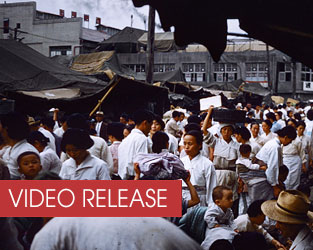
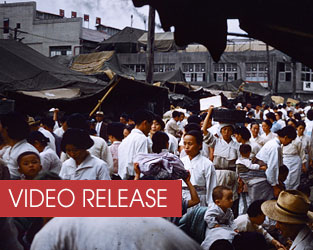
The thing that really struck me was the grit and resilience of the people — they were in the process of recovering from a devastating war that displaced so many people. But the markets were crowded, people went about their business — things had to get done! They had to survive and thrive! … When I see Korea now and think back to that time, Korea’s success should come as a surprise to no one. – Marie Ann Yoo
The photographs in The Feeling of Han: Portraits of Post-War Korea (1956-1957) by Marie Ann Yoo capture the scenery and people of a specific place and time.
As a young Korean-American woman who grew up in Hawaii, Yoo had a chance to visit Korea for the first time in her life when her mother was offered a job in Seoul. Excited to be going overseas for the first time, she was inspired by what she saw and saved money while working on the U.S. base in Korea to purchase a 35mm Petri camera. Yoo roamed the city and the countryside and took pictures everywhere she went, documenting life among the affluent expatriate social circles at the Bando Hotel, where her mother worked, and the everyday life of commoners. Her arresting images of post-war Korea are a testament to her existence as both an insider and outsider to the society she photographed.
Through the impatient stance of a woman on the streets, the grim expression of a man trudging forward to an unknowable destination, a moment of lift in a child’s gesture, the crowds, the buildings, the mud and metal and shambles, Yoo captured a Korea far from the glittery slick nation of the 21st century. We see the nation it was, and the people’s fierce will to manifest and become what they could only dream.
Marie Ann Yoo: The Feeling of Han
The collection is available for view September 16-December 16, 2021. To view the collection, use the password: Koreasociety
The Korea Society 350 Madison Avenue, 24th Floor New York, NY 10017
Marie Ann Kauang-Hee Yoo was born in 1936 in Honolulu, Hawai’i and raised on the Kunia Camp plantation. A descendant of the first wave of Korean immigrants to the US (1903-1905), her family’s reasons for immigration to the territory of Hawai’i were like other Koreans: to practice Christianity, escape Japan’s colonial rule, and ensure their children’s education.
In 1955 Syngman Rhee, a family friend and the first president of South Korea, offered Yoo’s mother Salome Han the opportunity to be the Public Relations Director of Bando Hotel, which was located in what is now the site of the Lotte Hotel in Myeongdong near City Hall in Seoul. Marie Ann, then a student at the University of Hawaii, and her sister Elizabeth, who had just graduated from high school, joined their mother and moved to Seoul for one year.
After her sojourn to Korea, Marie Ann transferred to the University of Oregon where she majored in East Asian Studies and political science. After relocating to the Bay Area, she married Dr. Tai-June Yoo and raised three daughters, Stephanie, Christine, and Katherine. She traveled the world and lived across the continental United States, returning many times to visit Korea and lived there again, briefly from 1969-70. After decades away from the Islands, she has returned home to retire in Hawai’i.
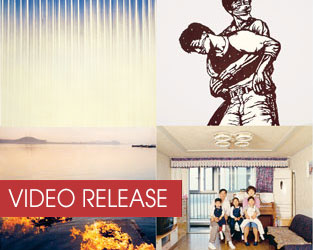
The global art activist Mina Cheon draws inspiration from the partition of the Korean peninsula, in which she enlists a range of mediums including painting, sculpture, video, installation, and performance to deconstruct and reconcile the precarious history and ongoing coexistence between North and South Korea. Her solo exhibition at The Korea Society showcases her most recent painting series of Unification Flags.
Mina Cheon will discuss her art and career; with a special introduction by Ethan Cohen, director of Ethan Cohen Gallery, New York.
This Artist Talk will be held at The Korea Society. The number of attendees will be limited, and all attendees are encouraged to have been fully vaccinated by the date of the event. Face covering is required to enter the building. Live webcast of the event will also be available.
Artist Talk: Mina Cheon Wednesday, June 30th, 2021 | 6:30 PM (EDT)
The Korea Society 350 Madison Avenue, 24th Floor New York, NY 10017
Mina Cheon is a new media artist, scholar, educator, and activist best known for her “Polipop” paintings inspired by Pop art and Social Realism. She has exhibited internationally, including at the Asia Society Triennial (2021); Busan Biennale (2018); Baltimore Museum of Art (2018); American University Museum at the Katzen Arts Center, Washington, DC (2014); Sungkok Art Museum, Seoul (2012); and Insa Art Space, Seoul (2005). Her work is in the collections of the Baltimore Museum of Art; Smith College Museum of Art, Northampton; and Seoul Museum of Art, Seoul. Cheon received a BFA in painting from Ewha Womans University; an MFA in painting from the Maryland Institute College of Art (MICA) and an MFA in imaging and digital art from UMBC: An Honors University in Maryland; and a PhD in philosophy of media and communications at the European Graduate School, Saas-Fee, Switzerland. She is currently a Full-time Professor at MICA.
Illustrator Wooh Na Young, also known by her pen name “Obsidian,” has caught the eyes of people around the world with her distinctive style of reinterpreting Western characters in hanbok, Korean traditional clothing. Combining her training in both traditional style of Asian painting and game design, her illustrations have become a viral sensation and a unique way of promoting the beauty of hanbok.
Meet the illustrator who has captivated the fans of Disney princesses and Marvel heroes by mixing the traditional elegance of hanbok with a modern twist.
New Narratives in Korea: Illustrator Wooh Na Young
Tuesday, June 29, 2021
The Korea Society 350 Madison Avenue, 24th Floor New York, NY 10017
Wooh Na Young a.k.a. Obsidian [Heuk Yo Suk] is an illustrator who works on digital drawing of characters wearing hanbok (Korean traditional clothing). Drawings from her series Western Fairy Tales in Korea were included in various exhibitions in Europe, the U.S., and Korea. She has also collaborated with several global companies, including Disney, Marvel, Johnnie Walker, and Blizzard Entertainment, for their marketing campaigns. In 2019, Wooh received an award from the Ministry of Culture, Sports and Tourism for her effort to popularize and familiarize hanbok, and her book The Story of Hanbok was published in Korea. She received her B.A. in Asian Art from Ehwa Womans University.
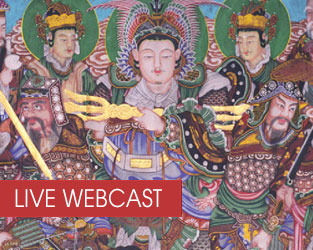
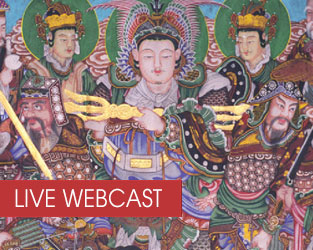
Statues, paintings, and masks—like the bodies of shamans and spirit mediums—give material form and presence to otherwise invisible entities, and sometimes these objects are understood to be enlivened. Dr. Laurel Kendall explores how magical images are expected to work with the shamans and spirit mediums in contemporary South Korea and compares the use of these shamanic images with similar practices in Vietnam, Myanmar, and Bali. The question of empowered images concerns not only what they are expected to do but how they are fabricated, marketed, cared for, disposed of, and sometimes transformed into art-market commodities and museum artifacts.
Sacred Images and Magical Things
Thursday, May 6, 2021 | 6 PM EDT
The Korea Society 350 Madison Avenue, 24th Floor New York, NY 10017
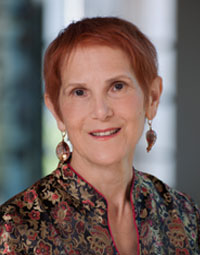
Laurel Kendall is Curator of Asian Ethnographic Collections at the American Museum of Natural History and Senior Research Scholar at the Weatherhead East Asian Institute at Columbia University. A scholar of popular religion and its material manifestations in East and Southeast Asia, Dr. Kendall began her long acquaintance with South Korean life in 1970 as a U.S. Peace Corps Volunteer, when a chance encounter with female shamans led her to subsequent anthropological field work. Her latest book is Mediums and Magical Things: Statues, Paintings, and Masks in Asia Places (University of California Press, 2021).
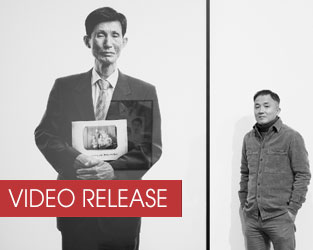
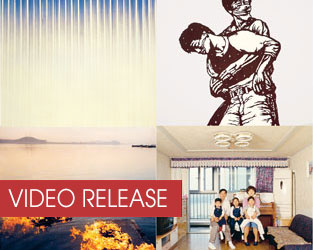
Soonchoel Byun‘s solo exhibition at the Korea Society Gallery, his first one in New York in two decades, showcases nine photographs from his 2015 series Eternal Family which records and digitally creates a reunion between family members separated by the Korean War. Created with utmost sensitivity and respect for the personal and historical tragedy, Byun’s art is a poignant reminder of the devastating consequences of the war that still remains today.
Byun recorded his artist talk in Seoul, Korea, where he lives and works. He is joined by Professor Young Min Moon of University of Massachusetts Amherst, painter and art critic.
Due to the novel coronavirus (COVID-19), our gallery is open only by appointment. The appointment must be made at least 24 hours prior to the scheduled visit. To make an appointment, please contact info@koreasociety.org. All visitors will be required to wear a mask as well as complete the safety questionnaire upon arrival.
Artist Talk: Soonchoel Byun with Soonchoel Byun and Young Min Moon
PREMIERES: Wednesday, October 28, 2020
Gallery Hours: Monday-Friday 10 AM-4:30 PM By Appointment Only
The Korea Society 350 Madison Avenue, 24th Floor New York, NY 10017
Soonchoel Byun studied at the School of Visual Art in New York, and he has exhibited widely since then. Known for his vivid portraits of people from diverse backgrounds, Byun presents a candid yet sincere depiction of contemporary Korean life as it evolves with time.
Young Min Moon is Professor in the Department of Art, University of Massachusetts Amherst. Moon’s art and art criticism reflect his migration across cultures and his awareness of the hybrid nature of identities forged amid the complex historical and political relationships between Asia and North America. His most recent publication is a chapter on contemporary Korean art history in A Companion to Korean Art (Wiley, 2020). He is a recipient of 2014 Guggenheim Fellowship.
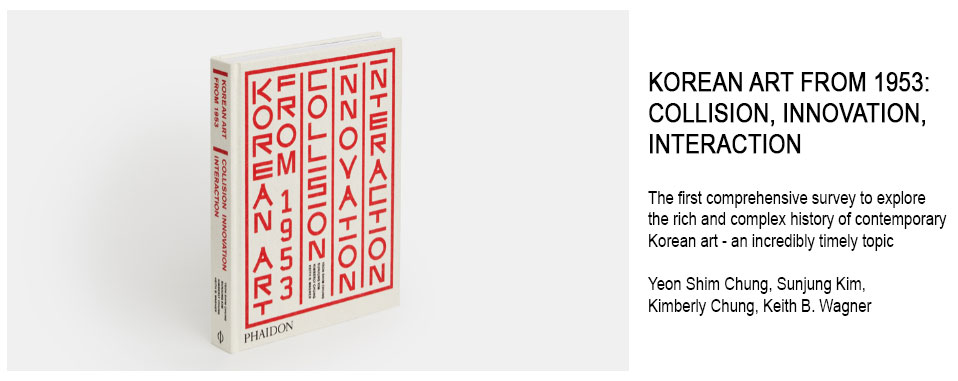
Korean Art From 1953: Collision, Innovation, Interaction is a richly illustrated book containing fourteen essays written by leading Korean art historians and scholars, topics range from the 1950s avant-garde to the feminist scene in the 1970s, the birth of the Gwangju Biennale in the 1990s and the lesser known North Korean art scene, and many Korean-born artists who have emerged to secure a place in the international art world. Yeon Shim Chung and Kimberly Chung, two of the four co-editors of this monumental volume, explore the complex and fascinating history of contemporary art in Korea.
“Korean Art From 1953,” a lavish new book, is the most significant English-language overview yet of modern and contemporary art on the peninsula. – The New York Times
From Lee Bul to Nam June Paik, Do Ho Suh and Park Seo-Bo, the roots of Korea’s thriving contemporary art scene are deeply embedded within the country’s complex historical narratives. A new book by Phaidon chronicles these developments, largely omitted from western art history, combining contributions from leading Korean scholars alongside works that reflect the country’s tumultuous recent history.” – HERO magazine
Yeon Shim Chung is Professor in the department of Art Studies (Art History and Theory) at Hongik University in Seoul. She received her Ph.D. in Art History at The Institute of Fine Arts, New York University. She has authored several articles and monographs on Korean artists, including Lee Yil, Lee Bul, Nam June Paik, Park Hyun-Ki and Korean experimental avant-garde artists.
Kimberly Chung is Assistant Professor of Korean Literary and Cultural Studies in the East Asian Studies department at McGil University. She received her Ph.D. at the University of California, San Diego. She has published her research on modern and contemporary Korean literature, art and visual culture in Journal of Korean Studies and Acta Koreana, and is currently working on her book Proletarian Sensibilities: Mass Culture of 1920s and 1930s Colonial Korea.