Tiki-Taka: Ways of Seeing Beyond Architecture with Design

Join us for this thought-provoking exploration of how both global and local emerging issues can be deconstructed, explored, challenged, and recontextualized through the distinct lenses of architecture and design. Drawing from their recent publications the architects and educators Dongsei Kim, Drawing Hwa-Chaeng: Mapping Contested Territories, and Dongwoo Yim, Accessories, examine the contemporary practice of architecture and design in Korea, emphasizing its socio-political impact. New York based curator and designer Jean Im will moderate the talk.

The conversation is rooted in the mission and framework of the Tiki-Taka* Collective, initiated by the speakers in partnership with the Bureau of Architecture, Research & Environment (BARE, Seoul, Korea) and E Roon Kang (San Francisco, USA). The speakers share their unique methodologies and reflect on their firsthand experiences navigating increasingly globally dispersed multidisciplinary collaborations.

Two signed copies of Drawing Hwa-Chaeng and Accessories will be raffled to participants joining in-person. Both books will be offered for sale as well. This event is co-sponsored by the Korean Studies University Seminar at Columbia University.

* The term “Tiki-taka” draws inspiration from the Spanish style of football play characterized by swift, short passing and strategic ball movement. In this context, it is aptly employed to describe the informal yet impactful process of exchanging ideas among one another—a metaphorical passing of thoughts—enriched through a series of dialogues aimed at refining emerging concepts.


Tiki-Taka: Ways of Seeing Beyond Architecture with Design

Friday, November 17, 2023 | 6 PM (EST)

The Korea Society
350 Madison Avenue, 24th Floor
New York, NY 10017


ABOUT THE SPEAKERS:
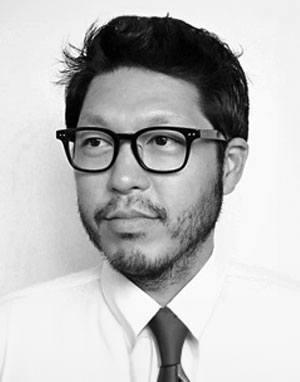
Dongsei Kim is an award-winning architect, urbanist, and educator. As an assistant professor of architecture at the New York Institute of Technology, his current research focuses on architecture and urbanism’s relationship to nation-state borders across multiple scales. It examines notions of “inclusion” and “exclusion” and how “us” and “them” are defined through spatial practices. His research on the Korean Demilitarized Zone (DMZ) has been internationally recognized through multiple exhibitions and publications. Dongsei received his Master in Design Studies with Distinction from Harvard Graduate School of Design, a M.S. in Architecture and Urban Design from Columbia University, GSAPP, and a professional Bachelor of Architecture with Honors from Victoria University of Wellington. He was named the 2018 Sherman Family Emerging Scholar by The Korea Society in New York City.
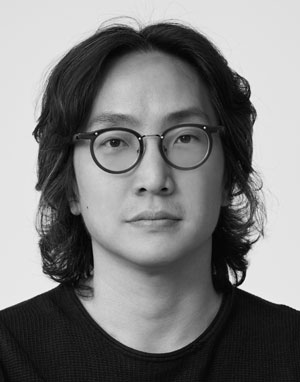


Dongwoo Yim
is an architect, urbanist, writer, and educator. He is the co-founder and principal of PRAUD and an assistant professor at the Graduate School of Architecture and Urban Design at Hongik University. His research focuses on revisiting urban production as a mode for a circular city and a sustainable social chain. Dongwoo also explores typologies in architecture that not only examine contemporary architectural language but also create urban phenomena in a collective manner. He is the award winner of the Architectural League Prize 2013 and the participating artist in the 2014 Venice Biennale Korean Pavilion, the Golden Lion winner. Dongwoo was the co-curator of Pyongyang Sallim at the 2017 Seoul Biennale of Architecture and Urbanism, co-curator of the Cities Exhibition in the 2019 SBAU, and the general director of Daegu Global Studio 2023. His publications include “AD Magazine: Production Urbanism: The Meta Industrial City (Wiley),” “A Language of Contemporary Architecture: An Index of Topology and Typology (Routledge),” and “Unprecedented Pyongyang (Actar)” amongst others.

Jean Im (Yeo Jean Im) is an architectural practitioner and curator based in New York. Beginning her career as a designer in numerous architectural firms, mainly in Seoul, she shifted on to curatorial works in roles such as the assistant curator at the Gwangju Design Biennale and, most recently, as Chief Editor at the Seoul Biennale of Architecture and Urbanism. Further, she broadened her curatorial practices to arts and culture, such as the World Script Symposia and ECM exhibitions in Seoul and Shanghai, and more. She was also an organizing member of The Young Architects Forum and Open House Seoul. Jean Im earned her Master of Science in Critical, Curatorial, and Conceptual Practices (CCCP) from Columbia University’s Graduate School for Architecture, Planning and Preservation (GSAPP) and a Bachelor of Architecture degree from the Korea National University of Arts.
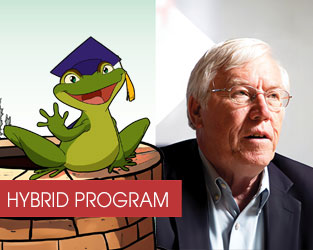

 

A Look at Korea as a Frog Outside the Well — An Outsider’s Perspective on Korean History


Join us and explore with Prof. Mark Peterson the ideas advanced in his most recent book, Views of Korean History by a Frog Outside the Well. Written in a conversational style for the general public, in this book Dr. Peterson offers a unique take on Korean history that differs from the standard history taught in Korea since liberation from Japan. It is a point of view that his Korean audience appreciates for its radical departure from orthodox history and finds “refreshing,” “positive” and “uplifting.” In a recent article for the Korea Times, Dr. Peterson writes that he offers a new approach to facts already well known… but looks at in an entirely new way and a way that many young scholars are starting to look at as well. The discussion will be moderated by Linda Tobash, Senior Advisor for Education at the Society.


A Look at Korea as a Frog Outside the Well
An Outsider’s Perspective on Korean History

Monday, November 6, 2023 | 6 PM (EST)

The Korea Society
350 Madison Avenue, 24th Floor
New York, NY 10017


ABOUT THE SPEAKER:

Dr. Mark Peterson is professor emeritus of Korean, Asian and Near Eastern languages at Brigham Young University in Utah. He is the author of countless books, articles, and journal publications, recipient of many awards and currently runs a research center and hosts a popular YouTube channel on Korean history, The Frog Outside the Well. He has been a guest lecturer on Asian/Korean subjects at universities and professional associations around the world. He is a founding member of the American Association of Korean Teachers, and a lifetime member of the Royal Asiatic Society—Korea Branch, which he has served as a board member and vice president. He was also elected chairman of the Korean Studies Committee, a national office and has served as executive director of the Korean-American Educational (Fulbright) Commission in Seoul, Korea. Dr. Peterson holds a bachelor’s degree in Anthropology and East Asian studies from Brigham Young University and a master’s and doctorate in East Asian languages and civilization from Harvard University.


Korea-America Student Conference Final Forum

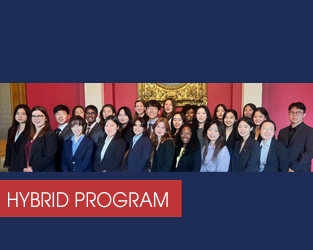
Join us for the Korea–America Student Conference (KASC) Final Forum which is being co-hosted by The Korea Society and the International Student Conferences (ISC). ISC facilitates three academic and cultural exchange programs per year which are organized by university students in the U.S., Japan, Korea and China. For KASC, now in its 18th year, an equal number of US and Korean students have spent the summer together exploring US-Korea relations and meet both Seoul and New York City for in-person collaboration. 

Organized around round table themes—Cooperative Perspectives on Human Rights and Protest Culture, Art & Identity, Economy and Trade, Politics & Technology, and Environment and Climate Change—students report on the culmination of their research. They would love to share their insights with you! Click here to register for the KASC Final Forum.

Following the Forum, The Korea Society will host at 12:30 PM,  Remembering the Korean War, the Society’s annual armistice memorial event. Click here for more information and to register for this event.


Korea-America Student Conference Final Forum 

Friday, July 25, 2025 | 10:00 AM (EDT)

The Korea Society
350 Madison Avenue, 24th Floor
New York, NY 10017


Sijo: Korea’s Poetry Form

Join us as Lucy Park, Sejong Cultural Society Executive Director, and Elizabeth Jorgensen, writer and educator at Arrowhead High School in Wisconsin, share their insights into and passion for the ancient Korean poetry form, Sijo. Part of the Society’s Spotlight on Korean Studies in K-12 Schooling series, this talk will inspire individuals of all ages and backgrounds. Sijo: Korea’s Poetry Form not only provides tips, techniques and sample lesson plans for teaching and writing Sijo, it also explores the history and beauty of the form. The authors ask, “With only three lines, and 46 syllables, how much can a poet fit within its confines?”, and answer, “a world of story and emotion!” In their talk they demonstrate the power of the form by showcasing award-winning modern sijos and accompanying illustrations by Wonsook Kim.


Sijo: Korea’s Poetry Form to Korean Studies
with Lucy Park and Elizabeth Jorgensen

Monday, December 19, 2022 | 4PM (EST)

The Korea Society
350 Madison Avenue, 24th Floor
New York, NY 10017


ABOUT THE SPEAKERS:

Lucy Park is one of the founding members of the Sejong Cultural Society, a non-profit organization founded in 2004. As Executive Director, she oversees all programs, including the Sejong Music Competition, Sejong Writing Competition, and sijo education programs. She has been very active in teaching about sijo to teachers, students, and adults throughout the U.S. and has developed and compiled extensive reference materials on the basics of English sijo writing, sijo samples, and teaching sijo on the Sejong Cultural Society’s website and YouTube Channel. She pioneered the Sejong Cultural Society’s Sijo and Music program, organizing concerts and commissioning composers and songwriters to write sijo music in a variety of musical genres. Further, Dr. Park is a faculty member of the University of Illinois at Chicago College of Medicine where she specializes in pediatric allergy, immunology, and pulmonology. She received her M.D. from Seoul National University in Korea.

Elizabeth Jorgensen is an award-winning writer and high school English teacher. In 2021 she was named one of 20 of America’s Most Inspiring Educators (The Henry Ford’s Innovation Nation Teacher Innovator Awards). She has been published in numerous education journals and presented at national and state conferences and councils. Elizabeth is passionate about sijo, a Korean form of poetry. Her sijo lessons have been uploaded by the Sejong Cultural Society as an exemplar of teaching poetry. Jorgensen co-edited Sijo: Korea’s Poetry Form with Dr. Lucy Park. Additionally, Jorgensen’s most recent book, a middle-grade/young adult sports biography, was released in October 2022, Gwen Jorgensen: USA’s First Olympic Gold Medal Triathlete and is also the author of the educational text, Hacking Student Learning Habits.


“Queerness” as an Embodied and Critical Approach to Korean Studies with Todd Henry

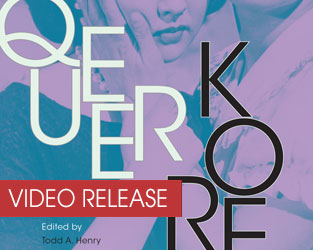
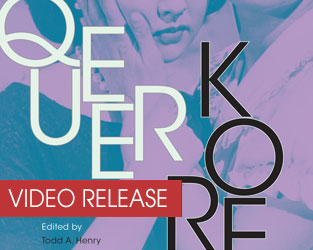
Join us as Dr. Todd A. Henry, Associate Professor in the Department of History and affiliate faculty member of Critical Gender Studies, Science Studies, and Film Studies at the University of California, San Diego (UCSD), launches the Society’s new Current Directions in Korea Studies Series. Dr. Henry, a specialist of modern Korea, a social and cultural historian, and an expert in LGBTQ studies, is well-suited to launch our new series. From 2013 to 2018, he served as the inaugural director of Transnational Korean Studies at UCSD and has researched, lectured, and written extensively on topics of place, race, identity, and nation. From his first book, Assimilating Seoul: Japanese Rule and the Politics of Public Space in Colonial Korea, 1910-1945 (University of California Press, 2014) — the Korean translation of which was awarded a 2020 Sejong Book Prize in History, Geography and Tourism — to his recent edited volume, Queer Korea (Duke University Press, 2020), as well as two forthcoming books and a co-produced documentary on queer histories of authoritarian South Korea (1948-1993), Dr. Henry has been a groundbreaking scholar and an empowering educator in the field.

A frontrunner in promoting explorations of same-sex sexuality, gender variance, and other marginalized aspects of Korean society, culture, and history, Dr. Henry will examine how the field in general and his path specifically have evolved over the past few decades. He will discuss current scholarly, artistic, and activist approaches to non-normative embodiment, including the journey and impact of Queer Korea and his hopes for the future of Korean Studies.


“Queerness” as an Embodied and Critical Approach to Korean Studies
with Todd Henry

Tuesday, May 10, 2022 | 4 PM (EDT)

The Korea Society
350 Madison Avenue, 24th Floor
New York, NY 10017


Spotlight on Korean Studies in K-12 Schooling

Join us as we explore the insights gained from educators who have advanced long-standing Korean language and Korean educational programming in their schools. Learn how the creative Korean programming our speakers developed evolved over time. Bruce Ballard, Professional Development Specialist at Bronx Charter School for Better Learning, shares his experience with elementary school programming. Jisun Kwon and Kleio Park, Korean language teachers at Francis Lewis High in Queens New York, address public high school courses and events. Come hear their tips on best practices and working within the school and community.


Sign up here to receive the viewing link


Spotlight on Korean Studies in K-12 Schooling
Monday, May 17, 2021 | 4 PM (EDT)

The Korea Society
350 Madison Avenue, 24th Floor
New York, NY 10017


ABOUT THE SPEAKERS:

Bruce Ballard has over forty years’ experience in teaching language and communication skills, writing, pedagogy and cross-cultural skills in over a dozen countries. He began his professional career as a Peace Corps volunteer in South Korea training Korean middle school teachers in Weon Ju, Kang Weon Province and teaching at Jeon Buk National University in Jeonju, North Cholla Province. After returning to the U.S. Bruce received a doctorate in applied linguistics from Teachers College Columbia University. He introduced Korean language and studies programming over 15 years ago in a charter elementary school with a non-Korean population in the Bronx, New York.

Jisun Kwon has 11 years of Korean language teaching experience at the elementary, middle, and high school levels in Queens, NY. She has been teaching Korean for non-native and native students at Francis Lewis High School since 2013 and has served as a Korean Language Other Than English Exam developer as well as a lead instructor for Korean STARTALK summer program at Francis Lewis High School. Additionally, she is currently developing the curriculum and teaching Korean language and culture for heritage students at the Korean School for Global Leaders in Queens and serves as an assistant director. Prior to 2013 she taught Korean for non-heritage students at Middle School 8 in New York.

Kleio Park is a New York State certified Korean language teacher. Since 2013 she has taught novice, intermediate, and advanced level classes for non-heritage and heritage students and in 2020 attained OPIc rater certification. In the 2020-2021 academic year she successfully led the Year 4 Korean Program at Francis Lewis High School, in which non-native students were awarded the biliteracy seal for the first time in New York State. She creates fun and culturally relevant posts to @speedykorean on Instagram to promote Korean literacy.


Designing and Adapting Korean Language Instruction for Virtual Delivery

Many language programs and instructors have needed to quickly change from in-person to online instruction modes this year. If you are looking for ways to improve your delivery, join us to explore tools and best practices for virtual classroom set-up and management. Dr. Sang-Seok Yoon, Associate Professor of Instruction and Korean Language Coordinator at the University of Iowa’s Asian & Slavic Languages and Literatures Department, and Dr. Bumyong Choi, Senior Lecturer and Korean Language Program Coordinator at Emory University’s Department of Russian and East Asian Languages and Cultures, share their expertise on designing and adapting Korean language instruction for the online classroom. Facilitating a Q&A with the speakers is Dr. Joowon Suh, President of the American Association of Teachers of Korean (AATK) and Senior Lecturer in the Department of East Asian Languages and Cultures and Director of the Korean Language Program at Columbia University.


Designing and Adapting Korean Language Instruction for Virtual Delivery
PREMIERES: Wednesday, September 30, 2020

The Korea Society
350 Madison Avenue, 24th Floor
New York, NY 10017


A Brief History of Han

The term han is difficult if not impossible to translate into English – at least not in a word or two. Words such as “rage” or “deep sorrow” are not sufficient to capture the complex of emotions that it evokes. Yet it is something that Koreans can readily identify when they see it. This talk examines some historical examples of han taken from both literature and real-life events. They will include the Great Revival Movement of 1907; the death and funeral of Sunjong, the last Korean emperor, in 1926; and both early-20th century and postwar literature. Through this examination, I hope to provide a better understanding of han – and of why generation after generation of Koreans seem to be able to feel it so acutely.


Tickets

 
The Korea Society Fellow, Patron and
Corporate members: FREE with registration

Tickets
Full Name
Title or Position
Company
Email
Membership ID
(where applicable)
 
How did you hear about this program?


A Brief History of Han
with
Michael D. Shin

THURSDAY, MAY 2, 2019 | 6 PM

The Korea Society
350 Madison Avenue, 24th Floor
New York, NY 10017


About the Speaker

Michael D. Shin is a Fellow of Robinson College, Cambridge. He is the author of Korean National Identity under Japanese Colonial Rule (Routledge), the editor and co-author of Korean History in Maps (Cambridge University Press), and the editor and co-translator of Everyday Life in Joseon-Era Korea: Economy and Society (Global Oriental, Brill).


The Origins of Kimchi and Soju

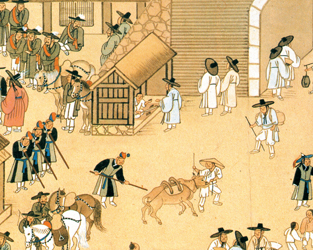
Kimchi and soju are staples of daily life in Korea and tend to represent the cuisine for foreigners. Though kimchi and soju are strongly associated with Korea, their history has remained elusive. This program delves into the origins of these foods by looking at the eating and drinking culture of the Joseon period. This gives us a fuller picture of the life of the peasantry during that time, helping us to understand what makes kimchi and soju so characteristically Korean. This talk introduces the book Everyday Life in Joseon-Era Korea, which presents aspects of the period from the perspective of the peasantry.


Tickets

 
The Korea Society Fellow, Patron and
Corporate members: FREE with registration

Tickets
Full Name
Title or Position
Company
Email
Membership ID
(where applicable)
 
How did you hear about this program?


The Origins of Kimchi and Soju
with
Michael D. Shin

THURSDAY, APRIL 4, 2019 | 6 PM

The Korea Society
350 Madison Avenue, 24th Floor
New York, NY 10017


About the Speaker

Michael D. Shin is a Fellow of Robinson College, Cambridge. He is the author of Korean National Identity under Japanese Colonial Rule (Routledge), the editor and co-author of Korean History in Maps (Cambridge University Press), and the editor and co-translator of Everyday Life in Joseon-Era Korea: Economy and Society (Global Oriental, Brill).


Of Interest:

Tour explores Korea’s traditional brewing culture

The Life of a Korean Brewmaster


Intro to Korea: Teachers’ Conference

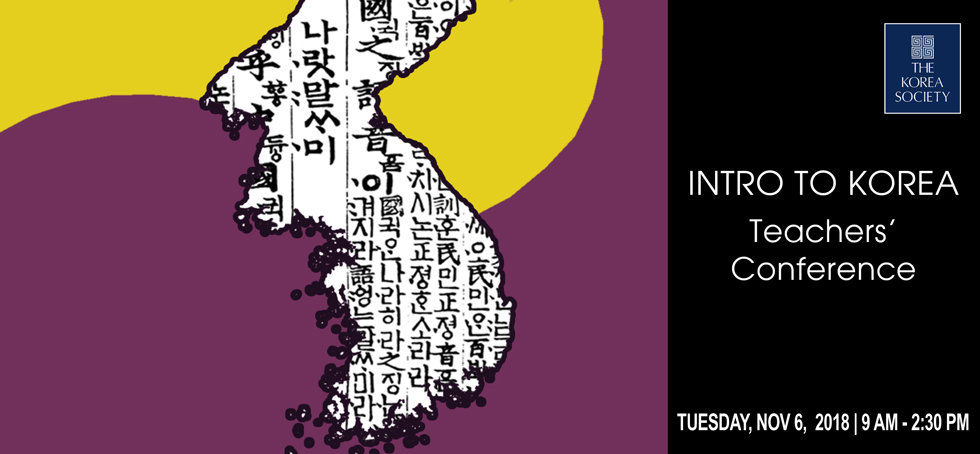
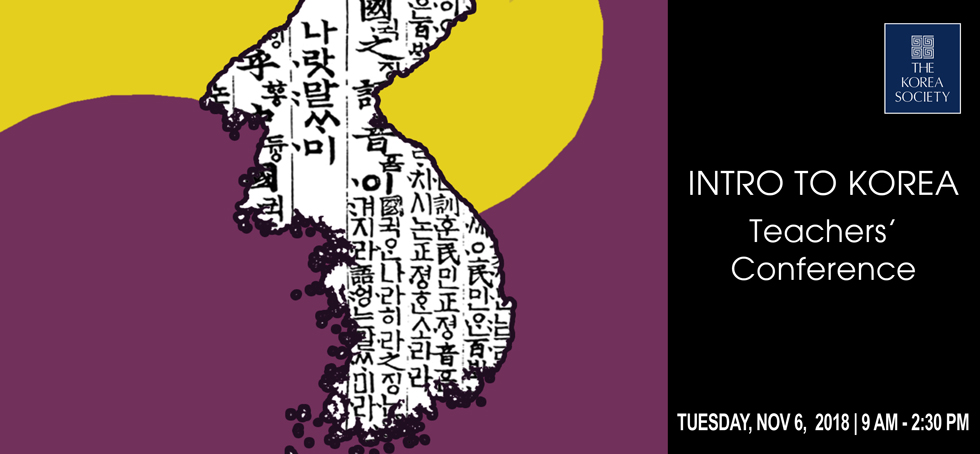
Educators are invited to explore Korea’s rich premodern and dynamic contemporary history. Dr. Michael Pettid, Professor of Premodern Korean Studies at Binghamton University, chronicles core societal values, belief systems, and dynastic changes in premodern Korea. Dr. Charles K. Armstrong, Korea Foundation Professor of Korean Studies at Columbia University, outlines the 20th century events which have shaped contemporary Korea. The conference ends with a classroom activities workshop to help educators incorporate this unique topic into their curriculum.


Free Event
Early Registration Requested
RSVP here

Intro to Korea Teachers’ Conference

Tuesday, November 6, 2018 | 9 AM – 2:30 PM

Schedule


8:30 AM   Registration
 
9:00 AM – 10:15 AM   Premodern Korea
Dr. Michael Pettid, Binghamton University
 
10:30 AM – 11:45 AM   20th Century Korea
Dr. Charles K. Armstrong, Columbia University
 
12:00 PM – 1:00 PM   Korean Lunch (provided)
 
1:00 PM – 2:30 PM   Curriculum Workshop

For more information, please contact Ms. Luz Lanzot or by phone at (212) 759-7611

The Korea Society
350 Madison Avenue, 24th Floor
New York, NY 10017


About the Speakers

Michael Pettid is Professor of Premodern Korean Studies in the Department of Asian and Asian American Studies and also serves as the Director of the Translation Research and Instruction Program at Binghamton University (SUNY). He received his Ph.D. in premodern Korean literature from the University of Hawaii at Manoa and teaches courses on premodern Korean history, literature, religion and Confucianism. He has published widely on premodern Korea including several books, the most recent of which is a co-edited volume entitled Death, Mourning, and the Afterlife in Korea: Critical Aspects of Death from Ancient to Contemporary Times (with Charlotte Horlyck, University of Hawaii Press, 2014). His current research projects include a translation of the 18th century Kyuhap ch’ongsŏ [Encyclopedia of women’s daily lives] and a co-edited anthology of premodern Korean prose.

Charles K. Armstrong is The Korea Foundation Professor of Korean Studies in the Social Sciences in the Department of History at Columbia University. He is the former Director of Columbia’s Center for Korean Research and former Acting Director of the Weatherhead East Asian Institute. Professor Armstrong is the author, editor or co-editor of five books, including most recently Tyranny of the Weak: North Korea and the World, 1950 – 1992 (Cornell University Press, 2013) and The Koreas (Routledge: second edition, 2014). His current research projects include a history of modern East Asia (forthcoming from Wiley-Blackwell publishers), a study of American cultural policy in East Asia during the early Cold War, and the interaction between urbanization and the environment in North Korea and Northeast China. Professor Armstrong holds a B.A. in Chinese Studies from Yale University, an M.Sc. in International Relations from the London School of Economics, and a Ph.D. in History from the University of Chicago. He has taught at Princeton, the University of Washington, and Seoul National University, and joined the Columbia faculty in 1996.