The Origins of Kimchi and Soju

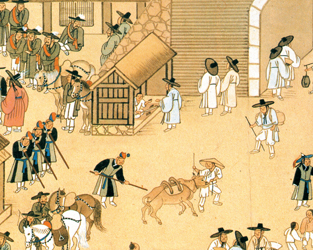
Kimchi and soju are staples of daily life in Korea and tend to represent the cuisine for foreigners. Though kimchi and soju are strongly associated with Korea, their history has remained elusive. This program delves into the origins of these foods by looking at the eating and drinking culture of the Joseon period. This gives us a fuller picture of the life of the peasantry during that time, helping us to understand what makes kimchi and soju so characteristically Korean. This talk introduces the book Everyday Life in Joseon-Era Korea, which presents aspects of the period from the perspective of the peasantry.


Tickets

 
The Korea Society Fellow, Patron and
Corporate members: FREE with registration

Tickets
Full Name
Title or Position
Company
Email
Membership ID
(where applicable)
 
How did you hear about this program?


The Origins of Kimchi and Soju
with
Michael D. Shin

THURSDAY, APRIL 4, 2019 | 6 PM

The Korea Society
350 Madison Avenue, 24th Floor
New York, NY 10017


About the Speaker

Michael D. Shin is a Fellow of Robinson College, Cambridge. He is the author of Korean National Identity under Japanese Colonial Rule (Routledge), the editor and co-author of Korean History in Maps (Cambridge University Press), and the editor and co-translator of Everyday Life in Joseon-Era Korea: Economy and Society (Global Oriental, Brill).


Of Interest:

Tour explores Korea’s traditional brewing culture

The Life of a Korean Brewmaster


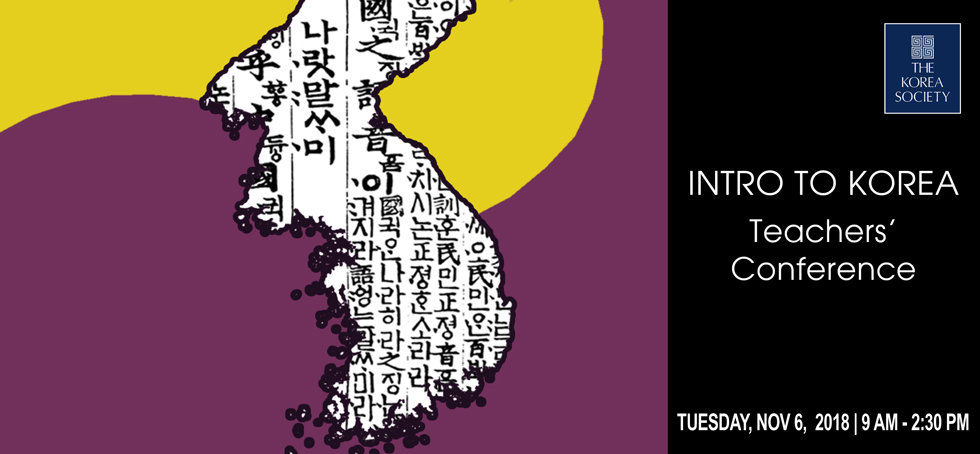
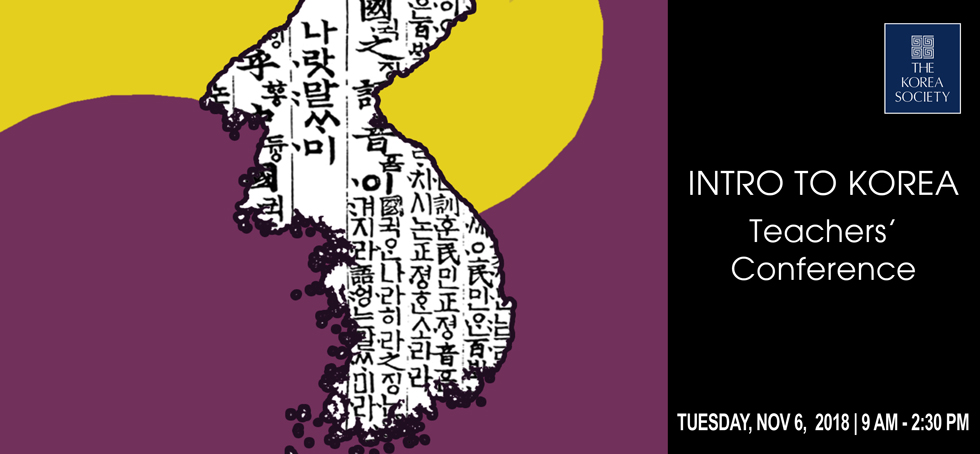
Intro to Korea: Teachers’ Conference

Educators are invited to explore Korea’s rich premodern and dynamic contemporary history. Dr. Michael Pettid, Professor of Premodern Korean Studies at Binghamton University, chronicles core societal values, belief systems, and dynastic changes in premodern Korea. Dr. Charles K. Armstrong, Korea Foundation Professor of Korean Studies at Columbia University, outlines the 20th century events which have shaped contemporary Korea. The conference ends with a classroom activities workshop to help educators incorporate this unique topic into their curriculum.


Free Event
Early Registration Requested
RSVP here

Intro to Korea Teachers’ Conference

Tuesday, November 6, 2018 | 9 AM – 2:30 PM

Schedule


8:30 AM   Registration
 
9:00 AM – 10:15 AM   Premodern Korea
Dr. Michael Pettid, Binghamton University
 
10:30 AM – 11:45 AM   20th Century Korea
Dr. Charles K. Armstrong, Columbia University
 
12:00 PM – 1:00 PM   Korean Lunch (provided)
 
1:00 PM – 2:30 PM   Curriculum Workshop

For more information, please contact Ms. Luz Lanzot or by phone at (212) 759-7611

The Korea Society
350 Madison Avenue, 24th Floor
New York, NY 10017


About the Speakers

Michael Pettid is Professor of Premodern Korean Studies in the Department of Asian and Asian American Studies and also serves as the Director of the Translation Research and Instruction Program at Binghamton University (SUNY). He received his Ph.D. in premodern Korean literature from the University of Hawaii at Manoa and teaches courses on premodern Korean history, literature, religion and Confucianism. He has published widely on premodern Korea including several books, the most recent of which is a co-edited volume entitled Death, Mourning, and the Afterlife in Korea: Critical Aspects of Death from Ancient to Contemporary Times (with Charlotte Horlyck, University of Hawaii Press, 2014). His current research projects include a translation of the 18th century Kyuhap ch’ongsŏ [Encyclopedia of women’s daily lives] and a co-edited anthology of premodern Korean prose.

Charles K. Armstrong is The Korea Foundation Professor of Korean Studies in the Social Sciences in the Department of History at Columbia University. He is the former Director of Columbia’s Center for Korean Research and former Acting Director of the Weatherhead East Asian Institute. Professor Armstrong is the author, editor or co-editor of five books, including most recently Tyranny of the Weak: North Korea and the World, 1950 – 1992 (Cornell University Press, 2013) and The Koreas (Routledge: second edition, 2014). His current research projects include a history of modern East Asia (forthcoming from Wiley-Blackwell publishers), a study of American cultural policy in East Asia during the early Cold War, and the interaction between urbanization and the environment in North Korea and Northeast China. Professor Armstrong holds a B.A. in Chinese Studies from Yale University, an M.Sc. in International Relations from the London School of Economics, and a Ph.D. in History from the University of Chicago. He has taught at Princeton, the University of Washington, and Seoul National University, and joined the Columbia faculty in 1996.


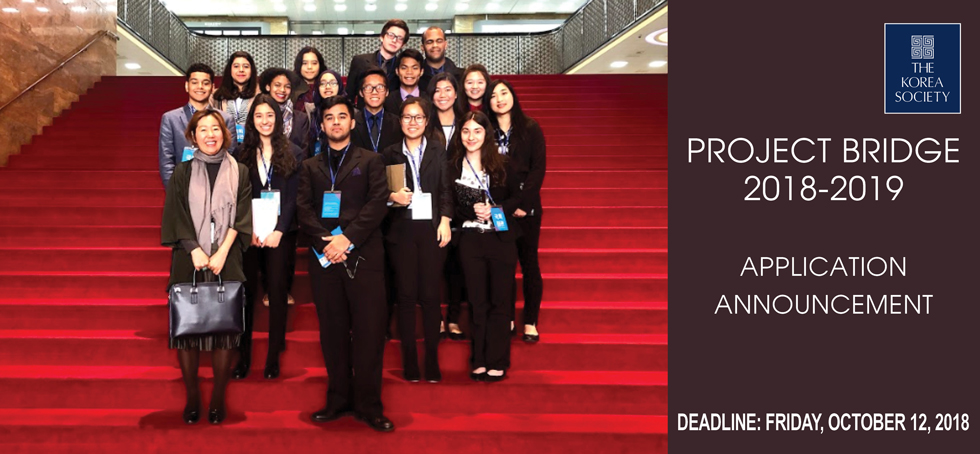
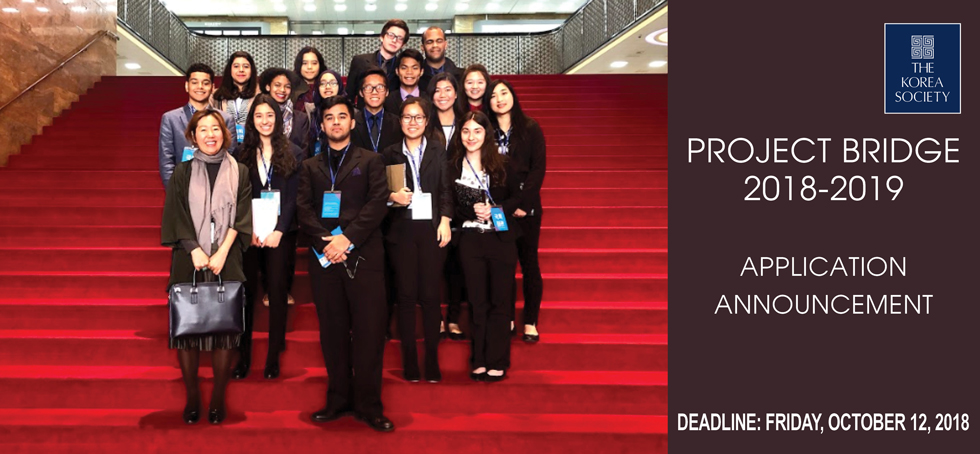
Project Bridge 2018-2019 Application Announcement

Prospective Youth Ambassadors are invited to apply for Project Bridge, an intercultural youth leadership program that includes bi-monthly educational workshops, a weekend retreat, and an expenses-paid 10-day study tour of Korea. Juniors and seniors in NYC public schools are eligible. NYC educators are welcomed to apply for group leader positions.

The Korea Society, in conjunction with the Los Angeles-based Pacific Century Institute, coordinates a year-long intercultural outreach program for high school students. Originally created in response to the 1992 Los Angeles riots, the program selects 16 student Youth Ambassadors and two educator group leaders from New York City and Los Angeles to participate. Now in its 26th year, Project Bridge aims to cultivate future community leaders and introduce them to U.S.- Korea relations, with an emphasis on cultural and racial sensitivity and a firm understanding of Korea.

Applications must be postmarked by Friday, October 12, 2018.

Mail applications to:

Luz Lanzot
The Korea Society
350 Madison Avenue 24th FL
New York, NY 10017
 

Los Angeles applicants, please visit this link for application forms.


Once selected, participants meet regularly for educational workshops that focus on topics such as Korean history, language, modern society, and U.S.-Korea relations, as well as the history of race relations in the U.S. Participants gain insights into Korea, acquire leadership skills, and develop intercultural understanding. The highlight of Project Bridge is a fully subsidized ten-day study tour of Korea in April 2019, including visits to numerous historical sites and a homestay with a Korean high school student.


Program Schedule:

DEADLINE: October 12, 2018 | Application Postmark Deadline

November 12, 2018  | Announcement of Finalists

 April 2018  | Study tour

For more information, please contact Ms. Luz Lanzot .


APPLICATION FORM


New York
(Student & Group Leader Deadline)
(Deadline: Friday, October 12, 2018)


Group Leader Information
Student Information
Recommendation Form
Application Form


Project Bridge Community Presentation 2018

Each year, The Korea Society and the Pacific Century Institute provide Youth Ambassadors from New York and Los Angeles with a six-month program of leadership development, self reflection, and intercultural understanding that culminates in ten days of total cultural immersion in Korea. On June 7th, the New York-based Youth Ambassadors will present their final reports on their Project Bridge journey to teachers, friends, family, and members of The Korea Society.

We encourage current New York City public high school sophomores and juniors to attend and learn more about how to apply to be part of Project Bridge 2018-2019.

Project Bridge is made possible with grants from the Korea Foundation.

Project Bridge Community Presentation

Thursday, June 7, 2018 | 7 PM

Free Event
Early Registration Requested
RSVP HERE .


7:00 PM | Greetings
7:05 PM | Youth Ambassador Presentations
8:00 PM | Korean Dinner (provided)
8:30 PM | Q&A

2017-2018 New York Youth Ambassadors

Bonnie Chen   Brooklyn Technical High School
Muhammad Deen   Victory Collegiate High School
Ray Gardner   High School for Environmental Studies
Dedwin Marmolejos   High School for Environmental Studies
Rehnooma Momo   Hillcrest High School
Jasmine Nadal-Chung   Hunter College High School
Mili Shrestha   Fiorello G. Laguardia High School
Tony Valencia   High School for Environmental Studies


Family Day: Korean New Year 2018

Join us to celebrate Sŏllal, the Korean New Year, with a day of fun-filled family activities at The Korea Society! Enjoy storytelling, participate in arts workshops, compete in traditional games, and more!

Limited space please register in advance.


Tickets:
Members: $25 per family of 3-5 ($5 each additional family member), $10 for individuals
Non-members: $30 per family of 3-5 ($5 each additional family member), $15 for individuals


Join our membership program here!


CelebrASIA NYC

Family Day is part of CelebrASIA NYC, a collaboration among leading cultural institutions in New York City designed to introduce children to Asian festivals and themes. Children are invited to ring in many Asian New Years from January to March by participating in hands-on workshops and programs at Japan Society, Museum of Chinese in America, The Korea Society, Asia Society, China Institute, Flushing Town Hall, and the Rubin Museum of Art. Members of all participating organizations receive discounts for all CelebrASIA events. Please contact your institution for the promotional code when purchasing tickets at each venue. Visit www.celebrasia.org for more information.

Sponsored by NYC Department of Cultural Affairs


Project Bridge 2017-2018 Application Announcement

DEADLINE EXTENDED to MONDAY, OCTOBER 30th.

Prospective Youth Ambassadors are invited to apply for Project Bridge, an intercultural youth leadership program that includes bi-monthly educational workshops, a weekend retreat, and an expenses-paid 10-day study tour of Korea. Juniors and seniors in NYC public schools are eligible. NYC educators are welcomed to apply for group leader positions.

The Korea Society, in conjunction with the Los Angeles-based Pacific Century Institute, coordinates a year-long intercultural outreach program for high school students. Originally created in response to the 1992 Los Angeles riots, the program selects 16 student Youth Ambassadors and two educator group leaders from New York City and Los Angeles to participate. Now in its 25th year, Project Bridge aims to cultivate future community leaders and introduce them to U.S.- Korea relations, with an emphasis on cultural and racial sensitivity and a firm understanding of Korea.


 Los Angeles applicants, please visit this link for application forms.


Once selected, participants meet regularly for educational workshops that focus on topics such as Korean history, language, modern society, and U.S.-Korea relations, as well as the history of race relations in the U.S. Participants gain insights into Korea, acquire leadership skills, and develop intercultural understanding. The highlight of Project Bridge is a fully subsidized ten-day study tour of Korea in March 2016, including visits to numerous historical sites and a homestay with a Korean high school student.


Program Schedule:

DEADLINE: Monday, October 30, 2017 | Application Postmark Deadline

November 13, 2017  | Announcement of Finalists

 March 2017  | Study tour

For more information, please contact Mrs. Luz Lanzot .

Due to numerous inquiries, please be advised that we will accept applications without a principal’s signature. 


APPLICATION FORM


New York
(Student & Group Leader Deadline)
(Deadline extended: Monday, October 30, 2017)


Group Leader Information
Student Information
Recommendation Form
Application Form


Project Bridge 2016-2017 Community Presentation


Each year, The Korea Society provides Youth Ambassadors from New York and Los Angeles with a six-month program of leadership development, self reflection, and intercultural understanding that culminates in ten days of total cultural immersion in Korea. On June 20th, the New York-based Youth Ambassadors will present their final reports on their Project Bridge journey to teachers, friends, family, and members of The Korea Society. 


We encourage current New York City public high school sophomores and juniors to attend and learn more about how to apply to be part of Project Bridge 2017-2018.

Project Bridge is made possible with grants from the Korea Foundation.


Free Event

Early Registration Requested

RSVP here.


Project Bridge 2016-2017 Community Presentation

Tuesday, June 20, 2017

7:00 PM  |  Greetings

7:05 PM  |  Youth Ambassador Presentations

8:00 PM  |  Korean Dinner (provided)

8:30 PM  |  Q&A


2016-2017 NY Youth Ambassadors


Salma Elboute, Williamsburg Prep High School

Shenelle Helwig, The Young Women’s Leadership School of Queens

Alexander Herrera, Millennium High School

Tiffany Lim, NYC Lab School for Collaborative Studies

Juan Meija, Flushing International High School

Rahem Shreeves, International Leadership Charter School

Corinne Southern, High School For Language & Diplomacy

Frank Visnadul, Brooklyn Technical High School


Family Day: Korean New Year 2017

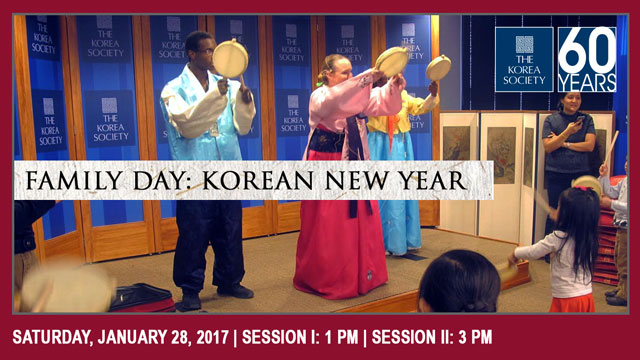
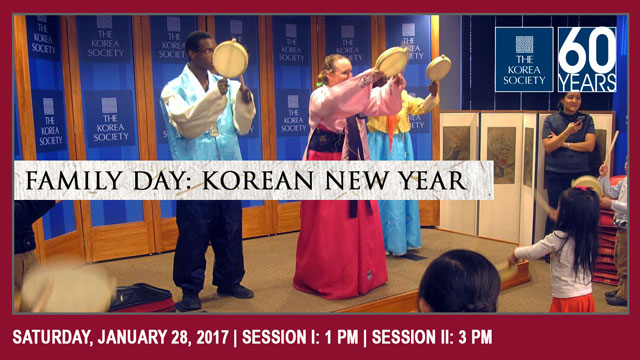
Celebrate Sŏllal, the Korean New Year, with a day of fun-filled family activities at The Korea Society! Enjoy storytelling based on Korean folk tales and practice sebae, the New Year’s bow, to show respect for elders. Play a Korean hand-drum, learn brush painting, compete in traditional games, and more!


Limited Space Available

Session I: 1 PM

Session II: 3 PM | SOLD OUT


Tickets:

Members: $25 per family of 3-5 ($5 each additional family member), $10 for individuals

Non-members: $30 per family of 3-5 ($5 each additional family member), $15 for individuals


Family Day is part of CelebrASIA NYC, a collaboration among leading cultural institutions in New York City designed to introduce children to Asian festivals and themes. Children are invited to ring in many Asian New Years from January to March by participating in hands-on workshops and programs at Japan Society, Museum of Chinese in America, The Korea Society, Asia Society, China Institute, Flushing Town Hall, and the Rubin Museum of Art. Members of all participating organizations receive discounts for all CelebrASIA events. Please contact your  institution for the promotional code when purchasing tickets at each venue. Visit www.celebrasia.org for more information.


NYCulture current inverted white logo

Sponsored by NYC Department of Cultural Affairs


Video Resources: Lectures

video Resources lectures Icon

Video Resources


one-religion-two-countries-Classical-and-neo-confucianism-in-korea-and-japan goulde

Confucian-Personalities-1

Confucian-Personalities-2

Confucian-Personalities-3

Confucian-Personalities-4

Learn-Korean-Peterson

Learn-Korean-Peterson

Sijo Peterson

History-of-Early-Choson Peterson


Audio Resources

audio Resources Icon

Audio Resources


Traditional Thought & Values in Korea

On August 10, 2010, Dr. John Goulde, professor of religion and director of the Asian Studies Program at Sweet Briar College, spoke at The Korea Society to middle- and high-school teachers as part of the New York City Department of Education’s After School Professional Development Program. Dr. Goulde specializes in the sociology, religion, and culture of North and South Korea. He received a bachelor’s degree from Seoul National University and completed his graduate work at Harvard University. In this first of two lectures, Dr. Goulde addresses traditional thought and values in Korea.


History of Korea Part 1

On August 4, 2008, Dr. Charles Armstrong, director of the Center for Korean Research at Columbia University, presented a two-part overview of Korean history at The Korea Society in New York. In this first lecture, he provides a general introduction to contemporary Korea before delving into Korean history, starting with the founding myth of Tangun and progressing up to the late nineteenth century when Korea opened up to modern diplomatic relations with Japan and the West.


History of Korea Part 2

On August 4, 2008, Dr. Charles Armstrong, director of the Center for Korean Research at Columbia University, presented a two-part overview of Korean history at The Korea Society in New York. In this second lecture, Dr. Armstrong discusses modern Korean history, beginning in 1876 with Korea’s first formal diplomatic treaty with Japan.


The Case of Arirang: How the Anthem of Korean Resistance Became a Japanese Pop Hit

On November 6, 2007 The Korea Society hosted a lecture titled “The Case of Arirang: How the Anthem of Korean Resistance Became a Japanese Pop Hit” by E. Taylor Atkins, an associate professor of history at Northern Illinois University.


The Korean Economy in the New Industrial Revolution

On April 3rd, 2007, Yoo Jang-hee, a professor of international studies at Ewha Women’s University, delivered a lecture titled “The Korean Economy in the New Industrial Revolution” to a group of American educators touring Korea as part of The Korea Society’s 2007 Spring Fellowship in Korean Studies program. Professor Yoo spoke about Korea’s role in the increasingly knowledge-based global economy. Surveying Korea’s advantages-such as its highly trained workforce and advanced information infrastructure-and what he sees as its disadvantages-low levels of R&D funding and an unproductive education system-Yoo concluded that the Korean government needs to resume pro-growth policies and encourage private-sector initiatives in order to compete in this world’s new industrial revolution.


The Problem of North Korea in the Era of Terrorism

On April 2nd, 2007, The Korea Society sponsored a lecture titled “The Problem of North Korea in the Era of Terrorism” by Professor Ahn Byong-Man, chairman of the Korea Fulbright Foundation. The lecture, which took place in Seoul as part of The Korea Society’s Korea Fellowship for Educators program, addressed the unique security challenges that North Korea poses to the world community and recounted previous American and South Korean attempts to ease tensions with the North.


The Origins of Koreans and Their Culture

On July 25th, 2005, The Korea Society hosted a lecture titled “The Origins of Koreans and Their Culture” with Mark Byington, a post-doctoral fellow in Korean Studies at Harvard University. The lecture—which was given as part of The Korea Society’s continuing education program for teachers—addressed the important early sources of Korean language, art, religion and custom.


Tales of Korea

Cathy Spagnoli, a professional storyteller from Seattle, narrates seven tales of Korea. Spagnoli has traveled extensively through India, Pakistan, Thailand, Japan and Korea gathering indigenous stories and music. During her numerous trips to Korea, she has met with an extensive network of storytellers and collected a wide range of stories that beautifully illustrate Korean culture.


TALES OF KOREA, PART 1

The seven tales in this selection are appropriate for younger students (grades 1-5), and include: Grain of Millet, Green Frog, The Two Brothers, A Trick or Two, Princess Pyongkang and Ondal, Abandoning the Old Ones, and The Serpent’s Revenge. This selection gives a glimpse of Korea and Korean values through the art of storytelling. For example,”Grain of Millet” demonstrates delightfully how cleverness with a little luck can turn into fortune. Other popular Korean themes presented include: filial piety, geomancy, diligence, kindness rewarded vs. greed punished, and revenge vs. gratitude. All of these stories are fun to listen to and are fun to learn from. For example, students gain insight into another culture through Korean animal sounds (Korean dogs bark “mong, mong,” not “bow wow”), and learn a few vocabulary words from a talking turtle.

Part 1A includes: Grain of Millet, Green Frog, The Two Brothers, A Trick or Two.

Part 1B, includes: Princess Pyongkang and Ondal, Abandoning the Old Ones, The Serpent’s Revenge.


TALES OF KOREA, PART 2

The twelve tales in this selection are appropriate for older students (grades 6-12). Several of these stories are folktales illustrating long-held Korean values of cleverness, filial piety, friendship and fidelity. Others present mathematical brainteasers. Some are true-to-life and based on history, from the pages of the diary of a 16th century admiral, to the poetry of war crimes committed on the peninsula during the 20th century, to the autobiographical account of a Korean American immigrant. What all of these tales share is the wit, verve and love of all things Korean.

Part 2A, includes: Kim Sondal & the River, The Farmer & the Tokaebi, The Stone Bell, A Faithful Dog, A Cup of Rice, The Extra Won.

Part 2B, includes: Admiral Yi Sun-shin, A Wise Monk, “Suni’s Thimble” by Itsuko Ishikawa, Sad Memories, A Silent Debate, Quiet Odyssey, excerpts from the book by Mary Paik Lee.