
Join us for a virtual tour of archival resources about Korea and U.S.-Korea relations available for virtual and U.S.-based researchers. This discussion highlights a diverse array of both longstanding and emerging collections, providing a wide survey of available historical resources. How can educators, researchers, historians, writers, and students best take advantage of this treasure trove of materials? What stories await and what impact can they have? What are some tips and tricks from librarians, center directors, and archivists?
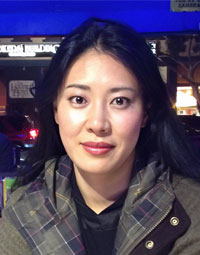
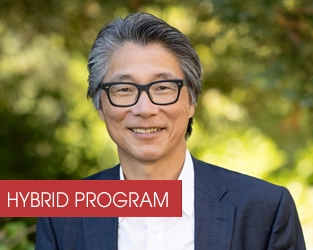
Participating resource centers include: the new Van Fleet Digital Archive, The University of Wisconsin-Madison Center for East Asian Studies U.S.-Korean Relations Collection, The Library of Congress Korean Collection, and The Harry S. Truman Library and Museum. This program is jointly produced by the Policy and the Education teams. Featuring: Dr. David Fields, Associate Director of the Center for East Asian Studies at University of Wisconsin-Madison, Joe McChristian, Jr. President of The Van Fleet Foundation, Dr. Sam Rushay, Supervisory Archivist at the Harry S. Truman Library and Museum, and Dr. Elli Kim, Korea Reference Librarian Asian Division at The Library of Congress.
This program is made possible by the generous support of the Korea Foundation and our individual and corporate members.
Spotlight: Resources on Korea and US-Korea Relations
Wednesday, April 8, 2026 | 8 AM (EDT)

The University of Wisconsin-Madison Center for East Asian Studies: U.S.-Korean Relations Collection
This collection contains a digital facsimile of records held by the United States National Archives and Records Administration (NARA) related to relations between the United States and the Korean peninsula, 1882-1963. Most of the records in this collection come from Record Group 59, the Central Files of the United States Department of State, but Record Groups 43 and 333 are also represented. The records in this collection were selected on the basis that they had already been microfilmed by NARA and so could be digitized efficiently. While some of these records have been available at major universities on microfilm for decades, the goal of this collection was to make all of NARA’s Korea-related microfilm publications available in one place, and to all interested researchers, regardless of whether they had access to a major research library.
General James Alward Van Fleet was the Commander of all Allied Ground Forces in the Korean War, 14 April 1951 – 12 February 1953. Korea honors him as the Father of the Korea Military Academy and the Father of the Republic of Korea Army. He was a Founder & first President of the Korea Society. He loved Korea as his second home until his death at the age of 100 in 1992.
Throughout his life, General Van Fleet kept extensive personal records of correspondence, documents, photos and memorabilia, all of which he donated to the George C. Marshall Foundation. The collection of some 150,000 documents and several thousand photos occupies more than 80 feet of shelf space in their vaults.
The Van Fleet Foundation has just completed a project to digitize this entire archive. It is now freely accessible over the Internet to anyone in the World for research at https://vanfleetfoundation.
We have developed proprietary artificial intelligence systems for both the storage of digital files and for the free form search and retrieval of information.
Queries can be submitted in English or in Korean. Answers to queries will be provided as a summary of available information with an attached bibliography of the original source files for the answer, ranked in order of relevance to the query. Queries in English will receive a summary answer in English. Those in Korean will get a summary answer in Korean. Source documents will be in their original languages. They can be downloaded and then translated.
The Library of Congress Korean Collection
The systematic collection of Korean materials at the Library of Congress began in earnest with the outbreak of the Korean War in 1950. Despite this relatively late start, the Library’s Korean collection is now the largest and most comprehensive outside of East Asia. The collection primarily comprises publications from the 20th century to the present but also holds a number of valuable pre–20th century publications in traditional formats. It covers all subject areas, from the arts and humanities to the social and natural sciences, and also includes Korean diaspora publications from around the world. The Library’s commitment to acquiring materials from North Korea has resulted in an internationally recognized collection that has served as a vital resource for researchers from various disciplines.
The Harry S. Truman Library and Museum
Harry Truman donated his Presidential papers to the American people to be preserved at the Truman Library. He envisioned this Library as a place where people of all ages could study the American Presidency and government. The Library’s collections continue to grow, with new acquisitions regularly added to the holdings. Researchers, curators, educators and others use materials including original documents, artifacts, films, and audio recordings to educate the public about the life and times of Harry Truman and the issues that shaped his presidency. Digital collections include: “Prelude to Conflict: United States Policy Toward Korea, 1945-1950.” This collection contains documents related to the relationship between the United States and Korea, and what became known as South Korea, before the outbreak of the Korean War. Supporting materials include photographs and oral history transcripts. It also includes: The Korean War and Its Origins, The Korean War: The Reaction of the United States to Chinese Intervention, December 1950, and The Korean War: President Truman’s Dismissal of General Douglas MacArthur.
 |
|
Dr. David Fields is Associate Director of the Center for East Asian Studies at University of Wisconsin-Madison. He earned his PhD in history at the University of Wisconsin–Madison, specializing in US-Korean relations. He is the author of Foreign Friends: Syngman Rhee, American Exceptionalism, and the Division of Korea and the editor of The Diary of Syngman Rhee, 1904–34, 1944, published by the National Museum of Korean Contemporary History. Since 2015, he has been the book review editor of the Journal of American-East Asian Relations. He has been published in the Washington Post, North Korea Review, Journal of American-East Asian Relations, SinoNK.com, Transactions of the Royal Asiatic Society-Korea Branch, and in the Working Papers Series of the Cold War International History Project. His research and analysis has been featured on National Public Radio, Wisconsin Public Radio, C-SPAN, and CNN. |
 |
||||||||
|
Joe McChristian, Jr. serves as Founder and President The Van Fleet Foundation, with a mission to share the knowledge, wisdom and inspiration of General James Alward Van Fleet through the preservation of his archives, promotion of historical research, publication of relevant articles and books, and participation in compelling programs and events that celebrate and perpetuate his legacy. He is experienced in corporate start ups, turn-arounds of private manufacturing companies, and senior management of public corporations. He is also a decorated combat veteran, with Three Bronze Star Medals, the Air Medal, the Joint Service Commendation Medal, and the Army Commendation Medal.
|