

Program Brief
Commemorating the 150th Anniversary of Kim Koo’s Birth
UNESCO officially commemorated 2026 as the 150th anniversary of the birth of Kim Koo, honoring his foundational conviction that culture is the ultimate engine of national development, human happiness, and international peace. To mark this significant milestone, The Korea Society, in partnership with the Association of Commemorative Service for Patriot Kim Koo and the Kim Koo Foundation, hosted a landmark presentation and exhibition opening titled “Kim Koo: Dreaming of Peace through the Power of Culture.” This momentous occasion brought together senior policy and civic leaders to celebrate Kim Koo’s enduring legacy and reflect on the growing maturity of the U.S.–Republic of Korea (ROK) alliance.
The event also celebrated the 11th anniversary of the Kim Koo Professional Series at The Korea Society. Over the past decade, this impactful initiative has empowered a network of over 200 fellows spanning policy, corporate industry, media, nonprofits, and academia to strengthen U.S.-Korea relations and promote peace and prosperity in Northeast Asia.
This program was produced in partnership between The Korea Society and The Association of Commemorative Service for Patriot Kim Koo and made possible by the support of the Kim Koo Foundation.
Key Takeaways
1. The Boundless Power of Culture as a Global Engine
Kim Koo wrote in his seminal essay My Wish: “The one thing I desire without limit is the power of a great culture. For the power of culture makes us happy and goes on to bring happiness to others.” Speakers highlighted how this profound vision has dynamically materialized in the modern era. From the global dominance of K-Pop and multi-Tony Award-winning Broadway adaptations like Maybe Happy Ending to Netflix chart-toppers, Korea’s soft power has emerged as a universal bridge for cultural exchange and lasting international peace.
2. Historical Precursors to the Modern ROK-U.S. Alliance
Beyond his revolutionary leadership within the Provisional Government of Korea, Kim Koo’s legacy resonates deeply as a visionary diplomat. His historical foresight led to early, critical collaborations with the U.S. Office of Strategic Services (OSS) on the “Eagle Project.” This initiative served as a vital foundational precursor to the formal institutionalization of the modern ROK-U.S. alliance, which has now matured into a comprehensive strategic partnership encompassing defense, trade, cutting-edge technology, and shared values of freedom and the rule of law.
3. Diplomatic Equality, Dignity, and National Unity
Kim Koo long advocated for bilateral relations rooted strictly in mutual dignity, a sentiment captured in a handwritten calligraphy scroll gifted to the late diplomat and scholar Gregory Henderson that reads: “Let Korea and the United States help one another in friendship and as equals.” His sacrifice and courage established a roadmap proving that a nation’s true strength is not merely measured by military or raw economic might, but by the character, resilience, and unified purpose of its people. This vision underpins the modern democratic advancements that allow contemporary leaders to address global challenges from a position of equal partnership and mutual respect.

Congratulatory Remarks:
 |
|
Her Excellency Kang, Kyung-wha, Ambassador Extraordinary and Plenipotentiary of the Republic of Korea to the United States of America Kang, Kyung-wha was appointed Ambassador Extraordinary and Plenipotentiary of the Republic of Korea to the United States of America by President Lee, Jae Myung in October, 2025. Prior to her appointment, Ambassador Kang served as Minister of Foreign Affairs from 2017-2021 under President Moon, Jae-in. Between April, 2024 and September, 2025 she served as President and Chief Executive Officer of Asia Society in New York. During her varied and distinguished career in public service, Ambassador Kang served as Secretary for International Relations in the Office of the Speaker of the Korean National Assembly and as Senior Advisor and Principal Speechwriter to the Foreign Minister and Principal Interpreter to the President of Korea. She was also Director-General for International Organizations at the Ministry of Foreign Affairs and Trade of the Republic of Korea. At the United Nations, she was Deputy High Commissioner at the Office of the High Commissioner for Human Rights, Deputy Emergency Relief Coordinator and Assistant Secretary-General at the United Nations Office for the Coordination of Humanitarian Affairs, Chief of the Transition Team for the 9th United Nations Secretary-General-elect and later his Senior Advisor on Policy. Earlier in her career, Ambassador Kang worked for the English Section of Radio Korea International of the Korean Broadcasting System (KBS), served as Assistant Professor at Cleveland State University in Cleveland, Ohio and was active in several women’s organizations in Korea. She was affiliated with Ewha Women’s University as Distinguished Professor Emeritus (Sept. 2022 – Feb. 2023) and is Honorary Professor at the Institute for Global Engagement and Empowerment at Yonsei University since September, 2023. Ambassador Kang has a Bachelor’s Degree in Political Science and International Studies from Yonsei University, and both a Master’s Degree and Doctorate in International/Intercultural Communication from the University of Massachusetts at Amherst. She is married with three children. |
 |
|
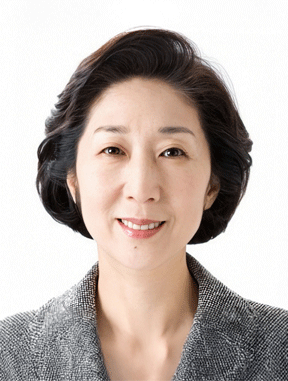
Dr. Kim Mee is a distinguished Korean philanthropist and civic leader. She currently serves as Chairperson of the Kim Koo Foundation, established to honor the legacy of her grandfather, Kim Koo—one of Korea’s most revered independence leaders. The Foundation advances educational and cultural initiatives both in Korea and internationally, continuing Kim Koo’s lifelong commitment to public service and national identity. Dr. Kim has dedicated her career to advocating for social equity and civic engagement. Her work spans a range of critical issues, including women’s rights, child welfare, healthcare access, education, the arts, and civil diplomacy. Dr. Kim is a board director for The Korea Society. She previously served as Chairperson of Women’s News, a leading Korean newspaper focused on women’s issues and social justice. She also holds board positions at the Fletcher School at Tufts University, Midwest Young Artists, and Lake Forest Academy, where she is a Life Trustee. Dr. Kim is the granddaughter of Kim Koo, Premier of the Korean Provisional Government (KPG) and a central figure in Korea’s independence movement. She is also the daughter of General Kim Shin, a pioneering military leader and a senior government official. Dr. Kim is married to Kim Ho Youn, Chairman of Binggrae Co., Ltd., a leading Korean food and beverage company. |
Presenter:
 |
|
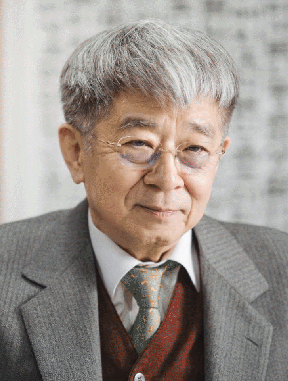
Dr. Han Kyung-Koo was the Secretary-General of the Korean National Commission for UNESCO from December 2020 to December 2024. As a cultural anthropologist trained at Seoul National University (M.A.) and Harvard University (Ph.D.), Dr. Han taught anthropology at Kangwon National University and helped develop the Division of International Studies at Kookmin University as its dean. In 2009, he joined the newly founded College of Liberal Studies of Seoul National University and served as its dean. Dr. Han also served as a member of the Korean National Commission for UNESCO, the Policy Planning Committee of the Korean Federation for the Environmental Movement, and the Presidential Commission on Sustainable Development. He has also served on the editorial boards of the Korea Journal, Sahoewa Yeoksa (Society and History), and Cross-Currents: East Asian History and Culture Review. He was also the Editor of Hanguk Munhwa Inryuhak (Korean Cultural Anthropology) and the Korean Social Science Journal. Dr. Han was President of the Korean International Migration Studies Association, the Korean Society of Education for International Understanding, and the Association for the Studies of Korean abroad, as well as Vice President of the Korean Society for Cultural Anthropology, and the Korean Association for Environmental Sociology. |
