About Us

The Korea Society | Vision 2031 — Strategic Plan
The Korea Society · Vision 2031

America’s premier institution for U.S.–Korea partnership.

Korea is now tied to America’s economy, technology, security, culture, and communities. Our strategic plan is how we meet that moment.

Leadership Policy Business Education Culture Community

Vision & Mission

By 2031, The Korea Society will be America’s premier institution for U.S.–Korea leadership and partnership.

Connecting Leaders. Deepening Partnerships. Shaping Our Shared Future.

Mission

To strengthen the U.S.–Korea partnership by connecting leaders, advancing trusted knowledge, and deepening cultural understanding.

Vision

To be the institution American and Korean leaders turn to first — in policy, business, education, culture, and community.

Our Aim

Where leaders meet, understand one another, solve problems together, and decide what comes next.

A Statement to the Public

Alliances are not inherited. They are cultivated.

The global order that held for seventy years is being rewritten, and a technological revolution is remaking work, security, and daily life. Through it all, the U.S.–Korea relationship has only grown more consequential.

For nearly seven decades, The Korea Society has been the place where Americans and Koreans come to understand each other. Our task now is to widen that circle — beyond New York and Washington, to every region where Korea has become part of American life.

This plan is our commitment: a clear vision, shared values, and a focused set of priorities that we will be measured against.

Traditional Korean eaves against a modern glass tower

Our Values

Six commitments that govern how we work.

They apply to every program, partnership, and decision we make.

Trust

Nonpartisan, accurate, and reliable in everything we publish and host.

Excellence

Programs worthy of the leaders and audiences we convene.

Service

We exist for our members, communities, and both publics.

Leadership

We develop the people who will carry the relationship forward.

Collaboration

We build with partners rather than duplicate their work.

Innovation

We adapt formats, technology, and reach to meet people where they are.

Key Priorities

Five priorities for the years ahead.

Each one is a capability we are building, not a calendar of events.

01

Convene leaders

Build a durable network of American and Korean leaders across policy, business, and culture — and keep them connected between meetings.

02

Advance trusted knowledge

Deliver clear, nonpartisan analysis of Korea and the alliance that policymakers, executives, and journalists can rely on.

03

Reach the whole country

Extend our work beyond New York and Washington to the regions where Korean investment, communities, and interest are growing fastest.

04

Teach the next generation

Equip educators and students nationwide with the resources to understand Korea’s history, culture, and role in the world.

05

Build an enduring institution

Strengthen our people, digital platform, and financial base so this work outlasts any single administration or news cycle.

Six Institutions

The six institutions we are becoming.

Each one names a capability, why it matters, and how we carry it out.

01
Strategic Goal

A Leadership Institution

The room where American and Korean leaders meet, learn, and decide together.

Alliances hold when the people running them know and trust each other.

How we carry it out

  • A standing U.S.–Korea leadership network
  • Off-the-record convenings on hard questions
  • Delegations in both directions each year
02
Strategic Goal

A Community Institution

A home for members, Korean America, and everyone drawn to Korea.

Public support, not government alone, keeps the relationship durable.

How we carry it out

  • Membership that people are proud to hold
  • Cultural programming open to the public
  • Partnerships with community organizations
03
Strategic Goal

A Knowledge Institution

A trusted, nonpartisan source on Korea and the alliance.

Decisions get made on whatever analysis is nearest and clearest.

How we carry it out

  • Briefings for policymakers and executives
  • Clear published analysis, never partisan
  • A searchable library of every program
04
Strategic Goal

A National Institution

Presence beyond New York and Washington, in every region Korea touches.

Korean investment and communities now reach far past the coasts.

How we carry it out

  • Regional chapters where Korea is growing
  • Traveling programs and campus visits
  • Local business and civic partners
05
Strategic Goal

A Digital Institution

A platform that reaches people wherever they are.

Our audience is national; our rooms are not.

How we carry it out

  • Every program livestreamed and archived
  • An open, well-indexed digital library
  • Modern member and education systems
06
Strategic Goal

A Sustainable Institution

The staff, systems, and reserves to do this for decades.

Ambition without a financial base is a wish.

How we carry it out

  • Multi-year commitments from partners
  • A growing endowment
  • Disciplined operations and clear reporting

The Flywheel

Our engine of growth.

Each turn makes the next one easier: reach earns trust, trust earns support, support widens reach. Select a stage to see what powers it.

THE Flywheel EACH TURN COMPOUNDS 01 Lead 02 Inform 03 Connect 04 Develop 05 Sustain 06 Measure
Stage 01 of 06

Lead

Convene the people who shape the relationship, and keep them connected between meetings.

Carried by

A Leadership Institution

On this page

Priority 01 · Convene leaders →

Nothing here works alone. The flywheel is the plan.

The Next Five Years

What progress will look like.

One clear goal per year, each building on the last.

2027In progress

Foundation Base built

Launch the leadership network, modernize our systems, and secure the first multi-year commitments.

  • Leadership network launched
  • Member and CRM systems modernized
  • First multi-year partners committed
2028Planned

Regional Reach Beyond the coasts

Establish our first regional programs in states where Korean investment is growing fastest.

  • First regional chapters seated
  • Traveling program series on the road
  • Local business partners in three states
2029Planned

National Scale Fifty states

Take education and digital programming to all fifty states and double our reach.

  • Educator resources in all fifty states
  • Digital audience doubled
  • Program archive fully open
2030Planned

West Coast Coast to coast

Open a sustained West Coast presence connecting technology, entertainment, and Korean America.

  • Standing West Coast presence
  • Technology and entertainment partnerships
  • Bi-coastal leadership convenings
2031Planned

Premier Institution Vision met

Be the institution American and Korean leaders turn to first — with the endowment to keep it that way.

  • First call for leaders in both countries
  • Endowment secured for the decade ahead
  • Public scorecard on every priority

The Platform Today

We are not starting from zero.

Nearly seven decades of convening give this plan a running start.

1957
Founded to serve the U.S.–Korea relationship
100+
Programs convened each year
50
States reached through education and digital programs
1M+
Annual views across our digital library

Our advantage is relationships — in New York, Washington, Seoul, and Korean America — and the trust that comes with them.

Partner With Us

Three ways to help build it.

This plan works only if the people who care about the relationship carry it with us.

01

Join

Become a member or corporate partner and help sustain the work year over year.

02

Convene

Host, co-sponsor, or bring your network into a program with us.

03

Invest

Fund a priority you believe in — leadership, knowledge, national reach, or education.

Internships & Careers

Internships & Careers | The Korea Society
The Korea Society

Internships & Careers

Join a nonprofit dedicated to deepening understanding between the people of the United States and Korea. Explore current openings across our departments below.

To apply, email your cover letter and résumé to the relevant department with the exact subject line noted in each posting. Only emailed applications are accepted — no phone calls, please. Applications are reviewed on a rolling basis until each position is filled.

Art & Culture Internship | Fall 2026

Arts & CultureUnpaid

The Korea Society’s Arts & Culture department is seeking a talented and dedicated intern with demonstrated interest and background in Korean Studies and/or Arts. We are seeking an intern with strong administrative and research/writing skills, as well as interest in art exhibitions and programming.

As an Art & Culture Intern, you will build networking relationships with artists, performers, and experts in Korean culture. You will conduct research on organizations and individuals, as well as track and monitor current events related to traditional and contemporary Korean culture. You will gain exposure to non-profit organizations and learn database management as well as event planning and public/press outreach.

Duties may include

  • Assist in planning and executing exhibitions and programs
  • Research potential speakers, artists, funding sources, and partner organizations
  • Assist with on-site program management including reception and registration, event A/V tasks, setup and breakdown, and attending and reporting on Korea-related events
  • Assist with live webcast & video release programs during or pre-production

Qualifications

  • Academic background in Asian Studies, Art History, and/or Art Management
  • Strong research, writing, and editing skills with excellent attention to detail
  • Self-driven with a professional demeanor and a desire to excel
  • Proficient in using social media tools such as Facebook and Instagram
  • Previous experience in communications, outreach and media relations a plus
  • Korean language skills a plus

Schedule

Internships are unpaid positions. We do not provide visa support. Candidates must commit to a minimum of 12 weeks and 8–10 hours per week, and be available to come to the NYC office at least 2–3 days a week. May be required to be present for evening programs.

How to Apply

Email a cover letter (indicating your interest and your available days and hours) and a résumé in PDF format with the subject line:

ART & CULTURE INTERNSHIP 2026

No phone calls, please. Applications accepted on a rolling basis until filled. Thank you for your interest!

↑ Back to all openings

Photography Internship

CommunicationsUnpaid

The Korea Society seeks a motivated and detail-oriented Photography Intern to support the documentation of its public programs, special events, and cultural initiatives. This internship offers hands-on experience capturing high-profile events that advance understanding and dialogue between the United States and Korea.

The Photography Intern will assist with photographing live programs — many of which take place during weekday evenings at The Korea Society’s headquarters near Grand Central in New York City. The intern will work closely with the Communications and Programs teams to visually document lectures, panel discussions, and cultural performances.

Key Responsibilities

  • Photograph day/evening programs, including guest speakers, audience engagement, and event atmosphere
  • Capture high-quality images suitable for web, social media, publications, and archival use
  • Organize, edit, and deliver photo sets in a timely manner
  • Support visual documentation needs for special projects, exhibitions, and institutional initiatives
  • Maintain a consistent visual style aligned with The Korea Society’s branding and communications standards

Qualifications

  • Strong interest in event photography, documentary photography, or visual storytelling
  • Experience with DSLR or mirrorless cameras is a plus
  • Reliable, punctual, and comfortable working during evening hours
  • Professionalism when interacting with speakers, guests, and staff
  • Basic photo editing skills (Lightroom, Photoshop, or equivalent) is a plus

What the Intern Gains

  • Real-world experience photographing high-level cultural and policy programs
  • A portfolio of professionally produced event photography
  • Exposure to nonprofit communications and arts/culture programming
  • Mentorship from experienced creative and communications staff
  • Opportunities to contribute to The Korea Society’s digital presence and archival history

Compensation

This is an unpaid internship. Academic credit may be arranged in accordance with school requirements.

How to Apply

Submit a cover letter and résumé with the subject line:

Photography Internship: Your Name

Only emailed applications will be accepted. No phone calls, please. Thank you for your interest!

↑ Back to all openings

Education Internship | 2026

EducationUnpaid

The Korea Society’s Education Department is seeking talented and dedicated interns with a demonstrated interest in Korea. The department provides lecture and workshop programming, curates a wide range of resources, and offers a robust Korean Language Program. As an intern, you will have networking opportunities, receive professional skills training, and gain exposure to how nonprofit organizations work — learning database management as well as event planning and public/press outreach. We are currently offering three different internship opportunities.

Korean Language Program

Learn about the management of a language program, assist in developing and running extracurricular activities with students, and aid with curriculum development.

  • Assist in creating and implementing supplemental materials and activities
  • Assist with creating promotional materials
  • Assist with registration processes for a four-term language program
  • Update and maintain database records, including class rosters

Learning & Development Program Support

  • Assist in Learning & Development, curriculum design, or developing educational/training materials
  • Assist in designing corporate training programs, developing learning materials, or managing instructional projects (highly preferred)

Qualifications

  • Academic background in Education and/or Language / Learning and Development
  • Experience in graphic design, video editing, and promotional content creation
  • Strong attention to detail
  • Team player
  • For the Korean Language internship, intermediate Korean skills required, advanced preferred

Schedule

Internships are unpaid. Candidates must commit to a minimum of 10 weeks and 18–22 hours per week. Interns may work remotely, but one day per week in person is recommended. We cannot provide visa support.

Benefits

  • Flexible work schedule
  • In-person, virtual, or hybrid attendance
  • Free admission to all Korea Society events during your internship
  • Enroll in the Society’s Korean Language Program with a full tuition waiver
  • Class credit if approved by your school

How to Apply

Email the following, indicating the specific internship in the subject line (e.g. “Education Internship” or “Korean Language Internship”):

  • 1) A cover letter (PDF) indicating your interest, availability, and preferred start/end dates
  • 2) A résumé (PDF)

Qualified candidates will be contacted for an in-person or Zoom interview. Thank you for your interest!

↑ Back to all openings

Business and Economics Internship 2026

Business & EconomicsUnpaid

The Korea Society’s Business and Economics Programs department is seeking a talented and dedicated intern with a demonstrated interest and background in US-Korea business/economic affairs. We are seeking an intern with strong administrative and technological skills, as well as an interest in nonprofit programming.

As a Business and Economics Intern, you will build networking relationships with entrepreneurs, business leaders, and experts in relevant industries. You will conduct research on organizations and individuals, track and monitor current events related to US-Korean business/economic affairs, and gain exposure to non-profit organizations while learning database management, event planning, and public/press outreach.

Duties may include

  • Assist with planning and executing on-site business and economic programs such as the Leadership Series, Startup Scene, etc.
  • Assist with researching potential speakers, partner organizations, and audiences for outreach
  • Collect promotional and marketing materials for Business and Economics programs and events

Qualifications

  • Current or recently graduated undergraduate and graduate students may apply
  • Academic background in Business, Economics, International Relations, or related fields
  • Interest in and knowledge of U.S.-Korea relations, particularly business/economic affairs
  • Strong research, writing, and editing skills with excellent attention to detail
  • Self-driven with a professional demeanor and a desire to excel
  • Strong organizational, communication, and multi-tasking skills
  • Korean language skills a plus; photo/videography skills a plus
  • Proficiency in office productivity software (GSuite, Word, Excel, PowerPoint)
  • Experience with Salesforce or similar CRM applications preferred

Schedule

Internships are unpaid. We do not provide visa support. Candidates must commit to a minimum of 12 weeks and 8–10 hours per week, and be available to come to the NYC office at least one day a week. May be required to be present for evening programs.

How to Apply

Submit your application with the subject line:

Business/Economics Internship: Your Name

Your application must include ALL of the following: 1) a résumé in PDF format; 2) a cover letter indicating your interest and the specific months and days you are available to work.

No phone calls, please. Rolling basis until filled. Thank you for your interest!

↑ Back to all openings

Development Internship

DevelopmentUnpaid

The Korea Society seeks multiple bright, enthusiastic, and dedicated interns for its Development Department. The Development intern will provide support for all aspects of the department, assisting with tasks and projects across the following key functional areas.

Individual Giving and Membership

  • Update and maintain membership database records
  • Assist with membership renewals, including printing and mailing acknowledgments
  • Assist with creating marketing collateral and brochures
  • Assist with creating members’ newsletters

Special Events Planning and Fundraising

  • Assist in the preparation and implementation of special events
  • Research potential in-kind donations for events
  • Assist with special event invitations and fundraising mailings

Corporate Sponsorship & Grant Proposals

  • Research new funding sources and contact information
  • Collect press articles relating to The Korea Society and its programs
  • Compile statistics for grant reporting
  • Assist in the preparation of proposals and reports

Young Professional & Contemporary Culture Programming

  • Research current cultural trends, identifying potential program topics and speakers
  • Write website postings for programs
  • Prepare promotional materials for upcoming programs
  • Assist in promotional outreach using social media and email campaigns
  • Provide staffing support at programs

Requirements

Applicants must be well organized, competent in Microsoft Office, and capable of conducting detail-oriented Internet searches. Knowledge of Photoshop and InDesign is a plus. This is an unpaid position but an outstanding opportunity for someone interested in nonprofit development, fundraising, and programming. Class credit available. The work schedule is flexible and will be discussed during the interview.

How to Apply

Submit a cover letter and résumé with the subject line:

Development Internship: Your Name

Only emailed applications will be accepted. No phone calls, please. Rolling basis until filled. Thank you for your interest!

↑ Back to all openings

Communications Internship

CommunicationsUnpaid

The Communications department is seeking a talented, motivated, and hard-working intern who shares our mission to promote greater awareness, understanding, and cooperation between the people of the United States and Korea. As a Communications intern, you will help expand The Korea Society’s audience and reach online and in media, and gain experience in a fast-paced non-profit environment.

Duties may include

  • Designing social media and web content to promote Korea Society programs
  • Transcription and editing of video content
  • Coordinating and assisting with targeted outreach campaigns to press, local organizations, and student groups
  • Conducting research on media organizations, press contacts, and partner organizations
  • Tracking and monitoring current events related to Korean policy and culture
  • Assisting in planning and promoting Korea Society programs and events online and in person

Qualifications

  • Strong background in content development, video editing, and social media design
  • Strong research, writing, and editing skills with excellent attention to detail
  • Self-driven with a professional demeanor and a desire to excel
  • Proficient in using social media such as Facebook, Instagram, and Twitter
  • Previous experience in communications, outreach and media relations a plus
  • Korean language skills a plus
  • Availability to staff in-person events on occasional weekdays a plus

Schedule

Internships are unpaid. Candidates must commit to a minimum of 12 weeks and 8–10 hours per week. Priority given to applicants available to staff in-person events at our NYC office on some weekdays.

How to Apply

Submit a cover letter and résumé with the subject line:

Communications Internship: Your Name

Only emailed applications will be accepted. No phone calls, please. Rolling basis until filled. Thank you for your interest!

↑ Back to all openings

Policy Internships

PolicyUnpaid

The Korea Society’s Policy department is now accepting applications for internships. Qualified candidates should have demonstrated interests in international relations or East Asian politics, with strong research and writing skills and an interest in programming.

As a Policy Intern, you will build working relationships with leading international relations experts, thinkers, and practitioners. You will monitor current events surrounding Northeast Asia and its effects on U.S. foreign policy, assist with conducting research and briefing our President & CEO, and have opportunities to join private roundtable discussions with senior government officials.

Duties may include

  • Assist in planning and executing policy programs and private roundtables
  • Monitor current events and brief the policy team
  • Conduct policy research on visiting delegations and foreign government officials
  • Research potential speakers and partner organizations

Qualifications

  • Academic background in Political Science, International Relations, or East Asian Studies
  • Strong research, writing, and editing skills with attention to detail
  • Korean language ability preferred, but not required

Schedule

Internships are unpaid. We do not provide visa support. Candidates are expected to commit 15–20 hours a week and come to the NYC office at least one day a week, and to assist at in-person policy programs. A six-month commitment is preferred; short periods of two-three months are not optimal for the intern or the Society, so please consider this before applying.

How to Apply

Email the following with the subject line:

2026 POLICY INTERNSHIP APPLICATION – Last Name, First Name

  • 1) A cover letter indicating your interest, the days you are available, and your six-month timespan
  • 2) A résumé in PDF format

Please do not follow up by phone. Thank you for your interest!

↑ Back to all openings

General Internships

GeneralUnpaid

These internships afford unique opportunities to understand the inner workings of a non-profit organization, and to learn about and contribute to the social, cultural, economic, political, and security dimensions of the U.S.-Korea relationship. The work schedule is flexible and will be discussed during the interview. This is an unpaid internship; class credit is available where applicable.

Responsibilities

  • Research, update, and maintain database records
  • Help identify potential program topics and speakers
  • Research partnership opportunities with other institutions and groups
  • Prepare promotional materials for upcoming programs
  • Assist in pre-program promotional outreach efforts
  • Research new funding sources — donor campaigns, corporate sponsors, and foundation grants
  • Assist in the preparation and implementation of special fundraising events
  • Research press articles relating to The Korea Society
  • Monitor the reception desk and direct incoming calls
  • Perform various administrative tasks to support departments
  • Willingness to staff the gallery during opening hours and support project planning, design, implementation, and execution

Applicants must

  • Be proficient in Microsoft Office applications
  • Be capable of conducting detail-oriented Internet searches
  • Possess exceptional communication skills, polite phone etiquette, and strong writing abilities
  • Korean language aptitude is welcomed but not required

How to Apply

Submit a cover letter and résumé with the subject line:

General Internship: Your Name

Only emailed applications will be accepted. Please do not follow up by phone. Thank you for your interest!

↑ Back to all openings

Finance Internships

FinanceUnpaid

The Korea Society’s Finance department is seeking an enthusiastic intern with an interest in learning about finance/accounting. The potential intern should be detail-oriented and possess some degree of administrative and bookkeeping skills. This is an unpaid internship; class credit is applicable.

Responsibilities

  • Research, update, and maintain database records
  • Assist the Associate Finance Officer & Controller
  • Perform various administrative tasks to support departments
  • Occasional assistance with on-site events, such as setup, reception, and registration

Qualifications

  • Undergraduate or graduate student with previous internship or work experience preferred
  • Proficient with Microsoft Office, especially experienced with or a desire to learn Excel
  • Strong attention to detail
  • Team player
  • Self-driven with a professional demeanor
  • Korean-language skills a plus

Benefits

  • Flexible schedule — 2 to 3 days per week
  • Free admission to all Korea Society events during your internship
  • Exposure to non-profit organizations
  • Numerous networking opportunities
  • Class credit if approved by your school

How to Apply

Submit a cover letter and résumé with the subject line:

Finance Internship: Your Name

Only emailed applications will be accepted. Thank you for your interest!

↑ Back to all openings

Design Internships

MediaUnpaid

The Korea Society seeks an intern to assist its media team with content creation. Applicants should have an interest in Korean or Asian issues and be able to create high-quality work for the Society’s communications with its business, government, and academic constituencies.

Preferred Skills & Responsibilities

  • Excellent layout and typographical instincts
  • Experience with Photoshop, InDesign, and knowledge of web-based platforms, browsers, HTML and CSS
  • Knowledge of content management systems (CMS) a plus
  • Strong interest in social network sites and ability to post updates with little notice
  • Attention to detail with an ability to meet tight deadlines
  • Korean-language skills a plus
  • Good knowledge of Korean contemporary culture a plus

How to Apply

Submit a cover letter and résumé with the subject line:

Design Internship: Your Name

Only emailed applications will be accepted. Thank you for your interest!

↑ Back to all openings

Video Production Internships

MediaUnpaid

The Korea Society seeks a video production intern to assist its media team with content creation. Applicants should display an interest in Korean or Asian issues and be able to create high-quality work for the Society’s communications with its business, government, and academic constituencies.

Preferred Skills & Responsibilities

  • Remote videotaping for oral histories, documentaries, etc.
  • In-house videotaping of speakers and programs (often late evenings; weekly times subject to change depending on programming)
  • Preparation of audio and video files for web distribution
  • Coordination of teleconferences
  • Editing (video and/or audio)
  • Korean language skills a plus

How to Apply

Submit a cover letter and résumé with the subject line:

Video Internship: Your Name

Only emailed applications will be accepted. Thank you for your interest!
↑ Back to all openings

Financials

Financials | The Korea Society
The Korea Society

Financials

In the interest of transparency and accountability, The Korea Society makes its financial disclosures, audited statements, and tax filings publicly available below.

코리아소사이어티는 舊법인세법 시행령 §39 ⑤⑧, §38 ⑧⑪에 의거하여 연간 기부금 모금액 및 활용실적 등을 다음과 같이 공개합니다.
Annual Disclosure

연간 기부금 모금액 및 활용실적 명세서

Public-Interest Corporation Disclosure

공익법인 결산서류 등의 공시 표준서식

Independent Audit

Audited Financial Statements

IRS Tax Filing

Form 990

공익위반제보

공익위반 제보를 위한 국민권익위원회, 국세청 홈페이지 링크 안내입니다. 공익위반 제보가 있을 경우 아래 링크를 사용해 제보 바랍니다.

The Korea Society | Strategic Plan

Strategic Plan 2022–2026 | The Korea Society
The Korea Society

Strategic Plan

2022 – 2026
Updated March 5, 2025
Download PDF

Vision

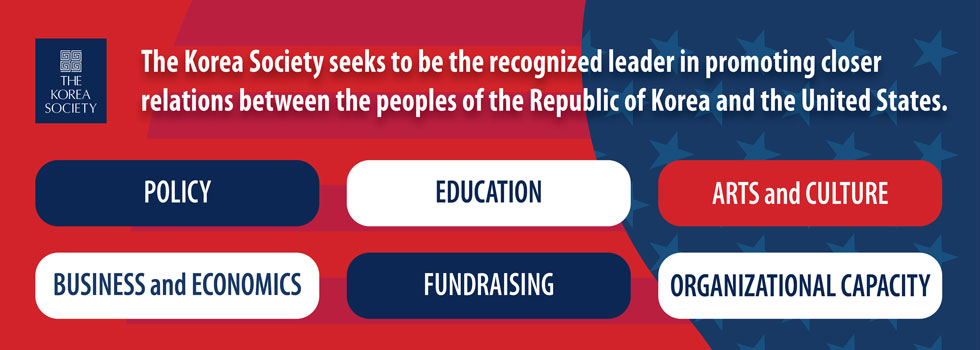
The Korea Society seeks to be the recognized leader in promoting closer relations between the peoples of the Republic of Korea and the United States.

Mission

The Korea Society is a nonprofit, nonpartisan, 501(c)(3) organization with individual and corporate members that is dedicated to the promotion of greater awareness and understanding in order to strengthen cooperation between the peoples of the United States and Republic of Korea.

1
Strategic Goal

Policy Programs

Policy Programs

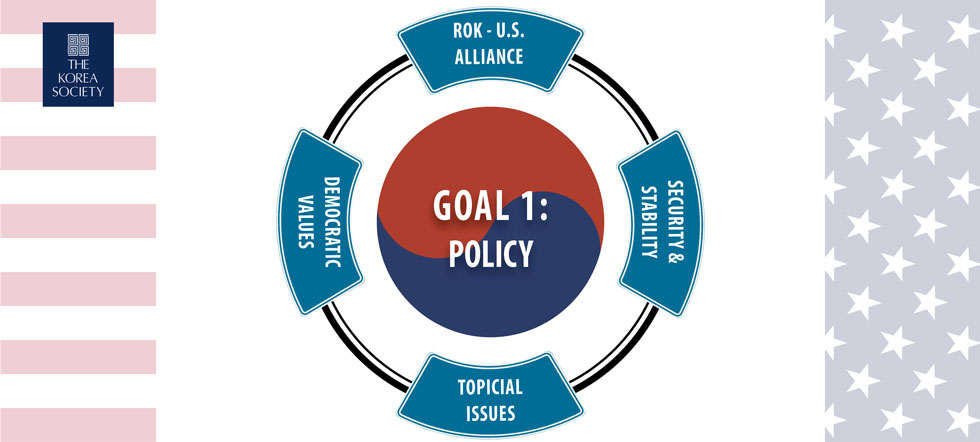
In the area of Policy, promote and increase interest, knowledge, and discussion of the importance of Korea and the ROK–U.S. Alliance in order to maintain and strengthen the diplomatic and security relationships, all aspects of which are critical for the future of both countries.

Priorities

  1. Increase understanding of the importance of the ROK–U.S. Alliance.
  2. While prioritizing the security and stability of Northeast Asia, the United States, and beyond, support efforts to promote reconciliation and peaceful reunification, denuclearization, human rights, and economic development in North Korea.
  3. Increase understanding of the importance of Korea in its region and beyond.
  4. Strengthen and articulate our common democratic values of freedom, human rights, rule of law, and democracy.

Strategies

  1. Develop a better understanding of our key audiences. Prioritize and focus on audiences that are critical to the Society’s mission, vision, and goals.
  2. Conduct Public Policy Programs and Roundtables.
  3. Conduct an annual Van Fleet Signature Policy program.
  4. Engage with the media to highlight key activities.
  5. Conduct programs and events to honor and remember Korean War veterans and those who have served and are serving in Korea.
  6. Feature current U.S. and Korean policy makers to discuss matters key to the U.S.–ROK Alliance.
  7. Collaborate with like-minded partners to expand impact and outreach.

Key Performance Indicators

  1. “Influence the influencers” indicator
    • Sustained engagement from government policymakers, think tank experts, researchers and academics, media, and corporate, with key demographics actively engaging, attending in-person programs and consuming digital products.
  2. Public Awareness indicator
    • Annual survey shows engagement with policy content enhances audience understanding of the priorities (Alliance, NK, Korea in its region, and Common Values).
    • Maintaining annual attendance in-person programs and digital product consumption (i.e., over 5,000 registrations for in-person and livestream views, and over 30,000 cumulative YouTube views and podcast downloads).
2
Strategic Goal

Education Programs

Education Programs

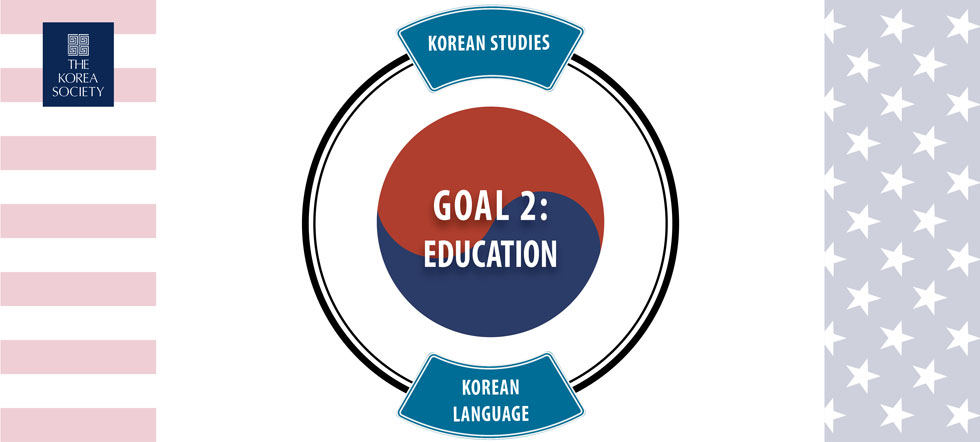
In the area of Education, advance educational opportunities and programs for students and educators in order to promote mutual understanding and appreciation as well as develop and sustain the long-lasting ties between our two nations for generations to come.

Priorities

  1. Advance Korean Studies in U.S. schools, colleges, universities, and other entities to promote and cultivate an understanding of Korean culture, history, and the importance of the close relationships between the U.S. and the Republic of Korea.
  2. Promote the advancement of Korean language learning, meeting the needs of individuals who wish to develop Korean language skills for both professional and personal interests.

Strategies

  1. Develop a better understanding of our key audiences. Prioritize and focus on audiences that are critical to the Society’s mission, vision, and goals.
  2. Conduct post-program surveys of current audiences and execute environmental scans to identify future audiences.
  3. Create, maintain, and promote robust and easily accessible educational resources for students, educators and researchers.
  4. Offer a range of programming for educators, including the following:
    • Exploring new and future trends in Korean Studies.
    • Learning about “best practices” in delivering Korean Studies programming.
    • Convening Korean studies experts who explore trends in and ways to promote advancement of Korean language in the U.S.
  5. Promote the Sherman Family Korea Emerging Scholar Lecture Award Program to advance thought leadership for a new generation of scholars and professionals.
  6. Promote the Project Bridge Youth Ambassador program among educators and students in New York and Montana, as well as sponsors in Korea.
  7. Promote study abroad to Korea by offering competitive travel grants for underfinanced, undergraduate students.
  8. Increase the diversity and number of the Society’s Korean Language Program offerings.
    • Capitalize on the popularity of Korean music and entertainment by offering related courses.
    • Attract geographically diverse audiences.
    • Strengthen current language offerings based on knowledge gained through satisfaction surveys and environmental scans.
  9. Develop trainings for a broad spectrum of audiences utilizing varied platforms.
  10. Attract sponsor/underwriter funding to support grants, awards, and education-related projects.

Key Performance Indicators

  1. Advance Korean Studies indicator
    • For Students: Increase applications submitted to competitive programs (Project Bridge & Study Abroad) & increase TKS visibility at schools. Secure adequate funding to double the number of Study Abroad Grants & funding awarded annually. Attract interest from and engagement with student clubs.
    • For Teachers, Educators, Researchers and Others: Increase number of middle and high school workshops offered locally and attract new virtual audiences. Increase Lecture attendance. Significantly increase website ‘hits’ on our digital resources. Attract at least 5 organizations willing to partner on our resources initiative.
    • For Professionals: Increase enrollment in our new Business series among companies. Generate income that covers costs.
  2. Korean Language Learning indicator
    • Increase overall enrollment.
    • Increase participant geographic diversity.
    • Generate sufficient revenue to cover, at a minimum, all direct expenses, and ideally all indirect.
  3. Audience, Partner and Donor Development
    • Develop post-program surveys for all programs and strive to achieve a minimum 30% online response rate.
    • Attract new sponsors for our Project Bridge Study Tour.
3
Strategic Goal

Arts & Culture Programs

Arts & Culture Programs

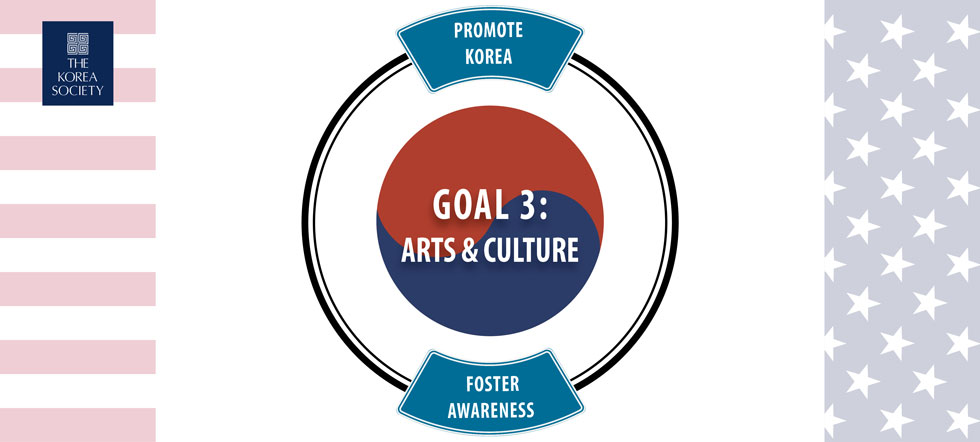
In the area of Arts & Culture, promote the diversity and excellence of Korean and Korean-American artists, performers, authors, and other professionals in the broadly defined area of culture.

Priorities

  1. Promote Korea as a global force in art, literature, culinary art, performing arts, entertainment industry, and sports.
  2. Foster awareness of Korean and Korean American artists and professionals; promote their contribution to the cultural scenes in New York City and beyond.

Strategies

  1. Develop a better understanding of our key audiences. Prioritize and focus on audiences that are critical to the Society’s mission, vision, and goals.
  2. Promote contemporary artists with exhibitions and special online programs, including artist-talk programs and art history lecture series.
  3. Design literature programs to be conducted both in the event space and online, featuring Korean-American writers and Korean authors whose books are translated and published in the U.S.
  4. Support touring performers and Korean film releases in the U.S. by promoting the events and conducting interviews both in-person and online.
  5. Design lecture series to present traditional Korean culture, including cuisine, fashion, and design, to be delivered by scholars and experts.
  6. Develop interview series with Korean-American creatives who are working in the U.S. to promote their career and business.
  7. Identify possible partners both in Korea and the U.S. to present more diverse programs with greater impact and increase audience numbers.
  8. Increase the network of possible presenters and guests for the program from Korea, the U.S., and around the world.
  9. Identify and cultivate a better understanding of potential program funders who can become critical to the Society’s Mission, Vision, and Goals.
  10. Identify possible funders for specific arts and culture programs.

Key Performance Indicators

  1. Program participation indicator
    • Participation and interest to be evaluated through the number of RSVPs and attendance in person and YouTube views (demographic breakdown of general audience and English-speaking, younger generation).
  2. Social media indicator
    • Social media outreach expansion to be evaluated via the number of followers and engagement metrics from Instagram (demographic breakdown of general audience and English-speaking, younger generation).
  3. Korean / Korean-Born / of Korean Descent Artists indicator
    • Survey with past artists and guest speakers regarding the impact the TKS program/exhibition had on their career.
  4. Donor indicator
    • Potential donors show greater awareness/support of TKS Arts & Culture by engaging with the staff and exploring possible funding opportunities.
4
Strategic Goal

Business & Economics Programs

Business & Economics Programs

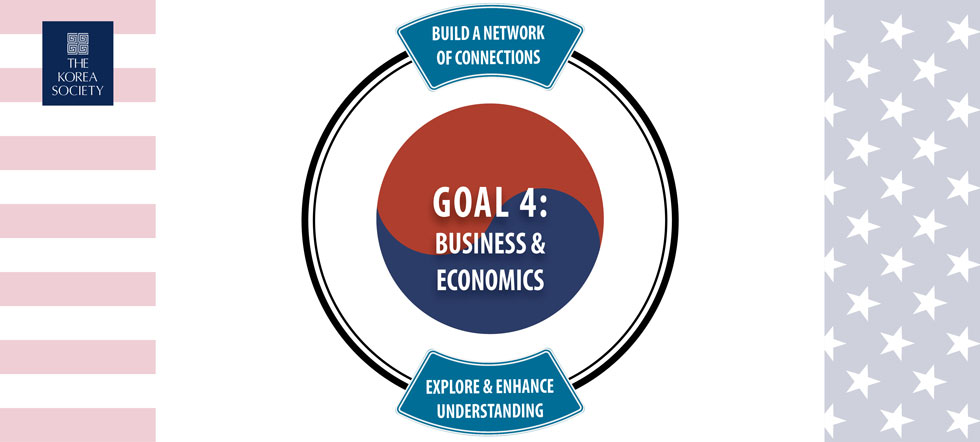
In the area of Business & Economics, bring greater awareness of and focus on business relationships between the U.S. and the Republic of Korea in order to strengthen economic relations.

Priorities

  1. Build a network of connections between the Society and leaders in government, business, finance and other fields having a prominence in the U.S. and ROK economic and financial relationship.
  2. Explore and enhance understanding of major issues in the evolving landscape of economic, trade, and technology policies affecting the business partnerships between the U.S. and Korea.

Strategies

  1. Develop a better understanding of our key audiences. Prioritize and focus on audiences that are critical to the Society’s mission, vision, and goals.
  2. Liaise and leverage activities with the Policy and Arts & Culture program areas to attract greater interest in and support from the U.S. and Korean business communities.
  3. Seek new opportunities and relationships with business leaders in U.S. and Korean firms.
  4. Conduct high-profile programmatic series and explore new areas in the future. Develop specialized program series, namely:
    • Leadership Interview Series
    • Local Leadership in the Global Context
    • Startup Scene Series
    • U.S.-ROK New Economic Paradigm
  5. Global Financial Leaders Forum (GFLF): Feature leaders in the Korean and U.S. financial community, cooperating with Maekyung Media Group, Korea Finance Society, and Korea Investment Corporation, to provide insight on market trends and analyze investment strategies.
  6. Young Professionals’ Network (YPN): Build upon collaborative partnerships with adjacent organizations to provide a platform for learning and growth, professional development opportunities, mentorship, and networking in all business industries for young professionals in The Korea Society’s local, national, and international audience.
  7. Conduct and expand outreach programs and the visibility of TKS to prioritized cities and states with an emphasis on attracting an audience from regional business communities.
  8. Prioritize attracting speakers who are critical to the Society’s Mission, Vision, and Goals.

Key Performance Indicators

  1. Programming influence indicator
    • Increased number of high-level speakers for business and economic programs across programs.
    • Participation in programs increases among targeted business audiences (i.e., newly emerging financial industries).
    • Increased visibility in print and broadcast media (particularly NYC, D.C., and Seoul) to demonstrate TKS’s influence on topical issues in the broad economic relationship (e.g., Special Measures Agreement).
  2. National Network Expansion indicator
    • Increase activity with regional business communities in the southeast U.S. (in D.C., Georgia, and eventually Texas).
    • Increase YPN network programming in NYC.
5
Strategic Goal

Fundraising

Fundraising

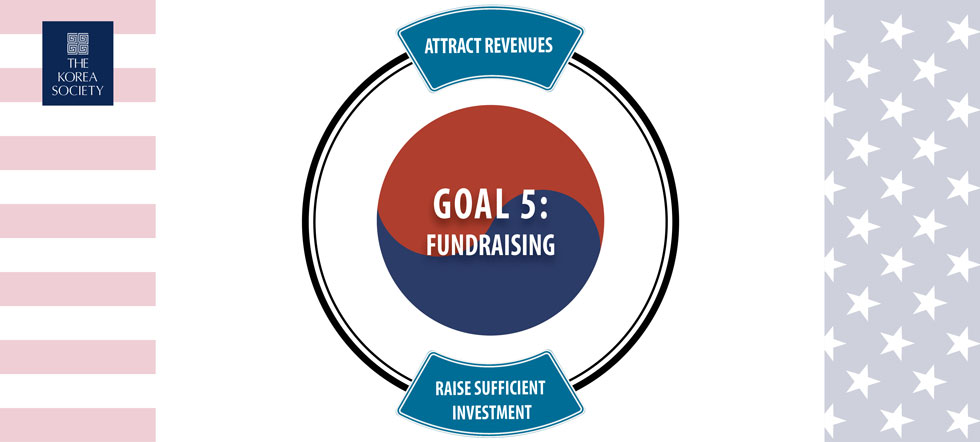
Expand and increase consistent and predictable contributions of foundations, corporations, and individuals to The Korea Society’s activities and its finances.

Priorities

  1. Attract revenues from U.S. and ROK companies, foundations and individuals to support current and planned activities of The Korea Society.
  2. Raise sufficient investment income (fundraising, investments, program, event revenue and membership dues) to fund and expand programs and staff.

Strategies

  1. Ensure that the endowment investment and operational budget policies best serve The Korea Society’s needs.
  2. Fundraise in general, but with a focus on special events and Business & Economics programming.
  3. Develop a plan to grow the endowment through new contributors.
  4. Seek earmarked sponsorship for particular Policy, Arts & Culture and Business & Economics programs.
  5. Conduct a highly profitable Annual Gala Dinner.
  6. Conduct other highly profitable special events, namely the Van Fleet Memorial Golf Tournament and the Annual Membership Party.
  7. Maintain a high bar on the selection of the Van Fleet Award recipients.
  8. Reach out to U.S. companies more actively.
  9. Revise the current membership benefits and levels to attract greater membership.

Key Performance Indicators

  1. Revenue Growth and Diversification indicator
    • Maintain a diverse funding base and increase annual fundraising — total and across categories (program, events, corporate, etc.) — over the average of the previous 2 years.
  2. Long-term sustainability of operating budget indicator
    • Present annual evaluation of income and expenses.
  3. Maintain optimal performance of endowment
    • Monitor annual endowment portfolio.
6
Strategic Goal

Organizational Capacity

Organizational Capacity

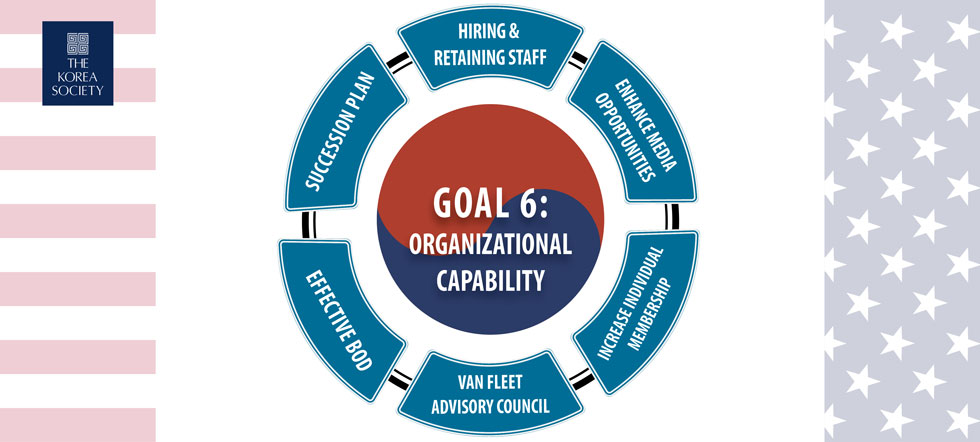
Strengthen and grow TKS to enable it to accomplish the Society’s mission and organizational vision.

Priorities

  1. Grow organizational capacity through hiring and retaining high-performing leadership and staff and use of collaborative planning tools and technology.
  2. Develop a process and the organizational structure to further enhance the Society’s ability to utilize digital media opportunities. Across all Korea Society departments, enhance the understanding and use of social and digital media presence in order to better promote all of TKS’s goals and priorities, reach key audiences, and, as appropriate, generate revenue.
  3. Increase individual membership.
  4. Establish the Van Fleet Advisory Council to guide accomplishment of the above goals in fulfillment of the Society’s mission.
  5. Maintain an effective Board of Directors.
  6. Develop a succession plan for key positions.

Strategies

  1. Align salary compensation with other similar-budget nonprofit organizations; expand benefit awareness and education among staff.
  2. Work to better understand the opportunities in digital media to enhance the Society’s ability to reach a broader, more influential audience.
  3. Maintain robust engagement with traditional print and broadcast media in the U.S. and Korea.
  4. Enhance the benefit of membership, explore membership levels, and strengthen mechanisms to track and renew membership.
  5. Establish Advisory Councils to support the BOD and TKS.
  6. Develop a list of skills needed on each committee and the BOD. Develop a BOD self-evaluation methodology.
  7. Develop a succession plan for executive officers of The Korea Society (see Article VII of the Bylaws).

Key Performance Indicators

  1. High-performing staff retention indicator
    • Maintain retention of high-performing staff.
    • Increased staff understanding of fairness and constraints in salary and benefits (staff survey).
    • Increase utilization of professional development opportunities.
  2. Media coverage effectiveness indicator
    • Steady increase in traditional media coverage and social media audiences, including subscribers (e.g., YouTube) and followers (e.g., Instagram, Facebook).
  3. Individual membership growth indicator
    • Increased individual membership.
  4. President/CEO/Board effectiveness indicator
    • President/CEO evaluation by the board shows high functionality as well as expected areas of better performance.
    • Board self-evaluation developed shows high functionality as well as skills needed to function more effectively.
  5. Advisory Board creation indicator
    • Board advisory council established to advise on strategy, programs, and membership development (meets 2×/year).
    • Van Fleet leadership advisory council established as a higher-level group of advisors that meets 1×/year to expand our networks and donors.

Corporate Supporters

Supporters | The Korea Society
The Korea Society

Corporate Supporters

We gratefully acknowledge the corporations, foundations, and individuals whose generosity sustains our mission to deepen understanding between the people of the United States and Korea.

Leadership Circle$300,000 & Above
Benefactor$100,000 & Above
Patron$50,000 & Above
CitigroupCitigroup Kia GeorgiaKia Georgia, Inc.
Y.T. Hwang Family FoundationY.T. Hwang Family Foundation
Sustainer$25,000 & Above
Supporter$15,000 & Above
Contributor$10,000 & Above
Associate$5,000 & Above
Alex Chi
Bryan Cave Leighton PaisnerBryan Cave Leighton Paisner BridgBridg
B. Riley Securities
Corning IncorporatedCorning Incorporated Dentons US LLPDentons US LLP Doosan Business Research InstituteDoosan Business Research Institute, DBRI Ernst & Young LLPErnst & Young LLP The Federation of Korean IndustriesThe Federation of Korean Industries
Francis Kang
Hamlin Asset Management
HLP IntegrationHLP Integration Industrial Bank of KoreaIndustrial Bank of Korea
John J. Moon & Hee-Jung S. Moon
KB Kookmin BankKB Kookmin Bank
Korea Investment CorporationKorea Investment Corporation
Lazard Asset ManagementLazard Asset Management
Nelson Mullins Riley & Scarborough LLPNelson Mullins Riley & Scarborough LLP
NH Financial GroupNH Financial Group
PwCPwC
Roman DBDRRoman DBDR
General (Ret) Skip and Joanne Sharp
Friend$2,500 & Above
Anthrop-J Investment Group
Aprio LLPAprio LLP
Carter Booth
Export Import Bank of KoreaExport Import Bank of Korea First Republic BankFirst Republic Bank KCCIKCCI KOTRAKOTRA
Mark Lippert
National Securities
Paul & Yoshiko Sheard
Philip D Sherman
Point Seven Labs
Thomas Holt Jr.
Young Joon Kim
Member$1,000 & Above
3LAB Inc.
Abraham Kim
All Dimension ConstructionAll Dimension Construction Alquist 3DAlquist 3D Amkor TechnologyAmkor Technology
Andrew C Kim
Andy Laub
AtkinsRéalisAtkinsRéalis BlockchainsBlockchains CBOL/Pacific Century/CelltronCBOL / Pacific Century / Celltron
Clifford Rosenberger
CorstoneCorstone
DK Donghyun Kim
DR&AJUDR&AJU
Ethos Asset ManagementEthos Asset Management
Grace Jong Eun Lee
Hae Young Kim
Hamilton AdvisorHamilton Advisor
HembioHembio
IceMillerIceMiller
James McPherson
Jihoon Hong
Joshua Rim
Junil Lee
Kathleen Stephens
KCIF, Inc.KCIF, Inc.
Kelly Ahn
Kessler FoundationKessler Foundation
Kevin Shanley
Linda Kim
Maekyung Media GroupMaekyung Media Group
Mee Kim
Milan Hejtmaneck
Multicultural Broadcasting Group
Relay Human CloudRelay Human Cloud
rePlant Hemp AdvisorsrePlant Hemp Advisors
RFR Realty LLCRFR Realty LLC The Royal Bank of CanadaThe Royal Bank of Canada
Saxby Chambliss
Sun Shin
Sun-Hyee Kahng
Tech Council VenturesTech Council Ventures
Thomas Byrne
Victor Cha
Vincent O’Connor
William Rhodes

Thank you to all who make The Korea Society’s work possible.

Staff Bios

Staff | The Korea Society
The Korea Society

Staff

Leadership

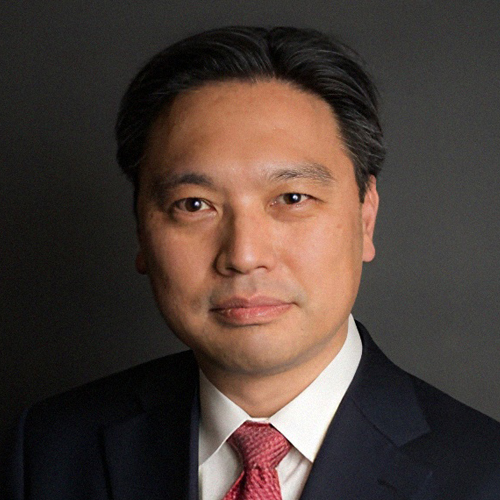
Dr. Abraham Kim
Abraham Kim, Ph.D.
President & CEO
The Korea Society

Abraham Kim, Ph.D. is the President & CEO of The Korea Society, where he leads the organization’s efforts to strengthen ties between the United States and Korea through policy dialogue, business engagement, and cultural exchange.

Dr. Kim brings more than 25 years of experience in public policy, national security, and nonprofit leadership, with a career focused on U.S.–Korea relations and Northeast Asia. He has worked closely with senior government officials, business leaders, and international organizations, providing analysis and guidance on geopolitical and economic issues related to the Korean Peninsula.

Prior to joining The Korea Society, Dr. Kim served as Executive Director & President of the Council of Korean Americans (CKA), where he expanded the organization’s national footprint and strengthened its role in policy engagement and leadership development. He previously served as Executive Director of the Maureen and Mike Mansfield Center at the University of Montana and as Interim President and Vice President of the Korea Economic Institute of America, where he supported public diplomacy initiatives and educational programs focused on the U.S.–Korea alliance.

Earlier in his career, Dr. Kim worked as a policy and risk analyst at Eurasia Group, CSIS, and SAIC, focusing on political risk, crisis simulations, and regional security issues in Northeast Asia. He holds a Ph.D. and M.Phil. in Political Science from Columbia University, an M.A. from Harvard University, and a B.A. from Boston University.

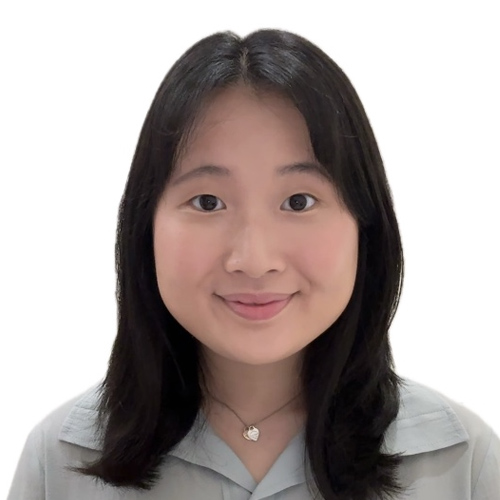
Jiyoung Suh
Jiyoung Suh
Vice President
The Korea Society

Jiyoung Suh is the Vice President at The Korea Society, where she leads fundraising activities, corporate programs, signature events, and external affairs. With over a decade of service to the Society, Jiyoung has held various roles, including Senior Director of Development, Director of Special Events, and Development Officer. Her extensive experience encompasses all aspects of development and event management.

Before joining The Korea Society, Jiyoung served as a Manager at The Beautiful Foundation NY (aka NY Nanum Foundation). She earned her Master of Arts in Performing Arts Administration from New York University and holds a Bachelor of Arts in Political Science and Diplomacy from Ewha Womans University.

Senior Staff

Hae Kyung Ahn
Hae Kyung “Haley” Ahn
Senior Advisor for Outreach

Hae Kyung “Haley” Ahn is Senior Advisor for Outreach at The Korea Society. In this position, she plays an important role in expanding the influence and activities of The Korea Society beyond its New York base and acts as the representative of The Korea Society in Washington, D.C. Prior to joining The Korea Society, Haley worked as Senior Advisor at Korea Economic Institute of America (KEI) and Head of the Protocol Office at the U.S. Embassy, Seoul. She also served as advisor and lecturer at the International Convention Management Center at Ewha Womans University and adjunct professor at Soongeui Women’s College in Seoul, Korea. Haley has received various awards from U.S. government including Meritorious Honor Award and Foreign Service National (FSN) of the Year Award. She has also received a Merit Award from the Republic of Korea Minister of National Defense. Haley was an undergraduate at Ewha Womans University. She holds a Master’s degree in International Studies from Yonsei University and Ph.D. in Political Science from Ewha Womans University.

Seho Kim
Seho Kim
Senior Creative Director

Seho Kim, Senior Creative Director at The Korea Society, oversees the organization’s visual identity, creative projects, and communication strategies across web, print, and mobile platforms. With a background in freelance artistry, including work for UNICEF, W Hotels the Store, and gallery exhibitions, he also illustrated the children’s book Go for Kids and taught at Parsons School of Design/New School University. Holding a BFA from the Rhode Island School of Design and an MFA from Parsons, where he was the 2003 student commencement speaker, he has received numerous accolades for his excellence in communications design, including the ARC, Vision, Inspire, Spotlight, American Design, and Magellan Awards.

Jay Oh
Jungha (Jay) Oh
Senior Director of Arts and Culture

Before joining the Korea Society, Jay Oh has worked in publishing and non-profit art organizations in Greensboro, N.C., Minneapolis, and New York. She holds a B.A. in art history from Smith College and an M.A. in art history from Williams College.

Staff

Chelsie Alexandre
Chelsie Alexandre
Geopolitical Affairs Program Officer

Chelsie Alexandre is the Geopolitical Affairs Program Officer at The Korea Society. She works with the Director of Policy to develop and implement events that address issues shaping the dynamics of U.S.-ROK relations, the Korean peninsula, and Northeast Asia. Before joining The Korea Society, Chelsie received a Fulbright Research award to conduct research in South Korea on the role of middle power countries in the Korean peace process with Korea University’s Peace and Democracy Institute. During her time in Seoul, she also briefly reported on domestic Korean affairs for The Diplomat.

Prior to her current role, Chelsie was a Partnerships Coordinator at the New York City-based nonprofit, The Concordia Summit, and she worked as a Legal Analyst at the global law firm Kobre & Kim. Chelsie also had previous experience as a research Intern at The Korea Society. She graduated with a B.A. in Politics from Princeton University, with minors in East Asian Studies and Diplomacy.

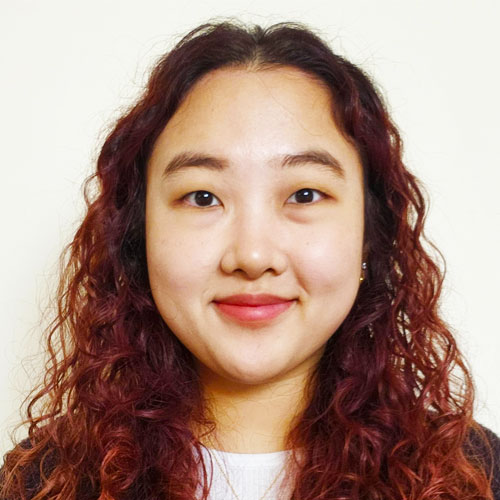
Rachel Bang
Rachel Bang
Arts and Culture Programs Associate

Rachel Bang is The Korea Society’s Arts and Culture Programs Associate. Rachel is responsible for supporting the development and implementation of various arts and culture initiatives within the organization. She also works to conduct research related to arts and culture, identifying potential partners and collaborators, and helping to build relationships! She holds a B.A. in Psychology and minor in Korean Culture and Studies.
Helen Cho
Hyunjung (Helen) Cho
Financial Controller

Hyunjung (Helen) Cho joined The Korea Society team in December 2020 as the Financial Controller. She has more than 25 years of finance experience including accounting, business process, budgeting and financial reporting in non-profit, retail, and bio-tech industries. Prior to joining The Korea Society, Helen held a Controller position for more than 12 years and an Accounting Manager for 4 years at The Partnership for New York City. She holds a master’s degree in accounting from University of Colorado Denver and bachelor’s degree in accounting from University of Colorado Boulder. She is a certified public accountant registered in Colorado.

Jonathan Corrado
Jonathan Corrado
Director of Geopolitical Affairs

Jonathan Corrado is Director of Geopolitical Affairs for The Korea Society. He produces programming and conducts research on a range of security, diplomacy, and socioeconomic issues impacting the U.S.-Korea Alliance, the Korean Peninsula, and Northeast Asia. He teaches a class titled, “North Korea: State, Society, Diplomacy, and Security” at The School of International and Public Affairs (SIPA) at Columbia University and SUNY Stony Brook University. Jonathan is a member of The National Committee on North Korea (NCNK). He was previously a non-resident James A. Kelly Fellow at Pacific Forum, an Emerging Leader at the National Committee on American Foreign Policy (NCAFP), and a contributor to NK Pro. He has published peer-reviewed articles in the International Journal of Intelligence and CounterIntelligence, the Journal of Indo Pacific Affairs, the Journal of the Royal Society for Asian Affairs, and Asian Politics & Policy. He has also published analysis in diverse outlets such as Foreign Affairs, Foreign Policy, War on the Rocks, 38 North, The Diplomat, The Japan Times, The National Interest, Yahoo News, Pacific Forum PacNet and Issues & Insights, NK News, and NK Pro. He has been quoted in The Washington Post, Bloomberg, Reuters, The South China Morning Post, The Korea Times, Radio Free Asia, and Voice of America. Jonathan was previously a translator for Daily NK (Korean to English), an FCPA due diligence investigator for Steele Compliance Solutions, a graduate fellow for McLarty Associates, and a volunteer analyst for the Congressional Research Service. Jonathan received an MA from Georgetown University’s Asian Studies Program in the Walsh School of Foreign Service and a BA in anthropology and philosophy from the University of Maryland College Park.

Stephanie Hwang
Stephanie Hwang
Development Program Officer

Stephanie Hwang is The Korea Society’s Development Program Officer. Along with providing general support to the Development Team, she is responsible for managing individual membership and programming the Young Professional Network. Prior to joining The Korea Society in 2023, she worked in Publicity and Marketing at Riverhead Books, an imprint of Penguin Random House. She holds a bachelor’s degree in English from Stony Brook University, and tutors high-school level English on the weekends.

Jamie Joo
Jamie Joo
Associate Director of Development

Jamie Joo is the Associate Director of Development at The Korea Society. She is responsible for managing corporate membership and coordinating special events for the organization. Before joining The Korea Society, Jamie served as an Operation Specialist in the United States Navy. She holds a bachelor’s degree in Electronic Engineering Technology with a specialization in Avionics from Vaughn College of Aeronautics and Technology.

Eunjung Kho
Eunjung Kho
Director of Administration / Assistant Controller

Eunjung Kho is the Director of Administration / Assistant Controller at the Society. She graduated from the State University of New York at Binghamton with a BS in Accounting. During her years at Binghamton, she served on the Executive Board of various Korean-American groups—as a Secretary, Fundraiser, and Design Editor—that promoted and planned social, educational, and cultural events for Koreans, Korean-Americans, and students on campus. She was the Secretary for Korean-American Student Association, and the Magazine Design Editor and Secretary for Han Perspective, the only bilingual publication group on campus to provide news, opinions, reviews, and arts with a focus on Korean and Korean-American culture.

Sojeong Kim
Sojeong Kim
Director of Business and Economics Program

Sojeong is the Director of Business and Economics Program. Working with the Senior Director of Development, Sojeong manages the corporate program with a focus on startup business in America and Korea. Her program shines a light on the dynamic startup scene in Korea and America, helping to connect successful startup pioneers with aspiring entrepreneurs. Sojeong has extensive experience in fundraising and in managing youth leadership and community development programs. Prior to her current role, she was a Program Officer at the Korean National Commission for UNESCO, The Beautiful Foundation NY (aka Nanum Foundation), and The Korea Society. She holds a B.A. in English Education from Ewha Womans University, an M.A. in Political Science from Seoul National University, and an M.I.A. (Master of International Affairs) from the University of California, San Diego.

Gayoung Lee
Gayoung Lee
Executive Assistant to President/CEO Board of Directors Staff Liaison

Gayoung is the Executive Assistant to President/CEO and Board of Directors Staff Liaison at The Korea Society. She previously interned at Portman Square Group, a global investigations firm specializing in business intelligence, where she focused on due diligence, research, and data analysis. Gayoung also worked as an administrative assistant in Columbia University’s Undergraduate Admissions Office and as a communications associate at The Kaizen Company, an international development firm.

Passionate about foreign policy and U.S.-Korea relations, Gayoung was one of ten undergraduate fellows selected globally for the 2022 Nuclear Nonproliferation Education and Research Center (NEREC) Summer Fellowship program at the Korea Advanced Institute of Science and Technology (KAIST). There, she conducted research on potential challenges to the Nuclear Suppliers Group due to increasing global nuclear demand and changing attitudes surrounding nuclear energy. Gayoung graduated from Columbia University with a B.A. in Political Science.

Sara Oh
Sara Oh
Business & Economics Program Associate

Sara is the Business & Economics Program Associate at The Korea Society. She provides support to the corporate programs, focusing on US-ROK economic relations, the startup sector, and related leadership programs. Prior to joining the Korea Society, she has interned at The Ditchley Foundation and at the US-Asia Institute and has conducted various research about Korea’s role in the world, such as Korea’s modern economic development, Korean diaspora studies, South Korea and China’s cultural diplomatic ties, and East Asian modern territoriality. She holds an MSc in International Relations from The London School of Economics and a double B.A. in Global Liberal Studies and Social Cultural Analysis (high honors) from New York University.

Yurim Oh
Yurim Oh
Education Program Officer

Yurim Oh is The Korea Society’s Education Program Officer and serves as the coordinator of the Society’s Korean Language Program (KLP). Yurim is responsible for supporting the development, management, and promotion of KLP. She focuses on marketing and outreach to expand the program’s reach while also contributing to curriculum development. Prior to joining The Korea Society in 2025, Yurim worked as a program director and instructor at Semonemo.US. She is currently a candidate for a Master of Science degree in Curriculum Development and Instructional Technology at the University at Albany. Yurim also holds a bachelor’s degree in Public Administration from the University of Seoul.

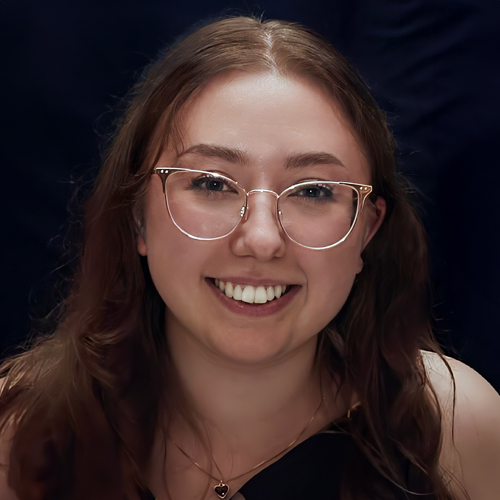
Micala Shaffer
Micala Shaffer
Communication Officer

Micala Shaffer is The Korea Society’s Communication Officer. She is responsible for developing and executing the organization’s communications strategy, coordinating program promotions, fostering relationships with media personnel, and managing grant proposals and reporting. She first joined The Korea Society as Communication Intern in 2021 after graduating from University at Albany with a B.A. in East Asian Studies, double major in Globalization Studies, and a minor in Korean Studies. Prior to joining The Korea Society full time, she worked as the receptionist at the law office of McAdam & Fallon.

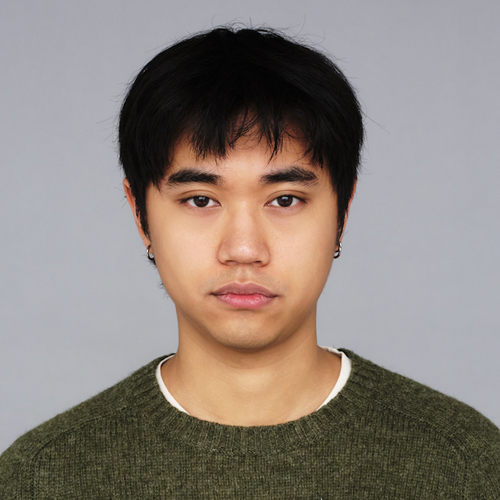
Bradley D. Sheen
Bradley D. Sheen
Media Program Associate

Bradley D. Sheen is the Media Program Associate at The Korea Society. With a strong background in media production and a B.A. in English from the University of Virginia, he collaborates closely with the Creative Director and IT Director to create engaging multimedia content, including video production, editing, and graphic design. His role also involves updating program webpages, ensuring a dynamic online presence for the organization.

Peter Stuehmke
Peter Stuehmke
IT Director

As the Society’s IT Director, Peter Stuehmke is proficient with technologies such as network administration, database administration, Web 2.0 technologies, and audio-visual production. Prior to joining the Society in April 2006, Peter Stuehmke worked in a variety of technology, support, consulting, and media-design positions. Mr. Stuehmke graduated from the State University of New York at Stony Brook in 2005 with a BA in philosophy and a minor in engineering science.

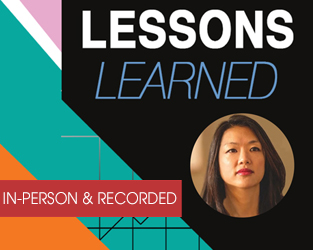
Lessons Learned with Karen Choi

Join us for an upcoming program in The Korea Society’s Young Professionals Network: Lessons Learned series, presented in partnership with the Korea Finance Society (KFS).

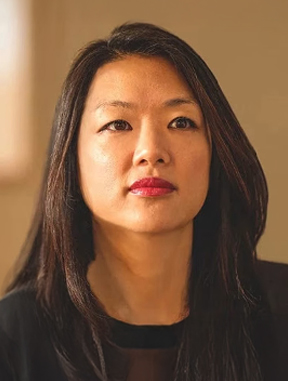
This program features Karen Choi, Partner at Capital Group, who will reflect on her professional journey and share lessons from building a long-term career at the highest levels of the global finance industry. She will offer candid perspective on leadership and the realities of sustaining a career while balancing competing priorities, with insights for young professionals as they consider the intersection of growth and purpose in their own careers.

The discussion will be moderated by Sandra Schubert, Managing Director at Goldman Sachs. Drawing on shared industry experience, the conversation will be followed by a Q&A and networking session, offering an opportunity to engage directly with the speakers.

The Korea Society is pleased to present this Young Professionals’ Network event in partnership with the Korea Finance Society (KFS). KFS seeks to build a community to promote the advancement of Korean and Korean-American financial professionals in the United States through networking, education, and mentorship.


About the Speaker:

Karen Choi is a partner and fixed income portfolio manager at Capital Group. She has 27 years of investment experience and has been with Capital Group for 17 years. Earlier in her career at Capital, as a fixed income investment analyst, Karen covered utilities, regional banks, and non-bank financials in the U.S. Prior to joining Capital, she was a senior vice-president and fixed income analyst at AllianceBernstein and before that with Prudential Financial. She holds a bachelor’s degree in international relations from Wellesley College. She also holds the Chartered Financial Analyst® designation.

Karen is an appointed member of the Edison Electric Institute Wall Street Advisory Group (WSAG). Karen is on the Board of the New York Women’s Foundation and previously served as Co-chair of the Board, and she is also active in local and global non-profit organizations. Karen is the co-founder and organizer of Women in Power and has chaired one of the inaugural inclusion committees in her workplace. Karen is also on the Board of Trustees at the Horace Mann School.

Karen resides in CT with her husband/partner and four daughters.

About the Moderator:

Sandra Schubert is a Managing Director and Private Wealth Advisor in the Asset & Wealth Management Division of Goldman Sachs, where she leads a team responsible for advising ultra-high net worth families and family offices, endowments, and foundations. She is a member of the firm’s Top Advisors, a select group that represents the top 10% of advisors globally. Sandra joined Goldman Sachs after receiving her MBA from the Wharton School of Business at the University of Pennsylvania. Prior to graduate school, Sandra spent several years in Asia and in France, heading the ELLE brand for Hachette Filipacchi in Korea. Sandra received her undergraduate degree from Middlebury College and is a graduate of Stuyvesant High School. She serves the communities where she lives and works as a current Trustee and past Investment Committee Chair of the Brooklyn Public Library, a Trustee of the Korea Finance Society, and Steering Committee Member of the GS Asian Professionals Network.

Author Talks:
Kim Choyeop & Anton Hur

In If We Cannot Go at the Speed of Light, Korean science fiction superstar Kim Choyeop leads us to places we never thought we’d reach, imagining worlds galaxies away and unfamiliar lifeforms with near-dizzying humanity. A stunning and poignant collection of literary speculative fiction stories that explore the complexities of identity, love, death, and the search for life’s meaning, Kim’s stories dismantle the borders between normal and abnormal, material and abstract, earthly and otherworldly. With unforgettable inventiveness and pathos,  If We Cannot Go at the Speed of Light heralds the arrival of an essential voice in contemporary fiction.

In this episode of Author Talks, Kim and her English translator Anton Hur discuss her English debut.


About the Authors:

Kim Choyeop has a master’s degree in biochemistry from Pohang University of Science and Technology. When she burst onto the Korean literary scene, her short story ‘Lost on Premises’ received immediate recognition at the 2017 Korean Science Fiction Awards. She is also the recipient of the Minumsa Writer of the Year Award and the Munhak Dongne Young Writer Award. Her first short story collection If We Can’t Travel at the Speed of Light has sold over two hundred thousand copies in Korea alone. She is also the author of two more short story collections, The World I Just Left Behind and The Bookstore of Planetary Languages. Kim’s first novel, Greenhouse At the End of the Earth, became an instant bestseller in South Korea.

Anton Hur is the author of Toward Eternity and the translator of Kim Choyeop’s If We Cannot Go at the Speed of Light, Bora Chung’s Cursed Bunny, Baek Sehee’s I Want to Die but I Want to Eat Tteokbokki, Lee Seong-bok’s That Summer’s End, Kyung-Sook Shin’s Violets, and others. He was double-longlisted and shortlisted for the International Booker Prize, a finalist for the National Book Award, and nominated for the Dublin Literary Award and the National Book Critics Circle Award. He resides in Seoul.


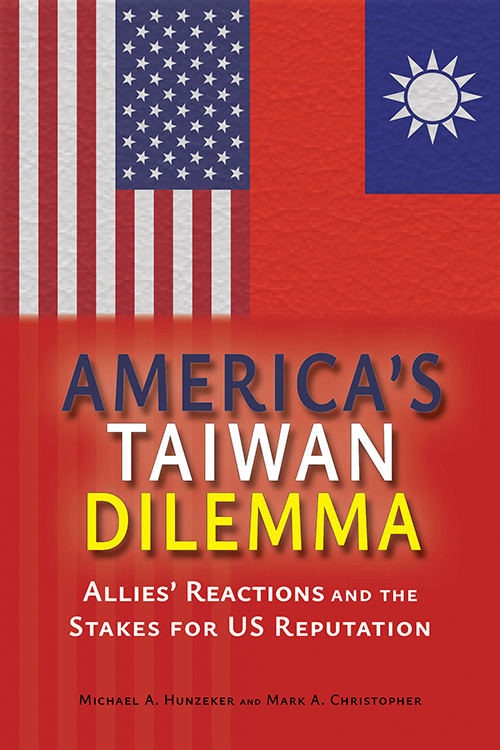
America’s Taiwan Dilemma:

Program Brief

America’s Taiwan Dilemma

During a discussion regarding his newest book, America’s Taiwan Dilemma: Allies’ Reactions and the Stakes for US Reputation, Mark Christopher argued that Washington policymakers often project their own assumptions onto allies. For instance, U.S. officials believe that allies demand a military defense of Taiwan to preserve America’s reputation. However, through interviews with over 100 regional experts, Christopher challenged this narrative by detailing how South Korea, Japan, and Australia actually perceive Taiwan conflict risks and the reliability of US security commitments.

This program was hosted by the Korea Society as part of the Kim Koo Professional Series.

Key Takeaways

1. Reliability Matters More Than Reputation

Christopher observed that while U.S. policymakers prioritize defending Taiwan to preserve a “reputation” for resolve, regional allies focus primarily on “reliability.” He defines reputation as a backward-looking assessment of past actions, whereas reliability is a forward-looking measure based on current military capability. Allies fear that if a U.S. intervention in Taiwan exhausts American military resources or political will, Washington may become unable to fulfill specific treaty obligations to Japan or South Korea. U.S. involvement in Taiwan may actually weaken alliance reliability if it leaves the U.S. military less capable of providing protection elsewhere.

2. Regional “Realpolitik” and the Lack of Alternatives

Christopher’s research suggests that if China initiates a conflict, America’s allies will likely be pushed closer to the United States regardless of the immediate outcome. Interviewees described a stark power reality: allied nations like Japan and Korea do not wish to acquiesce to Chinese regional hegemony, but lack the individual capability to hold off China. Without a viable alternative, allies are left with no realistic choice but to maintain and strengthen the U.S. alliance, even if a Taiwan contingency results in anger or mistrust toward Washington.

3. South Korea’s Unique “Shrimp among Whales” Dilemma

Unlike Japan or Australia, South Korea does not view Taiwan as a core national security imperative because it faces the existential threat of North Korea. Experts in Seoul expressed concern that a Taiwan conflict would invite North Korean aggression or trigger Chinese economic and military retaliation on the Peninsula. Consequently, Seoul will likely “thread the needle,” seeking to maintain its alliance with the U.S. while avoiding direct combat operations in Taiwan to ensure its long-term coexistence with its permanent neighbor in close geographical proximity, China.

The book is available for sale here

Use the coupon code SAVE20 for a 20% discount on print editions.


About the Speaker:

Mark A. Christopher is an independent risk consultant and a nonresident fellow at the Taiwan Security Monitor. He holds a bachelor’s degree from the Georgetown School of Foreign Service and an MPA from the Princeton School of Public and International Affairs. He previously studied at Peking University, Nanjing University, and Taiwan National Chengchi University. His writing has appeared in Foreign Affairs, Foreign Policy, the Jamestown Foundation’s China Brief, Defense One, and the Wall Street Journal.

Across Languages:
New Voices in Korean Poetry

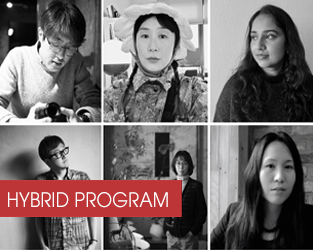
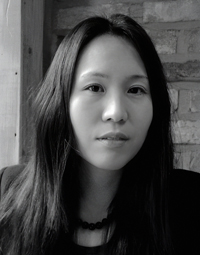
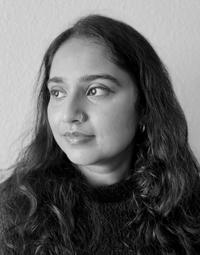
Across Languages: New Voices in Korean Poetry brings together acclaimed South Korean poets Lee Jenny, Yoo Heekyung, Oh Eun, and Shin Hae-uk with award-winning literary translators Archana Madhavan and Stine An, for a Korean–English bilingual reading and conversation to share the dynamism and innovations of language in Korean poetry culture. Through poetry and discussion, the speakers examine the cultural centrality of poetry in Korea and consider translation as a critical, creative practice that reshapes how literature circulates, sounds, and is felt across languages.

This program is presented in partnership with Ugly Duckling Presse and Zephyr Press.


About the Speakers:

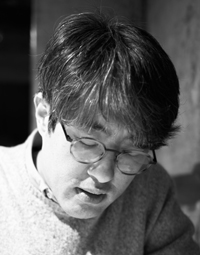
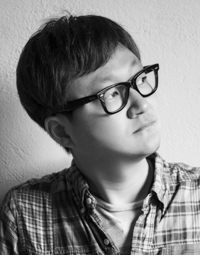
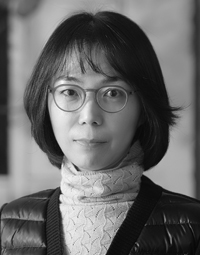
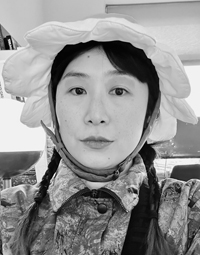
Yoo Heekyung is an acclaimed South Korean poet, playwright, and essayist. He is the author of over ten collections of poetry and prose, including Today’s Morning Vocabulary (Moonji Books, 2011), Winter Night Rabbit Worries (Hyundae Munhak, 2023), and Photography and Poetry (Achimdal Books, 2024). Yoo studied creative writing at the Seoul Institute of the Arts and playwriting at the Korea National University of Arts, and debuted as a poet in 2008 when his poem won the Chosun Ilbo’s spring literary contest. A recipient of Today’s Young Artist Award from the South Korean Ministry of Culture (2023), Hyundae Munhak Literary Award (2020), and the Gosan New Writer Award (2019), Yoo lives in Seoul where he runs the poetry bookshop and project space Wit N Cynical.

Lee Jenny is a South Korean poet and writer, born in Busan in 1972. In 2008, she made her literary debut with the poem “Peru” which won the Kyunghyang Daily News New Writer’s Award. She has since published four poetry collections: Maybe Africa (2010), As We Don’t Know Us (2014), The Things That Were Thus Scribbled (2019), The Sentences That Aren’t Even There are Beautiful (2019), Eternity Looks Back at the Future (2026), and an essay collection Dawn and Music (2024). She was the recipient of the Kim Hyun Literary Prize in 2016 and the Hyundae Munhak Award in 2022.

Oh Eun was born in Jeongeup, Jeollabuk-do in 1982. He graduated from the Department of Sociology at Seoul National University and received a master’s degree from the Graduate School of Culture Technology at KAIST. He began his poetic career in the pages of Modern Poetry in 2002. His work includes the poetry collections The Pigs at Hotel Tassel, We Love Ambience, Something from Something, The Left Hand’s Feelings are Hurt, I Had a Name, The Pronoun for Nothingness, the young adult poetry collection Matters of the Heart, and the essay collections You, I, and Yellow, Patting, Wearing Green, Why Not, People Who Only Become Kin at Night. He has won the Park In-hwan Literary Award, Gu Sang Poetry Award, Modern Poetry Award, Poet’s Notebook Award and Daesan Literary Award. He belongs to the poetry collective Jangnan(作亂).

Shin Hae-uk was born in Chuncheon in 1974. Shin’s major works include the poetry collections Precise Arrangement, Biologicity, syzygy, Caecilians, and Natural History from the Edge of the Natural; the novel The Dream Reader Electrical Shop; and the essay collections Book for Just One and Looking out the Window. Her honors include the Kim Hyun Literature Award, the Shin Tong-mun Literature Prize and the Daesan Literature Award.

Stine An is a poet, literary translator, and performer in New York City. She holds a BA in Literature from Harvard College and an MFA in Literary Arts from Brown University and is the recipient of fellowships and grants from The Poetry Project, the PEN/Heim Translation Fund Grant, Yaddo, ALTA, and the National Endowment for the Arts. Her publications include Today’s Morning Vocabulary (Zephyr Press, 2025) and Winter Night Rabbit Worries (Ugly Duckling Presse, 2026) by Yoo Heekyung, and S_MMER CR_SH (Sarabande Books, 2025). Their debut poetry collection, B-Dragon Suite, is a winner of the 2023 Nightboat Poetry Prize.

Archana Madhavan translates Korean poetry and prose into English. Her past book-length works include Kim Hyun’s Glory Hole (co-translation, 2022) and Amil’s Roadkill (2025). Her translation of Lee Jenny’s first book of poetry Pirowa Padowa was shortlisted for the Granum Translation Prize in 2023 and won the Malinda A. Markham Translation Prize in 2024. She lives in San Jose, California.