Our Korean Language Program has been running since 1994, making it one of the longest-running Korean language programs. We offer live online Korean classes, from complete beginners to intermediate levels. Learn Korean from experienced instructors with university-level teaching experience. For any inquiries, contact language@koreasociety.org.
💻Online Class, Once a week • 2 or 2.5 hour per session
📝Join live or learn on your schedule with class recordings!
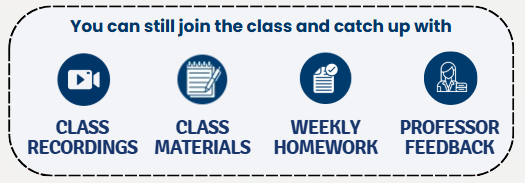
🎥Class recording, Weekly homework, professor’s feedback will be provided
👩🏻🏫Virtual Community: You will be invited to a Google Classroom.
📃Complete the course & Receive a certificate
📅Registration Through October 16
📅10-Week Course: September 14 ~ November 20
What Our Students Say:
“My professor is fantastic with review, answering questions when you don’t understand something, helping with correct pronunciation and in-class participation.”
10% Discount for TKS Members and KLP continuing students
📍10% Discount : If you have previously taken an 8-week or 10-week KLP course or if you are a member of The Korea Society at the Individual level and above, please contact language@koreasociety.org to receive your 10% discount code.
A Guide To Choosing a Right Level
New to Korean? ➡️ Beginning Korean 1
Know Hangul already? ➡️ Beginning Korean 2 or Fast-track Beginning Korean 1&2
Already beyond the complete beginner level? ➡️ Beginning Korean 3 or 4 or Fast-track Beginning Korean 3&4
Want to practice speaking and listening mainly? ➡️ Beginning Conversation Korean 1 or 2 or 3
Already intermediate level? ➡️ Intermediate Korean 1 or 2
Missed the First Few Classes? No Worries—You Can Still Join!
Registration through October 16
You are also welcome to take the course asynchronously.
You can still join the class and catch up with
Beginning Korean 1: Syllabus here.
For complete beginners. Click to view details and syllabus.
Beginning Korean 1: Syllabus here.
Jump into learning Korean with this stimulating course designed for complete beginners! First, you master the Korean alphabet (Hangeul) and then quickly move to learning and practice with introducing yourself (name, nationality, gender and occupation), asking simple questions, counting, and ordering food. You practice using the present tense as well as using 12 additional elementary grammar points and 80+ vocabulary necessary for basic conversation, reading, and writing. Covering the first half of the textbook I Love Korean I, this class is the perfect start to your meaningful and successful journey toward mastering the Korean language.
Recommended Previous Study: None
Fee: New student: $395
Continuing student: 10% off
Textbook: I Love Korean 1 (Seoul National University Language Institute, Published by Seoul National Press)
Note: Textbook not included in course fee.
Class Mode: Online On Zoom
Beginning Korean 1: Wednesday
7:00 – 9:00 PM (EDT)
Instructor: Sunhee Song
Beginning Korean 1: Saturday
10:00 – 12:00 PM (EDT)
Instructor: Euna Cho
Beginning Korean 2: Syllabus here.
For learners who can read Korean alphabets. Click to view details and syllabus.
Beginning Korean 2: Syllabus here.
Ready to take your Korean skills to the next level? Beginning Korean 2 is a great way to build on the basics you already know! This course covers everyday essentials like ordering at a restaurant, talking about your schedule and making plans (months, days, times, dates), shopping for groceries, asking for and giving directions to locations, and chatting about the weather. You master 16 different grammar points—including prepositions, negatives, counters, irregular verbs and adjectives and some past tense usage—and 190+ vocabulary necessary for everyday conversation, reading and writing. It covers the second half of the textbook I Love Korean 1.
Recommended Previous Study: Beginning Korean 1 or equivalent skills shown on our placement exam.
Fee: New student: $395
Continuing student: 10% off
Textbook: I Love Korean 1 (Seoul National University Language Institute, Published by Seoul National Press)
Note: Textbook not included in course fee.
Class Mode: Online On Zoom
Beginning Korean 2: Tuesday
6:00 – 8:00 PM (EDT)
Instructor: Sunhee Song
Beginning Korean 2: Saturday
10:00 – 12:00 PM (EDT)
Instructor: Sabina Rowe
Fast-Track Beginning Korean 1&2: Syllabus here
For learners who want to learn at a faster track. Click to view details and syllabus.
Fast-track Beginning Korean 1 & 2: Syllabus here.
For beginners who can already read basic Korean consonants and vowels and want to quickly complete Beginning 1 & Beginning 2 while building a strong Korean foundation.
Already know some Korean and able to move at a faster pace? Our Fast-Track Beginning Korean I & II course is just what you need! Designed for beginners with some knowledge and ability to write and speak Korean, this fast-paced course, which meets for 2.5 hours per session, covers all content provided in Beginning Korean I and Beginning Korean II classes. You gain proficiency in practical skills such as introducing yourself and others, asking simple questions, using numbers, ordering at a restaurant, chatting about daily life and making plans with times, dates and days of the week, shopping for groceries, handling phone calls, describing your location and inquire about directions,, and even talking about the weather. It covers 28 elementary grammar points with an emphasis on the present tense and the past tense in some situations and includes practice with prepositions, irregular verbs and adjectives, as well as introduces 230+ essential vocabulary for basic conversation, reading and writing. It has all the basics you need to build a strong foundation in Korean! It covers the entire textbook I Love Korean 1.
Recommended Previous Study: A preliminary basic understanding of Korean and the Hangeul alphabet. For example, you should be able to understand, read, and write the following:
1. Simple Korean letters (ㄱ, ㄴ, ㄷ, ㄹ, … ㅏ, ㅑ, ㅓ, ㅕ, …).
2. Basic consonant and vowel combinations (가, 나, 다, 라, …).
3. Final consonant concepts (한, 국, 글, 선, 생, 님, 학, 생, …).
Not sure if this class is right for you? Take this short quiz here.
Fee: New student: $475
Continuing student: 10% off
Textbook: I Love Korean 1 (Seoul National University Language Institute, Published by Seoul National Press)
Note: Textbook not included in course fee.
Class Mode: Online On Zoom
Fast Track Beginning Korean 1&2: Tuesday, 7:00 – 9:30 PM (EDT)
Instructor: Jieun Lee
Beginning Korean 3: Syllabus here.
Essential for anyone who wants to build a stronger foundation. Click to view details and syllabus.
Beginning Korean 3: Syllabus here.
Ideal for students who can handle basic Korean conversations and want to improve their grammar, vocabulary, and real-life communication skills.
Ready to take your Korean skills up a notch? Our Beginning Korean 3 course is designed to do just that! You learn past and future tenses, Korean honorifics and how to introduce your family using honorifics, vocabulary for clothes shopping and making exchanges, sharing travel stories, talking about your weekend plans, and handling tasks at the bank and post office as well as making reservations for travel. It covers 21 new grammar points and introduces 230+ new vocabulary items. In addition to mastering your ability to participate in everyday conversations, you also advance your ability to comprehend basic texts and write simple compositions. The first half of the textbook I Love Korean 2 is covered.
Tip: Consider pairing this course with Beginning Conversation Korean I for additional listening and speaking practice.
Recommended Previous Study: Beginning Korean 2, Fast-track Beginning 1 & 2, or equivalent skills shown on our placement exam
Fee: New student: $395
Continuing student: 10% off
Textbook: I Love Korean 2 (Seoul National University Language Institute, Published by Seoul National Press)
Note: Textbook not included in course fee.
Class Mode: Online On Zoom
Beginning Korean 3: Thursdays, 7:00 – 9:00 PM (EDT)
Instructor: Euna Cho
Beginning Korean 4: Syllabus here.
Essential for anyone who wants to learn important vocabulary and grammar. Click to view details and syllabus.
Beginning Korean 4: Syllabus here.
Curious about navigating the Korean subway, visiting a hospital, or handling everyday tasks in Korean? Our Beginning Korean 4 course guides you through mastering these essential areas. You become proficient at asking for permission, giving advice, discussing your availability for appointments and talking about customs and taboos in Korea. By the conclusion of the course you are able to confidently explain subway routes, describe your symptoms during doctor or hospital visits, make phone calls, and even order food over the phone—all in Korean! The course covers 20 new grammar points, including various causal connectives and sentence endings and 150+ vocabulary. Further, you gain more practice developing your reading and writing skills, including text messaging. This course covers the second half of the textbook, I Love Korean 2. After completing this course you are ready for intermediate Korean study.
Tip: Consider pairing this course with Beginning Conversation Korean 2 for additional listening and speaking practice.
Recommended Previous Study: Beginning Korean 3 or equivalent ability as demonstrated on the placement exam.
Fee: New student: $395
Continuing student: 10% off
Textbook: I Love Korean 2 (Seoul National University Language Institute, Published by Seoul National Press)
Note: Textbook not included in course fee.
Class Mode: Online On Zoom
Beginning Korean 4: Tuesdays, 8:00 – 10:00 PM (EDT)
Instructor: Sunhee Song
Fast-Track Korean 3&4: Syllabus here
For learners looking to advance at a faster pace before reaching the intermediate level. Click to view details and syllabus.
Fast-Track Beginning Korean 3 & 4: Syllabus here.
Ideal for learners with a strong beginner-level foundation who want to quickly advance their Korean skills and complete Beginning Korean 3 & 4 in an accelerated format.
Are you ready to quickly accelerate to more advanced beginner-level Korean language study? Then, this fast-track course is the perfect next step! It covers all the material offered in our Beginning Korean 3 and Beginning Korean 4 courses and meets for 2.5 hours per session. You sharpen your conversation, reading and writing skills in a variety of contexts with essential vocabulary and grammar, including past and future tenses, honorifics, reasoning, and asking for permission, to name a few areas. You learn over 40 new grammar points and 400+ vocabulary items. By the end or the course, you are able to confidently introduce family members using honorifics, use public transportation, handle bank and post office requests, navigate doctor and hospital visits, understand and give directions as well as shop for clothes and travel with ease. Covering all the chapters in I Love Korean 2, after completing this course you are set for intermediate Korean study.
Tip: Consider pairing this course with either Beginning Conversation Korean I or Beginning Conversation Korean II for additional listening and speaking practice.
Recommended Previous Study: Fast-track Beginning Korean 1 & 2, Beginning Korean 2, or equivalent ability as demonstrated on our placement exam.
Fee: New student: $475
Continuing student: 10% off
Textbook: I Love Korean 2 (Seoul National University Language Institute, Published by Seoul National Press)
Note: Textbook not included in course fee.
Class Mode: Online On Zoom
Fast-Track Beginning Korean 3&4: Wednesdays, 7:00 – 9:30 PM (EDT)
Instructor: Jieun Lee
Beginning Conversation Korean 1: Syllabus here.
For learners want to practice speaking and listening mainly, with grammar. Click to view details and syllabus.
Beginning Conversation Korean 1: Syllabus here.
Ideal for advanced beginner-level learners who have a strong foundation in Korean grammar and vocabulary and want to build confidence through practical conversation practice.
Are you one of the millions learning Korean through apps or self-study and looking for a setting to practice speaking skills with actual people? If so, this advanced beginner-level conversation course is perfect for enhancing your conversation abilities in everyday situations like introductions, shopping, making plans, exchanging phone numbers, finding locations, traveling and so much more! This course focuses on speaking from the beginning, helping students build confidence, while also covering a wide range of around 20 grammar points and vocabulary. With a focus on interactive speaking and listening exercises, plus engaging handouts and supplementary materials, this course is ideal for students at an advanced beginning level, coveringthe first half of the textbook Sejong Institute Practical Korean 1.
Recording Policy: The recording will focus primarily on instructional content rather than the full class session and breakout room sessions will not be recorded, as these sessions are designed for students to practice speaking and interacting in small groups. In order to deliver the instructional content more effectively, we may provide recordings that capture only the shared screen and audio, without showing the students’ or instructor’s faces.
Recommended Previous Study: Beginning Korean 3 or 4, Fast-Track Beginning Korean 3&4. Beginning Conversation Korean 1 is intended for students who can read basic Hangul and would like to start practicing Korean conversation.
Fee: New student: $395
Continuing student: 10% off
Textbook: Sejong Institute Practical Korean 1 (Published by King Sejong Institute Foundation)
Note: Textbook not included in course fee.
Class Mode: Online On Zoom
Beginning Conversation Korean 1: Tuesday , 7:30 – 9:30 PM (EDT)
Instructor: Gieun Lee
Beginning Conversation Korean 2: Syllabus here
Similar level with Beginning Conversation Korean 1, but cover different topics. Click to view details and syllabus.
Beginning Conversation Korean 2: Syllabus here.
Similar level with Beginning Conversation Korean 1, but cover different topics. Ideal for advanced beginner-level learners who have a strong foundation in Korean grammar and vocabulary and want to build confidence through practical conversation practice.
Our Beginning Conversation Korean 2 course is designed to develop your conversational skills for daily life situations and to equip you with the skills needed to communicate on basic topics and with phrases that are essential for everyday life. While reviewing basic grammar, vocabulary, and expressions covered in advanced beginning classes, you expand your conversational skills in real-world situations such as sharing past experiences, making dates and travel plans, clothes shopping for yourself and others, talking about your health and the weather, navigating hospitals, banks, and post offices and much more. This course focuses on speaking from the beginning, helping students build confidence, while also covering a wide range of around 20 grammar points and vocabulary! With interactive exercises, plus engaging handouts and supplementary materials, this course is ideal for students at a very advanced beginning level or initial intermediate level of proficiency, covering the last half of the textbook Sejong Institute Practical Korean 1.
Recording Policy: The recording will focus primarily on instructional content rather than the full class session and breakout room sessions will not be recorded, as these sessions are designed for students to practice speaking and interacting in small groups. In order to deliver the instructional content more effectively, we may provide recordings that capture only the shared screen and audio, without showing the students’ or instructor’s faces.
Note: It would be perfectly fine to take Beginning Conversation Korean 2 this term first, followed by Beginning Conversation Korean 1 in the next term. This is because Beginning Conversation Korean 2 is at the same level as Beginning Conversation Korean 1 and uses the same textbook, covering the latter half of the material.
Recommended Previous Study: Beginning Korean 3 or 4, Fast-Track Beginning Korean 3&4 or equivalent ability as demonstrated on our placement exam.
Fee: New student: $395
Continuing student: 10% off
Textbook: Sejong Institute Practical Korean 1 (Published by King Sejong Institute Foundation)
Note: Textbook not included in course fee.
Class Mode: Online On Zoom
Beginning Conversation Korean 2: Wednesday , 7:00 – 9:00 PM (EDT)
Instructor: Sabina Rowe
Beginning Conversation Korean 3: Syllabus here.
For learners who are comfortable with reading but still find speaking challenging. Click to view details and syllabus.
Beginning Conversation Korean 3: Syllabus here.
For students with a low to mid-intermediate Korean foundation who want to expand their speaking skills, review key grammar, and gain confidence through real-life conversations.
Excited to make your conversation skills shine? In this course, through practical topics such as giving congratulations and gifts, exchanging greetings and personal updates, transportation, food, daily routines, you will be able to build confidence using Korean in real-life contexts. With a focus on fun and interactive speaking and listening exercises with plenty of handouts and extra materials to keep things lively, this course is perfect for students with low to mid-intermediate Korean language skills. This course focuses on speaking from the beginning, helping students build confidence, while also covering a wide range of around 20 grammar points and vocabulary! While reviewing basic grammar, vocabulary, and expressions covered in beginning classes, you expand your conversational skills to many real-world situations, covering the first half of the textbook Sejong Institute Practical Korean 2.
Recording Policy: The recording will focus primarily on instructional content rather than the full class session and breakout room sessions will not be recorded, as these sessions are designed for students to practice speaking and interacting in small groups. In order to deliver the instructional content more effectively, we may provide recordings that capture only the shared screen and audio, without showing the students’ or instructor’s faces.
Recommended Prior Study: Intermediate Korean 1 or 2, Beginning Conversation Korean 2 or equivalent ability as demonstrated on the placement exam.
Fee: New student: $395
Continuing student: 10% off
Supplemental Textbook: Sejong Institute Practical Korean 2 (Published by King Sejong Institute Foundation)
Note: Textbook not included in course fee.
Class Mode: Online On Zoom
Beginning Conversation Korean 3: Tuesday, 7:30 – 9:30 PM (EDT)
Syllagus here
Instructor: Shin Young Park
Intermediate Korean 1: Syllabus here
For learners who want to learn essential vocabulary and grammar for the intermediate level. Click to view details and syllabus.
Intermediate Korean 1: Syllabus here.
For students with a strong beginner-level foundation who are ready to transition to intermediate study by developing more complex conversational, reading, and writing skills.
Excited to elevate your Korean language skills to an intermediate level? In this course, you will gain the confidence to dive into more complex conversations about your life and so much more. A follow-on to our beginning courses, you learn an additional 36 grammar rules such as conditionals and 250 new situational expressions related to your schedule, making plans and inquiries for vacations and holidays, describing past experiences, describing details about your employment and living expenses, asking for help, sharing in-depth descriptions of health, and much more. Upon completion you are able to engage in more complex conversations, comprehend longer texts and write compositions and notes in Korean. This course covers the first half of I Love Korean 3.
Tip: Consider pairing this course with Beginning Korean Conversation 2 for even more practice and fun!
Recommended Previous Study: Beginning Korean 4, Fast-track Beginning Korean 3 & 4 or equivalent ability as demonstrated on a placement exam.
Fee: New student: $395
Continuing student: 10% off
Textbook: I Love Korean 3 (Seoul National University Language Institute, Published by Seoul National Press)
Note: Textbook not included in course fee.
Class Mode: Online On Zoom
Intermediate Korean 1: Thursday, 7:30 – 9:30 PM (EDT)
Instructor: Gieun Lee
Intermediate Korean 2: Syllabus here
For learners who want to master essential grammar and expressions before moving up to advance level. Click to view class details and syllabus.
Intermediate Korean 2: Syllabus here.
For learners with an intermediate Korean foundation who want to deepen their communication skills and confidently navigate more complex everyday conversations and cultural situations.
Ready to level up from Intermediate Korean 1? In this course you tackle advanced grammar and vocabulary. Intended to help you navigate trickier cultural situations with ease, you master new expressions for casual hangouts and discussions, holidays and even troubleshooting every day mishaps and accidents. You learn 16 grammar rules, and 175+ new situational/colloquial expressions. Upon completion you are able to talk confidently about everyday life, fix a broken gadget. describe your favorite hobbies and holidays. Note: This course covers the second half of I Love Korean 3.
Tip: Consider pairing this course with Intermediate Korean Conversation 1 for even more practice and fun!
Recommended Previous Study: Intermediate Korean 1 or equivalent ability demonstrated on a placement exam.
Fee: New student: $395
Continuing student: 10% off
Textbook: I Love Korean 3 (Seoul National University Language Institute, Published by Seoul National Press)
Note: Textbook not included in course fee.
Class Mode: Online On Zoom
Intermediate Korean 2: Wednesday, 8:00 – 10:00 PM (EDT)
Instructor: Euna Cho
Question & Answer about Comprehensive VS Conversation
The Comprehensive Course offers a structured and balanced approach to Korean learning, focusing on developing all four language skills: speaking, listening, reading, and writing. You can build a strong foundation through systematic grammar instruction, vocabulary development, and practical language practice.
Compared to the Conversation Course, which places greater emphasis on speaking and listening practice, the Comprehensive Course provides a more complete approach to overall Korean proficiency and is designed to help students steadily progress through each level.
We highly recommend taking both courses together!
Recording Policy
The recording will focus primarily on instructional content rather than the full class session. For the regular courses, the recordings will generally capture the full class session. However, for some classes, in order to deliver the instructional content more effectively, we may provide recordings that capture only the shared screen and audio, without showing the students’ or instructor’s faces.
The recording will be available only to registered participants throughout the semester and until one month after the semester ends for all classes.
For Fast Track courses, to support asynchronous learning and review, the instructor will provide a separate recording covering the key expressions and instructional content from each class. Since Fast Track courses cover more material than regular courses, these recordings are designed to include additional content to support faster-paced learning and review.
For some Conversation courses, breakout room sessions will not be recorded, as these sessions are designed for students to practice speaking and interacting in small groups. (Breakout room sessions typically make up about 20% of each class and provide students with time to practice speaking and dialogues in small groups, under teacher’s guidance.)
Refund & Transfer Policy
Tuition for registrations made after September 7, 2026, is non-refundable. However, students may transfer to another class.
Why Choose The Korea Society’s Korean Language Program?
The Korea Society has offered Korean language education for more than 30 years. Our online Korean courses provide structured instruction from beginner to intermediate levels, with live Zoom classes, class recordings and materials, small-group learning opportunities, free placement exams, conversation-focused courses, fast-track options, and certificates of completion. Our experienced instructors include university professors and educators with extensive college-level teaching experience, offering high-quality instruction at an affordable tuition rate. 20 hours of live instruction for $395 — just $19.75 per hour, plus access to class recordings, learning materials, and Google Classroom.
What our students are saying..
“I liked the teacher’s teaching style. I appreciated that it was an environment I felt comfortable asking questions and making mistakes in.”
“I really appreciate how my professor runs her class with a focus on speaking idiomatic Korean and connecting the grammar lessons to Korean culture.”
“Our teacher was very helpful and maintained a swift pace in the class, we had plenty of breakout room time to practice in the conversation class.”
This Korean Language Program is open to ages 18+.
For any inquiries, please email us at language@koreasociety.org.
FREQUENTLY ASKED QUESTIONS: HERE