

Role of Regional Players in Inter-Korean Peace and Unification

Join us for a discussion on regional roles in building inter-Korean peace and unification with Columbia University adjunct professor Katrin Fraser Katz, Carnegie Endowment for International Peace senior research analyst Kathryn Botto, and Columbia University adjunct professor, Weatherhead East Asian Institute research scholar and Society senior director Stephen Noerper. Policy director Jonathan Corrado moderates the discussion, which enjoys the support of the UniKorea Foundation. Columbia University’s Center for Korean Research (CKR) partners for this exciting discussion.
The Columbia University’s Center for Korean Research (CKR) is a promotional partner for this program.

 

Role of Regional Players in Inter-Korean Peace and Unification
with
Katrin Fraser Katz, Kathryn​ Botto and Stephen Noerper

Friday, April 16, 2021 | 12 PM

The Korea Society
350 Madison Avenue, 24th Floor
New York, NY 10017


ABOUT THE SPEAKERS:
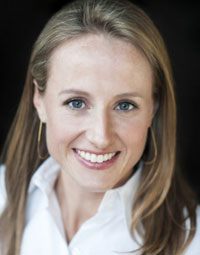
Katrin Fraser Katz is an Adjunct Assistant Professor in the Department of Political Science at Columbia University and an Adjunct Fellow (Non-resident) in the Office of the Korea Chair at the Center for Strategic and International Studies (CSIS) in Washington, DC. Dr. Katz’s research, which has been supported by grants from the Korea Foundation and the Horowitz Foundation for Social Policy, explores the interplay of cooperation and conflict in East Asia’s political, economic, and security dynamics. She has taught in the Asian Studies Program at Georgetown University and was a 2018-19 US-Korea NextGen Scholar. In 2017, she received the inaugural Sherman Family Korea Emerging Scholar Lecture Series award from the Korea Society. Dr. Katz served as director for Japan, Korea, and oceanic affairs on the staff of the White House National Security Council from 2007 to 2008. She was also a special assistant to the assistant secretary for international organization affairs at the U.S. Department of State and an analyst at the Central Intelligence Agency. She holds a Ph.D. in political science from Northwestern University; a master’s degree in East Asian and international security studies from the Fletcher School of Law and Diplomacy, where she was awarded the John C. Perry Scholarship for East Asian Studies; and a bachelor’s degree, magna cum laude, in international relations and Japanese from the University of Pennsylvania.
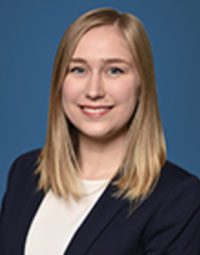
Kathryn Botto is a ​senior research analyst in the Asia Program at the Carnegie Endowment for International Peace. Her research focuses on Asian security issues, with particular emphasis on the Korean Peninsula and U.S. defense policy towards East Asia. Botto’s research interests also include alliance management, defense policy making in select Asian nations, and trilateral cooperation between the United States, South Korea, and Japan. Before joining Carnegie in July 2018, Botto was a research associate in the Strategy Division of the U.S. Forces Korea, Combined Forces Command, and United Nations Command. Previously, she was a research fellow at the Reischauer Center for East Asian Studies at the School of Advanced International Studies.
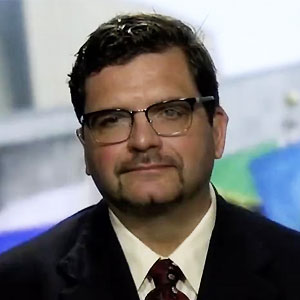
Stephen Noerper has led public policy programs at the Korea Society for twelve years and taught on Korea for a half decade at Columbia University’s Department of Political Science and School of International and Public Affairs. He has been a Weatherhead East Asian Institute research scholar and has advised the United Nations program to support cooperation in Northeast Asia. Dr. Noerper served prior with the EastWest Institute, New York University, Intellibridge, US State Department, and US Defense Department’s Asia Pacific Center for Security Studies. He was a visiting fellow at the East-West Center in Hawaii and resident representative for the Nautilus Institute for Security and Sustainable Development in Washington, DC. He was a visiting professor at Japan’s Waseda University and the National University of Mongolia, where he was a Fulbright senior scholar teaching on Korea. He was a visiting fellow at Korea’s Institute for Foreign Affairs and National Security. Dr. Noerper has authored more than seventy publications on Korea and Northeast Asia and appeared on Arirang, the ABC, BBC, Bloomberg, CBC, CNN, MSNBC, NHK, NPR and VOA and in The Wall Street Journal and Korean and US print. He has served on three philanthropic boards and received Mongolia’s State Friendship medal. He is a member of the National Committee on North Korea and a graduate of the Fletcher School of Law and Diplomacy and London School of Economics. Dr. Noerper has lectured on Korea across Asia, Europe, Eurasia and the United States. 
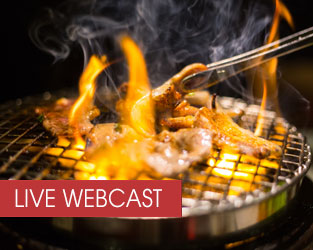


Hot! Hot! Hot! Korean Food in the Age of Kpop


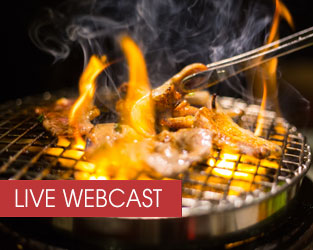
Once considered a dubious cuisine relegated to the “ethnic food” category, Korean food is now hotter than ever in the United States and beyond. Ingredients like gochugaru and gochujang show up on menus of American fast food chains and local grocery aisles, while Korean cooking shows and meokbang videos have become a genre of their own on streaming platforms and social media, such as Netflix and YouTube. Today, KFC also stands for Korean Fried Chicken and the noodle dish jjapaguri from the Oscar-winning movie Parasite has its own Wikipedia entry.

Professor Robert Ji-Song Ku explores the rising popularity, appreciation, and appropriation of Korean food around the world and particularly in the United States, and its relationship to the global proliferation of Korean popular culture, a phenomenon commonly known as hallyu, the Korean Wave.


Hot! Hot! Hot! Korean Food in the Age of Kpop

Thursday, April 8, 2021 | 6 PM (EDT)

The Korea Society
350 Madison Avenue, 24th Floor
New York, NY 10017


ABOUT THE SPEAKER:

Robert Ji-Song Ku is Associate Professor of Asian and Asian American Studies at Binghamton University of the State University of New York. His research and teaching interests include Asian American studies, food studies, and transnational and diasporic Korean popular culture. He is the author of Dubious Gastronomy: Eating Asian in the USA (University of Hawaii Press, 2014) and co-editor of Future Yet to Come: Sociotechnical Imaginaries in Modern Korea (University of Hawaii Press, forthcoming 2021), Pop Empires: Transnational and Diasporic Flows of India and Korea (University of Hawaii Press, 2019), and Eating Asian America: A Food Studies Reader (New York University Press, 2013).


Korea and Sino-US Relations

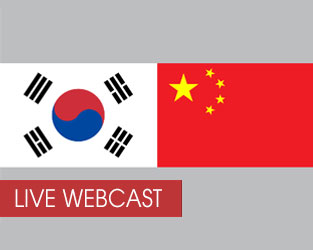
Stimson Center senior fellow and China Program director Yun Sun and Asia Society Arthur Ross director of the Center for US-China Relations Orville Schell join senior director Stephen Noerper to discuss where Korea sits relative to China and US priorities. They explore China policy in the new US administration, alliances and expectations, and prospects for improvements or further deterioration in Sino-US ties. This program is made possible thanks to the support of the Korea Foundation.


Korea and Sino-US Relations
with
Orville Schell and Yun Sun

Thursday, April 1, 2021 | 1 PM

The Korea Society
350 Madison Avenue, 24th Floor
New York, NY 10017


ABOUT THE SPEAKERS:

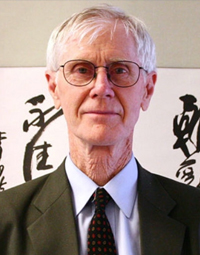
Orville Schell is the Arthur Ross Director of the Center on U.S.-China Relations at Asia Society in New York. He is a former professor and Dean at the University of California, Berkeley Graduate School of Journalism. Schell is the author of fifteen books, ten of them about China, and a contributor to numerous edited volumes. His most recent books are: Wealth and Power, China’s Long March to the 21st Century; Virtual Tibet; The China Reader: The Reform Years; and Mandate of Heaven: The Legacy of Tiananmen Square and the Next Generation of China’s Leaders. Schell was born in New York City, graduated Magna Cum Laude from Harvard University in Far Eastern History, was an exchange student at National Taiwan University in the 1960s, and earned a Ph.D. (Abd) at University of California, Berkeley in Chinese History. He worked for the Ford Foundation in Indonesia, covered the war in Indochina as a journalist, and has traveled widely in China since the mid-70s. He is a Fellow at the Weatherhead East Asian Institute at Columbia University, a Senior Fellow at the Annenberg School of Communications at USC and a member of the Council on Foreign Relations.

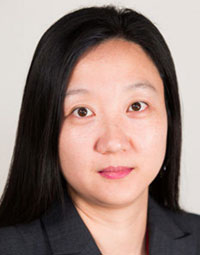
Yun Sun is a Senior Fellow and Co-Director of the East Asia Program and Director of the China Program at the Stimson Center. Her expertise is in Chinese foreign policy, U.S.-China relations and China’s relations with neighboring countries and authoritarian regimes. From 2011 to early 2014, she was a Visiting Fellow at the Brookings Institution, jointly appointed by the Foreign Policy Program and the Global Development Program, where she focused on Chinese national security decision-making processes and China-Africa relations. From 2008 to 2011, Yun was the China Analyst for the International Crisis Group based in Beijing, specializing on China’s foreign policy towards conflict countries and the developing world.


 Of interest:

Biden Finds China Is Too Big to Simply Lecture – Bloomberg

China Boosts Ties With North Korea, Russia in Wake of U.S. Talks – Bloomberg


The Korean Art of Fermentation

Speaker’s Photo by Nick Surett nicksurette.com

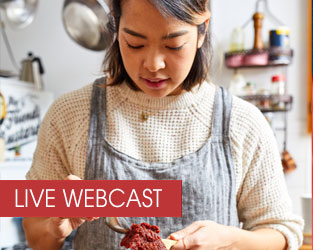
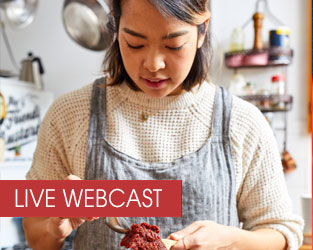
There is a long and illustrious history of fermentation in Korean cuisine. Different types of fermented food – doenjang, ganjang, gochujang, and kimchi to name just a few – are integral and essential to the Korean way of eating and cooking.

Join Irene Yoo as she provides an overview of Korean art of fermentation and tips on how to incorporate Korean fermented food in your everyday cooking.


The Korean Art of Fermentation

Thursday, March 25, 2021 | 6 PM (EDT)

The Korea Society
350 Madison Avenue, 24th Floor
New York, NY 10017


ABOUT THE SPEAKER:

Irene Yoo is the founder/chef of Yooeating, a Korean American comfort food popup that highlights Korean home-cooking, street food, and drinking culture. She has written and developed recipes for Food52, Food Network, and Gothamist among many others.


The Historical Causes of Korea’s Division and Challenges to Reconciliation

Michael D. Shin, a Fellow of Robinson College, Cambridge, looks at the late Joseon period and the Japanese colonial period to examine the historical causes of Korean division and investigate their impact on inter-Korean reconciliation in this program supported by the UniKorea Foundation. Understanding the deep historical causes of Korean division sheds light on the persistence of the division after the end of the Cold War.


This program is supported by a grant from the UniKorea Foundation.


The Historical Causes of Korea’s Division
and Challenges to Reconciliation

with
Michael D. Shin

Thursday, March 18, 2021 | 12 PM

The Korea Society
350 Madison Avenue, 24th Floor
New York, NY 10017


ABOUT THE SPEAKER:

Michael D. Shin is a Fellow of Robinson College, Cambridge. He is the author of Korean National Identity under Japanese Colonial Rule (Routledge), the editor and co-author of Korean History in Maps (Cambridge University Press), and the editor and co-translator of Everyday Life in Joseon-Era Korea: Economy and Society (Global Oriental, Brill).


The Korea Society Condemns Anti-Asian Hate Crimes

The Korea Society is enormously concerned about the shocking increase of anti-Asian hate incidents around the country which have accelerated during the COVID-19 pandemic. These incidents have ranged from verbal harassment and racial slurs to assault and murderous acts.

The Asian-American community is rightly concerned about their safety and the safety of their loved ones. We stand with all Asian, Asian-American, and Pacific-Islander communities in condemning racially motivated acts of hatred and violence.

Along with many Americans throughout the country, The Korea Society is shaken by the recent tragedy in Atlanta where eight persons were murdered—six of whom were Asian, including four women of Korean origin.

The Korea Society will always stand together with the Asian-American community. Our mission since the Society’s inception 63 years ago has been to enhance cross-cultural awareness and understanding. We will endeavor even more so to promote a more respectful and inclusive society here in the U.S.

Ambassador (ret) Kathleen Stephens
Board Chair
  Thomas Byrne
President & CEO


Restaurants in the Covid-19 Era: A Roundtable

Photo by Amina Ford www.aminaford.com

Since the pandemic started, restaurant and food service businesses had to combine flexibility and ingenuity in order to survive. Constantly dealing with ever-changing regulations and restrictions, restaurateurs had to quickly pivot and develop new business models, including outdoor dining and shipping nationwide.

Join us for a roundtable conversation with three Korean American restaurateurs in New York – Christina Jang of New Wonjo; Simon Kim of Cote; and Ray Park of Red Poke – as they discuss the challenges they face during the pandemic and the future of restaurants.


Restaurants in the Covid-19 Era: A Roundtable

Thursday, March 4, 2021 | 6 PM (EST)

The Korea Society
350 Madison Avenue, 24th Floor
New York, NY 10017


ABOUT THE SPEAKERS:

Christina Jang is the owner and operator of New Wonjo, a Korean barbeque restaurant in the heart of Koreatown in New York City. newwonjo.com

Simon Kim is the Proprietor of COTE Korean Steakhouse, New York City’s first KOREAN STEAKHOUSE™, and COTE Miami – now open in Miami’s Design District. www.cotenyc.com & cotemiami.com

Ray Park is the founder of Red Poke, a Korean fast casual restaurant in New York, and Pado, which will be relocated to Williamsburg. His new Korean fried chicken restaurant Seoul Fried Chicken Co. is opening in Edison, NJ. www.redpoke.com; www.padonyc.com; www.sfc-co.com


New Developments in Inter-Korean Relations

Woodrow Wilson Center director of the Hyundai Motor-Korea Foundation Center for Korean History and Public Policy Jean Lee converses with senior director Stephen Noerper on ROK-DPRK relations. They address impasse and opportunity between North Korea and South Korea and offer recommendations for US and other policy makers on peninsular realities and possibilities. This program is made possible thanks to support from the Korea Foundation.

The Columbia University’s Center for Korean Research (CKR) is a promotional partner for this program.


New Developments in Inter-Korean Relations
with
Jean Lee

Thursday, March 4, 2021 | 12 PM

The Korea Society
350 Madison Avenue, 24th Floor
New York, NY 10017


ABOUT THE SPEAKER:

Jean H. Lee is a Pulitzer-nominated veteran foreign correspondent and expert on North Korea. Lee led the Associated Press news agency’s coverage of the Korean Peninsula as bureau chief from 2008 to 2013. In 2011, she became the first American reporter granted extensive access on the ground in North Korea, and in January 2012 opened AP’s Pyongyang bureau, the only Western text/photo news bureau based in the North Korean capital. She has made dozens of extended reporting trips to North Korea, visiting farms, factories, schools, military academies and homes in the course of her exclusive reporting across the country.

Lee served as a Wilson Center Public Policy Scholar and Global Fellow before joining the Asia Program as Korea Center program director. She is a contributor to the New York Times Sunday Review, Esquire magazine and other publications. She appears as an analyst for CNN, BBC, NPR, PRI and other media, and serves frequently as a guest speaker on Korea-related topics. She is a member of the National Committee on North Korea and Council of Korean Americans.


Pathways to a Brighter Future for North Korea’s Economy

Join us for a discussion about scenarios for North Korean development and inter-Korean economic integration. Seoul National University economics Professor Byung-Yeon Kim, former World Bank economist and a consultant on Asian affairs Brad Babson, and NK Pro analyst Peter Ward join Korea Society President Tom Byrne in conversation. Together, they investigate what domestic reforms will be necessary to empower development and forecast potential roles for South Korea, the U.S. and the international community. Korea Society Policy Director Jonathan Corrado moderates audience questions.

This program is supported by a grant from the UniKorea Foundation.

This event is co-sponsored by the Columbia University’s APEC Study Center.


Pathways to a Brighter Future for North Korea’s Economy
with
Byung-Yeon Kim, Brad Babson  and Peter Ward

Thursday, February 18, 2021 | 6 PM EST

The Korea Society
350 Madison Avenue, 24th Floor
New York, NY 10017


ABOUT THE SPEAKERS:

Byung-Yeon Kim is Professor in the Department of Economics at Seoul National University (SNU) and the author of Unveiling the North Korean Economy: Collapse and Transition (2017). His research interests lie in the fields of transition economics and applied econometrics, in particular with reference to North Korea as well as former socialist countries. He received his B.A. and M.A. from SNU and his D.Phil. from the University of Oxford.

Brad Babson worked for the World Bank for 26 years before retiring in 2000 and has studied the North Korean economy and written extensively on economic perspectives on the integration of North Korea into the international community. He serves on the Advisory Council of the Korea Economic Institute of America, the World Economic Forum Global Futures Council on the Korean Peninsula, and the Steering Committee of the National Committee for North Korea. He was formerly theChair of the DPRK Economic Forum at the U.S.-Korea Institute, John Hopkins School of Advanced International Studies. He has consulted for the World Bank and United Nations and been involved in projects sponsored by various institutes, foundations and universities. 

Peter Ward is a writer and researcher focusing on the North Korean economy, as well as a PhD candidate at the University of Vienna.


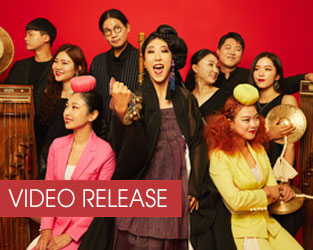
ADG7: A Virtual Concert [Video Release]

Celebrate the Year of Ox with a virtual concert by Ak Dan Gwang Chil a.k.a. ADG7! This award-winning Korean traditional music group’s powerful and engaging performance will immerse audiences into a spiritual experience and bring blessings of positive energy to kick off a new year.

The nine-member ensemble presents itself not as earnest traditionalists, but as a giddy show band with all the trappings of K-pop — choreographed singers, candy-colored costumes and bouncy, upbeat, often swinging songs that link the concision of folk tunes to the catchy repetition of pop, with brash cymbals for drive and flute and zither lines for instrumental hooks. – The New York Times

There’s a flowering folk-roots revival in South Korea, but no band combines virtuosity, charisma, and pure energy like Ak Dan Gwang Chil. – WFMU

Ak Dan Gwang Chil (ADG7) is a multi-award winning Korean traditional music group, featuring six Korean traditional musicians and three powerhouse female folk singers. ADG7 performs repertoire from the sacred, shamanic and secular gut (ritual music) and minyo (folk song) traditions of the Hwanghae-do region, nowadays a western province of North Korea.

ADG7 was organized in 2015, to the 70th anniversary of Korea’s liberation from Japanese colonial rule. Their music expresses the true meaning of liberation and South Korea’s desire for reunification. They recently won multiple awards including Best Group at the 2018 KBS Korean Traditional Music Award and Sori Frontier Award at the 2017 Jeongju International Sori festival. ADG7 has recently performed at WOMEX (World Music Expo) 2019 and globalFEST 2020 as one of their official artists, and became one of 2020-2021 Mid Atlantic Tour Roster Artists.

Band Members: Hyun Soo Kim (Daeguem); Hyang Hee Lee (Piri & Saenghwang); Hyerim Park (Ajaeng); Meondongmaru Weon (Gayaguem); Hyunjun Chun (Percussion); Jinyoung Sunwoo (Percussion); Chorong Bang (Singer); Hee Rim Wang (Singer); and Minyoung An (Singer)


ADG7: A Virtual Concert

Friday, February 12, 2021

The Korea Society
350 Madison Avenue, 24th Floor
New York, NY 10017