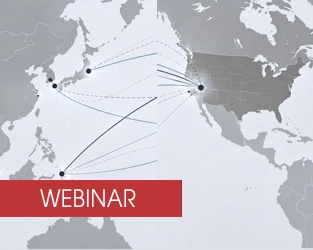
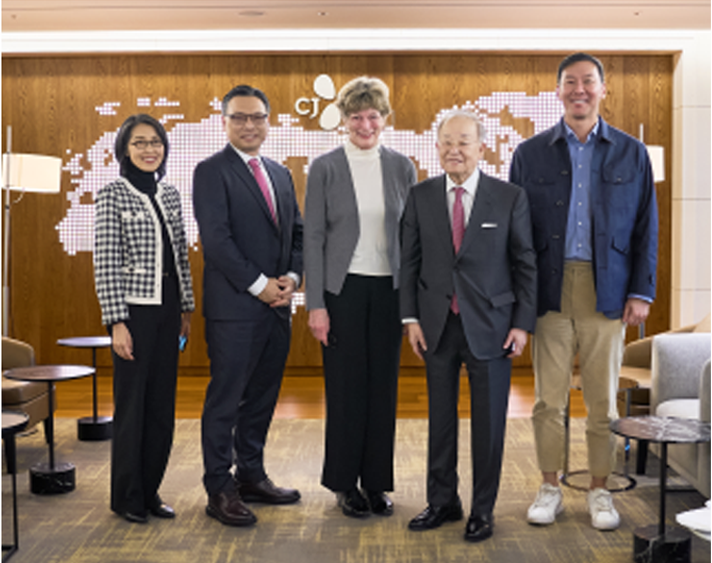
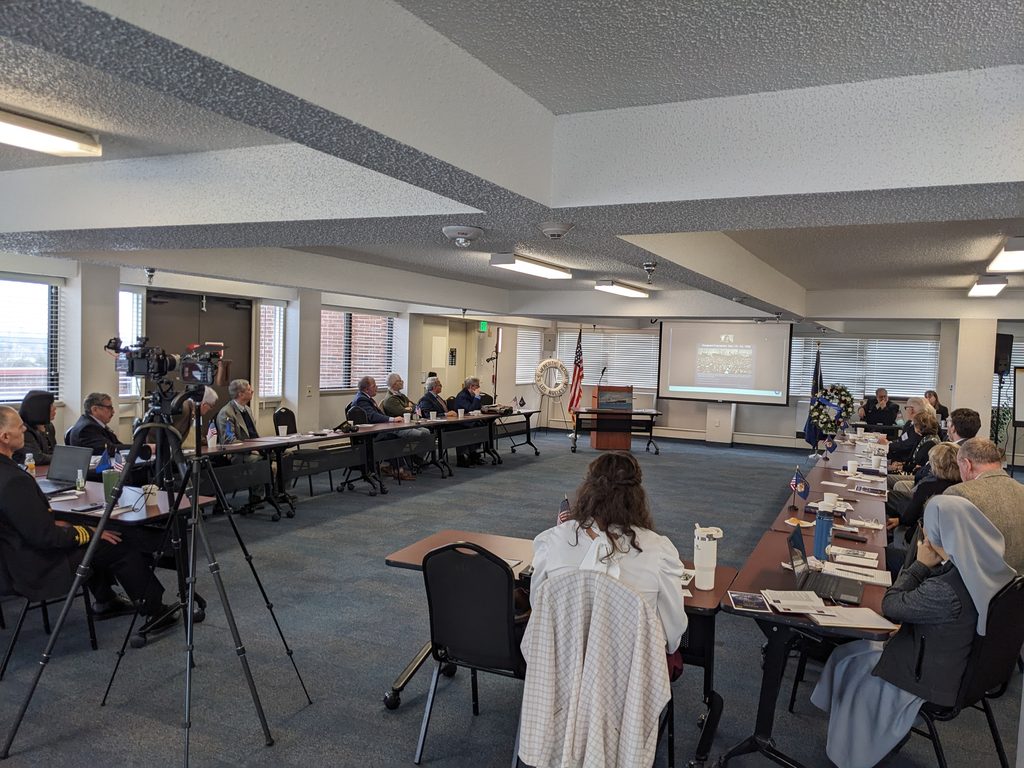
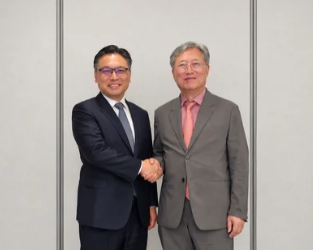
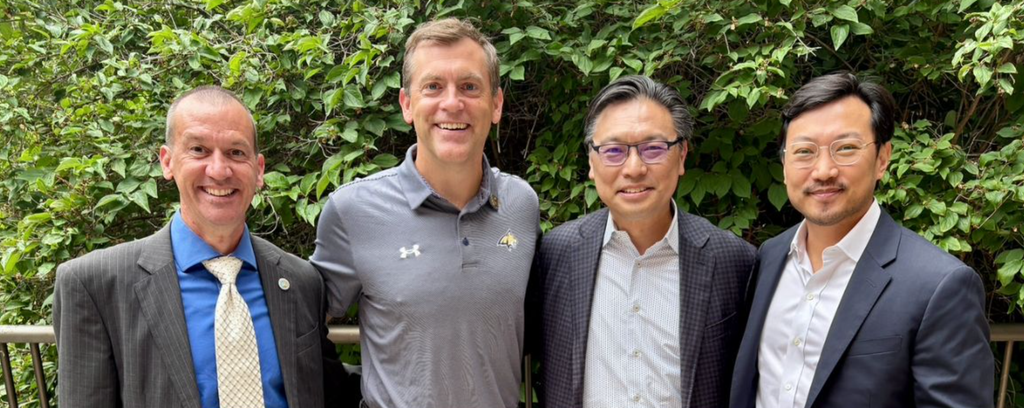
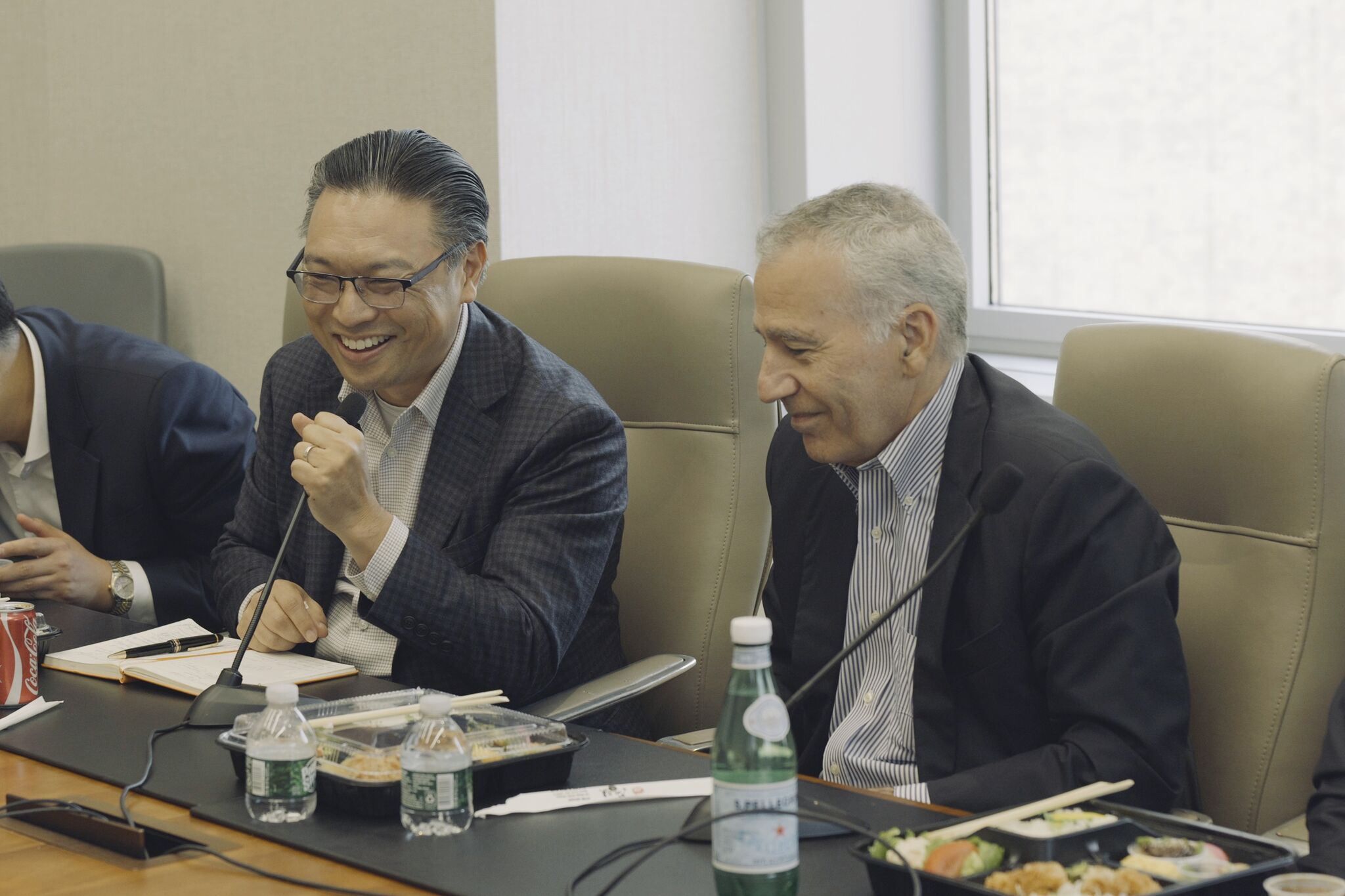
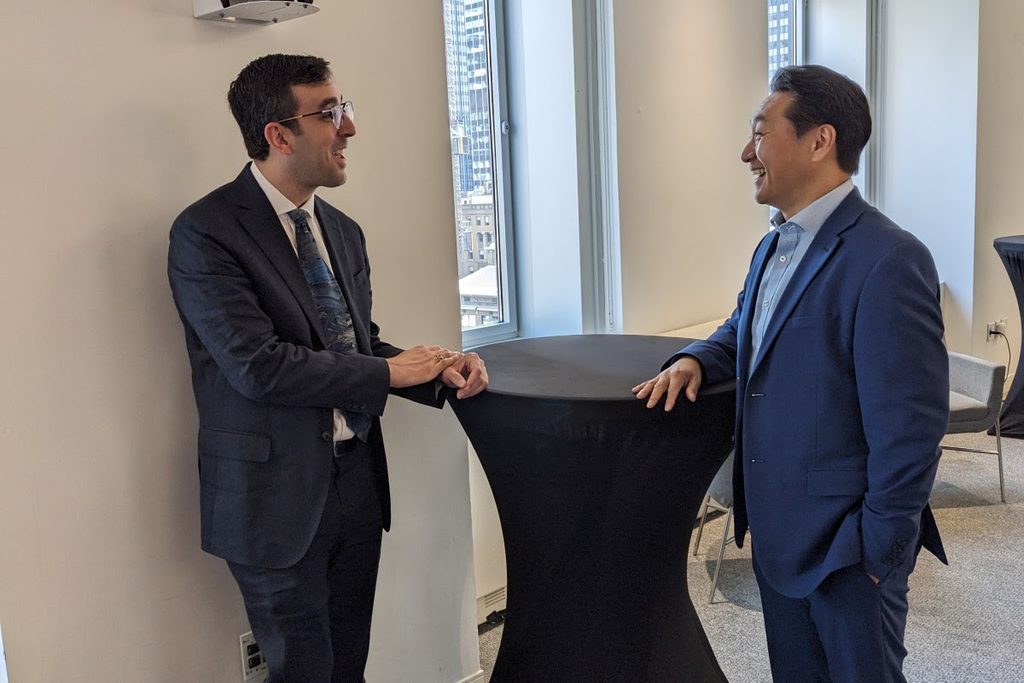
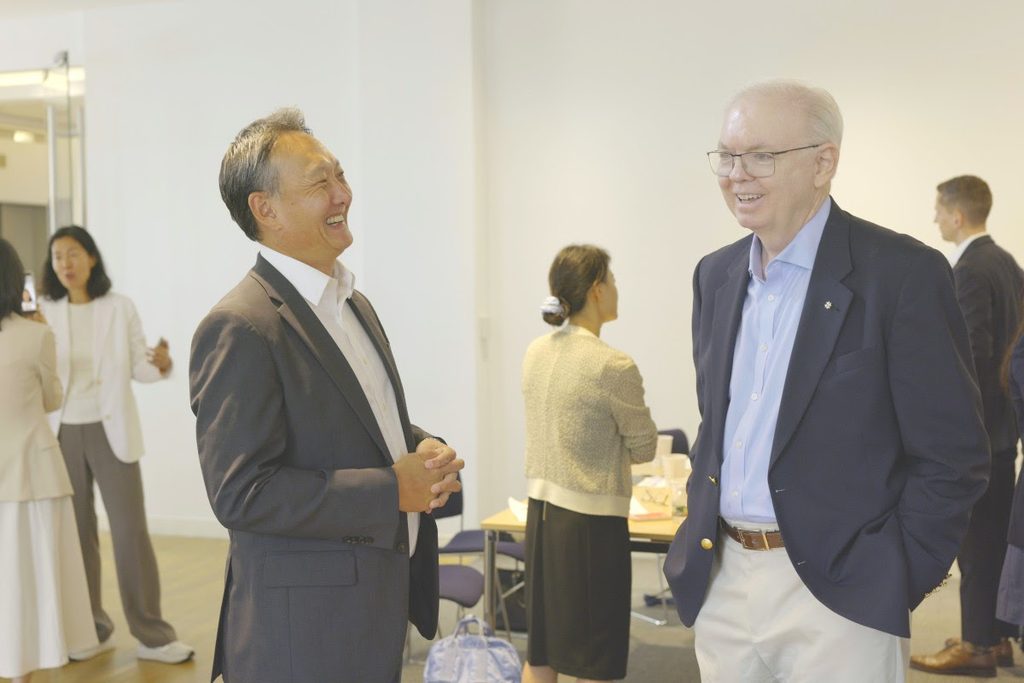
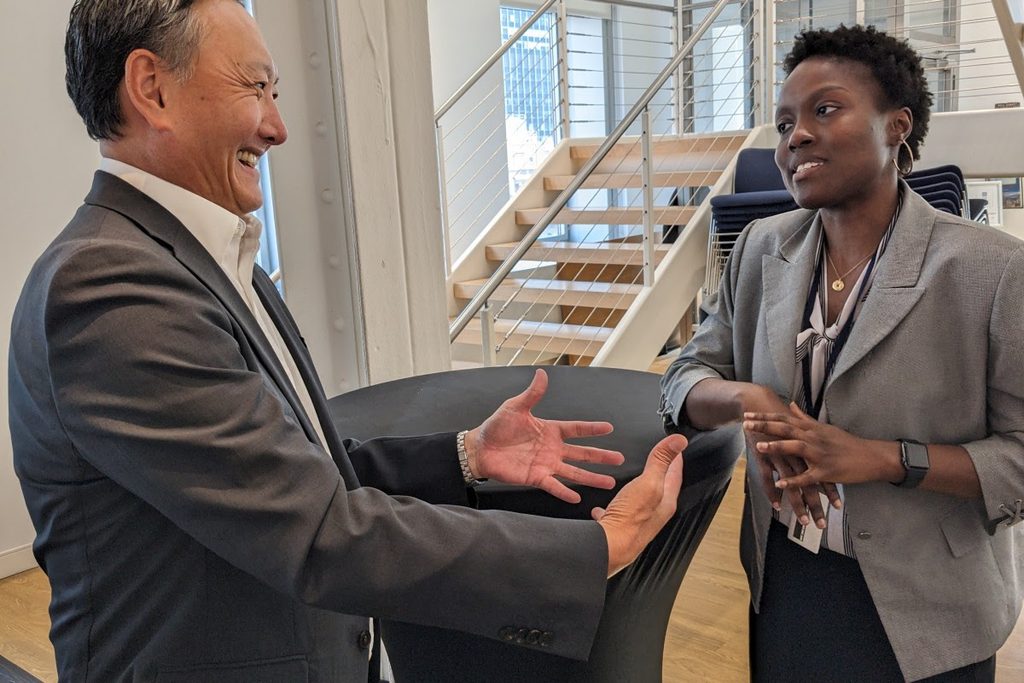
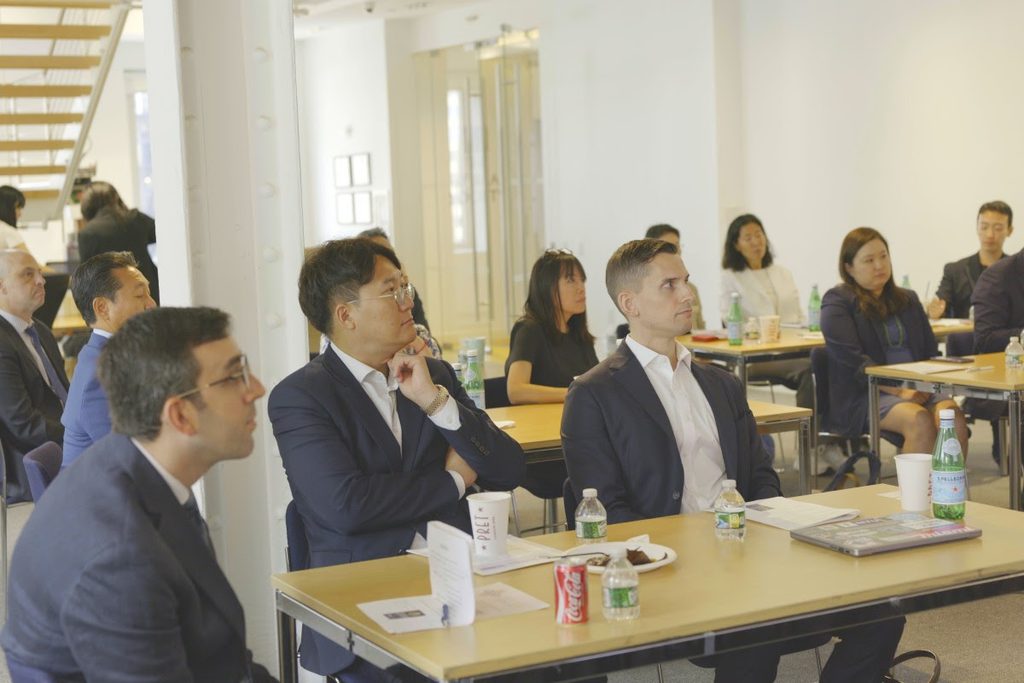
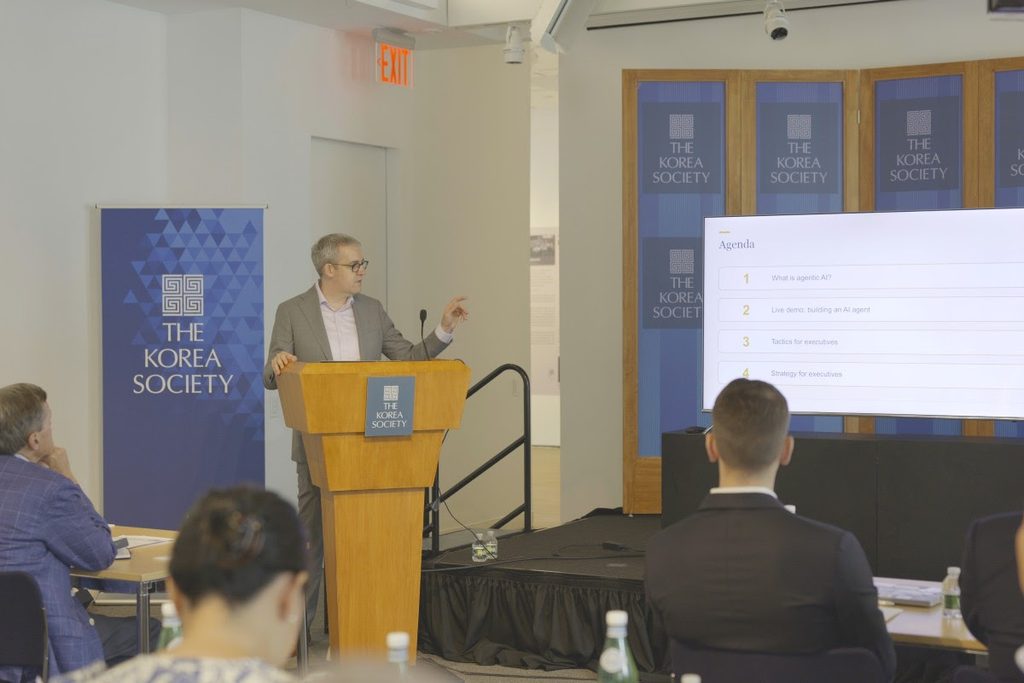
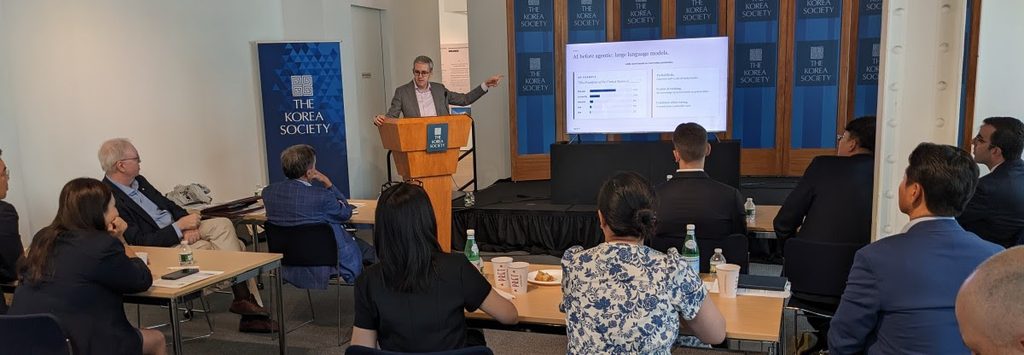
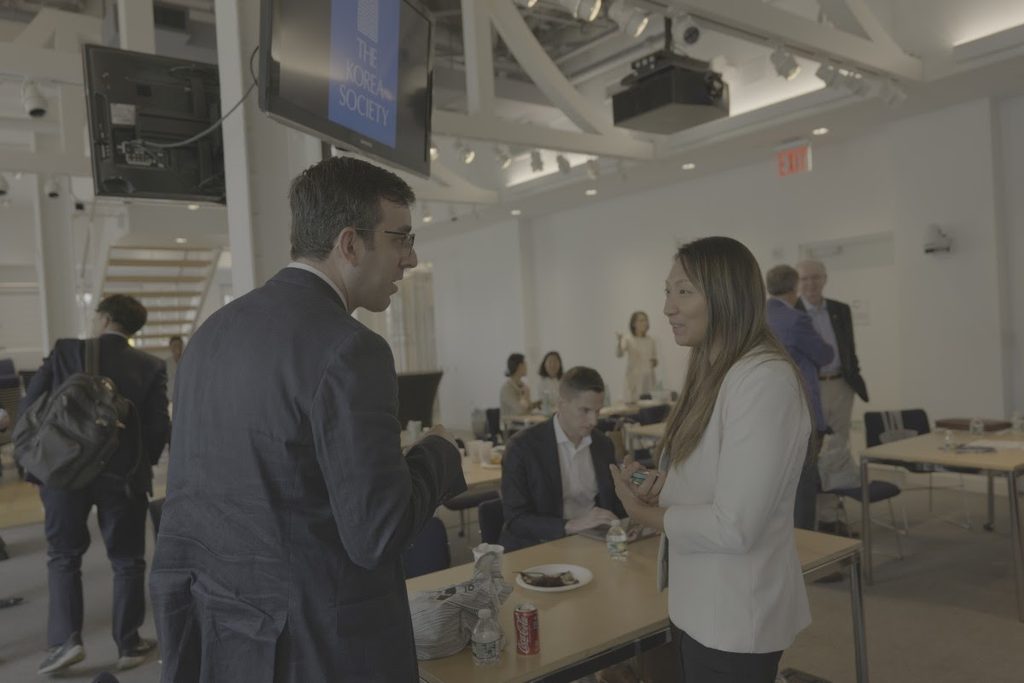
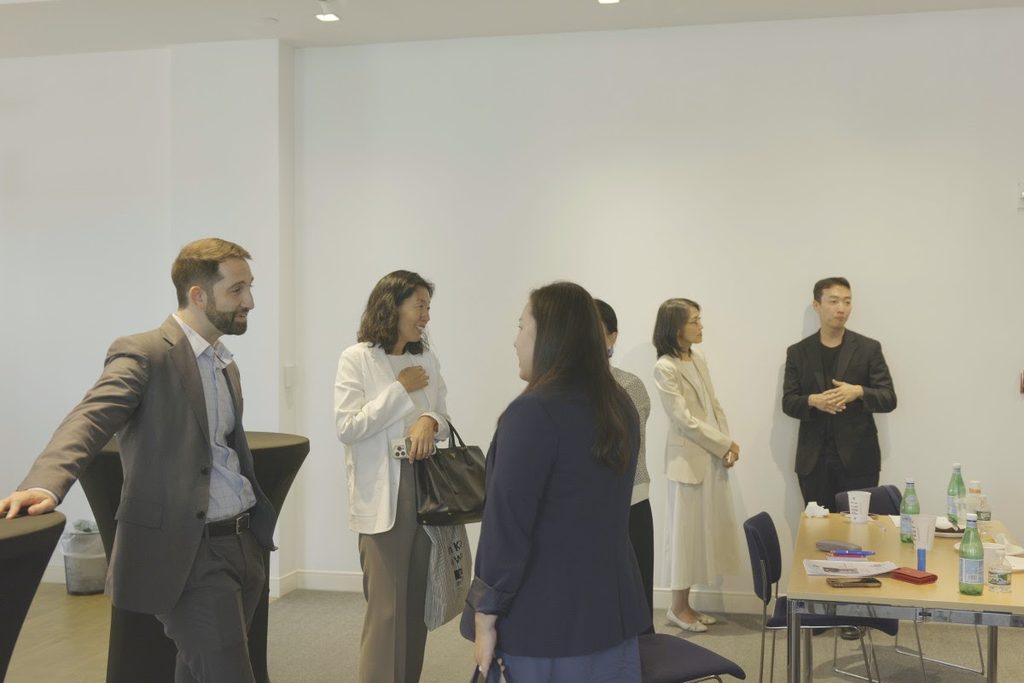
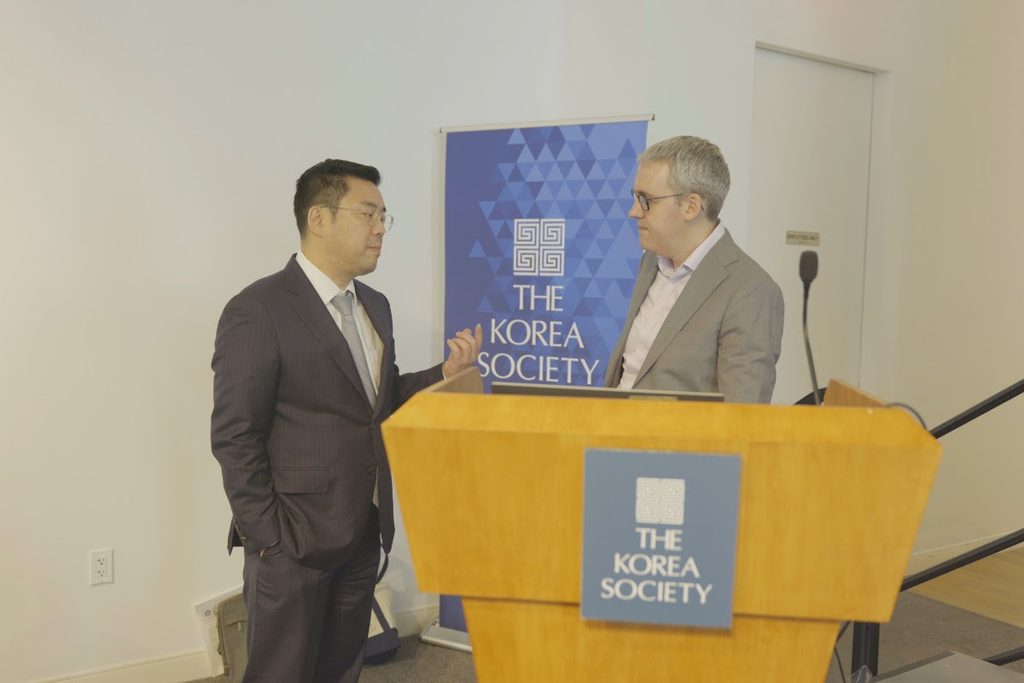
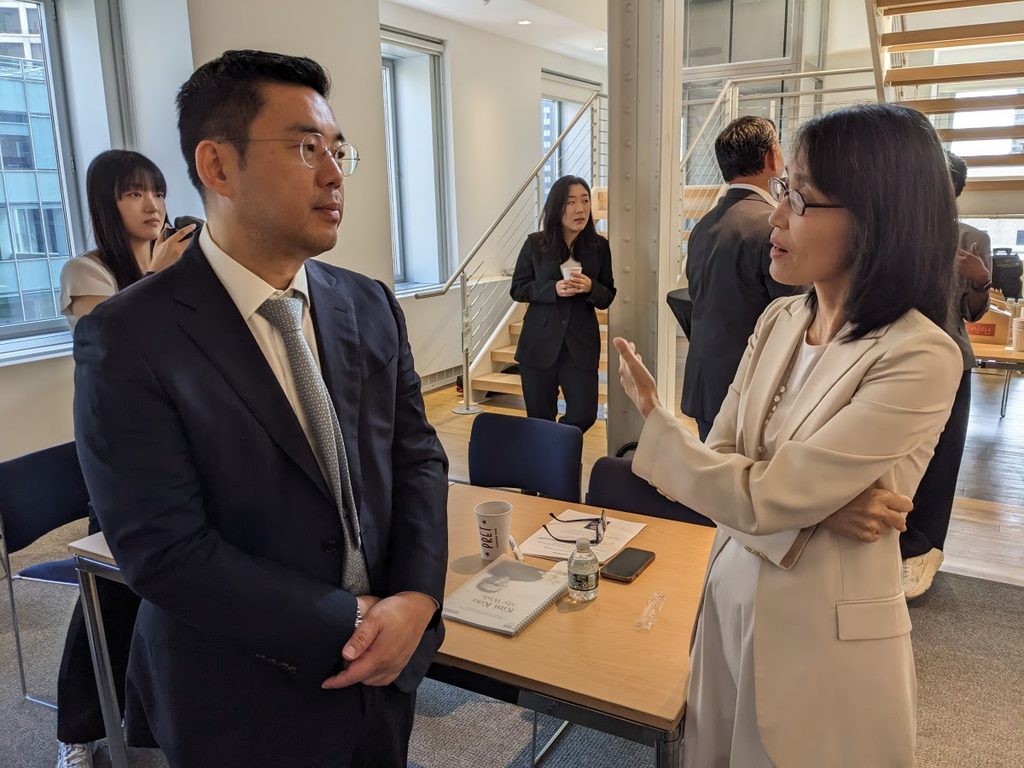
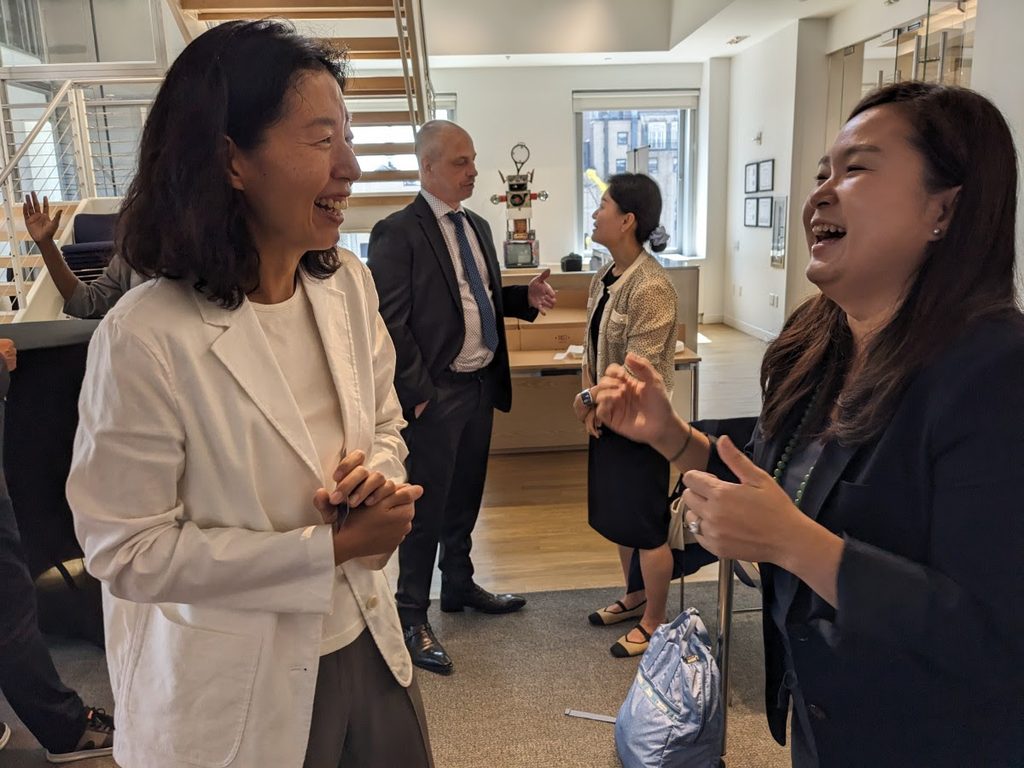
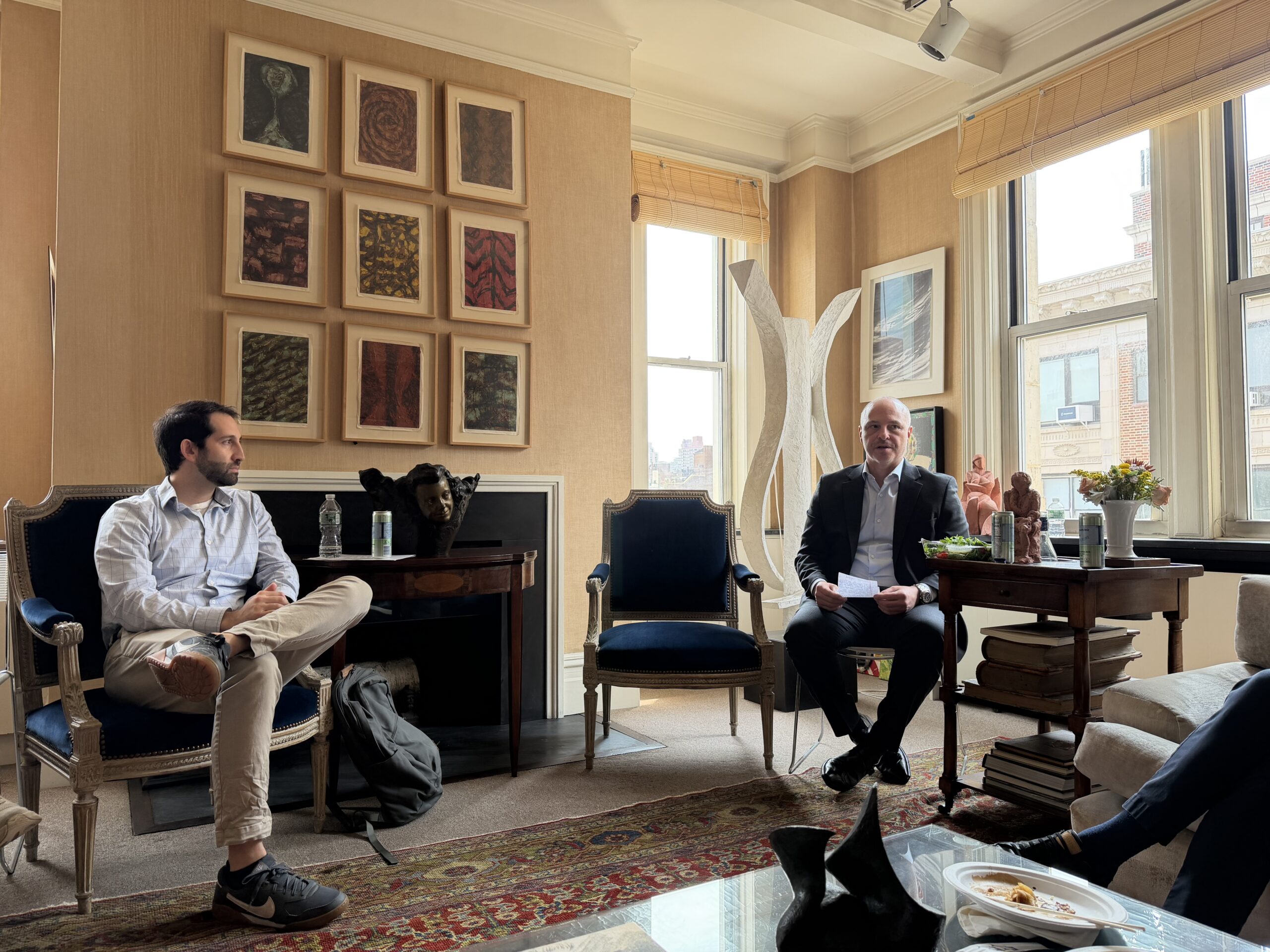
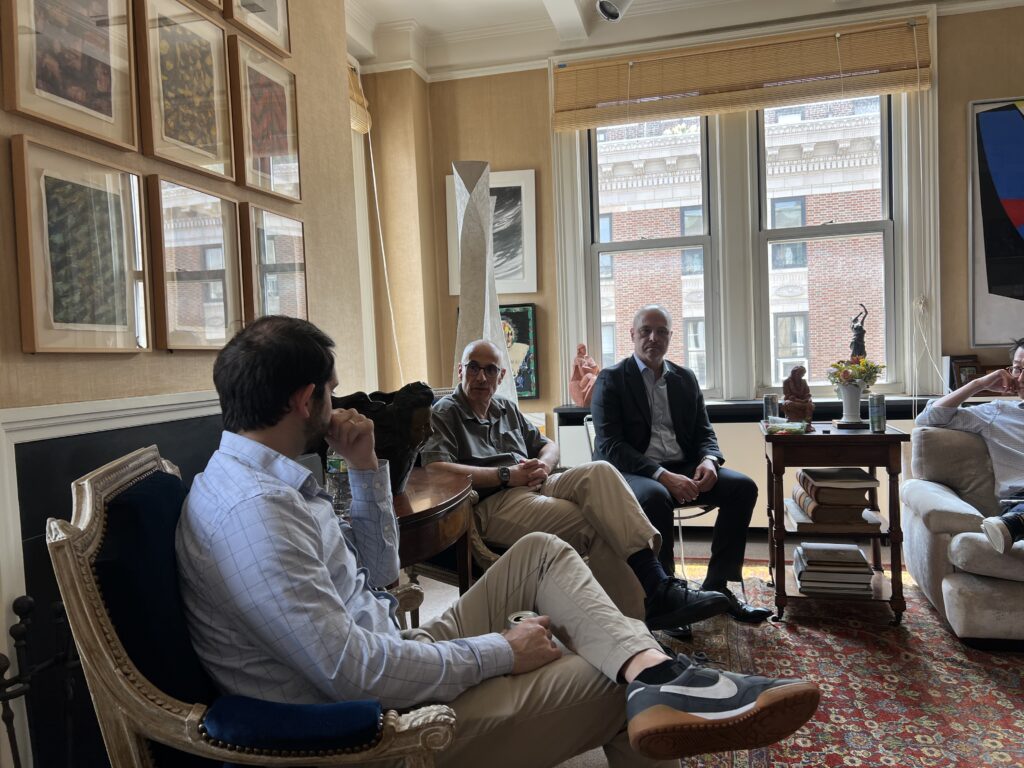
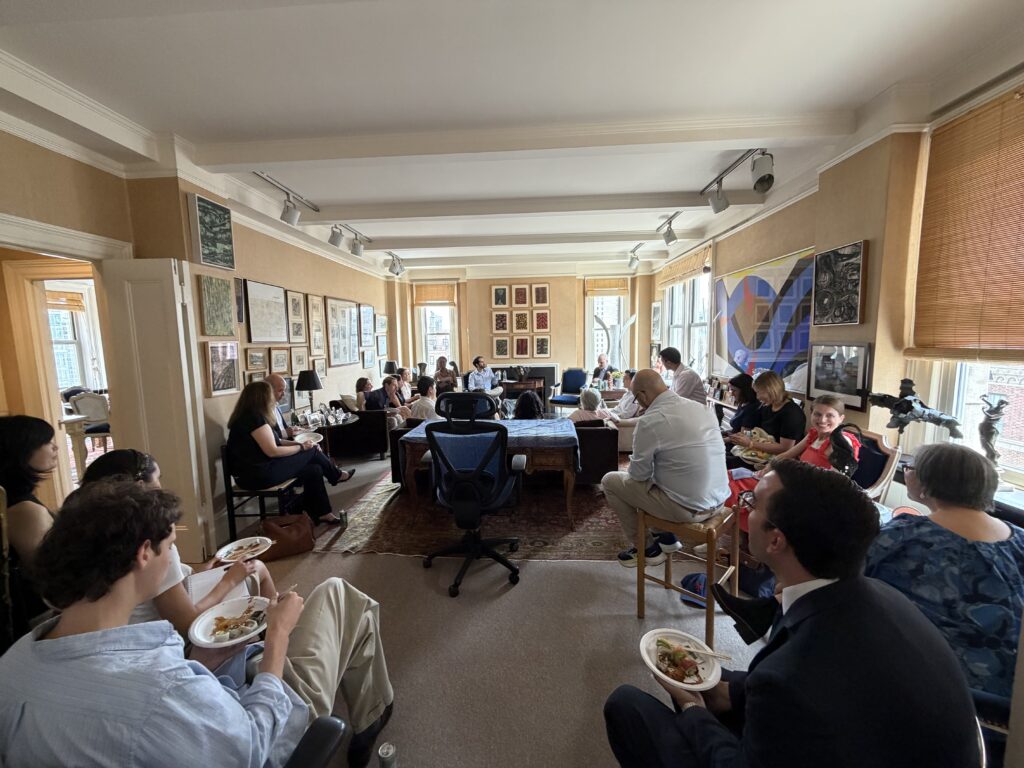
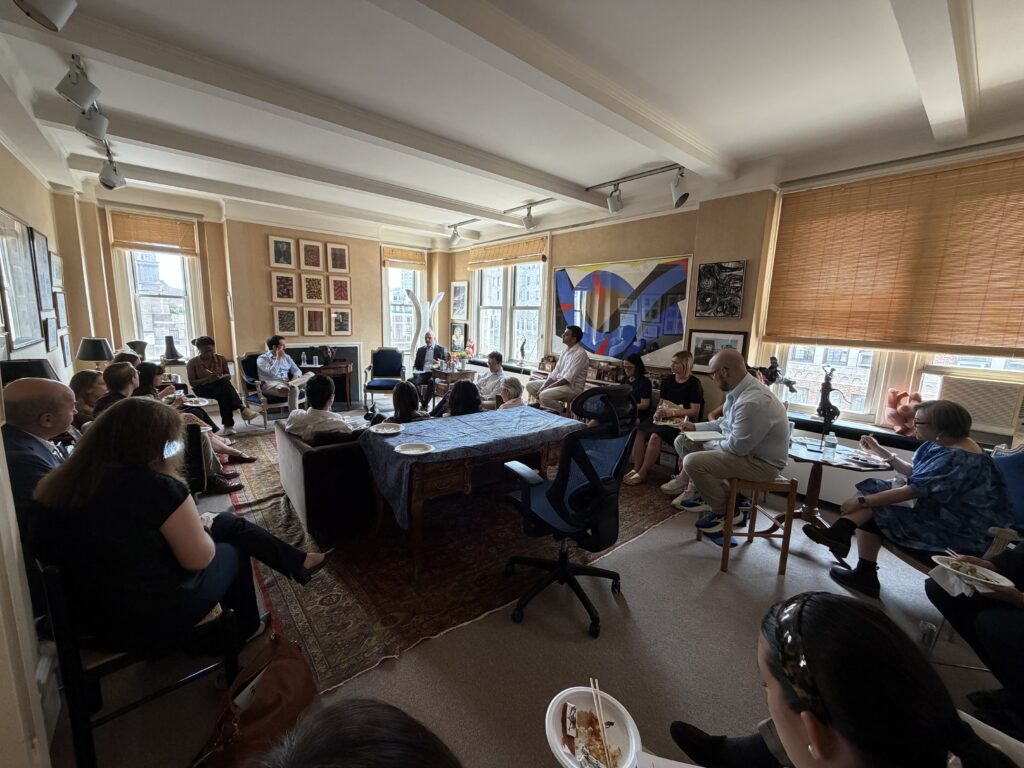
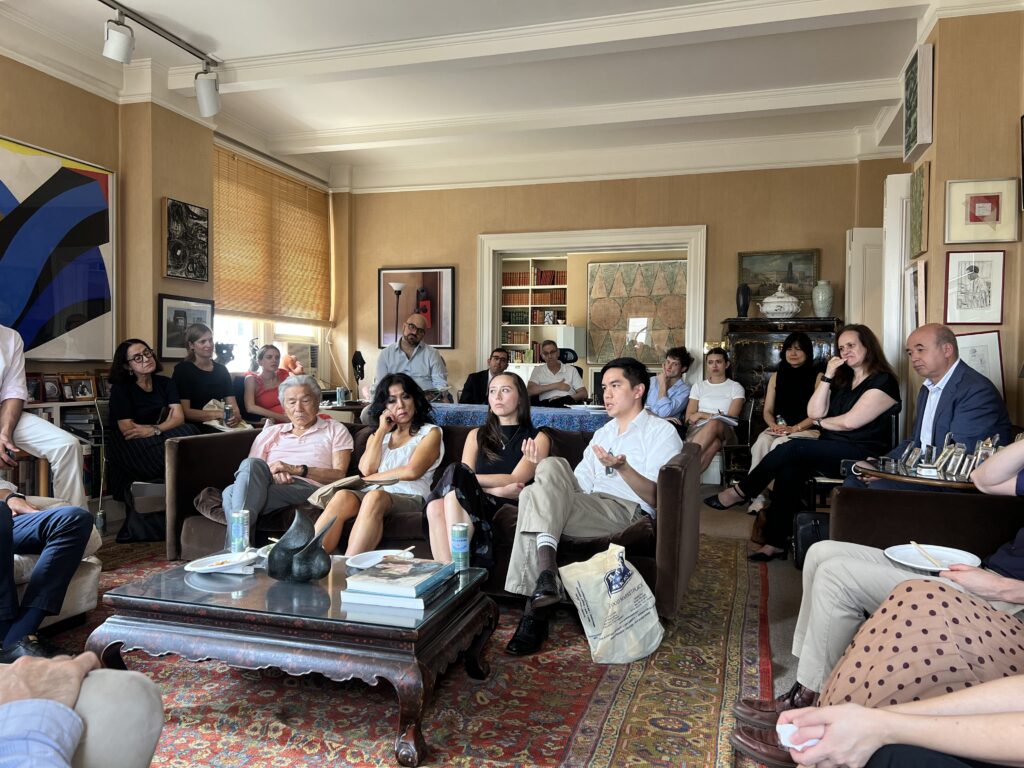
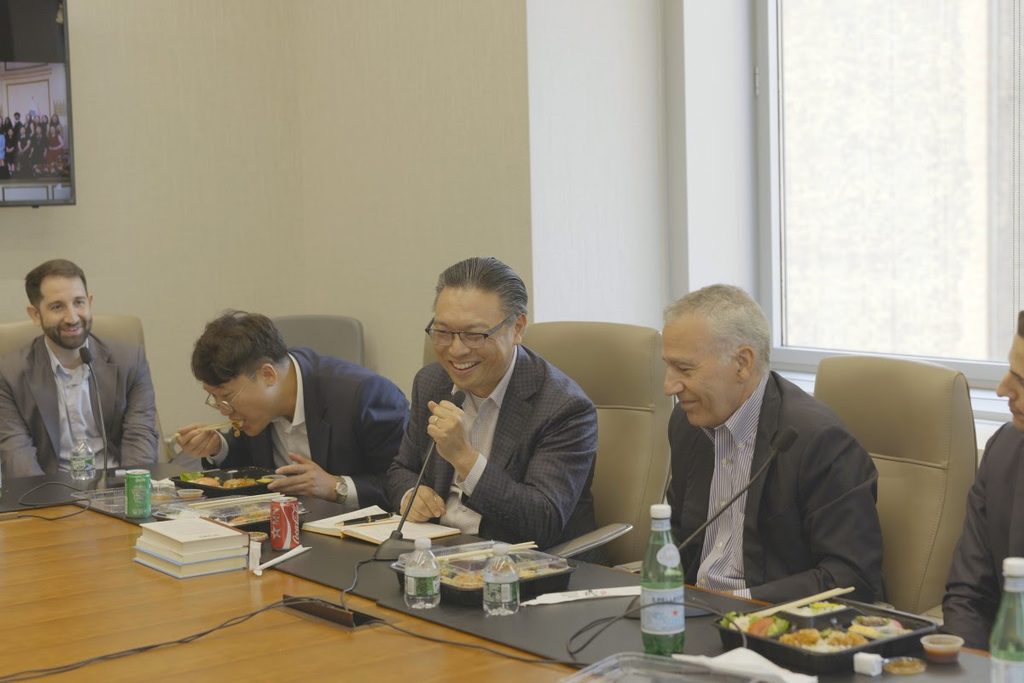
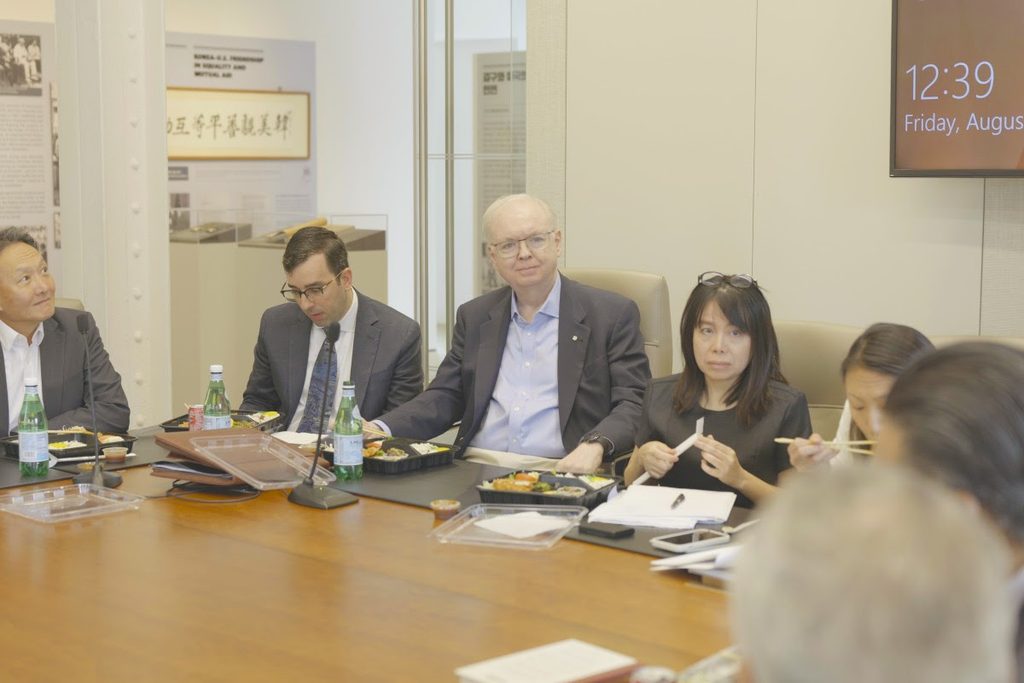
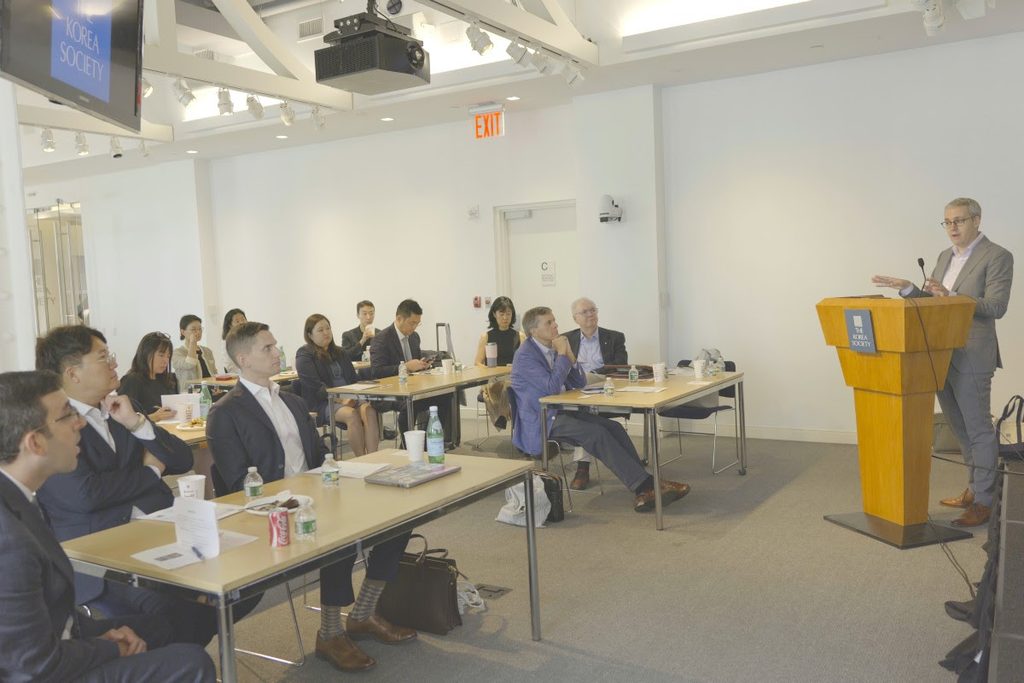
A group of policy professionals from academia, industry, finance, civil society, and the United Nations gathered in New York City for The Northeast Asia Situation Report, a salon-style discussion focused on the complex intersection of PRC-U.S.-Taiwan, U.S.-ROK-PRC, and Japan–ROK relations.
The session was co-hosted by The Korea Society’s Jonathan Corrado and Chelsie Alexandre, Temple University Japan’s Robert Dujarric, and Park Strategies’ Sean King.
The discussion analyzed how regional actors are navigating an increasingly fraught geopolitical competition, forecast trends and trajectories, and generated consensus around near-future challenges and opportunities.
Meet The Korea Society Professor, your guide to The Korea Society.
Have questions about The Korea Society or its programs and events? Or looking for help learning about Korea? Ask The Korea Society Professor and get quick answers based on information from The Korea Society.
How to Use The Korea Society Professor
Welcome! Our AI Chatbot is here 24/7 to help you navigate our programs, review course materials, and access free learning resources. Here is how you can get the most out of it:
1. Question about The Korea Society: Ask the the Korea Society professor for anything about The Korea Society memberships and details on The Korea Society’s upcoming events and programs.
Example Prompts
“How do I become a The Korea Society Member?” “Tell me about upcoming policy forums and cultural events.” “Tell me about The Korea Society’s Annual Gala and how I can attend.”
2. Syllabus: Looking for a lesson plan or syllabus about Korean culture or history? Get help from The Korea Society Professor!
Example Prompts
“Can I get a syllabus for Korean war?” “Can I get a lesson plan for Korean history? It’s a one-month course for college students, meeting once a week.”
To create a syllabus tailored to your needs, please tell him who the course is for and how long you would like the course to run.
What topic would you like a syllabus for? Explore the topics below for inspiration:
Korean History
Korean Culture & Traditions
Korean Religion & Philosophy
North & South Korea
Korean Society & Social Issues
Korean Art & Literature
Korean Economy & Development
Korean Geography & Geopolitics
Korean Language & Education
3. Explore Free YouTube Resources: Ask a TKS Professor to help you find the right video resources from The Korea Society! You can view event and program highlights, recaps, and recordings from The Korea Society.
Example Prompts
“Where can I watch recordings of past author talks?” “Could I watch last year’s Annual Gala event video?”
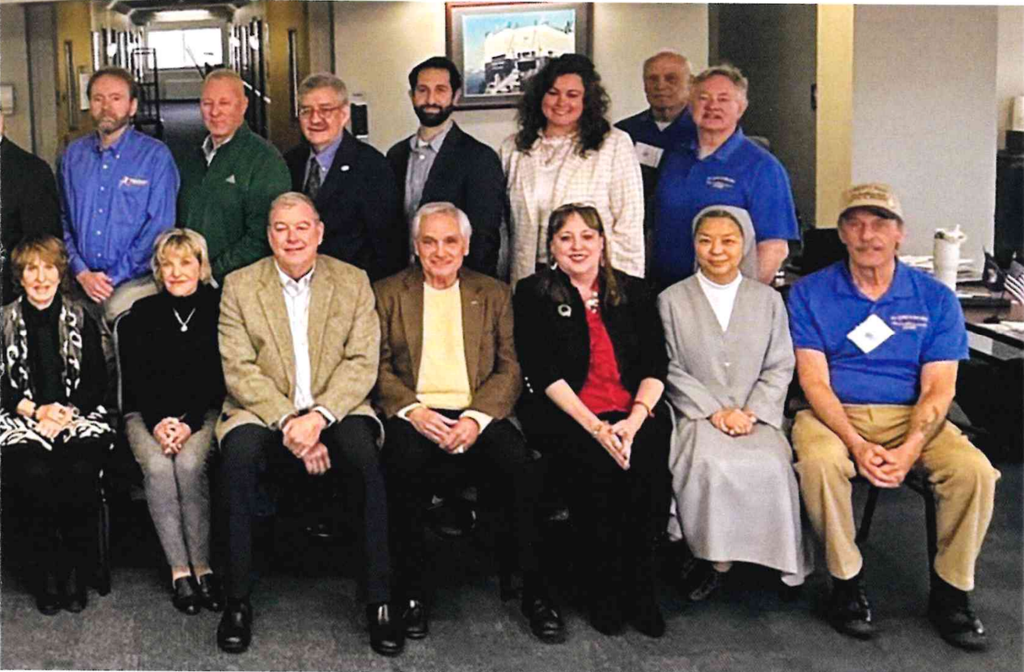
On July 10, Chelsie Alexandre, Policy Program Officer at The Korea Society, attended an Armistice Day commemoration representing President and CEO Abraham Kim. The ceremony was co-hosted by the Central Long Island Chapter of the Korean War Veterans and the Long Island State Veterans Home.
The event commemorated two major historical milestones: the 76th anniversary of the start of the Korean War and the 73rd anniversary of the Armistice Agreement.
The ceremony featured moving speeches from the NYC ROK Consul General, local civic leaders, and representatives from church communities, each reflecting on the bravery of veterans and the enduring strength of the U.S.–ROK alliance. Attendees gathered to pay tribute to the Korean War veterans residing at the facility and across the region, recognizing their profound sacrifices in defense of peace and freedom. The gathering underscored the strong bond between local civic, faith-based, and veteran organizations, all united in preserving the memory and legacy of the “Forgotten War.”
It was a privilege for The Korea Society to participate in this gathering, reaffirming our ongoing dedication to honoring our veterans and deepening shared historical ties.
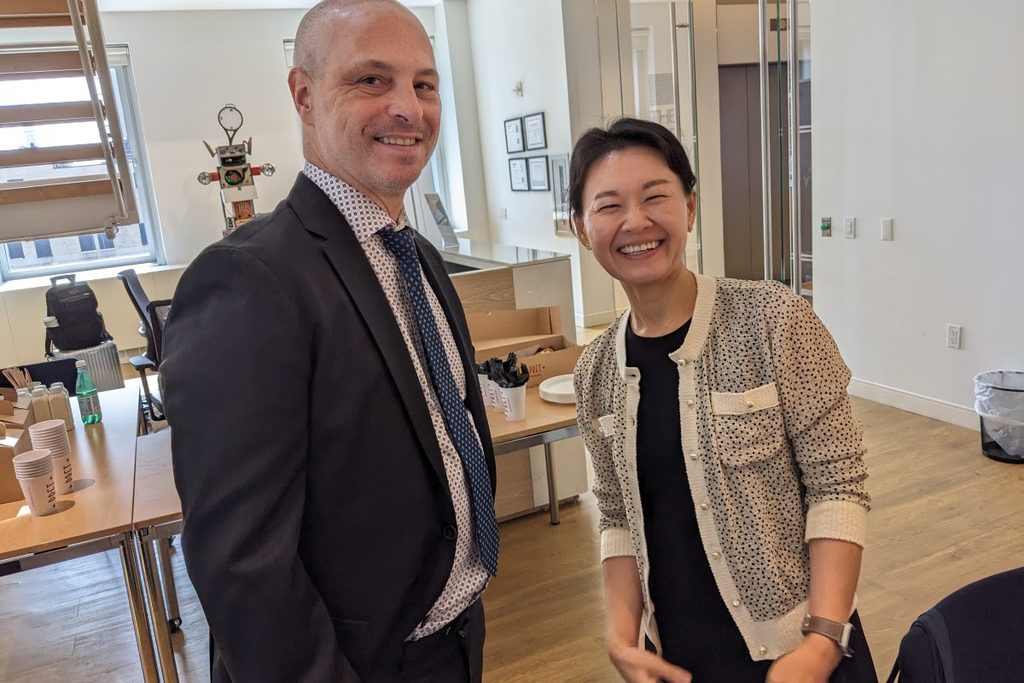
On July 16, The Korea Society hosted an invitation only networking reception at Samsung’s Washington, D.C. office to commemorate the 250th anniversary of American independence, in partnership with the Korea Inter-Parliamentary Exchange Center (KIPEC) and the Korea Defense Veterans Association (KDVA).
Celebrating America’s semi-quincentennial, the U.S.-Korea Alliance, and the shared values of freedom and democracy, the evening provided a unique platform for strengthening relationships across the U.S.–Korea community. Nearly 170 leaders representing the U.S. and Korean legislative and executive branches, industry, civil society and media gathered to build new connections and reinforce partnerships.
Opening with remarks by The Korea Society’s President & CEO Dr. Abraham Kim, the program featured Ambassador Young-Hee Chun, Chargé d’Affaires a.i. of the Embassy of the Republic of Korea; Hon. Seth Bailey, Principal Deputy Assistant Secretary at the U.S. Department of State; Dr. James P. Finch, Acting Deputy Assistant Secretary at the U.S. Department of War; and BG Hyeongjin Yoon, Defense Attaché of the Republic of Korea to the United States, reflecting the broad bipartisan and binational commitment to the alliance.
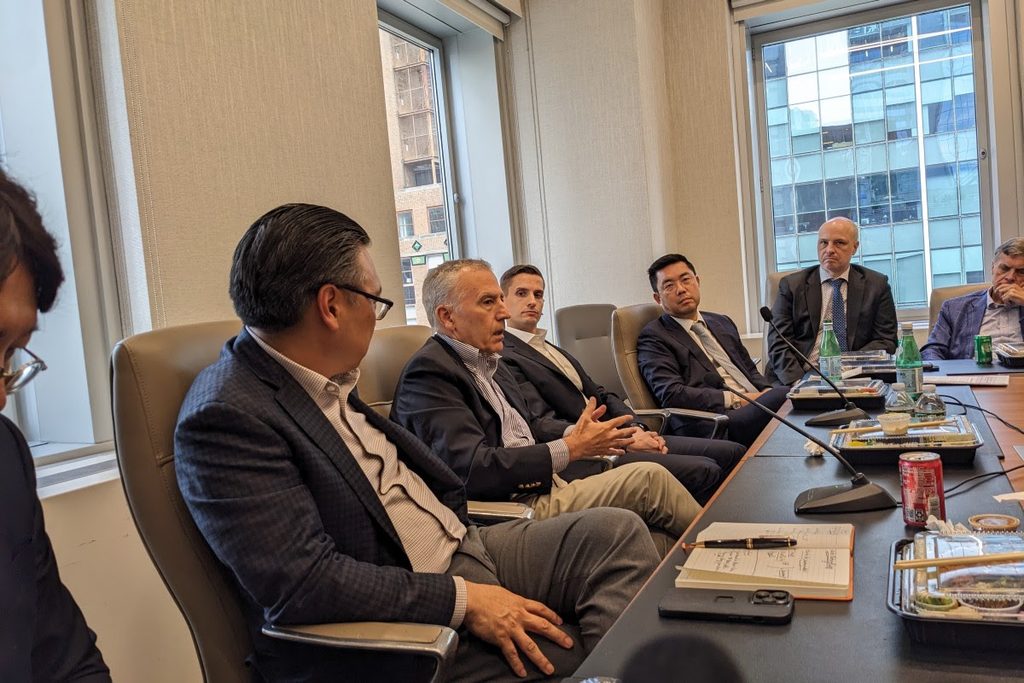
The program brought together over 40 Korean and Korean-American finance professionals and concluded with a networking session, offering participants an opportunity to exchange professional insights and strengthen connections across New York’s financial community.
As The Korea Society expands its presence in Washington D.C. and other states beyond New York, the America 250 event demonstrated The Society’s unique role as a trusted convener—gathering senior policy makers and emerging leaders from government, business, academia, media, and civil society to foster meaningful dialogue and lasting partnerships that strengthen the U.S.–Korea alliance.
Become part of this growing network. Through individual and corporate membership, The Korea Society offers opportunities to engage with influential leaders, participate in high-level programs, and support the advancement of one of America’s most important strategic partnerships.
05/04/2026 Why Kim Jong Un Won’t Pick Up the Phone and What to Do About It
In an article for War on the Rocks, Korea Society Policy Director Jonathan Corrado examines why North Korea has remained reluctant to engage in negotiations with the United States and South Korea despite recent shifts toward greater flexibility on denuclearization. Drawing on the history of U.S.–North Korea negotiations and changes in North Korea’s strategic position, Corrado argues that the current approach should focus less on achieving complete denuclearization and more on arms control and tangible risk reduction.
This War-era Humanitarian Rescue Story Undercuts North Korean Propaganda
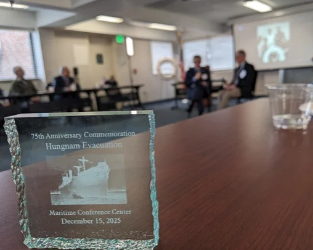
In an article for The Diplomat, Korea Society Policy Director Jonathan Corrado examines how the history of the Hungnam evacuation during the Korean War challenges North Korea’s portrayal of the United States and South Korea. Corrado highlights how more than 90,000 North Korean refugees were rescued and brought to safety in South Korea, arguing that this humanitarian story offers a powerful counterpoint to decades of Pyongyang’s anti-American and anti-South Korean propaganda. He suggests that sharing the story with North Korean audiences could help reshape perceptions and lay cultural foundations for future reconciliation on the Korean Peninsula.
North Korea’s Deadly Drone Bonanza Is Coming to a Peninsula Near You
In an article for War on the Rocks, Jonathan Corrado, Chelsie Alexandre, and Anton Ponomarenko examine the rapid advancement of North Korea’s drone warfare capabilities following its military cooperation with Russia and battlefield experience in the Russo-Ukraine War. The authors explain how North Korean troops have adapted their tactics in both offensive and counter-drone operations, while benefiting from Russian technology, training, and battlefield support. They argue that these developments could significantly enhance North Korea’s military capabilities and coercive potential on the Korean Peninsula and beyond.
Are you learning Korean? This page offers free Korean language resources open to the public to support your Korean learning journey. If you’d like to take your Korean learning to the next level, join our 2026 Fall Korean Language Class below.
Hangeul (한글) is the Korean writing system created under the leadership of King Sejong the Great during the Joseon Dynasty. It was designed to make reading and writing Korean more accessible to ordinary people.
Before Hangeul
Before Hangeul was created, Koreans primarily usedClassical Chinese characters (Hanja) for writing. However, Chinese characters were difficult to learn and did not easily represent the sounds and grammatical structure of the Korean language.
As a result, many ordinary people had difficulty learning to read and write.
King Sejong and the Creation of Hangeul
King Sejong wanted to create a writing system that ordinary people could learn and use more easily.
A new writing system was completed around 1443, and King Sejong introduced it as Hunminjeongeum (훈민정음), meaning approximately “the proper sounds for the education of the people.(백성을 가르치는 바른 소리)”
The Proclamation of Hangeul
In 1446, the Hunminjeongeum Haerye was published. This important document explained the principles behind the new writing system and how the letters should be used.
For this reason, 1443 is generally associated with the creation of Hangeul, while 1446 marks its official promulgation and publication.
What Makes Hangeul Unique?
One of the most remarkable features of Hangeul is its systematic design. The shapes of several consonants were based on the shape or position of the speech organs used to pronounce them.
For example:
ㄱ (g/k) reflects the shape of the tongue when making the sound.
ㄴ (n) reflects the shape of the tongue touching the upper gum.
ㅁ (m) represents the shape of the mouth.
ㅅ (s) represents the shape of the teeth.
ㅇ (ng/silent) represents the shape of the throat.
Korean vowels were also developed from a set of basic elements representing heaven, earth, and humanity.
Another distinctive feature is that letters are combined into syllable blocks rather than written simply in a linear sequence.
For example: ㅎ + ㅏ + ㄴ → 한
Why Is Hangeul Important?
The creation of Hangeul was more than the creation of a new writing system. It was an important cultural and social development that made it easier for Koreans, including ordinary people who had previously had limited access to literacy, to read and write in their own language.
Today, Hangeul is the official writing system of the Korean language, and October 9 is celebrated as Hangeul Day (한글날) in South Korea to commemorate its creation and promulgation.
Before learning Korean Vowels and Consonants, please read theRomanization Guide.
About Romanization: Korean words may be written differently in English because several Romanization systems are used. Although the spellings may differ, the Korean pronunciation remains the same.
ng as in sing; silent at the beginning of a syllable
ㅈ
j
“j” as in jam
ㅊ
ch
“ch” as in chair
ㅋ
k
Strong k sound as in key
ㅌ
t
Strong t sound as in tea
ㅍ
p
Strong p sound as in pie
ㅎ
h
“h” as in hello
Double Consonants (Tense Consonants)
Consonant
Romanization
Approximate Pronunciation
ㄲ
kk
Tense k sound, similar to a stronger “k”
ㄸ
tt
Tense t sound, similar to a stronger “t”
ㅃ
pp
Tense p sound, similar to a stronger “p”
ㅆ
ss
Tense s sound, similar to a stronger “s”
ㅉ
jj
Tense j sound, similar to a stronger “j”
Note: These are called tense consonants because they are pronounced with greater tension in the speech muscles. They are not simply “double” versions of the basic consonants.
Basic Korean Greetings
Korean (한글)
Romanization
Meaning
안녕하세요
Annyeonghaseyo
Hello
안녕
Annyeong
Hi / Bye (casual)
감사합니다
Gamsahamnida
Thank you
고맙습니다
Gomapseumnida
Thank you
죄송합니다
Joesonghamnida
I’m sorry
미안합니다
Mianhamnida
I’m sorry
괜찮아요
Gwaenchanayo
It’s okay / I’m fine
네
Ne
Yes
아니요
Aniyo
No
안녕히 가세요
Annyeonghi gaseyo
Goodbye (to someone leaving)
안녕히 계세요
Annyeonghi gyeseyo
Goodbye (when you are leaving)
잘 지내세요
Jal jinaeseyo
Take care / Hope you’re doing well
만나서 반가워요
Mannaseo bangawoyo
Nice to meet you
잘 부탁드립니다
Jal butakdeurimnida
I look forward to working with you / Please take good care of me
These quizzes were originally shared on The Korea Society’s social media accounts. Try answering the questions yourself first, then check the answers and read the explanations to learn more. It’s a fun way to practice your Korean and build your knowledge of Korean language and culture!
When you are at a restaurant, how do you order food?
a. Wait for them to come to you b. Ring the table bell c. Raise your hand
Answer
Answer: B and C In Korea, at many restaurants, servers usually do not check on tables frequently like in some Western countries. Instead, customers actively call the staff when they are ready to order.
B. Ring the table bell — Many Korean restaurants have a call bell on the table that you press to get the server’s attention.
C. Raise your hand — If there is no bell, it is common to raise your hand or call out politely to the staff.
If you need something, what do you say to get the waiter’s attention?
a. 안녕하세요 (annyeonghaseyo) b. 어서 오세요 (eoseo oseyo) c. 저기요 (jeogiyo)
Answer
Answer: C 저기요 (jeogiyo)
In Korea, 저기요 is a common and polite way to call a waiter or get someone’s attention at a restaurant. It is similar to saying “Excuse me” in English.
So if you need service at a restaurant, you would say:
저기요!
Do people talk on the phone while riding transit in Korea?
A. Yes! Talking on the phone is common and no one cares. B. No. Most people avoid phone calls on transit.
Answer
Answer: B. No. Most people avoid phone calls on transit.
Explanation: In Korea, people generally try to avoid talking on the phone while riding public transportation, especially on buses and subways. Speaking loudly on the phone can be considered disruptive or impolite because passengers usually value a quiet environment.
If someone needs to take a call, they often speak quietly, keep the conversation brief, or move to a less crowded area. Many people prefer texting or messaging apps instead of making phone calls while on transit. This reflects a broader Korean social etiquette of being considerate of others in shared spaces.
What can you say when you need to get past someone in a crowd?
A. 저기요 (jeogiyo) B. 실례합니다 (sillyehamnida) C. 안녕 (annyeong)
Answer
Answer: B. 실례합니다 (sillyehamnida)
Explanation: 실례합니다 means “Excuse me” and is used when you need to politely get someone’s attention, pass by someone, or apologize for a small interruption. For example, when walking through a crowded subway or a busy street, you can say “실례합니다” to politely ask people to make space.
저기요 (jeogiyo) = “Excuse me / Hey” — used to get someone’s attention, such as calling a server at a restaurant or starting a conversation.
안녕 (annyeong) = “Hi / Bye” — a casual greeting used with friends or people close to you.
So, when you need to move through a crowd, “실례합니다” is the most appropriate and polite expression.
Korean Through Korean Cuisine Workshop: ‘Culinary Class Wars’ For learners who can read Korean alphabet.
Date: Tuesday, August 25, 7:00-9:00 PM (EDT) Mode: Online (Zoom) Instructor: Sunhee Song Material and recording will be provided. Instruction will be provided in both English and Korean.
Inspired by Netflix’s Culinary Class Wars (흑백요리사), this workshop explores Korean cuisine while introducing essential Korean expressions and vocabulary related to food, ingredients, and cooking. Participants will learn useful Korean expressions and vocabulary related to food and cooking while discovering the stories and culture behind hansik!
Please note that the recording will mainly include key expressions and grammar points covered during each session, rather than a full recording of the entire class, for each workshop. 📢 For any inquiries, please email us at language@koreasociety.org.
On November 6, We explored several K-pop songs and their related grammar, expressions, and cultural contexts, such as SEVENTEEN’s “울고 싶지 않아”, ILLIT’s “IYKYK”, BTS’s “Fake Love”, AKMU’s “어떻게 이별까지 사랑하겠어”, TWS’s 첫 만남은 계획대로 되지 않아, and other K-pop songs to learn fun expressions. On November 13, We explored parts of various K-pop songs such as, Blank Pink’s DDU-DU DDU-DU, IU’s 가을 아침, Girls’ Generation’s “Gee”, EXO’s “으르렁”, ALLDAY PROJECT’s “Famous”, NCT Dream’s “Graduation” and others, focusing on additional grammar points and expressions.
Korean Through K-Pop Workshop — December 2025
Dive into the K-pop songs as authentic materials to learn Korean grammar, expressions, and culture. We’ll explore music from 1st- to 5th-generation idol groups, solo artists, drama sound tracks and classics. Lyrics will guide us in uncovering everyday language, cultural references, and advanced grammar patterns. Featured artists include 이종용’s “겨울아이(Child of the Winter)”, EXO’s “첫 눈(The First Snow)”, and Pinkle’s “White”.
3. Korean Travel: Survival Language & Tips Workshop — December 2025
Planning to travel to Korea soon? In this fun and engaging workshop, you learn how to navigate around Korea. You will learn how to introduce yourself, ask for directions, order in a restaurant, and ask the price of things as well as how to say hello, thank you, excuse me in Korean and much, much more! And, you explore key etiquette practices including: greetings and bowing, dining protocols, passing items and gift giving. Suggestions on what to do and see, where and how to get a taxi, and maneuvering public transportation are also provided. Language instruction is in English and Korean. Etiquette and tip instructions are in English. This workshop is open to ages 16+.
4. Korean Through Korean Folktale Workshop — January 2026
This interactive workshop introduces learners to two classic Korean folktales of “청개구리 (The Green Frog) ” and “호랑이와 곶감 (The Tiger and the Dried Persimmon).” The grammatical focus is on the basic past tense forms, taught within meaningful story contexts. Learners will also practice connective expressions as well as simple emotion-related expressions. Through these activities, participants will develop the ability to follow the flow of a story and understand its meaning. Ultimately, the goal of the workshop is to support learners in expressing their own thoughts in Korean using short, meaningful sentences.
5. Korean Through K-Pop Workshop — February 2026
Dive into the K-pop songs as authentic materials to learn Korean grammar, expressions, and culture. In celebration of Valentine’s Day, we will explore love-themed songs and talk about dating culture in Korea. Lyrics will guide us in uncovering everyday language, cultural references, and advanced grammar patterns. This workshop features songs different from those covered in the previous 2025 K-pop workshops. Featured artists include: Straykid’s “좋아해서 미안해”(Sorry, I love you), Nmixx’s “블루 발렌타인” (Blue Valentine), Soyou and Junggigo’s “썸”(Some), Melo Mance’s “사랑인가봐” (It Must Be Love), Jannabi’s “사랑의 이름으로” (For the name of love)
6. Korean Travel: Survival Language & Tips Workshop — March 2026
Planning to travel to Korea soon? In this fun and engaging workshop, you learn how to navigate around Korea. You will learn how to introduce yourself, ask for directions, order in a restaurant, and ask the price of things as well as how to say hello, thank you, excuse me in Korean and much, much more! And, you explore key etiquette practices including: greetings and bowing, dining protocols, passing items and gift giving. Suggestions on what to do and see, where and how to get a taxi, and maneuvering public transportation are also provided. Language instruction is in English and Korean. Etiquette and tip instructions are in English. This workshop is open to ages 16+.
7. Hanguel Help: Korean Alphabet Workshop — March 2026
In this workshop, you will learn about the history of Hangeul, the creation principles behind its vowels and consonants, the basic letter forms, and how vowels and consonants come together to form syllable blocks. You’ll also practice combining them to create various words and read Hangeul together. We’ll explore a variety of words built from consonants and vowels—including the names of real Korean foods and popular snacks—so you can practice reading authentic and familiar examples as well. We can’t wait to see you there! Materials will be provided in class. This workshop is open to ages 16+.
8. K-Dialogue: New Technology and AI Development In Korea Workshop — April 2026
Do you want to improve your Korean speaking skills? In this workshop, we will read articles from Korean newspapers about AI and new technology development in Korea, and discuss various questions related to the topic. The workshop will be conducted using both English and Korean, but discussions will mainly take place in Korean. It is designed to be engaging and will provide plenty of opportunities to practice speaking in Korean. Intermediate-level Korean proficiency or above is recommended. This workshop is open to ages 16+.
9. Korean Through Cuisine Workshop — May 14, 2026
This workshop explores Korean cuisine beyond the idea of a single, unified tradition, highlighting the diversity of hansik and introducing Key Korean culinary expressions! Participants will learn how history, rice cultivation, and social structures have shaped food culture, from royal court cuisine to everyday meals, while also being introduced to key Korean language vocabularies and phrases throughout each topic. The session examines the influence of trade and cultural exchange, along with practices such as fermentation and kimjang. Finally, it considers Korean cuisine in a global context, reflecting on tradition, adaptation, and authenticity.
10. Korean Through K-Pop Workshop — July 16, 2026
This workshop explored selected songs from K-pop artists like BTS and K-drama soundtracks, using lyrics as a guide to uncover everyday language! We will learn practical expressions and vocabulary through lyrics from the following songs:
“Even If I Die, It’s You (죽어도 너야)” – V (BTS) & Jin (BTS)
“It Must Be Love (사랑인가봐)” – MeloMance (K-pop Demon Hunters/Business Proposal soundtrack)
“I Give You My Heart (마음을 드려요)” – IU (Crash Landing on You soundtrack.
11. Korean Through Drama Workshop — July 28, 2026
This workshop is designed for Korean learners who want to improve their Korean through authentic clips from When Life Gives You Tangerines (폭싹 속았수다). We will build listening and speaking skills while learning practical everyday expressions and exploring Korean culture and society. This workshop is ideal for learners who can read Hangul and understand basic Korean expressions. Take a look at the expressions below to gauge the language level of this workshop. This workshop is open to ages 16+.
The sample expressions below provide an overview of the language used in this workshop
1.첫사랑 [cheot-sarang] first love
2.내가 다 책임 질거야 [naega da chaegimjilgeoya] I’ll take full responsibility
3.안 보는 척하다 [an boneun cheokhada] to pretend not to see / act like you didn’t see it
4.있으면 귀찮고, 없으면 궁금하고 [isseumyeon gwichango, eopseumyeon gunggeumhago] when it’s there, it’s annoying; when it’s not there, you get curious
Korean Through K-pop Workshop: K-Drama & K-Movie OST No prior knowledge of Korean is required.
Date: Tuesday, August 18, 7:00-9:00 PM (EDT) Mode: Online (Zoom) Instructor: Sunhee Song Material and recording will be provided. Instruction will be provided in both English and Korean.
This workshop will explore authentic Korea expressions using lyrics of selected K-pop songs as a guide to uncover everyday language! We will learn practical expressions and vocabulary through lyrics from the following songs:
“It Must Be Love (사랑인가봐)” – MeloMance (K-pop Demon Hunters soundtrack)
“I Give You My Heart (마음을 드려요)” – IU (Crash Landing on You soundtrack)
If you have any questions, please contact to language@koreasociety.org.
If you’d like to level up your Korean language skills—register for our Korean Language Fall Term class!