





How Can AI Serve All People
in Korea and the US?

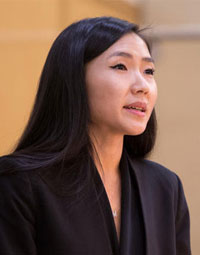
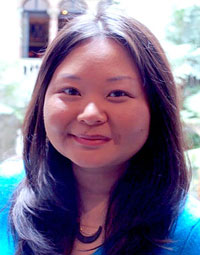
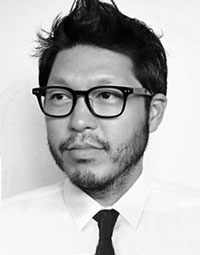
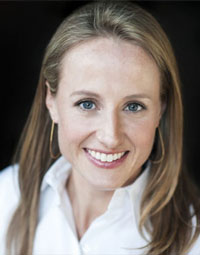
The Korea Society is pleased to announce that the winner of the 2026 Sherman Family Korea Emerging Scholar Lecture Competition is Dr. Jae Yeon Kim, Assistant Professor of Public Policy at the University of North Carolina at Chapel Hill, Fellow at the Civic Power Lab at Harvard Kennedy School, and Better Government Lab Fellow at the University of Michigan’s Ford School of Policy.

Artificial intelligence is rapidly transforming public administration and public policy, but all too often, the discussion is dominated by the latest technological breakthroughs, rather than their potential utility in serving the public. To this point, Dr. Kim argues that the primary challenges facing AI in government are human and organizational rather than technological. Longstanding barriers to public services—such as administrative burdens, complex paperwork, and unequal access—predate artificial intelligence. Without intentional institutional changes, adopting automated systems risks digitizing and accelerating existing inefficiencies rather than resolving them.

Drawing on research in civic technology, policy implementation, and digital service delivery across South Korea and the United States, Dr. Kim outlines a framework for human-centered government. He examines how South Korea—a recognized global leader in e-government—can advance beyond basic automation. By prioritizing citizen needs through human-centered design, civic data, and participatory governance, public institutions can ensure AI reduces administrative friction and expands democratic access for everyone, particularly marginalized communities and future generations who will live longest with these technologies.

Key Points

  • Human and Organizational Dynamics – The main hurdles facing public sector AI are organizational and institutional. AI risks automating pre-existing administrative burdens if core public institutions do not adapt.
  • Human-Centered Civic Data Infrastructure – Human-centered design, civic data, and participatory governance can modernize public services, strengthen democratic access, and empower citizens to help govern public AI.
  • Real-World AI Governance – Public procurement, service delivery, and back-end infrastructure shape citizen experiences just as significantly as frontier AI models.

About the Sherman Family Korea Emerging Lecture Award
The primary goal of the award is to encourage U.S. thought leadership on Korea among a new generation. The award is presented to emerging thought leaders from a wide range of disciplines and backgrounds working in the U.S. Prior awardees have explored topics in the arts, architecture, history, industrial policy, political science, and technology and have included Ph.D. candidates, junior professors (tenure and non-tenure track), researchers and professionals. Click here to view presentations of former award winners.


Speakers
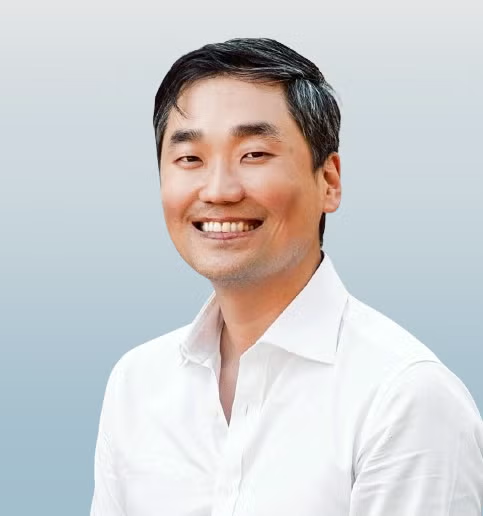
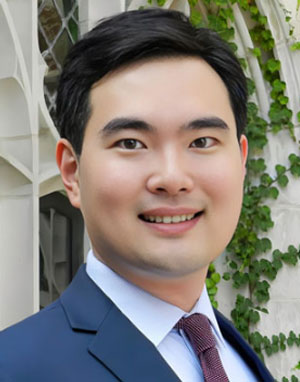
Jae Yeon Kim

Jae Yeon Kim is an Assistant Professor of Public Policy at the University of North Carolina at Chapel Hill, a Fellow at the Civic Power Lab at the Harvard Kennedy School, and a Better Government Lab Fellow at the University of Michigan’s Ford School of Public Policy. He co-founded the Data for Good Roundtables, a safe and brave space where academics and practitioners come together to discuss using data for good.

Previously, Kim worked as a Senior Data Scientist at Code for America, where he collaborated with U.S. government agencies to improve access to safety net programs. Kim also served as an Assistant Research Scientist at the SNF Agora Institute at Johns Hopkins University, where he co-developed the Mapping the Modern Agora project. Kim earned his Ph.D. in Political Science from the University of California, Berkeley.

Combining his professional experience as a data scientist in the U.S. public sector with his academic training as a social scientist, Kim has developed a research agenda focused on policy implementation, government capacity, and technological change. A common thread across his research projects is addressing two major challenges in policy implementation as modern government becomes increasingly complex: (1) helping people navigate bureaucracy and strengthening trust between government and civil society, and (2) helping government agencies buy and use technology more effectively and responsibly.

Kim is currently finishing a book manuscript titled Unseen and Uncounted, which examines how the administrative challenges of identifying and categorizing non-Black minority communities gave rise to new racial group formations during the War on Poverty. He has also begun work on his second book project, tentatively titled Burdens, Profits, and People Power, which investigates how AI exacerbates existing inequalities through administrative burdens, what kinds of businesses profit from these hidden practices, and how people can build power to resist and transform this unjust system.

Kim’s research has appeared in leading journals across public policy and the social sciences and has been recognized with three awards from different sections of the American Political Science Association. His research has been featured in The Washington Post, the Associated Press, and other national and international media outlets. His work has also informed how U.S. state and local governments deliver public services, procure AI systems, and train government officials; how foundations strategically distribute grants for public benefit innovation and civic engagement; and how nonprofits develop their research and evaluation capacity.
Presentations by Sherman Scholar Lecture Award Recipients

Geopolitical Affairs/Sherman Family Korea Emerging Scholar Lecture

Presentations by Sherman Scholar Award Recipients

Since 2017, The Korea Society has presented this annual award to stimulate and support the next generation of U.S. thought leadership on Korea.

Presented to scholars in the U.S. from a wide range of disciplines and backgrounds, the award has recognized pioneering and impactful scholarship in fields such as architecture, political economy, political science, poetry, national identity, medical science, maritime conflict, and technology.

The award recognizes both emergent talents and emerging topics. It enjoys the kind support of Mr. and Mrs. Philip Sherman and family.

20259th recipient
Dr. Peter Jongho Na

Reframing Suicide as a Shared Social Responsibility in Korea

Dr. Peter Jongho Na, Assistant Professor of Psychiatry, Yale School of Medicine

Dr. Na casts suicide not as an individual failure or “extreme choice (극단적 선택),” but as a systemic and cultural crisis requiring a coordinated national response. Drawing on his experience as a psychiatrist, public health researcher, and mental health advocate, he examines the scale and societal costs of suicide in Korea and analyzes key structural drivers such as academic and workplace pressures, poverty and isolation among older adults, and the pervasive stigma surrounding mental illness and treatment.

A central theme is how stigma has sustained silence, denial, and policy inertia. Dr. Na shares his efforts to challenge euphemistic language and foster open public dialogue, while proposing an interdisciplinary roadmap inspired by global models that integrate public health, education, and social welfare reforms. He also highlights the Korean diaspora’s potential role in breaking taboos and advancing cultural and policy change.

20248th recipient
Dr. David Krolikoski

The Politics of The Silence of Love in Colonial Korea

Dr. David Krolikoski, Assistant Professor, University of Hawaiʻi

Dr. Krolikoski examined The Silence of Love (Nim ŭi ch’immuk, 1926), the acclaimed collection of eighty-eight poems by Han Yong-un (1879–1944), a Buddhist monk and public intellectual. Although the book is commonly celebrated as a metaphor for colonial subjugation, he argued that its artistic significance lies in Han’s paradigm-shifting use of colonial poetry as a medium of communal expression during a time of national crisis.

He explored how Han used fiction and symbols to collapse the boundary between private and public address, transmuting the individual voice of his poetic speaker into a platform for a community, and placed the collection within the 1920s translation of foreign poetic forms into Korea, with a focus on how Han incorporated elements of the lyric and prose poem into his verse.

20237th recipient
Dr. Munseob Lee

The Return of Industrial Policy: Lessons from Korea

Dr. Munseob Lee, Assistant Professor, University of California San Diego

Industrial policy is making a comeback. Signs of government intervention in support of industry are visible not only in China, but in the U.S., Europe, and Asia. Drawing on Korea’s experience, Dr. Lee offers insights for today’s policymakers, including a close look at the government’s 1973 heavy and chemical industry drive. While that policy yielded positive outcomes for the targeted industries, it also resulted in higher concentration within those sectors.

Lee stresses the need for a thorough evaluation of costs and benefits before implementation, especially given current bipartisan support in the U.S. for major bills aimed at revitalizing industrial policy. As one reviewer stated, “At this critical time Lee revisits the effectiveness of Korean industrial policy during a high development phase to glean useful insights for Korea, U.S., and beyond.” Moderated by Thomas Byrne, then President and CEO of The Korea Society.

20226th recipient
Dr. Eunbin Chung

National Identity Affirmation and Trust in Korea, Japan and China

Dr. Eunbin Chung, Assistant Professor of Political Science, University of Utah

Legacies of conflict and distrust have made it difficult for East Asian countries to form regional institutions and overcome security dilemmas. Dr. Chung’s research questions two conventional wisdoms: that distrust among states can be overcome through cultural convergence and appeals to a shared identity, and that strong, inward-focused national identities exacerbate inter-state distrust and conflict. She advances the concept that trust can be built among nations when each affirms its own distinctive identity, and that this may be more effective than embracing common identities across countries.

Dr. Katrin Katz, the inaugural award recipient, described Chung’s argument as “breaking new ground in tackling some prevailing beliefs regarding the relationship between national identity and levels of inter-state trust and conflict.”

20215th recipient
Dr. Aram Hur

Korea’s Changing National Story and Democratic Future

Dr. Aram Hur, Assistant Professor and Co-Director, Institute for Korean Studies, University of Missouri

Dr. Hur addressed Korean nationalism, a “rapidly fragmenting and changing” national story, and the danger of democratic rollback. Senior director Stephen Noerper described her selection and address as “incredibly important given the costs of such fragmentation in Korea, but comparatively in the United States of late and by extension to a world seeing rollback in Myanmar, Thailand, Russia and elsewhere.”

20204th recipient
Melany Sun-Min Park

Architecture as Kisul in Postwar Korea: Building the Industrial Nation-State

Melany Sun-Min Park, Doctoral Candidate, Harvard University

Ms. Park addressed architecture’s relationship to state-led, large-scale industrial development in postwar Korea, framing architecture as kisul (science-technology). Carter Eckert, Yoon Se Young Professor of Korean History at Harvard University, described her effort as a “brilliantly conceived project combining…histories and cultural issues with an exploration of science/industrialism and aesthetics…in South Korea.” Harvard Professor Yukio Lippit hailed her original “use of archives never tapped for use in any language.”

20193rd recipient
Dr. Ivanna Sang Een Yi

P’ansori Mountain Pilgrimages: Land as Interlocutor in Contemporary Korean Oral Performance and Literature

Dr. Ivanna Sang Een Yi, Visiting Assistant Professor, University of Colorado Boulder

In a presentation both spoken and sung, Professor Yi conceptualized the contemporary practice of p’ansori san kongbu, mountain study, as a form of pilgrimage.

20182nd recipient
Dongsei Kim

Imagining the Impossible: The DMZ as a Productive Territory

Dongsei Kim, Architect and Assistant Professor, New York Institute of Technology

Professor Kim explored how architecture and landscape architecture investigate the Demilitarized Zone. Through the prism of spatial design and three concrete examples, he argued for reformulating exclusionary border conditions into inclusive spaces that become synergistic and productive for both Koreas.

2017Inaugural recipient
Dr. Katrin Katz

Maritime Conflict in Northeast Asia and Nationalism in Korea

Dr. Katrin Katz, Northwestern University

The Korea Society celebrated sixty years since its founding with a public and press presentation on September 27 by Dr. Katz, who served on the National Security Council in the George W. Bush administration. Her dissertation addresses maritime conflict in Northeast Asia and the dynamics of nationalism in Korea. Mr. Sherman, whose family supports the award, served as Citi’s representative in Korea in the early 1970s.

Apply for the next lecture

Ph.D. candidates, junior professors, researchers, and professionals are eligible.

Apply now

Become a member

Get access to exclusive programs and a network dedicated to U.S.–Korea relations.

Join The Korea Society

Get the newsletter

The latest programs, lectures, and news, once a month.

Subscribe