
Kim Koo: Dreaming of Peace Through the Power of Culture

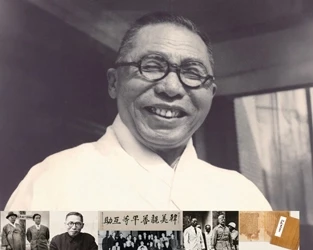
May 28-August 31, 2026 | The Korea Society is honored to host a special exhibition honoring the life, enduring vision, and profound legacy of Kim Koo—one of the most revered leaders of the Korean independence movement. As a central figure in the Korean independence movement and the President of the Provisional Government of the Republic of Korea, Kim Koo presented a visionary outlook that emphasized national strength based on culture rather than military or economic power. |

The Korea Society is honored to host a special exhibition honoring the life, enduring vision, and profound legacy of Kim Koo—one of the most revered leaders of the Korean independence movement. As a central figure in the Korean independence movement and the President of the Provisional Government of the Republic of Korea, Kim Koo presented a visionary outlook that emphasized national strength based on culture rather than military or economic power. To commemorate UNESCO’s designation of 2026 as the 150th anniversary of Kim Koo’s birth, The Korea Society offers a unique opportunity to reflect on his legacy through a visual exhibition.

This exhibition is produced in partnership between The Korea Society and The Association of Commemorative Service for Patriot Kim Koo and made possible by the support of the Kim Koo Foundation.


Kim Koo: Dreaming of Peace Through the Power of Culture

May 28-August 31, 2026

The Korea Society Gallery is open only by appointment. The appointment must be made at least 24 hours prior to the scheduled visit. To make an appointment, please contact info@koreasociety.org.

Gallery Hours: Monday-Friday 10 AM-4:30 PM
By Appointment Only
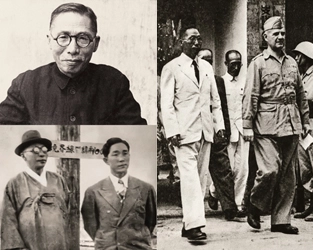


Commemorating the 150th Anniversary of Kim Koo’s Birth:
Exhibition Opening & Presentation

Invitation-only

 Live Webcast: Thursday, May 28, 2026 | 6 PM (EDT)


Kim Koo and UNESCO’s Shared Vision of Culture — The Story Behind the 150th Birth Anniversary Designation :

UNESCO has designated 2026 as a year to commemorate the 150th anniversary of Kim Koo’s birth. This decision goes beyond a simple historical tribute; it is the international community’s official recognition that Kim Koo’s vision—achieving world peace through the “power of culture” rather than economic or military might—aligns deeply with the universal values pursued by UNESCO.

As the President of the Provisional Government of the Republic of Korea, Kim Koo led the independence movement and understood the importance of international solidarity better than anyone. In 1932, following the patriotic deeds of Yi Bong-chang and Yun Bong-gil, he managed to evade the pursuit of the Japanese Imperialists and continue his activities through the vital assistance of American missionary Dr. George Fitch. Furthermore, he solidified the foundation for independence through practical cooperation with democratic nations, such as collaborating with the U.S. Office of Strategic Services (OSS) to prepare for “The Eagle Project,” a domestic infiltration operation. He also successfully persuaded Chiang Kai-shek to ensure the guarantee of Korean independence at the Cairo Conference. These actions demonstrate that Kim Koo’s independence movement was more than mere resistance; it was part of an international solidarity effort sharing the universal values of freedom and human rights.

Kim Koo’s true pioneering spirit became even more evident after liberation. In his essay “My Wish,” included in his 1947 autobiography Paikbum Ilji (백범일지), he emphasized moving past hatred to build a nation where everyone enjoys happiness through cultural development, thereby contributing to world peace. His vision—that humanity can only prosper together when each nation develops its unique culture and engages in mutual exchange—is strikingly consistent with UNESCO’s cultural philosophy today.

The designation of this UNESCO anniversary year is the culmination of extensive preparations that began in June 2024. The process required meticulous attention due to various international and political circumstances. The final hurdle, consent from North Korea, was cleared through the method of “tacit consent”; leading to the final confirmation. This serves as a significant opportunity for Korea to expand its global contribution to cultural policy and discourse. At the same time, it is a meaningful declaration to the world that the spirit of Kim Koo—who fought against imperialist violence while ultimately aiming for human happiness and world peace—remains a vital universal value in our modern era.
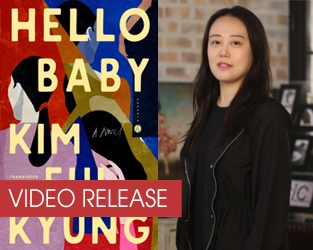
 

Author Talks: Kim Eui-Kyung

In her absorbing and candid novel Hello Baby, Kim Eui Kyung explores what women endure to become mothers. The novel features six women in their thirties and forties who strike up a friendship at a fertility clinic in Seoul and share their personal paths to motherhood via a group chat they name “Hello Baby.” Switching between the six characters—a journalist, a police officer, a vet, a lawyer, and two housewives—this thought-provoking novel explores the social pressure and emotional strain on women struggling to conceive. Written with insight, humor, and great empathy, Hello Baby is a moving portrait of what it means to be a woman today and the lengths some will go to seek motherhood.

In this episode of Author Talks, Kim Eui-Kyung discusses her novel, translated into English by Sora Kim-Russell.


Author

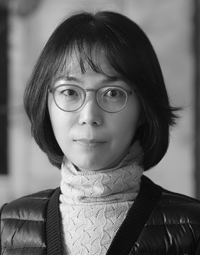
Kim Eui-kyung

Kim Eui-kyung is a novelist and essayist. Her debut novel, Youth Bankruptcy (2014) won the Korea Economic Daily Youth Literary Contest, and her second novel Call Center was awarded the 6th Soorim Literary Prize. She also published the story collection Showroom, set against the backdrop of IKEA, and the essay collection The Season Called Life. Her latest novel Hello Baby is a groundbreaking work of Korean feminist fiction about a group of women undergoing IVF at a fertility clinic in Seoul.

01 / 02

What language is this book available in? Who is the translator of the book?


The translator of this book is Sora Kim-Russell and it is available in Korean and English.

02 / 02

What was the main message the author was trying to convey to the readers?

Kim Eui-kyung aims to highlight that infertility is a complex issue requiring broader systemic support. By portraying stories from women of diverse backgrounds, the book seeks to foster empathy and raise awareness around a shared experience.

Leesle: Korean Chic

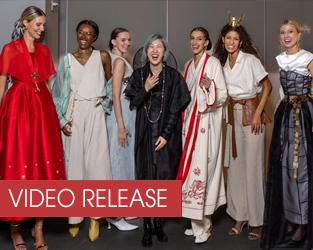
Designer Leesle Hwang discussed her brand and design philosophy, reimagining hanbok silhouettes, details, and textiles with contemporary materials to pioneer the “Korean Chic” fashion genre, in a video released on August 4, 2026, at 5:00 PM.

Leesle Hwang has built a distinctive fashion universe by reinterpreting Korean heritage through a modern lens. Her philosophy is rooted in the belief that “fashion comes to life not in a museum, but on the street.” Determined to transform time-honored traditions into living, breathing style, she reconstructs hanbok silhouettes, signature details, and unique textiles with contemporary materials, creating designs that are both distinctive and accessible. This vision has cultivated a devoted global following, positioning her as a pioneering voice in the emerging fashion genre of “Korean Chic” at a time when global interest in K-culture is at an all-time high.

SPEAKER

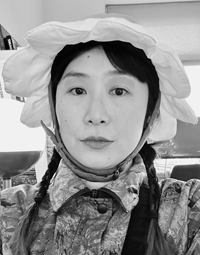
Leesle Hwang

Leesle Hwang is the founder and designer of Leesle, a fashion brand that reinterprets Korean heritage for a contemporary audience. She did not formally study design — she majored in forestry — but began making and selling hanbok in college and launched Leesle in 2014 to create hanbok people could wear every day. Her designs rework hanbok silhouettes, signature details, and traditional textiles with modern materials, producing pieces such as knee-length skirts, denim, and sheer blouses that are both distinctive and accessible. Based in Jeonju, where the brand’s flagship store is located, Leesle has shown at fashion fairs in Milan and Paris and built a global following, and Hwang is regarded as a pioneering voice in “Korean Chic,” a fashion genre emerging alongside rising global interest in K-culture. She believes fashion “comes to life not in a museum, but on the street.”

01 / 03

How can I watch this program?

The program is available on The Korea Society YouTube Channel.

02 / 03

What is “Korean Chic”?

“Korean Chic” is a fashion genre introduced by LEESLE that reinterprets traditional hanbok — its silhouettes, details, and textiles — with contemporary materials and everyday wearability. It has emerged alongside rising global interest in K-culture, and Leesle is one of its pioneering brands.

03 / 03

I want to know more about Hanbok. What are some other programs to tune into?

The Korea Society hosted Professor Minjee Kim on May 19, 2026. Minjee Kim is a dress historian and adjunct professor at the Fashion Institute of Technology, where she teaches the history of East Asian dress. For more information, please visit here. In previous years, The Korea Society also had an extensive program on the different elements of Hanbok.

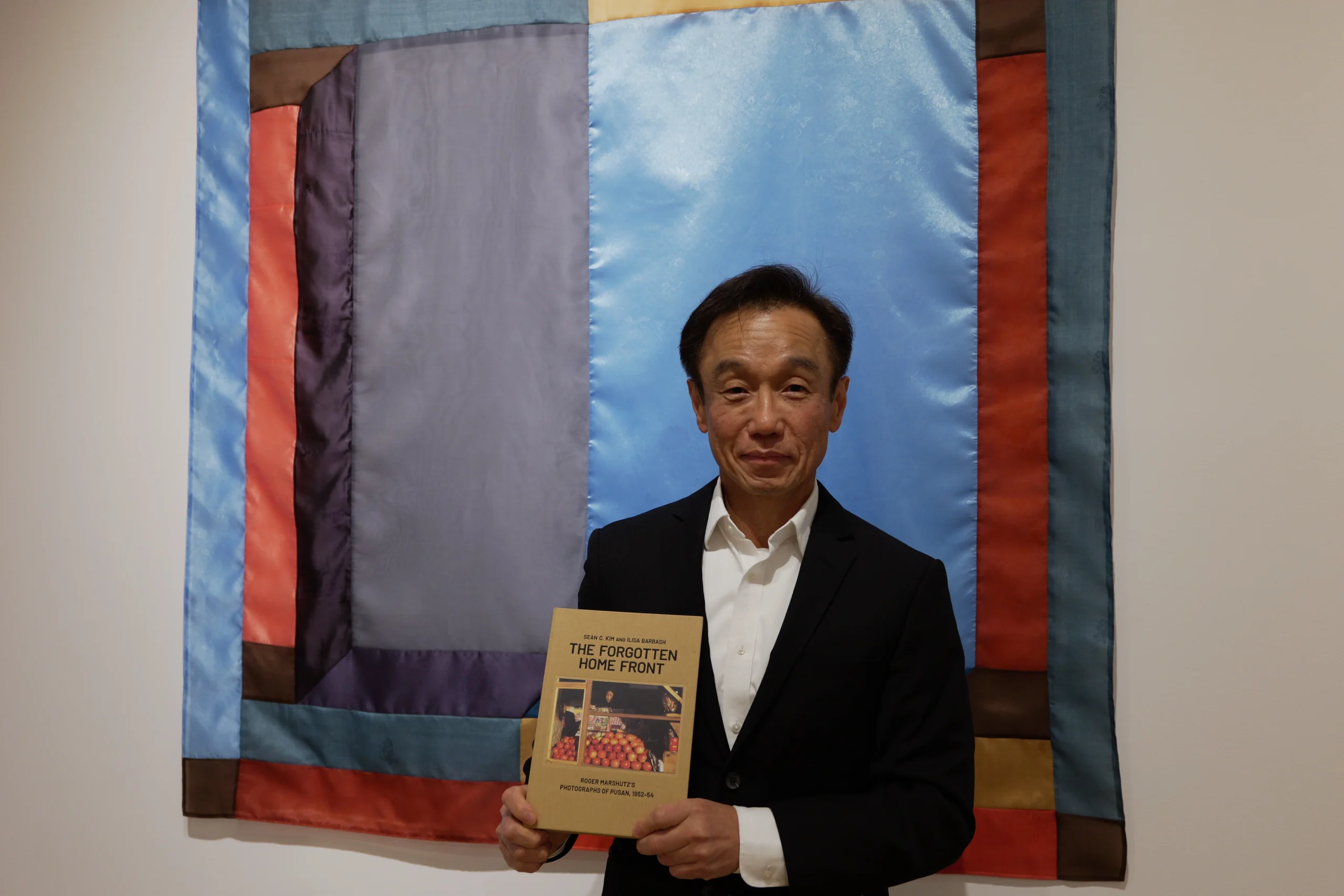
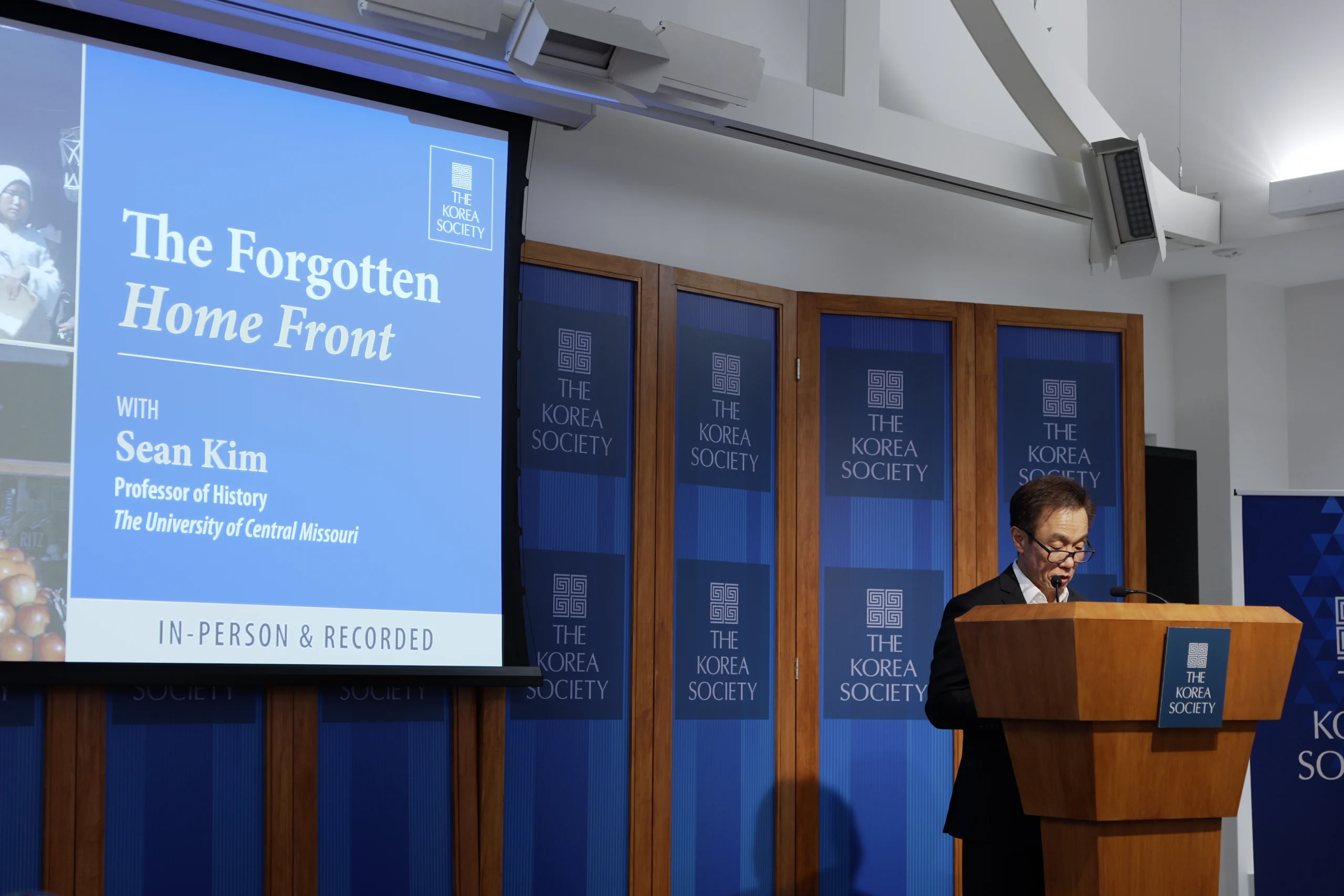
The Forgotten Home Front

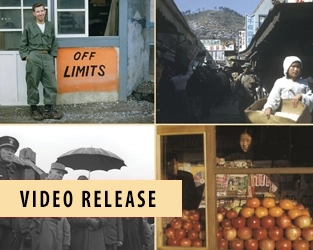
As the Korean war (1950–1953) drew to a close and South Korea began to rebuild, American GI Roger Marshutz (1929–2007) was stationed in Pusan to photograph U.S. reconstruction efforts. In his spare time, Marshutz also wandered the streets, documenting the daily life of Korean civilians. The Forgotten Home Front: Roger Marshutz’s Photographs of Pusan, South Korea, 1952–1954 offers both an official and unofficial look at U.S.-South Korean relations, as well as a portrait of a country in the midst of enormous political, economic, and cultural transformation.

Based on the new book, historian Sean Kim will discuss the crucial role of Pusan during the war and the pivotal moment in modern Korean history.


01 / 02

Who was Roger Marshutz?


Before establishing himself in the mid-1950s as a Hollywood photographer of famous actors and celebrities, Roger Marshutz (1929–2007) served as an American G.I. in Pusan from 1952 to 1954. While his official role was documenting U.S. reconstruction efforts, he also spent his free time exploring the streets to capture the everyday lives of Korean civilians.

02 / 02

What happened in Pusan during and post Korean War?

During the Korean War (1950-53), the Pusan Perimeter was the only part of the Korean peninsula that South Korea never lost control over, and the city of Pusan was a temporary wartime capital of South Korea. So many refugees arrived in Pusan during the war, more than doubling its population from 300,000 to 850,000. It was also through Pusan that the U.S. economic aid entered Korea.

Speaker

Sean C. Kim

Sean C. Kim is a professor of history at the University of Central Missouri, where he teaches East Asian, world, and U.S. history. He received his Ph.D. from the Department of East Asian Languages and Civilizations at Harvard University. His research focuses on modern Korean religious history, particularly the emergence of Protestant Christianity, and he is currently working on an edited volume on Korean religions. With Ilisa Barbash, he is the coauthor of The Forgotten Home Front: Roger Marshutz’s Photographs of Pusan, South Korea, 1952–1954 (Peabody Museum Press and KMEC Books), which presents an American GI’s photographs of U.S. reconstruction efforts and the daily life of Korean civilians in wartime Pusan.

Okdongsik

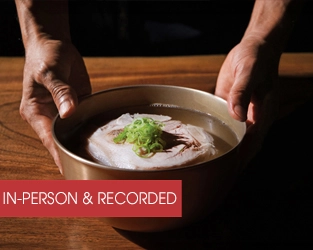
With a philosophy rooted in simplicity, precision, and balance, Chef Dongsik Ok has reframed traditional Korean comfort food through a minimalist and modern lens. His eponymous restaurant Okdongsik’s signature dish is an elegant yet deeply comforting pork broth, dwaeji gomtang.

Since its launch in Seoul’s Seogyo-dong neighborhood in 2017, Okdongsik has earned critical acclaim and recognition with the Michelin Guide Bib Gourmand distinction for eight consecutive years, establishing it as one of Seoul’s premier dining spots. Now an international brand, Okdongsik has expanded its presence beyond Seoul with locations in New York (Manhattan and Bayside), Honolulu, Tokyo, and Paris. The brand’s ongoing growth focuses on small, highly curated spaces that prioritize consistency, quality, and operational discipline, and the chef’s commitment and dedication is transforming Korean soul food into a globally recognized culinary category.

In his conversation with Vivian Lee, Chef Dongsik Ok shares his insights on his career, food philosophy, and the restaurant industry.

In this talk, Kim explores the recent popularity of Korean food in New York City by focusing on both transnational and domestic factors, leading to the new trend of commercialization of ethnic food, emphasis on authenticity, and rise of the omnivore society, by delivering the voices of ordinary people. While Koreatown’s authenticity has been largely defined by commercialized ethnic cuisine by local entrepreneurs, the Korean government, and franchises, Kim argues that Koreatown’s authenticity has represented the collective imaginations and narratives of various consumer groups–Korean nationals, Korean Americans, and non-Koreans.


Speaker

Chef Dongsik Ok

Chef Dongsik Ok is the founder and owner chef of Okdongsik. He holds a bachelor’s degree in culinary science from Kyung Hee University and opened the first Okdongsik in Seoul’s Seogyo-dong neighborhood in 2017. Built around a single signature dish, dwaeji gomtang, his cooking reframes traditional Korean comfort food with a minimalist focus on simplicity, precision, and balance. The restaurant has received the Michelin Guide Bib Gourmand for eight consecutive years and now has locations in New York (Manhattan and Bayside), Honolulu, Tokyo, and Paris. His appearance on Netflix’s Culinary Class Wars 2 (2025) brought him wider international recognition.


Moderator

Vivian Lee Ok

Vivian Lee is an Emmy-winning New York–based TV journalist, public speaker, moderator, and director/producer. She is currently a correspondent for CUNY-TV’s magazine show Asian American Life, and in 2026 she received her third Emmy nomination for producing and hosting CUNY-TV’s special on the 70th anniversary of the Korean War armistice. From 2008 to 2020 she anchored, reported, and hosted for NY1 Spectrum News, covering the pandemic, social justice protests, and the 2020 general election, and hosted Spotlight New York, a weekly show on the city’s arts scene. She won an Emmy in 2020 for a story on Manhattan’s Joe’s Pub and co-hosts the podcast The 5 Of Us, on career and life issues for women at work.

01 / 03

Where can I try Okdongsik in New York?

Okdongsik’s Manhattan location is at 13 East 30th Street, New York, NY 10016, and the restaurant also has a location in Bayside, Queens.

02 / 03

What were the main takeaways from this talk?

Chef Dongsik Ok shares his personal journey to discovering his passion for cooking and perfecting his signature dish. He also discusses his experience on Culinary Class Wars and collaborating with fellow chefs. Ultimately, he highlights how he expanded his brand globally.

03 / 03

What is Chef Dongsik Ok’s favorite restaurant to eat on his day off?

Moono - in Koreatown, NYC.

The Illusion of Pastness:
Hanbok on Screen

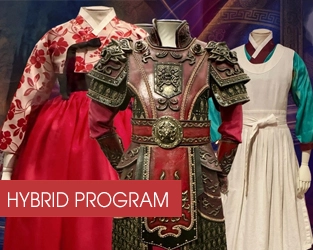
Korean visual entertainment—including films, K-dramas, and K-pop music videos—is the result of highly sophisticated planning and production. These productions captivate a global audience by synthesizing music, narrative, and styling to deliver striking visual aesthetics and compelling emotional narratives. Costume is central to this production system, and it plays an instrumental role in the aesthetic appeal and popularity of the media. For luxury brands, K-drama serves as a powerful niche marketing platform, while traditional dress (hanbok) is pivotal to nation branding.

Dress historian Dr. Minjee Kim will offer fresh insights into Korean period costume as a visual and narrative language closely aligned with the development of plot and storyline. She will demonstrate how period costumes produce the “illusion of pastness” rather than the past itself, operating within a narrower range of sartorial possibilities, thereby negotiating historical accuracy, constructing stylized appearances, and translating dynamically into contemporary aesthetics.

This program is co-hosted by the Consulate General of the Republic of Korea in New York.

SPEAKER

Minjee Kim

Minjee Kim is a dress historian and adjunct professor at the Fashion Institute of Technology, where she teaches the history of East Asian dress. She holds a Ph.D. from Seoul National University, where her dissertation examined the dress culture of the Balhae dynasty (698–926), and has taught in South Korea and the United States since 1993. She is the co-editor of Dress History of Korea: Critical Perspectives on Primary Sources (Bloomsbury, 2023). Her research covers the historiography of Korean dress and fashion, research methodology, fashion history pedagogy, and archival practices. She is also a research associate at the Tracing Patterns Foundation and the founder of Fashion History Consulting, which advises on exhibitions, object appraisal, period costume reproduction, and translation.

01 / 02

Where did the program take place, and who co-hosted it?


The program was held in person at The Korea Society and webcast live. It was co-hosted by the Consulate General of the Republic of Korea in New York.

02 / 02

What was the main takeaway of this talk?

Professor Minjee Kim explains how Korean traditional attire such as Hanbok has adapted over time and highlights why accurate representation in media is essential for both entertainment and cultural education. .

Author Talks:
Kim Choyeop & Anton Hur

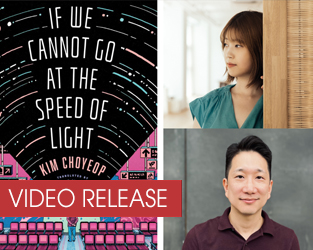
In If We Cannot Go at the Speed of Light, Korean science fiction superstar Kim Choyeop leads us to places we never thought we’d reach, imagining worlds galaxies away and unfamiliar lifeforms with near-dizzying humanity. A stunning and poignant collection of literary speculative fiction stories that explore the complexities of identity, love, death, and the search for life’s meaning, Kim’s stories dismantle the borders between normal and abnormal, material and abstract, earthly and otherworldly. With unforgettable inventiveness and pathos,  If We Cannot Go at the Speed of Light heralds the arrival of an essential voice in contemporary fiction.

In this episode of Author Talks, Kim and her English translator Anton Hur discuss her English debut.


AUTHOR

Kim Choyeop

Kim Choyeop has a master’s degree in biochemistry from Pohang University of Science and Technology. When she burst onto the Korean literary scene, her short story 'Lost on Premises' received immediate recognition at the 2017 Korean Science Fiction Awards. She is also the recipient of the Minumsa Writer of the Year Award and the Munhak Dongne Young Writer Award. Her first short story collection If We Can’t Travel at the Speed of Light has sold over two hundred thousand copies in Korea alone. She is also the author of two more short story collections, The World I Just Left Behind and The Bookstore of Planetary Languages. Kim’s first novel, Greenhouse At the End of the Earth, became an instant bestseller in South Korea.

AUTHOR

Anton Hur

Anton Hur is the author of Toward Eternity and the translator of Kim Choyeop’s If We Cannot Go at the Speed of Light, Bora Chung’s Cursed Bunny, Baek Sehee’s I Want to Die but I Want to Eat Tteokbokki, Lee Seong-bok’s That Summer’s End, Kyung-Sook Shin’s Violets, and others. He was double-longlisted and shortlisted for the International Booker Prize, a finalist for the National Book Award, and nominated for the Dublin Literary Award and the National Book Critics Circle Award. He resides in Seoul.

01 / 02

Who are some other authors in the Korean SF genre?

Please check out other literature programs from The Korea Society featuring SF authors Bora Chung and/or Bo-young Kim!

02 / 02

What language is this book available in? Who is the translator of the book?

The translator of this book is Anton Hur and it is available in Korean, English, Chinese, and Japanese.

Please contact CCLI@koreasociety.org for more information.

Across Languages:
New Voices in Korean Poetry

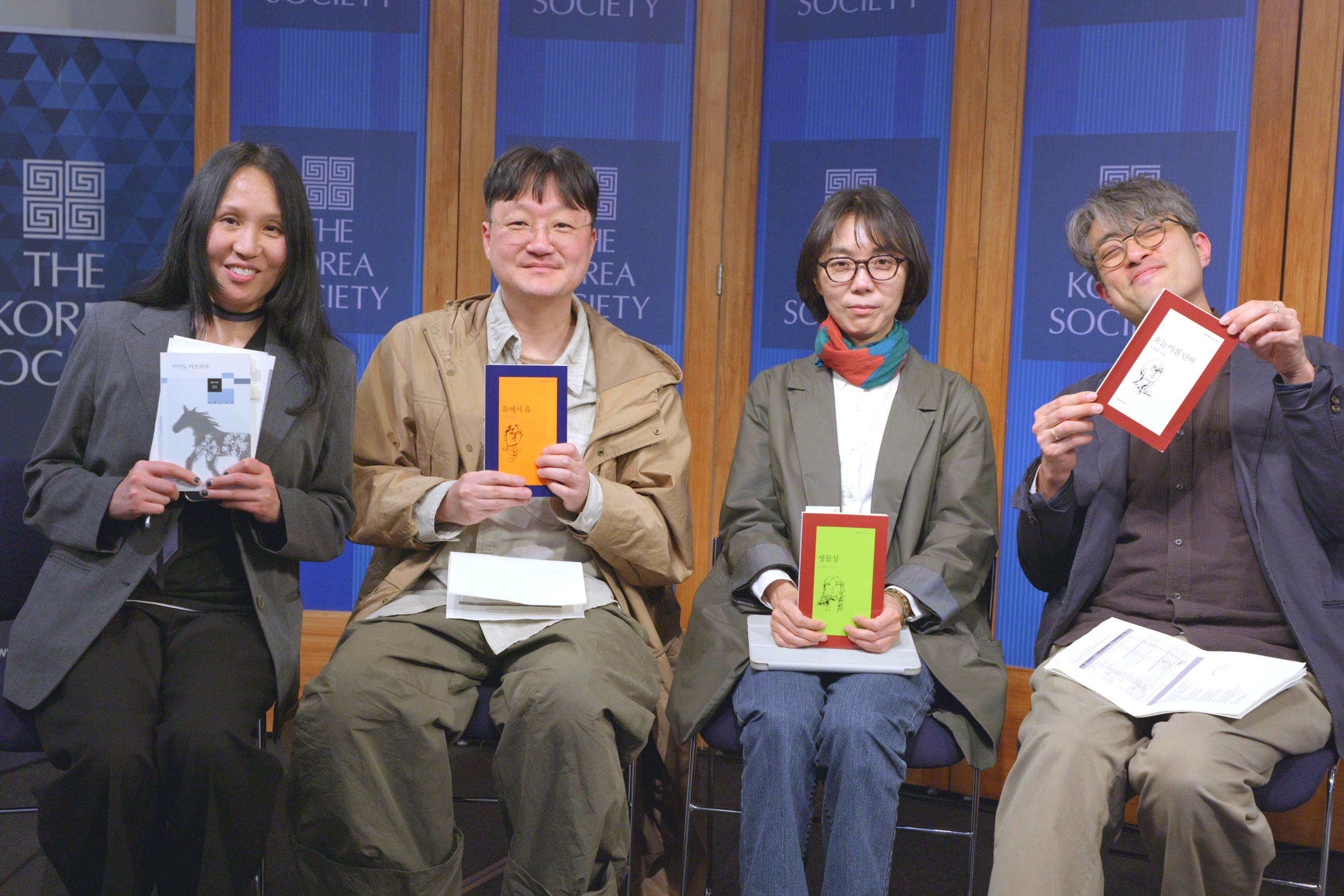
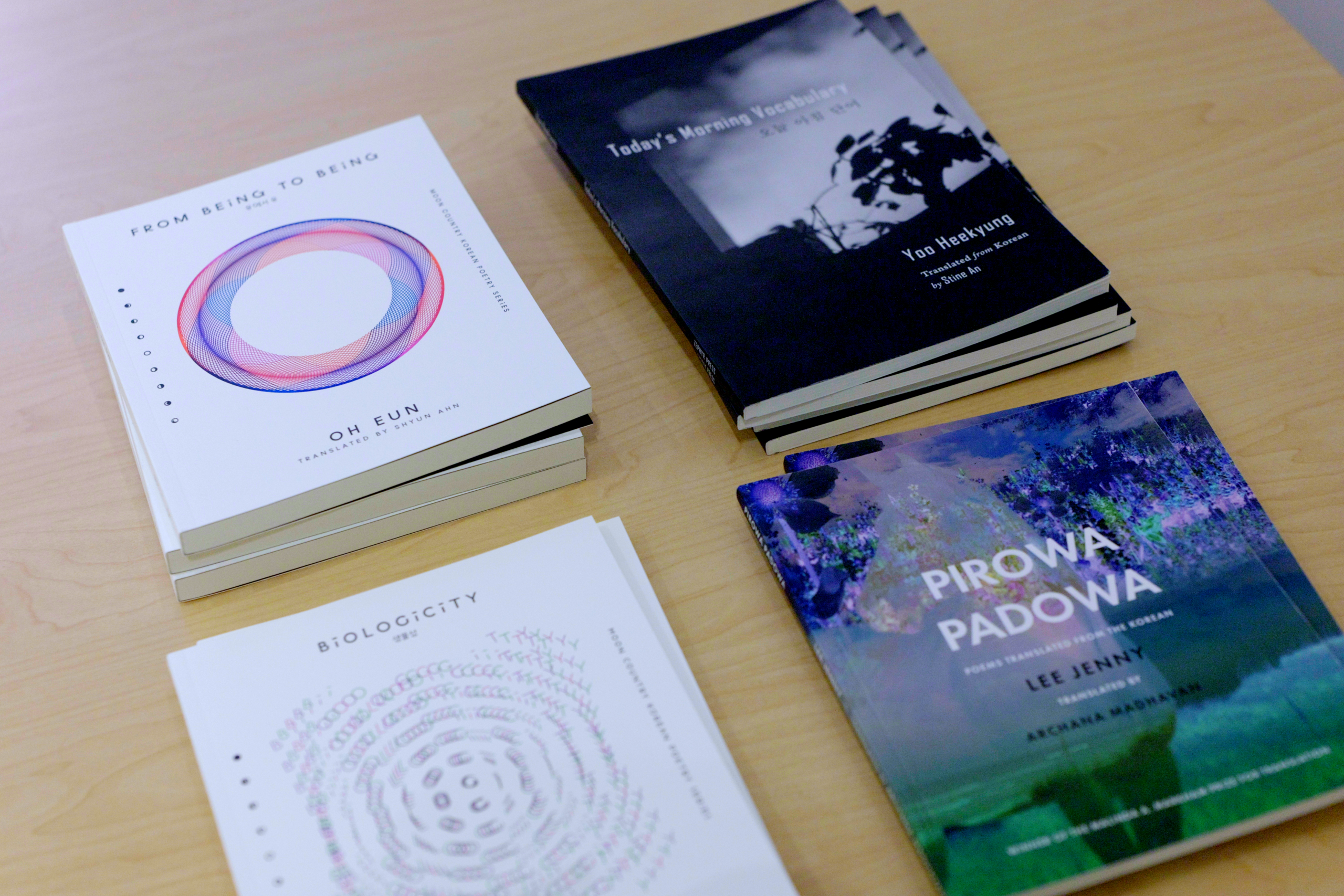
Across Languages: New Voices in Korean Poetry brings together acclaimed South Korean poets Lee Jenny, Yoo Heekyung, Oh Eun, and Shin Hae-uk with award-winning literary translators Archana Madhavan and Stine An, for a Korean–English bilingual reading and conversation to share the dynamism and innovations of language in Korean poetry culture. Through poetry and discussion, the speakers examine the cultural centrality of poetry in Korea and consider translation as a critical, creative practice that reshapes how literature circulates, sounds, and is felt across languages.

This program is presented in partnership with Ugly Duckling Presse and Zephyr Press.


SPEAKER

Yoo Heekyung

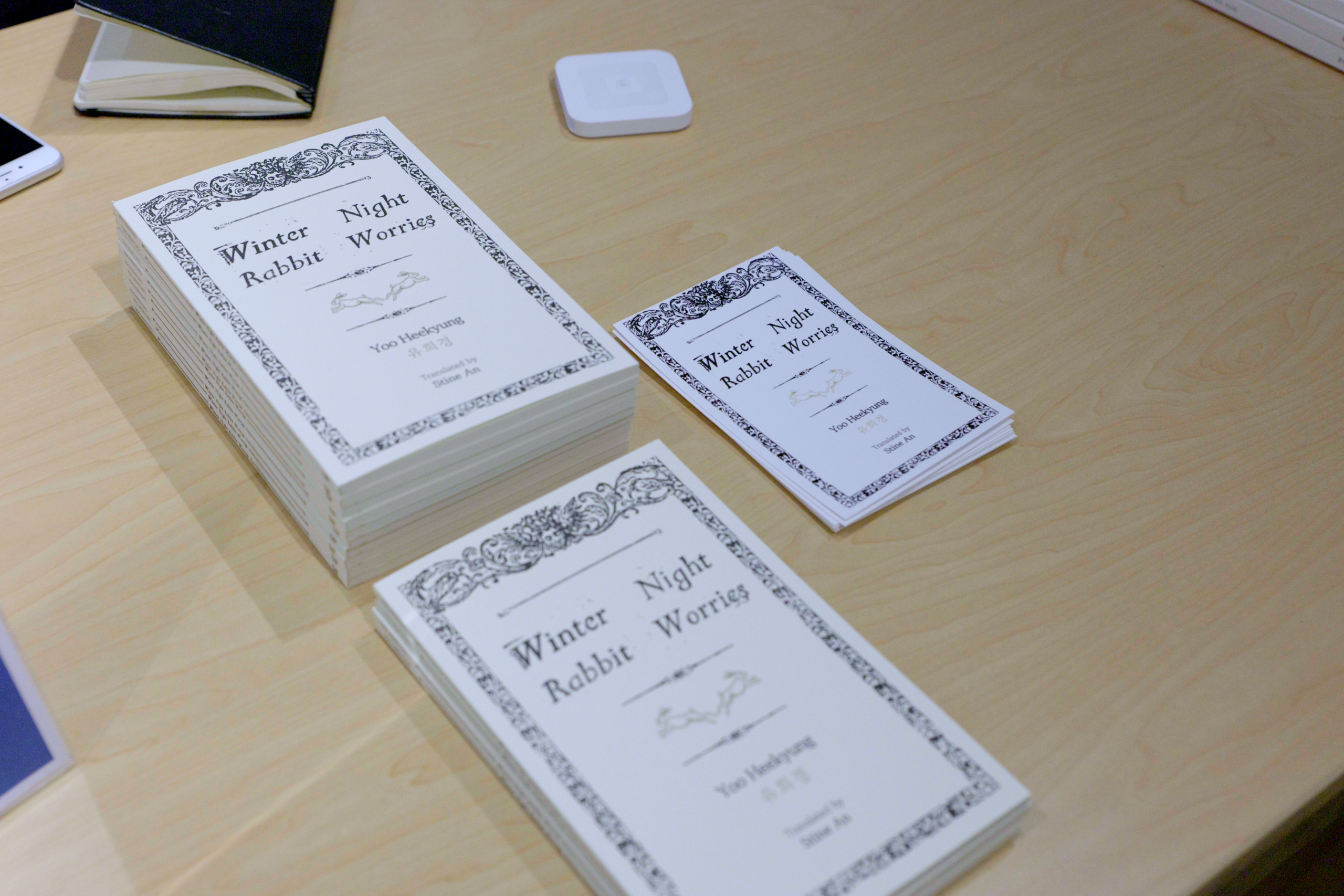
Yoo Heekyung is a poet, playwright, and essayist and the author of more than ten poetry and prose collections, including Today’s Morning Vocabulary (Moonji Books, 2011), Winter Night Rabbit Worries (Hyundae Munhak, 2023), and Photography and Poetry (Achimdal Books, 2024). He studied creative writing at Seoul Institute of the Arts and playwriting at Korea National University of Arts, and debuted in 2008 when his poem won the Chosun Ilbo spring literary contest. His honors include the Gosan New Writer Award (2019), the Hyundae Munhak Literary Award (2020), and the Today’s Young Artist Award (2023). He lives in Seoul, where he runs the poetry bookshop and project space Wit N Cynical.

SPEAKER

Lee Jenny

Lee Jenny was born in Busan in 1972 and debuted in 2008 when her poem “Peru” won the Kyunghyang Daily News New Writer’s Award. Her poetry collections include Maybe Africa (2010), As We Don’t Know Us (2014), The Things That Were Thus Scribbled (2019), The Sentences That Aren’t Even There Are Beautiful (2019), and Eternity Looks Back at the Future (2026), and she is also the author of the essay collection Dawn and Music (2024). She received the Kim Hyun Literary Prize in 2016 and the Hyundae Munhak Award in 2022.

SPEAKER

Oh Eun

Oh Eun was born in Jeongeup, Jeollabuk-do, in 1982. He studied sociology at Seoul National University, earned a master’s degree from KAIST’s Graduate School of Culture Technology, and began publishing in Modern Poetry in 2002. His poetry collections include The Pigs at Hotel Tassel, We Love Ambience, Something from Something, The Left Hand’s Feelings Are Hurt, I Had a Name, and The Pronoun for Nothingness, along with the young adult collection Matters of the Heart and several essay collections, including You, I and People Who Only Become Kin at Night. He has received the Park In-hwan Literary Award, the Gu Sang Poetry Award, the Modern Poetry Award, the Poet’s Notebook Award, and the Daesan Literary Award, and is a member of the poetry collective Jangnan (作亂).

SPEAKER

Shin Hae-uk

Shin Hae-uk was born in Chuncheon in 1974. Shin’s major works include the poetry collections Precise Arrangement, Biologicity, syzygy, Caecilians, and Natural History from the Edge of the Natural; the novel The Dream Reader Electrical Shop; and the essay collections Book for Just One and Looking out the Window. Her honors include the Kim Hyun Literature Award, the Shin Tong-mun Literature Prize and the Daesan Literature Award.

SPEAKER

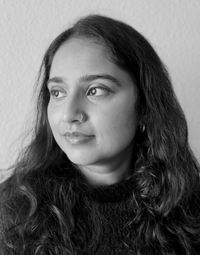
Archana Madhavan

Archana Madhavan translates Korean poetry and prose into English and lives in San Jose, California. Her translations include Kim Hyun’s Glory Hole (co-translation, 2022) and Amil’s Roadkill (2025). Her translation of Lee Jenny’s first poetry collection, Pirowa Padowa, was shortlisted for the Granum Translation Prize in 2023 and won the Malinda A. Markham Translation Prize in 2024.

SPEAKER

Stine An

Stine An is a New York City–based poet, translator, and performer with a BA in Literature from Harvard College and an MFA in Literary Arts from Brown University. Their translations of Yoo Heekyung include Today’s Morning Vocabulary (Zephyr Press, 2025) and Winter Night Rabbit Worries (Ugly Duckling Presse, 2026). Their own books are S_MMER CR_SH (Sarabande Books, 2025) and the debut collection B-Dragon Suite, winner of the 2023 Nightboat Poetry Prize. They have received fellowships and grants from The Poetry Project, the PEN/Heim Translation Fund, Yaddo, ALTA, and the National Endowment for the Arts.

01 / 02

Which books and translators were featured?


Stine An translated Yoo Heekyung’s Today’s Morning Vocabulary (Zephyr Press, 2025) and Winter Night Rabbit Worries (Ugly Duckling Presse, 2026), and Archana Madhavan translated Lee Jenny’s first poetry collection, Pirowa Padowa. The reading was presented in Korean and English.

02 / 02

If I am interested in Korean poetry, where is a good place to start?

Please check out other poetry programs from The Korea Society featuring different poets and translators! .

Author Talks:
Bo-young Kim

“Her fiction is a breath-taking piece of cinematic art itself. Reminiscent of the world we experienced in Matrix, Inception, and Dark City, still it leads us to this entirely original structure, which is a ground-breaking, mystic literary and cinematic experience. Indeed, powerful and graceful.”—Bong Joon-ho, Oscar-winning director of Parasite

In her mind-expanding work of speculative fiction, Bo-young Kim explores the driving forces of humanity—love, hope, creation, destruction, and the very meaning of existence. Straddling science fiction, fantasy and myth, her strikingly original, thought-provoking work teems with human and non-human beings, all of whom are striving to survive through evolution, whether biologically, technologically or socially. Kim’s literature of ideas offers some of the most rigorous and surprisingly poignant reflections on posthuman existence being written today.

An award-winning author widely recognized as a pioneer and inspiration in Korean literature, Bo-young Kim discusses her career in this episode of Author Talks.


AUTHOR

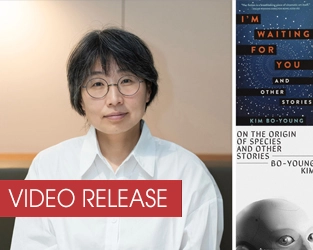
Bo-Young Kim

Bo-Young Kim is a Korean speculative-fiction writer. Her debut work, a novella titled The Experience of Touch, unanimously won the award for the best novella at the Korean Science & Technology Creative Writing Awards in 2004. In 2010 she published a two-volume collection of short stories, The Story Goes That Far and An Evolutionary Myth. 2013 saw the publication of her first novel, The Seven Executioners, which won the South Korean SF Award. Her international recognition grew with On the Origin of Species and Other Stories, translated by Sora Kim-Russell and Joungmin Lee Comfort, which was longlisted for the 2021 National Book Award for Translated Literature. Before her career as an author, she worked as a screenwriter, game developer, and graphic designer; she has also worked as a script advisor for Bong Joon-ho's Snowpiercer.

01 / 02

Who is Bo-Young Kim?


Bo-Young Kim is a Korean speculative-fiction writer. Her debut work, a novella titled The Experience of Touch, unanimously won the award for the best novella at the Korean Science & Technology Creative Writing Awards in 2004. In 2010 she published a two-volume collection of short stories, The Story Goes That Far and An Evolutionary Myth. In 2013, she saw the publication of her first novel, The Seven Executioners, which won the South Korean SF Award.

Her international recognition grew with On the Origin of Species and Other Stories, translated by Sora Kim-Russell and Joungmin Lee Comfort, which was longlisted for the 2021 National Book Award for Translated Literature. Before her career as an author, she worked as a screenwriter, game developer, and graphic designer; she has also worked as a script advisor for Bong Joon-ho’s Snowpiercer.

02 / 02

What language is this book available in? Who is the translator of the book?

Please check out other literature programs from The Korea Society featuring SF authors Bora Chung and/or Kim Choyeop!

Rabbi Angela Buchdahl
with Kyung Yoon


With the ever-growing need to understand ourselves and humanity as a whole, it is necessary to examine the concepts of morality, ethics and universal values as guiding principles of the human condition. With generous support from Y.T. Hwang Family Foundation, The Korea Society presents a Series on Ethics and Common Values.

This series promotes the understanding of central themes of our human existence through a series of lectures by distinguished speakers and conversation with extraordinary individuals who exemplify the universal values in line with the mission of Y. T. Hwang Family Foundation and The Korea Society.

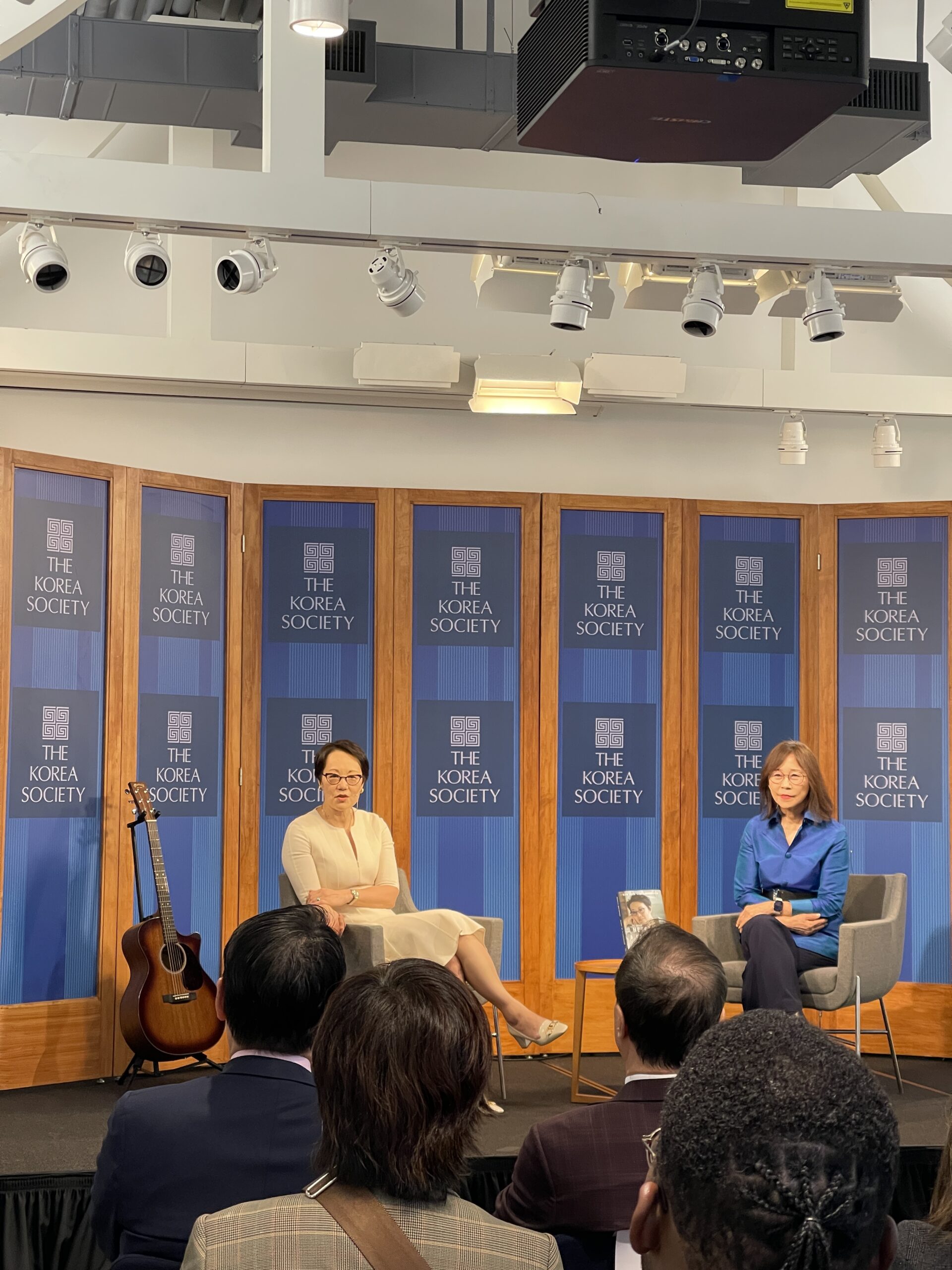
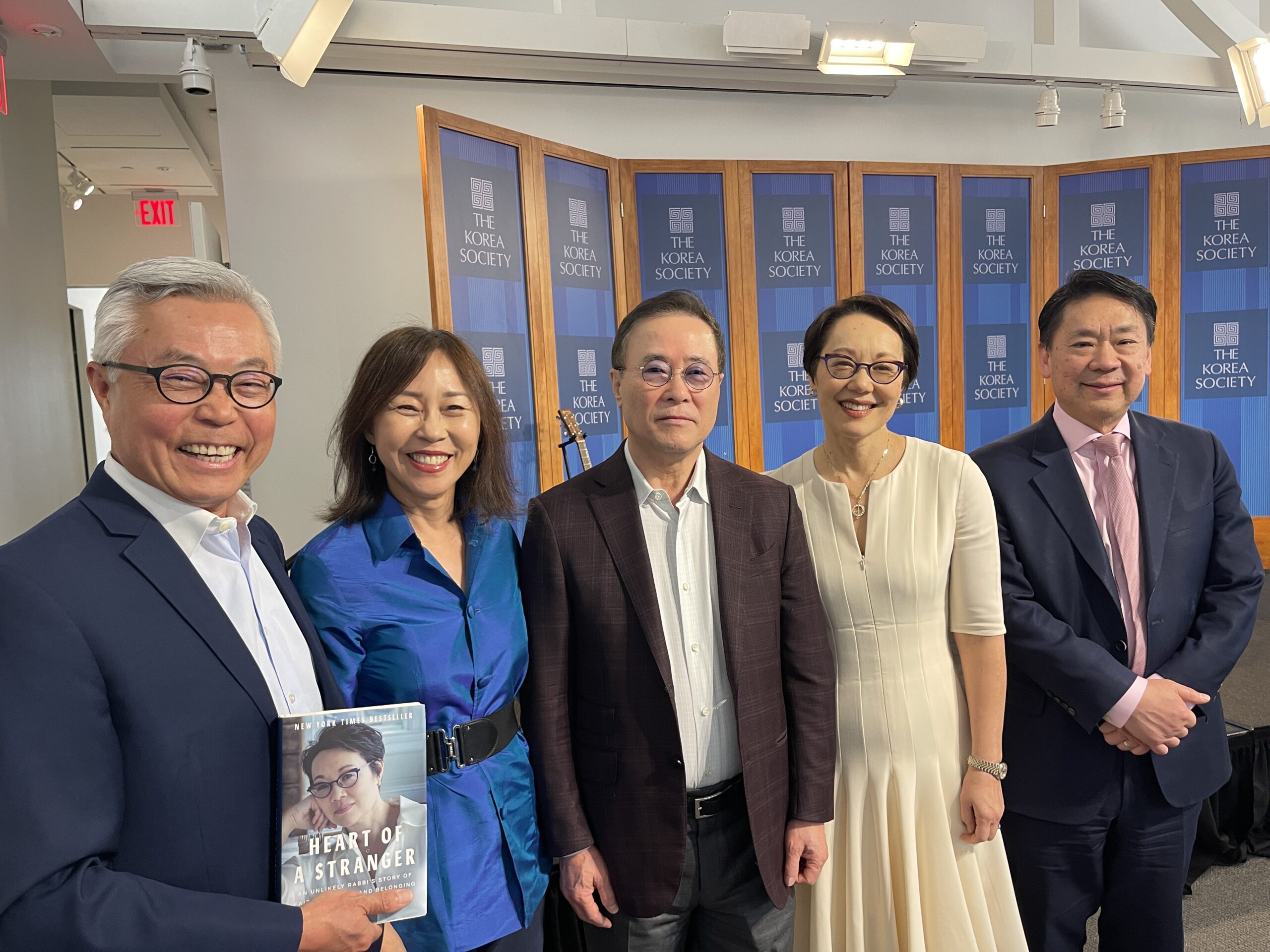
The Korea Society and Y. T. Hwang Family Foundation is proud to present Rabbi Angela Buchdahl in a conversation with Kyung Yoon.


This program is made possible by the support from Y. T. Hwang Family Foundation


Y. T. Hwang Family Foundation Series on Ethics & Common Values
Rabbi Angela Buchdahl with Kyung Yoon

SPEAKER

Rabbi Angela

Rabbi Angela serves as the Senior Rabbi of Central Synagogue in New York City and is the first woman to lead Central's Reform congregation in its 185-year history. Rabbi Buchdahl first joined Central Synagogue as Senior Cantor in 2006. In 2014, she was chosen by the congregation to be Senior Rabbi. Born in Korea to a Jewish American father and a Korean Buddhist mother, Rabbi Buchdahl is the first Asian American to be ordained as a cantor or rabbi in North America. Rabbi Buchdahl has been nationally recognized for her innovations in leading worship, and she has been featured in dozens of news outlets including the Today Show, NPR, and PBS and was listed as one of Newsweek's "America's 50 Most Influential Rabbis." She serves on the boards of the AJC, the Asia Society, the New York Board of Rabbis, and the Yale University President's Council. Rabbi Buchdahl's memoir, Heart of a Stranger, released in October 2025 became an instant New York Times bestseller.

MODERATOR

Kyung B. Yoon

Kyung B. Yoon is the President and CEO (as well as co-founder) of the Korean American Community Foundation (KACF), the first and largest philanthropic organization in the U.S. dedicated to strengthening Korean American communities. Her career in poverty alleviation, development economics, and media encompasses her roles as the Executive Producer of Television at the World Bank Institute and a correspondent for WNYW-Fox Channel 5 where she made history as the first Korean American broadcast reporter in NYC. Kyung is currently a contributing reporter to CUNY-TV’s Asian American Life, which is broadcast nationally on PBS stations and for which she received an Emmy nomination. She has previously served as the board chair of Philanthropy New York and Asian Americans and Pacific Islanders in Philanthropy, as a trustee of the New York Foundation, and as a board member of the United Way of New York City.

01 / 02

What is the Y.T. Hwang Family Foundation Lecture Series on Ethics & Common Values?


With the ever-growing need to understand ourselves and humanity as a whole, it is necessary to examine the concepts of morality, ethics and universal values as guiding principles of the human condition. With generous support from Y.T. Hwang Family Foundation, The Korea Society presents a Series on Ethics and Common Values. This series promotes the understanding of central themes of our human existence through a series of lectures by distinguished speakers and conversation with extraordinary individuals who exemplify the universal values in line with the mission of Y. T. Hwang Family Foundation and The Korea Society.

02 / 02

What was the main takeaway from this program?

Rabbi Buchdahl speaks on the importance of unity, drawing from her personal experience navigating both Korean and Jewish identities. .