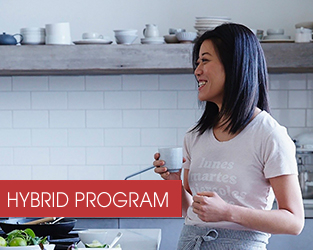
Where does a great recipe come from? For Kay Chun, it’s all about inspiration. And to a lifelong New Yorker, inspiration is all around. Drawing from a global pantry of ingredients—the Korean influences she grew up with and the many flavors that have shaped her—she shares fresh yet familiar dishes the whole family will love in her debut cookbook, Gather Around My Table.
In her conversation with Eric Kim, Kay Chun will discuss her career and her debut cookbook.
About the Speaker
KC
Speaker
Kay Chun
Kay Chun is a chef, writer, and culinary consultant. She is a regular contributor to NYT Cooking and has been an editor at several food publications, notably Gourmet, Food & Wine, Bon Appétit, and Real Simple. Her restaurant, Share, received accolades from The New York Times, New York, and Time Out for her market-driven globally inspired cooking. She also specializes in innovative food product development for consumer packaged goods brands. Kay is a native New Yorker and lives in Manhattan with her husband.
About the Moderator
EK
Moderator
Eric Kim
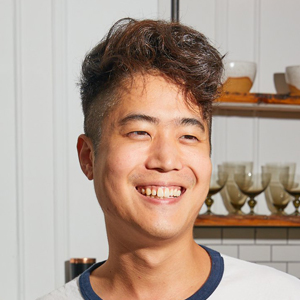
Eric Kim is a New York Times contributor and essayist born and raised in Atlanta, Georgia. His debut cookbook, Korean American: Food That Tastes Like Home, was an instant New York Times Best Seller. A former digital manager for the Food Network and contributing editor for Saveur magazine, he now hosts regular videos on NYT Cooking’s YouTube channel and writes a monthly column for The New York Times Magazine.
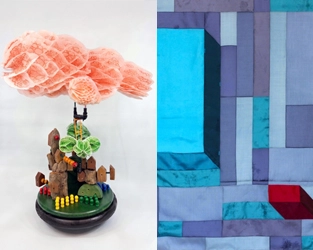
Two artists transform traditional materials–textile and paper–to explore themes of identity and memory.
Tai Hwa Goh creates intricate, layered installations from printed and cut paper, inspired by organic forms, landscapes, and the relationship between the interior and exterior. Goh’s process pushes the limits of traditional printmaking, as she modifies the characteristics of paper and thin fabric by covering with batik or ironing thin sheets of beeswax onto her prints, deliberately obscuring the underlying images. She then uses techniques like sewing, gluing, and manipulating printed materials to construct intricate, honeycomb-like structures. Found objects seamlessly integrate into the work, reflecting the blending of the personal and the universal, as well as natural and artificial elements.Through this process, the imagery gradually moves away from recognizable forms, and the dense layers serve as a space where nature, memory, and personal experience intertwine. Her installations invite viewers to contemplate the balance between the natural world and human existence, and how everyday moments can reveal deeper insights into our lives.
Julia Kwon sews interpretive Korean textiles, specifically in the form of patchwork bojagi (Korean object-wrapping cloth), to critique received notions of Asiatic femininity and challenge reductive, easily legible identities. Although her bojagi textiles may initially be perceived as traditionally Korean, the patchwork designs are actually derived from urgent contemporary sociopolitical issues and events. Her work moves beyond simply representing minority identities as she aims to comment on the interconnected systems of oppression. Kwon’s practice contests the notion of authenticity and explores the complexities involved in constructing identities within the current framework of cultural hybridity, intersectionality, and the collective pursuit of social justice.
VIDEO RELEASE Tuesday, October 6, 2026
ABOUT THE ARTISTS:
Tai Hwa Goh is a Korean-born artist who primarily works with printmaking and paper installation. From 2000 to 2007, she established a significant career as both a professional artist and a lecturer in the Washington D.C. area. Since relocating to the New York Metropolitan area in 2007, Goh has continued to exhibit her artwork widely.
Her exhibitions include Sunroom at Wavehill (Bronx, NY), Torpedo Factory Art Center (Alexandria, VA), NARS Foundation (Brooklyn, NY), Wave Hill (Bronx, NY), William Paterson University (Wayne, NJ), Frances M. Maguire Art Museum, Saint Joseph’s University (Philadelphia, PA), Seton Hall University (South Orange, NJ), Children’s Museum of Manhattan, Art (New York, NY), International Print Center (New York, NY), DUMBO Art Festival, Islip Museum (East Islip, NY), Gallery Aferro (Newark, NJ), AIR Gallery (Brooklyn, NY), Snug Harbor Center for The Art (Staten Island, NY) and more. She has been awarded grants and residencies from Museum of Art and Design, Lower East Side Print Shop, Elizabeth Foundation for the Arts, Aljira A Center for Contemporary Art, and Vermont Studio Center. Goh is a recipient of National Endowments for the Arts, New Jersey Individual Artist Fellowship Awards, the Gold Award winner of the AHL Visual Art Competition and The Artist of The Year from Korean Cultural Center (Washington, D.C.). Her work is in the collection of Booker- Lowe Gallery (Houston, TX), Art Bank (Washington, D.C.), DC Commission on the Arts and Humanities (Washington, D.C.), and Sadat Collection, University of Maryland (College Park, MD).
Goh received a MFA degree at the University of Maryland specializing in printmaking and sculpture. She also received a MFA in printmaking at Seoul National University in Korea.
Julia Kwon has exhibited at venues including the Smithsonian American Art Museum and Renwick Gallery (Washington, DC), Museum of Fine Arts (Boston, MA), Cooper Hewitt, Smithsonian Design Museum (New York, NY), Virginia Museum of Contemporary Art (Virginia Beach, VA), Museum of International Folk Art (Santa Fe, NM), Museum of Contemporary Art (Arlington, VA), Peale Center at Carroll Museums (Baltimore, MD), Hartnett Gallery at the University of Rochester (Rochester, NY), Taubman Center at the University of Michigan (Ann Arbor, MI), Biggin Gallery at Auburn University (Auburn, AL), and Torpedo Factory Art Center (Alexandria, VA), among others. Her work is in the permanent collections of the Smithsonian American Art Museum and Renwick Gallery (Washington, DC), Museum of Fine Arts (Boston, MA), Cooper Hewitt, Smithsonian Design Museum (New York, NY), Museum of International Folk Art (Santa Fe, NM), The New York Public Library (New York, NY), Metropolitan Museum of Art’s Thomas J. Watson Library (New York, NY), and Yale University’s Haas Arts Library Special Collections (New Haven, CT), among others.
She has presented artist lectures and workshops at the Hirshhorn Museum and Sculpture Garden (Washington, DC), The Phillips Collection (Washington, DC), Virginia Museum of Contemporary Art (Virginia Beach, VA), Museum of Contemporary Art (Arlington, VA), Parsons School of Design (New York, NY), Georgetown University (Washington, DC), Lehigh University (Bethlehem, PA), Oberlin College (Oberlin, OH), American University (Washington, DC), Emerson College (Boston, MA), and University of Rochester (Rochester, NY), among others.
Her work has been highlighted in Smithsonian Magazine, CNN, The Washington Post, Korea.net, Hyperallergic, BmoreArt, PBS’s WETA Arts, Arirang News, SBS News, and The Wedding Banquet (2025, directed by Andrew Ahn). She was awarded artist residencies at Banff Centre for Arts and Creativity, Chautauqua School of Art, Headlands Center for the Arts, Santa Fe Art Institute, Textile Arts Center, Vermont Studio Center, Virginia Center for the Creative Arts, among others.
Kwon holds a BA in Studio Art from Georgetown University and an MFA from the School of the Museum of Fine Arts at Tufts University.
In the past decade, Korean entertainment has gained global recognition, with Korean movies and TV shows winning Oscars and Emmys, and K-Pop groups becoming wildly popular. In Manhattan, Koreatown has become a popular destination for both locals and tourists, drawing them in with its bars, restaurants, and day spas. Jinwon Kim argues that Manhattan’s Koreatown has become a new type of ethnic enclave, what she dubs a “transclave.” This commercialized ethnic space exists solely for consumption, leisure, and entertainment, and has been shaped by South Korea’s nation-branding strategy, new economic and cultural strategies, patterns in Korean migration, and shifts in tourism and urban policies in New York City. Kim posits that for many consumers in Koreatown, especially those who are not of Korean descent, the space has become a commercialized place where transnational culture meets the diverse racial and ethnic mosaic of New York City. Kim emphasizes how the space functions to “brand Korea” as a space to “consume ethnicity,” reflecting the landscape of South Korea’s consumer culture through the physical appearance of buildings and stores and the inclusion of franchise brands.
In this talk, Kim explores the recent popularity of Korean food in New York City by focusing on both transnational and domestic factors, leading to the new trend of commercialization of ethnic food, emphasis on authenticity, and rise of the omnivore society, by delivering the voices of ordinary people. While Koreatown’s authenticity has been largely defined by commercialized ethnic cuisine by local entrepreneurs, the Korean government, and franchises, Kim argues that Koreatown’s authenticity has represented the collective imaginations and narratives of various consumer groups–Korean nationals, Korean Americans, and non-Koreans.
This program was recorded on September 24th and will be released on October 1.
About the Speaker
JK
Speaker
Jinwon Kim
Jinwon Kim is Assistant Professor of Sociology at Smith College. She is the author of Koreatown, NYC: The Consumption of a Transnational Brand and a co-editor of Koreatowns: Exploring the Economics, Politics, and Identities of Korean Spatial Formations.
With the ever-growing need to understand ourselves and humanity as a whole, it is necessary to examine the concepts of morality, ethics and universal values as guiding principles of the human condition. With generous support from Y.T. Hwang Family Foundation, The Korea Society presents a Series on Ethics and Common Values.
This series promotes the understanding of central themes of our human existence through a series of lectures by distinguished speakers and conversation with extraordinary individuals who exemplify the universal values in line with the mission of Y. T. Hwang Family Foundation and The Korea Society.
The Korea Society and Y. T. Hwang Family Foundation is proud to present Professor Yejin Choi who will deliver a lecture titled Beyond Scale: the Art of (Artificial) Reasoning and Discovery.
Scaling laws suggest that “more is more”: brute-force scaling of data leads to stronger AI capabilities. However, despite rapid progress on benchmarks, state-of-the-art models still exhibit “jagged intelligence,” indicating that current scaling approaches may have limitations in terms of sustainability and robustness. These limitations are sharpest at the frontier of discovery, where the goal is to produce knowledge that does not yet exist anywhere in the training distribution. In this talk, Professor Choi will discuss key insights into the strengths and limitations of LLMs, examine when reinforcement learning succeeds or struggles in reasoning tasks, and turn to what it takes to move from reasoning to discovery: test-time training that adapts models to problems they have never seen, learning to use LLMs as tools (both as cost-efficient alternatives to frontier-scale inference and as instruments for scientific discovery), and synthetic data strategies that get the best out of small language models, helping them close the gap against their larger counterparts in specific domains.
This program is made possible by the support from Y. T. Hwang Family Foundation
About the Speaker
YC
Speaker
Yejin Choi
Yejin Choi is the Dieter Schwarz Foundation Professor and Senior Fellow at Stanford’s Computer Science and Institute for Human-Centered AI (HAI). She is a MacArthur Fellow, AI2050 Senior Fellow, and was named to Time100 Most Influential People in AI (2023, 2025). Choi has received 2 Test-of-Time Awards and 10 Best/Outstanding Paper Awards at top AI conferences. She was a main stage speaker at TED 2023 and has delivered keynotes at several AI conferences including NeurIPS, ICLR, CVPR, ACL, and AAAI. Her research focuses on democratizing generative AI through smaller yet powerful language models, scaling intelligence via smarter algorithms, pluralistic alignment, and AI for science and social good. She received her Ph.D. in Computer Science at Cornell University and BS in Computer Engineering at Seoul National University in Korea.
Mountains, rivers, trees, flowers, the dark, a cat, a train. In the elemental forms and figures of our world, Lee Seong-bok finds repositories for thought, sounding boards against which he can test his reflections. Again and again, in sequences, he probes his subjects—five “Mountain Path” poems, three “River” poems, three commentaries on the I Ching— not to solicit answers, like Moses impatiently striking the rock for water, but to savor the muted tones that echo in response.
That Summer’s End is a collection of one hundred and six poems of self-reflection and exquisite beauty—an intoxicating blend of Seon Buddhism and French Symbolism from one of South Korea’s most celebrated and influential poets. The poems of That Summer’s End, though acutely conscious of the self, are free of an inhibiting self-consciousness, speaking directly of youth, love, fear, family, grief, old age, impermanence, and all that’s central to life. As enticing as they are profound, Lee Seong-bok’s poems have made him not only a poet’s poet but a favorite of RM, leader of K-pop superstars BTS, whose support of his work on social media has brought him international attention.
In a conversation with Stine An, Lee Seong-bok and his translator Anton Hur will discuss his poetry and career.
Born in Sangju, South Korea, in 1952, Lee Seong-bok is the author of eight poetry collections, as well as works of literary criticism and essays on photography. In 2023, Sublunary Editions published Indeterminate Inflorescence, a volume of 470 aphorisms collected by his students at Keimyung University, in Daegu, where he has taught creative writing and French literature for more than four decades.
AH
Speaker
Anton Hur
Anton Hur is the translator of Lee Seong-bok’s Indeterminate Inflorescence. His debut novel, Toward Eternity, was published by HarperVia in 2024. In 2022 he was double-longlisted and shortlisted for the International Booker Prize, and in 2023 his translation of Bora Chung’s Cursed Bunny was a finalist for a National Book Award. He lives in Seoul, South Korea.
SA
MODERATOR
Stine An
Stine An is a poet, literary translator, and performer in New York City. She holds a BA in Literature from Harvard College and an MFA in Literary Arts from Brown University and is the recipient of fellowships and grants from The Poetry Project, the PEN/Heim Translation Fund Grant, Yaddo, ALTA, and the National Endowment for the Arts. Her publications include Today’s Morning Vocabulary (Zephyr Press, 2025) and Winter Night Rabbit Worries (Ugly Duckling Presse, 2026) by Yoo Heekyung, and S_MMER CR_SH (Sarabande Books, 2025). Their debut poetry collection, B-Dragon Suite, is a winner of the 2023 Nightboat Poetry Prize.
“What Stacy Kim understands, and what took me too long to appreciate myself, is that our darkest emotions often shed the most light. ENVY makes a rigorous, wise, and compassionate case that the feeling high achievers are most ashamed to admit may offer one of the clearest signals of what they truly want.”
— Daniel H. Pink, #1 New York Times bestselling author of THE POWER OF REGRET and DRIVE
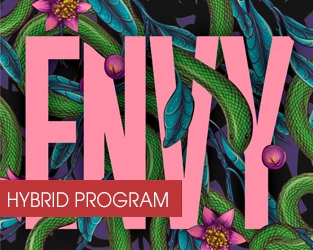
We all want things that other people have. It’s natural, yet we are ashamed of how it makes us feel—a mix of inferiority, ill will, and injustice. In the West, we’re told “Comparison is the thief of joy,” and taught to avoid this “deadly sin.” Meanwhile, in Korea, people publicly make social comparisons and express their envy.
Drawing on how Koreans used their envy of Japan to transform a war-torn country into a pop-culture powerhouse, Dr. Stacy S. Kim teaches us that when we examine our envy, we can learn what we want, whom to emulate, and how to get it. ENVY: WHY WANTING WHAT THEY HAVE IS THE KEY TO GETTING WHAT YOU WANT is for those of us who do everything we can to build our best life yet still find ourselves feeling behind or unfulfilled. Thanks to social media and smartphones, we can experience this negative emotion at any hour, anywhere, and the feeling remains largely buried and unspoken. But through stories, interviews, and research, Dr. Kim provides concrete strategies on how to convert unexamined reckless use of envy into a guiding force and powerful motivator.
In a conversation with Hyeseung Song, Dr. Kim discusses her new book and research.
About the Speakers
SK
Speaker
Stacy S. Kim
Stacy S. Kim, Ph.D. is a social scientist, career coach, and founder of Life Junctions LLC. With nearly two decades of experience, she helps conscientious high achievers untangle envy and other internal blocks to navigate the complexities of life and work and knit together lives they love. She conducted research for the Families and Work Institute, Columbia University’s National Center for Children and Families, the University of Pennsylvania, and the Leo Burnett Company. Her work has been featured in outlets including The Washington Post, The New York Times, Business Insider, CNN, and NPR.
HS
MODERATOR
Hyeseung Song
Hyeseung Song is a first-generation Korean American painter, writer and teacher. She is the author of Docile: Memoirs of a Not-So-Perfect Asian Girl, about an Asian American woman’s struggle with self-worth and mental illness. Docile was a “best” audiobook at Apple and translated into Korean. Song is a 2026 NYSCA/NYFA Artist Fellow in Nonfiction Literature, a Nonfiction Fellow of Bread Loaf Writers’ Conference, and a recipient of the Mae Fellowship which supported women and nonbinary writers.
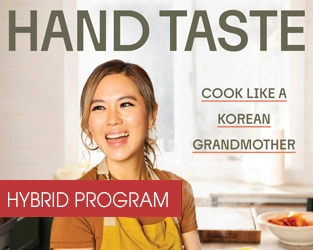
We all know cooks whose fingertips seem to infuse every meal with deliciousness. In Korean, that magic touch is called sohn-mat, or “hand taste”―but you don’t have to be born with it. Esther Choi picked hers up from her halmoni, or grandmother, who used her hands for everything from smearing cabbage with pepper paste to make kimchi to crumbling tofu for mandu (dumpling) filling and tossing vibrantly flavored noodles for japchae.
Hand taste starts with seasoning but ultimately describes a way of cooking rooted in heritage, intuition, and heart. In her hotly anticipated debut cookbook Hand Taste: Cook Like a Korean Grandmother Choi offers delicious entry points to Korean and Korean-American cuisine, with foundational techniques alongside quick weeknight recipes and show-stopping traditional spreads.
In her conversation with Eric Kim, Esther Choi will discuss her career and her debut cookbook.
Pre-order your copy of Hand Taste: Cook Like a Korean Grandmotherhere.
About the Speaker
ES
Speaker
Esther Choi
Esther Choi is a chef, entrepreneur, and TV personality. She is the owner of Mokbar, with locations ranging from New York City to Las Vegas, and Ms. Yoo, a Korean-style gastropub in Manhattan. Choi is the co-host of Food Network’s 24 on 24 and the host of “Heat Eaters” by First We Feast (12.9 M subscribers), a spinoff from the hit series “Hot Ones.” Choi has been a finalist on Iron Chef: Quest for an Iron Legend. She lives in New York City with her husband and son.
About the Moderator
Moderator
Eric Kim
Eric Kim is a New York Times contributor and essayist born and raised in Atlanta, Georgia. His debut cookbook, Korean American: Food That Tastes Like Home, was an instant New York Times Best Seller. A former digital manager for the Food Network and contributing editor for Saveur magazine, he now hosts regular videos on NYT Cooking’s YouTube channel and writes a monthly column for The New York Times Magazine.
With the ever-growing need to understand ourselves and humanity as a whole, it is necessary to examine the concepts of morality, ethics and universal values as guiding principles of the human condition. With generous support from Y.T. Hwang Family Foundation, The Korea Society presents a Series on Ethics and Common Values.
This series promotes the understanding of central themes of our human existence through a series of lectures by distinguished speakers and conversation with extraordinary individuals who exemplify the universal values in line with the mission of Y. T. Hwang Family Foundation and The Korea Society.
The Korea Society and Y. T. Hwang Family Foundation is proud to present Professor Taeku Lee.
Billionaire Backlash: The Age of Corporate Scandal and How It Could Save Democracy
Professor Lee’s latest book, co-authored with Pepper Culpepper (University of Oxford), tells the surprising story of how corporate scandals – from Enron to the Facebook privacy scandal – can change the world for the better. Drawing on a decade of research on policymaking and public opinion across wealthy democracies, Lee will talk about how scandals can ignite the public to demand better policy and protection from massive corporations run amok. Lee will also share whether these dynamics foretell a new era of economic populism in the United States and beyond.
This program is made possible by the support from Y. T. Hwang Family Foundation
About the Speaker
TL
Speaker
Taeku Lee
Taeku Lee is Bae Family Professor of Government and Faculty Dean of Dunster House at Harvard University. Lee has researched and written extensively on racial and ethnic politics, public opinion and political behavior, identity and inequality, and deliberative and participatory democracy. He recently published Race and Inequality in America and Billionaire Backlash (with Pepper Culpepper).
Lee is also President of the American Political Science Association and Professor Emeritus at the University of California, Berkeley, where he taught for two decades. Lee is a Fellow of the American Academy of Arts and Sciences and a member of the 2024 class of Andrew Carnegie Fellows. He serves on the Board of Directors of the American Academy of Political and Social Science and the Board of Overseers of the American National Election Studies. He previously served on the National Advisory Committee for the U.S. Census Bureau and the Board of Overseers of the General Social Survey and has held honorary or visiting appointments at Yale, Oxford, the European University Institute, and the Brookings Institution.
Born in Masan, Korea, Lee spent his childhood years in rural Malaysia, lower Manhattan, and suburban Michigan. He is a proud graduate of K-12 public schools, the University of Michigan, Harvard, and the University of Chicago.
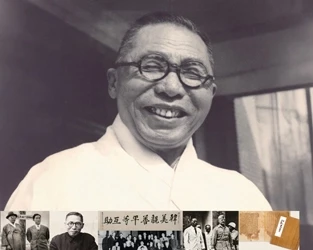
May 28-August 31, 2026 | The Korea Society is honored to host a special exhibition honoring the life, enduring vision, and profound legacy of Kim Koo—one of the most revered leaders of the Korean independence movement. As a central figure in the Korean independence movement and the President of the Provisional Government of the Republic of Korea, Kim Koo presented a visionary outlook that emphasized national strength based on culture rather than military or economic power. |
The Korea Society is honored to host a special exhibition honoring the life, enduring vision, and profound legacy of Kim Koo—one of the most revered leaders of the Korean independence movement. As a central figure in the Korean independence movement and the President of the Provisional Government of the Republic of Korea, Kim Koo presented a visionary outlook that emphasized national strength based on culture rather than military or economic power. To commemorate UNESCO’s designation of 2026 as the 150th anniversary of Kim Koo’s birth, The Korea Society offers a unique opportunity to reflect on his legacy through a visual exhibition.
This exhibition is produced in partnership between The Korea Society and The Association of Commemorative Service for Patriot Kim Koo and made possible by the support of the Kim Koo Foundation.
Kim Koo: Dreaming of Peace Through the Power of Culture
May 28-August 31, 2026
The Korea Society Gallery is open only by appointment. The appointment must be made at least 24 hours prior to the scheduled visit. To make an appointment, please contact info@koreasociety.org.
Gallery Hours: Monday-Friday 10 AM-4:30 PM By Appointment Only
Kim Koo and UNESCO’s Shared Vision of Culture — The Story Behind the 150th Birth Anniversary Designation :
UNESCO has designated 2026 as a year to commemorate the 150th anniversary of Kim Koo’s birth. This decision goes beyond a simple historical tribute; it is the international community’s official recognition that Kim Koo’s vision—achieving world peace through the “power of culture” rather than economic or military might—aligns deeply with the universal values pursued by UNESCO.
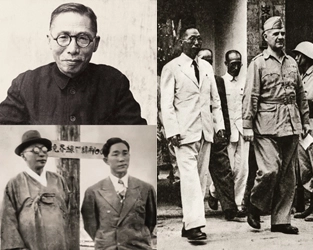
As the President of the Provisional Government of the Republic of Korea, Kim Koo led the independence movement and understood the importance of international solidarity better than anyone. In 1932, following the patriotic deeds of Yi Bong-chang and Yun Bong-gil, he managed to evade the pursuit of the Japanese Imperialists and continue his activities through the vital assistance of American missionary Dr. George Fitch. Furthermore, he solidified the foundation for independence through practical cooperation with democratic nations, such as collaborating with the U.S. Office of Strategic Services (OSS) to prepare for “The Eagle Project,” a domestic infiltration operation. He also successfully persuaded Chiang Kai-shek to ensure the guarantee of Korean independence at the Cairo Conference. These actions demonstrate that Kim Koo’s independence movement was more than mere resistance; it was part of an international solidarity effort sharing the universal values of freedom and human rights.
Kim Koo’s true pioneering spirit became even more evident after liberation. In his essay “My Wish,” included in his 1947 autobiography Paikbum Ilji (백범일지), he emphasized moving past hatred to build a nation where everyone enjoys happiness through cultural development, thereby contributing to world peace. His vision—that humanity can only prosper together when each nation develops its unique culture and engages in mutual exchange—is strikingly consistent with UNESCO’s cultural philosophy today.
The designation of this UNESCO anniversary year is the culmination of extensive preparations that began in June 2024. The process required meticulous attention due to various international and political circumstances. The final hurdle, consent from North Korea, was cleared through the method of “tacit consent”; leading to the final confirmation. This serves as a significant opportunity for Korea to expand its global contribution to cultural policy and discourse. At the same time, it is a meaningful declaration to the world that the spirit of Kim Koo—who fought against imperialist violence while ultimately aiming for human happiness and world peace—remains a vital universal value in our modern era.
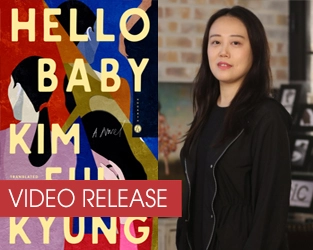
In her absorbing and candid novel Hello Baby, Kim Eui Kyung explores what women endure to become mothers. The novel features six women in their thirties and forties who strike up a friendship at a fertility clinic in Seoul and share their personal paths to motherhood via a group chat they name “Hello Baby.” Switching between the six characters—a journalist, a police officer, a vet, a lawyer, and two housewives—this thought-provoking novel explores the social pressure and emotional strain on women struggling to conceive. Written with insight, humor, and great empathy, Hello Baby is a moving portrait of what it means to be a woman today and the lengths some will go to seek motherhood.
In this episode of Author Talks, Kim Eui-Kyung discusses her novel, translated into English by Sora Kim-Russell.
About the Author
KE
Author
Kim Eui-kyung
Kim Eui-kyung is a novelist and essayist. Her debut novel, Youth Bankruptcy (2014) won the Korea Economic Daily Youth Literary Contest, and her second novel Call Center was awarded the 6th Soorim Literary Prize. She also published the story collection Showroom, set against the backdrop of IKEA, and the essay collection The Season Called Life. Her latest novel Hello Baby is a groundbreaking work of Korean feminist fiction about a group of women undergoing IVF at a fertility clinic in Seoul.