ROK Prime Minister’s Luncheon with President Abraham Kim and Korean Leaders in New York

ROK Prime Minister's Luncheon with President Abraham Kim and Korean Leaders in New York

ROK Prime Minister's Luncheon with President Abraham Kim and Korean Leaders in New York
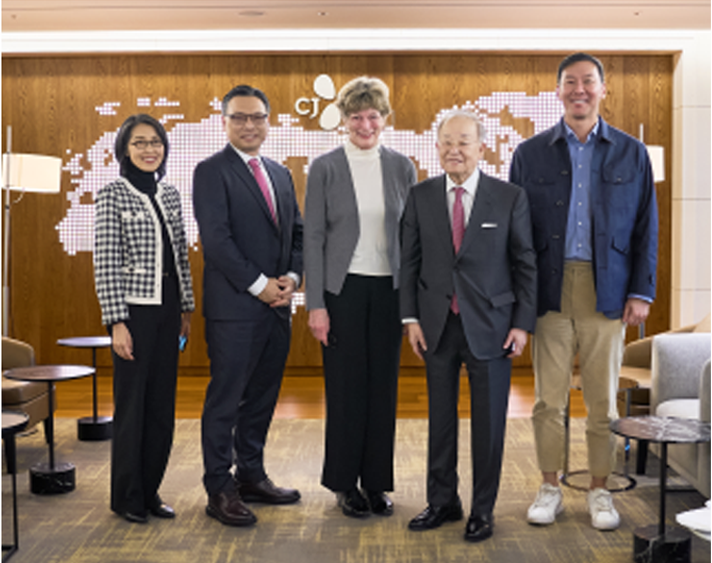
Photo credit: Office for Government Policy Coordination, Prime Minister’s Secretariat

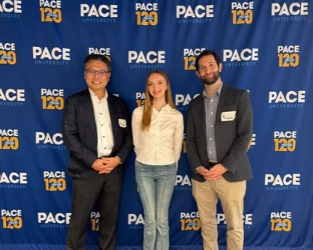
On January 24, 2026, The Korea Society President and CEO Abraham Kim (second from right) attended a luncheon with Prime Minister Kim Min-seok of the Republic of Korea in downtown Manhattan, alongside a select group of Korean American leaders. Attendees included New York State Assemblyman Ron Kim, New York State Assemblywoman Grace Lee, Mayor Chong Paul Kim of Palisades Park, New Jersey, and Mayor Mark Park of Englewood Cliffs, New Jersey. The private gathering took place during Prime Minister Kim’s historic U.S. visit—the first standalone visit by a South Korean premier in more than four decades—highlighting a renewed commitment to alliance stewardship and people-to-people diplomacy.

Prime Minister Kim emphasized that the current moment presents a pivotal opportunity to deepen U.S.–Korea cooperation across policy, economic, security, and cultural domains. He underscored the strategic importance of Korean American leadership in bridging the two societies and reaffirmed his commitment to sustained, high-level engagement to address bilateral issues in real time.

Dr. Abraham Kim participated as the only non-elected Korean American leader at the table, contributing actively both as a national Korean American civic leader and as the newly appointed President and CEO of The Korea Society. He highlighted the Society’s mission, cross-sector outreach, and longstanding role as a national platform connecting policymakers, business leaders, scholars, and civic actors engaged on Korea issues.

The luncheon reflected a shared belief that a stronger, more resilient U.S.–Korea alliance depends not only on government-to-government ties, but also on empowered community leadership and trusted networks sharing a common vision for a healthy bilateral alliance.

Honoring Dr. Abraham Kim on Korean American Day

ROK Prime Minister's Luncheon with President Abraham Kim and Korean Leaders in New York

ROK Prime Minister's Luncheon with President Abraham Kim and Korean Leaders in New York
Photo credit: Council of Korean Americans

On January 13, the Council of Korean Americans and the Korea Economic Institute of America presented the Korean American Day Award to now-President & CEO of The Korea Society, Abraham Kim, recognizing his visionary leadership, entrepreneurial spirit, and decades of dedicated service to the Korean American community.

Scott Snyder, President & CEO of the Korea Economic Institute of America, delivered remarks:

He approaches his work with intentionality, and it’s an intentionality that is built around connection. I think that that is both a set of characteristics that has embodied what he has done at CKA and it’s also a set of attributes that will serve him well as he moves to The Korea Society as their new president.


ROK Prime Minister's Luncheon with President Abraham Kim and Korean Leaders in New York
Photo credit (left): Council of Korean Americans

January 13, 2026 marked 123 years since the arrival of the first Korean immigrants to the United States in 1903. The Korean American community’s enduring spirit and impact across cultural, economic, and diplomatic spheres inspires and empowers the day-to-day work of The Korea Society. As the first Korean American president in its 69-year history, TKS is grateful for the opportunity to celebrate Dr. Abraham Kim in commemoration of this historical achievement.


Founded in 1957, The Korea Society is a nonpartisan, nonprofit, 501(c)(3) organization dedicated to promoting greater awareness, understanding, and cooperation between the U.S. and Korea. 


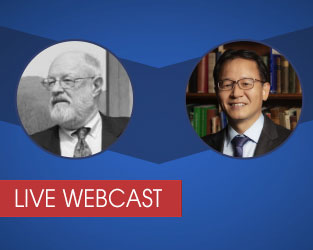
US-Korea Shipbuilding Cooperation with Jeffrey Voth

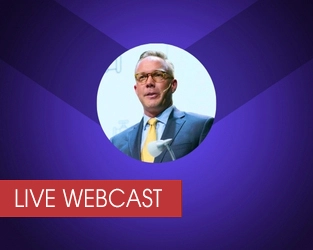
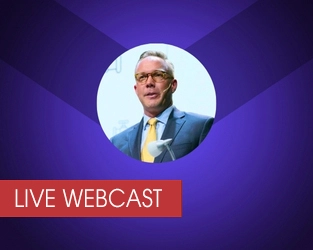
Join us for a conversation on the obstacles and pathways for enhanced US-Korea shipbuilding cooperation with Jeffrey Voth, President of Herren Associates, Inc., an engineering and technology firm headquartered in Washington, D.C. He is author of a recent article, “The US-ROK test case: Can visas and rules unlock American shipbuilding?

US President Donald J. Trump has met twice with Republic of Korea President Lee Jae Myung, first in Washington in August and next in Gyeongju on the sidelines of the APEC Summit in October. The two leaders agreed to The Korea Strategic Trade and Investment deal, which includes a commitment by Korea to invest $150 billion in the US shipbuilding sector. According to the joint fact sheet released after the two summits, Korea has committed to help the US modernize and expand its shipbuilding industry via investments in American shipyards and workforce. And the US has approved Korea’s development of nuclear-powered attack submarines, and will “work closely” with Korea to advance requirements for this shipbuilding project, including avenues to source fuel. To help facilitate this collaboration, the US and Korea also agreed to create a shipbuilding working group on maintenance, repair, and overhaul, workforce development, shipyard modernization, and supply chain resilience.

Drawing on decades of shipbuilding and combat system integration experience, including direct work on Korea’s Sejong the Great class of destroyers, which are among the largest and most heavily armed Aegis Combat System-equipped surface combatants outside the US Navy, Jeffrey Voth will discuss construction challenges and allied collaboration opportunities in conversation with Korea Society policy director Jonathan Corrado.


US-Korea Shipbuilding Cooperation with Jeffrey Voth

Thursday, December 11, 2025 | 4 PM (EST)
LIVE WEBCAST


About the Speakers:


Jeffrey M. Voth is the President of Herren Associates, Inc., an engineering and technology firm headquartered in Washington, D.C., dedicated to delivering critical outcomes and maximizing taxpayer value. Jeff began at Herren as a summer intern in 1998, joining full-time the following year. Early on, he was part of a multi-year joint industry-government team implementing high-performance computing solutions for demanding military environments—an effort recognized with the Defense Standardization Program Achievement Award. Throughout his career, Jeff has led strategic and technical initiatives, including one of the largest independent analyses on forecasting effectiveness across 116 major defense acquisition programs. He regularly publishes insights on disruptive technologies transforming the defense industry and the economic impacts of global megaprojects, influencing dialogue at the intersection of technology and defense. Jeff’s recognitions include “40 Business Leaders Under Forty” by the Washington Business Journal and multiple Inc. 500 awards, recognizing the most innovative and fastest-growing companies. He holds an MSc with distinction from St. Catherine’s College, University of Oxford, an MBA from Georgetown University, and a bachelor’s degree from the University of Massachusetts, Amherst.

Korea-China Relations: A History of Intervention

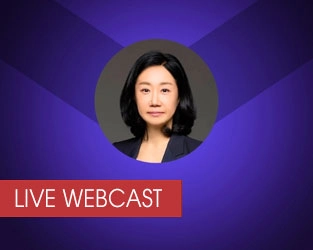
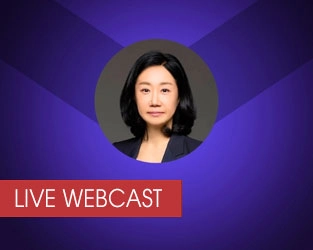
Join us for a discussion with Dr. Ji-Young Lee for an examination of the circumstances and methods of Chinese military intervention in the Korean Peninsula. Dr. Lee is Associate Professor of International Relations at American University’s School of International Service, and author of China’s Hegemony: Four Hundred Years of East Asian Domination (2016) and an upcoming work under contract titled: The Great Power Next Door, a historically informed analysis of when and how China has chosen to militarily intervene in the Korean Peninsula. Dr. Lee’s 2020 article, “The Geopolitics of South Korea–China Relations,” speaks to the contemporary dimension of the evolving relationship. The moderator of the program is policy director Jonathan Corrado.


Korea-China Relations: A History of Intervention with Dr. Ji-Young Lee

Thursday, December 4, 2025 | 4 PM (EST)
LIVE WEBCAST


About the Speaker:


Dr. Ji-Young Lee is an Associate Professor of International Relations at American University’s School of International Service, where she holds the C. W. Lim and Korea Foundation Professorship of Korean Studies. Trained as a political scientist, she has written on Asian historical international relations, regional security order and the US alliance network in East Asia, and South Korean foreign policy. She is the author of China’s Hegemony: Four Hundred Years of East Asian Domination (Columbia University Press, 2016). Her second book project, The Great Power Next Door (under contract with Columbia University Press), is a historically informed analysis of when and how China has chosen to militarily intervene in the Korean Peninsula. She has published articles in journals, including Security Studies, International Relations of the Asia-Pacific, the Pacific Review, Australian Journal of International Affairs, and the Journal of East Asian Studies. Before joining AU, she taught at Oberlin College as a Mellon Postdoctoral Fellow in Politics and East Asian Studies. Outside academia, she has served as the inaugural Korea Policy Chair and a Senior Political Scientist at the RAND Corporation and was a non-resident James Kelly Korean Studies Fellow at the Pacific Forum CSIS. Dr. Lee holds a Ph.D. and M.A. from Georgetown University, an M.A. from Seoul National University, and a B.A. from Ewha Womans University.

Sherman Family Korea Emerging Scholar Lecture 2025


2025 SHERMAN FAMILY KOREA EMERGING SCHOLAR LECTURE

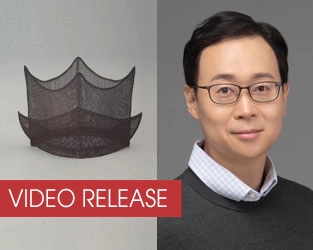
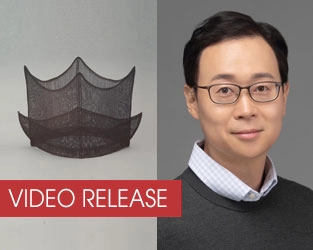
Reframing Suicide as a Shared Social Responsibility in Korea
Dr. Peter Jongho Na

Video Release |  

 MONDAY, NOVEMBER 17, 2025 | 4:00 PM (EST) |  

The Korea Society is pleased to announce that the ninth annual Sherman Family Korea Emerging Scholar Lecture Awardee is Dr. Peter Jongho Na, assistant professor of psychiatry at Yale School of Medicine.  In his lecture, Reframing Suicide as a Shared Social Responsibility in Korea, he casts suicide not as an individual failure or “extreme choice (극단적 선택),” but as a systemic and cultural crisis requiring a coordinated national response. Drawing on his experience as a psychiatrist, public health researcher, and mental health advocate, he examines the scale and societal costs of suicide in Korea and analyzes key structural drivers such as academic and workplace pressures, poverty and isolation among older adults, and the pervasive stigma surrounding mental illness and treatment. 

A central theme is how stigma has sustained silence, denial, and policy inertia. Dr. Peter Jongho Na shares his efforts to challenge euphemistic language and foster open public dialogue, while proposing an interdisciplinary roadmap inspired by global models that integrate public health, education, and social welfare reforms. Further, he highlights the Korean diaspora’s potential role in breaking taboos and advancing cultural and policy change, underscoring that suicide prevention must be embraced as a collective, societal responsibility.


Note: This presentation includes discussion of suicide and mental health topics that may be distressing to some individuals.


 The Korea Society
350 Madison Avenue, 24th Floor
New York, NY 10017


About the Speaker:


Dr. Peter Jongho Na is an addiction psychiatrist and assistant professor of psychiatry at Yale School of Medicine. His research explores how social and environmental factors shape addiction and suicidal behavior. Deeply committed to the well-being of Korean Americans, he serves as medical director of the Korean Community Services of Metropolitan New York’s mental health clinic—the only nonprofit clinic in New York dedicated to this community—and received the organization’s Community Leader Award for his service. In South Korea, where suicide rates remain the highest among OECD nations, Dr. Na has been a leading advocate for evidence-based suicide prevention and mental health reform, featured in The Guardian, TIME, and the BBC. 


About the Award:

The Sherman Family Korea Emerging Scholar Lecture Award was established in 2017 through the generous support of Mr. and Mrs. Philp Sherman and family. Its primary goal is to encourage U.S. thought leadership on Korea among a new generation. The annual award competition opens in early spring and the lecture is hosted in-person at the Society and streamed virtually in the fall of each year. The award is presented across disciplines to emerging thought leaders from a wide range of disciplines and backgrounds working in the U.S.

Prior awardees have explored topics in the arts, architecture, industrial policy, political science and technology and have included Ph.D. candidates, junior professors (tenure and non-tenure track), researchers and professionals. Questions can be directed to linda.tobash@koreasociety.org.

Click here for further information on the application process.
Click here to view presentations of former award winners.


You May Also Enjoy:

The Politics of The Silence of Love in Colonial Korea with David Krolikoski The Return of Industrial Policy: Lessons from Korea with Munseob Lee Korea’s Changing National Story and Democratic Future with Aram Hur P’ansori Mountain Pilgrimages: Land as Interlocutor in Contemporary Korean Oral Performance and Literature with Ivanna Sang Een Yi

US-Korea Cooperation Across Domains and Through History

Join us for a timely and insightful exploration of all the key issues affecting the U.S.-Republic of Korea (ROK) relationship.

The Van Fleet Policy Forum is The Korea Society’s flagship policy event. Through panel discussions, keynote remarks, and networking opportunities, the forum convenes senior thought leaders from the US and Korea for dynamic, informative, and analytical discussions on security, diplomacy, geoeconomics, and alliance history.

A full program agenda and speaker bios can be seen below.

This year’s conference is held in The Atlantic Council’s office in Washington D.C. and produced in partnership with the Indo-Pacific Security Initiative in The Atlantic Council’s Scowcroft Center for Strategy and Security.

The 2025 Van Fleet Policy Forum is made possible by the generous support of The Kim Koo Foundation as well as The Korea Society’s individual and corporate members.

All are invited to watch the livestream by registering below.

In-person audience participation is by invitation only, but interested persons can submit an application to attend. Seats are limited and Korea Society members will receive preference. For information on membership, please refer to this webpage.


US-Korea Cooperation Across Domains and Through History

2025 Van Fleet Policy Forum

Friday, November 14, 2025 | 8 AM – 2 PM (EST)


Program Agenda 

  8:00 – 8:50 AM    Arrival, Light Breakfast, and Registration.
  8:50 – 9:00 AM  

Welcoming Remarks 

Emcee Welcome – Jonathan Corrado, Korea Society Policy Director

President’s Greeting – Tom Byrne, Korea Society President & CEO 

Board Chair Greeting – Ambassador (Ret.) Kathleen Stephens, Korea Society Board Chair 

Partner Greeting – Markus Garlauskas, Director of the Indo-Pacific Security Initiative of the Scowcroft Center for Strategy and Security

  9:00 – 9:50 AM  

Diplomacy Panel- Adaptation or Transformation? 

Moderator: Ambassador (Ret.) Kathleen Stephens, Korea Society Board Chair

Ambassador (Ret.) Kim Hyoung-zhin, Former Republic of Korea Ambassador to the European Union and Deputy National Security Advisor

Ambassador (Ret.) Philip Goldberg, Former U.S. Ambassador to the Republic of Korea

  9:50 – 10:00 AM   Networking Break
  10:00 – 10:50 AM  

Geoeconomics Panel- The Nexus of Trade, Investment, and National Security 

Moderator: Tom Byrne, Korea Society President & CEO 

Yoo Myung-hee, Former Republic of Korea Trade Minister

Dr. Nadia Schadlow, Senior Fellow at Hudson Institute and Former US Deputy National Security Advisor for Strategy

Kimberly Donovan, Director of the Economic Statecraft Initiative within the Atlantic Council’s GeoEconomics Center

  10:50 – 11:00 AM   Networking Break
  11:00 – 11:50 AM  

Security Panel – Deterring and Defending in a Regional Conflict 

Moderator: General (Ret.) Walter Sharp, Korea Society Board Vice Chair

Dr. Shin Beomchul, Senior Research Fellow at the Sejong Institute and former Republic of Korea Vice Minister of National Defense

Markus Garlauskas, Director of the Indo-Pacific Security Initiative of the Scowcroft Center for Strategy and Security

General (Ret.) Paul LaCamera, former Commander of U.S. Forces Korea, Combined Forces Command, and United Nations Command

David Maxwell, Vice President of the Center for Asia Pacific Strategy and former U.S. Army Special Forces Colonel

  11:50 – 12:00 PM   Networking Break
  12:00 PM – 12:50 PM  

History Panel – The Forging of an Alliance 

Moderator: Jonathan Corrado, Korea Society Policy Director

Dr. Kathryn Weathersby, Adjunct Professor of Asian Studies in the Edmund A. Walsh School of Foreign Service at Georgetown University 

Dr. David Fields, Associate Director of the Center for East Asian Studies at University of Wisconsin-Madison

  12:50 – 1:10 PM  

Keynote Remarks 

Introduction: Tom Byrne, Korea Society President & CEO

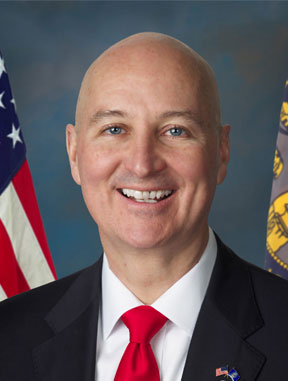
Keynote: U.S. Senator Pete Ricketts – Video Remarks

Introduction: Matthew Kroenig, Vice President and Senior Director of the Atlantic Council’s Scowcroft Center for Strategy and Security

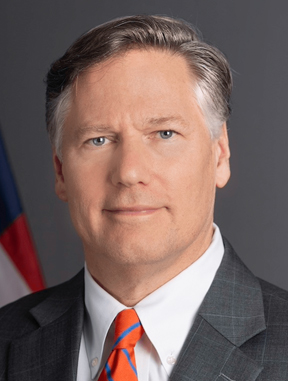
Keynote: U.S. Deputy Secretary of State Christopher Landau

  1:10 – 2:30 PM  

Lunch and Networking in the Sky Lobby


About the Sponsor:


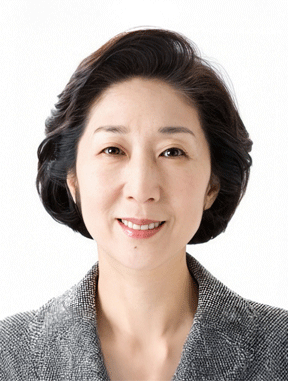
Dr. Mee Kim is a distinguished Korean philanthropist and civic leader. She currently serves as Chairperson of the Kim Koo Foundation, established to honor the legacy of her grandfather, Kim Koo—one of Korea’s most revered independence leaders. The Foundation advances educational and cultural initiatives both in Korea and internationally, continuing Kim Koo’s lifelong commitment to public service and national identity. Dr. Kim has dedicated her career to advocating for social equity and civic engagement. Her work spans a range of critical issues, including women’s rights, child welfare, healthcare access, education, the arts, and civil diplomacy. She previously served as Chairperson of Women’s News, a leading Korean newspaper focused on women’s issues and social justice. She also holds board positions at the Fletcher School at Tufts University, Midwest Young Artists, and Lake Forest Academy, where she is a Life Trustee. Dr. Kim is the granddaughter of Kim Koo, Premier of the Korean Provisional Government (KPG) and a central figure in Korea’s independence movement. She is also the daughter of General Shin Kim, a pioneering military leader and public servant. Dr. Kim is married to Ho Youn Kim, Chairman of Binggrae Co., Ltd., a leading Korean food and beverage company best known for Banana Flavored Milk and Melona.


About the Speakers:


Thomas J. Byrne joined The Korea Society as President in August 2015. Since June 2023, he had also taken the role of “Honorary Ambassador,” appointed by the minister of MOTIE under the auspices of KOTRA/Invest Korea, to help promote trade and investment ties between Korea and the U.S. Byrne comes to the Society from Moody’s Investor Services, where he was Senior Vice President, Regional Manager, spokesperson, and Director of Analysis for the Sovereign Risk Group in the Asia-Pacific and Middle East regions, based in Singapore. Prior to that, he was the Senior Economist of the Asia Department at the Institute of International Finance in Washington D.C. from 1984 to 1996. Byrne has an MA in International Relations with a concentration in international economics from the Johns Hopkins School of Advanced international Studies and a BS in Biology from State University of New York at Stony Brook. Before his graduate work, he served in South Korea for three years as a U.S. Peace Corps volunteer. Byrne teaches as an adjunct professor at Columbia University’s School of International and Public Affairs in New York City and at Georgetown University’s Graduate School of Foreign Service in Washington, D.C. As president, he has written opinion articles published in the Wall Street Journal, Bloomberg View, The New York Times, The Washington Post, The Financial Times, The National Interest, and Reuters Breakingviews.


Kimberly Donovan is the director of the Economic Statecraft Initiative within the Atlantic Council’s GeoEconomics Center. Prior to joining the Council, Donovan served in the federal government for fifteen years, most recently as the acting associate director of the Financial Crimes Enforcement Network’s (FinCEN) Intelligence Division and FinCEN’s chief of staff and senior advisor to the director. Donovan holds extensive expertise in anti-money laundering/countering the financing of terrorism, the Bank Secrecy Act, US national security, Office of Foreign Assets Control sanctions programs, and FinCEN regulatory actions. Prior to joining FinCEN, Donovan served a tour on the White House National Security Council as a director for counterterrorism and served in Treasury’s Office of Terrorist Financing and Financial Crimes as a senior policy advisor and acting director of the Middle East and North Africa. Before joining Treasury, Donovan worked in the Office of the Director of National Intelligence/National Counterterrorism Center and the Defense Intelligence Agency. Donovan holds a master of arts in international peace and conflict resolution from the School of International Service at American University and a bachelor of arts in political science from the University of Vermont. She resides in Northern Virginia with her family.


Dr. David Fields is Associate Director of the Center for East Asian Studies at University of Wisconsin-Madison. He earned his PhD in history at the University of Wisconsin–Madison, specializing in US-Korean relations. He is the author of Foreign Friends: Syngman Rhee, American Exceptionalism, and the Division of Korea and the editor of The Diary of Syngman Rhee, 1904–34, 1944,  published by the National Museum of Korean Contemporary History. Since 2015, he has been the book review editor of the Journal of American-East Asian Relations. He has been published in the Washington Post, North Korea Review, Journal of American-East Asian Relations, SinoNK.com, Transactions of the Royal Asiatic Society-Korea Branch, and in the Working Papers Series of the Cold War International History Project. His research and analysis has been featured on National Public Radio, Wisconsin Public Radio, C-SPAN, and CNN.


Markus Garlauskas is the director of the Indo-Pacific Security Initiative of the Scowcroft Center for Strategy and Security. He leads this initiative’s efforts focused on conflict and nuclear deterrence, United States strategy, and building cooperation with allies and partners in the Indo-Pacific region. He led projects focused on deterrence and defense issues in East Asia as a nonresident senior fellow from August 2020 until assuming his duties as director in January 2023. Garlauskas served in the US government for nearly twenty years. He was appointed to the Senior National Intelligence Service as the National Intelligence Officer (NIO) for North Korea on the National Intelligence Council from July 2014 to June 2020. As NIO, he led the US intelligence community’s strategic analysis on North Korea issues and expanded analytic outreach to non-government experts. He also provided direct analytic support to top-level policy deliberations, including the presidential transition, as well as the Singapore and Hanoi summits with North Korea. Garlauskas served for nearly twelve years overseas at the headquarters of United Nations Command, Combined Forces Command and US Forces Korea in Seoul. His staff assignments there included chief of the Intelligence Estimates Branch and director of the Strategy Division. For his service in Korea, he received the Joint Civilian Distinguished Service Award, the highest civilian award from the Chairman of the Joint Chiefs of Staff. Garlauskas holds a BA in History from Kent State University. He earned a Master’s Degree from Georgetown University’s Security Studies graduate program, where he is now an adjunct professor.


Ambassador (Ret.) Philip S Goldberg served as US Ambassador to the Republic of Korea 2022-2025. He served as US Ambassador to Colombia. In 2018, Goldberg served as Charge d’affaires at the US Embassy in Havana, Cuba, followed by a year as a Diplomat in Residence at Georgetown University. From 2013-2016, Amb Goldberg served as US Ambassador to the Philippines. Prior to that assignment, he served as Assistant Secretary of State for the Bureau of Intelligence and Research (2010-2013); US Ambassador to Bolivia (2006-2008); Chief of Mission in Pristina, Kosovo (2004-2006); and Charge d’affaires and Deputy Chief of Mission in Santiago, Chile (2001-2004). From 2009-2010, Goldberg was coordinator for the implementation of UN sanctions on North Korea. His other overseas tours included Bogota, Colombia, where he served as the Plan Colombia coordinator, and Pretoria, South Africa. Amb Goldberg was a senior member of the State Department team handling the transition from the Clinton to Bush administrations and served as acting Deputy Assistant Secretary of State for Legislative Affairs (2000-2001) and Special Assistant and Executive Assistant to Deputy Secretary of State Strobe Talbott (1996-2000). As the Bosnia Desk Officer and Special Assistant to Amb Richard Holbrooke (1994-1996), Goldberg was a member of the American negotiating team in the lead-up to the Dayton Peace Conference and Chief of Staff for the American delegation at Dayton. Amb Goldberg holds the personal rank of Career Ambassador, the highest rank in the US Foreign Service. He has received numerous awards, including Presidential Distinguished and Meritorious Service Awards; the Department’s Distinguished Honor Award and the Silver Seal Medallion for Meritorious Service in the US Intelligence Community. Amb. Goldberg is a native of Boston, Massachusetts, and a graduate of Boston University. Before joining the Foreign Service, he served as a liaison officer between the government of the City of New York and the United Nations and Consular Community.


Ambassador (Ret.) Kim Hyoung-zhin is a Visiting Researcher at the Institute for Future Strategy of Seoul National University and a Senior Policy Advisor at the Korea Institute of Nuclear Nonproliferation and Control (KINAC). Mr. Kim retired from the South Korean government in May 2022 after working more than 38 years. His last post was Deputy National Security Advisor to the President. He was ambassador to the European Union and NATO as well as Belgium and Luxembourg from January 2017 to December 2019. His overseas assignments were Washington, D.C. twice, Accra, Beijing, and Brussels. Ambassador Kim majored in economics at Seoul National University and received a master’s degree in public affairs from Princeton University. He finished a PhD course at the National Graduate Institute for Policy Studies (GRIPS) in Tokyo. He was a visiting fellow at the University of Tokyo in 2012-2013 and has been an Adjunct Researcher at Waseda University since 2023. He gave lectures at various universities and wrote articles in ‘Korea On Point,’ ‘European Foreign Affairs Review,’ and others. His recent book published in June 2025 is Why Is the EU Not Prominently Visible in Korea’s Diplomacy?


Matthew Kroenig is vice president and senior director of the Atlantic Council’s Scowcroft Center for Strategy and Security. In these roles, he manages the Scowcroft Center’s bipartisan team of more than thirty resident staff, including the: Geostrategy Initiative, Indo-Pacific Security Initiative, Transatlantic Security Initiative, Forward Defense, the Adrienne Arsht National Security Resilience Initiative, and the Bipartisan Commission on Biodefense. He also oversees the Council’s fellows program and vast network of nonresident experts. His research focuses on US national security strategy, strategic competition with China and Russia, and strategic deterrence and weapons nonproliferation. He has held fellowships at the Council on Foreign Relations, Harvard University, and Stanford University. He is a life member of the Council on Foreign Relations and holds an MA and PhD in political science from the University of California at Berkeley.


General (Ret.) Paul LaCamera retired from the U.S. Army after almost 40 years of commissioned service. Commissioned in the infantry after graduating from the US Military Academy in 1985, he culminated his service as the Commander of U.S. Forces Korea, Combined Forces Command, and United Nations Command. He has had the honor of leading and serving in every type of Infantry unit with members of all the U.S military services (SOF and Conventional), inter-agency colleagues, and coalition allies and partners from rifle platoon leader through Sub-Unified Commander and multiple Combined Joint Task Forces.


Christopher Landau was sworn in as the 23rd Deputy Secretary of State on March 25, 2025. Deputy Secretary Landau served as United States Ambassador to Mexico from 2019 to 2021 during President Trump’s first administration. Before and after his tenure in Mexico, he was engaged in the private practice of law in Washington, D.C. for more than three decades.

As Ambassador to Mexico, Deputy Secretary Landau presided over the United States’ largest diplomatic mission and fostered unprecedented bilateral cooperation that yielded results including the ratification and entry into force of the U.S.-Mexico-Canada Free Trade Agreement, protection of border commerce and regional supply chains during the pandemic, and the lowest levels of illegal migration in years.

Deputy Secretary Landau’s legal practice focused on appellate litigation. He has briefed and argued cases involving a wide variety of topics in the U.S. Supreme Court and all of the federal courts of appeals.

Deputy Secretary Landau was born in Madrid, Spain, where his father George Landau (later United States Ambassador to Paraguay, Chile, and Venezuela) was stationed with the U.S. Foreign Service. Deputy Secretary Landau brings his perspective as both a recent United States Ambassador and upbringing in the foreign service, as well as his extensive legal background, to his current position.

A graduate of Harvard College and Harvard Law School, Deputy Secretary Landau clerked twice at the Supreme Court, first for Justice Antonin Scalia and then for Justice Clarence Thomas. He is fluent in Spanish and proficient in French. He is married to Caroline Bruce Landau, and they have two adult children, Nathaniel and Julia.


David Maxwell is a retired U.S. Army Special Forces Colonel who has spent more than 30 years in the Asia Pacific region (primarily Korea, Japan, and the Philippines) as a practitioner, specializing in Northeast Asian Security Affairs and irregular, unconventional, and political warfare. He is the Vice President of the Center for Asia Pacific Strategy. He commanded the Joint Special Operations Task Force Philippines during the war on terrorism and is the former J5 and Chief of Staff of the Special Operations Command Korea, and G3 of the US Army Special Operations Command. Following retirement, he was the Associate Director of the Security Studies Program at Georgetown University. He is a member of the board of directors of the Committee for Human Rights in North Korea and the OSS Society, on the board of advisers of Spirit of America, and is a contributing editor to Small Wars Journal.


U.S. Senator Pete Ricketts was sworn in as Nebraska’s U.S. Senator on January 23, 2023. Born in Nebraska City and raised in Omaha, Senator Pete Ricketts is the son of an entrepreneur and a school teacher. Pete and his wife, Susanne Shore, have been married for 26 years and live in Omaha. They have three children: Roscoe, Margot, and Eleanor. Pete graduated from Westside High School before attending the University of Chicago where he earned his bachelor’s degree in biology and an M.B.A. in marketing and finance. After graduate school, Pete returned to Omaha and worked for Union Pacific before working as a customer services representative in his family’s business, a company that would eventually become known as Ameritrade. He went on to hold leadership roles in the company including Senior Vice President of Strategy and Business Development, Senior Vice President of Product Development, Senior Vice President of Marketing, President, and Chief Operating Officer (COO). Pete also founded Drakon, LLC, which supports Nebraska entrepreneurs and startup companies, and was a past board member of TD Ameritrade’s Board of Directors and the Chicago Cubs baseball team. Pete was sworn in as Nebraska’s 40th Governor on January 8, 2015 and reelected to a second term in November 2018. As governor, Pete dramatically improved services to Nebraskans, and worked with the Legislature to deliver over $12.7 billion in tax relief, including over $10 billion in property tax relief, by 2027. Additionally, he fully eliminated state taxes on veterans’ retirement income starting in 2022 and on Social Security benefits by 2025. Pete cut the growth of state spending by more than half and held state budgets to an average of 2.8% growth annually. He created new workforce development programming and cut unnecessary red tape to bolster Nebraska’s business-friendly climate. Additionally, he expanded international markets for Nebraska’s farmers and ranchers. Thanks in part to the Governor’s leadership, Nebraska won the Governor’s Cup for the most economic development projects per capita three years in a row from 2016 to 2018. He was also appointed to serve on the Council of Governors and the Advisory Committee for Trade Policy and Negotiations by President Donald J. Trump. Pete has also taken on leadership roles in local and state associations and organizations. He serves on the board of the Mid-America Council of the Boy Scouts, as a director of the Nebraska Game and Parks Foundation, a member of the Board of Advisors of Opportunity Education Foundation, a member of the Archbishop’s Committee for Development, a member of the Knights of Columbus, and a Knight of the Holy Sepulchre. Pete and his family attend St. Margaret Mary’s church.


Dr. Nadia Schadlow is a senior fellow at Hudson Institute and a co-chair of the Hamilton Commission on Securing America’s National Security Innovation Base. She conducts research and analysis on a range of issues at the intersection of strategy, national security, and technology. She writes on topics that include the vulnerabilities of US supply chains in areas such as advanced batteries and energetic materials; the relationship between climate and defense policy; and the disconnects between strategy and operational policies. Her articles have appeared in Foreign Affairs, Foreign Policy, The Hill, Parameters, the Wall Street Journal, Philanthropy, and several edited volumes. Dr. Schadlow was most recently US deputy national security advisor for strategy. In that capacity she led the drafting and publication of the 2017 National Security Strategy of the United States. Earlier in her career, she served as a senior program officer in the International Security and Foreign Policy Program of the Smith Richardson Foundation, where she helped identify strategic issues that warranted further attention from the US policy community. She also served in the Defense Department. Dr. Schadlow holds a BA in government and Soviet studies from Cornell University and an MA and PhD from the John Hopkins Nitze School of Advanced International Studies (SAIS).


General (Ret.) Walter “Skip” Sharp was born in Morgantown, West Virginia while his father was fighting in the Korean War. General Sharp graduated from West Point in 1974 and was commissioned as an armor officer. He earned an M.S. in operations research and system analysis from Rensselaer Polytechnic Institute and is a graduate of the Army War College. General Sharp commanded the United Nations Command, Republic of Korea-United States Combined Forces Command and United States Forces Korea from 2008 to 2011. He also commanded troops in Operations Desert Shield and Desert Storm, Operation Uphold Democracy in Haiti and the Multinational Division (North) of the NATO-led Stabilization Force in Bosnia. General and Mrs. Sharp live in Alexandria, VA. He is a Director on The Korea Society BOD and former Chairman of BOD for the Military Officers Association of America. He is also on the BOD for ARTIS, LLC and consults for several U.S. companies focused on supporting our military and veterans. General Sharp is also involved in Northeast Asia and Korea strategy and policy discussions at several Washington, D.C. area Think Tanks.


Dr. Shin Beomchul is a senior research fellow at the Sejong Institute. He is the former Vice Minister of National Defense. Previously, he served as a senior research fellow at the Asan Institute for Policy Studies and a tenured professor at the Korea National Diplomatic Academy. He was the Director General for Policy Planning at the Ministry of Foreign Affairs. Before he joined the Ministry, he was the Head of the North Korean Military Studies Research Division at the Korea Institute for Defense Analyses. Dr. Shin has published many articles on the ROK-US alliance, inter-Korean relations, and Northeast Asian politics and security. Dr. Shin received his B.A. from Chungnam National University and did his graduate studies at Seoul National University, School of Law. He majored in international law and received his doctor degree (S.J.D.) from Georgetown University Law Center in 2007.


Ambassador (Ret.) Kathleen Stephens was a career diplomat in the United States Foreign Service, 1978-2015. She was U.S. Ambassador to the Republic of Korea 2008-2011, the first woman and first Korean-speaker in that position. Other overseas assignments included postings to Trinidad and Tobago, China, Korea, former Yugoslavia, Portugal, Northern Ireland, where she was U.S. Consul General in Belfast during the negotiations culminating in the 1998 Good Friday Agreement, and India, where she was U.S. Chargé d’affaires (2014-2015). Ambassador Stephens served in a number of policy positions in Washington at the Department of State and the White House. These included acting Under Secretary of State for Public Diplomacy and Public Affairs (2012), Principal Deputy Assistant Secretary of State for East Asian and Pacific Affairs (2005-2007), Deputy Assistant Secretary of State for European and Eurasian Affairs (2003-2005), and National Security Council Director for European Affairs at the Clinton White House. Ambassador Stephens was William J. Perry Fellow for Korea at Stanford University’s Shorenstein Asia Pacific Research Center, 2015-2018. She served as President and CEO of the Korea Economic Institute of American (KEIA) from 2018 to 2023. She is board chair of The Korea Society and board vice-chair of The Asia Foundation. Ambassador Stephens studied at Prescott College, University of Hong Kong and Oxford University, and holds a BA Honors from Prescott. She holds a Master’s degree from Harvard University’s Kennedy School. In the 1970s, she was a Peace Corps volunteer in Korea.


Dr. Kathryn Weathersby is Adjunct Professor of Asian Studies in the Edmund A. Walsh School of Foreign Service at Georgetown University. A specialist on the Korean War and the history of North Korea, she previously taught in the Department of History of Korea University, Seoul, and at the US-Korea Institute of the School of Advanced International Studies, The Johns Hopkins University, in Washington, DC. In the 1990s she conducted pioneering research in Russian archives on the establishment of the DPRK and the Korean War and has written and lectured widely on these subjects. In 2014 the Ministry of Patriots and Veterans Affairs of the Republic of Korea honored her work by awarding her the Medal of Civilian Merit.


Yoo Myung-hee served as Trade Minister of the Republic of Korea (2019-2021), dedicating nearly three decades of public service to shaping Korea’s trade policy and leading international negotiations. As Korea’s chief negotiator, she led major bilateral and multilateral trade negotiations, including the Korea- U.S. FTA amendment negotiations and the Regional Comprehensive Economic Partnership Agreement (RCEP). During her term as trade minister, she contributed to international initiatives to ensure supply chain resilience and to address digital trade policy. Previously, she served as Deputy Minister for Trade Negotiations and Director General for Trade Policy at the Ministry of Trade, Industry and Energy, as well as Spokesperson for Foreign Media at the Office of the President. She received her BA and MPA from Seoul National University and JD from Vanderbilt University Law School, and currently teaches at the Graduate School of International Studies of Seoul National University.


Jonathan Corrado is the director of policy for The Korea Society, where he produces programming and conducts research on a range of security, diplomatic, and socioeconomic issues impacting the US-Korea Alliance, the Korean Peninsula, and Northeast Asia. He is also a nonresident senior fellow in the Indo-Pacific Security Initiative at the Atlantic Council’s Scowcroft Center for Strategy and Security and a lecturer at the School of International and Public Affairs (SIPA) at Columbia University. Corrado is a member of the National Committee on North Korea and was previously a nonresident James A. Kelly fellow at Pacific Forum, an emerging leader at the National Committee on American Foreign Policy (NCAFP), and a contributor to NK Pro. He has published peer-reviewed articles in the International Journal of Intelligence and CounterIntelligence, the Journal of Indo-Pacific Affairs, the Journal of the Royal Society for Asian Affairs, and Asian Politics & Policy. He has also published essays and commentary in Foreign Affairs, Foreign Policy, War on the Rocks, 38 North, the Diplomat, the Japan Times, the National Interest, Yahoo News, Pacific Forum, NK News, and NK Pro. Corrado received an MA from Georgetown University’s Asian studies program in the Walsh School of Foreign Service and a BA in anthropology and philosophy from the University of Maryland, College Park.


Chelsie Alexandre is the Policy Program Officer at The Korea Society. She works with the Director of Policy to develop and implement events that address issues shaping the dynamics of U.S.-ROK relations, the Korean peninsula, and Northeast Asia. Before joining The Korea Society, Chelsie received a Fulbright Research award to conduct research in South Korea on the role of middle power countries in the Korean peace process with Korea University’s Peace and Democracy Institute. During her time in Seoul, she also briefly reported on domestic Korean affairs for The Diplomat. Prior to her current role, Chelsie was a Partnerships Coordinator at the New York City-based nonprofit, The Concordia Summit, and she worked as a Legal Analyst at the global law firm Kobre & Kim. Chelsie also had previous experience as a research Intern at The Korea Society. She graduated with a B.A. in Politics from Princeton University, with minors in East Asian Studies and Diplomacy.


Interview with Bank of Korea Governor Rhee, Chang Yong

Please join us for a timely conversation with Dr. Rhee, Chang Yong, Governor of the Bank of Korea, as he discusses key issues shaping global and domestic economic policy. Governor Rhee sat down with Thomas Byrne, President & CEO of The Korea Society, during his visit to D.C. to attend IMF/WBG Annual Meetings and the G20 Finance Ministers & Central Bank Governors Meeting. In this interview, Governor Rhee shares his views on a wide-range of topics – ranging from global and Korea’s economic outlook, local and global governance of the stablecoins, and to the fiscal challenges and investment negotiations between the US and Korea.

This program was recorded at the Korea Inter-Parliamentary Exchange Center (KIPEC) in Washington D.C. on October 16, 2025.


Interview with Bank of Korea Governor Rhee, Chang Yong

Tuesday, November 4, 2025


The Korea Society
350 Madison Avenue, 24th Floor
New York, NY 10017


ABOUT THE SPEAKER:

Dr. Rhee Chang Yong has been the Governor of the Bank of Korea and Chairman of its Monetary Policy Board since 2022. He currently serves as Chair of the Committee on the Global Financial System and as a member of the Board of Directors at the Bank for International Settlements. Between 2014 and 2022, he served as the Director of the Asia and Pacific Department at the International Monetary Fund. Prior to that, he was Chief Economist of the Asian Development Bank from 2011 to 2014, Secretary General and Sherpa of the Presidential Committee for the 2010 G-20 Seoul Summit from 2009 to 2011, and Vice Chairman of the Financial Services Commission from 2008 to 2009.

Earlier in his career, Mr. Rhee was a Professor of Economics at Seoul National University and an Assistant Professor at the University of Rochester. He holds a Ph.D. in Economics from Harvard University. In 2011, he was awarded the Order of Civil Merit (Peony Medal) by the Government of the Republic of Korea.


Rapid Reaction: APEC South Korea 2025

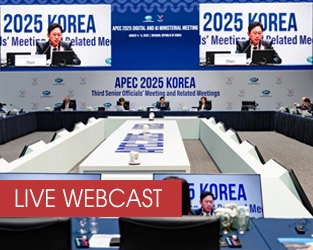
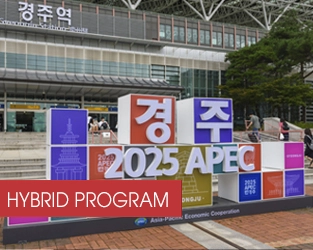
Join us for a rapid reaction analysis of The Asia-Pacific Economic Cooperation Forum (APEC) 2025 summit, held in Gyeongju, South Korea from October 31 to November 1. Our discussion examines all the most significant outcomes in terms of trade and geopolitics, with special emphasis on the US, Korea, and the US-Korea relationship. The priorities for this year’s forum are: “Connect, Innovate, Prosper.” In a preparatory meeting, senior officials from APEC members discussed “strategies for digital economy integration, public health cooperation, and strengthening APEC’s role as an incubator of practical, consensus-driven solutions.” As host nation, Korea’s initiatives include: “addressing demographic change and the rapid advancement of artificial intelligence technology.”

We are joined by Kate Kalutkiewicz, Senior Managing Director of the Trade Practice & McLarty Inbound at McLarty Associates, Professor Jaemin Lee, Professor of Law at Seoul National University and Dean of the School of Law, and Scott Jacobs, Head of Global Public Policy at Coupang. The conversation will be moderated by policy director Jonathan Corrado and policy program officer Chelsie Alexandre. This program is made possible by the generous support of our individual and corporate members and the Korea Foundation.

APEC originated as a ministerial meeting of 12 Asian Pacific countries in 1989. The idea for the forum was proposed by Australian Prime Minister Bob Hawke during a trip to Seoul in January 1989. A leaders’ summit was introduced in 1993 and a series of expansions increased the number of members to 21. South Korea previously hosted the ministerial meeting in Seoul 1991 and the leaders’ meeting in Busan 2005. APEC’s mission is to “support sustainable economic growth and prosperity in the Asia-Pacific region.”

This program is co-hosted by The APEC Study Center at Columbia University.


This program is made possible by the generous support of our individual and corporate members and the Korea Foundation.


Rapid Reaction: APEC South Korea 2025

Monday, November 3, 2025 | 8 AM (EST)


The Korea Society
350 Madison Avenue, 24th Floor
New York, NY 10017


About the Speakers:


Jaemin Lee is currently Professor of Law at Seoul National University and Dean of the School of Law. He obtained his LL.B., LL.M. and Ph.D. from Seoul National University; LL.M. from Georgetown University Law Center; and J.D. from Boston College Law School. His major areas of teaching and research are public international law, international economic law and international dispute settlement. He has published articles and books (including book chapters) on various topics of public international law, international trade law, international investment law, and trade policy. Upon graduation from College of Law, Seoul National University in 1992, he joined the Korean Ministry of Foreign Affairs as a foreign service officer. Between 2000 and 2004, he practiced law with Willkie Farr & Gallagher LLP (Washington, D.C.) as an associate attorney of the firm’s international trade group. From 2004 to 2013 he taught international law and international economic law at the School of Law, Hanyang University in Seoul. He served as President of the Korean Society of International Economic Law (2020-2021), and Vice President of the Korean Society of International Law (2021). He was formerly the Director of the Asia Pacific Law Institute of Seoul National University. He recently published: Artificial Intelligence and International Law (Springer, 2022) and East Asia in a New Legal Landscape: FTAs and Dispute Settlement (Seoul National Univ. Press, 2022).


Kate Kalutkiewicz is Senior Managing Director and leads the McLarty trade practice and contributes to the firm’s Europe practice and McLarty Inbound. Kate has managed complex challenges around global trade, industrial, and investment policy for nearly two decades. Her experience spans roles in government, particularly in Europe and South America, where she honed her skills in negotiating complex international agreements and navigating the nuance around public-private sector interactions. Kate most recently served as Head of US Trade Policy for Amazon, where she advocated a broad range of international trade and economic issues with the US Government, touching several sectors, including retail, creative content production and distribution, cloud services, sustainable fleet, autos, and hardline manufacturing. Prior to that, Kate served as Special Assistant to the President and Senior Director for International Trade at the National Economic Council, where she developed and led US trade policy initiatives. During her White House tenure, she led interagency teams responsible for the US G7 Presidency and US positions on supply chain resiliency and support for the economy during the COVID-19 pandemic. Before serving in the White House, Kate was the Senior Trade Representative at the US Mission to the European Union from 2016-2020. While in Brussels, she was the USTR’s primary interlocutor with the European Commission and Member State authorities responsible for trade. Before her time in Brussels, Kate held the role of USTR’s Director for European Affairs (2011-2016) and served as Associate Chief Negotiator for the US in the Transatlantic Trade and Investment Partnership negotiations. She began her career at USTR as its Director for Brazil and the Southern Cone (2007-2011), where she was the principal agency representative for implementing and managing US trade policy in Brazil, Argentina, Chile, Uruguay, and Paraguay. Prior to USTR, Kate was a legislative assistant in the office of Senator James Talent (R-MO), where she supported the Senator on issues related to trade, foreign policy, homeland security, immigration, and the judiciary.


Scott Jacobs is currently Head of Global Public Policy at Coupang, a U.S. technology and Fortune 200 company (NYSE: CPNG) that provides retail, restaurant delivery, video streaming, and fintech services to customers around the world under brands that include Coupang, Coupang Eats, Coupang Play, and Farfetch. Previously, Mr. Jacobs was a Senior Manager for Trade and Social Responsibility at Amazon, where he led the company’s public policy work and partnerships on human rights, anticorruption, supply chains, U.S.-China trade, and other economic security issues. Prior to joining Amazon, Scott Jacobs was a Vice President at Albright Stonebridge Group, a leading international consulting firm led by former U.S. Secretary of State Madeleine Albright, where he advised multinational clients including Fortune 500s, global investors, foundations, and non-profits on government affairs and business strategy. In the Obama administration, Mr. Jacobs served in the Office of the United States Trade Representative as Confidential Assistant to the Deputy USTR before being selected to join Ambassador Ron Kirk’s staff as an Advisor and acting Director of the Executive Secretariat. In these roles, he focused on policy and trade matters related to Europe and the Middle East, Western Hemisphere, intellectual property, and small business market access. Previously, Mr. Jacobs worked in the White House Office of Cabinet Affairs, where he assisted with special projects and produced weekly reports for then Vice President Joe Biden’s American Recovery and Reinvestment Act (ARRA) task force. Mr. Jacobs holds an M.A. degree in Global Security from John Hopkins University, where he graduated with honors, and a Bachelor of Science from the University of Michigan.


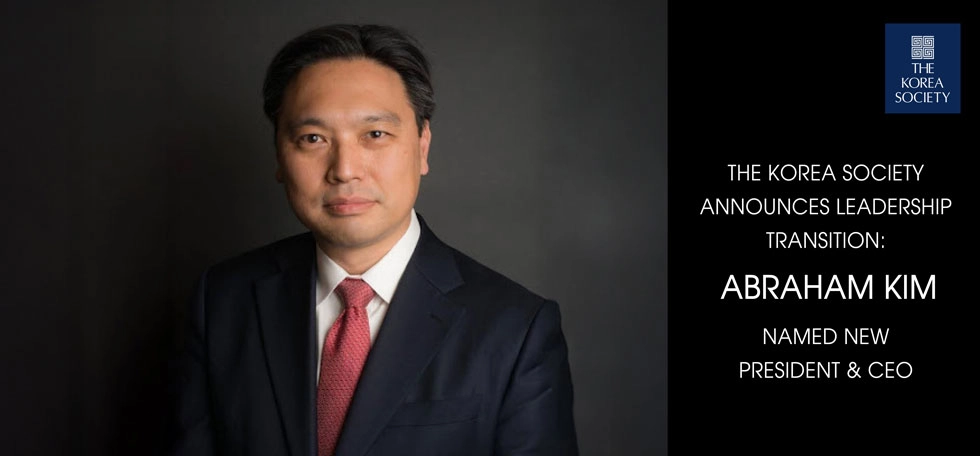
The Korea Society Announces Leadership Transition: Abraham Kim Named New President and CEO

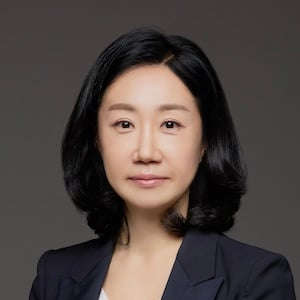
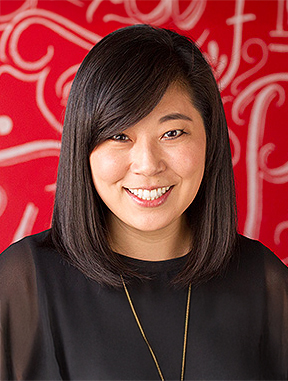
Jiyoung Suh, Vice President of The Korea Society

Jiyoung Suh, Vice President of The Korea Society

NEW YORK, NY — Oct 22, 2025 — The Korea Society (TKS) is pleased to announce that Abraham Kim, Ph.D., will become its new President and Chief Executive Officer, effective January 19, 2026. Dr. Kim succeeds Thomas J. Byrne, who will step down after a decade of distinguished leadership.

Since joining The Korea Society in August 2015, Tom Byrne has transformed the organization, expanding its reach and impact as a leading outreach institution on U.S.-Korea relations. Under his guidance, TKS has strengthened its programs in policy, business, education, and the arts, and has played a vital role in fostering greater understanding and cooperation between the people of the United States and Korea. Mr. Byrne’s tenure has been marked by his commitment to strategic vision, cross-cultural engagement, and thought leadership, including his service as Honorary Ambassador of Foreign Investment Promotion for  Korea, appointed by the Minister of Trade, Industry and Energy.

Abraham Kim joins The Korea Society from the Council of Korean Americans (CKA), where he served as Executive Director and President. Dr. Kim brings over 20 years of experience in foreign policy analysis, leadership development, and innovation consulting. At CKA, he was instrumental in strengthening the national Korean American community and developing impactful global leaders through education and collaboration. His previous roles include Executive Director at the Maureen and Mike Mansfield Center, Vice President and Interim President of the Korea Economic Institute of America, and other leadership roles  at Eurasia Group, SAIC, and CSIS. Dr. Kim holds a Ph.D. in Political Science from Columbia University. 

Ambassador Kathleen Stephens, Chair of The Korea Society Board of Directors, commented:


Tom Byrne’s decade of service has set a high standard for leadership and impact. His strategic vision and dedication have transformed The Korea Society, expanding its reach and deepening its role as a bridge between the United States and Korea. We are grateful for his unwavering commitment and the legacy he leaves behind. We are excited to welcome Abraham Kim, whose vision and experience will guide The Korea Society into its next chapter of growth and engagement.


The Korea Society expresses its deepest gratitude to Tom Byrne for his transformative leadership and welcomes Abraham Kim as he begins his tenure in January 2026.

For more information, please contact Communication Officer Micala Shaffer at korea.ny@koreasociety.org


Founded in 1957, The Korea Society is a nonpartisan, nonprofit, 501(c)(3) organization dedicated to promoting greater awareness, understanding, and cooperation between the U.S. and Korea. The Society features public programs, classes, exhibits, and other activities in its Arts & Culture, Business & Economics, Education, and Policy program areas in pursuit of its mission. To learn more, please visit koreasociety.org.

What to Expect: The 2025 APEC Summit in South Korea

Join us for a scene setter that explores the stakes and the storylines for The Asia-Pacific Economic Cooperation Forum (APEC) 2025 summit, held in Gyeongju, South Korea from October 31 to November 1, 2025. This discussion, held one week prior to the summit, unpacks the most significant agenda items including trade, investment, and geopolitics, with special emphasis on the US, Korea, and the US-Korea relationship.

The discussion features senior experts with firsthand experience, including: Ambassador (Ret.) Philip Goldberg, former US Ambassador to the Republic of Korea 2022-2025, and Kate Kalutkiewicz, Senior Managing Director of the Trade Practice at McLarty Associates and former Special Assistant to the President and Senior Director for International Trade at the National Economic Council. The moderator is Tom Byrne, President and CEO of The Korea Society, adjunct professor at Columbia University’s SIPA, and former Senior Vice President for Moody’s Investor Services.

The priorities for this year’s forum are: “Connect, Innovate, Prosper.” In a preparatory meeting, senior officials from APEC members discussed “strategies for digital economy integration, public health cooperation, and strengthening APEC’s role as an incubator of practical, consensus-driven solutions.” As host nation, Korea’s initiatives include: “addressing demographic change and the rapid advancement of artificial intelligence technology.”

APEC originated as a ministerial meeting of 12 Asian Pacific countries in 1989. The idea for the forum was proposed by Australian Prime Minister Bob Hawke during a trip to Seoul in January 1989. A leaders’ summit was introduced in 1993 and a series of expansions increased the number of members to 21. South Korea previously hosted the ministerial meeting in Seoul 1991 and the leaders’ meeting in Busan 2005. APEC’s mission is to “support sustainable economic growth and prosperity in the Asia-Pacific region.”

This program is made possible by the generous support of our individual and corporate Members, Columbia University’s Weatherhead East Asian Institute, and the Korea Foundation.


What to Expect: The 2025 APEC Summit in South Korea

Thursday, October 23, 2025 | 12 PM (EDT)


The Korea Society
350 Madison Avenue, 24th Floor
New York, NY 10017


About the Speakers:


Philip S Goldberg served as US Ambassador to the Republic of Korea 2022-2025. He served as US Ambassador to Colombia. In 2018, Goldberg served as Charge d’affaires at the US Embassy in Havana, Cuba, followed by a year as a Diplomat in Residence at Georgetown University. From 2013-2016, Amb Goldberg served as US Ambassador to the Philippines. Prior to that assignment, he served as Assistant Secretary of State for the Bureau of Intelligence and Research (2010-2013); US Ambassador to Bolivia (2006-2008); Chief of Mission in Pristina, Kosovo (2004-2006); and Charge d’affaires and Deputy Chief of Mission in Santiago, Chile (2001-2004). From 2009-2010, Goldberg was coordinator for the implementation of UN sanctions on North Korea. His other overseas tours included Bogota, Colombia, where he served as the Plan Colombia coordinator, and Pretoria, South Africa.

Amb Goldberg was a senior member of the State Department team handling the transition from the Clinton to Bush administrations and served as acting Deputy Assistant Secretary of State for Legislative Affairs (2000-2001) and Special Assistant and Executive Assistant to Deputy Secretary of State Strobe Talbott (1996-2000). As the Bosnia Desk Officer and Special Assistant to Amb Richard Holbrooke (1994-1996), Goldberg was a member of the American negotiating team in the lead-up to the Dayton Peace Conference and Chief of Staff for the American delegation at Dayton.

Amb Goldberg holds the personal rank of Career Ambassador, the highest rank in the US Foreign Service. He has received numerous awards, including Presidential Distinguished and Meritorious Service Awards; the Department’s Distinguished Honor Award and the Silver Seal Medallion for Meritorious Service in the US Intelligence Community.

Amb. Goldberg is a native of Boston, Massachusetts, and a graduate of Boston University. Before joining the Foreign Service, he served as a liaison officer between the government of the City of New York and the United Nations and Consular Community.


Kate Kalutkiewicz is Senior Managing Director and leads the McLarty trade practice and contributes to the firm’s Europe practice and McLarty Inbound. Kate has managed complex challenges around global trade, industrial, and investment policy for nearly two decades. Her experience spans roles in government, particularly in Europe and South America, where she honed her skills in negotiating complex international agreements and navigating the nuance around public-private sector interactions. Kate most recently served as Head of US Trade Policy for Amazon, where she advocated a broad range of international trade and economic issues with the US Government, touching several sectors, including retail, creative content production and distribution, cloud services, sustainable fleet, autos, and hardline manufacturing. Prior to that, Kate served as Special Assistant to the President and Senior Director for International Trade at the National Economic Council, where she developed and led US trade policy initiatives. During her White House tenure, she led interagency teams responsible for the US G7 Presidency and US positions on supply chain resiliency and support for the economy during the COVID-19 pandemic. Before serving in the White House, Kate was the Senior Trade Representative at the US Mission to the European Union from 2016-2020. While in Brussels, she was the USTR’s primary interlocutor with the European Commission and Member State authorities responsible for trade. Before her time in Brussels, Kate held the role of USTR’s Director for European Affairs (2011-2016) and served as Associate Chief Negotiator for the US in the Transatlantic Trade and Investment Partnership negotiations. She began her career at USTR as its Director for Brazil and the Southern Cone (2007-2011), where she was the principal agency representative for implementing and managing US trade policy in Brazil, Argentina, Chile, Uruguay, and Paraguay. Prior to USTR, Kate was a legislative assistant in the office of Senator James Talent (R-MO), where she supported the Senator on issues related to trade, foreign policy, homeland security, immigration, and the judiciary.