

Assessing North Korea’s Developing Nuclear Program
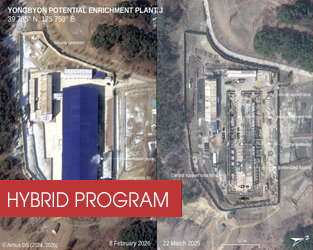
In our discussion assessing the latest developments of North Korea’s nuclear program, Open Nuclear Network (ONN) Senior Analyst Sarah Laderman challenged conventional wisdoms regarding the DPRK’s nuclear capabilities and described how the Kim Regime balances its fissile material supply against strategic weaponization demands.
This program was made possible by the generous support of the Korea Foundation and The Korea Society’s individual and corporate members.
Event Date: Thursday, May 7, 2026
Host Organizations: The Korea Society
Speakers:
• Sarah Laderman, Senior Analyst, Open Nuclear Network, a PAX sapiens programme
• In conversation with Jonathan Corrado, Policy Director, The Korea Society
Key Takeaways
1. North Korea Is Shifting Toward Routinized Force Development with a Projected Arsenal Expansion by 2034
Laderman noted that by the end of 2034, North Korea could produce between 23–47 strategic warheads using plutonium and 173–228 tactical warheads using highly enriched uranium. North Korea’s ambitious goals point to a posture that could exceed defensive needs. A number of factors, both technical and strategic, will affect the overall production. While uranium supplies remain plentiful for tactical weapons, plutonium remains highly prized for strategic miniaturization and sophisticated designs like multiple independently targetable reentry vehicles (MIRVs).
2. Remote Monitoring Has Advanced Through New Technology, but Weaponization Remains a Distinct “Black Box”
Advances in open-source intelligence (OSINT) have fundamentally transformed how we monitor North Korea’s nuclear capabilities, yet a critical verification gap remains. While commercial satellite technologies can now easily bypass weather and camouflage—using advanced radar to pierce cloud cover, thermal imagery to detect active reactor operations, and AI to map vehicle traffic patterns—this transparency stops short of the final weaponization phase. The resulting intelligence picture is highly uneven: the international community can track large, fixed infrastructures, but the actual assembly of nuclear warheads remains entirely opaque. Because the regime effectively utilizes nondescript buildings and extensive underground mountain tunnels, advanced satellite sweeps have failed to locate a single definitive site for plutonium or uranium pit production. Despite better visibility through open source tools overall, Pyongyang’s most valuable strategic assets remain successfully hidden from foreign observation.
3. To Take Advantage of Open Source Monitoring Tools, a Future Arms Control Policy Could Prioritize Plutonium Over Uranium
Laderman highlighted a core policy dilemma: some of the most strategically valuable assets to eliminate are the hardest to remotely verify. Because on-the-ground international inspections have not occurred in nearly two decades, any realistic opening salvo for an arms control agreement or selective freeze must rely on remote observation. According to Laderman, policymakers could therefore focus initial negotiation priorities on freezing plutonium production rather than highly enriched uranium (HEU). While HEU enrichment efficiency and locations are easily hidden, plutonium relies on distinct, fixed reactor profiles and reprocessing infrastructure, making it the most practical, monitorable, and strategically impactful target for containment.
About the Speaker:

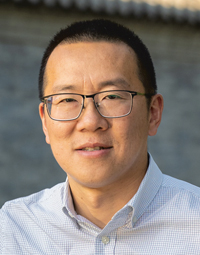
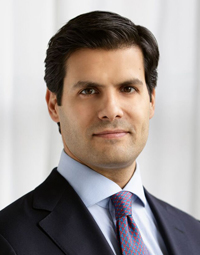
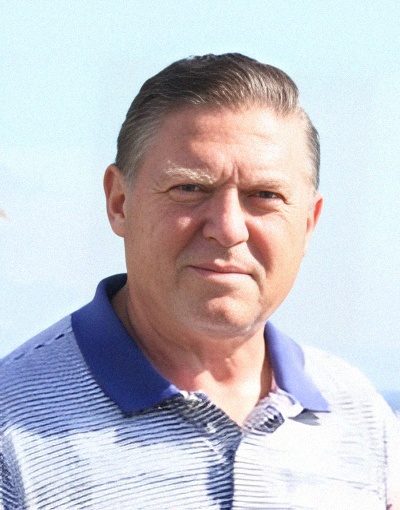
Sarah Laderman is a Senior Analyst for Open Nuclear Network, a PAX sapiens programme, in Vienna, Austria, where she focuses on open-source and technical analyses of nuclear programmes. She is currently focused on the DPRK’s nuclear weaponisation capabilities. She has previously worked at the International Atomic Energy Agency, Lawrence Livermore National Laboratory and the US Department of Defense. Sarah received her MSc in Nuclear Engineering and Masters in Public Policy from the University of California, Berkeley, and her BSc in Nuclear Science and Engineering and Political Science from the Massachusetts Institute of Technology. She is currently a doctoral candidate in Political Science at the University of Vienna.
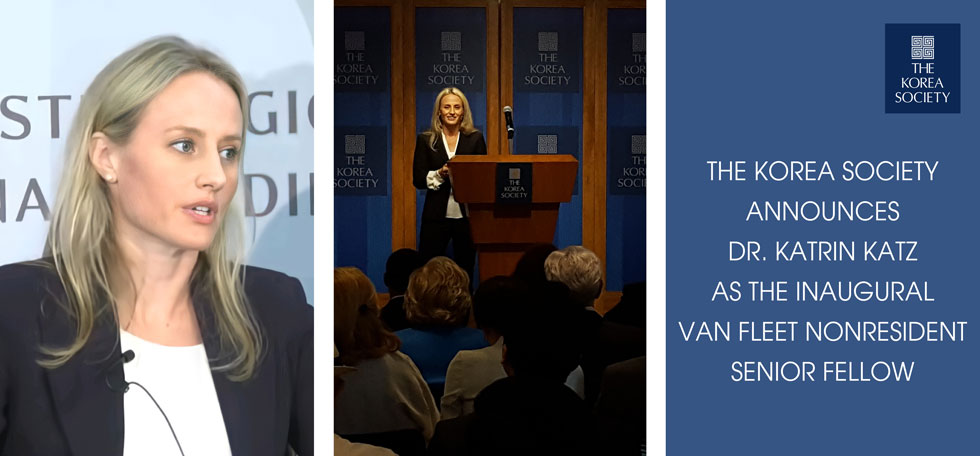
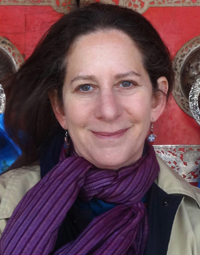
The Korea Society is proud to announce Dr. Katrin Katz as the inaugural Van Fleet Nonresident Senior Fellow. Dr. Katz was the inaugural recipient of the Sherman Family Korea Emerging Scholar Award in 2017, and has served as an expert speaker for the Kim Koo Professional Series and Korea Society public policy programs. With a wealth of practical policy experience and academic knowledge, Dr. Katz helps the Society to set a high bar as the very first Van Fleet Nonresident Senior Fellow. We warmly welcome her to our team.
The Korea Society 350 Madison Avenue, 24th Floor New York, NY 10017
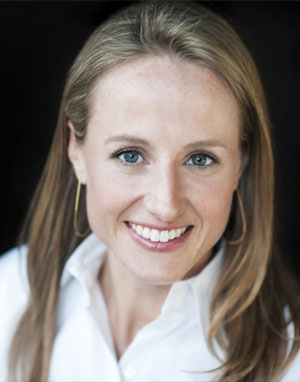
Dr. Katrin Fraser Katz is The Korea Society’s inaugural Van Fleet Nonresident Senior Fellow. Dr. Katz is a former director for Japan, Korea, and oceanic affairs on the staff of the National Security Council, where she served from 2007 to 2008. Previously, she was a special assistant to the assistant secretary for international organization affairs at the U.S. Department of State and an analyst at the Central Intelligence Agency. She currently also serves as an Adjunct Fellow (Non-resident) in the Office of the Korea Chair at the Center for Strategic and International Studies (CSIS) in Washington, DC. She was previously an Adjunct Assistant Professor in the Department of Political Science at Columbia University and has also taught at Georgetown University. In 2017, Dr. Katz received the inaugural Sherman Family Korea Emerging Scholar Lecture Series award from The Korea Society. Dr. Katz’s research, which has been supported by grants from the Korea Foundation and the Horowitz Foundation for Social Policy, explores the interplay of cooperation and conflict in East Asia’s political, economic, and security dynamics. She holds a Ph.D. in political science from Northwestern University; a master’s degree in East Asian and international security studies from the Fletcher School of Law and Diplomacy, where she was awarded the John C. Perry Scholarship for East Asian Studies; and a bachelor’s degree, magna cum laude, in international relations and Japanese from the University of Pennsylvania.
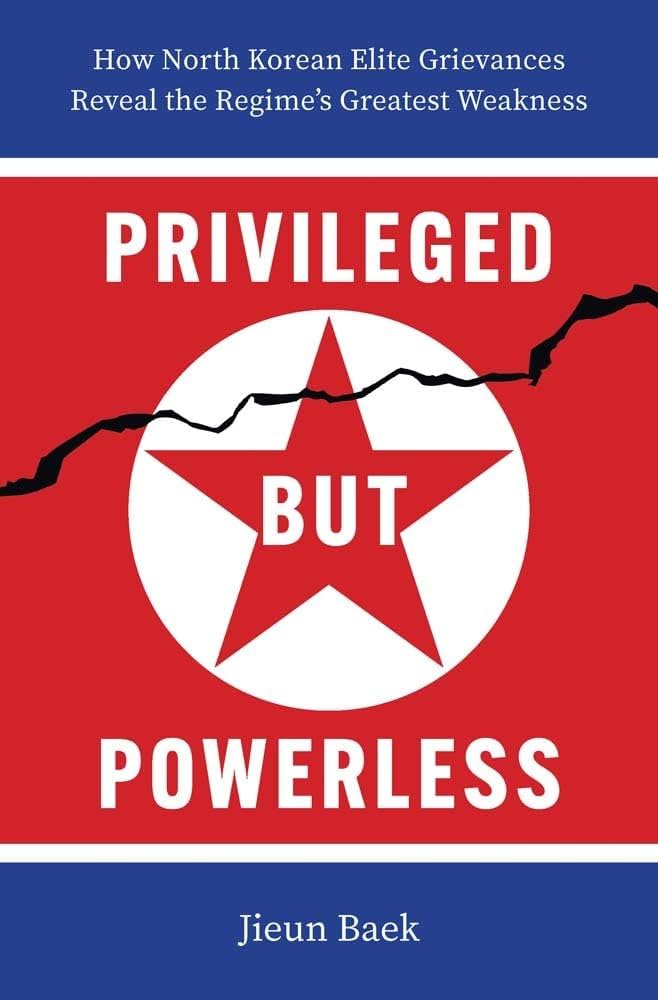
Dr. Jieun Baek described the complex psychological drivers impacting North Korea’s 100,000 political elites in a discussion of her new book, Privileged but Powerless: How North Korean Elite Grievances Reveal the Regime’s Greatest Weakness. Mobilizing hundreds of hours of interviews with high-level escapees, Dr. Baek argued that the elites’ performative loyalty is born out of fear, obscuring a critical vulnerability within the regime’s core support base. Ultimately, the very officials who seem most invested in preserving North Korea’s status quo may become its most dangerous disruptors—driven not by ideology, but by simmering resentment and vanishing alternatives.
This program was hosted by the Korea Society as part of the Kim Koo Professional Series.
Event Date: Thursday, May 7, 2026
Host Organizations: The Korea Society
Speakers:
• Jieun Baek, adjunct faculty, Blavatnik School of Government, University of Oxford; nonresident senior fellow, Atlantic Council; author of Privileged but Powerless
• In conversation with Jonathan Corrado, Policy Director, The Korea Society
Key Takeaways
1. Performative Loyalty as a Mask for Survival
Dr. Baek explained that North Korea’s elite face severe cognitive dissonance, masking deep internal doubts with outward performative loyalty. This hyper-vigilant behavior represents an extreme case of preference falsification, where the most outwardly compliant individuals are actually masking a volatile vulnerability born of fear and self-preservation. To handle the immense mental burden of maintaining this cognitive dissonance, some embrace escapist vices. Additionally, because expressing anger toward Kim Jong-un is fatal, elites psychologically cope with systemic failures by shifting the blame downward, venting their frustrations onto mid-ranking managers instead.
2. The Continuum of Action
According to Dr. Baek, when confronted with their grievances, North Korean political elites operate along a strict behavioral continuum ranging from passive compliance to radical change. The most common and rational choice for individual self-preservation is to simply do nothing and maintain the status quo, which can be accompanied by small acts of adjustment that introduce micro-variations into their daily lives while they maintain their required performative loyalty. For those who decide the pressure is completely intolerable, exit via defection provides a definitive escape, a phenomenon that has increased under Kim Jong-un’s regime. The most distant and difficult choice on the spectrum is to push for reform by attempting to lobby for incremental policy or economic changes from within, though this option remains the furthest from practical reality.
3. Structural Barriers to Collective Action and Individual Survival Tactics
Dr. Baek addressed why covert coups or mass uprisings fail to materialize, pointing to the regime’s engineering of total social atomization, which creates a pervasive culture of mutual distrust where elites never know who is incentivized to report on them. Because collective action is functionally impossible, she noted that the most rational choice for an elite member is to maintain the status quo or intentionally aim for a middle-ground professional tier. This “sweet spot” position is successful enough to provide foreign currency and market luxuries for their families, but quiet enough to avoid shining too brightly and attracting unwanted attention from ambitious rivals.
Jieun Baek is an adjunct faculty member at the University of Oxford’s Blavatnik School of Government and a nonresident senior fellow at the Atlantic Council. She is the author of North Korea’s Hidden Revolution and Privileged but Powerless, and researches elite discontent and regime instability in authoritarian states, particularly North Korea and Burma.
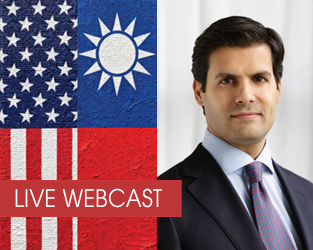
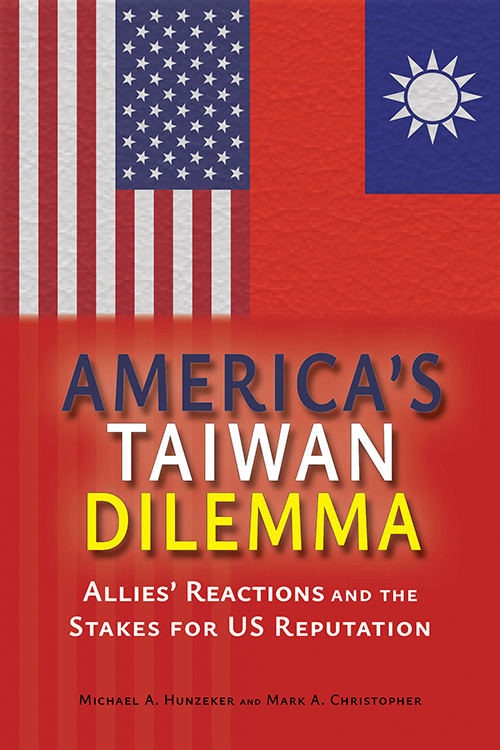
During a discussion regarding his newest book, America’s Taiwan Dilemma: Allies’ Reactions and the Stakes for US Reputation, Mark Christopher argued that Washington policymakers often project their own assumptions onto allies. For instance, U.S. officials believe that allies demand a military defense of Taiwan to preserve America’s reputation. However, through interviews with over 100 regional experts, Christopher challenged this narrative by detailing how South Korea, Japan, and Australia actually perceive Taiwan conflict risks and the reliability of US security commitments.
This program was hosted by the Korea Society as part of the Kim Koo Professional Series.
Event Date: Thursday, April 23, 2026
Host Organizations: The Korea Society
Speakers:
• Mark Christopher, independent risk consultant; nonresident fellow, Taiwan Security Monitor; author of America’s Taiwan Dilemma
• Moderated by Jonathan Corrado, Policy Director, The Korea Society
Key Takeaways
1. Reliability Matters More Than Reputation
Christopher observed that while U.S. policymakers prioritize defending Taiwan to preserve a “reputation” for resolve, regional allies focus primarily on “reliability.” He defines reputation as a backward-looking assessment of past actions, whereas reliability is a forward-looking measure based on current military capability. Allies fear that if a U.S. intervention in Taiwan exhausts American military resources or political will, Washington may become unable to fulfill specific treaty obligations to Japan or South Korea. U.S. involvement in Taiwan may actually weaken alliance reliability if it leaves the U.S. military less capable of providing protection elsewhere.
2. Regional “Realpolitik” and the Lack of Alternatives
Christopher’s research suggests that if China initiates a conflict, America’s allies will likely be pushed closer to the United States regardless of the immediate outcome. Interviewees described a stark power reality: allied nations like Japan and Korea do not wish to acquiesce to Chinese regional hegemony, but lack the individual capability to hold off China. Without a viable alternative, allies are left with no realistic choice but to maintain and strengthen the U.S. alliance, even if a Taiwan contingency results in anger or mistrust toward Washington.
3. South Korea’s Unique “Shrimp among Whales” Dilemma
Unlike Japan or Australia, South Korea does not view Taiwan as a core national security imperative because it faces the existential threat of North Korea. Experts in Seoul expressed concern that a Taiwan conflict would invite North Korean aggression or trigger Chinese economic and military retaliation on the Peninsula. Consequently, Seoul will likely “thread the needle,” seeking to maintain its alliance with the U.S. while avoiding direct combat operations in Taiwan to ensure its long-term coexistence with its permanent neighbor in close geographical proximity, China.
Use the coupon code SAVE20 for a 20% discount on print editions.
About the Speaker:
Mark A. Christopher is an independent risk consultant and a nonresident fellow at the Taiwan Security Monitor. He holds a bachelor’s degree from the Georgetown School of Foreign Service and an MPA from the Princeton School of Public and International Affairs. He previously studied at Peking University, Nanjing University, and Taiwan National Chengchi University. His writing has appeared in Foreign Affairs, Foreign Policy, the Jamestown Foundation’s China Brief, Defense One, and the Wall Street Journal.
In the launch event for Korean Messiah, Wall Street Journal China Bureau Chief Jonathan Cheng challenged conventional thinking around North Korea and described the surprising, enduring influence of American Presbyterian Christianity on Kim Il Sung’s cult of personality.
This program was hosted in collaboration with The Center for Korean Research at the Weatherhead East Asian Institute at Columbia University.
Event Date: Monday, April 13, 2026
Host Organizations: The Korea Society; The Center for Korean Research at the Weatherhead East Asian Institute at Columbia University
Speakers:
• Jonathan Cheng, China Bureau Chief, The Wall Street Journal; author of Korean Messiah
• Barbara Demick, author of Nothing to Envy: Ordinary Lives in North Korea (discussant)
• Moderated by Jonathan Corrado, Policy Director, The Korea Society
Key Takeaways
1. Pyongyang’s Religious History as the “Jerusalem of the East”
Cheng revealed that before Pyongyang became the capital of the Democratic People’s Republic of Korea (DPRK), it was the epicenter of Christian missionary activity in Asia. Kim Il Sung was born and raised in a deeply religious environment, even serving as a Sunday school teacher and an organist in the church.
2. Kim Il Sung Utilized Elements of His Religious Upbringing to Build His Personality Cult
Cheng argued that although Kim Il Sung eventually became hostile toward organized religion, he was fundamentally shaped by his childhood in the church. The regime effectively repurposed Christian mythology, supernatural narratives, and organizational structures—such as mass study halls—to establish a personality cult that portrays the Kim family as messianic, divine figures to whom the population must show absolute devotion.
3. Historical Insights into the North Korean Regime’s “Otherness”
Both Cheng and author Barbara Demick, who joined for the conversation, emphasized that North Korea is often viewed as a hermetically sealed, incomprehensible “other.” However, by examining the historical roots—including the influence of American missionaries and the movement of people in Manchuria—the book demonstrates that the North Korean state is not a vacuum. It is a product of its history and global influences, highlighting the importance of understanding these origins to grasp the reality of life for the 25 million people living there today.
This program is co-hosted by The Center for Korean Research at the Weatherhead East Asian Institute at Columbia University.
About the Speakers:
Photo credit: Gilles Sabrie
Jonathan Cheng is the China bureau chief for The Wall Street Journal, and was previously the Korea bureau chief, running coverage of the Korean peninsula, including politics and society in both North and South Korea. A native of Toronto, he lives in Beijing. He has traveled to North Korea twice.
Barbara Demick is author of Nothing to Envy: Ordinary Lives in North Korea and Logavina Street: Life and Death in a Sarajevo Neighborhood and the recently released Eat the Buddha: Life and Death in a Tibetan Town, published by Random House in July 2020. She was bureau chief for the Los Angeles Times in Beijing and Seoul, and previously reported from the Middle East and Balkans for the Philadelphia Inquirer.
Join us for a virtual tour of archival resources about Korea and U.S.-Korea relations available for virtual and U.S.-based researchers. This discussion highlights a diverse array of both longstanding and emerging collections, providing a wide survey of available historical resources. How can educators, researchers, historians, writers, and students best take advantage of this treasure trove of materials? What stories await and what impact can they have? What are some tips and tricks from librarians, center directors, and archivists?
Participating resource centers include: the new Van Fleet Digital Archive, The University of Wisconsin-Madison Center for East Asian Studies U.S.-Korean Relations Collection, The Library of Congress Korean Collection, and The Harry S. Truman Library and Museum. This program is jointly produced by the Policy and the Education teams. Featuring: Dr. David Fields, Associate Director of the Center for East Asian Studies at University of Wisconsin-Madison, Joe McChristian, Jr. President of The Van Fleet Foundation, Dr. Sam Rushay, Supervisory Archivist at the Harry S. Truman Library and Museum, and Dr. Elli Kim, Korea Reference Librarian Asian Division at The Library of Congress.
This program is made possible by the generous support of the Korea Foundation and our individual and corporate members.
Spotlight: Resources on Korea and US-Korea Relations
This collection contains a digital facsimile of records held by the United States National Archives and Records Administration (NARA) related to relations between the United States and the Korean peninsula, 1882-1963. Most of the records in this collection come from Record Group 59, the Central Files of the United States Department of State, but Record Groups 43 and 333 are also represented. The records in this collection were selected on the basis that they had already been microfilmed by NARA and so could be digitized efficiently. While some of these records have been available at major universities on microfilm for decades, the goal of this collection was to make all of NARA’s Korea-related microfilm publications available in one place, and to all interested researchers, regardless of whether they had access to a major research library.
General James Alward Van Fleet was the Commander of all Allied Ground Forces in the Korean War, 14 April 1951 – 12 February 1953. Korea honors him as the Father of the Korea Military Academy and the Father of the Republic of Korea Army. He was a Founder & first President of the Korea Society. He loved Korea as his second home until his death at the age of 100 in 1992.
Throughout his life, General Van Fleet kept extensive personal records of correspondence, documents, photos and memorabilia, all of which he donated to the George C. Marshall Foundation. The collection of some 150,000 documents and several thousand photos occupies more than 80 feet of shelf space in their vaults.
The Van Fleet Foundation has just completed a project to digitize this entire archive. It is now freely accessible over the Internet to anyone in the World for research at https://vanfleetfoundation.org/archive/#search.
We have developed proprietary artificial intelligence systems for both the storage of digital files and for the free form search and retrieval of information.
Queries can be submitted in English or in Korean. Answers to queries will be provided as a summary of available information with an attached bibliography of the original source files for the answer, ranked in order of relevance to the query. Queries in English will receive a summary answer in English. Those in Korean will get a summary answer in Korean. Source documents will be in their original languages. They can be downloaded and then translated.
The systematic collection of Korean materials at the Library of Congress began in earnest with the outbreak of the Korean War in 1950. Despite this relatively late start, the Library’s Korean collection is now the largest and most comprehensive outside of East Asia. The collection primarily comprises publications from the 20th century to the present but also holds a number of valuable pre–20th century publications in traditional formats. It covers all subject areas, from the arts and humanities to the social and natural sciences, and also includes Korean diaspora publications from around the world. The Library’s commitment to acquiring materials from North Korea has resulted in an internationally recognized collection that has served as a vital resource for researchers from various disciplines.
Harry Truman donated his Presidential papers to the American people to be preserved at the Truman Library. He envisioned this Library as a place where people of all ages could study the American Presidency and government. The Library’s collections continue to grow, with new acquisitions regularly added to the holdings. Researchers, curators, educators and others use materials including original documents, artifacts, films, and audio recordings to educate the public about the life and times of Harry Truman and the issues that shaped his presidency. Digital collections include: “Prelude to Conflict: United States Policy Toward Korea, 1945-1950.” This collection contains documents related to the relationship between the United States and Korea, and what became known as South Korea, before the outbreak of the Korean War. Supporting materials include photographs and oral history transcripts. It also includes: The Korean War and Its Origins, The Korean War: The Reaction of the United States to Chinese Intervention, December 1950, and The Korean War: President Truman’s Dismissal of General Douglas MacArthur.
Dr. David Fields is Associate Director of the Center for East Asian Studies at University of Wisconsin-Madison. He earned his PhD in history at the University of Wisconsin–Madison, specializing in US-Korean relations. He is the author of Foreign Friends: Syngman Rhee, American Exceptionalism, and the Division of Korea and the editor of The Diary of Syngman Rhee, 1904–34, 1944, published by the National Museum of Korean Contemporary History. Since 2015, he has been the book review editor of the Journal of American-East Asian Relations. He has been published in the Washington Post, North Korea Review, Journal of American-East Asian Relations, SinoNK.com, Transactions of the Royal Asiatic Society-Korea Branch, and in the Working Papers Series of the Cold War International History Project. His research and analysis has been featured on National Public Radio, Wisconsin Public Radio, C-SPAN, and CNN.
Joe McChristian, Jr. serves as Founder and President The Van Fleet Foundation, with a mission to share the knowledge, wisdom and inspiration of General James Alward Van Fleet through the preservation of his archives, promotion of historical research, publication of relevant articles and books, and participation in compelling programs and events that celebrate and perpetuate his legacy. He is experienced in corporate start ups, turn-arounds of private manufacturing companies, and senior management of public corporations. He is also a decorated combat veteran, with Three Bronze Star Medals, the Air Medal, the Joint Service Commendation Medal, and the Army Commendation Medal.
Sam Rushay has worked at the National Archives and Records Administration for 32 years. He is the supervisory archivist at the Harry S. Truman Library and Museum in Independence, MO, where he worked as an archivist from 1993-1997. From 1997-2007, he was an archivist and subject matter expert at the Nixon Presidential Materials Staff at the National Archives in College Park, Maryland. Rushay has published articles about Richard Nixon and Harry Truman. A Columbus, Ohio, native, he earned a B.A. in U.S. History from Ohio State University and obtained a M.A. and Ph.D. in U.S. history from Ohio University. Rushay lives in Liberty, Missouri.
Elli Kim is a historian of North Korea and a Korean studies specialist in the Asian Division at the Library of Congress. She received her Ph.D. in modern Korean history from the University of California, Los Angeles. She is currently completing her manuscript, Rituals of Decolonization: The Role of Inner-Migrant Intellectuals in North Korea, 1948–1967.
This program examined prospects for relations with North Korea, including US-Republic of Korea (ROK) alliance coordination, inter-Korean relations, the impact of North Korea’s close relations with China and Russia, security concerns, and diplomatic opportunities.
North Korea’s Workers’ Party of Korea held its Ninth Party Congress in February. The Congress occurs approximately once every five years and results in the announcement of important policy priorities and goals for the future.
To unpack these developments, we assembled an expert panel with decades of experience working on and dealing directly with North Korea at the Korea Society in New York City. This timely discussion was moderated by Jonathan Corrado, Director of Policy Programs, The Korea Society.
This program was organized in collaboration with the National Committee on American Foreign Policy and The APEC Study Center at Columbia University.
Event Date: February 3, 2026
Host Organizations: The Korea Society, NCAFP, APEC Study Center at Columbia University
Panelists:
• Keith Luse, Executive Director of the National Committee on North Korea
• Ankit Panda, Stanton Senior Fellow in the Nuclear Policy Program at the Carnegie Endowment for International Peace and author of The New Nuclear Age: At the Precipice of Armageddon
• Rachel Minyoung Lee, Senior Fellow for the Stimson Center’s Korea Program and 38 North
• Susan A. Thornton, Director of the Forum on Asia-Pacific Security at the National Committee on American Foreign Policy
• Moderated by Jonathan Corrado, Director of Policy Programs, The Korea Society
Program Podcast:
Part I: The Diagnosis
1. North Korea’s Foreign Policy Priorities▶ [10:40]
Rachel Minyoung Lee outlined how Pyongyang’s priorities shifted dramatically following the Hanoi summit breakdown, the revitalized Moscow relationship, and reorientation toward the Eurasian orbit. The Ninth Party Congress, typically signaling major policy directions, will clarify Kim Jong Un’s strategic vision for the next five years.
Susan Thornton evaluated alliance coordination, noting both Seoul and Washington have softened rhetoric by de-emphasizing “denuclearization” in recent policy documents. Despite improved atmospherics and South Korea’s “pacemaker” approach, North Korea has remained unwilling to engage diplomatically.
Ankit Panda identified major deterrence failure risks, emphasizing North Korea’s “extremely low threshold” for nuclear use. While North Korean forces gained battlefield experience in Ukraine—particularly in drone and electronic warfare—any Korean Peninsula conflict would likely escalate to nuclear within days rather than months.
4. Track 2 Diplomacy and Humanitarian Openings▶ [39:21]
Keith Luse addressed limited prospects for Track 2 engagement. The divided families issue affecting 100,000 separated families remains urgent but faces obstacles, including U.S. passport restrictions and Pyongyang’s unwillingness to cooperate.
Lee warned the expanding Russia-North Korea relationship opens doors to Belarus and Iran partnerships. Debris from Ukraine revealed export control gaps, with North Korean missiles containing Western components. Pyongyang remains determined to acquire cutting-edge technologies including advanced semiconductors.
Thornton suggested humanitarian crises could unexpectedly catalyze diplomatic engagement, citing the Otto Warmbier case’s impact during Trump’s first term. The panel acknowledged that while near-term breakthroughs seem unlikely, unexpected events could create openings.
7. Engaging North Korea’s Nuclear Reality▶ [29:53]
Panda emphasized the need to accept North Korea as a nuclear-armed state and establish direct deterrence communication channels. The U.S. must decide whether to maintain a nuclear deterrence relationship “without any communication or direct engagement with our third nuclear adversary” or pursue stabilization through dialogue, as achieved with the Soviet Union and ongoing with China and Russia. This reframing moves beyond 1990s-era denuclearization goals toward practical risk reduction and crisis communication mechanisms.
8. People-to-People Engagement and Risk Reduction▶ [28:24]
Luse advocated for maintaining people-to-people engagement opportunities between Americans and North Koreans, noting there is “no reason why we need to yield to Russia on impacting and interacting with the lives of the North Korean people.” Panelists emphasized that risk reduction requires addressing concerns on both sides—while the U.S. prioritizes crisis communications, North Korea seeks assurances on regime security and military exercises. Effective engagement demands willingness to discuss adversary priorities, not just American concerns.
This brief was generated using artificial intelligence technology and has been reviewed and edited by The Korea Society Policy Department for accuracy, context, and editorial standards. All content has been verified against the program transcript and source materials to ensure factual precision.
This program was made possible by the generous support of the Korea Foundation and our individual and corporate members.
About the Speakers:
Keith Luse is the Executive Director of the National Committee on North Korea. Previously, Luse was the Senior East Asia Policy Advisor for Chairman and later Ranking Member Senator Richard G. Lugar at the U.S. Senate Foreign Relations Committee from 2003 until 2013. Luse also served as Staff Director for Mr. Lugar at the Senate Agriculture Committee from 1999 through 2002, where the Senator also served as Chairman and later Ranking Member. While at the Senate Agriculture Committee, Luse made the first of eventually five trips to North Korea. In addition to assisting Senator Lugar at the Foreign Relations Committee on legislative initiatives, Luse directed or participated in several oversight projects and investigations. They included the integrity of the U.S. – funded humanitarian assistance distribution process inside North Korea; the murder of Americans in Papua, Indonesia; corruption and transparency challenges at The Asia Development Bank and The World Bank, and an evaluation of the effectiveness of U.S. foreign assistance to countries in East Asia with an emphasis on Cambodia and Indonesia. Luse has traveled extensively in East Asia including five visits to North Korea, and has participated in numerous Track 1.5 and Track 2 sessions about North Korea or with North Korean officials outside of their country. Luse’s Bachelor of Arts degree in political science is from Indiana University. His graduate certificate in public management and additional graduate studies were obtained at Indiana University – Purdue University, Indianapolis.
Rachel Minyoung Lee is a Senior Fellow for the Stimson Center’s Korea Program and 38 North. She is also co-chair of the North Korea Economic Forum, which is part of the policy program at the George Washington University’s Institute for Korean Studies (GWIKS). Lee was a North Korea collection expert and analyst with Open Source Enterprise (OSE; formerly known as Open Source Center) in the US government from 2000 to 2019. During that time, she wrote on the gamut of North Korean issues, from leadership, domestic politics and economy, and foreign policy, to social and cultural developments. As Analysis Team Lead, Lee led a team of collection officers and analysts to track and analyze North and South Korean issues with implications for Pyongyang’s regime stability and regional security. Most recently, from 2022 to early 2024, Lee headed engagement and network-building efforts at the Vienna-based Open Nuclear Network (ONN). In July 2025, she was a POSCO Visiting Fellow at the East-West Center in Hawaii. Lee earned her B.A. in English literature and her M.A. in international law, both at Korea University in Seoul.
Ankit Panda is the Stanton Senior Fellow in the Nuclear Policy Program at the Carnegie Endowment for International Peace. His research interests include nuclear strategy, escalation, missiles and missile defense, space security, and U.S. alliances. He is the author of The New Nuclear Age: At the Precipice of Armageddon (Polity, 2025), Indo-Pacific Missile Arsenals: Avoiding Spirals and Mitigating Risks (Carnegie, 2023), and Kim Jong Un and the Bomb: Survival and Deterrence in North Korea (Hurst/Oxford, 2020). Panda is co-editor of New Approaches to Verifying and Monitoring North Korea’s Nuclear Arsenal (Carnegie, 2021). Panda has consulted for the United Nations in New York and Geneva, and his analysis has been sought by U.S. Strategic Command, Space Command, and Indo-Pacific Command. Panda is among the most highly cited experts worldwide on North Korean nuclear capabilities. He has testified on matters related to South Korea and Japan before the congressionally chartered U.S.-China Economic and Security Review Commission. Panda has also testified before the U.S. Senate Subcommittee on Strategic Forces. Before joining Carnegie, Panda was an adjunct senior fellow at the Federation of American Scientists and a journalist covering international security. Panda is a frequent expert commentator in print and broadcast media around the world on nuclear policy and defense matters. His work has appeared in or been featured by the New York Times, the New Yorker, the Economist, the Washington Post, Foreign Affairs, Foreign Policy, the Bulletin of the Atomic Scientists, the Atlantic, the New Republic, the South China Morning Post, Politico, and the National Interest. Panda has also published in scholarly journals, including Survival, the Washington Quarterly, and India Review, and has contributed to the IISS Asia-Pacific Regional Security Assessment and Strategic Survey. He is editor-at-large at the Diplomat, where he hosts the Asia Geopolitics podcast, and a contributing editor at War on the Rocks, where he hosts Thinking the Unthinkable With Ankit Panda, a podcast on nuclear matters.
Susan A. Thornton is the Director of the Forum on Asia-Pacific Security at the NCAFP, Visiting Lecturer in Law at Yale Law School and Senior Fellow at the Paul Tsai China Center. In 2018, she retired from the State Department after a 28-year diplomatic career focused primarily on East and Central Asia. In leadership roles in Washington, Thornton worked on China and Korea policy, including stabilizing relations with Taiwan, the U.S.-China Cyber Agreement, the Paris Climate Accord and led a successful negotiation in Pyongyang for monitoring of the Agreed Framework on denuclearization. In her 18 years of overseas postings in Central Asia, Russia, the Caucasus and China, Thornton’s leadership furthered U.S. interests and influence and maintained programs and mission morale in a host of difficult operating environments. Prior to joining the Foreign Service, she was among the first State Department Fascell Fellows and served from 1989–90 at the U.S. Consulate in Leningrad. She was also a researcher at the Foreign Policy Institute from 1987–91. Thornton holds degrees from the National Defense University’s Eisenhower School, the Johns Hopkins School of Advanced International Studies, and Bowdoin College. She speaks Russian, Mandarin Chinese and French, is a member of numerous professional associations and is on the Board of Trustees for the Eurasia Foundation.
Join us for a virtual program examining the geopolitical impact of South Korea’s development of nuclear submarines.
When Republic of Korea (ROK) President Lee Jae Myung hosted US President Donald Trump for a State Visit in Gyeongju, South Korea in October of last year, the allies committed to developing the maritime and nuclear relationship. A Fact Sheet published after the summit meeting describes that: “The United States has given approval for the ROK to build nuclear-powered attack submarines… [and] will work closely with the ROK to advance requirements for this shipbuilding project, including avenues to source fuel.”
Rather than focusing on the engineering processes and logistical challenges of shipbuilding cooperation, which you can learn about here, this discussion explores the strategic and geopolitical consequences of South Korea’s emergent nuclear submarine program. Against a backdrop of North Korea’s quickly evolving nuclear arsenal as well as revived interest in diplomatic engagement, this program investigates how nuclear submarines impact South Korea’s defensive capabilities and strategic posture, its contribution to and coordination with the US-ROK alliance, its regional role, and the balance of power and relations with North Korea.
The discussion features Dr. Sang Hyun Lee, Fellow Emeritus of the Sejong Institute, and Dr. James R. Holmes, J. C. Wylie Chair of Maritime Strategy at the U.S. Naval War College, and Minkyung Jung, Staff Reporter for The Korea Herald, in conversation with policy director Jonathan Corrado.
This program is made possible by the generous support of the Korea Foundation and our individual and corporate members.
Dr. Sang Hyun Lee is currently Fellow Emeritus of the Sejong Institute, board member of the Institute of Nuclear Materials Management-Korea (INMM-K), and board member of the Asia-Pacific Leadership Network (APLN) for Nuclear Nonproliferation and Disarmament. He served as President of the Sejong Institute (2021~2024), researcher at the Korea Institute for Defense Analyses, Director-General for Policy Planning at the Ministry of Foreign Affairs and Trade, a guest researcher at the Stockholm Institute for Security and Development Policy (ISDP) in Sweden, and a visiting researcher at the Stimson Center in Washington, DC. He received his B.A. and M.A. from Seoul National University and Ph.D. from the Department of Political Science at the University of Illinois at Urbana-Champaign in 1999.
James Holmes is a professor of strategy, the inaugural holder of the J. C. Wylie Chair of Maritime Strategy, a visiting professor in the Fleet Seminar Program, and a two-time visiting professor of national security affairs at the Naval War College. He is a recipient of the Navy Meritorious Civilian Service Medal honoring his research and writing. He previously served on the faculty of the University of Georgia School of Public and International Affairs, Center for International Trade and Security, where he remains a Faculty Fellow. He is a Distinguished Fellow at the Brute Krulak Center for Innovation & Future Warfare, Marine Corps University. A former U.S. Navy surface-warfare officer and combat veteran of the first Gulf War, he served as a weapons and engineering officer in the battleship Wisconsin, engineering and firefighting instructor at the Surface Warfare Officers School Command, and military professor of strategy at the Naval War College. He is the last gunnery officer in history to fire a battleship’s big guns in anger.
Minkyung Jung is Staff Reporter for South Korea’s English-language newspaper The Korea Herald currently covering politics, defense, and North Korea-related news from South Korea’s Ministry of Defense and the Foreign Ministry. This includes South Korea’s security and defense issues, North Korea’s military and political developments, inter-Korean relations, alliance coordination, and security dynamics on the Korean Peninsula. -From 2017-2018, she covered North Korea news during a period of thaw in inter-Korean relations, including the third inter-Korean summit held in 2018 from the official press center in Seoul. She visited North Korea’s resort town of Mount Kumgang as part of the Ministry of Unification’s joint press team in Aug. 2018 to cover the reunion of families separated by the Korean War. She received a Bachelors in English Language & Linguistics from Sogang University.
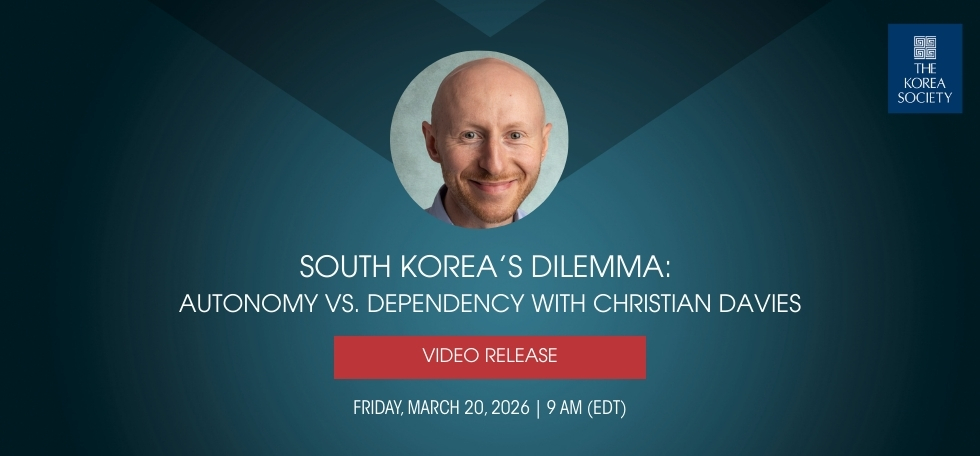
The Korea Society is pleased to host Financial Times correspondent Christian Davies for a discussion on “Korea’s Dilemma: Autonomy vs. Dependency.” Drawing on his recent tenure as the Financial Times’ Seoul bureau chief covering both North and South Korea, Davies will explore how Seoul navigates the competing imperatives of deepening economic and security ties with the United States while seeking greater strategic autonomy to buffer against heightened geopolitical uncertainty.
Expanding U.S-Korea trade and investment cooperation across semiconductors, shipbuilding, energy, and advanced manufacturing, offers significant opportunity but also heightened exposure to economic volatility. At the same time, Korea’s evolving security posture—including increased defense spending, advances in indigenous capabilities, and expanded alliance responsibilities—enables both greater contribution to the alliance and independence, raising fundamental questions about the alliance’s future trajectory. The discussion is moderated by policy director Jonathan Corrado.
This program was made possible by the generous support of the Korea Foundation and our individual and corporate members.
Christian Davies is the FT’s US industry correspondent, covering autos, aerospace and American manufacturing. Based in New York, he is responsible for the FT’s coverage of Boeing, Ford and General Motors, as well as the leading US airlines. He was previously FT bureau chief in Seoul, covering South and North Korea, and before that was based in Warsaw, Poland.
Publications and news appearances by The Korea Society team. |

2/11/26 | THE CHOSUN Daily |

Korea Society Leader Stresses Educating Americans Beyond K-Culture
On his inaugural visit to Korea, newly inducted Korea Society President and CEO Abraham Kim gave an interview with The Chosun Daily detailing his vision for the organization as its first Korean American president in nearly 70 years. Kim highlighted the importance of The Korea Society’s role as a bridge between the U.S. and Korea and affirmed that while economic tensions have grown, the alliance remains strong as ever.
As change rocks the US and South Korea, they offer each other safe harbor The Korea Society President/CEO Tom Byrne published an article in The Hill addressing the resilience of the U.S.-South Korea economic partnership despite the political turbulence in both countries. Byrne highlights growing Korean investment across U.S. industries and calls for expanded cooperation, with an emphasis on shipbuilding, to mirror the success of the CHIPS Act.
From CHIPS to Ships: The Next Step in the U.S.-ROK Alliance The Korea Society President/CEO Tom Byrne published an article in The National Interest proposing a solution to the United States’ lacking presence in the shipbuilding industry. President Byrne asserts that cooperation with allies like South Korea could bolster U.S. shipbuilding capacity, similar to how American manufacturing has benefitted from the CHIPS Act attracting South Korean investment.
Thomas Byrne, President of Korea Society: “We Need to See the Positive Side of Trump’s Second Term” [Translated from Korean by Google] The Korea Society President/CEO Tom Byrne was interviewed by Chosun Ilbo on the topic of President Trump’s second term and how it will impact U.S.-Korea economic relations. While acknowledging South Korea’s concerns regarding trade tariffs, President Byrne posits that the U.S. and Korea have an opportunity to focus more on cooperation in the shipbuilding industry.
Thomas Byrne “entrepreneurship is competitive in the U.S….”No matter who becomes president, I will work hard for companies.” [Translated from Korean by Google] The Korea Society President/CEO Tom Byrne was interviewed by Korea Economic Daily in regards to Korean companies’ concerns about policy risks related to the U.S. presidential election in November. President Byrne noted that America will retain its competitiveness no matter the result of the election and that The Korea Society will continue to highlight the importance of the U.S.-Korea relationship.
[INTERVIEW] U.S. faces ‘K-investment wave’ as Korean firms go global The Korea Society President/CEO Tom Byrne was interviewed by Korea JoongAng Daily on increasing Korean investment in the United States as Korean chipmakers and automakers pledge more than $100 billion in states such as Georgia and Indiana. As Honorary Ambassador for Foreign Investment Promotion for Korea, President Byrne notes that soft power plays a crucial role in securing foreign investment both in and out of Korea, and that the spread of Hallyu will help propel the so-called “K-investment wave.”
US President Biden to hold summit with South Korean President Yoon Korea Society President/CEO Tom Byrne was featured on a Channel News Asia Segment on South Korean President Yoon Seok Yeol’s state visit. Speaking alongside Asia Society Policy Institute Vice President Daniel Russel and Senior Fellow for Korea Studies at the Council on Foreign Relations Scott Snyder, President Byrne notes that the recent improved relations between Japan and South Korea is likely in part propelled by concerns on North Korea’s astounding progress in weapons development and China’s geopolitical ambitions in the region.
INTERVIEW | US-NK summit is unlikely in 2023: Korea Society Korea Society President and CEO Thomas Byrne was the featured expert in a Korea Times article. President Byrne discusses issues related to the US-ROK alliance, including nuclear sharing, stating “the best diplomatic and strategic outcome would be [the] denuclearization of the Korean Peninsula and nuclear weapon non-proliferation regionally and globally.”
Hyundai Lobbies US to Ease EV Rule That Hurts Foreign Carmakers Korea Society President/CEO Tom Byrne was quoted in Bloomberg on the new EV subsidies from the recently-passed Inflation Reduction Act (IRA) and their impact on South Korean company Hyundai Motor and its investments in the U.S. market. President Byrne notes the efforts of Korean trade ministers who are advocating for fair, rules-based treatment under the IRA.
South Korean Entertainment Makes Gains in the Digital Age Korea Society President/CEO Tom Byrne published an Op-ed in the non-partisan political news website RealClearPolitics (RCP) on the broad appeal of the South Korean Entertainment Industry’s exports of K-drama, K-pop, and Korean cinema. President Byrne notes the efforts of South Korean entertainment giant CJ Group to promote these products, and highlights the role such cultural exports play in strengthening U.S.-Korea relations, remarking that K-pop is “one of the key channels of people-to-people diplomacy between the U.S. and South Korea.”
Georgia wins top EV contracts thanks to long South Korea courtship Korea Society President/CEO Tom Byrne was quoted in the Financial Times special report series, “Investing in America” on burgeoning Georgia-South Korea investment ties. President Byrne notes the importance of investment in “technologies that are strategic over a long-term horizon” to shore up U.S. supply chains as well as reduce South Korean companies’ dependence on China.
Biden Struggles to Woo Asian Nations Wary of Upsetting China Korea Society President and CEO Tom Byrne was quoted in Bloomberg on President Biden’s recent visit to a Samsung Electronics Co. semiconductor complex in Pyeongtaek, South Korea as part of his first trip to Asia. When asked by the reporter about the “sleeping elephants” in the US-ROK alliance, President Byrne emphasized the urgent need to shore up semiconductor supply chain resiliency and boost fab manufacturing in the U.S. through passage of the Creating Helpful Incentives to Produce Semiconductors for America (CHIPS) legislation.
Why the international community should move to mass vaccinate North Korea — now In an article first published in The Hill, Korea Society President and CEO Tom Byrne argues that the international community– and the new South Korean president– should urgently work to vaccinate the entire North Korean population. Despite North Korea’s recent provocations, Byrne argues that geopolitical concerns and trust-building measures need to be set aside as “the urgency to effectively control this global pandemic offers the best rationale” for humanitarian vaccine aid by eliminating a potential reservoir for the emergence of an even more lethal variant—and North Korea has the demonstrated organizational capacity to pull this off.
Wonju Seo: Travelogue at the Korea Society The Korea Society’s current exhibition Travelogue by Wonju Seo was featured in the New York Times. The exhibition runs through May 27. Writer Will Heinrich writes on the “subtle textile abstractions in an alluring exhibition high over Midtown.”
In an article for the Diplomat, Korea Society President and CEO Tom Byrne discusses the new wave of South Korea investment into the U.S. and the rise of partnerships between U.S and Korean corporations in technologies such as batteries, semiconductors, and vaccines. “These fields — critical nodes in the most important 21st-century production networks — are quickly coming to define the next era of South Korea-U.S. business ties.”
Amb. Kathleen Stephen’s Mention of Korea Society Founder General Van Fleet and The Korea Society Annual Dinner In an article for the Korea JoongAng Daily, Korea Society Board Chair Ambassador Kathleen Stephens’ wide-ranging remarks touch on retired General James Van Fleet and his goal to ” build people-to-people ties between Koreans and Americans” through the establishment of The Korea Society. The Van Fleet Award, one of the most prestigious awards in the field of U.S.–Korea relations, is formally presented to distinguished recipients each year at The Korea Society’s annual dinner. The photo of Ambassador Stephens was taken at Arlington Cemetery on 4 November 2021.
What’s Behind North Korea’s Extreme Vaccine Hesitancy? In an article for the Diplomat, Korea Society President and CEO Thomas Byrne opines on North Korea’s recalcitrance in joining the international Covid-19 vaccination campaign. If North Korea had engaged the international community on security issues and South Korea on economic cooperation decades ago, President Byrne argues, “it would be in a better position today to manage the challenges of the pandemic.”
US never stopped ‘longest war’ in South Korea — and now democracy thrives In an article published by the New York Post, Korea Society President and CEO Tom Byrne remarked on the history of assistance American forces gave in protecting freedom and democracy in South Korea, noting that institution building was also a vital component, and that it took hold in South Korea. But it was the “mutual defense treaty (that) preserved South Korea as an independent nation” in the immediate aftermath of the Korean War.
How will ‘emaciated’ Kim Jong-un ride out a famine in North Korea? With China’s help|
In an article for the South China Morning post, president Tom Byrne and policy director Jonathan Corrado comment on North Korea’s current economic woes and food shortages. President Byrne remarks that, “With no government debt market, Kim is perversely forced to run a harsh austerity policy when any normal country would do the complete opposite in such a historical crisis.” Mr. Corrado attributed the volatility in food prices to “‘a perfect storm of events’ comprising bad weather, a lacklustre harvest, border closures and the government crackdown on the use of foreign currency.”
Issues & Insights Vol. 21, WP 10 — South Korea’s Demographic Advantage is Over: The Regional Context and the Economic and Security Implications In a paper for Pacific Forum’s Issues & Insights, president Tom Byrne and policy director Jonathan Corrado write on the economic and security risks South Korea’s low birth rate poses to its future, writing that “South Korea will have to make tough policy and fiscal choices, unless it can achieve another ‘Miracle on the Han’ —this time overcoming its demographic challenge.”
The Korea Society’s 30th Annual Van Fleet Memorial Golf Tournament was mentioned by Fox News host Jesse Watters, who attended the tournament.
6/24/21 | The National Interest|
Is North Korea On the Precipice of State Failure?|
In an article for the National Interest, Korea Society president and CEO Tom Byrne and policy director Jonathan Corrado remark on North Korea’s stability, writing that while the country remains intact through political repression and outside aid from China, the Kim dynasty could be threatened by the “intensification of the country’s prolonged economic distress that deprives the elite of its economic benefits.”
US to distribute more vaccines to developing world|
In an interview on Bloomberg Quicktake, president and CEO Tom Byrne discusses the potential for a vaccine swap between the United States and South Korea as well as South Korea’s assistance to the U.S. in the early stages of the pandemic and its progress in vaccine rollout.
The U.S. has swapped currencies with South Korea, now it is time to swap vaccines|
In an article for the National Interest, Korea Society president and CEO Tom Byrne proposes that “a U.S.-South Korea vaccine swap would be an all-around win-win policy.”
In an article for the National Interest, President Tom Byrne notes that North Korea submitted a SARS-CoV-2 vaccine order to the UN affiliated vaccine alliance, GAVI, but the country is still waiting for its modest 1.7 million dose allotment, relative to its needs. “North Korea was not among the 104 countries that received vaccine doses as of early April, and they likely won’t arrive in May, either. North Korea is reaping what it has sowed in shunning engagement with the international community”
U.S., S. Korea Should Work Closely on N. Korea: Former Ambassador In an interview on Bloomberg Daybreak: Asia, Korea Society Board Chair Ambassador Kathleen Stephens discusses the future of the U.S.- South Korea partnership in the Biden era, as well as the possibility of pursuing dialogue with North Korea in conjunction with regional partners like China, despite ongoing tensions.
PacNet #5 – North Korea Doubles Down on a Dead End In an article for Pacific Forum PacNet on North Korea’s economic plan announced at the recent party congress, president Tom Byrne and policy director Jonathan Corrado write that, “The plan leaves unanswered the question of the sources of financing. North Korea has scant domestic savings, no access to international credit and has squeezed the foreign currency savings of the donju entrepreneurs and financiers.”
In a letter to the South China Morning Post, Korea Society President and CEO Thomas Byrne calls for the Biden administration to strengthen cooperation with South Korea in its diplomatic approach towards North Korea, including the possibility of resuming summit meetings. President Byrne remarks that “It’s time to combine maximum engagement with maximum pressure, in close coordination between the US and South Korea.”
Letter: North Korea is not quite ready to join the IMF In a letter to the Financial Times, Korea Society President and CEO Thomas Byrne comments on North Korea’s economic outlook, writing that, “Until Pyongyang approaches the IMF, it is safe to observe that there is no hope that North Korea harbours the willingness and ability to reform and reap the economic development benefits of international finance and trade.”
WTO Director Race: The Case for Yoo Myung-hee In an article for the Diplomat, Korea Society President and CEO Thomas Byrne writes on South Korean Trade Minister Yoo Myung-hee’s candidacy for Director-General of the World Trade Organization, pointing out that Trade Minister Yoo “has convincingly presented herself as a fair mediator on the global stage. She is a bridge candidate, who can speak to the U.S. and China, as well as to both developed and developing nations.”
[Special Live] United States Presidential Election 2020 Part II: IMPACT ON S. KOREA-U.S. TIES Korea Society Board Chair Ambassador Kathleen Stephens and Korea Society CEO and President Thomas Byrne join a panel of experts on Arirang TV to discuss the impact of the US presidential election on the Korean Peninsula and Northeast Asia region. Both analyze topics ranging from America’s current political tensions, the US-South Korea security alliance, US-China trade relations, and Trade Minister Yoo Myung-Hee’s candidacy for the World Trade Organization.
Previewing Post-Election U.S.-South Korea Ties In an interview on Bloomberg Daybreak: Asia, Korea Society Board Chair Ambassador Kathleen Stephens discusses U.S.-Korea ties after the upcoming Presidential election, specifically the U.S.-South Korea security and economic relationship, as well as South Korea’s regional relations.
Korean War 70th Anniversary: Remember the lives a ‘Forgotten War’ took In an article published by the New York Post, Korea Society Board Chair Ambassador Kathleen Stephens remarked on the 70th Anniversary of the Korean war and the integral assistance American forces under the UN flag gave in protecting freedom and democracy for South Korea.
70 years since Seoul win in Korean war, UN remains as relevant as ever In a letter to the editor published by the South China Morning Post, Korea Society CEO and President Thomas Byrne remarks on the 70th anniversary of the recapture of Seoul by UN forces on September 25th and South Korea’s enduring commitment to international institutions.
U.S.- South Korea Relations – Narrated by David Strathairn Korea Society CEo and President Tom Byrne was featured in the Documentary “U.S.- South Korea Relations”, part of the Great Decisions documentary series by the Foreign Policy Association.
7/29/20 | The South China Morning Post: THE CORONAVIRUS PANDEMIC |
Coronavirus: Bill Gates predicts ‘substantial’ reduction in death rate by end of year An article published by The South China Morning Post featured an interview between Korea Society President Thomas Byrne and South Korean pandemic expert Dr. Kim Woo Joo, who discussed COVID-19 treatments. “‘If everything goes well, I am hoping that the effectiveness of these drugs will be scientifically proven within three to four months,’ Kim, a professor of infectious diseases at Korea University Guro Hospital, said in an April 16 interview with the president of the Korea Society, Thomas Byrne.”
North Korea Responding to Financial Dearth In a letter to the editor published by The Wall Street Journal, Korea Society president Thomas Byrne explains the economic factors impacting North Korea’s recent foreign policy decisions, writing: “What has likely prompted Kim Jong Un to ‘hit the pause button’ regarding his threats against South Korea isn’t a desire to place North-South reconciliation back on track but financial desperation.”
70 years later, remember the ‘The Forgotten War’ and appreciate the South Korean-American relationship In a new article for New York Daily News, Korea Society president Thomas Byrne writes, “As the 70th anniversary of the start of the Korean War is marked, the two allies remain in a strong position to overcome difficulties. North Korea’s recent provocations have once again highlighted that the U.S.-South Korean alliance is the ballast supporting peace and prosperity in the region. It must not give way.”
South Korea’s Economic Policies Prepared It for the Coronavirus—North Korea’s Did Not|
In a new article for The National Interest, Korea Society president Thomas Byrne writes, “the coronavirus pandemic casts into sharp contrast the fortunes of North and South Korea, showing how differently they have evolved in the seven decades since the Korean War. Pyongyang’s inability to deal with the virus in any way other than to shut its borders and restrict domestic travel has sparked a huge shortfall in government revenue… Meanwhile, Seoul’s timely and effective response to the virus that avoided lockdowns and blockades is held up as a worldwide example, burnishing South Korea’s status as a financial safe haven which allows it to affordably fund stimulus measures with government debt.”
In an interview with Fox 5 DC On the Hill, Korea Society President Tom Byrne discusses the impact of North Korean Chairman Kim Jong Un’s prolonged absence on denuclearization talks and South Korea’s approach to dealing with coronavirus, saying, “Korea not only flattened the curve; they were ahead of the curve.”
The Coronavirus Has Pushed North Korea’s Economy to the Edge
In a new article for Foreign Policy about North Korea’s current economic prospects, Korea Society president Thomas Byrne writes, “North Korea is left to its own devices, facing the coronavirus pandemic without access to credit or emergency financing from the IMF, World Bank, Asian Development Bank, or other governments—let alone access to global capital markets. Nevertheless, there are no indications from Pyongyang that it is ready to throw in the towel on Juche, its policy of self-reliance, and embark on reform and opening. The same obstacles that prevented progress in 1997 prevail today, and nothing has changed institutionally in more than two decades—except the addition of international sanctions.”
During the coronavirus crisis, how is North Korea really handling its ‘zero cases’? In a new article for Fox News about the impact of coronavirus on North Korea, “Thomas Byrne, president of the Korea Society, pointed out that several news items emerged this week, indicating the regime’s economic fallout as well from the pandemic.”
Dr Kim Woo Joo, who led South Korea’s response to Covid-19 and the outbreak of Mers in 2015, said he was ‘not very optimistic’ about the availability of a Covid-19 vaccine in the next 18 months, but said evidence about the effectiveness of remdesivir, an experimental antiviral developed to treat Ebola; AbbVie’s Kaletra, an anti-HIV drug; or other medicines might be possible sooner. ‘If everything goes well, I am hoping that the effectiveness of these drugs will be scientifically proven within three to four months,’ Kim, a professor of infectious diseases at Korea University Guro Hospital, said in an interview on Wednesday with the president of the Korea Society, Thomas Byrne.
South Korea’s opposition had ‘surprisingly big defeat’ in elections: The Korea Society
In an interview with CNBC on South Korea’s National Assembly election on April 15, Korea Society Board Chair Ambassador Kathleen Stephens said, “Korea is benchmarking a lot of good practices for dealing with the coronavirus pandemic. This became the issue in the election and eclipsed some of the other issues that were not playing so well for Moon Jae-in and the ruling party… The citizens came out and said that they appreciate what this government has done, but I think it was a surprise to everybody that the turnout was as strong as it was. Koreans really do value their institutions and their democracy and so they were ready to vote.”
South Korea’s virus response had high degree of transparency and competence In an interview with Bloomberg Daybreak Asia (39:35) on Korea’s response to the coronavirus, Korea Society President Thomas Byrne says, “Korea responds well when there is a crisis, and Koreans really have grit. They responded well to the 1997 IMF financial crisis and they are responding very well now. Everything came together really quickly in the middle of February. The government has orchestrated a good program with the government, the public health institutions, and the citizens all chipping in, all three of them together to manage this crisis.”
Come together In an opinion piece published by Reuters BreakingViews, Korea Society Board Member Bill Rhodes urges the importance of multilateral cooperation to deal with the effects of coronavirus, writing, “it is increasingly likely that the world faces a longer, harder, much more fitful, difficult path to normalcy. We must gird ourselves for the long haul. That requires much greater coordination internationally of our responses to maximize the impact. So far that crucial piece of the puzzle has been missing.”
South Korea’s coronavirus success story underscores how the U.S. initially failed In an article by the Washington Post, Korea Society president Thomas Byrne writes, “No nation’s response has been perfectly effective, but the high degree of transparency and competency of South Korean health officials provides helpful lessons about containment efforts for other countries, and about the nature of this pandemic for the international scientific community.”
No One Knows How Many Virus Cases North Korea Has. It Says Zero In an article for Bloomberg, Korea Society president Thomas Byrne discusses North Korea’s human rights situation and public health system amid ongoing concerns about the potential for the novel coronavirus to spread in the country.
In a new letter to the editor of the South China Morning Post, Korea Society president Thomas Byrne writes, “South Korea is providing other societies with an example of how to respond in a smart and targeted way, while shunning travel bans, with limited exceptions, and avoiding widespread lockdowns whose social costs might outweigh the health benefits.”
PacNet #11 – Two tasks for making US-ROK troop burden sharing sustainable In a new article about the U.S.- Korea military cost sharing deal for Pacific Forum PacNet, Korea Society chairperson Ambassador Kathleen Stephens and president Tom Byrne write, “The time is now for the United States and South Korea to come to terms on a deal that works for both sides. The smooth functioning of the alliance should not be impaired by an accounting impasse that loses sight of the incalculable benefits from 70 years of partnership.”
Kim Jong Un’s New Year Comments Are Ominous (Radio) Korea Society President Thomas Byrne discusses the meaning of Kim Jong Un’s “new way” and the implications of his plenary speech on the Bloomberg Radio program Daybreak Asia.
The U.S. and South Korea: Ways to Bolster an Alliance In a letter to the editor of the New York Times, Korea Society President Thomas Byrne writes that, “The failure of the most recent round of talks between the United States and South Korea on how to equitably share the costs of American troops on the peninsula is dangerous to the future of this crucial alliance, which has kept the peace in Northeast Asia for more than six decades. The alliance has also underpinned South Korea’s prosperity and fostered trade and investment relations increasingly beneficial to America.”
Korea Society Board Chairman Ambassador Thomas Hubbard discusses dynamic aspects of the U.S.-Korea Alliance during a Voice of America Segment. Together with the Council on Foreign Relations’ Scott Snyder, Ambassador Hubbard explores the meaning of Korea’s decision not to suspend an intelligence sharing agreement with Japan and the current state of cost sharing measures for hosting America troops in Korea.
Concerns Mount Over US Demand for S. Korea to Pay More for Defense KBS World Radio ran an article citing an article by president Thomas Byrne and board director General Walter Sharp. “Several former leaders of U.S. troops in South Korea and other American figures are voicing their concern over Washington’s demand for Seoul to quadruple its defense cost-sharing contribution, calling for a “creative solution” to satisfy both allies. In a joint article published in the U.S.-based magazine National Interest on Wednesday, Thomas Byrne, President of the Korea Society, and Walter Sharp, former U.S. Forces Korea Commander, warned that after more than 60 years, the countries’ alliance could be strained over the issue.”
America and South Korea Must Negotiate a Fair Extension of the SMA In an opinion article published by The National Interest, the Korea Society’s president and CEO Thomas Byrne and Board Director General Walter Sharp evaluate the ongoing negotiations to the U.S.-ROK Alliance cost sharing agreement. They write: “It is in the interest of the U.S. and South Korea to negotiate a fair extension of the SMA that does not raise accusations among the Korean population that the U.S. is a mercenary force in their country while also addressing the concerns of the U.S. that its allies shoulder as much of their own defense burden as possible. Much is at stake in maintaining global order. The 66-year U.S.-South Korea alliance has kept the peace and maintained geopolitical conditions for mutual prosperity. South Korea is America’s sixth-largest trade partner and its major corporations are increasingly investing in the U.S.”
Korea Society president Thomas J. Byrne discusses the Korea Society on Asia Today with Jeffrey Bingham Mead. Asia Today with Jeffrey Bingham Mead airs on Radio 1490 WGCH Greenwich, Connecticut USA and WGCH.com.
Finance minister holds overseas roadshow on S. Korean economy An article of Yonhap News quoted Korea Society president Thomas Byrne. “South Korea’s finance minister held an overseas roadshow on the country’s economy to some 100 investors in New York amid growing uncertainties about Asia’s fourth-biggest economy. Thomas Byrne, president of the Korea Society, asked about the possibility of Korea entering a deflation given the country’s record-low consumer price level.”
Analysts: U.S. approach ‘inadequate’ to restore South Korea, Japan ties Amb. Thomas Hubbard, chairman of the Korea Society and former U.S. ambassador to South Korea, joined by Sheila Smith, senior fellow for Japan studies at the Council on Foreign Relations in Washington were quoted in an article of UPI. At a Korea Society program on September 12, 2019, Smith said the (U.S) president’s approach to U.S. alliances represents a setback for key partners in Northeast Asia and Amb. Hubbard said past U.S. administrations took a more active approach to handling bilateral relations between Seoul and Tokyo, including during the Bush administration, when he served his term as U.S. ambassador to South Korea.
Tensions Between South Korea And Japan Could Spiral (Radio) Thomas Byrne, President, The Korea Society, joined Rishaad Salamat on Daybreak Asia. He discusses some of the factors behind the deterioration in relations between South Korea and Japan. He goes on to whether the U.S. could do more in helping mediate between the two.
Our allies in Asia must find common ground on North Korea In an oped published by the Washington Post, Korea Society President Thomas Byrne and Board Chairman Ambassador Thomas Hubbard contend that, “The United States has a deep stake in northeast Asia and must play an active and constructive role in fostering healthy Korean-Japanese relations. Korea and Japan are both treaty allies with the United States. Our defense interests are closely linked, and it is crucial that our militaries work together as we face the North Korean denuclearization challenge. The prosperity that the United States, South Korea and Japan share depends on expanding trade ties and maintaining a rules-based economic order free of political interference and tenuous national security concerns. It is urgent that our key allies in northeast Asia find common ground before their deteriorating relations cause irreparable strategic and economic damage.”
An armistice and an alliance worth honoring: Why the strategic partnership between United States and South Korea must remain strong Marking the 66th anniversary of the Armistice that ended the Korean War in an oped for Daily News, Korea Society President writes, “The U.S.-South Korea alliance remains vibrant today and crucial to peace and prosperity in the region thanks to those who fought and died for both countries in the Korean War.”
Payback time In a new article published by Reuters Breaking Views, Korea Society President Thomas Byrne contends that, “Collateral damage from the trade war is piling up in South Korea, whose two largest foreign markets are the United States and China. Exports have fallen for six straight months and the economy is contracting… Significant steps by Seoul to bolster its already strong economic partnership with the United States deserve to be rewarded with more than just words… An exemption from the auto tariffs would be a good place to start. In addition, the United States could return to a predictable, equitable and long-term military cost-sharing agreement with South Korea when it comes up for renegotiation in the year ahead.”
For full article (Subscription required), click here
North Korea has more than sanctions to overcome for foreign investment: report A Korea Society report was featured in a Reuters article about North Korea’s economy. The article says, “While there are no signs that international sanctions imposed on North Korea over its nuclear weapons will be officially lifted soon, researchers at a U.S.-based think tank say North Korea has more fundamental problems to overcome if it wants access to foreign finance… ‘North Korea will require substantial and sustained amounts of external financing, hence the need for it to establish creditworthiness,’ said co-authors Thomas Byrne and Jonathan Corrado.”
Hopes for Improvement in Korea-Japan Relations In an oped for the Dong-A Ilbo, Korea Society Chairman Ambassador Thomas Hubbard explains the integral role that cooperative Korea-Japan relations play in a successful approach to North Korea. Ambassador Hubbard states, “South Korea and Japan are allies that the U.S. has deep relations with. In the defense sector, the interests of the three parties are closely related. We all want peace and security in Northeast Asia. The first response from our military is directed at a challenge from North Korea. Everyone is in agreement on the security of the Korean Peninsula, and it is important for South Korea, the U.S., and Japan to cooperate effectively. Japan knows that peace and stability on the Korean Peninsula is also key to its security. South Koreans should also acknowledge that U.S. troops in Japan are key to fulfilling the U.S. defense commitment.”
5/21/19 | TRT World Now Dr. Stephen Noerper of the Korea Society addressed today’s comments of the North Korean Ambassador to the UN around the UN ship seizure. He appeared on TRTWorld’s noon broadcast.
5/16/19 | The National Interest |
South Korea ‘Probably Doesn’t Like Us Too Much’? That’s Just Not Correct. In an article for The National Interest, Korea Society President Thomas Byrne writes that the US-Korea Alliance “is one of the closest and most strategically important of any that the United States maintains. There is a strong sense in both countries of shared values and appreciation for their mutual prosperity.”
In an opinion article for the South China Morning Post, Korea Society president Thomas Byrne offers a retrospective look at the South Korean Moon presidency at two years, saying that despite the recent impasse in denuclerization negotiations with North Korea, “the diplomatic achievements of the last year are an impressive testament to Moon’s persistence.”
5/1/19 | i24 NEWS | CLEAR CUT PLUS with Michelle Makori Dr. Stephen Noerper of the Korea Society addresses North Korean comments on negotiations with the US and concerns about Huawei among US allies.
Stephen Noerper, senior director at the Korea Society in New York discuss North Korea issue on Vnews.
For link to the recorded interview (from minute 14’15” to 16’50” and from minute 18’50” to 19’30” ), click here
4/9/19 | Pacific Forum |
PacNet #24: Kim Jong Un’s choice – Economic reform would be a risk well taken by North Korea Economic reform would be a risk well taken by North Korea, according to Korea Society president Thomas Byrne and associate director Jonathan Corrado. In a new article for Pacific Forum PacNet, the authors content that, “Pyongyang’s leadership seems to be more attuned than ever about benefits from economic development, but so far bold action and systemic reform are missing. The cases of China and Vietnam show a path to prosperity if North Korea embraces a pluralistic communist system in which new interest groups coalesce to support reform. Such a transition would likely allow the international community—including the U.S., South Korea, Japan and the international financial institutions, including the IMF, the World Bank, ADB and even the AIIB—to help Pyongyang proceed down that road. Economic benefits from this process could change Pyongyang’s suspicious attitude towards the U.S. and the outside world.”
Episode 8: How It Happened – Two Koreas with Stephen Noerper The history of US and Korea. How did we get here? The story behind the politics of the moment.
The Hanoi Summit – We Asked Stephen Noerper What Happens Next in U.S.-North Korea Relations In an article for The National Interest, Korea Society Senior Director Stephen Noerper writes, “The Hanoi Summit was not the unmitigated disaster many observers termed it. It is step two in a likely long and arduous process that will entail breakoffs, walkaways and other setbacks that accompany denuclearization.”
Judith Miller: Trump’s bad week (it could have been a lot worse) But many Korea experts welcomed Trump’s decision to walk away. “Better no deal than a bad deal,” said Thomas Byrne, the president of the Korea Society. A deal that would not lead to “full, verifiable, irreversible denuclearization,” one that would have accepted North Korea’s status as a nuclear power, would have weakened America’s alliance with South Korea and Japan and proven destabilizing, he said.
In an interview with Vietnam News Agency about the results of the second Trump-Kim summit in Vietnam, Korea Society Senior Director says, “Seoul is playing a critical role as a mediator, pushing the momentum forward. This isn’t 2017 or 2018. The tensions are lower. But we have to find a way to make progress. North Korea has to be more forthcoming to realize what it wants.”
I’m glad that Trump’s tone was ‘realistic’: Former US ambassador
Thomas Hubbard of the Korea Society says it is good that both leaders had positive attitudes ahead of talks at the Trump-Kim summit in Hanoi. Hubbard, a former U.S. ambassador to South Korea, also says that U.S. President Donald Trump is right to not expect an “immediate success” out of this meeting.
U.N. Would Like Full Denuclearization of North Korea (Radio) Thomas Byrne, President, Korea Society, joined Bryan Curtis and Paul Allen on Daybreak Asia. He says that if North Korea is genuinely interested in economic development, they will have to have to make the choice to give up nuclear weapons. He also reacts to initial comments ahead of the summit on Thursday morning.
PacNet #17 – Preserving the US-ROK alliance is critical In a new article for PacNet about the upcoming Trump-Kim summit in Vietnam, Korea Society president Thomas Byrne & board director General Walter Sharp emphasize the importance of the US-South Korea Alliance in the negotiation process. “In any scenario post-Hanoi,” they write, “the steady hand of the alliance will be key. With luck, it will be the cornerstone of a new era of non-hostile engagement & cooperation w/ North Korea.”
North Korea and America’s Second Summit: Here’s What Tom Byrne Thinks Will Happen In a new article for The National Interest, Korea Society President Tom Byrne writes, “Chairman Kim Jong-un declared in his New Year’s speech that 2019 will be the year for economic development. A brighter economic future would be best served by rapid progress in verified denuclearization.”
North Korea and America’s Second Summit: Here’s What Stephen Noerper Thinks Will Happen In a new article for The National Interest, Korea Society Senior Director Stephen Noerper says that the Trump-Kim summit will yield “a limited declaration of some North Korean missile and nuclear capabilities and some acceptance of verification in exchange for a lessening of sanctions, aid package & move towards normalization.”
There was ‘frustration’ in Kim Jong Un’s message: Expert
Thomas Byrne of The Korea Society says North Korean leader Kim Jong Un’s New Year address had an “underlying element of frustration” over a lack of progress in negotiations with the U.S.
The U.S.-South Korea alliance can withstand the current diplomatic pressures In a new The Washington Post oped, Korea Society President Thomas Byrne says, “An alliance that can continue to adapt to changing conditions, amid the crosscurrents of denuclearization, is essential for moving the process forward.”
“I am one American who would like to see South Korea in the lead of this process, bringing North Korea into the world… and perhaps the U.S. advising caution here and there.” – Korea Society Chairman Thomas Hubbard
Kim Jong Un’s Puppy Diplomacy Pays Off With Korea Railway Study Stephen Noerper, senior director at the Korea Society in New York says, “Should South Korea request some sanctions relief aimed at economic aid that is part of inter-Korean easing, the U.S. should be able to live with that… North Korea has to show progress to give Moon the political space he needs to proceed.”
Focus Now on Second Trump-Kim Summit (Radio) Thomas Byrne, President, Korea Society, joined Doug Krizner and Paul Allen on Daybreak Asia, discussing the latest on relations between the U.S. and North Korea, starting with President Trump’s reaction to reports of undeclared nuclear sites.
North Korea: High-Level Engagement Lends Momentum to Talks In an oped for Dong-A Ilbo, Korea Society Chairman Ambassador Thomas Hubbard evaluates the evolving situation on the Korean Peninsula, writing, “Indeed we have come a long way from last year.” Describing this progress, Ambassador Hubbard writes, “A year ago, we were watching the North Koreans carry out increasingly threatening nuclear and missile tests and worried about imminent war on the Peninsula. Now nearly a year has passed without provocative North Korean tests, and far from talking about war, we engaged in an unprecedented flurry of top-level meetings, beginning with President Moon’s meeting with Kim Jong-un at Panmunjom during the Winter Olympics. Thanks to this initiative, and President Trump’s willingness to follow up with his own meeting with Kim in Singapore, we appear to have unprecedented momentum toward progress on the Korean Peninsula.”
To download the English translation of the full article in PDF, click here
10/11/18 | South China Morning Post: United States & Canada | US Ambassador to UN Nikki Haley steps down as Trump lauds her work with North Korea
Asked about the impact of Nikki Haley on the Korean Peninsula by The South China Morning Post, Korea Society President Thomas Byrne credited Haley with assuming a key role at a sensitive time in relations with North Korea. “The US-led resolute response to North Korea’s escalation of provocative launches and nuke tests was effective, as it worked to get North Korea to the negotiating table in 2018,” he said.
9/26/18 | Money Today | Confirmation from North Korea’s willingness to join the IMF
South Korean President Moon Jae-in was asked by Korea Society President Thomas Byrne if North Korea is willing to become a member of International Monetary Fund (IMF). President Moon replied, “based on the premise that a process of denuclearization is either complete or irreversible and as a result, economic sanctions on North Korea are removed, South Korea is willing to take the lead to build infrastructure for economic development in North Korea. I believe the effort will not only help North Korean development, but it will be a new force of growth for the South Korean economy.”
9/26/18 | Kukmin Ilbo | North Korea cannot endure U.S. retaliation. Trust honesty of Kim Jong Un.
When asked by Korea Society President Tom Byrne whether North Korea has expressed willingness to join the International Monetary Fund (IMF), South Korean President Moon Jae-in said, “North Korea has confirmed they are willing to reform by joining several international organizations, such as IMF and World Bank (WB).”
9/19/18 | The Chosun Ilbo. | “Kim Jong Un will eventually denuclearize as he wants to remain in power for the next 40 years,” says Gen. Sharp, Korea Society board director, in an interview with Chosun Ilbo. General Sharp also mentioned that, “filing an accurate report of the North’s nuclear arsenal, destroying intercontinental ballistic missiles or agreeing to a specific time frame for denuclearization would ensure U.S. support.” He also believes it is unlikely the U.S. will withdraw troops from South Korea following a declaration to end the Korean War.
9/18/18 | REUTERS: BREAKINGVIEWS | President Donald Trump’s trade war threatens the possibility of peace in Korea, say Korea Society President Thomas Byrne and Chairman Ambassador Thomas Hubbard in a new Reuters Breaking Views article. The two write, “Capricious auto tariffs on the flimsy pretext of national security only complicates denuclearization negotiations already fraught with mistrust.”
7/26/18 | Bloomberg Opinion | Korea Society President Thomas Byrne explains that Korean War Armistice, “has kept relative peace on the Korean peninsula, underpinned one of America’s most important alliances, & enabled South Korea’s remarkable rise to prosperity.”
Dr. Stephen Noerper speaks to White House and State negotiations with the DPRK.
“Trump is tacking toward viability,” said Stephen Noerper, senior director of the New York-based Korea Society and an adjunct political science professor at Columbia University. “He wants a deal and is comfortable letting Secretary Pompeo usher this through. He is willing to overlook the diatribe that followed the secretary’s Pyongyang visit.”
“Boycotts politicize trade and thus make consumers and corporations worse off,” Thomas Byrne, the president of The Korea Society, told CNBC. “China scores political points, and does not reap economic gains by the use of boycotts. They are in effect de-factor quotas, and in that sense are worse than tariffs. Smaller countries that have faced boycotts of some of their goods and services sold in China, namely South Korea, are often highly dependent on China’s market…”
Trump-Kim Agreement ‘Disappointing,’ Former U.S. Ambassador Says
Thomas Hubbard, chairman of the Korea Society and a former U.S. Ambassador to South Korea, talks about the talks between President Donald Trump and North Korean leader Kim Jong Un. Hubbard speaks with Ramy Inocencio and Haidi Lun on “Bloomberg Daybreak: Australia.” (Source: Bloomberg)
Asked about how the summit is viewed in the US, President of the Korea Society Thomas Byrne said that the 12 June summit in Singapore is unconventional given its top-down nature. The fact that two rounds of more traditional bottom-up negotiations have failed in the past, however, means it is possible this new approach will yield positive results.
6/11/18 Bloomberg TV
Bloomberg Daybreak: Americas’ Full Show
(Minute 49:00 onward) Dr. Stephen Noerper speaks to the Trump-Kim Singapore summit.
Wouldn’t be surprised if Kim Jong Un tries to hang onto nukes
Amb. Thomas Hubbard, Korea Society chairman and former U.S. ambassador to the Republic of Korea, and Rod Hunter, Baker McKenzie partner and former National Security Council senior director, discuss the expectations for the summit between President Trump and North Korea’s Kim Jong Un.
The Korea Society chairman, Ambassador Thomas Hubbard spoke to TBS, This Morning with Alex Jensen radio to discuss his views on the Trump-Kim Singapore summit.
Asked about the upcoming June 12 summit in Singapore between President Donald Trump and Kim Jong-un, Korea Society president Tom Byrne told Fox 5 DC that more important than the timing of the summit is, “What will they agree on? The definition of denuclearization still has to be defined. North Korea’s concerns about the US stopping its hostile attitude have to be defined. That’s more important than the actual date of the agreement.”
5/24/18 Bloomberg Daybreak Asia
Door Open For Future North Korea Summit
Thomas Byrne, President, The Korea Society, discussed President Trump’s cancellation of the summit with North Korea with Doug Krizner and Juliette Saly. He tells them he sees a diplomatic game ahead, explains the Libyan model and gives his analysis of Moon Jae-In’s role in matters.
‘They stood us up’: White House says it cancelled Kim Jong-un meeting because North Korea refused to talk – despite Donald Trump’s earlier claims
Inability to agree on the content of the discussions or what the two sides would agree to likely contributed to Trump’s move on Thursday, said Thomas Byrne, president of the New York-based Korea Society…
Backchannel contacts between Washington and Pyongyang likely to continue
“The State Department has until recently had a point person on North Korea, who is basically the lead in terms of managing that,” Stephen Noerper, Senior Director at the Korea Society said. “A special representative, and that individual communicates directly with the North Korean mission here in New York…”
Summit was probably a bad idea in the first place, says former ambassador
Amb. Thomas Hubbard, former ambassador to the Republic of Korea and chairman of The Korea Society, weighs in on President Trump’s decision to cancel the summit between the U.S. and North Korea.
(Minutes 30:30-36:00) Korea Society Senior Director Dr. Noerper: “Pyongyang wants a security guarantee, economic benefits, and diplomatic normalization. US troops are not on the table at the moment. South Korea is driving this process.”
Thomas Byrne, President, President, The Korea Society, joined Doug Krizner and David Ingles to discuss doubts over the summit between North Korea and the U.S. going ahead. He explains how definitions of denuclearization are now being refined and what each side hopes to gain.
Both Trump and Kim want a summit to happen: Former US ambassador
President Donald Trump and North Korean leader Kim Jong Un want to see the June 12 summit in Singapore go ahead, says Thomas Hubbard of McLarty Associates and former U.S. ambassador to South Korea.
Korea Society contributes data to Wall Street Journal article about military cost sharinge
A new Wall Street Journal article looks at the military cost sharing deal between the US and Korea, and suggests that the US derives tactile benefits like free rent on top of intangible values-based benefits from the arrangement. Korea Society contributed data to the report, resulting in a graph that shows how South Korea’s contribution to host U.S. troops has risen faster than inflation.
Donald Trump hopes for ‘world peace’ as he announces he will meet North Korea’s Kim Jong-un in Singapore in June
Asked about the developing diplomatic process with North Korea by the South China Morning Post, Korea Society President Tom Byrne says, “Even the skeptics, who look at the history of the negotiations with North Korea, look upon this as an opening for a breakthrough. I don’t get a sense that there’s a significant number of people saying it’s just a trap and to stay away.”
The Stars of North Korea Talks Revolve Around Moon
Dr. Stephen Noerper speaks to South Korean President Moon Jae-in’s adroit diolomacy in the summit process.
“Moon spent 10 years in the woods,” says Stephen Noerper, the Korea Society’s senior director for policy. “That gave him a great deal of time to think about North Korea policy.” Some of that thought went into refining the “sunshine” approach: Moon isn’t quite as far left as many in his inner circle. He wanted engagement, but with caution.
Dr. Stephen Noerper appeared on the 6:30 PM national broadcast of CTV, commenting on the lead-up to the Trump-Kim summit, the leading role of Moon Jae-in, and the complex of international actors: South Korea, North Korea, United States, China, Japan and Russia.
5/1/18 CBC NEWS
Trump winning the Nobel Peace Prize? Why experts give him credit for North Korea talks
Dr. Stephen Noerper describes the evolution of the summit process and Kim Jong Un’s desire for economic modernization.